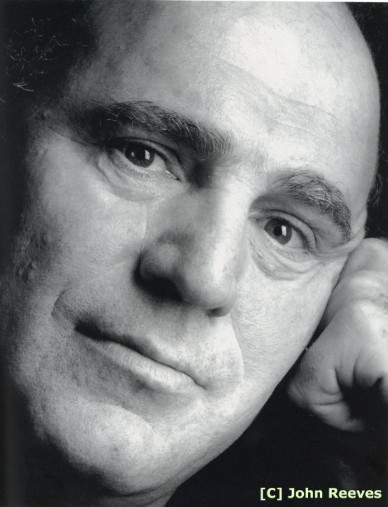
© Copyright ® Steven Cerra, copyright protected; all rights reserved.
"When I got out of the Army in 1949 and returned to my studies at the University of Washington, I soon discovered the afternoon jam sessions that went on in the U.'s music annex. I was a bebop valve trombonist and sometime drummer in those days, I met Rod Levitt at one of those jams, and we hung out a little together on the Seattle music scene until the winter of 1950, when Buzzy Bridgeford, a drummer from Olympia, invited me to go with him when he went back to New York. I kept hearing about Rod, but when he came to New York, he didn't hang with the same people I was interested in at that time. Whenever our paths crossed, we had a nice reunion, and he called me to play on a couple of his projects, which I enjoyed very much. I liked his playing and his writing, and always appreciated his sunny disposition."
- Bill Crow, bassist, author
In 1964, Rod Levitt made the transition from respected but unsung sideman to recognized bandleader and composer. His first octet recording, Dynamic Sound Patterns [Riverside RS 9471; OJCCD-1955-2], led to an enthusiastic feature article in Down Beat and a Grammy nomination that put him in competition with Miles Davis, Woody Herman, Gil Evans, Ouincy Jones, Shelly Manne, Oscar Peterson, and Laurindo Almeida. Almeida won the Grammy, but the attention helped carry Levitt into a busy career with his little big band and as a freelance arranger. A veteran of the Dizzy Gillespie band and a contemporary and colleague of Quincy Jones, the trombonist turned out tight, canny arrangements that made ingenious use of rhythm, harmonic depth, and wit. Levitt worked his knowledge and love of Duke Ellington's music into his compositions, notably "His Master's Voice." His band included some of the most accomplished musicians in New York, among them Levitt himself and the remarkable Swedish trumpeter Rolf Ericsson.

ORIGINAL LINER NOTES: The Dynamic Sound Patterns of the Rod Levitt Orchestra
“Rod Levitt was born in Portland, Oregon, on September 16, 1929, and began studying trombone when he was ten. While studying composition at the University of Washington, he played in a Quincy Jones group that included vocalist Ernestine Anderson. Later, with an Air Force band in Texas, came his first real opportunity to arrange: for marching bands, dance bands, and jazz combos. In 1955, Levitt came to New York, where a chance meeting with Quincy Jones while walking on 52nd Street led to an invitation to join Dizzy Gillespie's big band for its tour of the Middle East and South America.
For the past several years, while holding down a steady job in the Radio City Music orchestra, Rod has managed to be very active on the recording scene, playing on sessions with Quincy, Dizzy, Gil Evans, Dinah Washington, Sarah Vaughan, Mel Torme, Kai Winding, and others.
He organized an Octet in 1960, using Music Hall personnel, as a workshop for his writing, and has kept such a group together ever since. The lineup has remained constant during the past year, "mainly," Levitt says, "because the music presents a challenge to all the players." Originally strictly a rehearsal band, they have more recently played a number of college concerts, and had a most successful concert at Judson Hall in New York in the spring of 1963. In addition, Rod has been writing for a most varied number of performers: the Quincy Jones band, the Al Mitchell-Billy Gray group, the bands of Larry Elgart and Peter Duchin; plus the orchestration of an entire revue for Imogene Coca, various nightclub acts, and the scoring of films and TV commercials.”
The dynamic patterns of the very big-sounding eight-piece group heard here manage, among other things, to demonstrate a most significant and often overlooked truth that the combination of skill and enthusiasm remains just about unbeatable in jazz.
Rod Levitt, although he has worked with Dizzy Gillespie, is not a man whose name is particularly known to the jazz public. The same is true, for the most part, of his associates here, with the possible and partial exception of the Swedish-born trumpeter, Rolf Ericsson, who has been part of several of the best big bands, most recently including that of Duke Ellington. These are all musicians who spend the greater part of their professional time in the studios and on ''commercial" gigs (which is to say basically non creative, steady employment work). But, as their work here quickly demonstrates, they all can play with imagination and fire. In addition, all of them have a real zest for the particular project they are involved with here that would be hard to equal. The task of interpreting the writing of the leader is one they originally took on because it appealed to them and intrigued them. They have stayed with it because they have continued to feel a rare degree of enthusiasm for Levitt's bright and brisk and unhackneyed music.
This is at times a working group, but more often it is a "rehearsal band." That is a term that has pretty much disappeared from the musical vocabulary in recent years, which is a real loss. Such bands would gather together on their own time, and play for hours, exploring the ideas of a young arranger or seeking to develop individual and ensemble techniques. It was a form of workshop that probably sometimes just gave a few musicians some place to go on idle afternoons, but that on many occasions proved quite valuable. At its best, such a setting can come up with music as exciting and original as that of Rod Levitt. This is jazz that avoids both the tired old cliches and the self-consciously avant-garde, that combines the discipline and full sound of a big band with the solo freedom of a small unit, producing something very much worth paying attention to. . . .
Levilt, who created (and titled) all six selections, has some comments of his own on the various positions. Holler, he notes, "was suggested by the 'hollers' in the repertoire of the late blues singer Big Bill Broonzy. It features six soloists in different tempos and moods. Ah! Spain takes its title from the standard expression of nostalgia for a fondly-remembered foreign country. Rod, it turns out, never has been to Spain, but this number makes it clear that he wishes he had, while also underlining the fact that "ihe modal character of Spanish music, with its soulful brooding, suggests a satisfying rapport with jazz."
Jelly Man is described by the composer as painting a portrait of an imaginary clown, with George Marge's opening and closing twelve-tone English horn solos providing a frame for the picture.
Opening Side 2 is Upper Bay (meaning the top floor of an Air Force barracks — in this case an Air Force band barracks), which tells a quite specific story: "A drummer is practicing, trombone and clarinet are running through a dreary melody, some of the men are sleeping, and a noisy card game is in progress. There is much mutual objection to the competing noise, several individuals have their say in the ensuing argument, and as the tension grows the voices become more dissonant. After a while, things drift back to normal."
Regarding El General, which features Gene Allen's baritone sax, Levitt notes that "in this country most young boys aspire to be president; in Latin American countries, however, the youngsters dream of being a general in the army, a safer occupation." Finally, there is His Master's Voice, "a tribute to one of the great jazz instruments of all time, the Duke Ellington Orchestra. The piece is in three sections, marked stomp, ballad, and shout; Rolf Ericson, currently a member of the Ellington orchestra, is featured in the last section."
- David K. Martin
“Rodney Charles Levitt (better known as Rod Levitt) was an American trombonist, composer and arranger. He was one among many underrated and forgotten jazz musicians who briefly entered the spotlight only to return to obscurity soon after.
Levitt was born in Portland, Oregon, on September 16, 1929 (he died in his sleep on the night of May 8, 2007) and studied composition at the University of Washington, where he received his B.A. in 1951. He was in the orchestra at Radio City Music Hall from 1957 to 1963, and played with Dizzy Gillespie (from 1956 to 1957 - with whom he made his first recordings), Ernie Wilkins (1957), Kai Winding (1958), and Sy Oliver (1959-60). He also worked with Gil Evans in 1959 when his orchestra accompanied Miles Davis. He played with Gerry Mulligan and Mundell Lowe in 1960, with Quincy Jones in 1961, and with Oliver Nelson in 1962. His career reached its zenith during the period from 1963 to 1966, when he fronted his own octet (titled "Rod Levitt and his Orchestra") and recorded four albums under his own name. He continued to work with this group into the 1970s. During the decade he also played with Chuck Israels. Later in his career he worked with Cedar Walton and Blue Mitchell, and wrote music for commercials with a company he ran from 1966 to 1989. In the late 1970s he taught at Fairleigh Dickinson, Hofstra University, CUNY and Hunter College. According to his friend Doug Ramsey, during his final years "Rod had Alzheimer's. He was not warehoused in an institution, as so many Alzheimer's patients must be. [His wife] Jean kept him with her at home in Vermont. She said that although much of his past had slipped away, he kept his horn near and played it his last week even as he was declining. 'You know, his trombone, his music, were his life', Jean said. She left out the most important element in his life, Jean".
The two albums [Insight and Solid Ground] compiled on this release appear on CD here for the first time ever. They are his second and third LPs, coming after The Dynamic Sound Patterns of the Rod Levitt Orchestra (recorded in July 1963). The personnel from the first album was exactly the same as that on Insight and Solid Ground (both contained on this release). This confirms what the original liner notes stated about the group having already worked together extensively before making this music. The fourth and final Rod Levitt album would be titled 42nd Street. It was recorded on March 9-11,1966 (on this last album Bill Berry replaced Rolf Ericson on trumpet).
Oddly enough, after ten years of non-stop performing and recording (with all the various formations of which he was part), Levitt's fourth album would mark his last jazz recording session until 1975/76, when he made a couple of albums with Chuck Israels' National Jazz Ensemble (which included fellow trombonist Jimmy Knepper). After that, he would only record on two more occasions: a 1977 multi-trombone experiment titled The Progressive Records All Star Trombone Spectacular (also featuring Knepper, Roland Hanna on piano, and Bucky Pizzarelli on guitar), and his final album, This One's for You (taped in 1996), on which he was part of a group that backed singer Doug Ferony.
The best-known figure of the Levitt octet heard on this CD is that of the aforementioned Swedish trumpeter Rolf Ericson (1922-1997). Ericson moved to New York in 1947, and in 1949 joined Charlie Barnet's big band. He played with Woody Herman in 1950. Later he had noteworthy collaborations with Paul Gonsalves, Charlie Parker (playing with him during Bird's 1950 Swedish tour), fellow Swede Lars Gullin, and Charles Mingus. Returning to Sweden in 1950, Ericson recorded as a leader, and as a sideman for Arne Domnerus and for Leonard Feather's Swinging Swedes.
He returned to the U.S. during 1953-1956, and played with the big bands of Charlie Spivak, Harry James, the Dorsey Brothers and Les Brown, as well as with the Lighthouse All Stars. In 1956, he toured Sweden and played with Ernestine Anderson and Lars Gulfin. He returned to the United States from 1956 to 1965, working with Dexter Gordon, Harold Land, Stan Kenton, Woody Herman, Maynard Ferguson, Buddy Rich, Benny Goodman, Gerry Mulligan and Max Roach, among others. He was also a member of the Duke Ellington Orchestra from 1963 to 1971.
Assuming he is the same person as the Buzzy Renn mentioned in the Tom Lord discography, Buzz Renn was only captured on records on one other occasion apart from the Levitt LPs: a 1957 live date by Dodo Marmarosa in Pittsburgh on which he plays alto sax. George Marge, on the other hand, participated in dozens of sessions, though more as an ensemble player in big bands than as a soloist. He recorded with Paul Desmond, Gil Evans, Bill Evans (as part of the orchestra that backed him at the Town Hall concert), Wes Montgomery, Cal Tjader, George Benson, Nat Adderley, David "Fathead" Newman, Carmen McRae, Astrud Gilberto, Freddie Hubbard and Charles Mingus (in 1971), among others. His last recordings were made as part of the orchestra backing singer Helen Merrill for the album Helen Merrill Sings Jerome Kern in 1986. However, he never recorded an album as a leader.
Gene Allen also had an intense recording career without ever making an LP under his own name. He worked and recorded with Claude Thornhill, Louis Prima, Ted Beneke, Gerry Mulligan (as a member of his Concert Jazz Band), Erroll Garner, Lee Wiley, Benny Goodman (as a member of his touring and recording orchestra), Manny Albam, Bob Brookmeyer, Thelonious Monk (as part of his 1963 big band) and Pee Wee Russell. His last known recordings were made in 1971.
Pianist Sy Johnson didn't make many recordings. The first testimonies of his work are as part of Terry Gibbs band in 1959. Then there's nothing else until his five albums with Rod Levitt. Following that, he didn't participate on another session until 1971, when he worked as arranger and conductor on Charles Mingus' Let My Children Hear Music (George Marge was also there). During the early 1970s he toured with Mingus' big band and continued arranging for him. He doesn't seem to have made any other piano recordings.
Bassist John Seal began his recording career with Woody Herman in 1955. He also worked with Al Cohn, Nat Pierce, Paul Desmond and Sal Salvador, among others,before joining the Levitt octet. He later recorded with Paul Winter, Nina Simone, Helen Merrill, Art Farmer and Benny Golson, and Ruby Braff (in 2000), among others. The last entry in his discography is from 2006.
Drummer Ronnie Bedford (born in 1931) recorded several albums under his own name, albeit many years after working with Levitt (the two mentioned in discographies are in quartet format, titled Just Friends -1993-, and QuaDRUMvirate -in 1999- but he apparently issued a few more, some of them self-published). All throughout his career he worked with Sam Donahue (with whom he made his first recordings in 1955), Don Elliott, Pee Wee Russell, Bobby Hackett, Chuck Wayne, Hank Jones, Buddy DeFranco, Chris Connor, and Benny Carter (in 1988). All of his own albums were made in recent years. He also worked as a professor and is one of the founders of the Yellowstone Jazz Festival held annually in Cody, Wyoming. He was the recipient of the 1993 Wyoming Governor's Award for the Arts. Bedford currently lives in Powell, Wyoming and teaches percussion at Northwest College.”
- Marjorie Fall (2010)
ORIGINAL LINER NOTES: INSIGHT / THE ROD LEVITT ORCHESTRA
Mainstream but completely contemporary jazz by the most exciting small band of the future
“Insight is defined by Webster as, "keen discernment or understanding; penetration; also, intuition; immediate apprehension or cognition."
Happily, the erudite Mr. Webster has provided us with an astonishingly accurate description of the music of Rod Levitt. What few words I shall put together in the ensuing paragraphs will, I hope, help you to know Rod Levitt, the man, and, as a result, help you to better appreciate Rod Levitt, the musician. They are wonderfully intertwined, this man and his music. My first meeting with Rod came about in this somewhat unusual manner: one midnight, about a year ago, he dropped into my studio during a broadcast. After he introduced himself, I hastened to assure him that I knew him from his tenure with the Dizzy Gillespie big band in 1956, and I also told him that I had often wondered what happened to him since then. He told me that when he left Gillespie in 1957 he went to work at the Radio City Music Hall, where he remained for six years. He also told me that since his resignation from the Music Hall he had made his first recording with his own orchestra.
Handing me a copy of the album, he said that he would appreciate my listening to it, and, if I liked it, perhaps playing it on the air. That night I did something I'd seldom done before; I played Rod Levitt's new album on the air without listening to it beforehand. Why did I? Well, mainly because I was very much impressed with his courtesy and his quiet self-assurance. The selection that I played really knocked me out, and, as I recall, I followed it with two more tracks from the album.
From that time on I continued to play the music of Rod Levitt with what some listeners might call an unreasonable degree of regularity. With Rod Levitt's emergence, I've tried to be one of his biggest champions. Aside from playing his music on the air, I've talked him up to anyone who would lend an attentive ear, voted for him in all of the myriad polls, nominated him for a NARAS award for his first album on the now-defunct Riverside label. Lest you think that NARAS has something to do with the government's space program, know that NARAS is the abbreviation for National Academy of Recordings Arts and Sciences, the record industry's counterpart of Hollywood's Academy. Each year NARAS awards Grammys to the deserving recording artists for their efforts during the preceding year. The Grammy is to the recording industry what the Oscar is to the motion-picture industry, and, as such, is very much cherished. I'm happy to say that there are many other members of NARAS who feel as I do about Rod Levitt's music.
Since our meeting, Rod and I have become good friends and I've enjoyed a vicarious fulfillment from his many achievements. I think of the rave reviews the Rod Levitt Orchestra has received for its several New York City concert appearances; I recall the inner glow of satisfaction I felt as I sat in the audience at last summer's Newport Jazz Festival when Rod and his colleagues gassed everybody in Freebody Park, including all the jazz critics whose reviews affirmed the enthusiasm of that audience. Possibly the most rewarding of Rod Levitt's attainments is his recent affiliation with RCA Victor, an affiliation that can only prove to be beneficial to all parties concerned, Rod and his fellows, RCA Victor, and the many people who will have the opportunity to enjoy, in depth, the good music of Rod Levitt. The following are some observations by Rod Levitt, mostly in response to questions posed by me as we listened together to the tapes for this album in the warm hospitality of the Levitt household:
Side 1
VERA CRUZ "I called it this because it just sounded like Vera Cruz to me. The theme is from a germ of some background music I had written for a film. I've been keeping very busy writing for films and documentaries. It's funny how my attitude about the plunger has changed. I used to dislike it, but now I think of it as an extension of the instrument, something that permits me to add more colorations. Remember when we played this at Newport last summer and had so much trouble with the wind blowing into George Marge's flute? Remember how George stopped in the middle of his solo and asked to begin again, this time with the wind at his back instead of in his face? I'll bet that was the first time anything like that happened in Newport, but the audience didn't seem to mind too much. Matter of fact, they seemed to join right in the spirit of things, I thought."
INSIGHT "In my hometown, Portland, Oregon, I have a friend, Doug Ramsey, who conducts a special events program, Insight, on a local television station, KATU. I wrote this music as a theme for a jazz documentary show on which I appeared last August. I really like writing for films and television. Under the proper conditions, I believe this area offers the greatest freedom of expression for a writer."
ALL I DO IS DREAM OF YOU "I like it! I can't say why. I heard it in a movie once and I've liked the tune ever since. On this one we turned Rolf loose."
THE MAYOR OF VERMONT VILLAGE "I wrote this one for my Dad, who's a great guy. Vermont Village is a community in Portland, where he lives. My folks were the first residents there, so I jokingly call him The Mayor. It's a great place and his front door is only about twenty feet from the pool." (At this point, Rod's lovely wife Jean offered the comment that this is her favorite track on the album.)
Side 2
STOP THOSE MEN! "George's piccolo, sounding like a policeman's whistle, and the tempo sort of put me in mind of someone being chased and people along the way hollering. 'Stop those men!' Gene (Allen) plays so good. He's played with all the big bands, you know, and he's never really been heard enough. Yeah, I like this one. It's a happy music, with that good 'old-time' feeling."
OH, BEAUTIFUL DOLL "How'd I happen to pick this one? I heard Vic Dickenson play it a long time ago and I dug it. I've always wanted to write an arrangement on it. You know, I looked through thirty-two back issues of Down Beat, and from the records reviewed I discovered that 61% of the tunes were originals and 39% were standards. Dizzy once said that you can't have a popular jazz group without playing standards."
HOLLER No.3 "We did the original Holler on our Riverside album. You remember, that's the one you played so much on your show. Holler No.2 we did at one of our concerts, but never recorded. This Holler No.3 is really just an extension of the original concept."
CHERRY "The first arrangement I ever wrote was on this song. I was fifteen-years old and got $5 for it. Don Redman, whose tune it is, had just passed away before the sessions for this album, and Brad (Brad McCuen, the producer of this album) suggested we do it. The idea hit home."
FUGUE FOR TINHORNS "This one was already a part of our book. Actually, this isn't even a fugue; it's a canon. It features the saxes in three-part voicing. They sure can play - Gene, Buzz, and George. Yes, I do like the use of dissonance, but only for a desired effect. In this arrangement, the canon sets up the dissonance, which is supplied by the trumpet and trombone. I did want to establish the fugue, and I did toward the end of the arrangement."
A performance such as this can only be achieved by men who have been playing together as long as these men have. I can honestly report that each of the members of this octet loves to be with the band. Otherwise, how could it have such an all-togetherness about its sound? How else could it swing so hard one moment and deliver such beautiful textures the next? Finally, let me echo the great admiration that Rod Levitt has for each of the members of his orchestra, an orchestra of eight that delivers the sound of eighteen - thanks to Levitt's brilliant writing and the excellent performance of that writing.”
- MORT FEGA, Outstanding jazz disc jockey
ORIGINAL LINER NOTES: SOLID GROUND: THE ROD LEVITT ORCHESTRA
"...Approaches the Musical Excitement of a Comfortably Relaxed Working Ensemble"
“Jazz bands sometimes achieve a special quality after they have played together for a while -a crisp ensemble sound that crackles with rhythmic electricity. It is, alas, a quality that is present in only a few of today's large groups, and for good reason. Once past the magical names of Basie, Ellington and Herman, bands that regularly meet the intense (but often fruitful) pressures of one-night stands, college proms and all-night trips in cramped cars are few and far between. More often, groups are assembled for specific recordings or specific engagements. Whatever the musicians' excellence, they rarely find the special, tight musical blend that separates the road band from the pickup group. The Rod Levitt Orchestra has often been called a "rehearsal band" - an amorphous title that can cover everything from weekend hobbyists to professionals relaxing from the rigors of jingles and background music. But the Levitt group, both qualitatively and quantitatively, is well past the status of the rehearsal band, and in this recording approaches the musical excitement of a comfortably relaxed working ensemble.
Two factors contribute to the group's musical excellence. First, the musicians obviously are committed to the music. (Their commitment has been matched in turn by RCA Victor's desire to use the regular personnel for this recording. Trumpeter Rolf Ericsson, recently moved to Sweden, was flown back especially for the date.) Second, in the best tradition of jazz composition, Levitt has become familiar with the unique qualities of each of his musicians' work - the sound that Buzz Renn gets in his lower register, the special brilliance of George Marge's high flute work, the dark tone of Gene Allen's bass clarinet, John Beal's superb intonation, Ronnie Bedford's fine stick work - and has added this important, and extremely subtle, knowledge to his already extensive arranging vocabulary.
LEVITTOWN (pun intended) includes ensemble writing that relies upon an almost intuitive musical interaction between the players. The last two choruses in particular reveal lines that are independent in character but which must be played in an ensemble style cohesive enough to come together into a single sound. Levitt was equally concerned with the rhythmic undercurrent: "I wanted to get it churning -sort of like a Dukish thing." I have always been partial to the cup-muted trombone sound Levitt uses on
MORNING IN MONTEVIDEO, with its suggestion of cool, moonlit tropical nights (a suggestion that is, I suspect, strongly dependent upon orchestration and which proves, in at least one small way, the evocative power of Levitt's writing). Although not specifically programmatic, MONTEVIDEO has a certain nostalgic significance for Levitt. He recalls arriving in Montevideo by boat one morning with the Dizzy Gillespie band after an overnight trip: "The town was absolutely quiet", he said, "with not a soul around. But when we got to the auditorium, it was packed."
SAN FRANCISCO, a standard, is brightened by a dazzling array of textures. Notice Levitt's wah-wah muted trombone work in the opening - one more bow in the direction of Duke Ellington, the spiritual father of all Jazz composers.
BOROUGH HALL, for those who have not had the dubious pleasure of a ride on the New York City subways, is an express stop in Brooklyn. On leaving the train, the rider is confronted by a baffling maze of signs, staircases, different platform levels, turnstiles and tunnels. It is, according to Levitt, "a scary sort of place". At street level, one finds a polyglot neighborhood somewhere in the process of a long succession of ethnic transitions. Appropriately, Levitt has written a composition that moves through several levels. It is scored in three overlapping time signatures: 2/4 for fast cut time, 4/4 for medium tempo, and 8/8 for slow time. I was intrigued by the sound of the clarinet and bass clarinet double octaves in the opening theme (vaguely reminiscent of Stravinsky). The solos are an integral part of the composition, setting an appropriate mood for each section -Sy Johnson's blues-filled piano lines followed by Renn's up-tempo alto, then the cycle repeated again, with Gene Allen playing a honey-toned baritone solo before Ericsson's fiery trumpet. Levitt's tongue-in-cheek humor comes to the fore in

I WANNA STOMP. The vocal has a history. "When I was at the Apollo with Diz", said Levitt, "there was this guy on the show called Mr. Blues. He used to sing and take off items of clothing as he went along. Then he would shout 'Let ‘em roll like a big wheel! In anybody's field!'". Ericsson plays beautifully, his style reflecting a trace of Cootie Williams and Rex Stewart, but mostly a personal transformation of the long trumpet tradition that stretches back to Bubber Miley's first days with Ellington.
GREENUP is the name of a little town in Illinois. Its special significance for Rod and Jean Levitt dates to 1962, the year of their marriage at (are you ready for this?) a funeral home on April Fool's Day. The tune is a fast, but plaintive, waltz with a folklike melody. Notice the brief dialogue at the beginning between George Marge's oboe and Levitt's trombone. The rhythm, intentionally mechanical, faintly echoes the fabled Midwestern marching bands.
I suppose the Herald Tribune would refer to RIO RITA as "high camp", and the description wouldn't be too far wrong. The only time, according to Levitt, that he can remember the Music Hall orchestra actually swinging is when they worked over one of the traditional rhumbas or boleros. "Everybody plays bossa nova these days, but nobody plays rhumbas", said Rod, "so, remembering the years I spent at the Music Hall, I decided to do one." The vocal? "It just occurred to me to have a vocal. I planned at first to do it in one of those high Dennis Day tenor voices, but a falsetto seemed to work better. You know, the strangest tunes occur to me. This is one, but I really have always liked it."
The typically pianistic melody of MR. BARRELHOUSE makes it a difficult composition for wind instruments; interval leaps of a minor ninth are not easy to execute properly. Interestingly, the bridge goes into 3/4, but one is not really aware of the meter change. As with most of Levitt's music, the rhythmic flow is so natural that the change seems inevitable. "For some reason", said Levitt, "I was thinking of Coleman Hawkins. He used to play intervals like this, and I tried to write the piece in that spirit."
The Levitt group has, I think, come to full maturity in this collection. The music is more difficult than that of the previous Levitt recordings, but it is executed with flair and elan. The ensemble sound is stunning and the soloists, led by Ericsson and Levitt, produce strongly individualistic statements. Levitt's writing has now reached the stage of real composition (the expression of a personal and individual view of the world around him), a stage that lies beyond the level of technical craft. In LEVITTOWN, GREENUP, I WANNA STOMP, MORNING IN MONTEVIDEO and the other well-conceived and well-performed efforts here, we are provided with a clear and concise view of the places and pleasures of the Rod Levitt Orchestra.”
- DON HECKMAN Jazz Editor The American Record Guide
ORIGINAL LINER NOTES to Rod Levitt FORTY SECOND STREET - [ RCA VICTOR LPM S 3615]
That Was the Decade That Was…Or Is!
“Blindfolded, you can walk into a room you haven't seen in years and know where you are. The air tells you-the remembered scent of books or records or once-favored recipes or once-savored perfume.
Scent isn't the only to the past. Songs are, too. And names. Imagine Ruby Keeler, Allan Jones, the Marx Brothers, Alice Faye, Warner Baxter, Guy Kibbee, Joan Blondell, Stu Erwin on marquees and you're back in a long, unruly line of kids outside the old movie house.
Children under 12 must be accompanied by an adult. "Please, mister, take me in with you?" You slump a little, lighten your voice a little, and hope the ticket-taker will pass you at half price. You share a rattly box of candy with the girl beside you, measuring the snail's pace of your hand toward hers, weighing the first touch of your arm on her shoulder, ignoring the movie songs that in thirty years will bring you back to the thirties.
They're the same songs now but the sounds are different. We've lost the innocence of "scintillating syncopation and toe-tapping rhythms." We're beyond Fox Trot with Vocal Refrain. So: which road to the bridge? The mockery of camp, the sophistication of jazz, or the graceful aging of the songs themselves? Sontag, Moon dog, or Always? "Well," Rod Levitt says, "with a little organization and contrast you can get away with anything" - including a club sandwich of camp and jazz and nostalgia, all three. Camp followers, however, are serious about silliness. Rod, like his brother trombonists Vic Dickenson, Dickie Wells, Bill Harris and Tricky Sam Nanton, is serious about his musicianship; he laughs at the silliness.
Rod is a club sandwich himself. He's thirty-six- looks five years older in photos, five years younger face to face. His Oregon-bred, gee-whiz boyishness is unusual in New York City; but in New York's musical rat race Rod runs at least Place or Show. He majored in music at the University of Washington, interned with Dizzy Gillespie's band in the Middle East, and served the community for six and one-half years in the Radio City Music Hall orchestra. Now he is leader, composer, arranger and trombonist with his own eight-man band. He thinks of his octet as an orchestra. He thinks of himself as a sideman.
Though he didn't compose any of the music in this album, some composers may find more composition in Rod's arrangements of their songs than they gave the songs originally. Here and there, other band leaders will catch Rod winking at them.
In Shuffle Off to Buffalo (from the 1932 movie "Forty-Second Street") Rod takes the first word in the title as an order: a Henry Busse- Jan Savitt shuffle-rhythm follows the solos by Buzz Renn, alto, and Bill Berry, trumpet.
The song Forty-Second Street (same movie) gets ominous undertones more suited to the street in 1966 than in the thirties when it blazed with the smiles of Dick Powell, Ruby Keeler and Joan Blondell. But were bagpipes ever played there? They're suggested this time, and so are generations of plunger-muted Ellington trombones. John Beal's bass guards the rear.
I'm Shooting High is a song from "King of Burlesque." Alice Faye would have torn up her contract before trying this tempo in 1935. It doesn't bother Buzz Renn or drummer Ronnie Bedford.
Alone can be enjoyed as a trombone solo by Rod even if (or especially if) you don't remember Allan Jones singing to Kitty Carlisle in the 1935 Marx Brothers film "A Night at the Opera." Shed a tear for Margaret Dumont, though. And cherish the immortal scene by Groucho, Chico, Harpo, the ship's stewards, the waitresses, the manicurists, the maintenance men, and the bootblack, piled into a closet-sized stateroom.
When Did You Leave Heaven?, from "Sing, Baby, Sing" (1936), suggests Shirley Temple, perhaps wrongly. Anyway, the star of this version is Gene Allen, baritone saxophonist and all grown up. Search your memory for the stars of "Go Into Your Dance" (1935); names and faces have faded from mine. Meanwhile, About a Quarter to Nine begins with Ellington piano by Sy Johnson. Rod takes the cue for a Tricky Sam Nanton trombone solo. He remembers Kay Kyser's song-titles gimmick too late; Rod sings the title at the end.
Lulu's Back in Town with Gene Allen and Buzz Renn- she skips town fast- is from "Broadway Gondolier" (1935).
Please was Bing Crosby's big song in "The Big Broadcast" (1932). Rod solos on trombone, Gene on baritone (with Bill Berry playing Umbrella Man behind him) and Buzz on alto. The Gold Diggers' Song (We're in the Money) is from "Gold Diggers of 1933" with Ginger Rogers and a bounteous bevy of beauties. The sugar daddies are Buzz Renn, Bill Berry and Rod. The reeds throw a party but it ends abruptly.
In the movie "The Trail of the Lonesome Pine" (1936) a tree fell on Spanky McFarland, unnerving Fred MacMurray, Sylvia Sidney and Henry Fonda. Rod, however, hears Twilight On The Trail as an Egyptian bolero with Tijuana trombones and temple blocks. There's a solo for Rod in Here Lies Love, another song from "The Big Broadcast."
Paramount on Parade used to be a march. For us kids at matinees in the thirties it was a swinger even then. It meant "The News of the World" was over and then came this week's chapter of THE SERIAL and we could scream over the titles before Tarzan (Herman Brix) shook his head to clear it after last week's long fall from a tree to the ground. . . or Col. Tim McCoy outwitted the bad guy’s (cigars, sneers and black hats) who had him irrevocably cornered at the end of last week's chapter . . or Flash Gordon (Buster Crabbe) brushed off the monsters that were tearing him apart last week as ordered by the imperious queen of another planet . . . or-last week the movie heroes faced certain death. This week they came back strong. Like these songs.”
- Willis Conover
Mr. Conover is Music U.S.A. Voice of America Programme Conductor