Sunday, November 27, 2016

Hod O'Brien At Blues Alley

© -Steven Cerra, copyright protected; all rights reserved.


These days, it’s not often that Jazz fans get to visit with a bebop piano-bass-drums trio in situ, by that I mean over a length of time in a nightclub devoted to the music.

There are many reasons for this rarity, not the least of which is the fact that there are very few practitioners of The Art of Bebop Jazz Piano still among us.

We lost another one recently with the passing of Hod O’Brien on November 21, 2016. Hod was eighty years old at the time of his death.

Although widely known and appreciated in Europe, outside of a relatively small coterie of devoted fans, Hod O’Brien, a sizzling, straight-ahead bebop pianist, has been one of the best kept secrets on the US Jazz scene for much too long.

In The Los Angeles Times, Don Heckman describes him as “a masterful bop-based improviser … his lines unfolding with an impressive blend of precision and propulsive swing. In The Montreal Mirror, Len Dobbin called him “the best bebop pianist this side of Barry Harris.” And Scott Yanow, in the L.A. Scene, wrote that Hod is the “unsung hero of Jazz … [a] master bebop pianist.”

A close listening to the three albums described in this Jazzprofiles feature which Hod and his trio of Ray Drummond on bass and Kenny Washington on drums recorded at Blues Alley in Washington, DC in July, 2004 will provide a good introduction to what the fuss is all about concerning this most impressive musician.

The context for the music released on these albums is that each represents a working set by the group, or if you will, three sets that you might have heard had you dropped by the club one night to catch the trio.

A special word should be put in about the song selection on these recordings as its rare to hear such a diversity of repertoire that ranges from Jazz originals such as Freddie Redd’s rarely played Thespian [after you listen to it you’ll understand why as it is an extremely challenging song structure upon which to improvise], Randy Weston’s Little Niles, and Sonny Rollins’ Pent-Up House, to a number of standards drawn from the Great American Songbook, to a collection of tunes by one composer – in this case, Tadd Dameron.

Since I could not improve upon them, I have included the insert notes by Pete Malinverni to describe sets one and two, and those by Hod himself to describe how and why set three came about.

Praise is also due Mark Feldman and his team at Reservoir Records for making so much of the music of this deserving artist available in recorded form.


Hod O’Brien at Blues Alley: First Set [Reservoir RSR CD 180]

“Conventional wisdom has it that the creative output of an artist more or less reflects the artist's personality. If that's the case, Hod O'Brien is a joyous and witty man, given to long explications of thought. His playing suggests that he is assertive and that his intellect is a restless one. In conversation Hod is, instead, a self-effacing, humble man who listens and processes before he speaks -good traits, to be sure, for one who works in a job where tenacious self-improvement is the prime requisite, but which traits appear, at first blush, to be at variance with the fulminating pianist heard here.

These two seemingly conflicting characters find their reconciliation in live performance, revealing themselves to be, in fact, two distinct sides of the same coin-perhaps that's what makes this recording all the more historically important.

Captured here is Hod O'Brien at his most spontaneous, free of the artificial constraints of the recording studio, and encouraged to emotional heights by the presence of a lively and supportive audience. Hod likes the "immediacy of a live date. There's nothing like it-you feel the life." One certainly can feel the life, in the risk-taking flights and surprising moments only possible before an audience.

Hod O'Brien is an artist of high order, one, surely, in firm possession of all the requisite ‘musicianly’ tools, but who employs such tools so well and so craftily as to reveal accessible, human truths. The stops and starts in his phrasing, along with his use of space and dynamics, suggest, by turns, an honest, exploratory and effusive nature.

Notice, too, Hod's brand of melodic development, his musical statements often beginning with motifs with which previous statements were concluded. His careful attention to the arrangement of each selection, which might easily go unnoticed, lends a natural pacing to the entire recital. In myriad ways, O'Brien's playing rewards the careful listener, as witness to what lends Hod's music its emotional and logical art.

A Chicago native, reared in suburban New York and Connecticut, Hod O'Brien came to New York City in the Fall of 1956 and played in many of that era's jazz clubs and lofts with the likes of Kenny Burrell, Oscar Pettiford, Gigi Gryce, J. R. Monterose, and Zoot Sims. After a six-year sojourn in the musically fecund community of Pennsylvania's Pocono Mountains - home to such as Phil Woods, Bill Goodwin, Bob Dorough - he moved in 1994 with his wife, singer Stephanie Nakasian, to Charlottesville, VA, where Stephanie is adjunct professor of vocal jazz at the University of Virginia. The Northeast's loss is Charlottesville's gain, the home of Jefferson being a good fit for this gentle man of broad and erudite musical knowledge.

But he can swing, too. Listen to the ‘grooviness’ of his eighth-notes, the way he finds a hammock in Kenny Washington's crisp ride beat during his solos throughout. And he can play the blues as well, his soulfulness laid bare on Frog's Legs, the Joe Zawinul vehicle written in tribute to Ben Webster.

The selections on this recording are of the "musician's choice" variety, picked by O'Brien for their "play-ability." indeed, the first four tracks feature compositions by musicians at least as well known for their playing (and singing) careers as for their contributions as writers. Hod says he picked "interesting tunes", good songs to "blow on." And blow he does, for example, in his deft exploration of Bob Dorough's Nothing Like You Has Ever Been Seen Before. Seemingly circular in nature, the harmonic and formal framework of the tune presents a puzzle the solving of which provides some of the date's most exciting moments. Thespian, written and originally arranged for quintet by the great pianist Freddie Redd, is here reduced for piano trio with no lessening of its dramatic nature. Mel Rhyne's It's Love features a ‘Confirmation’ -like scheme that gives currency to the deep vocabulary acquired over time by these musicians while they, in turn, give the tune new breath.

The final four selections are of the "chestnut" variety, picked fresh by the trio. The joy they take in playing - and in playing together - is evident throughout, their cooperative explorations fueled, in equal parts, by skill and curiosity.

While he picked the tunes for the challenges they present the improviser, Hod hopes that his non-musician listeners will enjoy his choices, too. On this, their fourth recording together (it is the third as a trio, to go along with Hod's quintet date, OPALESSENCE) Messrs. O'Brien, Drummond and Washington embody that great tradition of jazz - unmistakable, individual voices in the service of a unified, group statement.

Ray Drummond has been doing just that for years. Always engaged and focused, "Bulldog" consistently husbands the essential, structurally supportive role of the jazz bass (Hod makes special note of Ray's "strong pulse" and "clear attack") while suggesting, in his inspired note choices, interesting and wholly individual takes on harmony. Ray is also an imposing and singularly melodic soloist, as is evident on Lullaby of the Leaves.

Kenny Washington has likewise carved a characteristic voice. "I like a drummer that complements," Hod says, and he notes Kenny's penchant for orchestration, "every time, a great fill," and says that when thinking of Kenny, the phrase "snap, crackle, and pop" comes to mind. It's true. Washington consistently contributes to every musical situation in which he takes part, with his optimistic, energetic approach, always thinking, never complacent.

So, these three - O'Brien, he of the long, searching lines, at times exploratory and at times full of twists and quirks; Drummond, providing his continually creative and strong underpinning; and Washington, with his trademark electric punctuation -combined on two evenings at Washington,  D.C.'s BLUES ALLEY. The result of those nights is two CDs[obviously, a third has been released since this writing], the first of which is in your hands. What nights they must have been.”

Pete Malinverni, New York City October, 2004


Hod O’Brien at Blues Alley: Second Set [Reservoir RSR CD 182]

“Hod O'Brien. This quiet, unassuming man makes music of far reaching import; people the world over await each new recording and attend his performances as often as they are able. Why the immense popularity of Hod O'Brien? The reasons for this phenomenon, his loyal, worldwide audience, are manifold, each person appreciating O'Brien's art from his own perspective, for his own reasons.

I'll use myself as an example.

As a pianist I marvel at Hod O'Brien's virtuosity. His single-note attack and legato phrasing and his timely and explosive use of block chords are the result of the artful blend of initial gifts with years of intense study. Consistently well articulated, each note is crafted with care and shaped lovingly to achieve maximum effect.

As an improvising musician I'm thrilled by the seemingly endless flow of O'Brien's ideas that yield melodic lines of remarkable length and complexity.

He stays with each phrase, and this tenacity allows Hod to extract every last drop of melodic truth to be found there. He chooses his collaborators well-bassist Ray Drummond and drummer Kenny Washington join again with Hod-and listens and reacts honestly, the free exchange of ideas being the hallmark of truly prepared musicians who've learned, above all, to trust.

As a jazz fan I'm gratified by the homage Hod O'Brien pays to his musical forebears, in his choice of material and in the quality of his history-deepened improvisations. He opens the present set with Sonny Rollins' Pent-Up House and likewise features the compositions of such jazz greats as Randy Weston (Little Niles), Billy Strayhorn (Snibor and Take The A Train) and Duke Ellington (In a Sentimental Mood and Do Nothin’ ‘Till You Hear from Me). One hears, throughout Hod's interpretations of these jazz classics as well as those of the standards included (How About You and Love Letters), many golden moments inspired by O'Brien's appreciation of those who've come before. This is what all jazz musicians are required to do. But, of course, it is the degree to which one molds one's influences to inform and buttress one's own voice that really tells the tale, and Hod O'Brien is very much his own story teller.

And, finally and perhaps most importantly, as a human being I'm moved by Hod O'Brien's optimistic world view, evident in the obvious joy Hod takes in making music. There is an unvarnished brightness in his playing that just can't be "put on". Surely there is much pianistic technique at work here, but this music is lit from within. His genial and engaging personal demeanor, caught here on the announcements made between selections, reveals the respect O'Brien has for his audience, his colleagues and the music itself.

Speaking of his audience, this particular group was fortunate to be present at the venerable Washington, DC nightspot BLUES ALLEY on the night when this, the second such live recording by Hod O'Brien's trio, was captured by the good folks at RESERVOIR MUSIC. As companion to the 2004 release, FIRST SET, this is a fitting sequel. Once again we

hear the faithful and resolute Ray "Bulldog" Drummond (listen to his tour de force performance on In a Sentimental Mood) along with the combustible and always engaged Kenny Washington (his solo on Pent-Up House is unforgettable). Together, O'Brien, Drummond and Washington give us seasoned music of intelligence, spontaneity and wit. Perhaps you and I weren't there that night, but the quality of this recording provides the next best thing.”

PETE MALINVERNI New York City


Hod O’Brien at Blues Alley: Third Set [Reservoir RSR CD 187]

“I'd like to preface these notes by thanking Pete Malinverni, a great jazz pianist as well as a great journalist, for doing such wonderful liner notes for my two previous LIVE AT BLUES ALLEY CDs. With all due respect to Pete, I thought it fitting to do the liner notes for this CD, and explain how the third and final set of LIVE AT BLUES ALLEY came about.

True Confessions: All the selections on this CD are ones that I initially rejected when selecting material for the first two CDs. At that time, I thought that two sets were all of what was going to be released from the Blues Alley material. In the course of the ensuing months, RESERVOIR producer, Mark Feldman mentioned several times that there was enough material in the can for another CD. I kept refusing because I didn't think that it was good enough, but he finally persuaded me to give a listen.

To my surprise, I found the music to be highly inspired in spite of several instances of flubbed notes, and flawed phrases. There is an overall sense of excitement which pervades throughout these performances, most particularly in Double Talk and Our Delight. There is one spot in the middle of an open piano alone segment in my solo in Our Delight where the time feel is impaired due to a momentary slip of the wrist. I remember thinking at the time I played it, "Well, I'm not going to be putting this one out." But on reconsideration two years later, I felt that the entire performance really held up, and was worth hearing. From the reaction of the audience, it seems that they felt the same way.

The Squirrel has a pretty strong story line going in it, and It Could Happen To You, and On A Misty Night have nice laid back feels to them which warrant their being heard too. The ballads, though far from exquisite have merit as well. They bounce along in the solos with unyielding momentum, never causing one to be bored or impatient. Dameronia is a rarely heard, up-tempo tune, and one of my favorites of Tadd's.

So, having had this reaction, I decided that it was a good idea to give Mark the go ahead to release a THIRD SET, and I hope that you will agree when you listen to it.

I'd like to thank Ray Drummond and Kenny Washington for what is clearly a vitally significant contribution to this music. It wouldn't have the excitement and energy if it were not for them. They have been with me on five recording projects, and are my rhythm section of choice. Thanks also to Jim Anderson and Allan Tucker for their expertise involved in all of the aspects of recording and mastering, and thanks to Mark Feldman for prodding me into listening again, and for releasing this CD.

Finally, thanks to my fans in the audience for their encouraging support, and enthusiastic responses, which are as integral to this recording as the music itself, and the biggest thank you to my wife Stephanie for spurring them on with her frequent whistles, and for all of the emotional support that she gave me throughout this grueling two nights (and days) session.”

Hod O'Brien

The following Art of Jazz Piano video montage features Hod, Ray and Kenny performing Freddie Redd’s Thespian as the audio track.

Thursday, November 24, 2016

Hod O’Brien Tells the Jazz Life of a Quiet Giant in His New Book

© -Steven Cerra, copyright protected; all rights reserved.

I came across the following interview with Hod in his hometown newspaper, The Daily Progress, in Charlottesville, VA and thought it would make interesting reading for fans of this “Quiet Giant” who died recently at the age of 80.

The late alto saxophonist, Phil Woods, had a favorite monicker that he used to complement those who shared his musical affinities to wit - “He’s a bebopper down to his socks.”

I’m sure that Phil would agree that “Hod O’Brien was a bebopper down to his socks.”

Hod O’Brien tells the jazz life of a quiet giant in his new book

CDP Hod466
Ryan M. Kelly
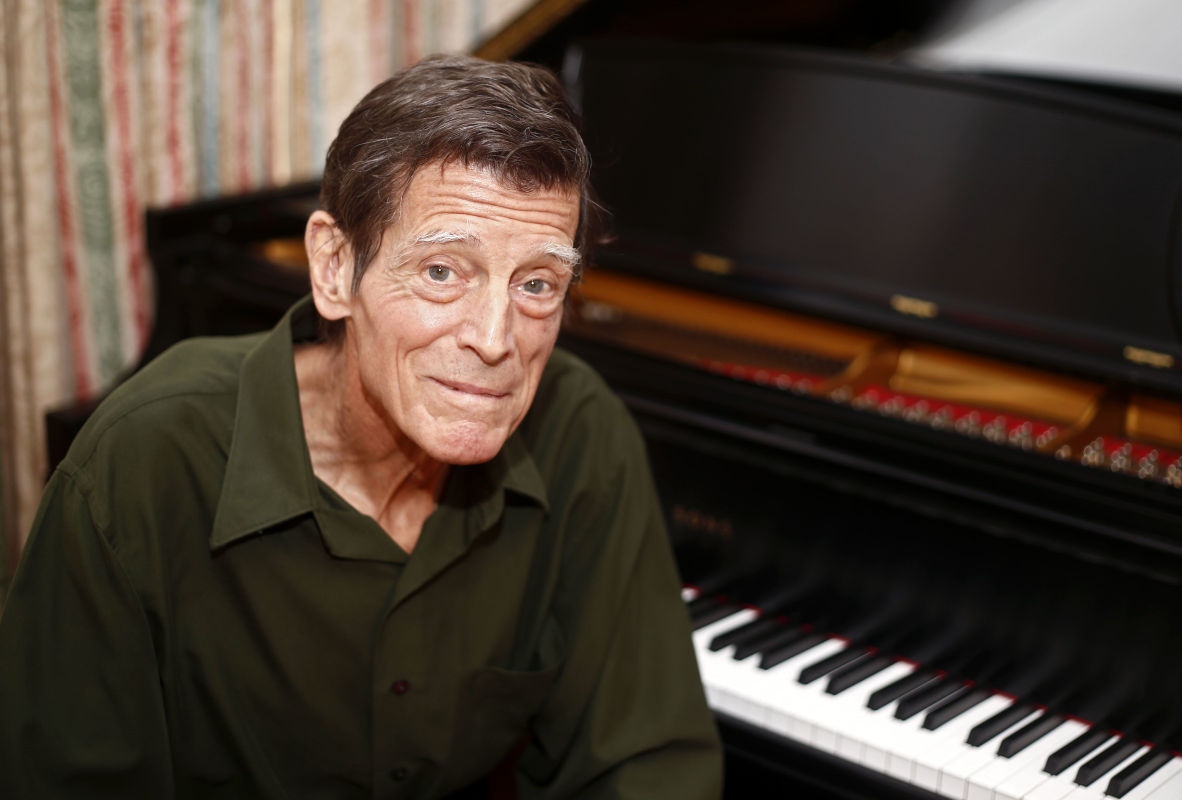
Jazz pianist Hod O'Brien sits for a portrait at the piano in his home at Lake Monticello.

  • Ryan M. Kelly
Jazz pianist Hod O'Brien sits for a portrait with his book "Have Piano... will Swing!" at the piano in his home at Lake Monticello.
On a winter night in 1957, a young jazz pianist was raising the temperature in a Greenwich Village club called The Pad by playing scorching-hot bebop music.
The 21-year-old musician, Hod O’Brien, was becoming known around the Big Apple as a person worth listening to. That evening, he had been invited to sit in with vibraphonist Teddy Charles and his quartet, which also was featuring alto saxophonist Hal Stein.
Jazz god Thelonious Monk happened to be in the audience that evening. After listening to O’Brien play a few tunes, the wildly creative pianist gave his nod of approval.
“I never spoke with Monk personally,” O’Brien said recently. “But the girl I was with that night heard him say that he liked the way I played.
“I’m proud of that.”
Each of the whispery words O’Brien spoke came with an effort. These days, the 79-year-old musician makes every word and musical note count.
This past April, O’Brien was diagnosed as having Stage 4 lung cancer. The march of the disease has affected his voice, but not his stellar playing.
O’Brien and his wife, jazz singer Stephanie Nakasian, have just returned to their Fluvanna County home after completing a successful tour of Europe and Japan. At every venue from the Far East to Denmark, enthusiastic fans turned out in droves to hear the master of bebop perform.
“In Japan and Europe, they get the bebop music Hod plays, and his records sell the best in Japan,” Nakasian said. “In Japan, Hod’s fans were coming up to him crying, because they were so happy they were able to see him perform in person.
“They brought stacks of his CDs that they wanted him to sign. One Japanese guy told us that he named his group the Hod O’Maura Band in Hod’s honor. They love his music there, and we had great audiences.
“The tour was for a number of reasons. Not only to see old friends and say hellos and goodbyes, but also to just play good music for people who really want to hear the music.
“At times, Hod has gotten stuck with playing background music in dining rooms. But when he’s playing in clubs for jazz fans, that’s the best.”
O’Brien will be doing that from 7 to 9 p.m. Saturday at Escafe, which is at 215 Water St. in Charlottesville. He also will be signing copies of his new book, “Have Piano … Will Swing! Stories about the Jazz Life.”
And at 8:30 p.m. Jan. 14, O’Brien will be featured on “Charlottesville Inside-Out,” hosted by Terri Allard on PBS television stations WHTJ and WCVE. Within a week of the airing, it will stream online at http://ideastations.org/watch/Charlottesville-inside-out.
The musician’s new book is replete with fascinating inside stories about jazz greats he has known and played with, such as Joe Puma, Stan Getz, Barry Harris and Chet Baker.
“The upside of the jazz life for me has been playing music with my heroes, and to be accepted by them as one of them,” O’Brien said. “The downside has been not getting recognition for it.
“I did get recognition from my fellow musicians, but not from the general jazz enthusiasts of the world.”
People have long pondered why super talents like the Danny Gattons and Hod O’Briens of the world never manage to reach the apex of fame in their profession. Although there isn’t a complete answer in O’Brien’s case, his wife offered a few reasons.
“When Hod played gigs, the top guys would come and hear him, but he’s kind of a quiet giant,” Nakasian said. “He’s not a marketinCDP Hod461g kind of hustling person who makes phone calls to get gigs.
“And he has never been one to hang out and shake hands with the fans, like so many musicians do. When he was selected in 2007 as one of the 10 pianists to perform in Japan on the Fujitsu 100 Gold Fingers Tour, that was a recognition of his stature in the jazz world.”
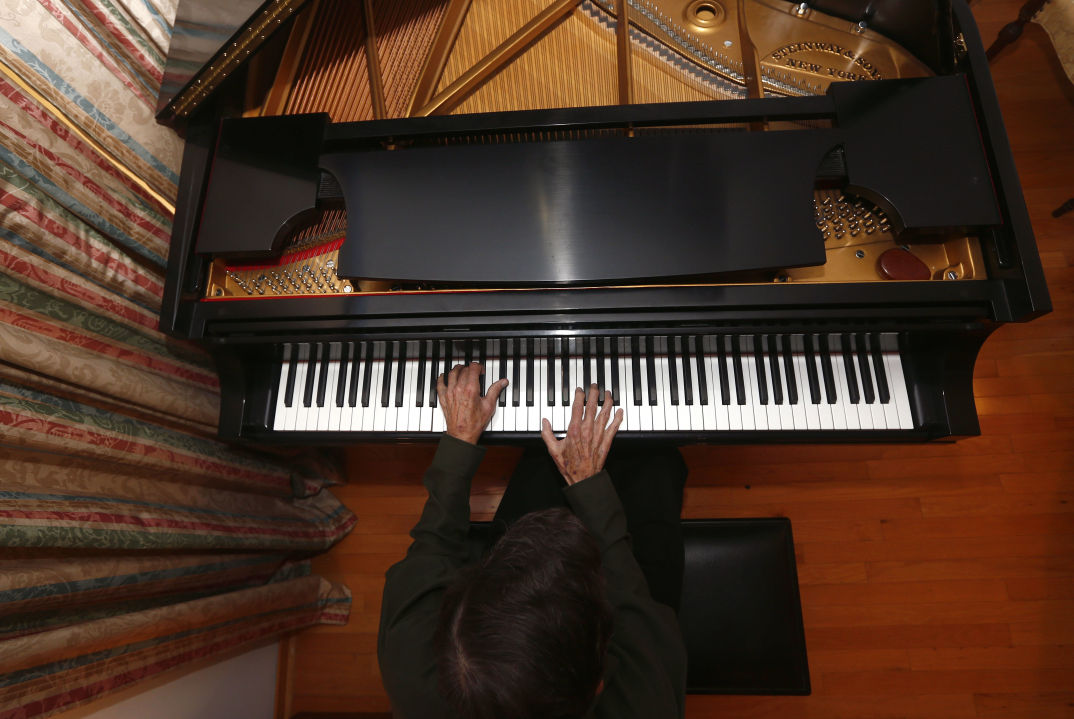
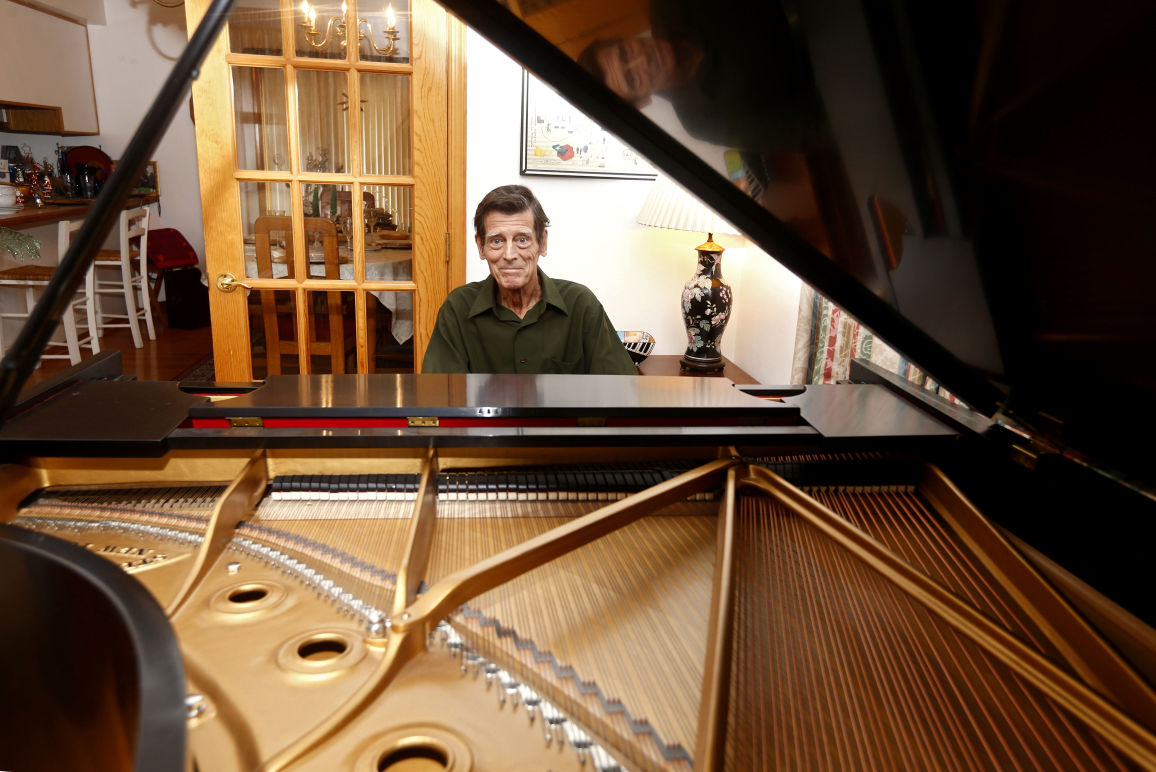
+4  Jazz pianist Hod O'Brien plays the piano at his home at Lake Monticello.
Ryan M. Kelly
O’Brien’s book does more than bring readers into smoke-filled jazz clubs from the 1950s onward. He provides insights, often humorous, into the personalities of many of the greats of the genre, such as Baker.
“It’s hard to say what kind of relationship I had with Chet,” O’Brien said of the immensely talented and mercurial jazz vocalist and trumpeter. “He stayed in my house and would leave in the morning, and I wouldn’t see him again until nighttime at the gig.
“I was always worrying about whether he would show up or not. But he never burned me, as he did other people.
“With me, he always did what he said he would, and he always paid me back when I lent him money.”
With each word a struggle and every breath a gift, O’Brien is now garnering strength from the music he plays. He also is relying heavily on the reservoir of stamina he stockpiled during decades of long-distance running.
“This stage of lung cancer is pretty much considered a terminal illness,” Nakasian said. “But what is happening is that a lot of people are living longer with it.
“Hod was on radiation and chemotherapy, and now he is on this brand-new drug, which is similar to the drug Jimmy Carter was on. It was recently announced that Carter’s cancer is gone, so we’re very optimistic.
“Hod will be 80 in January, and with the illness and everything, I asked the doctor if it would be OK for us to tour. He said yes, and for us to go on with our lives and continue to play music, because that was the best therapy we could have.”
Among jazz insiders, O’Brien is widely considered to be one of the best bebop pianists ever to slide a bench up to the 88 keys. Although he never broke into the mainstream of popularity like Oscar Pettiford or Miles Davis, those who have dedicated their lives to jazz — such as John D’earth — speak of him in reverential terms.
D’earth is the director of jazz performance in the University of Virginia’s McIntire Department of Music. The internationally acclaimed trumpeter has released a number of recordings of his own, and he has made appearances on recordings by top-tier entertainers such as Bruce Hornsby and the Dave Matthews Band.
“Hod is the kind of musician who has gone beyond skills to actually encapsulate an entire musical tradition every time he plays,” D’earth said. “And he has something original, personal and authentic to say about that tradition and about himself.
“What jazz musicians are trying to do is tell their own story, and to be very authentic in doing it — and that’s what he does. He’s one of the greatest jazz piano players on the planet still playing that style of bebop jazz piano.
“He’s the man, and a household name among the people who know and love this music. Somebody like Hod O’Brien lights the way for jazz musicians like myself. He is a shining example of what music has to show us about how we can live more fully, and be more fully who we are.”CDP Hod464
+4Jazz pianist Hod O'Brien plays the piano at his home at Lake Monticello.
Ryan M. Kelly
Bebop developed into a style of jazz in the early 1940s. Its beat, fast tempo and improvisations were refined and advanced by the likes of folks such as Sonny Rollins, Charlie Parker, John Coltrane, Dizzy Gillespie and pianist Barry Harris.
One of the highlights of O’Brien’s career came in 1995, when he performed with Harris during a concert at UVa.
“Barry is considered one of the elder statesmen of jazz, especially in the bebop era,” said Nakasian, who teaches voice at UVa and the College of William & Mary. “There’s not too many of those guys left — Barry is one and Hod is another.
“Having the two of them meet for the first time and play piano together was a real love fest.”
The first thing O’Brien ever played on the piano was “Frere Jacques,” which he performed at the age of 4 during a church pageant in Mount Kisco, New York. A few years later, he discovered boogie-woogie, and his devotion to music was born.
By the time O’Brien moved to New York City in the autumn of 1956, he was an acolyte of bebop music. And he was good enough to be able to hold his own during late-night jam sessions held in the lofts of established jazz musicians.
This exposure led to recording dates, club gigs and an invitation from Pettiford to join his quintet. O’Brien accepted, and the first job he played was a two-week stay at the Blue Note in Chicago.
When the quintet returned to New York, the musicians were booked to play the 5 Spot club. This was in early 1958, and they were alternating month-long gigs with Monk and his band.
Shortly after Pettiford left the U.S. in August 1958 to live in Europe, O’Brien accepted an invitation to play in J.R. Monterose’s group. After a hiatus from jazz in the 1960s to earn a degree in psychology at Columbia University, O’Brien re-engaged with the jazz world.
In 1974, O’Brien opened his own club in Greenwich Village, which he called St. James Infirmary. Baker helped fill the place with customers, and together they provided many magical nights for jazz fans.
The club foundered and went under, and as O’Brien explains in his book, it wasn’t because of the music. After shutting down the club, O’Brien went on to play at such renowned jazz spots as Gregory’s in New York City and venues as far away as Virginia and North Carolina.
It was during his stint playing at Gregory’s from 1977 to 1982 that O’Brien met Nakasian. They married, and after their daughter, Veronica, was born in the spring of 1994, they moved to the area to be near Nakasian’s parents.
Veronica Swift O’Brien recently won second place at the Thelonious Monk International Vocal Jazz Competition in Los Angeles. She was awarded a $15,000 scholarship and an option to record for Concord Records.
“On our way to Japan, we watched Veronica’s performance at the competition,” Nakasian said. “That was wonderful to see our daughter being recognized at such a high level and at such a young age.
“She joined us in Japan during the last week of the tour. She and I both sat in a little bit with Hod during his performances, so there were some very wonderful moments for us.”
O’Brien has given countless people memorable moments via his music, which appears on dozens of records. But those who know, respect and cherish him do so not just because of his musical mastery.
“Hod is one of the most kind and supportive people on the planet,” said D’earth. “He’s the consummate hipster — as cool as a cucumber, but a kind, kind person.
“He came to my class once and played the blues without stopping for 45 minutes. That’s Hod.
“I love and revere him, and so many people feel that way about him.”
Those interesting in learning more about O’Brien or purchasing his recordings can do so at www.hodobrien.com.
David A. Maurer is a features writer for The Daily Progress. Contact him at (434) 978-7244 or dmaurer@dailyprogress.com.


Tuesday, November 22, 2016

From Marshall to Williams to Jazz Photography

© -Steven Cerra, copyright protected; all rights reserved.


“There's a significance, too, in the way [Jim] Marshall's photographs tend to soften the sharp cultural divisions of his time. Barriers — between races, between classes, between celebrity and civilian — are broken down under the scrutiny of Marshall's lens. … In these photographs exists real proof of the ability of Americans to heal the wounds of divisiveness through music, one of humanity's great unifiers.”
- Brian Zimmerman, Managing Editor, Downbeat

The current issue of Downbeat [December/2016] has reviews of new books about the Jazz photographers Jim Marshall and Ted Williams by Bobby Reed [editor] and Brian Zimmerman [managing editor], respectively.

Jazz has been very fortunate to have a large part of its legacy preserved in the many iconic images taken through the years by photographic artists such as William Claxton, Francis Wolff, Herman Leonard, Chuck Stewart, Esmond Edwards, William Gottlieb, Paul Hoeffler, Bob Willoughby, Lee Tanner, Ray Avery, Jan Persson, Kathy Sloane, Raymond Ross, and Burt Goldblatt.

The music and its makers are fortunate, too, in having well-trained and highly experienced professionals such as Cynthia Sesso who work in relationship to the legacy of many of these Jazz photographers as archivists, photo representation and licensors, special projects researchers and exhibitions curators. You can find out more about Cynthia, the photographers she represents and her work on their behalf by visiting her website at http://www.ctsimages.com.

Cynthia has been more than generous to the editorial staff at JazzProfiles in granting us the privilege of using the images of photographers that she represents as part of many of the features that post to the blog.

As a note in passing, Cynthia represents photographer Ted Williams’ work, as well as, many of the others listed above.

Both the Jim Marshall collection and the Ted Williams compilations would make excellent choices as holiday gifts and are represented as such in the Downbeat December 2016 issue.

Let’s begin with Bobby Reed’s review which he entitles Williams’ Amazing Artistry:

“Sports aficionados around the world revere  Ted Williams (1918-2002), one of the I greatest baseball players to ever pick up a bat. Similarly, photojournalism aficionados around the world revere a man with the same name: Ted Williams (1925-2009), one of the greatest photographers to ever pick up a camera.
During his long career, Williams shot major events in sports, politics, culture and music. He photographed Dr. Martin Luther King and many marches of the Civil Rights Movement. He covered the war in Vietnam. He photographed the 1968 Summer Olympics in Mexico City. Williams' images were published in numerous magazines, including Ebony, Look, Time, Newsweek and Metronome.

Williams also enjoyed a fruitful relationship with DownBeat. He made a big splash with his extensive coverage of the 1958 Newport Jazz Festival. He would go on to provide the photos for some of the most famous DownBeat covers in history. Many of those images are compiled in the gorgeous, 352-page coffee-table book Jazz: The Iconic Images of Ted Williams (ACC Editions).

When Williams passed away in 2009, he left behind nearly 100,000 prints and negatives. Jazz is the first book dedicated to Williams' jazz photography, highlighting dozens of images that have never been previously published. The images are augmented with Williams' own comments as well as analysis from jazz historians and journalists.

Williams proves himself to be just as poetic with a pen as he was with a camera. Here's what he wrote about his portrait of Sarah Vaughan taken backstage in Chicago in 1948: "I was a student at The Institute of Design at the time, and called Sarah directly at her hotel (possible in those days) and received permission to photograph her in her dressing room for the next issue of a nonexistent college newspaper.

"Dave Garroway (the first Today show host) was a well-known Chicago disc jockey then and 'Sissy's' biggest and most vocal fan. When she came onstage, [Garroway] preceded her, scattering rose petals for her to walk on. This got a lot of press locally and did not resonate too well with a few bigots that took notice.

"About mid-week, a group sat in the front row and waited for Sarah to start singing, and proceeded to throw tomatoes at her.

"This photo was taken a few days before that notorious incident."

The book is chock-full of moments that will intrigue jazz buffs. For example, in 1953 at Chicago's Blue Note club, Williams photographed a rehearsal by members of pianist George Shearing's quintet. This resulted in a beautiful portrait of the group's handsome, mustachioed, bespectacled guitarist: Toots Thielemans, who would later become the most famous harmonica player in jazz history.

Williams' 1961 photo of Dizzy Gillespie and Lionel Hampton performing inside a CBS-TV studio captures the excitement and formality of the situation, with both men wearing dress shirts and neckties, Diz's cheeks inflated and Hamp's right-hand mallet a blur hovering above the vibraphone.

Williams' 1956 portrait of singer Carmen McRae has the elegance and sumptuous beauty of a Cecil Beaton portrait. Williams was equally skilled whether he was shooting a musician onstage or off. For an action shot of organ player Jimmy Smith, Williams bent down close to instrument's keys, giving the viewer a better-than-bird’s-eye-view of a master s fingers at work.

Among the DownBeat covers reproduced in the book are ones featuring Williams' photos of Oscar Peterson vividly gesturing as he explains a point (Oct. 29,1959), Art Farmer and Benny Golson laughing together (Sept. 1,1960) and Ray Charles using an engraved cigarette lighter (Sept. 12,1963).

Some of these DownBeat covers provide fantastic details about what was happening in jazz at the time. The June 30, 1966, cover has a moody shot of Dave Brubeck, hands on piano keys and head bowed. The headline for that cover story is a simple: "Dave Brubeck, Composer." But the same issue contains this screaming headline: "Don Ellis: The Avant-Garde Is Not Avant-Garde!" When Oscar Brown Jr. appeared on the cover of the Dec. 6, 1962, issue, with the headline "Rebel With A Cause," one of the other stories was "Lennie Tristano Speaks Out: What Happened To The Jazz In Jazz?"

The book's index of images is a who's who of the greatest names in jazz—Louis Armstrong, Count Basie, Tony Bennett, Art Blakey, John Coltrane, Miles Davis, Duke Ellington, Ella Fitzgerald and Stan Getz among them.

Williams was an important part of jazz history, and this book belongs in the collection of anyone interested in the history of America's greatest art form.                        
—Bobby Reed”

Ordering info:


Brian Zimmerman’s review of the new book about Jim Marshall’s work is entitled Classic Images.

The best photographs linger in the mind even after you shut your eyes. It's the same with great jazz songs, whose melodies seem to stay awhile, even after the last note sounds. In both, there's a sense of eternity, which is why the marriage of the two— as in the jazz images of photographer Jim Marshall—can seem timeless.

Marshall, the only photographer to be honored with a Trustees Award by the Grammy foundation, has long been known for his iconic images of rock musicians, many of which have become signifiers of the music itself—think Jimi Hendrix burning his guitar at the 1967 Monterey Pop Festival, or Johnny Cash extending his middle finger to the camera during his 1969 San Quentin Prison show. These photos do more than just document a moment: They capture spirit of the music itself. That kind of artistry requires more than merely good lighting and the right lens.

Jazz music—with its insistence on spontaneity—thrives on live performance, and during the 1960s, few cultural phenomena better embodied this notion than the Newport and Monterey jazz festivals. Even in those nascent years (the Newport Jazz Festival began in 1954, the Monterey Jazz Festival in 1958), there could be gleaned from these annual gatherings a sense that jazz was speaking to the masses. Few photographers tapped into the Zeitgeist of these moments better than Marshall, whose photos have been collected into a new coffee-table book, Jazz Festival: Jim Marshall (Reel ArtPress).

Compiled by photographer Amelia Davis, the bulk of the 600-plus black-and-white images within Jazz Festival are entirely new, revelatory even to the most dedicated fans of Marshall's work. Carefully catalogued across more than 300 pages, the photos capture in Marshall's typically illuminating style jazz's leading figures of the day—John Coltrane, Thelonious Monk, Nina Simone, Sonny Rollins—as well as the eager and intriguing crowds that flocked to California and Rhode Island to see them. Essays and introductions by President Bill Clinton and jazz journalist Nat Hentoff brace the reader for exploration, but the photos lend themselves to interminable searching.

Perhaps this is because Marshall's photographs seem to carve out greater slices of time than the mere split-second they document on film. Each image is packed with momentum, capturing a sense of motion, of possibility, of improvisation. In Marshall's shot of Duke Ellington and Paul Gonsalves at the 1961 Monterey Jazz Festival, notice how the image begins to play like a movie in your mind, how you can practically hear Gonsalves' iridescent solo unspooling like a soundtrack, how you can practically envision the action unfolding— Ellington clapping, urging his brilliant saxophonist on. There's life beneath these frozen moments, an energy preserved.

There's a significance, too, in the way Marshall's photographs tend to soften the sharp cultural divisions of his time. Barriers— between races, between classes, between celebrity and civilian—are broken down under the scrutiny of Marshall's lens. At Monterey in 1963, Marshall captures Miles Davis and Harry James—avatars of different styles, manners and modes—sharing a moment of levity over a cigarette. In a photo from 1961 Dizzy Gillespie, one of bebop's founding fathers, demonstrates a piano figure to Lalo Schifrin, a Jewish pianist from Buenos Aires, who adopted bop's language as his native tongue. The spirit of unity wasn't relegated to the bandstand, either. In photos of the audience — and there are dozens throughout this impressive volume — one can see a sliver of the population choosing to come together despite their differences. In Monterey, black and white audience members seek shelter from the same sun; in Newport, festival-goers of various backgrounds walk the same cobblestone streets. In these photographs exists real proof of the ability of Americans to heal the wounds of divisiveness through music, one of humanity's great unifiers.


People, though, are just one aspect of these festival photos. The landscapes of Monterey and Newport make for equally compelling subjects, and Marshall excels at distilling the essence of each place into a single image. In Monterey, festival-goers are seen stuffing pages of newspaper under the brims of their hats to keep the glare off their sunglasses, and in Newport, saxophonist Sonny Stitt leans against the hood of an elegant car, his far-off glance as majestic as the endless sky.

Marshall, who died in 2010 at age 74, started documenting musicians on film while still in high school, first in San Francisco for small-time publications, and later across the country for the likes of Rolling Stone magazine and Columbia Records. He was known for his forceful personality and voluble presence. His generosity of spirit is reflected in his work, and his photos are a gift to American history.

Marshall had no children of his own, but saw in his sweeping body of work the makings of a legacy. Of a series of photographs of Hendrix taken during the Monterey Pop Festival in 1967—exquisitely framed, expertly developed—he said, "These are my children."
—Brian Zimmerman

Ordering info: