Sunday, December 30, 2018

A Jazz Conversation with Ted Gioia

© -  Steven A. Cerra, copyright protected; all rights reserved.


Ted Gioia is one of my very favorite Jazz artists.[“Gioia” is pronounced “Joy-a”]


But I’ve never heard him play.


For me and his many other fans, Ted brings Jazz to life by writing books about it.


And what magnificent books they: grand in conception, well-researched and well-thought out and all are beautifully written.


Thankfully, many of the literary Giants of Jazz are still with us.


In Ted Gioia, it’s great to see a new one coming over the horizon to join their ranks.


If you have yet to read Gioia on Jazz, you are missing out on one of Life’s real joys.


How and when did music first come into your life?


I have a picture of myself seated at the piano at the age of 11 months.  A note in my mother’s handwriting mentions my interest in making sounds at the instrument.  The note says: “Baby likes to play piano and drink coffee.” You could still describe me in the same terms today, so many years later.


I didn’t start formal piano lessons until I was in fourth grade, but long before that I was playing by ear at the instrument.   For as long as I can remember, I was drawn to music.

What are your earliest recollections of Jazz?


I didn’t discover jazz until I was a teenager.  It is no exaggeration to say that my first visit to a jazz club was a life-changing event.  Up until that time, I had dabbled in both classical music and rock. But after my first experience hearing live jazz, I put both of those on the back burner.   From my mid-teens until my late twenties, I devoted around three hours per day to the piano. It was my great joy and solace—it still is.


Alas, in my early thirties, I developed arthritis.  This was nothing short of a personal crisis for me—and forced me to change how I saw myself and my calling in life.  I had to limit the amount of time I spent at the piano, and I needed to redirect my energies into other pursuits. My productivity as a writer is closely related to my inability to put all the hours into musical making that I once did.

What advice would you give to a younger jazz writer?


I would offer a few suggestions.  


First, always strive for honesty, even if it makes you unfashionable.  Instead of jumping on bandwagons, put faith in your ears and your own emotional responses to the music.  You will be surprised how often the consensus opinion will eventually come to match views of yours that once seemed hopelessly out of touch.  Nothing gets staler faster than the flavor of the month, but music that touches people’s emotions and delights their ears has a way of proving itself over the long haul.


Second, listen to music sympathetically, and try to understand where the artist is coming from, instead of imposing a one-size-fits-all ideology on what you hear.


Third, don’t write to try to impress other critics.  Write to serve your reader. Be suspicious of critics who don’t seem to give sufficient respect to their reader’s enjoyment of music.   I believe David Murray is the person who said it best: “People don’t want music they have to suffer through.” Jazz is not a form of penance—it is a means of enchantment.


Fourth, listen, study and learn.   Always try to expand your knowledge and musical horizons.


Five, try to write as well as you can.  Describing music in words is almost impossible, and the only path to success is through total commitment to finding the best words, the perfect phrase, the proper metaphor, the right style.


Six, don’t be afraid to show your love of the music in your writing.  Sometimes you may get attacked for doing this. You can wear those attacks like medals of honor.

What do you mean by finding the “right style” to write about music?


I have changed my writing style for every book.  The proper tone for writing about West Coast jazz is different from the approach needed for the Delta blues.  Listen to the music, and it will direct you to the right prose style.


Although you write about many topics, what made you decide to become a jazz writer?


I stumbled into being a jazz writer.  I wrote jazz reviews for my college newspaper as a way to get record companies to send me free albums.   I was financially strapped, and this was the only way I could find to get my hands on the music I craved.


Later I wrote my first book, a quirky work called The Imperfect Art.  I saw this book as a work of cultural criticism, but almost everyone else saw it as a jazz book.  From that moment on, I was perceived to be a jazz writer—which was fine by me. That said, I still see my interest in jazz as one part of a larger concern with issues of society, art and culture.


My recent book The Birth (and Death) of the Cool was, to some extent, an attempt to return to the approach I had followed with The Imperfect Art—namely to use jazz as a platform for discussing bigger cultural issues.

Is there a form of writing about jazz that you prefer: insert notes, articles, books …?


I fear that I am out of touch with the rest of the modern world.  I prefer to write long essays, but the marketplace wants short articles. I have learned the new rules, and have figured out to blog and tweet.  Still, my main interest is in writing in-depth works of criticism.

Conversations about jazz invariably turn to “impressions” and “favorites.” So let’s turn to “impressions;” who were the jazz musicians who first impressed you and why?”


The first jazz recordings I purchased were by Miles Davis, Dave Brubeck, Thelonious Monk, Bill Evans and Duke Ellington.  Around this same time, I also developed an interest in ragtime and early jazz. During my mid-teens I learned a number of Scott Joplin rag pieces, and also studied the music of Jelly Roll Morton.  But before my twentieth birthday, I began focusing on modern jazz. That included an intense immersion in bebop. Later I turned my attention to a wide range of post-bop styles. To some degree, I learned the jazz tradition in chronological order—starting with the earliest ways of playing jazz, and working forward.


Many jazz players would eventually influence my personal approach to improvisation, but I would call particular attention to Lennie Tristano, Lester Young, Charlie Parker, Keith Jarrett, Rahsaan Roland Kirk, Paul Desmond, Chet Baker, Clifford Brown, Bud Powell, Art Pepper, Herbie Hancock, Paul Bley, Art Tatum, Lenny Breau, Denny Zeitlin and Wes Montgomery—as well as some of the names I already mentioned, especially Duke Ellington, Bill Evans and Miles Davis.


I also listen widely outside of the jazz genre.   Tango, Brazilian music, blues, contemporary classical music, movie soundtracks, singer-songwriters, choral music, you name it….I am always on the lookout for fresh new sounds.

Staying with your impressions for a while, what comes to mind when I mention the following jazz musicians:


Louis Armstrong?


Armstrong may well be the single most important individual in the history of jazz.   To understand his impact, you need to listen carefully to jazz before Armstrong, and then gauge what Louis added.  Compare King Oliver’s “Dipper Mouth Blues” from 1923 with Armstrong’s “Potato Head Blues” from 1927—and marvel over how far the art of jazz improvisation was pushed forward in just four years.  And almost entirely due to the contribution of a single person.


Duke Ellington?


I continue to return to Ellington’s music for inspiration.  I especially admire the music he made between 1938 and 1943.  During this period Ellington set a standard for jazz composition that no one has surpassed.


Lester Young?


As you know, I have a maintained a lifelong loyalty to the musical values of cool jazz.  And my allegiance is undimmed by my realization that jazz has always been primarily a hot art form.  Those who pursue a cool aesthetic must have the courage of their convictions—both because it is bloody hard to live up to its demands on the bandstand, where one invariably gets caught up in the heat of the battle, and also because the critics and opinion leaders in jazz have often been indifferent, if not actually hostile, to the cooler approach.  So Lester is more than just a musician for me; he is also a kind of hero and role model. No one did more than Lester to shape the values of cool jazz, and he did it in the face of intense opposition.


Musicians today could learn a lot from him—particularly in his ability to make a complete and satisfying musical statement in just 8 or 16 bars.   I also hazard to say that jazz would have a larger audience nowadays, if younger musicians came to grips with what Lester could teach them.

Dizzy Gillespie?


If you haven’t heard what Dizzy did in the 1940s, you won’t understand bop, and you won’t adequately comprehend how much he raised the bar for everyone else.  His playing on “Salt Peanuts” from 1945 may be the most exciting trumpet solo I’ve ever heard.

Shorty Rogers?


A beautiful player, an underrated composer and a lovely person.  I consider myself fortunate to have had the chance to meet with him and talk about his life and music.


Gerry Mulligan?


Another pioneer of cool jazz.   Gerry played the decisive role in establishing the cool aesthetic on the West Coast.  To some extent, critics began perceiving California jazz through the prism of Mulligan’s contribution.  This had an unfortunate side effect of obscuring the work of West Coast players who didn’t fit into the cool pigeonhole, yet you can’t blame Mulligan for that.   He had a fresh, uncluttered approach—as with Lester Young, Mulligan could be a valuable role model for jazz players even today.

Lennie Tristano?


I didn’t pay much attention to Tristano until I was in my early twenties.  But when I was studying at Oxford University, I performed in a quartet with a British saxophonist named John O’Neill—he later wrote some very well-known sax and flute method books—and he was a Tristano devotee.  John opened up my ears to Tristano. The more I listened to Lennie, the more I became convinced that he was a hugely important figure who had never received his due. I still feel that way. In many ways, Lennie was decades ahead of his time, especially in his concept of phrasing.


Miles Davis – John Coltrane?


I’m sure many jazz insiders are tired of hearing about Kind of Blue.  In the parlance of the music business, it is perhaps “over-exposed.”  Yet I still think this might have been the most talented jazz band to ever perform as a working group.  Miles and Trane each represent what sociologist Max Weber would have called “ideal types,” and to hear them perform together is magical, and will always be magical.

Bill Evans?


I cherish the 1961 Village Vanguard recordings made by Bill Evans, Scott LaFaro and Paul Motian.  This would be one of my desert island disks.

Wynton Marsalis?


Wynton gets a lot of criticism, but I believe he has made a substantial contribution to the music.  His best work will still be heard and admired many years from now. He has also matured into a fine ambassador for jazz, and a caring mentor to younger musicians.

Dave Brubeck?


Dave is an intensely creative artist who believes firmly in the process of improvisation—I suspect that he seeks to surprise and astonish himself when he plays, and this openness to the inspiration of the moment is one of the reasons why his recordings still sound so vital decades after they were made.   I admire his music, and I also admire him as a person. Mr. Brubeck is a class act.


The Imperfect Art: Jazz and Reflections of Modern Culture is your first published book. What is the main theme of this work; how and why did this book come about?


I came up with the idea for this book while studying philosophy at Oxford.   I had the crazy idea that jazz could elucidate key issues in philosophy and aesthetics.  I began writing the book the day after I finished my final exams.


I take some pride in the fact that many people consider this one of the strangest jazz books ever written.  It definitely has maintained a cult following—I still hear from readers who respond favorably to its strangeness.


When you wrote West Coast Jazz: Modern Jazz in California, 1945-1960 [published 1992], this style of jazz had not been in practice for over 25 years. What motivated you to research and write a book-length treatment on the subject?


I grew up in Southern California, and felt a personal affinity to the West Coast jazz music of the 1950s.  I had heard too many smug critics dismiss this music as some sort of marketing gimmick. I disagreed vehemently with the conventional wisdom, and decided I wanted to try to change it.  So when my editor Sheldon Meyer asked me to write a follow-up jazz book to The Imperfect Art, I decided to make the plunge and write the history of modern jazz on the West Coast.


This was a brash decision.  I was too young to write the story of this period.  There were many jazz critics who had been active on the West Coast during that period, and they would have been in a much better position to write a book on the subject.  But people like Leonard Feather and Ralph Gleason had no intention of tackling this subject—like many of their peers, they were somewhat scornful of the West Coast tradition.  I stepped in to write the book, because the history needed to be documented and dealt with on its own terms. This book was a true labor of love.


I think the book had an impact.  In the years following the publication of West Coast Jazz, fewer and fewer critics offered up smug rebukes to this body of music.  The musicians associated with the West Coast started to get a larger dose of respect.  I like to think I played a part in this change.
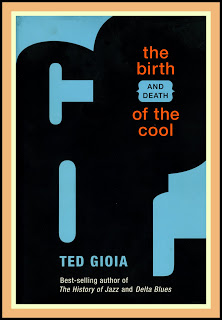


What is the premise of your book The Birth (and Death) of the Cool? How did you arrive at the idea for this book? What are some of the consequences of the “death of the cool?”


Ever since I wrote my West Coast jazz book, I wanted to write a related book of cultural criticism that dealt with the nature of “cool” as a social force.  When I finally sat down to write the book, and pulled together my research—which I had been collecting for more than fifteen years—I came to the surprising realization that the essence of cool was under attack in the current milieu.  


This forced to me recalibrate my entire book.  Instead of writing a book on cool as a timeless concept—which I had originally envisioned—I needed to chart the rise and fall of cool over a half century period.  I studied this shift via motion pictures, books, television show, music, politics, business, religion and other spheres of our modern life.


The basic premise of the book is that post-cool attitudes and lifestyles are on the rise, and changing our cultural landscape.  As a nation, we are losing our cool, so to speak. The Birth (and Death) of the Cool has both fervent fans and detractors, and may be the most controversial thing I’ve ever written.


The New York Times labeled it “… one of the 100 notable books of 2008;” The Economist considers it to be “… one of the best books of 2008.” Talk a bit about why the subject of your book Delta Blues is so compelling and important?


When I was delving into jazz during my teens and twenties, I paid insufficient attention to the blues tradition.  I had concluded—mistakenly, I now realize—that blues was simple music. But as I matured as a music writer, I came to realize that the early blues was much richer and deeper than I had ever suspected.   During the course of the 1990s, my interests gravitated more and more toward traditional African-American music. I wrote a book on work songs and another book on the use of music in healing and ritual, and these projects further reinforced my sense of the power and depth of pre-commercial musical values.  At a certain point, I decided to make the plunge and immerse myself in the blues heritage. My Delta Blues book was the result of that process.  


Why did you decide to take on a book-length study of the History of Jazz? As Ken Burns found out, somewhat to his amazement let alone his consternation, when his television documentary on the subject aired on PBS, jazz fans seem to take exception to almost all aspects of his work, especially in terms of the artists he included and those he decided to leave out of his retrospective. How did you approach the project? Did you have a particular theme in mind?  What segments of the history are you particularly pleased with and are you satisfied with the reception the work has received from its reviewers?


I don’t think I would have had the courage to write an all-encompassing history of jazz without the support and encouragement of my editor at Oxford University Press, Sheldon Meyer.  He had confidence that I could rise to the demands of the project, and I worked hard to live up to his expectations. I was fully cognizant that Sheldon had served as editor for many of the finest jazz writers of recent decades—Whitney Balliett, Martin Williams, Gary Giddins, Gunther Schuller, Francis Davis, Stanley Crouch, Richard Sudhalter, Gene Lees, Ira Gitler and many, many others.  His advice and support were crucial to the whole endeavor.
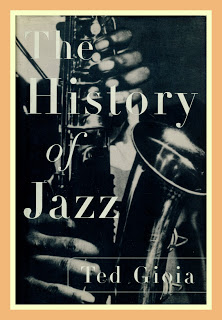


How did I proceed?  I based my work on deep, intensive listening and aimed to convey to readers something of my own joy in the music, but also took seriously non-musical factors—I was always striving to place jazz in the proper socioeconomic and cultural perspective.  I aimed for scrupulous fairness—even when I presented revisionist views, I put them in the context of opposing perspectives, so readers could judge for themselves. Above all, I worked hard at my writing—I wanted the work to read like an unfolding story, and not just a compendium of facts.


I will leave it up to readers to decide on the ultimate success of the venture.  But clearly the response has been sufficiently positive to justify a revised and expanded edition of the work, which came out a few months ago.    


If you could write a next book about any jazz-related subject, who or what would be the focus of such a book?


My next book will be a study of the jazz repertoire.  It will be called The Jazz Standards.  This will be a fairly big book—a 200,000 word manuscript.  Oxford University Press will be the publisher.

Of all your writings about jazz over the years, which ones are among your favorites and why?


I have always written from a passion for the music.  I would be a more commercially successful writer if I paid more attention to what publishers and editors want, but I find it hard to operate that way.  My focus in writing has changed over the years, based on whatever I am most passionate about at time. I pick subjects that delight me, even if everyone else tries to dissuade me.  Because of this approach, I usually am most enthusiastic about whatever I am writing about on any given day.

What are you thoughts about blogs and websites devoted to jazz?


I visit the leading jazz websites almost every day.  As the mainstream media cuts back its coverage of jazz, blogs and web forums are filling the gap.   If you checked out the jazz bookmarks on my web browser, you would probably find around 40 jazz websites that I visit with some regularity.  


I realize that your interests are wide-ranging, but could you please conclude this “interview” by talking a bit about what excites you as you look out over the current jazz scene?


I try to listen to some new music every day of my life.   Some days, I may listen to as many as four or more new CDs.   This is an excellent practice, and I would recommend it to other music writers…and music lovers.


If you practice this kind of expansive listening, you will find that there are countless talented and exciting artists out there—and not always on the major labels.  Indeed, nowadays, they usually aren’t on the major labels.  I am especially struck by the global spread of jazz talent. Promising artists and interesting music are everywhere—but you need to put out the effort to find them, since you probably won’t hear them on the radio and you almost certainly won’t see them on TV.


In short, if you put in the time and energy necessary to hear what is happening right now—this year, this month, this week, this very day—you won’t be disappointed.  


Saturday, December 29, 2018

Pacific Jazz Samplers - A Tribute to Pacific Jazz

No Joy in Mudville Bill Holman and The Metropole Orchestra Live at T...

Art Pepper and Marty Paich - "Airegin"

A Conversation About Jazz With Bill Kirchner

© -Steven Cerra, copyright protected; all rights reserved.


Over the years, I learned a great deal about Jazz from Bill Kirchner. Not first-hand, mind you, as I live on the Left Coast and he lives on the other one. So we can’t just get together for an espresso or a brewski or a glass of vino while Bill expounds on his unique understanding of Jazz.

No, I’ve had to learn from Bill vicariously - through listening to his recordings, reading his many writings about the music, and via the occasional correspondences we’ve exchanged over the years. The latter are mostly to do with requests for copyright permissions which Bill, being the heckuva nice guy that he is, always grants.

Phone calls and video conferencing would be good, but he’s a busy guy and I’m more than a bit aurally challenged these days so that approach has its limitations.

What to do; what to do?

And then I came across the following from - “Writing About People: The Interview” in William Zinnsser’s On Writing Well:

“Get people talking. Learn to ask questions that will elicit answers about what is most interesting or vivid in their lives. Nothing so animates writing as someone telling what he thinks or what he does — in his own words.

His own words will always be better than your words, even if you are the most elegant stylist in the land. They carry the inflection of his speaking voice and the idiosyncrasies of how he puts a sentence together. They contain the regionalisms of his conversation and the lingo of his trade. They convey his enthusiasms. This is a person talking to the reader directly, not through the filter of a writer. As soon as a writer steps in, everyone else's experience becomes secondhand.

Therefore, learn how to conduct an interview.”

And, to take it a step further, how about conducting an interview that essentially conducts itself by creating a series of questions that attach to an email, contacting Bill and asking if he would be willing to write responses?

No pressure. No time constraints. No impediments.

Bill takes his time and constructs thoughtful and instructive responses that make my pedestrian questions sound better than they are and - Viola! - I’m learning more about Jazz from Bill Kirchner.

So that’s what I did and the following is what he shared in return - all 13 pages of it!

Did I mention that Bill is a heckuva nice guy?

© -Steven Cerra and Bill Kirchner, copyright protected; all rights reserved.

A Conversation About Jazz with Bill Kirchner

How and when did music first come into your life?  
Probably around the age of five—which would have been 1958.  There were a number of TV cop shows that featured modern jazz scores, beginning with Peter Gunn.  Most of them only lasted a season or two:  Mr. Lucky, Johnny Staccato, Richard Diamond, Dan Raven, Checkmate, etc.  But all of them had scores by Henry Mancini, Pete Rugolo, John Williams, and others.  They used sounds that intrigued me; I later discovered that these sounds were called “harmonies.”

What are your earliest recollections of Jazz?  
Again, probably the Peter Gunn series, which was popular beginning in the fall of 1958.  It had an innovative jazz score by Henry Mancini that was very influential, and they even showed real jazz musicians like Victor Feldman and Shorty Rogers on camera.  (You can see many of these episodes today on YouTube.)

By the way, Peter Gunn also was my introduction to the concept of sex. Even at the tender age of five, I understood that Lola Albright, who played Peter Gunn’s singer-girlfriend, was stunning. She died only this year at age 92.

What made you decide to become a Jazz musician?  
On June 19, 1965, I attended the Pittsburgh Jazz Festival with my parents.  The festival was produced by George Wein and lasted for three days; we went on a Saturday night.  The lineup that evening included the Walt Harper Quintet, a local group; Earl Hines with a trio; Carmen McRae with the Norman Simmons Trio; the Stan Getz Quartet with Gary Burton, Steve Swallow, and probably Roy Haynes; the John Coltrane Quartet with McCoy Tyner, Jimmy Garrison, and Elvin Jones; and the Duke Ellington Orchestra.

I had never heard Coltrane before, and he left my parents and me baffled; this was nine days before he recorded Ascension.  But we hung in for Duke’s band at the end.  Overall, this was a mind-boggling experience for a kid who was just short of twelve years old.  From then on, I somehow knew that this was what I wanted to do.

Many conversations about Jazz invariably turn to “impressions” and “favorites.” Why do you think this is the case?
I’m not quite sure what you mean.  In my case, I’m a devout eclectic, so I’ve been affected musically by many, many people.  To narrow these to a handful would be impossible and pointless.

Okay, so let’s turn to “impressions”; who were the Jazz musicians who first impressed you and why?
All of the aforementioned.  Most of all Duke Ellington, whose band I first heard on The Ed Sullivan Show when I was ten. The sound of that saxophone section playing “Satin Doll” with those voicings lingered in my head for weeks thereafter.

Staying with your impressions for a while, what comes to mind when I mention the following Jazz musicians:

Louis Armstrong
The father of “vernacular music,” which was made possible by the microphone.  Anyone with any kind of contemporary rhythmic concept—be they singer, instrumentalist, or composer-arranger—owes a debt to Armstrong.  By the way, my favorite Armstrong performance, both playing and singing, is his 1957 recording of “You Go To My Head” with Oscar Peterson. If you want to understand where Miles Davis came from, and why Armstrong is still relevant today, listen to this.  I often play it for students, and many of them find it a life-changing record.

Duke Ellington
The most important and innovative name in jazz composing and arranging. Though I’m puzzled by people who put him in competition with composers such as Stravinsky, Bartók, and Copland. Ellington was a unique voice, and he could do things that those others could not do, but they could likewise do things that he could not do.  So what’s the point of such comparisons?  Music is not the National Football League.  More to the point, I’m one of a zillion jazz composer-arrangers who have been deeply affected by his work (and Billy Strayhorn’s).

Coleman Hawkins
The father of jazz tenor saxophone, and along with Art Tatum, the first major jazz soloist for whom harmony was the primary consideration.  There would not have been a Don Byas, Charlie Parker, Sonny Rollins, John Coltrane, and many others as we know them without Hawkins.  Though all of those players had other influences as well—most notably Tatum and/or Lester Young.

Lester Young
The father of modern linear thinking in jazz.  Including an even-eighth-note concept that he probably got from Bix Beiderbecke and Frank Trumbauer and that was expanded upon by Charlie Christian and Charlie Parker, as well as over-the-bar phrasing that Christian and Parker likewise embraced. There probably has never been a more emotionally naked jazz soloist than Lester; his fondness for singers, especially Frank Sinatra and Billie Holiday, reflects this. Too bad that Sinatra and Lester never did an album together. (Or for that matter, Sinatra and Miles Davis.)

Dizzy Gillespie and Charlie Parker
The yin and yang of bebop.  Or as Dizzy called Bird, “the other half of my heartbeat.”  Bird was bebop’s most inspired and inspiring voice, and Dizzy was its master theoretician, teacher, and organizer; he had a self-discipline that Bird lacked.  I think that both Dizzy and Miles reached their peaks as players in their early 40s: circa 1957-62 and circa 1966-71, respectively.  Bird of course died young because of his excesses, so it’s impossible to know how or even if he would have developed further.

Stan Getz
A master player who has been more of an influence than he’s often been credited.  As Coltrane said, “We’d all sound like that if we could.”
My favorite Getz album is Sweet Rain from 1967, with Chick Corea, Ron Carter, and Grady Tate—Getz at his most challenged and inspired.  Though Focus, with Eddie Sauter’s masterly string writing, is a close second.

Lest I forget, Getz the sophisticated lyricist was also capable of the straight-ahead, stomping virtuosity of the 1955 “S-H-I-N-E.”  As with Sweet Rain and Focus, this too is one of his most acknowledged recorded masterpieces.  Getz’s virtuosity was a multifaceted one.

John Coltrane
As I said, I first heard Coltrane when I was very young, but it took me many years to fully appreciate him. One of the most underappreciated things about him was his encyclopedic knowledge of the American Popular Song.  As a result, he and Red Garland could walk into those 1957-58 Prestige record dates unprepared and effortlessly record many obscure tunes. No matter how “out” his music got later on, Coltrane retained a basic, grounding lyricism that was missing in many of his less-capable imitators.  Not to mention his deep harmonic knowledge and astounding technical virtuosity.

Miles Davis-Gil Evans collaborations
One of the greatest partnerships in twentieth-century music—matched only by Ellington/Strayhorn and Sinatra/Nelson Riddle.  Miles was Gil’s greatest interpreter, and Gil could frame and inspire Miles as no one else could.  (When Miles died, he and Johnny Mandel were discussing doing an orchestral project.  Given the success of Mandel’s Here’s To Life album with Shirley Horn—which Miles was scheduled to have played on—one can only lament that Miles and Mandel never got together.)

Gil was a master colorist, and part of the thrill of looking at his autograph scores is seeing some of the unconventional sonorities he came up with. (One chart for Porgy and Bess had three bass clarinets in both unison and harmony; they sounded like a grainy cello section.) But he was more than just a colorist. Compare his 1956 five-horn chart on Blues for Pablo for Hal McKusick with the much larger version of Blues for Pablo on the Miles Ahead album a year later.  There’s a structural and harmonic strength in both versions that makes the size of the bands irrelevant.

Miles Ahead, Porgy and Bess, and Sketches of Spain all belong in any serious jazz record collection; even the lesser Quiet Nights, a relative failure, has its charms.  Gil continued to do uncredited work on Miles’ small-group albums for another two decades.  Given the value of the Miles and Gil projects and Gil’s best albums as a leader and for others, Evans deserves his reputation as jazz’s finest orchestrator after Ellington and Strayhorn. That reputation is undiminished today despite his relatively small output.  

Gerry Mulligan, Bob Brookmeyer, and the Concert Jazz Band
Mulligan’s 13-piece CJB began in 1960, went full-steam for a little over a year, then lasted part-time until petering out at the end of 1964. Brookmeyer was its “hirer and firer,” chief arranger, and (along with Mulligan) principal soloist.  Other contributors to its book were Al Cohn, Bill Holman, the young newcomer Gary McFarland, Johnny Carisi, George Russell, and (only occasionally) Mulligan.

The CJB was a successful attempt at preserving the airiness of Mulligan’s small groups while maintaining the punch and colors of a big band.  Brookmeyer, Mel Lewis, and Thad Jones—all CJB sidemen—eventually got impatient with Mulligan’s musical conservatism; Jones called it a “velvet wall.”  In the later Thad Jones-Mel Lewis band, they sought to expand the possibilities of the big band/small band dichotomy.

On Mulligan’s own terms, though, the CJB was a remarkable ensemble unlike any other.  In a sense, it was an expansion of the Red Norvo and Claude Thornhill bands of the Swing Era.  All three bands excelled in a kind of quiet ecstasy built around relatively subdued instruments: the xylophone (Norvo), French horns and clarinets (Thornhill), and a single clarinet lead and Mulligan’s light baritone (CJB).

The pleasures of the CJB’s music are real and considerable, but as with Mulligan’s “pianoless” small groups, I find that I need to wear a different set of ears for it.  This music is the antithesis of the simple, roaring bluesiness of Count Basie or the raw physicality of Maynard Ferguson and Buddy Rich.  Sometimes that’s just fine, sometimes not.  “Velvet wall” indeed!

Kenny Clarke-Francy Boland Big Band
This is a band that has grown on me over the past 45 years.  It existed in Europe in the 1960s and was half top European players and half American expatriates.  It was co-led by the pioneer bebop drummer Kenny Clarke and the Belgian pianist-composer-arranger Francy Boland.  Boland was the band’s principal writer.

The Clarke-Boland band in its heyday was often compared with the Thad Jones-Mel Lewis band, but I don’t believe that the comparison holds up too well.  Both bands were brimming with jazz virtuosi, but I generally don’t find Boland’s writing nearly as satisfying as Jones’s (and Bob Brookmeyer’s).  Boland’s writing was always competent, but it seldom had the point of view or personality that Jones’s and Brookmeyer’s had.  With Thad and Bob, one often got the sense of writers trying to do new things within older traditions.  I seldom get that from Boland.  (A notable exception: the CBBB’s 1971 album Change of Scenes with Stan Getz as guest soloist.  I facetiously call this recording “Francy Boland on acid.”)

Another crucial difference:  the Jones-Lewis band had Thad out front as soloist-conductor, whereas with the CBBB, both co-leaders remained in the rhythm section.  Jones was an inspiring conductor and a natural-assed bandleader, whereas both Clarke and Boland were seemingly reserved men devoid of any showmanship.  Despite the CBBB’s collective excellence, there was no one overtly in charge.  Interestingly, the band in 1967 permanently added Kenny Clare as a second drummer.  It was never clear why this was done, though one wonders if the added visual dimension had something to do with it.

Here’s my favorite video of the CBBB:  a 1970 concert with Dizzy Gillespie as guest soloist:  https://www.youtube.com/results?search_query=dizzy+gillespie+clarke-boland
With Dizzy out front, the band instantly had a dimension it usually lacked:  a soloist-frontman who was one of jazz’s foremost showmen.  It’s great fun to watch the band respond to Dizzy, and vice versa.

Thad Jones–Mel Lewis Orchestra
The most important large jazz band of the past half-century.  More than anyone else, Thad Jones gave conventional big-band writing (i.e., 8 brass, 5 saxophones-with-doubles, rhythm) a new lease on life.  And he and Mel changed listeners’ expectations of a big band. With Jones-Lewis, the band could shift effortlessly from complex ensembles to the looseness and hipness of the best small groups.  Big bands and composer-arrangers all over the world took notice.

I first heard Bob Brookmeyer’s “ABC Blues” (from the first Jones-Lewis album) when I was 13 years old.  Though I had already heard Ellington, Basie, Harry James, Buddy Rich, and Glenn Miller, I had never heard a big band like this, and it hit me hard.  I devoured all of the available Jones-Lewis albums when I was in high school, and when I went to New York to attend college, Monday nights at the Village Vanguard became a major part of my musical education.  Watching Thad conducting that band was an experience I’ll never forget.  Later, I got to know both Thad and Mel, and still later I subbed in the saxophone section of Mel’s band (after Thad’s departure in 1979) in the 1980s.

Given all this, I’ve been dismayed in recent years that several jazz-history texts have paid little or no attention to the Jones-Lewis band and its successors, the Mel Lewis Jazz Orchestra and (since Mel’s death in 1990) the Vanguard Jazz Orchestra.  This to me is inexcusable.  So I’m gratified to see the newly-published book 50 Years at the Village Vanguard: Thad Jones, Mel Lewis and the Vanguard Jazz Orchestra.  I hope that this book will shine a needed light on one of the seminal ensembles in jazz history.  

What brought about your interest in Jazz composition – arranging - orchestrating? How did you go about acquiring these skills?  Who were/are some of your greatest influences in these areas?
As I’ve said, from the age of five I heard sounds that captivated my ears—sounds that I later learned were polychords and contemporary harmonies.  Jazz and contemporary classical music had more of those sounds than did any other musics—certainly more than rock, country, and folk musics.  So my tastes as a listener were set, and when I was in high school, I was lucky to have a hip band director named Sam D’Angelo.  We had a “stage band,” as they were then called euphemistically, and for that band I wrote my first charts and played my first jazz solos.

As a composer-arranger, I’ve been most influenced by writers such as Duke Ellington, Billy Strayhorn, Eddie Sauter, Gil Evans, Gerry Mulligan, Thad Jones, Bob Brookmeyer, Bill Holman, Gary McFarland, Clare Fischer, Wayne Shorter, Herbie Hancock, Rod Levitt, Mike Abene, Mike Gibbs, and others.  When I lived in Washington, D.C. from 1975 to 1980, I was extremely fortunate to work for several years with a big band led by Mike Crotty, who at the time was staff arranger for the USAF Airmen of Note.  Crotty was and is an undersung heavyweight; I tell people that I went to the University of Mike Crotty.  Later, I got a National Endowment jazz grant and studied with Rayburn Wright, who was head of the Jazz and Film-Scoring Department at the Eastman School of Music.  So with Crotty, Wright, and later Brookmeyer and Manny Albam at the BMI Jazz Composers Workshop in New York, I had four of the best jazz composing-arranging teachers on the planet.

When I moved back to New York in 1980, I knew that however I was going to make a living as a musician, I needed my own band to write for.  That led to forming my Nonet, which I had for 21 years.  There’s nothing like having some of the world’s best jazz musicians to write for to kick your derrière.  We eventually did five albums:  What It Is To Be Frank and Infant Eyes (both LPs for Sea Breeze), and Trance Dance (a two-CD set for A-Records), One Starry Night, and Lifeline (both CDs for Jazzheads).

I try to pass along what I’ve learned.  I’ve taught advanced jazz composing-arranging (and numerous other courses) at The New School for Jazz and Contemporary Music in New York for 26 years, and a “Music of Duke Ellington” course at Manhattan School of Music for 14 years.

One of my proudest achievements as a record producer was a 5-CD set for the Smithsonian Collection of Recordings, Big Band Renaissance: The Evolution of the Jazz Orchestra.  It’s a collection of post-Swing Era big band recordings from 1941 to 1991.  Smithsonian Recordings went out of business almost twenty years ago, but you can still find copies of the boxed set online.

When you form a rhythm section, what do you look for in a pianist; a bassist; a drummer. If you could substitute a guitarist for a pianist in this rhythm section would you be inclined to do so? Or would you prefer to have both and if so why and if not why?
In all cases, I look for players who know how to LISTEN—to each other and to the rest of the ensemble.  And hook up rhythmically.  Also, their reading skills need to be at least adequate, though I’ll take a superior listener with a hip time feel over a great reader any day.

I don’t know any guitarist who can play the harmonies generated by my favorite pianists.  So there would be few instances where I would prefer guitar to piano in a rhythm section.  Having both piano and guitar tends to be too cluttered unless the roles of each are carefully defined.  If you have a guitarist who reads single lines fluently (Barry Galbraith was legendary for that), having guitar doubling lines with sections in a big band is a great color.

What instruments make up your current Nonet and why did you decide on this format for your regular working group?
  1. 2) Two trumpets (with mutes) doubling flugelhorns
  1. Bass trombone (with mutes)
  2. Reed I:  soprano and alto saxophones, flute, alto flute, clarinet, piccolo
  3. Reed II:  tenor saxophone, flute, alto flute, clarinet
  4. Reed III:  baritone saxophone (or bassoon), bass clarinet, flute
  5. Piano and synthesizer
  6. Acoustic and electric basses
  7. Drums

Having two trumpets and a bass trombone, with three reeds as inner        voices, allows for a quasi-big-band sound when desired. Having the bass trombone on the bottom is a hipper, fatter sound than baritone saxophone.  Also, extensive woodwind doubling and muted brass give a huge variety of coloristic possibilities.

Switching to the subject of “favorites:”
What are some of your favorite books about Jazz?
Just a few, in no particular order:
Martin Williams, The Jazz Tradition
Max Harrison, A Jazz Retrospect
Larry Kart, Jazz In Search of Itself
Walter van de Leur, Something To Live For: The Music of Billy Strayhorn
Keith Waters, The Studio Recordings of the Miles Davis Quintet, 1965-68
Rayburn Wright, Inside the Score
Dan Morgenstern, Living with Jazz
Richard M. Sudhalter, Lost Chords
Terry Teachout, Duke: A Life of Duke Ellington
Ted Gioia, West Coast Jazz
Gene Lees, Meet Me at Jim & Andy’s

What are some of your favorite Jazz recordings?
Again, just a few, in no particular order:
Duke Ellington, The Far East Suite
Miles Davis, Miles Ahead
Miles Davis, Miles Smiles
Wayne Shorter, Speak No Evil
Herbie Hancock, The Prisoner
Bill Evans, Sunday at the Village Vanguard
Thad Jones-Mel Lewis, Monday Night
Denny Zeitlin, Zeitgeist
Kenny Wheeler, Gnu High
Sarah Vaughan, Sassy Swings Again
Lester Young Trio
Shirley Horn, Here’s to Life
Joe Henderson in Japan
Steve Kuhn-Gary McFarland, The October Suite
Sonny Rollins, Our Man in Jazz
Louis Armstrong Meets Oscar Peterson
The Lee Konitz Duets

Who are your favorite big band arrangers?
I think that I’ve already answered that, more or less.

Who are your favorite Jazz vocalists?
Among the deceased, Sarah Vaughan and Shirley Horn top my list.  I won’t mention anyone living for fear of making enemies among those I omit. One living exception, though, is a singer-pianist who I’m sure no one will begrudge me:  Andy Bey.  

Who among current Jazz musicians do you enjoy listening to?
All of my former and current students who have done well.  By dumb luck, I’ve managed since 1991 to have had many of the best jazz musicians under current age 46 as students.  I’ve had well over 1000 (mostly classroom) students at this point.

How did you become involved in Jazz education?  
In 1979, arranger Bill Potts got me my first college-teaching gig at Montgomery Community College in Maryland.  And I started doing clinics elsewhere. In 1991, I was hired to teach at The New School, and the rest has mushroomed from there.  

What classes have you taught and/or are you currently teaching and where?
At the risk of appearing overly academic, here’s from my resumé:

The New School for Jazz and Contemporary Music

Adjunct Faculty 1991-present (all undergraduate students).  Classes include:
Advanced Composing/Arranging (1991-present)
Jazz History (1996-present)
Jazz & Ballet (2000-01)
Composers Forum (2001-02)
Composition Styles (2002-05)
Improvisation Ensembles (2006-07, 2014-present)
Contemporary Jazz & Its Exponents (2010, 2013-14)  
Music of Bill Evans (2013)
Manhattan School of Music
Adjunct Faculty 2004-present (undergraduate and graduate students).
Music of Duke Ellington (2004-present), Music of Miles Davis (2016-present)

New Jersey City University

Adjunct Faculty 2002-2015
Jazz History (Master’s Program); Composition Styles (Master’s Program)
Rutgers University/Newark
Guest Lecturer of Graduate Seminars, 2002-03, 2006: Jazz-Research Master’s Program

I’ve also done clinics, school concerts, and artist-in-residences all over the world.

What brought about your selection as the editor of the Oxford Companion to Jazz?
In 1996, Dan Morgenstern recommended me to Sheldon Meyer, a longtime editor at Oxford University Press who was responsible for commissioning many of their jazz books.  Sheldon wanted to do a jazz volume for their “Companion” series and asked me to edit it.  After the initial shock wore off, I accepted and set off on a four-year odyssey: 60 articles by 59 writers.

How did you go about identifying who would author the individual chapters in the Oxford Companion to Jazz?
First I had to decide on the nature of the articles themselves, then it was a matter of deciding who would do the best job on each piece. In a way, it was similar to leading a band and writing music for it and deciding who would be the best soloists for each piece.  So the whole thing came rather naturally to me.

Then I got on the phone and made offers to the writers. Very few turned me down, though a few ended up bailing out later on and needed to be replaced.  But for the most part, people delivered the goods for me and on a high level, though not always on deadline.  I earned my honorary Ph.D in psychology doing this book.  It was quite an experience.

Given your special skills as a Jazz musician who can write, over the years you’ve written numerous liner and booklet notes to various recordings. Which of these are among your favorites and why?
I guess that my “magnum opus” was a 40,000-word booklet for Big Band Renaissance: The Evolution of the Jazz Orchestra.  I spent three years on that project, co-producing it and picking five CDs worth of music.  The booklet won a NAIRD “Indie” award for “Best Liner Notes.”

Then there were the booklet notes for Miles Davis and Gil Evans: The Complete Columbia Studio Recordings.  George Avakian, Bob Belden, Phil Schaap, and I won a Grammy for those.

I’m equally proud, however, of the extensive booklet notes I did for Mosaic for their Thad Jones-Mel Lewis and Gerry Mulligan Concert Jazz Band boxed sets.  Needless to say, both of those projects were close to my heart, and I put in a lot of effort to ensure that they were done right.

Overall, I’ve done close to sixty liner note and booklet projects over the years, mostly for reissues but occasionally for new releases. For about a decade, there was a lot of work, but with the decline of the record business and CD sales, the demand for liner notes has slowed down to a trickle.

If you could put on an imaginary 3-Day Jazz Festival in NYC, how would you structure it and whom would you invite to perform?
Let’s just say that I would include both veterans and up-and-comers.
Actually, I would be more interested in focusing on a single project that I could sink my teeth into, rather than having to design an entire festival. When doing what a George Wein does, you always have to be mindful of having enough tushies in seats to justify your overhead.  I’d rather that someone else determined that Concert X would draw, then gave me the responsibility for planning the music and hiring the musicians.

If you were asked to host a television show entitled “The Subject Is Jazz,” whom would you like to interview on the first few episodes?
My models for such a show would be the 1962 Jazz Scene USA hosted by Oscar Brown Jr., and Frankly Jazz, hosted by Frank Evans during the same period.  As long as the musicians are really good, it almost doesn’t matter who they are.  It’s more important that the host not be pontificating or asking vapid questions.  Keep talk to a minimum, as Robert Herridge did with the 1959 The Sound of Miles Davis.  Give essential information, such as the names of musicians and titles of tunes, and use the cameras imaginatively.  Let television do what television does best—engage the audience visually.  Once that is done, then the music can, as they so often say, speak for itself.

You’ve accomplished many wonderful things in your life both personally and professionally. Why is it that Jazz has continued to play a role in your life?
Simple answer: it allows me to make a living doing things I love.  Those things cover a lot of territory—as a composer-arranger, saxophonist, bandleader, jazz historian, record and radio producer, and educator.  Though not all of these things are happening all the time or in equal proportions.  Because I’ve had serious health issues for almost 25 years, I’m physically limited, so I’m fortunate that I have enough skills that enable me to piece together a livelihood.

Years after Artie Shaw quit the music business, he appeared on a TV talk show along with Count Basie.  Shaw asked Basie, “Why don’t you quit this business?”  Basie shrewdly replied: “What would I do?  Be a janitor?”  I understand intimately what Basie meant—at least, in my own way.  This is what we do.

I tell my students:  You’re being trained as jazz improvisers, and part of that skill involves being able to improvise a career.  Many of the onetime ways of making a living in music have evaporated or have sharply diminished.  Now more than ever, every tub, as the saying goes, has to sit on its own bottom.