Friday, April 30, 2021

The Music Finds a Way - Steve Isoardi

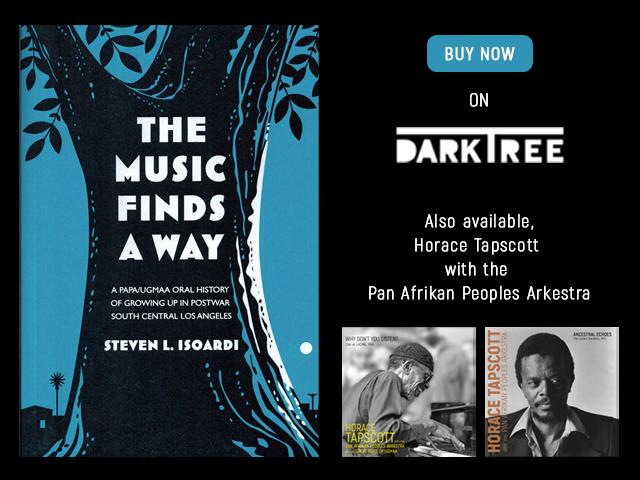
 The Music Finds A Way: A PAPA/UGMAA Oral History of Growing Up in Postwar South Central Los Angeles

© Copyright ® Steven Cerra, copyright protected; all rights reserved.

The following is from the www.pointofdeparture.org website, an online musical journal which is published and produced on a monthly basis by Bill Shoemaker and Troy Collins, respectively. I highly recommend that you visit their page and check out the archives which date back to 2005 for a wealth of interesting articles and information on Jazz and related topics as well as many interviews and essays of a general nature on all aspects of American culture.

Among many other attributes, Steve Iosardi is a researcher/interviewer for the “Central Avenue Sounds” project of the UCLA Oral History Program and served as editor for Central Avenue Sounds: Jazz in Los Angeles [University of California Press, Berkeley, 1998] and the companion Central Avenue Sounds: Jazz in Los Angeles [1921-1956] a companion 4 CD boxed set issued by Rhino records.

Here’s a link for ordering Steve’s book of the Dark Tree Press website.

The Book Cooks

Excerpt from

The Music Finds A Way: A PAPA/UGMAA Oral History of Growing Up in Postwar South Central Los Angeles

Steven L. Isoardi

(Dark Tree, Paris)

From

Part III: The University of the Streets in Postwar

African American L.A.

Grant’s Music Center

“A few miles northwest of Watts, in the Midtown Shopping Center at 3306 Venice Boulevard near Third Avenue, just above the Westside, a former saxophonist with Lionel Hampton’s and Gerald Wilson’s big bands, Henry Grant, opened a music center early in 1965. (34) Within months it became a magnet for black music devotees, r&b and jazz, students and professionals. Grant created a network of spaces covering two stories in a mall facility that offered equipment, instruments, music instruction, rehearsal rooms of varying sizes, and professional services, such as music copying and arranging. His school was staffed with a faculty of over a dozen professionals drawn from the American Federation of Musicians Local 47, as well as such jazz and R&B artists as John Ewing, Herman Riley, Fred Jackson, Gil Askey, Charlie Persip, Oliver Nelson, and Gerald Wilson. In his memoir, saxophonist Preston Love even remembers the Center as the “unofficial clearinghouse for helping less fortunate black musicians to gain employment in the Los Angeles area.” (35) Perhaps not since the 1920s and 1930s, when musician brothers Benjamin “Reb” and Johnny Spikes operated their music center at the corner of Twelfth Street and Central Avenue, had there been such an establishment in black L.A.

On the second floor were additional rehearsal/teaching spaces, a large rehearsal hall, and another space operated by Marion Sherrill, a music copying service called The Script House Music Writing Service, whose members contributed arrangements to and copied charts for a who’s who of jazz and R&B artists. (36) Under Marion’s guidance many young, aspiring musicians also received training in arranging and copying from established professionals like Motown’s Gil Askey, a regular visitor, to Horace Tapscott. It was a business, but Marion also saw it as a duty to the community, an ethos imparted to him during his years as a student at Jefferson High School:

As Sam Browne always said, “I’ll help you, if you’ll help the community. If you don’t want to help the community, why should I turn you on?” So, that’s been basically our motto. When I had the office, I made sure that I always had maybe two apprentices up there, young cats that would be playing and learn how to write. A few of them came out. Leslie Drayton came from there. And Leslie Drayton played with Horace, too…. Then when they get up so they could take care of business, kind of learn what they had to do, then I would kick them out and get a new set in. Get rid of them and get a new set in. So they could be aware of what the stuff is supposed to look like, how it’s supposed to be presented, and be aware of the commercial aspects of the music.

 Future Arkestra members Will Connell and saxophonist Ray Straughter learned the copyist’s craft there. On a Washington D.C., WPFW radio program in 2011, Will recalled to interviewer Bobby Hill, “But it was like the shop where Motown got most of their work done. Like Motown’s chief arranger, Gil Askey, he wrote at the shop. Willie Hutch, who did ‘Across 110th Street,’ he wrote at the shop. James Carmichael, who put the Commodores together, he wrote at the shop. And Marion Sherrill and an Armenian from Argentina made a copyist out of me.” (37) During the same program, cornetist and conductionist Butch Morris, echoed Will’s comments on the importance of Grant’s and The Script House in his evolution:

It was great to hear Will say a little while ago something about Grant’s Music Center because that’s where I got my start in 1966. Because a gentleman by the name of Edward Greenwood got me a job transposing parts for bands at Grant’s Music Center. It was different bands that would bring their music there, and Edward Greenwood had a band too in Los Angeles…. But I met a lot of people at Grant’s Music Center. And I used to go and just pick up scores and parts, and do what I was told to do with them, transpose them. And that was a very interesting period. (38)

Students, professionals and teachers used the facilities, interacting both formally and casually. Gerald Wilson’s big band and Ray Charles’ band rehearsed there. Auditions for Earth, Wind and Fire were held in these rooms. Marvin Gaye, Teddy Edwards, and Chaka Khan used the facilities. When Motown opened its west coast branch, Grant’s was used to rehearse the band. The Pan African Peoples Arkestra rehearsed and gave performances there, including late night concerts during one of its busiest periods, the late 1960s to early 1970s.

The stretch of Henry Grant went considerably beyond his Music Center. He made frequent appearances in schools and community centers, and encouraged students to study music. Within a few months of his opening, he was organizing bands of professionals and young people to perform throughout the community, including his seventeen-piece “rehearsal” band, and a musical variety review, “Lurn, Baby, Lurn,” (a play on the slogan “Burn, Baby, Burn”) formed in the wake of the 1965 Watts upheaval “to discourage dropouts, and to acquaint persons in other communities with the cultural progress being made in the so-called poverty areas.” (39)

In early 1966, he formed a second review, “Youth on Display,” which featured two young sons of accomplished jazz musicians – ten-year old bassist J.J. Wiggins (son of pianist Gerald) and pianist Harold Land, Jr. (son of saxophonist Harold Land, Sr.). At the end of 1966, DownBeat noted, “Ever since the fateful August, Grant has been ‘taking the talented but idle kids off the streets’ and opening up new possibilities for them with good music. He has organized rehearsal bands and jazz combos to the point where his modest facilities have already reached the straining point.” (40)

Grant was aggressive in his approach and the Center was also publicized in schools, by word-of-mouth among the musicians involved, and over the radio. Ernest Straughter recalls first hearing of it over KBCA 105 radio, the jazz station, encouraging students with the desire to become musicians to come to the Center. Music and Henry Grant provided a path away from the violent streets of his neighborhood. “And the music itself really saved the day. This is before Horace. It was a guy by the name of Henry Grant. Grant’s Music Center is where we studied. That’s where we first went. That’s how I met Horace. I went to Grant’s Music Center ‘cause he was on the radio. The radio was 105, KBCA that was the big radio jazz station in L.A. back then.” His brother, Ray, remembers going to the Lighthouse in Hermosa Beach to see Gerald Wilson’s band and being told by saxophonists Fred Jackson and Herman Riley, both teaching at Grant’s, “Well, kid, if you really want to learn how to play that instrument like the big guys, come down to Grant’s Music Center.” Ray took the advice and became a student of Fred Jackson there. “When I go to Grant’s Music Center, that’s where everything became serious.”

A few years later pianist Bobby West, then a tenth grader at Jefferson High School, saw a jazz concert at a school assembly organized by Grant and featuring saxophonist Harold Land and trumpeter Blue Mitchell. “I just could not believe that they were at my high school. At the end, this very stately looking gentleman came out and told everybody about the new Grant school of music. I didn’t have the money to attend, but if this guy’s got the juice to bring Harold Land and Blue Mitchell here, maybe I need to go check out his school.”

The training students received at Grant’s Music Center offered access to the world of music in general, but especially to the jazz and music industry big bands and orchestras. Ernest recalls Grant letting him listen to a rehearsal of the Ray Charles orchestra: “A couple of times Ray Charles’ band was rehearsing there and Grant would say, ‘See, this is the way you’re supposed to sound.’ So, we were just pumped up with inspiration.” Grant’s emphasis was on fundamentals and technique. “Go through the rudiments,” Ray recalls him explaining. “Learn the rudiments and then play the rudiments your way.” But he offered a challenge to the Straughters as well, based on the racial realities facing musicians. Ernest remembers him saying,

“If you’re gonna be a good musician, and you’re black, you’re never going to get any damn work unless you can play ten instruments. You’ve got to play ten instruments to their one, because they’re better than you.”

I said, “What do you mean? I just want to play this thing, man.”

“Get your clarinet, flute, and saxophone. They call it the three-pak. If you learn that thing, there’s nothing you can’t do. I don’t care if you’re black or white. If you can play that three-pak, you’re gonna work. And you’re doing this not only for the enjoyment. You’re doing it ‘cause you want to be able to work.”

That was Mr. Grant.

He charged five dollars a lesson, but sometimes lessons would last well over an hour. And if a student didn’t have the money, that was never an impediment. According to Ray, “Henry Grant was selfless. If you didn’t have money, he said, ‘Don’t let that stop you from coming to get your lessons. You come.’” However, this was generosity with a purpose. As long as a student was committed, Grant would brush away obstacles. Any sign of flagging, and a student could be just as summarily dismissed.

Grant’s pedagogy was very serious and his mission was to turn out trained musicians capable of having a successful professional life. He saw the teaching of music as “a way to curb joblessness.” (41) It was not for hobbyists. When he arrived at the Music Center, Ray remembers Grant telling him, “If you’re gonna be good on that instrument, you can’t just play it every other day. And if you’re gonna be good on that instrument, you can’t just play it one hour a day. You gotta develop your ear, and you have to be able to play whatever you can play in any key, all twelve keys. I’ll give you the chance to learn that. Other than that, after a certain amount of time, if you haven’t learn’t it, don’t even come back here.” It was made clear from the beginning, according to Ray, that “Grant’s was no place to hang out. You went home with b-flat, and he told you to come back and do three keys in a cycle of fourths on b-flat, the same thing. And you don’t have it done? ‘Get out of here and come back when you got it done.’ That’s what Grant said. He’s the one who made us get serious. He says, ‘Look, you don’t just want to play jazz and jam. You want to write movies. You want to make a difference.’”

Grant’s vision of musical success was making it in the mainstream world of recorded music and the movie industry. However, by the mid-1960s many young black musicians were drawn to other sounds in the more politically charged atmosphere of the times. Ray and Ernest were two of those young musicians. After a few months of study, Ernest was enjoying the variety of instruments, but was becoming bored, and made his feelings known to Grant.

[Grant] said, “You guys got a hard head. You want to start playing all the stuff and you haven’t learned nothing yet.”

I said, “Mr. Grant, but I just heard this on the radio.”

He said, “I don’t care what you heard. You need to stop playing that until you learn how to do this.”

And Mr. Grant used to wail on us about sticking to the program, and coming in and playing big band. “Playing big band parts, you got a sixteen bar solo. Know when the solo’s over, and work your solo into when you’re gonna exit the thing. I don’t want to hear all that thrashing away.”

Meanwhile, Ray chafed under Fred Jackson’s approach. “Fred says, ‘First you gotta learn how to play down here in the two and a half octaves, those changes and scales.’ I said, ‘Nah, I don’t wanna play that. I wanna play like Trane.’” That brought his studies with Jackson to an end, but Grant had a solution.

At Grant’s Music Center those students who were looking in other directions were passed on by Grant to one of his other instructors, Horace Tapscott. Through Horace and other members of UGMAA, young people were offered a different version of what it meant to be an artist, of how to grow and develop one’s artistry, one more in touch with the evolving aesthetic of the 1960s. It was not Grant’s approach, but it was part of his environment and he recognized its validity. When Ernest told him, “Mr. Grant, I want to play,” he recommended Horace. “‘I tell you what I’m going to do. You need to meet Horace. Horace has the heart for you guys. I don’t. You guys are going to be musicians because you have the love of it, but you’re not going to be this type. You’re gonna be something different.’” When Ray was going to pull away, Grant responded, “‘Bullshit, I know the place for you. You come next Saturday. Horace Tapscott’s band is going to be here. You’re not going to play in Gerald Wilson’s band, neither are you going to play in the studio. I can tell now. You’re more toward Horace, aren’t you? You like that wild stuff.’” Ray returned the next weekend.

I walk upstairs at Grant’s that day on the weekend, and Horace’s band was rehearsing. I’d never heard them. I never heard Horace’s band before. And all the guys were up there. I was sitting in the back, and Horace keeps looking at me with these funny looking eyes from way away, on the other side at the front where all the musicians are. I’m minding my own business up against the wall, just trying to see how they do it. He says, “Hey, kid. That’s yours? You play tenor?”

I said, “I’m just starting, about six, seven months.”

Billie Harris was sitting in the tenor chair, and Horace says, “Billie, I want this kid. That kid back there is going to be my new tenor player.”

I said, “But, I just–”

“You scared?” he said. “You want to play? You want to be good? Play in my band. You’ll be good. You’ll know what music is.”

I said, “Yeah, yeah, I want to play.”

He said, “Well, get up here. I’m going to start you off on this.” And that’s how he got me in.

Ernest recalls his first experience, listening to the band rehearse “The Giant Is Awakened,” and thinking, “Man, those guys are really playing what we want to play.” They also related more immediately to Horace’s pedagogical style than to Grant’s.

Grant would say, “You sound terrible.” Horace would never talk like that. He would just say, “Do it again. Do it again. Don’t worry about it. Sounds okay.” Then he’d turn his back on it. Horace was putting up with some crap because we were out of key. We were just bad. But he gave us the inspiration. A lot of us got that chance to hone our skills with a professional that we had no business on the playing field with ... Yeah, we were playing out of key, but that wasn’t what Horace was after ... It’s the soul and the essence of what they call in Indian music the raga, the spirit music, the music of the soul. Everybody has it. The composers that write it in Germany, they may call it classic, give it any name you want, it’s coming from inside. That’s what it is. You can’t keep doing something like that and not get paid, get kicked around, and not love it. You just can’t. And it’s not just in the black culture. It’s everywhere, wherever you do it. In our case, here in the black culture, it came from Horace. He’s the godfather that put it down out here.

It would be the beginning of an important, productive association for Ray and Ernest Straughter with Horace and the Arkestra. Bobby West followed up the Grant-produced assembly at Jefferson with a visit to the Center.

When I went over to Mr. Grant’s school ... I knew I had just stepped on to something. I saw and met many musicians there that I still have friendships with today. That’s where I met [drummer] Ndugu Chancler. I’d already met [pianist] Patrice Rushen, who was also in the USC Preparatory Program. She’s a couple of years older than I. Then I saw her again over at Mr. Grant’s. So it was great. It was on. I never actually checked in. I’d just go over there on Saturdays with my friend, Jon Williams, and Ishmael [Balaka/Hunter], who was a drummer, and we’d pretty much just crash the classes. Nobody really bothered us. We just kind of hung around and tried to absorb the atmosphere. That’s when we started hearing talk of this wonderful local musician, Horace Tapscott. I was fifteen. As far as Jon, Ishmael and I were concerned, we have to find this man."


ENDNOTES


Quotations without a note are from the following interviews conducted and transcribed by the author: Marion Sherrill, 19 August 2000; Ernest Straughter, 8 October 2006; Ray Straughter, 27 October 2007; Bobby West, 24 August 2001.

  1. Grant’s Music Center would subsequently relocate to 4731 Venice Boulevard, and then 5068 West Pico Boulevard during the 1970s.

  2. Preston Love, A Thousand Honey Creeks Later: My Life in Music from Basie to Motown – And Beyond (Hanover, NH: Wesleyan University Press, 1997), 157.

  3. H. Vincent Price, “Sherrill’s Script House Is ‘Home’ of Noted Composer,” Los Angeles Sentinel, 8 May 1975, p. A8.

  4. Will Connell, interview by Bobby Hill on “Ya Dig! Horace Tapscott and His Underground Musicians,” WPFW radio, Washington D.C., 28 July 2011.

  5. Butch Morris, interview by Bobby Hill on “Ya Dig! Horace Tapscott and His Underground Musicians,” WPFW radio, Washington D.C., 28 July 2011.

  6. “Ann Weldon Heads Revue,” Los Angeles Sentinel, 23 Dec 1965, p. B5.

  7. “Lurning in Watts,” Downbeat, 33:24 (1 December 1966), 12.

  8. Quoted in “Sees Training in Music as Aid to Jobless,” Los Angeles Sentinel, 8 September 1966, p. A3.


© 2020 Steven Isoardi


Thursday, April 29, 2021

Parisian Thoroughfare

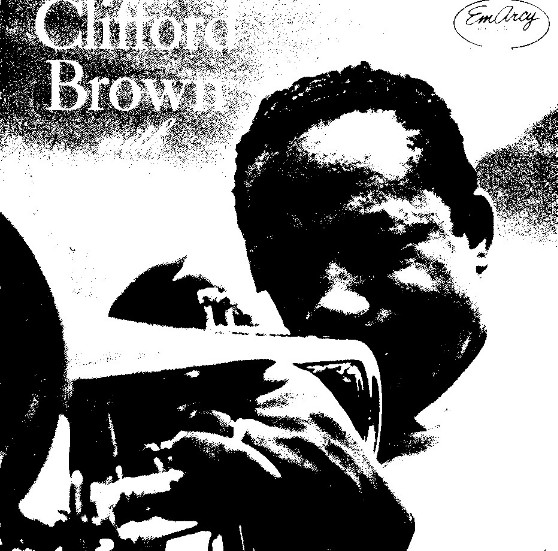
Clifford Brown - What is this thing called love?

Clifford Brown Remembered by Gordon Jack

 © Copyright ® Steven Cerra, copyright protected; all rights reserved.


Gordon Jack is a frequent contributor to the Jazz Journal and a very generous friend in allowing JazzProfiles to re-publish his discerning and well-researched writings on various topics about Jazz and its makers.


Gordon is the author of Fifties Jazz Talk An Oral Retrospective and he also developed the Gerry Mulligan discography in Raymond Horricks’ book Gerry Mulligan’s Ark.


The following article was published in the April 7, 15 and 21, 2021 editions of Jazz Journal. 


For more information and subscriptions please visit www.jazzjournal.co.uk


© -Gordon Jack/JazzJournal, copyright protected; all rights reserved; used with the author’s permission.


“When Dizzy Gillespie heard that Clifford Brown had been killed in a 1956 car accident his shocked reaction became an emotional epitaph, “Jazz was dealt a lethal blow by the death of Clifford Brown…there can be no replacement for his artistry”. At the age of 25 he had become not only one of the finest of all post-war jazz trumpeters but also the co-leader with Max Roach of a quintet that was hugely influential on the emerging hard bop school.


He was born in Wilmington, Delaware on 30 October 1930 into a very close family of eight children who were all encouraged musically by their father. He kept a selection of instruments around the house and when Clifford was about twelve he asked to play the trumpet apparently taking to it “Like a fish to water”. Around this time the family listened to the popular bands of the day on the radio like Lionel Hampton, Jimmie Lunceford and Fletcher Henderson. He benefited from lessons with the celebrated Robert Lowery whose other students over the years included Ernie Watts, Lem Winchester and Marcus Belgrave. A private recording of Brownie playing Ornithology in a duet with his teacher around 1949/1950 has survived representing his earliest recorded solo.  “He really knew what he wanted to do…all he needed was the right person and I think I was the one at the time” Lowery told Phil Schaap.


He was already aware of polytonality and Lowery encouraged him to learn the piano, an instrument he eventually became very proficient on. Precociously talented at just about everything he began a life-long love of chess in his mid-teens. He also excelled at pool and table-tennis. When he was fifteen he attended Howard High School where he fell under the guidance of Harry Andrews who taught him from the famous Arban Method for Trumpet. Clifford played in the High School band there marching on the field before football games and also at parades in Wilmington. 


In 1948 he matriculated at Delaware State College where he was known as “The Brain” (maths was his major). In the late forties he started visiting jazz clubs in Philadelphia which is where he met Red Rodney who told Mark Gardener, “I saw great promise in him when he was fifteen or sixteen years old. Even then he sounded very much like Fats”. Navarro was certainly an early influence and although there was a seven year difference in their ages they became close friends. Dizzy Gillespie of course was very important too as was Harry James. In 1956 though when Leonard Feather published a poll for musicians to nominate their favourites Brownie voted for one name on trumpet – Dizzy Gillespie. Billy Root was someone else who was very impressed with the young trumpeter and a few years before he died in Las Vegas he told me, “I often played with Clifford and I loved him. I never met a nicer person. He was just superb in every way and after Dizzy he was my favourite. He came in one night when Bird was at the Blue Note and Charlie got him up on the bandstand. Brownie was hiding behind the big upright piano and Bird said ‘Come out front with me man, I don’t want you back there’”. In those early years in Philadelphia he also got to play with John Coles, Benny Golson and Miles Davis at local Elk Lodges. 


In 1949 Dizzy Gillespie brought his exciting big band to Wilmington for a booking at the Odd Fellows Temple which of course was packed with enthusiasts. Just before curtain-up it became known that Benny Harris could not be found. Robert Lowery who was in the audience informed Gillespie that there was a ready-made replacement in the house. Clifford joined the trumpet section for the night and the leader was so impressed he gave him the solo on I Can’t Get Started. A year later while travelling to a booking he was involved in a serious car crash. The driver and his girl-friend were killed and Clifford was critically injured.  Bones were broken in both legs and the right side of his torso needed a full body cast to reset his frame. He spent several months in hospital and one of his visitors was Dizzy Gillespie. It was a year before he recovered and while hospitalised he received the shocking news that his friend Fats Navarro had died from TB and drug abuse. During a long convalescence he slowly rebuilt his embouchure while doing some local work on piano. According to Ken Vail’s Bird’s Diary, Charlie Parker was booked at the Club Harlem in Philadelphia in May 1951 when Benny Harris once again was missing in action. Brownie got a call from a friend and took over during Bird’s residency. The following week Harris re-joined the group for Parker’s gig in Buffalo, New York.  In November that year fellow Philadelphian Jimmy Heath invited Clifford to join a quintet he had formed with Dolo Coker, Sugie Rhodes, and Philly Joe Jones for a job at Spider Kelly’s. On one occasion the tenor-man remembered a very drunk woman coming up to the bandstand and saying to the trumpeter, “I don’t know what you’re playin’ but you’re playin’ the hell out of it!”


Late in 1951 Brown was in the audience when Chris Powell and the Blue Flames appeared at a Philadelphia dance venue. He was invited to sit-in and impressed the leader so much that he was asked to join the band on a permanent basis. Powell had a popular rhythm & blues band and he often featured jazz musicians like Osie Johnson, Jymie Merritt, Jimmy Heath, Jimmy Crawford, Buster Crawford and Philly Joe Jones. Clifford recorded his first commercially released solos on two calypsos with the band in Chicago in March 1952. Ida Red (dedicated to his current girl-friend) finds him in a cup mute and I Come From Jamaica has a confident open statement displaying exemplary control of the upper register. 


In 1953 he left the Blue Flames to try his luck in New York and in June that year he was selected for a Lou Donaldson Blue Note date. Clifford brought his own Brownie Speaks to the session and his three choruses on this up-tempo original feature some very well-articulated eighth note passages. Two days later he was in the studios again, this time for a Tadd Dameron nonet session for Prestige. The line-up included Idrees Sullieman, Benny Golson, Gigi Gryce and Philly Joe Jones. Philly JJ (based on Woody’n You) is essentially a drum feature but Brown is also heard in a powerful and inventive solo indicating that a new trumpet star had arrived on the New York scene. Later that month he teamed up with J.J. Johnson who was making a welcome return as a recording artist after a brief retirement. Brown’s outstanding performances here especially on Capri and Turnpike convinced Blue Note to award him a recording contract.


As soon as the J.J. session ended, he drove down to Atlantic City for a summer residency at the Paradise club with a Dameron group that included Johnny Coles, Cecil Payne, Gigi Gryce, Benny Golson, Percy Heath and Philly Joe Jones. They backed variety acts and also played for dancers and on one occasion Sammy Davis sat in on drums. At the end of the residency Quincy Jones arranged for Brown, Gryce and Golson to join Lionel Hampton’s band. The leader would often have his musicians marching up and down the aisles at Harlem’s Apollo Theatre and elsewhere playing The Saints, Flying Home and Hamp’s Boogie Woogie. Jones called Hampton “The first rock’n’roll bandleader” but his showmanship did not go down too well with some of the newer band members especially Brown and Gryce. Gigi and the trumpeter had similar life-styles which did not include drinking, smoking or taking drugs. They became very close and Gigi went on to become godfather to Clifford Brown Junior.


Just before the Hampton band took off on a three month tour of Europe, Clifford made his debut as a leader for the Blue Note label.  Gryce contributed Hymn Of The Orient which is taken faster than Stan Getz did when he introduced it a year earlier. Gigi also provided it with a new A section in the last chorus. Cherokee has him centre-stage throughout clearly delighting in Ray Noble’s sophisticated challenges in the tricky bridge passages. The track concludes with some exciting exchanges with Art Blakey. In contrast, Easy Living finds him at his most romantic and lyrical with a warm, broad sound especially in the lower register. 


Lionel Hampton, encouraged by his formidable wife Gladys, had a reputation of being less than generous with salaries but the lure of a 1953 European tour was enough for everyone to overcome their reservations about the money. With its JATP-like atmosphere of excitement the band proved to be hugely popular with European audiences. Standing ovations began at the first two concerts in Oslo on 6 September where 2000 people attended and apparently continued for the rest of the tour. The Hamptons made it clear that the musicians would not be able to record without the leader while they were in Europe and anyone found breaking this rule would be sent back to the States. Brown, Gryce and Jimmy Cleveland found that producers were desperate to record them and the musicians for their part were just as keen to supplement their band income. Lionel and Gladys tried but could not prevent clandestine recordings taking place. 


On 15 September having engineered an escape from their hotel by climbing down a fire escape after midnight, Brown, Quincy Jones and Art Farmer made their way to the Metronome studios in Stockholm for a record date with some of Sweden’s finest. Ake Persson, Arne Domnerus, Lars Gullin, Bengt Hallberg, Gunnar Johnson and Jack Noren  were on-hand to interpret Lover Come Back To Me, Falling In Love With Love and two of Jones’s new originals Stockholm Sweetnin’ and ‘Scuse These Blues. Clifford has a bright, sparkling chorus on Lover Come Back and ‘Scuse These Blues is notable for six choruses of exchanges between Brown and Farmer both in cup mutes. The tongue in cheek coda here is right out of the Dixieland play-book. During the tour Hampton often pitted the two trumpets against each other because as Farmer said, “Hamp goes for battles so this was his chance for a never-ending trumpet battle between us”.


While the band was in Paris, Vogue Records recorded Brown and Gryce on no less than six occasions from 28 September to 15 October. The first date featured Hampton sidemen together with French musicians like Fred Gerard, Henri Renaud and Pierre Michelot. Gryce’s extended feature for Clifford titled Brown Skins was an adventurous piece of writing. After a slow, dramatic opening the trumpeter takes off on a stunning up-tempo examination of Cherokee, one of his favourite sequences. In contrast Quincy Jones’s Keepin’ Up With Jonesy has a lightly swinging Count Basie feel with eloquent muted conversations between Brown and Art Farmer. Based on Moonglow it also features an outstanding contribution from Jimmy Cleveland. The following day Clifford’s sextet with Gryce, Jimmy Gourley, Renaud, Michelot and Jean-Louis Viale recorded the trumpeter’s Goofin’ With Me. Opening and closing with an eight bar riff it allows the principals to stretch out inventively on the changes of Indiana. Blue Concept is another fine original this time by Gryce with some impressive double-time passages in the second and third choruses by Clifford.


Hampton’s band then left for a series of concerts in Dusseldorf, Munich, Frankfurt, Hamburg and Berlin. On their return to Paris, Brown and Gryce resumed their sextet date with a selection of Gryce originals. His Minority was introduced here which was to become a jazz standard with performances by Art Farmer, Cannonball Adderley, Bill Evans, Lee Konitz among others. The attractive Salute To The Bandbox based on I’ll Remember April has the composer’s finest solo of the set with Clifford matching him all the way. The next day – 9 October – two big band titles were recorded featuring a mix of Hampton sidemen and French locals. Brown is only heard on Bum’s Rush, an extrovert Woody Herman-like chart by Quincy Jones.


Clifford’s last Paris date occurred a week later with Renaud, Michelot and Benny Bennett. Blue And Brown is all trumpet on a theme-less blues with a bridge. It Might As Well Be Spring is one of his most sensitive ballad readings with extensive use of his warm lower register. The up-tempo Song Is You finds him inspired by one of Jerome Kern’s loveliest melodies, resulting in five minutes of sheer beauty. Having played with Brown on most of the Paris dates Renaud said, “He possessed the highest qualities: a world of technique, a real trumpet sound fat and strong and a wonderful ear.” 


These hastily arranged European sessions established his reputation as a soloist of the first-rank which was acknowledged by DownBeat writers a year later who voted him the New Star on trumpet. By the time the Hampton band arrived back in NYC in November 1953 some of the sidemen threatened to go to the union over salary disputes. In a 1991 interview with Cadence magazine Jimmy Cleveland said “We got shafted with the money… (Hampton) would always do that”. For his part the leader intended filing charges with the AFM against the musicians for recordings made in Paris using arrangements from his library without permission.


Brownie began free-lancing around NYC before accepting an invitation to join Art Blakey for a two-week booking at Birdland with Horace Silver, Curly Russell and his friend Lou Donaldson. Although not billed as such this was the forerunner of the Jazz Messengers. On 21 February 1954 Blue Note was on hand to record the group performing bebop staples like Night In Tunisia, Wee-Dot, Now’s The Time and Confirmation. The prodigious Horace Silver contributed two outstanding originals to the date: Quicksilver based on Lover Come Back To Me which has humorous references to Donkey Serenade and Oh You Beautiful Doll and Split Kick, a clever contrafact of There Will Never Be Another You. Clifford’s ballad feature Once In A While is notable for the way he introduces waltz time during the bridge and also for his extended, brilliantly executed coda.


A couple of weeks after the Birdland date he received a telephone call from Max Roach which resulted in a complete change of direction for them both. Roach had been encouraged by Gene Norman to form his own group and with the promise of work from the promoter he invited Brown to fly out to Los Angeles and join him.  At the time Max was in the house-band at the Lighthouse in Los Angeles where he had a six month contract. He had taken over from Shelly Manne for the fifty-two week, five-nights a week gig but there was a clause in his contract committing him to finding a suitable replacement if he left. Stan Levey had just arrived back in town after Stan Kenton had temporarily disbanded so Max called him. After discussions with Howard Rumsey, Levey took over at a salary of $200.00 a week. 


Max and Brownie rented a two-bedroom apartment together which facilitated in-depth musical policy discussions as well as lengthy chess games which the trumpeter usually won. Sonny Stitt had travelled with Clifford from New York and the quintet’s first booking was at the California club on Santa Barbara Avenue owned by Gene Norman. Stitt only remained with the group for about six weeks. He was replaced by Teddy Edwards who with Carl Perkins and George Bledsoe appeared on the quintet’s first concert performance at the Pasadena Civic Auditorium on 13 July 1954. Only four titles were recorded but the date is notable for the trumpeter’s lengthy and inventive workout on Clifford’s Axe based on The Man I Love. Soon after this concert a Nat Hentoff feature in DownBeat was head-lined Clifford Brown-The New Dizzy. The quintet continued to evolve because two weeks after the Pasadena date Edwards, Perkins and Bledsoe left and were replaced by Harold Land, Richie Powell and George Morrow and this line-up remained together for the next year. Clifford told Nat Hentoff at the time, “One thing which has hurt small jazz units is the fact that bookers haven’t been sure they’d get the same personnel the next time they hired a unit. Max and I have had offers to headline as singles but unless they hire the whole unit we won’t take the job”. In May the quintet undertook a west coast tour promoted by Gene Norman that climaxed at the Shrine Auditorium in Hollywood on 31 August.


Just before signing an exclusive contract with Emarcy the trumpeter recorded one of the most unusual albums in his discography for Dick Bock of Pacific Jazz. The quintet had been appearing at the Tiffany club opposite Art Pepper and Jack Montrose. Bock decided to feature Brown and Roach with some of the best local musicians like Stu Williamson, Zoot Sims, Bob Gordon, Russ Freeman and Carson Smith.  Montrose was hired to write the arrangements but as he told me in a JJ interview, 

“The music was written with Max in mind but he got into a money hassle with Dick and bowed out at the last minute. Shelly Manne was called and he played just beautifully, bless his heart”. A few months earlier, Clifford had been in the trumpet section of Hampton’s barnstorming big band but on this occasion he embraced quintessential west-coast cool as if to the manner born. The tricky charts are immaculately performed by the hand-picked ensemble beginning with Clifford’s Tiny Kapers which becomes a fugue in Montrose’s hands. Blueberry Hill and Gone With The Wind were included apparently at Bock’s insistence although this did not please Brownie. Three more of his superior originals (Joy Spring, Daahud and Bones For Jones) were also recorded. These particular charts were reprised in 2002 on The Clifford Brown Project by the Mark Masters Ensemble and Clifford’s solos were transcribed for a four-piece trumpet section - Capri 74059-2.


The quintet’s first Emarcy recording took place on 2 August. Delilah opens with an extended ostinato which became one of the group’s favourite devices. Brownie clearly delights in the minor chord changes and the piece concludes with a masterful Roach solo mostly on mallets. The group throw-the-kitchen-sink at Parisian Thoroughfare’s opening vamp with hints of American In Paris, the Mareillaise, the Can-Can and assorted traffic noises. A few years after this recording I had some saxophone lessons from Wally Houser who eventually became an attorney for Ronnie Scott’s club. A fine alto player he wrote this chart minus the quotes together with Joy Spring as an exercise for me. Incidentally Manhattan Transfer recorded a vocalese version of Joy Spring with Jon Hendricks’s lyrics in 1985 (Atlantic 7-81266). There have been nearly 200 recordings of Jordu but the quintet’s version here is surely the definitive one. It is notable for the way the principals creatively negotiate their way through the intriguing bridge modulations in the solo choruses. The sleeve-note incorrectly states the group premiered it but composer Duke Jordan recorded it first seven months earlier. Sweet Clifford is a super-fast excursion on Sweet Georgia Brown. It becomes an extensive outing for Max Roach who demonstrates once again the art of creating a musical solo even at the ferocious tempo of 80 bars to the minute. I Get A Kick Out Of You is a thrilling exercise in mixed metres – 3/4 and 4/4 – originally introduced to the group by Sonny Stitt. 


A few days later Emarcy arranged two studio dates designed to replicate the jam-session formula popularised by JATP. Clifford and Max were featured with an assortment of stars from the label’s roster like Herb Geller, Joe Maini, Clark Terry, Maynard Ferguson and Dinah Washington. It has to be said that these over-long titles, some stretching to twenty minutes or more, fail to maintain interest. Brown and Roach were apparently uncomfortable and Mark Gardener has dismissed them as “Less than essential”.  In a JJ interview Herb Geller told me “The highlight for me was playing with Clifford who was a marvellous, extraordinary human being and musician. His sound was beautiful and soulful with such a sparkling way of playing”. 


After three months in California the quintet relocated to the east coast for an October engagement at the Blue Note in Philadelphia which was followed by two weeks at Detroit’s Crystal Lounge. Over the next month Emarcy embarked on three memorable albums placing the trumpeter in totally new and stimulating settings with Sarah Vaughan, Helen Merrill and a string date with Neal Hefti. Sarah Vaughan was accompanied by her regular trio of Jimmy Jones, Joe Benjamin and Roy Haynes. Herbie Mann and the inventive Paul Quinichette were on hand too. The Vice-Pres lives up to Bob Brookmeyer’s description of him as “The only fellow I know who can order a meal on tenor”. The string album recorded over three days in January 1955 became Clifford’s most popular session and influenced Wynton Marsalis to take up the trumpet. The spotlight here often shines on the rich timbre of his work in the lower register. My guess is that Hefti’s scores did not indicate exactly what, but where Clifford was to play. Sticking close to the melodies he was free to interpret these songbook classics in his own distinctive way making elaborate use of embellishments and delicate grace notes with a more pronounced use of vibrato than usual. 


A month later the quintet was back in the studio for a date that introduced some new material mostly by Clifford Brown: Gerkin For Perkin, Swingin’, George’s Dilemma, The Blues Walk and Sandu. Richie Powell contributed Jacqui and Gertrude’s Bounce while Harold Land weighed in with Land’s End. Swingin’ is an up tempo romp based on I Never Knew and is the sort of vehicle the group might have used as an opener on club dates. The atmospheric George’s Dilemma is a gem. Opening with a delicate four bar cymbal figure it leads to a bass ostinato which is repeated throughout the A section of the structure. The Afro-Cuban background inspires Clifford to one of his most melodic solos on record.  There is some fine Richie Powell in double-octaves here too. Roach’s apposite description of the piece as “A romance between Afro-Cuban and jazz rhythm” is right on the money. The cute Jacqui is notable for the charming and unexpected quote from Dizzy Gillespie’s Con Alma in the coda. Emarcy’s reissue incorrectly shows a 1956 date but it was actually recorded on 25 February 1955. The tenor-man’s Land’s End is an outstanding composition worthy of Benny Golson at his very best. Cherokee opens with one of the group’s trademark ostinatos humorously suggesting a connection between Native Americans and Ray Noble’s song-title. In these PC days it would probably be frowned on in some quarters. It had become one of the trumpeter’s specialities and he storms through blissfully unaware of the challenging 90 bars to the minute tempo. 


Joe Glaser was now handling the quintet’s bookings. Their popular recordings opened the door for regular club dates in cities like New York, Boston, Philadelphia, Washington D.C., Cleveland, Detroit and Chicago. In July they performed a well-received set at the Newport Jazz Festival and the co-leaders also sat in for a chaotic Tea For Two with Gerry Mulligan, Chet Baker and the Dave Brubeck quartet before a wildly enthusiastic audience - definitely one for completists though. Tired of being on the road and wanting to return to his family in Los Angeles, Harold Land decided to leave the quintet in October that year. He had this to say about playing with Brown, “It was a constant challenge to play alongside him. He was a very great artist”. Sonny Rollins was available and the new line-up opened at Philadelphia’s Showboat the following month. After one of their customary standing-room-only engagements at New York’s Basin Street the quintet made its recording debut on 4 January 1956. In a discography replete with Desert Island Disc material one of the titles from that session deserves special mention. Tadd Dameron was in the studio and he arranged What Is This Thing Called Love which finds the quintet at its most inventive and exciting best. In March they recorded five titles under Rollins’ leadership including two of his new originals – Pent-Up House and Valse Hot. Years later when Sonny was asked to name the three musicians he admired the most he replied “Lester Young, Charlie Parker and Clifford Brown”. 


Three months later on 26 June Clifford Brown’s career was brought to a sudden end when he was involved in a fatal car accident on the Pennsylvania Turnpike. Driving with Nancy and Richie Powell to a booking at Chicago’s Blue Note their car hit a bridge abutment before rolling down a steep embankment. All three occupants were killed.


A good example of how his peers felt about him can be found in a musicians’ poll that Leonard Feather conducted in 1956. These are a just a few of the artists who favoured him with their vote: Harry Carney, Conte Candoli, Buck Clayton, Jimmy Cleveland, Miles Davis, Terry Gibbs, Dizzy Gillespie, Milt Jackson, J.J.Johnson, Quincy Jones, Oscar Peterson, Bud Powell, Max Roach, George Shearing and George Wallington.”


Selected Discography

Brownie – The Complete Emarcy Recordings Of Clifford Brown (10 CDs) – CD 838 306-2

Clifford Brown – Joy Spring (4 CDs) Properbox 86.

Clifford Brown – Jazz Immortal – MatchBall CD 48016.

Max Roach – Clifford Brown Quintet –The California Concerts –Fresh Sound FSRCD 377

Art Blakey-Clifford Brown –Immortal Concerts – Giants Of Jazz CD 53033


Recommended Reading

Clifford Brown – The Life and Art of the Legendary Jazz Trumpeter. Nick Catalano (Oxford University Press).

Rat Race Blues – The Musical Life Of Gigi Gryce. Noal Cohen & Michael Fitzgerald (Berkeley Hills Books).


In compiling this appreciation I would like to acknowledge the help received from John Bell, Bob Weir and the Jazz Institute in Darmstadt, Germany.