Showing posts with label Antje Hubner. Show all posts

Saturday, August 21, 2021

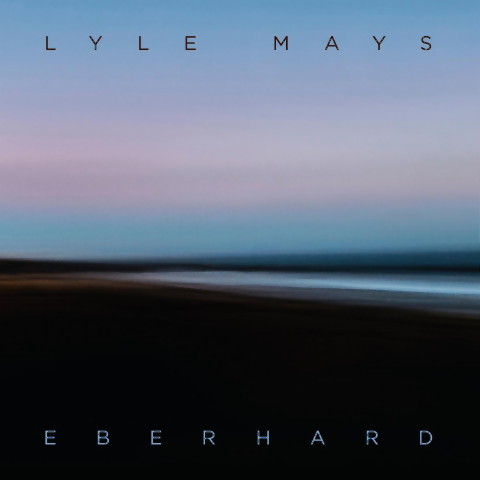
Lyle Mays - "Eberhard"

 © Copyright ® Steven Cerra, copyright protected; all rights reserved.

“The first time I saw Lyle was at a place called Harry Hope’s in Cary, Illinois—the same town where I went to high school, actually. He was playing with Pat [Metheny], and it was just the quartet at that time. Lyle blew me away. He had this thing; his synthesizer playing, his piano playing, and everything was just incredible. I saw them again at the Bottom Line in New York and at the College of DuPage in Illinois.


One reason I guess I got the gig [with the Pat Metheny Group in 1983] was because I made Lyle real comfortable when he soloed. When [I auditioned for the band in December ’82], we ended up jamming as a quartet—Pat, Lyle, Steve [Rodby], and me—for … God, it must have been 10 or 12 hours. It was a totally natural thing.


The word “genius” seems to be used for everybody now. If you can play at 300 beats per minute, you’re a genius, you know? But Lyle was one. And not only musically. I mean, the guy could literally hear anything and write it out. But he was also one of those guys that, you know, you’d give him a Rubik’s Cube and in like a minute, he’d give it back to you completely solved.. And then he got into chess, and I think he beat the Montana state champion or something. Then he starts getting into Legos, and all of a sudden he’s an architect. We’d be on tour in the ’80s and he was teaching himself C++—next thing you know, he’s showing us all these software programs he’d created.


He was also really athletic. He was a thin guy, but his hand-to-eye coordination was amazing. And when we were doing that More Travels video [released in 1993], it was in the Cyclorama Building in Boston. They’d rented a circus, bears and jugglers and all that stuff, and at one point this juggler gives his stuff to Lyle and Lyle’s juggling five balls at once. And the guy looks at him like, “What?” He was just that way. Everything came easy to him.


A lot of people would think he wasn’t that friendly. Sometimes after a gig, if he was going somewhere and someone approached him, he might not have time to speak to them. But it was never out of rudeness. It was just that … you know, he was on a mission. He had so much going on in his mind.

In a lot of ways, Lyle never got his due. And I don’t know if it bothered him. His contributions were major, but it was called the Pat Metheny Group and it’s easy to get sort of overwhelmed when it’s one name and one image. But he and Pat always had a good relationship, as far as I know.


Over this pandemic I’ve been going through all these CDs, stuff that I’ve never released. There’s a weekend at the Green Mill [in Chicago] with my quintet with Lyle playing piano from June of ’92, and it’s unbelievable. With his ears, he could play anything.


The last time I was in touch with him was by text in the summer of 2019. I said, “Man, let’s talk!” And he goes, “Well, you know, my mouth is sore, something’s up with my tongue, let’s just text.” I had no idea what was going on. I still can’t believe he’s dead.


When Lyle died, I posted an old picture of him with my little daughter at the piano on my Facebook page. She was two-and-a-half, three years old. He could be so kind.

- Paul Wertico, PUBLISHED FEBRUARY 8, 2021, JazzTimes


“Mays sometimes seems more like a technician than a musician. He got his start in Woody Herman's band in 1975 but then joined fellow Midwesterner Pat Metheny in the guitarist's quartet, and that association has endured ever since. Mays is Metheny's main co-writer and handles all the keyboard orchestration on his many records: he was an early starter in getting state-of-the-art synthesizers into jazz-orientated music, and he clearly has great knowledge of their use. Much of what he does on Melheny's records is deft and suitably beguiling,...”

- Richard Cook’s Jazz Encyclopedia  


“Although Metheny is a masterful technician (teaching guitar at the Berklee jazz conservatory while still in his teens), his playing avoids the empty demonstration of finger facility so common among  jazz-rock guitarists. Instead, he has refined a lucid, melodic style that ranks as the most incisive approach to the electric guitar since Wes Montgomery. The addition of the superlative keyboardist Lyle Mays to Metheny's band in 1976 spurred an especially fruitful partnership documented on recordings for the ECM and Geffen labels.”

- Ted Gioia, The History of Jazz


“Lyle was one of the greatest musicians I have ever known. Across more than 30 years, every moment we shared in music was special. From the first notes we played together, we had an immediate bond. His broad intelligence and musical wisdom informed every aspect of who he was in every way. I will miss him with all my heart.”

- Pat Metheny, guitarist and bandleader


According to Robert Ham February 13, 2020 obituary in Down Beat magazine, “Mays was born in Wausaukee, Wisconsin, on Nov. 27, 1953, to a musical family. While his parents held steady day jobs, both harbored a deep love of music and played instruments: His father was a self-taught guitarist, and his mother played piano and organ, mostly in church. Mays followed suit, taking piano lessons from a local teacher, and eventually began playing organ in his hometown church as a teen.


Around the same time, he became an ardent jazz fan after coming across Bill Evans’ At The Montreux Jazz Festival, a live trio album on the Verve imprint that featured bassist Eddie Gomez and drummer Jack DeJohnette. According to Steven Cantor, the co-producer of Mays’ first two solo albums (a 1986 self-titled LP and 1988’s Street Dreams), “He was completely mystified by [the live Evans recording]. He couldn’t understand it at all. But given his interest in music and that he was playing piano at the time, it became something that he had to figure out.”


Lyle spent a lifetime “figuring things out” which may have led to Gary Giddins’ reference to him as a “precious pianist.” Precious, here, is used disapprovingly to mean someone who is behaving in a way others perceive to be over-sensitive. In other words, they are behaving as if they are precious. [see the review  “Beyond Romance” in Giddins, Rhythm-a-ning [1985].


But in the larger sense, Lyle’s work with Metheny pushed Pat’s music into formats that featured synthesizers which Mays orchestrated to embellish the music well-beyond the sound of a guitar, piano, bass and drums quartet.


As Ham goes on to explain: “While Mays’ first professional gig out of college was playing with Woody Herman’s band, it was his work with Metheny that defined the next 30 years of his career. The two first met at a jazz festival in Wichita, Kansas, during 1974. But it would be several years before they regularly began performing and recording together, starting with Metheny’s 1977 album Watercolors. From there, Mays became the longest tenured member of the Pat Metheny Group, co-writing much of the band’s material and blending acoustic piano with an ever-growing array of synthesizers to add misty textures and whimsy to their sessions. [Emphasis mine].


Mays and Metheny’s creative partnership extended outside the band, as well. 1981 saw the release of their duo album, As Falls Wichita, So Falls Wichita Falls, and Metheny had a hand in producing some recordings where Mays took top billing: 1993’s Fictionary (with bassist Johnson and drummer DeJohnette) and 2000’s Solo (Improvisations For Extended Piano). Some insight into what made their relationship so fruitful can be found in an interview Mays gave to Down Beat for the March 1993 edition, around the time Fictionary was released.


“We had just finished a tour, when Pat approached me and said, ‘You should go into the studio. I really think your playing is the best I’ve heard you play,’” Mays told writer Martin Johnson. “I was like ... thanks [shrugs]. I was almost resistant to the idea, though. I hadn’t prepared a record.


“On the first two records I did [Lyle Mays and Street Dreams], I spent a lot of time in preproduction orchestrating things. [Emphasis mine.] It wasn’t even on my mind to do an acoustic record. I have to give Pat credit; he kind of talked me into doing it.”


Looked at with this as a backdrop - Lyle’s work on Eberhard is a natural extension or, if you will, a continuation of “I spent a lot of time in preproduction orchestrating things,”


The mind of a musician like Lyle Mays “sees and hears” music as a complexity that requires orchestration to display it in its fullest expression.


Synthesized keyboards combined with the studio’s sound channels and mixing boards becomes the ultimate instrument for Lyle and he does indeed play them preciously in order to create music. If, as Louis Armstrong said - “Jazz is who you are” - making music through this combination of instrumentation and audio devices is who Lyle Mays was and you can hear the penultimate expression of his evolved musical identity on Eberhard. 


Antje Hübner of hubtone is handling media release and she sent along the following Press Kit which will provide you with detailed information about Lyle and the forthcoming Eberhard recording, as well as, a preorder link.


11-Time Grammy Award-Winning Jazz Pianist 

LYLE MAYS 

(Pat Metheny Group)

Releases Final, Posthumous Musical Offering

EBERHARD


CD, VINYL, DIGITAL FORMATS AVAILABLE WORLDWIDE ON 

AUGUST 27, 2021. 

EBERHARD IS AN INDEPENDENT RELEASE.

WWW.LYLEMAYS.COM

PRE-ORDER HERE.


Lyle Mays - piano, keyboards, synthesizers

Bob Sheppard - sax and woodwinds

Steve Rodby - acoustic bass

Jimmy Johnson - electric bass

Alex Acuña - drums and percussion

Jimmy Branly - drums and percussion

Wade Culbreath - vibraphone and marimba

Bill Frisell - guitar

Mitchel Forman - Hammond B3 organ, Wurlitzer electric piano

Aubrey Johnson - vocals (featured)

Rosana Eckert - vocals

Gary Eckert - vocals

Timothy Loo - cello (principal)

Erika Duke-Kirkpatrick - cello

Eric Byers - cello

Armen Ksajikian - cello


The Lyle Mays Estate is elated to announce the release of a thirteen-minute “mini symphony” entitled Eberharda composition completed by Mays in 2009 for the Zeltsman Marimba Festival, and recorded in the months before his passing on February 10, 2020, with a slate of notable names in jazz including Bill Frisell, Alex Acuña, and Bob Sheppard.


Due out on August 27, 2021, Eberhard is a long-form, multi-section work that is Lyle’s self-professed dedication to the great German bass player Eberhard Weber, a composer whose influence loomed large on Mays and his long-time collaborator Pat Metheny in the forming of the 11-time Grammy-Award winning Pat Metheny Group during the mid 70’s and throughout their careers. According to Steve Rodby (bass player of the Pat Metheny Group and Lyle’s best friend) who did double duty on this recording as co-associate producer and acoustic bassist, “…though he called it his ‘humble tribute’ to Eberhard, it is still 100 percent Lyle in every way.” 


A steady, lilting marimba (Wade Culbreath) ostinato offers an ample bed for Eberhard’s ethereal opening piano melody, performed, of course, by Mays. Lyle’s unmistakable orchestrational style is immediately on display as various shakers, rainsticks, and atmospheric synthesizer pads quietly make their way into the texture, rising and falling organically as an electric bass theme (played by longtime James Taylor cohort, Jimmy Johnson) emerges. Wordless vocals, a hallmark of the music of the Pat Metheny Group, supplied here by jazz singers Aubrey Johnson (Lyle’s niece and co-executive producer), Rosana Eckert, and Gary Eckert, are introduced—first as accompaniment to the bass melody and later as melodic “instruments.” 


Vocal features give way to Bob Sheppard’s woodwind section, which gives way to cello section underscores (led by principal Timothy Loo), and soon the whole ensemble, including star drummer/percussionists Jimmy Branly and Alex Acuña, Steve Rodby (acoustic bass), Mitchel Forman (Hammond B3 Organ/Wurlitzer piano), and Bill Frisell (guitar) have made appearances. All sixteen instrumentalists/vocalists rarely play at the same time, instead playfully weaving in and out for various features (notably by Mays, Jimmy Johnson, Aubrey Johnson, and Culbreath) and accompanying textures. In a piece already abundant with aural decadence, Bob Sheppard’s extended tenor saxophone solo, which brings Eberhard to its climax, is perhaps the most thrilling. The piece ends as it began, with a sparse recapitulation of the introduction, rewarding the listener with the feeling of having experienced an incredible musical odyssey.


In typical Lyle fashion, this music reflects and honors his far-reaching influences, most obviously the bass playing and compositional style of Eberhard Weber (with whom Lyle recorded on two occasions), but continuing on through Philip Glass’ minimalism, Indonesian Gamelan ensemble, Brazilian music (notably the percussive and speech-like vocal techniques of Lyle’s friend and collaborator Naná Vasconcelos), to the blues, and to classical forms and structures. As in all of his compositions, Mays’ propensity for exploiting compositional material (or, its “DNA”) to the fullest extent is ever constant throughout Eberhard. Like a scientist, he would take a simple melodic, harmonic, rhythmic, or other kind of idea and experiment with it until he had discovered all of the different forms it could take—melody, counterline, background pad, bassline, rhythmic motif, and more—often using the same ideas in a wide variety of ways. Eberhard is utterly intentional, containing layer upon layer of depth, complexity, love, and care for the listener to discover. 


While technically a posthumous release, Mays was engaged in the making of Eberhard from beginning to end—serving as composer, arranger, performer (piano, keyboards, and synthesizers), producer, and executive producer, and was actively involved in all of the recording and mixing sessions, which took place in Los Angeles during the latter half of 2019.


Fans will know that Lyle had been on hiatus from his enormously successful touring and recording career with the Pat Metheny Group and as a solo artist  (Eberhard will be his seventh release as a leader) since 2011, choosing instead to pursue his myriad non-musical passions. Then, “Lyle’s health took a bad turn in 2019, and at about the same time, he decided to try to get Eberhard recorded. The relationship between those two events is complex. What’s clear is that he would continue writing and extending this music, as was always his process: to try to find every bit of what the material suggested, every note and harmony, and sound it evoked for him. He added parts, expanded orchestration, imagining it all on an even grander scale,” Steve Rodby explains. “The result is this recording, and what he was able to hear in his final days. This wasn’t meant to be Lyle’s last piece of music, and if he had lived longer, he had plans for more.” 


PRESS CONTACT

Antje Hübner

hubtone PR

New York | Hamburg

+1-917-3101245

+49-174-5846063

antje.huebner@hubtonepr.com

www.hubtonepr.com


Saturday, May 30, 2020

The Jerry Granelli Trio Plays Vince Guaraldi & Mose Allison

© -  Steven A. Cerra, copyright protected; all rights reserved.


”We should record this trio” is what Jamie says to me, after a NYC show.
First time we played just Vince and Mose music.
not revisiting or looking back.


Fresh, new, joyful.


Thanks so much to Brad and Jamie, playing the music for the first time.
In the moment. In service to the living spirit of Vince and Mose, .


VINCE 1966
One night playing at the Blackhawk in SF,
My playing was too much. Too much for Vince and too much for the music.
After the gig Vince says “hey man let's talk…”
... I’m fired.
but no.
He says “ Hey man, I don’t need all that sh** you’re playing,
what I want is the fire, that thing, that energy that makes you play it, but not IT.”
Serve the music.


MOSE, 1975
I’d stopped playing. Devoted my time to meditation, learning and traveling with my teacher.
I’m sitting alone, missing the music. The phone rings, I hear that voice...
“Hey Jerry, you feelin’ like playing again man?”
Yea, I do Mose.
“ I’ll send you a ticket, meet me in Chicago…”


Hey, didn’t turn out too bad for a guy without a plan except to follow the music.”
- Jerry Granelli 2019 - July, Italy”


“Mose Allison - piano, vocals; Jack Hannah - bass; Jerry Granelli - drums
Though he's been called "the William Faulkner of jazz" for his wry, incisively witty ditties delivered in a one-of-a-kind laconic style that he's been known for worldwide for more than 50 years, Mose Allison prefers to think of himself as having more in common with writer Kurt Vonnegut, whose grasp of existential absurdity was sublime. Indeed, there has always been a kind of philosophical, questioning bent to Allison's sardonic lyrics, along with an innate sense of Southern-ness to some of his imagery. Those qualities come across on this first of two sets at the Great American Music Hall, which captures the enigmatic pianist-singer-songwriter in fine form.”
- Bill Milkowski, Insert Notes to Mose Allison at The Great American Music Hall Date, May 22, 1976 (Set 1)


“It’s easy to throw art - music - in front of the public, but then the artist has no control over how the work will be taken in. But I’ve always thought that Vince [Guaraldi] knew precisely how he wanted the public to ‘hear’ his music, and he performed it in such a way as to maximize that response.”
- Jerry Granelli to Derrick Bang in Vince Guaraldi at the Piano [McFadden, 2012]


I didn’t set out to write it this way, but this blog feature has turned out to be a human interest story with a CD review to follow.


So here goes.


In addition to those artists who had developed national and international reputation [read the USA, England and the Western European Continent], the Jazz World during the period from 1945 - 1965 also had many vibrant regional scenes with first-rate performers who stayed closer to home and travelled occasionally. 


I suppose one could also say that this was also the case in the two decades prior to this period as there were many territory big bands whose reputations were limited to a state or intrastate region. But these were primarily big bands that played in ballrooms for dancing and the occasional show. Only a few individual musicians garnered much attention, regionally.


While it may appear glamorous to the uninitiated, being on the road as a Jazz musician is anything but glamorous: the travel itself is often arduous, the accommodations are seldom first-rate and the food is usually - in a word - lousy. As for the pay, it was generally marginal at best.


Which is why - along with a lot of other considerations to do with family, friends and finances - some musicians decided to make a particular city’s Jazz scene a home base with the occasional forays on the road depending on the nature of the opportunity.


This was fairly easy to do in the 20 year period I referenced because the advent of Rock ‘n Roll and the huge concert settings which it brought into play hadn’t eliminated the Jazz club and concert scene.


Although my home base was Los Angeles, I played a few clubs in San Francisco and got to know many of the drummers based there, oftentimes by running into them at Kenny Williams’ Drum Land on Ellis Street.


My southern California locale offered the option of making a living playing Jazz in the form of a vibrant studio scene with lots of work in radio jingles, television commercials and shows and feature length movies, but this wasn’t the always case in San Francisco so I always thought the cats who were based there were a real dedicated bunch.


The names of drummers who were resident in the broader San Francisco Bay area that come to mind over the years are Cal Tjader, Lloyd Davis, Joe Dodge, Al Torre, Benny Barth, Colin Bailey, George Marsh, Vince Lateano and Jerry Granelli. 


Of course, this is a broad generalization as Colin for example, was born in Swindon Town, England and over the years spent more time in L.A. than he did in San Francisco; Benny Barth was originally from Indianapolis and yet became a mainstay of the Bay area operating out of Local 6 in San Francisco; Cal played drums briefly before switching permanently to vibraphone; since the 1990s, Jerry has lived in Halifax, Nova Scotia.


But as a generalization it sticks in my mind and I think it holds more than a modicum of truth during the period in question.


Which brings me to Jerry Granelli - Jazz drummer, par excellante  - whose tenure in San Francisco involved stints with Vince Guaraldi’s trio [he played on the iconic A Charlie Brown Christmas LP], Mose Allison dating back to a 1962 appearance at The Jazz Workshop and performing and recording with pianist Denny Zeitlin in the mid-1960s.


I didn’t know Jerry, but I knew of him through other drummers who had heard him play and they all had nothing but kind words to say about his abilities and his approach to the music.


Fortunately, the opportunity finally came to HEAR Jerry when Columbia released three LPs on which he appears as a member of pianist Danny Zeitlin’s trio with the irrepressible Charlie Haden on bass. [Jerry had recorded with Vince Guaraldi and guitarist Bola Sete around the time of the Zeitlin albums, but I caught up to these much later after they’d been reissued on CD].


Denny’s Carnival [1965], Shining Hour - Live at The Trident [1966] and Zeitgeist [1967] came out during a period that was a very challenging time for drummers in terms of choosing a stylistic direction. The “interrupted time” approach that Paul Motian had helped initiate with the Bill Evans Trio was quickly followed by the “controlled chaos” of drummer Tony Williams with the Miles Davis Quintet and the polyrhythms emphasized by Elvin Jones in John Coltrane’s quartet.


The finger-poppin,’ straight-ahead, metronomic drumming lineage derived from Kenny Clarke and Max Roach and later enhanced by Art Blakey, Roy Haynes and Philly Joe Jones was turned upside down by these new approaches. 

These dynamics called into question the lesson contained in the following excerpt from George Shearing’s autobiography: “ ...becoming a jazz pianist with some direction about what your style is going to be... involves thinking about who you're going to follow or how you're going to develop a style of your own, and from what grounds.”


In other words, the dilemma for many modern Jazz drummers, including me, was one of who to follow?


Listening to Jerry helped because he became a model for emphasizing what the music required. Although the period in question is only three years on these recordings, stylistically, Zeitlin is all-over-the-map and so is Jerry in support of him.


Leonard Feather offers this background as to how and why Zeitlin, Haden & Granelli [not a law firm] came together:


“ … Zeitlin has the kind of mind that can concentrate on any subject, take an immediate and sensitive interest, and soon become an expert. This expertise spreads to his selection of sidemen.


‘I heard that Charlie Haden was living in Synanon. He has always been one of my favorite bass players, and we immediately got a groove going together. Charlie has radar ears like no other bass player; he has the warmth of sound, a basic strength that so many modern bassists lack—and a truly original solo voice." 


Then Denny and Charlie looked around for a drummer, someone who would be comfortable playing all the different kinds of times and textures they would be exploring. In Jerry Granelli they found everything they were seeking. "He can imply time with a shrug of a cymbal," says Denny, "or send it crashing along like a boulder down a mountainside. He is supremely aware of textures and colors and has an uncanny faculty of being able to present musical alternatives arising in the course of an improvisation without forcing the choice.’


As a group, the trio tries to retain the essentials of the Jazz past while exploring territories of the future.”


Bingo! There it was - the answer to my problem!!


Jerry’s playing was a model of adaptability and subordination; Zeitlin went from mainstream metronomic swing to all-out free improvisation and wherever he went, Jerry had the chops and the musical sensibilities to be able to follow him. Jerry’s drumming on these Zeitlin records was a revelation that has stayed with me for over 50 years: play what’s essential for the music.


Jazz columnist and critic Phil Elwood put it this way in his liner notes to Zeitgeist:


“Drummer Jerry Granelli, part of the trio with Zeitlin and Haden for two years, displays an extraordinary compositional sense of timing and dynamics in his tom-tom and cymbal work, complementing the delicate music of piano strings played by Zeitlin. At present Granelli is in the field of musical and visual, sound and light abstractions —no surprise to those who have experienced the range and depth of his musicianship.” 


I caught up again with Jerry on recordings from time-to-time - I especially enjoyed his work with Mose Allison on the Great American Music Hall set from the mid-1970s - but I lost touch with his artistry as my life moved away from music around that time.


Imagine my delight then when ANTJE HÜBNER of Hubtone PR reached out with a preview CD of RareNoiseRecords Presents The Jerry Granelli Trio Plays Vince Guaraldi & Mose Allison [RNR 120/RNR 120LP] which releases on June 26, 2020 on CD, LP and multiple digital formats in stores and online via www.rarenoiserecords.com


Jerry's music and his sterling musicianship were back in my life!


The ten tracks which make up this recording find him in the company of pianist Jamie Saft and bassist Bradley Christopher Jones and it's a wonderful and wondrous melding of a keeper of the Jazz tradition with younger players who are adding to that tradition and respectfully moving it forward with their own contributions.


Three tracks are devoted to the songs of Mose Allison, and it's interesting to hear them re-imagined without the lyrics which are such a forceful aspect of Mose’s music. But all three musicians manage to keep in place the “down home” quality that Allison always projected with an interesting use of blues-oriented improvisations and a variety of syncopated riffs and back beats.


Not only are blues and back beats used to underscore the feeling the trio gives to their interpretations of Allison’s songs they also form the framework for two intriguing duets between Jerry and bassist Bradley Christopher Jones which are appropriately titled Mind Prelude 1 and Mind Prelude 2. 


Each sounds as though they could be the beginning of something, but yet, are complete performances in and of themselves.

On both of these Preludes, Jerry opens with a series of rhythmic phrases which Bradley then transposes into melodic riffs played over Jerry’s accompaniment. Some call-and response phrasing is interspersed during these free form duets, but they are in all their glory - improvisations - the essence of Jazz. Bradley gets a big booming sound out of his bass and Jerry ensures that his every note is heard by staying with brushes. As a rhythm guy, Mind Preludes 1 and 2 are the highlight of the recording for me.


Throughout the album, it is fascinating to hear how well Granelli and Jones lock in; bassist Chuck Israel once described this kind of cohesion between bass and drums as akin to “hearing wedding bells.”


Pianist Jaime Saft has the huge task of interpolating his own musical sensibilities into the very distinctive styles of Vince Guaraldi and Mose Allison and he is more than equal to the task. While keeping the “flavor” of these iconic Jazz performers in place he takes their original compositions in very new melodic and harmonic directions. To a certain extent, this is as it should be because in the Jazz world, all compositions should serve as a platform for self expression. We’ve heard Vince and Mose; now it’s time to hear Jamie, and he comes through loud and clear including a distinctive rendering of Vince’s Christmas Time Is Here - a song that’s been heard by millions on millions of holiday occasions. He plays it more slowly than the Guaraldi version and both he and bassist Jones improvise on the song before returning to the out chorus with Jamie giving the ending a wonderful twist. Frankly, given the beauty of Jamie’s rendering, I think this is the first I’ve actually listened closely to the song in a long time.


More information about the musicians and the recording can be found in the following, detailed media release:


RareNoiseRecords Presents


The Jerry Granelli Trio Plays Vince Guaraldi & Mose Allison
CD, LP AND MULTIPLE DIGITAL FORMATS AVAILABLE IN STORES AND ONLINE ON JUNE 26, 2020 AND THROUGH 


Jerry Granelli   Drums Jamie Saft   Piano Bradley Christopher Jones   Bass


“New York, May 7, 2020 - Over the course of a career spanning six decades, drummer Jerry Granelli has worked with many of the greatest artists across the full spectrum of jazz and beyond. On The Jerry Granelli Trio Plays Vince Guaraldi and Mose Allison, his rapturous new album for RareNoise, Granelli revisits two of his most indelible collaborations from the vantage point of the exploratory now.


Due out June 26, 2020 


The Jerry Granelli Trio Plays Vince Guaraldi and Mose Allison starts from the foundation of two singular composers: the elegant, lyrical pieces of pianist Vince Guaraldi, with whom Granelli played for three busy years early in his career - including the landmark Peanuts television specials; and the eccentric singer/pianist Mose Allison, whose wry twists on the blues Granelli had the pleasure of accompanying for nearly 40 years.


Never one to dwell on the past, Granelli has long eschewed tribute projects or reprises of past glories. Two factors combined to change his mind on this remarkable occasion: the joy of delving into these extraordinary compositions with a modern urgency untouched by nostalgia; and his collaborators, both of whom share his expansive approach: pianist Jamie Saft and bassist Bradley Christopher Jones.


"We've all had experiences playing so many different things," Granelli says. "We all love the blues, whether we play them all the time or not, and we all love great songs - and these are really great songs. I don't think material gets old; what gets old is when people try to recapture a stale version of the past. We were able to bring a really fresh feeling to this music, and that's important to me. We didn't try to recreate anything."


Granelli's tenure with Vince Guaraldi dates back to the early 60s, when he was just 21. The young drummer had just returned to his native San Francisco following his first national tour, and discovered that Guaraldi had recently parted ways with his trio. The pianist had just scored a hit with his tune "Cast Your Fate to the Wind," so a hectic schedule awaited.


"It's hard to get that kind of training," Granelli says. "We got paid to play six or seven nights a week, then go out after hours to places like Bop City in San Francisco to sit in at jam sessions till 6 in the morning. This record reflects those times."


On top of a grueling performance schedule, the period included Guaraldi's acclaimed recordings with the Brazilian guitarist Bola Sete and the Peanuts soundtracks that are still rerun every year over half a century later. Granelli's exquisite, whispering brushwork graces A Charlie Brown Christmas, which has become a holiday tradition and introduced generations of children to the sound of jazz.


After leaving Guaraldi's employ in 1965, Granelli refused to revisit his music for decades. There were new sounds to be explored - he'd soon join the renowned Denny Zeitlin Trio alongside bass legend Charlie Haden, and in later years would work with a pantheon of his peers: Pat Metheny, Bill Frisell, Lee Konitz, Kenny Garrett, Ralph Towner, Jay Clayton, Gary Peacock and countless others. In recent years, however, Granelli began touring a show called Tales of A Charlie Brown Christmas with his trio in Canada, where he's lived in Nova Scotia since the 90s.


Pitfalls abound in bringing an avant-gardist's perspective to such graceful music. "I didn't want to try to make it weird," Granelli insists, "and I didn't want to imitate the originals. In all honesty I resisted it because I didn't have a way in. But now I can appreciate it being such a part of the culture. It's amazing to me; it's phenomenal."


The immortal Christmas Time Is Here almost inevitably closes the album, imbued with a heartbreaking tenderness that feels utterly immediate. The lushness of the rendition may seem surprising given the experimental credentials of Saft and Jones, but it's exactly that attentiveness to the moment - which they share with the drummer - that makes these renditions so stunning.


Granelli refers to the title of Newness, his 2015 album with Saft, to explain the feeling of the trio. "You're letting go of the past, you're letting go of the present, and you're just in the music. That's the place you want to play from at all times. Then your whole vast experience is available to you and you can discover something new you've never played before. This record is a wonderful celebration of that coming together-of-now."


The same applies to Guaraldi's other contributions to the album, "Cast Your Fate to the Wind" and "Star Song." Granelli recalls the latter piece as a favorite of Miles Davis, who would come to hear the Guaraldi trio night after night while they worked in Los Angeles.


Granelli joined Mose Allison's trio in the mid-70s, in time to record the classic album Your Mind Is On Vacation. They would continue to work together intermittently until Allison's death in 2016. "We were great friends," Granelli says fondly. "Mose was like the Charles Ives of the blues. He would take the blues as far out as he could, and he became one of the great influences in American songwriting."


The title track of Your Mind Is On Vacation comes in for a raucous dissection here, with a pair of drum/bass duo preludes interspersed throughout the album, each a stellar standalone piece on its own. The trio reimagines Parchman Farm through a Herbie Hancock soul-jazz lens, refracted into the raw power of the primal blues. Big Joe Williams' Baby Please Don't Go spotlights the burly muscularity of Jones' bass, while the satirical sting of Everybody's Cryin' Mercy resonates even without a word being sung.


"Once music gets into my genetic system, I can remember exactly charts I played 50 years ago," Granelli explains. "Mose's words are incredible and I hear the lyrics, I hear the poetry, in my head as I play. That's part of the jazz tradition: how do you play the same piece of music every night and make it fresh?"


That freshness is shot through every note on The Jerry Granelli Trio Plays Vince Guaraldi and Mose Allison, whether it was written on sheet music decades earlier or invented on the spot as these three inventive musicians came together. It's the spirit that drives Granelli as he approaches his 80th birthday at the end of the year, the same way that it drove him to help create much of this music earlier in his life, and to find new details and sparks within it night after night throughout a truly incredible career.
TRACKS


1. Cast Your Fate To The Wind
2.  Parchman Farm
3.  Baby Please Don't Go
4.  Mind Prelude 1
5.  Everybody's Cryin' Mercy
6. Star Song
7. Young Man Blues
8.  Mind Prelude 2
9. Your Mind Is On Vacation
10. Christmas Time Is Here


Tracks 1 and 6 written by Vince Guaraldi / David Guaraldi Publishing - BMI; Track 2, 7, 9 written by Allison / Audre Mae Music Co. - BMI; Track 3 Traditional - BMI; Track 4, 8 written by Granelli/Jones - BMI; Track 10 written by Guaraldi/Mendelson / Lee Mendelson Film Productions Inc. - BMI


Recorded and Mastered by Vin Cin at Electric Plant, Brooklyn, NY Mixed by Jamie Saft at Potterville International Sound, NY Produced by Jerry Granelii and Jamie Saft Executive Producer for RareNoiseRecords: Giacomo Bruzzo


Art and design by Erdman
Additional layout and design Graham Schreiner


Photos by Scott Irvine c. 2019


PRESS CONTACT
Antje Hubner
antje.huebner@hubtonepr.corn
www.hubtonepr.com