The anecdote that pianist Benny Green relates below about his encounter with Herbie Hancock in Japan while both were touring the country with a select number of other Jazz pianists has taken place countless times both formally and informally in a variety of settings since time immemorial.
In a way, it’s another example of the adage: “Jazz can’t be taught but it can be learned.”
And, in my experience, the best way to learn Jazz is to learn it from those who have already demonstrated what you want to “say” on your instrument when you play Jazz.
How did they get to where you want to be in terms of technical proficiency and expressiveness?
In the final analysis, it’s rarely about what gear you use, or what practice techniques you employ or how you conceptualize the music - all of which, of course, are important - but it’s usually about something simple and direct that breaks down barriers to entry. Accumulate enough of these lessons through studying with or listening to the masters and the results can be transformative in terms of the quality of your playing.
To wit -
“On too many occasions, I’ve reached out into an abyss of the unknown, hoping something "different” and beautiful will manifest, while lacking substantial grounding of any real semblance of sure footing from which to proceed.
Whether though divine intervention or merely law of averages, sometimes a happy accident might occur when one doesn’t really know what they’re doing, but as bassist Ray Brown cautioned when he felt that I tended to leave too much to kismet or chance - “If Oscar, Phineas, Ahmad, Hank Jones and Tommy Flanagan come out to hear you, and there they are sitting in the front row - you'll want to have something prepared”.
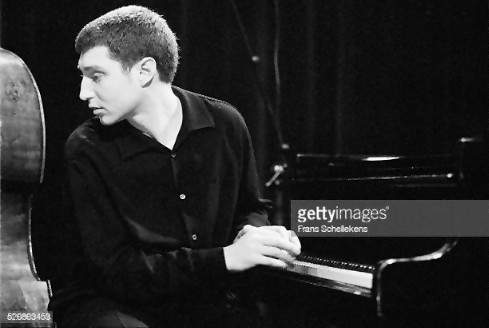
During an afterparty for musicians who’d played the Mt. Fuji Jazz Festival in 1988, in a small corridor adjoining the ballroom of our hotel and relatively out of view and earshot of other attendees, one of the pianists noticed a small upright piano.
Billy Childs, Mulgrew Miller, Renee Rosnes, me, and possibly Gonzalo Rubalcaba, (who was on the festival program that year although I’m not positive whether he made this particular hang), gathered around the piano with Herbie Hancock - all seeking an impromptu lesson, be it collectively or individually.
What wound up happening was that each individual in turn played a little for Herbie, who then provided each of us with some candid personal feedback.
What I recall of Mulgrew and Herbie’s exchange, was that Herbie encouraged Mulgrew to employ more “close fingering” and less of a raised-finger position in articulating his single-note right hand lines. Mulgrew expressed great appreciation and value for what Herbie had suggested, and I remember him later intimating that this exchange marked (paraphrasing) - a significant kind of turning and growth point for him.
I stood hovered over the other pianists’ shoulders as they played, halfway more caught-up in taking in the incredible good fortune and rarity of such a once-in-a-lifetime moment, than fully absorbing the informational gold that Herbie was imparting.
When it came my turn, I hadn’t given any real significant forethought to what I’d play. As embarrassed as I was about to become, the spontaneity of the situation, and the reality of the lack of preparation on my part, exposed my musical immaturity in no small way. I’ve since learned that a student’s musical shortcomings being fully exposed, is an ideal place from which a teacher can access and address the truth of a young musician’s stage of development. If one seeks to learn, they need not pretend that they know more than they do, that’s just a defensive stall from allowing the teacher to help.
Although my teacher and New York Father, Walter Bishop, Jr., was completely in my corner and believed in my potential all the way, the first time he heard me play outside of our lessons, comping for horns in a jam session when I was 19, he called me out of the club and onto the sidewalk. “What the hell were you doing up there? You sound like a striped tie on a plaid shirt - too busy. I see we’re going to need to work on your comping”. That’s some real love - Bish cared so much and was so invested in helping me, that he’d said “We”.
I began attempting to play “Someone To Watch Over Me” for Herbie. I guess I was trying to play what I’d hoped, on a wing and a prayer, would somehow turn out to be some sort of dramatic harmony.
Herbie stopped me after about 11 or 12 bars, and motioned for me to get up from the piano.
“If you want to play this song - or any song - you first need to learn how to do this -“
And with that, he proceeded to play the song in a way markedly unlike how I’d characterized Herbie Hancock’s playing to myself prior to that moment. He played what sounded like a very plain and authentic piano sheet music arrangement, with perfect counterpoint and voice distribution and of course, a gorgeous touch that made the upright piano sound like a grand. It was nothing fancy, no bells or whistles, it was just correct. He played “ Someone To Watch Over Me” - really straight, and good. To illustrate what I lacked, he served the melody rather than using the song as a vehicle to show off his wares.
This was undoubtedly an invaluable schooling in building one’s own house - whatever shapes and forms it may ultimately become, from solid foundations.”
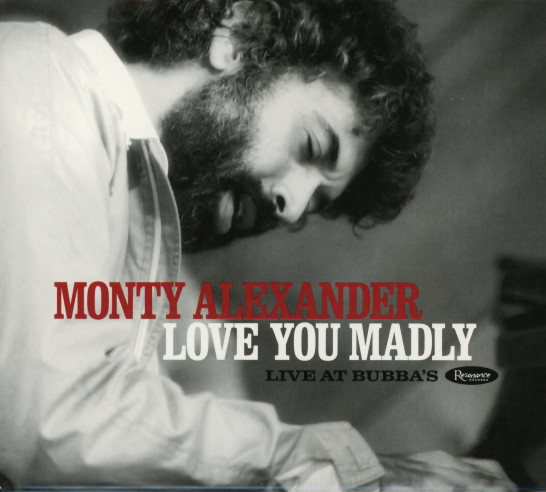
“The thing about Monty's playing is that he has this kind of sparkle. It's definitely music to make you feel good. It's geared towards that. It's happy; happy and snappy. And I mean, those are corny adjectives, I know, but that's the feeling I get from Monty. I get the same feeling from listening to Wynton Kelly play. Joyful. Maybe that's a better word. His music is always very, very joyful. And I could hear Oscar Peterson's influence and also the influence of his roots, Jamaica. It's all there.”
- Kenny Barron, Jazz pianist
THE INFINITE FACETS OF THE BLUES: AN APPRECIATION
By Benny Green
“In 1978 when I was fifteen, I heard Monty Alexander's album, Montreux Alexander-featuring John Clayton, Jr. and Jeff Hamilton-on the radio. Because the music was so dynamic and energetically exciting, I bought the record so that I could listen more often. At the time, I was just beginning to discover and explore the personal sounds and approaches of various Jazz pianists and I was quite struck by Monty's bright, warm sound as well as by the highly infectious emotional breadth of his music.
Monty appeared at Keystone Korner in San Francisco with the Milt Jackson quartet later that same year and I got to hear and watch him in person for the first time. This was really something to behold; Monty was so vitally alert and, from the piano, he was engaged in the emotional expression of the band as a whole. His legs looked so lean and muscular and I remember marveling at how his right foot was steadily tapping, even on the brightest tempos. Monty at the piano was like a human love machine and I remember how blown-away I felt to take in his total musicality and pianism.
Once, many years later, I was staying at the same hotel as Monty and we had breakfast together. Monty asked me almost the identical question that John Clayton would ask me a few years later: "If you could play with anyone in the world, who would that be?"
On each occasion I told my elders that if I could play with anyone, it would be Ray Brown.
"I'm very happy to hear you say that, young man. Mr. Brown is golden and all of the young folks today are interested in that kind of music."
I've told Monty numerous times about occasions when I've been alone with a woman and wanted some music to relax our breathing and change the vibe in the room. I've told him more than once that I've played his rendition of the 1970s pop ballad, "Feelings." "Did it work?" followed by a knowing smile has typically been Monty's response.
Once I was in an airport with Monty and for some reason I had the blues that day. I'd said with a tone of resignation, "Sometimes, I feel that music is the only thing I really have," to which Monty responded, "GREAT! But don't say 'this is all I have,' say, 'I HAVE this!!!!'"
When Ray Brown died, the entire Jazz community was quieted. It was like we were all in shock to accept that he'd graduated the realm of our getting to be around him as we'd been. I telephoned Monty. His Jamaican culture had not "taught" him to mourn, but rather to celebrate. Monty once again gave me a powerful attitude adjustment and after speaking with him I felt empowered and inspired by the glory of Ray's life, rather than broken-down by wallowing in sorrow.
The soul and humanity that Monty breathes into each song he plays is a wonder. His depth of expressive soul and his nature of musical storytelling place him in his own league of piano-trio royalty, right alongside his inspirational heroes, Erroll Garner, Oscar Peterson and Ahmad Jamal.
I'm thrilled by the inclusion of my very favorite (although rarely performed] Monty Alexander original in this set, "Sweet Lady," which was also recorded by Oscar Peterson - the ultimate respect. This waltz carries that kind of magical rejuvenation from the heart, soul, imagination and hands of Monty Alexander that makes a spiritual transference from this beautiful man to the listener.
Monty's embrace of the infinite facets of the blues is profound. His Jamaican sunshine is transformationally healing. His name is synonymous with musical enchantment.”
When they first came out in the late 1990s, I snapped up as many of the three dozen or so limited edition Verve Elite series CDs as I could while they were still available.
And why not?
The were packaged in beautiful multifold paper cases, with handsome jewel case artwork, loads of photographs and music by many of my favorite artists including Louie Bellson, Art Blakey, Ray Brown, Buddy DeFranco, Illinois Jacquet, Tal Farlow, Lee Konitz, Yusef Lateef, Sonny Stitt and Ed Thigpen - artists who had had a long association with impresario Norman Granz and his Jazz at The Philharmonic concerts [JATP] and/or had recorded for his various labels over the years including Clef, Norgran and, of course, Verve.
One of my earliest purchases in the select list of issues was Roy Eldridge: Swingin’ on the Town [Verve 314 559 828-2] which was originally released as a Verve LP in 1960 with Roy’s mellifluous and swinging trumpet accompanied by Ronnie Ball [p], Benny Moten [b], and Eddie Locke [d].
Roy is often characterized as the trumpet player whose phrasing bridged Louis Armstrong’s style of playing to the modernists such as Dizzy Gillespie, Fats Navarro and Clifford Brown. Since all Jazz musicians are said “to come from someone” in terms of influences on their playing this is probably true to some extent.
What is irrefutable are these assertions about Roy’s legacy by the highly regarded English Jazz critic Benny Green which form the original liner notes to Roy Eldridge: Swingin’ on the Town Verve Records – MG VS-68389
“What a blessing Roy Eldridge is to those of us whose job it is to see the development of Jazz music as a single continuous process instead of a huge chaotic accident dominated by geniuses who just happen along every so often. It is one of those convenient over-generalisations of jazz theorising that Eldridge is the logical link between the classic style of Louis Armstrong and the revolutionary innovations of Dizzy Gillespie. There is a great deal of truth in this statement, but it always seems to me to reduce Eldridge himself to the proportions of a stepping-stone from one great man to another, which is gross aesthetic injustice.
There is a misconception on the part of the laity, and some critics too, that each new stylistic development is supposed to be an improvement on the fashions it has replaced, and that progress is a synonym for improvement, a kind of artistic demonstration of the old Shavian dictum "Onwards and Upwards''. Well, Dizzy Gillespie himself has punctured that one. He has testified to the fact that one of the factors which inspired him to evolve a personal approach to improvisation was the fact that he could never seem to approach the standard of his great hero Roy Eldridge, and it is true that some of the historic recordings of Little Jazz in prewar clays stand as perfect examples of the jazz art.
Today Eldridge, like many others of his generation, is demonstrating on album after album that the years are having little effect on his instrumental prowess. When Eldridge toured Britain with JATP a few months ago his was easily the outstanding musical contribution, for he played with a power and imagination which blew several of his fellows off the stand. At one concert he performed with such enthusiasm that he split the seam in his trousers. Later in the band room he showed me this split with some pride.
On this album there is one moment of captivating historical interest, and it occurs on "Sweet Sue". After stating the theme Eldridge moves into his first chorus of jazz. And immediately pushes the clock back thirty-two years to a day in 1928 when Bix Beiderbecke, surrounded by the lumbering legions of Paul Whiteman's circus, blew some jazz on the same "Sweet "Sue". On that day Bix, pushing aside the hindrances of stodgy accompanists and idiot vocalists, created a musical fragment which possessed a wonderful skipping gaiety, and Eldridge, no doubt appreciative of the fact, quotes Bix almost verbatim over the first eight bars. Within a few moments Eldridge has moved on to harmonic movements which belong to a period far more sophisticated musically than Bix's day, and it is this very quality of eclecticism in the players of Eldridge's generation which makes them such stimulating listening. Eldridge, who has lost none of his high spirits as a man (in Britain he is always the most courted of the visiting raconteurs), has lost none of them as a Jazzman either. After only a few bars of, for instance, "The Way You Look Tonight", one senses that old quality of pent-tip excitement, that feeling that power latent is behind the power actually expressed. It is at these moments that I find it so hard to believe that Roy Eldridge is several inches shorter than I am. One should never go by appearances.”
--BENNY GREEN
The Observer, London
Personnel: Roy Eldridge, trumpet; Ronnie Ball, piano; Benny Moicn. bass; Edward Locke, drums.
When Roy Eldridge: Swingin’ on the Town [Verve 314 559 828-2] was released as a Verve Elite CD in 1999, Alun Morgan, another of England’s many knowledgeable writers and critics about Jazz provided these booklet notes:
“When the bebop movement made its impact on the jazz scene, Roy Eldridge found himself marginalized by some jazz writers. He was relegated to the position of a link between Louis Armstrong and Dizzy Giliespie, a gross and inaccurate oversimplification. Eldridge was very much his own man, with a unique style and a career that included years of experience with big bands (Teddy Hill, Fletcher Henderson, Gene Krupa, Artie Shaw}, his own small groups, and units led by such men as clarinetist Benny Goodman and saxophonist Coleman Hawkins, plus tours with Norman Granz's Jazz at the Philharmonic troupe. The album Swingin' on the Town is typical of the quartets he led for nightclub engagements in the late Fifties.
In the jazz pantheon, Eldridge was a true giant: his nickname "Little Jazz" referred only to his physical stature, it was a sobriquet given to him by alto saxophonist Otto Hardwicke when the two of them were working for banjoist Elmer Snowden in 1931. As Eldridge told it, "I was very small at the time. I weighed about a hundred and eighteen pounds — soaking wet — and I used to play all the time. If I couldn't play on the bandstand I'd go in the men's room and play. Otto caught me there one night and said, ‘I’m going to call you Little Jazz because you've always got that horn in your face,' and the name stuck."
A strong competitive spirit and a compulsion to play at every opportunity were important qualities in Eldridge's makeup from his earliest days. Born in Pittsburgh on January 30, 1911 (the same year as fellow trumpeters Buck Clayton, Cootie Williams, Yank Lawson, Bill Dillard, and Louis Prima), Eldridge started out on drums at the age of six, encouraged initially by his brother Joe, three years his senior. But it was Joe who later convinced Roy that he should switch his talents to the trumpet, largely because he felt that his younger brother lacked the physical stamina to carry a drum kit from one gig to the next.
"But I was lazy," Eldridge told Leonard Feather. "I barely learned my solfeggio, and couldn't read music." He was sixteen when he left home to play with the Nighthawk Syncopators, a band of young musicians all with one thing in common: None of them could read a note.
By now Eldridge had learned to play Hawkins's solo on the Henderson band's recording of "Stampede", a feat that got him a job with a carnival band in Youngstown, Ohio. His inability to read a score was seriously affecting his professional career, but his empirical approach to the trumpet was not without its compensations, as he explained in a 1977 BBC interview with Charles Fox:
“From my mother I had developed an ear. Anything I heard, classical or anything, I could automatically play. I didn't know what key I was playing in but I could automatically play. That's why today all the trumpet players, like Dizzy, say to me, 'I don't know how you finger things like that,' and it's because I didn't know what I was doing, I never knew the legitimate way to do things. I just played what came out.”
It was his brother who insisted that Eldridge make the effort to learn the rudiments of music. And it is some measure of the trumpeter's determination to succeed that he was eventually employed by CBS Radio in 1944 to work in the studios as a member of an orchestra fronted by Paul Baron, which also contained such jazz stalwarts as pianist Teddy Wilson, xylophonist-vibraphonist Red Norvo, and trumpeter Charlie Shavers. He told Feather, "It's a nice feeling at first to know that you can make it, that you can read well and fast enough. But after the thrill of reading, I mean of blowing along with everyone else and not having to have an orchestra of thirty men stopped because of you, then what do you have? Playing the same thing again and again becomes monotonous. I guess I don't have the temperament for it. That's why I've stayed with jazz."
Here lies the key to Eldridge's success as an outstanding jazz soloist. He had mastered the academic side of his profession, but his heart lay in the creation of spontaneous improvisation. The very sound of his instrument immediately stamps his identity on the music; a handful of notes at the beginning of a soio and the listener knows that he is hearing Roy Eldridge. His involvement with his music was total, and a strong emotional quality was always manifest. Don Ferrara, a fellow trumpeter who contributed a column to Metronome magazine in the Fifties, wrote, "When Eidridge plays it's his feelings rather than his fingers which push the valves down" — surely one of the most penetrating statements ever made about Eldridge's playing.
The writers who dismissed Eldridge as merely a link between Armstrong and Gillespie were obviously unaware of his upbringing. His first influences were Rex Stewart and Bobby Stark, both members of the Fletcher Henderson trumpet section in the late Twenties and early Thirties, but he was also very impressed by the work of two saxophonists, Coleman Hawkins and Benny Carter. In fact, he did not hear Louis Armstrong in the flesh until 1931. He admired Armstrong greatly, but Armstrong was never a major figure in Eldridge's development as a soloist in his own right.
The competitive spirit was strong, and Eldridge always tried to play higher and faster than anyone else: "I started to feel that if I could combine speed with melodic development while continuing to build, to tell a story, I could create something musical of my own that the public would like." The public certainly liked what he did to "Rockin' Chair" and "Let Me Off Uptown" when he played them with the Gene Krupa band in the Forties. At Jazz at the Philharmonic concerts, Eldridge was the spark plug, the man who could move the excitement level up several notches in his opening chorus. But there was an unhappy period when he felt that public acceptance of the beboppers was likely to leave him stranded, a jazz anachronism in a rapidly changing world.
An offer to tour Europe with Benny Goodman's sextet in the spring of 1950 seemed the perfect excuse to remove himself from the New York jazz scene long enough to take stock of his position. In fact, he did not return home with the Goodman group but stayed on in Paris until April 1951, making records and enjoying the adulation of French audiences. It was a break that restored his self-confidence, and his return to America was the beginning of a new and successful chapter to an already noteworthy career.
Norman Granz put him in the studio with a succession of similarly talented and individual players, such men as saxophonists Coleman Hawkins, Lester Young, Sonny Stitt, Stan Getz, and Benny Carter, pianists Oscar Peterson and Art Tatum, and drummer Buddy Rich. "He's purely my kind of musician," Granz told Leonard Feather. "I always want the guy who thinks he's a bitch. Coleman Hawkins does, but in a 'quiet contempt' sort of way. Roy has that extra ounce of competitiveness, and because he's an emotional guy, he rises to the heights. And he's completely honest, not only musically but as a person."
During the late Fifties Eldridge led his own small group and also worked as a single, appearing frequently at clubs such as the Cafe Bohemia in New York and the Blue Note in Philadelphia. This was the period when supper-club owners found that audiences were attracted to small units playing well-known songs in a comparatively subdued manner. The most successful group of its kind was trumpeter Jonah Jones's quartet, and this may well have been the original concept behind Swingin’ On the Town.
Eldridge uses a mute on nine of the twelve tunes, while drummer Eddie Locke uses brushes throughout. The rest of the group comprises British-born Ronnie Ball at the piano and Benny Moten (no relation to Bennie Moten, the Kansas City pianist-bandleader who once had Count Basie as a sideman) on bass. Locke was Eldridge's first-call drummer for more than twenty years, and the recording sessions from which these sides were made were his very first. Locke was also on hand for one of Eldridge's final dates, a concert at St. Peter's Church in New York City in May 1978. That concert, which also featured trombonist Vic Dickenson, was recorded and later issued as Roy Eldridge and Vic Dickenson With Eddie Locke and Friends.
In his youth, Eldridge had attacked every piece of music as a personal challenge: "I had to play everything fast and double fast. I couldn't stand still. Like a lot of youngsters today, all my ballads had to be double time. I was fresh. I was full of ideas. Augmented chords. Ninths.” When he made this quartet album, he was forty-nine years old, a mature and experienced player with an appreciation of melody. Some of his most attractive ballad playing will be found here, each note given its correct value, the trumpet tone as individual and expressive as ever.
He plays the Erroll Garner ballads "Crème de Menthe" (Garner's title for the instrumental that became better known as "Dreamy" once lyrics were added) and "Misty" unmuted, giving the listener the opportunity to enjoy that golden sound and perfect control. There are brass men who dislike playing in mute and some who have difficulty in controlling the power of their playing in such circumstances. But Eldridge was a master of mutes (one of his earliest was made from a tin can painted gold), and there are plenty of opportunities to hear his control, starting with the muted wah-wah playing on "Bossa Nova".
There are many moments to cherish in this program. Eldridge commences with the verse on George and Ira Gershwin's "I've Got a Crush on You", played with the same delicacy that another trumpeter, Bobby Hackett, brought to the melody when he played on Frank Sinatra's memorable 1947 recording of the tune. "Honeysuckle Rose" was always an Eldridge favorite, and even in the context of this album he succeeds in building a three-chorus solo of strength before handing over to Ball, whose playing throughout is relaxed and tasteful. "When I Grow Too Old to Dream" observes the conventions of the "muted jazz" concept, but Eldridge finds it difficult to suppress his natural exuberance in the vamp coda.
Swingin' on the Town was to be Roy Eldridge's last album as leader for some time. A few months after the session took place, Norman Granz sold the Verve label, leaving Eldridge without a recording contract for a time. He continued to work regularly, appearing at jazz festivals in the United States and Europe until October 1980, when he suffered a heart attack. Despite this
setback he managed to make guest appearances as a vocalist; he died on February 26,1989, in a Long Island hospital.
The tributes were many and sincere, for Eldridge had been one of the most admired and loved of all jazz players. As one club owner remarked: "Some of the younger guys with reputations are children. Roy is a man."”