Showing posts with label Bill Coss. Show all posts

Wednesday, August 6, 2025

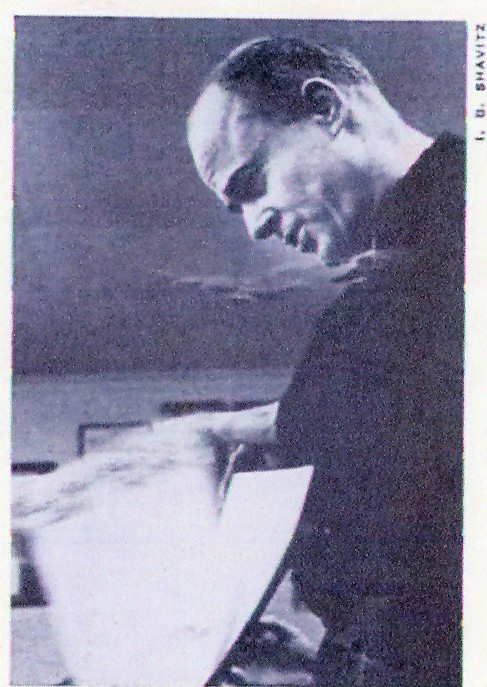
An Evening with Harry Carney by Bill Coss

 © Introduction. Copyright ® Steven Cerra, copyright protected; all rights reserved.


“When the Club Kentucky contract expired in April 1927, Ellington prepared for another summer tour of New England arranged by Charles Shribman. By this time he had added three new players to the band. Harry Carney, just seventeen, played clarinet and alto sax. Ellington called him "a very well-behaved, well-organized young man, [who] was immediately nicknamed 'Youth' by Sonny Greer." Carney increasingly would turn to his preferred instrument, the low-pitched baritone sax, which became the musical anchor for the Ellington orchestra. "His massive tone," recalled Mercer Ellington, "not only gave the saxophone section a depth and roundness no other had, but it gave the whole ensemble a rich, sonorous foundation that proved inimitable." Ellington would often assign Carney the seventh tone, rather than the expected root note, of a chord, and these unusual low notes contributed to the uniqueness of the Ellington sound. In time Carney would become the leading player of the baritone saxophone and make it recognized as an instrument capable of sustaining solos. The quiet, handsome Carney would stay with the orchestra until Ellington died, the longest tenure of any Ellington musician.”

  • John Edward Hasse, Beyond Category: The Life and Genius of Duke Ellington [1993]


“Harry Carney

BARITONE SAXOPHONE, CLARINET

Born April 1910; died 8 October 1974

Carney was an anonymous young band player in Boston when Duke Ellington hired him for a local job in 1926. After that, their association lasted for a further 48 years, and Carney most likely spent more time in Duke's company than any other person. Although he regularly doubled on clarinet in lie early years of the Ellington band, it was the baritone sax which was his preferred instrument - his sonorous and surprisingly mobile way with the horn set the pattern for every baritone man who followed, at least until the 50s, and as the anchor man in the reed section he became perhaps the key instrumentalist in the orchestra. While he enjoyed plenty of solo space, Ellington offered him fewer star vehicles than he did some of his soloists, as if acknowledging that so much of the music revolved around Carney's sound anyway.”

  • Richard Cook’s Jazz Encyclopedia


The following appeared in the  May 25,1961 annual reed issue of Downbeat.


© Copyright ® Bill Coss, copyright protected, all rights reserved, the author claims no right of copyright usage.


Harry Carney has a good-humored unpretentiousness that reminds you of your favorite next-door neighbor. He and his wife have secured a life rich in the better things and alive with interest, carving it out of 36 years of hectic professional musicianship. 


I wasn't prepared for their serenity, when I visited them recently. And the serenity did not prepare me for the avid interest they have in everything around them. By any criteria, the Carneys are among the youngest people in jazz. 


That amuses Harry because, after 33 years as a Duke Ellington sideman, he is running into a second generation of listeners. “Kids come up to me and say, ‘Mother and Dad said to say hello to you'. Almost always they add, ‘We thought you’d be an old man.’ ” 


If you browse along Carney’s bookshelves, you find a catholic selection: The Power of Positive Thinking, The Prayers of Peter Marshall, Hot Discography, The Invisible Man, Mein Kampf, Marjorie Morningstar, The Picture of Dorian Grey, Star Money, Appointment in Samara, The Little Prince — all interspersed with the many Down Beat plaques he has won. 


But Harry's main relaxation is music. He has most of the Ellington records, a few others, and an extensive classical collection. “I like to listen to the legitimate reed players, so that I don't get too far away from first base,” he said. He has the same trouble most of us have in finding a favorite record: “I’ve been meaning to catalog what I’ve got, but I never get around to it.” 


Lack of time is a major problem. The Ellington band practically never sits still. Yet Harry says that this is the reason he’s stayed with the band so long. 


“There was always something going on,” he said. “The music never sits still, either. Duke is always experimenting. Even today. I'll call him up and his wife will answer the phone. You can hear Duke banging the piano in the background. He’s still rushing into rehearsals with new music. He’s always anxious to hear what he’s written. and so are we.” 


Talking about Duke's playing brought up the subject of a proposed solo concert by Ellington. “It would be most interesting.” Harry said. “I’ve heard him do that kind of thing for hours after a job or when he’s supposed to be resting in his hotel suite.” 


That, in turn, turned on the reminiscences. “You know, I began on piano when I was six. I never was any good. I took the lessons and had to practice like a demon, but my brother, who never studied, could sit right down and play.” 


Several years ago, Harry said the real reason he began playing reed instruments was that he noticed how the girls flocked around a clarinetist in a Boston club. He discovered that by joining the Knights of Pythias band, he could get a clarinet for free. 


About the time he met Johnny Hodges (in the seventh grade), he switched to alto. “I found it easier to get a better sound,” he recalled. “Johnny and I used to listen to records together. I copied Sidney Bechet, Joe Smith of the Fletcher Henderson Band, and Coleman Hawkins. He was my ideal. He still is.” 


In 1927, Carney moved to New York. “Those were the days, even when I wasn’t working. I'd go to Mexico’s on 131st St. and listen all night. They'd have all-piano nights. You’d get Duke and Art Tatum and Seminole, lots of others, all in one night. I remember they even had tuba nights. You could hardly move around in the place for all that hardware.” 


Just 17, he had played with a half dozen groups by the time he met Ellington on the street and was hired for a tour through New England. He’s never been out of the Ellington reed section since. On that tour, he tried a baritone saxophone for the first time, liked the sound, and added it to his collection of instruments. He carries baritone, bass clarinet, and clarinet nowadays, but he used to carry alto, soprano, and flute as well. The latter is the only one he regrets giving up, but the lack of a practice mate made it impossible for him to remain proficient on it. 


Carney is often referred to as the father of the baritone—as Coleman Hawkins is of tenor. But he claims to have been influenced by Joe Garland, Toby Hardwicke, and, again. Hawkins. Strangely enough, what influenced his sound most was the sound that Adrian Rollini got from the bass saxophone. 


There the reminiscences stopped. Carney much preferred to talk about other people: “I remember when Pepper Adams’ mother used to bring him to dances

the band played in Rochester. He used to stand in front of the band for hours. You know, that’s one of the things I miss. I don't have much time to listen to musicians outside of the band. That's especially so now, because there are so few places where kids can play. I do hear a bit, though, and I'm pleased with most of it. 1 don’t care what era it comes from. I heard Thelonious Monk and Edmond Hall the last time we were in Boston. Music is only good or bad. That’s all I worry about.” 


We listened then to Carney’s Verve record (it has been reissued under the title Mood for Boy and Girl). He said he’d like to record again, “with a whole baritone section. But you can’t find enough rehearsal time, and I wouldn’t want to do it if it wasn’t going to be right.” 


The rightness of things is very important to him, which certainly explains his pre-eminence. But the insistence is tempered by a realistic philosophy. “There are so many things you can do,” he said, “and so many you just can’t do, no matter how hard you try. I remember one time when I was really bothered by a mouthpiece problem. You can get into an amazing panic over that, if you're a reed man. Finally, I sat myself down, talked to myself, and went back to the mouthpiece I had been using. It worked out.” 


These days Harry is most pleased with his comfortable apartment, when he can get there (“my wife doesn’t travel with me any more; the road is tough enough on a man”), his glistening Imperial (“the guys in the band are always kidding Duke because he doesn’t like to fly, but he can go to sleep in my car at the speed I drive”), and, of course, with the Ellington band. He’ll be with it, he says, as long as he’s “qualified.” He couldn’t get away from it (“I live with it more than I do with my own family”). 


Has it been worth it? “I still look forward to going to work each night.” 


Mrs. Carney agreed. A man can’t ask for much more than a good job, an interesting life, acclaim and respect, his own business (he owns a music publishing firm. Release Music), and a good hobby (she showed some excellent color shots Harry had taken of Gerry Mulligan and Zoot Sims). She interrupted herself to get me some cough drops. “That’s the way she is,” Harry complained in mock aggravation. “Every time I sneeze, she’s got the medicine out.” 


A man can’t ask for much more. Carney has it. He deserves it. It pleases your sense of justice. Harry Carney is a titled human—a Gentleman of Jazz.”

Monday, December 2, 2024

GENE ROLAND - The Untold Story by Bill Coss

 © Introduction Copyright ® Steven Cerra, copyright protected; all rights reserved.


“Roland, Gene (b Dallas, 15 Sept 1921; d New York, 11 Aug 1982). Composer, arranger, and multi-instrumentalist. He first worked for Stan Kenton, composing songs for June Christy and playing his own new fifth trumpet parts (1944). After brief periods with Lionel Hampton and Lucky Millinder he rejoined Kenton as an arranger and trombonist, again on a new fifth part (1945). He began writing arrangements for four tenor saxophones while in New York in 1946, and continued his experiments in Los Angeles (where he played piano with Stan Getz, Jimmy Giuffre, Herbie Steward, and Zoot Sims); this innovation later led to the distinctive grouping of the Four Brothers within the Woody Herman Orchestra. In the late 1940s Roland played trombone with Georgie Auld and trumpet with Count Basie, Charlie Barnet, and Millinder; he also wrote arrangements for Claude Thornhill and Artie Shaw. In 1950 he led a 26-piece big band which included Dizzy Gillespie, Charlie Parker, and other prominent bop musicians, but it was unsuccessful and he resumed work as an arranger for Kenton (from 1951) and Herman (1956-8), In writing for four mellophoniums he introduced a new sound to Kenton's band; he also played as a soloist on mellophonium and soprano saxophone in his compositions for Kenton's album Adventures in Blues (1961). Roland visited Copenhagen in 1967 to compose for and conduct the Radiohus Orchestra. He toured with Kenton again in 1973, but thereafter worked in New York, playing piano, tenor saxophone, and trumpet, and writing arrangements for his own big bands. A fine example of his trumpet playing and an unusual instance of his singing may be heard on Jimmy Knepper's Gee baby, ain't ! good to you on the album A Swinging Introduction to Jimmy Knepper (1957, Beth. 77).” 

  • Barry Kernfeld, The New Groove Dictionary of Jazz [1988, 1994]


© Introduction Copyright ® Bill Coss, copyright protected; all rights reserved, used with permission.


The following appeared in the August 28, 1963 edition of Downbeat magazine and we are lucky to have it as aside from this piece, the above citation in The New Groove Dictionary of Jazz and a 1982 obituary in JazzJournal, one would be hard pressed to find any other sources about one of the more innovative musicians in the history of modern Jazz in the second half of the 20th century.


I mean, check out his multi-instrumentalist abilities, “four brothers sound” credentials, innovative Kenton arrangements and the development of the mellophonium sound, the “nine hot weeks” reference in the following Bill Coss article; the man was a creative force in Jazz in many ways and for many years.


And yet, mention his name in Jazz circles, and very few fans know anything about him.


Perhaps the following posting will help to draw back the veil of anonymity obscuring his legacy.


“GENE ROLAND made one of the most important innovations in big-band jazz, the Four Brothers sound. But until recently (DB, April 25), this had never been mentioned in print, and few musicians knew it.


Gene Roland may have written more arrangements in his life than anyone else, but practically no one knows that either.


Gene Rolland is responsible for changes in the Stan Kemon Band that are almost beyond belief, but nobody knows that — as a matter of fact, he isn't even credited for Kenton's Capitol album Viva Kenton that was arranged, in its entirety, hy him.

Gene Roland can play, and play well, almost every instrument, but practically no one has ever been informed of this.


Gene Roland is one of those persons only a few others know exist. Musician, arranger, composer, he is hardly ever given the curious privilege of being criticized.


Fortunately for Roland, he is concerned only with the music he writes and the band for which it is written. Even more fortunately, he has only rarely been without work.

The chasm between what he has done and the degree to which his accomplishments are recognized is a fascinating one, made only a bit clearer by the rambling biography that is his life.


He was born in Dallas, Texas, on Sept. 15, 1921. No one in his family was musical. His father was a fine and successful commercial artist. But Gene early found a fondness for jazz. He remembers that "at 11 or 12 I had piano lessons. I never took them seriously. I was a typical American boy. But I began to pick up an interest in jazz after I stopped piano lessons, around 1937. A cartoonist for the school paper introduced me to records by Benny Goodman, Count Basie, and Jimmie Lunceford.

"I think now, looking back at it, that my early influences were Louis Armstrong, Trummy Young. Coleman Hawkins, and Benny Goodman. I always liked Basie, but his band was always too raucous for me. I looked to Jimmie Lunceford for progress."


In 1939, he began playing trumpet, "very badly," he said, and with no lessons from anyone but apparently well enough so that local musicians urged him to study. So in 1941, when he was to make a choice of colleges to attend, musician friends convinced him to go to North Texas State (wherefrom fine musicians have been graduated in large numbers).


Roland said he feels especially lucky. "Within a short time" he said, "I landed in an off-campus cottage with Jimmy Giuffre, Herb Ellis, Harry Babasin, and some other guys [“the" other guys" all died in World War II].


"We had a group you couldn't believe. We would play for hours, sometimes until we fell asleep. Then we would get up again and play some more. We lived mostly on home brew that was usually over fermented and cheese sandwiches. But the thing we did most was play,


"There's a little piece of jazz history in that house. We were followers of Sam Donahue and Jimmie Lunceford. Jimmy Giuffre was our unnamed leader —he should have been. Sometimes he was the only one who would go to class. The rest of us would just sit around all day playing and miss all of school. Anyway, due to being in such fast company, I progressed very much faster than I ordinarily would have. I was concentrating then on trumpet and arranging."


Fast company or demands have always watched over Rolland. In 1942, the war broke up the group. Giuffre went into the Air Force, and so did Roland, to the Eighth Army Air Force Band, a 60-piece orchestra, in which he stayed for two years, and in which his primary job was to write dance-band libraries. He wrote six different ones.


Out of the service in the summer of 1941, he immediately joined Stan Kenton, almost exclusively writing arrangements for the band's girl singers, Anita O'Day and later June Christy, and, incidentally, adding a fifth trumpet — and a fifth-trumpet book—to the Kenton band during that year (the five-man trumpet section continues in that band).


Then Roland joined Lionel Hampton as an arranger. "Arnett Cobh got me in," he said, "but I spent six frustrating weeks trying to get the band together for one rehearsal."


It was then summer, 1945, and Roland joined Lucky Millinder for a short time, playing third trumpet and arranging, before again returning to Kenton, this time arranging for Miss Christy and playing fifth trombone chair, adding parts for that chair to the band's book. (Five trombones also remain a feature of Kenton's band.)


"In early 1946," he said — and Giuffre and Stan Getz have corroborated this —"I came back to New York and organized the first four-tenor saxophone band I know of. It had Al Cohn, Joe Magro, Stan Getz and Louis Ott. Nothing much happened with it, but it was an exciting sound.


"So, anyway, I got back out to the West Coast, and I was writing for Vido Musso's big band. The tenor saxophones there were Getz, Giuffre. Herbie Steward, and Zoot Sims. We worked weekends as an eight-piece group — I played piano for $10 a night, and trumpeter Tommy DeCarlo was the leader— at a place called Pontrelli's Ballroom in Los Angeles. That was where a lot of people heard that four-tenor sound."


It worked for several months, but then Roland went back to Kenton. In that summer of 1947 he worked in a Kenton all-star group, led by Musso, at the Hotel Sherman in Chicago. Pete Rugolo was on piano with trumpeters Buddy Childers and the late Ray Wetzel, saxophonists Boots Mussulli and Bob Gioga in addition to Musso, and drummer Roy Harte.


That was just before returning to New York to work with Georgic Auld, playing valve trombone with a nine-piece band that included bassist Curly Russell, trumpeter Red Rodney, and the late drummer Tiny Kahn. Then he played bass trumpet for Count Basie, and arranged for the band, and played the late Al Killian's chair in Charlie Barnet's Orchestra.


Most of 1948 was taken up with arranging for Claude Thornhill and Artie Shaw, Then followed another tour with Lucky Millinder, playing jazz trumpet in a band that also included [drummer] Art Blakey.


Finally, in 1950, there came what Roland calls "nine hot weeks." This consisted of an experimental band playing his arrangements and rehearsing at New York's Nola studios. It was a huge band, few people remember it, only a few pictures exist of it, and only rumors attest to the assertion that some recordings were made of it.


But in the band were eight trumpets, six trombones, eight reeds, and seven rhythm. And among its personnel it numbered Dizzy Gillespie, Red Rodney, Miles Davis, Al Porcino, trumpets; Jimmy Knepper, Eddie Bert, trombones; Charlie Parker (playing lead alto), Joe Maini, Al Cohn. Zoot Sims, Charlie Kennedy, Gerry Mulligan, Billy Miles, saxophones; Sam Herman, guitar; Buddy Jones, bass; and Phil Arabia, Charlie Perry, drums.


This remarkable aggregation came to nothing, and, in 1951, Roland returned to Kenton for two years, writing a host of arrangements.


In 1953 he met Dan Terry (formerly known as Kostraba) and wrote 20 arrangements for that band, some of which were later released on Harmony as Teen Age Dance Party. Roland said, “I’m still getting royalty checks from that album. I've earned over $10,000 from that album one way or the other; more than I ever have."


He returned again, in 1955, to Kenton but after a year left for Chicago and Ralph Marterie ("Ralph sure tried hard for me in Chicago"). And in 1957-58 he was a salaried arranger for Woody Herman and has played trombone for him, too, at times since.


All during those years, from 1956 until 1962, he was writing and planning for Kenton. He introduced the mellophonium section in the band, or, as Roland puts it, "It was the third different horn I played for him."


So now he is with the new Dan Terry Band. In Roland's words, "I wanted something important to do."


Because there is no doubt about what Roland has done and the influence he has wielded, a few of his observations on past associates are in order:

Stan Kenton: "My father in the music business. He taught me how to organize my thinking. He was a counselor and adviser, for which I will be forever grateful."


Vido Musso: "Very talented, very high-strung but likeable. He should have made it, but he was too honest and naive."


Count Basie: "He's only used one arrangement of the 20 I've written for

him and been paid for. He wastes so much, but God bless him. I love him."


Claude Thornhill: "The original pixie of this business. He's very hard to analyze, very complex. He's a controversial guy, but we got along well."


Charlie Barnet:  "He's lots of fun."


Woody Herman: "He's the strongest influence of the old, tried and true bandleaders next to Kenton. Woody's still blowing strong: God bless him."


Sam Donahue: "I think he's the greatest of the big-name rebels. He's still got the bit in his teeth."


"My strongest personal influence was Lester Young. Among the arrangers I most appreciate are Al Cohn, Bill Holman, Neal Hefti, Nat Pierce, and Gil Evans. Gil got me with Claude. I'm grateful for that and just knowing Gil."


Those brief quotes should give a concept of the lean, balding Roland. He is normally off-beat, gentle, and quixotic, and in this may lie the problem, for apparently very few have known what he has done and fewer have thought about what he might be able to do. It only can be said now that some indication of the accomplishment and potential have finally been put in print.”


Monday, October 18, 2021

A Focus Follow-Up with Eddie Sauter

 © Copyright ® Steven Cerra, copyright protected; all rights reserved.


“I thought you might like to see the Footnote to the Spotlight review of the album in the 29 March 1962 issue of Downbeat.  It's an interview of Eddie Sauter by Bill Coss, and sheds more light on Sauter's thoughts on his composition, which supplements your blog.


Cheers,

A Jazz Buddy in New Zealand”


Per the above message, what follows is self-explanatory and casts additional light on Stan Getz’s 1961 Verve LP Focus [V-8412] from the perspective of Eddie Sauter the composer of this extended piece.


It’s also a rare piece in that it allows the composer to share his thoughts about how he went about his business in constructing the vehicles that became a point-of-departure for the seven pieces that formed Focus.


This posting is also accompanied by more YouTube videos featuring selections from Focus.


Footnote to “Focus”

          It seems impossible that anyone could be unaware of the importance of Eddie Sauter.  Still, some simple research shows young listeners thinking of Sauter sorta like Finnegan, both involved with a band sometimes involved more with sound than fury.  Few know Eddie Sauter as an important composer and arranger in the 1930s and ‘40s for Red Norvo, Benny Goodman, (Superman, Benny Rides Again), Artie Shaw, (The Maid With The Flaccid Air), Tommy Dorsey, Woody Herman and Ray McKinley. 

          But, early in 1960, Stan Getz asked Sauter to write something for him, “Anything you want,” said Getz. 

          Said Sauter recently, “the inspiration was the possibility of just being free.  It was the first time anyone ever told me to do just what I wanted to do.  It scared me.  Especially because I was dealing again with a jazz musician.  You have to remember that, even in the days when I was writing for jazz bands, I was always an also-ran.   I think the closest I ever got was a second place in a poll.” 

          The result of Sauter’s writing and Getz’ playing is the Verve album “Focus”, reviewed above. 

          “All of the titles, you understand, came after the recording,” Sauter points out quickly.  “I wasn’t really concerned with a particular style of writing at first, but with finding an overall idea.  I knew I didn’t want to write a suite.  I thought that was too pretentious.  And I wasn’t out to write jazz.  I guess I’m not a jazz writer.  I haven’t been associated with it for years.  If it turned out as jazz, it must be because our environment has been jazz-oriented.” 

          “So, anyway, I began thinking about how to use Stan. The thinking took the time, not the writing.  Before I started writing, I conceived the compositions as seven different fairy tales- that’s what they are- are if Hans Christian Andersen were a musician.  They’re not songs as much as they are short stories.  I decided on that because Stan tells stories so well.  He’s a musical poet.” 

          Once he had decided on that, a short-story approach, Sauter said he decided to write for the string section used on the recording in a manner similar to the way he would for a string quartet.  Nor would there be a rhythm section (only one track had a drummer- Roy Haynes).  I knew we could make our own rhythm.” Sauter said. 

          “When we went into rehearsal without Stan playing, I heard something besides the fairy-tale conception I had originally heard.  Without Stan the music gave me an image of Greek columns standing alone, and Stan appeared as Pan, dancing among those columns.” 

          Sauter said the Pan dance worked out only because Getz is the musician he is.  For the first of the six sessions necessary to complete the album, Sauter gave him only a rough lead sheet of what the orchestra would play, similar to that which a conductor would use.  Sauter said Getz never had been faced with anything like that before. 

          “I had not written in a normal way for a soloist,” Sauter explained.  “The pieces had enough continuity and strength to stand by themselves.  I left a few holes for the soloist.  I wanted Stan to use the orchestra and what it was playing.” 

          “He felt unsure about that and asked me to write out chords for him.  I did and we played it, and it sounded awful.  So, instead, he listened carefully to the strings rehearsing.  Like all artists, Stan reacts to his surroundings.  He has a fantastic musical memory.  Well, let’s just say it worked.  He listened, then he played over, around, in, and with them.  “

          “Everything can be better,” is the typical Sauter answer to a question about his feelings about Getz and Sauter with strings attached.  But both men reflect pride in the finished product, exemplative of a stream without number -  stream of consciousness and conscience, if you will - the river, really, of much return.” 


Wednesday, May 4, 2016

Billy Strayhorn - The Bill Coss Interview

© -Steven Cerra, copyright protected; all rights reserved.


For nearly everyone interested in jazz, the names Duke Ellington and Billy Strayhorn are, if not synonymous, at least inextricably connected. But the connection is not as close, though it is unique, as might be assumed.

This connection is a corporation, really a co-operation, that has, except when the members are working singly, produced some of the finest music and offered one of the greatest orchestras available in Jazz, in, for that matter, American music.

But for most, even for those closely associated with Jazz, the relationship has not been clear. Who did, does, will do, what? Or, more precisely, how does Strayhorn fit into the Ellington dukedom?

In June, 1962, Down Beat's associate editor Bill Coss spent an afternoon talking with Strayhorn in his apartment. The conversation ranged from the particular to the general and the inconsequential. Strayhorn, as charming as Ellington, never was at a loss for words. The following is a transcription of the pertinent parts of the conversation and it contains perhaps the best description I’ve ever come across of how the musical relationship between Strayhorn and Ellington actually worked.

Coss: How did you and Ellington first get together?

Strayhorn: By the time my family got to Pittsburgh, I had a piano teacher, and I was playing classics in the high-school orchestra. Each year in the school, each class would put on some kind of show. Different groups would get together and present sketches. I wrote the music and lyrics for our sketch and played too. It was successful enough so that one of the guys suggested doing a whole show. So I did. It was called Fantastic Rhythm. I was out of high school by then, and we put it on independently. We made $55.

At that time, I was working in a drugstore. I started out as a delivery boy, and, when I would deliver packages, people would ask me to "sit down and play us one of your songs."

It's funny — I never thought about a musical career. I just kind of drifted along in music. But people kept telling me that I should do something with it. By the1 time I had graduated to being a clerk in the drugstore, people really began to badger me about being a professional musician.

Then, one time Duke Ellington came to Pittsburgh, and a friend got me an appointment with him. I went to see him and played some of my songs for him. He told me he liked my music and he'd like to have me join the band, but he'd have to go back to New York and find out how he could add me to the organization. You see, I wasn't specifically anything. I could play piano, of course, and I could write songs. But I wasn't an arranger. I couldn't really do anything in the band. So he went off, and I went back to the drugstore.

Several months went by; I didn't hear anything, but people kept badgering me.
Finally, I wrote his office asking them where the band was going to be in three weeks. They wrote back that the band would be in Philadelphia.

At the time I had a friend, an arranger, by the name of Bill Esch. At the time he was doing some arrangements for Ina Ray Hutton. He was a fine arranger, and I learned a good deal from him.

Anyway, right then he had to go to New York to do some things for Ina Ray, so he suggested that we go together. He had relatives in Brooklyn, and I had an aunt and uncle in Newark, so we figured at least we would have a place to stay.

By the time I got to Newark, Duke was playing there at the Adams Theater. I went backstage. I was frightened, but Duke was very gracious. He said he had just called his office to find my address. He was about to send for me.

The very first thing he did was to hand me two pieces and tell me to arrange them. They were both for Johnny Hodges: Like a Ship in the Night and Savoy Strut, I think. I couldn't really arrange, but that didn't make any difference to him. He inspires you with confidence. That's the only way I can explain how I managed to do those arrangements. They both turned out quite well. He took them just the way they were.

From then on, Duke did very little of the arranging for the small groups. Oh, he did a little, but he turned almost all of them over to me. You could say I had inherited a phase of Duke's organization.

Then he took the band to Europe only a month after I joined the band in 1939. I stayed home and wrote a few things like Day Dream. When he came back, the band went to the Ritz Carlton Roof in Boston. Ivie Anderson had joined the band, and he asked me to do some new material for her.

After that, I inherited all the writing for vocalists, though not for those vocalese things he wrote for Kay Davis. I think what really clinched the vocal chores for me was when Herb Jeffries came with the band. He was singing in a high tenor range, and I asked him whether he liked singing up there. He said he didn't, so I wrote some things for him that pulled his voice down to the natural baritone he became after Flamingo.

Coss: How do you and Duke work together? Do you have a particular manner of doing an arrangement or a composition? How do you decide who will do the arranging?

Strayhorn: It depends. There's no set way. Actually, it boils down to what the requirements of the music might be. Sometimes we both do the arranging on either his or my composition because maybe one of us can't think of the right treatment for it and the other one can. Sometimes neither of us can.

Sometimes we work over the telephone. If he's out on the road somewhere, he'll call me up and say, "I have a thing here," and, if he's at a piano, he'll play it and say, "Send me something." I do, and eventually we get it to work out when we get together.

That's surprising, you know, because we actually write very differently. It's hard to put into words . . . The difference is made up of so many technical things. He uses different approaches — the way he voices the brass section, the saxophone section. He does those things differently than I do. That's as much as I can say. I'm sure that's as clear as mud.

Still, I'm sure the fact we're both looking for a certain character, a certain way of presenting a composition, makes us write to the whole, toward the same feeling. That's why it comes together — for that reason.

The same thing goes for the way we play piano. I play very differently than Edward. You take Drawing Room Blues. We both played and recorded it at a concert. Then I didn't hear it for about a year. I must admit I had to listen a few times myself to tell which was which. But that's strange in itself, because we don't really play alike. I reflect more my early influences, Teddy Wilson and Art Tatum, whereas Ellington isn't in that kind of thing at all.

It's probably like the writing. It isn't that we play alike; it's just that what we're doing, the whole thing, comes together, because we both know what we're aiming for — a kind of wholeness. You know, if you really analyze our playing, you could immediately tell the difference, because he has a different touch, just to begin with. Still, I have imitated him. Not consciously, really. It's just that, say at a rehearsal or something, he'll tell me to play, and I'll do something, knowing this is what he would do in this particular place. It would fit, and it sounds like him, just as if I were imitating him. . . .

I can give you a good example of something we did over the phone. We were supposed to be playing the Great South Bay Jazz Festival about three years ago. Duke had promised a new composition to the people who ran it. He was on the road someplace. So he called me up and told me he had written some parts of a suite. This was maybe two or three days before he was due back in New York, and that very day he was supposed to be at the festival.

He told me some of the things he was thinking of. We discussed the keys and the relationships of the parts, things like that. And he said write this and that.

The day of the festival, I brought my part of the suite out to the festival grounds. There was no place and no time to rehearse it, but I told Duke that it shouldn't be hard for the guys to sight-read. So they stood around backstage and read their parts, without playing, you understand.

Then they played it. My part was inserted in the middle. You remember I hadn't heard any of it. I was sitting in the audience with some other people who knew what had happened, and, when they got to my part, then went into Ellington's part, we burst out laughing. I looked up on the stage and Ellington was laughing too. Without really knowing, I had written a theme that was a kind of development of a similar theme he had written. So when he played my portion and went into his, it was as though we had really worked together — or one person had done it. It was an uncanny feeling, like witchcraft, like looking into someone else's mind.

Coss: How about the larger pieces —  what's the extent of your work on them?

Strayhorn: I've had very little to do with any, of them. I've worked on a couple of the suites, like Perfume Suite and this one. I've forgotten the name of it. That day, it was called Great South Bay Festival Suite.

The larger things like Harlem or Black, Brown, and Beige I had very little to do with other than maybe discussing them with him. That's because the larger works are such a personal expression of him. He knows what he wants. It wouldn't make any sense for me to be involved there.

Coss: You have differentiated between arranging and writing. That can be confusing. As you know, writing can simply be a matter of a melody line; the majority of the work could be the arranger's.

Strayhorn: Not in our case because we do it both ways. We both naturally orchestrate as we write. Still, sometimes you're just involved with a tune. You sit at the piano and write what represents a lead sheet.

It all depends on how the tune comes. Sometimes you get the idea of the tune and the instrument that should play it at the same time. It might happen that you know Johnny Hodges or Harry Carney or Lawrence Brown needs a piece. Or you think of a piece that needs Johnny or Harry or Lawrence to make it sound wonderful. Then you sit down and write it.

After it's done, Duke and I decide who's going to orchestrate — arrange — it. Sometimes we both do it, and he uses whatever version is best.

We have many versions of the same thing. You remember Warm Valley? It was less than three minutes long. But we wrote reams and reams and reams of music on that, and he threw it all out except what you hear. He didn't use any of mine. Now, that's arranging. The tune was written, but we had to find the right way to present it.

I have a general rule about all that. Rimski-Korsakov is the one who said it: all parts should lie easily under the fingers. That's my first rule: to write something a guy can play. Otherwise, it will never be as natural, or as wonderful, as something that does lie easily under his fingers.

We approach everything for what it is. It all depends on what you're doing. You have the instruments. You have to find the right thing — not too little, not too much. It's like getting the right color. That's it! Color is what it is, and you know when you get it. Also, you use whatever part or parts of the orchestra you need to get it.

For example, you have to deal with individual characteristics. Like, Shorty Baker,   who   has   a   certain   trumpet sound. If you're  writing  for  a  brass section and you want his sound, you give him the lead part. The rest follow him. Or if you want Johnny Hodges' color or Russell Procope's color in the reeds, you write the lead parts for either of them.

For a soloist, you just have to look at the whole thing, just like looking at a suit. Will this fit him? Will he be happy with this? If it's right for him, you don't have to tell him how to play it. He just plays it, and it comes out him, the way he wants. If you have to tell him too much how to play it, it isn't right for him.

Here's a good example of writing for characteristic soloists. Duke wrote Mr. Gentle and Mr. Cool. He started off thinking of two people: Shorty Baker (Gentle) and Ray Nance (Cool). The tune wrote itself from his conception of these two people.

We write that way much of the time. Sometimes it doesn't happen right away. A new guy will come on the band. You have to become acquainted with him, observe him. Then you write something.

In Ellington's band a man more or less owns his solos until he leaves. Sometimes we shift solos, but usually they're too individual to shift. You never replace a man; you get another man. When you have a new man, you write him a new thing. It's certainly one of the reasons why the music is so distinctive. It's based on characteristics.

For example, when Johnny was out of the band, we played very few of his solo pieces — well, the blues-type things and Warm Valley, but Paul Gonsalves played that solo. You see we wouldn't give it to another alto to play. We changed the instrument; otherwise, except for things you have to play, we just avoided those songs. Otherwise, you'd spoil the song itself. It was written for him — maybe even about him.

Coss: So many people suggest a question which, I suppose, is the kind you expect when someone gets into a position as important as is Duke's. What it comes down to is that Duke doesn't really write much. What he does is listen to his soloists, take things they play, and fashion them into songs. Thus, the songs belong to the soloists, you do the arrangements, and Duke takes the credit.

Strayhorn: They used to say that about Irving Berlin too.

But how do you explain the constant flow of songs? Guys come in and out of the band, but the songs keep getting written, and you can always tell an Ellington song.

Anyway, something like a solo, perhaps only a few notes, is hardly a composition. It may be the inspiration, but what do they say about 10 percent inspiration and 90 percent perspiration? Composing is work.

So this guy says you and he wrote it, but he thinks he wrote it. He thinks you just put it down on paper. But what you did was put it down on paper, harmonized it, straightened out the bad phrases, and added things to it, so you could hear the finished product. Now, really, who wrote it?

It was ever thus.

But the proof is that these people don't go somewhere else and write beautiful music. You don't hear anything else from them. You do from Ellington.

Coss: How about those people who say Duke should stay home? They say, look, he's getting older, he has enough money coming in; why does he waste all his energy on the road when he could be at home writing?

Strayhorn: He says his main reason for having a band is so he can hear his own music. He says there's nothing else like it, and he's right. There's nothing like writing something in the morning and hearing it in the afternoon.

How else can you do it? Working with a studio band isn't the same thing. You have to be out there in the world. Otherwise you can't feel the heat and the blood. And from that comes music, comes feeling. If he sat at home, it would be retreating.

He'll never do it. He'd be the most unhappy man in the world. The other is such a stimulus.

On the road, you find out what is going on in the world. You're au courant musically and otherwise. It keeps you alert and alive. That's why people in this business stay young. Just because they are so alive — so much seeing things going on all over the world.

Coss: Duke is often criticized for playing the same music over and over.

Strayhorn: What else can you expect? Even though that's not a fair criticism, some part of it has to be true merely because he is the talent he is.

Have you any idea how many requests he gets? After he's through playing all of them, the concert or the dance is all over, and he's hardly started with other requests .... That's why he does the medley that some writers criticize.

Actually, there's a great deal of new music all the time. The thing I'm concerned about is that some of that will get to be requested. Then what will happen? What it really comes down to is that there is never enough time to hear an excess of talent.”              

Source:
Down Beat Magazine
June 7, 1962