Showing posts with label Bob Florence. Show all posts

Saturday, April 19, 2025

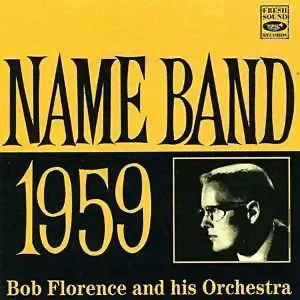
Name Band 1959 - Bob Florence and His Orchestra

 © Copyright ® Steven Cerra, copyright protected; all rights reserved.

“There was a time when the big bands were king, played to packed theaters and ballrooms everywhere, and whose nitely broadcasts were listened by millions. And not just the famous names like Goodman, Ellington and Basie, but less renowned bands who also enjoyed their share of the big band scene across America. Which is why Fresh Sound Records is helping to keep alive the sound of big band music in a special series of CDs dedicated to the rediscovery of many whose names are well known and others who never made the headlines, but whose music certainly merits their reissue. Some of the bands went on the road, others, like the so-called rehearsal bands, existed only in the studio, but their music was the thing!”

                                 - Jordi Pujol, Fresh Sound Records


“In the next few days, myriad obits will rightfully refer to him in terms of 'major figure' and so on and so forth," says Bill Reed, “however in my occasional conversations and dealings with Bob, I also found him to be sweet, funny, forthcoming, and just flat-out. . .nice. A wonderful and warm person, and a gifted musician and educator. His piano playing was always fresh and innovative, prompting younger musicians to seek him out."

- Excerpt from May 15, 2008 Bob Florence Obituary in AllAboutJazz.com


From 1953 until his passing in 2008, pianist Bob Florence [b. 1932] led a big band for which he composed and arranged music that had a consistent simplicity to it which may be one of the reasons why it swung so easily. It may also be a reason why musicians loved to play it.


The style of his writing had much in common with that of Gerry Mulligan, Bill Holman, Marty Paich, Al Cohn and Bob Brookmeyer; it was very linear and the arranged lines [melodies and countermelodies] just unraveled and flowed in an unhindered manner.


Although initially it was one of the many rehearsal big bands that evolved throughout the burgeoning Los Angeles landscape of the 1950s, Bob’s big band ultimately became a successful performance orchestra at clubs, concerts and festival venues, almost exclusively in the greater Southern California area. Many of its members were accomplished studio musicians who couldn’t afford to travel due to the lucrative demands of such work.


One could think of Bob’s Big Band as the West Coast equivalent of the NYC Village Vanguard Orchestra without the permanent home base. It also resembles what today is now called The Vanguard Orchestra in that membership conferred a kind of status as being a big band musician of the highest order, the - CRÈME DE LA CRÈME. 


Of course, there may be other Los Angeles based big bands that might also merit such a designation including the Bill Holman Big Band, the Frank Capp-Nat Pierce Juggernaut Big Band, Louie Bellson’s Explosion Big Band, the Mike Barone Big Band and the Clayton-Hamilton Jazz Orchestra; of these only Bill Holman’s band dates back to the late 1950s when Bob Florence’s band first got its start.


Others who have led Los Angeles based big bands intermittently or more recently are Tom Kubis, Roger Neuman, Gordon Goodwin, Steve Huffsteter, Chris Walden, Scott Whitfield, and Kim Richmond.


The plethora of musicians in Southern California [at one time Local 47 had over 13,000 dues paying members in the union] makes it fairly easy to populate these large orchestras with talented music readers and Jazz improvisers, but the geographic sprawl that is the greater Los Angeles area makes it difficult to replicate a central location where they can demonstrate their skills on a regular basis equivalent to the Village Vanguard. 


In a career that spanned five decades, Bob Florence garnered national and international acclaim as a jazz composer, arranger, bandleader, keyboardist, accompanist, and educator.


He was a Grammy Award winner and received an incredible 15 Grammy Nominations and two Emmy Awards. 


Before his death in 2008, some of Bob’s more recent commissions included, “Eternal Licks & Grooves" commissioned by ASCAP and International Association of Jazz Educators honoring Count Basie, premiered in January 2005 at the IAJE convention in Long Beach California and “Appearing In Cleveland" commissioned by the Los Angeles Jazz Institute honoring Stan Kenton, premiered in March 2004 at the Jazz Bakery in Los Angeles, California, as well as many others.


Florence, a highly respected jazz educator, often served as clinician, adjudicator and guest instructor in college settings. In my conversations with him, Bob was a warmly engaging man who approached the act of making music with great humanity and humor.


Contained in one of the obituaries was this comment that beautifully describes Bob as many knew him: “In the next few days, myriad obits will rightfully refer to him in terms of 'major figure' and so on and so forth," says Bill Reed, “however in my occasional conversations and dealings with Bob, I also found him to be sweet, funny, forthcoming, and just flat-out. . .nice. A wonderful and warm person, and a gifted musician and educator. His piano playing was always fresh and innovative, prompting younger musicians to seek him out."


Florence wrote some of the most beautiful big band arrangements since Duke Ellington's, but many of them went unheard or unrecognized because of unfortunate bad timing. At a time when the market for big bands dried up, Florence discovered a passion for composing and arranging for large jazz ensembles.


So instead of getting the exposure of road shows, radio spots, and coverage on the Hit Parade, Florence had to resort to working with session musicians on their days off, for little or no money, or to applying his talent to more commercial material. Nevertheless, though Florence's work is scattered across hundreds of albums by dozens of artists; some of it is the most beautiful and delicate music ever written for big bands.


Something of a musical prodigy, Florence took his first piano lesson before the age of four and was performing at recitals at seven. Throughout his early years, he studied with the expectation of becoming a classical musician. 


While attending Los Angeles City College, he studied orchestration and arrangement with Bob McDonald, a college faculty member who'd written from Charlie Barnet and others years before. Florence was immediately attracted to working with a jazz-oriented group, and it led him to set up an informal band at college that met and performed his works.


At the time, L.A. City College's study body included men who would go on to become some of the most respected studio session musicians: Dennis Budimir, Herb Geller, Tommy Tedesco, and John ("Star Wars") Williams. 


Someone suggested Florence shift his band to the Hollywood Musician's Union local rehearsal hall, and he started a weekly session that quickly proved a great word-of-mouth success.


Session players were looking for an outlet for their more creative side, and Florence soon had ace musicians vying for spots in his group. One of the early members of this “kicks" band, baritone sax player John Lowe, still played with Florence until his death.


Florence toured with Alvino Rey, then wrote for Harry James, Les Brown, and others. He recorded a couple of albums for various labels, but in 1960, Si Zentner contacted Florence about writing for a new band he was forming. Florence went on to work with Zentner on 11 albums on Liberty and RCA. He helped Zentner score perhaps the last big band hit with a rockin' version of the Hoagy Carmichael tune, Up a Lazy River, in 1961, and a classic recording of Les Baxter tunes played by Zenter's band and Martin Denny on piano, “Exotica Suite."


From his work with Zentner, Florence became known by Dave Pell and others in Liberty's A&R shop, and through the mid-1960s, handled arrangements for scores of Liberty albums. He did several vocal group albums, including Great Band, Great Voices with Zentner and the Johnny Mann Singers, and Jazz Voices in Video with Dave Pell. He often worked with Liberty's leading pop vocalist, Vicki Carr, and he arranged a long and highly successful series of instrumental albums with saxophonist Bud Shank.


Florence wrote for a number of television shows, including “The Red Skelton Show" and “The Dean Martin Show." He reunited with Les Brown on an album for Decca, arranged a fine bossa nova album with Sergio Mendes (sans Brasil '66) on Atlantic, and worked with one of his idols, Count Basie, on an album of Beatles hits.


By the early 1970s, television and movies had become the focus of Florence's work, and very little of his work from this period can be found. Vicki Carr called him in 1973 to pinch-hit for her road band's conductor, and a one week engagement became a relationship that lasted nearly five years and took him throughout the U.S. and overseas.


In the late 1980s, he organized yet another group, The Bob Florence Limited Edition. The band's name referred to the small and elite group of session musicians who could master just about any material with little or no fuss. The band's album, Serendipity 18, received the 2000 Grammy for Best Jazz Performance by a Large Ensemble.


Thanks to the efforts of Jordi Pujol at Fresh Sound, we have an early sampling of Bob’s writing for big bands as contained in the tracks on Name Band 1959 [FSCD 2008; Carlton STLP 12/115] which was recorded in Hollywood. November 1958 at the Royce Hall Auditorium in U.C.L.A. 


Here are Jordi’s insert notes to this - what was a very rare LP - until this CD reissue.


During the late 1950s many so-called rehearsal bands appeared in Los Angeles. For the most part they blew off steam without being heard, and were appreciated by only a few fans who happened to know the day when the guys got together in the rehearsal rooms of the Musicians Union Local 47. 


The Bob Florence aggregation was one of the best of those bands, and jazz musicians on California's west coast had long been talking about it.


Florence first saw The light of day in Los Angeles in 1932, born to a musical mother who had once played piano in silent movie houses. Bob's precocious interest in music was quickly recognized by his aware parents especially his perfect pitch and before his fourth birthday they had organized the young boy's first piano lesson. His progress was so good that he gave his first classical recital when he was only seven years old, and he seemed destined for a career in the legitimate or concert field.                        


Later, at Los Angeles City College, he studied basic writing fundamentals and arranging with Bob McDonald, who'd once worked in the big bands of Glenn Miller and Bunny Berrigan. From around that point Bob's interest in jazz really took off, for unbeknown to his tutor, he was already listening to and collecting jaiz records, with Stan Kenton's powerhouse brand of music particularly fascinating the young student, as were the sounds of Duke Ellington and Jerry Fielding. As a result, the classical music thing virtually evaporated overnight, and it's interesting to note that together with Bob in the City College band were the likes of Lanny Morgan. Herb Geller. Jack Sheldon and Bob Hardaway. two of whom feature on this recording.


With a group of Jazz playing friends, the young Florence formed his first rehearsal band in Los Angeles in 1953 which proved to be enormously popular with the local jazz fraternity, especially among the musicians who would actually compete for a place in the band, (Let’s face it, jazz musicians are always the first to recognize talent when they hear it.) Bob kept the rehearsal band going periodically during the 1950s, which kept him busy writing. At the same time he worked briefly for Alvino Rey and Les Brown.


It was in late 1958 when Don Jenson, one of the people who began turning up at these rehearsal sessions, approached Bob with the idea to record the sessions you hear on this disc.


Bob did some arrangements for Harry James’ big band in the late 1950s and in 1961, Bob’s chart on Hoagy Carmichael’s Up A Lazy River became a big hit and helped propel trombonist Si Zenter’s band into the big time.


As a result the doors opened to Bob and he worked extensively in many fields, not only for jazz orchestras, but also for televisions shows, singers and other, more commercially slanted jobs. And that’s how Bob’s career in music has continued through the years. He reorganized the band at the end of the 1970s and it subsequently became internationally famous through recordings which have always maintained a high standard of excellence.


Bob’s musical philosophy is absurdly simple. He likes music that is joyous and he wants his audiences to feel happy. When interviewed he stated that he “... remembered hearing these wonderful orchestral outbursts from Woody Herman, Count Basie and the Duke. If you can lift the audience up out of their chairs a few times, you’ve done a good job.” However, he attributes his main influences to have been Bob Brookmeyer, Bill Holman, Bill Finegan and Al Cohn. For the most part, Bob’s writing is spare and economical (like his piano playing) and he leaves plenty of room for the soloists, with the accent placed on swinging hard, without constraint. Perhaps more than anything else, the Bob Florence trademark is an uninhibited spirit of joyous swing, the pleasure of living, albeit controlled and disciplined. The Bob Florence Feel, shall we call it?


But getting back to the recordings in question here: they were notable for two things. In the first place it was not only the Bob Florence Orchestra’s first venture into the recording studio, but it was also one of the earliest big band recordings ever to have been made instereo, the new thing at the time. The playing is clean throughout, the execution is precise (as always), yet the overall feeling is warm and swinging. The Bob Florence feel to a T. Some of the soloists here include altoist Herb Geller, tenor saxophonist Bob Hardaway, trumpeter Tony Terran, trombonist Herbie Harper on the first session and Bob Edmunson on the second, and the whole band swings through a marvelous selection of titles.


The opening track Little Girl was made famous by the Nat King Cole Trio, and is the only two with two alternate [and completely different] versions, and they feature the always impressive alto sax of Herb Geller. Pastel Blue stems from Artie Shaw and features some tasty clarinet by Don Shelton. Undecided was penned by trumper star Charlie Shavers and has some fine open horn by Terran. Southern Fried is associated with Charlie Barnet and also features Terran and from The President himself [Lester Young] there is Easy Does It where Bob Hardaway shines as does slide trombonist Herbie Harper. On Florence’s original Give a Listen Hardaway is again prominent while valve trombonist Enevoldsen demonstrates his mastery over the instrument. And that’s just to mention five tracks!


For Florence it was not just a case of nostalgia, but a demonstration of genuine love and affection on the part of he and his cohorts for the big band music of the previous era. What they were doing was giving a backward glance at the good musical things that happened way back, when they themselves were kids. The soloing throughout is terrific and it would be superfluous to mention them all, for the principal virtue of the band was its overall collective drive. And today, in 1993 [year of the CD release], Bob Florence is still fronting his own orchestra, bringing joy to the Los Angeles area big band fans.


“I love my band and spend every waking hour thinking about writing for it,” he once said in an interview.”


Bob, it shows,”


Jordi Pujol


Sound engineer: George Fields. 


Original 1958 sessions produced by Don Jenson. 


Produced for CD release by Jordi Pujol.


This CD is dedicated to Evelyn Florence.


Personnel:

Johnny Audino, Tony Terran, Irv Bush, Juiles Chaikin (tp); Bob Edmundson, Bobby Pring, Don Nelligan, Herbie Harper (tb); Herb Geller, Bernie Fleischer (as); Bob Hardaway (ts, cl); Don Shelton (ts); Bob Florence (p, arr); Dennis Budimir (g); Mel Pollan (b); Jack Davenport (d). Bob Enevoldsen (v-tb, replaces Herbie Harper on #8,9,20,21).

All arrangements by Bob Florence


Order information can be located by going here.


Saturday, April 13, 2024

Bob Florence Limited Edition by Gordon Jack

 © Copyright ® Steven Cerra, copyright protected; all rights reserved


Gordon Jack is a frequent contributor to the Jazz Journal and a very generous friend in allowing JazzProfiles to re-publish his perceptive and well-researched writings on various topics about Jazz and its makers.


Gordon is the author of Fifties Jazz Talk An Oral Retrospective and he also developed the Gerry Mulligan discography in Raymond Horricks’ book Gerry Mulligan’s Ark.


The following article was published in the April 7, 2024 edition of Jazz Journal. Gordon is based in the UK and uses English spelling.


For more information and subscriptions please visit www.jazzjournal.co.uk                 


© -Gordon Jack/JazzJournal, copyright protected; all rights reserved; used with the author’s permission.


“Between 1979 and 2006 Bob Florence recorded thirteen big band albums with his Limited Edition and each release was an event. One of the band’s notable features was a six-man saxophone section which was packed with doublers. No less than eighteen woodwinds were available to the leader who took full advantage of the stimulating tone colours available to him. The band could pin you to the chair with the brilliance of its attack combined with subtle dynamics worthy of the Basie band at its very best. As drummer Nick Ceroli once said, ”It can blow your head off or whisper in your ear”. 


Florence wrote many compelling originals and each album which presented totally fresh material was replete with a selection of his innovative themes. He was nominated for fifteen Grammy Awards over the years finally breaking through in 2000 when his Serendipity 18 won for Best Performance by a Jazz Ensemble.


He was born in Los Angeles in 1932 and began piano lessons when he was three. He had perfect-pitch together with a prodigious talent for the instrument, performing his first piano recital at the age of seven. After leaving high-school he took an arranging course at the LA City College where he organised a band which rehearsed at the local Musician’s Union. Lanny Morgan, Bob Hardaway (who both became Limited Edition members) Herb Geller and Jack Sheldon were all students at the college at that time. He soon became “mesmerised” by the sounds of the Duke Ellington, Count Basie and Woody Herman bands. After working for Alvino Rey, Les Brown, Louie Bellson and Harry James in the late fifties his career really took off around 1961 when he arranged “Up A Lazy River” for Si Zentner. It became a big hit and won a Grammy Award. This led to commissions from Stan Kenton, Buddy Rich and Count Basie as well as entries into the commercial world with Andy Williams, Dean Martin, Red Skelton and Frank Sinatra on their TV shows. 


He was not completely lost to jazz at this time because his 1964 big band recording of “Straight No Chaser” prompted this comment from Thelonious Monk in a DownBeat Blindfold Test, “It sounded so good, it made me like the song better! It was top-notch”. He particularly liked Herbie Harper’s trombone solo who later became a founder-member of the Limited Edition. Florence went on to work with Jack Jones, Julie Andrews and Lena Horne and for most of the 70s he toured with Vikki Carr as her musical director.


1979 was the year he introduced his Limited Edition with its stellar line-up of big band veterans who had left the rigours of the road for the security of the Los Angeles studio scene. They had all paid their dues over the years touring with Stan Kenton, Woody Herman, Count Basie, Louis Bellson, Charlie Barnet, Les Brown and Benny Goodman. Interpreting his demanding scores was clearly not a problem and it helped that the band was full of heavy-hitter soloists in each section. Here are some selected highlights from the band’s extensive discography, although it was not marketed under The Limited Edition title until 1983.


Their debut recording took place at Concerts By The Sea which was Howard Rumsey’s club on the pier at Redondo Beach. They were recorded there over four nights in June 1979. The band is really put through their paces on the extended “Be Bop Charlie” that is almost through-composed in its construction. It is dedicated to Chuck Niles who is the only jazz DJ with a star on Hollywood’s Walk of Fame. Bob Hardaway (tenor) and Charlie Loper (trombone) both stretch out to good effect. Nick Ceroli who is better known for his commercial work with Herb Alpert proves here and on all his recordings with the band to be a fine big band drummer very much in the Buddy Rich tradition. “The Lonely Carousel” is a perfect vehicle for the lyrical flugelhorn of Warren Luening. Sounding very close to the great Guido Basso of Rob McConnell fame he is cushioned here by delicate writing for the woodwinds. Charlie Loper with a little hint of “Mad About The Boy” along the way thrives in the laid-back swing created by the band on “Wide Open Spaces”.


 Westlake, the band’s next release, was recorded nine months later. The album title finds the leader’s piano accompanied by subdued ensemble textures in a successful exercise in subtle dynamics. “One, Two, Three” is a suite of waltzes opening with an exciting up-tempo feature for Pete Christlieb revealing his Eddie ‘Lockjaw’ Davis roots. The tempo slows for an elegant flugelhorn statement from Steve Huffsteter before the ensemble segues into a delightful baritone-led saxophone soli. The suite concludes with a storming soprano outing from Ray Pizzi who takes things out with another stimulating section soli. These tempo changes are of course handled with aplomb by Ceroli whether on sticks or brushes. Christlieb displays another side of his musicality with an emotional reading on “Autumn”. He really should be far better known. Despite the twenty-six albums recorded under his own name, he still seems to fly under the radar.


The well-named Magic Time was recorded in 1983 and Florence has intriguingly scored the album title for six clarinets, one of which is Bob Efford’s bass clarinet. Definitely not a sound you hear every day but very effective. Dick MItchell has an impressive flute outing before a saxophone soli becomes a spring-board for Charlie Loper’s trombone. He has a reputation for being “a great lead player who can play great jazz” as he demonstrates here. The chart climaxes with a thrilling ‘shout’ chorus that became something of a Limited Edition speciality over the years.  “Double Barrel Blues” is introduced by two choruses of funky chords from the leader’s electric piano. It is one of his cutest themes and London-born Bob Efford shows just why he was so highly thought of by his colleagues. The rich sonorities of his baritone both here and on “Bleuphoria” create a Carney-like intensity. “Rhythm And Blues” is an absolute tour-de-force from Lanny Morgan on alto. Through a blizzard of key changes it storms along at 90 bpm which should be impossible but Morgan manages to be inventive throughout. Bill Perkins once summed him up for me as, “the greatest, most dynamic jazz-oriented lead alto I ever played with”.


Their 1986 album Trash Can City was dedicated to Nick Ceroli who had died the previous year aged only forty-five. He was on all the previous Limited Edition albums and is replaced here by Peter Donald who had played extensively with the Toshiko Akiyoshi/Lew Tabackin Big band. Bob called him, “a revelation”.  The CD opens with “Willowcrest” an original he first wrote for the Buddy Rich band in 1967 and it was to remain in the drummer’s book for years. There is an ethereal quality to “Jewels” which has Julie Andrews humming wordlessly much like Adelaide Hall did on “Creole Love Call” with Duke Ellington back in 1927. “The Bebop Treasure Chest” is a collection of subtle references to “Night In Tunisia”, “The Champ”, “Salt Peanuts”, “Bebop” and “Hot House”. Horace Silver’s “Doodlin’” though not part of the bebop vernacular is also referenced. “The Babbling Brook” is dedicated to Bob Brookmeyer who was one of Florence’s heroes. It is book-ended by the leader’s use of a Yamaha DX 7 which gets pretty close to Brookmeyer’s trombone sound electronically and it benefits from a fine chorus from the west-coast’s great Lestorian, Bob Cooper. 


In 1993 the band recorded its second live date titled Funupsmanship this time at the Moonlight Tango Café in Sherman Oaks, Los Angeles. It also introduces drummer Steve Houghton who was making his first album with Florence. The easy-paced “Slimehouse” is actually based on “Limehouse Blues” and introduces the ensemble without solos to an enthusiastic audience. “Funupsmanship” is a contrapuntal original worthy of Bill Holman (an acknowledged influence) with a fine trombone contribution from Alex Iles quoting “I’m Getting Sentimental Over You” and “Laura” along the way. “The Cat’s Waltzes” features a soulful Bob Efford and a particularly melodic Warren Luenning. Once again the ghost of Bill Holman hovers over the dynamic arrangement of “Come Rain Or Come Shine” which is a feature for the elegant Charlie Loper. On “Lester Leaps In”, Rick Culver (trombone) and Lanny Morgan find something totally fresh and original to play on Gershwin’s familiar harmony. Tenor-man Dick Mitchell positively bristles with authority and invention on Wayne Shorter’s up-tempo “Lester Left Town”. The album concludes with a twelve minute exploration of Miles Davis’ “All Blues” which is noticeable for the distinctive harmonies Bob Florence created for the brass section. Warren Luening who is very Miles-like in a harmon takes the solo honours. 


Their 2002 release, Whatever Bubbles Up, opens with “Dukeisms” which Bob wrote to celebrate the anniversary of Duke Ellington’s birth with suitable hints of “Cottontail”, “Happy Go Lucky Local” and “I Let A Song Go Out Of My Heart”. The pure sound of Carl Saunders is featured on “Nerve Endings” recalling one of the unsung heroes of the trumpet – Don Fagerquist. “Chelsea Bridge” is a delight with Charlie Loper carrying the melody over attractive woodwind scoring before his section-mate Bob McChesney takes off for an inventive jazz chorus. Steve Huffsteter in a Harmon mute plots a lyrical course through “Q & A” which he has all to himself.


Eternal Licks & Grooves in 2006 opens and closes with respectful homages to Count Basie and Stan Kenton. The exciting “Eternal Licks & Grooves” (the title says it all) has the trombones introducing variations on “One O’Clock Jump” over repeated pedal-tones from the piano and the baritone. Tom Peterson’s beefy tenor and Larry Lunetta’s expressive trumpet are featured over backgrounds that hint at “Jumpin’ At The Woodside” before the ensemble closes with one of the best known codas in jazz, patented by the Count himself. 


The strangely titled “Appearing In Cleveland” is explained in the sleeve-note. Stan Kenton was once asked in a radio interview where he thought jazz was going. He modestly replied “We’re appearing in Cleveland on the thirtieth!” Drummer Peter Erskine who was with Kenton in the early seventies opens what is almost a mini-suite with an explosive burst on the cymbals leading to “Artistry In Rhythm” from the leader. A paraphrase of “Eager Beaver” introduces Bob Efford before “Intermission Riff” heralds a tempo-change and a brief quote from “Willis” which Florence introduced on the 1996 Earth CD. Larry Koonse (guitar) whose father played with Harry James and George Shearing steps up to the solo mike before the band reprises the “Artistry” theme which closed so many Kenton concerts over the years.


In conclusion it really is remarkable how consistent the Limited Edition personnel remained over the years. In a 1992 LA Times interview Florence saluted three of his regular sidemen Steve Huffsteter, Bob Efford and Lanny Morgan – “These guys are a real joy to work with”. Huffstseter appeared on all thirteen albums, Efford was on ten and Morgan was on six. In Lanny’s case it probably would have been far more if he had not spent most of the 1990s touring first class with Natalie Cole’s backing group.


Bob Florence Limited Edition Discography

Live At Concerts By The Sea (1979) Discovery 74005CD.

Westlake (1981) Discovery DSCD 832CD.

Soaring (1982) Sea Breeze SB2082CD.

Magic Time (1983) Trend TRCD 536.

Trash Can City (1986) Trend TRCD545.

State Of The Art (1988) USA Music Group USACD589.

Treasure Chest (1990) USA Music Group USACD 680.

Funupsmanship (1993) Mama Foundation MMF1006CD.

With All The Bells & Whistles (1995) Mama Foundation MMF 1011CD.

Earth (1996) Mama Foundation MMF 1016CD.

Serendipity 18 (1988) Mama Foundation MMF 1025CD

Whatever Bubbles Up (2002) Summit DCD360CD.

Eternal Licks & Grooves (2006) Mama Foundation MMF 1030CD. 


Bob Florence died in May 2008. Five months later The Limited Edition recorded a tribute album to him with Alan Broadbent in the piano chair – Legendary MAA 1037.”


Wednesday, October 5, 2022

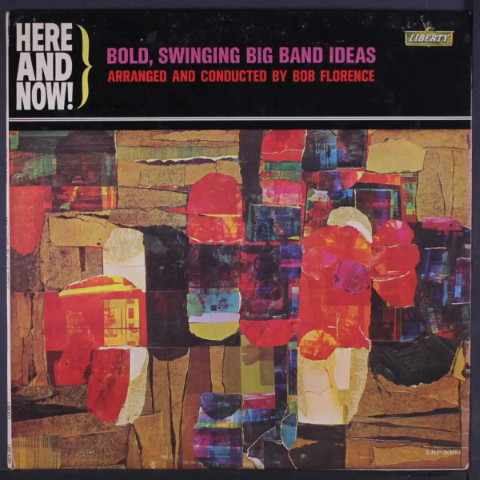
Bob Florence - Here and Now/ Bold, Swinging Big Band Ideas

 © Copyright ® Steven Cerra, copyright protected; all rights reserved.


Unless you were based in or around the greater Los Angeles area or had ready access to it, the name “Bob Florence” [1932-2008] may be a relatively obscure one.


This feature, as well as, an earlier one about his Name Band 1959 album, along with a few more to follow is intended to rectify this lack of awareness by shedding some light on Bob’s 50-plus year career as an original and brilliant big band composer-arranger.


Because of its long history as a recording mecca for instrumental and vocal artists and commercials for television, radio and other media, Los Angeles has always had a large number of resident musicians with professional reading and improvising skills of the highest quality.


In addition to this vocational involvement, many of these studio players also enjoy moonlighting in the many big bands that have long been a feature of the L.A. Jazz scene.


Obviously the economics of maintaining large orchestras commercially have changed dramatically over the years since their heyday in The Swing Era, but the desire to play in these big band settings still prevails even though the performance venues might be limited to the occasional appearance at a festival or concert and the even rarer participation on a recording.


Generally, what it takes to make it happen is a skilled leader with a book of interesting arrangements and a willingness to make the necessary sacrifices to bring the musicians and the music together.


Enter pianist Bob Florence.


Thanks to a series of excellent insert notes that populate Bob’s recordings written by Jazz authorities including Pete Welding, Herb Wong, James Liska, Michael Stephans, Kirk Silsbee, Phil Norman, Bob himself, and musicians who performed in his bands including drummer Nick Ceroli and baritone saxophonist John Lowe, we are fortunate to have observations and commentaries which illuminate Bob’s unique qualities and skills as a big band leader and composer-arranger.


Fortunately, too, the dozen plus recordings by the Bob Florence Big Band [later called the Bob Florence Limited Edition] are still available through online retailers such as Amazon,resellers on eBay and https://www.discogs.com/artist/2443230-The-Bob-Florence-Limited-Edition.


Although few and far between, testimonials about Bob and his music can also be found via internet searches such as the following by trumpeter Ingrid Jensen which was originally published in the March 1, 2009 edition of the. JazzTimes.


“Although Bob Florence was not one of the names that I’d heard of growing up in Nanaimo, Canada, he was an artist whose incredible legacy permeated much of my mother’s record collection, through the likes of Harry James and Count Basie, in addition to the classical piano repertoire she played. All of that music I find so present in Bob’s tender touch and spirit.


It wasn’t until 2003, when Bud Shank threw us together onstage in a faculty jam session at the Port Townsend workshop, that I personally met and experienced the artistic brilliance of Bob Florence. I had called a standard, “Alone Together,” and wanted to play an uptempo duo out front with my pal Alan Jones. Bob sat pensively at the piano, with his eyes tightly shut, while we carried out our quasi-masculine trumpet-drum battle. When he came in on the bridge, laying down the now legendary “chord of doom,” it was clear the heavyweight in the room was Bob. After we finished, he simply stated, “I’m getting too old to comp for each bar that’s flying by so I just came up with a chord that works over the entire bridge.” And indeed it did!


From that moment on, as many in the audience will remember, we established a mutual personal and musical admiration for life. Playing together whenever we could, we kept in touch by phone and e-mail and even enjoyed a cherished wedding celebration in British Columbia, where Bob performed a song written for me, lovingly titled “My Sunshine Connection.”


He and I stayed in contact until he fell ill with pneumonia, leaving this Earth only five days shy of his 76th birthday. I find it hard to adjust to the idea that he is actually gone. I could always count on a message or a call just at the moment when it felt like we’d been out of touch too long and needed to reconnect.


During a discussion about how to avoid making enemies, Bob came up with one of my favorite sayings, which wasn’t “life is short,” but rather “life is long!” I’m struggling to agree with this statement at the moment, wishing he were still here, especially after watching videos from the beautiful tribute concert his extraordinary band, Limited Edition, put on in his honor at the Catalina Jazz Club in Hollywood last June. The piano parts were replaced by guitar, a reminder of Bob’s absence represented by the empty piano chair.


For me, his solo-piano discs, released in 2001 and 2005, are particularly poignant, bringing back fond memories of a beautiful musical moment I shared with Geoffrey Keezer, who was crashing at my apartment in New York while based in San Francisco. Geoff was scrambling to get out the door while I was listening to a cut from Bob’s Another Side. An hour later, he still hadn’t left the apartment - we were both glued to the stereo as we sat immobilized with tears in our eyes. We felt like we were listening to a personal concert being played just for the two of us, providing momentary solace in a crazy world, which perfectly exemplifies how I feel about Bob. He was so open to the entire world around him, always finding something special about everyone and everything that crossed his path. Bob once said, “I’d hate to be thought of as a total jazz musician; my personal tastes are so wide-ranging.” Perhaps this is what I loved about Bob from the outset and what brought us together so quickly, turning our brief musical time together into an effortless and highly enjoyable adventure.”


The liner notes from the Here and Now LP by Anthony Corbett is an earlier indication of Bob’s developing talents.


“For twenty-eight of his thirty-two years, Bob Florence has been seriously involved in the making of music. At the  beginning, of course, his efforts did not extend beyond the practice of scales on the piano. in his native Los  Angeles. By the time he had spent two years at Los Angeles City College, though, he knew his direction: seri-ous jazz composition and arranging. With this album, Florence may be said to have reached a destination. 


Robert MacDonald, with whom he studied basic writ-ing fundamentals at LACC, recalls the young music student. ‘‘When Bob first came to City College)’ MacDonald said, ‘‘we on the music faculty recognized him immedi-ately as a very talented young pianist in the legitimate or concert field. By the time he’d completed two years there, we all felt that he was one of the finest concert pianists  we had come across. Then one day during a summer session, he asked me if he could play piano in the band, which was basically a jazz unit. This bowled me over because | never suspected that Bob was interested in jazz. But it turned out he was playing some jazz piano and had a jazz record collection. Anyway, that was the beginning:’ 


After two years of studying arranging at LACC, Florence ventured into a music world that, to be frank, did not await his arrival with bated breath. Competition was tough, and at times, cutthroat (it still is), so the aspirant  invested in further study of composition with the celebrated Dr. Wesley La Violette, mentor of many of today’s most accomplished jazz composers and instrumentalists .. Shorty Rogers, Red Norvo, Jimmy Giuffre, to name a few. In the meantime, Bob had organized that indispensable arranger’s crucible, the rehearsal or ‘‘kicks”’ band. All you need to start a rehearsal band are cooperative musicians to play your arrangements and a dime to call the musicians’ union for a rehearsal hall reservation. 


The Florence crew proved a huge success. Soon, the weekly three-hour sessions in the union building were attracting small but discriminating audiences. Word of Florence’s gutsy writing spread through the jazz community of Los Angeles, and musicians soon were vying for chairs in the group. 


Of the persuasions in his writing, Bob says, ‘‘I’m very impressed with the work of such men as Bob Brookmeyer, Bill Holman, Bill Finnegan, and Al Cohn. But sometimes I feel I’m more influenced by players than by writers. Take Bill Perkins, for example, who is one of my favorite tenor players. In some of the things in this album, I had him directly in mind as I wrote; for some other charts it was very hard for me to write them without having  a specific player in mind. And I find I am also influenced that way by players who are not necessarily jazz players, either. Bob Edmondson, who is in the trombone section here, is a good example of this. | don’t mean he doesn’t play jazz, but he is much better known for his straight section work, which is faultless.’ 


Basically, the same principle applies to the recording of this LP. It, too, is the product of much rehearsal by the musicians who play in it — as the clean, precise execution by all concerned attests. Says Florence, ‘‘The only sight 

reader on the date was guitarist Tommy Tedesco, and he’s a reading whiz, anyway, so it really didn’t matter.’ 


Regarding the album as a whole, the composer is characteristically matter-of-fact. “‘The band is made up of the standard 8 brass, 5 saxes, and 4 rhythm (the guitar is not used as a rhythm instrument). Form is extremely important as evidenced by Here and Now which is written in strict sonata form. 


There are two ballads in this set —the standard, Dream, (one of Florence’s favorite tunes, according to Bob MacDonald, and Melanie, an original piece, so titled in honor of his infant daughter. ‘‘They’re both very slow;’  Bob points out. ‘‘One reason | particularly like Dream is because there’s no motion at all; it just drifts along. There’s a somnambulistic quality about it. The tune is built on half-notes and whole-notes. Everything is sustained. There’s so much room for development in it. One point you may note: After the ensemble tension, Harry Betts’ trombone solo has a very relaxing effect. That’s Tony Terran playing the trumpet obbligato:’ Bob confessed this track was the hardest selection in the album to play because of the long, sustained notes. 


‘‘Now, Melanie,” he explained, ‘‘is rather dark and pretty straightforward. Just a mood, really. That’s ‘Perk’ playing the tenor solo, and Tony Terran is playing the melody solo on flugelhorn?’ 


In the opening shouter, The Song is You, Florence indicated the bass and drums interlude. ‘‘They’re just playing time with nothing else going on;’ he said. ‘‘This makes a nice change of pace from all the shouting:’ The 

tenor sax soloist is Bob Hardaway; on trumpet it’s Tony Terran. 


It’s That Waltz Again has solos by altoist Bud Shank and tenorist Perkins. The title was inadvertently bestowed on the once nameless ¾ time piece by ‘‘Bones’’ Howe, sound mixer on the date, who would call through the talkback mic every time Bob beat off the number, ‘‘It’s that waltz again:” Comments the composer, ‘‘This is a non-funky or non-gospel waltz. Just a tricky thing. The linear writing is expressive of how I feel about everything musical.”


Thelonious Monk’s Straight No Chaser is wheeling-and-dealing like Broadway at 11 p.m. “‘You can hear Frank Capp playing the melody at the beginning.’ 

observed Florence. ‘‘This is one of the catchiest tunes in a long time. I felt it was one of those tunes which you feel that you want to hear over and over, so I wrote it like that. Actually, the construction of the tune is unusual for a blues; it consists of 2 six-bar phrases rather than the usual 3 four-bar phrases.” Herbie Harper plays the jazz trombone solo — the only one in the album, by the way. The lead trumpet work is by Johnny Audino. Bud Shank plays the alto sax solo. Incidentally, he also played lead on most of the other tracks. 


Gee, Officer Krupke, from West Side Story, is ‘‘just fun, ”Florence says. Here is humor with bells on. Tenor soloist Perkins quotes from Reveille, and later on, the band ‘‘marches’’ with a Dixieland swing, and over all this trills the impudent piccolo, Florence remarked that he wrote this arrangement some years ago — before he penned the chart on Up A Lazy River recorded on Liberty by Si Zentner’s orchestra. (It was a notable hit arrangement.) The alto solo is Bud Shank’s. But the last eloquent word belongs to the bass trombonist, Gail Martin. 


Fughetta, as the title indicates, is a workout in counterpoint. ‘It’s just the first part of a fugue, the basis of one,’ says Florence. It strikes one as a real opportunity for the composer to indulge a little in contrapuntal calisthenics. 


A shimmering cloak of many colors is the closing Here and Now. ‘This is in real, strict sonata form. Actually, it’s the type of thing I haven't heard done very much,’ says Bob. He added that he felt the composers of the so-called Third Stream (i.e., those attempting to marry jazz with “‘legitimate’’ concert music) merely try to combine surface elements of both musical idioms, but in so doing they fail to create music that is true and profound. 


It has taken Bob Florence a substantial decade to make his mark in jazz, at least so far as the jazz public is concerned. (The musicians had his number all along!) 


In the interim, he has become a considerable commercial success arranging music for such notables as the aforementioned Si Zentner and singers Lena Horne, Bobby Darin and Vikki Carr. In the jazz milieu, he has written for the bands of Harry James, Louis Bellson, and also for Nancy Wilson. And, with this album, Bob Florence’s own jazz mark is due rather special notice.” 


PERSONNEL 

Johnny Audino, Jules Chaikin, Tony Terran, Tom Scott (trumpets), Bob 

Edmonson, Herbie Harper, Gail Martin, Harry Betts* (trombones); Bud 

Shank**, Johnny Rotella (alto saxophones); Bob Hardaway, Bill Perkins 

(tenor saxophones); John Lowe (baritone saxophone); Tommy Tedesco 

(guitar); Buddy Clark (bass); Frank Capp (drums); Bob Florence (piano, 

leader). 

*Tommy Shepard replaces Harry Betts on Gee, Officer Krupke,”’ ‘‘Melanie,”’ 

‘Straight No Chaser,’’ and ‘‘Here and Now.”’ 

**Bud Shank appears by arrangement with Pacific Jazz Records 

Produced by Bob Florence 

Recorded at United Recording Studios, Hollywood 

Engineer: “Bones” Howe 

Cover Design: Studio Five 

LST-7380 Available also in monaural LRP-3380 


You can listen to Here and Now via this link which you cut and paste into your browser - 

 - https://archive.org/details/lp_here-and-now-bold-swinging-big-band-ideas_bob-florence/disc1/01.01.+The+Song+Is+You.mp3