Showing posts with label Branford Marsalis. Show all posts

Monday, September 9, 2024

"Branford Marsalis: Waltzing with the Devil" by Mike Zwerin

 © Copyright ® Steven Cerra, copyright protected; all rights reserved.
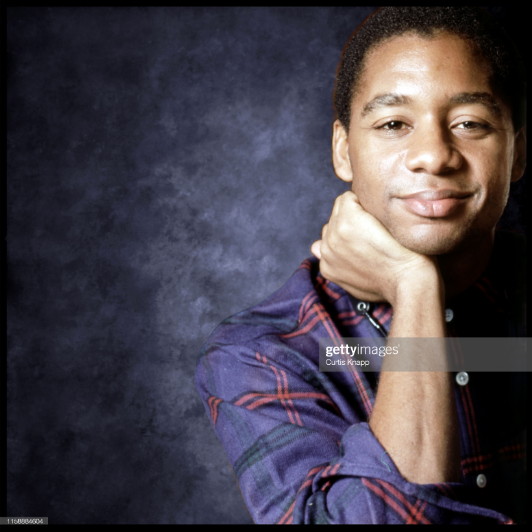

The late Paris-based jazz musician and International Herald Tribune writer Mike Zwerin posted a 41-week series entitled Sons of Miles to Culturekiosque Jazznet. [This page is no longer available] In this series, Zwerin looks back at Miles Davis and the leading jazz musicians he influenced in a series of interviews and personal reminiscences. Here is the Branford Marsalis piece in that series. It was published on August 13, 1998 so add 20+ years to any math in the article.


“The "Tonight" show bandleader Branford Marsalis, whose smiling face, as he once wryly put it, played Rochester to Jay Leno's Jack Benny five nights a week for four and a half million American couch potatoes for two and a half years, is no longer a small-screen staple.


Meet Buckshot LeFonque.


The name is taken from a pseudonym Cannonball Adderley used while moonlighting pop and R&B records in the '50s. Branford/Buckshot was passing through Europe on his way to Capetown doing promo and showcases. His manager asked me to make it clear to the readers that Branford (the first name used all alone distinguishes him from his distinguished brother Wynton; mother and father Marsalis certainly had a flare for names) had not, contrary to general opinion, move into a significantly higher tax bracket when he joined Leno's "Tonight" show. And he was not exactly left wanting leaving it.


Financially, he does very well indeed, thank you very much. The drama of Branford's last decade had been the flirtation of a talented and dedicated but volatile musician with pop-star prostitution while, he said, "the defense mechanism was screaming WARNING, DANGER. He likes waltzing with the devil and he knows how to lead.


He was Sting's soloist and musical director for three years. "The Music tells You," a D. A. Pennebaker documentary film, features Branford running between heavy-duty engagements and includes appearances by Sting, Bruce Hornsby and Jerry Garcia. He played Wesley Snipes's saxophone on the soundtrack of Spike Lee's "Mo' Better Blues,'' ditto for Sean Connery in "The Russia House."


All the while, he led his own quartet, which he described as "the best jazz band in the world. For one brief moment we were the best at what we did. Not many people can say that. I'll carry that for the rest of my life." Along the line he won a few Grammys.


It all started when a "Tonight" show producer called him at 11 one morning asking for a short composition to accompany a skit by two. "Are you joking?" Branford replied. "No way. Music isn't like a punch line." Then he thought for a minute. What the hell: "I'll have it ready by 3."


A major chord at the top. A triangle. A majestic trumpet flourish with trombones in counterpoint. Program the horns on a computer, tympani on a sampler. Hook it all up to a MP-C60 sequencer. He delivered it at 3:30. That was a good day in the gilded cage. He loves rising to occasions, like when they had to nail some klezmer music on a first take. He's at his best under pressure. Unfortunately it was rarely like that with Leno.


Television producers think they are working in the most creative and pervasive medium of them all. If you're on this show, they told Branford, you're going to sell a zillion records. He learned it doesn't work like that. Television watchers don't buy records. They're watching, they don't have time to listen. You can't do both at the same time.


The album "Buckshot LeFonque" (Columbia) bombed when it was released. If you believed the producers, after all that television exposure it should have shot right up the charts. Branford describes it as "experimental pop." It includes an Elton John clip, Gang Starr's DJ Premier rapping, Jamaican house music, a guitar solo by Albert Collins and an Elvin Jones drum sample. He places it "a little over to the left but not far out enough so that people who spend all their time liking stuff nobody else likes are going to rush over and embrace me."


He never considered the "Tonight" show a substitute for music. It would be another stop, a stage, like with Sting. Everyone had told him not to go and play rock with Sting - his father, the pianist and teacher Ellis, his brother, the cats. Everyone. Yet it had been a positive stepping-stone in his career, and the strong survive. Every project is a launching pad to the next level. "Sorry to say," he smiled ruefully, "it seems that even my marriage was like some other kind of stop" (he had been recently divorced).


As far as the musical skill level was concerned, he figures he could have played the "Tonight" show when he was a high school junior. One of the guys in Doc Severinsen's band, which he replaced, told him: "You're going to love this job. You can play golf all day."


If you play golf all day and milk the cash cow in the evening when are you going to play music? Musicians play music, he's a musician. Branford set goals for himself. He recorded John Coltrane's "A Love Supreme," performed a Fantasia by Heitor Villa-Lobos with the San Francisco Symphony Orchestra. He tried to practice two hours a day. He hates practicing, but he does not enjoy sounding bad in public either.


The "Tonight" show producers' promises of "artistic freedom" faded with the ratings. (A lot of people did not think Jay Leno is a funny man.) The band was playing stuff like the "Flintstones" theme and Edgar Winter's "Frankenstein." Branford went on leave.


Everybody's been talking about a hip-hop progeny of Miles Davis but as far as Branford could hear nobody had done it. Some critics say neither did he. Buckshot LeFonque is not disturbed: "When I make a decision to do something artistically, I don't care who likes it or buys it. Because if you use that criterion Mozart would never have written 'Don Giovanni.'"


He was not trying to create an art form, just "adding some wrinkles to the package." Drummers, for example, have been trying to imitate sampling machines. Ridiculous - human beings imitating machines. Why not see what happens when you use both at the same time? His drummer triggered the sampler and there were no sequencers on stage so that the numbers could be as long or short as he liked whenever he wanted to change them.


The Buckshot LeFonque band - including singers and rappers - has been on several world tours. They played James Brown songs, Nirvana tunes; they mixed it up. The forms could be complex, with a lot of starts and stops. Moods and tempi changed. It's a lot of information for the musicians to remember. There were written arrangements. Still, he likes to go off on some new direction without warning:


"Call it jazz sensibility. Nothing is engraved in stone. The beginnings and the endings are fairly consistent. Everything else is completely negotiable."”


Wednesday, April 24, 2019

Why is jazz unpopular? The musicians 'suck', says Branford Marsalis

© -Steven Cerra, copyright protected; all rights reserved.


Although I was aware of his tenor and soprano saxophone playing from his days time with his trumpet playing brother Wynton when they were on Art Blakey’s Jazz Messengers together, I really didn’t get into what Branford Marsalis had to offer until I heard his soprano sax playing as accompanied by pianist Mike Lang and bassist John Patitucci on Jerry Goldsmith’s score to the movie version of John Le Carre's The Russia House, which was released in 1990.


I’ve been a Branford fan ever since for a variety of reasons, not the least of which is due to the high degree of skill and creativity on display in his music, but also, because of the courage he has put forth in leading his career in directions that are artistically satisfying, irrespective of the financial consequences.


Ironically, his bravery has resulted in a well-lived and financially successful musical life as detailed in the following interview that appeared in:


The Sydney Morning Herald
With Rachel Olding
April 19, 2019


“American jazz saxophonist Branford Marsalis is practically inhaling a bowl of lentil soup and a glass of red wine when I meet him in a hotel lobby bar in New York's East Village. He has been up since dawn, heading to this place and that place, meeting people, doing interviews, rehearsing, signing CDs, listening, watching, eating, drinking.


"I shouldn't have a second glass of wine," he says to himself as a waiter approaches. "But ... yeah," he adds, with a vigorous nod and his eyes widening.


At 58 and with a career spanning 40 years, Marsalis, one of the most respected and unconventional saxophonists of all time, is still ravenous and opinionated. I can see why he once joked that critics weren't wrong to describe him as an "arrogant cuss". He excoriates the state of modern jazz and jazz musicians with the same energy with which he is ploughing into that bowl of soup. He talks of his home town, New Orleans, with a passion that borders on ferocious. He exudes a cavalier swagger and still plays tenor saxophone with burnished elegance. He nerds out in long, forceful diatribes about harmonic structures or diatonics or the criminal stupidity of messing with the tempo of Thelonious Monk. He extends the same vigour to assessing his own shortcomings, describing himself as undaunted to try new genres and musical projects even though he is terrible at most things to begin with.


"I got my first fancy car when I was 57 years old," he says in between mouthfuls of crusty bread. "If I'd stayed on the [Jay Leno] show, I'd have had a garage full of Audis in my 30s. But, when I die, I want to have said that I lived, that I went out there on a limb and did different things."


After earning acclaim as a jazz musician, Marsalis has set about bravely exploring almost every genre outside of jazz, earning him a CV that is dizzying in both length and diversity.


The son of jazz pianist and educator Ellis Marsalis – and one of four sons to become jazz musicians – Marsalis cut his chops playing with illustrious trumpeter Clark Terry and drummer Art Blakey in the legendary Jazz Messengers. He moved to New York in 1981 to join younger brother Wynton's band when the young trumpeter's star was rising meteorically;
Wynton appeared on the cover of Time (the story heralded the dawn of "The New Jazz Age") and was the first person ever to win Grammy awards for both the jazz and classical music. They played with a roll-call of all-time greats – Miles Davis, Dizzy Gillespie, Herbie Hancock, Sonny Rollins.


But Marsalis left the safe confines of the Wynton Marsalis Quartet to tour with Sting in the 1980s before becoming the first musical director of The Tonight Show With Jay Leno. He stretched the bounds of fusion by forming hip hop/funk group Buckshot LeFonque in the 1990s and made an impromptu appearance on stage with the Grateful Dead at New York's Nassau Coliseum in 1990, a performance that has gone down in Dead folklore as one of the greatest. He has scored Broadway productions such as The Mountaintop, with Samuel L. Jackson and Angela Bassett, all while maintaining his own band, the Branford Marsalis Quartet, for two decades. Just to top it off, he co-starred in the Spike Lee film School Daze. Because, why not?


"The brain is incredibly lazy," Marsalis says, launching into one of his many theories on life; this one about why he thinks it's better to go out on a limb and embrace new genres, despite the risk of feeling hopelessly out of depth. He leans in when he talks and sustains intense eye contact. Each sentence is short with a moment's silence at the end, to really emphasise his point.
"By the time a child is about seven or eight the brain is like, 'I have all the keys to the universe I need right now', which is why learning is often a struggle. It's human nature to not address your shortcomings. The great thing for me is, I played with my brother's band and everybody said, 'You're incredible!' And I was like, 'Haha, not really'. And then I played with Sting and everybody was like, 'Oh man it doesn't get any better than that?' And I'm like, 'Ah, I think it does.'


"If I needed the adoration of others, I was pretty much done in 1985. But since I'm lucky enough to not need it, I said, 'Well what else can I do to make myself better?' One way you can do it is to double down on your strengths ... but I decided I'd go out there and find out how good I can be. People routinely stay in their lanes. They lose the thrill. Know what I'm saying?"


Growing up in New Orleans – the mecca of jazz and a music scene that manages to stay egalitarian and unpretentious – made him equal parts cocky and humble. He's not afraid to fail at something, and he's also not afraid to tell you he's not afraid.


Undoubtedly his home life played a role, too, where he was one of six children in the famous Marsalis family, often dubbed the First Family of Jazz. (There's Wynton, 57, trumpet supremo and veteran director of Jazz at Lincoln Centre; Delfeayo, 53, a trombonist and record producer; Jason, 42, a drummer; Ellis III, 54, who eschewed music to become a poet and photographer; and Mboya, 48, who is severely autistic and often cited by the brothers as their musical inspiration).


Their father, Ellis Marsalis, has never been one for platitudes and emphasised earnest work ethic over braggadocio. He mandated that each son would play a different instrument so there'd be no sibling rivalry to stroke their egos. Marsalis' mother, Dolores, who died in 2017, could be wincingly harsh. When she came to see a less-than-polished Buckshot LeFonque gig in the 1990s, she told the band it was "some of the saddest shit I've ever heard". "Y'all should be embarrassed," Marsalis recalls her saying.


"Some people say, 'Well, how do you deal with bad reviews?'" he says. "I say, 'I grew up with Dolores Marsalis!' What the hell do I care about a bad review?"


Blistering honesty runs in the family; the brothers don't often talk music, but if they do, it's usually to point out where the other could be better. Marsalis prefers is that way. How does flattery help you improve? There has also been the odd unsubtle dig at the different paths they've taken, like Wynton, a jazz purist, saying in the 1990s, "There's nothing sadder than a jazz musician playing funk".


As he empties his second glass of red and the sun begins to dip behind the city skyline, the self-flagellating only continues. Marsalis talks about his move into classical music about 20 years ago, yet another experiment in torching the boundaries of his comfort zone, and emphasises how awful he was for the first seven years. It took him two days to learn how to execute a down beat, the moment the orchestra starts playing together. In jazz, the down beat is negotiable; for the musicians of New York's Orpheus Chamber Orchestra, who were a tad wary of this imported jazz man, it was not.

"At first, yeah, I was terrible, as I should have been. It's like an American baseball player deciding he wants to fly to Melbourne and play AFL [Australian Football League]," he says. "But I was undaunted. Because the only way to not feel like shit, is to feel like shit."


The rest of the world must have been oblivious to his failings because Marsalis has been flown to almost every corner of the globe and implanted into various orchestras, taking on compositions by Debussy, Vivaldi and even works by Brazilian composer Heitor Villa-Lobos arranged for solo saxophone and orchestra. In Australia in May, he will perform a Latin American-flavoured program with the Australian Chamber Orchestra, including an arrangement written for him and premiered in Australia by Scottish composer Sally Beamish, who usually writes for viola.


"It has made my jazz playing exponentially better," he says. "All those little things; suddenly I had to be very precise. [I] started paying attention to the sound of things because you can't have a one-emotion-fits-all like you can in your own music. Suddenly I'm responding to sounds differently, asking, 'Is this a happy ballad? Is this a sad ballad?' These aren't jazz musicians' discussions. Jazz musician discussions are about tempo, structure."

The more jazz has changed, the more Marsalis has gravitated towards classical music. It's the reason he moved his young family to Durham, an artistic city in North Carolina, 10 years ago; the New York scene wasn't inspiring anymore. (He'd also had enough of "New York living", of five-year-olds calling adults by their first name).


Today's jazz musicians are too mathematical and wonkish, he says. Jazz clubs are half empty, only frequented by other musicians who appreciate each other's showmanship. Listeners need music degrees to understand what they're playing. The music has become rigid. Improvisation is mostly over-rehearsed regurgitation.


"[I'm often asked] the question, 'Jazz is so unpopular, why do you think that is?' And the answer is simple: the musicians suck," he says with typical subtlety.


He says the shift started in the '90s and I can't help but think the Marsalis family was not immune. While they still wield incredible clout, nothing can compare to the two decades in which Wynton and his siblings seemed to ruled the jazz universe. In 2003, the music critic David Hajdu stumbled upon Wynton playing as a sideman with a band in a near-empty jazz club in New York, and wrote a piece in the Atlantic (tartly titled "Wynton's Blues") hypothesising that Wynton's stifling orthodoxy and nostalgia was partly to blame for both his and jazz's dwindling relevance.


It's nevertheless hard to see that Branford Marsalis is slowing down in any way. Not in the flood of opinions he wants to impart. Nor in his commitment to improving music or lifting standards. Not in the pace and scope of his work, nor with that bottle of red wine. And especially not with the tempo of Thelonious Monk.”