Joe Lang is one of my Jazz buddies and he has a particular affinity for vocal Jazz. You may recall his earlier piece on Frank Sinatra on these pages which you can locate by going here.
The recent passing of pianist, composer and vocalist Dave Frishberg prompted this essay by Joe which he has kindly allowed us to post as a blog feature.
Dave was a rare talent who had the ability to write lyrics to his composed melodies. Combining them required immense patience.
Musicians with sensibilities like Dave are a thing of the past as is the socio-cultural environment that helped create them.
But it’s nice to have in memoriam articles like this one by Joe that helps explain why artists like Dave Frishberg were so special.
“Upon hearing about the passing of Dave Frishberg, I felt two emotions, sadness that he was no longer with us, but relief that he no longer had to live with the dementia that plagued the last years of his life.
Frishberg was a giant talent. He was one of our best songwriters, whether he was writing words and music or words only, was an exceptional jazz pianist and an engaging vocalist who, despite a limited range and less than classic voice, was able to put over a lyric with the best of them, especially when singing, his own material.
I first encountered Frishberg as one of the house pianists at the original Half Note in the 1960s. He played with the featured performers like Ben Webster, Roy Eldridge and Al Cohn and Zoot Sims. He also backed Anita O’Day, who could be a difficult lady to accompany, and caused Frishberg much agita.
Although he started writing songs during the same period, it was not until Blossom Dearie began to sing his lyrics to Bob Dorough’s melody on “I’m Hip” that he began to be recognized for his songwriting. Dearie also added Dave’s “Peel Me a Grape,” a song originally written as special material for Fran Jeffries, and first recorded by O’Day, to her repertoire.
It was in 1970 that Frishberg recorded his first vocal album, Oklahoma Toad, one that was mostly forgettable except for the inclusion of what became one of his most popular songs, “Van Lingle Mungo,” one of the many tunes by him that reflected his love for baseball.
In the mid-1970s, he recorded a few albums for Concord Jazz that were mostly older jazz tunes. It was the release of Live at Vine Street on the Fantasy label in 1984 that he turned his attention to his own songs, and those beyond the folks who caught him in club performances started to become familiar with his superlative songwriting talent.
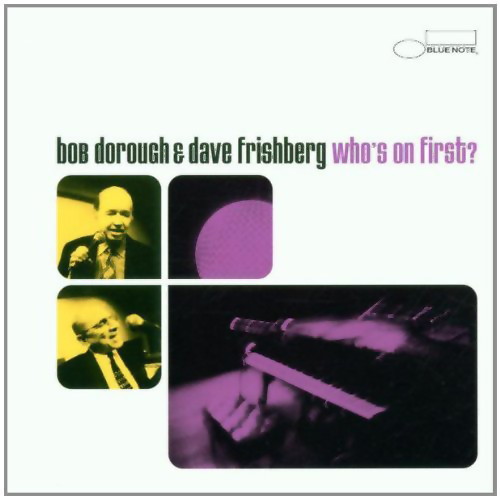
In subsequent years, he recorded extensively, primarily as a vocalist, performing many of his wonderful songs, as well as many standards and jazz tunes. From 1993 on, he recorded primarily for Arbors Records, several of the albums being duo efforts with Rebecca Kilgore with whom he worked frequently in Portland, Oregon where both resided. One exception was a Blue Note duo album with Bob Dorough titled Who’s on First? that was recorded in 2000.
His catalog of songs is impressive. In addition to those previously mentioned, he produced such gems as “My Attorney Bernie,” “Dear Bix,” “Sweet Kentucky Ham,” “El Cajon,” “Zoot Walks In,” “Wheelers and Dealers,” “Let’s Eat Home,” “I Want to Be a Sideman,” “Dodger Blue,” “Another Song About Paris,” “Do You Miss New York,” “Marilyn Monroe'' and “You Are There,” the last of which has a haunting melody by Johnny Mandel. One of his most clever songs, “Foodophobia,” was one that he never recorded, but fortunately it was included on an early album by Susannah McCorkle, The People That You Never Get to Love. He also wrote songs for the Schoolhouse Rock television series, with “I’m Just a Bill,” probably his best-known creation.
I was privileged to see him in clubs many times, including Gulliver’s in Lincoln Park, the Village West, Michael’s Pub with Blossom Dearie, and the Oak Room at the Algonquin Hotel with Jessica Molaskey.
When I went to Gulliver’s to see him, he was speaking with the owner, Amos Kaune, inside the entrance. I had brought along four mix tapes that I had made of lesser-known songs by a variety of great but mostly lesser-known singers that I thought Amos would like to play as background music between sets. Dave took a look at them and asked how he could obtain copies of them. I just told him to give me his address and I would mail copies to him. A few days after I had mailed them to him, I received a couple of tapes back from him of one of his favorite singers, Elis Regina, the great Brazilian singer. A nice gesture of thanks from a nice man. By the way, he was so wonderful to see that evening that I returned the next evening with my then teenaged older son who also dug him the most.
The last of these mentioned gigs resulted in Frishberg’s last recording, At the Algonquin. As part of the program, Frishberg sang two songs about Dorothy Parker, “Will You Die?” and “Excuse Me for Living,” written for a Portland theater group production about the Algonquin Round Table. Frishberg is at his sardonic best on these songs, and it would be interesting to hear the rest of the material written for that show.
One other Frishberg sighting is worth a mention. In 1979, there was a celebration of Hoagy Carmichael’s 80th birthday at Carnegie Hall at which I was lucky enough to have the seat next to Carmichael. One of the performers was Frishberg, and Carmichael, who was not familiar with him, leaned over to ask me who he was. Well, after Frishberg sang and played “The Old Music Master,” “Baltimore Oriole,” “Memphis in June” and “Old Man Harlem,” Carmichael knew who he was and responded to Frishberg’s performance with great enthusiasm.
I first heard about Frishberg’s difficulties [with his health] a while ago. Recently I was speaking to Judi Marie Canterino who was married to Mike, the gentleman who was responsible for turning the Half Note into one of New York City’s premier jazz clubs. I mentioned Dave to her and she said that she was going to call him. When we spoke a few weeks later, she told me that she had called, spoke to his wife, and after some hesitation she agreed to put Dave on the phone with a caution that he probably would not know who Judi Marie was. When Judi Marie said hello to him and identified herself, he responded with “I loved the Half Note.” That was the extent of their conversation, but when Dave’s wife took back the phone, she told Judi Marie that it was the first time in quite a while that he responded to anyone in that kind of coherent manner. It certainly provided a poignant moment for Judi Marie, and I choked up a bit when she related it to me.
Over the years, I find myself drawn back to Frishberg’s songs continuously. His lyrics are full of wit, passion, tenderness, irony, nostalgia and creative genius, and his music is original and instantly appealing. Whether they are done so winningly by him or others like Pinky Winters and Ronny Whyte, or Carol Fredette and Connie Evingson, both of whom devoted albums to his songs, his songs continue to sparkle like the gems that they are.
Dave, you may be gone, but your legacy will forever bring smiles to those who listen to your songs. R.I.P.”
Gordon Jack is a frequent contributor to the Jazz Journaland a very generous friend in allowingJazzProfilesto re-publish his perceptive and well-researched writings on various topics about Jazz and its makers.
Gordon is the author of Fifties Jazz Talk An Oral Retrospectiveand he also developed the Gerry Mulligan discography in Raymond Horricks’ bookGerry Mulligan’s Ark.
The following article was published in the November 23, 2021 edition of Jazz Journal.
“Long before he became recognised as a high quality song-writer, Dave Frishberg had served time in the fast-lane of the jazz world accompanying Carmen McRae, Anita O’Day, Ben Webster, Gene Krupa, Al Cohn and Zoot Sims. He celebrated those days with his 1992 recording of I Want To Be A Sideman which opens with a satirical nod to In The Mood. Rosemary Clooney with Count Basie and Susannah McCorkle both covered it a little later.
He was born in St. Paul, Minnesota on 23 March 1933 and during the war years he listened to recordings by Benny Goodman, Artie Shaw, Count Basie and Bing Crosby. Art Tatum, Teddy Wilson, Albert Ammons and Pete Johnson became very influential too but his horizons were really expanded when he first heard Charlie Parker’s Ornithology. After graduating from the University of Minnesota, he served two years in the military before moving to New York in 1957. He began working at a local radio station (WNEW) writing continuity material for $65 a week. Tiring of his day-job he joined Kai Winding’s four-trombone group which played “slick, smooth arrangements” mostly by Winding. In the early sixties Blossom Dearie introduced him to Bob Dorough which resulted in a life-long friendship. Their first collaboration was I’m Hip with Dave’s lyrics (which came first) and Dorough’s music.
In 1962 he wrote Peel Me A Grape. He was working with Dick Haymes’s wife the glamorous Fran Jeffries at the time who wanted something new along the lines of Whatever Lola Wants. She thought Dave’s original was cute but she declined to use it. Anita O’Day liked it and she introduced it on her album with Cal Tjader. It has been recorded more than 80 times and possibly the most famous version is by Diana Krall who gave it her seal of approval in 1992. The title actually comes from a Mae West quote in her 1933 film I’m No Angel. From 1962 to 1964 he worked with Gene Krupa’s quartet at the Metropole and on one disastrous occasion the great Benny Goodman sat in. Turning to Dave he said “Sweet Lorraine in G”. Benny started in F and things went downhill pretty fast after that. He had a happier time with Ben Webster who told him he was one of the few pianists “who could emulate Ellington’s time-feel”.
In the early sixties he began a ten year engagement as one of the house-pianists at the Half Note – “the hippest place in town”. He worked there with Webster, Roy Eldridge, Richie Kamuca and Jimmy Rushing along with the Al Cohn and Zoot Sims team who frequently held court at the club. Frishberg said at the time “if you were a piano player doing jazz work in New York in those years, you couldn’t ask for a more nourishing, more rewarding experience than to play with Al and Zoot.”
In1971 he moved to Los Angeles to work on an NBC television show titled The Funny Side hosted by Gene Kelly. He was also invited by Bob Dorough to provide new material for an ABC educational series called Schoolhouse Rock. Dave wrote several themes for the show including the ever popular I’m Just A Bill sung by Jack Sheldon. The latter might be the most well known of all his compositions because it was frequently heard on the show which ran from 1973 to 1984 and 1993 to 1996. He wrote jingles and worked on shows like Charlie’s Angels and Mary Tyler Moore Survives The Seventies as well as finding time to travel with Herb Alpert’s Tijuana Brass. As a composer of memorable themes these were particularly productive years. His love of baseball was reflected in titles like Van Lingle Mungo, The Sports Page, Play Ball, Dodger Blue and Matty. He had issues of Baseball Magazine dating back to 1911 and in 1984 he became a member of the Society for American Baseball Research (SABR). He once said “the older I get, the more I’m convinced that everything really used to be better” and that outlook was revealed in nostalgic themes like Sweet Kentucky Ham, One Horse Town and The Dear Departed Past – each a deeply felt hymn to the past. His own favourite was one of his lesser known songs You Are There, which was a collaboration with Johnny Mandel. His albums Dave Frishberg Songbook Volume 1 (1981), Dave Frishberg Songbook Volume 2 (1982), Live At Vine Street (1984) and Can’t Take You Nowhere (1986) were all nominated for Grammy Awards.
After battling illness for several years Dave Frishberg died at a hospital in Portland, Oregon on 17 November 2021. He is survived by his wife April Magnusson and two sons.”
“Dave Frishberg has become jazz's definitive singer-songwriter-pianist, and his strengths and weaknesses typify the genre: Though he doesn't have Carmichael's gift for really great melodies, and his lyrics, while funny, don't compare with Mercer's (and unlike Mercer, his singing isn't strong enough to fill an album), his piano playing could (and did) stand on its own—-but that isn't the point. What matters is that Frishberg puts it all together into a very entertaining package, which works as a whole partially because none of the individual elements have to stand on their own.”
- Will Friedwald, Jazz Singing [1990]
“The pitfalls of romance, the shallowness of imagery, the glories of the past—Dave Frishberg nails each of those, and more, with wit, warmth and infectious musicianship.
His lyrics are full of comic and serious messages, all inextricably wedded to the music. But his messages are equally clear on his instrumental—he is, after all, first a piano player —whether paying homage to the late Al Cohn with a medley or injecting a rollicking spirit and a rolling-thunder bass line into Duke Ellington's The Mooche.
There's a distinctive lilting abandon to his piano chops. The kicker, of course, is when he adds his lyrics, infusing the words with phrasing that reflects his deadpan, owlish expression.”
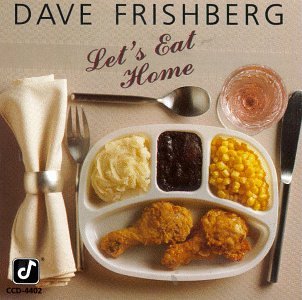
- Stuart Troup, Insert Notes to Let’s Eat Home [Concord CCD-4402]
"In the lyric to Dear Bix Dave Frishberg, in praise of the late Beiderbecke, comments "you're no ordinary standard B-flat run-of-the-mill guy." That's the way I feel about Frishberg himself, and about his music.
On this LP the musically ubiquitous Frishberg seems to be everywhere at once, both on the keyboard and in the selection and arrangements of tunes. I might also add that, prior to "surrendering to the lure of music" (as he put it to me recently) Frishberg was a journalist and writer and certainly could add to the quality of written commentary on jazz and popular music any time he put pen to paper.
An intense, introspective musician, Frishberg has a sharp sense of humor as well as a dedication to the finer aspects of American popular music. His work on this recording as musical producer, pianist, vocalist and arranger indicate his talents and versatility.
There is a touch of the sentimental and the traditional in what Frishberg creates yet he is by no means a musical reactionary or a "mouldy fig" in the jazz fans' sense. He assumes professionalism and expert musicianship around him but has none of the stuffiness or rigid musical taste that often identifies the "studio musician."
In jazz, it isn't that nothing is sacred. It is, specifically, that the name "jazz" means a way of playing (or interpreting) rather than what is being played. Perfect and accurate reading of a printed score is within the abilities of most jazzmen these days—but it is the ability to personalize one's interpretation of that score, or tune, that makes for the finest jazz expression.
It has always been that way, and Dave Frishberg is a marvelous example of that kind of personalized instrumentalist and composer.”
- PHILIP ELWOOD, notes to Getting Some Fun Out of Life [Concord CCD-4037]
“Messrs. Dorough and Frishberg are anything but an odd couple.
Each came to New York as an aspiring jazz pianist, then found that he had a knack for writing and singing as well as playing songs. The no-bull philosophies of their tunes, and the unrefined honesty of their voices, have led each to be celebrated as one-of-a-kind, yet they are nothing less than soul brothers of song.”
- Bob Blumenthal, notes to Bob Dorough and Dave Frishberg, Who’s On First [Blue Note 7243 5 23403 2 3]
Gordon Jack is a frequent contributor to the Jazz Journaland a very generous friend in allowingJazzProfilesto re-publish his perceptive and well-researched writings on various topics about Jazz and its makers. His writing style has all the hallmarks of a good narrative and, as such, always makes for a pleasant reading experience.
Gordon is the author of Fifties Jazz Talk An Oral Retrospectiveand he also developed the Gerry Mulligan discography in Raymond Horricks’ bookGerry Mulligan’s Ark.
The following article was published in the July 23 and August 2, 2021 edition of Jazz Journal.
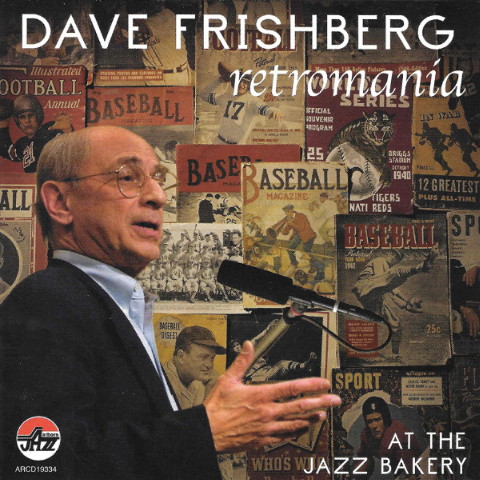
The title of Dave Frishberg’s autobiography My Dear Departed Past tells you nearly everything you need to know about the pianist-composer, because like many of us of a certain age he is heavily into nostalgia. Sport, especially baseball is one of his passions and wistful memories about former ball-players are often sentimentally described in his compositions. The tour de force Van Lingle Mungo for instance is a hymn not only to Mungo (a Brooklyn Dodgers pitcher from 1931 to 1945) but also to the 36 former players cleverly name-checked in the lyrics. Other baseball- themed songs over the years have included The Sports Page, Play Ball, Dodger Blue and Matty. He wrote Dodger Blue in 1977 to celebrate the Dodgers’ 20th. Anniversary in Los Angeles and Sue Raney sang it at the ball-park. On his 2005 Jazz Bakery recording he points out that the Dodgers had spent more time in Los Angeles than they did in Brooklyn. Matty is a deeply felt tribute to Christy Mathewson who spent seventeen years as a pitcher with the New York Giants.
Some of his songs like Sweet Kentucky Ham, One Horse Town and The Dear Departed Past have an innocent, almost Norman Rockwell-like vein of Americana in their evocative descriptions of small-town life. A world too that Hoagy Carmichael, Willard Robison and Johnny Mercer often returned to over the years. He is probably better known for more sophisticated material like Peel Me A Grape,My Attorney Bernie and I’m Hip ( a collaboration with his friend Bob Dorough) which have been recorded by Anita O’Day, Meredith d’Ambrosio, Cleo Laine, Mel Torme’, Blossom Dearie, Shirley Horn and Diana Krall and many others. He told Randy Smith that he particularly liked the way Blossom Dearie performed his compositions because of her relaxed, under-stated delivery. It should always be remembered that his songs were initially conceived as personal vehicles. In an interview with Monk Rowe he readily admitted “When I write it’s for the limitations of my vocal ability because (the melodies) are not designed to project virtuosity.” (His voice is an acquired taste but it’s one I acquired a long time ago). Back in the sixties before his song-writing genius had been acknowledged he had served a ten year apprenticeship on the Manhattan jazz scene as one of the house-pianists (along with Roger Kellaway and Ross Tompkins) at the celebrated Half Note – “The hippest place in town”.
He was born in St. Paul, Minnesota on 23 March 1933 and during WW 11 he listened to his older brother’s record collection which included sides by Benny Goodman, Artie Shaw, Cab Calloway, Count Basie, Bing Crosby, Ella Fitzgerald and Mildred Bailey. He also developed a life-long love of Gilbert and Sullivan and even at a young age he was able to sing most of the Mikado from memory. Pianists were particularly important because he was beginning to learn the instrument and Frishberg was exposed to Art Tatum, Teddy Wilson and Mel Powell together with earlier maestros like Albert Ammons, Pete Johnson and Meade Lux Lewis. When his piano teacher introduced him to Charlie Parker and Dizzy Gillespie he “Fell under the spell of bebop”. He began sitting-in occasionally at local clubs when visiting stars like Charlie Ventura, Conte Candoli or Serge Chaloff came to town.
After graduating from the University of Minnesota the federal government claimed him for the next two years which were spent at an Air Force base in Salt Lake City, Utah. Completing his military service in 1957 he packed his records, books and clothes into a Chevrolet Bel Air and drove across the country to the Mecca of jazz - New York City. Obtaining a day-job there at one of the city’s premier radio stations he wrote continuity material for use between the shows on WNEW. He then began life as a full-time musician performing six nights a week in a piano-bar from nine to two for 75 dollars a week. He was invited to audition for Kai Winding’s four-trombone group at Nola’s Studio and over dinner at Charlie’s Tavern Kai told him he had the job which was a six week tour of the south.
Getting back to the city he worked at the (in)famous Page Three club in Greenwich Village which was about a block away from the Village Vanguard. It was apparently a museum of sexual lifestyles that provided continual entertainment from 9 p.m. to 4 a.m. and Tiny Tim who was just starting out appeared occasionally. There were some fringe benefits at the club and one of them was backing Sheila Jordan but Frishberg soon decided to move on. Apparently Cecil Taylor became one of his replacements but he only lasted for one night and history does not reveal if Tiny Tim was on the bill at the time. A little later Blossom Dearie introduced Dave to Bob Dorough and they began work on their first collaboration - I’m Hip - with Frishberg’s lyrics (which came first) and Dorough’s music.
He began playing with Bud Freeman at Eddie Condon’s club and Steve Swallow thought he was, “A wonderful jazz player with a hot style all his own. He could join a three-horn ensemble and instantly fake a perfect fourth part.” He worked with Dick Haymes and had an unhappy time with Anita O’Day – “Be wary of scat singers and don’t encourage them”. She did put Peel Me A Grape on the map with her 1962 Time For Two album with Cal Tjader. During one of her engagements in the mid sixties at the Half Note, Judy Garland visited the club and Anita asked her to sit in. It went so well that Ms Garland asked Frishberg to become her musical director. She wanted him to join her on an up-coming trip to England but it was clear that she was really unwell so the pianist turned her down. Judy Garland died in 1969.
He had a more enjoyable time when he was playing with Gene Krupa’s quartet between 1962 and 1964 mostly at the Metropole in NYC with occasional out of town trips to New Jersey, Pennsylvania and Maryland. Kenny O’Brien or Bill Takas were on bass with Eddie Wasserman on tenor who was replaced by Charlie Ventura during a two week booking at the Steel Pier, Atlantic City. Although they didn’t agree totally on music they had one interest in common – baseball - because Krupa was a “Rabid Chicago White Sox fan”.
In the summer of 1963 he became a member of Ben Webster’s quartet that for the next six months or so performed around town at the Shalimar, the Half Note, Birdland, the Village Vanguard and the Cafe’ Au Go Go. One of the regulars at the Shalimar was Malcolm X who found common cause with Dave in their mutual love of baseball - America’s National Pastime. The regular bass player was Richard Davis but there was a revolving cast of drummers that included some of New York’s finest - Mel Lewis, Elvin Jones, Grady Tate, Philly Joe Jones, Denzil Best and Mickey Roker. Occasionally Johnny Hodges, Paul Gonsalves, Ray Nance or Eddie “Lockjaw” Davis sat in here and there. On one occasion Webster took Dave to a Duke Ellington rehearsal at Basin Street East. Introducing him to Duke he said that Frishberg “Could really play” which of course meant a lot to Dave but he knew the pianist Ben really missed was his good friend Jimmy Rowles who was living in Los Angeles at the time. When Al Cohn and Zoot Sims heard him at the Shalimar they hired him for their upcoming New York dates which began a relationship that lasted until Frishberg left town ten years later.
He became one of the house-pianists at the Half-Note backing visiting stars like Roy Eldridge, Ben Webster, Richie Kamuca, Bob Brookmeyer, Clark Terry and Jimmy Rushing. The club stayed open until four in the morning and the pay was ninety dollars a week although this could be supplemented by rehearsing the occasional singer. His longest association there was with the Al ’n Zoot combination who appeared at the club on a regular basis. In a series of interviews for The Note he spoke movingly of his experiences playing with them: “The customers knew something pure was going on up there on the bandstand. Even the plain-clothes detectives wolfing their free meatball sandwiches in the kitchen knew they were witnessing something special. You were on the scene each night making music with two immortals in their prime.” Apparently Ben Webster had similar feelings about the two tenors because he “Absolutely adored them”. Paul Desmond said listening to them at the Half Note, “Was like having your back scratched”. One memorable night around closing time Cannonball Adderley arrived and shouted from the door – “John Haley Sims, Alvin Gilbert Cohn don’t stop now!”. Over the years Half Note radio broadcasts featuring Frishberg with Rushing, Kamuca, Cohn and Sims have been released on the Dot Time, High Note and Philology labels.
By 1971 with work getting scarce in New York, he was given the opportunity to relocate to Los Angeles. He was offered a contract to write songs and special material for an NBC television show called The Funny Side hosted by Gene Kelly. His classic The Sports Page was introduced at this time. He also worked on jingles and other shows like Charlie’s Angels and he often played at Donte’s with people like Joe Pass and Jack Sheldon. He occasionally sat-in with Bill Berry’s big band and for a couple of years he travelled with Herb Alpert’s reformed Tijuana Brass – “First class all the way, like travelling with the New York Yankees”.
During his Californian sojourn he recorded six notable albums. His 1977 release with Marshal Royal premiered Dear Bix which of course is a heart-felt hymn to the trumpeter. In 1984 he was recorded at Hollywood’s Vine Street where in addition to his own material he performed an instrumental medley of ten titles associated with Johnny Hodges. In 1986 he introduced Zoot Walks In at The Great American Music Hall in San Francisco. Based on The Red Door it was co-composed by Zoot Sims and Gerry Mulligan and was first recorded on a 1952 album with Cohn, Sims and Kai Winding. His 1989 release – Let’s Eat Home – features Al Cohn and Billy Strayhorn medleys among other gems. In 1999 he appeared at The Jazz Bakery in a duo with Bob Dorough titled Who’s On First? which of course was the name of one of Abbott & Costello’s most famous routines – it’s on Youtube. It dates from 1936 and was apparently a particular favourite of President Roosevelt. In 2005 he was featured at The Jazz Bakery again on an album titled Retromania - a fitting album title for a master of nostalgia.
His final CD was recorded at New York’s famous Algonquin Hotel in 2011 with vocalist Jessica Molaskey. The man Gene Lees once called a “National Treasure” has suffered some medical setbacks in recent years and his website includes an appeal for help to meet the anticipated cost of treatment.”
Selected Discography
Getting Some Fun Out Of Life. Hollywood, January 1977 (Concord CJ37).
Live At Vine Street. Hollywood, October 1984 (Original Jazz Classics OJCCD 832-2).
Can’t Take You Nowhere. San Francisco, September 1986 (Fantasy FCD9651-2).
Let’s Eat Home. Hollywood, August 1989 (Concord Jazz CCD 4402).
Who’s On First? (With Bob Dorough). The Jazz Bakery, Los Angeles November 1999 (Blue Note 5-23403).
Retromania. The Jazz Bakery, Los Angeles May 2005 (Arbors Jazz ARCD 19334).
I would like to acknowledge the help received from Bob Weir, Randy Smith and the Jazz Institute in Darmstadt, Germany while researching this article.