Showing posts with label Dave Holland. Show all posts

Thursday, December 2, 2021

"Dave Holland: The Power Behind the Throne" by Mike Zwerin

 © Copyright ® Steven Cerra, copyright protected; all rights reserved.
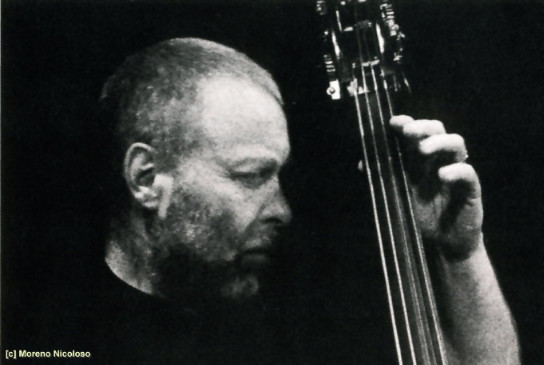

The late Paris-based jazz musician and International Herald Tribune writer Mike Zwerin posted a 41-week series entitled Sons of Miles to Culturekiosque Jazznet. In this series, Zwerin looks back at Miles Davis and the leading jazz musicians he influenced in a series of interviews and personal reminiscences. Here is the Dave Holland piece in that series. It was published on January 28, 1999 so add 20+ years to any math in the article.


“Bass players hold the secret power behind the throne. They control the one absolutely essential element, a role not exactly obvious to everybody. This pleases them a great deal.


Playing bass requires a peculiar personality. You can generalize about it with less danger than most generalizations. Despite the occasional grandstander, they are team players who flourish in the background. Bassists are less competitive than other instrumentalists.


Listeners go to the bathroom during a bass solo. And there has to be some masochism somewhere in anybody willing to lug that coffin around. They are not looking for glory; they know, if you don't, that they already have it. Constructing their central bridge between melody, harmony and rhythm, they are by necessity involved with totality. They control the music.


Dave Holland controls it with more intelligence, power, variety and modesty than most. If you're absolutely forced to pick a "best," he'd be a prime candidate. He has made a living in all sorts of contexts including Bach, Trad jazz in his native Britain (he now lives in upstate New York), Eurojazz and M-BASE avant-garde music in New York City. Everything, everywhere, with everybody.


He took a great deal of pride in his years with Miles Davis. A few years after Miles died, he went on the road with the Miles Davis Tribute Band - Herbie Hancock, Wallace Roney, Wayne Shorter and Tony Williams. I asked him what he thought about Miles's "Doo-Bop," an unfinished album completed after the trumpeter's death. It is an example of a new style being called by an unstylistic name - in this case "new jazz swing." It is rap combined with a chord here and there, horns and jazz feeling. Industry spokesmen predicted it would become a "contemporary expression of the jazz idiom" and "give birth to a new generation of progressive jazz musicians." (It did not. Never mind.)


"I'm not a good person to ask about Miles," Holland replied. "Because every time he played his horn, even only one note, magic happened for me. It didn't matter what was under or over it."


Holland's voice resonates like the weathered wood instrument he plays. His verbal cadence swings, punctuated by frequent smiles. He is accustomed to thinking in terms of the bottom of things. So many smart superstructures have rested on his roots: "Whatever you call this music and whatever it is, it's still basically only a variation, a logical extension of the kind of funk James Brown initiated. Music keeps changing. Each generation has to redefine the elements of rhythmic feeling. Things have got to change and we have got to be prepared to recognize those changes."


This reveals a striking capacity for acceptance for someone who once led a band - John Blake, violin, Fareed Haque, guitar, and Mino Cinelu, percussion - which was, on the surface anyway, diametrically opposed to the music we were discussing. They played soft, hypnotic music based on a variety of traditional elements which, Holland says, "stressed the feminine aspect. A certain gentleness, an unaggresive approach which did not go out and punch people in the face and provoke hysteria. I like there to be some calm in the room."


He stopped and then emphasized, a bassist all the way: "It's very important that you do not make me out to be the leader of this group. I put the four people together to begin with, but we were the sum total of our directions. Our strength was diversity, we brought multidimensional diversity to the music. We were all in it together."


Although Miles's "New Jazz Swing" was anything but calm and diverse, Holland considers rap creative when well done and rich and at its best. He tries to "separate the here and now from something that will still be relevant in 50 years." He tends to give optimism the benefit of the doubt:


"Take a Manhattan sidewalk. New York is a concrete city. Yet wherever you find a crack in the concrete, something grows out of it. Maybe it's only weeds, but that sign of nature's urge to create is an expression of life force amidst the barrenness of modern existence."


"Steam also comes out of the cracks in the concrete," I said.


He laughed, and looked at me bemused, as if to say, "if that's the way you choose to look at life," and replied: "That's true. But I think there will always be the need to express nature's positive force. There has never been more or less need, always the same amount. We're battling a lot of negative things at the moment - incredible materialism, for example. There is no lack of obstacles. But we've always had those obstacles.


"I'm an optimist. Because in a way, the more critical things become, the more creativity strives to be expressed. Light can shine brightest in the darkest moments. I don't think we have to worry. A lot of people wish the music was still like it was in the '50s. There's no way that can be. A renewal may not take the form we expect. As artists, we have to be sure to keep an open mind."


Remembering Lord Buckley referring to something "straining the limits of our practiced credulity," I said: "There's a difference between keeping an open mind and liking something just because it's new. People are afraid of being left behind. They feel threatened. If I don't like this music, does that mean I'm losing touch? Does it interest me really, or do I just want to make sure I'm still 'with it?' An 'open' mind can be an empty mind."


"As far as I'm concerned," Holland replied, "an instrument creating sound in a natural unamplified way is going to be more meaningful than a sampled or synthesized sound. But I still play bass-guitar. I played it on a tour with Jack DeJohnette, Herbie Hancock and Pat Metheny. A composition can be structured for an electric instrument. I played it the last year and a half I was with Miles. It was my first instrument, I started on bass guitar.


"But the sound of an acoustic bass hits me very emotionally. My fingers resonating the strings and the wood responding to that is something very special to me. I like nature, and I like natural things. That's a personal point of view. But you have to try and transcend that. I'm not necessarily critical of that other thing. I may just prefer this particular thing. As long as it's done artistically, that's my only criterion. You have to perceive the intention of the music. Music performs many different functions.


"The relevance of any given musical situation means taking the creative flows of the individual musicians and putting them together in a way that makes sense. One thing I learned from Miles is that when a piece is finished it is only the beginning. Every night we would add another chapter. Songs kept evolving to incredible places. These are the kinds of places I'm looking for. I don't really care what they're called."”



Friday, May 28, 2021

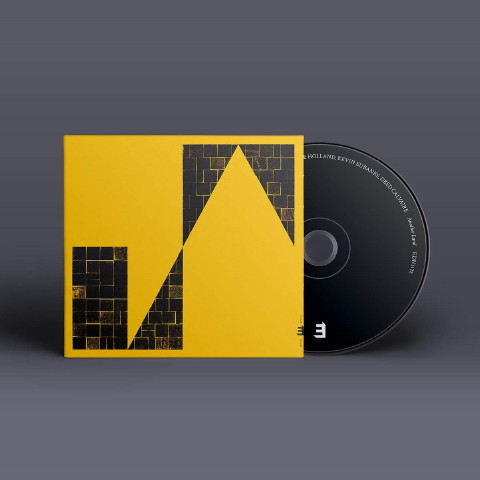
‘Another Land’ by Dave Holland Review: Songs for a Summer Afternoon

 © Copyright ® Steven Cerra, copyright protected; all rights reserved.


“Holland has been spoken of in the same breath as the legendary Scott LaFaro; he shares the American’s bright, exact intonation, incredible hand speed and utter musicality.” 

- Richard Cook and Brian Morton, The Penguin Guide to Jazz on CD, 6th Ed.


“Liberated from the physical work of playing with high action, jazz bassists rapidly expanded their technique during the 1950s and 1960s. Extending a concept begun by Red Mitchell and Charles Mingus, Scott LaFaro developed a rapid fingering and plucking system, and found the perfect place to use it when he joined the Bill Evans Trio in 1959, with Paul Motian on drums. Together, the three musicians invented a style of jazz in which no one was required to spell out the tempo with an explicit beat. This gave LaFaro the freedom to invent a new kind of "conversational" bass accompaniment, made up of short melodic figures and phrases rather than of a steady pulsing line. Like Blanton, LaFaro died (in an auto accident) only two years after becoming a major influence in jazz, but his recordings continue to inspire jazz bass players (LaFaro with Bill Evans Trio, Waltz for Debby Riverside/OJC]).”

- Bassist Bill Crow, Bill Kirchner, ed., The Oxford Companion to Jazz


“In whatever setting he performs, Holland can play with lightning speed, rhythmic precision and perfect intonation. His solos are marked by a clean, clear rounded tone and by thoughtful control and development of ideas. His style and dexterity put him on a level with Scott LaFaro and Gary Peacock.”

- Ed Hazell, Barry Kernfeld, ed., The New Grove Dictionary of Jazz


The jazz bassist reunites with guitarist Kevin Eubanks and drummer Obed Calvaire on an easygoing album.

By Martin Johnson

Copyright ©2020 Dow Jones & Company, Inc. All Rights Reserved. 

Appeared in the May 24, 2021, print edition as 'Songs for a Summer Afternoon.'

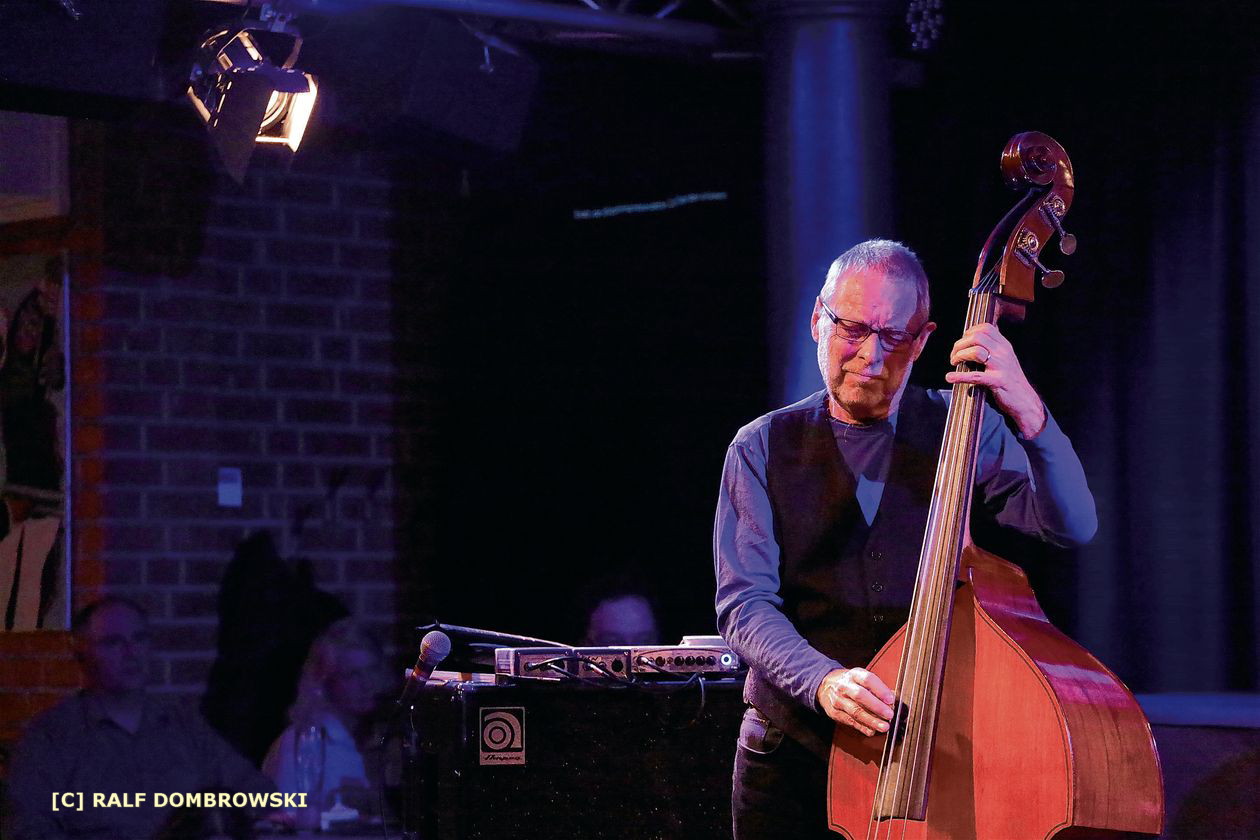
“Dave Holland is one of jazz’s leading bassists, and he has made dozens of superb recordings; most of them, usually in quartet, quintet or big band settings, present exuberant and vivacious music. On his new album, “Another Land” (Edition, May 28 release), he showcases a more intimate approach. His previous ensembles were often among the elite, and for good reason—they combined an old-school approach to structure (a rhythm section with big interlocking pieces) with of-the-moment solos propelled by a sense of harmonic freedom. “Another Land” features a trio and puts these values to work in a more discreet way.

It reunites Mr. Holland with guitarist Kevin Eubanks, who played on two of the bassist’s best recordings, “Extensions” (ECM, 1990) and Prism (Dare2, 2013). The two have a seemingly intuitive connection in moving between and within different grooves and styles, and that forms the foundation of this trio; veteran drummer Obed Calvaire offers concise accents and gentle thrust to the music. The three musicians have toured together from time to time, creating memorable performances. The trio’s week at the Village Vanguard in 2016 produced one of the best live shows I’ve seen—its set moved seamlessly, changing moods and rhythms astutely.

It was from their tours that the trio developed the repertoire for “Another Land.” The recording leads with Mr. Eubanks’s “Grave Walker,” and thanks to him and Mr. Holland, the piece feels like it is about to embrace the louder, more aggressive power-trio aspect of the instrumentation and produce music worthy of an action-adventure film soundtrack. Yet for all of the revving up, it quickly settles into a more relaxed groove, as if the excitement is being related in a lively conversation punctuated by laughter rather than fireworks.

The title track follows and sets the mood for the rest of the program. Mr. Holland’s warm bass tones and Mr. Calvaire’s deft brushwork provide the bed for a complex, introspective solo from Mr. Eubanks, his bandmates embellishing their support; it’s music for a lazy summer afternoon that offers more than just a vibe. “Gentle Warrior,” written by the drummer, is aptly named, and it features Mr. Eubanks’s most accomplished solo of the set. The guitarist, who was well known to jazz fans as a virtuoso before he spent 15 years as Jay Leno’s foil and bandleader on “The Tonight Show,” is not a flamboyant player; instead, his solos probe the weave of a tune rather than break its fabric. Most of the compositions here are highlighted by solos, but Mr. Eubanks’s “20 20” begins with a stellar ensemble section that feels improvised. And behind the guitar and bass solos, Mr. Calvaire is forceful in his accents and driving rhythms.

“Mashup,” the first single, is the exception to the recording’s serene mood. It’s an up-tempo jam, and a stellar showcase for Mr. Calvaire’s dynamic percussion. Mr. Holland’s “Passing Time,” which follows, returns to the almost pastoral sensibility that pervades the album. The group interplay is again a highlight as Mr. Eubanks’s solo flows seamlessly into a duet with the ensemble’s leader. In the promotional materials that accompany the recording, Mr. Holland speaks of their live shows as blues jams, and the final track, “Bring It Back Home,” offers overt blues references in both the basslines and the guitar licks, yet it doesn’t feel like a rehash. The band has taken something familiar and made it new.

The music here doesn’t just recall the template of other Holland-led groups. Some of the tracks evoke Gateway, a collective trio that joined Mr. Holland with guitarist John Abercrombie and drummer Jack DeJohnette for two recordings in the mid- and late ’70s, and then reunited for two more in the ’90s. The rapport was similar, albeit with a different range of styles; Gateway lacked the assertive rhythm that has been Mr. Holland’s signature in his own ensembles.

The bassist received his first big break at age 21 when Miles Davis tapped him to replace Ron Carter in his celebrated second quintet, and Mr. Holland participated in the late-’60s Davis ensembles that electrified jazz. But this narrative omits crucial information from the 74-year-old’s formative years. As a teenager in England, Mr. Holland was pursuing bass guitar and angling to play in rock bands when he picked up albums by Ray Brown and Leroy Vinnegar at a record store. These recordings pushed the acoustic bass into a more intermediary role between the front and the back line instruments, creating an easygoing shifting rhythmic floor to the music. He put aside his interest in bass guitar and bought a double bass to explore this inspiration. Although Mr. Holland’s music sounds nothing like Brown or Vinnegar’s, his big bold tone and articulated structures have become his defining elements in a wide range of bands and a cornerstone to his long-running success.”

—Mr. Johnson writes about jazz for the Journal.


Sunday, June 4, 2017

The Dave Holland Big Band - Something Special This Way Comes


© -Steven Cerra, copyright protected; all rights reserved.

Whoosh!

It was in incredible.

My first experience listening to the Dave Holland Big Band involved a track that lasted 17.26 minutes, and yet, it felt like it was over in a flash.

What happened?

How can something with a duration of nearly one-third of an hour seemingly elapse so quickly?

After listening to this selection - What Goes Around – the title track from the band’s first CD on ECM [#1026] - I was instantly and completely absorbed in the music of this big band.

In case you are not familiar with Dave Holland, he is a bassist who assumes a very dominant and propulsive role in the band’s music.

How can you swing a big band with from the bass chair?

And yet, that’s exactly what’s happening in this band’s music – the bass player is the driving force behind it – both figuratively and literally.

Dave Holland has impeccable credentials as a bass player dating back to the late 1960s and his tenure with Miles Davis.  Over the years, Dave has been the mainstay, a force, if you will, in a number of small groups where his huge tone, superb note selection and excellent sense of time have contributed greatly to the overall quality of the music.


But, bringing all of these skills to bear in a big band is quite a different matter as, more-often-than-not, the sound of the bass is lost in such surroundings.

In addition to Dave’s bass and the sterling musicianship of the other players, it is the nature and quality of the big band’s arrangements that distinguish its music.

Traditionally, big band arrangements have been tightly configured vehicles ruled by the constrictions of time and structure. Initially, one reason for this was to take commercial benefit of the earliest records, which along with radio broadcasts, supper club and ballroom appearances, served to generate audiences for the big bands.

The big band tradition came into existence at a time when 7-10” 78 rpm recordings were the mainstay, thus allowing for approximately 2:00 – 3:30 minutes of music to be captured on them.

The temporal and spatial restraints of these early 78’s curtailed the time available for the playing out of a big band arrangement and related solos.

Typically, the earliest big band arrangements, particularly from their high point in The Swing Era, 1930 – 1945, involved a statement of the melody and the release [bridge], brief solos by one or two instrumentalists and then a slightly altered restatement of the theme to close things out.

The advent of the long-playing album in the 1950s made possible longer recorded performances which resulted in more time for featured soloists and the interspersing of riffs, interludes and “shout choruses” [fanfare-type choruses that preceded the closing restatement of the theme], thus extending the typical big band arrangement to approximately 4-6 minutes.

Of course, there were exceptions to this format and these usually occurred when a big band was recorded in performance at a club or Jazz Festival.  One of the more notable examples of such an extended, recorded performance was the classic 20+ choruses by tenor saxophonist Paul Gonsalves on the 14.37 minutes of Diminuendo and Crescendo in Blue on the Duke Ellington at the Newport Jazz Festival Columbia LP.

But here again, the structure of the arrangement is largely patterned after the more traditional big band arranging format which is altered to allow Gonsalves time to spin his saxophone magic and enchant the crowd at Newport, Rhode Island’s Freebody Park on July 7, 1956.

There were also exceptions to this generalization by arrangers who emphasized concert or orchestral approaches such as those associated Stan Kenton, as well as, big bands scored for by Gil Evans and Gerald Wilson, and, of course Duke Ellington’s extended suites.

Due to copyright restrictions, the crackerjack graphics theme at CerraJazz LTD was unable to use the music from the “first impression” What Goes Around recording on its video tribute to the Dave Holland Big Band, but we were able to put together an audio only Soundcloud music file which you'll find at the conclusion of this piece which uses the band's performance of What Goes Around from the 2003 Saalfelden Jazz Festival [Austria].

For the closing video turned to a live performance of Dave’s tune The Razor’s Edge from the band’s appearance at the 2005 North Sea Jazz Festival which contains smashing solos by Alex "Sasha" Sipiagin on trumpet, Steve Nelson on vibes and Gary Smulyan on baritone saxophone.


In Dave’s arrangement of the tune, you can hear all of the ingredients that make the band so engaging, engrossing and enthralling such as:

- collective improvisation by one, two instruments or even the entire band as an element in the arrangement and/or a background for the soloists to improvise over

- stop time

- the rhythm section “laying out” [stops playing to create a sudden background of quiet]

- restating the theme between solos

- rhythmic riffs played behind soloists and between solos

- alternating such riffs between sections [i.e.: brass and reeds] to give them contrasts

- counter melodies played between sections

- multiple shout choruses as a prelude to the closing theme

Basically, the arrangement is being elongated to allow the soloists to expand their solos, a format which is more characteristic of Jazz in a small group rather than a big band setting.

And, by variegating these orchestral backgrounds, it serves to energize the soloists who now have many more stimuli to chose from as a springboard for their improvisations.

The implementation of all of these arranging, orchestrating and scoring devices provides for a landscape of continually changing sonorities that keeps the music interesting for both the musicians and the listener.

Amazingly, given the variety of the devices employed, they always seem to occur in exactly the right place in the charts for Dave’s band.

With all this going on in the music, is it any wonder that time seems to standstill while listening to it?

If you are looking for something “new and different” in your big band fare, why not give the music of the Dave Holland Big Band a try. 

Don’t be surprised if you lose track of time while doing so.