Showing posts with label Jackie McLean. Show all posts

Monday, June 17, 2024

The Advent of Jackie McLean: The Blue Note Years [From the Archives]

© -  Steven A. Cerra, copyright protected; all rights reserved.

“He patented a sound that was compounded equally of bebop and the new, free style. Raw and urgent, no one else sounds quite like him.”
- Richard Cook and Brian Morton, The Penguin Guide to Jazz on CD, 6th Ed.

“McLean's mix of plangency and something inscrutable is very striking.”
- Richard Cook, Jazz writer and critic


“...there aren't more than a handful of jazzmen who sound as passionately involved in their music.”
- Michael James, liner notes to Jackie McLean: Capuchin Swing


In a recent posting on the Texas Tenor Sound, I quoted the late Cannonball Adderley description of a key aspects of this blues-drenched, wide-open style of playing as a sound that had a “moan within a tone.”

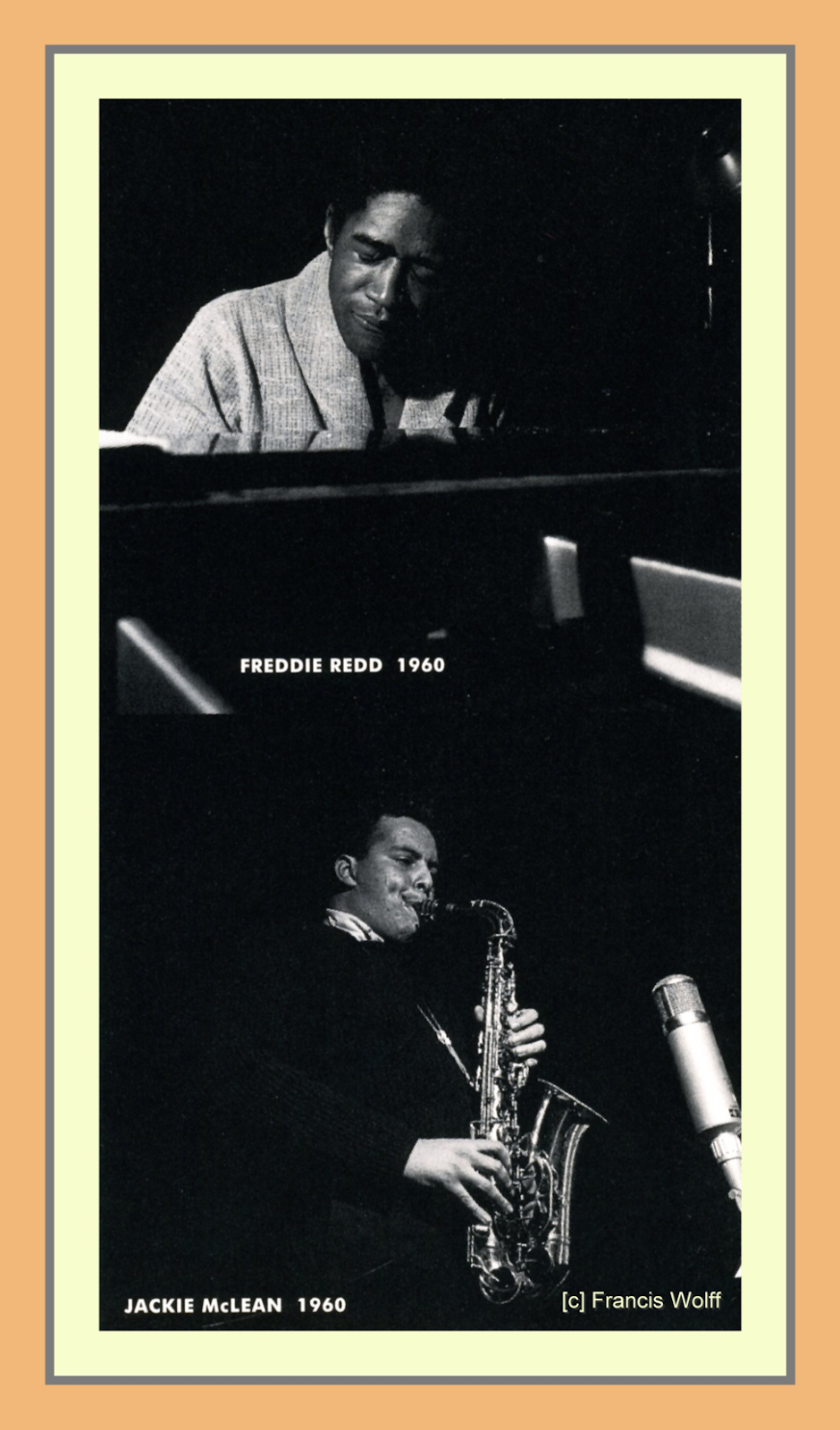
Cannonball’s tonal characterization reminded me of the plaintive wail that I always associated with Jackie McLean’s alto saxophone sound, especially when I first encounter McLean's on the recordings he made for the Blue Note label in the 1950s and 1960s.


Richard Morton and Brian Cook in their Penguin Guide to Jazz on CD 6th Ed. offered this explanation of Jackie’s uniqueness:


“He patented a sound that was compounded equally of bebop and the new, free style. Raw and urgent, no one else sounds quite like him.”


Like Messrs. Morton and Cook,  I always thought that Jackie was “straining at the boundaries of the blues” as though he was always poised between “innovation and conservatism:” “an orthodox bebopper who was deeply influenced by the free Jazz movement.”


His playing could range between “complex, tricky and thoroughly engaging” to “diffident and defensive.”


Impassioned, fiery, full of brio, the sound of Jackie McLean during his Blue Note years was, to my ears, the personification of what was referred to at the time as “East Coast Jazz.”


The editorial staff at JazzProfiles thought it might be fun to recount some of the highlights of Jackie tenure with Blue Note on these pages with some selected excerpts from Richard Cook's history of Blue Note Records.


© -  Richard Cook, copyright protected; all rights reserved.

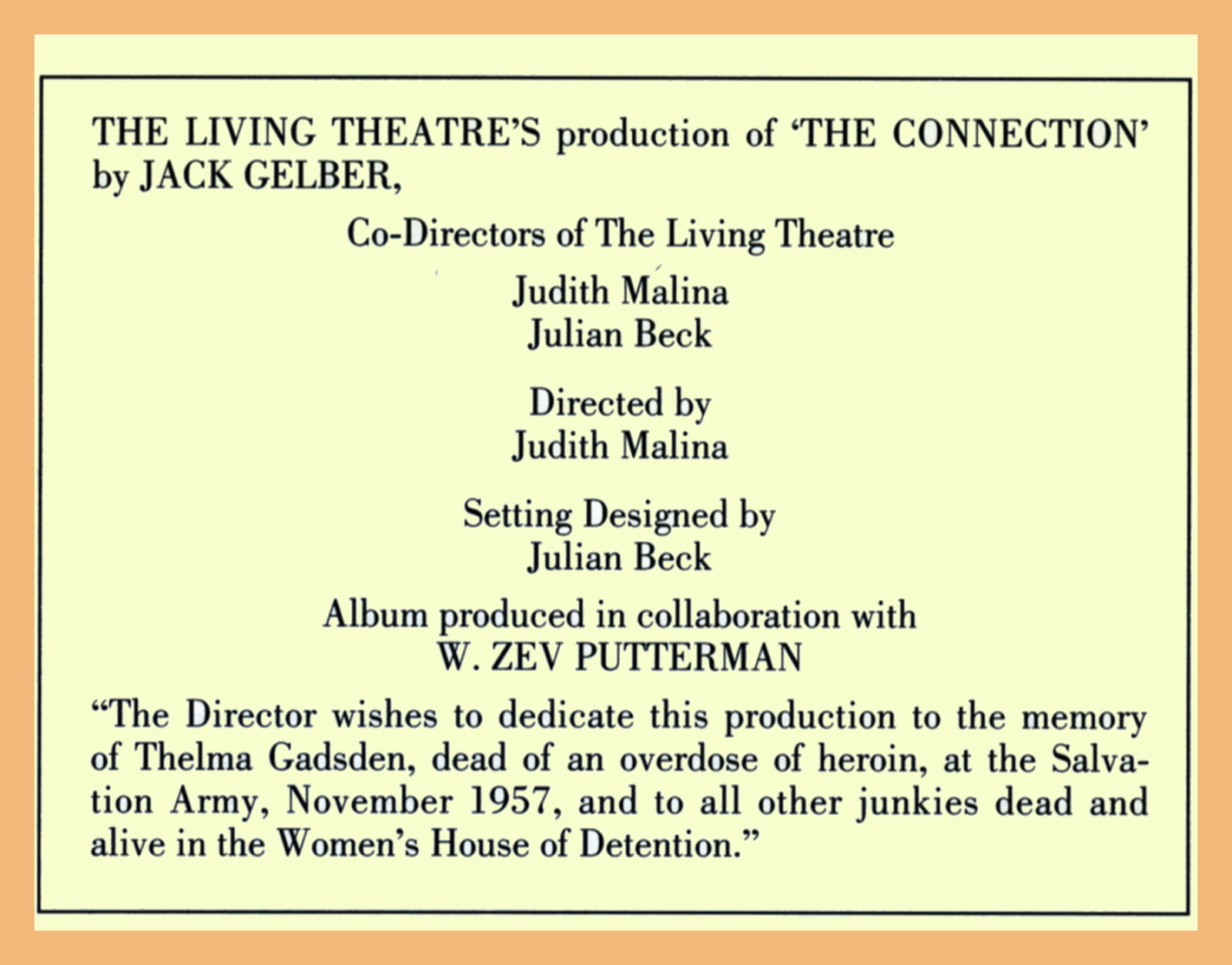
“Of all the new signings, the most important individual was Jackie McLean, an alto saxophonist from - a local man at last! - New York, who had been on the city's scene since the beginning of the fifties. McLean had had a difficult few years. Despite several high-profile stints with other leaders - including Miles Davis, Art Blakey and Charles Mingus - McLean had made no real headway as a leader himself. His records for Prestige were mostly spotty, unconvincing affairs (he later rounded on the company, comparing working for them to 'being under the Nazi regime and not knowing it'), and trouble with the police over his use of narcotics had led to the dreaded loss of his cabaret card, the same problem which had afflicted Monk's progress. Yet, in 1959, he signed up with Lion and also began working with the cooperative Living Theatre, a freewheeling stage group which staged various 'events' from poetry to performance art, culminating in the production of a play by Jack Gelber, The Connection, which dramatised aspects of the jazzman's life.


McLean's first Blue Note as leader was New Soil (BLP 4013), made on 2 May 1959 (material from an earlier session was subsequently released out of sequence).
Although pitched as a typical hard-bop quintet session (with Donald Byrd, Walter Davis, Paul Chambers and Pete La Roca), the music might have puzzled the unwary. McLean brought two pieces to the date, 'Hip Strut' and 'Minor Apprehension' (often better remembered as 'Minor March', which was the title used by Miles Davis in his recording of the tune). 'Apprehension' is a useful word to describe the music. Although 'Hip Strut's structure eventually breaks out into a walking blues, its most striking motif is the suspension on a single, tolling chord, over which the soloists sound ominously trapped. In this one, McLean suggests the patient, rather effortful manner of one of his acknowledged influences, Dexter Gordon, but in the following 'Minor Apprehension' he sounds like the godson of Charlie Parker, tearing through the changes with the scalded desperation of the bebopper locked in a harmonic maze. The rest of the record, dependent on several Walter Davis tunes, is less impressive, but McLean's mix of plangency and something inscrutable is very striking.


Not always, though, particularly likeable. McLean is a player whose music has often aroused admiration over warmth. The sense that he is always playing slightly out of tune lends an insistent sourness to the tonality of his music, and it is the recurring problem within a diverse and often fascinating discography for the label. His fellow alto saxophonist Lee Konitz, who has also been accused of playing sharp, remembers a session with himself, McLean, Dexter Gordon and Ben Webster: 'After the session I shook Jackie's hand, thinking how nice it was to play with him, and then it occurred to me I was thanking him for playing sharp!'


Swing Swang Swingin' (BLP 4024) gave McLean the limelight as the sole horn, with Walter Bishop, Jimmy Garrison and Art Taylor behind him. This session tends to restore the emphasis on McLean's bebop origins, with big, powerful improvisations such as those on 'Stablemates' and let's Face The Music And Dance' - a standard which very few jazz players have chosen to cover - suggesting that he still had a lot of juice to squeeze out of his bop sensibilities. But McLean began to change, in part, perhaps, because of his experiences with the Living Theatre, and his Blue Note albums would come to document a personality with a high degree of artistic curiosity. …


Jackie McLean might have shared a similar fate [to that of pianist Sonny Clarke who died from complications of heroin addiction], but his stint with the Living Theatre had stabilised his professional life and he eventually overcame his addiction. McLean's Blue Notes are a sometimes problematical lot and the string of dates he made for the label in the sixties continue an intriguing if often difficult sequence. Capuchin Swing, made on 16 April 1960, is a sometimes rowdy affair which shows up how awkward it could be to accommodate McLean even within a group of his own leadership. His solos on 'Francisco' (named for Frank Wolff) and 'Condition Blue' make a glaring contrast to those of his bandmates. The tension in McLean's records from this period lies in a sometimes aggravating contrast between himself and his fellow horn players in particular. Michael James is quoted on the sleeve note to Capuchin Swing to the effect that 'there aren't more than a handful of jazzmen ... who sound as passionately involved in their music', but McLean's passion often seems to have more to do with being outside, rather than being involved. Mclean himself later said: 'A lot of my performances have been very emotional because I wasn't putting any work into it.' Bluesnik, recorded the following January, has some of the same intensity, though apparently under more control: in what is actually a rather dull programme of blues pieces (the title track must have taken all of five minutes to 'compose'), the saxophonist's fast, biting solos shred the skilful and comparatively genial playing of Freddie Hubbard.


A Fickle Sonance, recorded the following October, assembled the same band which would record Leapin' And Lopin', with McLean in for Charlie Rouse. It is, again, the trouble-making McLean who makes all the difference: where Clark's session would be elegant and composed, this one seems taut and angular. 'Five Will Get You Ten', once credited to Clark but now thought to be an otherwise unclaimed Monk tune, and the chilling title piece, where the alto leaps and twists against a modal backdrop, are strange, rootless settings for playing which can seem by turns anguished, stark and sneering. McLean's next record, Let Freedom Ring, would make a more explicit pact with matters removed from his bebop history. ...


Jackie McLean had become as much a Blue Note regular as Hank Mobley (by the end of his tenure with the original company, he had played on nearly fifty sessions), but he was one hard-bopper who had begun to question his own ground. For the sleeve of his 1962 Let Freedom Ring album, McLean asked to write his own notes: Jazz is going through a big change, and the listener or the fan, or what have you, should listen with an open mind. They should use a mental telescope to bring into view the explorers who have taken one step beyond, explorers such as Monk, Coltrane, Mingus, Cecil Taylor, Kenny Dorham, Sonny Rollins, Miles Davis, Ornette and, of course, Duke Ellington.'


McLean doesn't choose to be very specific about how he feels his own music is changing, other than expressing a general dissatisfaction with chord-based improvising, but earlier in the essay he does say: 'Ornette Coleman has made me stop and think. He has stood up under much criticism, yet he never gives up his cause, freedom of expression. The search is on.'


What was this search? Perhaps McLean himself was not so sure, since most of Let Freedom Ring is a frequently awkward truce between his bebop roots and the new freedoms which Coleman had been putting on display in his music. But Coleman, too, had a debt to Charlie Parker and to blues playing. Why does
McLean sound, in comparison, to be struggling with his 'freedom'? It may be that he is, in effect, trying too hard. Listening to Coleman's music of the same period, one is constantly taken aback by how unselfconscious the playing is, as if the musicians in Coleman's famous quartet were free-at-last. McLean takes a much sterner route: if his earlier records sounded intense, this one is practically boiling. He seems unsure as to how best to use his tone, whether it should be flattened or made even sharper than normal, and there is both overblowing in the high register and a deliberate emphasis on oboe-like low notes. His three originals are open-ended and exploratory, but the one ballad, Bud Powell's Til Keep Loving You', is a distinct contrast, with the saxophonist playing it in a way which sounds in this setting weirdly direct and unadorned. Although the pianist, Walter Davis, was a near contemporary of McLean's, the other players were young men: bassist Herbie Lewis and drummer Billy Higgins.


McLean's decision was not so much a conversion as a progression. Many of his generation had been scathing about Coleman's new music, while at the same time being uneasily aware that the Texan saxophonist was on to something. No experienced musician who heard the music of Coleman's first Atlantic recordings of 1959 could have been under the impression that the guiding hand was some kind of charlatan, even if they didn't agree with his methods or his way of expressing himself. At this distance, it seems odd that Coleman's music could even have excited so much controversy: not only does it sound light, folksy and songful, its accessibility follows a clear path down from bebop roots (a point best expressed in Coleman's first two recordings for Contemporary, with 'conventional' West Coast rhythm sections. The music there gives drummer Shelly Manne no rhythmical problems at all, but the two bassists involved, Percy Heath and Red Mitchell, both later remembered asking the leader about harmonic points which Ornette more or less waved aside).


In 1963, McLean built on the work of Let Freedom Ring by forming a new and regular band, with players who could accommodate what he saw as his new direction. Three of them were individuals who would have their own Blue Note engagements soon enough: vibraphonist Bobby Hutcherson, trombonist Grachan Moncur and drummer Tony Williams. All three featured alongside McLean on his next released session, One Step Beyond (although three other sessions which took place in between were shelved by Lion at the time). What is awkward about One Step Beyond - and the subsequent Destination ... Out! - is that McLean is the one who sounds like the backward player. Just as Miles Davis found himself initially perplexed by Williams (who joined the Davis band in 1964), so did McLean struggle with the language of his younger sidemen. …”

To give you an opportunity to listen Jackie’s playing from The Blue Note years, the following video tribute features him on Walter Davis Jr.’s Greasy from McLean’s New Soil LP with Donald Byrd on trumpet, Walter on piano, Paul Chambers on bass and Pete La Roca on drums.


Tuesday, November 30, 2021

"JACKIE McLEAN: Sugar Free Saxophone" by Mike Zwerin

 © Copyright ® Steven Cerra, copyright protected; all rights reserved.


The late Paris-based jazz musician and International Herald Tribune writer Mike Zwerin posted a 41-week series entitled Sons of Miles to Culturekiosque Jazznet. In this series, Zwerin looks back at Miles Davis and the leading jazz musicians he influenced in a series of interviews and personal reminiscences. Here is the Gerry Mulligan piece in that series. It was published on September 24, 1998 so add 20+ years to any math in the article.


“PARIS - Jackie McLean was looking for the common tone, to be able to move between all 12 tonal centers with total freedom and under complete control. The listener should know nothing about this. In order for this to work, the force must be emotional not technical.


One night, during his two weeks at the Magnetic Terrace here in Paris, he felt he got pretty close to something he's been searching for for a long time. But those breakthroughs come and go and maybe don't really come at all and after a few days had passed he was no longer so sure. Anyway he's still playing and trying.


McLean is among the few remaining evergreens with enough will and force to motivate themselves night after night despite age, a demanding métier, prejudice, tangents and contrary trends. His alto-saxophone style combines the solid texture of Sonny Rollins's tenor and the fluidity of Bud Powell's piano - shorthand, but true enough as far as it goes. His angular-phrased tough, seductive, sound is as unmistakably recognizable as anybody active today. He calls it "sugar free."


Which may or may not have Freudian implications because he grew up on Sugar Hill, once a noble corner in Harlem which then soured into drugs and shoot-outs. "The streets were clean when I was a kid there," he said, at once proud and sour about it.


"Duke Ellington, Nat Cole and Don Redman lived in the neighborhood. People cared about our neighborhood."


McLean, who was born in 1932, heard Charlie Parker at the age of 14 and "the first time that name came out of my mouth I knew at that moment I was going to be a musician." Five years later, he joined Miles Davis.


Looking back, he wondered: "How did I do it that fast?" He was fast and furious in his early 20s. "When I was strung out on dope my horn was in the pawn shop most of the time and I was a most confused and troublesome young man. I was constantly on the street, in jail, or in a hospital kicking a habit.


"The New York police had snatched my cabaret card and I couldn't work the clubs any more except with [Charles] Mingus who used to hire me under an assumed name. [He can be heard already moving between tonal centers on Mingus's record 'Pithecanthropus Erectus' in the '50s.] The thing that saved my life was a Jackie McLean Fan Club started in 1958 by a guy named Jim Harrison. I didn't have a big name or anything but he collected dues and he'd rent a hall once a month and present me in concert."


McLean played the saxophonist - four years at $95 a week - in the first Living Theater production of the "The Connection," an off-Broadway milestone which cast a new perspective on the nature of make-believe.


The junkie hustling the audience in the lobby turned out to be an actor, the hostile woman in the mezzanine was part of the cast. Some of the actors were addicts, but you weren't sure who. Actors playing characters on stage never looked the same again. "I fell in love with theater then and there," McLean said. "Even my saxophone playing became a lot more theatrical after that."


Remembering how lean and mean he looked in those days, like an early James Dean, and seeing him turn 60 with a girth approaching the late Sydney Greenstreet, it was astonishing how the lust to take risks can be, if anything, greater 35 years later. There has never been and there certainly was not now anything approaching fat or phlegmatic about this man's head.


The following is a story about the old days told without punctuation during a run to a pharmacy to buy a cornucopia of homeopathic medicines (similar runs were once made for cough syrup or a lot worse):


"Sonny Rollins and me were sitting in this club and suddenly the door opened and it's Sonny Stitt and he said 'okay I've been waiting for this,' and he had an alto under one arm and a tenor under another and it was like 'High Noon' or something and he said 'you're both hot stuff from New York and you both think you can play well I'll take on both of you up on the killing stand come on get up there on the killing post both of you.'"


Those were tough and competitive times and survival was day-to-day. Stitt did not survive, while McLean and Rollins were still picking up steam, combining honed intelligence with renewed energy at an age when most men are well into retirement.


It may or may not be coincidence, but both had strong wives who managed their careers. McLean said his wife Dolly "stood up when other women would have crumpled, or killed me. For years, she was the one who worked day jobs to keep us and our three kids together. I really owe her."


Both McLean and Rollins also paced themselves by retiring from full-time playing for years during their middle age. Rollins periodically left for such places as India, upstate New York and the Brooklyn Bridge [sic, it was the Williamsburg Bridge] which connects Manhattan and Brooklyn] to meditate. McLean joined the faculty of the highly rated Hartt School of Music of the University of Hartford in Connecticut in 1970, and he became chairman of its African-American music department.


The department was established, he had a National Endowment for the Arts grant for his chair and he could afford to bring in guest lecturers when he was away. So he "came back on the scene for real. My original mission is still the same. I intend to try and continue to be significant on the instrument.


Not just 'Jackie McLean, oh I remember him.' But to be at the forefront of the horn. I'm ready to kick the doors down."”


Thursday, October 29, 2020

Jackie McLean and "The Connection" at The Crossroads

 © Copyright ® Steven Cerra, copyright protected; all rights reserved.


The editorial staff at JazzProfiles has previously posted about Jack Gelber’s play The Connection and the music that pianist Freddie Redd composed for the Broadway [NYC] production from the perspective of the West Coast version of it that we saw performed at the Ivar Theater in Hollywood, CA with Redd’s score performed by tenor saxophonist Dexter Gordon. You can locate that feature in the blog archive by going here.


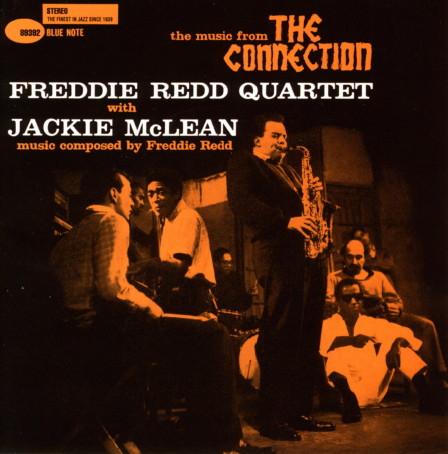
In that piece we used, with his permission, the following excerpts from Ira Gitler’s insert notes to the Blue Note LP The Music from the Connection: Freddie Redd Quartet with Jackie McLean [[B2-89392].


THE CONNECTION by Jack Gelber is a play about junkies but its implications do not stop in that particular circle. As Lionel Abel has stated in what is perhaps the most perceptive critique yet written about the play (Not Everyone Is In The Fix, Partisan Review, Winter 1960), "What adds to the play's power is that the characters are so like other people, though in such a different situation from most people."


The situation in which the four main protagonists find themselves is waiting for Cowboy (Carl Lee), the connection, to return with the heroin. These four, Solly (Jerome Raphel), Sam (John McCurry), Ernie (Garry Goodrow), and Leach (Warren Finnerty) are in attendance at the latter's pad with the bass player. One by one, the three other musicians drift in. They are also anxiously awaiting Cowboy's appearance. Also present, from time to time, in this play-within-a-play, are a fictitious playwright Jaybird (Ira Lewis), producer Jim Dunn (Leonard Hicks) and two photographers (Jamil Zakkai, Louis McKenzie), who are shooting an avant garde film of the play.


The musicians not only play their instruments during the course of the play but, as implied before, they also appear as actors. Some people have raised the question, "If they are actors, why are they using their real names?" Pianist-actor Freddie Redd, composer of the music heard in The Connection answers this simply by saying that he and the other musicians want recognition (and subsequent playing engagements) for what they are doing and that there would be no effective publicity if they were to appear as John Smith, Bill Brown, etc. Author Gelber concurs and says that having the musicians play themselves adds another element of stage reality.


When The Connection opened at The Living Theatre on July 15, 1959, it was immediately assaulted by the slings and arrows of outrageous reviewers, a group consisting, for the most part, of the summer-replacement critics on the local New York dailies. Although several of them had kind words to say about the jazz, none were explicit and one carper stated that the "cool jazz was cold" which showed his knowledge of jazz styles matched his perception as a drama critic.


A week later, the first favorable review appeared in The Village Voice. It was one of many that followed which helped save The Connection and cement its run. In it, Jerry Tallmer didn't merely praise the jazz but in lauding Gelber as the first playwright to use modern jazz "organically and dynamically", also pointed out that the music "puts a highly charged contrapuntal beat under and against all the misery and stasis and permanent crisis."


This, the music does. It electrically charges both actors and audience and while it is not programmatic in a graphic sense (it undoubtedly would have failed if it had tried to be) it does represent and heighten the emotional climates from which it springs at various times during the action.


The idea to incorporate sections of jazz into The Connection was not an afterthought by Jack Gelber. It was an integral part of his entire conception before he even began the actual writing of the play. If Gelber did not know which specific musicians he wanted onstage, his original script (copyright in September 1957) shows that he knew what kind of music he wanted. In a note at the bottom of the first page it is stated, “The jazz played is in the tradition of Charlie Parker." (The Connection is published by Grove Press Inc. as an Evergreen paperback book.)


Originally Gelber had felt the musicians could improvise on standards, blues, etc., just as they would in any informal session. When the play was being cast however, he met Freddie Redd through a mutual friend. Freddie, 31 years young, is a pianist who previously has been described by this writer as "one of the most promising talents of the '50s" and "one of the warmer disciples of the Bud Powell school". During the Fifties he played with a variety of groups including Oscar Pettiford, Art Blakey, Joe Roland and Art Farmer-Gigi Gryce, all of whom recognized his talent.


After he had gotten a quartet together at Gelber's request, auditioned for him and was given the acting-playing role in The Connection, Freddie told Jack of his long frustrated wish to write the music for a theater presentation. Armed with a script and the author's sanction, he went to work. In conjunction with Gelber, he decided exactly where the music was to occur. By familiarizing himself with the play's action, he was able to accurately fashion the character and tempo of each number. What he achieved shows that his talent, both the obvious and the latent of the '50s, has come to fruition. He has supplied Gelber with a parallel of the deep, dramatic impact that Kurt Weill gave to Brecht. His playing, too, has grown into a more personal, organic whole. Powell and Monk, to a lesser degree, are still present but Freddie is expressing himself in his own terms.


The hornman he chose to blow in front of the rhythm section and act in the drama, has done a remarkable job in both assignments. Jackie McLean is an altoman certainly within the Parker tradition but by 1959 one who had matured into a strongly individual player. His full, singing, confident sound and complete control of his instrument enable him to transmit his innermost musical self with an expansive ease that is joyous to hear. It is as obvious in his last Blue Note album (Swing, Swang, Swingin' — BLP 4024) as it is here or on stage in The Connection. As an actor, Jackie was so impressive that his part has grown in size and importance since the play opened.


During the early part of the run, Redd's mates in the rhythm section were in a state of flux until Michael Mattos and Larry Ritchie arrived on the scene. Mattos has worked with Thelonious Monk, Randy Weston, Max Roach and Lester Young among others. Ritchie came out of B. B. King's band to play with Phineas Newborn and later, Sonny Rollins. Together they have given the group on stage a permanence; the fusion of many performances' playing as a unit is evident here.”


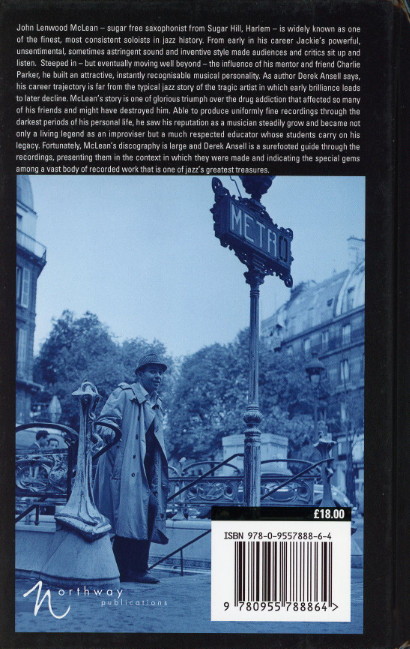
Recently I came across the following information in Derek Ansell’s Sugar Free Saxophone: The Life and Music of Jackie McLean [2012] that broadens the perspective of Jackie’s role in the production and performance of The Connection and I wanted to share it with you, as well as, post it in order to record it in the blog archives. You can purchase Derek’s excellent book from its publisher via this link.


In many ways, 1959 and The Connection could also have been labelled The Crossroads in Jackie’s career because some of his best Blue Note recordings would be created shortly before and after his appearance in the play and, of course, on the recording of Redd’s score.


But to compound matters, he was married with three children, had lost his cabaret card due to a conviction for narcotics possession [which made it impossible to work in NYC night clubs], and was about to appear in a play about Jazz musicians and drug addiction!?


“The irony would not have escaped McLean and his family on July 15th 1959 when the altoist began work as a musician and actor in Jack Gelber's highly controversial play The Connection. The Living Theatre in New York City presented the play about four jazz musician addicts waiting around in a seedy pad for their 'connection', a character called 'Cowboy*, to arrive. The four actors are joined from time to time by a playwright, a producer and two photographers and a sort of play within a play takes place as these latter characters are supposedly shooting an avant-garde film of the play


McLean, at this time addicted to heroin and not allowed to perform in jazz clubs in NYC, was allowed to appear on stage in a New York theatre, playing saxophone and acting and - yes, that's right - playing a jazz musician who is addicted to heroin. The music for the play had been designated by the writer Jack Gelber as being 'in the tradition of Charlie Parker'. By all accounts, Gelber would have been happy for the musicians on stage to play standards and various twelve bar blues concoctions but when pianist composer Freddie Redd was hired to lead the bop quartet on stage, he made it clear that he wanted to produce all new music, specially composed for the play. Gelber, who was very happy with this suggestion, promptly armed Redd with a script and that is how the music for The Connection was born.


McLean and Redd were old friends and had played together in clubs and concerts frequently. Although the rhythm section changed often in the first few months, it settled down when bassist Michael Mattos and drummer Larry Ritchie were recruited and they stayed, along with Jackie and Freddie, until the play ended its run. It is fascinating and instructive to go to YouTube on the internet and view the sample from the film of the play shown there. A slim, youthful-looking McLean can be seen and heard blowing alto in that emotive, blues inflected manner he had, with Redd pounding out the chords at the piano, and Mattos and Ritchie supporting on bass and drums. As the music plays, the action of the play, such as it is, continues. A photographer worries about running out of film for his avant-garde movie and various characters slouch around or sit looking vacantly into space, waiting hopefully for their fix to arrive. A second drummer sticks in hand but with no kit, apes every movement Ritchie makes, flourishing the air with the drumsticks. After a minute of silence and little stage activity an actor urges Freddie to 'play something' and the pianist launches into a new composition.


The music written for the play, which includes 'Music Forever', 'Wiggin" and 'Theme for Sister Salvation', is best heard on two discs first released in the early 1960s; The Music from the Connection by the Freddie Redd Quartet featuring Jackie McLean on Blue Note BST 84027, and an album featuring Redd, tenor saxist Tina Brooks (Jackie's understudy in NYC) and trumpeter Howard McGhee, reissued as Boplicity CDBOP 019. The play ran for more than three years and McLean was part of the company travelling to the UK in 1961. A production in California featured Dexter Gordon in the part Jackie played in NYC, Although harrowing as presented with all the realism that the actors and, particularly the musician-actors could inject into it, the play was a success. It shocked and worried a lot of people in the 1960s, people who went regularly to the theatre but didn't expect, at that time, the levels of realism that were presented to them.


'No, it was like that,' Jackie said in 1994. 'It was like that was a real hunk of life, that play It was way ahead of its time.' He went on to add, chillingly, that America later experienced widely the problems the play had predicted. And he added, perhaps tellingly, that when the company arrived in Britain, the play didn't work very well because there was no drug problem in the UK at that time. 'They had legalized drugs over there,' he told the interviewer and went on to say that there was no waiting for a connection to arrive in Britain because addicts could get drugs from their doctor. 'They had three drug convictions in the whole country' This statement prompts the obvious question, whatever happened to the enlightened attitude and laws of i960s?


This was a successful period in McLean's early years as a professional jazz musician and he acquitted himself well as an actor. Much of the credit for the play's success, however, must go first to Gelber and then to Redd for his high quality music score and, of course, to the rest of the quartet that played it night after night.


Aficionados will hear some of McLean's best solos of the period on the Blue Note Connection disc, recorded in February 1960. He is both brash and at times acerbic and, as always, there is that distinctive undercurrent of melancholy as in all his work at this time. Given that this was a result of his lifestyle, my only surprise, if that's the right word, about The Music from the Connection, would be that it is almost all bright and upbeat. A couple of dark, sombre minor compositions would surely have suited the mood and ambiance of the play? Only Freddie Redd can address that comment but it must be acknowledged that all the music from the play is memorable, distinctive and, of course, enhanced considerably by the solos of McLean and Redd and the rhythm backings.


*       *       *


The changes in McLean's mature style began in 1959 and possibly much of it was worked out as he played, night after night, in The Connection, working on the same Freddie Redd compositions but doubtless applying fresh variations over a period of nearly three years. He was always a restless, explorative soloist and, unlike most, unwilling to set a style and play it virtually unchanged for the rest of his life. The new sound of McLean was to be heard late in 1959 and much more in 1960. Perhaps by coincidence, some of his most advanced and probing solo work was caught in January 1959 when he recorded 'Blues Inn', 'Fidel' and 'Quadrangle', for Blue Note. In 1960, three tracks from a September 1st session were added to make up Jackie's Bag, which came out later that year on Blue Note BLP 4051.


The first three pieces show how much Jackie's writing had developed and matured. 'Quadrangle' is a fascinating composition which he admitted in 1962 (in the notes to Let Freedom Ring) did not fit easily with rhythm changes. When these tracks were recorded, however, he was in the process of working out new methods of writing and playing and the style here is not much removed from earlier attempts in this type of piece. Even so, the alto solo is intense, supercharged and swings like mad, courtesy of Jackie's own inbuilt sense of time and the driving, slashing rhythm section comprising Sonny Clark, Paul Chambers and Philly Joe Jones, one of the best units he worked with. 'Quadrangle' benefits from exceptional solos by McLean and Philly Joe with Clark laying out on this track. Listen to the pianist on ‘Fidel’ where he easily matches the invention and intensity of the leader. McLean stated in the liner notes to Jackie's Bag that he had written 'Quadrangle' four years earlier and it had been a style of writing he had been working towards for some time. 'I had some trouble at first putting chords on it for blowing on,' he continued, 'but I wanted to have a firm basis to play on, as well as those figures that came into my head.'


In the year and a half separating these two sessions, Jackie had begun playing modal music more frequently and had found other ways to interpret pieces like 'Quadrangle'. Playing on scales rather than the more conventional chord progressions was something that he had learned in Charles Mingus' Workshop bands in 1957 but it had not become common practice by 1960. Much of Mingus' practice at the time was forward looking and original but, as with all things, it took the general public and most other musicians a long time to catch up. The main thrust of inspiration for Jackie is most likely to have been Miles Davis’ groundbreaking Columbia LP Kind of Blue, recorded in March 1959 and beginning to gain momentum on its journey towards becoming the best-selling jazz record of all time. Davis, who pushed McLean to play standards and to study music thoroughly, also taught him to use space intelligently and effectively. So it should come as no real surprise that on the second session that made up the six tracks of Jackie's Bag, the altoist kicked off with ‘Appointment in Ghana' which uses a modal structure in the main phrase. As Bob Blumenthal noted in his insert for the updated CD release of Jackie's Bag in 2002, the practice of playing scales had not entered McLean's writing until this session.' It provided an alternative to standard harmonic sequences that McLean would apply to later performances of ‘Quadrangle', and that served him well in the more open approach he would soon document on such albums as Let Freedom Ring and One Step Beyond.


All that was in the future; in 1959 and through most of 1960-62, Jackie was developing as a major soloist and experimenting with new forms and methods of expression. By the time Jackie's Bag was released in 1960, he had already put out three good Blue Note LPs including New Soil and The Music from the Connection. Over that period of time his music had begun to move very slowly away from the solid hard bop of 'Quadrangle' towards more modal and challenging writing and playing such as we find on the six 1960 tracks that comprise the full, 2002 release of Jackie's Bag. Over the next two years it would change even more radically and dramatically but on the later tracks of this album he shared composition duties with the brilliant, ill-fated tenor saxophonist Tina Brooks. It was Brooks who played tenor on these tracks and the blend of his gospel-influenced, warm tenor and Jackie's often strident, slightly sharp, bluesy alto sound was wonderfully successful. Also featuring Blue Mitchell on trumpet, Kenny Drew on piano, Art Taylor at the drums and Paul Chambers as bassist on both dates, these selections really smoke and pulsate with vibrant modern hard bop solos.


Jackie's Bag turns out to be one of Jackie's most successful Blue Note albums of all and the others were all in the very good category. Perhaps it was the fact that the first session had only produced three good tracks that made this, eventually, the big success story that it became. When the later six tracks were added it offered stirring music from some of the best front-line and rhythm section players active at the time and, duly inspired by all of them, some of the very best McLean solos available to that date.


During the early 1960s Jackie recorded prolifically for Blue Note and other companies and his records offer a selection of standard but very adventurous hard bop, but also new music that is experimental and searching. From around this time it should have been obvious that McLean was not a musician to be put into any single category although it is true that the man who had followed, played with and shared a horn on occasions with Charlie Parker never abandoned his lifelong love affair with bebop.


On April 17th 1960, he headed to New Jersey for the Englewood Cliffs studio of engineer Rudy Van Gelder to record Capuchin Swing, (Blue Note 84038), with Blue Mitchell, Walter Bishop Jr., Paul Chambers and Art Taylor in support. It is another first rate release with tracks such as 'Francisco' and 'Condition Blue' outstanding. More Blue Note recordings followed in 1961, an important year if only for the release of two really exceptional albums: Bluesnik recorded in January of that year and A Fickle Sonance recorded on October 26th.


The end of that year saw two enthusiastic hard core followers of the musician, Dick Prendergast and Jim Harrison, staging a special concert, An Evening with Jackie McLean, at Judson Hall in NYC. These two, named by Ira Gitler in his sleevenotes to Fickle Sonance, had felt that the New York cabaret card restriction was grossly unfair and they staged this special event which included a table in the foyer displaying the covers of all the LPs featuring McLean as leader. Whether it had any effect on the NYC Police Department is unknown but surely unlikely It does show however the extent to which fans of the saxophonist were willing to go and how much they felt that his banishment from New York clubs was unreasonable. It also demonstrated just how well-known and appreciated he had become in the lives of jazz enthusiasts who, even though they could only hear him at theatres, at least had a fair number of recorded performances to enjoy.


Jackie McLean had made it in terms of recognition as a major jazz soloist and bandleader.”


Wednesday, March 4, 2020

The Connection - Freddie Redd and Jackie McLean by Ira Gitler

© -Steven Cerra, copyright protected; all rights reserved.


Growing up a Jazz fan on the Left Coast “back-in-the-day,” finding Blue Note LPs was like going on a hunt for buried treasure.


The major labels like Capitol, Columbia, Decca and RCA all had large, national distribution budgets and their recordings along with Los Angeles and San Francisco based labels like Pacific Jazz, Contemporary and Fantasy were readily available.


But this wasn’t the case with New York based labels specializing in Jazz such as Blue Note, Prestige and Riverside.


One had to really search around to find record stores that carried these labels and when you eventually did, they were often priced at a premium and in short supply.


As things got better for Alfred Lion and Francis Wolff at Blue Note with more of their LPs becoming successful sellers, the distribution seemed to flow more smoothly and an increasing number of record shops started to carry the label.


My main source for discovering shops that carried Blue Note LPs was the musicians’ grapevine which I would check every Friday when I went to the Local 47 Musicians Hall in Hollywood, CA to pick up my checks.


One day I struck “blue gold” when a musician buddy hipped me to a well-stocked store in the historic West Adams section of Los Angeles which is located south of Hollywood and west of downtown Los Angeles.


During my first foray to the shop, I think I spent the better part of a week’s salary on Blue Note records featuring the Horace Silver Quintet, Art Blakey and the Jazz Messengers and a host of other prominent Blue Note recording artists.


On another of my, by now, regular weekly visits to the shop I picked up the Blue Note LP The Music from the Connection: Freddie Redd Quartet with Jackie McLean [[B2-89392] with Jackie on alto sax, Freddie on piano, Michael Mattos on bass and Larry Ritchie on drums.


I had been a fan of Jackie McLean’s music for some time, but I knew hardly anything at all about Freddie Redd’s music and the details of Jack Gelber’s play.


Ira Gitler’s informative and insightful insert notes to the recording changed all of that.


We recently wrote to Ira and asked his permission to present on these pages his original liner notes to The Music from the Connection: Freddie Redd Quartet with Jackie McLean.


He graciously agreed to allow them to be posted to the JazzProfiles blog with the proviso that anyone also wishing to publish them in any form or fashion seek his consent before doing so.


At the conclusion of Ira’s writings, you’ll find a video tribute to Jackie Mclean which has as its audio track Theme for Sister Salvation from Freddie Redd’s score to The Connection.


Like Leonard Bernstein, I came away from the play whistling this theme and I haven’t forgotten it since.


© -  Ira Gitler, copyright protected; all rights reserved. Used with the author’s permission


THE CONNECTION by Jack Gelber is a play about junkies but its implications do not stop in that particular circle. As Lionel Abel has stated in what is perhaps the most perceptive critique yet written about the play (Not Everyone Is In The Fix, Partisan Review, Winter 1960), "What adds to the play's power is that the characters are so like other people, though in such a different situation from most people."


The situation in which the four main protagonists find themselves is waiting for Cowboy (Carl Lee), the connection, to return with the heroin. These four, Solly (Jerome Raphel), Sam (John McCurry), Ernie (Garry Goodrow), and Leach (Warren Finnerty) are in attendance at the latter's pad with the bass player. One by one, the three other musicians drift in. They are also anxiously awaiting Cowboy's appearance. Also present, from time to time, in this play-within-a-play, are a fictitious playwright Jaybird (Ira Lewis), producer Jim Dunn (Leonard Hicks) and two photographers (Jamil Zakkai, Louis McKenzie), who are shooting an avant garde film of the play.


The musicians not only play their instruments during the course of the play but, as implied before, they also appear as actors. Some people have raised the question, "If they are actors, why are they using their real names?" Pianist-actor Freddie Redd, composer of the music heard in The Connection answers this simply by saying that he and the other musicians want recognition (and subsequent playing engagements) for what they are doing and that there would be no effective publicity if they were to appear as John Smith, Bill Brown, etc. Author Gelber concurs and says that having the musicians play themselves adds another element of stage reality.


When The Connection opened at The Living Theatre on July 15, 1959, it was immediately assaulted by the slings and arrows of outrageous reviewers, a group consisting, for the most part, of the summer-replacement critics on the local New York dailies. Although several of them had kind words to say about the jazz, none were explicit and one carper stated that the "cool jazz was cold" which showed his knowledge of jazz styles matched his perception as a drama critic.


A week later, the first favorable review appeared in The Village Voice. It was one of many that followed which helped save The Connection and cement its run. In it, Jerry Tallmer didn't merely praise the jazz but in lauding Gelber as the first playwright to use modern jazz "organically and dynamically", also pointed out that the music "puts a highly charged contrapuntal beat under and against all the misery and stasis and permanent crisis."


This the music does. It electrically charges both actors and audience and while it is not programmatic in a graphic sense (it undoubtedly would have failed it if had tried to be) it does represent and heighten the emotional climates from which it springs at various times during the action.


The idea to incorporate sections of jazz into The Connection was not an afterthought by Jack Gelber. It was an integral part of his entire conception before he even began the actual writing of the play. If Gelber did not know which specific musicians he wanted onstage, his original script (copyright in September 1957) shows that he knew what kind of music he wanted. In a note at the bottom of the first page it is stated, “The jazz played is in the tradition of Charlie Parker." (The Connection is published by Grove Press Inc. as an Evergreen paperback book.)


Originally Gelber had felt the musicians could improvise on standards, blues, etc., just as they would in any informal session. When the play was being cast however, he met Freddie Redd through a mutual friend. Freddie, 31 years young, is a pianist who previously has been described by this writer as "one of the most promising talents of the '50s" and "one of the warmer disciples of the Bud Powell school". During the Fifties he played with a variety of groups including Oscar Pettiford, Art Blakey, Joe Roland and Art Farmer-Gigi Gryce, all of whom recognized his talent.


After he had gotten a quartet together at Gelber's request, auditioned for him and was given the acting-playing role in The Connection, Freddie told Jack of his long frustrated wish to write the music for a theater presentation. Armed with a script and the author's sanction, he went to work. In conjunction with Gelber, he decided exactly where the music was to occur. By familiarizing himself with the play's action, he was able to accurately fashion the character and tempo of each number. What he achieved shows that his talent, both the obvious and the latent of the '50s, has come to fruition. He has supplied Gelber with a parallel of the deep, dramatic impact that Kurt Weill gave to Brecht. His playing, too, has grown into a more personal, organic whole. Powell and Monk, to a lesser degree, are still present but Freddie is expressing himself in his own terms.


The hornman he chose to blow in front of the rhythm section and act in the drama, has done a remarkable job in both assignments. Jackie McLean is an altoman certainly within the Parker tradition but by 1959 one who had matured into a strongly individual player. His full, singing, confident sound and complete control of his instrument enable him to transmit his innermost musical self with an expansive ease that is joyous to hear. It is as obvious in his last Blue Note album (Swing, Swang, Swingin' — BLP 4024) as it is here or on stage in The Connection. As an actor, Jackie was so impressive that his part has grown in size and importance since the play opened.


During the early part of the run, Redd's mates in the rhythm section were in a state of flux until Michael Mattos and Larry Ritchie arrived on the scene. Mattos has worked with Thelonious Monk, Randy Weston, Max Roach and Lester Young among others. Ritchie came out of B. B. King's band to play with Phineas Newborn and later, Sonny Rollins. Together they have given the group on stage a permanence; the fusion of many performances' playing as a unit is evident here.


The first music heard in the play is introduced by a mute character named Harry (Henry Roach) who comes into Leach's pad early in the first act with a small portable phonograph on which he plays Charlie Parker's record of Buzzy. Everyone listens religiously. When the record is over, Harry closes the case, and leaves. With this, the musicians commence to play Buzzy (not heard here) but are interrupted by Jaybird who rushes up on stage exclaiming that his play is being ruined by the junkies' lack of co-operation. After some argument, he leaves and the quartet begins to play again. This is Who Killed Cock Robin? The title was suggested by Warren Finnerty because the rhythmic figure of the melody sounds like that phrase which he, as Leach, screams in his delirium when he is close to death from an overdose later in the play. It is an up tempo number, yet extremely melodic as most of Freddie's compositions are. In the composer's words, "It is intended to plunge the music into the action of the play and to relieve the tension of the confusion which had begun to take place."


McLean and Redd solo, urged on by the rhythm section which features Larry Ritchie's dynamic drumming.


One of the devices employed by Gelber is having his main characters get up and solo like jazz musicians. Sam, a Negro vagabond junky goes on at length, promising to come out into the audience at intermission and tell some of his colorful stories if they will give him some money so that he can get high until he goes to work on a promised job. As he finishes, he lies down and asks the musicians to play. They respond with Wigglin', a medium-tempo, minor-major blues which Redd explains, "accentuates Sam's soulful plea to the audience. It is humorous and sad because we suspect that they know better."


This is effective "funk" that is not self-conscious or contrived. Jackie and Freddie are heard in moving solos; Michael Mattos has a short but effective spot before the theme returns.


The last piece in Act I is detonated by Ernie's psychopathic out-burst. Ernie is a frustrated saxophonist whose horn is in pawn. He sits around bugging everyone by blowing on his mouthpiece from time to time. In his "confession" he digs at Leach. In turn, Leach ridicules his ability and laughs at him for deluding himself into thinking he is a musician. Music Forever calms the scene and in Freddie's words, "expresses the fact that despite his delusions, Ernie is still dedicated to music."


The attractive theme is stated in 2/4 by McLean while the rhythm section plays in 4/4. Jackie's exhilarating solo at up tempo shows off his fine sense of time. He is as swift as the wind but never superficial. Freddie, whose comping is a strong spur, comes in Monkishly and then uses a fuller chordal attack to generate great excitement before going into some effective single line. The rhythm section drives with demonic fervor. This track captures all the urgency and immediacy that is communicated when you hear the group on stage. In fact, throughout the entire album the quartet has managed to capture the same intense feeling they display when they are playing the music as an integrated part of The Connection.


The mood of Act II is galvanized immediately by the presence of Cowboy who has returned with the heroin. Jackie comes out of the bathroom after having had his "fix" and the musicians play as everyone, in their turn, is ushered in the bathroom by Cowboy. The group keeps playing even when they are temporarily a trio. In this
album they are always a quartet. Since this is the happiest of moments for an addict, the name of the tune is appropriately Time To Smile. Freddie explains, "The relaxed tempo and simplicity of the melody were designed to have the audience share in the relaxing of tensions."


The solos are in the same groove; unhurried, reflective and lyrical.


In order to escape from a couple of inquisitive policemen, Cowboy had allied himself with an unwitting, aged Salvation Sister on the way back to Leach's pad. While everyone is getting high, she is pacing around, wide-eyed and bird-like. Sister Salvation, (Barbara Winchester), believes Cowboy has brought her there to save souls. She sees some of them staggering and "nodding", and upon discovering empty wine bottles in the bathroom thinks this is the reason. She launches into a sermon and Solly makes fun of her by going into a miniature history of her uniform. The music behind this is a march, heard here in Theme For Sister Salvation. When she tells them of her personal troubles, the junkies feel very bad about mocking her. This is underscored by Redd's exposition of a sadly beautiful melody in ballad tempo. Here, in the recorded version, McLean plays this theme before Freddie's solo. Then the march section is restated. The thematic material of this composition is particularly haunting. I'm told Leonard Bernstein left the theater humming it.


Jim Dunn is in a quandary. Jaybird and one of the photographers have rendered themselves useless by getting high. The chicks that Leach supposedly has invited have not appeared. Leach asks Freddie to play and the group responds with Jim Dunn's Dilemma, a swiftly-paced, minor-key theme. Redd especially captures the feeling of the disquietude in his two-handed solo.


From the time of the first fix, Leach has been intermittently griping that he is not high. Finally Cowboy gives him another packet as the quartet starts to play again. He doesn't go into the bathroom but makes all the preparations at a table right onstage. The tune O.D., or overdose, is so named because this is what Leach self-administers. Where in the play the music stops abruptly as he keels over, here the song is played to completion. McLean is again sharp, clear and declarative. Redd has another well developed solo with some fine single line improvisation.


I first saw the play the week it opened. My second viewing was in March 1960. To my amazement, I found myself injected into The Connection. As the musicians left the pad of the supposedly dying Leach, they reminded one another that "Ira Gitler is coming down to interview us for the notes."


The above is just a small part of why The Connection helps The Living Theatre justify its name. Gelber's dialogue, which still had the fresh feeling of improvisation on second hearing, is one of the big reasons. Another large one is Freddie Redd's score. Effective as it is in the play, it is still powerful when heard out of context because primarily it is good music fully capable of standing on its own.


—IRA GITLER”