Showing posts with label Joe Lang. Show all posts

Saturday, December 11, 2021

MEMORIES OF DAVE FRISHBERG by Joe Lang

 © Copyright ® Steven Cerra, copyright protected; all rights reserved.

MEMORIES OF DAVE FRISHBERG


By Joe Lang


Joe Lang is one of my Jazz buddies and he has a particular affinity for vocal Jazz. You may recall his earlier piece on Frank Sinatra on these pages which you can locate by going here.


The recent passing of pianist, composer and vocalist Dave Frishberg prompted this essay by Joe which he has kindly allowed us to post as a blog feature. 


Dave was a rare talent who had the ability to write lyrics to his composed melodies. Combining them required immense patience.


Musicians with sensibilities like Dave are a thing of the past as is the socio-cultural environment that helped create them.


But it’s nice to have in memoriam articles like this one by Joe that helps explain why artists like Dave Frishberg were so special.


© Copyright ® Joe Lang: copyright protected; all rights reserved, used with the author’s permission.


“Upon hearing about the passing of Dave Frishberg, I felt two emotions, sadness that he was no longer with us, but relief that he no longer had to live with the dementia that plagued the last years of his life.


Frishberg was a giant talent.  He was one of our best songwriters, whether he was writing words and music or words only, was an exceptional jazz pianist and an engaging vocalist who, despite a limited range and less than classic voice, was able to put over a lyric with the best of them, especially when singing, his own material.


I first encountered Frishberg as one of the house pianists at the original Half Note in the 1960s.  He played with the featured performers like Ben Webster, Roy Eldridge and Al Cohn and Zoot Sims.  He also backed Anita O’Day, who could be a difficult lady to accompany, and caused Frishberg much agita.


Although he started writing songs during the same period, it was not until Blossom Dearie began to sing his lyrics to Bob Dorough’s melody on “I’m Hip” that he began to be recognized for his songwriting.  Dearie also added Dave’s “Peel Me a Grape,” a song originally written as special material for Fran Jeffries, and first recorded by O’Day, to her repertoire.


It was in 1970 that Frishberg recorded his first vocal album, Oklahoma Toad, one that was mostly forgettable except for the inclusion of what became one of his most popular songs, “Van Lingle Mungo,” one of the many tunes by him that reflected his love for baseball.


In the mid-1970s, he recorded a few albums for Concord Jazz that were mostly older jazz tunes.  It was the release of Live at Vine Street on the Fantasy label in 1984 that he turned his attention to his own songs, and those beyond the folks who caught him in club performances started to become familiar with his superlative songwriting talent.


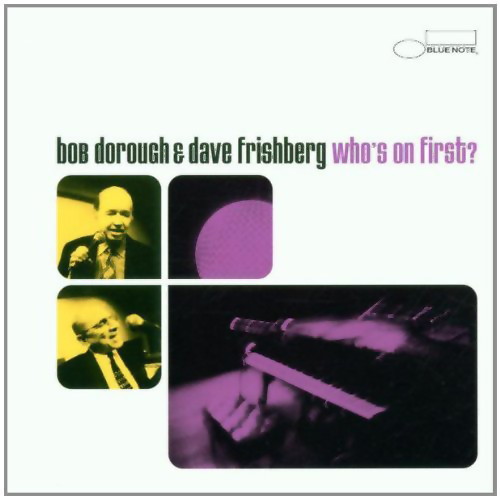
In subsequent years, he recorded extensively, primarily as a vocalist, performing many of his wonderful songs, as well as many standards and jazz tunes.  From 1993 on, he recorded primarily for Arbors Records, several of the albums being duo efforts with Rebecca Kilgore with whom he worked frequently in Portland, Oregon where both resided.  One exception was a Blue Note duo album with Bob Dorough titled Who’s on First? that was recorded in 2000.


His catalog of songs is impressive.  In addition to those previously mentioned, he produced such gems as “My Attorney Bernie,” “Dear Bix,” “Sweet Kentucky Ham,” “El Cajon,” “Zoot Walks In,” “Wheelers and Dealers,” “Let’s Eat Home,” “I Want to Be a Sideman,” “Dodger Blue,” “Another Song About Paris,” “Do You Miss New York,” “Marilyn Monroe'' and “You Are There,” the last of which has a haunting melody by Johnny Mandel.  One of his most clever songs, “Foodophobia,” was one that he never recorded, but fortunately it was included on an early album by Susannah McCorkle, The People That You Never Get to Love.  He also wrote songs for the Schoolhouse Rock television series, with “I’m Just a Bill,” probably his best-known creation.


I was privileged to see him in clubs many times, including Gulliver’s in Lincoln Park, the Village West, Michael’s Pub with Blossom Dearie, and the Oak Room at the Algonquin Hotel with Jessica Molaskey.  


When I went to Gulliver’s to see him, he was speaking with the owner, Amos Kaune, inside the entrance.  I had brought along four mix tapes that I had made of lesser-known songs by a variety of great but mostly lesser-known singers that I thought Amos would like to play as background music between sets.  Dave took a look at them and asked how he could obtain copies of them.  I just told him to give me his address and I would mail copies to him.  A few days after I had mailed them to him, I received a couple of tapes back from him of one of his favorite singers, Elis Regina, the great Brazilian singer.  A nice gesture of thanks from a nice man.  By the way, he was so wonderful to see that evening that I returned the next evening with my then teenaged older son who also dug him the most.


The last of these mentioned gigs resulted in Frishberg’s last recording, At the Algonquin.  As part of the program, Frishberg sang two songs about Dorothy Parker, “Will You Die?” and “Excuse Me for Living,” written for a Portland theater group production about the Algonquin Round Table.  Frishberg is at his sardonic best on these songs, and it would be interesting to hear the rest of the material written for that show.


One other Frishberg sighting is worth a mention.  In 1979, there was a celebration of Hoagy Carmichael’s 80th birthday at Carnegie Hall at which I was lucky enough to have the seat next to Carmichael.  One of the performers was Frishberg, and Carmichael, who was not familiar with him, leaned over to ask me who he was.  Well, after Frishberg sang and played “The Old Music Master,” “Baltimore Oriole,” “Memphis in June” and “Old Man Harlem,” Carmichael knew who he was and responded to Frishberg’s performance with great enthusiasm.


I first heard about Frishberg’s difficulties [with his health] a while ago.  Recently I was speaking to Judi Marie Canterino who was married to Mike, the gentleman who was responsible for turning the Half Note into one of New York City’s premier jazz clubs.  I mentioned Dave to her and she said that she was going to call him.  When we spoke a few weeks later, she told me that she had called, spoke to his wife, and after some hesitation she agreed to put Dave on the phone with a caution that he probably would not know who Judi Marie was.  When Judi Marie said hello to him and identified herself, he responded with “I loved the Half Note.”  That was the extent of their conversation, but when Dave’s wife took back the phone, she told Judi Marie that it was the first time in quite a while that he responded to anyone in that kind of coherent manner.  It certainly provided a poignant moment for Judi Marie, and I choked up a bit when she related it to me.


Over the years, I find myself drawn back to Frishberg’s songs continuously.  His lyrics are full of wit, passion, tenderness, irony, nostalgia and creative genius, and his music is original and instantly appealing.  Whether they are done so winningly by him or others like Pinky Winters and Ronny Whyte, or Carol Fredette and Connie Evingson, both of whom devoted albums to his songs, his songs continue to sparkle like the gems that they are.  


Dave, you may be gone, but your legacy will forever bring smiles to those who listen to your songs.  R.I.P.”


Friday, May 7, 2021

"GOODBYE, FRANK" by Joe Lang

 © Copyright ® Steven Cerra, copyright protected; all rights reserved.


“Before Frank, there were Rudy Vallee and Bing Crosby, but they only laid some groundwork for the man who would write the book on how to sing those great songs of the Gershwins and Berlin, Kern and Porter, Mercer and Carmichael, Arlen and Rodgers, and, most particularly for him, the words of Sammy Cahn blending with the music of Jimmy VanHeusen and Jule Styne.  No one could swing harder or be more tender with a ballad.  He respected both the words and the music.  He made us aware of what phrasing meant in a musical sense.  He didn't always sing them the way that they were written, but when he applied his sensitivity to a song, it was somehow his forever.”

- Joe Lang


The banner under JazzProfiles reads: “Focused Profiles on Jazz and its Creators while also featuring the work of guest writers and critics on the Subject of Jazz.” [Emphasis mine].


My intention from the outset was to share this page with others whose writings on the subject of Jazz I respect. Over the years, I learned a great deal about the music from the insights, observations and commentaries of many knowledgeable and experienced authors, essayists and critics, so why not share some of these with you from time-to-time?


Which brings me to Joe Lang who lives in New Jersey and writes articles and audio-visual reviews about Jazz and popular culture for JerseyJazz the magazine of the New Jersey Jazz Society which you can locate more about by visiting their website.


Given the transcontinental distance between us, Joe and I visit via the internet, a chat group devoted to West Coast Jazz to which we both belong and via the occasional phone call.


Joe wrote this on May 14, 1998 - the day Frank died. Ultimately, I suppose there is something quintessentially congruent about bringing up a piece about Frank Sinatra by a writer of Jazz and socio-cultural themes based in New Jersey.


“He wasn't a jazz singer, but he was a jazz kind of guy.  A skinny kid from Hoboken who had the will, wit and talent to become one of the defining figures of 20th Century American culture.  There never was and never will be another quite like him.  Francis Albert Sinatra a.k.a. The Voice,  a.k.a. Ol' Blue Eyes, a.k.a. The Chairman of the Board.  Well, Ring-A-Ding-Ding and Scoobee-Doo-Bee-Doo, he's seen the final curtain, but he will live on through his music and his legend.


There are certain figures who become bigger than life in the eyes of the masses.  Frank stood right up there with Louis, Bing, Judy and Elvis, those special someones who didn't need the formality of a second name.  Mention any of them, and only the very unhip or very young will give you a blank stare.  Of them all, however, Sinatra stands alone, for his fire and influence has burned brightly until this very day, and will continue to do so for a long time to come.


Before Frank, there were Rudy Vallee and Bing Crosby, but they only laid some groundwork for the man who would write the book on how to sing those great songs of the Gershwins and Berlin, Kern and Porter, Mercer and Carmichael, Arlen and Rodgers, and, most particularly for him, the words of Sammy Cahn blending with the music of Jimmy VanHeusen and Jule Styne.  No one could swing harder or be more tender with a ballad.  He respected both the words and the music.  He made us aware of what phrasing meant in a musical sense.  He didn't always sing them the way that they were written, but when he applied his sensitivity to a song, it was somehow his forever.


Listen to any who came after him, Tony Bennett, Vic Damone, Mel Torme, Jack Jones, Matt Monro, Harry Connick, Jr., John Pizzarelli or any of hundreds of others, and you hear part of The Man.  Sure he spoke of his influences, Bing, his inspiration, Louis, who played with words, Billie Holiday, who started the book on phrasing, Tommy Dorsey, who taught him how to breathe, and Mabel Mercer, a lyric's special friend.  Listen to Bing after Frank, however, and you will hear the inspiration being influenced by the insipireree.  That is how important Sinatra was to pop music.


Ah, the music!  Before all else comes the music.  Once he decided to make it as a singer, nothing could stop him.  The boy was brash, and you had better not get in his way.  The Hoboken Four on Major Bowes, a sustaining show on WNEW, the Rustic Cabin gig, a few minutes with Harry James, a bit longer with Dorsey, and then he was ready to take on the world.  The world would never be the same.  The Paramount with the screamers, and on to Hollywood for some nifty musicals.  Then came Ava, and the constantly shifting highs and lows.  Mitch Miller didn't help, but Frank didn't either.  He was running himself into the ground, physically and emotionally.  The voice disappeared and the bottom arrived swiftly.  Thank God for Maggio!


Funny how it happened, but the turnaround for the greatest of all popular singers found its roots in an acting role.  The Oscar was the icing, the real thing was the return of the voice.  Great as those 40's Columbia recordings were, they never unleashed the real Capitol swinger who tore up the musical world.  If they thought he was cocky the first time around, they hadn't seen anything yet.  He could out swing and out sensitive them all.  There were songs for swinging lovers to come fly and dance and swing with all the way. Others were for only the lonely, to be heard in the wee small hours of the morning when no one cares.


Power gives one a need to control even more and more.  He decided to Reprise his Capitol success on his own, no bosses to tell him what he should record.  It was a kick being the boss for a while, but it gets in the way of the music and the fun times.  Some cats at Warner Bros. made him an offer he couldn't refuse.  You can be your own boss without the responsibilities.  OK!


The true quality recordings were fewer and farther between, but the concerts were getting better and better.  Suddenly, enough was enough.  Time to step back and take a break.  Maybe for a day, maybe forever.  A couple of years off were as long as it took.  The music was still within and had to come out.  All the affirmation coming from the audiences didn't hurt either.  The voice was heavier, wearing the years of hard living on its sleeve.  That's all right, the phrasing was still there, and the wisdom grown from experience made for deeper readings of lyrics.


Time plays its own game, however, and the best was no longer yet to come.  There were still the flashes of brilliance, and even on most off nights, he was still better than most, but not better than all.  Still they came, perhaps expecting miracles, perhaps just happy that he was still there for them.  Funny, but the last song sung publicly was not "My Way," but "The Best Is Yet to Come."  He never stopped believing, at least in public.


He made no formal announcement, but we all knew that the public side was over.  We were sad that he couldn't do it anymore.  We were glad that he didn't continue to try.  There were still the recordings and videos to provide a fix for those addicted to his art.     


There was another side to his oh so public life.  The fighter for the rights of  black Americans long before it was the thing to do.  The pugnacious swinger who loved and fought and partied right on the front pages.  He just couldn't be ignored.  This Jersey guy became a world figure who influenced not only music, but also lifestyles.  There he was, shoulder to shoulder with presidents, but always thought of by the folks on the street as one of them.


Then there was the private side.  No one could be more generous.  Countless stories came to light of how he was there to help, usually with little or no fanfare.  Some of those he assisted were friends, but many were just acquaintances or even strangers.  They needed a helping hand, and he was moved to be the one to offer it.  It was not pleasant to be on his wrong side, however, for he had a long memory for those he didn't favor.  Ask especially some of those in the world of journalism who felt his wrath.  This anger should have remained private, but such was his nature that he often felt the need to make it public.  Truly a man of extremes!


I have always loved music, but must admit to having come to Sinatra later than I wished that I had.  I was naive about his genius for too long a time, but when I saw the light, the passion became intense.  The first album I bought was Come Fly With Me, then Only the Lonely and then and then and then...  Books also, more than I can remember or probably find.


The in-person thing didn't happen for me until the mid-80's at the arena in the Meadowlands.  Buddy Rich opened.  Nice, but we weren't really there for that.  When it was time for Frank, an electricity burst through the crowd like nothing I had ever experienced.  The love and devotion of the Sinatraphiles jumped out of every pore of their essence, and you could not help but become part of this very special feeling.


Several times after this I saw the same thing happen, and reveled in being a part of it.  The moment I remember most vividly is an unbelievably powerful reading of "Soliloquy" at the Garden States Arts Center.  Here was a man who was really too old to sing this young father's song, but he made you believe that he was once again in his twenties and waiting for his first child.  Underneath it, however, he brought a depth of wisdom that could only have come from a man who had already experienced all of life.  I was moved then, and I am moved now with the remembrance.


The last time I saw him, I recall less fondly.  Again it was at the Garden State Arts Center.  He was only a dim ghost of what I had come to expect.  The words were sometimes forgotten, the voice just could not reach the right notes, and some of his comments you would rather not have heard.  I can remember what served as an exclamation point for my disappointment that evening.  As I left, I overheard a young man say to his date "Well, I'm glad that I saw him, but he's no Harry Connick."  I could have cried, but quickly realized that it had become time to listen to the recordings and remember the good times.


When I heard the news of Frank's passing, I felt a mixture of sadness and relief, a reaction which I am sure was shared by countless others.  He was no longer a living part of our world, but his difficult last years were finally over.  We still have the music and the memories, and that should be plenty enough to carry us through the grief.


He sang of doing it his way.  His behavior did not always please everyone.  His music, however, has crossed more generational lines than any other performer.  There are still teenagers today who respond to his music.  Some may have "jewelry" stuck into parts of their body that I cannot believe were meant for such things, and buy albums that I find it difficult to believe even exist, but I am never shocked when they hear Sinatra playing and are visibly moved by what they are hearing.  Words of admiration often follow.  From the 1930's into the 1990's, his star stayed brighter than any other.  There were a lot of pretenders along the way, but there was only one Sinatra, and we are glad that there was.  We'll never stop listening, Frank.”