Showing posts with label Jordi Pujol. Show all posts

Tuesday, September 30, 2025

The Fabulous Gerry Mulligan Sextet [Fresh Sound CD 418-419] - Alun Morgan

© Copyright ® Steven Cerra, copyright protected; all rights reserved.


Born in Wales in 1928, the esteemed British author and critic Alun Morgan [d. 2018] became a Jazz fan as a teenager and was an early devotee of the bebop movement. In the 1950s he began contributing articles to Melody Maker, Jazz Journal, Jazz Monthly, and Gramophone and for twenty years, beginning in 1969, he wrote a regular column for a local newspaper in Kent. From 1954 onward he contributed to BBC programs on Jazz, authored and co-authored books on modern Jazz and Jazz in England and wrote over 2,500 liner notes for Jazz recordings.


Alun was a gentle and genteel person with many significant achievements as a Jazz writer and critic during his long career.  His writing style is succinct, accurate and easy to read and understand. Held in the highest regard by the British Jazz community, it’s an honor to have the writings of Alun Morgan featured once again on these pages.


Our thanks to Jordi Pujol, the owner-operator of Fresh Sound Records for the preview copy of The Fabulous Gerry Mulligan Sextet [Fresh Sound CD 418-419].  Founded in 1983 in Barcelona, Spain, the Fresh Sound catalogue has an exceptional selection of recordings from the Golden Age of Modern Jazz and you can visit the collection on offer by going here.


“The well-known author, lecturer and historian Bob Reisner began holding Sunday jam sessions at the Open Door in New York's Greenwich Village (at West Third Street and Washington Square South) on April 26, 1953. It soon became a focal point for jazz; Charlie Parker was a frequent visitor and participant. It was also a place where young, up-and-coming soloists could perform, one of whom was trumpeter Jon Eardley from Altoona, Pennsylvania. Years later Jon told Pat Sullivan in a Jazz Monthly magazine interview that "one night there were three trumpeters on the stand: Tony Fruscella, Don Joseph and me. Gerry Mulligan and his wife were in the audience. When we'd finished Gerry's wife, Arlyne, came over and asked me, 'how many white shirts do you have?' It was a way of inviting me to join the band. The following Friday, Gerry gave me about 16 LPs and a record player and I had to learn the lot by Monday when we opened in Baltimore." All this took place in the autumn of 1954 and Eardley was to work with the Mulligan Quartet and the later Sextet for nearly two years... with a few breaks in-between.


The formation of the Sextet came about originally as a one-off concert staged at Hoover High School in San Diego shortly before Christmas 1954. During October and November of that year, the Stan Getz Quintet plus the quartets of Mulligan and Dave Brubeck were part of a Norman Granz package titled Modern Jazz Concert, headed by Duke Ellington and his orchestra. The concert personnel appeared at fifteen locations across the United States, from Carnegie Hall in New York to the closing appearance at the Shrine Auditorium in Los Angeles. Mulligan's quartet was completed by Jon Eardley, bass player Red Mitchell and drummer Frank Isola. The Getz Quintet contained valve trombonist Bob Brookmeyer, who had worked with Gerry in the early months of 1954. Although Getz returned to the east coast after the Modern Jazz Concert tour ended, Brookmeyer remained in Los Angeles and was available for the San Diego school musical event. It was an opportunity for Mulligan to write for, and play in, a six-piece band rather than the quartet lineups which had been his main force since August 1952 when he launched the foursome with Chet Baker. In some ways, the famous west coast Mulligan Quartet was something of a setback in his career. Although highly rewarding in terms of finances and personal publicity, it was not the direction Gerry wanted to take. Left to his own devices, he would have preferred to write for—and lead—a big band.


In Chet Baker he had an ideal frontline partner who had an intuitive grasp of what was required and could produce just the right musical lines which interlocked with, or complemented, those produced by Gerry. The original quartet was disbanded in June 1953 when Mulligan was found guilty of narcotics possession and given a custodial sentence. Released on Christmas Eve 1953, his immediate aim was to reform the quartet with Chet Baker, if only to give himself some breathing space and an income. But while Gerry had been serving his six months at the Peter Pitchess Honor Farm in Saugus (thirty miles north of Los Angeles), Baker had formed a quartet with pianist Russ Freeman which was a musical and financial success. Actually, they had recorded in April — two months before Gerry left the scene. The May 6 Down Beat carried a review of "The Lamp Is Low" and "Maid in Mexico." This session at Gold Star Studio is listed in all discographies as late July. The discrepancy can probably be traced to Dick Bock, who wasn't the most organized man when it came to hard facts about his sessions. When the two men met after Mulligan's release, Chet demanded a weekly salary of four hundred dollars to rejoin a reformed quartet. Gerry terminated the discussion at this point.


The baritone saxist then telephoned Bob Brookmeyer in New York, asking him to fly out to Los Angeles with "a New York rhythm section." Bob arrived with bass player Bill Anthony and drummer Frank Isola, two men who had worked with Brookmeyer in the Stan Getz Quartet. Mulligan reformed the Tentette he had employed for recording purposes a year earlier and played one concert with the group at the Embassy Auditorium in Los Angeles. A few weeks later he flew back to New York. He then replaced Anthony with Red Mitchell and this was the quartet which remained in being until Gerry fulfilled his contract to play at the Third Salon du Jazz in Paris at the beginning of June 1954. However, the idea of a larger group was never very far from Gerry's thoughts. He must have looked back with pleasure on that evening in San Diego when he played alongside not only Jon Eardley, Bob Brookmeyer, Red Mitchell and Larry Bunker, but the sixth member of the group: the constantly-swinging Zoot Sims. At that time, Zoot was resident in Los Angeles, having left the Stan Kenton band in November 1953. Amazingly, this outstanding musician had difficulty in finding regular musical work and was forced to take any available employment. Ed Michel, an ex-bass player who lived in California during the early Fifties and later worked in the record industry, once told me Zoot was so frustrated at this time he was prepared to sit-in with any kind of band just to play. "I've seen him playing with a Latin-American band, his knuckles covered with green paint because he'd been painting fences that day in order to make some money."

The San Diego concert remains a highlight in the Mulligan discography. It was recorded direct to two-track by sound engineer Phil Turetsky, who had recorded the very first Mulligan-Baker Quartet recordings. "Bernie's Tune" and "Lullaby of the Leaves" were done on an Ampex tape recorder in August 1952 in his bungalow on Wonderland Park Avenue off Laurel Canyon Boulevard in the Hollywood hills. The transfers heard here present the best sound yet achieved and preserve the immediacy of the live recording. The Hoover High School concert commenced with five tunes played by a quartet (Mulligan, Eardley, Red Mitchell and Chico Hamilton) which have not been included here as this album concentrates on the Sextet's music.


The complete Sextet is heard on the following numbers: "Western Reunion," "I Know, Don't Know How" and the "Ellington Medley" which includes "Flamingo" on which Bob Brookmeyer switches to piano. There is an atmosphere of pure musical joy here, particularly on the saxophone duet of "The Red Door." Mulligan shows that the baritone saxophone need not be a cumbersome instrument as he treats "Polka Dots and Moonbeams" with loving care. I think we can assume that Gerry wrote "Western Reunion" specifically for the San Diego concert, and as a tribute to the meeting of Gerry and his old-time friend Zoot... probably a play on the telegraph company Western Union. If "I Know, Don't Know How" sounds familiar it is because Mulligan has done a little recycling. For the eight bar A section of this A-A-B-A construction tune, Gerry has used the middle-eight of his earlier composition "Line for Lyons." Perhaps the most stunning track is "I'll Remember April" which features Zoot Sims at his very best, superbly backed by a brilliant rhythm section with Larry Bunker   proving that exciting and driving drumming need not necessarily be loud. Brookmeyer again plays piano and it should be pointed out his keyboard work is not simply a useful "double" on occasions. Bob once worked as a full-time pianist with the band of Tex Beneke, and in 1959 he and Bill Evans made a brilliant two-piano album (The Ivory Hunters) together. Brookmeyer had taken the place of Chet Baker in Gerry's new quartet at the beginning of 1954; he was never happy with the arrangement although he pointed out to author Gordon Jack in his Fifties Jazz Talk: An Oral Retrospective (Scarecrow Press, 2004), "this was the official start of Gerry as a well-dressed, successful bandleader.

When he first arrived in California, he just wanted to play and write, but when he went on the road with the quartet he became a bandleader." Bob's problems with the Mulligan Quartet were musical ones. "I knew how good the group had sounded with Chet Baker, and I thought it really needed a trumpet, not a trombone. In other words, somebody higher up because Gerry and I were so close in sound."


Things came to a head at the Paris Salon du Jazz (also known as the Salle Pleyel Concert) at the beginning of June 1954. Even to we outside observers, it was sometimes obvious that Bob and Gerry were frequently at musical loggerheads and it was no surprise to learn Brookmeyer had given his notice and left the quartet after the Salon du Jazz. He returned to the United States, recorded an album for Dick Bock's Pacific Jazz label in Rudy Van Gelder's New Jersey studio with pianist John Williams and his ex-Mulligan colleagues. Red Mitchell and Frank Isola, then flew west to work (briefly) at The Haig club in a band he formed with Zoot Sims. As for Gerry, he continued with the quartet which now had trumpeter Jon Eardley as a replacement for Brookmeyer. Jon never tried to sound like Chet Baker; his tone was hotter and he could dig back into the Swing Era for ideas when the music called for it.


This quartet lasted until the end of 1954. Pacific Jazz taped the unit at two concerts, the first at Stockton High School; then a month later came the San Diego appearance by the group plus Brookmeyer and Sims. After that, Gerry disbanded and returned to New York to write some new music. The first half of 1955 found him appearing on the Steve Allen Show and various other gigs, often accompanied by Jon Eardley. In July 1955 he played at the Newport Jazz Festival where he appeared as a guest with both the Chet Baker and Dave Brubeck quartets as well playing with a pick-up group containing Miles Davis, Zoot Sims and Thelonius Monk. By August of that year he was ready to form his new sextet and had secured a contract with EmArcy, the newly formed jazz subsidiary of Mercury Records, headed by Bob Shad and Jack Tracy.


After a series of rehearsals, Gerry's sextet went on tour, opening at Cleveland's Loop Lounge on August 29. then proceeded with a one-week engagement at Boston's Storyville that lasted until September 18. Then, back to New York to record the September 21-22 sessions, and after a successful engagement at Basin Street, the group continued on the road, hitting the East and Midwest circuit, stopping only to record the October 31 session. The tour ended after a week at the Rouge, a night club in River Rouge, Michigan, on December 11.


The majority of the music on the enclosed Compact Discs comes from this most productive period and is played by one of the finest small groups ever to be formed and led by Mulligan. It benefited from its exemplary personnel (which remained virtually the same throughout the eighteen months of it’s existence), Gerry's impeccable leadership plus his understanding as composer and arranger. It gave him the sound palette he needed with a range from the top notes on the trumpet plunging more than three octaves to the lowest notes on baritone and valve trombone. Of equal importance was how the skillful writing often made the band sound bigger than it really was. Mulligan told Ira Gitler, "with the four horns we did a lot of clubs, a lot of concerts. It was a nice, hot band for playing theaters. We'd start with the four horns grouped around the microphone and by the time we were into the show we'd be all the way across the stage. I'd be at one end, then Bobby and Zoot, and the trumpet just spread all the way across. Really a ball."


The albums Jack Tracy supervised for EmArcy made use of some pre-existing pieces rearranged for the Sextet such as "The Lady Is a Tramp," "Bernie's Tune," and "Makin’ Whoopee" as well as material recently written by Mulligan for the new group. The impact of his music on both audiences and record buyers was the same, and in 1957 Ralph J. Gleason, reviewing the Sextet's first album for Down Beat magazine, awarded it the maximum of five stars. He drew attention to "the times, usually as an interlude towards the end of a number, when (Gerry) is able to direct the horns into a boiling and bubbling stew which can raise me right off the floor. I have heard no one else but Dizzy Gillespie do this particular thing successfully." Mulligan could take full credit for such matters. As Zoot Sims told Ira Gitler, "Mulligan doesn't do anything unless it's set, rehearsed. You know, it's all that playing together. Gerry's very well organized. He won't go on the road or in a club until it's set. That's the way I like it." Gleason continued his review. "As further evidence of his structural proficiency, his second chorus on piano in 'Blues' seems to be an almost classic example of construction, moving, as it does, from simplicity to full complexity without once losing definition. You will not want to miss this LP."


In later years, Bob Brookmeyer stated that the Sextet was Gerry's favorite group, even more satisfying than the quartet with Chet Baker or the various editions of his magnificent Concert Jazz Band. This six piece band comprised the most suitable group of players and had rare flexibility enabling it to tackle music from a range of eras and sources. For example, the highly successful "Ain't It the Truth" is Mulligan's interpretation of a number dating back to July 1942 when composed and arranged by Laverne "Buster" Harding for the Count Basie orchestra. It turned out to be the Count's last official recording session for twenty-nine months. (The AFM imposed a record ban which came into effect four days after "Ain't It the Truth" and six other titles were recorded.)


At the other end of the scale Mulligan's Sextet used pieces seldom played by jazz units. A prime example is "La plus que lente" first recorded by the Sextet in October 1955; and again the following September with trumpeter Don Ferrara replacing Jon Eardley. (This later recording was the only occasion Ferrara worked with the group.) The title translates as "Slower than Slow" and is based on something Gil Evans transcribed from music written by the French Impressionist composer Claude Debussy. It is largely an ensemble piece, beautifully played by the Sextet which maintains the almost ethereal mood of the music. It bears out the assertion of critic and musicologist Max Harrison in 1959 that "the real nature of (Mulligan's) subsequent achievement was hinted at early in his career by his facility in arranging and his concern with unity. In addition to the personal expression of his solos, what Mulligan has given jazz is a fresh ensemble style. Whereas men like Armstrong and Parker, in forging a new mode of solo utterance, give us primarily themselves. Mulligan like Gil Evans has given his fellow musicians a new way of thinking about playing together, a new approach to the jazz ensemble" (from These Jazzmen of Our Time, Victor Gollancz, 1959).


The Sextet was a success wherever it played in the United States; then in the spring of 1956, the six musicians embarked for Europe aboard the Italian passenger liner Andrea Doria to play dates in France, Germany, Italy, et al. While in Paris, Gerry bought a soprano sax and Zoot an alto at the Selmer factory.


On some dates they came across Chet Baker, who was also touring Europe at the time and there is at least one recorded German transcription (from Landstuhl) of Baker sitting in with the Sextet. When the band returned to the United States, Jon Eardley left and the last studio records by the group in September had Don Ferrara on his only appearance with the Sextet. The final date was at the Preview Lounge in Chicago by which time Oliver Beener had the trumpet role. Zoot Sims left to freelance in New York before teaming up with Al Cohn while Mulligan reverted to the quartet format, partnered by Bob Brookmeyer.


Although the life of the Mulligan Sextet was comparatively short, it was a most important phase in Gerry's musical development. In April 1957, he was commissioned by Columbia Records to assemble a big band and provide original arrangements for a recording session. For some reason, most products of the session were not released for twenty years by which time Mulligan's own Concert Jazz Band had performed widely in both the United States and Europe. In almost every manifestation of the CJB, the triumvirate of Mulligan, Brookmeyer and Sims was present indicating the importance of the personnel chosen for the Sextet.


Of paramount importance to the Sextet was that original concert held at San Diego's Hoover High School. More than half a century after the event. Bob Brookmeyer confirmed that rehearsals indeed did take place in Los Angeles before the group traveled the one hundred and twenty-five miles south for the event. And he recalled that the poster in front of the auditorium simply stated, "Gerry Mulligan and His Band," giving no mention of precisely what the audience might expect to see and hear that evening. After the opening numbers by the quartet, the appearance of Bob and Zoot for the remainder of the concert was a well-orchestrated surprise. As may be heard here, the music was a revelation and is now enhanced by improvements made in the remastering for this Fresh Sound release. It can be said that this collection is a fitting tribute to the undoubted genius that was Gerald Joseph Mulligan.”
— Alun Morgan May 2006


Saturday, April 19, 2025

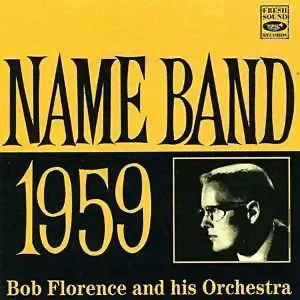
Name Band 1959 - Bob Florence and His Orchestra

 © Copyright ® Steven Cerra, copyright protected; all rights reserved.


“There was a time when the big bands were king, played to packed theaters and ballrooms everywhere, and whose nitely broadcasts were listened by millions. And not just the famous names like Goodman, Ellington and Basie, but less renowned bands who also enjoyed their share of the big band scene across America. Which is why Fresh Sound Records is helping to keep alive the sound of big band music in a special series of CDs dedicated to the rediscovery of many whose names are well known and others who never made the headlines, but whose music certainly merits their reissue. Some of the bands went on the road, others, like the so-called rehearsal bands, existed only in the studio, but their music was the thing!”

                                 - Jordi Pujol, Fresh Sound Records


“In the next few days, myriad obits will rightfully refer to him in terms of 'major figure' and so on and so forth," says Bill Reed, “however in my occasional conversations and dealings with Bob, I also found him to be sweet, funny, forthcoming, and just flat-out. . .nice. A wonderful and warm person, and a gifted musician and educator. His piano playing was always fresh and innovative, prompting younger musicians to seek him out."

- Excerpt from May 15, 2008 Bob Florence Obituary in AllAboutJazz.com


From 1953 until his passing in 2008, pianist Bob Florence [b. 1932] led a big band for which he composed and arranged music that had a consistent simplicity to it which may be one of the reasons why it swung so easily. It may also be a reason why musicians loved to play it.


The style of his writing had much in common with that of Gerry Mulligan, Bill Holman, Marty Paich, Al Cohn and Bob Brookmeyer; it was very linear and the arranged lines [melodies and countermelodies] just unraveled and flowed in an unhindered manner.


Although initially it was one of the many rehearsal big bands that evolved throughout the burgeoning Los Angeles landscape of the 1950s, Bob’s big band ultimately became a successful performance orchestra at clubs, concerts and festival venues, almost exclusively in the greater Southern California area. Many of its members were accomplished studio musicians who couldn’t afford to travel due to the lucrative demands of such work.


One could think of Bob’s Big Band as the West Coast equivalent of the NYC Village Vanguard Orchestra without the permanent home base. It also resembles what today is now called The Vanguard Orchestra in that membership conferred a kind of status as being a big band musician of the highest order, the - CRÈME DE LA CRÈME. 


Of course, there may be other Los Angeles based big bands that might also merit such a designation including the Bill Holman Big Band, the Frank Capp-Nat Pierce Juggernaut Big Band, Louie Bellson’s Explosion Big Band, the Mike Barone Big Band and the Clayton-Hamilton Jazz Orchestra; of these only Bill Holman’s band dates back to the late 1950s when Bob Florence’s band first got its start.


Others who have led Los Angeles based big bands intermittently or more recently are Tom Kubis, Roger Neuman, Gordon Goodwin, Steve Huffsteter, Chris Walden, Scott Whitfield, and Kim Richmond.


The plethora of musicians in Southern California [at one time Local 47 had over 13,000 dues paying members in the union] makes it fairly easy to populate these large orchestras with talented music readers and Jazz improvisers, but the geographic sprawl that is the greater Los Angeles area makes it difficult to replicate a central location where they can demonstrate their skills on a regular basis equivalent to the Village Vanguard. 


In a career that spanned five decades, Bob Florence garnered national and international acclaim as a jazz composer, arranger, bandleader, keyboardist, accompanist, and educator.


He was a Grammy Award winner and received an incredible 15 Grammy Nominations and two Emmy Awards. 


Before his death in 2008, some of Bob’s more recent commissions included, “Eternal Licks & Grooves" commissioned by ASCAP and International Association of Jazz Educators honoring Count Basie, premiered in January 2005 at the IAJE convention in Long Beach California and “Appearing In Cleveland" commissioned by the Los Angeles Jazz Institute honoring Stan Kenton, premiered in March 2004 at the Jazz Bakery in Los Angeles, California, as well as many others.


Florence, a highly respected jazz educator, often served as clinician, adjudicator and guest instructor in college settings. In my conversations with him, Bob was a warmly engaging man who approached the act of making music with great humanity and humor.


Contained in one of the obituaries was this comment that beautifully describes Bob as many knew him: “In the next few days, myriad obits will rightfully refer to him in terms of 'major figure' and so on and so forth," says Bill Reed, “however in my occasional conversations and dealings with Bob, I also found him to be sweet, funny, forthcoming, and just flat-out. . .nice. A wonderful and warm person, and a gifted musician and educator. His piano playing was always fresh and innovative, prompting younger musicians to seek him out."


Florence wrote some of the most beautiful big band arrangements since Duke Ellington's, but many of them went unheard or unrecognized because of unfortunate bad timing. At a time when the market for big bands dried up, Florence discovered a passion for composing and arranging for large jazz ensembles.


So instead of getting the exposure of road shows, radio spots, and coverage on the Hit Parade, Florence had to resort to working with session musicians on their days off, for little or no money, or to applying his talent to more commercial material. Nevertheless, though Florence's work is scattered across hundreds of albums by dozens of artists; some of it is the most beautiful and delicate music ever written for big bands.


Something of a musical prodigy, Florence took his first piano lesson before the age of four and was performing at recitals at seven. Throughout his early years, he studied with the expectation of becoming a classical musician. 


While attending Los Angeles City College, he studied orchestration and arrangement with Bob McDonald, a college faculty member who'd written from Charlie Barnet and others years before. Florence was immediately attracted to working with a jazz-oriented group, and it led him to set up an informal band at college that met and performed his works.


At the time, L.A. City College's study body included men who would go on to become some of the most respected studio session musicians: Dennis Budimir, Herb Geller, Tommy Tedesco, and John ("Star Wars") Williams. 


Someone suggested Florence shift his band to the Hollywood Musician's Union local rehearsal hall, and he started a weekly session that quickly proved a great word-of-mouth success.


Session players were looking for an outlet for their more creative side, and Florence soon had ace musicians vying for spots in his group. One of the early members of this “kicks" band, baritone sax player John Lowe, still played with Florence until his death.


Florence toured with Alvino Rey, then wrote for Harry James, Les Brown, and others. He recorded a couple of albums for various labels, but in 1960, Si Zentner contacted Florence about writing for a new band he was forming. Florence went on to work with Zentner on 11 albums on Liberty and RCA. He helped Zentner score perhaps the last big band hit with a rockin' version of the Hoagy Carmichael tune, Up a Lazy River, in 1961, and a classic recording of Les Baxter tunes played by Zenter's band and Martin Denny on piano, “Exotica Suite."


From his work with Zentner, Florence became known by Dave Pell and others in Liberty's A&R shop, and through the mid-1960s, handled arrangements for scores of Liberty albums. He did several vocal group albums, including Great Band, Great Voices with Zentner and the Johnny Mann Singers, and Jazz Voices in Video with Dave Pell. He often worked with Liberty's leading pop vocalist, Vicki Carr, and he arranged a long and highly successful series of instrumental albums with saxophonist Bud Shank.


Florence wrote for a number of television shows, including “The Red Skelton Show" and “The Dean Martin Show." He reunited with Les Brown on an album for Decca, arranged a fine bossa nova album with Sergio Mendes (sans Brasil '66) on Atlantic, and worked with one of his idols, Count Basie, on an album of Beatles hits.


By the early 1970s, television and movies had become the focus of Florence's work, and very little of his work from this period can be found. Vicki Carr called him in 1973 to pinch-hit for her road band's conductor, and a one week engagement became a relationship that lasted nearly five years and took him throughout the U.S. and overseas.


In the late 1980s, he organized yet another group, The Bob Florence Limited Edition. The band's name referred to the small and elite group of session musicians who could master just about any material with little or no fuss. The band's album, Serendipity 18, received the 2000 Grammy for Best Jazz Performance by a Large Ensemble.


Thanks to the efforts of Jordi Pujol at Fresh Sound, we have an early sampling of Bob’s writing for big bands as contained in the tracks on Name Band 1959 [FSCD 2008; Carlton STLP 12/115] which was recorded in Hollywood. November 1958 at the Royce Hall Auditorium in U.C.L.A. 


Here are Jordi’s insert notes to this - what was a very rare LP - until this CD reissue.


During the late 1950s many so-called rehearsal bands appeared in Los Angeles. For the most part they blew off steam without being heard, and were appreciated by only a few fans who happened to know the day when the guys got together in the rehearsal rooms of the Musicians Union Local 47. 


The Bob Florence aggregation was one of the best of those bands, and jazz musicians on California's west coast had long been talking about it.


Florence first saw The light of day in Los Angeles in 1932, born to a musical mother who had once played piano in silent movie houses. Bob's precocious interest in music was quickly recognized by his aware parents especially his perfect pitch and before his fourth birthday they had organized the young boy's first piano lesson. His progress was so good that he gave his first classical recital when he was only seven years old, and he seemed destined for a career in the legitimate or concert field.                        


Later, at Los Angeles City College, he studied basic writing fundamentals and arranging with Bob McDonald, who'd once worked in the big bands of Glenn Miller and Bunny Berrigan. From around that point Bob's interest in jazz really took off, for unbeknown to his tutor, he was already listening to and collecting jaiz records, with Stan Kenton's powerhouse brand of music particularly fascinating the young student, as were the sounds of Duke Ellington and Jerry Fielding. As a result, the classical music thing virtually evaporated overnight, and it's interesting to note that together with Bob in the City College band were the likes of Lanny Morgan. Herb Geller. Jack Sheldon and Bob Hardaway. two of whom feature on this recording.


With a group of Jazz playing friends, the young Florence formed his first rehearsal band in Los Angeles in 1953 which proved to be enormously popular with the local jazz fraternity, especially among the musicians who would actually compete for a place in the band, (Let’s face it, jazz musicians are always the first to recognize talent when they hear it.) Bob kept the rehearsal band going periodically during the 1950s, which kept him busy writing. At the same time he worked briefly for Alvino Rey and Les Brown.


It was in late 1958 when Don Jenson, one of the people who began turning up at these rehearsal sessions, approached Bob with the idea to record the sessions you hear on this disc.


Bob did some arrangements for Harry James’ big band in the late 1950s and in 1961, Bob’s chart on Hoagy Carmichael’s Up A Lazy River became a big hit and helped propel trombonist Si Zenter’s band into the big time.


As a result the doors opened to Bob and he worked extensively in many fields, not only for jazz orchestras, but also for televisions shows, singers and other, more commercially slanted jobs. And that’s how Bob’s career in music has continued through the years. He reorganized the band at the end of the 1970s and it subsequently became internationally famous through recordings which have always maintained a high standard of excellence.


Bob’s musical philosophy is absurdly simple. He likes music that is joyous and he wants his audiences to feel happy. When interviewed he stated that he “... remembered hearing these wonderful orchestral outbursts from Woody Herman, Count Basie and the Duke. If you can lift the audience up out of their chairs a few times, you’ve done a good job.” However, he attributes his main influences to have been Bob Brookmeyer, Bill Holman, Bill Finegan and Al Cohn. For the most part, Bob’s writing is spare and economical (like his piano playing) and he leaves plenty of room for the soloists, with the accent placed on swinging hard, without constraint. Perhaps more than anything else, the Bob Florence trademark is an uninhibited spirit of joyous swing, the pleasure of living, albeit controlled and disciplined. The Bob Florence Feel, shall we call it?


But getting back to the recordings in question here: they were notable for two things. In the first place it was not only the Bob Florence Orchestra’s first venture into the recording studio, but it was also one of the earliest big band recordings ever to have been made instereo, the new thing at the time. The playing is clean throughout, the execution is precise (as always), yet the overall feeling is warm and swinging. The Bob Florence feel to a T. Some of the soloists here include altoist Herb Geller, tenor saxophonist Bob Hardaway, trumpeter Tony Terran, trombonist Herbie Harper on the first session and Bob Edmunson on the second, and the whole band swings through a marvelous selection of titles.


The opening track Little Girl was made famous by the Nat King Cole Trio, and is the only two with two alternate [and completely different] versions, and they feature the always impressive alto sax of Herb Geller. Pastel Blue stems from Artie Shaw and features some tasty clarinet by Don Shelton. Undecided was penned by trumper star Charlie Shavers and has some fine open horn by Terran. Southern Fried is associated with Charlie Barnet and also features Terran and from The President himself [Lester Young] there is Easy Does It where Bob Hardaway shines as does slide trombonist Herbie Harper. On Florence’s original Give a Listen Hardaway is again prominent while valve trombonist Enevoldsen demonstrates his mastery over the instrument. And that’s just to mention five tracks!


For Florence it was not just a case of nostalgia, but a demonstration of genuine love and affection on the part of he and his cohorts for the big band music of the previous era. What they were doing was giving a backward glance at the good musical things that happened way back, when they themselves were kids. The soloing throughout is terrific and it would be superfluous to mention them all, for the principal virtue of the band was its overall collective drive. And today, in 1993 [year of the CD release], Bob Florence is still fronting his own orchestra, bringing joy to the Los Angeles area big band fans.


“I love my band and spend every waking hour thinking about writing for it,” he once said in an interview.”


Bob, it shows,”


Jordi Pujol


Sound engineer: George Fields. 


Original 1958 sessions produced by Don Jenson. 


Produced for CD release by Jordi Pujol.


This CD is dedicated to Evelyn Florence.


Personnel:

Johnny Audino, Tony Terran, Irv Bush, Juiles Chaikin (tp); Bob Edmundson, Bobby Pring, Don Nelligan, Herbie Harper (tb); Herb Geller, Bernie Fleischer (as); Bob Hardaway (ts, cl); Don Shelton (ts); Bob Florence (p, arr); Dennis Budimir (g); Mel Pollan (b); Jack Davenport (d). Bob Enevoldsen (v-tb, replaces Herbie Harper on #8,9,20,21).

All arrangements by Bob Florence


Order information can be located by going here.


Wednesday, October 30, 2024

Buddy DeFranco - Tommy Gumina Quartet

© -Steven A. Cerra, copyright protected; all rights reserved.


“This album  marks the inauguration of what may become an important alliance in modem music. Though individually known for years to wide but disparate audiences, Tommy Gumina and Buddy De Franco might have seemed, to the average observer, a most improbable pair of subjects for the kind of close musical cooperation that can be observed in these sides. Actually their teaming was the result of a lucky accident, combined with one very important factor: the decision of Decca's Sonny Burke that Gumina and De Franco ought to be heard together on an LP


"The way I met Tommy," Buddy recalls, "you would never have dreamed that we'd have wound up with a group of our own. What happened was that one day I needed a piano player for a gig. I had Frank DeVito booked on drums and he asked me whether I could use an accordion player instead. My immediate reaction was: 'Not on your life!'. But when Frank explained that this was not just another accordion player— this was something else. And it didn't take me long to find out how right he was.


"After recording my composition King Philip with Les Brown for Decca, I had talked to sonny Burke about doing a date of my own. He already had Tommy under contract, so the suggestion that we do something together was very logical from his point of view. By that time there was a real musical marriage between Tommy and me. We got a job together at Ben Pollack's on Sunset, more or less as a place to break in some of the material we wanted to work out together for the album. What you hear on these sides is largely what we were working out on that job."
- Leonard Feather, original liner notes to the Decca Album Pacific Standard (Swingin’) Time, [DL 74031 Stereo]


I met Jack Tracy, the esteemed former editor of Downbeat Magazine and long-time Jazz record producer very late in life and quite by accident.


Initially, my contact with him was through an internet chat group that focused on the West Coast Style of Jazz that predominated in California from about 1945-65.


We later met in person at a number of the biannual 4-day Jazz festivals sponsored by the Los Angeles Jazz Institute.


He was a great supporter of this blog and an earlier contributor to it as a guest writer.


Jack was from the Minneapolis St-Paul area and moved to Chicago during his tenure as Downbeat’s editor in the 1950s. He started producing Jazz records for the Chess label based in the Windy City before Mercury Records, at the urging of Quincy Jones, convinced him to relocate to Hollywood, CA in 1961 to become their resident producer of Jazz recordings on the West Coast. Artists he worked with included Dizzy Gillespie and Sarah Vaughan, Rahsaan Roland Kirk and Oscar Peterson, Woody Herman, Cannonball Adderley, John Coltrane, Del Close, Harry Nilsson, Mike Nichols and Elaine May, and Terry Gibbs


Jack always maintained that one of the greatest results from “that move West was getting to produce a number of albums by the Buddy DeFranco - Tommy Gumina Quartet. I just loved that group. The musicianship was something else.”


We recently ran across some memorabilia associated with Jack that reminded us of about the DeFranco-Gumina Quartet recordings and we thought it might be fun to develop this feature about them for the blog.


Prior to the association with Mercury, the group recorded one LP for Decca Records - Pacific Standard (Swinging’!) Time: The Buddy DeFranco Tommy Gumina Quartet [DL 740331] and Jordi Pujol provided these insert notes for its reissue as a Fresh Sound CD along with the first Mercury LP - Presenting the Buddy DeFranco Tommy Gumina Quartet [MG 20685].


“Buddy De Franco won his first Down Beat poll in 1945 as the foremost clarinetist in jazz, and his last one was awarded by the International Jazz Critics poll m 1960. During this 15-year span, his career changed direction often and was accompanied by frustration. Known mainly as a sideman for Tommy Dorsey and Count Basie, among others, until 1950, he led a big band after that for a while, but spent most of the '50s touring with a quartet and recording with different instrumental combinations.


His co-leader on this CD, accordionist Tommy Gumina, remains a relatively unknown name for most of jazz fans. Born in Milwaukee, Wis. in 1931. where he began studying music, Gumina had been pushing hard on his chosen instrument since the age of eleven. After two years of study there he began taking lessons in Chicago from Andy Rizzo, according to him, "the greatest accordion teacher who ever lived. A fantastic teacher. He taught 'em all—Leon Sash and all the rest." Before starting with Rizzo, Gumina already had played his first solo concert when he was 12. At 15 he gave his first major concert, a recital consisting of works by Bach, Paganini, Chopin, and DeFalla.


Graduating from Milwaukee's Don Bosco High School in 1949. he made a successful appearance in New York City on Arthur Godfrey's Talent Scouts radio program.


"That's where I first began digging jazz," he recalled, "in New York. George Shearing was highly popular in |azz then. He'd always been an idol of mine. Also, I was close to Bud Powell."


Following his New York period, Gumina returned to Milwaukee and worked in clubs there "as an act in the Contino field." In those days Dick Contino was the most popular accordion player, and he was billed as "The World's Greatest Accordionist." But, Tommy noted, "I stick with jazz and always wanted to make the instrument a jazz instrument.”


It was while working a Milwaukee night club in 1951 that Gumina was heard by Harry James. "Harry dug what I was doing and asked me to join the band as a featured performer. The following year, I did,"


"At that time," he recalled. "I thought I was playing pretty good. But my bebop conception conflicted with the Harry James style, so I had to compromise. So far as playing real jazz was concerned, this put me back five years. But Harry was real great to me. For five years I was his shadow."


He left the James band following "18 weeks of one-nighters and locations." He shuddered at the memory. "That trip did it. I went back to doing a single act in Las Vegas, Reno — that circuit."


Forsaking the night-club circuit in 1957. he returned to Milwaukee, where he started a record label called Continental and cut a couple of singles that made a little noise. The same year saw Gumina and his family pack up and head west They settled in Los Angeles' San Fernando Valley, where Gumina gigged around town. Then he was signed to a Decca contract and got a king-size reputation as a competent and talented journeyman on his instrument. In 1958 he struck musician's gold — job security: a staff job at the American Broadcasting Co.rs Hollywood television studios.


Early in 1960, Buddy de Franco and Tommy Gumina joined forces to form a new quartet with Ralph Pena (soon replaced by Bob Stone) on bass and Frank DeVito on drums.


This new alliance with Gumina, was as rewarding and exciting musically for the clarinetist as it was bookable. In March the group debuted for four weeks at the "Pick-a-Rib"—a nightclub and restaurant at 8250 Sunset Blvd., Hollywood, owned by drummer Ben Pollack — playing assertive, driving, modern jazz and sharing the spot with Barney Bigard’s Dixieland combo. When he began playing with DeFranco, Gumina left ABC to work with the quartet full time.


As was the case with the Joe Mooney (ace) and Andy Fitzgerald (cl) partnership of 1945, the clarinet-accordion blend was fully exploited m the new group. The basic difference here, however, is that, while the Mooney quartet concentrated on achieving intimate and, for the time, experimental tonal effects, DeFranco and Gumina were intent on getting an ensemble sound suggesting the blast and drive of a big band.


But this overall shouting effect so successfully achieved by the group on the up tempo swingers is by no means the definitive mark of this versatile quartet. DeFranco is the shining light in solo work, and when he blows freely on swingers like How High the Moon, the tension and exhilaration reach coruscating heights.


That spring young San Diego drummer John Guerin replaced DeVito, and with bassist Don Greif the quartet made its first foray away to play a date at a club called Cure's in Milwaukee. Then, in June, they played a successful engagement at the Crescendo in Hollywood and a Sunday appearance at The Lighthouse in Hermosa Beach.


In this new setting. Buddy's fleet, fluid clarinet gained a new perspective. Gumina's accordion gave the DeFranco clarinet the tonal rapport it needed. Besides the enhanced over-all sound, the use ol appealing arrangements written by both of them added strong listener interest. The relationship was one of outlook, of emphasis on melody and rhythm. on lyricism and stimulation. Gumina was the key man in the group. He disciplined the accordion to a lean, crisp line of attack, and he phrases very much in the airy, impressionistic manner ot fellow accordionist Joe Mooney. The quality of airiness, of lightness, floats through all the pieces, abetted by lovely voicings in the ensembles and spurred by the quartet's weapons-grade propulsion.


On the first two albums recorded by the quartet, "Pacific Standard (Swingin't) Time," and "Presenting..." De Franco is not only warmed by Gumina's (ire but is also driven along by the accordionist's strongly swinging attack and by the sturdy rhythm support of bassists Bob Stone and Bill Plummer, and drummers Frank De Vito and John Guerin. This is straightforward, thoughtfully conceived but unpretentious small-group jazz with a character all its own.” -Jordi Pujol

I realize that the accordion has a rather contentious history in Jazz mainly to do with objections about the sound quality [or lack of it] of the instrument. But I think that if you spend any time listening to the exceptional improvisations that Tommy develops on the Decca and four Mercury albums, you’ll come away with a totally different perception of the instrument’s worth in the music.