Showing posts with label Larry Blumenfeld. Show all posts

Friday, June 10, 2022

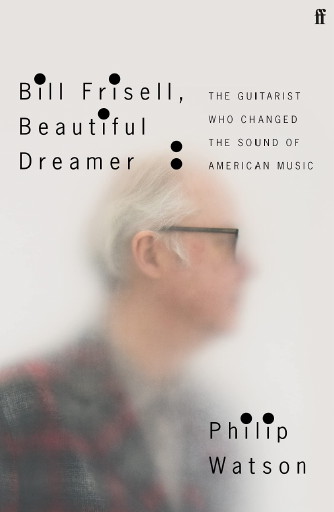
Bill Frisell, Beautiful Dreamer: The Guitarist Who Changed the Sound of American Music By Philip Watson - Reviewed by Larry Blumenfeld


Appeared in the May 21, 2022, print edition as 'Bending the Neck of Jazz Guitar'.

‘Beautiful Dreamer’ Review: Bill Frisell, Chameleon of Jazz

The musician has made a career out of challenging notions of what a guitar ought to sound like.


“A rounded and slightly trebly tone framed by a halo of overtones, along with other sounds—fuzzy-edged or transparent, elongated or truncated, tender or piercing—trace fragments of melody. They form jagged lines, loops in gentle circles. For guitarist Bill Frisell, this amounts to a singular language, by now familiar to listeners spanning genres and generations.

At age 71, Mr. Frisell is a towering figure of jazz guitar, a status he achieved largely by evading strict notions of jazz and by confounding expectations of what a guitar should sound like. With 41 albums to his credit and appearances on more than 300 more, he built his reputation gradually, arriving at the mainstream from the outside in. And then he went back out, far enough to get branded a master of a new “Americana.” He might seem a chameleon, were his sound and approach not so consistent and commanding.

Mr. Frisell wrings both complex musical implications and straightforward emotion from a ballad, thrashes his way through distortion, swings in the deepest jazz sense, and sounds as if he’s relaxing around a campfire, sometimes within a single composition. His music is wondrously odd, relentlessly logical, frequently funny and without a gratuitous note. Listen to him in enough situations, and it seems as if he weaves one cryptic song through them all. His playing sounds complete without anyone else around, yet he is among modern music’s great collaborators.

“Bill Frisell, Beautiful Dreamer: The Guitarist Who Changed the Sound of American Music” attempts to unlock the mysteries of that cryptic song. “Everybody digs Bill Frisell,” writes biographer Philip Watson. “This is the story of why.” The book is driven by what motivates most good writing about music: obsession. Mr. Watson heard Mr. Frisell perform nearly 40 years ago and just kept going. A London-based magazine writer and editor, he is also guided by the diligence that has driven his accomplished journalism on subjects as diverse as the 9/11 terrorist attacks and the effects of the Chernobyl disaster on children. His writing balances unbridled passion and dispassionate research nearly as deftly as Mr. Frisell’s playing does sound and silence. He lacks Mr. Frisell’s concision—these more than 400 pages could use whittling—but his compelling story reveals aesthetic truths.

Early in Mr. Watson’s interviews with Mr. Frisell, the guitarist asks: “But what will you write about? . . . I mean, there haven’t been any fights, or anything. And all I’ve done is stay married to the same woman for the past thirty-five years.” He has a point. This tale lacks even a whiff of scandal. No major falls or comebacks. Instead of an outsize ego, we have a musician who “unshakably splits concert fees equally with his band members.”

Lacking that sort of drama, Mr. Watson invests in paradoxes of Mr. Frisell’s character that mirror those in his music: how a painfully shy boy growing up in Denver (“I had to fight all the time against closing myself off”) came to play expansive music in front of audiences; how a young man “so timid and furtive that he must have been ‘raised by deer,’ ” according to one bassist, asserted himself on the New York scene. Mr. Frisell, by now a hero to guitarists of many stripes, is, for the critic Joseph Hooper, “the refutation of all that is heroic and priapic about the guitar tradition.” For the producer Hal Willner, who brought Mr. Frisell to wider attention at Nonesuch Records, the buoyant spirit of the guitarist’s music has a constant undertow—“darkness is always, always in the mix with Bill,” he says. “It’s his home town.”

Any book about a guitarist includes a lineage of guitars. This one begins with the one Mr. Frisell created with cardboard and rubber bands as a young boy, and includes, among others, the customized Gibson ES-175 given to him by Dale Bruning, his first important mentor. Mr. Watson details revelatory communions of man and machine: volume and delay pedals “opened up a whole new world”; bending and swaying the instrument’s neck just so became “the guitar equivalent of ‘touching your finger against the edge of an album while it spins on the turntable.’ ” Mr. Frisell doesn’t play fast and furious solos, yet the technical aspect of his brilliance is noteworthy. Fellow guitarist Marc Ribot wonders “how he managed to get his guitar to produce notes that swelled in volume as they sustained, like a violinist or horn player, instead of steadily fading, like the notes on everyone else’s guitar.”

There are moments of absorbed wisdom: the great guitarist Jim Hall, with whom Mr. Frisell studied and collaborated, and who he at first emulated, instructs him to “find yourself”; another early mentor, the vibraphonist Gary Burton, tells Mr. Frisell, who went to college primarily as a clarinetist, ‘“If you are going to play an instrument, you have to commit to it solely.” Throughout, Mr. Frisell’s career seems guided by what his biographer calls “organised serendipity”: In 1980, right after Mr. Frisell borrows a Paul Motian album from the library, he gets a phone call from the great (now late) drummer, thus setting off a relationship that spanned more than 30 years.

Mr. Watson sometimes lathers his prose with too many laudatory adjectives. Yet he also reports with accuracy and style. “Motian and Manhattan were a perfect match for each other: streetwise, wise-cracking, romantic and tough.” The 1970s were, for jazz, a “fascinatingly fractured though creatively fertile decade.” He is particularly discerning when considering whether Mr. Frisell plays jazz. “I do think it matters that we say Bill plays jazz, because there is an empathy that he has for what the music means to our culture, and then what it means to his culture,” says the pianist Jason Moran. Elvis Costello, however coyly, makes a different point: “Bill Frisell is always an American folk musician . . . that is, he works with all the music made by American folk.” Mr. Watson’s 11 “Counterpoint” sections — interludes in which he and a musician consider a Frisell recording—disturb his story’s flow yet often yield insights. In one, the Irish traditional musician Martin Hayes frames Mr. Frisell’s range and gifts: “The American music story is incredible, by any standards, especially in the twentieth century. There was such an outburst of music; there’s been no other country that has created so many different styles in such a short space of time. And it just seems like Bill feels free to graze through all of them, and to find ways in which many elements can harmoniously sit together. But it’s distilled too; there’s nothing showy or more than is needed.”

At one point, Messrs. Frisell and Ribot discuss moments when the lines separating traditions blur—when, for instance, according to Mr. Frisell, “just for ten seconds,” Bill Monroe, the father of bluegrass music, sounds like Duke Ellington.

“Is that what you look for when you’re going into that music, the moments when its borders meld?” Mr. Ribot asks.

“Yeah, where it just transcends all that stuff that’s been put on us by a record company or a writer or somebody analysing everything after the fact and then categorising it. Musicians don’t do that when they’re in the midst of playing; that stuff always comes later.”

Here, Mr. Watson, who does plenty of analyzing and categorizing, nevertheless also takes the time and care to investigate the stuff that came before. That’s where Bill Frisell lives.

Mr. Blumenfeld writes regularly about jazz and Afro-Latin music for the Journal.

Appeared in the May 21, 2022, print edition as 'Bending the Neck of Jazz Guitar'.


Wednesday, December 23, 2020

Free Jazz: An Album to Liberate a Genre - Larry Blumenfeld

 ‘Free Jazz: A Collective Improvisation by the Ornette Coleman Double Quartet’ was and remains a radical recording thanks to an unencumbered exchange of sonic ideas among a bevy of talented musicians.

PHOTO: RYAN INZANA

By Larry Blumenfeld

Appeared in the December 19, 2020, print edition The Wall Street Journal.

Copyright ©2020 Dow Jones & Company, Inc. All Rights Reserved. 


On Dec. 21, 60 years ago, alto saxophonist Ornette Coleman gathered eight musicians, all now significant jazz names, at A&R Studios in New York. The 36 minutes and 23 seconds of continuous music resulting from this session were released in 1961 by Atlantic Records, without retakes or edits, as “Free Jazz: A Collective Improvisation by the Ornette Coleman Double Quartet.” Even within a jazz world upended by game-changing innovations in 1959 from the likes of Miles Davis, John Coltrane, Dave Brubeck and Coleman himself, this music was shocking.

In the original album liner notes, critic Martin Williams, a consistent champion of Coleman, called it “exceptional in so many ways that it is hard to know where to begin!” In an essay within a 1998 reissue, composer-historian Gunther Schuller remarked that Coleman’s album “sounds as fresh and compelling as it did 37 years ago.” When I first heard this music—rich, varied, full of instrumental exchanges that sound like spontaneous conversations, unpredictable and yet suggesting a clear point of view—I began to grasp what Coleman described as “harmolodics,” which is better understood as his approach to music-making than as a music theory. The album continues to shape my understanding of both jazz’s root impulses and its possibilities. Sixty years on, it remains a guiding light for musicians seeking to dissolve the tensions between composition and improvisation, and between personal and collective expression.

Slight and soft-spoken offstage, Coleman nevertheless asserted revolutionary intent from the start. Consider the titles of his initial Atlantic releases: “The Shape of Jazz to Come” (1959); “Change of the Century” (1960). Such inclination was evident in the sound of his alto saxophone (at the time, a white plastic one)—bold yet fragile, almost unbearably human, unlike anything else in modern music. Yet Coleman’s ideas about contexts for and modes of musical communication remain his most radical and lasting contributions.

Many musicians and critics have interpreted the title “Free Jazz” as a compound noun, asserting a new musical subgenre. It is more apt to sense a verb in there. Coleman was liberating himself and his associates from strict forms such as 12-bar blues and chord progressions and from the hierarchy of bandleader and sidemen. “Modern jazz, once so daring and revolutionary, has become, in many aspects, a rather settled and conventional thing,” Coleman wrote in the liner notes to “Change of the Century.” “The members of my group are now attempting a breakthrough to a new, freer conception of jazz, one that departs from all that is ‘standard’ and cliché.”

The “double quartet” Coleman assembled—two ensembles, each with a reed instrument, a horn, a bass and drums—included his quartet partners at the time, Don Cherry (on pocket trumpet), bassist Scott LaFaro and drummer Ed Blackwell ; his former bassist and drummer, Charlie Haden and Billy Higgins ; Eric Dolphy, a woodwind virtuoso who was among the most inventive jazz musicians of his day, here playing bass clarinet; and trumpeter Freddie Hubbard, then 22 years old, whose subsequent stardom aligned more clearly with jazz’s mainstream. Listeners heard one quartet (Coleman, Cherry, LaFaro and Higgins) in the left channel, the other (Dolphy, Hubbard, Haden and Blackwell) in the right. This effect contrasted individual approaches—the earthiness of Haden’s bass playing from the right, for instance, and the advanced technique, mostly in his instrument’s upper range, of LaFaro from the left—while also showcasing the communion achieved as both channels blended.

Jazz innovation often inspires controversy. Coleman’s first New York engagement, a gig at Manhattan’s Five Spot Café in 1959 that lasted 2 1/2 months, elicited both hero worship and harsh criticism. The release of “Free Jazz” prompted contrasting reviews in Downbeat magazine—one awarding five stars and hailing an “ultimate manifesto of a new wave,” the other giving zero and denouncing a “witch’s brew” steeped in “a bankrupt philosophy of ultra-individualism.”

For all the individual brilliance within “Free Jazz”—not least Coleman’s ability to weave memorable melody from nearly any idea—and despite this music’s then-jarring newness, the emphasis is on a quality of collective improvisation and a sense of call-and-response drawn from early New Orleans jazz, which Coleman acknowledged as both a primary influence and, he feared, a fading tradition. Coleman also advanced his own distinctive ideas. Ten seconds in, improvisations that seem chaotic cohere as the horns sound seven simultaneous long tones—Coleman’s idea of “harmonic unison,” through which assigned pitches are meant to connote unity more so than harmony. The liberties within “Free Jazz” in fact rely on structure and form: There are six major sections, each with introductory ensemble passages, as well as featured space wherein each player guides the music’s flow. Within that frame, the musical content took shape organically, the ideas of solo and ensemble, of foreground and background, blurred in magnificent manner.

“Free Jazz” was the beginning of a path Coleman remained on until his death in 2015, at age 85. “It’s not that Ornette thought outside the box,” drummer Denardo Coleman—who first recorded with Ornette at age 10—said at his father’s memorial service. “He just didn’t accept that there were any boxes.” The musicians, dancers, poets and painters assembled that day formed a community only Coleman could have brought together. His ideas, still radical in some quarters, have seeped into all of the arts the way fundamental change always does.

—Mr. Blumenfeld writes about jazz and Afro-Latin music for the Journal.


Monday, October 5, 2020

‘Palo Alto’ by Thelonious Monk Review: A Jazz Titan Goes to High School - Larry Blumenfeld

 ‘Palo Alto’ by Thelonious Monk Review: A Jazz Titan Goes to High School

A previously unreleased recording of the pianist’s 1968 concert in a California school auditorium shows his quartet in fine, freewheeling form.

By Larry Blumenfeld

Sept. 26, 2020 7:00 am ET Wall Street Journal

“In the fall of 1968, a sixteen-year-old Jewish kid named Danny Scher had a dream. He wanted to bring the renowned Thelonious Monk and his quartet to play a benefit concert at his high school in Palo Alto, California.”

So begins a liner note by Robin D.G. Kelley, Monk’s definitive biographer, for “Palo Alto,” a previously unreleased recording of that concert, out now. (The music is available on CD and vinyl through the Impulse! label, and digitally through Legacy Recordings.)

Since Monk’s death in 1982, the influence of his compact yet essential body of compositions has grown with each passing decade; once considered radical, they are now elemental to modern jazz. Even so, Monk’s piano playing—his jarring rhythmic displacements, clotted chords, flat-fingered runs and spiky dissonances on “Well, You Needn’t” here, for instance—still sounds distinct. “Palo Alto” enlightens as it delights, opening a window into how Monk challenged his bands and himself, endlessly refreshing his unusual yet accessible compositions. Plus, it comes with a good story.

Mr. Scher, who would go on to a career as a promoter with rock impresario Bill Graham, was, in 1968, the red-headed kid who spun jazz records during lunchtime at “Paly,” as his school was known. Having already presented pianist Vince Guaraldi, vocalist Jon Hendricks and vibraphonist Cal Tjader in fundraisers for the campus International Club, he hired Monk’s quartet for $500. His motivation was pure: Along with Duke Ellington, who he’d later bring to the school, Monk was his idol. He sold concert-program ads along his paper route in predominantly white, upscale Palo Alto. He put up posters in mostly Black, less affluent East Palo Alto, where a campaign was afoot to rename the municipality Nairobi, after the capital of Kenya. He was no doubt aware of a larger context for such cross-promotion: the recent assassinations of Martin Luther King Jr. and Robert F. Kennedy, and the turmoil surrounding race.

What Mr. Scher likely didn’t know is that Monk, who four years earlier had appeared on the cover of Time magazine, was deeply in debt (the pianist probably welcomed a chance to earn extra money in the middle of his two-week engagement at San Francisco’s Jazz Workshop). Critics had begun turning on the pianist, acknowledging his importance yet calling his quartet “predictable” because he mostly stuck to his existing compositions while other marquee jazz stars, such as Miles Davis, restlessly transformed their music.

After the concert, Mr. Scher placed his reel-to-reel recording in a box, where it remained for decades. If not for a school janitor who agreed to tune the piano if he could record the show, this release wouldn’t exist. It’s not a perfect document—Monk’s piano bench creaks through some passages—but the music sounds clear and affecting nonetheless.

Monk’s quartet here—with tenor saxophonist Charlie Rouse, his sideman for a decade by then, along with bassist Larry Gales and drummer Ben Riley, who joined Monk in 1964—was his most cohesive band, then at the height of its powers. Perhaps owing to the informal nature of the gig, the group seems particularly uninhibited. The music sounds ebullient.

Monk almost never began a set with a ballad, but he opens here with one of his own: “Ruby, My Dear,” played at a medium tempo and punctuated by a succinct and deeply satisfying piano solo. Compared to “Live at the It Club”—a landmark album documenting this group four years earlier on a Los Angeles bandstand—the extended versions here of Monk’s “Well, You Needn’t” and “Blue Monk” sound looser, more creative. On “Well, You Needn’t,” Monk builds propulsion and drama with each chord, and Gales plays a long and playful bowed section. On “Blue Monk,” the band seems less beholden to blues syntax than to organic call-and-response phrasing. “Epistrophy,” which Monk co-wrote with drummer Kenny Clarke, exemplifies both the percussive nature of his pianism and his band’s masterly sense of time.

The most gripping moments of this recording find Monk alone at the piano, playing songs he didn’t write. On the Jimmy McHugh and Dorothy Fields classic “Don’t Blame Me,” he grounds his left hand in stride-piano’s bounce, rains down elegant arpeggios with his right and, in between, wrings maximum emotion from single notes. His closer, a solo rendition of “I Love You Sweetheart of All My Dreams,” a 1928 song made famous by Rudy Vallee, lasts just one deeply affecting minute. As its final crashing chord evaporates into overtones the auditorium erupts in applause, to which Monk says, “We have to hurry back and get to work, you dig?”

And so he did. East Palo Alto didn’t change its name. The identity of that Palo Alto janitor remains a mystery. Yet thanks to him and to this performance before an unlikely interracial audience in a high school auditorium, we have 47 minutes of rare pleasure, and a corrective to Monk’s long-ago detractors. He never grew predictable. He just dug deeper into these tunes to innovate.”

—Mr. Blumenfeld writes about jazz and Afro-Latin music for the Journal.

Copyright ©2020 Dow Jones & Company, Inc. All Rights Reserved. 

Appeared in the September 28, 2020, print edition as 'A Jazz Titan Goes to High School.'


Wednesday, September 30, 2020

‘Artemis’ Review: An All-Female Septet With Steady Aim by Larry Blumenfeld

 Larry Blumenfeld is an keen observer of the elements influencing today’s Jazz scene and it’s a privilege to have his writing grace these pages. We’ve also scheduled his review on “Monk Goes to School,” the Verve/Impulse recently released Thelonious CD, to post to the blog on Monday, October 5, 2020.


‘Artemis’ Review: An All-Female Septet With Steady Aim

The group’s self-titled debut album moves gracefully through various jazz styles.


By Larry Blumenfeld

Appeared in the September 21, 2020, print edition as 'Steady Aim From an All-Female Septet.'

Copyright ©2020 Dow Jones & Company, Inc. All Rights Reserved. 

“Back in December at Carnegie Hall, as members of the ensemble Artemis traded solos with bluesy conviction while performing Billie Holiday’s “Fine and Mellow” as an encore, many audience members rose to their feet in raucous response. Each of these seven musicians—pianist Renee Rosnes, clarinetist Anat Cohen, tenor saxophonist Melissa Aldana, trumpeter Ingrid Jensen, bassist Noriko Ueda, drummer Allison Miller and vocalist Cécile McLorin Salvant—has earned individual acclaim as a bandleader, composer or sought-after partner. Together, under Ms. Rosnes’s musical direction, they revealed a shared intensity and suggested something alluring and new.

The group’s debut release, “Artemis” (Blue Note), delivers on that promise. It begins with “Goddess of the Hunt,” a piece built on an insistent pulse and featuring several unexpected harmonic detours. Ms. Miller composed it to evoke the Greek mythological figure Artemis—the paragon of female power and compassion, keen focus and steady aim for which this group is named. The following track, “Frida,” is a tense but lovely piece composed by Ms. Aldana and named for the Mexican painter Frida Kahlo, whose struggles to assert herself in an arena dominated by men inspired Ms. Aldana’s 2019 album “Visions.”

Such allusions to gender dynamics are both unavoidable and meaningful. The rich history of all-female jazz groups includes, in the 1940s, the International Sweethearts of Rhythm and, more recently, a remarkable trio of pianist Geri Allen, bassist Esperanza Spalding and drummer Terri Lyne Carrington, as well as the big band Diva, in which some Artemis members have played. There is also a new context for such legacies, given recently increased opportunities for female leaders on jazz stages, more widespread recognition of their accomplishments in general, and a growing awareness of bias and inequity along gender lines. In truth, perhaps the least remarkable aspect of this group is that all of its members are female. One could argue that the demographic shift best represented by its personnel relates to jazz’s global reach: Ms. Rosnes and Ms. Jensen were born in Canada; Ms. Cohen, in Israel; Ms. Aldana, Chile; Ms. Ueda, Japan; and Ms. Salvant and Ms. Miller hail from the U.S.

The real headline here is this ensemble’s cohesion, its ability to move gracefully through various styles and moods and to sound, by turns, authoritative and playful, locked-in or loose-limbed. In the tradition of drummer Art Blakey’s Jazz Messengers, Artemis crafts an identifiable band sound rooted in sturdy yet flexible rhythms (which here owe greatly to Ms. Miller’s blend of propulsion and understated details) and presents an open invitation for members to compose (five of these musicians are represented by original pieces here). “Nocturno,” composed by Ms. Cohen, floats gently over a simple bass figure, its melody expressed through unison lines from clarinet, saxophone and trumpet that sometimes break apart or interlace. Ms. Ueda’s “Step Forward” is a sprightly jazz waltz in which the rhythm section calibrates its accompaniment to reed and horn solos with noteworthy sensitivity. The album’s most striking piece, Ms. Rosnes’s “Big Top,” is both challenging and funny in the manner that Charles Mingus once combined such characteristics. Ms. Jensen’s arrangement of the Lennon-McCartney classic “The Fool on the Hill” loosens the joints that bind that song’s familiar melody enough to create a more open-ended structure and darkens its mood through harmonies that occasionally dissolve into tendrils of collective improvisation.

The particular spell cast by these distinctive instrumental arrangements gets broken somewhat when Ms. Salvant sings a majestic yet relatively straightforward version of the Stevie Wonder ballad “If It’s Magic.” Nevertheless, Ms. Salvant is such a commanding and musical a presence, and Mr. Wonder’s tune so lovely in the first place, that such disruption ends up as rewarding. Better still is her knowing and bittersweet delivery on “Cry, Buttercup, Cry,” which was popularized by Maxine Sullivan in the 1940s, here complemented by glowing muted trumpet tones, moaning clarinet and throaty tenor-sax figures.

A closing version of Lee Morgan’s “The Sidewinder” doesn’t dig in hard to the song’s funky rhythm. Rather, it slithers. Meanwhile, the familiar theme is cloaked in layers of shifting close-knit harmony. Artemis means to upend expectations, gently and yet with force. Its music comes off like a nuanced argument for a fresh point of view.”

—Mr. Blumenfeld writes about jazz for the Journal.

Copyright ©2020 Dow Jones & Company, Inc. All Rights Reserved. 

Appeared in the September 21, 2020, print edition as 'Steady Aim From an All-Female Septet.'