Showing posts with label Louis Stewart. Show all posts

Friday, November 1, 2024

Acoustic Guitar Duets - Louis Stewart and Martin Taylor

 © Copyright ® Steven Cerra, copyright protected; all rights reserved.
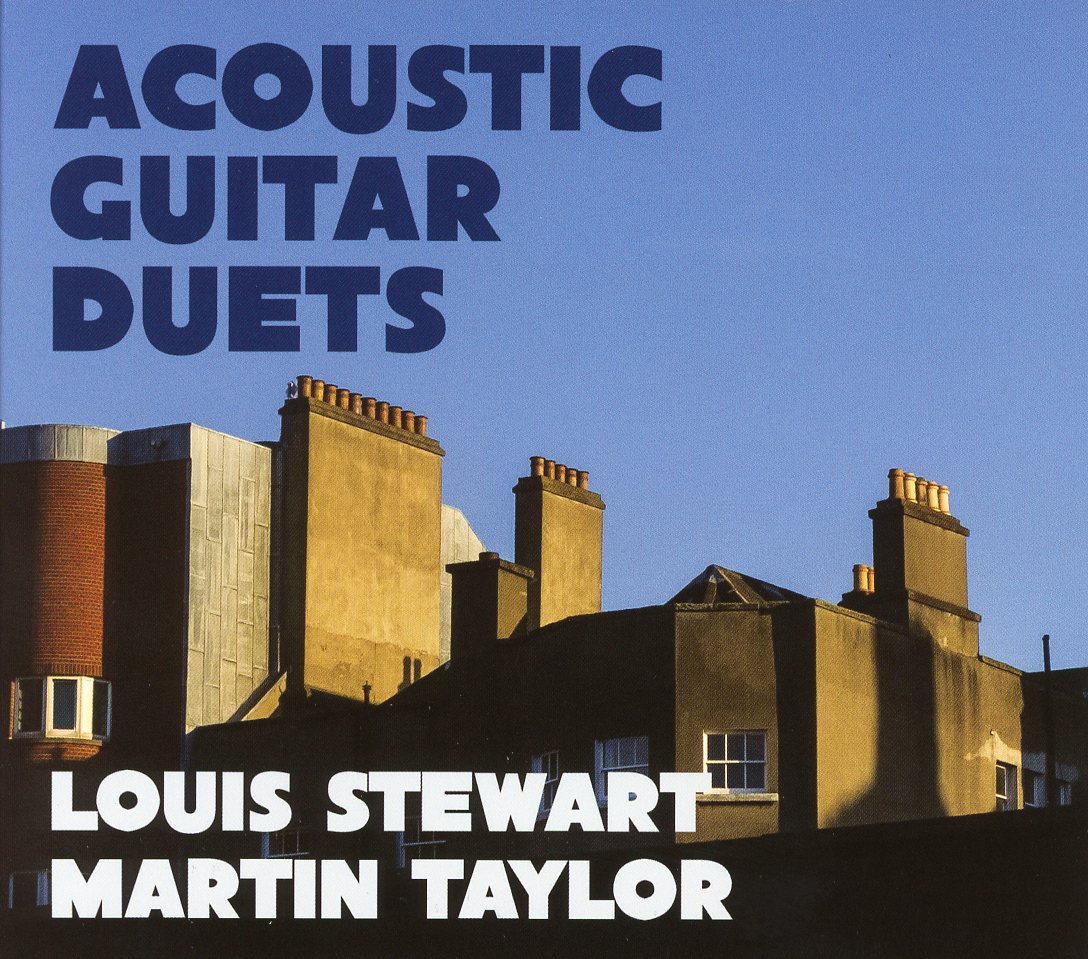

The best thing about this album is that Livia Records founder, Gerald Davis had the vision to produce it in the first place.


The second best thing about the recording is its reissuance by Dermot Rogers as part of his continuing efforts to make the music of guitarist Louis Stewart available again in enhanced digital formats, encased in first-rate artwork with ample detailed information and commentaries also included.


Both in its inception and resurrection the fact that this recording happened at all is a fortunate happenstance because in the 1980s when it was originally recorded there wasn't a big demand or interest in Jazz played on unamplified guitar.


Amplified guitar was a big deal when it was first brought to Jazz in the early 1940s by Charlie Christian. The instrument could finally be heard in ensemble Jazz formats along with the other, much louder instruments.


Of course, Charlie Christian did much more than simply plug-in the guitar as Ted Gioia reminds us in the 2nd Edition of his History of Jazz: “Christian would prove to be a leader and instigator of the defining modern style: namely bebop … with hard-driving monophonic lines, drenched in chromaticism and executed with lighting speed.” 


Ted goes on to say: “Yet Christian's advocacy of the electric guitar represents only the smallest part of his contribution to jazz. With his daring sense of intervallic high jinx, his dancing triplets and swinging sixteenth notes, his instinct for pouncing on the altered higher notes of the harmony, extracting the maximum amount of emotion from these flatted and sharpened tones.”


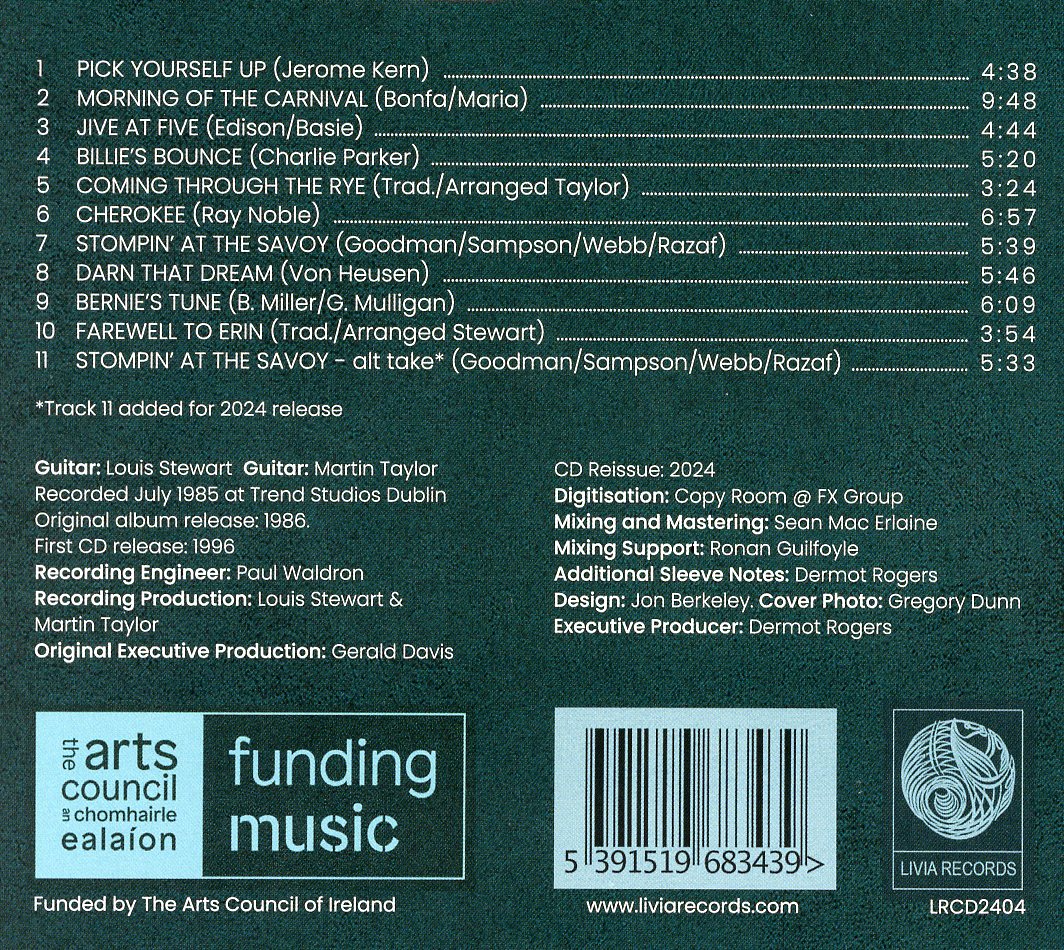
Almost 50 years later, if you now “unplug” the guitar, stylistically what Ted describes above is what’s on offer in Louis Stewart and Martin Taylor’s Acoustic Guitar Duets. [Livia Records LRCD 2404].


The ethereal quality of acoustic guitar replaces the amplification and when combined with Louis’ and Martin’s genius at developing melodic continuity, the sophisticated elements of the modern approach contained in Christian’s style [along with a little Tal Farlow, Pat Martino and Wes Montgomery thrown in for good measure] are woven together to create a remarkable series of duets.
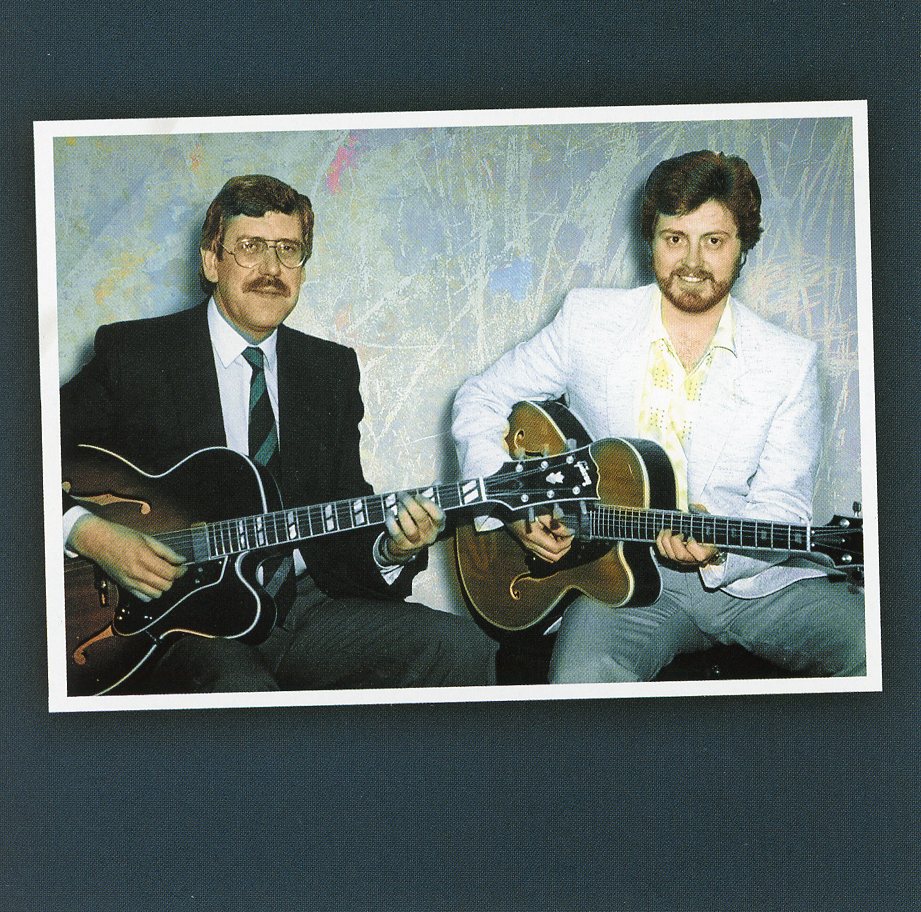


Louis and Martin are obviously delighted to be in one another’s company and there is a sense of playful competitiveness at work here which results in both of these supremely gifted guitarists being spurred on to take chances in their respective improvisations.


At times, the lightning speed with which the ideas flow forth from these supremely gifted guitarists is enough to take your breath away.


The basic format for each track is one guitar playing rhythm changes while the other solos over these, but occasionally, Louis and Martin solo simultaneously and when they do, for example on Pick Yourself Up - not to put too fine a point on it - all heck breaks loose.


Often the background rhythms are cleverly embellished as is the case with the 6/8 triplet feel which underlies Morning of the Carnival. 


The beautifully remastered sound brings out the full, rich acoustic tone that each of these guitar masters is able to achieve, an additional treat for both casual listers and guitarist purists alike.


Louis and Martin are constantly looking to alter the sameness of the two guitar sound with clever arrangements such as the unison statement of the melody on Jive at Five. Here they add the additional element of a “walking bass” background to the accompaniment to make the music swing harder.


Billie’s Bounce, which finds them harmonizing the opening theme, is a wondrous example of the fine art of Bebop guitar picking at its best with lots of substituted chords, rhythmic displacement and guitar trickery brought forth to spellbind the listener. 


The exquisite sonority [texture of the sound] that these two guitar masters can produce is demonstrated on the two folk songs contained in the album: Taylor’s arrangement of Coming Through the Rye and Stewart’s modally embellished chart on Farewell to Erin. 


The firepower that Louis and Martin hold in reserve most of the time is released in finger busting style on a fast paced version of Cherokee. The track is an amazing example of how they are able to get ideas from-the-head-to-the-hands in a blisteringly fast manner. The jointly improvised tag [turnaround] that closes the piece is one for the ages; I almost didn’t want it to end.


Beautiful guitar balladry is on display in their interpretation of Darn That Dream. Here, they actually achieve a singing quality in the guitar, one with a rich, juicy tone - almost an impossibility with no ability to sustain a note without the amplification and yet, it’s there. Their powerful hands produce so much energy in striking the strings, that when a note is released it generates a vibrato much like the human voice.


My favorite track is Bernie’s Tune because the fun that Louis and Martin are having becomes palpable on this light-hearted romp. You can just see them “gassing” one another in the studio with lick after lick [phrase after phrase] seemingly floating out of their guitars.


Louis and Martin make it all sound so effortless but as the late pianist Bill Evans once said of his own achievements it was a case of “2% talent and 98% hard work.”


If you are looking for a joyous Jazz journey, I guarantee that you will find none better than the listening adventure contained in Louis Stewart and Martin Taylor’s Acoustic Guitar Duets. [Livia Records LRCD 2404]. The musicianship on this recording has to be heard to be believed.


For order information go here.


Saturday, September 21, 2024

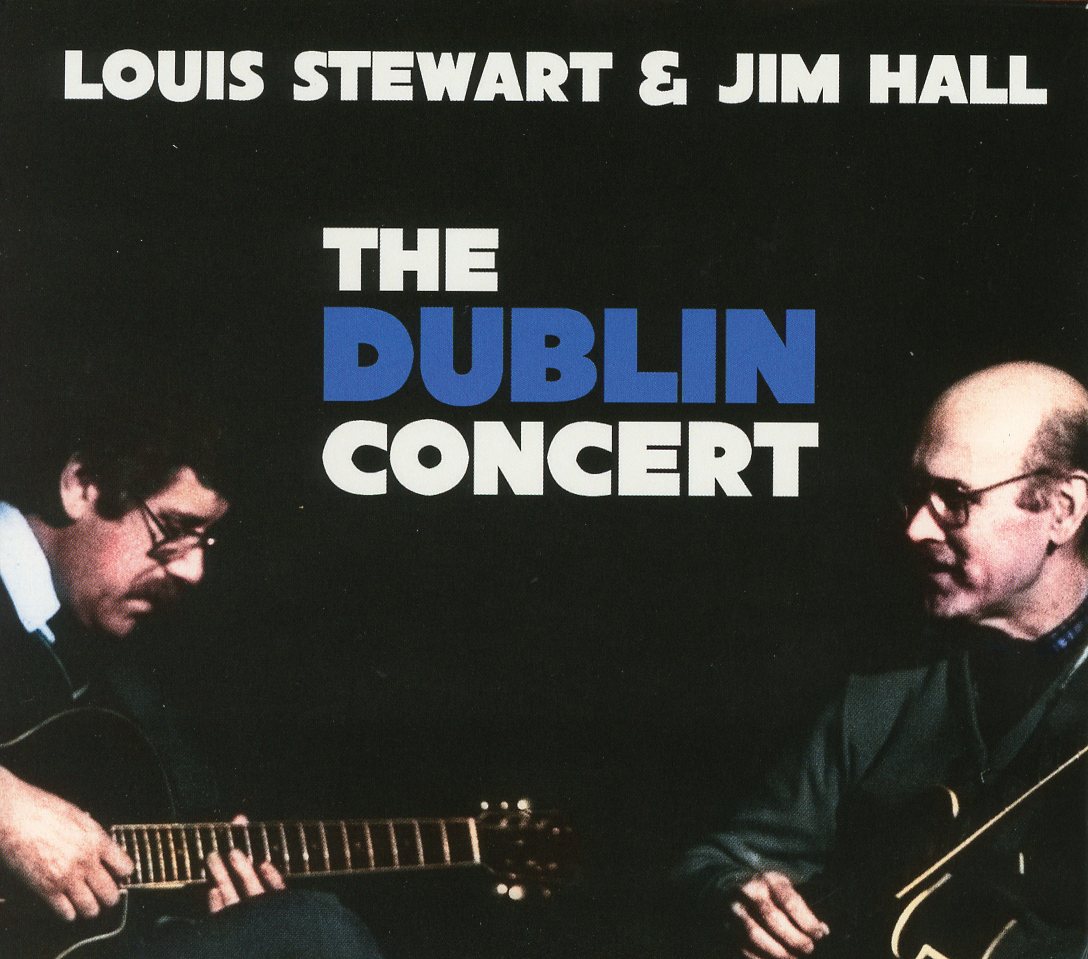
The Dublin Concert - Louis Stewart and Jim Hall

 © Copyright ® Steven Cerra, copyright protected; all rights reserved.


LIVIA RECORDS - Press Release

Louis Stewart with Jim Hall

THE DUBLIN CONCERT

Unique 1982 Live Recording of 2 Guitar Masters with 16 Page Booklet and Photos

THE DUBLIN CONCERT is a previously unreleased album of Louis Stewart and Jim Hall

Recorded live in concert to a delighted Dublin audience on 26th December 1982.

Tapes discovered in 2022 have been carefully digitized and mastered to present the

captivating, empathetic and poetic playing of this outstanding duo.

This album will be a delight for Louis Stewart and Jim Hall fans alike as it is the only known recording of them performing together.


Key Points About the Release

Recorded in Dublin's Maccabi Hall on 26th December 1982, THE DUBLIN CONCERT captures both musicians in top form, performing standards with stunning close interaction and improvisation.

Bill Frisell's biographer, Philip Watson, wrote the detailed sleeve notes which also include photographs and recollections from musicians who attended the gig to see their local hero and the then leading exponent of jazz guitar.

Catalog #: LRCD2402/ LRLP2401 and Format: CD, Vinyl and Download. 

Release Date: 6th September '24

The concert was hastily arranged when it was learned that Jim was holidaying in Ireland.

It is believed that Jim and Louis met in 1981 during Stewart's New York Bechet's residency.

Louis was a big admirer of Jim, particularly the duet albums with Bill Evans.

Both musicians had previously recorded in duet settings.

Though masters in different styles, they carefully listened and complimented each other.

"Look at what Santa brought us for Christmas" is how Louis introduced Jim.

The onstage recording set up was simple, just a mic on each guitar amp.

For Interviews/more detail, Contact Dermot Rogers: dermot@liviarecords.com / +353-86-2488233.


As you would imagine, with the JazzProfiles blog and Cerra Substack platforms, I get many preview copies and downloads of new recordings.


Every so often one comes along that allows me to talk about the musicians and the music from the standpoint of mutual familiarity. 


Bassist, composer-arranger and bandleader Chales Mingus was quoted as saying - “We have to improvise on something.”


For me, given my proclivities and predilection of mind, when that “something” involves songs from the Great American Songbook and/or tunes from the repertoire of Jazz Standards, I am most pleased because these recognizable melodies give me a place to put my ears, so to speak.


To put it another way, I can hear where the improvisations are going more easily because the underlying melodic structure is more familiar to me.


The process reflects where I come from; my entrance into the world of Jazz was from a time when it was commonplace to play Jazz based on familiar tunes or songs. 


Imagine my delight, then, when Dermot Rogers sent along his latest homage to the late Irish guitarist Louis Stewart [1944-2016] in the form of The Dublin Concert - Louis Stewart and Jim Hall on his restored Livia Records label [LRCD2402]. 


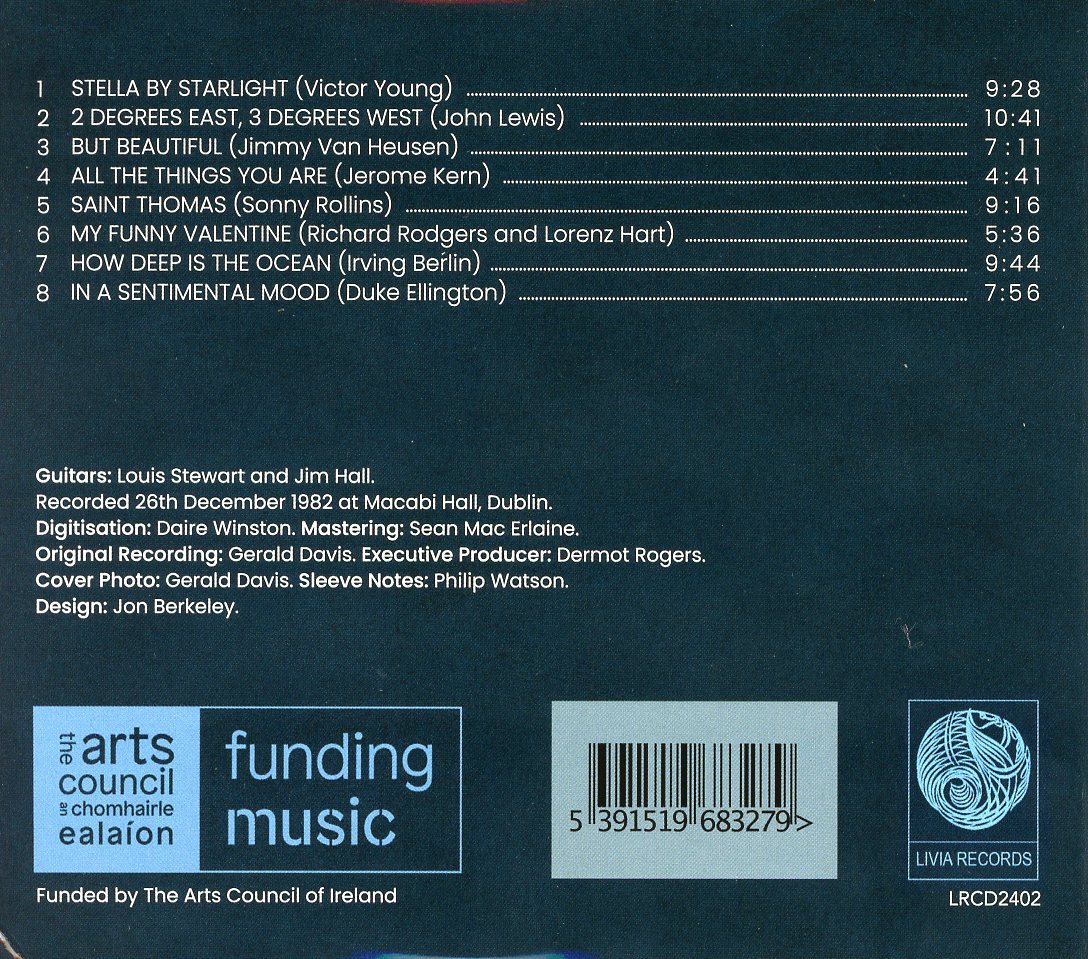
Not only do I get to enjoy the Jazz improvisations of two world-class guitarists, but of the eight tracks on the album, six are from the Great American Songbook and two are Jazz standards.


From a strict approach to the instrument stand point, Louis and Jim make for an odd couple: Louis burns with rapid note runs while Jim simmers with short, open phrases leaving plenty of space in his solos.


Oddly enough [pun intended], they compliment and complement each other perfectly because they blend when they play together and allow each other to assume the solo spotlight when they are apart.


Frankly, it’s the only way this could have worked because essentially what we have here is a jam session involving two world class guitarists doing their thing in the presence of standard material. There wasn’t much rehearsal time and the duo itself was not a formed group with arrangements in place. So relying on known material allowed both Louis and Jim to do what they do best - make Jazz guitar happen!


One of the Jazz standards - 2 Degrees East, 3 Degrees West - first featured way back in 1956 on pianist John Lewis’ Pacific Jazz LP - Grand Encounters: 2 Degrees East, 3 Degrees West.


John, of Modern Jazz Quartet fame, also wrote the title tune and the album subtitle signifies a meeting between two East Coast based Jazz musicians, John and bassist Percy Heath [also a member of the MJQ] and three West Coast based players - guitarist Jim Hall, saxophonist Bill Perkins and drummer Chico Hamilton.


Of Jim’s playing on this recording, Whitney Balliet, the distinguished Jazz writer and critic wrote:


“Jim Hall was born in New York [1930] and is twenty-five. He, too, has been a professional for only a few years. His style is remarkably similar to that of Charlie Christian, especially in the direct way he strikes his notes, and in his practice of repeating certain single notes and simple figures. Some of the best modern guitarists have a tendency toward slipperiness and laciness. Hall, however, gives each note weight, with such intent that his work occasionally has a kind of puggish, lumbering quality about it, which is not at all unpleasant.”


The other Jazz Standard is Sonny Rollins’ “calypso-tinged signature tune” St. Thomas. It was first recorded in August 1955 as “Fire Down There” by Randy Weston and released in February 1956 on the “Get Happy” album. The tune started as “The Lincolnshire Poacher” and evolved into a nursery song in the Virgin Islands which Sonny Rollins’ mother sang to him and on which he based the song “St. Thomas”. It was Rollins’ 1956 release which popularized the song and it is still his most readily recognized composition.


The joyous theme is a tune to have fun with and both Louis and Jim have a jaunty good time doing just that. In his booklet notes, Philip Watson wrote: “One of the highlights of the evening was a rousing and irresistible version of Sonny Rollins’ exuberant calypso-tinged signature tune [there’s that phrase again] St. Thomas; Stewart’s solo even included a brief quote from traditional Irish reel The Sligo Maid.”


Elsewhere in the booklet notes, Philip quotes the pianist Jim Doherty who comments that Louis and Jim “were kindred spirits and shared a very dry and quick wit.” You can hear their humor on St. Thomas and throughout The Dublin Concert. As the bassist Bill Crow is fond of saying: “Jazz is meant to be fun” and Louis and Jim are having a ball and so will you as you listen to these marvelous guitar mates perform.


Among the six standards is one of my favorites from the Great American Songbooks - Stella by Starlight - about which Ted Gioia has this to say in his definitive The Jazz Standards: A Guide to the Repertoire, 2 Ed. [2021]


“The structure is conventional in length, with the melody filling up the expected 32 bars. But everything else about it breaks the rules. Instead of the usual repeats found in American popular song, "Stella by Starlight" is a masterpiece of through-composed misdirection. At bar eight, where one would normally get a repeat of the A theme in most Tin Pan Alley songs, we do go to the tonic chord, but this is actually its first appearance in the piece. We might now expect that the repeat will come in bar 16, but here Young has another surprise in store—a gut-wrenching modulation, in which the melody is held on an altered note of the chord for a full bar. The final eight bars are as close as we will get to a recapitulation of the main theme, but even here [Victor] Young tinkers with his melody and chords, only lingering on the familiar opening motif for two bars before heading off toward a different path to a final resolve.


This bold framework, which violates our ingrained expectations, was precisely what made me embrace "Stella by Starlight" as a bracing iconoclastic composition….”


One couldn’t serve up a better melodic platform for Louis and Jim to improvise on and they take full advantage of the unconventional structure of Stella by Starlight to create brilliantly inspired solos.


But this is just the beginning - literally as Stella serves as the opening track - and is followed by masterful interpretations of Jerome Kern’s All the Things You Are, Irving Berlin’s How Deep is The Ocean, Rodgers & Hart’s My Funny Valentine, Jimmy Van Heusen’s But Beautiful and Duke’s In A Sentimental Mood.


To paraphrase Ted Gioia: “These songs' cross-generational familiarity and popularity have made them frequent choices when musicians of different eras collaborate on a project.”


This is no less the case here and is one of the reasons that this first-time pairing of these two Jazz greats comes off so well. Each had been playing these melodies since the inception of their careers at jam sessions, on studio recordings and in club and concert appearances.


Along the way, they had devised clever chord substitutions or augmentations from those originally assigned to the songs by their respective composers. Maybe they played them in different keys than the original, at slower or faster tempos, or with other stylistic inflections.


So when all of this familiarity and experience was brought together in the hands of two masters like Louis and Jim, magic happened on the evening of December 26, 1982.


And now, thanks to the commitment and dedication of Dermot Rogers to reestablish Livia Records, you can share in the enchantment of Stewart and Hall, two of Jazz’s most formidable guitarists.


In his Jazz Encyclopedia, the late Richard Cook observes of Louis:


“A perennially unruffled bebop stylist somewhat in the Tal Farlow mould, Stewart has rather more of a reputation among musicians than listeners, partly because he comes from a territory with very little jazz clout, and further because he has never had much interest from record labels: a sympathetic company could yet get a classic out of him.”


Sadly, Richard Cook passed away in 2007, but the champion he wished for Louis did materialize when Dermot Rogers revived Gerald Davis’ Livia Records and began issuing Stewart recordings on that label in 2021 among them Out on His Own and Some Other Blues in 2023 and Louis the First which was released the following year.


You don’t want to miss The Dublin Concert. Jazz guitar, times two, at its very best.


For order information, please see www.liviarecords.com. 


Thursday, April 11, 2024

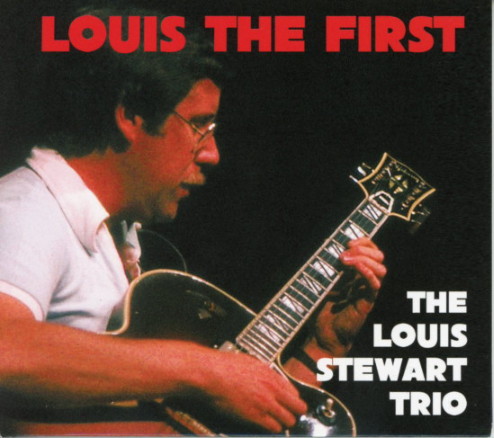
Louis Stewart - Louis the First [Livia Records LRCD 2401]

 © Copyright ® Steven Cerra, copyright protected; all rights reserved


Derek Jewell - Sunday Times: "With luck he really could become the best jazz guitarist in the world."


Jack Carter - Crescendo: "Stewart's performance on these tracks clearly demonstrates that there will be many more albums, many more accolades."


Ronnie Scott: "Louis is a superbly talented natural musician. In my book he's one of the world's great jazz guitarists."


Ray Comiskey-Irish Times: "an excellent example of jazz guitar by a master."


Hugh de Camillis- Guitarist Magazine: "Guitarists Joe Pass and Ike Isaacs have both expressed to me that in their opinion he is the most promising young guitarist around at present... An excellent offering to grace the shelves of any record collection. I hope there will be more to follow."


  • The above are press comments from the original LP release of Louis the First


As a young man, so the story goes [not apocryphal], iconic Jazz guitarist Tal Farlow would listen to pianist Art Tatum’s piano wizardry on radio broadcasts in his family’s workshop and try to duplicate - on the guitar no less! - Art’s lightning finger runs, rapid glissandos and breakneck improvisations on the guitar!


Six strings versus 88 keys?!


After listening to guitarist Louis Stewart on the recently released Louis the First [Livia Records LRCD 2401], one has the feeling that Louis channeled his inner Tal and was privy to, if not the actual Tatum radio broadcasts, then a practice regimen similar to that of Farlow’s.


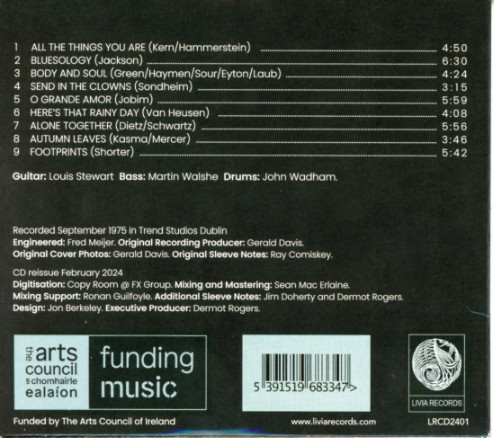
When Louis is in full stride, his improvised lines are a blur. Thankfully he uses this abundance of technique sparingly and in the service of the music on the nine tracks that make up Louis the First - five of which are trio, one a bass-guitar duet and three are solo guitar.


The music on this new CD dates back almost 40 years, yet it sounds like it was played and recorded only yesterday. 


Louis is a brilliant musician from every point of view: tone control, fluidity of ideas which dovetail into intriguing melodic improvised “lines” and a determined and unrelenting sense of swing.


He comes to play.


My preference are the five trio tracks. I think that his playing with bass and drums tends to settle him; his blazing technique is more readily brought into focus within the confines of this format.


Of the nine tracks, two are Jazz standards: Milt Jackson’s Bluesology and Wayne Shorter’s Footprints.


Four are from the Great American Songbook: All the Things You Are, Body and Soul, Alone Together, and Autumn Leaves.


Three are Modern Day Classics: Send in the Clowns, Here’s That Rainy Day and Jobim’s O Grande Amor.


This sweep of repertoire speaks to Louis' well-developed musical sensibilities as he is able to take the process of making Jazz into a variety of settings and create memorable interpretations and improvisations in each of them.


To my ears, the highlight of the recording is the duet with bassist Martin Walshe on Body and Soul, a song Jazz historian Ted Gioia describes as “the granddaddy of Jazz ballads, the quintessential torch song, and the ultimate measuring rod for … players of all generations.”


Louis and Martin barely hint at the original melody and instead dive deeply into intricate improvisations built around substituted chords and a wonderful “give and take” between the warm sounding acoustic instruments. The listener is treated to a 4.19 minute adventure in romantic balladry.


Alone Together with its unusual 14 bar A-theme based around a tonic major and the last 12 bar restatement concluding in a minor finds the trio digging in and rocking the peculiarities of the composition into an appealing series of hard-driving improvisations.


Wayne Shorter’s Footprints is just the ticket for creating improvisations that sound freeform but are actually based on formal structures which are hidden because they are not easy for the ear to discern. Louis, Martin and drummer John Woodham take full advantage of the blues progressions of the tune, which are similar to Miles Davis’ classic All Blues, to create a comfortable ¾ groove that is full of well-constructed improvisations encased in a dark, somewhat edgy feeling.


Recorded in 1975 when Louis was very much coming into his own as an artist, this is some of his best work: exhibiting total command of the tone and tenor of the instrument while creating interpretations that are full of risks that culminate in music that is accomplished and emotionally satisfying.


Stewart makes it all sound so easy and yet as the late pianist Bill Evans once said: “Making things sound easy in Jazz is 2 % talent and 98% hard work.”


At the time of these recordings, Louis had put in the hard work and paid his dues. As a result, we are in the presence of an accomplished artist, or to paraphrase his lifelong friend, pianist Jim Doherty: “By 1975, Louis was on fire so the time had come to record him as a leader.”


In addition to the superlative music on hand in Louis the First there is “a 16-page booklet with the original sleeve notes and new, extended notes including recollections from his close friend Jim Doherty and a trove of previously unseen photographs.”


With this CD reissue, Dermot Rogers has created another loving tribute to Louis Stewart, a guitarist who during his lifetime [1944-2016] was universally acclaimed as “the first true world-class Jazz musician to emerge from Ireland.”


Why not purchase a copy of this superb recording and join in the celebration. For order information go to https://liviarecords.com/product/louis-the-first/


Sunday, June 18, 2023

"Some Other Blues On Livia Records" - Louis Stewart and Noel Kelehan

 © Copyright ® Steven Cerra, copyright protected; all rights reserved.


SOME OTHER BLUES features 8 standards, including the title track by John Coltrane, and an original ballad from Noel Kelehan. The CD includes a12-page booklet with sleeve notes by former Louis Stewart bassist and educator, Ronan Guilfoyle, and a trove of previously unseen photographs. Catalog #: LRDC2301 Format: Download and CD vinyl @ later date) Release Date: 26th May 2023.


SOME OTHER BLUES [Livia Records LRDC 2301] is a major release from Irish guitar giant Louis Stewart and his friend and collaborator, pianist Noel Kelehan (pronounced “keel-a-han"). This Previously unreleased gem reinforces Louis Stewart’s reputation and reveals Noel Kelehan, whose Bill Evans-like playing wasn't widely known.


It’s not often that a Jazz musician has a defunct label revived expressly for the purpose for which it was originally intended - that of featuring his music - especially if he happens to be an Irish Jazz musician who spent most of his career in his native land and the neighboring UK.


Furthermore, it’s even rarer that such an undertaking would be the source of so much national pride.


Enter guitarist Louis Stewart, Dermot Rogers and Livia Records - all reflective of the pride of the Irish.


The details about the relationship between Louis, Dermot and Livia are described below in Press Releases from Amanda Bloom at Crossover Media and Livia Records, so I’ll just add my comments as an introduction to them.


The editorial staff at JazzProfiles has previously reviewed Louis’ first offering on Livia entitled Out On His Own which you can locate via this link.


Following this maiden voyage, my enthusiasm for the projects at Livia Records involving Louis has not waned, especially after listening to their second outing together, this time in the company of the formidable pianist Noel Kelehan.


At the time this recording was made in 1977, Louis was only thirty-three years old, a relatively young age in the overall scheme of things given what has to be mastered to perform Jazz at a high level.


Some young Jazz players use a lot of notes in their solos and this is certainly the case with Louis’ playing on Some Other Blues. For the record, Noel who was all of 42 years of age, is no slouch, either, at the flag-wavers.


This tendency seems to be a part of the joys of first expression; the thrill of discovering that you can play an instrument and play it well.


Kind of like: “Look what I’ve found? Look what I can do? Isn’t this neat?”


Another reason why these young Jazz musicians play so many notes is because they can.


They are young, indiscriminately so, and they want to play everything that rushes through their minds, getting it from their head into their hands almost instantly.


Their Jazz experience is all new and so wonderful; why be discerning when you can have it all?


If such abilities to “get around the instrument” were found in a young classical musician romping his or her way through one of Paganini’s Caprices, they would be celebrated as a phenomena and hailed as a prodigy.


Playing Paganini’s Caprices, Etudes, et al. does take remarkable technical skill, but in fairness, let’s remember that Paganini already wrote these pieces and the classical musician is executing them from memory.


In the case of the Jazz musician, playing complicated and complex improvisations requires that these be made up on the spot with an unstated preference being that anything that has been played before in the solo cannot be repeated.


But oftentimes when a Jazz musician exhibits the facility to create multi-noted, rapidly-played improvised solos, this is voted down and labeled as showboating or derided as technical grandstanding at the expense of playing with sincerity of feeling.


Such feats of technical artistry are greeted with precepts such as “It’s not what you play, but what you leave out” as though the young, Jazz performer not only has to resolve the momentary miracle of Jazz invention, but has to do so while solving a Zen koan at the same time ["What is the sound of the un-played note" or some such nonsense].


All of this is by way of preparing you for the gusher of notes that issue forth from Louis and Noel played at extremely fast tempos on some of the tunes, the rapid interplay between guitar and piano in establishing vamps, riffs and rhythmic accents and the complex harmonic substitutions that challenge the listeners’ ear.


What Louis and Noel have created on Some Other Blues is exciting Jazz played with an enthusiasm and energy which permeates all the music on this wonderful recording.


For order information via Livia Records go here.


And here are the Crossroads Media and Livia Records Media Releases which will provide you with more insights and information about this outstanding recording.


About “SOME OTHER BLUES” - The previously unreleased SOME OTHER BLUES is regarded as a Holy Grail of Irish Jazz as it's the only known studio recording of Louis Stewart and Noel Kelehan. While Stewart was a local hero and internationally renowned guitarist, Kelehan was not well known as a jazz pianist outside of Ireland due to his TV-based composing, arranging and conducting, even though jazz was his first love. Here we find Louis and Noel, two giants of Irish jazz, in the kind of electrifying form that thrilled Irish jazz audiences in the 1960s, and 70s, in a programme of duets that scale the heights of swing, virtuosity, and interplay. Guitar and piano duet albums are uncommon in jazz, with Bill Evans and Jim Hall’s probably the best known. As Louis and Noel were huge admirers of both, they may well have been inspiration for SOME OTHER BLUES’. Both men were bone fide virtuosi, and there is a real sense of them reveling in their abilities, sparring with each other, and enjoying the excitement of the chase. While the omission of bass and drums open many possibilities, it jettison the safety net of the rhythm section. Of the nine times, three of them–‘YOU STEPPED OUT OF A DREAM’, ‘MINORITY’, and ‘I'LL REMEMBER APRIL’ are taken at blistering pace. And despite sometimes living on the edge of playable tempos, Louis and Noel don’t drop as much as a beat, even in the white heat of I’LL REMEMBER APRIL with its extraordinary tempo of 285 bpm. They each unleash lightning-fast solos, while playing through a set of chord substitutions that pile more chords on top of an already chord-rich piece. The Harmonic sophistication is a common feature of the album's medium and fast tempo tunes, and arrangements have Noel’s fingerprints all over them. His ability to jump backwards and forwards between keys, and the arrangement of Coltrane’s ‘SOME OTHER BLUES’, in which the first two choruses of both the guitar and piano solos feature two chords in every bar which constantly change key, is typical of Noel. Louis is a perfect partner to Noel's harmonic daredevilry, with his flawless technique, effortlessly flowing melodies, and deep swing. Each man is the perfect foil for the other, provoking and challenging in a playful way. This is very clear on ‘SINGIN’ IN THE RAIN’, where Noel plays the melody in minimalistic octaves, while Louis provides an almost Freddie Green-esque strummed accompaniment, making for the album's most mischievous take. The album's two ballads, Tadd Dameron’s classic ‘IF YOU COULD SEE ME NOW’, and Noel’s own beautiful ‘I ONLY HAVE TIME TO SAY I LOVE YOU’ reveal two masters capable of the kind of deep lyricism that the best ballad playing requires. The album was recorded in Bray, just south of Dublin, in the same studio where Louis Stewart recorded his solo OUT ON HIS OWN masterpiece just a few months earlier.


Louis Stewart was the giant iconic figure in Irish jazz in the same way as Enrico Rava was in Italy, Martial Solal in France and Tomasz Stańko in Poland. Alongside such giant figures there are always others who, though having a lower profile, are important contributors to the scene, who are equally deserving of recognition. In Ireland, Noel Kelehan was the epitome of this kind of figure – an important contributor to the scene, an influence on his colleagues, and a world-class musician, but someone who flew just under the international jazz radar.


Noel was a formidable pianist in the Bill Evans vein. His mid-1960s trio featured Louis Stewart and a later quintet had a weekly residency in Dublin's Killiney Court Hotel for years and recorded one of Ireland's best jazz albums "Ozone" in 1979.


He was also the pianist of choice for many jazz artists visiting Ireland. Noel was nine years older and more experienced than the guitarist when Louis first joined Noel’s trio at Dublin’s Intercontinental Hotel. Louis credited Noel with teaching him a lot about harmony. They remained friends and colleagues for the rest of their lives. They shared a mutual respect and a humorous, easy relationship. Their mutual admiration always sparked each other to great improvisatory heights when they played together. Despite their friendship and musical compatibility, after the late 1960s they didn’t play together very much due to the divergent paths their lives took. In 1969 Louis relocated to London to play with Tubby Hayes and take advantage of the wider scope that the London scene afforded his huge talent. Noel became a staff conductor, arranger, and producer for RTE; Ireland’s national broadcaster, in 1973, which made enormous demands on his time. It is in this role that Noel is best known to the wider music world, and he holds the record for being the most prolific conductor in the history of the Eurovision Song Contest,(twenty-four songs), and the conductor of the most winning entries, (five). He also did string arrangements for U2’s ‘Unforgettable Fire’ album, and this kind of arranging and conducting work limited the amount of jazz playing he could do. Noel died in 2012.


A word, by way of background, about Gerald Davis and Livia Records.


Gerald Davis, a Dublin painter and friend of Louis Stewart produced his first 1975 leader album ”LOUIS THE FIRST” and then founded Livia Records to release Louis’ great solo, “OUT ON HIS OWN” and other albums establishing Ireland’s first jazz record label with a name inspired by the works of James Joyce.


Livia ceased operations following Gerald's Death in 2005. With his family’s support, Dermot Rogers started a rediscovery and reactivation project in 2021 that led to this release and has unearthed a wealth of other live and studio recordings that are intended for future releases. “SOME OTHER BLUES” is the only recording of Louis Stewart with his friend and mentor Noel Kelehan.