Showing posts with label Oliver Nelson. Show all posts

Tuesday, June 25, 2024

Oliver Nelson - Down By The Riverside (1967)

Solos: Bobby Bryant, Freddy Hill, Conte Candoli, Buddy Childers
Oliver Nelson - arranger, conductor, soprano saxophone Bobby Bryant, Conte Candoli, Buddy Childers, Freddy Hill - trumpets Lou Blackburn, Billy Byers, Pete Myers, Ernie Tack - trombones Gabe Baltazar, Frank Strozier, alto sax
Bill Perkins, Tom Scott - tenor sax Jack Nimitz - baritone sax Frank Strazzeri - piano Monte Budwig - bass Ed Thigpen - drums Recorded June 2-4, 1967 Marty's on the Hill, Los Angeles, CA

Sunday, June 4, 2023

The Kennedy Dream - Oliver Nelson [From the Archives]

© -Steven Cerra, copyright protected; all rights reserved.


"In February of 1967, Oliver Nelson recognized Kennedy’s contributions and assembled a big band to play music in his honor, with taped segments of his speeches as preludes. The result is a heartfelt yet eerie combination, perhaps a bit off-putting, but absolutely relevant decades later. The music is reflective of the changing times as identified by Nelson, ranging from commercial movie score-type music, to soulful or straight-ahead jazz, bop, and the modern big-band sound that the leader, composer, and orchestrator owned... it's a stark reminder of how one man can positively influence the human condition aside from politics and corporate greed, and how another can change his world musically.”
- Michael G. Nastos, allmusic.com


Recorded on February 16 and 17 in Capitol Studios, the eight tracks that were subsequently issued on Impulse! Records as The Kennedy Dream [AS-9144] “contain only a modicum of big band Jazz,” according to Kenny Berger, “since part of the album is written for a string-and woodwind based studio orchestra. In addition, seven of the eight tracks begin with recorded excerpts from Kennedy’s best known speeches.”


Of the eight movements, Berger goes on to say in his insert notes to Oliver Nelson: The Argo, Verve and Impulse Big Band Studio Sessions [Mosaic MD6-233]:


LET THE WORD GO FORTH begins with a somber introduction which segues into an ear-catching sequential figure in 7/8 meter. This figure is derived from another example in Oliver’s Book Patterns for Saxophone (...), and is based on a series of altered pentatonic scales that descend in whole steps. Next comes a dramatic-sounding theme in 9/4, stated by the low brass, followed by the full ensemble. Clarinets restate the 7/8 theme, which builds in tension till a return of the 9/4 theme. Nelson's imaginative use of the tuba here is noteworthy, as is Don Butterfield's flawless execution.


A GENUINE PEACE begins as a straight waltz stated by Phil Bodner on oboe. The low brass then take over, and the rhythmic feel begins to take on a martial quality, especially when the drums begin a rhythmic pattern that feels like a cross between a march and a waltz. This section segues into a jazz waltz with unison brass stating a theme that bears a strong resemblance to GREENSLEEVES. Two English horns take over the theme and the mood darkens as the intervallic tension between the melody and the bass line increases.


The melody of THE RIGHTS OF ALL is stated by Bodner on English horn followed by the album's first jazz solo, by Phil Woods on alto saxophone.


THE ARTISTS' RIGHTFUL PLACE is actually PATTERNS FOR ORCHESTRA wisely reorchestrated so that only the saxes play the wide skips in the melody, which hung the trumpet section out to dry on PATTERNS.


DAY IN DALLAS begins with a sense of foreboding, segues into a conventionally tuneful ballad, and then takes on a dirge-like atmosphere. This last section is a good illustration of the ways in which Nelson's compositional skills allowed him to make use of harmonic devices outside the realm of conventional jazz harmony. The increase in disquiet as the piece develops is achieved with subtlety, though carefully controlled increases in intervallic tension [intervals in pitch usually expressed in semitones].”


In his review of The Kennedy Dream for wwwallmusic.com, Michael G. Nastos offered the following views of the suite and its significance.


When the late President John F. Kennedy was assassinated on November 22, 1963, the world lost not only a prominent politician, but one who truly championed the arts and civil rights. In February of 1967, Oliver Nelson recognized Kennedy’s contributions and assembled a big band to play music in his honor, with taped segments of his speeches as preludes.


The result is a heartfelt yet eerie combination, perhaps a bit off-putting, but absolutely relevant decades later. The music is reflective of the changing times as identified by Nelson, ranging from commercial movie score-type music, to soulful or straight-ahead jazz, bop, and the modern big-band sound that the leader, composer, and orchestrator owned. Kennedy's most famous speech about fellow Americans, asking what they can do for their country, is folded into the last track "John Kennedy Memory Waltz" with a string quartet and the regret-tinged alto sax of Phil Woods.


The 35th President's oratorios on human rights act as prelude to the soft clarion horns, 7/8 beat, flutes, and vibes, giving way to the modal and serene passages of "Let the Word Go Forth," or the cinematic, military beat, harpsichord-shaded, plucked-guitar-and-streaming-oboe-accented "The Rights of All," which is also reflective of the immortal spiritual song "Wade in the Water." Where "Tolerance" has a similar verbal tone, the mood is much more ethereal between the flutes, oboe, and strings, while the two-minute etude for the first lady and widow,


"Jacqueline," is in a loping stride, reflective of how much longer it always took her to get dressed and organized. "A Genuine Peace" is an anthem for all time in a soul-jazz mode that parallels Aaron Copeland's Americana moods, while "Day in Dallas" is the expectant, ominous, foreboding calm before the chaos. Nelson's straight-ahead jazz exercise is "The Artists' Rightful Place," a spoken word tonic for musical troops in a bop framework that has the horn section jumping for joy.


As always, Nelson surrounds himself with the very best musicians like Woods and Phil Bodner in the reed section, tuba player Don Butterfiled, bassist George Duvivier, pianist Hank Jones, and all produced by Bob Thiele.


Now reissued on CD some 40 years later, it's a stark reminder of how one man can positively influence the human condition aside from politics and corporate greed, and how another can change his world musically.


On August 26, 2009, Douglas Payne published this review of The Kennedy Dream on his Sound Insights blog.


“At a time when most of what used to be called “record companies,” are slashing budgets, cutting staff or going out of business altogether, Universal Music has been doing a superb job reissuing their huge treasure trove of jazz on CD. Through its Originals program, dozens of nearly forgotten jazz gems from the old Verve, Impulse, A&M, Philips, MGM, Mercury and Limelight catalogs are finding their way back onto the nearly 30-year old CD format.


The other majors (WEA, Sony, EMI) are either (thankfully) licensing albums out to boutique reissue labels like Water, Wounded Bird, Collector’s Choice and Collectables or making the music available for download only. Universal Music’s Original series is catering its great wealth of music to what has become an appreciative, though small and shrinking, market base that still likes to have and hold music with great cover art, musical credits and, in some cases, liner notes (which CDs tend to make almost impossible to read).


To get an idea of just how obscure some of these Originals releases are, take the Oliver Nelson (1932-75) album The Kennedy Dream: A Musical Tribute To John Fitzgerald Kennedy, originally released in 1967 by the Impulse Records label. Even in 1967, hardly anyone knew the record existed. These days, Oliver Nelson’s name barely registers. Sadly, he does not get the recognition he so richly deserves outside of the required nod to “Stolen Moments,” Blues and the Abstract Truth, the brilliant 1961 album “Stolen Moments” appeared on, and – often snidely – a handful of Jimmy Smith’s Verve albums.


The release of Oliver Nelson’s The Kennedy Dream is, indeed, cause for celebration. It is a masterful work that ranks high among the composer’s very best work. This tribute is probably one of the most personal, deeply felt pieces he was ever asked to do outside of Afro/American Sketches (Prestige, 1961) or Black Brown and Beautiful (Flying Dutchman, 1969). And the sincerity of his conviction shines through, producing an impassioned tribute to an inspired leader who inspired much hope for a brighter future and a better world.


The Kennedy Dream is a semi-orchestral suite in which seven of the eight compositions are launched by brief, yet memorable sections of John Kennedy’s speeches about equality and positive change. The recording was made over two days in February 1967, with a small, uncredited cast of New York’s finest session men, including Snooky Young on trumpet, Jerome Richardson and Jerry Dodgion on reeds, Phil Woods on alto sax (and solos), Phil Bodner on English horn, Danny Bank on bass clarinet, Don Butterfield on tuba, Hank Jones on piano and harpsichord, George Duvivier on bass and Grady Tate on drums.


Despite the stirring of Kennedy’s words and the rush of the occasional solo, one’s attention and admiration is drawn throughout to Nelson’s beautiful melodies, constructed with evocative passages and very personable turns of phrase. His writing for strings, for which he never got his proper due, is remarkable; filled with a purposeful passion and a rare and poetic restraint.


Each of the suite’s eight pieces have a chapter-like quality in what could be considered a musical novella – not quite the magnum opus it might have been under different circumstances (thanks to producer Bob Thiele, Nelson was probably lucky to get this record made at all) but certainly more reflective and insightful than a mere song could have ever conveyed. Still, the album’s highlights include “Let The Word Go Forth” (based on Example 45 from Nelson’s instruction Book Patterns For Saxophone), “The Artist’s Rightful Place,” known elsewhere as “Patterns For Orchestra” and, most notably, the outstanding “The Rights of All,” featuring a pizzicato strings rhythm and a gripping Phil Woods solo.


Released on CD* in what would have been Kennedy’s 82nd year – and during the first year into the term of a president who presents as much hope for positive change as Kennedy once did - The Kennedy Dream is a remarkable work from a period when orchestral jazz was not all that uncommon. It is as much a musical tribute to the presidential legacy of John Fitzgerald Kennedy as it is a documented tribute to the beautiful musical legacy of Oliver Edward Nelson.


* The Kennedy Dream was included on the 6-CD Mosaic boxset, Oliver Nelson: The Argo, Verve and Impulse Big Band Studio Sessions issued in February 2006.”


Friday, August 27, 2021

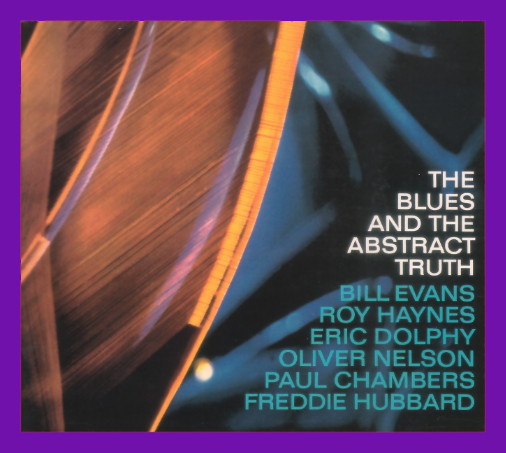
More Impulse! - Oliver Nelson - "The Blues and The Abstract Truth"

 © Copyright ® Steven Cerra, copyright protected; all rights reserved.


The editorial staff has previously written about Askey Kahn’s The House That Trane Built: The Story of Impulse Records which you can access by going here. 


With so many recordings now available wholly or in part for sampling on Youtube, I thought it might be fun to return to Ashley’s book and dig a little deeper for annotations about some of my favorite Impulse! LPs and to populate them with audio links via YouTube.


Having started with Gil Evans’ Out of the Cool [A(S)4] issued in 1961 as the fourth album released by the label, let’s continue with the backstory for the album that succeeded it in that same year - Oliver Nelson’s The Blues and The Abstract Truth [A(S)5].


“STOLEN MOMENTS, written in I960, is a 16-bar composition derived from blues in C minor. The tune consists of three melodic ideas which extend the basic blues form. The divisions within the piece would then be 8 bars, 6 bars and 2 bars. In order to add contrast, the harmonic progressions for the solos are minor blues 12 measures in length. Freddie Hubbard begins with a very sensitive and soulful trumpet solo, followed by Eric Dolphy on flute and a tenor solo by myself. Bill Evans completes the series with a beautiful piano solo. After the final statement of melody, the piece ends quietly.”

- Oliver Nelson, composer


Another Arranger


Producer and label head Creed Taylor had already approached Oliver Nelson to record an Impulse title during the label's long gestation period in 1960. In mid-February 1961, as Impulse's four-title debut made it to market, the producer focused on Nelson, a multi-reedman, composer, and arranger whom he had come to know as a dependable saxophonist with a sense of balance.


Oliver was another story. He was very special—melodic. He understood voicing like nobody else. He had done some dates with me before at Webster Hall [studio], as part of a sax section — he, Al Cohn, and Zoot Sims. There was something different about him at that point. He could blend in with a section, but at the same time he had a sound that was so strident. When he played a solo he was unmistakably Oliver Nelson.


With a handful of unusually angular compositions requiring a septet, Nelson recorded an album that received the full Impulse treatment: state-of-the-art sound (thanks to Rudy Van Gelder,) mood-setting cover portrait (courtesy of Pete Turner), and a cryptic title the producer himself concocted. The Blues and the Abstract Truth [A(S)-5] became Impulse's first title after the label's explosive debut, and yielded a second substantial jazz radio hit with the mood-setting Stolen Moments.


Nelson himself wrote the album's liner notes, explaining the motivation and structure behind his tunes, praising his sidemen, and confessing that when he had first arrived in New York City, "I believed I had my own musical identity" until falling under the spell of two tenor saxophonists he "could not deny"—Sonny Rollins and the man Taylor had already pegged as Impulse's next project: John Coltrane.


Oliver Nelson / The Blues and the Abstract Truth Impulse A(S)-5 DATE RECORDED: February 23, 1961 DATE RELEASED: August 1961

PRODUCER: Creed Taylor


"That's my title. If the blues is a truth, why not then add 'the abstract truth'? The word 'the' was supposed to be there—'The Blues,' you know? It was like, pardon the term, our white brothers dropped the 'the.' Still—it just worked."


Creed Taylor, familiar with Oliver Nelson's recordings as a leader on Prestige, was attracted by an unusual aspect of the saxophonist's personality.


"Oliver was so articulate, personally, that we could talk about a lot of things. He had a background in the history of music—classical or whatever. We both had the same hobby, by the way: H.O. trains. Oliver built a logging camp in his basement and I built the Norfolk & Western railroad, which went from Norfolk to Columbus, Ohio, in mine. Coal trains—not Coltrane. Oliver and I had a lot in common, SO it enabled us to talk about music in a comfortable way."


Contracted to a one-record deal while he continued to record for Prestige, Nelson brought a band of young scene-makers—some established, some very new—to Rudy Van Gelder's studio for his Impulse debut: saxophonist and flutist Eric Dolphy, pianist Bill Evans, baritone saxophonist George Barrow, bassist Paul Chambers, drummer Roy Haynes, and trumpeter Freddie Hubbard.


"Me, Phil Woods, Oliver —all those guys were playing with Quincy," remembers Hubbard. "So I had a chance to hang out with them, and then Oliver asked me to do the date with him. Oliver liked me because at the time I was practicing with Coltrane. He would be writing even while he was with Quincy... and he had a way of writing for saxophones, close notes among the reeds.


"He got some voicings, man, that were out of this world! Like when he did [sings Stolen Moments], he had the baritone up above the tenor; to have a baritone voiced that high is unusual. And he had the alto below the tenor, and he had me playing the lead."


In fact, Hubbard received the honor of the first solo on the album, though the trumpeter recalls a few misgivings as the tapes rolled.


"I didn't know it would sound that good because he didn't turn me up as loud as I thought I should have been. But he wanted me to blend with the horns instead of being out front. I remember the fact that I said, 'How is this rhythm section going to gel?' I mean, Roy Haynes doesn't play heavy and it seems like Paul Chambers was always on top with a big sound. So Roy would just lay back behind him, and I didn't hear Bill Evans until the playback because he played so quiet."


Taylor was as enthused by Nelson's sidemen choices as he was by the arranger's enthusiasm. "Everything Freddie Hubbard played knocked me out. And what can you say about Bill Evans? He was in great shape playing-wise. And Oliver was very animated. He wouldn't just give a downbeat or count the band off, he would leave the floor! Jump up in the air and come down right on the downbeat. I'm sure his blood pressure went through the ceiling every time he conducted or played. I don't mean out of control, but he just felt every ounce of what was happening." And the tunes?


Stolen Moments was a given — just, whew!" Taylor enthuses." Cascades was the most unusual piece and Yearnin’ was just fantastic. I had never heard anything like it before, but I understood it. 'Hoe-Down' was kind of weird, I felt...."


"He had this song on there, Hoe-Down, that I'll never forget," says Hubbard. "I said, 'Man, what is this song?' [Sings melody.] To me it was kind of out of context, but he took a lick that I had stolen from Trane and he put that on the bridge. [Sings.] He built it off of that line, Oliver wasn't so much of a soloist as he was a writer, so he would take bits and parts of people's stuff."


Released in the spring of 1961, The Blues and the Abstract Truth proved career-defining for Nelson, an instant hit on jazz and even non-jazz radio, and eventually led the in-demand arranger to move to Los Angeles in 1967. Taylor:


"I don't think the word 'crossover' had become part of the language at that point, but I know all the jazz stations at the time really went for it, and other pop stations, which are not around anymore, went full steam ahead on it too. Oliver was such a unique talent and I hated to see him go to Hollywood, where he kind of evaporated."”


Thursday, February 4, 2021

Oliver Nelson's Big Band - Live from Los Angeles

 © Copyright ® Steven Cerra, copyright protected; all rights reserved.


In early June 1967, the buzz was going around the Musicians Union Local 47 on Vine Street in Hollywood, CA that something special was going on at a nightclub called Marty’s-on-the-Hill in the Baldwin Hills area of the city on Slauson near South La Brea Avenue.


I knew the club very well as I had once worked there with Hammond B-3 organist Henry Cain’s trio.


What everyone was talking [buzzing] about was Oliver Nelson’s big band which was made up of top tier Los Angeles studio players.


Oliver had made the move to The Left Coast from New York a year or so earlier to write for television and movie programs, but he also wanted to be able to continue writing for a big band, so he put together a band that rehearsed his arrangements at one of the practice rooms at the union.


Everybody in town wanted to be in Oliver’s big band and it wasn’t long before the word got around that something special was happening. The band landed an off-night gig at Marty’s.


Oliver, who was under contract to Impulse! Records convinced his producer Bob Thiele to make a live recording of the band under the supervision of recording engineer Wally Heider who was renowned for his work in on-site settings.


At the time, the front-line in drummer Shelly Manne’s quintet in 1967 was trumpet player Conte Candoli and alto saxophonist Frank Strozier - both were in the band. Stalwart Bill Perkins and young phenom Tom Scott made up the tenor sax section with Gabe Baltazar on lead alto and Jack Nimitz anchoring it on baritone sax.


Buddy Childers was on lead trumpet but the real surprise was that he was joined by not one but three of the most fiery trumpet soloists in the city in Bobby Bryant, Freddy Hill and Conte [Buddy can also assume the Jazz chair].


Billy Byers, Pete Myers, Lou Blackburn and Ernie Tack were the trombone unit and the rhythm section was made up of Frank Strazzeri on piano, Monty Budwig on bass and Ed Thigpen on drums.


Wait a minute - what! Ed Thigpen who played in Oscar Peterson’s trio for six years in the drum chair - this I gotta hear.


That was it - I had to be there and I was for what turned out to be a jubilant occasion for all concerned.


To share some of the excitement I’ve scattered a few YouTubes around the posted feature and included Nat Hentoff’s liner notes below.


“You go into a studio with a big band," Oliver Nelson was saying, "and you try to get a live feeling—that electricity, that rapport between audience and musicians and you sometimes feel outside. But while you can come close to perfection in a studio in terms of sound, that quality of live enthusiasm is often elusive. That's why I wanted to do a really live album, in a club."


The location was Marty's on the Hill in Los Angeles, which Nelson describes as "the only place in town where something's always hap-

pening." The band rehearsed briefly before the engagement, and then spent six days at Marty's. These tracks were selected from the nights of June 2, 3, and 4, 1967.


Bob Thiele, who produced this album, notes: "I like 'live' recordings, not only because they're spontaneous but also because the musicians aren't under pressure. If one performance doesn't work out, you have so many others to choose from. What made this an unusually exciting occasion was that the band was composed of top players who fused with such spirit that they kept sending substitutes to their regular jobs so that they could be at Marty's every night for the sheer pleasure of playing." 


"That's it," Nelson added. "For these guys, with their jobs in the studios and at record dates, this engagement was a waste of time financially. But they enjoyed what was happening so much that they were willing to take that economic loss."


It is this sense of exuberant satisfaction which characterizes the whole album and makes it one of the more "alive" recordings in. some time. The opener. Miss Fine, is named after Oliver Nelson's sister. Or rather, it's the nickname of Leontyne Lacoste. The crisp trumpet solo is by Freddy Hill.


Milestones is regarded by Oliver Nelson as "one of the more important jazz tunes in the past ten years." It was written by Miles Davis, and as Nelson says, "Miles has a unique sense of everything, including form and harmony. When it was first released, it not only stood out from much of what was being done at the time but it also looked ahead."

The first surging horn is Frank Strozier’s alto, and then he is joined in a fascinatingly challenging duet by young Tom Scott on tenor. “There’s a lot of this simultaneous improvising  going on now," Nelson observes, "but you don't often get musicians involved in that who listen to each other as carefully as Frank and Tom do in this performance."


I told Nelson how impressive Strozier sounded to me both on this track and the subsequent I Remember Bird. "Frank finally is beginning to get some of the attention due him," said Nelson. "And he's also working in the studios now, but as you can hear, he's kept his jazz thing intact. His wife says he's a

tyrant about music because all he does is practice ail the time, and all he thinks about is music. At Marty's we heard him for six nights, and every night the whole band had to stop and listen to what he was doing. Tom Scott, though he's younger, has that kind of impact too. He's already ahead of his years in that he has such an individual sound and style. He's not yet twenty, but he's had such a thorough musical background that it's now paying off in terms of what he wants to do.”


The featured performer on Night Train and Oliver Nelson's Guitar Blues is guitarist Mel Brown. He's a discovery of Bob Thiele. "I heard him in a joint," Thiele recalls, "and he knocked me out. I used him on a T-Bone Walker date, and that led to his first album under his own name for Impulse, Chicken Fat. Then I told Oliver about Brown, and he said to send him over." "He broke it up at Marty's," Nelson adds. "It's partly visual because he's a great, big cat; and once he gets going, he and the guitar are moving all over the place. But musically what he has is this huge warmth, directness, and earthiness. I wrote Guitar Blues for him."


Down by the Riverside is a driving four-way exchange between trumpeters Bobby Bryant, Freddy Hill, Conte Candoli, and Buddy Childers. "It's such an absorbing performance," says Nelson, "because each of them is quite different from the other. And throughout the engagement, they made up a great section. You usually have a trumpet section with just one man —most often the guy in the third chair—who takes jazz solos. But I never had a section before in which each player could do everything — from playing lead to improvising jazz. For that matter, we had that kind of flexibility all through the band."


Ja-Da was the band's theme during its stay at Marty’s and includes intriguing voicings by Nelson. I commented on the wit of trombonist Lou Blackburn on this track, and Oliver said, "It reflects the whole experience during those six nights. We were having fun, man!" Fortunately the essence of those six nights won't be lost, as a result of this recording. Also, because of Bob Thiele's enthusiastic reaction to Tom Scott during the engagement, Scott was signed to an Impulse contract and has made his first album for the label.


As Thiele said. “That was a very productive trip to Los Angeles for me. It led to a lot of good music”


And it also reinforced, in this album, the belief of those, like myself, who prefer on-location recordings of Jazz. Of course, the mere fact that you do record “live” doesn’t automatically insure the full-bodied spontaneity of an optimum night in a club. 


But when the musicians are of high quality, the arrangements loose enough to give them room in which to stretch, and that ineffable collective fire starts building, then a “live” recording becomes a singularly satisfying event.”

- Nat Hentoff.


Impulse! A-9153 vinyl 1967

Impulse! A-9153 CD 2005


Oliver Nelson - arranger, conductor, soprano saxophone

Bobby Bryant, Conte Candoli, Buddy Childers, Freddy Hill - trumpets

Lou Blackburn, Billy Byers, Pete Myers, Ernie Tack - trombones

Gabe Baltazar, Frank Strozier, alto sax

Bill Perkins, Tom Scott - tenor sax

Jack Nimitz - baritone sax

Frank Strazzeri - piano

Monte Budwig - bass

Ed Thigpen - drums


Recorded June 2-4, 1967

Marty's on the Hill, Los Angeles, CA


There is a musician in the band on this album who is not credited. It’s the late Howard Johnson who plays tuba on it. He told me this himself in an email of June 27, 2010 (“I'm also playing tuba on all those Oliver Nelson live tracks from 1967. I'm not credited, but there is clearly tuba on every track"). It was confirmed by saxophonist Kenny Berger: "Check out the brass figures on the bridge of Milestones and the shout chorus on I Remember Bird and you'll hear it. Hint-don't listen for it to be reinforcing bass functions. A lot of the time the tuba doubles the lead trumpet two octaves down which puts the tuba in its upper register in which it projects very strongly.” (email July 6, 2010).


Noal Cohen