In today’s tech-enabled world, streaming music services are ubiquitous and as such provide a handy means to listen to Jazz or other forms of music without the fuss of having to cue up records on turntables or insert compact discs into optical character readers [i.e. CD players] or use any other devices per se to listen to music.
One click on an app installed on a cell phone or in a laptop and the listener can have music streamed either through speakers or wifi enabled earphones [buds?].
For a monthly subscription fee, users can refine their choices to gain access to particular styles of Jazz or specialize in the music of a favorite Jazz artist.
What’s not to like? Nothing is lost but the inconvenience of having to accumulate and store vinyl records or plastic CDs in jewel case covers. Playback machines are eliminated and convenience rules the day.
So, whaddya got to lose?
Actually, a great deal and not just the obvious information about track listings and timings, or information about the musicians involved in making the music, let alone the loss of the actual control that comes from owning something as opposed to leasing or renting it.
What’s especially tragic is the loss of information, opinion and insights that’s contained in many of the liner notes [LPs] or insert notes [CDs] that were a common feature of Jazz recordings on a fairly consistent basis from 1948, the year when CBS released the first long player record until 1998 an approximate date of the end of the heyday of CDs.
Of course, not every recording contained detailed information or critical reviews of the music in it.
But if you were lucky enough to buy one with annotations by the likes of a Nat Hentoff, Ira Gitler, or Leonard Feather, to name but a few of the enlightened writers who formed a part of the Jazz literati during the Golden Age of Jazz from approximately 1945 - 1975, then you were in for a real treat.
Because these writers grew up with the music and knew many of its makers intimately, they wrote from a position of knowledge and experience and their informed narratives became an informal history of Jazz, one that relied in large part on a compilation of primary sources including interviews with the artists represented on the recordings.
Sadly, few of these important writings and critiques have been collected and republished in book form as anthologies, although we are fortunate to have a few by Leonard Feather, Gene Lees and Gary Giddins and a scattering by others including Nat Hentoff whose work is represented below as one example of the treasure chest of information contained in the liner and insert notes that accompanied many Jazz recordings.
These can be found in a relatively obscure first recording by Red Mitchell, a paragon of Jazz bass, entitled Presenting Red Mitchell [Contemporary S-7538; OJCCD - 158-2].
What’s so impressive about these notes is that they not only bring Red’s career into sharper focus but Nat does so by framing it against the entire history of Jazz bass up to 1957 [the year the LP was released] and explaining Red’s place in its evolution.
“KEITH "RED" MITCHELL is, I would think, a trial to the critics. I know he is for me. He is that rare musician whose work it is almost impossible to fault. The result is that reviewing him requires a continual shuffling of the more fanfarish adjectives. It is, alas, somehow easier to invent new verbal ways to underline deficiencies than it is to sound the timbals [an old fashioned word for kettledrums] of praise. I would like, therefore, to repeat what I said about Red during a 1956 Down Beat of one of his appearances, since I still feel exactly the same way.
“Red Mitchell has become not just one of the better young bassist, but one of the most creative bassists in all jazz. He is consistently impressive in his solos, building with flowing, horn-like phrasing that is never stale and invariably reaching more satisfying climaxes. His tone is full and firm and he is clearly aware of the expressive virtues of shading. As part of the section, Red plays with swinging authority and unshakeable taste."
The subject of these enthusiastic reflections was born September 20, 1927 in New York City. For two years the family lived in Brooklyn, moving then to Fairlawn. New Jersey, where Red was raised. He had decided to become an engineer, won a Cornell scholarship, and had been at the school for a year when he was drafted. Up to this point, his musical skills had been directed at the piano an instrument which he explored more empirically than by rote from five to fourteen. He played piano in an Army band, but while in Germany, he traded fifteen cartons of cigarettes for a bass and his future was set (Karma, apparently, can even take the guise of nicotine.). Whitey Mitchell, Red's younger brother, is, incidentally, still playing that bass.
Red became an industrious autodidact [a self-taught person], working first on Bob Haggart and Simandl bass books. His initial post-Army experience was gained with a volunteer Gilbert and Sullivan camp meeting and a volunteer symphony. His first jazz gig was at the Onyx on 52nd Street for $15 a week opposite Charlie Parker. (This happened before Red joined the union, lest 802 starts to scan the statute of limitations .) "It was just like going to school," recalls Red. "We used to sit there every intermission and just listen to the band." His first union gig was in the winter of 1948-49 with [vocalist] Jackie Paris in Milwaukee. He later worked with [guitarist] Mundell Lowe, played piano with the Chubby Jackson [bassist] big band at the Royal Roost in 1949, then back to bass with Charlie Ventura, Woody Herman from 1949-51; and since 1952, he's been with Red Norvo, Gerry Mulligan. Hampton Hawes and other units, most recently heading the combo heard on this, its debut album.
SINCE RED IS THIRTY, old enough to have heard nearly all the major and minor modern bassists, his tracing of the influences on his work also serve, in part, as the outline for a history of modern jazz bass. It should be noted first, however, that Red feels he has been influenced more by horn men than bassists, although members of the latter confraternity have certainly helped shape him. Among the horn players and pianists he is especially receptive to are: Sonny Rollins, Bill Harris. Miles Davis. Dizzy Gillespie, Zoot Sims, Lester Young, Bobby Brookmeyer, Charlie Parker, Tony Fruscella, James Clay, Hampton Hawes. Al Cohn, Jim Hall, Jimmy Giuffre, Duke Jordan, Milt Jackson and John Lewis.
The early function of the jazz bass (and until the 1930s, most bass men were able by necessity to double on tuba) was primarily as a rhythm section instrument. By the mid 1930s, the function of the rhythm section components had become clearer and more integrated, and the bass had begun to assume a more substantial role, although it still was very limited as a solo instrument The paragon of flowing, swinging rhythm sections of the time was Count Basie’s and Walter Page was the bassist. "I guess the first bass player that really thrilled me was Walter Page," Red recalls, "even though I didn't know his name at the time. The first jazz record that really lit the light bulb for me was a Count Basie record . . when I was 16. And the rhythm section was the first thing I heard. I just fell right out "
But by the time Red had heard this Basie record in 1943, the radical liberation of the jazz bass begun by Jimmy Blanton in the late Thirties had already had hugely challenging, irrevocable effects on a phalanx of bassists a few years older than Red. "Blanton," as Leonard Feather notes in his excellent chapter on the bass in The Book of Jazz. "had simply shown that the bass was a melody instrument, that flowing harmonic patterns and melodic lines could be improvised on the four strings just as on a trumpet or saxophone and that with the genius born of painstaking practice it could be opened up to sixteenth and even thirty-second notes.”
As Red grew older, therefore, all the bassists after Page who influenced and impressed him were post-Blanton in their approach to the instrument. There were Oscar Pettiford ("I realized he was playing from very deep within himself and it was as real to him as expressing himself in words, if not more so"); Chubby Jackson ("I remember the excitement of that Herman band and Chubby"); Eddie Safranski ("I remember being gassed by his technique").
Red had arrived at the time when he first began to hear Charlie Parker, Dizzy Gillespie, Miles Davis — and Ray Brown whom he listened to while Ray was with Dizzy's small combo and then his big band "Ray got a real inspired swing with the groups he was with, and he also could solo, and in his solos, I heard the new music, the new phrasing he just turned me inside out. " Red also heard Al McKibbon's big sound, and Charlie Mingus sitting in at Minton's scared him. "I actually got frightened watching him play because I remember the way he went up to the top of the fiddle, and it wasn't even his own fiddle. It was Al's. And then he went across the strings, played all kinds of nice things. He was just walking, he wasn't actually playing a solo, although everybody was listening to him. Well, it was a walking solo. And he just played all kinds of good melodies way up there at the top of the fiddle where I very seldom even thought of venturing."
Among the others who walked into Red's musical consciousness were Nelson Boyd, the remarkably underrated Keter Betts ("another one of the exceptional guys because he could both solo and play rhythm"). Curly Russell ("great big sound and real good swing . . . one of the new bass players who could really lay down such a strong beat that no matter how experimental the horn players got, things never fell apart, it was always swinging"). Tommy Potter, whom he heard in Bird's band with Miles Davis and Duke Jordan in 1948 ("Tommy laid down some real beautiful simple bass lines that said a whole lot"). Red Callender (''his sound and his walking"). In 1948, Red met Red Kelly whom he admired ever since ("He's with Kenton’s band now and he’s doing for Kenton what he’s done for every band I've ever heard him with. He's just getting underneath the band and making it get up and walk").
When Red went to Milwaukee in the winter of 1948-49 with vocalist Jackie Paris for his first pro gig, he met one bass player who even before Blanton, had been a searcher into and liberator of the instrument "We played opposite Cab Calloway and I got to meet Milt Hmton. I remember being given a great big boost of encouragement by Milt, and in many ways, just knowing the guy and knowing that someone could play that well in all ways was encouraging. Milt is very exceptional in that he can do everything and do it well. He can bow, he can read, he can walk, he can play solos. He's really my idea of the kind of bass player I'd like to be, an all-around player."
In 1949. Red heard another complete professional, the superb George Duvivier, who most of the critics through the years have inexplicably largely ignored. ("George just scared me to death. He was getting that real big sound and executing all kinds of fantastic things") As Red traveled and listened more, he heard Bob Carter, Teddy Kotick ("one of the first guys in our age group to start getting a real secure swingin time feeling"); Joe Carmen (now principal bass with the Dallas Symphony). Percy Heath ("every time I've heard Percy whether it's sitting in or working on a job or on record, somehow the feeling was always good ... it always came out making you want to get up and dance").
Dante Martucci, Kenny OBnen, Bill Goodall, Arnold Fishkind ("his solidity of time, and I think t(K). he's the only guy I've ever heard really make very successful use of a three-finger plucking technique"); John Simmons ("a very relaxed, swinging rhythm feeling"), the late Joe Shulman, Clyde Lombard.. Art Phipps. Russ Saunders, Chet Amsterdam, Slam Stewart, Doug Watkins, Wyatt “Bull” Reuther. Gene Ramey, and Paul Chambers ("underrated as a rhythm player, also the best of the new guys solo-wise").
On the West Coast, where Red has settled since December, 1954, he's been moved by, among others, Joe Mondragon; Bob Whitlock ("he always got a beautiful sound and he always played bass lines that said a whole lot"); Carson Smith ("for his swinging, good long sound and ability to unite maybe an otherwise divergent rhythm section and make everybody come together and swing"); Ralph Pena; Monty Budwig; Dave Bryant, Ben Tucker, Scott LaFaro ("I believe he's going to be recognized as one of the best in a very short time"); Curtis Counce, Eugene Wright; Max Bennett; Buddy Clark, and Leroy Vinnegar ("one of the best rhythm feelings of any bass player I have ever heard; one of my top few favorite bass players").
Coasts aside, there have also been Wendell Marshall; and, of course, Wendell's cousin. Jimmy Blanton ("whom I hadn't heard until I'd been playing a few years, which I think was very fortunate for me because I probably would have given up bass if I'd heard of all time And I say 'is' because even though he died, I still think he really covered the instrument more completely than anyone else has since").
The Mitchell-view of modern jazz bass history also includes his younger brother, Whitey, with whom he may finally do an album in 1958 and about whom New York musicians agree with Red that "he's a good strong rhythm player, gets one of the biggest sounds of anybody, can play very good solos," and is characterized overall "by a happy, swinging feeling."
"THE CIRCLE HAVING CLOSED for this survey of modern bass on Blanton and a younger Mitchell, there is the subject of Red's quartet on this album. One of the consensus policy agreements the unit reached at the beginning was to include it. their book a number of the "good jazz tunes written by jazz musicians that have only been recorded once and some that haven't even been recorded, and these we would use as the basis of our library." And originals from within the unit were added. A "unanimity of group spirit" was the basic goal, allied to (and it's not all paradoxical) "freedom of expression." "If," notes Red, "one of the members of the group wanted to do a certain tune, we'd do it. And we tried to feature each member as a soloist as often as possible on the job."
"We also," continues Red, "had some ideas about different ways of using the instruments. For instance, little counterpoint things between the flute and the bass (c.f. Rainy Night and Paul's Pal). And we found in the club that it was very effective if we played tenor and bass in unison on the first chorus which we do on Scrapple from the Apple. And we tried some things with drums and bass. We tried in two places on the album, Scrapple from the Apple and Out of the Blue, giving the drums an eight bar solo but with the bass walking. This has been tried before, I'm sure, but we had a lot of fun doing it." About his associates, Red begins "Billy Higgins, I think, is really destined to be recognized as one of the great drummers in the country.
swing. He has great imagination and is a wonderful group player as well as being able to solo. Lorraine on piano is, I feel, very underrated. She's a whole lot of fun to work with; and one of her great qualities is her overall spirit and good feeling, which goes beyond her playing. This in her music means that when she's playing behind a soloist or with the group, she's very good at getting that unanimous feeling and not playing so much as to inhibit anybody, but playing the right amount to just really get the thing going. In addition, she's a very fine soloist. As for James Clay, I think he could well end up laying the foundation for maybe the next step in jazz. He's already mastered at an early age the things that the rest of us seem to be wallowing around trying to get. He's able to express himself beautifully and fluently and his time feeling is very good. This goes for both his tenor and flute playing. To me, James is the best jazz flute player. He somehow gets more of a tenor feeling on flute. I really can't say what it is except it's a real strong jazz swing on flute. It's not at all pallid, it's just as strong as anybody on any instrument."
As of this writing, this Mitchell quartet is disbanded with Lorraine, newly a mother; James Clay called to Dallas to take an induction physical and Red surveying the economic situation for his kind of group in Los Angeles. Red feels, however, that the Los Angeles club situation is improving; and "I'm going to try to get together either this same group, as much as possible, or a group like it and try to follow up this album with in-person appearances." Whatever unit he has will have to first fulfill Red's basic jazz criteria; it will have individually and collectively “to say something . . . because to me this is the most important thing. This goes beyond experimentalism, funk or any other single aspect of playing. To me the most important thing is what you say. How you say it is very important, but I don’t think it’s quite as important as what you have to say.”
By NAT HENTOFF
December 2, 1957
Mr. Hentoff, one of the most widely read and respected of jazz critics, is also co-editor of Hear Me Talkin' to Ya and The Jazz Makers, both books published by Rinehart.
“The book received many reviews in praise. The one that meant the most to me was by Bob Cranshaw, which appeared in Allegro, the newspaper of 802, the New York local of the musicians' union. Cranshaw is himself a musician, a bassist, and indeed one of the truly fine ones. I would like to quote it, because Bob is black and because he knows the world of jazz very well indeed, including that of New York City. He wrote:
"In Cats of Any Color, Gene Lees deals with the explosive issues that are increasingly dividing jazz in a judicious, balanced manner. Lees' sensitivity and beautifully written plea to recognize jazz not as the sole property of any one group but as an art form that celebrates the human spirit is bound to stir up controversy and strong emotion in all who read it.
"Please, get this book and read it."
- Gene Lees October 2000, Introduction to the DaCapo edition
“The Fire This Time The Return of Red Mitchell Part II”
Gene Lees Jazzletter September 1992
“My father learned all the opera roles,‘ Red Mitchel continued. ‘He had choirs. For quite some years there was a Gilbert and Sullivan company in our town -- Radburn, New Jersey. Radburn is part of Fairlawn, which is outside of Paterson, which is not too far from New York. ‘
“It was an experimental little town founded in 1927, the year I was born, although I was born in New York City. My folks lived in Brooklyn then. Four or five years later they moved to Radburn. It was built for the coexistence of kids and cars. A whole lot of dead end streets and parks. By coincidence, maybe, it was all WASP with a few exceptions.
“I must say there was some strangeness in the town. When I started going into New York as a teenager, going to 52nd Street and Harlem, meeting some of these giants that I’d heard on the records, they made me feel more welcome there than I had felt in my hometown.
“I have one brother, Gordon, who picked up the nickname Whitey and also learned bass. Everybody used to say we should get together and make a record, Red, Whitey, and Blue Mitchell. We had a picture taken together in Birdland, Whitey and Blue and me. We just all happened to be there.
“Gordon is four and a half years younger than I am. I had taken him into 52nd Street, even though one time he was fourteen and I was eighteen. We dressed him up in my father’s clothes, which were too big for him. I told him to suck his cheeks in and walk like he was falling asleep and everybody would think he was a junky. It worked, it was okay.
“I didn’t start playing bass until I was in the army. As a bad letter writer, I had been out of communication with my family for some months. And he started playing bass in high school at the same time. No direct link. We took up the instrument simultaneously, perhaps by coincidence. I really don’t know.‘
“Why does anyone take up bass?‘ I asked. ‘I love the instrument, but it is so thankless.‘
“There are a lot of reasons in my case, a whole lot of reasons. I started on piano, studied classical music for nine years as a kid. Then my teacher died, and I got interested in music. It was jazz.
It was around that time that I heard a Count Basie record on the radio, and that did it. It was a message of love from the whole band. I started dancing immediately. I couldn’t dance then and I can’t dance now. But I danced all over the living room and I just said to myself, ‘I gotta do something like that.’ And by the way on that record there were two tenor solos. I didn’t know at the time that it was a tenor saxophone I was listening to, but I decided immediately that the second one was the greatest one in the world. And it was Lester Young, I found out later. It was one of those moments of truth.
“That was when I was somewhere between twelve and fourteen. It took me a while to get from there to nineteen, when I chose the bass. But I tried all the other instruments first. I played alto and clarinet for four and a half years, and at Cornell for one year, and in the army.
“I took electrical engineering at Cornell. My whole youth I had thought I was going to be an inventor. My father was an executive at AT&T and he had all sorts of friends in the Bell Laboratories. They took him out of Stevens Tech, a tough engineering school in Hoboken. He finished fnst in his class. The telephone company grabbed him in 1921, and he never had to look for a job. The only thing is they didn’t teach him how to tell people what to do, and that’s what the job involved, so he got a really bad case of ulcers. But he was a whiz, and he was a beautiful person. A gentle man. William Douglas Mitchell. A great man. He just died a couple of years ago.
“‘My father taught me to fix things, and I used to go around in the neighborhood and give people my business card. My biggest hit as an inventor as a kid was a six-shot repeater rubber band gun made out of coat-hanger wire. All the kids bought them. I sold them for ten cents each. So when the teacher would get hit on the back of the head and would look around, there was nobody to blame because we all had ’em. My father helped me a lot, in a well-intentioned way. He helped turn me off to the profession of inventing. He encouraged me to get a patent on that gun, he took me through the patent search process, and we got into materials and marketing, and my eyes glazed over and I said, ‘Let’s talk about something else.’ I found out a lot later that the ultimate motivation of an inventor is the Eureka! moment. I’ve found it! And the ultimate motivation of the jazz musician is exactly the same thing. But in jazz, you don’t have to get a patent, you go on to the next moment, and there are a lot more of them.
“I guess you can read between the lines that my parents were supportive.‘
“Well, Red, if I have discovered one constant in the lives of scores and maybe hundreds of jazz musicians I have examined, and for that matter artists in other fields, it is parental support. It is critical, and I suspect that this is so in other fields. Sometimes it’s a teacher, but far the majority of musicians, whether from the poorest people or the really wealthy, had parents who encouraged them to study music.‘
“My father was very supportive of me as an inventor. He helped me get a four-year scholarship to Cornell in electrical engineering. I went the first year and I loved it. I never did my homework, I was trying to figure out how to play bebop on the piano. I played clarinet in the marching band. I had a trio. We played on a local radio station. I was there in ’45 and '46.
“One of my friends there was Don Asher, who was taking chemistry. We both played piano and we both had trios. His was patterned after Nat Cole’s trio. My trio had piano, bass, and clarinet. The bass player, whose name was Wally Thurell -- the janitor at the library, who was African-American -- was the first person who showed me how to pick a bass.
“I loved engineering, and made the dean’s list without even doing my homework, but then I was drafted. In the army, they asked me what do you want to do. I put in communications. So they put me in a band. It was an eight-month comedy of typographical errors before I was finally sent over to Germany. And in Germany there was a big band that played only jazz. This was a special deal of a colonel who was a jazz lover. All the jazz musicians who came to Europe came through our band. If we wanted ’em, we could keep ’em. Jack Elliott, who was then known as Irv Zucker, auditioned me. He knew he would be getting out of the band in two months. And in the army they have no MOS number -- military occupational specialty -- for piano players or string bass players, because you can’t march with them. That makes sense, doesn’t it? It’s the army way. He said, ‘You stay in the band and copy for two months and when I leave you’ll be the piano player.’ ' I said, ‘Thank you. Amen.’ Anybody we wanted to keep in that band, we could have. We played only jazz. We had several arrangers, two of whom had been with Glenn Miller’s band. It was a really good band. We played a half-hour broadcast every Sunday over American Forces Network. I still run into people around Europe who heard that stuff. The singer who got out of the band just before I got in was Anthony Benedetto -- Tony Bennett. There was a trombonist named Doc Mancell who was my idol in the band. He’s still unknown. He’s a giant of a musician. He’s still one of my idols.
‘When I came home from the Army in 1947, and told my parents I was going to be a jazz musician, that was something different. I was not going to go back to Cornell, which I could have done free, between the scholarship and the GI Bill. My family and everybody I knew were telling me, If you’re going to be a musician, at least go to Juilliard and get a degree, and then if you don’t make it you’ll at least have the degree to fall back on and you can teach.
“I went to Juilliard for three months in 1947. I took two courses, music appreciation and bass. Phil Woods came slightly after me. I got A in music appreciation and C in bass. I studied bass for three months with the man. If you were going to study bass in New York, who did you go to? Frederick Zimmerman. He was the assistant principal of the New York Philharmonic -- which he was very bitter about, having started off as principal, having been Herman Reinshagen’s star pupil. He was really the boss in New York, one of the major players in the New York Philharmonic, he had all the good students, all the good jobs. When he retired he gave it all to Frederick Zimmerman, and they demoted Frederick Zimmerman after a short time because he was not leading the section. He was a pretty good bass player. I heard him play in his apartment. I’d have given him about a C, which is I guess what he gave me.
“You have to understand, I had been trying to play the bass for only three months before that. Having tried all the other instruments and failed, and finding myself more suited to the bass, having a one-track mind, and wanting always to get to the bottom of things. That may sound corny, but it has a lot to do with it. After three months with Frederick Zimmerman, he said, ‘Forget it, kid. There’s a lot of bass players out there, it’s a rough world. What was that other thing you were going to do?’
“I said, ‘Inventor.’
‘He said, ‘Yeah, yeah, be an inventor, you’ll make a lot more money.’
“This was 1947. Five years later, in 1952, in Los Angeles, I’m playing with Red Norvo and Tal Farlow, and here comes in this elderly couple, both with white hair, sitting down and listening. Somebody introduced me to them after the first set. It was Herman Reinshagen and his wife, Muriel. They came to hear me. His wife, who was very nice, said confidentially in my ear, ‘You know, Herman is retired now, he’s not taking any more students. But I think if you asked him, he’d take you on.’ And I said, ‘Thank you,’ and I did, and he did, and I studied with Zimmerman’s teacher for six months. He was inspiring.
“Diane said that she had recently come across Red’s baby book, in which his father had written about how musical he was at the age of two.
“I do remember I’d go to the piano,‘ Red said. "I’d make fun of my father’s music when I could just barely reach the keyboard. He was into classical music so deep, I used to imitate it. Especially the pompous endings. Tah-dah! He built his own pipe organ. He started out with a reed organ and then a pipe organ in the house, with a low C. I was hearing that from the time I was a kid. I kind of got it by osmosis.
“When I was a very young kid my father turned on the radio one day to turn me onto Jasha Heifitz. My father had hi-fi long before it was called that. This was in the early ’30s. It was mono, but it had a very good sound. He said, ‘This is the man, he’s the master.’ He said, ‘Well?’ I said, ‘I can hear that he’s great, pop, but I hate to tell you, he’s a little out of tune on some notes.’ My father said, ‘What?’ I said, ‘That one.’ And I said, ‘That one there.’ And he said, ‘I’m glad you heard that. You were brought up with the tempered scale and he’s using the natural scale.’ And I said, ‘What’s the natural scale?’
“There again I was extremely lucky. My father was actually able to explain to me what the difference was.’ Heifitz’ thirds sounded a little raunchy to me. Later on my father wrote a paper for the American Acoustical Society, which was also presented to the American Guild of Organists, on tuning pipe organs. As far as I know, it’s still the definitive paper on the subject. He used his engineering knowledge. He carried it out to four or five decimal places, a degree of accuracy that no one had ever reached before. He explained what was wrong and what was right with previous papers on that subject.
“He was able to explain to me that mother nature never promised us a rose garden, that the scale, as we call it, is a matter of wishful hearing. It doesn’t exist anywhere except within the human race, it doesn’t happen anywhere else in nature. It’s an acceptance of a series of compromises between the scale you would get if you tuned an instrument in fourths and the scale you would get if you tuned it in fifths. If you tune an instrument in fourths, you get a scale that is shorter physically. The top notes are lower, the bottom notes are higher in pitch. If you tune an instrument in fifths, you get a bigger scale. The top notes are higher, the low notes are lower.
“One day l’m going to write a book about this. One chapter will explain why some bass players and some cellists get along like some cats and some dogs. They could all get along just fine, except they tune their instruments differently. All the other stringed instruments are tuned in fifths. As a matter of fact, that’s the tuning the bass started with.
The ‘normal’ tuning today, which is causing this war between the bass players and all the other string players in the symphony orchestras -- every symphony orchestra -- is this difference in tuning. The ‘normal’ tuning of bass is fourths. It was a catastrophic mistake. I believe it started gradually around the 1700s. The bass originally had only three strings, tuned exactly as I have them tuned, from the top down A D G.
“They couldn’t make a C string in those days without it being as thick as your thumb, because they used only gut. They didn’t have wrapped strings. So the low note was G, a seventh above the lowest note on the piano, which is an A. It’s that G. Then a fifth up to D, and then a fifth up to A. That’s the way the bass started. Them some smart-asses -- I think Bottisini was one of them -- found that if they lowered the top string a whole tone, from A to G, they could do finger tricks across the strings, and play faster. Because of course speed was a problem on an instrument that big. For a long time the bass was tuned G D G. It was a fifth on the bottom and fourth on top.
"As a matter of fact, there are still different ways of tuning the bass, and the symphony players haven’t straightened it out yet. Three times now the Royal Philharmonic in London has been in New York when I was working at Bradley’s, and six of the eight bass players have come down to hear me. Partly because they’re jazz fans, but partly because they’re interested in the fifth tuning. And the last time, they invited me to a concert of theirs at Lincoln Center. And I went, and it was a very good concert, with a very good orchestra.
"They had eight basses tuned four different ways. The principal and assistant principal used what most jazz players use, E A D G from the bottom up. The next two bass players had five-string basses, with B, not C, on the bottom. I remember because they played Brahms’ First Symphony, and he wrote a low B. Only two of the bass players had it, but it sounded great anyway. From the bottom, B E A D G. And the back row, the first two had extensions -- that piece of ebony that goes up beyond the fingerboard. They have to cut the scroll to put it on. The low string goes on up over a pulley and down to the tuning peg. And there are two kinds of extensions. Two of the guys had the one, and the other two had the other.
“The one extension is without metal fingers. There’s a clamp that goes over where the low E normally is. If you want to use that, you have to open that first, and you get a loud Clack! And then you have to finger the whole scroll. Bass players with large hands can in fact play certain limited passages on that -- Ron Carter, for example, and Rufus Reid. But it’s not really practical. You can’t just play a walking bass line down there and back up. You can’t use it in a solo as Zoot Sims used to use his low register. You remember Zoot going down to his low register, and right back up as though it wasn’t low? Zoot could do that, and Zoot has always been one of my idols.
“The other two guys had the metal fingers on ’em. That’s even worse. With the metal fingers, which clamp down on the strings and are connected through telescoping tubes to four metal knobs that stick over the top of the neck, you can at least attempt to play classical music on the bass. There’s no way you can play jazz on it, but you can at least try to play classical music that is written down there -- but with a lot of problems.
“During my years as the first bass player at MGM, it wasn’t ‘cause I was the best of the bass players around, it was about flexibility. I could play rock and roll -- I played the electric bass for ten years -- I had studied enough to play the classical music that we got to play. But when we would turn the page and see a cue like that, depending on how many bass players we had, I would hear ‘Sh-sh-sh-shit’ right down the line. Those guys learned to hate those low notes, because they were a big problem when you had those extensions.
“There are a lot of other ways to tune the bass. Glerm Moore, the Oregon bass player with the group Oregon, has several tunings. His main is high C, which Chubby Jackson and Eddie Safranski used to have on their five-string basses, down a seventh to D, down a fourth to A, and down a sixth to C. The two Cs on the outside are two octaves apart, and he calls them his melody strings, and the D and A in the middle he calls his harmony strings. And he has a lot of music he can play on that bass that nobody else can play.
“There’s a particular phenomenon on a stringed instrument when you get a perfect fifth, and that is that you get a crescendo when you let it ring, instead of a diminuendo --you play two strings, in my case, the top A string and the D, it’ll get gradually louder over a period of about ten seconds.
“I was extremely lucky when I was a kid. My father was one of the few people in the world who could have explained it to a kid. If you started with the low A on the piano and then measured the frequency of it, it would be 27.5 cycles. If you double that, it’s 55, and you get a natural octave, and if you double that it’s 110, another natural octave, and if you double that 220, and if you double that 440 -- that’s where A is supposed to be, most of the time - 880, and on up. And you get a certain number at the top. If you start with the low A and take three halves of that, that’s the ratio that a fifth is. Think of the open G string, whatever that frequency is, you’ve got a D harmonic, which is a matter of dividing the string in thirds. The D harmonic is an octave and a fifth above the open G. If you divide that in half, you’ll have a fifth. So that’s three halves, that’s where the interval comes from. My father was able to explain to me that if you started with the low A, 27.5, and took three halves of that and three halves of that and so on up until you get to the next A, you’d have a completely different number -- higher than if you went up by octaves. Audibly higher. You’d hear it in a second. Anybody except somebody who’s tone deaf.
“When I started playing bass, I asked several people how do you tune this thing? They said, ‘In fourths, E from the bottom.’ That makes it quite different from cello, which is in fifths. All of the nineteen years I played that way, I had a lot of problems, most of which disappeared when I changed the tuning. It’s exactly like the cello, C G D A, but an octave lower. The bottom string is a major third lower than the normal E.”
‘Did you have trouble getting strings?‘
‘I experimented from ’66 to ’71 with all the strings in the world that I could get a hold of. Hampton Hawes was particularly tolerant in that period. It was when I was with him, at Mitchell’s and Donte’s, that I made the change. I had piles of strings on the piano. I would change every set. After five years, I had gone through all the strings in the world, and it was close but no cigar. So in 1971, I called the Thomastik company, which makes the best bass strings, and that’s when I got this young renaissance man who was head of the company. He was 29, was a jazz fan, and knew who I was. He said, ‘Of course we’ll make strings for the fifth tuning. It’s a great idea.’ And they did.
‘Now they make four types of fifth-tuned strings, three quarters bass, four-quarters, normal and soft, more gut-like. It took them a year and a half to get the first batch right. They made three batches. The third batch was okay, and they’ve gone from there. ‘When I made the change in ’66, I took my second wife and her son down to the beach near San Diego and practiced for nine days around the clock over the sound of the surf. There’s a motel that goes right out over the surf.‘
‘Legend has it,‘ I said, ‘that you changed the tuning and played a gig two days later.‘
‘That’s a little exaggerated,‘ Red said. ‘It was nine days. I came back to Los Angeles, and the firstjob I worked with the bass now tuned in fifths was with Andre Previn. I was playing first bass with 65 men at the Sam Goldwyn studio. I figured, Okay, Andre Previn with a big orchestra. If I can fool Andre, with his elephant ears, I can fool anybody. I didn’t tell Andre I was doing anything different. About twenty minutes into the session, I made a gross mistake. I pushed my finger down on the first string, and it would have been right if I'd had a G string. But it was a whole tone high. Andre stopped the orchestra. He didn’t usually do that. This time he looked over at me and said, ‘Red, really. If it weren’t you, I’d say that note was out of tune.’
‘I said, ‘Thank you, Andre, it was a whole tone out of tune. It will happen again and I’ll explain to you on the break.’
‘I explained to him what I had done. ’
‘He said, ‘You mean, I can think of the bass the same as I think of the cello? It looks the same on paper but it sounds an octave lower?’
“Yes.’ ‘He said, ‘The same string crossings?’
‘I said, ‘Yes.’
“The same flageolets?" (Flageolets are the harmonics of stringed instruments.)
“Same bowings?’ “Yes.’
‘And he slapped his forehead and he was the first of a long line of composers who said, ‘Damn! Why doesn’t everybody do that?’
‘I said, ‘Well? Why don’t they?"
‘Dizzy Gillespie said the same thing. Dizzy understood it immediately. I didn’t find out until fifteen years later that it started with that tuning. Gary Karr in New York has a bass built in 1611 by Amati. He started playing seriously when he was eleven. When he made his debut in New York at, I think it was Town Hall, he got a phone call the next day from a woman who said she was Serge Kousevitsky’s wife, and she loved his playing and was going to give him Serge Kousevitsky’s Amati. He laughed and said, ‘Who is this?’ It was her, and she gave it to him. He paid $10,000 for his bow, but he got his Amati free.‘ ‘Is there such a thing as a $10,000 bow?‘ I asked, naively.
‘Oh boy!‘ Red said, raising his eyes. ‘I’ll give you the same answer I gave my son when he asked, ‘What is it with women?’ I said, ‘You must keep it in mind that all women have one thing in common, and that is that each one is unique.’ And it is exactly the same thing with bows. Two bows made by the same maker, forget it, they’re going to be different. I finally found the bow of my life in 1972. It was a French-style bow made by a German maker, Pfretschner, and I was playing all my solos with the bow, and finally getting the bow to sound like I always thought it could -- like Gene Ammons a couple of octaves down. I was not out after that classical sound at all. I was after Gene Ammons’ sound specifically.
‘It started to sound that way. And then a customer came into a little jazz club in Stockholm, a young guy who was totally drunk. This guy took the bow and started conducting us with it. I took it away from him. It happened three times. I said, ‘Look, I’m not angry at you at all. But if you do that one more time, I’m going to kill you? You got it?’ He laughed, ha ha ha, and sat down. I thought I had cooled him out. We took a break. We came back and he was gone and the bow was gone and I haven’t played with the bow since. That was the bow of my life. That was 20 years ago. It may sound a little childish.
‘After two or three years, I realized that not having that resin on the strings allowed them to sing much longer. And I could get all the colors out of the strings that I couldn’t get when that resin was stuck on ’em.‘
‘Can you get a sound without resin on a very good bow?‘ I asked.
‘The best players use the least possible amount of resin,‘ Red said. ‘Gary Karr, after a concert, wipes the resin off the bow. The less resin you use, the better it sounds, right down to zero. I had always preferred my pizzicato sound to my arco sound. That’s not about anybody else, that’s just about me.‘
‘John Heard,‘ I interjected, ‘says that there are all sorts of techniques of bass playing, including harmonics, that have not been fully explored by jazz players.‘
‘He’s right,‘ Red said. ‘And there are all sorts of tricks and techniques used by cellists. When I made the switch to fifths, I got together with Fred Seykora, who is now working with Roger Kellaway’s new cello group. He was the second cellist at MGM and one of my best friends. Fred and I got together every day for a week at my house. He wanted to learn how to improvise. I had been teaching that. I wanted to learn how a cellist thinks with this fifth tuning. I think we helped each other. I think he’s the only cellist in Los Angeles now who can improvise, unless Fred Katz is still around. He blew my mind with his explanation of the tricks and physical things cellists have to go through that bass players never even think of.
‘To get from one note to another note on the same string, let’s say from F to B-flat on the D string. You have four fingers up there to start with, not counting your thumb, and your nose, and your elbow, and anything else you might be able to get up there. You should be able to go from any of the four fingers on the one to any one of the four fingers on the other note. That means you’ve got 16 ways to get from one note to the other, and you’ve gotta know all sixteen ways. It’s gotta be in your muscle memory, you can’t be thinking about it. And they all sound different, and each one has a different function. Especially as a jazz player, you need to know those alternatives, because you don’t know where you’re going from the second note.‘
‘One of my favorite tricks -- I got it from Charlie Christian -- is like false fingering on saxophone, to go back and forth to the same note on different strings. You get a bloop-blop-bloop-blop effect.
‘My idols are not all bass players. Zoot Sims was one of them, and Sarah Vaughan for her intonation, among her countless other qualities. She could land on a note perfectly and then it would get better. How in hell did she do that? She’d land right in the center of the bull’s-eye and then go deeper into the middle of the center of the middle of the bull’s eye. That alone could give me goose-bumps and make me cry.
‘Sahib Shihab said you could listen to her just for her use of vibrato.’ “I told Red.
‘That too. I usually advise my students to emulate horn players, not bass players, and I recommend most heartily Miles Davis from the ’50s and ’60s. First of all, because he was not a natural trumpet player, he had to fight for everything he got out of the trumpet. So he thought and thought. He both fought and thought. And what he came out with was so simple and so deep that any bass player could play it. So if you’re going to emulate a horn player, emulate Miles Davis. A couple of octaves down it sounds even deeper.
‘I think Miles used his problem as an instrumentalist to the nth degree. He thought hard and fought hard behind every note he played. He never ever played thoughtlessly.‘
Back in the 1960s, when I was in Paris translating some of the Charles Aznavour songs into English for his first Broadway appearance, he made a comment that I would never forget. Charles said that the artist builds a style not on his abilities but on his limitations.
I told Red about that, then recalled an evening I spent hanging with Miles at the Cloister, a basement club of fond memory in the Maryland hotel in the Rush Street area of Chicago, some time in the early ’60s. After a set, Miles slipped onto a stool beside me at the bar and ordered drinks. He liked to drink champagne from very small glasses. I said something to the effect of Jesus, Miles, the group sounds good tonight. And Miles rasped, ‘Maybe you’re just listening good.‘
Red chuckled, then said, ‘When you reach the fourth state of consciousness and you’re in tune, within yourself, with your fellow players, with the audience, with the entire universe, and it’s perfect, afterwards get a copy of the guest list. Remember who was there. For whom were you playing? That’s one rule I will never back down on -- when it is happening, get a copy of the guest list.
‘I have two basic physical problems that should almost have made it impossible for me to become a bass player.. One of them is that I’m very right-handed. And when you play the bass the normal way, the left hand does 80 or 90 percent of the physical work. The left hand has to be like a flexible vice, and the right hand has to be like a freshly-caught-dead fish. The answer has to do with the left and right brains.’
‘How do you make your much stronger hand much looser than your weak hand? I have to think about this consciously every time I play the bass.‘
‘Why didn’t you reverse it?‘ I asked. ‘I tried it, and I could not do it. But when I found out a little about the right and left brains, then I realized what we do is correct. There was a trombonist named Hoyt Bohanon, Steve’s father. He was right-handed. He played the trombone normally, and he never liked his vibrato. And then one day at a party he got drunk, turned the slide around, played it left-handed, and he loved his vibrato for the first time in his life. So he relearned the trombone. It was the limp wrist of the left hand of a right-handed person that did it.
‘It is in fact the left brain that controls articulation. The right hand. That’s what the right hand does -- articulate. The right brain controls spatial visualization, fantasy, forms, abstraction. That’s what the left hand has to do.
‘Gary Peacock and Scott LaFaro were both protegees of mine. I remember one session particularly in east L.A. when I showed them both this two-finger technique, which I had worked out in 1948 in Milwaukee, on a job there with Jackie Paris.
‘He was referring to the alternating use of the index and middle finger on the right hand to pull the strings. ‘It’s a little harder than patting your head and rubbing your stomach. But it’s the same kind of problem. You have a tendency, if you go one-two one-two one-two with your fingers, and you want to go two-one two-one on the other hand, they hang up. So you have to develop the independence. So that you can go one-two one-two one-two, or, even better rhythmically sometimes, two-one two-one two-one with the right hand and then random -- you have to practice -- fingering with your left hand so you can keep the right hand consistent and the left hand can go anywhere and not be hung up. When you get it down, the one hand doesn’t know what the other hand is doing.
‘And then you use your weaknesses. As Miles and Dizzy both used their pauses between phrases. You use the unevenness of it later so that the accents are where you want them. The loud notes are where you want the accents.‘ .
‘Red and I talked late that night. Next morning I asked what was the biggest shock on returning to America after his 24 years in Sweden. ‘Finding that so many of my friends have died,‘ he said. ‘Of course I was aware of it in most cases. But coming back and finding that some people I haven’t thought of for 30 years, are alive and well. ‘For all the problems, I have the feeling that we are going to muddle through. I am not an optimist, but basically in my gut I feel that if you view the world from the point of view of the astronauts -- I keep writing things like this into songs: You know how the world looks from outer space -- A small distant ball with some swirling weather, well, whatever we call ourselves. or this place, we’re all on this thing together.
‘I have a feeling it’ll be the genius of nature -- l don’t use the word God without qualifying -- mother nature, whatever -- If you take the step back and call it World or Earth, you must kind of accept that everything that happens on it is natural, even the violence, even the violence in language, the violence people do to each other, the violence species do to each other, is all beyond our ken, in some way.
‘We came back with our eyes open. We know who’s sitting on the Supreme Court. We saw Uncle Thomas and his confirmation. And we saw all the other assholes that were already appointed before him. The riots in Los Angeles didn’t surprise us at all. It was a shock of course, but it wasn’t surprising after the verdict, and the verdict wasn’t even surprising after the shift of venue to Simi Valley.
‘Yet it was totally understandable. The reaction of the government was exactly the same as Lyndon Johnson’s reaction to the Kerner Commission's conclusion that it was white racism that caused those riots in ’65. In this case, the racism -- unfortunately being‘ a contagious disease -- has spread. You can nail that jury for white racism. The decision they handed down was typical, glaring, blatant, obscene white racism. They actually were persuaded that Rodney King was in control of the situation while the shit was being beaten out of him and the whole world saw it. That’s astounding. It can’t be anything but outrageous white racism, and our government hasn’t faced that fact yet, and they’re not about to. They’re about to sweep it under the rug, exactly as Lyndon Johnson swept the Kerner Commission report under the rug. I-Ie filed it in the round archive, if you remember.
'So we’re coming back to America with our eyes open. But! What we’re coming back to is America, more particularly to Oregon, and more particularly to Salem. There is a native American word that Jim Brown filled me in on. Jim and Mary Brown are the people who put the Oregon Jazz Party on. Salishan means a coming together from diverse points to communicate in harmony. They had one word for that. Don’t we need that word? Isn't that a bull’s eye? Isn’t that what jazz is all about? I think more salishans is what the world now needs more than ever.
‘We’re supposed to be healers. In Bradley’s in New York, Kirk Lightsey and l knew three very well-paid psychoanalysts who told us they came to us for their therapy.
‘In one episode of a Swedish TV detective series, they had a murder in a subway station in Stockholm. In fact there had never been a murder in any subway station in Sweden. One week later, there was a murder in the same subway station. And, dig this, the guy who committed it had not seen that show. Maybe somebody told him. Who knows? I think there is some kind of cosmic relationship.
‘I just read a couple of days ago that we actually have magnetic crystals in our brains, and it might be why people who live near high-tension power lines develop illnesses. It might be why some people lose their sense of direction. It might have something to do with how the sense of direction works in the first place. I have no suggestion as to how we’re going to fight this thing. My brother and I were talking about it, and he said there’s only one thing worse than all the violence on television and in the movies and that’s censorship. I don’t think censorship is the answer, but I think there’s going to have to be some kind of peer pressure. 'I’m almost sixty-five now,’ Red said. ‘I am thrilled and delighted to still be alive, and I’ve been thinking about starting a group soon called The Grateful Living.‘
“My father who was at Stevens, a tough engineering school in Hoboken, NJ, was able to explain to me that Mother Nature never promised us a rose garden, that the scale, as we call it, is a matter of wishful hearing. It
doesn't exist anywhere except within the human race. It doesn't happen anywhere else in nature. It's an acceptance of a series of compromises between the scale you would get if you tuned an instrument in fourths and the scale you would get if you tuned it in fifths. If you tune an instrument in fourths, you get a scale that is shorter physically. The top notes arc lower, the bottom notes are higher in pitch. If you tune an instrument in fifths, you get a bigger scale. The top notes are higher, the low notes are lower.
"One day I'm going to write a book about this.”
- Red Mitchell
The following essay by Gene Lees was published in the August and September 1992 editions of his Jazzletter as The Fire This Time: The Return of Red Mitchell Parts 1 & 2 and they were collected and included in his anthology Cats of Any Color Jazz, Black and White [1995].
Of the latter, the New York Times wrote: “Vividly rendered interviews and vignettes illustrating that jazz in practice has long been plagued by the very racism some people think it could (and should) obliterate.”
Not surprisingly, racism in Jazz is a common theme in all ten of the essays in Gene’s Cats of Any Color Jazz, Black and White and the subject usually occupies the beginning portion of each before moving on to more specific aspects of the particular artist’s place in Jazz and his or her approach to the music.
Fast forward thirty years from the early 1990s when these ten interviews occurred to the current state of affairs in the United States in 2022 and sadly, racism continues to be a topic of virulent discussion with heightened emphasis on the pros and cons of social justice, racial diversity and inclusion.
As previously noted, the second part of Gene’s piece on Red will focus more specifically on the musical aspects of Mitchell’s career in Jazz.
“In January, 1954, Red Mitchell was on tour in Sweden with, among other performers, Billie Holiday.
‘We were all very impressed with the honesty and fairness in Sweden,‘ he said. ‘I to this day wish that Billie had thought to move over there. I think she would have lived a lot longer. As Ben Webster did, as Dexter Gordon did, as a lot of American expatriates did. Dexter moved to Copenhagen. Ben moved first to Amsterdam, and then Copenhagen.
‘‘We were being driven around Stockholm the first day in a stretch limo. Billie thought they were just showing us the nicer parts of town. She said, ‘Take us to the slums, I want to see the slums.’ Somebody said, ‘There are no slums.’ And she said, ‘What?’
‘And somebody else said, ‘There’s no Beverly Hills, either.’ ‘
And then I reacted to that. I said, ‘No slums, no Beverly Hills? Is this just Stockholm you’re talking about?’
‘They said, ‘No, it’s like that all around Sweden, every city.’
‘I thought, ‘Jesus! Dis mus’ be de place.’
And eventually Red did what Holiday did not: he moved there. One of the greatest bassists in jazz became part of that colony of jazz expatriates living and working in Scandinavia, a group that included Edmund Thigpen, Ernie Wilkins, Kenny Drew, the late Sahib Shihab, and the late -Thad Jones.
Now, after 24 years there, Red Mitchell and his fourth wife, Diane, have returned to America, taking residence in what is rapidly becoming a new colony of semi-exiles, the Pacific Northwest, jazz musicians living in the states of Oregon and Washington, among them Red Kelly, Bud Shank, Leroy Vinnegar, and Dave Frishberg. Red Mitchell lives now in Salem, Oregon, Frishberg in Portland. ‘Dave says,‘ Red remarked, ‘that it reminds him of San Francisco in the ’50s. And Leroy loves it.‘
Back in the 1950s, two names loomed very large on the bass: Ray Brown and Red Mitchell, idols of other bass players. Mitchell has to be accounted one of the most influential jazz bassists, in a line with Walter Page, Jimmy Blanton, and Charles Mingus, if only because one of his protegees, Scott LaFaro, influenced just about every younger bass player since his death at 24 -- ironically, almost the same age Blanton died. But more bassists have obvious audible debts to LaFaro than to Mitchell, who remains, as Mingus did, a phenomenon of one.
No one sounds like Mingus. No one sounds like Red Mitchell. What makes his playing so really odd is that he approaches the instrument as if it were a saxophone, extracting from it melismatic vocal effects, glissandi that bespeak enormous strength in the left hand. At times he will play bottom notes on the first and third beats of the bar and then strum the rest of the chord on two and four on the top three strings, using the backs of his fingers a little like one of the techniques used in flamenco guitar. He has a huge sound, producingtones that last forever. He does things on the instrument that no one else does, and possibly no one else can do.
He has long been looked on as something of a curiosity because he tunes his bass in fifths, not the conventional fourths. One of the things one would not figure out for oneself is that the tuning could actually affect the sound of his instrument by altering the nature of its resonance.
‘With his scientific mind,‘ Roger Kellaway said recently, ‘that tuning would make perfect sense.‘ I did not at first understand what Roger meant. Kellaway played bass professionally before he played piano. Red played piano before he took up the bass. (Another formidable musician who plays both bass and piano -- and several other instruments as well -- is Don Thompson.)
Kellaway and Mitchell have lately been doing a great deal of duo work, in Scandinavia, New York City, and, most recently, San Francisco, where they recorded an album for the Concord label’s distinguished Maybeck Hall series. Prior to that, they played two evenings at the Jazz Bakery, the excellent recital series that singer Ruth Price has developed in Los Angeles. I drove into town to hear them, and listened to two sets in a state of mind that can only be described as awe. It was some of the most brilliant jazz I have ever heard, a wildly imaginative dialogue between two master musicians at the peak of their inventive powers.
Keith Moore Mitchell was born September 20, 1927, in New York City and raised in New Jersey. He worked with Jackie Paris and Mundell Lowe in 1948. He played both piano and bass with Chubby Jackson’s big band in 1949, bass with Charlie Ventura, toured and recorded with Woody Herman from 1949 to January of 1951, worked with the Red Norvo trio from 1952 to 1954, recorded with Billie Holiday and Jimmy Raney, and then went with the Gerry Mulligan quartet. He played with Hampton Hawes from 1955 through 1957, then had his own quartet. He played with Ornette Coleman in 1959. For a number of years he was principal bassist in the studio orchestra at MGM, and was, along with drummer Frank Capp, a member of the Andre Previn trio.
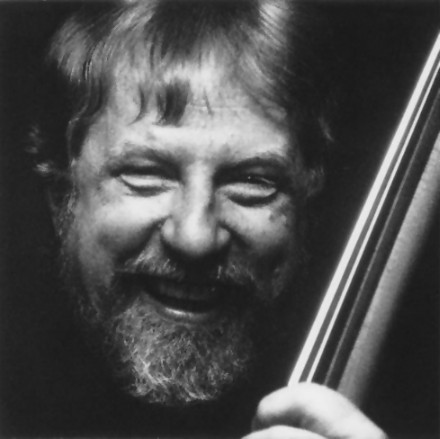
Red and I have been friends by mail and telephone for years, yet we had never met. He is a bearded, red-haired man of mixed Scottish and Irish background who, he says, has always had an affinity for Scandinavia, perhaps because of some dim and distant ethnic memory: the Vikings circumnavigated Europe, leaving a blond strain behind them in Italy, Sicily, and Ireland. They founded Dublin. I walked up to him as he was setting up before the performance, introduced myself, and drifted into conversation as if we had grown up together. I asked about his brother, Gordon, long known to jazz fans as Whitey Mitchell, himself a fine bassist. But such was Red’s luster in the profession that Whitey hardly ever got a review that didn’t mention that he was Red’s brother.
Whitey, or Gordon, Mitchell, was and is an extremely funny man. He had a card printed that read:
Whitey Mitchell bassist
Yes, I'm Red Mitchell’s brother.
No, I haven’t seen him lately.
Some years ago I ran into him and said, ‘Have you still got that card?‘ ‘No,‘ he said, ‘I’ve got a new one.‘ And he handed it to me. It read:
Whitey Mitchell bassist
Formerly Red Mitchell’s brother.
I effectively destroyed Whitey’s career as a bassist.‘ It happened this way. Once while I was editor of Down Beat, I ran into him in New York. Whitey had worked with Gene Krupa, Gene Quill, Herbie Mann, and in Oscar Pettiford’s big band. Like many jazz musicians, he occasionally worked for Lester Lanin. The music was ghastly but the money was good. He told me some hilarious stories about his experiences with that band. I suggested that he write an article about it. I said I’d print it. He did, and I printed it in 1961 under the title My First 50 Years with Society Bands. Lenny Bruce read it and wrote Whitey a fan letter. Whitey was so astounded and thrilled by the letter (which to this day he has in a frame on a wall) that he became a comedy writer, enormously successful in Hollywood, and a movie producer.
‘Whenever he gives a seminar for young writers,‘ Red told me, ‘he tells that story and gives you eternal thanks for starting his career.‘ I told Red a story
I did not print. In those days it would not have been possible. Gary Cooper’s wife hired Lester Lanin for her husband’s birthday party. Lanin brought a few key men to California with him, among them Whitey Mitchell. A contractor put the rest of the band together, no doubt some of those people of the caliber of Mel Lewis and Bud Shank, probably in blue jeans and bright shirts and loafers without socks, and of course the first thing they tried to do was make some of those cornball charts swing. After the rehearsal, Lanin’s road manager found the maestro lying on his back on the bed in his hotel room, hands folded on his chest, mumbling and muttering incoherently. Thinking Lanin was having a fit, the manager said, ‘Lester, Lester, what’s the matter?‘
‘I’m praying,‘ Lanin said, ‘to almighty God to save me from these sons of bitches!‘
The expression he used was harsher than that, but even now I would be reluctant to print it.
When I’d finished telling the story, Red laughed, and said, ‘Do you know how my brother finally left Lester Lanin? Lanin said to him, ‘Do you know what the trouble with you is? You’re not playing in the middle of the beat.’ And Gordon said, ‘Do you know what the trouble with you is? You’re full of shit.’
And that ended the relationship.‘ Gordon, formerly Red Mitchell’s brother and formerly Whitey Mitchell, took to his typewriter and has never looked back. After the gig with Roger at the Jazz Bakery, Red and his wife spent two days with him, then got into the car and drove up to Ojai and spent two more days here, during which time his marathon eloquence kept me enthralled.
‘I was told,‘ I said, ‘that you left the United States after the Sharon Tate murders.‘ I remembered the period vividly. I was visiting Los Angeles from New York, and everyone in the showbusiness world was frightened, afraid that the murders had been committed by somebody on the inside. Steve McQueen had taken to carrying a gun. The mood in Los Angeles was eerie.
‘It wasn’t just the Sharon Tate murders,‘ Red said. ‘My second wife and I were living in a neighborhood where the Manson Family was working. I think they robbed our garage. They killed an older couple, the Biancas, right across Los Feliz from where we lived. It was just part of the overall violence that was going on.
‘It was really the institutionalization of the violence and racism, from the White House down to the subway, that bothered me. I had about six good reasons. About six things happened to me all within a short time. One was the breakup of my second marriage. One of them was the decision not to any longer participate in what I considered to be this vicious cycle, in which the real violence on the street, the violence perpetrated by the government in Viet Nam, and all of it, was being reflected in the media. And we were playing this violent music for shoot-’em-ups. Some of us were saying, Oh we’re just reflecting reality as it is, all artists have to do that, and others were saying we’re contributing to it.
‘The truth is, it’s a two-way street. It reflects and it causes. And it resonates. That’s when it really hurts, when it gets into a - resonant circuit -- when the capacitance is right and the induction is right for a particular frequency, and it builds up to a peak.‘ 'Ah. Here was the first hint of the scientific thinking Roger Kellaway had mentioned.
‘And I just did not want to be a part of that cycle any more,‘ Red said. ‘I had given up on democracy in the United States of America. I had reached the point where I didn’t think democracy would ever work here -- I didn’t think it had ever seriously been tried. It’s a republic, after all.‘
I said, ‘Ed Thigpen was here for a couple of days recently. He quoted you as saying you didn’t think the American public was qualified to vote.‘
‘Yeah,’ Red said, ‘I said that. I say the same thing that the white racists say in South Africa about the black majority, that they’re not qualified to vote. I think they’re wrong; I think I’m right.
‘I don’t know about now. We just came back. We’ll see. But when something happens like the moving of the venue of the Rodney King case to Simi Valley?‘ Red, having lived in Los Angeles, is well aware of the character of the Simi Valley. It's a redneck city, and it is also the bedroom community where several thousand Los Angeles cops, present and retired, live, influence the community, and vote. To those of us who live in the orbit of Los Angeles, the change of venue itself, before the trial ever occurred, was shocking. To begin with, did anyone seriously suggest that we in Ventura County didn’t see that videotape of the beating, when we get all the L.A. TV stations and read the Los Angeles newspapers? The population of Ventura County is only 2 percent black, well below the national average and still further below Los Angeles. There were no blacks on the jury, and only one Hispanic. Two of the jurors, both women, were from Ojai, and one of them is a member of the National Rifle Association. I was completely unsurprised by the verdict.
‘And when you see on television,‘ Red said, ‘that it was Rodney King who was actually on trial, and those people were not his peers, I start to lose faith again. I start to think, ‘Well, wait a minute! Even if the government prosecuted all four of these cops on civil rights violations, took it all the way, appealed all the way to the Supreme Court, I’m afraid the Supreme Court might hand down the same decision."
"Sure," I agreed. ‘You have an extremely reactionary Reagan-Bush Supreme Court. The minorities could always resort to the appeal to the Supreme Court and they no longer can, because it is a racist Supreme Court, even with a black man on it.‘
Red said, ‘I was going to say, especially with Uncle Thomas sitting there.
“There was another reason I left. I was terrorized by the police, living in Los Angeles. You didn’t have to be black to be literally terrorized by the cops in Los Angeles. I was stopped and harassed four times for no reason.
‘There were other reasons for moving to Stockholm. I noticed the quality of the jazz players in Sweden immediately. Later on I found it isn’t only the jazz players, it’s the opera singers, and the choirs, and the symphony orchestras too. The musical standards there are extremely high. As phenomenal as their tennis standards.‘
‘And also visual design,‘ I said. ‘Why is this?‘
‘I have no idea. I have really tried to figure that out for 24 years now. And I have no idea.‘
‘Equality of opportunity won’t do it?‘
‘I don’t think that’s enough. ‘
‘You have obviously retained your respect for the country.‘
‘Oh yes! And I must say, the last few weeks before we left, they showed a lot of respect for me and us. The last week we were there, we were doing a recording at the radio, and we got interrupted just before we were to go into a real heavy blues, somebody called out from the booth and said, ‘Hey, Red, there’s a phone call for you.’ I said, ‘We’re just ready for the take!’ We’d just drawn in our breath. They said, ‘No, it’s important, you better take it now.’ So I went into the booth, and it was the secretary of the minister of culture saying that the government had voted me a Royal Medal. Illis quorum in the eighth degree. I said, ‘What is that?’ I still don’t know. I still don’t know how and when it’s gonna be presented. Usually the king presents it. I found out I was the first jazz musician to get it. What it means roughly translated is, for one who has earned it.
‘And then a few days later, a classical composer, Jan Carlstedt, called me and he said he was nominating me for honorary membership in the Royal Swedish Academy of Music. I said, more or less, ‘What’s that?’ He said, ‘It’s an old society, and we’re voting in May. And you shouldn’t be disappointed if you’re not voted in on your first nomination. Beethoven wasn’t voted in till his third nomination.’ I said, ‘Thank you.’ ‘I still love the country, and I think they love me there. The last couple of months -- I don’t know whether it had to do with the announcement that I was leaving -- we broke attendance records everywhere we went, with all kinds of different groups. The last month was the busiest I’d ever had in Sweden. Among other things, Joe Pass and I did a live album as a duo in the main jazz club in Stockholm. In September, we opened a new really first-class jazz club in Copenhagen, called Copenhagen Jazz House, in English.
‘We had family reasons for coming back, too. My main reasons is that we both sensed -- and I checked it out with some of my more successful colleagues, like Clark Terry and Dizzy -- that there’s an increased interest in the music, and love for it, here in this country, and that’s gone up from whatever it was in percentage. In 1968 it had to be point zero something, and it’s gone up to even three, four, five percent of the population that hears and loves jau. That’s plenty! Out of 250 million people? ‘And, finally, I had begun to see racism in Sweden too. The very thing they deplore about America -- that Gunnar Myrdal condescension toward our society -- was turning up there. They have a word in Swedish for the darker peoples from the Mediterranean. It means ‘black heads.’ They’re having problems with‘ minorities all over Europe, and I don’t think they should point the finger at us the way some of them do.‘
Red and his wife said they had attended a seminar by the black American writer Toni Morrison at the American Center in Stockholm.
Red said, ‘Someone at this meeting asked her if, being a black woman in America, she really felt American, and she said, ‘Never more than right now." I said, ‘Benny Golson told me recently that in Italy, an Italian journalist asked him, ‘How come you have a white bassist?’ And his answer was, ``This interview is terminated."
‘That’s lovely,‘ Red said. ‘I may have to use that one day.‘
‘I am perpetually astonished by European condescension toward us,‘ I said. ‘Their assumption they know us because they’ve been to the movies.‘ Diane, Red’s very attractive wife, who has a master’s equivalent in sociology, said, ‘I realized that within a year after I lived in Sweden. I was a real activist in the ’60s. I was upset over the Cambodian invasion especially. I worked 18-hour‘ days on committees and all that stuff. And then you get to Europe and you’re sitting there, and you’re being personally blamed for this Viet Nam war. I said, ‘Wait a minute, you’re just sitting here on you asses, I’ve been working my butt off, taking risks by running up and down the California campuses. I could have gotten picked up by the FBI or whatever. You sit here, self-righteously accusing me of being responsible in this war.’ And if you put the United States down, you win points, you win friends. And I got really tired of that. I must say, I very much love Sweden, their respect for education, for culture, and decency.‘
Red said, ‘I was prepared for that when I went over to Sweden, but I didn’t get draft number one.‘
‘You were putting the U.S. down,‘ Diane said. ‘More than I was, I think.‘
Red drew a thoughtful breath. ‘I wasn’t putting the whole country down. I certainly wasn’t putting my friends down.‘
You were saying the American people aren’t qualified to vote,‘ Diane said. If you say that, they’ll love you over there.‘
‘I said that the majority of American people were not qualified to vote.‘
‘It isn’t as good an aphorism,‘ I said, laughing. ‘But certainly they’re less informed than peoples in other countries. First of all, theyve been taught such erroneous history. My baritone player friend Les Rout, who became a historian, put it simply. He said history was not taught in this country to acquaint people with reality, it was taught to instil patriotism.‘
‘That’s right,‘ Diane said.
‘But that’s reasonably true of all countries,‘ I said. ‘The Russians are just beginning to learn the truth of some of their history, the Germans don’t want to know their recent history, and what is taught in Japan is false. But in few countries is this as obvious as in the United States. This country is the only country I know, except Japan, that is its own religion.‘
Red said, ‘I think the cause of all racism and all war is simply a misperception of what I call Instinct Number I —- the deepest seated instinct we have, survival of the species. Of course, survival of the individual is linked directly to that. But first things first. I think Instinct Number 1 is the survival of the species
‘And I think individuals will sacrifice themselves willingly if they really think they’re doing it for the survival of the species. Unfortunately, it’s very easy to misperceive who’s in the species and who’s not. For example, was Hitler in the species? Was Hitler a human being, or not? Was he outside the realm of humanity or not? You have to accept the fact that Hitler was a human being.
‘Unfortunately, we all come from the same gene pool, Gene, sorry about that.
‘I hope this doesn’t sound like an oversimplification. It is in fact simpler than any answer I’ve heard from anybody else, and I haven’t heard anybody shoot it down yet. If you want the bottom note, ask a bass player. I think the root cause of all racism and all wars is a misperception of Instinct Number 1. I accept the definition of instinct that I read in a book by a Swedish dog researcher. He said that instincts are a priority list reflexively built into a species with preservation of that species in the number one spot. I accept that.
‘However, mother nature gave us this urge that the species should survive, but she never gave us the information about who’s in it, how big it is, who’s out of it. That’s a matter of our individual perceptions. And it’s very easy for us to perceive another group of people whose behavior is not within our ethical code as outside the species. Another species. To be killed at all costs.
‘I don’t think America could have done what it did in VietNam if they hadn’t been capable of depersonalizing the VietNamese people and thinking of them as short tan members of another species.‘
‘Gooks, slopes,‘ I said. ‘And earlier there were krauts, nips, japs.‘
‘Don’t forget Commie. We have all those names. Lenny Bruce used to say, ‘Let’s get together, Jews, Catholics, Protew tants, black, white, everybody, let’s get together and beat up the Puerto Ricans.‘
‘And if the cops can call them niggers and Mandingos and gorillas in the mist, they can beat, choke, and kill them without a quiver of conscience.‘
‘I think it starts with the home,‘ Red said. ‘The neighbors aren’t bringing up the kids right. And it gets to the extreme example, was Hitler a member of the human race? And unfortunately he was. We have to take that into consideration. We all have those possibilities.‘
‘There was no racism in our house,‘ I said. ‘My father spoke fluent German, although he was English. We weren’t taught quote tolerance. It was just in the air. I was lucky.‘
‘I was lucky too,‘ Red said. ‘My father was one of the world’s leading opera nuts. He actually studied singing; he had a season ticket to the Met from 1921 to ’65 in the best seat in the house, right in the middle of the family circle. He learned some five or six languages in order to sing the roles right.‘“
To be continued.
This video is mislabeled Duff. It is the Mitchell original Jam for Your Bread featuring Red on bass with Conte Candoli, trumpet, Joe Maini, alto sax, Hampton Hawes, piano and Chuck Thompson on drums.