Showing posts with label Ricardo Pinheiro. Show all posts

Monday, March 22, 2021

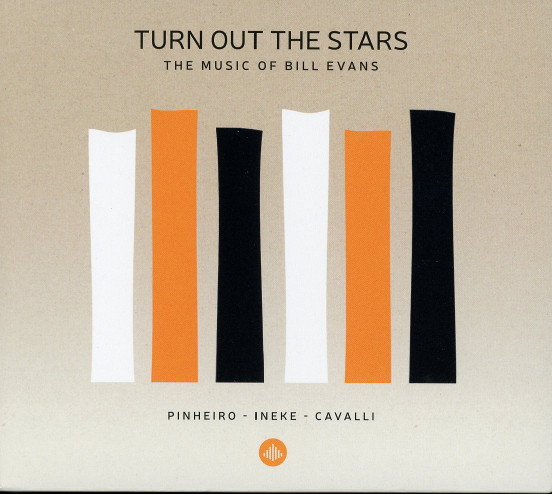
Pinheiro Ineke Cavalli - Turn Out The Stars - The Music of Bill Evans

 © Copyright ® Steven Cerra, copyright protected; all rights reserved.

“I can recall quite vividly the very first time I heard Bill Evans play. I was about seventeen years old and had already been subjugated by Miles Davis with his record "Milestones." His following record was the now "classic" record, "Kind of Blue."


Naturally I bought this record for Miles, but was astonished to hear the pianist Bill Evans, who seemed to me to have a kind of empathic communication with Miles and his way of playing.


Among the many qualities Miles had, poignancy was one of his most eloquent; Bill understood this exceptionally well, and had the capability of encouraging this while accompanying Miles. Bill played many different kinds of harmonies that, though I couldn't understand them at all, were so "right." I spent many hours listening to that recording and, I can add, listen regularly to now.


A couple of years later I heard his first trio record with Scott LaFaro and Paul Motian. This was a turning point in my life. The next six months were spent listening almost exclusively to this record, and trying to analyze it while marveling at the interaction between the three players. It was on this record that I heard Bill's compositions for the first time and, although incapable of playing them, did my best to try to understand his harmonic and rhythmic conceptions which were so new to me. It was only much later, on having discovered the music of Ravel, Debussy, and Satie, that I began to understand the origins of Bill's harmonic viewpoint.”

- John McLaughlin, guitarist


“In terms of style, what musical influences are you aware of? The role of bebop in your melodic lines is evident, but there's a lot more. Where does it come from?”


“It's more a personality characteristic of putting things together in my own way, which is analytic. Rather than just accept the nuances or syntax of a style completely, I'll abstract principles from it and then put it together myself. It may come out resembling the [original] style, but it will be structured differ­ently, and that may be what gives it its identity. I've often thought that one reason I developed an identity, which I wasn't aware of until recently - people were telling me I had an identity, but I wasn't aware of one! I was just trying to play - is that I didn't have the kind of facile talent that a lot of people have, the ability just to listen and transfer something to my instrument. I had to go through a terribly hard analytical and building process. In the end I came out ahead in a sense because I knew what I was doing in a more thorough way.”


“Do you mean because of analyzing the elements in your own music?”


“In other people's music, too. If I liked something and wanted to be influenced by it, I couldn't just take it whole hog like some people can, like getting it more or less by osmosis. I had to consciously abstract principles and put them into my own structure.”

- Len Lyons, The Great Jazz Pianists [p. 221]


In some form or fashion, I think I’ve read this answer/explanation in just about every “How did it all begin?” interview that Bill Evans ever gave and, given his immense popularity, especially during the last decade of his life [he died in 1980], he gave a lot of interviews.


He would sometimes add as a corollary, that musicians who developed early due to some simplistic, innate ability to play Jazz, usually burned out early too because they lacked a depth of awareness about what they were doing.


Bill has also made the statement that his stature as a Jazz pianist was due to “2% talent and 98% hard work.”


Both his “… putting things together in my own way…” and “…98% hard work” references were always heartening and encouraging to me because things didn’t come easy for me in the music.


I also had to break things down and reconstruct them step-by-step in order to find my way through, although, in my case, the results weren’t nearly as effective as Bill’s.


Bill’s music touched so many Jazz musicians, whatever the instrument. Larry Bunker, gave up a lucrative studio career for about one year to go on the road as Bill's drummer.


When I once asked him why he took on this opportunity at such a financial sacrifice, he laughed and asked me: “Wouldn’t you have?”


Because piano and guitar parallel each other in so many ways [each is a chording instrument], I always thought that the lyrical nature of Bill’s approach to music would be a natural for the guitar.


“We’ve got to improvise on something!” 


In a nutshell, this statement from bassist Charlie Mingus encapsulates the eternal dilemma for Jazz musicians, then and now.


Because what a Jazz musician decides to play, or more specifically, play on, determines the most significant element of a Jazz performance - the improvisation.


The tune, or song if it has lyrics, is a point of departure upon which a Jazz musician improvises. It provides the melody, harmony and rhythm upon which the improvisation is framed.


While it sounds structurally simple, the psychological and emotional implications are enormous because “what we improvise on” also creates the basis for how we improvise. Moods can be determined or shaped, phrasing can be effected, and the overall sound or tonality of a solo - among many other variables - are reflective of the choice of material and artist selects as the basis for improvisation.


Getting the match up right is easier than it sounds, although some artists like Art Tatum, or Phil Woods or Jim Hall can play on anything and create solos that sound good.



One format that is often visited as the basis for new material upon which to improvise is “The Music of” approach and that’s what’s on offer in the new recording by guitarist Ricardo Pinheiro, bassist Massimo Cavalli and drummer Eric Ineke - Turn Out The Stars: The Music of Bill Evans [Challenge CR73523]. The CD is made up of music closely associated with Bill: five are his original compositions, one is by Michel Legrand and the other is from the pen of Leonard Bernstein.


Which brings me back to the lyrical nature of Bill’s music being a natural for guitar interpretation, but not just any guitarist. It requires a guitarist with sensibilities similar to Bill’s use of time and space to make the transfer work.


And that’s what makes Ricardo Pinheiro’s interpretations of Bill’s music work on the guitar - he allows them to evolve, to open, to breathe - he doesn’t overplay them, but underscores them with shadings, nuances and tonal colorings.


Another feature of Bill’s music that Ricardo captures as the lead voice on this recording is the free-flowing interchange of ideas between the guitar, bass and drums. He keeps the music “open” and allows Massimo and Eric to engage him in thematic ideas, harmonic variations and rhythmic inventions.


All of which is not to say, that Ricardo, Massimo and Eric don’t put their own stamp of originality on these pieces: You Must Believe in Spring transitions from a dreamy ballad to a medium tempo swinger; Turn Out The Stars and Time Remembered are taken in tempo and given a nice bounce; Waltz for Debby opens with solo guitar, moves to double time when the bass and drums come in and then segues into a slow, straight-ahead out chorus!


Conversely, Interplay is taken more slowly than the original with Eric adding emphatic “kicks and fills” with brushes, almost as though he was playing it as a big band arrangement; Massimo stays in two; Eric switches to sticks and the piece then goes into 4/4 with Massimo and Eric each soloing before Ricardo takes the melody out.


Ricardo induces a series of electronic effects from the guitar that wash over Some Other Time and gives this rendition almost an ethereal effect marked by sustained chording which actually does serve to give the arrangement a sort of otherworldly and perhaps, in that sense, a timeless quality.


In making the decision to “play on” or “improvise on” the music of Bill Evans and the music closely associated with him, Pinheiro, Cavalli and Ineke stepped up to a large responsibility - reimagining the oeuvre of a Jazz giant in a different setting.


In writing about the unexpected pairing of tenor saxophonist Stan Getz, then riding the crest of the bossa nova sensation wave, with 21-year old vibraphonist Gary Burton in 1964, Art Lange wrote in the insert notes to Stan Getz: Nobody Else But Me [Verve 314-521 660-2]:


“It’s endlessly interesting how influences and accidents result in something unexpected, unique and marvelous.”


The combination of Pinheiro, Cavalli and Ineke had worked together before, so their combination on this recording is no accident, but the influence of the music of Bill Evans as heard on their Turn Out The Stars: The Music of Bill Evans certainly results in “something unexpected, unique and marvelous.”


Sunday, June 16, 2019

East & West - The New West Quartet [Gunther, Pinheiro, Cavalli, Pedroso] featuring Mike Del Ferro

© -Steven Cerra, copyright protected; all rights reserved.


Guitarist Ricardo Pineiro and bassist Massimo Cavalli’s work was not “new” to me as I previously reviewed the Triplicity CD they made with drummer Eric Ineke on these pages. I enjoyed the music on this recording and was very impressed with Ricardo and Massimo’s musicianship [Eric, of course, being a Jazz Master is always impressive whenever he plays].

So when Ricardo reached out with a preview copy of his latest CD - East & West - The New West Quartet - I decided to dig a little deeper into the background of the musicians on this recording, to try and understand more about each of the players and how they became Jazz musicians.

The latter was especially intriguing to me because Jazz is not the primary choice of most of today’s young musicians.

What I found as an almost universal element in each of their backgrounds was how studied they were in terms of their training and how each continues to be involved with Jazz in academic circles.

A common thread for all of these players is attendance at a university and/or conservatory and then upon graduation to continue at an academic institution in some sort of full or part time teaching capacity.

I have listed the curriculum vitae for each of the band members below and you can peruse them at your leisure to become better acquainted with their distinguished credentials.

The music on East & West - The New West Quartet has been released on the Fresh Sound New Talent label [FSNT-576] and you can find track samplings and order information via this link to Fresh Sound.

Of the eight tracks, the familiar melodies of Monk’s Bye-Ya and Coltrane’s Moment’s Notice will give you a chance to set your ears on The New West Quartet’s style.

The remaining six tracks are originals and divided evenly at two apiece between Gunther, Pinheiro and Cavalli.
Throughout the music on this recording Pinheiro uses guitar amplification as a unifying factor and as a dominant sonority.

In this regard, Pinheiro use of multiple and different amplification samples reflects the influence of Metheny, Frisell and Scofield, Abercrombie, McLaughlin, and other Jazz-Rock fusion guitar artists.

But when John Gunther’s tenor sax is added to the mix, to my ears, the sound of The New West Quartet harkens back to the recordings that guitarist John Scofield made for Blue Note in the early 1990s which featured Joe Lovano on tenor sax [or, in one instance, Eddie Harris] and bassists Dennis Irwin, Marc Johnson, and Charlie Haden and drummers Bill Stewart, Jack DeJohnette, Joey Baron and Idris Muhammad [nee Leo Morris].

The Scofield albums in question are Groove Elation, What We Do, Grace Under Pressure, Meant to Be and Time On My Hands.

In-the-pocket grooving set against New Orleans, second line street beats [think syncopated marching band cadences], the latter especially inspired by the drumming of Idris Muhammad are a major element on all these Scofield albums and they are very much apparent in Gunther’s The New West and Pinheiro’s Polka Blues courtesy of the adept drumming of Bruno Pedroso. Pedroso’s crisp snare drum cuts through with accents when necessary to push the music along, but at the same time, his beautifully “harmonic” cymbals blend nicely with the other instruments adding a nice element of overtones to the music.

As the title implies Don’t Forget Ornette, Cavalli’s tribute to the scion of Free Jazz - Ornette Coleman - provides for open and spontaneous improvisation as the keynote to this uptempo excursion into the extemporaneous.

Pó dos días, a lovely ballad by Pinheiro sounds like something sculpted from a movie theme by Ennio Morricone whose music has an almost ethereal quality to it. It is my favorite track on the CD and I have incorporated it into a video that features the artwork of the late Peter Campbell which you will find at the conclusion of this posting.

It’s nice to hear today’s generation improvising on The Blues and East & West - The New West Quartet includes two forays into this 12-bar structure: the aforementioned Polka Blues by Pinheiro and Cavalli’s Boulder Blues which is a blowing showcase for the bassist who gets a big booming bass sound reminiscent of Ray Brown’s powerful work in the lower register of the instrument.

On Monk’s Bye-Ya and Coltrane’s Moment’s Notice with their strong associations with Charlie Rouse and John Coltrane, Gunther has his work cut out for him in establishing his own identity on these two well-served vehicles for tenor saxophone. With his angular approach to soloing, John does an admirable job of making each of these pieces his own and Bye-Ya introduces the refreshingly different piano work of guest artist Mike Del Ferro. Mike’s is a two-handed piano player and he employs this skill to bring a wide range of octaves into play during his solos. His improvisations are full of surprises.

Pinheiro’s sparkling and probing guitar work is “the glue” that holds everything together on this recording and gives the music a dominant sonority. Whether comping chords, playing rhythmic phrases or soloing, the overall texture on this album is created by the manner in which Ricardo weaves his amplified guitar throughout the eight tunes that comprise it.

It is a testimony to his grace and sensitivity as an artist that Ricardo pulls it off without being overbearing as far as the other instruments are concerned.

And speaking of “other” instruments, Gunther, Cavalli, Pedroso and Del Ferro are all first-rate players about whom I’m sure we’ll hear more from in the future.

As promised, here’s a detailed look at the background of each of the musicians on East & West - The New West Quartet.


Ricardo Pinheiro

Ricardo Pinheiro completed a Degree in Music at Berklee College of Music, Boston; Degree in Psychology Sciences at the Universidade de Lisboa; and a PhD in Musicology (Ethnomusicology) at the Universidade Nova de Lisboa.

He studied with Mick Goodrick, George Garzone, Ed Tomassi, Ken Pullig, Wayne Krantz, Ken Cervenka, Chris Washburne and Salwa Castelo-Branco. He played/recorded with Peter Erskine, David Liebman, Chris Cheek, Mário Laginha, Eric Ineke, Perico Sambeat, Stephan Astbury, João Paulo Esteves da Silva, Remix Ensemble, Matt Renzi, Jon Irabagon, John Gunther, Mike Del Ferro, André Charlier, Benoît Sourisse, among many others.

He teaches at the Escola Superior de Música de Lisboa, and is the Director of its Masters in Music Program. He played and participated in conferences and meetings in Austria, Greece, Spain, France, The Netherlands, Germany, U.S.A., Denmark, Italy, South Africa, among other countries, and published articles in journals such as Acta Musicologica of the International Musicological Society, the Jazz Research Journal, or the International Review for The Aesthetics and Sociology of Music.


John Gunther

John Gunther is a composer and multi-instrumentalist playing saxophones, clarinet, and flute. With a restless musical spirit, he explores all forms of jazz from traditional to avant-garde as well as classical music, world music and experimental electronic music performing on stages throughout the U.S., South America and Europe. He has performed or recorded with many jazz luminaries such as Jimmy Heath, Ron Miles, Dave Douglas, Dewey Redman, Christian McBride, Bill Frisell, Dizzy Gillespie All-Star Big Band, Woody Herman Orchestra, & Maria Schneider Orchestra.

As soloist Gunther has performed with Sinfonietta Paris Chamber Orchestra, Carpe Diem String Quartet and Banda Nacional de Cartago in Costa Rica. As part of New York city's "downtown" music scene for many years, he produced five recordings for Creative Improvised Music Projects (CIMP) and is co-founder of the contemporary jazz ensembles, "Spooky Actions" & "Convergence."

John is an Associate Professor and Director of the Thompson Jazz Studies Program at the University of Colorado Boulder. In 2007 he founded the Boulder Laptop Orchestra [BLOrk] to explore the intersection of music, performance, art, and technology.


Massimo Cavalli

Born in Italy in 1969, Cavalli started studying electric bass with Flavio Piantoni and Enzo lo Greco and double bass and jazz improvisation with Paolino Dalla Porta. He moved to live in Portugal in 1996. Studied jazz double bass at Oporto University where he got his degree in 2006 and his master in jazz in 2011. He has a PhD degree in jazz performance by the Évora University.

He started his professional activity as a musician in 1990 playing in different clubs in Northern Italy. He played in Dubai with the Four Winds Quartet and worked with the American singer Trisha Smith. In March 1996 he participated to the young musician jazz contest in Krakow (Poland) and the same year he recorded with the group Consorzio Acqua Potabile. He worked and played with groups and artists such as: Jean Pierre Como, Antonio Faraò, Benoît Sourisse, André Charlier, Perico Sambeat, Ferdinando Faraò, Eric Séva, Laurent Filipe, Melissa Walker, Fernando Tordo, Amelia Muge, Susana Félix, Alexandre Diniz, Jacinta & Michael Bluestein, Ricardo Pinheiro, Ala dos Namorados, Fiçcões, Joel Xavier e Didier Lockwood, Politonia, among others.

He attended some jazz workshops like “Jazz em Agosto” directed by Phil Markowitz, Ed Neumeister and Arnie Lawrence, the doublebass masterclass conducted by William Parker and a masterclass oriented by Peter Erskine. He has played in several festivals: Avignon (France), Oeiras Jazz Fest (Portugal), Porto 2001 Festival (Portugal), Vigo Music Fest (Spain), 6th Matosinhos Jazz (Portugal), 2th Curitiba Jazz Fest (Brazil), 7 sois 7 luas Music Festival (Portugal), 4th Portalegre Jazz Fest (Portugal), CompoJazz 2007 (Spain), Gaia Blues Festival (Portugal), Aveiro 2003 Music Fest (Portugal), Lagoa Jazz Festival (Portugal), Festival Il Portogallo at Catania (Italy), 9th Festival Jazz aux Oudayas (Morocco), Mafra Cultural Summer 2004 (Portugal), 17th Macao Arts Festival (Macao).

His CD “Varandas do Chiado”, with original compositions with his quartet, was published in 2012. He’s currently playing with The European New Quintet (with Benoît Sourisse, André Charlier, Perico Sambeat and Ricardo Pinheiro), with the Liebman/Laginha/Ineke/Cavalli/Pinheiro Quintet, with the project “Cinema & Dintorni”, and with the acoustic world music project called “Latitude Quatro”.

In October 2018 Cavalli released on the Dutch label Daybreak Records the CD “Triplicity” in trio with master drummer Eric Ineke and Portuguese guitarist Ricardo Pinheiro.

He is currently the head of the department of Jazz and Modern Music at the Lusíada University in Lisbon where he also teaches electric bass, double bass, jazz combo, improvisation and introduction to the study of popular music.
Scholarships and Awards: Berklee College of Music (2000-2002); Fundação Luso-Americana Para o Desenvolvimento;Centro Nacional de Cultura; Rutgers University - Institute of Jazz Studies - Morroe Berger - Benny Carter Jazz Research Fund; Fundação Para a Ciência e Tecnologia.


Mike Del Ferro

Dutch pianist Mike del Ferro is a highly sought-after composer, pianist and arranger who writes and performs in an impressive array of musical genres. He has travelled the world extensively (more then 90 countries), searching for collaborations with musicians from cultures quite different to his own, and the musical results have been eye-opening, building musical bridges between cultures not normally within reach of each other. He has managed to combine elements of the revered canons of Western music interspersed with the audacity of jazz improvisation, and paying tribute to the ancient structures of Asian, South American and African traditional music. He has recently signed a contract with Challenge records for a series of  10 CD's, collaborations with musicians from all over the world, based on his travels.The first trio CD will be released worldwide in the fall of 2011, and the second production in the spring of 2012, with guest artists from Brazil. Mike's father was opera singer Leonard del Ferro (1921-1992), who sang and recorded with Maria Callas, and his childhood was thus filled with music of the highest order.A native of Amsterdam, he started his career studying classical piano at the age of nine and, after falling in love with jazz, he focused his studies on jazz and received a Masters of Music in Contemporary Music from the Amsterdam Conservatory. In 1989 he won First Prize at the Rotterdam Jazz Piano Competition, the Soloist Prize at the Europe Jazz Contest in Brussels, and First Prize at the Karlovy Vary Jazz contest and from 1993-1996 studied composition and arranging with Bob Brookmeyer at the Musikhochschule in Cologne, Germany. In 1995 Mike was appointed to the faculty of the Royal Conservatory in Gent, Belgium where he taught jazz piano until 1997. His reputation as a soloist, accompanist, composer and arranger has led to worldwide performances, recordings and tours with musicians such as Toots Thielemans, Jack DeJohnette, Oscar Castro Neves, Deborah Brown, Erik Truffaz, Jorge Rossy, Sibongile Khumalo, Carl Allen, Scott Hamilton, Richard Galliano, Thijs van Leer (Focus), Harold Land, Jan Akkerman, Norma Winstone, Benny Bailey, Candy Dulfer, Trijntje Oosterhuis, Badi Assad, Fernanda Porto, Madou Diabate and Maria Pia deVito. He has also recorded dozens of albums in many different genres from Dixieland to Salsa and has arranged music for animation for Danish animator and Oscar winner, Börge Ring. Mike del Ferro goes by Mark Twain's dictum - "Travel is fatal to prejudice, bigotry, and narrow-mindedness and many of our people need it sorely on these accounts. Broad, wholesome, charitable views of men and things cannot be acquired by vegetating in one little corner of the earth all one's lifetime" - and his music reflects the array of influences that he has picked up in some of the most exotic places in the world


Bruno Pedroso

Born in 1969, Bruno Pedroso began his music studies in 1987. In 1990, he studied with jazz drummer Allan Dawson. He also studied with live jazz legends such as Clark Terry, Sir Roland Hanna, Rufus Reid, Bill Pierce and Kenny Washington.

Since 1995 I have been almost exclusively dedicated to Jazz. Bruno Pedroso also teaches at the School of Jazz of the Hot Club of Portugal. Participates in the Portuguese Percussion Collective. In 1997 he studied with Antonio Sanchez and Billy Hart. In 1998, he went to New York, where he studied at the "Drummers Collective" school, and privately with some of the most important drummers in the world jazz scene, based in NY, such as Jordi Rossi, Jim Chapin, Carl Allen, Leon Parker, Ralph Peterson Jr., Adam Nussbaum, Steve Berrios, Kim Plainfield, Bobby Sanabria.

In the last ten years, in addition to continuing his teaching career at various schools, he continues as a free-lancer, playing with the most varied names of Portuguese Jazz. He is also invited to join groups with important names such as Julian Arguelles, Chris Cheek, Ken Filiano, Peter Bernstein, Rich Perry, Miguel Zenon, Abe Rabade, Nicholas Payton, Reginald Veal, Aaron Goldberg, Phil Markowitz, Eli Degibri, Avishai Cohen, Antonio Farao, Peter Epstein, Bob Sands, François Theberge, Rick Margitza, John Ellis, Dave O'Higgins, Richard Galliano, Gregory Tardy, Perico Sanbeat, Jesus Santandreu, Ivan Paduart, Herb Geller, Sheila Jordan, Jesse Davis, Donald Harrison, Ben Monder, among many others.

Annually Bruno Pedroso plays in the main Jazz festivals in Portugal, and abroad.
www.ipl.pt/bruno-pedroso

Sunday, November 11, 2018

Triplicity - Pinheiro, Cavalli and Ineke

© -  Steven A. Cerra, copyright protected; all rights reserved.


I don’t know all the circumstances of how these, three musicians of diverse national and ethnic backgrounds found each other, but one thing is for certain as you listen to the work of Ricardo Pinheiro [Portugal], Massimo Cavalli [Italy] and Eric Ineke [The Netherlands] on their new Triplicity CD is that the bonds of their musical camaraderie make for striking music.

The eight tracks that make up Triplicity [Challenge, Daybreak DBCHR 75227] range from Blues Just Because an original by Ricardo to three beautiful standards from the great American Songbook - If I Should Lose You, You’ve Changed, When You Wish Upon A Star - Jazz classics, Along Came Betty and Conception, a bossa nova - Retrato Em Branco E Prieto and finally a movie theme - Cinema Paradiso.

Each of these tunes is formed into an original arrangement that serves to showcase the individual talents and musicianship of guitarist Pinheiro, bassist Cavalli and drummer Ineke. In some cases, the melodies are played in a fairly straightforward manner - Cinema Paradiso, for example, while others such as When You Wish Upon A Star are virtually deconstructed and almost made to sound like new tunes.

But taken as a whole and played in sequence, the music forms a concert that brings forth the very essence of Jazz - the performance of a variety of themes that allow the musicians to demonstrate their skills as improvisors.

This was my second listening experience with Ricardo, Massimo and Eric; the first occurred when they formed the rhythm section on Is Seeing Believing? [Challenge, Daybreak DBCHR 75224] along with Dave Liebman on tenor and soprano sax and Mario Laginha on piano.

While moving from a supporting role to a featured one on Triplicity, I found it particularly helpful to listen to the work of the trio through the use of so many familiar melodies. It helped me to set my ears, so to speak. Instead of struggling to learn a host of new song structures, I could concentrate instead on what the musicians were “saying” through their melodic, harmonic and rhythmic creations.

And, not only do Ricardo, Massimo and Eric have a lot to say, stylistically, they say it very well; each is an accomplished and experienced musician and each puts forth a great deal of originality in both their group interactions and in their individual improvisations.

So while you can hear the guitar, bass and drum influences in Ricardo’s approach to the guitar, Massimo’s approach to the bass and Eric’s approach to the drums, I would venture to say that I’ve yet to hear another guitar-bass-drums trio that sounds so refreshingly different.

What I came away with was a unique listening experience centered around a textured mood; a string and percussion sonority.

As the principal melodic voice on the CD, guitarist Pinheiro brings off this role with a measured grace.  In a setting made for overplaying, he never does. While explorative, his playing is restrained and selective.

Massimo frames the chords beautifully and provides a consistent “heartbeat” for the music which then allows Eric more freedom to rhythmically color it with the drum kit. But when a pulse is needed, the bass and drums “lock in” and provide a beat that drives the music [Blues Just Because], or makes it flow [Along Came Betty] or helps it to simmer [You’ve Changed].

Another quality that comes across to help create Jazz of the highest order is that Ricardo, Massimo and Eric are not just playing music, they are making it by listening to and interacting with one another. There are no egos here; this is, as the word “triplicity” would imply, a collective effort.

If you are looking for a perfectly balanced concert [an enjoyable 46.32 minutes from beginning to end] with a trio instrumentation that is acoustically understated with music played with virtuosity and originality, then you need look no farther than the Triplicity that is Pinheiro, Cavalli and Ineke.

Here’s a taste of what’s on offer in this wonderful CD.