Showing posts with label Shirley Horn. Show all posts

Tuesday, December 7, 2021

"Shirley Horn: The Art of the Slow Ballad" - by Mike Zwerin

 © Copyright ® Steven Cerra, copyright protected; all rights reserved.
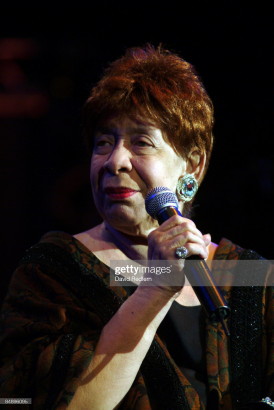

The late Paris-based jazz musician and International Herald Tribune writer Mike Zwerin posted a 41-week series entitled Sons of Miles to Culturekiosque Jazznet. In this series, Zwerin looks back at Miles Davis and the leading jazz musicians he influenced in a series of interviews and personal reminiscences. Here is the Shirley Horn piece in that series. It was published on September 17, 1998 so add 20+ years to any math in the article.


“PARIS - Shirley Horn's grandmother told her that empty barrels make the most noise.


"Space is a valuable commodity in music," Horn said. "Too many musicians rush through everything with too many notes. I need time to take the picture. A ballad should be a ballad. It's important to understand what the song is saying, and learn how to tell the story. It takes time. I can't rush it. I really can't rush it."


She put on a dark pair of dark glasses: "Is this going to take long?"


Toots Thielemans, who was in the room, stopped doodling on his harmonica and said: "They're going to have to invent a new turntable at a slower speed for Shirley's ballads."


Time is redefined in Horn's presence. Toots paused. Somebody's small child in the hotel suite stopped fidgeting. It was like "slow" was infectious. We waited for slow room service with unusual patience. We were all six of us in Horn's time zone. I stopped thinking about the hot lunch awaiting me at home.


"I speak slowly," she said. "There's a place in Paris where I'd like to work one day. It's called the Slow Club."


Two dreams-come-true, Shirley Horn is a Sarah Vaughan who does not overwhelm you with everything she knows at once, and a pianist with the sophistication of a Herbie Hancock who does not sacrifice all 10 fingers on the harmonic altar. Yes indeed.


She is an entertainer who can, without hype, be called an artist. She continues the line of singer/pianists that runs from Fats Waller through Nat (King) Cole. Her album "You Won't Forget Me" was a sure-fire hit from the get-go.


Major league soloists including Miles Davis, Buck Hill, Branford and Wynton Marsalis and Toots Thielemans confirm the accolades musicians like Quincy Jones, Ahmad Jamal and George Shearing have for decades bestowed upon her. With a triumphal stand at New York's Village Vanguard, the album and more work in general than she wants to handle, Horn was finally forced - she considers travel a plague - to graduate from the in-hiding hometown-heroine role she has played to the hilt for decades in Washington, DC.


Once upon a time, the phone rang while she was feasting with her family on organically raised chicken on her mother-in-law's farm in Virginia. Her mother-in-law took it and said: "Man says he's Miles Davis."


To make the fairy tale short, she went to New York where Davis told the owner of the Village Vanguard that Miles would not work there unless Shirley Horn was on the same bill. Miles is Miles, she worked. Lena Horne was in the room.


So was Sidney Poitier, who told Horn: "I really enjoyed your music."

She started piano at four, studied composition at Howard University at 12 and at 18 was awarded a composition scholarship by Juilliard. There are not many credits to her career. It has been a slow career.


She studied with no famous teacher, and worked with no prestigious leaders. She's always led her own trio. Never been a side person. Her name came up increasingly in musicians' conversation throughout the 1980s but bringing up her daughter came first. Horn was a grandmother before she began to appear in upscale East Side New York clubs like Michael's Pub and The Blue Note.


She was in Paris for two (sold-out) concerts, to promote her new album, and to discuss the next one, a collaboration, with Toots.


"I love Shirley," Toots said, followed by a chin-dropping grin. "She plays good for a girl. She plays good for a boy too."


A jazz impresario once accused her of being a cocktail piano player. "Not pianist, piano player," she emphasized the condescension, trying not to look too hurt. When I asked her if a cocktail piano player was actually such a bad thing to be, she replied, hesitating: "No."


For a minute it looked as though it was going to hang there like that, the classic interviewer's nightmare. Toots, however, to the rescue: "It depends on who's drinking the cocktails."


Horn laughed: "I love Toots."


Me too. Saved by the harmonica player. Toots has no trouble with words.


"Are we almost through?" she asked.


For many musicians, music is therapy, never to be explained. They may try, with distaste or desperation, because it is expected of them. Melodious metaphors do not come naturally to these people, and the music is the metaphor to begin with so why bother?


On the other hand, there are those who speak better than they play. Explanations can be a substitute for substance. The talkers spout hot quotes and put judgmental jewels on the table because they believe, not totally in error, that's what the media wants.


An interview with Keith Richards is an example of the latter - Shirley Horn the former. Her defenses are even more difficult to break down because she appears to choose not to speak. It's not even out of a sense of duty, she's playing hide and seek: "Do you have many more questions?"


Horn's minimalist interviews are in perfect harmony with her music. It is astounding how much speed she can inject into a slow tempo, how much drama there can be between two beats.


She's all ellipses. Hungry propelling silences are the body of her work... the good-old three-dot Walter Winchell transitions keeping you on the edge until the next tidbit. With her, it's not like waiting for something to happen. Her ellipses do not, as in the dictionary definition, represent omissions or quick transitions.


Imagine her singing: "cause his...is...is the only...music..." The spaces hang out there on hold...you begin to wonder if it's terminal...certainly a strange place to end a song. Maybe she's forgotten the words...or just being weird...with that impish smile...toying with us...until the full impact of that effortlessly stretched, dramatically shaded blank space brings a gasp when the phrase is finally resolved at the last millisecond. "...that makes me dance."


Toots and Horn ran down material for their upcoming album of sad songs titled "Tears." Fascinated by such fine musicians at work, I was amazed to discover that four hours had flown by slowly since I arrived. When I put on my coat at 6:30 P.M., Horn said: "Are we finished already?"


They studied a menu from a Belgian mussels restaurant downstairs where she had dined several days before. "My dear," Toots asked Horn affecting an aristocratic tone. "How did it come to pass that you have this menu?"


"This!?" she looked at it in mock horror, and then at me. "I took it, she continued. "Yes, Shirley Horn stole a menu. See? You wait long enough, you finally learn some truth about me."”


Wednesday, September 14, 2016

Shirley Horn: Live at The Four Queens

© -Steven Cerra, copyright protected; all rights reserved.


Vocalist Shirley Horn’s singing style has been described as reflective, compelling, sparsely evocative, sweetly sensuous - a mood singer par excellence.

In their Penguin Guide to Jazz on CD, 6th Ed., Richard Cook and Brian Morton note that: “The inevitable complaint is that Horn goes on making the same record …. Yet nobody grumbled much about the sameness of Ella, Billie or Sarah, in their various careers. Shirley’s difficulty is that her preference for achingly slow tempos and sung-spoken lyrics doesn’t chime very easily with the modern attention span.”

They go on to observe that the patented Horn gallop which, if you are new to her, is a whisker above dead slow, often provokes shivers of pleasure given her amazing ability to emotional frame a lyric.

Shirley Horn in performance was an event and further proof of that assertion can be found in this press release from Resonance Records.

Resonance Records Presents

SHIRLEY HORN LIVE A T THE 4 QUEENS

Deluxe CD Package & Digital Edition Available September 16, 2016 The first previously unreleased recordings by Shirley Horn in nearly a decade!

Recorded Live at Las Vegas's 4 Queens Hotel on May 2, 1988 with Shirley Horn's Trio of over 20 Years, Bassist Charles Ables & Drummer Steve Williams

52-Minute Set of Never-Before-Released Material Originally Recorded by
KNPR Las Vegas for the Syndicated Weekly Radio Program
"Monday Night Jazz at the Four Queens"

Includes a 56-Page Book of Rare, Previously Unpublished Archival Photos,

Essays & Interviews with Producer Zev Feldman, Journalist and Author James Gavin,

Vocalist Sheila Jordan with journalist Ted Panken, Trio Drummer Steve Williams
Washington, D.C. Radio DJ Rusty Hassan,
Original KNPR Broadcast Engineer, Brian Sanders,
Plus jazz record veterans and Shirley Horn producers,
Jean-Philippe Allard and Richard Seidel

Los Angeles, August 2016 - Resonance Records is pleased to announce the release of SHIRLEY HORN LIVE AT THE 4 QUEENS, a previously unissued live recording by legendary singer/pianist Shirley Horn accompanied by her rhythm section of over 20 years, the late bassist Charles Abes and drummer Steve Williams, recorded by Las Vegas NPR affiliate KNPR on May 2, 1988 at what noted author James Gavin describes as "Las Vegas's hip little oasis for jazz lovers, the jazz club inside the 4 Queens Hotel."

Resonance will release this album in a deluxe CD package and a digital edition on Friday, September 16, 2016.

Live at the 4 Queens was recorded only one year after her 1987 "comeback album" on Verve Records, I Thought About You, which reignited her international touring career after a nearly 20-year hiatus during which she had restricted her musical activities to her home town of Washington, D.C. so she could devote herself to raising her daughter.

The album includes a comprehensive 56-page book dedicated to documenting the life and career of Shirley Horn featuring essays and interviews with Resonance Records producer Zev Feldman, journalist and author James Gavin, jazz record veterans and Shirley Horn producers Jean-Philippe Allard and Richard Seidel, long-time Shirley Horn drummer Steve Williams (in conversation with Library of Congress jazz specialist, journalist and radio host Larry Appelbaum), Horn's friend and colleague, singer Sheila Jordan (in conversation with noted jazz journalist Ted Panken), Washington, D.C. jazz radio veteran Rusty Hassan, KNPR engineer Brian Sanders, manager Sheila Mathis and finally, Rainy Smith, Horn's daughter.


Featuring nine tracks and over 50 minutes of music, Live at the 4 Queens features Shirley Horn's interpretations of popular songs including "You'd Be So Nice to Come Home To" by Cole Porter, "The Boy from Ipanema" (the female version of "The Girl from Ipanema") by Antonio Carlos Jobim, "Isn't It Romantic" by Rodgers and Hart, "Lover Man (Oh Where Can You Be?) by Jimmy Davis, Roger ("Ram") Ramirez, and James Sherman and many others.

Long a favorite of Miles Davis and Quincy Jones, who both championed her early in her career, Shirley Horn was a unique jazz presence. As a performer, Shirley Horn was immediately recognizable for the mood she created, her swinging, harmonically sophisticated piano playing and her evocative, velvety voice. As a pianist, she was so gifted that Miles Davis once said "If she don't play, I ain't gonna play..." in reference to a gig at the Village Vanguard, and would have her perform as a sub for Wynton Kelly at various club performances. As a singer, she never failed to cast a spell on a room. She inevitably transported her listeners with her moodiness and her uncanny ability to maintain a compelling sense of musical motion even at the slowest possible tempos, which became a hallmark of her style.

When producer Richard Seidel signed Shirley Horn to Verve in the mid-1980s, her career was relaunched, and this time she became celebrated internationally as well as in the United States. A series of enormously successful albums followed. Most featured just her regular trio with bassist Charles Ables and drummer Steve Williams, while others had rhythm section colleagues like Ron Carter and Billy Hart, along with special guests such as Miles Davis, Toots Thielemans, Wynton Marsalis and Branford Marsalis. And as a stylistic departure, Horn recorded the memorable album, Here's to Life (recorded in 1991 and released in 1992), in which Horn is showcased with a large ensemble arranged and conducted by Johnny Mandel (who received a Grammy® award for his work on the album).

Shirley Horn's return to prominence had her performing in all the major festivals around the world, plus iconic American venues like Carnegie Hall, prestigious concert halls throughout Europe and Asia, and even in the White House. Horn continued touring and recording at a torrid pace for nearly a decade until health problems forced her to pare back her performing and recording activities in the early 2000s. Nominated nine times for Grammys®, Horn finally won one for Best Jazz Vocal Performance in 1999 for her album, I Remember Miles, produced by Richard Seidel.

This album, Shirley Horn Live at 4 Four Queens, captures her at her creative peak. As Seidel observes, "This record is very much in the vein of Shirley's first album on Verve [ I Thought About You] and is an excellent example of her work in an intimate club atmosphere."

When producer Zev Feldman became aware of the recordings that make up this album, he was thrilled. Shirley Horn was a very special artist for him. Feldman, like Horn, is a Washington, D.C. native. Now 43, Feldman came of age while Horn was still only playing in and around Washington at jazz clubs like the Pigfoot and the One Step Down. Right at the time Feldman started working in the record business for PolyGram, which became Universal Music Group, from the mid-1990's to the mid-2000's, Shirley was one of the biggest stars of the label and Feldman was a Verve representative promoting her steady stream of new albums being released during that period. Feldman saw Horn often in those days, even drove to her house on more than one occasion to have her sign CD booklets, and attended many concerts as a part of his job arranging venue sales for record retail. "Being the local Verve representative, I got to see her play everywhere from The Kennedy Center and Bohemian Caverns in DC, to the Village Vanguard in New York and Zanzibar Blue in Philadelphia." But beyond his role as a label rep, he developed a friendship with Horn and on numerous occasions was invited after gigs to join in her inner circle with manager Sheila Mathis and drummer Steve Williams. So when the opportunity arose for Resonance to pursue the release of the material, Feldman jumped at the chance.

Since Feldman knew what an important artist Shirley Horn was (and because inexplicably no books have been written about her), he was determined to make this album package the most authoritative and comprehensive compendium of materials possible with an extensive 56 page book of analytical, scholarly essays; first-person accounts by musicians and producers who worked with Horn; remembrances by her friends, colleagues and her daughter; plus a number of previously unpublished photographs from the Shirley Horn archives at the Library of Congress. Feldman says, "We want this release and album book to remind us why she was great, why she mattered."

Live at the 4 Queens was captured the day after Horn's 54th birthday, and you can hear what a good time she's having celebrating the occasion in Las Vegas on this recording. The CD kicks off with a spirited instrumental version of the 1950's classic "Hi-Fly" by Randy Weston, and also includes Rainy Smith's (Horn's daughter) favorite song that her mother would play, "Meditation," which she humorously says she never knew the name of all these years until now. The hallmarks of any Shirley Horn album are of course the ballads, and this album delivers two powerful ones — "Lover Man (Oh Where Can You Be?)" and "Just For A Thrill," which James Gavin writes "builds slowly; then her bristling chords build up so much tension that the energy explodes in a big crescendo. Horn lets it subside like a cloud of smoke." "The Boy from Ipanema" is a playful take on the bossa nova classic, which Horn actually got to perform once at Antonio Carlos Jobim's birthday party in Rio de Janeiro. And one of Horn's rollicking blues staples, "Blues for Big Scotia," closes the set in rousing form.

As Jon Pareles wrote in The New York Times on November 10, 1988, "Songs are lucky when Shirley Horn chooses them. She honors melodies just by singing them unadorned, in a voice of honey and smoke; she enunciates every word, shaping small and large peaks with just a slight pause or a lingering vowel. . . And when the time comes to improvise, the song's emotion guides her; she drapes lyrics in bluesy curves and finds epiphanies in tender phrases."

Shirley Horn left an indelible mark on the jazz scene with her catalog of recordings. And one can't deny her influence on other musicians — her contemporaries, as the great Sheila Jordan suggests in her interview from the liner notes, and as those who came after her, such as the gifted singer/pianist Diana Krall. This package is a tribute to Shirley Horn's memory and Resonance Records is thrilled to celebrate and contribute to her legacy with this release. The recordings illuminate her genius and represent her creative peak. Live at the 4 Queens reminds us of what an extraordinary artist she is.

Resonance Records is delighted to release Shirley Horn Live at the 4 Queens with the participation of KNPR Las Vegas. Produced by for release by Zev Feldman along with executive producer George Klabin. Sound restoration is by George Klabin and Fran Gala. The beautifully designed package is the creation of long-time Resonance designer, Burton Yount.

TRACK LISTING
1.    Hi-Fly (6:20)
2.    You'd Be So Nice to Come Home To (3:59)
3.    Meditation  (9:05)
4.    The Boy from Ipanema (5:19)
5.    Isn't It Romantic (10:08)
6.    Lover Man (Oh Where Can You Be?) (5:25)
7.    Something Happens to Me (3:12)
8.    Just for a Thrill (5:08)
9.    Blues for Big Scotia (3:16)

Resonance Records continues to bring archival recordings to light. Headquartered in Beverly Hills, CA, Resonance Records is a division of Rising Jazz Stars, Inc. a California 501 (c) (3) non-profit corporation created to discover the next jazz stars and advance the cause of jazz. Current Resonance Artists include Richard Galliano, Polly Gibbons, Tamir Hendelman, Christian Howes and Donald Vega. www.ResonanceRecords.org