Showing posts with label Stan Getz. Show all posts

Sunday, March 16, 2025

Stan Getz - East of the Sun: The West Coast Sessions - The Ted Gioia Notes [With Revisions and Additions]

 © -Steven Cerra, copyright protected; all rights reserved.


“Flawless technique, perfect time, strong melodic sense and more than enough harmonic expertise, fabulous memory, and great ears. Add a superb sense of dynamics, pacing, and formal. Top this off with a sound of pure gold, and you have Stan Getz.


He was a charismatic musician. His music actually affected the course of people's lives. They fell in love with his music. They fell in love because of his music, and they made love to his music.


My association with Stan started in Woody Herman's Second Herd, the "Four Brothers" band. Stan was already in the band when the Jimmy Giuffre original "Four Brothers" was recorded for Columbia Records. But the real breakthrough came with the recording of Ralph Burns' "Early Autumn" at Radio Recorders in Hollywood for Capitol Records. By that time I had become a band member. I was fortunate to work with Stan from that time on — playing, recording, and traveling together in the Forties. Fifties, Sixties. Seventies. Eighties and, finally, in 1990.


After Stan left the Woody Herman band in 1949, he made a string of important recordings, including Jazz At Storyville,  the "Moonlight in Vermont" series with Johnny Smith Focus with Eddie Sauter and the huge success, Antonio Carlos Jobim's bossa novas "Desafinado” and "The Girl From Ipanema".


When Verve first asked me to contribute to this presentation. I accepted without hesitation. Then the tapes arrived. Listening to previously released material was great, but a lot of the unissued takes became further proof of the unfaltering quality of Stan's playing.


These recordings contain many outstanding solos by Slan. but if I had to choose one. it would be the lengthy solo on "S-h-i-n-e". This has been a topic of conversation since it was first released. It is Stan in full stride.


When an artist leaves a legacy of recordings such as Stan's, it is overwhelming. But when the artist affects the lives of his audience, he is then in a class with a chosen few. Such an artist is Stan Getz.


On the bandstand and in the studio he brought out the best in those who played with him.


And I for one say, "Thank you. Stanley."
- LOU LEVY, Jazz pianist


The insert notes to the Verve three CD set Stan Getz - East of the Sun: The West Coast Sessions [314 531 935-2] by the distinguished writer Ted Gioia were made a hash of when they were formatted into the booklet.


I’ve rarely seen a more garbled mess disgrace such important Jazz recordings.


The irony here is that Ted is the penultimate all-things-West-Coast-Jazz historian and was actually contracted by Verve to produce these notes!


What a waste.


But fear not; the editorial staff at JazzProfiles contacted Ted and he gave his blessing to having his notes developed into manuscript form so that they can be clearly read as presented on these pages.


“I remember how unhappy I was with the layout of liner notes in the booklet, which made it almost impossible to read the text. I'd be very happy to see them made available online.”


Nothing like making one of the best writers on the subject of Jazz “happy.”


© -Ted Gioia, copyright protected; all rights reserved; used with the author’s permission.


“Stan Getz always equivocated about the West Coast jazz scene. During the late 1980s, when he lived in California. I frequently had the opportunity to talk with him about various jazz musicians, both current and historical. He was bluntly honest during these informal discussions. Typically sparing in the compliments he paid other performers (except for a handful of figures he clearly admired), he seemed especially reserved about many of the prominent West Coast names. Getz kept a safe distance from the local scene during these years, and he almost always had a rhythm section flown in from New York for important gigs. Even while soaking up the sun and enjoying the ambiance of West Coast life, Getz seemed an inveterate East Coast character in his attitudes, mannerisms, language, and temperament


Imagine my surprise at his reaction, when I told him one day that I was researching a book on West Coast jazz. He looked at me in silence for a moment, puzzled, then asked.  “Do you include me in West Coast jazz?" For all his aloofness, he knew how strong his ties were to the California scene, not just in the Eighties but also during the glory days of West Coast jazz in the Fifties. Yet looking at his career in retrospect, he honestly didn't know if he was a West Coast jazz musician.


Was he? These recordings from the mid-Fifties include the most powerful statements in defense of Getz as a major exponent of jazz on the dream coast. Joined by some of the finest players on the Los Angeles scene. Getz participated in a series of memorable sessions. The title of the initial LP release of some of this material left little doubt about the intended marketing angle: It was simply called West Coast Jazz.


This was a long way from Getz's Philadelphia birthplace and childhood in the Bronx. He often dismissed the impact of these formative years on his career, offering snippets of information or relating a meandering anecdote about his first performance on the harmonica. Yet the evidence clearly shows that Getz was a phenomenal talent almost from the start. The late Shorty Rogers mentioned rehearsing in a band with Getz when the latter was barely in his teens and had only been playing saxophone for a few months But even then. Getz was garnering a reputation as a sax prodigy attracting the attention of bandleaders. He lasted for only one year of high school, but had he persisted he might well have fulfilled his teacher’s dream of attending Juilliard. Getz’s primary instrument was the bassoon at this point and he quickly earned a coveted spot in the all-New York student orchestra.


The jazz life had already beckoned and the tenor sax replaced the bassoon as Getz’s horn of choice. Truant officers were tracking him down at the Roseland Ballroom bandstand. So before long Getz bid adieu to James Madison High School choosing to go on the road with trombonist Jack Teagarden. The tenor saxophonist was so young that Teagarden had to be named his legal guardian. Stardom also came at an early age. Getz was barely out of his teens when he dazzled jazz fans with his celebrated playing on Early Autumn with the Woody Herman band.


Getz gravitated to the West Coast in his early career At age sixteen, he traveled to Los Angeles while still with Teagarden. He returned to California as an 18-year-old bandleader in 1945, leading a trio at the Swing Club in Hollywood, but he soon left to go on the road with Benny Goodman. He returned again some time later and parlayed a gig at a Mexican ballroom into a celebrated stint with Herman.


At Pete Pontrelli's Spanish Ballroom, the unlikely staging ground for this movement, Getz participated in the development of a completely new jazz style, one that came to be known as the "Four Brothers' sound". The band's repertoire on this gig consisted primarily of stock arrangements of Mexican and Spanish tunes, supplemented by an occasional jazz chart. But arranger Gene Roland was working on a new way of voicing the sax section, which Jimmy Giuffre took and refined further for the Herman band. The result was a lightly swinging ensemble featuring three tenor and one baritone saxophones — with Getz helping to recreate the sound from Pontrelli's in his new role as a Herman sideman. The recording of “Four Brothers,” from the close of 1947, exhilarated listeners — so much so that jazz fans were soon calling this edition of the Herman orchestra the "Four Brothers band".


By this time. Getz had developed the translucent tenor tone and softly swinging style that gave an airy lightness to the Four Brothers' sound and would distinguish his mature work. Getz's debt to Lester Young in this regard has often been cited, and Getz was the first to admit he admired the older tenor saxophonist. Yet Getz brought a more overtly modernist sensibility to his playing that sharply distinguished it from Young's. Although Getz was never an ardent bebopper, he had listened carefully to Charlie Parker and brought a deep understanding of modern jazz into his own, cooler style.


This influence is especially marked on these West Coast sessions, where Getz draws uncharacteristic inspiration from bop-inflected tunes, such as Gillespie's A Night in Tunisia and Woody 'n' You, and offers a tour de force solo on S-h-i-n-e. These progressive leanings were evident throughout Getz's career, as seen by his constant use of young sidemen with new musical ideas. One recalls with admiration how, more than a decade after these sides, Getz was careening over Phrygian scales and navigating through some of Chick Corea's most complex material on another Verve release, the seminal Sweet Rain. On that record he showed a daring unmatched by any other Young disciple from the postwar years. Or listen to another Verve outing, the justly celebrated Focus, which finds Getz engaging in a marvelously intricate dialogue with a string section. The claim that Getz merely commercialized a variant of the Young sound falls to the ground after even the most casual listening to these recordings.


But what Getz did learn from Young was his essentially melodic approach to improvisation. Throughout most of the history of jazz, the prevailing approach to the tenor sax has stressed the harmonic possibilities of the instrument. Substitute changes, intricate cadences, unusual modes that imply equally exotic harmonies — a range of techniques has been used in the paradoxical attempt to extract a chordal texture from this inherently monophonic instrument. Getz, like Young, never got caught up in this quixotic pursuit. Instead both adopted an unabashedly linear approach, unapologetic in its lyricism There was an almost brutal honesty in this style. No shiny ornaments were hung out to distract attention from its melodic core.


"Players like Stan and Al Cohn (another Young follower from the period] thought about the song more than other jazz musicians," pianist Lou Levy remarks. "The melody line was important to them. I suspect that Stan paid attention to the lyrics as well. I remember giving him the music to the song “No More” — one of the pieces that Billie Holiday used to sing. Stan looked over the sheet. 'It's a good story,' he said, and we went on to play it." His solos had the flow of a well-paced narrative. Yet the structure never got in the way of the music's emotional immediacy. Few players of any generation could construct solos of such logic and rigor while maintaining a depth of feeling and, at times, such poignancy.


These virtues made Getz a natural participant in the West Coast scene that gained notoriety in the early Fifties. The influence of Young was especially prominent among the Los Angeles saxophone players of this period. The emerging cool-Jazz style, which Getz had helped promote with his early work, was also making waves near the Pacific. Getz's Los Angeles-based band with Bob Brookmeyer reflected this side of the West Coast aesthetic, with a formalist compositional approach somewhat akin to the Mulligan-Baker group efforts from the same period. (This similarity was perhaps more than a coincidence, since Getz-Brookmeyer were working at the Ambassador Hotel when Mulligan-Baker were gracing the bandstand across the street at the Haig.) Getz later joined Mulligan on a celebrated Verve recording in 1957, and he occasionally collaborated with other leading West Coast players. Yet these tended to be exceptions to the rule. Getz spent most of the Fifties in musical pursuits far afield from the West Coast jazz scene: in heated jam sessions with Jazz at the Philharmonic; in exceptional recordings with Dizzy Gillespie, Sonny Stitt, and other bop masters; and leading a variety of ensembles under his own name. Many of these settings no doubt resulted from Getz's relationship with record producer Norman Granz. Granz had only a limited interest in the burgeoning West Coast scene, and his projects with Getz mostly reflected this attitude.


But by the middle of the decade, the West Coast label had proved to be such an effective marketing device that even Granz was taking notice. Getz and Granz were now determined to make a more dedicated foray into the West Coast scene. On July 27, 1955 Getz made the plunge when he kicked off an engagement at Zardi's, a major Southern California jazz club on Hollywood Boulevard, fronting a new West Coast quintet. This combo was essentially a pickup group, organized specifically for the Zardi's gig. But the quality of the musicians more than compensated for the lack of rehearsal time. Audiences were dazzled by the new California combo. By the time the quintet entered the studio, some two weeks later, to undertake the first of the sessions included here, it sounded like a veteran unit.


Getz drew on some of the finest players on the Los Angeles scene for these sessions. Levy had played with Getz in the Herman band and had recently relocated to California from his native Chicago. In an interview from the period, Getz pointed out that Levy was “more than a two-handed pianist. He plays with all ten fingers.” Levy's orchestral approach and harmonic ingenuity is well-documented on these recordings. Listen to him move into a polytonal mood midway through his solo on There Will Never Be Another You, pushing the chord changes to their limits. Although Levy has often been labeled a bebop pianist, his roots go much deeper. His earliest models in the jazz world were, in fact, the big bands that he heard in his native Chicago. The pianists he listened to were especially diverse. "I heard Al Haig before I heard Bud Powell, and before them I heard Nat Cole. But I was listening to Teddy Wilson long before that. And of course there was Art Tatum who was in a category of his own.”


“The most prominent sound in the the rhythm section on these Getz sessions is Leroy Vinnegar’s bass,” explains Levy with characteristic modesty. “You can hear its strong rhythmic presence.


“Leroy is always there, his time is as solid as a rock, and everyone plays off him." Like so many of the Indiana natives who made their mark in modern Jazz (Carl Perkins, the Montgomery brothers. Freddie Hubbard), Vinnegar boasts an uncanny knack for swinging effortlessly, for propelling a Jazz band without any wasted energy.


Shelly Manne, who worked with Vinnegar in many settings over the years, lets the bass serve as the pulse of the band, using his drum kit to supply color and deepen the textures of the ensemble sound. "Shelly took more chances than most other drummers," Levy adds. "He was always interested in trying something different, in experimenting.  While Stan Levey, on the later sessions, was more of a bebopper, a terrific drummer with an outstanding modern-jazz feel."


Conte Candoli, who joined Gelz in the front line, was another transplanted Indiana native and one of the hottest trumpeters on the West Coast scene. In a jazz environment where subdued or cerebral approaches to the horn received more publicity, Candoli took a different tack. His improvised lines generally burst forth with exuberance and vitality. His work with Getz on this date is surprisingly subdued, but on “S-h-i-n-e” he lets loose with the compelling devil-may-care brashness that is very much his trademark.


Despite the Los Angeles sidemen and the marketing of these sessions as West Coast Jazz, I have always felt that there was something incongruous about this whole project. In fact, I'm half-convinced that Getz was slyly trying to subvert the West Coast marketing label attached to his new approach. The opening track on the original West Coast Jazz album was East of the Sun — was he making a little joke here? And why did he make such a point of drawing on East Coast composers for the band's repertoire? There is enough Gershwin material from these dates to make a whole theme album. (Hmm. Gershwin….wasn't he a New York boy who made most of his best music on the East Coast, but came out West to make money with some blatantly commercial efforts?)


Getz's choice of sidemen was equally telling Candoli, Vinnegar, Levy, and Manne or Levey — they were all West Coasters, more or less, but not one was a native Californian. Each one had started back East or in the Midwest. And why was Getz playing, in addition to Gershwin, all of these East Coast bebop tunes — so rare for him — on a project that supposedly celebrated the West Coast?


Maybe I am reading too much into the tenor saxophonist's choice of material. But his wry sense of humor was just the sort that would delight in this type of cryptic playfulness. I recall a similar ambiguity from Getz's later years, when he had given up drink and was an ardent participant in Alcoholics Anonymous — yet seemed to play a booze song, “Lush Life” or “Sippin' at Bells,” at every concert! Indeed Getz always had an irreverent attitude toward song titles — who else would introduce his mega-hit “Desafinado” as "Dis Here Finado" (this coming on the heels of such soul-jazz tunes as “Dis Here” and “Dat Dere,” then the rage), then add offhandedly, "This is the song that is going to pay my kid's college tuition.”


"This was not a West Coast Jazz session," Levy asserts confidently. He notes that the most celebrated performance from this project, “S-h-i-n-e,” counters any stereotype of laid-back West Coast playing. "Everybody always liked this one." Levy continues. "Stan really forges ahead. His intro is clear as a bell He plays those eight bars unaccompanied, but with a real momentum and swing. Then — bam! — the band comes in and he's off. He really lets loose on this piece, and never falters, charging all the way through to the end."


Yet there were many moments on these sessions where Getz was the consummate lyrical soloist, very much in the vein of the West Coast sound. In fact, these sessions include some of the most effortlessly graceful performances of Getz's career. He is low-key on “Like Someone in Love” where he kicks off his solo with a deliciously lazy break and follows up with a richly melodic solo. His work on “Too Close for Comfort” is equally noteworthy and could serve as a case study in relaxed improvisation. The two complete lakes of “Our Love Is Here to Stay” are both masterly examples of thematic improvisation. The unreleased version is an especially brilliant example of how Getz could weave baroque lines while continuing to hint at the contours of the melody. And even when Getz tackles a stop-time interlude, as on “Blues for Mary Jane” or “How About You?” his playing retains an elegant sureness, a calmness even in the most fiery surroundings.


Not that the experimental side of Getz's playing is totally absent here. On “Woody 'n' You” Getz plays atypical, polytonal games with a simple motif. This interlude sounds like a parody of Coltrane's A Love Supreme. It couldn't be, of course, since the Coltrane performance was still a decade in the future, yet the resemblance is uncanny. Other feints and jabs — an occasional bebop lick in double-time, a judicious bit of bluesiness, a tongue-in-cheek quote — are dished out in sparing doses, showing how much Getz always kept in reserve, waiting for the right moment to let it loose.


Yet if we ultimately grow wary of associating Getz too closely with West Coast jazz, it is only because he kept a safe distance from all of the passing fads and fancies of the jazz world. Although he was linked to the cool jazz sound, Getz played some of his hottest music during the years when cool was in its ascendancy. And his collaborations with other leading cool players were surprisingly rare. Years later. Getz was equally detached from the stardom he attained when crossing over with his bossa nova recordings. He could have made a whole career from this popular, Brazilian-inflected style, but he ultimately abandoned it for other projects and approaches. His work with Chick Corea anticipated the fusion craze, but Getz soon left that format behind as well. One is forced to conclude that even when Getz jumped on the bandwagon, he was always among the first to jump off.


And so it is with these West Coast sessions. For a brief period, Getz met West Coast jazz at least halfway. But there were no compromises here, no banal attempts to find a commercial sound. The music was Stan Getz, plain and simple, with all the beauty and richness that he brought to every performance, whichever the coast.


“Playing with him was like a music lesson," Levy remarks. "He had a sense for the right tempo, the right volume, the right way of sequencing the solos. He knew when to stretch out and when to hold back. He knew when to let the bass and drums sit out and when he’d bring them back in. He had such great time and technique, and [he] could react to anything. He would even make the wrong chords sound right. He could lake a small combo and make it sound like a symphony."


And Getz does just that on these performances. Was Getz a West Coast player? That question may well remain unanswered. Was he one of the greatest soloists to play the saxophone? Of that there can be no doubt. The more than three hours of music on these discs provides compelling evidence and a persuasive account of one of the jazz masters in top form.”


Ted Gioia


[Ted is a pianist, a jazz historian and the author of West Coast Jazz: Jazz in California, 1945-1960, New York: Oxford University Press, 1992.]



Monday, October 16, 2023

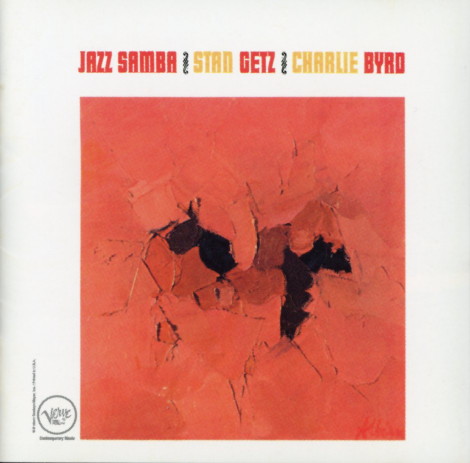
Jazz Samba/Stan Getz/Charlie Byrd - Some Perspectives

 © Copyright ® Steven Cerra, copyright protected; all rights reserved.


One of the first impressions I had of Stan Getz and Charlie Byrd’s Verve 1962 Jazz Samba LP can be summed up in the following:


“The "cooled down" Brazilian samba rhythms with lyrics sung in Portuguese on an album that "broke the bossa nova wave in the 1960s USA" played by two drummers with the last names of DEPPENSCHMIDT and REICHENBACH!


Jazz at its ecumenical best!”


As a working drummer at the time of its issue, I rushed out to purchase it because every musician I was working with wanted to play this music and I’m indebted to Buddy [Deppenschmidt] and Bill [Reichenbach] for “teaching” me how to play the accents associated with bossa nova rhythms.


Sixty years later, I thought it might be fun to revisit the Jazz literature on the album and see what others - then and now - had to say about its origins, structure and significance.


JAZZ SAMBA: The original liner notes by Dom Cerulli


“The Samba is a Brazilian dance derived from the Maxixe, another dance that comes from that South American country. The Samba, which has its roots in Africa, is characterized by a dip and swing as it is performed. The movements of the dance are supple and graceful, and the rhythmic pulse of the music is infectious. The Samba is believed to be a relative of the Tango, but is acknowledged to be a much more energetic member of the family.


A Jazz Samba can be characterized as a version of the music utilizing Samba rhythm but featuring jazz improvisation on the melody and the harmonic structure of the composition.


The union of Stan Getz and Charlie Byrd on this recording is particularly fortunate. Each musician is a sensitive soloist with great lyrical power. Neither attempted to "play Latin," but let the ingratiating Samba rhythm carry them along in their improvisations on the melodic content of the

music.


Byrd became absorbed with the rhythms and the songs of Brazil during a South American tour he made with bassist Keter Betts and drummer Buddy Deppenschmidt in 1961. He returned from the trip with scores of records, and with the experience of having played with Brazilian musicians in a variety of contexts.


Getz lately has sought to bring his fluid tenor sax into different jazz settings on records. Most notable of these efforts to date has been his collaboration with composer/arranger Eddie Sauter in focus (Verve V/V6-8412), a remarkable album in which Stan wove exquisite melodies and

counter-melodies through a brilliant fabric of music furnished by Sauter for a large string ensemble.


"When we were in Brazil," Byrd noted, "I played on occasion with some of the local musicians. We did these songs, and I found it easy to improvise jazz to them. The people seemed to like it. Musicians there do not do so much improvising.


"As we started to work out plans for this album, we looked for some kind of a voice to be a little like the use of the human voice in these songs, and still have a jazz feeling. It had to be someone who could play jazz, but with sensitivity. Stan was perfect."


Getz recalled that he had tried to capture the flavor of this kind of music in the past with limited success. "I liked the music," he said. "I had played with Miguelito Valdes and with Machito, and I enjoyed it very much. I listened to Charlie's [Joao] Gilberto record, and it felt good.


I thought I'd like to play with a relaxed rhythm like that. It was the first time I ever played with Charlie, and the things he did with the guitar and the music really impressed me. He has such a feeling for melody. The chord changes on the tunes were very adaptable for improvising.


And they did some different things with rhythm. The two basses filled out the line. I enjoyed hearing the music, but I dug playing it with Charlie and his guys even more." Byrd sketched out the routines for the songs. Where two basses were used he wrote in more detail. Stan had heard the records but, according to Charlie, "they hadn't influenced him too much. He improvised naturally, which was exactly what you have to do with this kind of music."


The entire album was recorded in one day in the acoustically-warm hall of a Washington, D. C. church.


ABOUT STAN GETZ


Since the late 1940s, when Stan Getz drew international attention to his tenor sax with his lyrical solo on Woody Herman's Early Autumn, he has built an impressive career in jazz out of his gift for melodic improvisation. His sound is soft and warm, but takes on a firm edge of peppy tempos. The wide variety of jazz experience he has crammed into his 35 years includes work with the bands of Jimmy Dorsey, Benny Goodman, Stan Kenton, Woody Herman, Jack Teagarden, and Bob Chester, among others. He has been leader of his own group since 1951, and has played in most of the leading cities of the world. He recently returned to this country after nearly three years of residence in Denmark. He has won scores of awards from jazz publications the world over, including, in this country, Metronome's annual poll for 11 straight years, Down Beat's annual poll for 10 years, Playboy's annual poll for four consecutive years, and top awards in Down Beat's Critics' Poll, Melody Maker's Readers' Poll in Great Britain, Jazz-Echo Readers' Poll in Germany, and many others.


ABOUT CHARLIE BYRD


One of the few guitarists in jazz to use the unamplified guitar as well as the more conventional amplified instrument, Byrd hails from a family of guitarists. He was born, 36 years ago, in Suffolk, Va., and grew up in a community with a large Negro population. His early exposure to music was to blues guitarists and singers, and to Negro gospel music. Byrd's father and three brothers played guitar, and Charlie followed in the tradition by starting on mandolin and guitar at the age of 10. While in the U. S. Army during World War II, he played guitar in a band, jammed with Django Reinhardt, and was exposed to modern jazz. In the mid-1940s, he worked with Freddie Slack, Joe Marsala, Barbara Carroll, and Sol Yaged, among others. He settled in Washington to study with Sophocles Papas, widely-known guitar teacher. In 1954, an audition with Andres Segovia led to an invitation for Charlie to study with Segovia in Italy that Summer. He still lives in Washington and works there and in other top jazz locations with his trio.


ABOUT THE RHYTHM SECTION


Keter (William Thomas) Betts began as a drummer but switched to bass after graduating from high school in 1946. He worked with Earl Bostic, Dinah Washington, and Nat and Cannonball Adderley's group before settling in Washington and locating with Charlie Byrd's group. He is a native

of Port Chester, N. Y., and is 33 years old.


Gene Byrd is Charlie's 24-year-old brother, making his recording debut on this album. He was a senior at the Peabody Conservatory in Baltimore when the sides were recorded.


Two drummers were used because, as Byrd noted, "This is what the Brazilians do. Both drummers play simple patterns, and together they swing."


Buddy (William H.) Deppenschmidt is 25 years old and played with Byrd for a year and a half. Although he left the group recently, he returned to make the album. He made the South American tour with Charlie, and participated on Byrd's three recent albums. He is currently with Billy Butterfield. Bill Reichenbach recently joined Byrd on drums. His experience includes work with Tommy Dorsey's band, and as rhythm man with Georgia Gibbs, among others.


ABOUT THE MUSIC

SIDE ONE

DESAFINADO—This is the recording Stan heard by Joao Gilberto, the Brazilian singer. Charlie notes that the lyric of the song recounts that the singer may sing off key, but his heart is in his song. The piece is built around that theme. Rhythm opens the track, then Stan states the lovely theme. Charlie's solo is strongly pulsing, and Stan returns blowing hard through to the coda, which is played lyrically. 


SAMBA DEES DAYS—Byrd wrote and titled this one. "It was a kind of challenge," he said. "I heard the style of music and said to myself that I could write a samba." Stan opens the piece with a series of driving choruses. Charlie follows with his solo, then Stan takes it back and out. 0 PATO—This title translates, "the duck." Charlie recalled, "It was one of the ones I heard on the tour that struck me as a cute little piece. We heard it quite a bit. It's one that people hear, then say, 'that's from Brazil.'" There's a bluesy opening with Stan and Charlie voiced over the rhythm. Charlie takes a bright two bar break into his solo. Stan returns at the bridge for a solo that includes a good-natured reference to Idaho, one of the favorite states of jazzmen. Charlie returns for a few bars, and the rhythm takes it out.


SAMBA TRISTE—Charlie asked Brazilian guitarist Baden Powel if there were any sambas written in a minor key. Powel said there was just one that he knew. Samba Triste. Charlie opens with lyrical guitar. Stan's solo is mournful, and Charlie's has a wistful lyric quality. Stan returns with an emotional opening to his solo that sums up the tune's title and mood.


SIDE TWO


SAMBA DE UMA NOTA SO—Literally, the Samba on only one note. "This," said Charlie, "is the most recorded of all. It's very well known in Brazil." Sixteen bars of rhythm open the track. (It should be noted somewhere along the line that Sambas are usually more complicated structurally than, say, American pop songs of 32 bars. Most Sambas have three parts, and the harmonic line may run to 64 bars.) Stan takes several hard choruses. Charlie follows with his solo in a lighter vein, then the bass solo leads to an interesting interplay among the melody instruments at the end. 


E LUXO SO —"Frankly," Charlie smiled, "I don't know what the title means. But it's a good fast samba, and we needed one." Rhythm opens the track, and Stan states the theme. Charlie solos, playing melody while Stan blows fills. Stan's solo sizzles, with the rhythm section cooking behind him.


BAIA—Perhaps best known to American audiences, this has become a Latin-American standard. It was originally in a Walt Disney film. "The main part of the tune is a real Bahian song everybody in Brazil knows," Charlie noted. Eight bars of rhythm open the track, then Stan states the pretty theme. Charlie takes over at the bridge, with Gene's arco bass behind him and with Stan blowing fills that become a call-and-response between the pair. Charlie takes a delicate and moving solo before Stan comes back with pushing, driving tenor that toys with both melody and rhythm. - Dom Cerulli”


Verve issued a restored, high resolution, 20-bit digital transfer on CD in 1997 [5165495] with a bonus track and these new liner notes by John Litweiler.


Reissuing Jazz Samba


“Was there ever a phenomenon among jazz albums to compare with Jazz Samba by Stan Getz and Charlie Byrd? Recorded on February 13, 1962, it was released in April and rose to the top of the best-selling album charts, while a single from the album, "Desafinado", featuring Getz's solo, also became a hit. The bossa nova fad was on: By the end of the year dozens of other jazz artists, including Getz's great tenor sax rivals Coleman Hawkins and Sonny Rollins, had released their own bossa nova albums. Getz and Byrd then recorded further highly successful bossa nova albums — the tenor saxophonist's Getz/Gilberto, released in '64, was another huge hit — before the fashion was spent.


The extent of the success of bossa nova may have been a surprise, but there were good reasons for the music's popularity. The year 1962 was a time of transition in popular music. The great American songwriters, Kern, Berlin, Porter, the Gershwins, Rodgers and Hart, and Carmichael, were vanishing; the early popularity of rock & roll was waning; in jazz, after the boom years of the Fifties, record sales were falling off and nightclubs were closing. In the midst of this general decline, bossa nova was a bright new music that featured contagious rhythms and attractive songs — in fact, several by Antonio Carlos Jobim and other bossa nova songwriters became standards, almost the only songs of the period to enter the jazz repertory. Remember, too, this was before the heyday of the Beatles and Motown, which began rock's total domination of the record industry; can you imagine any music as rhythmically and texturally subtle as Jazz Samba on today's hit record charts?


Would North American audiences have even known of bossa nova if not for Byrd? The tentative joinings of samba and jazz by guitarist Laurindo Almeida and alto saxophonist Bud Shank had been a novelty in this country in 1953. The Oscar-winning Brazilian film Black Orpheus (1958) introduced a small pan-American and European audience to the music of Jobim and Luiz Bonfa, but then a Capitol album by Joao Gilberto vanished without a trace in the US in the early Sixties.


Enter Byrd, a guitarist since his boyhood. During World War II he met and played with the great Django Reinhardt in France. Back in the US after the war he embarked upon a conventional career playing electric guitar in jazz groups but grew increasingly discontent with it. In 1949 he began to devote his energies to playing classical guitar, even taking a master class from Andres Segovia in 1954. Based in Washington, DC then, he won local acclaim for his jazz interpretations of standard songs, played on Spanish guitar, on which he also played music from the classical repertory. He worked with Woody Herman in 1958-59, before the turning point of his career: a twelve-week tour of South America with bassist Keter Betts and drummer Buddy Deppenschmidt in 1961.


Bossa nova was thriving in Brazil by the time the Byrd trio arrived there. The style was virtually the invention of Gilberto and Jobim, an adaptation of samba rhythms fused with the harmonic structures and "cool" surface of West Coast jazz. "I liked the texture and volume of it," says Byrd,


"because more than any other Latin American music, it allowed a good place for the guitar to work. There was a noticeable difference from the Cuban approach, for example, from the Xavier Cugat and those kinds of things — a more delicate and light way of playing. Also appealing were the ingenious melodies of Jobim and Bonfa and those people. They emulated American popular songs to some extent, but they had a lot of innovation in their own tradition, and they were very inventive people themselves. They were just fantastic, and I think they would have been great songwriters in any style."


Back in the US, Byrd and guitarist Herb Ellis began playing bossa nova duets but could not interest record companies in doing an album of them. Meanwhile, Getz, back in the US after a three-year stay in Europe, came to Washington to play. Byrd says, "I had been introduced to him about ten years before and had seen him occasionally, but I wouldn't say we were close friends. I sought him out."


Byrd played bossa nova recordings that he'd brought back from Brazil for Getz, who became enthusiastic about doing a bossa nova album. They attempted without success to record with a New York rhythm section — the offbeat bossa nova rhythms were not easy to master — but a second try, with Betts and Deppenschmidt (and percussionist Bill Reichenbach added), at Pierce Hall in All Souls Unitarian Church in Washington, worked marvelously. "It was a lot of fun to do," says Byrd. "I still like to do a record date that way. You've got your material, you go in, you do a couple of takes on each one, and you've got a record." Selecting which songs to record was not easy: "I had a lot of choices. I still think the Jobim songs from that period had something that even he never reached again, and I liked all his work right up to the end."


For Getz, Jazz Samba was a thorough triumph. His unique sound and fertile melodies certainly make him the ideal bossa nova interpreter. By the Sixties he possessed a lovely tenor saxophone sound, a rounded sound, with no harsh edges or opaque weight at its center. Such a sound was an ideal of the cool sensibility that emerged in jazz alongside bebop. Yet Getz's cool sound was in its way quite expressive, providing a cry in high notes atop phrases, or gathering darker hues in lower tones, with an extraordinary terminal vibrato (hear Samba Triste). In fact, Getz's superb sense of dynamics lends variation to his sound, as in the legato-staccato contrasts on Samba Dees Days.


Getz's sound is the most obvious aspect of a remarkable mastery of his instrument. With, for example, John Coltrane, another great tenor saxophonist of Getz's generation, the virtuosity is emphatic, the listeners always aware of the immensity of what he's playing. No matter how complex Getz's phrasing becomes, he emphasizes melodic grace above all; brilliant technique is only what makes lovely melody possible.


Getz is the foreground figure for most of Jazz Samba. Byrd and his rhythmic support provide a delightful setting of light textures and skipping rhythms; Byrd's own sparkling, graceful solos are shaped in long phrases and thoughtfully constructed choruses. In contrast, Getz is a romantic, a purely lyrical artist.


One result is the ongoing freshness in Getz's playing, an absence of cliché. His sense of order is complex and variable; he develops a capacity to sustain moods, and he is especially attracted to the vein of melancholy that runs through most of these pieces.


Yet he typically requires chord changes to provide overall form, for his mind teems with melodic invention — and juxtapositions, new trains of thought, were frequent. Thus the airy quality in his responses to Byrd's theme statements on Samba de Uma Nota So and E Luxo So. Getz's style could encompass melodic variation (Desafinado) as well as creation, and the most singular aspect of his playing on Jazz Samba is his rhythmic freedom. This yields a great variety of irregular phrase lengths and, with offbeat, between-beat accents that lend a wonderfully free-floating quality to "E Luxo So" and Bahia, seems to expand and contract time itself. Of course, Byrd and his support's bossa nova rhythms, based upon those offbeat accents, help to stimulate this freedom in Getz's playing. His immersion in this rhythmic world is complete — unlike Charlie Parker's, for instance, these are not jazz solos with Latin backgrounds but a genuine fusion of jazz and samba.


There would be further triumphs for Getz and Byrd in the decades to come, triumphs far removed from this exotic music. The fashion for bossa nova, which lasted into the mid-Sixties, was the beginning of a productive undercurrent in jazz. Attempts to fuse jazz with aspects of classical Indian music and various styles of African music soon followed; by the mid-Seventies pairings of jazz and world music were frequent. But few approached the musical success of Stan Getz's bossa nova adventures and     none was anywhere near as popular. Both as a hit record album and a catalyst for a popular musical movement, Jazz Samba stands alone in the past half century of jazz recordings.” - John Litweiler December 1996

Thanks to Charlie Byrd, the Chicago Jazz Archive, and Stan Getz: A Life in Jazz by Donald L. Maggin (William Morrow, New York, 1996)


And Richard Palmer, writing in the book on Stan Getz in the wonderful Jazz Masters Series [Apollo, 1988] begins his fourth chapter with:

Four: Dis Here Finado


Unpretentiousness, spontaneity, and the poetry of honest emotion belong back in jazz. And don't let that gentleness fool you. These guys swing harder than most, and they do it without pushing. [Sleeve note Verve VLP 9065].


“For more than twenty years the name of Stan Getz and the term 'bossa nova' have been virtually synonymous (much to Stan's pique at times, as we'll see later). So it is worth pointing out at the start that Getz did not initiate its use in jazz. Bud Shank was the first jazzman of any stature to explore samba rhythms; and while Stan was still in Denmark, Dizzy Gillespie, a long-term aficionado of Latin-American music, was beginning to incorporate the bossa nova style into his work, no doubt prompted by his pianist Schifrin's (an Argentinian) indigenous interest. Furthermore, Stan's presence on the seminal Jazz Samba was not at his own instigation. The date was the brainchild of Charlie Byrd and his rhythm section, bassist Keter Betts and drummer Bill Reichenbach. They had toured South America early in 1961, and were delightedly exposed to the supple swing of the native rhythms. As Byrd remembers it: “I played on occasion with some of the local musicians. We did these songs* [*i.e. the tunes that are performed on the Jazz Samba album] and I found it easy to improvise jazz to them. The people seemed to like it: musicians over there do not do much improvising.' And as the idea of an album devoted to such material grew in their minds, Byrd recalls that 'we looked for some kind of voice to be a little like the use of the human voice in these songs, and still have a jazz feeling. It had to be someone who could play jazz, but with sensitivity. Stan was perfect.”


Indeed he was: he responded to the songs with the same immediate zest as had the Byrd trio, and on 13 February 1962 they recorded the album in the Pierce Hall, All Souls Unitarian Church, Washington D.C. It could be said that 'the rest is history', except that I think the massive success of the opening track has rather obscured the outstanding calibre of the album as a whole, and moreover its excellence as jazz. Desafinado (abridged for the single release, which became a Top 10 hit on both sides of the Atlantic) provides a splendid beginning, its subtly virile rhythms (Byrd used two bassists and two drummers playing together) beautifully offset by the searching solos by both leaders and their biting but lyrical interplay.


Other tracks are however even better: I would choose the delicious 0 Pato, a performance that could hardly be surpassed for conciseness of ideas and crispness of swing, and Baia, a haunting tune once featured in a Disney film. Baia, in a minor key and benefitting more obviously than any other track from the remarkable acoustic of the Washington church, is graced by two of Stan's most mesmerising readings, separated by the finest Byrd outing I know. The combination of yearning intensity and an almost elegiac resonance gives me the shivers every time I listen to it, over two decades after I first bought it (and I'm on my third copy!). Certainly, Jazz Samba was, and is, a major artistic triumph as well as a commercial one.”