Showing posts with label Terry Gibbs Big Band. Show all posts

Saturday, October 12, 2024

Terry Gibbs Dream Band - Volume 7: The Lost Tapes

 © Introduction Copyright ® Steven Cerra, copyright protected; all rights reserved.

This CD just arrived from Terri Hinte’s public relations firm and I thought I’d share the media release “as is” so I could post the announcement in time to celebrate Terry’s 100th birthday on October 13, 2024.


With more recorded music by the Dream Band, it would seem that Terry is giving us the gift on his special day instead of receiving one in return.


I’m sure he realizes that he has the gift of our appreciation in return.


Happy Birthday Terry and best wishes for many more.
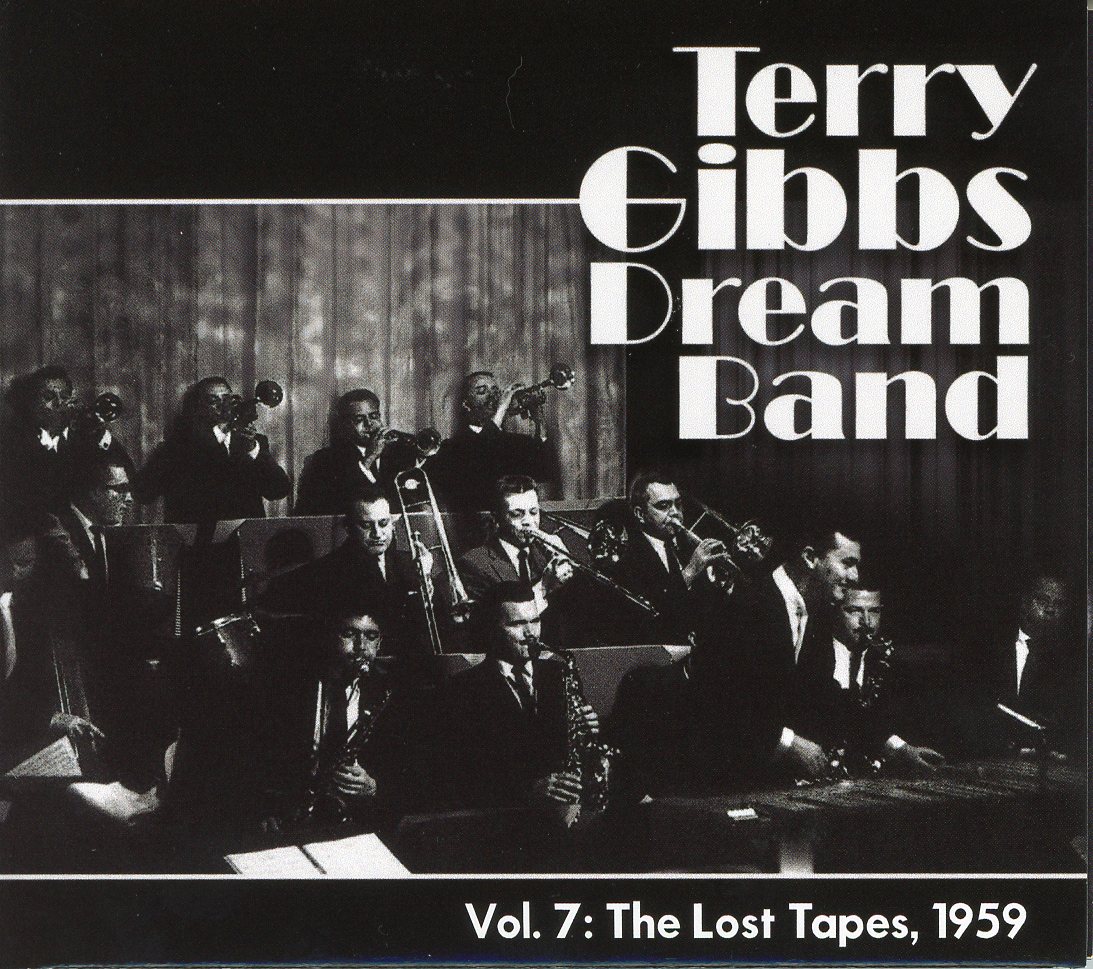


"TERRY GIBBS DREAM BAND, VOL. 7: THE LOST TAPES. 1959,"

LATEST INSTALLMENT IN GIBBS'S ARCHIVAL "DREAM BAND" SERIES,

TO BE RELEASED OCTOBER 11 (CD) & NOVEMBER 8 (DIGITAL)

ON WHALING CITY SOUND,

AS GIBBS TURNS 100


LEGENDARY VIBRAPHONIST AND BANDLEADER UNEARTHS INCANDESCENT BIG BAND PERFORMANCES OF WORK BY ALL-STAR ARRANGERS, LIVE IN HOLLYWOOD IN MARCH AND NOVEMBER 1959.


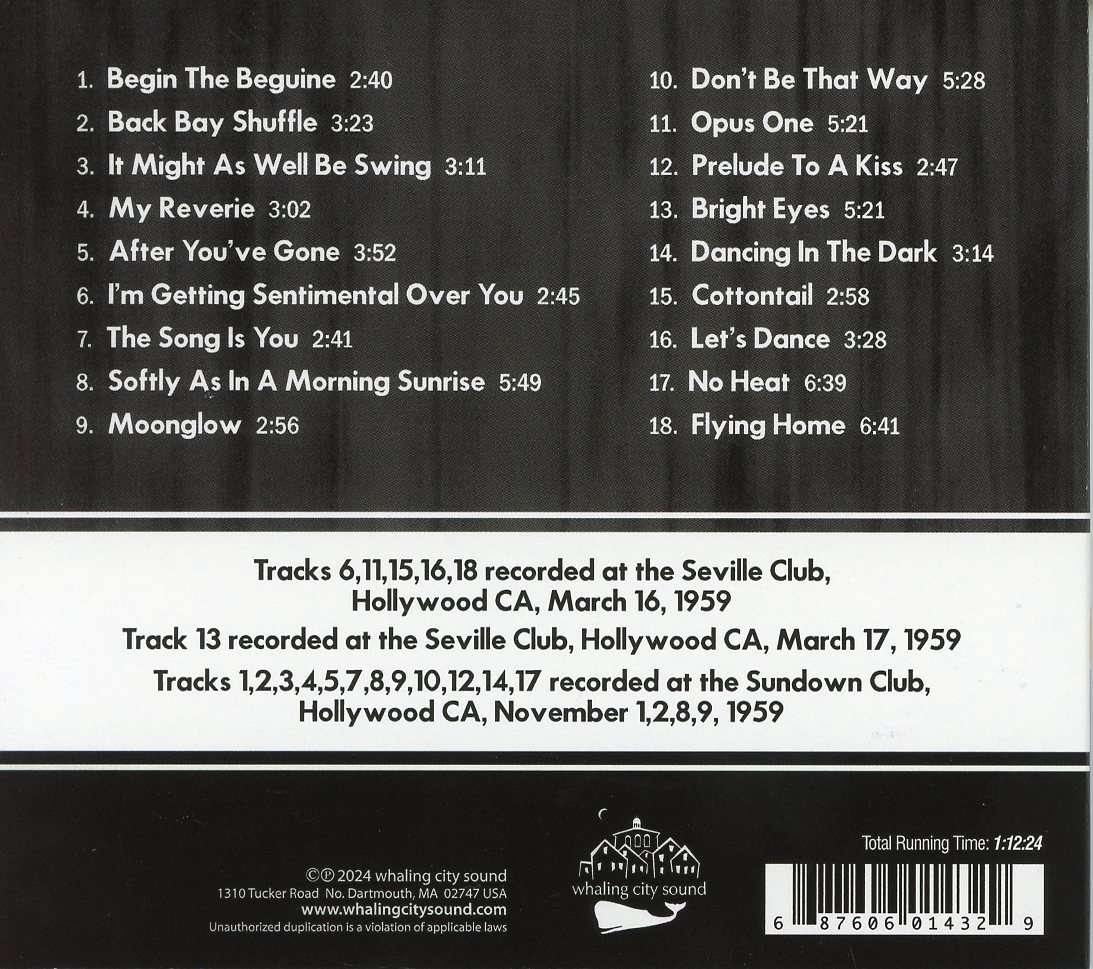
“The gift of Terry Gibbs's vast tape archive keeps on giving with the October 11 release of Terry Gibbs Dream Band, Vol. 7: The Lost Tapes, 1959 on Whaling City Sound (digital release November 8). The newly discovered tapes find the vibraphonist and first-generation bebopper (still alive and kicking as his 100th birthday approaches on October 13) leading his legendary 16-piece Dream Band at two Hollywood nightclubs in March and November 1959. The 18 tracks feature superb performances by some of the finest arrangers in jazz history, delivered in stunning high fidelity.


Gibbs and his son, drummer/bandleader/co-curator Gerry Gibbs, thought they had exhausted the surviving documentation of Terry's swing-boppin' big band with the 2002 release of Vol. 6: One More Time. (Vols. 1-5 came out in fairly quick succession between 1986 and 1991.) Then, earlier this year, the elder Gibbs was going through the archival files on his son's computer when he stumbled across one labeled "1959 Jazz Party."


"I said, 'Hey, what the hell is that?'" he recalls. "So I played it and it was the Dream Band." Gibbs had booked the ensemble in the winter of 1959 at the Seville Club in Hollywood as a way of rehearsing them for a recording session without breaking union rules; when they packed the place, they were asked to stay on. After several weeks they moved to the Sundown, a club on the Sunset Strip, where they remained for about a year.


During that time, Gibbs built up a book with charts from an unbelievable list of arrangers, whose talents are on display here: Bob Brookmeyer ("Don't Be That Way"), Al Cohn ("Cottontail"), Marty Paich ("Softly, as in a Morning Sunrise"), and the band's tenor players, Med Flory ("Flying Home") and Bill Holman ("Begin the Beguine"). "I talked with my arrangers," explains Gibbs in Vol. 7's liner notes, "and I wanted to have arrangements that presented the band as an ensemble band."


That full-band focus doesn't stop the soloists—-among the best of the day—from giving crackling, hard-swinging performances. Trumpeter Conte Candoli sounds off brilliant on both the driving "Bright Eyes" and the ballad "Moonglow"; trailblazing trombonist Carl Fontana brings his brawny sound to "Let's Dance"; and drummer Mel Lewis, soon to be big band royalty in his own right, defies the title of "No Heat" with his simmering fills and brief solo. And then there's Gibbs himself, whose dusky signature tone on the vibes nevertheless illuminate "The Song Is You," "Dancing in the Dark," and "Prelude to a Kiss."


"It was a labor of love," says Gibbs of the Dream Band's superlative work. "I made $11! The band got $15, but they didn't mind! They were playing for the love of it!" On Dream Band, Vol. 7, that love for the music shines through.


Terry Gibbs was born in Brooklyn, New York on October 13, 1924, as Julius Gubenko. A member of a musical family (his father was a violin teacher and orchestra leader), he found his way to the mallets by playing his older brother Sol's xylophone. He took lessons with drummer-percussionist Fred Albright at 9, won a radio talent show at 12, and hit the road with singer Judy Kayne's band at 16.


While serving in the Army during World War II (stationed Stateside), Gibbs — who had taken the name to sound punchier on concert marquees and programs — heard Charlie Parker and Dizzy Gillespie playing the new sounds of bebop, and it changed his life forever. Before long he was playing the music himself, making records with Allen Eager, Tadd Dameron, and Stan Getz in addition to touring and recording in the big bands of Bill De Arango, Buddy Rich, and Woody Herman (of whose "Four Brothers" band Gibbs was a vital member).


In the intervening decades, the list of names on Gibbs's resume reads like a roll call for the Jazz Hall of Fame, from Benny Goodman to Ray Charles to Alice Coltrane. He has led quartets, quintets, sextets, and big bands, including the house bands for Mel Torme, Steve Allen, and Jerry Lewis; played on recording sessions for John Lennon and Leonard Cohen; and written an award-winning biography in 2003 's Good Vibes: A Life in Jazz before he retired from performance at the age of 92. Gibbs continues to live an active life, however, appearing weekly on Facebook with his TG Q&A Show.”


And this announcement from Whaling City Sound accompanied Terri’s press release:


TERRY GIBBS DREAM BAND

Biography


“There was joy in Jazzville the day Terry Gibbs's Dream Band was released in 1986. Long before the onslaught of newly "discovered" albums, it captured a remarkable ensemble, live and swinging at Hollywood's Seville club in March of 1959.


Led by hot-wired bebop veteran Gibbs at the vibes, the hard-hitting 16-piece group—which DownBeat would call "the best in the world"—defied the obituaries being written for the big band. Featuring such familiar names as Conte Candoli, Pete Jolly, and Mel Lewis along with lesser known talents—"all real jazz players, not studio pros," says Gibbs—the Dream Band played arrangements by the killer's row of Bill Holman, Bob Brookmeyer, Al Cohn, Sy Johnson, Marty Paich, and Manny Albam.


How is it that this music, recorded by the legendary Wally Heider, went unreleased for nearly 30 years? "I was offered lots of money for the tapes by attorneys who were starting a new record company," says Gibbs, who at 99 (!) retains a sharp memory of those glory days. "But I didn't want to sell. I played the tapes mainly for friends like Shorty Rogers and Buddy Rich." It was at Rich's urging that he finally agreed "to let the world hear that band."


If Dream Band were the only album to capture this one-of-a-kind unit, Gibbs would be thrilled. Hearing the songs played on the radio, he said, made him "feel like a winner." But like a gift that keeps on giving, Dream Band has spawned not one, not two, but six sequels, drawing from the Seville performances as well as sets later that year at the Sundown club in Hollywood and sets at the Summit in 1961.


To say the road to the new, surprise-filled Volume 7 had its obstacles would be like saying Los Angeles is sunny. Volumes 2 through 5—The Sundown Sessions, Flying Home, Main Stem, and The Big Cat—came out like clockwork on the Contemporary label between 1987 and 1991. But after the 1994 Northridge earthquake rumbled through Gibbs's L.A. home, destroying or redistributing everything in it, it looked like the series would end. Not until seven years later did he find, hidden on the top shelf of a closet, 11 boxes of reel-to-reel tapes marked "Big Band Sundown, Seville 1959." Voila; Volume 6: One More Time.


Now, after a gap of 21 years, here is Volume 7, which Gibbs and his son Gerry Gibbs, the drummer and bandleader, stumbled across on the computer on which Gerry had digitally stored all surviving tapes. "There was a file labeled 'Party 1959,'" says Terry. "I said, 'Hey, what the hell is that?' So I played it and it was the Dream Band from the Seville and Sundown."


Gibbs's initial reaction was a bit mixed. "I asked myself what do I need this for," he says with a laugh. "I'm going to be 100! I'm all done. I've had a great career. I have enough money to last. I didn't need all the work of putting together another album, programming it. But it was a labor of love. I never had so much fun losing money than I did with that band. I made $11! The band got $15, but they didn't mind! They were playing for the love of it!"


(In order to be able to rehearse his big band for the studio sessions later that year that produced the Terry Gibbs Orchestra's Launching a New Band, released on Mercury, Gibbs had it perform at the Seville in place of the quartet on a Tuesday night—for the same money the combo would get. Union rules prohibited unpaid rehearsals for recordings but permitted a band to rehearse for a nightclub job.)


"Once in a lifetime, things just click for you," says Gibbs. The Sunday before the Seville gig, he appeared on The Steve Allen Show, where the host, a jazz artist himself, gave him a big plug. As a result, the place was packed, with celebrities like Dinah Shore, Fred MacMurray, Johnny Mercer, Ella Fitzgerald, and Louis Prima in attendance.


Most of the songs on Volume 7 are standard fare, including such classics as "Dancing in the Dark," "Cottontail," "Softly, as in a Morning Sunrise," and "After You've Gone." But the performances are anything but standard, delivered with the blend of tight economy and in-your-face power that made the band unique.


"The ensemble was always the most important thing," Gibbs says. "It was never about solos, but that sound of everyone playing together, rising and falling as one. I wasn't interested in hearing a saxophone play ten choruses. I wanted to hear the band play the arrangement. What made that band so great was that they played together. Back then, the songs had to be under four minutes to get on the radio, so you didn't have time to fuss around."


With the recent passing of Bill Holman, who arranged eight of the songs, Volume 7 serves as a tribute to that certified genius, who also plays tenor throughout. "There was no one like Bill," Gibbs says. "He had a hand in just about every important band. While I'm not going to say he was the best, maybe he was. He certainly was the most unique. He was doing all kinds of things, some very experimental."


Holman's arrangement of Cole Porter's "Begin the Beguine" trades in its usual romanticism for bracing back-and-forth volleys by Gibbs's sizzling vibraphone and the unison horns. Other memorable arrangements on Volume 7 include Paich's rapturous setting of the Tommy Dorsey hit, "Opus One" (which originally featured Buddy DeFranco, with whom Gibbs would co-lead a quintet into his eighties), and Flory's razor-sharp treatment of "Flying Home."


The latest and possibly final Dream Band collection also celebrates the innovative genius of Wally Heider, who died in 1989. "I told him I wanted all the horns to be on the same level," says Gibbs. "And I wanted the drums up front because without that excitement from the drums, I don't have the exciting band that I want. Wally captured it all beautifully. He makes it sound like you're sitting right in front of the band."


Wednesday, August 14, 2019

Terry Gibbs Dream Band - The Jack Tracy Notes

© Copyright ® Steven Cerra, copyright protected; all rights reserved.


Terry Gibbs and I recently became friends on Facebook, and to celebrate that occasion, I put recordings by his big band in my CD changer which led, in turn, to a reunion of sorts with the writings about Terry’s band by Jack Tracy which you’ll find after this introduction. 


Whether it’s the arrangements, the ensemble playing, the solos or the rhythm section, one would be hard-pressed to find a better big band in the history of Jazz than the Terry Gibbs Big Band.


Although it existed for only 3 years [1959 - 1962], performed in relative obscurity because it never toured [I gather that it did play a two week engagement at the Dunes in Las Vegas] and didn’t have most of its recorded output released until a quarter of a century after it folded, those who experienced it in person during its brief existence have come to refer to it by another name –The Terry Gibbs Dream Band.


The band had an incredible book of arrangements courtesy of Bill Holman, Manny Albam, Sy Johnson, Bobby Brookmeyer, Shorty Rogers, Al Cohn, Lennie Niehaus, Marty Paich, Wes Hensel and Med Flory.


On any given evening, the trumpet section would made up of four monster players selected from the following list: Al Porcino, Ray Triscari, Stu Williamson, Conte Candoli, Johnny Audino, Frank Huggins, and Lee Katzman.


The trombone section was usually comprised of Frank Rosolino, Vern Friley, Bob Edmonson, Bobby Burgess, Bill Smiley and Joe Cadena.


The saxes was anchored by Charlie Kennedy [lead alto] and Joe Maini [solo alto], Bill Holman, Med Flory, Bill Perkins or Richie Kamuca on tenor and Jack Nimitz or Jack Schwartz on baritone saxophone.


The rhythm section was made up of Pete Jolly, Lou Levy or Pat Moran on piano, Buddy Clark or Max Bennett on bass and the always cookin’ Mel Lewis on drums who was quoted as saying to Ted Gioia in his West Coast Jazz: Modern Jazz in California, 1945-60: [p. 164]: “I don’t think there was ever a better band than this one, including my own.”


Of Lewis, Gioia had this to say: “Lewis possessed the rare skill of being able to propel a big band without overplaying – a talent of vital importance during his [earlier] tenure with the Kenton band, whose heavy textures had been known to overpower more than one drummer.” [p. 166].


The band played on the “off” nights at Hollywood clubs such as Seville, the Sundown or the Summit and the mood at these clubs was very relaxed; it appeared that the musicians were glad to be out from under the rigors of playing in the movie and TV studios or dealing with the tedious nature of making the music for TV commercials and radio jingles. 


The fact that the musicians were enjoying themselves was certainly evident as they hooted and hollered to urge on the soloists [Terry’s in particular drew all sorts of ‘comments’ from Joe Maini along the lines of “Hammer, baby, hammer!].  You can hear this revelry and camaraderie in the background of the band’s in-performance recordings.


According to Gioia: “The Gibbs band is like a turbocharged roadster…the band’s pizzazz also stems from Gibbs penchant for dramatic flourishes and high-energy music. … Gibbs, ..., also apparently had a flair for bringing the best out of his musicians.” [p. 165]


Although most of the music recorded by the band remained unreleased in Terry’s possession until the late 1980’s when he finalized a deal with Fantasy for their production and distribution, there were some LPs issued on Verve and Mercury during the band’s existence.  The Mercury albums were originally produced by Jack Tracy, who also worked with Terry as co-producer on the reissue of Terry Gibbs and his Exciting Big Band/Explosion [Mercury 20704] when it was converted to digital as Terry Gibbs Dream Band: The Big Cat – Volume 5 [Contemporary CCD 7657-2].


Jack had a long association with my family, although I didn’t find out about this until we became friends during the last years of his life [he died in 2010 at the age of 84].


It seems that when Mercury Records moved Jack to the Left Coast from Chicago in the early 1960s to handle its California productions, Jack was a frequent visitor to a restaurant where my father worked as a waiter and later as a bartender. 


So here’s me digging Terry’s big band at various clubs on Sunset Blvd., which Jack is producing for sessions on Mercury Records after which he would go to a restaurant [just off of Hollywood Blvd.] where my dad served him dinner. Talk about six degrees of separation from Kevin Bacon!!


When I first started the blog in 2008, Jack was a constant supporter always encouraging me with small messages like “... what you are doing is important,” “... you played the music so share your knowledge and experience,” “... you should do more pieces on Pops [Louis Armstrong] and Duke”....


Pretty heady stuff to a novice writer from a former editor of down beat magazine and a major Jazz record producer!!


With Jack’s permission here are the insert notes that he wrote for the CD issue of Terry Gibbs Dream Band: The Big Cat – Volume 5 [Contemporary CCD 7657-2].


After reading these notes, one can easily understand why Jack served as the editor of down beat magazine for many years. Any writer would be well-served by and proud to have such an editor. It’s an honor to share his writing with you on the JazzProfiles website.


Oh, and one more thing, Jack’s writing is funny; he has a way with humor that will have you giggling, chortling and sniggering and wanting to go back and read it all again.


© -Jack Tracy, copyright protected; all rights reserved; used with the author’s permission.


“One day some 30 years ago I sat there listening to this excited voice in my ear on the telephone. No surprise; Terry Gibbs sounds excited even if he's only asking you what time it is.


Dick.'" he yelled. (For some reason he always felt that my surname entitles him to call me Dick.) "Dick, you've got to come out to California and record the band ... we're breaking it up every night at the Summit. Let's get Wally Heider and do a live date."


Perhaps I should fill you in. At the time I was Jazz director for Mercury Records, based in Chicago, and Gibbs was one of the top artists on the roster. He was a poll winner, worked regularly, enjoyed a strong following, and had a compellingly infectious personality. Matter of fact, he still does. He talks approximately as fast as he plays the vibes, and if hypers ever need a poster child, they should pick him. Wally Heider (God rest him) was, hands down, the best sound engineer who ever did a remote. No one since has been able to record a big band on location like Wally. It was in his blood.


To get me out there didn't take a lot of convincing on Gubenko's part. (I call him Gubenko. His surname entities me.)  I'd heard the band before and I knew how good it was. Listening to it was much like riding a roller-coaster there was excitement, yelling, speed, giddiness. breathsucking, stomach tightening elation and just plain awe. Perhaps as good an ensemble band as ever was;  certainly none have been perceptibly better. They came roaring out of the chute on every set, clean and highflying and with great pride in performance. Swing, dynamics, shading, crispness, and confidence were all there all the time and the phrase "joyous abandon" comes readily to mind when describing their playing. They could set a house on fire.


So I said yes, let's do it.


Besides, who in his right mind would pass up an expense covered trip to a Hollywood that was still lush and green, graffiti less and smog free and full of long legged, healthy blonde ladies with golden tans?


So for three nights we recorded every set, and the fitting climax to this tale would of course be that the record was a smash hit and the Dream Band would become one of the biggies of the Sixties.


Wrong.


Because by the end of the 1950s big bands were desperately trying to stay alive. (Big jazz bands, anyway. You take Lawrence Welk ... Please.) Travel costs were up, jazz was on a down cycle, airplay was next to impossible to get, forget about TV, the Beatles came over from England and screwed up everything.


The days of the big bands were over, save for an occasional dinosaur like Basie, Ellington, Herman, or Kenton found hanging on for dear life, and the world of music had changed. Even the second coming of Christ wouldn't have drawn a crowd if he had returned leading a band.


So although we didn't know it then, this was to be the last recorded gasp of the Terry Gibbs big band. For nearly 30 years, anyway, until a perceptive record company recognized that great is great no matter the date and has rereleased every album recorded by the Dream Band.


This one is the finale [actually, there is a 6th - Terry Gibbs Dream Band One More Time], and if you'll accept admittedly prejudiced opinion, it is even better than the preceding four. These are flawless performances of some beautifully written charts. I have listened to them many a time, first when they were initially released and more recently when preparing this essay, and I can't hear a single thing that should be changed, corrected, or improved upon. The band never played better.


Most of the credit for that should go to the leader.  Yes, I know that a chain is never stronger than its weakest link, but Gubenko knows how to select personnel so that there are no sore thumbs or red asses among them, knows how to draw the best effort from every player, knows when to be boss and when to be one of the guys, knows how to pick tempos and pace a set according to the mood of an audience, can play the hell out of his instrument and not just stand up front waving his arms, and sets everyone an example by giving 125 percent at all times. In short, he is one helluva bandleader, and had he been born ten years earlier would have been one of the biggest names of the swing era, when bands were bands and you'd better believe it.


I was always struck by the closeness of this band. One well remembers the Ellington orchestra, for example, where on any given day half the guys might not be talking to the other half, or even to each other. Or Basie's outfits, where there were generally a couple of fiefdoms to be reckoned with. In other instances it might be the case of a starstruck leader communicating with the troops only through an underling.


But this conglomeration of personalities somehow managed to act like a high school cheer team. There was the irrepressible alto saxist, Joe Maini, another of the God-rest-hims, leading the sax section, contributing those startling, angular solos, and cutting up something awful. The brass section was, to be truthful. plain raucous, with Al Porcino, Conte Candoli, and Frank Rosolino the chief truants. (When you hear the guys in Doc Severinsen's band on the Carson show yelling "Yoo," you know where it all started, don't you? On the Gibbs band.)  And if there were any jealousies about anyone getting fewer solos than the next guy, or not being properly recognized, they were well hidden. This was a team that hit the bandstand ready to blow you out of the room.


And if you have never experienced the electrifying shock of hearing a great jazz band up close in a nightclub, you are to be pitied. Concert halls are fine, jazz festivals are OK, but unless you've had your head in the lion's mouth at a Blue Note or Birdland or Summit and actually smelled his breath, you don't know what it was really like to physically feel the energy being generated and to be absorbed into it.


You may have heard me say this before. but on some nights a band would come at you in waves, and you couldn't do much but sit there helplessly. You knew you were being had, and you knew you were being stripped of all propriety and decency, but you just didn't care. There was a joy unmatched, and somehow you had shared something deep and unspoken with those men on the bandstand that you'd never forget. It was thrilling, and if it has never happened to you I am truly sorry.


Gubenko's guys could do it to you. The rhythm section was tight, with Pat Moran on piano (in case you don't remember Pat, a Ms. goes in front of her name) and Buddy Clark (no, not the singer) on bass, with the marvelous Mel Lewis playing drums. Mel (damn, but it hurts to keep saying God rest him) looked sort of funny and all hunched up back there, peering near-sightedly over the ride cymbal, but he was so good. Every nuance of every chart, every little hole that needed filling, every breath that lead trumpeter Porcino took, every shading and inflection, there was Mel, right on top of ft.


Gibbs used to call him "Mel the Tailor" because “I had this old Jewish tailor in Brooklyn who had bunions and he walked funny. Mel walked just like him, so I called him The Tailor and it stuck." In later years Mel was to tell people that he got his nickname because he played “tailor-made drums," but many of us knew better.


As I was saying, Porcino played lead trumpet and he was about as good as they get, right in the same ballpark with Conrad Gozzo, Snooky Young, Johnny Audino, that bunch. Al talks verry slowwwly, and it has been said that a person could spend the better part of an afternoon listening to Porcino and Shorty Rogers say hello.


Most of the trumpet solos came from Candoli and Stu Williamson. Conte blew with great verve, fire, and dash he came up listening to Dizzy. Stu’s solos were pretty, more ruminative. He was never in a hurry.


Rosolino (from now on I'm just abbreviating God rest him" to G.R.H., OK?) simply leaped out of the trombone section on his solos. Blindingly facile. and full of musical humor, he would draw “who was that?" looks from the uninitiated after one of his rapidfire, take-no-prisoners sorties during which he took no prisoners.


Both tenor saxes in the section, Bill Perkins and Richie Kamuca, were also featured as soloists. Kamuca (G. R. H) always used to say he didn't like to play in big bands; he liked the looseness of small groups. But he was proud to play in this one, and often made that known to Gubenko. I loved Kamuca's playing: his solos were such a deep reflection of his quiet, thoughtful, and sensitive personality.


This band was a delightful crew, one that worked chiefly for the fun and fulfilling ness of it, certainly not the money. "We got paid scale at, the Summit," remembers Gubenko, "which at that time was $15 a night. I got double. $30, but gave half to the band manager. My bar bill was usually about $20, because I'd pick up a tab or two, so it cost me at least five bucks a night to work there. But I never had more fun or musical satisfaction in all my life."


Neither did a lot of other people. And, please do me a favor. Put this disc on your machine. kick up the volume, to hell with the neighbors and stick your head in the lion's mouth.


You'll smell his breath.”


Jack Tracy
Santa Barbara, CA
February 1991


“Jack Tracy was the editor of down beat in the 1950s and has been a jazz record producer and freelance writer ever since. He no longer drinks or smokes.”


Friday, August 24, 2018

Terry Gibbs Dream Band - One More Time

© -Steven Cerra, copyright protected; all rights reserved.


During the twenty-five years or so of its existence, West Coast Jazz was derided and chided as bloodless, boring and banal by musicians, critics and fans who, for the most part, never experienced it first hand.


I did, experience it in person - indeed, was a part of it for a short time - and I loved every minute of what I always thought was a grand experiment in Jazz music-making.


West Coast Jazz was disparate and constantly being made so through countless differentiations in its style. It’s true that not all of it was exciting and enthralling Jazz, but if you sampled enough of it, it could be deeply satisfying music.


You could always tell as West Coast Jazz musician by his swagger. These guys could read and write music as well as improvise. They knew how good they were and they were proud of their abilities.


A tight-knit camaraderie was a mainstay in West Coast Jazz circles as many of these musicians had a long association with one another through service in the armed forces together; after the second world war many of them linked up again as part of the Stan Kenton, Charlie Barnet and/or Woody Herman bands and migrated westward to the Golden State [aka California].


In those days, California offered affordable housing, was a relatively inexpensive place to raise a family with good schools, plenty of parks and recreational facilities and it also had a viable freeway network that made it easy to get around in automobiles fueled by .19 cent a gallon gasoline prices.


At night, West Coast Jazz musicians worked a vibrant Jazz club scene in Hollywood and along the beach communities stretching from Santa Monica to Long Beach to Hermosa Beach; by day they were at Radio Records on Santa Monica Blvd, or Western Recorders, NBC or RCA studios on Sunset Blvd, or at Warner Brothers and Universal Pictures just across the Barham pass from Hollywood in the eastern San Fernando Valley.


There, they recorded the music for movie scores, TV commercials and weekly TV series, and radio jingles. At these “studio gigs” they earned enough money to feed their families, pay their mortgages and subsidize the $25-50 buck-a-night Jazz gigs that they sought out with relish and vigor to the point where you almost thought they would play these gigs for nothing just to be able to play Jazz.


Some of them were also fortunate enough to have recording contracts with labels based in Hollywood such as Pacific Jazz and Contemporary.


On the weekends, they enjoyed the California sunshine with family and friends at the beach or at the desert or at home with backyard barbecues.


They were, by-and-large, a happy and contented lot so much so that the drug scourge that was rampant elsewhere in the Jazz World reared its ugly head only on occasion on the “Left Coast.”


I always thought that the “other guys” were just jealous.


One of the most stunning example of exciting and enthralling West Coast Jazz can be heard in the music of the Terry Gibbs big band which was in existence from about 1959-1962.


The band usually worked on Mondays - the “off night” - at one of three Hollywood clubs: The Summit, The Seville or The Sundown.


In some ways, what came to be known as The Dream Band was the forerunner of the Gerry Mulligan’s Concert Jazz Band, the Thad Jones Mel Lewis Orchestra, Mel Lewis and The Jazz Orchestra, the Village Vanguard Orchestra and the current iteration of all of these predecessors - the Vanguard Orchestra.


The line of continuity runs through drummer Mel Lewis who along with bassist Buddy Clark and trumpeter Conte Candoli joined Jeru’s CJB in 1962; lead trumpeter Al Porcino would also become a member of the CJB at a later date.


It’s hard to imagine the Terry Gibbs Dream Band without Mel Lewis in the drum chair, and although Buddy, Conte and Al returned to the West Coast, Mel would move to New York the following year and, in so doing, effectively put an end to the original version of Terry’s big band.


Fortunately, during the band’s existence, it recorded enough music for the release of 5 CD’s.


And as a result of an unfortunate occurrence, a sixth CD was added in 2002 as is explained below in Terry’s insert notes to One More Time [Contemporary CCD - 7658-2].


“ANYONE who's heard the Dream Band — either on CD or in our occasional concerts — always asks me the same question: "When are you going to record the Dream Band again?"


My answer is always the same: "Never." The current Dream Band still has a few of the original musicians (although we keep losing some every year), but the personnel on the CDs recorded in 1959 and 1961 comprised a one-of-a-kind band.


All bands go through personnel changes, of course, but even though the music may seem to be the same, the chemistry of each band makes it just a little different. All of Benny Goodman's bands, for instance, sounded great, but the one he had with Gene Krupa, Harry James, Ziggy Elman, Lionel Hampton, and Teddy Wilson was considered to be one of the greatest bands of all time.


A leader is lucky to have a single band in his whole career that clicks that way. The Dream Band was it for me.


I meant it when I said I'll never record this band again, but I did luck out in a strange way with the album at hand, One More Time.


In 1994, in the Northridge earthquake, our house got hit pretty bad and we had to move out for a period of eight months. In the disruption of moving, everything we owned was put in different places, and eight months later, when we moved back into our house, all our belongings ended up in different places yet again. One day last August, while looking for something on the top shelf of a closet, I came across about 25 boxes of reel-to-reel tape.


In looking over this stash, I was amazed to find 11 boxes marked "Big Band Sundown, Seville 1959." I immediately called my friend Rod Nicas; he's not only the Dream Band's number one fan, but engineered some albums I produced years ago for a now-defunct label of mine. Rod took all the tapes home and burned CDs for me so I could hear what we had. I flipped out because there was enough music to put out another original Dream Band CD.


I selected the best performances and sent a tape to Ralph Kaffel, the president of Fantasy Records. (It was actually Ralph who named my band the Dream Band when the first CD came out in 1986.) He immediately said, "Yes, let's put those out," so here's One More Time.


What I like about this CD is that, since most of the takes I chose came from the last sets of the night, the band was real relaxed. I had opened up these arrangements for the guys to solo. Though the Dream Band was known for its strong ensemble work, people sometimes forget that we always had excellent soloists in the band, too.


The Fuzz. Conte Candoli delivers a superb solo, and Joe Maini, known mostly for his alto work, plays a hard-swinging tenor solo here. And don't forget Mel Lewis swinging the band all the way through.


The Subtle Sermon. While the people were dancing to this groove tempo, the band offered up some relaxed solos courtesy of Lou Levy, Charlie Kennedy, Lee Katzman, Bobby Burgess, Bill Perkins, and me.


Opus One shows off two of the best alto saxophonists I ever played with. They play a few choruses each, then a lot of eight bars each — fours, then twos and ones. On the ones you can hear the guys yelling their names: "Joe, Charlie, Joe, Charlie!" It got so loose that Joe and Charlie became anything but Joe and Charlie. Luckily the names the band was yelling weren't entirely audible or we would have gone the route of Lenny Bruce.


Smoke Gets in Your Eyes features Conte and the five saxes as a background. Years ago I recorded an album called Vibes on Velvet with the vibes backed up with five saxes. When the Dream Band first started we didn't have enough arrangements to do three shows, so I pulled out this old Manny Albam arrangement of "Smoke Gets in Your Eyes." We had never played it or even rehearsed it before. I was going to play it, because the arrangement had been written for me. But I remember I was tired, so I turned around and asked Conte if he knew the song. "What key is it in?" he asked. I told him the key, and that's the only time we ever played "Smoke Gets in Your Eyes." In retrospect, it's the smartest thing I ever did: since Conte passed away last year, I'm happy to have one of his best solos on record.


Slittin' Sam was written by one of my close friends from New York, Al Epstein. The song is actually called "Slittin' Sam (The Shaychet Man)," a Shaychet being the guy who cuts the chicken's head off to make it kosher. (I wish I had enough space to include the lyrics here; they're the funniest.) This is a straightahead arrangement by Manny Albam, with Med Flory, Benny Aronov, and me playing the solos.


Prelude to a Kiss is a feature for me with a beautiful arrangement by Al Cohn.


Flying Home gives a lot of the soloists a chance to blow, starting with two strong choruses by Lou Levy (unfortunately we lost him last year too), me, trumpeters Lee Katzman, Stu Williamson, and Conte Candoli, then some eight bars each for a few choruses by Bill Perkins, Med Flory, Joe Maini, and Charlie Kennedy on saxophones. I play again—it felt so good I had to have another taste—then we take the ensemble on out, with Mel Lewis once again kicking the band.


I Remember You is another terrific solo by Conte Candoli. I think that Conte and the band only played this arrangement three times in the whole time the band was in existence.


The Fat Man is a little blues song I wrote and still play today with my quartet. Conte and I play the solos on this one. A reviewer once heard us play "The Fat Man" in person and said, "If you can't tap your foot to this band, then you're dead."


Just Plain Meyer was the first song the Dream Band ever played when we first got together at the Seville in 1959. It was our good-luck song and we opened with it every night we were at that club. I started out a lot of the arrangements with just the rhythm section playing up front so the band would get the tempo in their heads and it would set up the introduction to the arrangement. Pete Jolly plays the first chorus before the actual arrangement starts. Med Flory and I solo on this one.


Sometimes I'm Happy / Moonlight in Vermont / Lover, Come Backto Me. Back in 1959, whenever I got a job with my quartet that called for a vocalist, I would always call Irene Kral. Nobody knew her at that time, but whoever heard her knew she could sing. One night when she was in the audience, I asked her to sit in with us. It was really like a jam session: she called out a song and told us her key, and we jumped right into it. On "Sometimes I'm Happy" Benny Aronov just made up an intro and Buddy Clark and Mel Lewis jumped right in; I waited a while, then started playing behind her, and we jammed out the ending. Irene was ready to get off the bandstand but we wouldn't let her leave, she sounded too good.


Jumpin' at the Woodside. After the melody and interlude I play the first three choruses, then we have the battle of the tenor saxes, with Med Flory and Bill Holman doing the same thing Joe Maini and Charlie Kennedy did on "Opus One"—two choruses each, then eight bars each, then fours and twos. Then comes the ensemble, which includes the saxes playing Lester Young's chorus from the original Count Basie record. Mel Lewis plays eight bars to get to the final ensemble, we go to a tag and repeat the Lester Young chorus (I'm playing two-fingered piano), and it's back to the last chorus, with Mel Lewis once again bringing us in for the final ensemble.


One More Time is dedicated to Mel Lewis, Conte Candoli, and Wally Heider, three of the most important people who contributed to the success of the Dream Band. I think that Mel and Buddy Rich, though they had completely different styles, were the two greatest big band drummers of all time. Mel, whom I nicknamed the Tailor, certainly played a big part in the Dream Band in many areas: his time, his fills on the ensemble work, and the sound he got out of his drums—Mel Lewis had it all. Conte Candoli and Dizzy Gillespie were my two favorite trumpet players. Conte was not only a great trumpet player, but one of my closest friends; we were like brothers. He will always be with me because I can listen to all the amazing solos he played on the Dream Band CDs.


Wally Heider was way ahead of his time as a recording engineer. He made the Dream Band music recorded in 1959 sound like it was recorded yesterday. The band just jumped out at you. He captured the feeling of a bunch of fun-loving musicians with the exact sound we got in the club. Five stars for Wally Heider.
Thanks guys, wherever you are.”


—TERRY GIBBS
(Sherman Oaks, CA; January 2002)


The following video features the band on Jumpin’ at the Woodside: