Showing posts with label charlie mingus. Show all posts

Wednesday, November 1, 2023

Debut Records - Part 1 [From the Archives]

© -Steven Cerra, copyright protected; all rights reserved.


“The new phase of independent labels, in which for the first time the musicians themselves took a major role in ownership and management, seems to have gathered momentum at the turn of the decade (of the shortlived 1940s companies, only Mezz Mezzrow's King Jazz and bassist Al Hall's Wax labels came into this category). With the major companies' interest in jazz at a new low after the second A.P.M. strike, first Dave Brubeck had helped start the Fantasy label in 1950, then in 1951 Dizzy Gillespie (Dee Gee) and Lennie Tristano (Jazz Records) had created their own outlets, as did Woody Herman (Mars) around the same time that Debut was founded. Also, despite still being contracted to Columbia, Duke Ellington had in 1950 formed the Mercer label to record small-group tracks which would not tempt the major companies, and he it was too who a decade earlier had set the precedent of an independent publishing company (Tempo Music) for his less commercial compositions.”
- Brian Priestley, Mingus: A Critical Biography [1982]

Aside from functioning as a platform to share the pleasure of my interest in Jazz and its makers, this blog also serves as a catalyst to search out aspects of the music that have been largely unfamiliar to me in my pre-blog days.


A case in point is Debut Records which like so many other small, record companies had ceased to operate before I developed an awareness of what a rich source these short-lived “boutique” labels were for important recorded Jazz, especially in terms of the work of underrepresented artists.


By the time I got hip to it, recorded Jazz was largely the business of big labels such as Columbia, RCA and Decca and labels that specialized in the music such as Blue Note, Prestige, Riverside, Argo, VeeJay, Emarcy, Pacific Jazz and Contemporary.


Some early research made me acutely aware that many smaller, early Modern Era [1945-1955] record companies including Black & White Records, Bop Records, Comet records, Jewel Records, Central Records, Treat Records, Dial Records and Treat Records along artist owned record companies such as Dee Gee [Dizzy Gillespie and Dave Usher] and Debut [Charles Mingus and Max Roach] were only in existence for very short periods of time.


So when I came across a 12-CD boxed set entitled Charles Mingus - The Complete Debut Recordings [Debut 12DCD-4402], I knew I best acquire it especially after reading this marketing pitch:


“This handsomely packaged and thoroughly annotated 12-CD set represents the most significant early work of Charles Mingus: his complete recorded output as leader and sideman for the Debut label.


The 169 selections (including 64 previously unissued tracks) showcase Mingus with artists such as Pepper Adams, Art Blakey, Paul Bley, Kenny Clarke, Miles Davis, Dizzy Gillespie, J. J. Johnson, Elvin Jones, Thad Jones, Hank Jones, Wynton Kelly, Jimmy Knepper, Lee Konitz, John Lewis, Charlie Parker, Oscar Pettiford, Bud Powell, Max Roach, Art Taylor, Mai Waldron, and Kai Winding. The 40-page booklet features an informative essay by Ira Gitler plus session notes, photos, and discographical details.


A musician-owned and -run record company, Debut had been conceived as a means for Mingus and his partner Max Roach to get their own compositions recorded. During Debut's seven-year existence, from 1951 to 1958, Mingus emerged as not only an indispensable player in company operations but a vital force in the music as well—a giant on his instrument, an innovator in composition and bandleading, a mentor to up-and-coming musicians.


More than a decade after his premature death in 1979, Charles Mingus's presence continues to be strongly felt. Posthumous recordings and ongoing performances of works such as Epitaph have served to keep his name and creative spirit very much alive.


Likewise, the music in this box represents a fundamental chapter in the history of a jazz visionary.


Produced by Ed Michel”


The detail booklet - about which more later in Parts 2 and 3 of this series on Debut - contained this announcement of Debut’s formation in the July 1952 edition of Metronome Magazine:


“CIGAR salesman William J. Brandt is conscious of the responsibility of fatherhood; so conscious that he visited the now defunct Downbeat Club in New York to find out where and how his son was spending his evenings. He found pianist Billy Taylor and bassist Charlie Mingus, enjoyed himself immensely and further found, before the evening was over, that he was co-owner of a new record company in partnership with Mingus who had convinced him that money spent at the bar could be better used to further the cause of jazz.


In this manner, the Debut label was born in April, 1952. Orthodoxy was never a watchword in the Mingus household and Debut and its operations were no exception to the rule. The first two sides, Portrait and Precognition, both written by Mingus, were products of his feeling that jazz was maturing to a point where it was ever approaching the complexities of classical music, that the main distinction between the two forms was the rhythmic content of jazz, and that jazz could be so written that a classical musician would swing just by correctly reading the music.


Just through his knowledge of the working musicians Mingus has managed to snare a good percentage of the best in jazz; names that sell in spite of their ability to play well. 

Vocalist Jackie Paris was the first Debut commercial hit with Portrait and with his Paris Blues and Make Believe. Max Roach is a consistent seller. The first volume of Jazz at Massey Hall, an on-the spot recording of Dizzy, Charlie Chan [pseudonym for Charlie Parker], Bud, Charlie Mingus and Max, was of more than passing musical interest and sold well to boot. The company's latest LP featuring trombonists Willie Dennis, J.J. Johnson. Kai Winding and Benny Green has some of the most exciting jazz of the year.


Because of a questionable union ruling that musicians cannot own record companies, Mingus was forced to sell the company to attorney Harold Lovett, this Fall, but the label's policy remains the same: a policy which is best described as pro musician and artistic qualities with loot gratefully accepted.


Behind all the successes and failures is Charlie's considerable talent both in writing and playing. In an art form where integrity is an essential element, and a manufacturing field where this element is most often sadly lacking, he fills a huge gap to the benefit of jazz, its artists and its followers. Debut is more than an entrance into the field of jazz, it is a portable concert hall filled with stellar attractions who play much of the best in modern music.—B.C.
METRONOME”


Some commentary, huh? I especially “liked” the part about the musicians’ union not allowing a musician to own a record company!

Ed Michel, the producer of the boxed set offered these words as to its significance:


A producer's note on sound quality


The key to this package is the quality of the music Charles Mingus made available during his Debut years. Audiophile listeners are not likely to be enchanted with the quality of the sound heard here. Debut was an almost classic example of the small independent label, and most recordings were made under rushed circumstances, hardly ever under the best possible conditions or in the best available studios.


Moreover, over the years, the tapes were handled roughly almost from the beginning, and are frequently damaged, accounting for the several tape wows, slips, speed changes, level changes, and bumps which can be heard throughout these sides. Much of the remarkable music heard here was recorded in live performance, and some of the problems which can be heard are directly attributable to the often-chaotic conditions under which those recordings were made.


In some cases, no master tapes exist, and transfers had to be made from disc sources, 78 RPM, extended-play 45s, and LPs.


Charles Mingus viewed tape editing as a part of composition; unfortunately, many of the edits made in his music were all too audible, and, regrettably, since in most cases the original edited fragments no longer exist, there is no way to restore the missing pieces or smooth over these dubious edits without losing even more segments of the music.


The splendid engineers with whom I worked on this project did everything possible with current technology to remove the audio problems standing between the listener and the music, but in every case when there was a choice to be made between audio smoothness and loss of musical content, I chose to keep the music. It is my hope that this choice will not interfere overmuch with the listener's enjoyment of Mr. Mingus's work.


—Ed Michel”


After reading Ed’s producer note, one gets the impression that it is a miracle that so much of the music recorded for the Debut label even exists, all the more reason to highlight what we do know about it and its history.

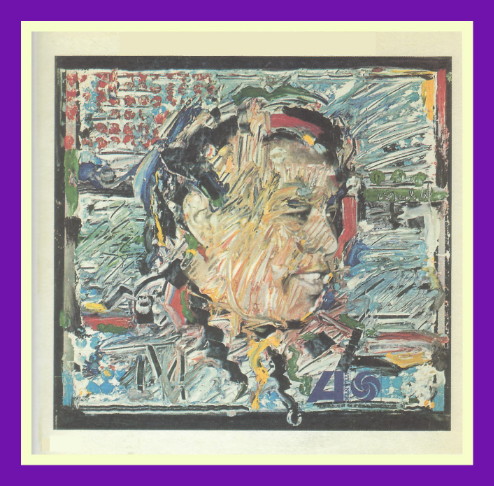

Tuesday, April 26, 2022

Charles Mingus: A Jazz Giant’s Glorious Excesses by John Edward Hasse

 © Copyright ® Steven Cerra, copyright protected; all rights reserved.

Born 100 years ago this month, bassist Charles Mingus created music that was singularly bold, beautiful and original.


The following appeared in the April 19, 2022, Wall Street Journal.


—Mr. Hasse is curator emeritus of American music at the Smithsonian Institution. His books include “Beyond Category: The Life and Genius of Duke Ellington” (Da Capo) and “Discover Jazz” (Pearson).


“In a musical genre known for its outsiders and nonconformists, bassist-bandleader Charles Mingus cut a larger-than-life figure with his stocky frame, forceful independence, and volcanic temper. He was known for stopping performances to scold a musician or upbraid a loud audience. He could turn violent, once knocking a tooth out of his trombonist. “He was a man of excess,” said his widow, Sue Mingus.


However colorful Mingus’s life, it’s not the sensational aspects of his story that make him endure. Like singer Billie Holiday and saxophonist Charlie Parker, what makes Mingus matter is his music. The musical polymath Gunther Schuller called him “one of the greatest composers of the 20th century.” But even that encomium doesn’t adequately encompass him.

Born April 22, 1922, in Arizona and raised in Los Angeles, Mingus studied trombone, then cello, and finally switched to the bass. His stepmother took young Charles to her Holiness church, whose tambourines, handclapping and call-and-response left a big impression on the youngster, as did the classical music he heard at home. But when he encountered the music of Duke Ellington, it was his Road to Damascus moment.


Mingus polished his playing in Los Angeles and went on the road with the big bands of Louis Armstrong and Lionel Hampton. In 1951, he settled permanently in New York. In 1953, he performed in a legendary Toronto concert with bebop masters Dizzy Gillespie and Charlie Parker and joined the orchestra of his idol Duke Ellington, who nevertheless fired him after a week or two for unruly behavior.


By this time, he was a virtuoso jazz accompanist and soloist who freed his bass from providing harmonic underpinnings so he could play melody and countermelody.


Mingus increasingly became driven to compose—notably, beginning in 1955, as the maestro of his own Jazz Workshop. He was deeply influenced by Ellington’s music. Like his hero, Mingus didn’t write for anonymous trumpets, trombones and saxophones, but rather for his own pool of musical personalities, each with his own soundprint. “The seeming paradox of Mingus,” wrote critic Nat Hentoff, “is that so forceful a personality can create situations which so irresistibly propel his sidemen to be so fully themselves.” Like Ellington, Mingus wrote almost exclusively for his band, initially a quintet. He delighted in surprising listeners with sudden changes of tempo, meter and key.


But while Ellington was wont to rely on written scores, Mingus liked to introduce his musicians to new tunes by singing or playing the parts on bass or piano. His method worked because he honed his own brilliant ear and because he chose players with superb aural recognition and recall. Sometimes leading from only a half-completed score, Mingus went beyond Ellington in challenging his players to render emotional effects and to play with a high degree of spontaneity and unknowns (what’s the structure?), which he called “organized chaos.” His pieces have no fixed form and could vary markedly from performance to performance.


His music covers a wide range, from love to protest, from three-minute gems to 30-minute album sides. The aggressive “Haitian Fight Song,” like much of Mingus’s work, doesn’t politely invite you to listen; it grabs your ears and insists. A highlight of his 1959 masterpiece album, “Mingus Ah Um,” the electrifying “Better Git It in Your Soul” offers a driving 6/8 beat, collective improvisation and raucous gospel shouting that’s also part of “Wednesday Night Prayer Meeting.” There are also the sensuous Flamenco rhythms of “Ysabel’s Table Dance,” the warmth of “Peggy’s Blue Skylight,” and the Harlem rent-party fun of “Eat That Chicken.”


Angered by profound racial discrimination, he became a fierce civil-rights advocate. His “Fables of Faubus” mocks Arkansas Gov. Orval Faubus, who in 1957 ordered National Guard troops to block the integration of Little Rock’s public schools. In one version of “Fables,” Mingus and his longtime drummer Dannie Richmond cry out caustic lyrics, calling Faubus a fool, ridiculous and sick.

Mingus ingeniously blended improvisation and composition as well as tradition and innovation. Keenly aware of jazz history, he wrote pieces honoring such legends as composer-pianist Jelly Roll Morton and saxophonist Lester Young, the latter through the slow, haunting “Goodbye Pork Pie Hat,” which became a standard and is included on “Mingus Ah Um.”


His provocative 1971 autobiography, “Beneath the Underdog,” written mostly in the third person, mixes fact and fantasy and remains a riveting read. At the time of his death in 1979 — at 56, of ALS — he was working with singer Joni Mitchell on an album, “Mingus,” featuring her lyrics set to his music. Musicologist Andrew Homzy discovered “Epitaph,” Mingus’s magnum opus for 32 musicians, and Gunther Schuller conducted the two-hour work in 1989. For decades, Sue Mingus has worked tirelessly to keep his music and spirit alive, masterminding three ensembles: Mingus Dynasty, Mingus Orchestra and Mingus Big Band.


Because of its originality, boldness and beauty, there’s nothing like Charles Mingus’s music.”


Thursday, October 25, 2018

Mingus, Balliett and Dinosaurs In The Morning [From The Archives]

© -  Steven A. Cerra, copyright protected; all rights reserved.


“Mingus has never had a substantial following, and it is easy to see why: he courts only himself and his own genius. A one-man clique, he invents his own fashions and discards them when they are discovered by others. The content of his compositions is often repellent; it can be ornery, sarcastic, and bad-tempered. His own overbearing, high-tension playing pinions its listeners, often demanding more than they can give.”
- Whitney Balliett, Jazz essayist, author and critic


Whitney Balliett, the dean of Jazz writers, at least as far as I’m concerned, never explains the title of the anthology of his essays collected from The New Yorker magazine and published in 1962 by the J.B. Lippincott Company of Philadelphia and New York as Dinosaurs In The Morning.


The meaning needs to be inferred from this excerpt from the piece of the same name that gives the book its title - Dinosaurs In The Morning.


“The best thing that ever happened to Jazz - the most evanescent of all arts - is the recording machine. Without this means of preservation, the music might simply have bumbled on a while as a minor facet of American life and then vanished.”


Vanished like the dinosaurs?


No recording machine - no Jazz?


The answer is most assuredly “Yes” for without the recording machine, Jazz, “... the most evanescent of arts,” could have vanished like the dinosaurs.


Instead, we can listen to Jazz recordings in the morning while sipping our favorite beverage which, I would imagine is far better than discovering dinosaurs in the morning through our breakfast nook window!


Copies of Dinosaurs In The Morning can still be had through online booksellers in various editions for reasonable sums of money and its 41 essays make for unsurpassed reading on the subject of Jazz.


Judge for yourself; here Whitney’s narrative on bassist Charles Mingus.


© -  Whitney Balliett, copyright protected; all rights reserved.


Mingus


“UNTIL 1939, when Jimmy Blanton appeared, the bass fiddle had occupied the position in jazz of a reliable tackle. It had, a decade before, replaced the tuba in the rhythm section, and its best practitioners—Pops Foster, Al Morgan, Wellman Braud, Milt Hinton, Walter Page, and John Kirby—had become adept at rigid timekeeping and at itemizing the chords of each tune. These bassists also boasted tones that could be felt and even heard in the biggest groups. But they rarely soloed, and, when they did, restricted themselves to on-the-beat statements that were mostly extensions of their ensemble playing. Blanton, who died in 1942, at the age of twenty-one, abruptly changed all this by converting the bass into a hornlike instrument that could be used both rhythmically and melodically. Since then, the bass has taken over the rhythmic burdens once carried by the pianist's left hand and by the bass drum, and it has added a new melodic voice to the ensemble. At the same time, a group of Blanton-inspired bassists have sprung up to meet these new duties, and have included such remarkable performers as Oscar Pettiford, Ray Brown, Red Mitchell, Wilbur Ware, Paul Chambers, Scott LaFaro, and Charlie Mingus.


All are first-rate accompanists and soloists, and all possess exceptional techniques. The youngest have even begun to wander toward the fenceless meadows of atonality. Chief among these bassists is Mingus, the greatest pizzicato player the instrument has had. He is also the first modern jazz musician who has successfully combined virtuosity, the revolutions brought about by Charlie Parker, and the lyricism of such pre-bebop performers as Ben Webster, the boogie-woogie pianists, and Billie Holiday.


Like many contemporary jazz musicians, Mingus is far more than an instrumentalist. He is a formidable composer-arranger and a beneficent martinet who invariably finds, hires, and trains talented but unknown men. A big, loosely packed man of thirty-eight, with a handsome face and wary, intelligent eyes, Mingus is an indefatigable iconoclast. He is a member of no movement and vociferously abhors musical cant. He denounces rude audiences to their faces. (A recent scolding, administered in a New York night club, was tape-recorded on the spot, and has been printed in an anthology of jazz pieces. It is a heartening piece of hortatory Americana.) He unabashedly points out his colleagues' shams and weaknesses in his album-liner notes or in crackling letters to magazines like Down Beat. When tongue and pen fail him, he uses his fists. Mingus compresses all this dedication into his playing, which is daring, furious, and precise. Despite the blurred tonal properties of the bass, Mingus forces a kaleidoscope of sounds from it. However, much of the time he uses a penetrating tone that recalls such men as Foster and Braud, and that is especially effective in his accompanying, where it shines through the loudest collective passages. (It sometimes shines so brightly that Mingus, in the manner of Sidney Bechet, unintentionally becomes the lead instrument.)


Mingus's supporting work is an indissoluble mixture of the rhythmic and the melodic. By seemingly playing hob with the beat— restlessly pulling it forward with double-time inserts, rapid tremolos, or staccato patterns, reining it in with whoa-babe legato figures, or jumping stoutly up and down on it—he achieves the rhythmic locomotion of drummers like Sid Catlett and Jo Jones. Yet he carefully fits these devices to each soloist, lying low when a musician is carrying his own weight, and coming forward brusquely and cheerfully to aid the lame and the halt. It is almost impossible to absorb all of Mingus at a single hearing. In addition to carrying out his rhythmic tasks, he simultaneously constructs attractive and frequently beautiful melodic lines. These may shadow a soloist, or they may be fashioned into counter-lines that either plump the soloist up or accidentally upstage him. Mingus is a dangerous man to play with.


He is also an exhilarating soloist. Because he is the sort of virtuoso who has long since transcended his instrument, his finest solos are an eloquent, seemingly disembodied music. The pizzicato bass was not designed for the timbres Mingus extracts from it. He may hit a note as if it were a piece of wood, getting a clipped thup. He may make a note reverberate or, rubbing his left hand quickly down the fingerboard, turn it into an abrasive glissando. Sometimes he fingers with the nails of his left hand, achieving a rattling sound. Or he may uncoop a string of whispered notes that barely stir the air. He will start a solo in a medium-tempo blues with a staccato, deck-clearing phrase, cut his volume in half, play an appealing blues melody that suggests the 1928 Louis Armstrong, step up his volume, line out a complex, whirring phrase that may climb and fall with a cicadalike insistency for a couple of measures, develop another plaintive a-b-c figure, improvise on it rhythmically, insert a couple of sweeping smears, and go into an arpeggio that may cover several octaves and that, along the way, will be decorated with unexpected accents.


Mingus's solos in ballad numbers are equally majestic. He often plays the first chorus almost straight, hovering behind, over, and in front of the melody—italicizing a note here, adding a few notes there, falling silent now and then to let a figure expand—and finishing up with an embossed now-listen-to-this air. There are only half a dozen jazz soloists skilled enough for such complacency.


Mingus the bassist is indivisible from Mingus the leader. He conducts with his bass, setting the tempos and emotional level of each tune with his introductory phrases, toning the ensemble up or down with his volume or simply with sharp stares, and injecting his soloists with countless c.c.s of his own energy. His methods of composition are equally dictatorial and are a fascinating variation of Duke Ellington's. Mingus has explained them in a liner note:


My present working methods use very little written material. I "write" compositions on mental score paper, then I lay out the composition part by part to the musicians. I play them the "framework" on piano so that they are all familiar with my interpretation and feeling and with the scale and chord progressions. . . . Each man's particular style is taken into consideration. They are given different rows of notes to use against each chord but they choose their own notes and play them in their own style, from scales as well as chords, except where a particular mood is indicated. In this way I can keep my own compositional flavor ... and yet allow the musicians more individual freedom in the creation of their group lines and solos.


Most of his recent work can be divided into three parts—the eccentric, the lyrical, and the hot. His eccentric efforts have included experiments with poetry and prose readings and attempts to fold non-musical sounds (whistles, ferryboats docking, foghorns, and the like) into his instrumental timbres. The results have been amusing but uneasy; one tends to automatically weed out the extracurricular effects in order to get at the underlying music. The lyrical Mingus is a different matter. His best ballad-type melodies are constructed in wide, curving lines that form small, complete etudes rather than mere tunes. Their content dictates their form, which resembles the ragtime structures of Jelly Roll Morton or the miniature concertos of Duke Ellington, both of whom Mingus has learned from. But Mingus has been most successful with the blues and with gospel or church-type music. The pretensions that becloud some of his other efforts lift, leaving intense, single-minded pieces. More important than the use of different tempos and rhythms in these compositions, which repeatedly pick the music up and put it down, are their contrapuntal, semi-improvised ensembles, in which each instrument loosely follows a melodic line previously sketched out by Mingus. The results are raucous and unplanned, and they raise a brave flag for a new and genuine collective improvisation.


Mingus’s most recent records—"Mingus Ah Urn" (Columbia), "Blues & Roots" (Atlantic), and "Mingus Dynasty" (Columbia)—offer some spectacular things. Most of the compositions are by Mingus and are played by nine- or ten-piece groups (a size beyond the budgets of most of the offbeat night clubs in which Mingus generally performs), which employ his collective techniques with considerable aplomb, thus pointing a way out of the box that the big band built itself into before its decline. Mingus delivers a fireside chat on the problem in the notes to the second Columbia record:


The same big bands with four or five trumpets, four or five trombones, five or six saxophones, and a rhythm section . . . still [play] arrangements as though there were only three instruments in the band: a trumpet, a trombone, and a saxophone, with the other . . . trumpets . . . trombones . . . and saxophones there just to make the arrangement sound louder by playing harmonic support. . . . What would you call this? A big band? A loud band? A jazz band? A creative band?


I’d write for a big sound (and with fewer musicians) by thinking out the form that each instrument as an individual is going to play in relation to all the others in the composition. This would replace the old-hat system of passing the melody from section to section . . . while the trombones run through their routine of French horn chordal sounds. ... I think it's time to discard these tired arrangements and save only the big Hollywood production introduction and ending which uses a ten or more note chord. If these ten notes were used as a starting point for several melodies and finished as a linear composition—with parallel or simultaneous juxtaposed melodic thoughts—we might come up with some creative big-band jazz.


The Atlantic record provides several first-rate demonstrations of this approach. On hand with Mingus are Jackie McLean and John Handy, alto saxophones; Booker Ervin, tenor saxophone; Pepper Adams, baritone saxophone; Jimmy Knepper and Willie Dennis, trombones; Horace Parlan or Mal Waldron, piano; and Dannie Richmond, drums. There are six numbers, all blues by Mingus. One of the best is the fast "E's Flat Ah's Flat Too." The baritone saxophone opens by itself with a choppy ostinato figure, and is joined, in madrigal fashion, by the trombones, which deliver a graceful, slightly out-of-harmony riff. The drums, bass, and piano slide into view. The trombones pursue a new melody, the baritone continues its subterranean figure, and the tenor saxophone enters, carrying still another line. Several choruses have elapsed. Then one of the alto saxophones slowly climbs into a solo above the entire ensemble, which, with all its voices spinning, becomes even more intense when Mingus starts shouting at the top of his voice, like a growl trumpet. Solos follow, giving way to the closing ensemble, which pumps off into twelve straight choruses of rough, continually evolving improvisations on the shorter opening ensemble. Near the end, Mingus starts bellowing again, and then everything abruptly grows sotto-voce. The trombones dip into a brief melodic aside, and the piece closes in a maelstrom, with each instrument heading in a different direction. New tissues of sound emerge in this number and all the others at each hearing—a shift in tempo, a subtle theme being carried far in the background by a saxophone, a riff by the trombones that is a minor variation on one used in the preceding chorus.


The Columbia records, which include eighteen numbers (all but two by Mingus) and pretty much the same personnel, are not as headlong. "Mingus Ah Um" has a couple of ballads, more blues, and, most important, generous amounts of the satire that is present in almost everything Mingus writes. This quality is most noticeable in "Fables of Faubus," which concentrates on two themes—an appealing and rather melancholy lament, and a sarcastic, smeared figure, played by the trombones in a pompous, puppet like rhythm. At one point, the two melodies—one bent-backed, the other swaggering—are played side by side; the effect is singular. Mingus's needling is more subdued in pieces on Lester Young ("Goodbye Pork Pie Hat"), Ellington ("Open Letter to Duke"), and Charlie Parker ("Bird Calls"). But it emerges again in a delightful twitting of Jelly Roll Morton, called "Jelly Roll," which manages to suggest both the lumbering aspects of Morton's piano and his gift for handsome melodies. "Mingus Dynasty" has pleasant, reverent reworkings of a couple of Ellington numbers; a somewhat attenuated selection called "Far Wells, Mill Valley,' written in three sections for piano, vibraphone, flute, four saxophones, trumpet, trombone, bass, and drums; and a fresh version of one of Mingus's gospel numbers, "Wednesday Night Prayer Meeting,' this one called "Slop."


Mingus has never had a substantial following, and it is easy to see why: he courts only himself and his own genius. A one-man clique, he invents his own fashions and discards them when they are discovered by others. The content of his compositions is often repellent; it can be ornery, sarcastic, and bad-tempered. His own overbearing, high-tension playing pinions its listeners, often demanding more than they can give. In happier days, Mingus's music might have caused riots.”


Here’s one that you don’t hear everyday: a video on which The Rotterdam Jazz Orchestra performs Charles Mingus’ Bird Calls.