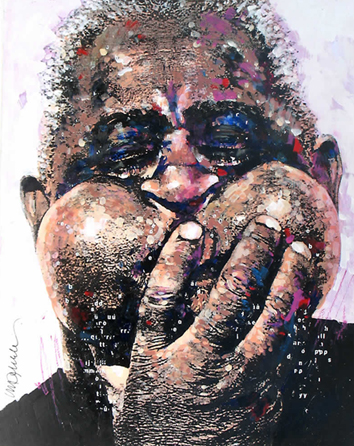
Showing posts with label dizzy gillespie. Show all posts

Saturday, June 28, 2025

Gillespiana Redux with Lalo Schifrin [From the Archives and Revised]

 © Copyright ® Steven Cerra, copyright protected; all rights reserved.


In his June 28, 2025 The Honest Broker Substack, Ted Gioia honored Lalo Schifrin's memory with a piece on his Mission Impossible theme song and the role such songs play in making action heroes such a powerful force in movie lore.

For Lalo, in addition to the recognition, I'm sure this work was also a source of great satisfaction due to the "schimolies" that landed in his bank account as a result of the royalties from the theme song.

But my impressions of Lalo's music were first formed much earlier when Verve records issued Gillespiana the five part suite that he wrote for Dizzy Gillespie in 1960 [the Mission Impossible theme did not appear until 1967].

In a prior JazzProfiles post, I mined the Jazz literature and created a compilation of articles on Gillespiana.

Unavailable to me at the time was Lalo Schifrin's composer notes which I came across through a later purchase of his autobiographical Mission Impossible: My Life in Music, edited by Richard Palmer.

So I though it might be fun to do a feature on Lalo’s recollections of how this wonderful suite of music came about in a separate posting which I later archived as part of the larger Gillespiana compendium. I also published this larger piece in Profiles in Jazz: Writings on the Music and Its Makers, Vol. 1. as a paperback and an eBook on Amazon.com.

I hope this will also serve a tribute to Lalo's memory. [1932-2025]

By way of background, “Lalo Schifrin is a true Renaissance man. As a pianist, composer, and conductor, he is equally at home conducting a symphony orchestra, performing at an international jazz festival, scoring a film or television show, or creating works for the Los Angeles Chamber Orchestra, the London Philharmonic, and even the Sultan of Oman.

Lalo Schifrin received classical training in music at the Paris Conservatory during the early 1950s and simultaneously became a professional jazz pianist, composer, and arranger, playing and recording in Europe. After hearing Schifrin play with his own big concert band in Buenos Aires, Dizzy Gillespie asked him to become his pianist and arranger. In 1958, Schifrin moved to the United States and thus began a remarkable career.

Schifrin has written more than sixty classical compositions and more than one hundred scores for films and television, including Mission: Impossible, Mannix, Cool Hand Luke, Bullitt, Dirty Harry, The Amityville Horror, and the Rush Hour films. To date, Schifrin has won four Grammy Awards (with twenty-one nominations), won one Cable ACE Award, and received six Oscar nominations.

Schifrin was appointed musical director of the Paris Philharmonic Orchestra in 1987, a position he held for two years. Among Schifrin's other conducting credits are the London Philharmonic Orchestra, the London Symphony Orchestra, the Vienna Symphony Orchestra, the Los Angeles Philharmonic, the Israel Philharmonic, the Houston Symphony Orchestra, the Los Angeles Chamber Orchestra, the Mexico City Philharmonic, the Orchestra of Saint Luke (New York City), and the National Symphony Orchestra of Argentina.

He was commissioned to write the grand finale to celebrate the finals of the World Cup soccer championship in Caracalla, Italy, in July 1990. In this concert, the Three Tenors, Luciano Pavarotti, Placido Domingo, and Jose Carreras, sang together for the first time. Schifrin also arranged the sequels for the Three Tenors at the subsequent World Cup finals, in July 1994 at Dodger Stadium; July 1998 in Paris, France; and June 2002 in Japan.

Schifrin's most recent commissions include Fantasy for Screenplay and Orchestra, for Daniel Barenboim and the Chicago Symphony, and Symphonic Impressions of Oman, commissioned by the Sultan of Oman, recorded in England with the London Symphony Orchestra and released by Schifrin's own record label, Aleph Records, in 2003.

It is Schifrin's ability to switch musical gears that makes him so unique in the music world. As a jazz musician, he has performed and recorded with great personalities such as Dizzy Gillespie, Sarah Vaughan, Ella Fitzgerald, Stan Getz, and Count Basie. His longtime involvement in both the jazz and symphonic worlds came together in 1993 when he was featured as a pianist and conductor for his on-going series of Jazz Meets the Symphony recordings, with the London Philharmonic Orchestra and such notable jazz stars as Ray Brown, Grady Tate, Jon Faddis, Paquito D'Rivera, and James Morrison. The third of the series, Firebird: Jazz Meets the Symphony #3 (1996), received two Grammy nominations. Aleph Records released Kaleidoscope: Jazz Meets the Symphony #6 in August 2005, recorded at the Sydney Opera House in Australia. Schifrin was invited back to Australia in 2006 to conduct a Jazz Meets the Symphony tour in Queensland, Adelaide, and Sydney. In 2006, Schifrin returned to Australia for the world premiere of his Double Concerto for Piano, Trumpet, and Orchestra, commissioned by the SMILE Foundation.

In April 2005, Schifrin premiered Letters from Argentina, a piece combining tango and Argentinean folk music with classical music to create a fresh new sound reminiscent of his homeland. It premiered at Lincoln Center with Schifrin on piano, David Schifrin on clarinet, Cho-Liang "Jimmy" Lin on violin, Nestor Marconi on bandoneon, Pablo Asian on contrabass, and Satoshi Takeishi on percussion. These distinguished soloists toured the United States that summer, performing in Portland, Oregon; Santa Fe, New Mexico; and La Jolla, California. The piece was recorded and released on Aleph Records in May 2006.

Lalo Schifrin is a recipient of the 1988 BMI Lifetime Achievement Award. BMI also honored Schifrin in 2001 with a special composer's award for his original cult classic theme to Mission: Impossible. He was most recently honored for his significant contribution to music, film, and culture by the French performing rights organization SACEM, along with the 57th Annual Cannes Film Festival in 2004. That same year he was awarded the 65th Annual Golden Score Award by the American Society of Music Arrangers and Composers (ASMAC). He has been honored by the City of Los Angeles, the Los Angeles County, and the California Legislature, and he received a star on the Hollywood Walk of Fame in 1988. He also received the Distinguished Artist Award in 1998 from the Los Angeles Music Center, and he recently established a jazz and classical composition scholarship in his name for UCLA. He was honored by the Israeli government for his "Contributions to World Understanding through Music," and he was given honorary doctorate degrees from the Rhode Island School of Design and the University of La Plata, Argentina. Lalo Schifrin has been appointed Chevalier de Ordre des Arts et Lettres, one of the highest distinctions granted by France's Minister of Culture, and in 1998, the Argentine government appointed him Advisor to the President in Cultural Affairs with a rank of Secretary of the Cabinet. 

Schifrin has been married to his wife, Donna, for more than thirty years. His three children include William, a writer for films and television; Frances, an art director/designer; and Ryan, a film writer/director. Schifrin scored Ryan's first horror feature film, Abominable, which was released in 2006. For more information on Lalo Schifrin, please visit www.schifrin.com


CHAPTER    SEVEN -Gillespiana

“After an absence of four years, Buenos Aires was as I'd imagined Paris to be following its World War II liberation.

I had intended my visit to be short; I was still planning to return to France and had kept my apartment along the Boulevard St. Germain. A few days after I arrived back, though, I received a telephone call from the new head of national radio and television for Argentina, an Italian married to the daughter of our new vice president. He invited me to his orifice and said he'd held a similar position with the RAI in Rome; he was a jazz fan and wanted to establish a jazz big band as he'd done at RAI. He said he'd heard I was coming back and so had waited for me, having interviewed other Argentinean arrangers, none of whom had convinced him as potential bandleaders. Suddenly, therefore—and I was not even twenty-four years old—I was being offered my own orchestra, with the added dimension of radio and TV programs! At that time, Gato Barbieri was still playing straightforward be-bop tenor saxophone just like Gene Ammons, Dexter Gordon, and Sonny Stitt. We made our debut two months later with great success. The band had four trumpets, four trombones, five saxophones, and a rhythm section. I was conducting from the piano.

And then something even more special occurred: my long-standing jazz idol was about to arrive! From my late teens onward, every time I left the house I would say to my mother, as a joke, "If Dizzy Gillespie calls, tell him I'm not here!" But now he was materializing, the real flesh-and-blood Diz. It seemed like a fateful encounter: my return from Paris and his tour were on two converging lines!

He played in a Buenos Aires theater for the whole week, and it was sold out. I went to every concert and we met. During that week there was a reception for Dizzy, his wife, Lorraine, and the whole band, and I was asked to perform with my own band for them after the dinner. He heard my piano playing and my arrangements. Immediately after we'd finished our set, he came up and asked if I'd written all of the charts. I said, "Yes," and his response was "Would you like to come to the United States?" I thought he was joking. Perhaps they called him Dizzy for a good reason! But, no, he meant it.

It seemed, however, that the State Department was less keen for me to take up his invitation. American bureaucracy meant that I waited two years before getting my green card from the United States Consulate in Buenos Aires; I finally arrived in New York City on September 28, 1958. But even then I couldn't get a work permit from the American Federation of Musicians because of their own rule, and I had to wait almost a further year to be able to play piano with a regular band. I was allowed to write arrangements and to play as a replacement pianist, though. Xavier Cugart was preparing a new nightclub act for his singer, Abbe Lane, and I wrote all of the arrangements, became the musical director, and even did a symphonic album for Cugart himself (RCA). But I was still aiming to work with Dizzy Gillespie. . . .

After gaining my work permit, I formed my own trio, which played once a week in three different New York clubs: the Hickory House, Basin Street East, and the Embers. Meanwhile, I was calling Dizzy without any positive results. In those days there were no answering machines, and Dizzy didn't have an office. Eventually, one night he was performing at Birdland, and I went to see him. He said, "Hi, I heard you were in the U.S.—so why didn't you call me?" I said I'd tried, often. Anyway, Dizzy asked me: "Why don't you write something for me?" So over the weekend I composed the sketches for the Gillespiana suite. On Monday evening I went over to his house and played them for him. He asked me how I was planning to orchestrate it. I said I'd like to do a kind of concerto grosso for his quintet, surrounded by Latin percussion and brass orchestra, in which I would substitute four French horns and a tuba for the five saxophones of a standard big band. Right in front of me, he telephoned Norman Granz, the founder and then still head of Verve Records. Dizzy asked me how long it would take to orchestrate the suite. I estimated about two to three weeks. So he asked Norman to book a studio in one month's time. Just like that!

I started work immediately. But about one week later Diz called me to say, "I have some bad news." My heart fell: I thought he meant he wouldn't be recording the piece after all. Instead he said that pianist Junior Mance was leaving his group. Recovering slightly, I said: "Do you have someone in mind to replace him as pianist?" His answer being "I was thinking of you . . . ," I almost fell off my chair. The very idea that my first major piece, composed for a giant on his own turf, was not only going to be composed, arranged, and conducted by me, but I would also play piano for it!

When I arrived at the recording studio I felt very nervous, because not only was Diz there, but also such jazz stars as Clark Terry, Ernie Royal, Urbie Green, Gunther Schuller, Julius Watkins, et al. who were in the band. Still, the recording went well, and there was a lot of excitement. Gunther Schuller brought John Lewis along the next evening, and they signed the work to MJQ Music Publishing. The piece became very successful with both critics and the public. Dizzy got a gold disc and Norman Granz organized a world premier concert at Carnegie Hall, which sold out; after that he sent us on a tour all over the United States and Europe. I remember when we played at the Palais des Sports in Paris. At the end, Bud Powell came up to the stage to congratulate me. I had never met him before, and he was one of my idols as well as being the chief influence on my modern jazz piano playing.

I stayed on with his quintet from 1960 until late 1962. Playing with John Birks "Dizzy" Gillespie was immensely good for me spiritually—one of the happiest periods of my life in terms of music. It was very fulfilling to play with one of the giants of jazz all over the world, and to learn from him as a human being too. And there was never any end to my association with him. Even after I ceased touring with him on a regular basis, we were seldom out of touch and he was never far from my thoughts. Real friendship had intermingled with my admiration for his musicianship. And, of course, I continued to compose for him.

As many are aware, one of his greatest gifts was the power of his humor. One night, around late 1960, we were performing at Birdland when George Shearing came in with his wife and a group of friends. They had a table close to the bandstand. I told Dizzy I wanted to meet him, because — like Bud Powell — he'd been an early idol. When we'd finished our set, I sat beside him and said it was an honor to meet him. Then Diz came over and told him he couldn't stand hypocrisy and, as a good friend, he had to tell him the truth: "George, you are black—but you didn't know it!"

In 1970 the mayor of New York gave the keys of the city to Dizzy. I was invited to take part in a gigantic concert that reminded me of a psychedelic time machine. There was a big band to play the early repertoire of his Things to Come period. Then I had the pleasure of playing alongside two of the greatest drummers of all time in quite separate quintets: Buddy Rich and Max Roach. All of the periods of Dizzy Gillespie's career up to that point were represented — and all of the participants around me that night were giants of modern jazz.

I've often said that I've had many teachers, but only one master: Dizzy. And I mean it—now more than ever before.”


Saturday, May 3, 2025

Dizzy Gillespie And The Double Six Of Paris - Revised and Expanded

© -  Steven A. Cerra - copyright protected; all rights reserved.


Dizzy Gillespie And The Double Six Of Paris [Philips 830224-2] Gillespie; James Moody (as); Kenny Barron, Bud Powell (p); Chris White, Pierre Michelot (b); Kenny Clarke, Rudy Collins (d); The Double Six Of Paris (v). 7-9/63.


“This almost-forgotten record doesn't deserve its obscurity. The tracks are small-group bop, with the Double Six group dubbing in supremely athletic vocals later- normally a recipe for aesthetic disaster, but it's done with such stunning virtuosity that it blends credibly with the music, and the interweaving is done with some restraint. Gillespie himself takes some superb solos - the tracks are compressed into a very short duration, harking back to original bop constraints, and it seems to focus all the energies - and even Powell, in his twilight, sounds respectable on the ten tracks he plays on.”
- Richard Cook and Brian Morton, Penguin Guide to Jazz on CD, 6th Ed.


I couldn’t agree more with the Cook and Morton assessment of this recording; it deserves more awareness and appreciation than it has received over the years, if only because of the quality of musicianship it required to bring it into existence.


I also wholeheartedly agree with the following insights and observations about the merits of the recording as contained in the 1986 Max Harrison’s insert notes to the CD edition. Max includes details about the origins of each of the bebop anthems that make-up this masterful recording, as well as, the reasons why the lyrics chosen to create the vocalese are based on allusion to the genre of Fantasy and Science Fiction [today usually referenced as “speculative fiction”].


If you haven’t heard this music,  do yourself a favor and check it out. It is readily available as both a CD and as an Mp3 download from the major online sellers.

The insert notes are by Max Harrison. He lives in the UK so he uses English spelling. I have enlarged the original posting by amending it with a review of the group which appeared in the February 16, 1961 issue of Downbeat.


“Words are set to music here, and if you like you can say that the music is "about" the stones the words tell. But the music came first, much of it being heard in its original guise in the 1940's, whereas these performances and the words they use belong to the 1960's. So we should have to say that the stories were discovered in the music at a later date. Really, however, this whole Gillespie - Double Six project is about renewal and transformation, emphasising the gaiety always implicit, often explicit, in the music in its initial form.


That last point is quite important because most of the themes date back to the years immediately following World War II, when bop, indelibly associated with Gillespie and Charlie Parker, proved to be the first major post-war development in jazz. And it was not welcome. People wrote articles with titles like "Bebop: How Deaf Can You Get?" (Time, May 17,1948), saying that beside being cacophonous it was morose, unhealthily introverted.


In fact, while possessing considerable technical sophistication, bop conveyed great high spirits, not least the exaltation of brilliant young musicians who had totally conquered their instruments and could play whatever came into their heads. That feeling is still evident in Gillespie's remarkable contributions to these later recordings with the Double Six. He had a hand in composing nine of the twelve themes used here, and four are his work alone. Most of them, as will be seen from the details given below, made their appearance within a very few years, this suggesting the maturity, and completeness, of Gillespie's style in the latter half of the 1940's, and of the bop idiom itself,


But that was a long time ago by the early 1960's, let alone now, and hence the transformation and renewal spoken of above. Here the big bands and small instrumental combos that Gillespie normally fronts are replaced by the Double Six, a vocal group led by Mimi Perrin which is as accomplished in its way as the trumpeter is in his. Even allowing for the help given by recording techniques, it is astonishing that at many points the power of the Double Six's seven virtuosic voices approximates to the impact of a large band.


In fact this has remained one of the most impressive deployments of a group of voices on jazz records. That is to say that the singing is imbued with the spirit of jazz, the participation of such major figures as Gillespie, Bud Powell, and Kenny Clarke obviously being a crucial factor. Clarke in particular ensures that every bar swings decisively. Nor was the traffic all one way, for the stimulus of an unusual set of musical circumstances gave rise to some of Gillespie's best improvising of this period.


What happened was that he recorded the instrumental parts of 10 of these performances in company with Powell, Clarke, and the outstanding French bassist Pierre Michelot in Paris on July 8,1963. Two further pieces were done with Gillespie's then-regular quartet of James Moody (saxophone), Kenny Barron (piano), Chris White (bass), and Rudy Collins (drums) in Chicago on September 20,1963. The choral arrangements, built around, though necessarily departing from, the routines of the trumpeter's earlier big band or small combo versions of the items, were made by Lab Schifrin in collaboration with Miss Perrin.


These were set down by the Double Six and the results superimposed on the instrumental foundation to produce the complete versions. This in itself involved multi-recording because the scores often required that a singer execute more than one part. In the course of preparing these many-voiced scores Schifrin and the leader of the Double Six discovered that they were both readers of science fiction and fantasy, as was Gillespie himself, and so Miss Perrin based most of the French lyrics she wrote for these pieces on ideas of the fantasy or science-fiction type.

Taking them in the order in which they were recorded, "One bass hit" (Pierre dans l'espace) was composed by Gillespie and his arranger Gil Fuller in 1946, "Two bass hit" (Tout a coup tu as peur) by Gillespie and John Lewis a year later. Both were initially vehicles for the great bassist Ray Brown, so Michelot treads in illustrious footsteps here. In the former piece the words tell how, tired of life on Earth, Michelot sets out for the constellation of Orion, although the voices warn him that its denizens may not look much like Earth people. Sure enough, in "Two bass hit" we learn that they have four heads each; they do like jazz, but Michelot gets homesick and returns to Earth. These two pieces belong to him and the Double Six rather than to Gillespie, and this despite the trumpeter's double-time entry on "One bass hit" and solo amid rather than in front of the rich vocal textures. On "Two bass hit," though, his solo is outstanding, full of contrasts yet logically ordered, and given an unusual slant by the vocal support.


Try a backwards spelling of "Emanon" (Pourquoi tu n'as pas de nom?), a piece written and first recorded by Gillespie in 1946. This new version follows John Lewis's original big-band arrangement quite closely but the trumpeter improves on the occasion with a magnificent solo. The story this piece now tells is of a stranger who seeks to lure Dizzy and the Double Six to a land where nothing and nobody has a name; in a passage based on James Moody's 1946 tenor saxophone solo, now taken by Miss Perrin, this interesting character explains that this is because everything is there part of the same huge Single Entity.


Earliest of these themes is "Blue 'n' boogie" (now Le monde vert), first recorded by Gillespie in 1945. In it the Double Six decide to enter the "green world" of the writer Brian Aldiss, but more to the point is that the trumpeter here plays the first of a number of obviously deliberate variants of his initial recorded solos. It is fascinating to listen to the older master commenting on the younger master's thoughts — renewal and transformation indeed. In contrast, "The Champ" (Robie le robot), which dates from 1951, seems to begin inarticulately, but voices and rhythm section quickly sweep in, the trumpet riding their riffs. Gillespie's tone is itself vocalised, of course, and the mixture of brass and voices is again intriguing. Robie is the fastest of robots, hence "The Champ," and it seems especially apt that the trumpet solo should be superb. Powell is heard from, too, sounding more laconic than in former times yet still with pithy things to say.


Just as masterly is Gillespie's opening muted solo on "Tin tin deo" (Rites du Vaudou), a piece in his favourite Latin-American vein that makes an effective change from the bop themes. First recorded in 1951, it here tells of black magic. Powell, not much featured in Latin-American contexts, surfaces again, then Gillespie returns, the mute gone, soaring gloriously over the voices. "Groovin’ high" (La Vallee des Dieux) was initially recorded in 1945 with Charlie Parker and here tells another engaging story. Miss Perrin, taking Bird's original solo, relates how, alone and sad in his room one night, he dreams of a valley of eternal happiness where Dizzy is king, He signifies his desire to go there by improvising a particularly beautiful solo; and all at once he is there, and will rest and play in peace forever. As for Gillespie, he offers a marvellous variant of his own 1945 solo.


More vintage bop from 1946, "Ow!" (L'epee de Rhiannon) here adapts a Leigh Brackett story, "The Sword of Rhiannon." Lalo Schifrin is sent to Mars by trumpeter and singers to find the ancient tomb of Rhiannon and bring back the magic sword it contains. He does so, and leaves Mars, but his ultimate fate is unknown. Tadd Dameron's "Hot house" (Le manoir de Loup-Garou) was the subject of a further Parker-Gillespie collaboration and the trumpeter plays another latter-day variation on what he recorded in 1945. Ringing the changes in a different way, Powell solos here in place of Al Haig, his opposite number in bop pianism who was heard on the original version. Meanwhile the voices sing of werewolves.


In "Anthropology" (Le bonnet de Dizzy), on the other hand, the Double Six's tersely disciplined contributions, hurtling along at a real bop tempo, are scarcely less impressive than the trumpeting for which they express such admiration. Muted again, Gillespie's busy phrases, in the "Tin tin deo" vein, are quite sharp-edged, harshly accented. He is followed by a calmer Powell, whose quotation from the traditional "High society" clarinet chorus is doubtless ironic. The two postscript tracks are of lighter weight. "Con Alma" is brisker than Gillespie's 1954 recording and invokes the gods of Grecian mythology. "Oo-shoo-be-doo-be," from 1952, uses Joe Carroll's original words, finds the Double Six quite subdued, and requires no explanation.


  • 1986 Max Harrison

Downbeat Magazine February 16, 1961

"Boyd Atkins’ Heebie Jeebies, a hit But Lambert - Hendricks - Ross no The Six tune of 1926, was waxed by young Louis Armstrong in Chicago on his second recording session with the famed Hot Five. 

Armstrong was beginning to make a name for himself, and on that day in February, 1926, something was to happen in the Okeh recording studio that would help him immeasurably and add an innovation to the world of jazz. Armstrong forgot the lyrics to Heebie Jeebies in the middle of his vocal chorus. 
Instead of stammering and ruining the take, the unconquerable trumpeter kept going, making guttural sounds phrased in the same manner as he played his horn. 

Jazz historians date the discovery of the Armstrong “gravel voice” and the scat vocal style from that afternoon Scat singing—some will call it an art, and others will not be so charitable— has had a number of honorable practitioners through the years, culminating in the current Lambert-Hendricks-Ross Trio, perhaps the ultimate in this form But the L-H-R success is due for a continental challenge soon in the shape of a French vocal sextet called the Double Six of Paris. 

The formula L-H-R employs, and which is the foundation from which the Double Six works, can be traced back to Armstrong and the impetus he supplied for vocalizing changes seen in the works of succeeding jazz artists. 

Blues singer Bessie Smith successfully emulated the phrasing of her accompanists on cornet and trombone. There is a similarity between the trombone sounds made by Jack Teagarden and his vocal offerings. Early in the late Billie Holiday’s career she borrowed phrases played in back of her by such men as Lester Young and Buck Clayton. During the late 1940s, Ella Fitzgerald’s rendition of Lady Be Good became a scat vocal classic. The only words heard on the record were the title words, and it featured her singing all the parts of a jazz combo. 

The last two years have seen the emergence of Dave Lambert, Jon Hendricks, and Annie Ross in energetic performances, making sounds like musical instruments with Count Basie arrangements and Basie sidemen as their chief models. 

But Lambert-Hendricks- Ross is no longer is alone in the field. The French group, organized in 1959 by Mimi Perrin, consists of six young jazz voices used as musical instruments. 

Miss Perrin and Christianne Legrand (sister of bandleader-arranger Michel Legrand) are the female contingent in the sextet. They were members of the Blue Stars, whose French version of Lullaby of Birdland some months ago was its best-remembered record in this country. 

Miss Legrand also has been seen and heard scat singing in the Brigette Bardot film La Parisienne. 

The male members include Ward Swingle (an American), Claude Germain, Jean-Claude Briodin, and Jacques Danjean. 

The group’s name is taken from the double duty performed by each voice in the complicated recording of jazz arrangements. An original instrumental arrangement is duplicated by the six voices singing the parts of six instruments. The voices are then overdubbed, singing as six other instruments, and to this is added the solo voices singing the original instrumental solos, while rhythm is provided by the only actual instruments used: piano, bass, and drums. (L-H-R uses the Ike Isaacs Trio with the same rhythm instrumentation for accompaniment.) 

Capitol Records has introduced the Double Six to the U.S. jazz market on a newly-released LP. The French group swings French Rat Race and Meet Benny Bailey, both tunes composed by U.S. jazzman Quincy Jones, who had been around Paris most of last year with his big band. Both numbers have been previously recorded as jazz instrumentals. 

French Rat Race features Miss Perrin singing the tenor saxophone solo originally played by the Basie band’s Billy Mitchell. On Meet Benny Bailey (a tribute to trumpeter Bailey of Quincy Jones' Band), Miss Perrin gives her version of trombonist Henry Coker's solo, while Miss Legrand does an agile duplication of Frank Wess' flute solo. This new group may give L-H-R a run for the money. The Six’ assets include the supple sounds of the French language and the larger number of voices for more color and shading. "


Friday, August 20, 2021

"Dizzy Gillespie - The Lion in Winter" - The Jazz Musician Interview

 © Copyright ® Steven Cerra, copyright protected; all rights reserved.


This is a rarity because by March 1992, the year it appeared in The Jazz Musician, there were very few late-in-life interviews with Dizzy that appeared in the U.S. publications, mainly because Jazz had lost the following of a national press years ago.


Thankfully, Chip Stern made this one happen because on January 3, 1993, Dizzy passed away.


I have some fond, personal recollections of Dizzy having met him on a few occasions during some of his swings to The Left Coast in the late 1950s and early 1960s.


Aside from his friendly jocularity both on and off stage, what I remember most about him was the fiery excitement his music generated on stage and the patience and grace he took as a teacher with a bunch of enthusiastic youngsters off stage. 


Although, you could tell he was exhausted after the set from Lalo Schifrin's Gillespiana he had just played with his quintet, he gathered us around him like a bunch of young lion cubs and “groomed” and steeped us in the traditions of Bebop, of which, he was one of the founders.


Here is “The Lion and Winter” interview that Chip Stern conducted with Dizzy.


“With rolling lawns, majestic driveways and obligatory collections of pricey cars, a series of splendid homes adorns Palisades Avenue, the main drag heading out towards Englewood, New Jersey, 


Here, where the reet meet the elite, resides one John Birks Gillespie: musical innovator, spiritual catalyst, twentieth-century revolutionary, still the road warrior and globe-trotting ambassador of America's classical music. 


Crossing the railroad tracks into downtown, the city appears a healthy tintype of Main Street U.S.A., its center dominated by a thirties public works-style municipal building. The scene brings to mind the considerably humbler environs of Cheraw, South Carolina, where Gillespie grew up, and the many roads since traveled that have brought him to this place.


Leaning against a street sign, I'm comforted to think that at least one of the good guys got a taste, got his due, and that, closing in on seventy-five, he's still going strong. Recent evidence includes such fine albums as Max + Dizzy: Paris 1989, an improvised encounter with the percussion master, and Live at the Royal Festival Hall, a big band/percussion date that reinforces his stature as composer and soloist. Not to mention his touring. For Dizzy Gillespie never stops working. Never. "I don't even look at my itinerary," he'd said over the phone. "Ask me where am I goin' and when I'm goin'? I don't know. The most I've been off now that I can recall was four weeks early in January [1991] when I had my cataracts operated on. Other than that, I always go. I take what I want and leave with it."


He'd just completed a week's engagement, sold out, at New York's prestigious Blue Note with his superb working band (featuring tenor discovery Ronald Holloway, who calls forth visions of Johnny Griffin and Sonny Rollins, and seasoned campaigners Ignacio Berroa, John Lee and Ed Cherry). He's planning a return in January '92 for a month of special appearances, with a different grouping each week, including an all-star ensemble, Latin band and his United Nations Big Band. In between, the road beckons.


Waiting on Birks to show, my eyes alight on a yellow-painted curb across from City Hall, signifying no parking. The sign above bears a more pointed message: DIZZY’S PLACE. Now, that's respect. Suddenly someone arrives from behind and snaps at my suspenders. "I'd have come into Manhattan to pick you up, man, but my wife won't let me take her car across the bridge," he says, sounding like a kid caught with his hand in the cookie jar. A grin lights up that enormous face, suggesting Jabba the Hutt. It is the face of a man who never forgot what it felt like to be a child — perhaps not unlike his baby brother Miles. Yet where that reflective Mr. Davis seemed to ruminate on the hurts, the exuberant Mr. Gillespie reminisces on the joy. For a few seconds all I can do is stare — this is a boyhood hero — and soon find myself doing a Ralph Kramden routine, a-hum-na-hum-na-hum-na, tongue-tied in his presence.


"You know, Diz, this'll sound funny, but I'm a little intimidated by you, man."

"Hahaha, get outta here," Dizzy chortles, with a good-natured slap on the back for punctuation. "I'm no old what do you call 'em, those guys that sit out in the deserts ... old masters. I'm still a learner, just like you."


His car — his wife Lorraine's car — is a Mercedes 250 CES, a classic set of wheels. "I bought this new back in 1966, the same time we bought our house. Before that we lived in Corona, Queens, for years, a block away from Louis Armstrong." He reaches to the floor and picks up what appears to be a carved walking stick, embellished in a vaguely Mediterranean design. "Open it up," he suggests, and it turns out to be a kind of scabbard, revealing a short, nasty-looking blade.


"The equalizer, huh, Diz?"


"Yeaaaaahhh," he drawls. "Sometimes you'll be driving around here, and people are crazy, man, they'll just cut you off and think nothin' of it. One day these guys cut me off and I beep as they go by. When we come to the light, he starts to get out of his car, so I showed him this, you believe it, and that was that."


"Sort of like when Cab Calloway called you out in front of the band," I respond, referring to an incident in the 1930s where the heigh-de-ho man confronted a young Gillespie for allegedly throwing spitballs during his performance. And got his ass cut in the bargain. Gillespie giggles at the memory. "Cut his ass. Shit, I was tryin' to kill his ass. My blade was open before it left my pocket. We're tight now, though," he adds as an afterthought. "He realizes that he was wrong; he was accusin' me of somethin' I didn't do."


Diz turns off Palisades Avenue, proceeding through some wooded areas and along a meandering series of comfortable-looking streets and homes. "See this?" He beams, pointing to a street sign. "Here's Hollywood, and here's Vine. Somebody asks where you live, you tell 'em Hollywood and Vine."


All right, say something. "Sure is nice here. Do you ever get to enjoy this? 


Are you afraid that if you come off of the road you'll lose your lip or something?"


"No, I'm not afraid. I play every day anyway. Always playin' out and gettin' paid for it, at least two hundred days a year. That's why I haven't written anything in a long time. One time I was worried about my jaws, because when I do this" — Dizzy presses forefinger to embouchure, expanding those famous cheeks to roughly the size of a bowling ball — "there's a strain, and I thought my cheeks might give out. But when I do that — push it in, go on, put your strongest finger here and try and push in." His cheek resists my finger with the tensile strength of a bear's belly. "So, I don't think they're goin' to give out for a long time, as hard as they get."


"Did you always play the horn like that?"


"No, no. I started doing it about thirty years later. Not having had a teacher was the trouble; you try anything. Lorraine say, 'Hmmm, looks like your cheeks are coming out.' Before I knew it they were out like this.


"You know, the trumpet demands your time. Practice: That does it. You need to know exactly where you put your mouthpiece — got to be the same place all the time. That's what I work on. It always kicks your ass. You get a little better, but not too much.


"I have a regimen to warm up, yes. Whole tones. Starting at low G, you go up to C, and you come back down to G. Sometimes you do scales in thirds or fourths going up and coming down, sometimes fast, sometimes real slow. The idea is to get the sound of the notes properly. See, I asked a classical musician once, a very famous cat. I said, 'Do you practice?' He said, 'Every day.' I said, 'What if you didn't?' He said, 'Well, after one day you will notice you should have practiced; two days, your compatriots will notice; three days, the whole world will notice.' I don't practice exactly the way I did when I was coming up, but pretty close."


"So you've learned to pace yourself on the horn," I propose, "sort of like Sugar Ray or Muhammad Ali when they got older and didn't have those young legs to carry them. Rope-a-dope, right?"


Dizzy laughs. "You don't look at an instrument as a physical thing of fighting somebody. It's about finesse with this"  — he points to his brain. "You got to work out your ideas. Then there's no telling how long you can play, with the proper feelings.


"Sometimes you surprise yourself, let me tell you," he enthuses, gripping the steering wheel a little tighter. "This past spring I played on that boat ride around Manhattan with my band, like I'd never played before! I'd gone to the dentist and had this tooth worked on; it was loose, and he tightened it up. On that boat ride, everything I thought I wanted to play came out." He shakes his head, amazed. "I haven't played like that, boy... I never remember playing like that."


He pulls into the driveway of a long, capacious ranch-style house and eases into the garage, pointing out a white mark on the wall that lets him know when he's in danger of totalling the front end. Along the wall are trap cases bearing his name, packed and waiting — whatcha doing home, man? Entering the kitchen from the garage, I can hear Lorraine's voice in the distance, dishing the dirt about the Clarence Thomas hearings with a friend on the phone. Their living room is laid out to emphasize its spaciousness — the kind of simple understatement only money can buy—and no one needs to say that it is set aside for special occasions. I pull a dozen roses out of my bag for Diz to give Lorraine, as he motions down to the basement.


If the rest of the house is Lorraine's domain, the expansive basement — with its wood panels, small bar, pool table, upright piano, television, synthesizer, drum machine, eight-track recorder and ancient stereo — is clearly Diz's crib, part rehearsal space, part rec room. In one corner is a 28-inch Wuhan Chinese cymbal, a real beast, and a set of golden-chrome Remo drums, compliments of Louie Bellson. There's a JVC compact stereo — still in its box— that someone has sent to Diz, he can't recall who. "People are always sending me stuff," he says simply, and offers his guest a drink.


"I was born October twenty-first, 1917. I always thought I was a musician. Thought I was a musician before I really was a musician. At first I had a trombone—I had no trombone, but I had the school's horn, you see. That was the only thing left. I played on it the best I could. I was little. I was only eleven-and-a-half, and my arms weren't long enough to make that stretch, so I could only reach a few of them positions. Didn't have a trumpet. Boy next door, Brother Hampton, he let me practice on his trumpet. So, by the time I put the trombone down, I could play a little bit in B flat.


"What happened next, a guy named Sonny Matthews came back home. Sonny was an experienced musician who took lessons from his mother and he played some piano, too. Well, he knew who I was, because everybody knows one another in Cheraw. And then his grandmother was Miss Bates. We went to the same church, and every Sunday morning I'd be there waitin' to help Miss Bates out with her cane. I was very close to that family.


"So this big guy came and got me: 'Hey, Sonny Matthews wants to see you.' 'Ahhh, yeah,' 1Isaid, 'okay.' I'm a little cocky — and here I know only one key. Sonny sat at the piano and said, 'Well, whatta ya wanna play?' I said, 'What d'you know?' He called 'Nagasaki' — but I only know the B flat key, and he calls it in C. Man, I couldn't find one note. He said, 'Something must be wrong.' I was cryin' an' everything, and I thought, 'How'm I ever gonna pick myself up and be a musician?'


"So I learned how to read. My father had a whole band in the house, almost. He had a piano, a bass violin—only had one string, but then we only played in B flat anyway. I taught myself all the chords and voicings and inversions on that piano, by myself. No teachers. We didn't have no books. All the schools were segregated. I learned how to read and started playin' at home. 


Later, I taught all the piano players how to play the comp — the accompaniment — in our music. But I never tried to really play the piano, I wanted to play the trumpet. I'd heard Roy Eldridge on the radio—on somebody else's radio. I was playing a little bit by that time, and I didn't know Louis Armstrong. Roy Eldridge, he was my man — I tried to copy his whole thing.


"The trombone player where I went to school in Cheraw, Bill MacNeil, reminded me of J. C. Higginbotham, real rough, you know, growling cat. He got caught peekin' in the white homes around there." There's a short pause, and Dizzy's voice trails off, grows distant. "They killed him. Bill MacNeil ... Bill MacNeil ... he must have been about eighteen years old then or something, you know."


It's a poignant moment. Gillespie's music has always been a freedom song, pointing to an imagined future of incredible beauty, transcending the ignorance of cracker conventions, even as it signaled black people to get out of the way, too, something new is coming through. Transforming the bluesiness and locomotion of swing-era dances into a deep, dignified modern concert music, it's full of joys and dangers. In Dizzy's hands it's been less a stage for protest than for affirmation. But if he's too proud to wear the scars of Dixie on his sleeve, the memories linger, whispering of how far we've come, how far we have to go.


"I was back in Cheraw for a Dizzy Gillespie Day, and the mayor invited me to a cocktail party in his house," he recalls. "So I thought I'd get a haircut. I went into a barber shop in town, and the guy told me, 'We don't cut colored hair.' Ain't that a bitch? And I'm definitely the most well-known person ever to come out of Cheraw. I told the mayor that, and he was shocked: 'He can't do that.' Mmmmm.


"Racism? I grew up with it. I remember it stopped me from playin' with a little boy named John Burrell; he was my little pal then, and his mother and father said, 'Now, look, you can't play with that boy no more.' Then there was a white boy, Kenny McManus. His family had two swimmin' pools: a white one and a black one. It's where I used to swim and dive when I was little, might have been ten, eleven. I used to dive for money, off a high buildin' up there, coulda broke my neck. But I was a daredevil. I've been a daredevil all my life, really. They'd say I was 'bad,' you know, but they called me by my name. I'd always get into trouble, fightin' every day in school.


"Damn, when I think how close I came to being hitched up behind a plow, man. I finally got out of Cheraw when my mother moved to Philadelphia my last year in school, and soon as summertime came, I hitched a ride up. And I stayed till I moved to New York in '37. The first week there, got a job for eight dollars a week. Yeah, big money. I don't know how many clothes I bought off that, all Parisian tailored stuff, on time. I'd pay a dollar-and-a-half a week."


That era also provided Gillespie with the best possible training grounds for a young player — the big bands. Within those juggernauts he learned the craft of his horn, how to play lead and in a section, and was tested every night by his fellow trumpet players in countless styles. A few years later Teddy Hill, in whose band Diz first traveled to Paris, began booking a Harlem club called Minton's, which became the crucible for a fiery new musical language known as bebop. Dizzy, of course, was present at the creation.


"Oh, that was some time, boy. We'd go in there and then we'd go to the Uptown House after that, and you'd come out in the daylight. That band was Nick Fenton on bass, Kenny Clarke on drums, Monk was on piano, Joe Guy on trumpet and Kermit Scott on sax. Charlie Christian used to come all the time. He left his amplifier down there when he died. Old guys didn't come down too much, except Roy, he could make it. Me, Charlie Shavers and 'Bama — Carl Wooley — all three of us would jump on Roy, gang up on him," he laughs at the memory. "Of course, Roy'd come through the door hitting high C after high C from the first note, an' he was ready to take on all comers. He was the most competitive man you ever met, ooooh weeee!


"Monk was the most individual player who came through. Monk with the minor-sixth with the sixth in the bass: He taught us that chord. We used to change stuff to keep guys who couldn't play off the bandstand. In the daytime I'd call Monk and say, 'Hey, listen to this.' I learned 'How High the Moon' from Nat Cole, who was playin' at Kelly's Stables. 'What's the name of that number, Nat? Play that for me again. Damn, them keys are movin'.' And I hurried to Minton's, showed that to Monk. We would make numbers up, but with standards, we'd change them around, put in new melodies and have a new tune. Like 'Groovin' High' came out of 'Whispering.'


"Somewhere in there I met Charlie Parker. He was with Jay McShann, I was with Cab. This was what, 1939, '40? Buddy Anderson took me to see him. We played at the Booker Washington Hotel. When I first heard Charlie Parker play, his style was basically there. He played tunes inside of tunes. And the chords were the correct ones, too. Man, he was cute, all right.


"Now you see, my training was a little more sophisticated than Charlie Parker's, harmonically. I showed him a lotta things on the piano. But Charlie Parker had the style of gettin' those notes outl And the way that he got from one note to another, the way that he set 'em up—nobody'd ever done nothin' like that before.


"We were all tryin' to play like Charlie Parker. That's why you can't tell who's who on some of them early records, like that Metronome All-Star date with me'n Miles and Fats Navarro. Even I can't tell who's playing what. All the trumpet players of that time tried to play like him. But Charlie Parker was indescribable.... 'You took advantage of my friend, you cur,'" he chuckles, recalling an incident where Bird confronted a redneck who'd gone upside Dizzy's head with a bottle. "Mmm, mmm ... a spiritual man."


Though Diz and Bird were the priest and prophet of bebop, they went separate ways off the bandstand, and their differing lifestyles pulled them apart at times. "Because Charlie Parker used dope — they said — all the young musicians who wanted to follow Charlie Parker went that way: like Miles, Sonny Rollins, Sonny Stitt, J. J. Johnson, Fats Navarro. They all felt that would help them — hah hah hah. I mean, we were brothers. But he was the one who was interested in that. He never offered me none. And I never saw him do it."


Diz wanders off upstairs to check in with Lorraine, the anchor who helps him stay focused, who kept his other life together while Gillespie led his great big bands of the Forties and Fifties and expanded on the Afro-Cuban and Latin innovations he introduced to modern jazz through his association with Mario Bauza and Chano Pozo. When he returns downstairs with a big case, I've started to unpack and set up his new stereo. The technology fascinates him, particularly the compact discs.


"How many of those you get in that little drawer, there?"


"One at a time seems to work best, Diz." He unpacks his case to appraise a new gold-plated trumpet from Martin, engraved with his name and otherwise busy with ornate detail. The Dizzy bell points up at a 45-degree angle. 

"Don't play no regular horn anymore," he explains. "The sound is prettier to my ear when it's less direct."


He takes out the mouthpiece and begins warming his lip with bends and shakes and long tones that sound like soulful duck calls. Now and then he pauses to pick up and admire the new horn, check out the action; then he returns to the mouthpiece. Finally he puts them together and runs through pedal tones and scales with the mute, finishing with several of his melodies on the open horn.

"Yeaaaah," he says, fingering the valves, "when she gets broken in, a few weeks down the road, this is going to be a nice horn."


"Sounds like she blows real easy, Diz."


He fixes me with a stagey stare. "Sheeeeeet. Ain't none of them blow easy," he laughs, and starts in again with more purpose. At times he stops and yawns, then jumps back in; got to stay on that horn. Maybe I'm beginning to wear too, with this "tell me all about 1941" line, and here we are in 1991. I pack up so that he can get on and rest.


It's dark as he backs out of the driveway. "Maybe next time I'll get to say hello to Lorraine," I suggest.


"Sure, man," Diz nods. "She really appreciated them flowers. What people don't understand about Lorraine, her being so strong and all, is that she's really very shy. I've always felt comfortable around people, but sometimes I'm too trusting. But Lorraine, man, no one can put anything over on her."


"Does she follow the Baha'i faith also?"


"Noooo," he says gravely. "She's a devoted Roman Catholic. She thinks Baha'i is some kind of weird religion out the jungle. I just say to her, 'Now you take care of yours and I will take care of mine— "—and I'll meet you at the finish line?"


"Yeah. She believes all of this about Jesus, how he brought somebody up from the dead, and he died and went to heaven and come back. I don't see no sense in making all that happen to make you live a full life. I don't exactly believe in heaven and hell. But I believe that there is a Being somewhere that can create miracles over here and in the outer realms. I'm a believer. I believe in God.


"I was raised Methodist, but I never followed any one religion. I read some of the Koran, like I read the Bible and other books. The Baha'i religion came out of Islam — all religions are similar, but these two are closer together. It originates with this very religious Muslim in Persia during the last part of the past century. He started preaching that now is the time for a new message from God. Well, you know how the Muslims felt about that, because they think God's not going to talk to mankind no more after the Koran. They think that's the last message we're going to get. But I don't know why God would stop now. If God was that intelligent, how could he give you everything he'd want you to know in that little time?"


How indeed? But then, among God's more sublime miracles, John Birks Gillespie must rank up there with sunsets and tax refunds. For Dizzy is all about music and spirit.


Simple as that, and if Charlie Parker came down with the word, Dizzy made it into flesh, gave it substance and, for fifty years on, has been performing and teaching it to succeeding generations of jazz musicians. His innovations remain the cornerstone of almost everything we play.


Dimly through these reflections, it occurs to me that we've been circling these streets for several minutes. "Yeah," Diz confirms absentmindedly, "I don't do much driving at night. Can't hardly read them street signs."


He tries another route but ends up in the same place. Diz makes a U-turn and doubles back around, cruising past an enormous California-style house, enclosed by high stucco walls.


"You know who's supposed to have bought that house and be movin' in? The Boss."


"Bruce ... ?"


"Yeaaahhhh. You think that's something, Eddie Murphy's got him like a seven-million dollar estate up around here that's something else. Oooooo weeee!"


Dizzy stops to inspect a street sign and regain his bearings. He clucks his tongue and shakes his head as he makes another attempt to reach Palisades Avenue. At the next corner there's a middle-aged couple out on the street, unpacking their car from a shopping trip. Diz rolls down his window. "Excuse me," he says, beckoning, and there's a giddy glint of recognition in their eyes.

"Answer me this. How can you be driving around only a block from where you live and be so totally lost?"


They double over with laughter. They're still laughing as we drive off.”


— March 1992