Showing posts with label michel petrucciani. Show all posts

Friday, October 8, 2021

Michel Petrucciani by Whitney Balliett

 © Copyright ® Steven Cerra, copyright protected; all rights reserved.


“Jazz was once a spare, monosyllabic music.… By the sixties, soloists were going on for forty-five minutes, for an hour, for an hour and a quarter. Listening to John Coltrane and Cecil Taylor became an unselfish act: you gave up an hour of your life each time one of them soloed.


During recent years, this floridity has struck pianists particularly hard.


At first, the tiny, twenty-one-year-old French pianist Michel Petrucciani seemed the newest member of this group. He likes to show off his technique. He likes to rhapsodize and to wander through ad-lib meadows. He likes the loud pedal. But much of this is adolescent fat, for the more one hears Petrucciani the clearer it becomes that the improvisational horses he is driven by are tough and original.”

- Whitney Balliett, Jazz author and critic


The career of Michel Petrucciani, who was considered one of the great romantics of the jazz piano, flourished in spite of a severe physical disability. The pianist was born with osteogenesis imperfecta, also known as ''glass bones,'' a disease that stunted his growth (he was only three feet tall and weighed barely 50 pounds) and weakened his bones. Michel had to be carried onto the stage, and he used a special attachment to work the sustaining pedal of the piano.


“People don’t understand that being a human being is not being 7 feet tall; it’s what you have in your head and not your body,″ he once said of his handicap in a 1994 interview.


Dead by the age of 36 [1962-1999], his technique and lyricism earned him comparisons with the great Bill Evans.


The following piece by Whitney Balliett appeared in The New Yorker magazine in 1984 and was subsequently published in Whitney’s Goodbye and Other Messages: A Journal of Jazz, 1981-1990 [1991] which he describes in his opening note as “a collection of shorter pieces done during this period for those players who are gone, those who are here and those to come.”


Michel’s work in the 1980 was still something of a cognoscenti affair so it's nice to have something by the Dean of Jazz writers documenting Petrucciani’s first steps as it were.


“Jazz was once a spare, monosyllabic music. Improvisers thought in terms of individual notes, of bar lines, and of the twelve-bar (blues) or thirty-two-bar (standard) chorus. They grew up within the three-minute limitations of the ten-inch 78-r.p.m. recording, and they appreciated being given an eight- or sixteen- or twenty-four-bar solo. (Sometimes a slow number lasted only two choruses.) Such compression often resulted in beauty and high emotion. King Oliver and his protégé Louis Armstrong were wasteless players (Armstrong passed through a rococo period in his late twenties and early thirties), and so was Bix Beiderbecke, who hung his notes in the air like moons. They were joined in the thirties by Red Allen and Benny Carter and J. C. Higginbotham, by Lester Young and Ben Webster and Sidney Catlett and Jimmy Blanton. 


Some improvisers developed telegraphic styles — what they didn't play meant as much as what they did play. These included Count Basie, Joe Thomas, Emmett Berry, Bobby Hackett, Johnny Hodges, and Pete Brown. 


Then Art Tatum took hold. His travelling arpeggios, harmonic towers, virtuoso technique, and tireless desire to dazzle suggested that jazz could be a baroque music. Charlie Parker studied Tatum, Dizzy Gillespie studied Parker, Bud Powell studied all three, and by the time their countless students came forward jazz had become baroque. 


Improvisers filled their solos with runs and with sixteenth and thirty-second notes. New multi-noted chords bloomed like orchids. Soloists, encouraged by the twenty-five minutes to a side of the new L.P. recording, became garrulous. Few ever knew what they wanted to say, because they had so much time to decide. By the sixties, soloists were going on for forty-five minutes, for an hour, for an hour and a quarter. Listening to John Coltrane and Cecil Taylor became an unselfish act: you gave up an hour of your life each time one of them soloed. 


During recent years, this floridity has struck pianists particularly hard. In the manner of the great nineteenth-century rhapsodists, they envision their pianos as theatres. Consider their forefather, Dave Brubeck, carrying his immense Wagnerian solos from campus to campus in the fifties. Also Oscar Peterson, Chick Corea, Herbie Hancock, McCoy Tyner, Roger Kellaway, and Keith Jarrett. At first, the tiny, twenty-one-year-old French pianist Michel Petrucciani seemed the newest member of this group. He likes to show off his technique. He likes to rhapsodize and to wander through ad-lib meadows. He likes the loud pedal. But much of this is adolescent fat, for the more one hears Petrucciani the clearer it becomes that the improvisational horses he is driven by are tough and original.


He was born in Orange, and grew up in Montelimar, not far from Avignon. His father is Sicilian and his mother French, and he has two brothers. All the men are musicians. He settled in Big Sur a couple of years ago, and did his American apprenticeship with the tenor saxophonist Charles Lloyd. Petrucciani first appeared in New York at the Kool Jazz Festival in 1983, and he made his New York night-club debut recently at the Village Vanguard. The girdling presence of a bassist (the Swede Palle Danielsson) and a drummer (Eliot Zigmund) helped bring his passionate style into focus. He has listened widely. He says that Bill Evans was "a god on earth," and he admires Debussy, Ravel, Bach, and Bartok — the idols of most big-eared jazz musicians. 


Evans is at the heart of his work, and there are passing allusions to Lennie Tristano, Erroll Garner, Thelonious Monk, Tatum, and Tyner. He has a strong touch. His hands are not large (he suffers from a bone ailment, and is just three feet tall), but they are steel. Petrucciani is a complete improviser, in the manner of Lester Young and Charlie Parker. He often plays his own compositions, and he rarely states their melodies. This can be confusing, since American listeners love the pleasant game of ferreting out an improviser's sources. Even when he does a standard, he disguises it, keeping his melodic flags in the far distance. Like most young improvisers, he has a great deal to say, and sometimes he tries to say it all at once. 


Chords are piled on chords, arpeggios surge and vanish and surge again, complex single-note figures collide in the middle registers. He is an avid new reader telling you the entire plot of his first Dickens. But the next number will be open and uncrowded and breathing. He will play well-spaced single notes, placing them carefully around the beat and shaping them into beautiful new melodies. He will construct a ladder of octave chords, cap it with a two handed tremolo, go into a short, double-time run, and return to his single notes, three or four of which he will repeat over and over, changing them slightly each time.  He may use an ascending staccato pattern, his hand rocking rapidly up the keyboard or he may rumble around in the cellar the way Eddie Costa used to. 


The piano has no vibrato, its timbres are limited, blue notes can be only hinted at, there is no way to play a Johnny Hodges dying glissando. But the sheer vivacity of Petrucciani's attack carries him through these obstacles, as does his use of certain emotion-producing devices: dynamics, placement of notes behind the beat on fast tempos or ahead of the beat on slow ones large intervals, tremolos, and sudden forays into the higher register.


Monday, June 14, 2021

Michel Petrucciani - The Obituaries

 © Copyright ® Steven Cerra, copyright protected; all rights reserved.

“There is a great difference between what you can play in music or how you can play in music.  Someone can  play all  the right  notes of  a melody,  but without  having a good understanding of how to play them or how to make them sound well on an instrument, there will be something missing in the music. For a musician it is therefore valuable to have good control over his instrument in order to be capable of creating the sound he or she wants.. The creation of sound on a piano by touch is a very delicate subject and can be considered an art by itself. In the early twentieth century in classical piano music there arose national piano schools which had their own thoughts about piano touch, technique, pedagogy and chosen repertoire.

(Lourenço, 2010, p. 6).


In jazz piano music this subject of touch is sometimes overlooked, since there is so much else to learn about improvisation and players tend to focus on what notes to play.


Michel  Petrucciani  was someone  who  had this  great touch  and  control  over  his instrument and was well aware of the importance of having a good sound. When Petrucciani played the piano, his sound and touch were instantly recognizable and it would impress the listener.”


Understanding Michel Petrucciani’s Sound

A Search for the Sound and Touch of a Jazz Pianist

Philippe Ramaekers

Student No: 0927821

Main subject teacher: Frank Giebels

Research Coach: Frans Gulikers

Master of Music

Conservatorium Maastricht – Zuyd Hogeschool

Maastricht, May 2016


Each piece of information about Michel Petrucciani provides new perspectives and fresh insights into the qualities that made him unique as an artist. Sadly, this is also true of the following obituaries.

Michel Petrucciani, Romantic Of Jazz Piano, Is Dead at 36

By Stephen Holden New York TimesJan. 7, 1999


“Michel Petrucciani, a French jazz pianist and composer with an international following whose keyboard virtuosity earned him comparisons to Art Tatum and Bill Evans, died yesterday at Beth Israel Hospital in Manhattan. He was 36 and lived in Manhattan.

The cause was a pulmonary infection, said a representative of his French record company, Francis Dreyfus Music.

Mr. Petrucciani was a national hero in France, and his records were best sellers in Europe. The French President, Jacques Chirac, was among the many who paid tribute to him yesterday, praising his ability to ''renew jazz, giving himself up to his art with passion, courage and musical genius.'' He called him an ''example for everyone.''

The career of Mr. Petrucciani, who was considered one of the great romantics of the jazz piano, flourished in spite of a severe physical disability. The pianist was born with osteogenesis imperfecta, also known as ''glass bones,'' a disease that stunted his growth (he was only three feet tall and weighed barely 50 pounds) and weakened his bones. Mr. Petrucciani had to be carried onto the stage, and he used a special attachment to work the sustaining pedal of the piano.


The ailment didn't affect his hands, however, and he played with a seemingly inexhaustible vigor and enthusiasm.


Mr. Petrucciani was born to Italian parents in Montpellier, France. His family was musical, and as a child he played the drums in a band with his father, Tony, a guitarist, and his brother Louis, a bassist. After studying classical music for eight years, he turned to jazz full time because he loved to improvise and wanted to write his own music.

He began his professional career when he was 15, playing for the drummer and vibraphonist Kenny Clarke.

Moving to Paris, he recorded his first album at 17, and he was appearing regularly at European jazz festivals while still a teen-ager. After a visit to New York he toured France in a duo with the saxophonist Lee Konitz, with whom he recorded an album of duets.

While in California in 1981, Mr. Petrucciani was discovered by the saxophonist Charles Lloyd, who made him a member of his quartet. They toured Europe and recorded an album, ''Montreux '82.'' One of his most acclaimed early recordings, ''100 Hearts'' (Concord), was an album of solos.


Between 1986 and 1994, he made seven albums for Blue Note Records, including ''Power of Three'' (with Wayne Shorter and Jim Hall), and an acclaimed album of original songs, ''Michel Plays Petrucciani'' (Blue Note).

In 1994 he was made a knight of the Legion of Honor in Paris.

For all the comparisons to Bill Evans, Mr. Petrucciani had found his own style, which was more aggressive, fuller and sunnier than that of his idol and incorporated secondary influences as disparate as McCoy Tyner and Debussy.

A marriage to Gilda Butta, a pianist, ended in divorce.

He is survived by his companion, Isabelle, his publicist said, and by a son, Alexandre, and a stepson, Rachid Roperch, both of Paris, from a previous relationship.

At the time of his death, he was hoping to set up an international jazz school in France.

''It's my life's work,'' he said. ''Jazz is dying out.''

Michel Petrucciani: a tiny man with a towering talent

The jazz pianist, who suffered from 'glass bone disease' and only ever grew to 99cms, communicated the essence of human frailty

Michel Radford, Thursday 12 May 2011 The Guardian


“Small man, big talent. I had not heard of Michel Petrucciani before I started making a film about him; nor had I made a documentary for 25 years. But every documentary is a journey of discovery, and I finished it with a sense of wonder.


Petrucciani was born in Orange, in the south of France, in 1962, with every bone in his body broken. Diagnosed with osteogenesis imperfecta – or "glass bone disease" – he only ever grew to 99cm. He could not walk and was not expected to live beyond the age of 20. His bones fractured constantly. But he was blessed with two things: he had immense charisma, and he was a musical prodigy.


He never went to school. He stayed in his room for his whole childhood, and played jazz piano for 10 hours a day, under the guidance of his tyrannical father, a local musician and jazz fanatic. By the age of 13 he sounded, according to one critic, "like a 38-year-old world-weary black man lost in a piano bar somewhere in Mexico".


Petrucciani became famous locally, and started to make records, but he dreamed of America. So on his 18th birthday he upped and left with a friend, whom he persuaded to carry him. He ended up in California where by chance he met jazz saxophonist Charles Lloyd. The meeting was to change his life. Stunned by his talent, Lloyd came out of retirement and they toured together for the next four years: and Michel, aged 20, married his first wife.


Petrucciani was immensely attractive to women. And he knew it. It wasn't good enough for him to find a woman he liked (and who could carry him), he had to betray them (hundreds of times if possible). Drugs, women, food: his appetites were enormous, his desire to experience everything insatiable. He lived fast, too fast: but he wanted to taste it all.


It was when he went to New York that he really found himself. In the 80s it was a jazz mecca, and all the greats were playing there. And Petrucciani was playing with them. He signed to Blue Note Records (the first European to do so) and made albums with, among others, Wayne Shorter, Roy Haynes, Jim Hall, John Abercrombie, Jack DeJohnette. And still his body broke. Even while he was playing, tendons snapped, shoulder blades fractured, fingers shattered. He just continued, seemingly oblivious to the pain.


In late 1989 he met the woman who was to become the mother of his child, Alexandre, who was born with the same condition as him. Petrucciani was devastated; but at the same time, it was an affirmation, the acceptance that he craved. "I don't regret being born," he said. With his new family he returned to France, and it was there that he became a real star. His compositions became more elegant, his style of playing more simple and profound. The series of records he made at that time are some of the finest in the history of jazz.


He could not keep away from New York, however, and he couldn't keep away from the fast lane. By now he was playing more than 200 shows a year, to audiences of thousands, and his body was deteriorating fast, ravaged by the disease that was slowly asphyxiating him. In January 1999 he was rushed to hospital in New York City. He was 36 years old. "Two years older than Charlie Parker," as he liked to point out. He didn't recover. He is buried in Père Lachaise cemetery in Paris, next to the tomb of Chopin.”


Was he one of the greats of jazz? I think so. What he communicated was the essence of humanity itself, with all its frailties and contradictions and imperfections. If that's not great art, what is?”


Michael Radford's film Michel Petrucciani screens at the Cannes film festival on 14 May.


Obituary: Michel Petrucciani

Steve Voce The Independent

Sunday 23 October 2011


“"MY PHILOSOPHY," said Michel Petrucciani, "is to have a really good time and never to let anything stop me from doing what I want to do."


Nothing unusual about that, one might think. But, since Petrucciani was an adult standing only three feet high and weighing 65 pounds, one might expect his ambitions to have been, so to speak, closer to the ground. Had he not aspired to achievements above his station, he might have chosen to play something more convenient such as the harmonica rather than the piano, and music would have missed one of the most powerful jazz pianists of the last two decades.


One of the many remarkable things about Petrucciani was not so much the fact that when he played he overcame his handicaps, but that one was not aware of their existence. He could do anything, and more than most of the best players of the day. He played across the full span of the grand piano's keyboard and, despite his tiny legs, was able to make full use of the instrument's pedals - the loud one was of particular importance to him.


He was one of the most passionate and extrovert of soloists and the aggressive hurdling of his up-tempo work established an exciting bond with his audience that pushed aside any thought that he might deserve sympathy. He certainly never looked for it. On the other hand, one could not regard as normal the sight of the half-moon of face peeping over the top of the instrument - which was all most audiences saw of him - and when the music carried him away his head looked like nothing so much as an apple bobbing in the ocean.


The son of the Sicilian jazz guitarist Antoine Petrucciani and his French wife Anne, Michel was born, in 1962, with osteogenesis imperfecta, more often known as glass bones disease. During his life he suffered literally hundreds of bone fractures. Raised in Montelimar in a jazz-filled home, he could hum Wes Montgomery solos as soon as he could talk. He played a toy set of drums in the family band, along with his brothers Philippe, who was also a guitarist, and Louis, who played the bass.


Petrucciani's ambition to become a pianist was fired when he saw a televised Duke Ellington concert when he was four. As a result his father bought him a toy piano but Petrucciani was so frustrated by its limitations that he smashed it with a hammer. "It was not the sound I had heard on TV," he said.


Antoine, who had a job at a nearby military base, brought home a battered piano left behind by British soldiers. "They were guys who had got drunk and poured beer in the keys, but the piano sounded real," said Petrucciani. When he was seven and his playing had improved, his father bought a better piano from a local doctor.


"When I was young," he said, "I thought the keyboard looked like teeth. It was as though it was laughing at me. You have to be strong enough to make the piano feel little. That took a lot of work. The piano was strictly for classical studies - no jazz - for eight years. Sure, I resisted the tuition, but it paid off. Absolutely. Studying orthodox piano teaches discipline and develops technique. You learn to take your instrument seriously. But I did get tired of contests and competitions. The classical milieu was a little too bourgeois for my taste."


Petrucciani once saw Arthur Rubinstein play. "His fingers moved so fast that it was like a Bugs Bunny cartoon. I realised then that I'd never be as good as that, so I stuck to being a jazz musician." When he was 10 Petrucciani began to absorb the piano playing of Bill Evans, who became the major influence on the first part of his career. He also retained his love of the works of Bach, Debussy, Ravel, Mozart and Bartok.


His first major professional appearance was at the annual outdoor jazz festival in the French town of Cliousclat when he was 13. "That year's guest, trumpeter Clark Terry, needed a pianist for his set. Someone sent for me and Clark thought that I was just a kid and that someone must be playing a joke on him. So, kidding around, he picked up his horn and played mock bullfight music. I said, ‘Let's play the blues.' After I'd played for a minute he said 'Give me five!' and gave me a hug, and that was it."


Although he had to be carried on stage for his performances, Petrucciani had powerful, long-fingered hands. When he travelled he took with him an extender that his family had devised to enable him to work the foot pedals. Already playing jobs all over France and at European festivals, he moved to Paris when he was 16, and in 1980 made his first album, Flash, with a trio that included his brother Louis. By now a star, he toured France to play duets with the American alto saxophonist Lee Konitz and later recorded with him.


Musically Paris was an ideal city for a young jazz star. Petrucciani had problems there. "It was mostly to do with drugs and weird women, but I was lucky and got out safe." When he was 18 he left for New York. He didn't have the cash to pay for his air ticket, but his father later made good the bad cheque. When he had earned enough money from working in New York, Petrucciani left for California, where he met his wife, Gilda Butta.


He also encountered Charles Lloyd, a tenor saxophonist who had been in vogue during the Sixties when jazz and rock had first abutted. Lloyd had then led a quartet that had included Keith Jarrett and Jack deJohnette, but had stopped playing when his audiences decided that his band was more fashionable than he was. Now, 15 years later, he was to come out of retirement. Petrucciani went to Lloyd's house in Big Sur with a friend who was a drummer. "I didn't even know who Charles Lloyd was. He asked me to play the piano and decided he wanted to play with me." After generating rave reviews up and down the West Coast, they worked across the world together for the next two years and their appearance at the Montreux Jazz Festival, issued as an album, won them the 1982 Prix d'Excellence.


In 1983 the Los Angeles Times chose Petrucciani as Jazz Man of the Year and the Italian Government Cultural Office, who presumably knew about such things, selected him as "Best European Jazz Musician". The French, not to be outdone, awarded him the prestigious Prix Django Reinhardt. In 1984 his solo album 100 Hearts achieved the French equivalent of a Grammy award: the Grand Prix du Disque - Prix Boris Vian. The then-virtuoso trumpeter Freddie Hubbard invited the pianist to join his All Star band and Petrucciani also worked with the tenorists Joe Henderson and Wayne Shorter and guitarists Jim Hall and John Abercrombie, all from the front rank of American jazz musicians. In 1986 he recorded at Montreux with Shorter and Hall.


From 1989 to 1992 Petrucciani worked with a quartet, often adding a synthesiser player, Adam Holzman. Petrucciani had retained his love of Duke Ellington, and his idea was that the synthesiser could bring the sound of a big band, Ellington's, to his quartet. Latterly he had worked as a soloist, moving beyond the Bill Evans influence to draw inspiration from the work of Keith Jarrett and to display an abundance of technique and power to match Oscar Peterson in his prime.


"I don't believe in geniuses," he said. "I believe in hard work. Ever since I was a child I knew what I wanted to do and worked for that. But I have so much to do. I've done albums and worked with a lot of great musicians and I've still got time ahead of me to do so much more. It's very difficult for me to talk about myself and what has happened; so many different events. Eventually, when I get to be 75, I'll write a book on my deathbed.


"Sometimes I think someone upstairs saved me from being ordinary."


Michel Petrucciani, pianist and composer: born Orange, France 28 December 1962; married (one son and one adopted son); died New York 6 January 1999.”


Saturday, June 12, 2021

Michel Petrucciani - The Richard Cook Annotations and Reviews

 © Copyright ® Steven Cerra, copyright protected; all rights reserved.


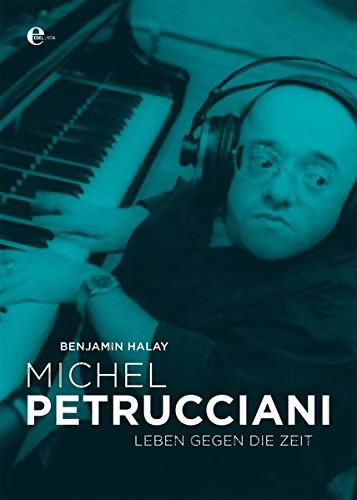
Not surprisingly, biographies about Michel Petrucciani are primarily available in French. These include Michel Petrucciani by Benjamin Halay [with prefaces by Michel’s son Alexandre and the noted French Jazz violinist Didier Lockwood] and Michel Par Petrucciani by Frederic Goaty and Jazz Magazine. The bio by Halay is also available in a German language edition.


There are several books containing selections of Michel’s sheet music including Michel Petrucciani: The Book by Armand Reynaud and Jeremy Brun and Michel Petrucciani: Great Musicians. Both of these also contain some anecdotal information about Michel as do Travels with Michel a DVD by Roger Willemsen and a DVD by Michael Radford which also comes with a small book.                                             


For those wishing to read more about Michel Petrucciani in the Jazz Literature written in English, aside from the insert notes to some of his CDs, Richard Cook’s writings on Michel provides an excellent starting point.


Until his death in 2007 at the relatively young age of 50, Richard D. Cook had been writing about music since the 1970s.


In his Obituary for The Independent, fellow and co-author Brian Cook said of Cook:


“Cook wrote with an accuracy and consistency of judgement that made him one of the most perceptive and admired commentators, not just on his beloved jazz, but on a whole range of other "sonics" (as he liked to put it), and not just in Britain but internationally. Though his fabled impatience was part of an Englishness cultivated quite without irony, it was also a measure of Cook's utter rejection – in life and music – of the sub-standard. He had an unerring nose for the ersatz and fudged, and though his opinions were strong, sometimes too strong for those who prefer a more liberal rhetoric, he was anything but a bully. He was very happy to see his few loose deliveries driven into the covers, his more controversial assertions batted straight back at him … 


In a decade that elevated style over substance and put old-fashioned musicianship at a discount, Cook always looked for substance and often found it in unexpected places. He wrote as trenchantly about Abba as he did about the improvising ensemble AMM, and his passion for singers, female singers in particular, enabled him to write perceptively about Nina Simone, Joan Armatrading and the soul diva Anita Baker …”


The largest of Cook’s writing projects is The Penguin Guide to Jazz on CD, co-authored with Brian Morton, now in its eighth edition (and retitled The Penguin Guide to Jazz Recordings). Other books followed, including a "biography" of the Blue Note label in 2001, and in 2006 a study, It's About That Time, of Miles Davis. The year before, Richard Cook's Jazz Encyclopedia, its title a reflection of his authority, was published by Penguin.


Michel Petrucciani

PIANO

born 28 December 1962; died 5 January 1999


“Surely nobody who ever saw and heard this formidable man will ever forget him and his music. He was born into a French musical family: his father played guitar, his brothers guitar and bass, and Michel worked in the family band from an early age. 


He went to Paris in 1980 and began recording there: despite suffering from osteogenesis imperfecta, which restricted his growth and gave him health problems for all of his adult life, he developed a piano style which was swooningly romantic and seemed, to some listeners, to represent the incarnate successor to Bill Evans's music. 


His early records especially are laden with effusive playing which sometimes suggest Keith Jarrett in more decisive mode, but as he went forward he became more considered and diverse. 


He always kept heavy company, recording with such giants as Jim Hall, Wayne Shorter, Roy Haynes and Eddie Gomez, and he secured a contract with Blue Note in 1985, which brought him to a wider audience, enabling him to move to New York in 1999. There was a brief period where he dabbled in a kind of fusion, but he went back to straight-ahead playing in his final years. There was always a sense that Petrucciani was living on borrowed time, even as his music exuded a palpable joie de vivre, and in the end he died from pneumonia, worsened by complications arising from his physical condition.” Richard Cook's Jazz Encyclopedia


And these reviews are from The Penguin Guide to Jazz on CD, which Richard co-authored with Brian Morton and now in its eighth edition (and retitled The Penguin Guide to Jazz Recordings).


Michel Petrucciani (1962-99)

Born in Montpellier, he played in his father's band and began recording after moving to Paris, aged seventeen. Moved to the USA in 1982 and recorded for Blue Note, later for Dreyfus. A diminutive man handicapped by an obscure bone disease, he triumphed over any disability and became one of the most popular of concert performers, playing in a romantic post-bop style.

***(*) Days Of Wine And Roses

Owl548288-2 2CD Petrucciani; Lee Konitz (as); Robin

McClure (b); Jean-Francois Jenny-Clark (b); Aldo Romano

(d). 4/81-1/85.

**** 100 Hearts

Concord CD 43001 Petrucciani (p solo). 83.

**** Live At The Village Vanguard

Concord CCD 43006 2CD Petrucciani; Palle Danielsson (b);

Eliot Zigmund (d). 3/84.


There's a freshness and quicksilver virtuosity about Michel Petrucciani's early records which is entirely captivating, and they still sound terrific. While he is an adoring admirer of Bill Evans — “Call me Bill,” he once suggested to Jim Hall, who demurred -his extroverted attack places Evans's harmonic profundity in a setting that will energize listeners who find Evans too slow and quiet to respond to. 


Petrucciani was already a formidable talent when he began recording and, while some of these discs have been criticized for being the work of a pasticheur, that seems a curmudgeonly verdict on someone who enjoys the keyboard so much. 100 Hearts is arguably the best of the early sessions, if only for the marvellous title-tune which skips and leaps around its tone centre: in themes like this, Petrucciani staked a claim to be one of the great romantic virtuosos in contemporary jazz. Live At The Village Vanguard captures a typically rumbustious concert set by Petrucciani's trio of the day: 'Nardis' and 'Oleo' offer fresh annotations on well-worn classics and there are sparkling revisions of his own originals, 'To Erlinda' and 'Three Forgotten Magic Words'.


He made six albums for the independent Owl Label (now since acquired by the Universal Group) and Days Of Wine And Roses compiles a double-CD from this material. These sessions feel like his most European music; originals such as 'Eugenia' and 'Mike Pee' combine his brightness of touch with a more reflective feel in which the overall choice of tracks trades heavily. A contrast to the sometimes forced ebullience of his later music.


*** Pianism

Blue Note 746295-2 As above. 12/85.

***(*) Power Of Three

Blue Note 846427-2 Petrucciani; Wayne Shorter (ss, ts); Jim

Hall(g). 7/86.

*** Michel Plays Petrucciani

Blue Note 848679-2 Petrucciani; John Abercrombie (g); Gary

Peacock, Eddie Gomez (b); Roy Haynes, Al Foster (d); Steve

Thornton (perc). 9-12/87.


Petrucciani's first three albums for Blue Note provided a variety of challenges. Pianism is another excellent batch of six workouts by the trio who made the earlier live album, and if Zigmund and Danielsson sometimes sound a little underwhelming, that's partly due to the leader's brimming improvisations. Power Of Three is a slightly fragmented but absorbing concert meeting of three masters, skittish on 'Bimini' and solemnly appealing on 'In A Sentimental Mood.'


Plays Petrucciani is an all-original set which lines the pianist up against two magisterial rhythm sections, with Abercrombie adding some spruce counterpoint to two pieces. The smart hooks of 'She Did It Again' suggest that the pianist would have had a good living as a pop writer if he had decided to quit the piano, but the more considered pieces show no drop in imagination, even if some of the themes seem to be curtailed before the improvisations really start moving.


*** Live

Blue Note 780589-2 Petrucciani; Adam Holzman (ky); Steve

Logan (b); Victor Jones (d); Abdou M'Boup (perc). 11/91.

*** Promenade With Duke

Blue Note 780590-2 Petrucciani (p solo).

*** Marvellous

Dreyfus FDM 36564-2 Petrucciani; Dave Holland (b); Tony

Williams (d); Graffiti String Quartet, n.d.


The 1991 live album documents Petrucciani's 'fusion' band - not really any kind of jazz-rock, more a sitting of his famous virtuosity inside stiffer beats, with the dubious gratification of Holzman's synthesizer colourings. 'Miles Davis Licks' opens with boogie figures, then turns into a clever steal of some of the later Davis clichés. The sound of the band feels more dated than the rest of Michel's music, and the best moments come when the others stay as far in the background as possible, as in the elegant reading of ‘Estate'.


Michel's promenade is more with Strayhorn and Petrucciani than with Ellington. Beautifully played and recorded, but it's rather sombre after the elated feel of his earlier sessions. Although some of his other Blue Note albums have disappeared, there is a French edition which boxes all seven of them together, but availability is somewhat limited.


Marvellous matches him with the formidable team of Holland and Williams, who play up the music's dramatic qualities to the hilt: a graceful tune like the 3/4 'Even Mice Dance' gets thumped open by Williams's awesome drumming. The pianist revels in the situation, though, and produces some of his most joyful playing. Yet it hardly squares with the string quartet parts, arranged by Petrucciani but more of a distraction than an integral part of such fierce playing.


***(*) Au Théâtre Des Champs-Elysées

Dreyfus FDM 36570-2 2CD Petrucciani (p solo). 11/94. The opening 'Medley Of My Favourite Songs' might be a quintessential Petrucciani performance, 40 unbroken minutes of a piano master in full flow, lightning flashes of humour illuminating an otherwise seamless sequence. Maybe he never quite recaptured the effortless excitement of the early discs, and to that extent the energy of his playing is mitigated somewhat by his sense of proportion; but there's a great deal to enjoy across these two discs: a lovely, thoughtful 'Night Sun In Blois', a finger-busting Monk medley, and a beautifully distilled 'Besame Mucho' to close on.


*** Both Worlds

Dreyfus FDM 36590-2 Petrucciani; Flavio Boltro (t); Bob Brookmeyer (vtb); Stefano Di Battista (ts, ss); Anthony Jackson (b); Steve Gadd(d). 96.

Almost a complete departure from his other work, this rather mysteriously seemed to set out to tame Petrucciani by placing him squarely in a band format, where he flourishes only intermittently as a soloist, and even then without his usual brio. He wrote all nine tunes but the arrangements are all Brookmeyer's, who brings his trademark quirks to a nevertheless very interesting line-up. The soloists are all strong enough, and there's a particularly appealing piano—soprano duet on 'Petite Louise', yet this could all use a shot of Michel letting go.


***(*) Concerts Inedits

Dreyfus FDM 36607-2 3CD Petrucciani; Niels-Henning Orsted Pedersen, Louis Petrucciani (b); Lenny White (d). 7/93-8/94-

****Solo Live

Dreyfus FDM 36597-2 Petrucciani (p solo). 2/97. Petrucciani's passing robbed jazz of one of its most charismatic spirits, especially in performance, and these sets are reminders of how much an audience would respond to him. The three-disc set offers him in solo, duo and trio settings: it's somewhat patchy, since the solo disc has a rather hard and unattractive piano sound, and the trio set (with Louis Petrucciani and White, cut at a Japanese concert) doesn't entirely benefit from the drummer's energies. But the duo record with NHOP is a delight, two virtuosos at the top of their game without overpowering the listeners with how much they can play.


Solo Live is a marvellous Frankfurt concert recording. Michel warms up with a sequence of shorter pieces before stretching out on 'Trilogy In Blois' and 'Caravan'. He was always rethinking material: the 'Besame Mucho' here is entirely different from the treatment on Concerts Inedits. The final 'She Did It Again/Take The "A" Train' medley is showstopping, but each note seems to matter as part of the flow. This great communicator will be sorely missed.”


Friday, June 11, 2021

"Plus Michel Petrucciani - Keys to the Kingdom" by David Hadju

 © Copyright ® Steven Cerra, copyright protected; all rights reserved.


The following piece by David Hajdu was prepared for publication in 2009 so as to coincide with the 10th anniversary of Michel’s death. Other books by Mr. Hajdu include Lush Life: A Biography of Billy Strayhorn and How Can I Keep from Singing?: The Ballad of Pete Seeger.


In an effort to collect on the blog and its related Archive and Labels as much of the Jazz literature in English about Michel Petrucciani, the JazzProfiles editorial staff has posted Mr. Hajdu’s essay to compliment the series about Michel currently featuring on these pages.


It contains a number of critical insights into what made Petrucciani’s playing so distinctive and is an entertainingly written narrative.


Plus Michel Petrucciani – “Keys To the Kingdom” 


by David Hajdu

The New Republic 

Post Date Wednesday, March 18, 2009


© - David Hajdu,  copyright protected; all rights reserved.

“One grave away from Chopin and not far from Balzac and Jim Morrison in Pere-Lachaise, the Parisian cemetery and tourist hotspot, lies the French-Italian pianist Michel Petrucciani. He died ten years ago this January in New York, the city where he had made his reputation as a jazz tyro, and when his body was returned to France for his burial, thousands of mourners filled the streets of the 20th arrondissement. One of the French radio channels played no music but his for twenty-four hours. Chirac praised Petrucciani for his "passion, courage, and musical genius" and called him "an example for everyone."

Of what, exactly, was Petrucciani an example? Chirac was no doubt referring to what he described, in proto-Oprahish terms, as Petrucciani's "courage"--the tenacity and the inclination to defiance which seemed, in Petrucciani, triumphs of the mind and the heart over the body. Petrucciani, a musician of rare power and expressive confidence, suffered--truly suffered, in lifelong pain--from osteogenesis imperfecta, the "glass bones" disease. For most of his thirty-six years, Petrucciani could not bear the weight of his own body without leg braces or crutches. He never grew past the height of three feet, and he typically weighed about fifty pounds. He was as fragile as his art was robust, his life as tenuous as his music is durable.


Over the course of this year, Dreyfus Jazz, the French-American label, will issue remastered, repackaged, and in most cases expanded versions of the ten albums that Petrucciani recorded for the label in his last years, as well as a two-DVD set of documentary and concert footage not previously released in this country. The series is an overdue reminder of the ecstatic power of Petrucciani's music. I cannot think of a jazz pianist since Petrucciani who plays with such exuberance and unashamed joy. Marcus Roberts and Michel Camilo have greater technique; Bill Charlap and Eric Reed, better control; Fred Hersch has broader emotional range; Uri Caine is more adventurous. Their music provides a wealth of rewards--but not the simple pleasure of Michel Petrucciani's. With the whole business of jazz so tentative today, you would think more musicians would express some of Petrucciani's happiness to be alive.

The power Petrucciani communicated, as a pianist, was the force of a will, a muscularity of the mind. He admired and emulated Duke Ellington, but had to simulate the effect Ellington and some other strong pianists have achieved by using more of their bodies than their hands. (Ellington, like Randy Weston today, put his lower arm weight into his playing to give it extra heft.) Petrucciani generated power through the speed of his attack. His force was willed; but, in the determined gleefulness of his playing, it never sounded forced.

Giddily free as an improviser, Petrucciani trusted his impulses. If he liked the sound of a note, he would drop a melody suddenly and just repeat that one note dozens of times. His music is enveloping: he lost himself in it, and it feels like a private place where strange things can safely ensue. Today, when so much jazz can sound cold and schematic, Petrucciani's music reminds us of the eloquence of unchecked emotion. "When I play, I play with my heart and my head and my spirit," Petrucciani once explained to an interviewer. "This doesn't have anything to do with how I look. That's how I am. I don't play to people's heads, but to their hearts. I like to create laughter and emotion from people--that's my way of working."

Born in Orange, near Avignon, in 1962, Petrucciani was raised in Montelimar. Essentially the Texas of France, Montelimar has a people who take fierce pride in their southern identity, distrust those northern elitists, speak with a twangy accent, and revel in the telling of tall tales. "Michel was really into bullshitting," remembers one of Petrucciani's friends, the French journalist Thierry Peremarti.”
Michel would lie to your face. That's one of the reasons he didn't get more press. He pissed off a lot of people. He was from the south--you talk, you talk, and you say nonsense." In 1980, Petrucciani told a People magazine reporter that he had raced Harleys with the Hell's Angels and had gone hang-gliding with eggs between his toes.

There are four categories of osteogenesis imperfecta (OI), a family of disorders involving genetic dysfunction in collagen production. The first is Type I, which is so subtle that it frequently goes unrecognized and untreated. Type II is the most severe, usually lethal upon birth; the victims' bones crumble at first touch. Petrucciani was born with a moderately acute kind of OI in a group overlapping Type III and Type IV: his bones were so weak that they fractured more than a hundred times during his childhood. Any kind of movement was difficult and usually painful. Petrucciani could not walk at all until adolescence, when his bones strengthened somewhat (like those of all teenagers, including OI sufferers). He had physical deformities typically associated with OI: distorted facial features, a protruding chin, bulging eyes, and curvature of the spine. In most cases like Petrucciani's, life span is diminished, and in those instances where the patients reach middle age, deafness usually occurs.

"He was in pain all the time," recalled his father, Tony Petrucciani, a part-time guitarist in the Grant Green mold. "He cried. I bought him a toy piano." The keyboard looked like a mouth to Michel, and he thought it was laughing at him, so he smashed it with a toy hammer, and his father got him an old full-size upright abandoned by British soldiers at a military base. From the age of four, Michel spent virtually all his free time, which was abundant, at the piano.

Petrucciani was twelve years old and looked like a toddler when his father started carrying him into jam sessions around the south of France. He was thirteen when he made his professional debut at the Cliousclat Festival in the southern district of Drome. "My European promoter told me, 'We got to do a tour with this little cat,'" remembers Clark Terry, the trumpeter. "I didn't believe him. When I heard him play--oh, man! He was a dwarf, but he played like a giant. I said, 'Listen, little guy--don't run away. I'll be back for you.'" Within two years, Petrucciani would be performing regularly in French jazz festivals, first with the expatriate American drummer Kenny Clarke and shortly after that with Terry.

During his first years performing and recording professionally, Petrucciani's specialty was youthful over-compensation. His piano playing, though already tinged with the romantic lyricism that would later distinguish it, tended toward defensive demonstrations of virtuoso technique and speed. Without having yet come to a mature understanding of what he wanted to say, he said little but did so really, really fast. He projected swaggering, roguish macho--a youngster's fantasy conception of continental virility. He called everybody "baby" and wore a yachtsman's cap. "He acted tough and pushy, and his playing was tough and pushy," says the writer and trombonist Michael Zwerin, who was living near Petrucciani and met him when the pianist was fifteen. "He knew how to say 'motherfucker' in French."

A fellow named Jean Roche lived near Zwerin and the Petruccianis, and he had experience with audio recording. (When Olivier Messiaen decided to experiment with bird sounds in his music, it was Roche who hid in trees and recorded the chirping.) Roche came into a bit of money and spent a sizable portion of it building a lavishly equipped recording studio near his home in the rural south. To give himself practice at engineering, Roche offered some nearby jazz musicians free access to the studio. Zwerin, Michel and his brother Louis Petrucciani (a bassist), and the French-Italian drummer Aldo Romano, who was vacationing at his parents' home nearby, spent most of a week there making Michel's first album, aptly titled Flash. "It's kind of sloppy and everything needs another take, but it swung, and it certainly shows off Michel well," says Zwerin, who served as titular leader of the sessions.

"We were sitting there wondering what to play," he remembers. "It was kind of hot. And Michel said, 'Anybody know "Giant Steps"?' Neither Louis nor I wanted to admit we didn't really know it. So there was this great silence. And Michel said, 'Well, I do!' And he pounded into a solo version of it at a very fast clip, and it was really amazing. That to me is Michel--'Well, I do!' Man, a confidence you wouldn't believe."

From the moment Petrucciani found he could excel at the piano, I think, what he could do overcame what he was as his source of identity. I play jazz piano, baby, and I do it faster and more fancily than anybody. I do, therefore it doesn't matter what I am.

Near the end of his life, Petrucciani looked back on his early career and called Aldo Romano his "guardian angel." The drummer, a generation older than Petrucciani, describes himself as Petrucciani's second father and remains proud of having helped Petrucciani pull away from the first one. "He wanted to see the world," recalls Romano. "But Michel was very fragile, and so everybody in his family was afraid. And also you have the problem of his father, because his father was an idiot. He didn't trust anybody. He wanted to keep him as a partner, to play music with. He was very jealous. So I had to fight to take him to Paris, because his father didn't want me to, because he wanted to keep him, like you would cage a monster."

After a brief visit to Paris and a return home in the autumn of 1980, Petrucciani moved into Aldo Romano's house in Bezons on the western perimeter of Paris and began his life as an adult professional. His music took on a new warmth and delicacy, a confidence in place of cockiness, and his grown-up personality--not just an emulation of his gangster heroes, but his own amalgam of southern French wile, musical sensitivity, and the bright, sparkling energy often associated with his genetic condition--began to emerge.

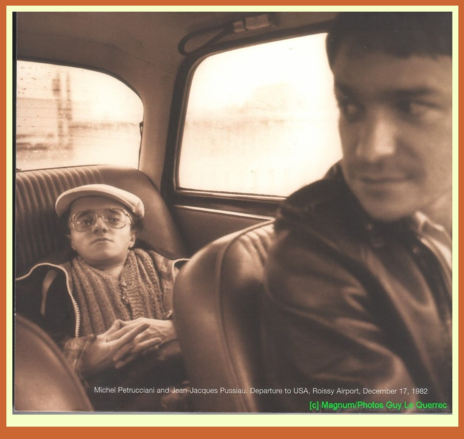
Petrucciani, who was always aware of the limited life span of OI sufferers, worked fast. Through an introduction by Romano, Petrucciani signed a recording contract with Owl Records, a French independent run by Jean-Jacques Pussiau, a former photographer, and he recorded six albums within three years. "He was always in a hurry," recalls Pussiau. "He said, 'Jean-Jacques, I don't want to lose time.'" The albums--especially the last two, Note 'n Notes and Cold Blues (both recorded in 1984)--are irresistibly precocious records, over-stuffed with ideas. Though most of this music is now difficult to find, there is an easy-to-get compilation of fifteen exemplary tracks, The Days of Wine and Roses: The Owl Years (1981-1985).

"We had an exceptional relationship," Pussiau says, "because I carried Michel in my arms very, very often. That creates a very strange intimacy. You know what it is to hold your child in your arms? I could feel his heart beating against my chest. I used to go on the stage and pick him up, and he was full of sweat. I would carry him away, and his sweat would soak through our shirts and onto my skin. Sometimes, when I used to carry him, he would bite my ear. We'd walk into a restaurant, and he'd chomp."
Petrucciani found success easily in France. "We did a tour together (in France), and the first place we played was packed," remembers Lee Konitz, with whom Petrucciani recorded a fine duet album, Toot Sweet, in 1982. "I said, 'Oh, man--my time has finally come.' Then I realized this little guy was the big attraction. He had just skyrocketed." The Petrucciani-Konitz duets, reissued here on the Sunnyside label, capture the maturing Petrucciani in a mode of harmonic exploration. That is to say, he is doing his best Bill Evans (especially on the first track, "I Hear a Rhapsody," which Evans himself had done as a duet, with the guitarist Jim Hall).

In 1981, Petrucciani had himself fitted for leg braces and crutches, rendering him independently ambulatory (at short distances) for the first time in his life, and he left for America, breaking away from both his family and Aldo Romano. "He didn't feel free with me," says Romano. "So he had to kill his second father somehow to move on. He needed to escape. He needed to go very far, as far as he could go, and that was California."

Petrucciani may or may not have stopped in Manhattan for a while. Although I have been unable to find anyone who actually saw him in New York this early, musicians have circulated stories that Petrucciani would tell about his first stint in the city. In one, he scammed his way to New York on bad checks, then had to hide out in Brooklyn with the help of Sicilian family connections. In another, he played piano for trade in a midtown brothel, where he learned the secrets of love. (Music-parlor prostitution in 1981? Where were the riverboat gamblers and runaway slaves?)
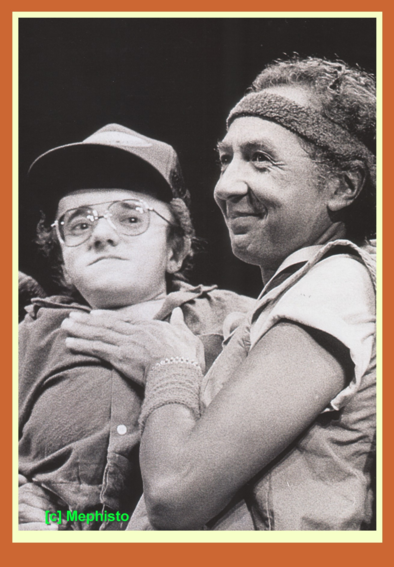
In Northern California, Petrucciani met his last mentor: Charles Lloyd, the saxophonist and self-styled mystic who had dropped out of the music scene for most of the previous decade. Petrucciani, then eighteen, visited Lloyd, then forty-three, at his house in Big Sur, and they began playing together. Lloyd decided to return to the road, with Petrucciani as his pianist. "Michel was like a son, and I loved him," Lloyd told me. "In his youthful innocence I recognized a quality one does not often find in another human being. Every inch of his small frame was filled with creativity and intelligence." Put another way, "Michel kicked Charles in the ass," says Peremarti. "Michel had something special, and Charles saw that right away. It made him pick up the saxophone."

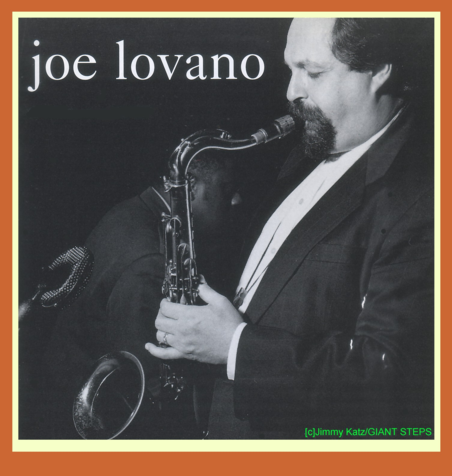
By late summer, in 1984, Petrucciani was ready for New York. "He was one of these total natural cats who could just sit and play with anybody, any time, any tune, whatever we were playing," recalls the saxophonist Joe Lovano. "Michel was the most magical cat I ever knew, man. When all the 'young lions' stuff was happening, Michel was the youngest, baddest lion out there. But because of his condition and he was from France or whatever, he didn't get tied in with all those cats, and he blew them all completely away."
The first time I saw Michel Petrucciani, a friend of his was carrying him into Bradley's, the tiny piano-jazz club in Greenwich Village where I spent most of my nights and salary in the 1980s. I had grown up in suburban New Jersey with a neighbor my age who had osteogenesis imperfecta. His name was Joey Bascai. His parents pulled him around in a wagon, but he used to like playing baseball. His father would pitch to him carefully, since a wild throw to his chest or head would have been devastating; he could swing the bat and do it well, and the rest of us kids would take turns as his runner. When I saw Petrucciani's friend walk past me with Petrucciani in his arms, I read all my old feelings about playing ball with Joey into his eyes: a vertiginous mixture of exhilaration in being part of the kicky little guy's fun and terror in the knowledge that it could end horribly in an instant. The bar crowd cleared a path from the door to the piano, and Petrucciani screamed, "Get out of my way, motherfuckers!"
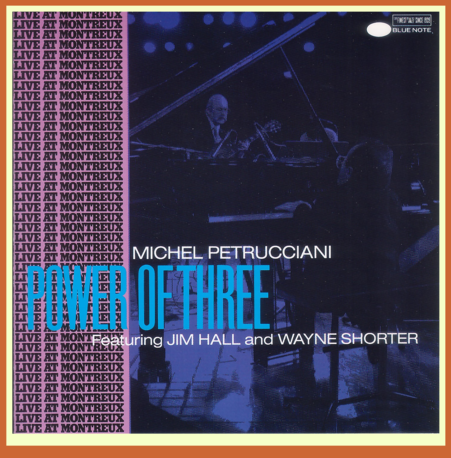
Over the next few years, I saw Petrucciani a dozen times at Bradley's and the Village Vanguard. He recorded roughly an album a year for Blue Note, including some gorgeous work with Wayne Shorter and Jim Hall. Power of Three, the trio album they recorded live in Montreux in 1986, may well be the most robustly emotive work of jazz recorded in the 1980s. Petrucciani's music had reached full bloom. He was improvising with loving, playful winks at every style from Harlem stride to free jazz, and he was composing tuneful, idiosyncratic pieces indebted but not wholly beholden to Monk and Ellington.

"I've never been around anyone who loved to live like Petrucciani--and live life to the fullest," says Mary-Ann Topper, his manager during his breakthrough years in New York. "He said to me, 'Mary-Ann, I want to have at least five women at once, I want to make a million dollars in one night' - things that were probably impossible. But had Michel ever thought that anything was impossible, he would have never done anything he did." 

As Petrucciani himself said, "I'm a brat. My philosophy is to have a really good time and never let anything stop me from doing what I want to do. It's like driving a car, waiting for an accident. That's no way to drive a car. If you have an accident, you have an accident--c'est la vie." Fond of wine since his early adulthood in Paris, Petrucciani was now widely known to be drinking to excess and said to be enhancing his appetite for alcohol with cocaine.

In his last years, Petrucciani worked at a manic pace, performing more than a hundred solo piano concerts per year- 140 in 1998 alone. Too weak to stand with crutches, he was now using a wheelchair regularly. "He was working too much--not only recording and doing concerts, but he was always on television, and he was always doing interviews," recalls Bernard Ivain, Petrucciani's manager in his final years. "He got himself overworked, and you could see it. He pushed too much." Late in 1998, Petrucciani decided to slow down. "He couldn't keep up that pace anymore - he was physically exhausted," says Francois Zalacain. A few days into the new year, he was admitted to Beth Israel Hospital in New York, and he died there, of a pulmonary infection, on January 6, 1999.

Among the musicians Petrucciani phoned in his last days was Wayne Shorter. "He and I talked, and he said he comprehended that he was sick- that was an important thing," recalls Shorter. "There's a lot of people walking around, full-grown and so-called normal - they have everything that they were born with at the right leg length, arm length and stuff like that. They're symmetrical in every way, but they live their lives like they are armless, legless, brainless, and they live their life with blame. I never heard Michel complain about anything. Michel didn't look in the mirror and complain about what he saw. Michel was a great musician - a great musician - and great, ultimately, because he was a great human being, and he was a great human being because he had the ability to feel and give to others of that feeling, and he gave to others through his music. Anything else you can say about him is a formality. It's a technicality, and it doesn't mean anything to me."

David Hajdu is music critic for The New Republic.