© - Steven A. Cerra, copyright protected; all rights reserved.

“If you think of the whole phrase you want to play, you shouldn't have to think about fingering at all. It should be that well integrated from your mind through your heart and soul to your hands. You shouldn't have to ask yourself whether to cross over or not. The conception and the physical transmitting of it should merge.”
- Oscar Peterson, Jazz pianist
The late pianist, George Shearing, was fond of saying that “one of the hardest thing about this music is getting it from the head and into the hands.”
When I listen to Oscar Peterson play piano with the extraordinary facility he has on the instrument I get the impression that he never had the problem that George describes.
Just listening to Oscar wears me out. I’ve never heard anyone [with the obvious exception of Art Tatum] come at a line from so many different directions [“a line” in this instance refers to an improvised phrase]. He makes it sound easy.
Oscar has so many tools at his command and he explains how he developed these skills in the following interview he gave to Len Lyons in The Great Jazz Pianists: Speaking of Their Lives and Music.
Introduction
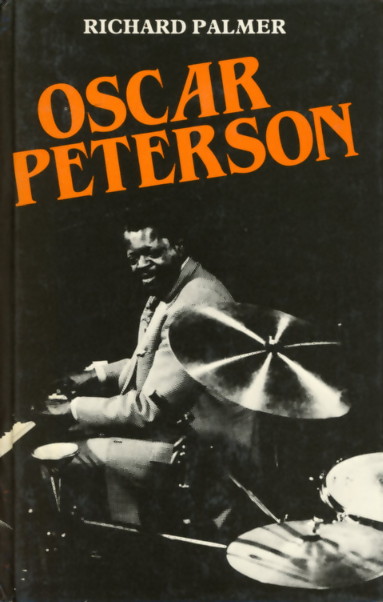
More than any other pianist, Oscar Peterson has inherited the harmonic conception and awesome technique of Art Tatum, his mentor and early idol. The most abundantly recorded pianist in jazz, Peterson performs for live audiences only with the assurance of a tightly controlled setting. For a time he would appear in nightclubs only on the condition that no drinks would be served, nor cash registers used, while he played. I remember him playing a tender ballad in a now-dark Boston club called Lennie's on the Turnpike when a customer at the bar began whistling along with the melody. Oscar stopped abruptly, took the mike, and snapped at the audience, "Whoever's whistling has the worst taste in the world!" He walked offstage and imposed an unscheduled thirty-minute intermission.
But Peterson's regal manner disappears offstage. When we first met, which was in his suite at the Fairmont Hotel at the crest of San Francisco's fashionable Nob Hill, we discussed baseball, Oscar's children, his grandchildren, and his native Canada before I realized that we would never get around to the subject of Oscar Peterson unless I brought it up.
Peterson came to the States from Canada in 1949, thanks to a happy coincidence that brought him to the attention of impresario Norman Granz, who has managed Oscar's career ever since. Peterson's style is basically an amalgam of swing and bebop. There are critics who downgrade the effect of his glorious technical command of the keyboard, accusing him of an overly mechanized style and of indulging in virtuosity for its own sake. True, Peterson can be showy and rococo; but more often than not, his technique operates in the service of his art. I have heard him solo using a stride technique or a walking-bass line in the left hand. The music gathers momentum until the piano itself seems to be strutting across the stage; Oscar's husky, Buddha-like body works and sweats to put the instrument through its paces; and so I have trouble condemning Peterson as a mechanistic player. It is the spirit, more than physical dexterity, that drives him.
Peterson has been a nearly ubiquitous accompanist and collaborator, especially for the many legendary figures whose concerts and records were produced by Granz. Some of his best work in this role has been done with saxophonist Lester Young, Ella Fitzgerald and Louis Armstrong, trumpeter Roy Eldridge, vibist Milt Jackson, and Dizzy Gillespie. He is particularly well matched with guitarist Joe Pass, whose technical dexterity and style of harmonic development match Oscar's own. Amazingly, Peterson has had arthritis in his hands since high school. He said that the condition is a familial tendency, that it sometimes causes him pain when he plays and occasionally requires him to cancel a performance.
Peterson's virtuosity-his speed, articulation, and endurance-inspires and intimidates other pianists. His dexterity also enlivens his style, for Oscar has never varied the premises he inherited during the early 1930's from Tatum and Powell. Fortunately, though, his technique enables him to vary infinitely the way he implements those assumptions. And of course, he can always turn on the steam.
What were your very first experiences with the piano?
My first experiences were of not wanting to play it because I was interested in trumpet. In fact, I played trumpet in a small family orchestra, but after spending almost a year in the hospital with tuberculosis, I was advised by the doctor to give up wind instruments. I continued on piano, which I had begun along with the trumpet, though mainly at my father's insistence. The piano didn't start to appeal to me until my older brother Fred got into jazz, or whatever jazz was then, playing "Golden Slippers" or something like that. What I went through as a student was probably what everyone else grooming himself for the classical field goes through - Czerny, Hanon, Dohnanyi. All of these things just serve to broaden digital control. It was something I wanted to get behind me as quickly as possible.
How long did it take you to get it behind you?
Do you ever, really? You like to tell yourself so, I guess. Probably I started feeling comfortable around the age of sixteen or seventeen. That's when I started feeling that I could transmit to the keyboard most of what I conjured up mentally. Prior to that it was a scuffle. I'd be thinking something and then run into a snag on executing it. That used to bug me.
What were your early practice routines?
I'd start out in the morning with scales, exercises, and whatever classical pieces I was working on. After a break I'd come back and do voicings; I'd challenge the voicings I'd been using and try to move them around in tempo without losing the harmonic content.
I also practiced time by playing against myself and letting the left hand take a loose, undulating time shape while making the right hand stay completely in time. Then I'd reverse the process, keeping the left hand rigid and making the right hand stretch and contract. You know, practicing that way takes the urgency out of getting from Point A to Point B in a solo. It gives you the confidence to renegotiate a line while you're playing it. It gives you a respect for different shapes.

You must have been practicing the piano all day.
About eighteen hours a day. I got into that when I decided I really wanted to play. It was during high school, just before I got my first group together. I figured I’d have to get myself together first because there'd be enough questions in a group context. I couldn't afford to have any questions about my end of things. I'd practice from nine in the morning to lunch and from after lunch to seven in the evening. Then I'd go from supper until my mother pulled me off the instrument or raised hell.
After all that exacting practice how did you feel when you hit an occasional wrong note?
It didn't bother me too much. My classical teacher used to tell me, "If you make a mistake, don't stop. Make it part of what you're playing as much as possible. Don't chop up your playing by correcting things, even when you're playing for yourself. It's a bad habit, and it will make you a sporadic player." One thing I try to convey to my students when I'm teaching is the relativity of notes. From a melodic standpoint there are wrong notes. But from a creative standpoint there are no wrong notes because every note can be related to a chord. Every note can be made part of your line, depending on how fast you can integrate it into your schematic arrangement. Of course, if you're playing the national anthem and you miss the melody or hit a major chord wrong without its being a revision of the chord, then you've made a mistake. Playing on a theme, however, is a different kind of thing. I think this idea is the basis of a lot of the avant-garde music today, although I don't believe in making it quite as easy as they do. But there's truth to the idea that you shouldn't be thrown by a note.
It sounds as if you're more interested in the effect of the phrase than in each note within the phrase.
That's right. I'm an admirer of the beautiful long line which starts out and then reaches a point of definition. If you reach a point of definition, it validates all the other aspects of the line. I think we went through a period of short-phrase artists. I won't derogate them or get into names, but the hesitation and the short five-note phrase are not my bag. It makes me nervous to listen to it. I'm an advocate of the long line, but it's got to mean something.
Here's a list of long-line players: Art Tatum, Bud Powell, [saxophonist] Charlie Parker, [trumpeter] Dizzy Gillespie, [saxophonist] Eric Dolphy. Would you add to the list?
I'd add Hank Jones, Cedar Walton, and Bill Evans. Let me draw an analogy. I don't think you should speak until you have your sentence together in your mind. It's easier to listen to someone who knows what he wants to say than a person who stops, starts, picks up another idea, continues, and winds up with a series of chopped-up phrases. Well, to each his own.
What do you remember most about the pianists who were influences on you?
I remember one story about Nat Cole, who I think was one of the deepest time players ever. Ray [Brown] once told me he was with Dizzy's big band and they were playing the Los Angeles Coliseum. Nat's trio was on the bill, too, and Ray said the trio wasted them just because of the time factor. We've experienced that; when my trio's at its deepest point, when we get that far down into the time, we make it hard for a bigger band to operate. It swings that hard. That was the biggest influence Nat had on me: making time pop. When I play with Dizzy, Ray, Zoot [Sims, saxophonist], Clark [Terry, trumpeter], or [guitarist] Joe Pass, they're all aware that when I'm in the section, I deal with time, nothing else. For a rhythm section to give what it has to give, you have to deal that heavily with time. In fact, I'd recommend using time to combat these complaints you sometimes hear of stale playing. I'm a waltz freak personally. If you feel that a piece is getting stale, put it into 3/4 time. Generally I don't go past the 3/4 because many of the other signatures, like 9/ 8, have been overdone, and I think you inevitably come back to a 3/4 or 4/4 feeling anyway. From a listener's point of view, how far is 6/8 from 3/4?
Who influenced you in your appreciation of the long line we were discussing?
There's Teddy Wilson. From Teddy I got the beautiful long line, the interconnecting runs that tie together the harmonic movements in a ballad, the impeccable good taste of the right touch, and the idea of how to make a piano speak. I got that from Hank Jones, too.

When I asked about people who have influenced you, I was hoping for some stories about Art Tatum. He's a legend, but unfortunately very few of us had the pleasure of hearing him in person.
Do you know the story of when I first heard him? When I was getting into the jazz thing — or thought I was-as a kid, my father thought I was a little heavy about my capabilities, so he played me Art's recording of "Tiger Rag." First of all, I swore it was two people playing. When I finally admitted to myself that it was one man, I gave up the piano for a month. I figured it was hopeless to practice. My mother and friends of mine persuaded me to get back to it, but I've had the greatest respect for Art from then on.
How did you first meet Tatum?
In the early fifties, I was playing with the trio in Washington, D.C., at a club called Louis and Alex's. I used to kid Ray [Brown] about [bassist] Oscar Pettiford. We'd be playing and I'd say, "Watch it now, Oscar Pettiford's out there!" He'd say, "Hell with him. I'm going to stomp him." He'd do the same to me about Art Tatum because we both had tremendous love and respect for these men. On the third night of the gig we were playing "Airmail Special," and Ray said, "Watch it, Art's out there." "Hell with him," I said. "He's got to contend with me." See, he'd pulled that a dozen times, and I would always go into my heavy routine. "No, this time he's really out there," Ray insisted. "Look over at the bar." There he was! I closed up the tune immediately and took it out. The set was over. I froze. Ray took me over to meet him, and I still remember what Art said: "Brown, you brought me one of those sleepers, huh?" He told us to come by this after-hours joint and he'd see what he could do with me. I was totally frightened of this man and his tremendous talent. It's like a lion; you're scared to death, but it's such a beautiful animal, you want to come up close and hear it roar.
Did you make it over to this dub?
Yes, we went to the club, and Art told me to play. "No way," I told him. "Forget it." So Art told me this story about a guy he knew down in New Orleans. All he knew how to play was one chorus of the blues, and if you asked him to play some more, he'd repeat that same chorus over again. Art said he'd give anything to be able to play that chorus of the blues the way that old man played it. The message was clear: Everyone had something to say. Well, I got up to the piano and played what I'd call two of the neatest choruses of "Tea for Two" you've ever heard. That was all I could do. Then Art played, and it fractured me. I had nightmares of keyboards that night.
Did you and Tatum see each other much after that?
Yes, Art and I became great friends, but I had this phobia about him, and it lasted a long time. I simply couldn't play when he was in the room. One day he took me aside and said, "You can't afford this. You have too much going for you. If you have to hate me when I walk into the room, I don't care. I want you to play." I don't know how it happened exactly, but one night at the Old Tiffany in Los Angeles, I was into a good set when I heard Art's voice from the audience saying, "Lighten up, Oscar Peterson." I knew it was Art, but it didn't bother me. I got deeper into the music instead, and I knew I was over it. Both Art and my father died within a week of each other, and I realized in one week I lost two of the best friends I had. That's been the Art Tatum thing with me.
After all these years, can you tell me what got you started, what got your career off the ground?
It was Norman Granz, Jazz at the Philharmonic, and the concert at Carnegie Hall in 1949. Actually the first time Norman heard me was on a recording, under protest at the time, on RCA. I was playing boogie-woogie, and he detested it. The next time he was finishing up a promotional trip to Montreal and taking a cab to the airport. I was on the radio. He thought it was a recording, but it was a live broadcast from the Alberta Lounge. The cabdriver straightened him out on that point. The cab turned around and came down to the Alberta.

You owe it all to a hip cabby?
It hatched the beginnings.
Let's talk about the Oscar Peterson trios. Why did you start out with bass and guitar? Was the Tatum trio with Slam Stewart on bass and Tiny Grimes on guitar your model?
No. Of course, I heard that group, but they didn't do the kind of complex arrangements we did. The reason for the trio originally was that I wanted to write some things with contravening lines, something fuller than you could get with a bass. I used Barney Kessel for his obvious capabilities on the instrument. [The Peterson Trio with bass and guitar began in about 1952 and lasted through 1959. Irving Ashby was the first guitarist but was soon replaced by Kessel. Kessel was replaced by Herb Ellis in 1954.] The music was written very tightly, although we didn't want to lose the spontaneity in the improvising because you don't have jazz without that. I kept a firm hand on what was going on and didn't let anyone else write for the group. I didn't want them to change what we were doing.
Why did you replace your guitarist with drummer Ed Thigpen in 1959?
I must admit part of the reason was an ego trip for me. There was a lot of talk about my virtuosity on the instrument, and some people were saying, "Oh, he can play that way with a guitar because it's got that light, fast sound, but he couldn't pull off those lines with a drummer burnin' up back there." I wanted to prove it could be done. We chose Ed Thigpen because of his brush-work and sensitivity in general. I came across him in Japan, where he was stationed in the army. When he got out, we were ready for a drummer.

Your next steady partner was Niels-Henning Orsted-Pedersen, whom I first heard on a record he made when he was fifteen years old and backing Bud Powell at a Copenhagen club. How did you meet him?
I first heard him in Paris, in Montmartre. At the time we had George Mraz in the group. Later on we had a tour booked in Czechoslovakia, where George is from, but because of the way he left the country, which wasn't under the best of circumstances, he couldn't go back. We couldn't find any other bassists who wanted to make the trip except for Niels. I guess he was feeling a little suicidal. I was pretty rough on him and pulled out some arrangements without telling him. Niels is like having another soloist in the band.
I'd be interested in your reaction to something LeRoi Jones [Imamu Amiri Baraka] wrote about you in his book Black Music:
“I want to explain technical so as not to be confused with people who think that Thelonious Monk is ‘a fine pianist, but limited technically.' But by technical I mean more specifically being able to use what important ideas are contained in the residue of history. . . . Knowing how to play an instrument is the barest superficiality if one is thinking of becoming a musician. It is the ideas that one utilizes instinctively that determine the degree of profundity any artist reaches. . . . (And it is exactly because someone like Oscar Peterson has instinctive profundity that technique is glibness. That he can play the piano rather handily just makes him easier to identify. There is no serious instinct working at all.) . .
Technique is inseparable from what is finally played as content." What's your impression of his idea that technique and content are separate?
My first impression is that he doesn't play.
What he'd realize is that technique is separated from playing. Thelonious Monk is limited technically. But let's not put Thelonious down. You can say that about me, too. I can think of a whole lot of things that I'm not technically capable of playing. Otherwise, what does the phrase "playing over his head" mean?
I'll tell you what I think technique is, and since I'm a player I think it has a little more validity.
Technique is something you use to make your ideas listenable. You learn to play the instrument so you have a musical vocabulary, and you practice to get your technique to the point you need to express yourself, depending on how heavy your ideas are.
Louis Armstrong is an example of a man who developed a technique of playing to the point he needed to pursue his ideas. If he had wanted to go further technically, he might have gotten into Dizzy's bag. He was capable of it. Roy Eldridge has fantastic technique on the instrument. But there's a case of using just what you need and no more. Roy's a very simple person. He's a very direct person. Now you'd never hear a simple solo from me; you'd never hear simple solos from Bill Evans or Hank Jones or McCoy.
But you would hear simple solos from Monk.
Monk is a very harmonic player, and that requires a special type of technique. As a linear player, well, I don't think Monk is a linear player. Usually someone who's not a linear player is hamstrung, so they don't come up with that [linear solos].

Do you think it's fair to say some techniques are better than others? Or is technique a relative concept? Does its value depend on what you use it for?
It's a selfish, relative concept. Selfish, because you use it only for what you want. When I teach, I teach technique because like raising kids, you want to give them the broadest scope possible so they can face whatever they come up against. The funny thing about technique is this: It's not a matter of technique; it's time. I'm talking about playing jazz rhythmically. You have an idea, and it's confined to a certain period in a piece on an overlay of harmonic carpeting. You have to get from here to there in whatever time you're allotted with whatever ideas you have.
I could have five guys sit down and play a line, and you'll get five versions of it. You won't like all five, but it's not because some guys missed it or couldn't play it. It's because rhythmically, jazzwise, it didn't happen. That gets into interpretation and articulation. It goes beyond the digital facility one has on the keyboard. I know pianists who have ten times the technique I have - I won't call any names, though - but they can't make it happen. Rhythmically and creatively they don't have that thing, whatever that thing is.
Can we get into some explicitly technical questions? For example, in your concert last night, were you trying to create countermelodies in the left-hand chord voicings?
No, it wasn't a matter of countermelodies. It was a matter of comping as if I were playing for a soloist, comping without having the voicings break down. I didn't want to sound like I just came up with a chord to get myself out of a situation or to get myself to the next chord. Voicing is putting something down for your right hand to play off of. See, you really play off your left hand. Most players think of themselves as playing off the right hand because there's so much activity there. What's really happening is that the right hand is determined, although that's probably too strong a word, by the left-hand formation. The left hand can add tonal validity, too, by augmenting with clusters what the right hand is playing. But it's the left hand that starts the line off and determines its basic movement.
In other words, the harmonic structure determines the melodic content?
Yes, I believe it does. It's also true that the left hand punctuates the line.
Do you recommend practicing voicing* in all the keys?
By all means. I used to do that. Things take on a different shape in a different way. It's not a matter of easy or hard keys. They just have different shapes because the fingering is different.
What other piano exercises did you do?
After the movement of the voicings, I'd go to the right-hand lines alone. I'd try to play the melody with real feeling, as if I were playing a horn, pedaling and controlling the touch so it wouldn't sound staccato. Then I'd duplicate the right-hand linear playing in the left hand. I figured I'd develop a lot of control that way. Sometimes I'd play fours with myself to give the left hand more dexterity. ["Playing fours" involves trading four-bar improvisations between players or, in Peterson's context, between hands.] That comes in handy after you finish a right-hand line and you want to move down to a different pedal tone. You're not relegated to simply hitting it. You can move down or up, tying things together, walking.

Do you finger the octaves in a parallel way?
No, because they're played by two different hands. Each hand is constructed differently, and you'll never make them play the same way. My theory is to have the phrase under your hand with whatever it takes to do that. If you find yourself reaching awkwardly, you know that for your hands there's bad fingering there somewhere. At this point the fingerings just fall under the hand for me. Each finds its own. If you think of the whole phrase you want to play, you shouldn't have to think about fingering at all. It should be that well integrated from your mind through your heart and soul to your hands. You shouldn't have to ask yourself whether to cross over or not. The conception and the physical transmitting of it should merge.
You've used walking tenths in the left hand to great effect in much of your playing. Since your hands are so large, you can play them fluidly with alternating 1-4 and 1-5 fingering. Do you have any advice for pianists who don't have the reach to play them smoothly?
There is a way to convey the same musical picture if you can't reach that in the left hand. It's not a deception, but it's a way of establishing the theme in the listener's mind. Just play the walking tenths with two hands at different times during a tune and people will swear they're present all the time. Of course, you can't do that when you're way up in the treble register, but you can stop everything else and let the tenths walk. I've done that, too. Once you've established the theme, the listener hears it through the piece.
Your arpeggios are very fluid as well. Do you have any tips here?
Most people tend to accent every fourth note, although exercise books never denote accents. Students interpret them that way, though, and their teachers seem to accept it. I don't. If you play me an arpeggio, I want to hear it up and down with no accents and no divisions. A way to practice this is to intersperse scales and arpeggios. Go up with an arpeggio and come down with a scale, and then vice versa. Retain the same feeling in each.
You seem to use the soft pedal as a rhythmic device, especially during stride playing.
I employ the soft pedal to tie a lot of things together, especially rhythmically. I use it on descending tenths or stride jumps to get more of a smooth, undulating effect than sharp breaks every time you hit a bass note.
Do you feel that some of the outstanding young jazz multi-keyboardists have damaged their piano technique by playing electronic instruments?
Without getting into names, I heard two pianists who have been using the electric piano recently, and it does take a toll when they switch back to acoustic. Their fluidity has been lost, not just technically but in terms of sound. That answered some questions for me. It's easier to go from acoustic to electric than from electric back again to acoustic. They're going to have to work to get their touch back. This is not to say that the electric doesn't have validity in certain contexts, though. I have to add this about the Rhodes: It's beautiful for certain types of things. I wrote for a TV series called Crunch, and played the Rhodes for the two initial shows. For some reason, it was never released, but you might see it some night on a late-night special. I also did an album with Basie on which we both play electric piano. It sounds fantastic. Also, Gary Gross, a dear friend of mine, must be one of the great keyboard players in the world. We teach together occasionally, and when I have him play the electric, I listen to him with the greatest respect in the world. He's that talented.

To take up another recent development in jazz, are you drawn to modal, or tonality-based playing as an alternative to playing on the chord changes?
I'm a product of my own procedures. Tonalities affect me in a different way from the way they affect someone who's exposed to them in a different musical time period. Chick [Corea] and players like him came in when the tonality thing was very big and important. It's a different era.
Would you say the era began after Coltrane?
After Coltrane, Ornette, Eric Dolphy, too. And certainly Cecil Taylor. I'm an extension of the things I've been involved with over the years. My roots go back to people like Coleman Hawkins, harmonically speaking, certainly Art Tatum, which you can hear, and Hank Jones, too. I approach solo playing from that angle.
I don't have anything derogatory to say about any of the solo playing I've heard from, say, Keith [Jarrett], because I enjoy it. It's a different scan of the piano. Pianistically I feel differently about it. I feel a deeper approach is required from the standpoint of accompaniment of one's self within the harmonic structure. Having been furnished a background by other instruments like bass and guitar, I have a natural, innate desire to supply that type of [harmonic] feeling in my playing.
That is, to express your ideas within a framework of changes within a key or keys.
Right.
Are there other pianists you listen to? Evidently you've heard Keith and Chick.
Well, I spend a lot of time listening to recordings, like Herbie Hancock's.
Hancock of the sixties?
All of Herbie Hancock. I have a feeling about Herbie. Although he's into another sphere right now, when you talk about soloists among the current pianists, he's the guy I'd vote for as the best among the younger pianists. That is, he could play the best solo piano. I think he has the most equipment and the most creative incentive.
You don't mean electronic equipment, do you?
No, I really mean musical equipment— and not just technique. I mean inventiveness. I sense in the span of Herbie's playing that he'll eventually get into it. Let's be realistic. What he's done musically speaks for itself, and now he's following a particular direction that's brought him into the public eye But none of us are irrevocably set in one groove. Though I think Herbie has the best mind around in terms of the younger pianists, I don't always agree with the means he uses to project these ideas. [In 1982, five years after this interview was taped, Peterson and Hancock began performing as a piano duo.]
Is there anyone else you especially admire?
If I had to choose the best all-around pianist of anyone who's followed m chronologically, unequivocally-were he able to do it and hadn't had the misshaps he has had - undoubtedly I would say Phineas Newborn, Jr. As At Tatum said to me, "After me, you're next." That's how I feel about Phineas. He definitely had it, and when he decided to blossom, that would be it. If had to choose after Phineas, I'd say Herbie, and after Herbie, Keith Jarrett.
Has playing solo opened up any new possibilities?
In one aspect. I use certain harmonic movements with modulating root tones while I'm playing the melody, which I couldn't do with the trio. The bass player would always wonder where we were going. Another thing that my solo playing has brought out more predominantly is those double-handed bass lines. They stand out a little better now. I use them to connect very harmonic parts of a piece to other segments of it.
You think of these double-octave lines as transitions?
Right. It's the most direct playing possible. It's barren, as if the piece had been stripped down to a line. Phineas was using this quite a bit. Subconsciously I guess I dropped a lot of the double-octave things for a while because I didn't want any controversy over who started what.

What albums do you think should appear in a selected discography of your recording?
I'd have to cite The Trio album in Chicago (on Verve) and the new Pablo album called The Trio. The Night Train album because we accomplished what we wanted to in terms of feeling. I'd cite the West Side Story album because it was a departure in terms of material from what the trio was doing at the time. Then there was My Favorite Instrument, the first solo album I did for MPS.
Are there albums you're dissatisfied with?
I won't be coy with you. In all the years I've been with Norman Granz, I've always had the option to kill something if I didn't like it.
I wanted to ask you about West Side Story and the other show music albums because many people consider it a commercial departure and criticized it on those grounds.
To the contrary, that album is one of the biggest challenges I've taken on musically. I said no to the idea at first for the exact reason you're citing. I didn't want to get into the Showtime U.S.A. bit. But as I listened to the West Side Story score over and over, I realized it represented a new challenge. It was one of the roughest projects we tackled, and it came off differently from the other show albums.
Leonard Bernstein's compositions impressed you?
That's right. I don't consider him to be the same type of jazz writer as Benny Golson or Duke Ellington. I don't think we have anything in the jazz world comparable to that, structurally speaking.
I've never considered Bernstein a jazz writer at all. I've always thought of those compositions as show tunes.
I feel they have a jazz context.
You have a reputation for being skeptical of the seriousness of jazz audiences.
Well, I really started to take aversion to one aspect of the jazz world, and that was the general conception that if you come into a club, you don't necessarily have to pay attention. Occasionally, when people are noisy, I'll turn to them in anger and say, "Would you act this way at a classical concert?" It would seem like a form of snobbishness on my part, but I don't think there's any need for different outlooks toward the different forms of music. It doesn't matter whether you're going to hear jazz or [violinist] David Oistrakh at Lincoln Center.