Tuesday, May 24, 2016

Three Vignettes About Jazz

© -Steven Cerra, copyright protected; all rights reserved.

Stories told by musicians about other Jazz musicians usually reflect more about the musician's personality and character than about their music, per se, although as the late Jazz author Richard Sudhalter frequently emphasized: Jazz musicians are their music. The two are inseparable.

The following anecdotes are made up of excerpts from one of the earliest of Gene Lees’ Jazzletter which was published in 1985 [Gene began the Jazzletter in 1983].

If you are like me and enjoy looking at Jazz musicians in broader social contexts, then the following pieces will appeal to those sensibilities.


One Man's Road
by Clare Fischer

“When I read the Jazzletter, I am constantly amazed that I find myself so stimulated. I envy the forum you have created, whether for getting something off your chest or for fine humor. I laugh, sometimes so strongly I'm sorely conscious of doing it by myself. I cry, thankful that I am by myself. I get angry over some inequity you are dealing with. Never have I responded so often to so much from a single source.

You touch on many areas that seem to strike similar experiences in my own life. Language seems to be my undoing. I have, as you have, had interesting experiences in foreign languages. I see such parallels between music and language. But that which is so important to me doesn't seem to mean much to anyone else. And so I know what it is to be a minority in this world.

In whatever area of endeavor — physics, medicine, music, you name it — less than ten percent of the people have real insight and capability. Though the remaining ninety percent are stamped, licensed, approved, given degrees and other approbations by the State, you will search long and hard to find a really good doctor, a really insightful professor, a good musician. Most of them are going through the motions, teachers who have nothing to teach contriving to give the illusion of teaching and firmly convinced that they are doing so. The ninety percent are of course the democratic majority and, as such, make up the membership of the American Medical Association, the American Bar Association, and N.A.J.E. In this democracy where everyone is equal, few people perceive how unequal we are.

Ears, for example. Most people do not have accurate or perceptive hearing. Each person evaluates what he hears convinced he has the total.

Language goes through its degeneration in a variety of ways, but one of the most common is through not hearing accurately. In old English, those words which we now spell with wh were spelled hw, and even though some scribes transposed this to wh, we continued to pronounce the aspirated h before the w, thus being able to differentiate whale (hwale) from wail, why from Y, what from watt, and where from ware. One of the funniest examples of this deterioration occurs in an Angie Dickenson toothpaste commercial. She does not pronounce the h in "whitest", and since she pronounces intervocallic t like d, "whitest" comes out "widest". Who wants wide teeth? And who wants to save the wails?

The same thing happens with harmonies. People hear to a degree commensurate with their level of understanding. Many are incapable of transcribing solos or arrangements from records because they fit what they hear through what they understand.

The worst ramification is the effect the unperceptive ninety percent have on the insightful ten percent — the American Medical Association fighting off innovative ideas and procedures from the minority; the following of musical styles in vogue by the many and the squelching of the individuals in music. The majority go through the motions, convinced they are playing music. And that is a description of this year's Grammy awards!

When I was a young musician, having first listened to Meade Lux Lewis, Fatha Hines, Nat Cole, Art Tatum, and Bud Powell, I paid attention to pianists. Subsequently I found more interest in the horn players and composers -  Hawkins, the Duke, Johnny Hodges, Ben Webster among them. They were mostly sax players, and alto sax players at that. I followed Diz and Bird most devotedly and vividly remember the marvelous unfolding of the bop period. But I soon tired of that unperceptive majority who were aping Parker.

I had a strong black influence in my early years, and worked at the age of fifteen at a Crispus Attucks American Legion Hall with an all-black band. I wore what we called drapes during that period, the only time in my life that I was clothes conscious. I was ostracized by my high school class because of my "mixing". I only knew that this music was alive in a way that contrasted sharply with so much "white" music. I listened only peripherally to the Dorseys and Glenn Miller, being more interested in Ellington, Basie, Henderson and — out of Chicago - King Kolax.

When I went on to college, I roomed with students from Latin America, especially a Puerto Rican by the name of Roberto Fortier. This, the late 1940s, was the heyday of the mambo, and could he dance! I was besieged by Tito Puente, Machito, Tito Rodriguez and many others. I listened, but did not myself attempt to play this music.

It was about this time that I heard Lee Konitz for the first time and, developing now along more sophisticated lines myself, I embraced his work as a devotee. I mean everything he touched brought response of the strongest kind. I transcribed his solos by the dozen. I copied them on vellum so that I could give them to others. This is the one player who influenced me most.

I never cared for Lennie Tristano. He seemed too stiff and tight-assed for me. Lee was loose, with a melodic angularity and harmonic originality. Then what happened? Lee was the talented ten percent pressured by the democratic majority. "He played a lot of notes, but he didn't swing." He did not receive the acclaim he deserved because the ninety percent said Bird Bird and nothing but the Bird. He didn't sound like Bird. He didn't play like Bird. He was an absolutely original voice.

The era of black political awareness was dawning, and although jazz had been one of the first areas where black-white equality was practiced, now a strong exclusionary attitude set in among many black jazz musicians. Some of it was conscious, some of it was unconscious, as in a wonderful quote from Gerald Wilson in a college listening course: "This was one of the better non-black bands."

To be a white jazz musician in certain circles at that time, one had to carry a passport with visa. Lee Konitz, the sensitive Jewish kid, began chasing after his "black soul", as he was quoted in Down Beat. The result? He has changed radically from what he was originally. He lost his genius and is now indistinguishable from any number of saxophone players. He uses a plastic reed, is capable of squawking, and at times can play extremely out of tune.

Jazz was and is a street music, but as each generation has played it different elements have entered it at different levels: greater instrumental technique, more sophisticated harmonies, more complicated rhythmic structures and those who react against them — starting with the bop-Dixie conflict and growing, ever growing, until each part has split off from the main stem to the point where there is no main stem. The latest thing seems to be fusion, which many see as a development of jazz but which I contend is a development of rock and roll.

With all this divergence, and knowing that there is no one jazz that is universal, one tries to maintain that element necessary to function totally -- self-confidence. To some it comes early, existing in youthful naivete. To others, like me, it comes late.

I started out to be a classical composer and got sidetracked into jazz. I have been as influenced by Bach, Bartok, Berg, Prokofiev, Shostakovich, Stravinsky, Dutilleux, Schoenberg, as I have by Ellington, Bud Powell et al. When I play the blues I fuse Meade Lux Lewis' old chord changes with Duke Ellington colors voiced via Stravinsky. I feel I am more influenced as a pianist by what I have explored or developed as a writer, and more influenced by composers than pianists.

When I came to Los Angeles in 1958 I spent much time in East L.A. finding out what Latin music was made of. I had known instinctively that what I heard jazz musicians play for Latin was ersatz. During this period I met and played with Cal Tjader. I wrote several albums for him. Then raising a family took over my life, and I became heavily involved with studio music. For about ten years I did that almost exclusively. When I did play in public the press usually said, "Studio musician fronts jazz group." And all the while I thought I was a jazz musician who played in the studios. Finally, about eight years ago, after a hiatus in Latin jazz of fifteen years, Cal asked me to record and play again with his group. At this time in my life, my late forties, I started with my own group, Salsa Picante, and with my vocal group 2+2.

Suddenly everything in my life coalesced — my interest in the Latin culture, my self-confidence, and above all, feeling good about what I was doing.

Unless the instrument is a beauty, I do not play the piano now. I prefer electric pianos, digital pianos, and organ, because the sound sources are so exciting. Plus, with amplification, you don't have to beat your arthritic knuckles to the bone fighting drummers whose dynamic sensibilities are of the Mack truck variety.

Every player has to find those aspects of his own work that are unique in order to believe in himself. When you at last know you are good but do not manifest conceit in talking about it, it seems to me that maturity sets in. I have ample technique, but there are those whose chops leave me in the dust. There are those who play faster and swing harder than I do. But I know my strengths: harmonic voicings and harmony in general, sensitive and innovative melodic turns, with my own sense of rhythmic phrasing.

I'm in virgin territory, blazing my own trails. After years of being influenced by others and developing my own voice out of all of it, I now at fifty-six find myself influencing others. And that's scarey. Here I am, not completely established myself and others are utilizing my stuff before everyone knows where it comes from!


Did You Ever Play with Bud Powell?
by Al Levitt
PARIS

Not very long long ago, someone asked me that question. I thought for a moment and answered, "Yeah, only once. I think it was in Fontainebleau."

In 1957, we had a group that played every Saturday and Sunday afternoon at the Club St. Germain. In it were Barney Willen, tenor saxophone, Luis Fuentes, trombone, Sacha Distel, guitar, Rene Utreger, piano, Paul Revere, bass, and myself on drums. At the time, Bud Powell was appearing there nightly with Kenny Clarke and Pierre Michelot for a two-week engagement, to be followed by J.J. Johnson.

One day Barney and our rhythm section were approached by Marcel Romano, who in those days was a kind of Parisian version of Norman Granz, and we agreed to play a concert in Fontainebleau in which we were to accompany J.J. and Bud.

When the day arrived, we all met in front of the club on rue St. Benoit. We were to make the short trip together with the instruments in a large American station wagon. I think it was a Chrysler. It was a very big car, with enough room for everything and everyone. We greeted each other, J.J. was very friendly and outgoing, but Bud just glared and didn't say a word.

It was about a sixty-kilometer drive from Paris to Fontainebleau and lasted about an hour. The trip was pleasant. We enjoyed some nice conversation and a few jokes, but Bud just glared out his window and didn't say a word.

When we arrived, we unloaded the instruments, checked out the hall, set up, tried the sound system, and retired to the dressing room to decide on a program. Barney, Rene, Paul and I had been playing together fairly regularly, so we just selected a few tunes from our usual repertoire. J.J. made a list of his tunes and keys, but Bud just glared and didn't say a word.

We opened the concert as a trio — Rene, Paul and myself. After two tunes, Barney joined us to make it a quartet for two more tunes. The announcer brought on J.J. and he played three tunes with the rhythm section. The audience was very receptive, and the music felt good. The acoustics were fine, and we could hear ourselves and each other. We received a warm response and then took an intermission. J.J. thanked us and complimented the rhythm section. It was a real pleasure to play with him. He's a master of his instrument and his time and feeling were beautiful. Refreshments were provided for us backstage and we all had something, except for Bud, who was sitting in a chair, still glaring and still not saying a word.

It was getting close to time for the second half, in which Paul and I were to start as a trio with Bud. Paul approached me and asked if I had any idea what we were going to play. I answered, "No," and looked toward Bud. He was still sitting in his chair, glaring and not saying a word. Paul and I looked at one another, aware that we were both very tense and anxious about what would happen next.

The intermission was over. The announcer was introducing Bud Powell. The audience applauded enthusiastically. Upon hearing his name, Bud rose from the chair and started briskly toward the stage, passing within inches of Paul and myself. He was still glaring, and he still hadn't said a word.

We felt even more tense than before and hesitated, actually frozen in our tracks. Bud had nearly reached the stage when he realized there was no one coming behind him. He approached us, wearing the most terrified and insecure expression on his face, and said, "Aren't you guys going to play with me?" Paul and I were shocked. Bud was even more frightened than we were. The realization broke the ice, and we said, "Sure, Bud, let's go. "We followed him on stage, still with no idea of what we were going to play.

Bud called a tune and a key, both of which were standard, so there was no problem. We played four or five tunes as a trio. Then J.J. and Barney joined us to make it a quintet for the finale.

Bud's trio set was on fire, and then he provided some of the most stimulating comping you could hope to hear behind the horns. The concert was a great success and everything worked out fine.

We packed up our instruments and left. Outside, as we were loading the station wagon, I noticed a young guy who had gone up to Bud and was trying to explain in limited English how much he had enjoyed seeing and hearing Bud Powell in person. He asked Bud if he could have the honor of shaking his hand. Bud just stood there, with both hands in his pockets, glaring and not saying a word.

The return trip to Paris was nice. Everyone was pleased with the results we had achieved, but Bud was just glaring out of his window at the darkness and not saying a word.

When we arrived in St. Germain des Pres, we said goodnight and remarked what a pleasure it had been, and we parted, going our separate ways. Bud just stood there glaring and didn't say a word.”
- AL


Or Opposite Oscar Peterson?
by Eddie Higgins

“During one of the many times in the late 1950s and '60s I worked opposite Oscar Peterson at the London House in Chicago (fourteen times in twelve years, 'to be exact), he and Ray Brown and Ed Thigpen were having a particularly hot night. Even when one or another of them wasn't "on", the trio was awesome — in my opinion the greatest piano trio in the history of jazz. And on this occasion, they were all on, and the total effect was just devastating.

After they had finished their third encore to a five-minute standing, whistling, screaming, stomping ovation and left the bandstand, it was my unenviable task to follow them with my trio. I was proud of Richard Evans and Marshall Thompson, and we had developed a good reputation of our own among the various groups with whom we shared the bandstand in those halcyon days. But there wasn't anyone who could have followed Oscar Peterson that night. I mean, there was, I swear, smoke and steam coming out of the piano when the set ended.

Well, I did what I was being paid to do, but with that sinking feeling you get when you're down two sets to love, the score in the third set is two-five, and you're looking across the net at John McEnroe.

After a lackluster set of forty minutes, which seemed like three hours, we left the stand to polite applause, and I started to look for a hole to climb into. Oscar had been sitting with friends in Booth 16 — remember? — and as I attempted to sneak past him into the bar, he reached out and grabbed my arm.

"I want to talk to you," he said in a grim tone of voice.

I followed him out into the lobby of the building, which of course was deserted at that time of night. He backed me up against the wall and started poking a forefinger into my chest. It still hurts when I think about it.

"What the hell was that set all about?" he said.

I started a feeble justification but he cut me off. "Bullshit! If you couldn't play, you wouldn't be here. If I ever hear you play another dumb-ass set like that, I'm going to come up there personally and break your arm! You not only embarrassed Richard and Marshall, you embarrassed me in front of my friends, just when I had been telling them how proud I am of you, and how great you play.

"I know we're having a good night, but there are plenty of nights when you guys put the heat on us, and if you don't believe me, ask Ray and Ed. We walk in the door, and you're smoking up there, and we look at each other and say, ‘Oh oh, no coasting on the first set tonight!' So just remember one thing, Mr. Higgins, when you go up there to play, don't compare yourself to me or anyone else. You play your music your way, and play it the best you have in you, every set, every night. That's called professionalism." And he turned and walked back into the club without a further word.

I've never forgotten that night for two reasons. It was excellent advice from someone I admired and respected tremendously. And it showed that he cared about me deeply.

I'm still making a living playing the piano, and, believe it or not, playing jazz for the most part. It's more of a struggle now, after thirty-five years, than it was at the beginning, but I attribute that to two factors mostly.

One, I insist on living where I want to — Miami in the winter and Cape Cod in the summer — instead of where I should live in order to further my career, New York City. Two, the thirty-year dominance of rock, country, disco, Top Forty, and other forms of musical primitivism (I don't care who does it; it's still musical primitivism) has just about dried up the venues for the kind of music I play, with the exception of a few remaining holdouts in the big cities. For example, in all of South Florida, with a population of close to seven million people, there are three jazz clubs at present — two in Miami and one in Fort Lauderdale. So I've had to start traveling a little: traditional jazz festivals, at which I dust of my Dixieland repertoire and my stride and boogie-woogie chops; Chicago, which is still a place I can work just about any time I want; and infrequent trips abroad. I try to fill in the gaps with "casuals" (L.A. jargon), "the outside" (Miami jargon), "jobbing" (Chicago jargon), "general business" (Boston jargon), and whatever they call it in New York.

It's a tough way to make a living, but as Med Flory said in that same issue of the Jazzletter with your piece on Oscar, you're never completely happy doing anything else. So you just do it.

Drop a line if you have the time, and if you don't, I understand completely. Your friend always,

- Eddie”

Source:
Jazzletter

February, 1985

Monday, May 23, 2016

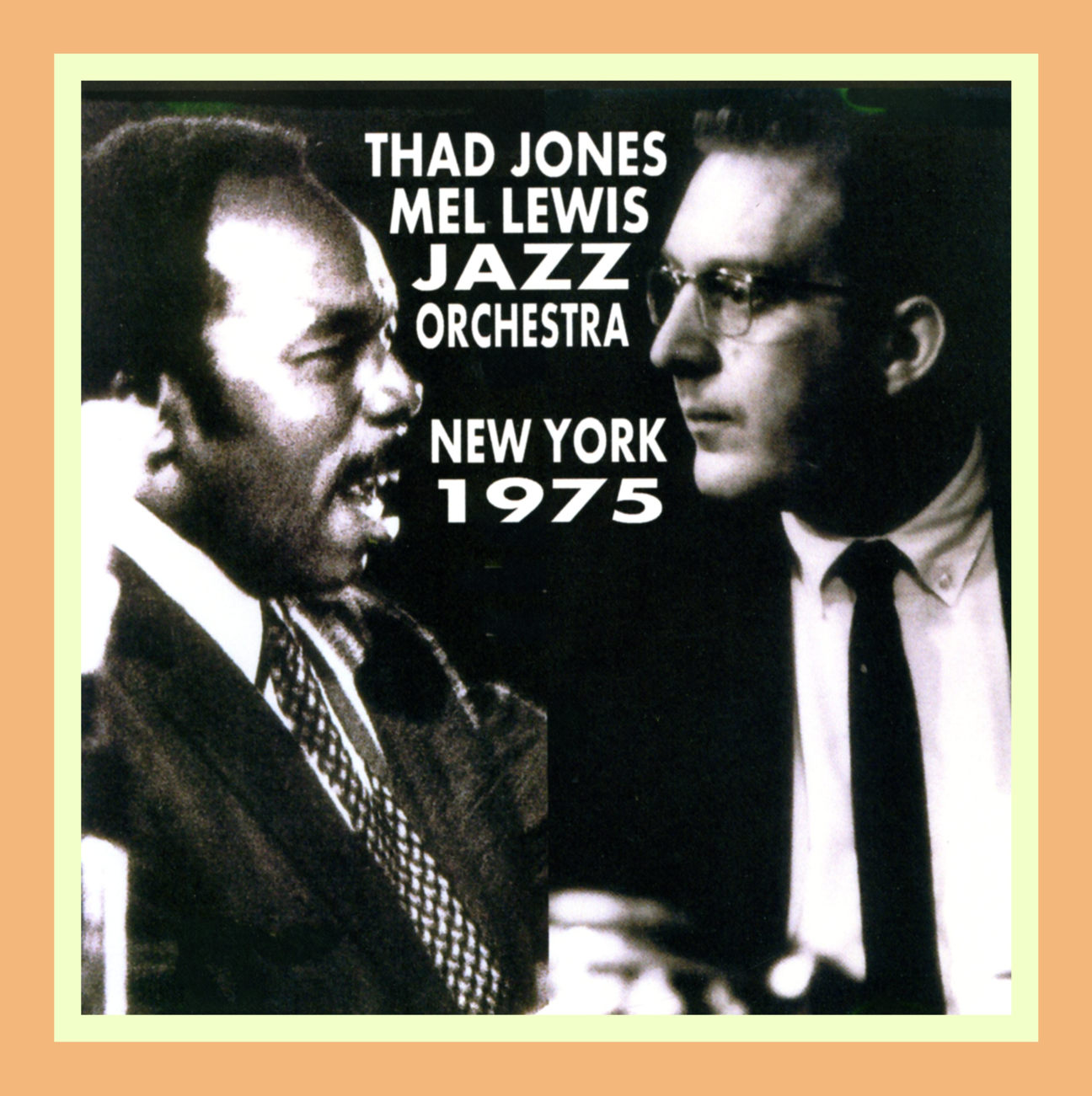
Thad Jones/Mel Lewis Orchestra: A 50th Anniversary Celebration

© -Steven Cerra, copyright protected; all rights reserved.

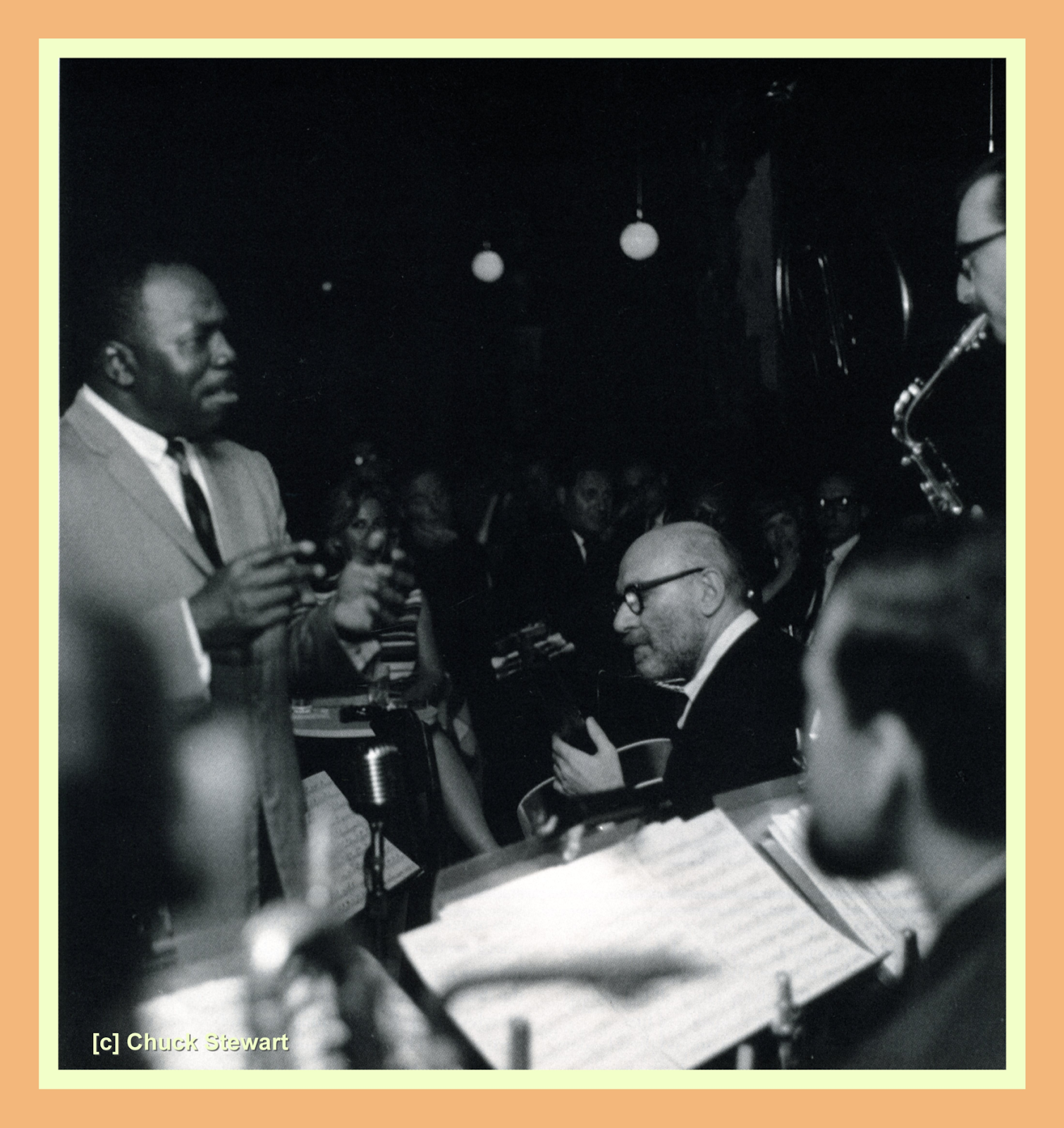
This piece first appeared on the blog on July 5, 2011. I am re-posting it to celebrate the 50th Anniversary of the Band. The following excerpt by Ted Gioia and the video which appear at its conclusion have been added to the feature which originally posted as The Thad Jones - Mel Lewis Orchestra: A Big Band is Born


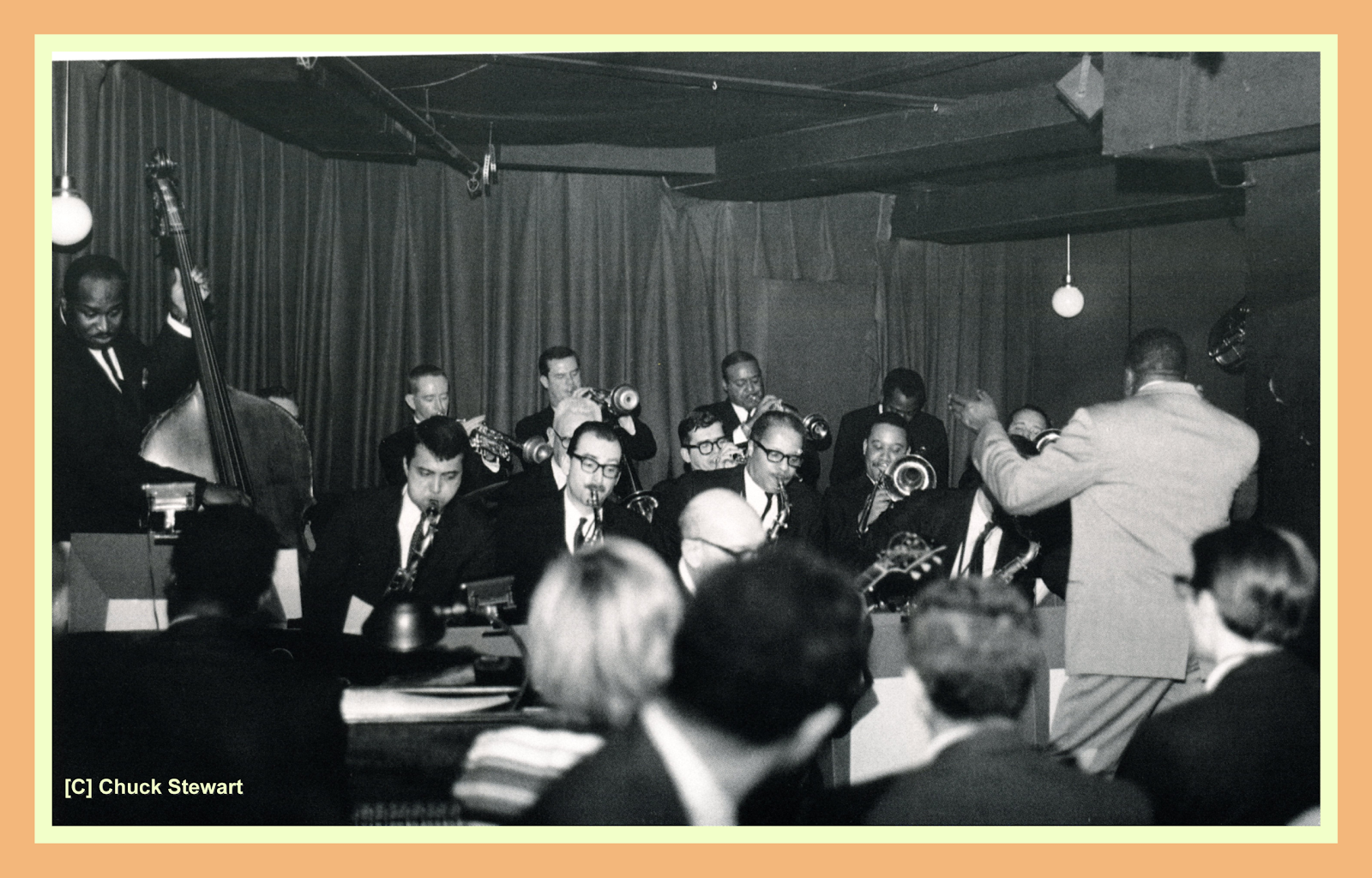
“From the mid-1960s to the late 1970s, the Thad Jones—Mel Lewis band stood out as the most celebrated and polished of the New York big bands. Started in late 1965 as a rehearsal band, the group secured a Monday-night gig at the Village Vanguard the following February  —a regular engagement that they would maintain, with few interruptions, for the next thirteen years.

The sidemen were paid a meager seventeen dollars for their services (increased to eighteen dollars after they proved their drawing power)—roughly the same, in absolute dollars, as the major big band leaders had paid their sidemen during the Great Depression.

Despite the low wages, Jones and Lewis attracted many of the finest New York players and writers to their band. The reed section featured Joe Farrell and Eddie Daniels and, in later days, Billy Harper and Gregory Herbert, playing alongside seasoned veterans such as Pepper Adams, Jerry Dodgion, and Jerome Richardson. The brass sections could rely on leader Jones, as well as (at various points in the band's history) trombonists Bob Brookmeyer and Jimmy Knepper, and trumpeters Snooky Young, Jon Faddis, Marvin Stamm, and Bill Berry. Drummer Lewis anchored a solid rhythm section that combined the elegant piano stylings of Thad's brother Hank Jones (and, in later days, Roland Hanna, Walter Norris, Harold Danko, and Jim McNeely) with the bass lines of Richard Davis (and, in the early 1970s, George Mraz).

The impeccable musicianship of the band was supported by an outstanding library of arrangements. Leader Jones brought with him a number of charts he had written for Count Basie. His writing spanned a wide range of moods, from the ten-derest lullaby waltz "A Child Is Born" to the hardest-edge New York workout "Central Park North." Bob Brookmeyer also contributed a number of major works, including a series of stunning reworkings of some of the oldest jazz standards such as "Saint Louis Blues" (composed in 1914), "Willow Tree" (from 1928), and "Willow Weep for Me" (written in 1932). Jones left the band in early 1979 to take on a position as leader of the Danish Radio Orchestra in Copenhagen. For the next decade, Mel Lewis continued to lead a big band on Monday nights at the Vanguard,playing his last gig with the group only a few weeks before his death in February 1990. But the ensemble overcame this blow as well, surviving in the form of the Vanguard Jazz Orchestra, a cooperative effort that maintained the once-a-week tradition at Manhattan's most venerated jazz nightspot.”- Ted Gioia, A History of Jazz, 1st Ed. [paragraphing modified]

Who would have thought that a big band born twenty years [20] after their heyday would still be going strong almost fifty [50] years later?

Such is the case with The Thad Jones – Mel Lewis Orchestra which came into existence in February, 1966 at The Village Vanguard in New York City and still holds forth every Monday night in the same location as The Vanguard Jazz Orchestra.

Obviously, its personnel has gone through changes over the years but the high quality of the band’s music hasn’t.

Of course, this is my interpretation of the band’s historical, shall we say, line of continuity.  Following this introduction, Bill Kirchner offers a much more accurate demarcation between the original Thad Jones – Mel Lewis Orchestra and the ones that came after it.

At its inception, the signature aspect of the band’s sound was the writing of Thad Jones, although Bob Brookmeyer, Tom McIntosh and Garnet Brown [all trombonists!] contributed charts to the band’s initial play book.

The band’s founders, trumpeter, composer and arranger, Thad Jones, and drummer, Mel Lewis, traveled widely divergent paths in coming together to form the band.

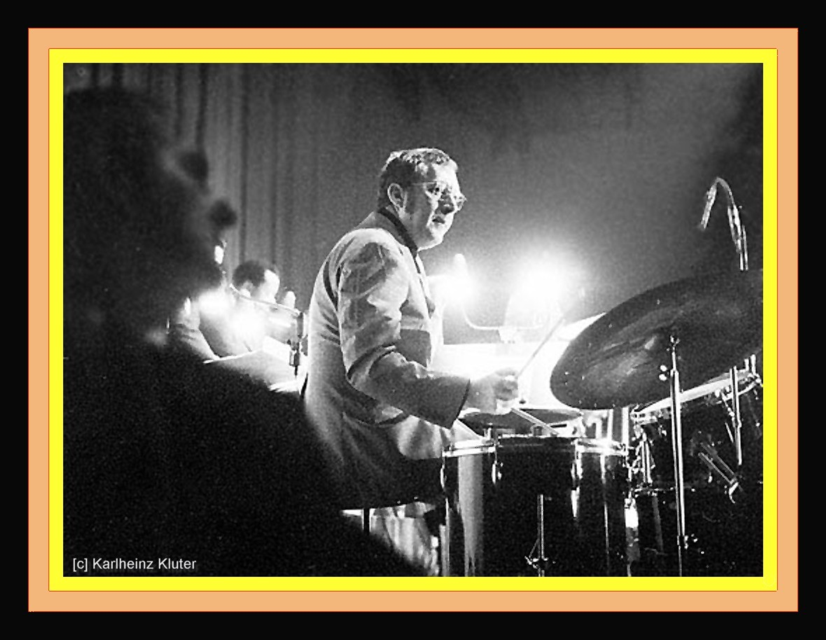
For years, Mel had been a first-call drummer with The Stan Kenton Orchestra, the Bill Holman Big Band, what has come to be known as the Terry Gibbs Dream Band, the Gerald Wilson Orchestra and Gerry Mulligan’s Concert Jazz Band.

Few big band drummers in the history of Jazz have ever been more successful than Mel who would cap his career with almost a decade-and-a-half of performing with the big band he co-led with Thad.

On the other hand, during this same timeframe, Thad Jones had enjoyed an almost exclusive association with Count Basie’s big band [1954-1963] as a trumpet player and composer-arranger, although many of the charts that gave birth to the distinctive sound of the orchestra that he co-led with Mel were largely rejected during his tenure with Basie for the reasons noted below by Bill.

“Gave birth” may be a suitable metaphor for many aspects of the music of The Thad Jones – Mel Lewis Orchestra as one of Thad’s earliest and, by now, most famous compositions is entitled A Child Is Born.

Music has a way of sometimes capturing – The Ineffable – that which is beyond words and so it is with A Child Is Born. The miracle of human birth is beautifully captured in the melodic refrains of the song in a way that supersedes and transcends verbal expression.

Thad and Mel once said that the music of A Child Is Born should be played when every child is born.

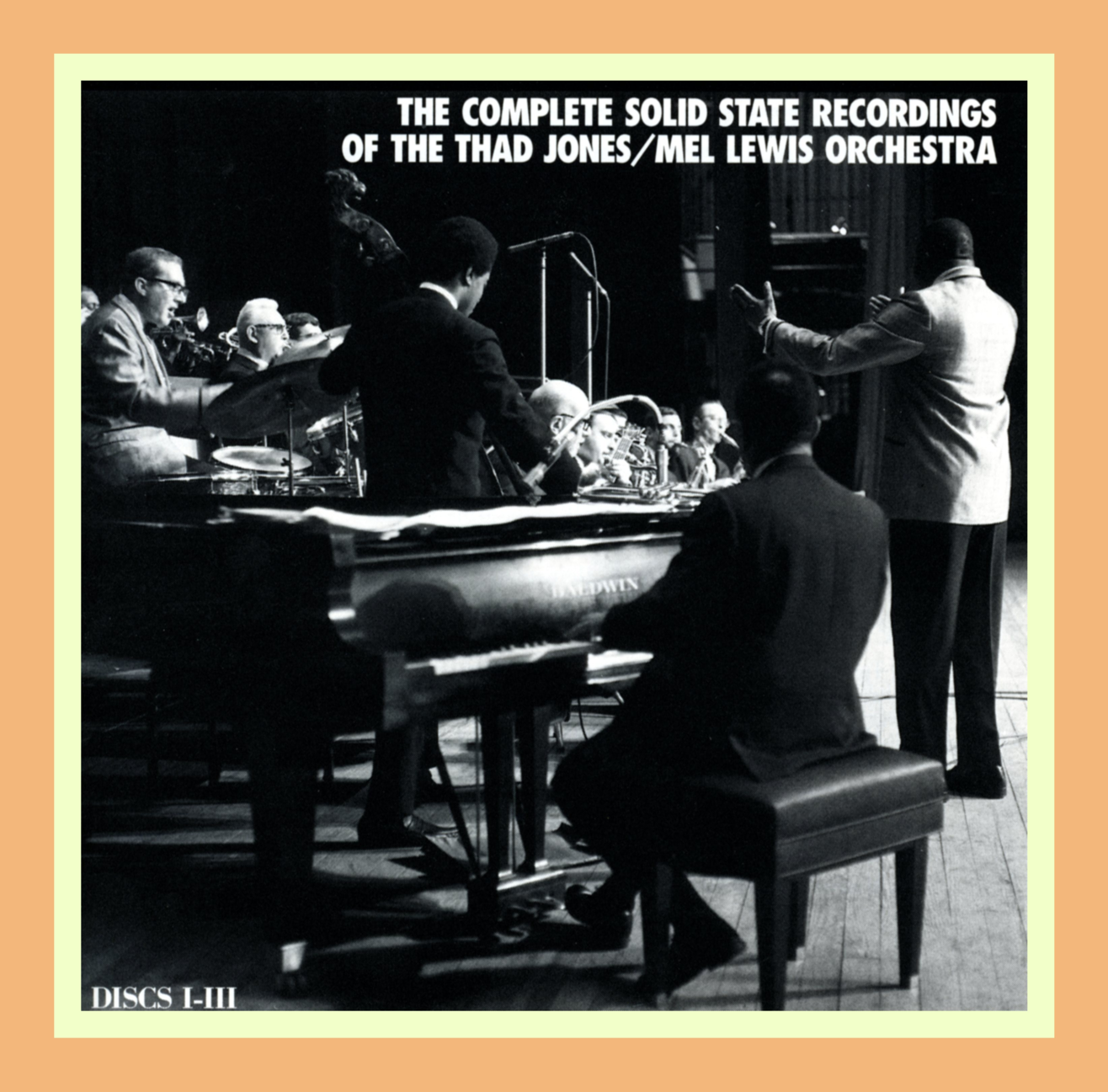
In 1994, Michael Cuscuna and his team at Mosaic Records gathered together the band’s first, half-dozen sides and issued them as The Complete Solid State Recordings of the Thad Jones/Mel Lewis Orchestra [Mosaic MD-5-151].

Michael asked Bill Kirchner, the eminent Jazz musician, author and editor, to write the insert notes to the collection.

Michael and Bill were kind enough to grant us permission to reprint a portion of Bill’s insightful writings about The Thad Jones – Mel Lewis Orchestra’s origins and subsequent history.

© -Bill Kirchner/Mosaic Records; used with the permission of the author; copyright protected, all rights reserved.

On February 12, 1966, The New York Times ran a review by John S. Wilson entitled "2 New Big Bands Here Appeal To More Than Old Memories." Wilson first mentioned the reorganized Tommy Dorsey Orchestra and its new director Urbie Green, as well as such sidemen as Howard McGhee, Budd Johnson, Dave McKenna, Mousey Alexander, and Arnie Lawrence. "Most of these sidemen are successful freelance New York musicians," wrote Wilson. "And that makes the band's future questionable. When the band ends its run at the River Boat, will these men be willing to go on the road, or will Mr. Green have to fill in with less experienced musicians?"

The review continued:

“One band that is not likely to leave New York is The Jazz Band, an 18-piece group jointly led by Thad Jones, a former Count Basic trumpeter, and Mel Lewis, a drummer who has served with Woody Herman, Stan and Ben Goodman. Organized last Thanksgiving as a rehearsal band that met once a week, The Jazz Band gave its first public performance Monday night at the Village Vanguard in an enthusiastic atmosphere reminiscent of the great jazz days on 52nd Street. This all-star band — it includes Bob Brookmeyer, Hank Jones, Richard Davis, Snooky Young, and Jerome Richardson, among others — ripped through Thad Jones's provocative, down-to-earth arrangements with the surging joy that one remembers in the early Basic band or Woody Herman's First Herd. Those were young bands whose skills sometimes could not keep up with their desires. But these are old pros, having a wonderful time and rising to each other's challenges, even to such adventures as three-part improvisation. Because these musicians have regular jobs, they can only get together once a week. That will be on Mondays at the Vanguard for the next few weeks at least.”

What was obvious to everyone present at the Vanguard on the night of February 7, 1966 was that an exceptional ensemble had been born. What no one could have predicted was that the Thad Jones/Mel Lewis Orchestra would become one of the most acclaimed and innovative big bands in jazz history, that it would tour extensively throughout three continents, and that its offspring, the Vanguard Jazz Orchestra, would still be in residence on Monday nights twenty-eight years later.

Two events gave impetus to the formation of the Jones/Lewis band. One was the breakup of the Gerry Mulligan Concert Jazz Band (of which Jones, Lewis and Bob Brookmeyer were members) in 1964. The second was Count Basic's commissioning of Jones to write an album's worth of arrangements for the Basic band in 1965.

In his nine years as a Basic sideman (1954-63), Jones had contributed significantly to the Basic library (as is evidenced in Mosaic's boxed sets of Basic's live and studio Roulette recordings), but this new commission resulted in his most ambitious writing for Basic. As far as we know, Jones wrote seven originals: The Second Race, The Little Pixie, A-That's Freedom, Low Down, Backbone, All My Yesterdays, and Big Dipper. Basic tried all of them and ultimately rejected all of them; apparently they were too difficult for the band, as well as too atypical of the band's style.


He did, however, allow Jones to keep the scores and copied parts. At that point (the fall of 1965), Jones and Lewis decided to make their move and called a rehearsal.

Most of the musicians they contacted were, like themselves, active in the New York television and recording scenes. It was a period when all three television networks, plus the syndicated shows, had large orchestras with musicians on staff. Many of these players, and many others as well, also did record dates and jingles; it was quite common for a busy recording musician to do two, three, or four dates a day, every day.

(Much of this work has disappeared, in New York and elsewhere. Most of the network staff jobs have been abolished, and record and jingle dates have considerably diminished in number, to a point where most recording musicians now consider studio work a secondary activity in their careers. As one musician, formerly very active in the studios, half-facetiously put it, "If you want to be successful in the studios nowadays, start a synthesizer cartage firm.")

A number of musicians on the early Jones/Lewis band were, as was Jones, on staff at CBS: Jimmy Nottingham, Jack Rains, Cliff Heather, and Hank Jones. Snooky Young and Jimmy Maxwell were at NBC, and Bob Brookmeyer, Bill Berry and Danny Stiles did the syndicated Merv Griffin show. Others, such as Jerome Richardson, Jerry Dodgion, Pepper Adams, Richard Davis, and Lewis were active in recording. And there were some talented up-and-comers: Eddie Daniels, Jimmy Owens, Garnett Brown and Joe Farrell. (Brown and Farrell had worked alongside Jones with George Russell the previous year.)

The rehearsals began in December, 1965 and although memories differ as to how frequently they occurred, the consensus is that they were held more-or-less weekly, usually on Mondays, beginning at midnight and lasting until three or four in the morning. (Considering the busy schedules of these players, the late hours come as no surprise.) For the most part, the rehearsals took place at A & R Studios, 112 West 48th Street near Sixth Avenue (and next door to the famous musicians' bar Jim and Andy's). Occasionally, the location shifted to the second A & R studio at 799 Seventh Avenue between 51st and 52nd Streets, or to Soundmixers at 1619 Broadway at 49th.


In exchange for free studio time, Thad and Mel allowed engineer Phil Ramone to use the rehearsals as practice sessions for his student engineers. One such engineer was Don Hahn, who in later years was to record several Jones/Lewis albums, including two in this collection. The rehearsals were recorded on 7 1/2 inch mono tapes; unfortunately, the tapes were placed in storage and were probably destroyed.

Though the rehearsals were private, there were a number of invited guests. One was Manny Albam, one of the busiest composer-arrangers in New York during the fifties and sixties. Albam also served as "musical director" for the Solid State label and worked in the engineer's booth during most of the sessions heard here. Another guest was Dan Morgenstern, then New York editor of Down Beat. He recalls that even at the very beginning of its existence, this band was different, not only because of Thad's writing, but also for his use of the rhythm section. For contrast, Jones would at various times cue rhythm players in and out behind soloists. Occasionally, the entire rhythm section was pulled out, and a saxophone or trombone player would be left entirely on his own.

These practices became a source of pride to the band members. As Jerry Dodgion remarked with a chuckle, "It was supposed to be different."

Another invited guest was WABC-FM disc jockey Alan Grant, who, among other activities, was broadcasting live from the Half Note (at Spring and Hudson in the West Village) on Friday nights. One of those broadcasts had featured the Thad Jones-Pepper Adams Quintet with Mel Lewis. After attending a rehearsal of the orchestra, Grant went to Max Gordon, owner of the Village Vanguard, and urged Gordon to book the band for some Monday nights.

New York's jazz clubs at that time were in economic doldrums. Birdland had recently closed for good, and some clubs were reverting to a weekends-only policy. The Vanguard was running Monday night jam sessions that sometimes were hosted by Roland Kirk (pre-Rahsaan). Probably the highlight of those sessions was the night when a 20-year-old Keith Jarrett sat in and dazzled everyone in the audience — including Art Blakey, who hired him.


Grant persuaded Gordon to book the Jones/Lewis band for two Mondays in February. To make the band financially affordable for the club, the musicians agreed to work for very little money. Each sideman's salary was $17; admission at the door was $2.50. As much as can be pieced together, the probable personnel of the band that night was: Thad Jones, conductor, cornet or flugelhorn (he alternated between the two instruments during his years with the band); Snooky Young, Bill Berry, Jimmy Nottingham, Jimmy Owens, trumpets; Bob Brookmeyer, Garnett Brown, Jack Rains, Cliff Heather, trombones; Jerome Richardson, Jerry Dodgion, Joe Farrell, Eddie Daniels, Marvin Holladay, reeds; Hank Jones, piano; Sam Herman, guitar; Richard Davis, bass; Mel Lewis, drums.

The club was packed, the acclaim was instantaneous, and The Jazz Band (as it was then billed) was off and running. Max Gordon extended the band's run indefinitely, and the sidemen's salaries were increased to $18. In March, the band played a concert at Hunter College in New York City, and in May, it began its recording career.

What was its impact? Of the big bands that emerged in the early-to-mid-sixties (the others being those of Quincy Jones, Terry Gibbs, Maynard Ferguson, Gerry Mulligan, Gerald Wilson, Buddy Rich, Kenny Clarke-Francy Boland, and Don Ellis), the Thad Jones/Mel Lewis band was, in this writer's view, the most influential. The Quincy Jones and Mulligan ensembles, though in more conservative ways prophetic of the Jones-Lewis approach, were relatively short-lived. Wilson's and Gibbs's groups were rarely heard outside of California except on records, and the same was true of Clarke-Boland in Europe. Rich, Ferguson and Ellis pose a different consideration: though they all led consistently well-drilled bands that were capable of fine performances, their groups were built around their leaders' flamboyant personalities more than on enduring music.

Thad Jones and Mel Lewis were, first of all, two of the most esteemed "musician's musicians" of their time. Neither was a "star," but both were unique instrumentalists whose skills were valued by leaders ranging from Basic, Kenton and Goodman to Gillespie, Monk and Mingus. They therefore had no trouble in assembling a band full of New York's finest jazz-oriented players, all of whom were first-rate ensemble performers and most, in addition, good to exceptional soloists.

As a composer-arranger, Jones perhaps more than anyone else in the sixties revitalized conventional big band writing; this is with due respect given to such contemporaries as Oliver Nelson and Gerald Wilson. ("Conventional," by the way, refers to the standard trumpets, trombones, saxophones, and rhythm section instrumentation, thereby removing the work of Gil Evans from this discussion. Evans's methods and instrumentations were considerably less orthodox — for one thing, he eliminated the saxophone section from his writing.) Jones certainly drew from his long experience with Basic, but he had an affinity for the dense cluster harmonies of Duke Ellington and Billy Strayhorn as well. Combining these influences with the rhythmic and harmonic innovations of bebop, a profound melodic gift, and a subtle sense of humor, Jones rose in a few years from relative obscurity to a position as a preeminent jazz writer.


Above all, what made this band unique among big bands was its rhythm section. Richard Davis and Mel Lewis were highly in demand in New York recording circles for all kinds of projects. Arranger-conductor Peter Matz, for example, used them on several Barbra Streisand albums and on numerous pre-recorded segments for television shows such as THE KRAFT MUSIC HALL and HULLABALOO. ("We were a team," Davis recalled emphatically.) Obviously, the empathy between these two was enormous, and combined with such pianistic wizards as Hank Jones and his successor Roland Hanna (and occasional "subs" such as Chick Corea, Herbie Hancock and Albert Dailey), the section coupled the precision of the best big band rhythm foundations with the inventiveness and flexibility of the best small groups. What Davis in particular did could be highly unorthodox ("Richard Davis would have been fired from any other big band for playing like that," a prominent jazz bassist once remarked admiringly). Yet everything he played worked, and even Jones's more conventional pieces took on a unique flavor.

In the beginning, of course, the rhythm section included a Freddie Green-style guitarist, Sam Herman, who was also the band's music copyist. As the band developed and the rhythm section became more daring, Herman played less guitar and more shaker (which, by the way, ain't easy). Eventually, the guitar was phased out, though BarryGalbraith, Sam Brown and David Spinozza were later brought in for studio sessions.

The Thad Jones/Mel Lewis Orchestra lasted thirteen years, becoming for many listeners the most admired big band of its time. It never became a full-time entity in the sense of the Ellington, Basic, Herman and Kenton ensembles, but the band nonetheless did a substantial amount of touring, including numerous trips to Europe and Japan and a triumphant tour of the Soviet Union in 1972. By that year, most of the early members had departed, though Roland Hanna, Pepper Adams and Jerry Dodgion remained until 1974, '77 and '78, respectively. The replacements included veterans of the caliber of Quentin "Butter" Jackson, Frank Foster and Walter Morris, as well as such outstanding young players as Jon Faddis, George Mraz, Gregory Herbert, Harold Danko, and Dick Oatts.

By the time the orchestra parted ways with Solid State (which was then being phased into the Blue Note fold) in 1970, they'd done the three studio albums and two live Village Vanguard sessions included in this set. They also backed up Joe Williams and Ruth Brown for the label and participated in a European all-star tour that yielded a double album for Blue Note called ja/z wave ltd.

The band recorded sporadically in the seventies for Philadelphia International (POTPOURRI), Nippon Columbia (live in tokyo and for A & M (suite for pops, new life and live IN MUNICH). On a for-hire basis, they also recorded Thad Jones-arranged albums by Jimmy Smith (Portuguese soul), organist Rhoda Scott and vocalist Monica Zutterland.

Thad and Mel also led the Finnish UMO Orchestra and the Swedish Radio Jazz Group on several recordings. They also worked frequently as a quartet, making one album for Artists House, later reissued on A & M.

In January 1979, Thad Jones, by all accounts without warning or explanation, left the band and moved to Copenhagen to lead the Danish Radio Orchestra. Mel Lewis, more than a little embittered, assumed sole leadership and proceeded to build a new library with contributions from alumni Bob Brookmeyer, Jerry Dodgion and Bob Mintzer, members such as Jim McNeely, Kenny Werner, Ed Neumeister, Earl Mclntyre, and Ted Nash, and other contributors (Bill Holman, Bill Finegan, Mike Abene, Rich DeRosa, Mike Crotty). Mel continued to play Thad's music; he even acquired the new charts that Thad was sending back to the U.S. to be published.
After a few years, Jones and Lewis achieved a grudging kind of reconciliation. One incidence of this occurred in 1985, when Jones returned to the States for a short time to lead the Count Basic Orchestra. In New York on a Monday night, Thad paid a visit to the Vanguard to see his former band. He went up to Mel and gave him a big bear hug; Mel's arms remained at his sides.

Thad Jones returned to Copenhagen, where he died of cancer on August 19, 1986 at age 63. On September 2, a memorial service was held at St. Peter's Church in New York City. Mel was asked to speak and gave a moving impromptu talk about his former partner. He couldn't resist quipping: "Thad left without saying goodbye — that's twice.”

Mel Lewis died in New York on February 2, 1990 at age 60 after a long battle with melanoma. Fittingly, his last gig was with his orchestra only three weeks before he died.


The band, now a cooperative called the Vanguard Jazz Orchestra, continues the Monday night tradition established a generation ago. It's a tradition unlike any in the entire history of jazz. But then, it was supposed to be different.”

The band traveled to Munich, Germany and performed at “The Domicile” on July 18, 1974 where the version of Don’t You Worry About a Thing” that accopanies the following video was recorded.