Saturday, December 10, 2016

Sonny Rollins: The Man by Bob Belden

© -Steven Cerra, copyright protected; all rights reserved.


This interview appeared in the August 1997 edition of Down Beat. Sonny Rollins is still going strong and performing in concert halls all over the world, but, sadly, Bob Belden died of a heart attack in 2015 at the age of 58.

Sonny has been “The Man” for an awfully long time.

There aren’t many Jazz musicians left from the era when modern Jazz originated after World War II.

“There's something about the sax that makes it impossible for saxmen to resist talkin' shop in each other's company. When a colossus like Sonny Rollins starts talkin', be ready for an in-depth lesson in saxology. Rollins, who won double honors in the 1997 DownBeat Critics Poll as Jazz Artist of the Year and Tenor Saxophonist of the Year, took up the horn 50 years ago. He's had a long career, as both a sideman and leader, onstage and in the recording studio—a portion of which is represented on two new boxed sets, the two-CD Silver City (Milestone) and the six-CD The Complete Recordings (RCA, due out this summer). Needless to say, what he knows about the instrument could overload the "hang" capacity of even the hippest sax enthusiast. We caught up with Rollins in May as he was preparing to embark on a two-week tour of Japan. What follows is an edited version of what happens when two sax lovers really start talking.

Bob Belden: What drew you to the saxophone?

Sonny Rollins: What really drew me to the instrument was Louis Jordan.

Belden: The Tympany Five?

Rollins: Right, the Tympany Five. I used to hear them over my at uncle's house. He had a lot of these old country blues records. I didn't like all of them, but the Louis Jordan Tympany Five, that really struck a chord in me. So that began my liking the saxophone. I had always liked music, but I think that kind of made me conscious of that particular instrument, and I began to recognize that instrument when I heard it. I would have been around six to seven years old.

Belden: Did you have an instinct for a particular horn?

Rollins: When I first began to see Jordan (not in person, but I saw pictures of him), he had a really great King Zephyr, So some years later, when I got my first tenor, which I think was probably in 1944 or something like that, I got a King tenor.

Belden: When did playing the saxophone become a social event for you?

Rollins: Well, the music came first. Because when I was a kid, about 11... my father was in the Navy, and in the summertime I used to go down to Annapolis, where he was stationed at the academy there. There was a girl. She was older than me, actually, but I had big eyes for her. She worked at the academy. So anyway, one day Erskine Hawkins was playing there, and I went there and saw the band and everything, and then I saw this girl, Marjorie Brown, up there sort of with the musicians. And I got really crushed, because I knew, well, hey, that's…

Belden: That's where her interests lie.

Rollins: Really. Why would she mess around with a little squirt like me, you know? I wanted to be like my idols. I wanted to be like Louis Jordan. I wanted to be like Coleman Hawkins. I wanted to be up there. I wanted to be a musician playing, you know?

Belden: When did you first hear Coleman Hawkins?

Rollins: Well, I heard Coleman Hawkins, I guess, around the time of that record, "Body and Soul." I would imagine I probably heard him around the late '30s. There were some older guys on my block who were into Duke Ellington and all these people. So I sort of got a really good education, you know, as a kid growing up and liking jazz. We used to always go and listen to all these records. I'd listen to Ben Webster and all those guys, and really got a good insight into him. But I liked his playing a good deal. I thought that Coleman was really an important figure. And I liked his demeanor, sort of the pride and dignity with which he carried himself.

Belden: Did you have an instinct for discerning that one particular musician attracted you more than another musician? Then would you study this particular person more?

Rollins: I listened first a lot to Louis Jordan, before I really even knew about Coleman Hawkins. Then when I found out about Coleman Hawkins, I was attracted, I think, to his sound (he had that great sound), and then it just seemed like he knew so much music. Just his mental thing and intellectual approach really got to me.

Belden: Because there was a moment... I don't know how you would describe the style of playing before Hawkins, but it seems to me like harmony wasn't as important as the motion, I guess.

Rollins: Exactly. Coleman had so much of that harmony down pat, and he really had it to a high art. A lot of young guys don't even really like Coleman Hawkins today. I mean, they know of him and they respect him, but I think they don't relate to him that much. But the thing I liked about him was, as you said, the harmony. I mean, the harmonic concept was so advanced. Somebody told me the other day, as a matter of fact, that Coleman was a real big fan of Art Tatum.

Belden: Do you feel that the '40s were a good time for a musician, as opposed to maybe 10 years prior or 10 years later?

Rollins: When I was coming up, I was sort of coming right around the time of the small group. As I said, I liked Louis Jordan and the Tympany Five, and then I was just getting in there while Hawkins was doing a lot of his small-band work, all of the wonderful work that those guys were doing, and of course leading right into bebop with Charlie Parker and Dizzy and those small bands.

Belden: Hawk had the first bebop session.

Rollins: That's right! In fact, do you know a guy named Scott Devoe? He's an author who is writing a book about the birth of bebop and the years before bebop. But at the center of the book is Coleman Hawkins. It's a very interesting book. He sent me a manuscript, and I endorsed it because I thought it had a lot of interesting facts in there about how Hawkins was actually a much more important figure in bebop than a lot of people recognize. So I would say, yeah, Hawkins was a very important man and he was playing a lot of chords and stuff.

Belden: Bird played chords on the saxophone.

Rollins: Yeah, I think Bird came very much out of Coleman.

Belden: Were you much into Lester Young?

Rollins: I was. You know, what happened was that one day on my block one of these older guys that was really into music. He came down the street, and he said, "Who's the greatest saxophonist?" We all said, "Coleman Hawkins." He said, "No, Lester Young." So then we said, "Oh, Lester Young; who's this guy?" And then I began listening to Lester Young. So, yeah, I got into Hawkins first. But when I heard Lester Young, of course, he's completely phenomenal, also. So, yeah, I began listening to Lester after Hawkins, but once I heard him, I realized I was in the presence of greatness.

Belden: During this time, was there any perception that what these musicians were doing was considered art?

Rollins: Well, I think Hawkins is the one that gave me the sense that this is something beyond even the feel-goodness of music. Not that there's anything wrong with the feeling-good aspect of music.

Belden: In the '40s, did the musicians develop a sense of artistry about what they did?

Rollins: Well, I think that's probably true. There are some other social implications. For instance, Charlie Parker, I think, was one of the people who really wanted jazz to be looked at as an art music rather than as an entertainment music. That was one of the things that attracted us in our crowd to Charlie Parker, because there was a certain dignity he had about playing, about the music. So there was a social element that came in there also. People wanted to be accepted as the artists that they were.

Belden: I was going to mention a parallel of [singer/actor/political activist] Paul Robeson to Hawkins.

Rollins: Well, Paul Robeson was one of my heroes. As a boy, we used to go to a lot of Paul Robeson's rallies and so on. As you know, he was quite a political figure, as well. So, Paul Robeson was really one of my early, early heroes.

Belden: I think Hawkins might have been the first of the jazz musicians to get that kind of acclaim at that time.

Rollins: I wouldn't argue with that at all. I think Hawkins had the same kind of dignified demeanor and so on.... Yeah, that might have been one of the things that attracted me to his playing. But I also saw him a lot, because I used to live uptown. When I saw him in person, he was always a guy who was sharp, he always had a big Cadillac and all this stuff. He carried himself in a very dignified manner, which was not always the case with well-known musicians.

Belden: This period was where you became known in the jazz world. Outside of your own desire to succeed, was there someone who made things a little bit easier for you?

Rollins: Well, I would say that I just got a reputation, word-of-mouth, you know; well, there's some young guy uptown who can play this kind of stuff. Then, I worked with Babs Gonzalez and recorded. But also, when I was in high school, the latter stages of high school, I was rehearsing with Thelonious Monk's band every afternoon. So Monk was very important.

Belden: In 1949 and '50, you started making records. How does the recording process today compare with those early dates?

Rollins: You know, in those days, when we recorded, there were two takes, maybe. I mean, I'm trying to recall, but I know we didn't do 10 takes on one song. Maybe we'd do two takes on a song, and I would say that would be the norm.

Belden: So when you went in to make a record, you were just documenting where you were at at that moment?

Rollins: No. I myself didn't think anything about that. I didn't think much about that. Actually, I was just so much in heaven to be there, playing with these guys, and to be playing and then making a record.... I mean, I was just trying to represent myself in a good way. I didn't think much beyond the actual fact of, "Well, we're making a record," and that was it. Who knows if people would even hear the record? You know what I mean. There wasn't this kind of media exposure like there is now. You would have to go and hunt up jazz records. So, I mean, so what?... I made a record with J J. Johnson. Who knows how many people would even hear that record besides the true jazz people, you know? Or maybe it might not even be heard at all. So I didn't think of anything beyond just appearing in the studio and having a chance to make a record.

Belden: With RCA, did that period see a change in your methodology?

Rollins: In a way, it was. Because at the time that happened, you see, I had signed a long-term agreement with RCA. So I think this was different than when I'd go in to do a Blue Note recording or something, and I'd make one record, or make two records, and that would be it until the next time Al Lion called me up again. [Laughs.] When I went with RCA, that was a sea change, because then I was signed to do, I think it was six LPs.

Belden: Of which, eight eventually came out.

Rollins: Yeah.

Belden: You had a big deal at the time. DownBeat reported it as, for that time, a pretty good amount of change.

Rollins: Yeah, it was a lot of money. It was a pretty nice contract.

Belden: Do you ever pick a tune because it has a feeling on the horn?

Rollins: I pick a tune, and then it sometimes has a feeling on the horn after I pick it. Or I pick a tune because I like it, and then if I'm lucky, it has a feeling on the horn.

Belden: Do you ever get into a phase where you'll play a certain tune a lot, and then eventually it disappears from your repertoire?

Rollins: Well, "Three Little Words" would be one of those songs. There's a song I used to play, "I'm Old Fashioned." I really used to play it over and over, and really liked it. And then, finally, it just seemed like I couldn't get anything going on it any more, so I stopped playing it. I tried to play it recently because it's on a compilation album they put out, and I just couldn't get into it. So, yeah, I have phases where there are certain songs which I get into, and then that's it. After a while, then you want to do something else, for some reason. I don't want to say that I've gotten everything out of this song. I hate to say that you can get everything out of anything. So let's just say that maybe my approach to the song finally reached its limit, and maybe I would have to approach it in a different way.

Belden: From '69 to '72, you were absent from the scene. Did you rest a during this time?

Rollins: Well, I wouldn't quite say "rested." I had gotten burned, I would say, by a lot of record companies, so that I was sort of afraid to get involved with the record people. I didn't want to have anything to do with the people at record companies. Also, one of the companies that I was with, ABC, I had one record for them.... I'd made several, but one of the records I'd made for them, they said, "Gee, Sonny, we can't sell this record; this is too..."

Belden: East Broadway Rundown.

Rollins: Right!

Belden: Of course. That's the one that sells the most.

Rollins: Yeah, so I mean, I had just gotten really [disenchanted] with record companies and these shyster people. Not just the companies, there's a lot of agencies. As most musicians are, I was at the mercy of these unscrupulous agents. So, I just got away from the business world for a while. I mean, that's the period when I went to India, and so on and so forth. So, I had sort of gotten away from the industry. I mean, I never stopped playing. I always had my horn wherever I went. And I never stopped playing myself, but I just got away from the business end of it.

Belden: So you signed with Milestone. Do you feel you've had a comfortable relationship?

Rollins: Well, you see, I had recorded for Orrin Keepnews when he had Riverside in New York. So as Orrin tells the story, I was doing a solo concert at the Whitney Museum one day, and he was there, and he says to me, "Well, gee, Sonny, why don't you start recording again?" At that time, he was with Audio Fidelity. So, then I went with him, and then shortly after that he turned the label into Milestone.... I mean, they went with the Fantasy people. Then I stayed there, and after I started producing my own things, then Orrin got out of the picture—but I just stayed out there with the company. And 25 years passed by.

Belden: You've managed for a long time to have total say over your recordings. Is that something that, when you had the opportunity, you knew this was the time to do it?

Rollins: Well, I became very self-conscious about recording around the '70s. I wanted to do a lot of takes on everything and try to put out the best representation of what I could do. Of course, I was doing that in the '60s also, so I shouldn't say that. I mean, when I was with RCA, I had access to the RCA studios up on 24th Street, and I used to go by there 24 hours a day, you know, whenever I wanted to, and practice. Then, I also was able to do a lot of different tracks. I remember I was up there with George Avakian, who was producing me at that time, and I had the option of doing as many tracks as I wanted — he deferred to me. So that was something I started doing before. But in the '70s, I also wanted to have that kind of control. I always wanted to have control, of course, over what I did, for one thing because I wanted to make sure that what came out was the best representation of Sonny Rollins, and I thought I knew what that is. Now, I might not be perfect in that. Some people hear things in my playing that I don't hear, you know. But nevertheless, I felt that I wanted to be able to have the final say in what came out. So it was something that I had always been trying to do, and I did get that amount of autonomy at Milestone, yeah.

Belden: Is there something you haven't done yet as a recording artist or as a soloist?

Rollins: Well, I hope so. Because if not, I would probably head for the graveyard. I mean, I hope there's a solo that I haven't played yet. As a matter of fact, I am trying to get to something that I haven't done before. So as far as soloing, yes, I hope there is. As far as context, yeah, there's a lot of playing situations that I haven't been in yet — many of them. I mean, actually, it's endless.

Belden: You've done some orchestral stuff.

Rollins: Right. I did do one orchestral piece. In fact, I think I might do that again. There's been some talk about doing that again next year. So we may revisit that piece, which is OK.

Belden: The album The Bridge [recorded in 1962] was an incredibly influential record.

Rollins: Yeah, I like The Bridge a lot. A lot of people like that.

Belden: The sound of jazz at that time was harder, much harder, and The Bridge has an airier texture to it.

Rollins: Mmm-hmm. I think so. Yeah, I think it was.... Well, remember, when I made The Bridge, I was sort of away from the jazz scene for a while, so I probably didn't reflect anything really that was happening around me so much. I mean, it was strictly coming from me and the group, you know.

Belden: What is your response to the release of bootleg recordings?

Rollins: The reason why I have been so much against bootleg records is because I always viewed it as a way that unscrupulous people are profiting off of the poor, beleaguered musicians; I've never looked at it in an artistic way. Because most of these records, nobody gets paid. So I always view the whole industry as people that are just ripping off the artist. Now, that puts me in a very funny position, because I feel that way; at the same time, when I hear something by somebody that I like that was previously unrecorded, I mean, it really knocks me out. If I heard something by Art Tatum that was never released, I'd probably turn flips. So as a listener, it puts me sort of in an ambiguous position.

Belden: You recently played [the big pop venue] Tramps in New York. Is this...

Rollins:... a trend? [Laughs.]

Belden: Is this a sign of a new direction?

Rollins: Well, the thing is this: As you know, for career reasons I decided a long time ago that I wanted to play concerts because it would just be more prestigious, it would be better for jazz as a whole, not just for Sonny Rollins.... It would be better for the business if jazz musicians of some repute would do concerts, wouldn't have to play clubs all the time. So anyway, I decided to just have a concert career, and that's what I've been doing for quite a while now. However, I have been in the habit of playing the [pop-oriented club] Bottom Line in New York; I used to go down there once a year or something like that.

Belden: And the Beacon occasionally.

Rollins: Right. Well, the Beacon [concert hall] is sort of a big house.

Belden: Do you like concerts because the environment is so much more your environment?

Rollins: Yes, that's part of the reason. And the conditions, the backstage conditions are much more pleasant [at] these things, they make a difference. Being able to have a nice dressing room and all this stuff... I believe in that, even though there are always going to be people that say, "Well, gee, why not the good old conditions of being in a smoke-filled, whiskey-drenched nightclub? Boy, you guys were really playing music then." You're always going to get people who say that, or say, "Well, gee, Billie Holiday was great because she was a dope addict." I mean, this kind of mentality is going to be around all the time.

Belden: When did you really make the complete transition to concerts from the club environment?

Rollins: Well, I would say that outside of the fact that I played the Bottom Line annually for some years, I have been playing concerts probably since the late '70s. So I would say that at least 20 years, give or take a few years maybe.

Belden: So, in a sense, there were environments where you were playing that you would consider as intimate as any club in New York. Yet people seem to mis-perceive that as not playing in clubs.

Rollins: Well, you have to remember: When I did those [engagements at clubs like Bogarts, Rockefellers, the Bottom Line, Great American Music Hall], I did it for, like, one night or two nights at the most. So most people conceive of a club as like six nights a week. If I go to a place [like] the Roxy, I'll play there for two nights. I don't believe I played at the Roxy for more than that. I didn't play at the Music Hall for more than two nights. Bogart's, those places, maybe one night. Those clubs were one-night, two-night places, That's why the perception was also given credibility: "Well, he's not really playing clubs, because he's not there six nights a week." Right?

Belden: Yeah, exactly. You can play concerts all over the world; would you want to play clubs all over the world?

Rollins: Right. Well, I wouldn't want to play clubs all over the world, either. Jazz needs some dignity. It needs to be looked at as a serious, important art form. And if you're going to be playing in nightclubs, I don't care what you say, you're not going to get that kind of respect for it. Not that the respect is even the thing that's going to put jazz over the top — I don't know. But it's just the idea that if you're just playing nightclubs, it just diminishes the music in some kind of way. At this time, in 1997,I think it's just not enough to be playing nightclubs. It's just not enough, you know. It wasn't for me 20 years ago. It's not proper. If you want to do it, OK. But you shouldn't have to do it.”


Friday, December 9, 2016

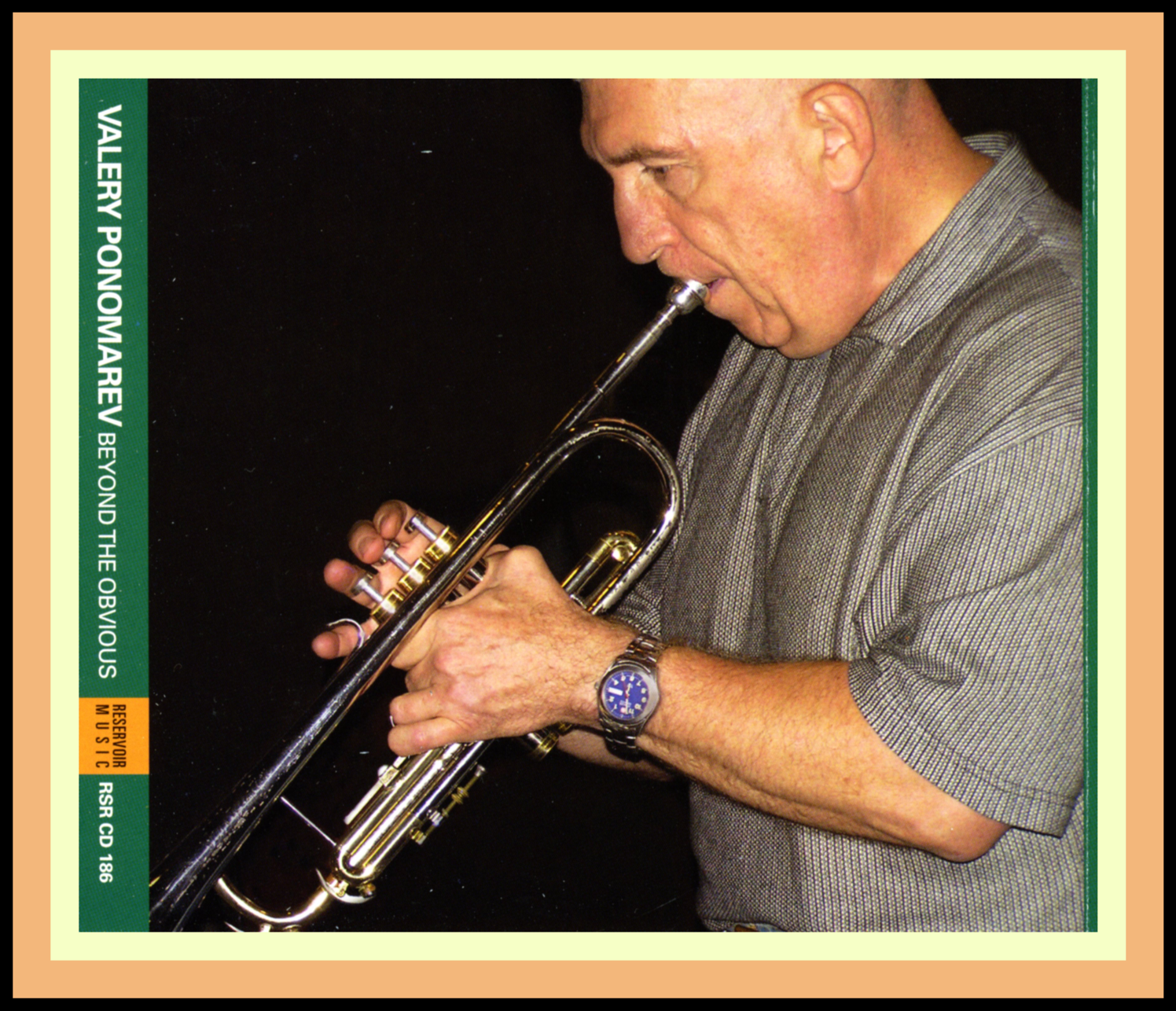
Valery Ponomarev - On The Flip Side Of Sound - An Autobiography [From the Archives]

© -Steven Cerra, copyright protected; all rights reserved.


“If I had collected only one cent for each time I had to answer the questions: ‘How did you join Art Blakey and the Jazz Messengers?,’ ‘How did you escape from Russia?,’ and ‘How did you learn to play Jazz like that in Moscow?,’ I would be a billionaire by now. So I have decided to answer these questions once and for all [with this autobiography]
- Valery Ponomarev


If you’ve read any of Martin Cruz Smith’s wonderful stories featuring Investigator Arkady Renko of the Moscow Police Force [Gorky Park is probably the most famous of these], then you already know that Moscow can be a very strange place.

The city seems to be a microcosmic reflection of Russia itself, a country once described by Winston Churchill, the distinguished British statesman -from an era when there still were “distinguished statesmen” – as “a riddle, wrapped in a mystery, inside an enigma.”

Jazz trumpeter Valery Ponomarev describes Russia this way:

“One-sixth of all of the earth’s land mass, Mother Russia - loved, hated, richest, poorest, the most ingenious, stupidest, generous, miserly, master, slave, forgiving, vindictive, the strongest, the weakest, God-fearing, atheistic, beautiful, ugly, loving parent, Cinderella's stepmother, drunk, sober, insane, sensible, sick, healthy, heroic, cowardly, treacherous, loyal, violent, peaceful, cruel, kind, vulnerable, secure, saint, sinner, criminal, lawful, transparent, mysterious, naive, sophisticated, backwards, in the space age, polluted, pure, vile, honorable, ruined, forever young and beautiful, its turbulent history, all 12 time zones of it, no longer yours, left behind.”

The quotation is taken from p. 52 of Valery’s book entitled On The Flip Side of Sound - one of the most unique Jazz autobiographies ever written.

Journey-of-a-soul books have always fascinated me for as Aristotle once said: “We are all different with regard to those things we have in common.”

So while we all have Life in common, we all live it differently.

And no Jazz musician that I’m familiar with has ever lived anything resembling the life of Valery Ponomarev.

Its easy to summarize the book as it deals with Valery adventures in attempting to leave the Union of the Soviet Socialist Republics, come to “The Jazz Headquarters of the World” [AKA – New York City] and become a member of the legendary drummer Art Blakey’s “Jazz Messengers.’”

In an earlier profile on Valery entitled Valery Ponomarev’s Muscle Jazz which you can locate in the JazzProfiles archives by going here, we shared many of the details of how Valery was inspired to become a Jazz trumpet player by Clifford Brown recordings and Willis Conover’s Voice of America Jazz radio programs.

Our essay on Valery also contains descriptions of the recordings that he has made under his own name for Dr. Mark Feldman’s Reservoir Records dating back to 1985.


But what is especially pleasing about On The Flip Side of Sound is learning Valery’s story by reading it in his own words.

“From the very beginning Art treated us sidemen like members of his own family, like we were his children. So many times he would stick up for us, go far out of his way to help us or protect our interests, sacrifice his own time or rest, I knew there was more to it than just joining a band and being able to play the music. Many of the worlds greatest musicians at different times had worked in the band; that alone had a profound significance,

"You joined a family," kept ringing in my ears. That was it. Now, for the first time on foreign soil I realized I was not alone, I had a family. And what a family at that: Horace Silver, Clifford Brown, Lee Morgan, Freddie Hubbard, etc were all my uncles and brothers, and, of course, with Art the father of us all.

He gave musical life to so many artists, young and unknown at first! Who else but a father can do that? [p. 121]

Or these words from Valery describing a “chance” encounter with a “… beautiful lady” after concluding a set with Art’s group at The Parisian Room in Los Angeles:

"I didn't quite get your name. What is it exactly?" I introduced myself and she made me repeat it several times, so she could learn to pronounce it correctly

"May I have your name"? I tried to sound as elegant as the lady, being prepared to repeat her name several times too, if necessary, so I could pronounce it properly,

"LaRue Brown "

"Excuse me "

"You heard me right"

"You're Clifford Browns wife?"

"Yes"

I knew their story very well. My hero's untimely death made me contemplate time and again: "Why is it that such geniuses die very often young?"

Pushkin, Lermontov, Mozart, Gagarin you name it, Clifford Brown, Charlie Parker, John Coltrane, Lee Morgan, What is it? Maybe God calls them back because they are too good for this world.

What if they themselves, perfect minds, don't want to adapt to the imperfect world of ours and find a way out somehow leaving us here on our own devices? Who knows?

I told LaRue how her husband’s music inspired me to become a jazz musician, how I studied and practiced, how I escaped.” [pp. 195-196]

The following excerpt on the late Willis Conover is heartbreaking. Valery knew first-hand the value of a man who did more than anyone to spread the music of Jazz throughout the world in the 2nd half of the 20th century:

"[Maria Ciliberti, a long-time associate of Willis Conover explains]

Oh, Valery, if you only knew how hard it was for Willis all this years. They were attacking him from all sides: some using influences, some threatening to close the program. When I came back from the Soviet Union in the early 1960s and told people how popular Willis's JAZZ HOUR was over there, I found out from Willis that at that time, the bigwigs were talking about taking his program off the air with the excuse that it wasn't the VGA's job to "entertain" the listeners. Over the years, they would say to him: don't play this, don't play that, why are you playing this, play this one or that one. He never wavered. Willis used to call them the "bureaucraps". One reason these government bureaucraps opposed him is that no one could take credit for creating him or the program. Thankfully, Willis always had the support of the U.S. Information Agency directors all through the years as well as help on Capitol Hill. That's what kept the program alive, that as well as the fact that foreign service officers knew of the amazing popularity of Willis's programs overseas. And he was on contract and not a staff employee. Only a couple of years before he died they left him alone." I was in shock. 'Don't tell me who should play in my band' kept pulsating in my head.

Can you believe this - if not for Willis Conover all these boring protégés would have flooded the airwaves and I would've never heard Clifford Brown, Art Blakey, I would've never become a Jazz musician. Half the world wouldn't have a clue as per what real jazz was, would've been saying 'I don't like Jazz.' I am not the only one to tell you how much people around the world loved America and its spirit in those years. And that's largely because of Jazz…. [p 295].

The book is available from the Author House Press which you can locate by going here.

Some other comments about the book and its author are as follows:

"Valery Ponomarev’s story is electrifying and inspiring. Most of all, it’s living proof that dedication to truth and beauty can and must triumph over artificially imposed impediments ,"
- Bob Bernotas   (Jazz journalist, author, and radio host)

"I thought I knew this man — a great friend and colleague with whom I've often toured over the past 15 or so years — pretty well, but after reading this memoir, my eyes were really opened! Fascinating! Valery Ponomarev’s skill with storytelling nearly matches his prowess with the trumpet, and the content of his remarkable stories — and of course his outstanding playing — is rich, intelligent, humorous, and naturally, always swinging. Enjoy this book, then go listen to his music!"-
- Don Braden
Jazz Musician/Composer/Educator/Music Director, Wachovia Jazz
For Teens, the Litchfield Jazz Camp Visiting Professor, Prins Glaus Conservatoire

“… I learned of the people's of the USSR passionate love of jazz brought to them by the Voice of Americas jazz radio programs hosted by the inimitable Willis Conover, What would their impressions be, thought I? My answer came in Valery Ponomarevs wonderful book "On the Flip Side of Sound", Written with the same zest and inventiveness that Valery brings to his trumpet solos, this is an amazing saga of a musician's journey, marvelous adventures and unbelievable dream. As Valery s feet are firmly planted in both America and Russia, he brings the fabric and intricacies of both societies into sharp focus”

- Maria Ciliberti
Retired VOA Russian-language broadcaster
Special Assistant, VOA USSR Division
Co-host of VOA jazz program "Conversations with Conover"
Coordinator, Worldwide VOA Listeners' Clubs

“’Paramon’ as his Russian peers affectionately call him belongs to a select group of musicians who also possess the ability to communicate through the written word. In this book he tells us, with humor and wisdom, about his interesting life.”
- Paquito D’Rivera

"Valery Ponomarev, in addition to being a great trumpeter, is a colorful storyteller with an impressive memory and a memorable and unique life story* From his days growing up in the Soviet Union through his tours as a member of Art Blakey’s Jazz Messengers up to the current day, Ponomarev has experienced quite a bit. His frank memoirs balance wit with drama and contain many fresh tales that add to the history of jazz. Get this book!”

- Scott Yanow (Author of ten jazz books including Trumpet Kings, Jazz On Film, The Jazz Singers and Jazz On Record 1917-76)

The crackerjack graphics team at CerraJazz LTD has developed the following videos to help provide a basis for an appreciating Valery’s sparkling, Jazz trumpet playing.  If you like your Jazz full of “juice and flavor,” then Paramon’s music will certainly peak your appetite.


Thursday, December 8, 2016

Steve Slagle "Alto Manhattan"

© -Steven Cerra, copyright protected; all rights reserved.


As anyone who has been more than a casual visitor to these pages will attest, I am very attuned to drummers.

Drummers often take me to new directions in the music.

While I may not be very familiar with the horn players on a new recording, if there’s a drummer I admire on the date, then I’m willing to give the music a close listening.

As a case in point, I bought legendary pianist Bill Evans’ Everybody Digs Bill Evans LP because the drummer on it was Philly Joe Jones, whose style of drumming has always had an immense influence on me. I readily admit that I had already admired Bill’s work on its own merits when he first joined the Miles Davis Quintet.

Say what you will about Dave Brubeck’s music, but after drummer Joe Morello joined the group, I owned every album that Dave’s “classic” quartet ever issued. If you are into Jazz drumming, how can you not appreciate Joe Morello?

Big bands recordings by Artie Shaw, Tommy Dorsey and Harry James on which Buddy Rich was in the drum chair always got my full attention, those that didn’t got less so. There was only one Buddy Rich.

I came of age as a Jazz drummer on the "Left Coast" watching Larry Bunker, Mel Lewis, Shelly Manne and Stan Levey performing on a regular basis in a variety of Jazz settings.  Needless to say, the recordings in my collection overwhelming reflect their influence.

More recently, ever since I heard his work in a trio with keyboardist Larry Goldings and guitarist Peter Bernstein and in a quartet led by guitarist John Scofield that featured tenor saxophonist Joe Lovano, Bill Stewart has been my drummer-of-choice in terms of someone I follow to help move my ears in a new direction.

Such was the case with the recent arrival of saxophonist and flutist Steve Slagle’s new CD - Alto Manhattan[Panorama Records 006]. The CD has a January 6, 2017 street date.

In fairness, I knew of Steve’s work from previous recordings under his own name for Steeplechase, as well as those he made with guitarist Dave Stryker, pianist Bill O’Connell, bassist Ron Carter and with organist Barbara Dennerlein.

And, too, Bill Stewart has previously recorded with Steve, but when Bill’s on a recording date, I always listen especially closely because his conception of drumming is so original, you never know what’s going to come out of it. Bill uses a matched-hand approach in which the drum sticks are held parallel to one another instead of the left-hand forming a right angle to the right hand stick. The stuff he lays down is astonishing.

As a corollary, what came out of a close listening to Alto Manhattan.[Panorama Records 006] is a new found appreciation for Steve Slagle and his music [he composed six of the nine tracks on the CD].

And more than a passing mention should be made of Lawrence Fields on piano and Gerald Cannon on bass who join Bill to create a formidable rhythm section, which Norman Diaz, augments on conga on three tracks, and tenor saxophonist extraordinaire Joe Lovano guests on two tracks.

It’s a dandy new CD from start to finish and one that you would do well to include on your holiday wish list.

One of the qualities that I have always marveled at when listening to Steve Slagle is that while he comes from everybody, he always sound like himself. If you think about this for a minute its huge because Steve has managed to accomplish the single most difficult thing in Jazz - an instantly recognizable voice.

Whatever the context - Steve Slagle has a singular sonority and a unique approach to improvisation. Like his reed running mate, Joe Lovano, four bars and you know it's Steve.

Jim Eigo of Jazz Promo Services is handling the publicity for Steve’s forthcoming CD and he sent along the following media release which contains more information about Steve and the recording.


“Steve Slagle on Alto Sax and Flute leads a new recording with a great line-up of diverse players who inspire a wide range of music playing five new exciting originals for the first time, as well as two classics and one solo alto sax piece.

Alto Manhattan, is latino for the NYC neighborhood steve lives in-'upper manhattan' or 'the heights' and the program here is: FAMILY—This composition for 2 saxes+2 drums is pure jazz, with Cuba and Africa in the make-up of what is a big family.

Note Roman Diaz,from Cuba, and his great sound on Conga, as well as the whole group inter-play-all in the family!

ALTO MANHATTAN, song #2 is so nice they play it twice! The first fiery take is with quartet and then later down the line Joe Lovano is added on tenor to create another harmony (A.M.) Bill Stewart’s contributionon both takes, proves, as many know, that he is one of a kind as a drummer.

I KNOW THAT YOU KNOW is a lyrical alto blues oriented song that allows everyone to 'let their hair down'. Bassist Gerald Cannon gets all the way down here!

BODY and SOUL showcases Steve's Alto alone, joining the canon of sax players who have attempted this classic ballad as a solo piece. Done in one take, Steve references Monk, Duke, Bird and Ornette (twice!) within the structure of this classic song.

INCEPTION came about after Slagle recently was asked to play with McCoy Tyners Quartet. This challenging McCoy composition eventually opens up into an extended minor blues. This is the first take of the date and notice the immediate empathy of all the players!

I GUESS I'LL HANG MY TEARS OUT TO DRY, a beautiful ballad starting with the often forgotten verse, is given the romantic treatment here. Lawrence Fields piano mastery helps make this a shining version of a deep song.

Finally Alto Manhattan ends with two flute pieces which are also very central to the sound of the record. HOLIDAY, the most thru-composed piece of the date, Slagle first wrote with harmonica master Toots Thielman in mind and dedicates this first recording of the song in memory of maestro Toots. Joe Lovano’s G mezzo soprano along with the sound of the flute really takes the listener on a musical vacation.

And with that, we have VIVA LA FAMALIA to end the proceedings - a jam for 2 drums,bass and the flute lead. A fresh,original first take played spontaneously at the end of this unique and outstanding recording.

Yes,Viva la Famalia!!”

Artist: Steve Slagle
Title: Alto Manhattan
Label: Panorama Records 006
Artist’s Website: www.steveslagle.com
Release Date: JANUARY 6 2017
UPC Code: 888295511872

Track listing, track times:
1. FAMILY 7:05
2. ALTO MANHATTAN 3:52
3.1 KNOW THAT YOU KNOW 7:01
4. (SOLO ALTO) BODY & SOUL 4:5S
5. INCEPTION 5:55
6. GUESS I'LL HANG MY TEARS OUT TO DRY 6:29
7. (QUINTET) (ALTO MANHATTAN) A.M. 4:09
8.  (IN MEMORY OF TOOTS THIELEMANS) HOLIDAY 5:27
9. VIVA LA FAMALIA 6:57
STEVE SLAGLE: alto saxophone (1 -7), flute (8 & 9)
JOE LOVANO: tenor saxophone (1 &7), G mezzo soprano (8)
LAWRENCE FIELDS: piano
GERALD CANNON: bass
ROMAN DIAZ: congas (1, 8 & 9)
BILL STEWART: drums
All compositions by Steve Slagle, Except "Body & Soul" by J. Green; "Guess I'll Hang My Tears Out to Dry"; J, Styne & S. Cahn; "Inception" by M. Tyner
Produced By: Steve Slagle
Executive Producer: Rick Simpson
Recorded August 6,2016 At Trading 8's Studio, Pararnus, NJ
Recording & Mix Engineer: Chris Sulit
Photography & Graphic Design: Christopher Drukker

Available from:


CDBaby/Amazon/iTunes

The following video montage features the quintet version of A.M. with brilliant solos by Steve, Lawrence and Joe. [Bill Stewart’s matched-hand magic begins at 2:56 minutes.]


Tuesday, December 6, 2016

The Stan Kenton Orchestra - Literally, A Moving Experience

© -Steven Cerra, copyright protected; all rights reserved.


I was digging around my collection of Stan Kenton recordings recently looking for something by stellar trombonist Carl Fontana during his tenure with the orchestra when I came across the following point-of-view contained in the insert notes to the two disc set Kenton Odyssey 1951-1968  by Peter Newman that may go a long way toward explaining why Stan’s band appealed to many and was reviled by many others, including most of the Jazz critics.

Living in southern California, which was also where The Kenton Orchestra was based, I had frequent opportunities to catch various iterations of Stanley’s stunning ensembles in person and while in the presence of the power and majesty of those musical aggregations, that is exactly how I felt - stunned! The audio power that the band generated literally moved me off my feet, the experience was - pick a word -  remarkable, extraordinary, staggering, incredible, outstanding, amazing, astonishing, marvelous, phenomenal, splendid, fabulous, fantastic, tremendous, jaw-dropping.

Peter Newman explains more about the differences between Kenton-in-performance versus Kenton-on-record in the following excerpt from the aforementioned insert notes after which you’ll find a video tribute to Carl Fontana performing Bill Holman’s composition named after him which was recorded in performance om April 26, 1956 at the Ernst-Merke Halle, Hamburg, Germany

KENTON: ODYSSEY 1951-1968 By Peter C. Newman

“Here it is!

For years, Kenton fans have asked themselves: "Which recording of Stan's would I want on a deserted island?"

To claim that this brand new double CD set, produced by John Loeffler, is the obvious choice, may sound like the over-heated prose of a liner notes writer.
But it's not. And the reason takes a bit of explaining.

While Stanley Newcomb Kenton was still leading his magnificent orchestra, all but two of his Capitol sessions and most of the Creative World recordings that followed, were taped in studios. What did that entail?

One example: In early December of 1975, the band spent three days at Universal Studios in Chicago, putting down seven tracks issued the following year as KENTON 76. During those sessions, Studio A was filled with a forest of 24 live microphones, plus a sophisticated sound-box arrangement for drums and conga. The setup was so carefully calculated that placement of one microphone half an inch away from its allocated spot would have thrown off the proper balance. Producer Bob Curnow was proud that during the first day, twelve minutes of usable music was recorded. (Bill Holman's Tiburon took 22 takes.)

Imagine trying to swing — or even play well — under those circumstances?

No wonder some of Kenton's studio recordings sounded as if they should be played in cathedrals.

Contrast that with the energy of the 29 selections that make up these two CDs. These road bands would never have been allowed into a studio. They're alive, free and airy, pouring out enough energy to light a city. The soloists have time and space to explore their ruminations, cutting in and out of the wall of accompanying sounds, like voices shouting into the wind. It's Kenton at his very best, because that was the way most of us first heard him and fell in love with his music. [Emphasis, mine]

The studio recordings were and are treasures. This stuff is boiling mercury, burning away the fluff to reveal the true spirit of jazz Kenton-style, as a hot, get-it-off, existential art form. These cuts are from one-night stands at halls and stadiums in West Germany, California, New York, and Michigan. Each time the band plays, it's as if it had been created to fulfill this particular engagement. That's artistry of a rare caliber, seldom before captured on disc.”