Tuesday, December 15, 2020

Charles Mingus-"Boogie Stop Shuffle" from "Mingus Ah Um"

Charles Mingus and The Jazz Workshop

© -  Steven A. Cerra, copyright protected; all rights reserved.


It’s hard to believe that Charles Mingus conceived the idea for a Jazz Workshop almost 80 years ago, but that was Charles, always so far ahead in his thinking and so anxious about getting there.


The problem was there was no “there,” there. Charles was “it” so wherever he was, he was there.


Charles has to be considered was of the most restless souls in Jazz. He was never satisfied and sometimes he took out his dissatisfaction on the audience or on the musicians in his band, or both.


Passion was Charles’ byword accompanied by a brilliant technique as a bassist and a sui generis approach to composition.


Charles could write and he could play; if he had any faults it was in expecting too much of other musicians. His incredibly high standards and his impatience with others in achieving them made him a very volatile bandleader for most of his career.


In the late 1950s, many of the major Jazz artists such as Miles Davis, Dave Brubeck and Thelonious Monk, migrated to Columbia Records [today known as Sony Music]. Producer Teo Macero convinced Charles to be amongst them.


Mingus Ah Um [[Columbia CK 40648 or 65512] one of my all-time favorite recordings is a result of this move. With one or two possible exceptions, it seems as though each of the nine tracks on the recording have become among Charles’ most famous and most often played and interpreted compositions. Richard Cook and Brian Morton have labeled the music on Mingus Ah Um as - “three-quarters of an hour of sheer genius” [The Penguin Guide to Jazz on CD, 6th Ed.].


Another quality about the recording that has always fascinated me is its unusual instrumentation: two trombones [Willie Dennis and Jimmy Knepper] three saxes [John Handy, alto, Shafi Hadi and Booker Ervin, tenor] and a hard-driving rhythm section made-up of Horace Parlan, piano, Charles on bass, and Charles’ favorite drummer, Dannie Richmond.


More information about Charles’ evolution into a major Jazz artist, the Jazz Workshop concept and the manner in which Charles “composes” his music, and the background of each of the musicians on this recording is contained in the following insert notes by DIANE DORR-DORYNEK.


“The idea for a jazz workshop was conceived in 1943 while Charlie Mingus was attending Los Angeles City College. Then it was a classical workshop where musicians could exchange ideas and perform their new compositions. Mingus moved to New York in 1951, and, deciding to try the idea in the more spontaneous medium of jazz, by 1953 had organized a series of jazz workshop concerts at the Putnam Central Club in Brooklyn. Some of the musicians who participated in the early days were Max Roach, Thelonious Monk, Horace Silver, Art Blakey, and the audience, who also had a hand in the working out of new compositions and arrangements.


Because of the success of this workshop, a Composer's Workshop was formed, in collaboration with Bill Coss of Metronome, that included Teddy Charles, John LaPorta, and Teo Macero (who, as an A&R man for Columbia, arranged the date for this album). Mingus believes now that it got too far away from jazz — spontaneity — since almost all of the music was written. He remembers one rehearsal at which Teddy had left several bars open for blowing and everyone jumped on him with "Man, are you lazy? Write it out!"


From this series of concerts Mingus discovered two important things. "First, a jazz composition as I hear it in my mind's ear—although set down in so many notes on score paper and precisely notated — cannot be played by a group of either jazz or classical musicians. A classical musician might read all the notes correctly but play them without the correct jazz feeling or interpretation, and a jazz musician, although he might read all the notes and play them with jazz feeling, inevitably introduces his own individual expression rather than the dynamics the composer intended. Secondly, jazz, by its very definition, cannot be held down to written parts to be played with a feeling that goes only with blowing free.


"My present working methods use very little written material. I 'write' compositions on mental score paper, then I lay out the composition part by part to the musicians. I play them the 'framework' on piano so that they are all familiar with my interpretation and feeling and with the scale and chord progressions to be used. Each man's particular style is taken into consideration. They are given different rows of notes to use against each chord but they choose their own notes and play them in their own style, from scales as well as chords, except where a particular mood is indicated. In this way I can keep my own compositional flavor in the pieces and yet allow the musicians more individual freedom in the creation of their group lines and solos."


Of the musicians on this album, John Handy, Booker Ervin, Horace Parlan, and Dannie Richmond are currently working with Mingus. Willie Dennis, Jimmy Knepper, and Shafi Hadi have worked with him in the past, and were called especially for this date.


John Handy was born in Dallas on February 3, 1933. While in Dallas he began studying the clarinet, then moved to Oakland, California, where he played alto sax at McClymonds High School. He gigged in rhythm and blues in Oakland for two years and later, when he moved to San Francisco, at Bop City. All of the musicians passing through were sure to show there, and although he wasn't working in jazz, he heard a passing pageant of the greatest names in jazz. He didn't hear Bird until 1952 when Bird was playing at the Say When.


He feels that Bird was probably his greatest influence, but the list of musicians that were important to him musically is long: Louis Jordan, Lester Young, Flip Phillips, Gillespie, Dexter Gordon, Wardell Gray, Stan Getz, early Konitz, Sonny Rollins, John Coltrane. In 1952 he studied at San Francisco City College, playing clarinet, bass clarinet, baritone sax, alto and tenor. After a stint in Korea, he returned to San Francisco and switched his main instrument from alto to tenor. He studied for a secondary teaching degree at State College, and plans to complete it and eventually teach improvisation at the college level.


Handy came to New York in July 1958. He met Mingus in December at a jam session at the Five Spot. He'd been pacing about anxiously, hoping to blow, but the musicians on the stand thought he looked too square. Mingus asked them to give him a chance to play, and they did. A day later Mingus asked him to join his group.


Booker Ervin was born on October 31, 1930, in Denison, Texas. When he was nine he wanted to learn the saxophone, but his mother bought him a trombone. He played it for five years and then gave it up. He had wanted to be a jazz musician after hearing Count Basie and other bands of the 30s on the radio, but it wasn't until 1950, when in the Air Force, that he finally took up tenor sax and played with a jazz group in Okinawa. He attended the Berklee Music School in Boston in 1954 and then went on the road for a year with Ernie Fields, playing rhythm and blues. For the next few years he traveled. He stopped off in Denver for a year and there played his first jazz gigs—at the Piano Lounge, and as house combo at Sonny's Lounge. In the meantime he had studied clarinet and flute. He'd listened to Lester Young and Dexter Gordon earlier, now he listened to Sonny Stitt, and later, to Rollins and Coltrane.


He quit music to work in the post office but that became unbearable after three months. "There was no place to go but New York." He came east with a drummer who lived in Pittsburgh and stayed there for six months (where he met Horace Parian). He landed in New York in May of 1958. Shafi Hadi, then working with Mingus, told him, "There's a new cat in town cuts everybody, me and Sonny and all those cats. I'm a sax player so I know what he's doing on that instrument." Horace brought Booker to the Half Note where they were then working and he finished the gig with them, but didn't join the group until November.


Horace Parlan was born in Pittsburgh on January 19, 1931. He gigged around Pittsburgh awhile with Tom Turrentine and others, and has played with Sonny Stitt and Dizzy Gillespie. One night Mingus was invited to a jam session in Pittsburgh, and Horace, who was also jamming there, was playing so much and so consistently that Mingus tried to outdo him with his bass. It wasn't until later that he noticed Horace's right hand was paralyzed. He had polio when he was five and can use only two fingers of his right hand. Bassist Wyatt "Bull" Ruther and his teacher, Mary Alston, encouraged him to overcome this, and he has developed a predominantly left hand style — single note solos, left hand chords, or chords with right and left interlocked. He names as his favorite pianists Horace Silver, Bud Powell, John Lewis, and Ahmad Jamal.


After this session in Pittsburgh Mingus lost contact with Horace until a year later when a car drove up to the Alvin Hotel and Horace got out to check in. Mingus, who was passing by, found he had come here looking for work and hired him. Horace's father was a preacher and he, like Mingus, has a strong church music background. On Better Git It In Your Soul, Mingus took a moaning repetitive church-like line from one of Horace's solos and added it to the piece.


Dannie Richmond was born in New York 30 years ago, and raised in Greensboro, North Carolina. He returned to New York to study tenor sax at the Music Center Conservatory and then went on the road with rhythm-and-blues units like the Clovers, Joe Anderson, and Paul Williams. He left rhythm and blues in 1956 because he felt it was exhibitionism rather than music, and at that time switched to drums. That summer the jazz workshop was at The Pad in Greenwich Village (later called Lower Basin Street). At one intermission, after they had played a fast number on which their present drummer couldn't keep up, Lou Donaldson told Mingus, "I've got my home-town buddy here. I bet he'll make those fast tempos." He introduced Mingus to Dannie, and Mingus, noting his careful grooming and nice clothes, was skeptical. Dannie sat in for several numbers. One the first number, an up-tempoed Cherokee, he had very little trouble. Mingus says he could tell Dannie was a good musician and just needed more work. Dannie joined the workshop later that winter when the regular drummer left. Mingus believes the drummer is the most important member of the group and says he'd rather have no drummer at all if Dannie weren't available. "He's a musician, not just a timekeeper, one of the most versatile and creative drummers I've ever heard."


A shorter word about the non-regulars. Shafi Hadi was born in Philadelphia on September 21, 1929, and raised in Detroit. He served his apprenticeship in rhythm-and-blues bands such as Ivory Joe Hunter, Ruth Brown, Paul Williams, and the Griffin Brothers. He left rhythm and blues late in 1956 and joined Mingus in 1957, with whom he worked regularly until the fall of 1958.


He was among the nine musicians (along with Knepper, Richmond, and Parian) who recorded the score, composed by Mingus, for the experimental film Shadows. The theme song from Shadows, retitled Self-Portrait In Three Colors, is recorded in this album.


Willie Dennis was born in South Philadelphia 33 years ago. He picked up the trombone when he was about 15, learning by ear. He has played in a long list of famous bands; with Percy and Jimmy Heath, Elliott Lawrence, Howard McGee, Claude Thornhill, Sam Donahue, Woody Herman (with whom he went to South America and became very interested in flamenco and concert guitar), and Benny Goodman (touring Europe). He has also worked with the smaller groups of Charlie Ventura, Coleman Hawkins, Lennie Tristano, and Kai Winding. At one of the early jazz workshop concerts in Brooklyn, Mingus brought together Dennis, J. J. Johnson, Kai Winding, and Bennie Green. This concert was billed as the Battle of the Trombones, and marked the beginning of the Jay and Kai team. In 1956 he went to the West Coast with Mingus. He is currently working with Buddy Rich.


Jimmy Knepper, winner of the 1958 down beat International Critics New Star Award, was born in Los Angeles on November 22, 1927. His early musical experience was mainly with big bands, Charlie Spivak, Woody Herman, Charlie Barnet, Claude Thornhill, and Ralph Marterie; and he played for awhile with Charlie Parker. He joined the jazz workshop early in 1957 and was one of the musicians playing at the Brandeis Festival that summer, where Mingus' Revelations was performed along with the compositions of five other jazz and classical musicians. In the spring of 1958 Knepper organized his own group, later joined Tony Scott, and more recently toured with Stan Kenton. He is very accomplished technically. Britt Woodman and Duke Ellington's other trombonists listened to him enthusiastically last summer at the Great South Bay Festival, where he played with the jazz workshop. Britt summed up their feelings, saying: “Man, he’s all over that trombone.”


Mingus' biography has been noted quite fully elsewhere, but for the benefit of new members of his audience I'll recapitulate it in brief. He was born in an army camp at Nogales, Arizona, April 22, 1922, and soon thereafter his family moved to Los Angeles. He grew up in Watts, three miles from L.A. The first music he heard was church music. His stepmother took him to the Holiness Church where there were trombone, tambourines, bass, and a bass drum, and the music was filled with blues, moaning, and riffs set by the preacher. One day, listening to his father's crystal set (at the risk of being severely punished if found tampering with it), he heard Duke Ellington's East St. Louis Toodle-Oo. "It was the first time I knew something else was happening besides church music."


He tried the trombone when he was six, later took up the cello, and switched to bass in high school. He studied the bass with Red Callender and then, for five years, with H. Rheinschagen, formerly of the New York Philharmonic.

His early gigs were with Louis Armstrong and Kid Ory, but under pressure of kidding by his friends, he left the old-timers and gigged with Lionel Hampton, Duke Ellington, Red Norvo, Charlie Parker, Bud Powell, and Art Tatum, finally becoming a leader of his own group in 1952.


I've mentioned in passing his foray into film scoring, and I'd like to add a word about jazz and poets. Mingus played with poets in Frisco ten years or so ago. He feels it hasn't had the proper chance in New York, despite the many efforts to present it, including his own concerts last March with Kenneth Patchen. But music and poetry (or acting) does seem to have a definite future — if his recent experience with actors on television is a reliable forecast.


At this writing [1959], he has just completed work on the first of three plays by Leo Pogostin for the Robert Herridge Theatre. The first play of this trilogy uses bass alone for the score; the other two will employ other members of his group. During the week of rehearsal and the three dress rehearsals, musician and actors worked in close reaction to one another. For the actual taping of the show, however, the music was cut down so low as to be inaudible to the actors, to avoid feedback into their mikes. Two of the actors said they missed it — the bass had seemed to be another actor and had become an integral part of the play.


The acting methods used were peculiarly akin to jazz. The script formed the skeleton around which the actors might change or ad lib lines according to their response to the situation at that moment, so that each performance was slightly different. Martin Balsam, the lead, said, "Sticking too closely to lines is stifling. This method gives an air of the unexpected and keeps us alive to the situation and the other actors." A jazz musician works in this way, using a given musical skeleton and creating out of it, building a musical whole related to that particular moment by listening to and interacting with his fellow musicians. Jazz musicians working with actors could conceivably provide audiences with some of the most moving and alive theater they have ever experienced.


One poet, Jonathan Williams (if we may return to poets for a moment), in noting the rather bare poetic scene writes, "The only solace for a poet in New York is the occasional spirit in painting and jazz—the 'opening out of my countree,' the protective flash that Charles Olson sees inherent in the greatest American art: Ives, Ryder, Sullivan, Melville. In the winter of 1959 this spirit radiates for me from the paintings of de Kooning, which seem like the best landscapes since Oz, and from the sessions of the Charles Mingus Jazz Workshop. I heard this Quintet more than thirty times in three months, increasingly rapt by the presence of those tired but necessary words 'nobility' and 'love' in the music.


"It is incredible that Mingus can dredge out of the contemporary slough the potency and healing grace of his music. Pieces like the Fables of Faubus, Goodbye Pork Pie Hat and others are miracles of a kind. They are there, available, God knows, for anyone of those not so bugged by the crazy barrage of the Communication of Nothing that they can still hear. Poetry and music are for those with straight connections between ears, eyes, head, heart, and gut."”

Monday, December 14, 2020

Nat King Cole - The Christmas Song (Merry Christmas To You) (Lyric Video)

Nat, Mel, Bob and The Christmas Song

 © Copyright ® Steven Cerra, copyright protected; all rights reserved.


Written shortly after the death of Mel Torme in 1999 for Capitol Records enhanced CD issue of Nat King Cole’s The Christmas Song [72435-21251-2-8] by Dick LaPalm [born Ricardo LaPalombara], a music promoter and publicist, these insert notes pull the lens back to give us a fuller understanding of the long association between The Christmas Song with music by Mel Torme and lyrics by Bob Wells, and its most recognized [and, I daresay, universally loved] version as sung by Nat King Cole.


It also provides an intimate look at the inner workings of the relationship between recording artists and the record labels to which they are under contract and how these dynamics play out over time.


Most of us think that Nat’s rendition of The Christmas Song made its first appearance in 1961 with Ralph Carmichael conducting the rather large orchestra replete with a full string section. But Nat had a much deeper association with the song in particular and a much more complicated relationship with Christmas music in general.


“When Mel Torme passed away [June 5, 1999] recently, my thoughts turned to Nat Cole, and how he and Mel will be connected forever by that acclaimed Yuletide composition, The Christmas Song. Mel, for having written the music, and Nat, for having made the song his very own. It's a link that grows stronger with time, reinforced by the lyrics of Bob Wells, who passed away just 8 months before Mel, and who, like so many others who set their poetry to music, never got his rightful share of recognition for co-writing what has become a classic.


In early May of 1946 The King Cole Trio, with guitarist Oscar Moore and bassist Johnny Miller, was appearing at The Trocadero in Hollywood. One night, after the last set, a 21 year old singer/songwriter came up to the bandstand and told Nat that he had a new song that he was eager for him to hear. After the last few customers left, Mel sat down at the piano and performed The Christmas Song for Nat and the guys. Nat loved it immediately and he sat down at the piano and ran it down a couple of times. 


Years later, Nat told me that it was that very night, after running it through a few times, that Oscar Moore played the Jingle Bells coda. Interestingly, Nat used this same ending every time he recorded the song.


As much as Nat liked the song, he told Mel that it would be wrong to record it with just The Trio, that it deserved a bigger showcase. Carlos Gastel, who was managing both Nat Cole and Mel Torme at the time, tried to persuade Capitol Records to use a few strings just for this one song. No luck! NO STRINGS!


Perhaps Capitol's reluctance stemmed from the fact that The King Cole Trio enjoyed enormous airplay for their recordings on all of the rhythm and blues stations and they, Capitol, were afraid that a string date could be construed as too white and might imply an abandonment of these same radio stations in search of a broader audience. Whatever their thinking was, Capitol wouldn't relent...NO STRINGS!


During the last seven or eight months of 1946 New York City became home-base for The King Cole Trio. Aside from the many booking opportunities in the East that New York afforded, Nat and his guys became often-invited guests on radio programs like The Kraft Music Hall, The Chesterfield Supper Club, and Frank Sinatra's Old Gold Show. It just made sense to be operating out of New York City.


On June 14, 1946 The King Cole Trio went into the studios of New York's WMCA radio to record The Christmas Song. As soon as Nat heard the first playback, he knew it was wrong. He was determined to have his way; displaying a rare instance of stubbornness, Nat convinced the decision makers at Hollywood and Vine (sometimes called "The House That Nat Built") to let him re-record it, this time with a string section.


Nat wanted Russ Case, the arranger/conductor for The Kraft Music Hall programs, to do the chart. Case was under contract to RCA Records, so he was unable to oblige Nat. But he did, with Nat's and Capitol's approval, turn the assignment over to Charlie Grean, who was Case's assistant.


A couple of months later Nat went back into the same WMCA studio for his first-ever orchestral recording. By the way, the string section consisted of four string players and a harpist...and a drummer. A modest orchestral roster, to be sure, but a beginning and augur of things to come for Nat Cole. This session turned out perfectly and became a watershed recording in his career. Contrary to what many think, this was an entirely new session, not just the addition of some strings to the June 14th date.


Nat's first recording of The Christmas Song hit the record stores in the last week of November, 1946, and the response was incredible. It reached the #3 spot on the pop charts and the #3 spot on the rhythm and blues charts, an uncommon crossover, and a portent of what would ultimately become Nat's boundless appeal. This was the recording that Capitol reissued every holiday season for the next 7 years, and each year it would chart in the top 5. Any wonder that Capitol Records was elated?


In 1953 Nat recorded it again, this time with Nelson Riddle conducting, and, of course, with many more than four strings. This version was reissued for the next 8 years. Then, in 1961 Nat recorded the stereo version, with Ralph Carmichael conducting. This is the last time he recorded it, and to the present time, this is the rendition that Capitol reissues regularly.


Given that The Christmas Song is seasonal, it had no such restraints where Nat's fans were concerned. It always blew me away to hear someone from the audience shouting, "The Christmas Song...The Christmas Song." Here's an incident I remember very well: We were doing five days (I traveled with Nat for about 13 years) at The Fisher Theatre in Detroit. On opening night, Henry Ford II, a huge fan of Nat's, was in the audience. Just before curtain-time he, his wife and another couple came backstage. Ford wanted to make sure that Nat was going to do his favorite, Straighten Up and Fly Right. He also mentioned that his wife's all-time favorite was The Christmas Song. "Oh, Henry," she said, "this is April and it isn't the season." Well, during that performance, Nat announced that he had a request from a special lady and he did The Christmas Song...the audience loved it!


The duet with daughter Natalie was recorded in 1998 in England with The London Symphony Orchestra. I get a chill every time I hear it, it's so brimming with love and devotion. I conjure up a vision of this huge orchestra in London's


Abbey Road Studios, standing by for the downbeat and Natalie looking up at the ceiling and saying, "Dad. you always wanted more strings. Well, this is really more strings!" And how about when Natalie sings, "And so we're offering this simple phrase" instead of "I'm offering..." Doesn't that grab you? Hallmark Cards produced the date for sale only in their card shops. Capitol furnished the 1961 master tape and Hallmark was able to isolate Nat's vocal and integrate it into another beautiful father and daughter performance.


I should tell you that for the longest time Nat resisted Capitol's exhortations to do an album of traditional Christmas songs. He knew he had The Christmas Song going for him and that if a disc jockey was going to play a holiday song of his, it would be this, his big one. He didn't want to forsake his very favorite, to contend with Perry Como. Andy Williams, Johnny Mathis, and all the others who rained a buckshot of holiday music on the listeners. He was content to remain identified with his rifle shot, The Christmas Song. Finally, in 1960 Nat succumbed to Capitol's persuasion and, with Ralph Carmichael conducting, recorded all the traditional music you hear on this release. From that session God Rest Ye Merry, Gentlemen and O Come All Ye Faithful are first-timers, never previously issued.


I've been around the entertainment business for about 50 years, so I consider myself a good judge of the arena and the people who inhabit it. I worked for, and with, Nat Cole for many years and it was the most fulfilling time in my adult life. Hardly a day when I didn't learn something from him. He was warm; he was loving; he was tender; he was generous; he was respectful; he was gifted; he was disciplined; he was professional; he was real; he was my dear friend; he was Nat King Cole. I'm deeply honored to be a small part of this project.”

Dick LaPalm    June, 1999


Saturday, December 12, 2020

Al Cohn - Mr Music ( Full Album )

Phil Woods on Al Cohn

 © Copyright ® Steven Cerra, copyright protected; all rights reserved.
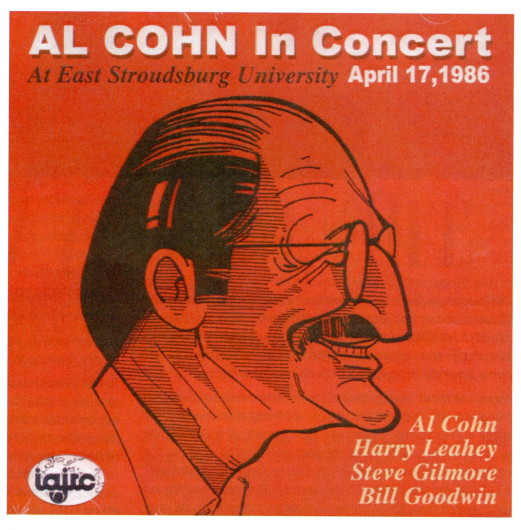


The following excerpts are from Dr. Larry Fisher’s extensive 1988 interview with alto saxophonist and band leader Phil Woods [1931-2015] on the subject of Jazz saxophonist and composer-arranger Al Cohn [1925] who had just passed away that year.


It was conducted on the campus of East Stroudsburg University which is the home of the Al Cohn Memorial Jazz Collection.


The full interview appears in the Summer/Fall 2020 issue of The Note Magazine and you can make a contribution in support of the Foundation that underwrites the magazine and the collection via this link.


Phil and Al are two of the universally recognized giants of the Jazz scene during the second half of the 20th century. In Phil’s case, his contributions continued until his death in 2015. There’s nothing like a Jazz musician who knows what he’s talking about when it comes to describing what makes a cohort’s approach to the music significant and special.


© -  Dr. Larry Fisher/esu.edu, copyright protected; all rights reserved.


“LF:  What  can  you  tell   me  about  Al's personality?


PW: Funny, funny, funny guy.


LF: Do you have any favorite stories about him?


PW: Well I have one I just heard. Somebody asked him if he played "Giant Steps" and he said, "yes but I use my own changes." If you're a musician and know "Giant Steps" it's god damn hysterical. A favorite one I like is: supposedly he was watching a baseball game in a bar and somebody said, "what's the score Al?" He said, "ten to one" and somebody said, "who's winning?" and Al said, "ten!" Ah, the famous one is when he was in Scandinavia. They have a beer in Denmark and it's very strong. A couple of those will knock your socks off. It's called Elephant Beer, and somebody said, "Al have you tried the Elephant Beer?" Al said, "No, I drink to forget!" I mean he was so fast.


LF: I find that many musicians that have great improvising skills with their horns are also very quick with their wit.


PW: You'd be surprised some of them don't have a sense of humor, but most of them do. Zoot was also very witty and very quick and very dry. Zoot was drier than Al. Al was always into jokes, I mean he always had a joke. But not so much after Zoot died. I remember Al said to me one time, "life isn't so funny any more," and I knew what he meant. But that didn't stop him from telling jokes.


LF: Do you think that those recordings he made with Zoot will be remembered more than any others?


PW: Oh yeah. "From A to Z" and those albums for anybody that knows their stuff. You're darn tootin. Or stuff that he did later, especially like the solo stuff he did with just Jimmy Rowles and Al playing. That's a beautiful album. Just the two of them playing for some of that. And that's the real salon chamber of music. There is nothing quite as good as those two guys together (Al and Zoot).


LF: What musicians do you think influenced Al more than anyone else?


PW: Lester Young, Charlie Parker, Louie Armstrong for sure. Not necessarily in that order. Also Ben Webster and Coleman Hawkins, Prez, I think, would be the key, but not the sole influence. Al listened to everybody. Towards the end, a lot of Duke. He was really into Duke.


LF: Historians like to put labels on players. Would you say Al's style was more Swing or Be-Bop? How would you describe it?


PW: Oh he was Swing. He was close to, I mean just a little before Bop. It was a very modern Swing. He was right between Lester Young and Charlie Parker in which he utilized the best of the elements that fit for him. You've got to remember that Al had consummate harmonic sense. He was a fine pianist. He was very sophisticated. One of his songs, "Tain't NoUse," uses the beginning of Petrushka or was it Firebird? I forget, maybe I got my Stravinsky wrong but it's nice chromatic harmony. A direct quote from Stravinsky. He was extremely erudite in his approach to all the music. I think he went with a Lester Young swing but he adapted quickly to the new harmony in the extended altered chords. It was no big deal to Al to think that way, but as a musician he knew how to play changes, man.


LF: What made Al and Zoot's recordings so special to everyone?


PW: Oh because they were just so special. It was just a wonderful tandem team. They both had similar roots. Al perhaps had a stronger harmonic root, Zoot perhaps a stronger swinging root. Put them together and you had the best music possible improvised at that moment.


LF: Do you think they expressed their different personalities in their playing?


PW: I think everybody has a different personality. Al had his harmonic sophistication and Zoot his rhythmic sophistication. They both played hip changes and they both swung, but Al could play the piano and knew more about chords. Zoot had more of an instinctive rhythmical sense.


LF: Do you think their sense of humor came out in their playing?


PW: Well I roomed with both of them. They were both extremely funny.


LF: How would you show humor in playing?


PW: Any number of ways, by obscure quotes you would do on your horn which they would do sometimes accidentally. I remember on one New Year's Eve broadcast from the Half Note Zoot, instead of going into "Auld Lang Syne" went into "Happy Birthday" I was on tour with Zoot in Russia. I mean rooming with Zoot in Russia is truly amazing. Everybody said your rooms are going to be bugged and I looked at Zoot and I said they won't know what the hell we're talking about anyway.


LF: Many musicians have played the tenor saxophone. In your opinion is there anything specific that is unique about Al's playing or his approach to the instrument?


PW: Yeah, it was Al Cohn. Words can't describe it, his musical sound speaks for itself. The most important part of course is that all the great players have a distinctive sound. When you heard a tenor sax you simply said, "that's Al, that's Zoot, that's Lester, that's Ben Webster," that's what comes first. All of the swing and the harmony and all that comes later. First you got to have a distinctive sound otherwise it sounds like cookie cutter jazz like so many of the younger players. I mean they all sound the same. They use the same mouthpiece, the same reed, the same set up. Al had a sound, a distinctive sound.


LF: A beautiful, rich sound.


PW: Big, and when he got his new false teeth towards the end he was getting louder and higher. And he was practicing more and more. Steve Gilmore, my bass player lived close to Al. Al went out and bought a four-wheel drive with a little snow plow in front and he'd go over and he'd plow Steve out but he'd have his tenor in the back. And in return Steve would have to play like, "All The Things You Are” in the key of E. I mean when Al wanted to practice, he'd go by Steve's house and he'd play stanzas but he'd play them in any key possible. A Major, five sharps, 10 sharps, 15 sharps, whatever. That, to him, was working out. I guarantee it. That's no mean feat. But Gilmore told me that which I think is very interesting: "He would plow you out but you had to play in E with him!"


LF: Al was not as well known as Zoot Sims or some of the other tenor saxophonists of that time. Why?


PW: Perhaps because Zoot toured more. Zoot toured a lot for Norman Grantz and had a lot more exposure. He did more records under his

own name.


LF: You said before that Al didn't really tour that much was that because he liked to write more?


PW: Al wrote. Al liked to write. It wasn't a matter of writing but it was just a quicker way to make a buck. It was good money and he had a family to raise and all other responsibilities for a young family man and this kept him in New York and he was a New York guy. I mean who wants to go off on a bus when you have the best of both worlds: write all day and play all night which is a lot of time what he actually did.”


Friday, December 11, 2020

Caravan - Freddie Hubbard

The Artistry of Freddie Hubbard

© -Steven Cerra, copyright protected; all rights reserved.


To paraphrase Joseph Epstein’s comments about Literature in a recent issue of The Wall Street Journal, one doesn’t traditionally think of Jazz as art, but as played by Louis Armstrong, Duke Ellington, Benny Goodman, Charlie Parker, Miles Davis, Dave Brubeck or Bill Evans, it indubitably is.

Jazz is a house with many mansions and musicians such as these and the occasional newcomer provide some of the more stately among them.

One such mansion dweller was the late trumpeter Freddie Hubbard [1932-2008] who literally burst on the scene as a member of trombonist J.J. Johnson’s sextet in the late 1950’s and gained a more established prominence when he joined drummer Art Blakey’s quintet/sextet in the early 1960’s.

As Randy Sandke notes in his essay on the trumpet in Jazz in Bill Kirchner, Ed. - The Oxford Companion to Jazz:

“The various bands led by drummer Art Blakey established the most significant trumpet dynasty in modern jazz. His first unit featured Kenny Dorham, whose harmonic inventiveness influenced sax and trumpet players alike. Dorham was followed by Clifford Brown. Later groups included Lee Morgan, a soulful player of great wit, and Freddie Hubbard, who went on to become one of the major voices in jazz of the sixties and seventies. Hubbard displays a warm and vibrant tone as big as the great swing players' yet with a thoroughly modern conception. He is a prodigious technician, and his solos, on both ballads and up-tempo numbers, are full of passion and fire.”

Richard Cook and Brian Morton in their Penguin Guide to Jazz on CD, 6th Ed., offer the following description of Freddie’s importance by focusing on his early recordings under his own name that he made for Alfred Lion and Francis Wolff at Blue Note:

“Freddie Hubbard was one of the liveliest of the young hard-bop lions of the late 1950s and early '6os. As a Jazz Messenger, and with his own early albums for Blue Note, he set down so many great solos that trumpeters have made studies of him to this day, the burnished tone, bravura phrasing and rhythmical subtleties still enduringly modern. He never quite had the quickfire genius of Lee Morgan, but he had a greater all-round strength, and he is an essential player in the theatre of hard bop. His several Blue Note dates seem to come and go in the catalogue, but we are listing Open Sesame, Goin’ Up (though it is a 'Connoisseur' limited edition) and the new Rudy van Gelder edition of Hub-Tones, each a vintage example of Blue Note hard bop. Open Sesame and Goin’ Up were his first two records for the label and their youthful ebullience is still exhilarating, the trumpeter throwing off dazzling phrases almost for the sheer fun of it. The brio of the debut is paired with the sense that this was the important coming-out of a major talent, and Hubbard's solo on the title-track is a remarkable piece of brinkmanship: in the bonus alternative take, he's a shade cooler, but that more tempered effort is less exciting, too”

What has always struck me as odd is that although it was one of his earliest recordings under his own name [the 5th if I’m counting correctly], there is very little mention of The Artistry of Freddie Hubbard [Impulse IMPD-179]in the Jazz literature.

Recorded in 1962, Dan Morgenstern had this to say about it in the following excerpts from his liner notes to the LP:

“In a recent interview in Playboy [1962], Miles Davis was asked about trumpet players. Among the dozen names Miles mentioned having set his criteria “does the man project and does he have ideas” such as Dizzy Gillespie, Roy Eldridge, Bobby Hackett, Kenny Dorham and 24-year old Freddie Hubbard. Miles made a point of stating that, unlike Jazz critics and pollsters, he wasn’t rating or comparing artists but talking about men with individual ideas and styles. Freddie Hubbard, though his musical ancestors clearly include Miles himself and the late Clifford Brown, is a young player with a style and a mind of his own.

Indianapolis born Hubbard has behind him work with the groups of Slide Hampton, Max Roach and J.J. Johnston prior to embarking on his association with Art Blakey’s Jazz Messengers.

His bright, bold and unashamedly brassy trumpet sound has done much to make the current edition of that durable ensemble one of the best.

Hubbard can get around on his horn, but he has not sacrificed range for speed or sound for ingenuity.

His ability to produce a good tone in all registers is one of the things that make him stand out from the flock, as is his way with long notes.

In an era of Jazz dominated by saxophonists, Hubbard’s command of the horn is almost a throwback to the trumpet-reigned 1930’s.

But only in terms of instrumental approach can this be said about Freddie Hubbard. His musical ideas are definitely of today …. [He] has a gift for conceiving harmonically challenging original lines and is fond of the “freedom from four-four” which the “new thing” seems to strive for. His sound execution and control enhances these pursuits. No matter how advanced his style of playing may become, it never moves to the stage where it becomes a disadvantage.”

Among the pleasures I receive from preparing the features for this blog is revisiting - in some case, rediscovering - favorite records and sharing thoughts and impressions about them on these pages.

Such is the case with The Artistry of Freddie Hubbard.