Monday, January 18, 2021

Keith Jarrett - The Len Lyons Interview

 © Copyright ® Steven Cerra, copyright protected; all rights reserved.
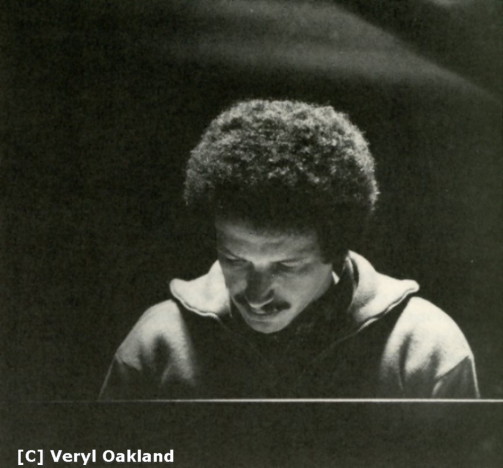


“Jarrett's spontaneous structuring of his music, his ability to incorporate and express basically European ideas in the jazz idiom, and the ecstatic heights to which he pushed his tone and melodies opened up new territory for other pianists to explore.”

- Len Lyons, Jazz author and record producer


“There are some simple virtues in his playing which any listener can surely respond to: gorgeous melodies, patiently evocative development which can lead to genuinely transcendent climaxes, beatific ballad playing. But it can be hard to tune out musical (and non-musical) matter which is likely to have dismayed as many as it has enraptured.”

- Richard Cook’s Jazz Encyclopedia


If I understand the situation correctly - there is so much rapidly transmitted misinformation these days - Keith Jarrett has been unable to perform since suffering a stroke in February 2018, and a second stroke in May 2018, which left him partially paralyzed and unable to play with his left hand.


Given this situation, I thought a look back to when it was first happening for Keith might be an interesting way to understand his Jazz Journey.


Most of this information and the actual interview itself are drawn from Len Lyons, The Great Jazz Pianists [DaCapo 1983].


“During the 1970's Keith Jarrett was the enfant terrible of jazz piano. He commanded the highest fees ever for solo performances, many of which were staged at opera houses and concert halls that had previously been the exclusive turf of classical artists. He played the role of prima donna to the hilt, sometimes complaining to the audience that the piano or the sound system was inadequate. His smug, quasi-philosophical pronouncements, which might interrupt a concert at any time, elicited oohs and aahs from some fans but probably embarrassed those with less impressionable minds. 


When Keith Jarrett played the piano, he broke every rule in the book of good form. Never mind hand position - he did not even sit down much of the time. In especially rhapsodic passages, which abound in his seamless improvised compositions, his genuflecting and gyrating in front of the keyboard made Elvis Presley look like a mannequin.


Nevertheless, Jarrett made the piano sing a new song, and nearly everybody loved it. No one did more to stimulate interest in jazz piano among a broad audience than Jarrett did in his decade of prominence. His Köln Concert album of lengthy solo improvisations was a major factor in establishing the viability of the ECM label. Its sales of a quarter million units or so revived confidence in the commercial potential of the piano in jazz. Most important, Jarrett's spontaneous structuring of his music, his ability to incorporate and express basically European ideas in the jazz idiom, and the ecstatic heights to which he pushed his tone and melodies opened up new territory for other pianists to explore.


One of five children, Jarrett began piano lessons at the age of three and was judged to be a prodigy by some of his teachers. At seventeen he enrolled in the Berklee College of Music in Boston, but he soon moved to New York, where he and his wife lived in Spanish Harlem. Keith studied drums and soprano saxophone, instruments he continues to use on records. A jam session at the Village Vanguard led to four months of work in 1965 with Art Blakey and the Jazz Messengers. But Jarrett's passionate and soulful soloing ripened noticeably when he played with the Charles Lloyd Quartet (1966-69), one of the few jazz groups of the sixties to find a broad audience. With drummer Jack Dejohnette, his colleague from the Lloyd group, Jarrett joined Miles Davis's band in 1970. He formed his own quartet in 1972 with Dewey Redman on tenor sax, Charlie Haden on bass, and Paul Motian on drums.


Since 1973 Jarrett has maintained virtually three careers at once: bandleader, composer, and piano soloist. Inspired by diverse influences - Ornette Coleman, Bill Evans, Paul Bley, and modern classical music - Keith has synthesized his sources into a new and bold individuality- No other pianist has dared play entire concerts of spontaneous improvisations. Few could bring them off successfully if they tried.


The following conversation was taped in the general manager's office of KJAZ radio in Alameda, California. After an on-air interview, the customarily reticent Jarrett revealed his views on the piano, the creative process, and the subtle differences between composing and improvising.


How do you feel about the recent trend toward multiple keyboards?


The keyboard idea is one of the immense illusions in music at the moment. The keyboard is being used like a Parker Brothers game, a version of three-dimensional chess which they can sell to people who can't play two-dimensional chess. To simplify: People are making the problem of getting something out of themselves into an exterior problem of finding the right instruments to get it out with. It's like saying the reason I can't paint a masterpiece is that I don't have the right paints.


Should I infer that you don't think there's any good music being made on electric keyboards.?


You can infer that, but not from this. It's a matter of what electricity really is. The world is electric to begin with. The very fact that we move around is because of electric impulses, and we're not plugged in, so obviously there's a bigger kind of electricity than the kind you plug in. I live in the electric world, and making it electronic would be less strong.


You once said, "My first experience in composing involved adding a note to the last chord of a Mozart concerto," Is that composing or improvising? How do you distinguish between the two in terms of your solo concerts?


Well, there's no distinction between the two in the way I deal with it, although there are many differences in the two processes. You might call it spontaneous composition, which would connect the two. When you write something on paper, no matter how preconceived it is, it's still spontaneous because you can always change your mind when the pencil is about to touch

the paper. Even if you edit three hundred times, it's still spontaneous each time.


The difference for me is that when I'm composing, I can concentrate on each of the lines separately. See, no matter what anyone says, the human ear cannot hear more than two lines at the same time. As a composer, perhaps I can arrange them so the listener has the illusion he can hear all the lines. For example, there is a certain way of playing Bach's piano music when he has four lines going at once in which  -if the timing is just off precision - you can hear each line more clearly. If you played them exactly as they were on paper with a metronome, you could hear only one line at a time. Your ear makes the choice. In improvising there's no time to deal with that. But there's a feeling you can get while improvising that makes up for that problem. You can do it spontaneously if you can sit far enough back from your own playing, if you don't identify with your own playing and are not what people call completely involved in your music. If you're aware of what you're playing as a listener, you're waiting to be able to distinguish all the lines. Then, as a player, you can give yourself that as a listener.


I had a hard time deciding whether "A Pagan Hymn" on In the Light was a spontaneous composition or written away from the piano.


It was composed completely away from the piano, but that's a good example of the distinction being blurred.


Where do you see yourself within the pianistic tradition? Do you feel influenced by bebop, stride, the romantic classics?


I rarely see myself as a continuation of a pianistic tradition, except to the extent that I use the piano. I have to identify myself with what the piano has made people aware of. If Chopin wrote piano music that no one conceived of before him, I must consider Chopin an influence. But I don't feel influenced by him musically to the extent that I feel like part of a tradition. In the case of jazz pianists, the tradition is improvisation. I was influenced by the need these people had to improvise - improvise something valuable enough to last for years and years.


Who are some of the improvisers that have impressed you?


The funny thing is that it's the process of improvising that impressed me. That's more important than the product. The people who influenced me were people I never heard, which may sound a little strange.


Yes, it does.


I once went to a "blindfold test" in Paris, and I knew who Bud Powell was, even though I never listened to his records. Well, maybe I heard them without realizing it.


Were there other pianists you recognized without ever hearing them before?


Yeah, there were. When I was at Berklee, someone said I sounded a lot like Bill Evans. I'd never heard him. See, the spirit that actually motivates music to come out of somebody has nothing to do with other musicians that have played before.


Do you think you'd play differently if you had been born one hundred years ago?

Of course, but the spirit would be the same. For that matter, I play differently in a basement from in an attic. But these are unconscious influences that are inescapable. I guess that's not what you had in mind.


Are there composers who have influenced your music?


Yes, but mostly because of what they were trying to do, not so much because of what they did. I feel very close to [Charles] Ives, and the reason is his supposed eccentricities, which were the only ways he could get out what he wanted to get out.


Your own piano playing technique is a bit eccentric, standing in front of the keyboard and so on. Is this a looseness you'd recommend? Do you recommend any particular way to acquire technique?


If someone studied piano playing by watching me play - or making films of my playing - he'd make a disastrous mistake. I play the way I do out of necessity, not because it's the best way in the world for anyone to play the piano. It's the only way I can get the piano to do what I want it to do. If I know what I want it to do, that's what's important.


I'd say anyone who wanted to play piano should start where the piano started in order to learn what people have done. Once they know what's been done, they're more capable of dealing with what they can hear. I don't know of many people who are as unaware of the tool they're using as pianists, which is reflected in the idea of keyboards. "A keyboard attached to a piece of wood that has strings on it and a cast-iron frame that goes out of tune more than they like" is probably what they know about it.


You've mentioned that the tone quality you're looking for can be elicited only from certain pianos. Which ones?


Hamburg Steinways. Occasionally the New York Steinway. The Bremen and Lausaune concerts were on seven-foot and nine-foot Steinways. I'd never do a group recording in a studio on a nine-foot Steinway. The Facing You album is on a five-foot-ten-inch Steinway.


You do get unique tone production, which seems characteristic of improvisers with a strong identity. Is there some way that tone can be worked on?


No, you don't work on that. You do the opposite. If you think about it,

you're making a mistake. That's what's happening all over in music. People are asking too many questions, thinking that the answer will be laid on them. You go to hear someone who knocks you out and then go backstage with some earthshaking question that will change your life, if someone answers it. I don't remember ever having those questions to ask of anybody, like: "How do you do this or that?" It's part of the exteriorization process - like electronic instruments. It's a guru thing. You try to find someone who'll tell you what you should have been doing when you weren't "in." Meanwhile, you stay "out," which makes it harder to get back "in," which is where you live.


That's going to make my next question suspicious, but I'll ask it anyway. Do you think playing directly on the piano's strings, as you did in Charles Lloyd's band, is an effect that can be cultivated and practiced?


No. I stopped doing it because I saw people taking it that way. It was just part of the music I was playing. Anything can be used - you can learn a whole new set of things to do on a piano. That's not the problem. The problem is why? Are you doing it because you can't do something else or because you have to do it? There's a difference. People I've heard playing on the strings now - it's not an organic part of their music. It's a divorced effect. When you don't know what else to do, you might do that.


Maybe it's a type of experimentation.


All the experimenting I've done is between concerts. I don't experiment when I play. Experimenting is practicing being conscious. I know I can be conscious when I'm playing music. Playing is the least important thing. It's the most important to the audience, but the least to the artist. It's the end product, and - this may sound negative, but I don't mean it that way - it could be called the waste product: the waste product of the activity of being musical, Being musical with a capital M could simply mean living a harmonious life with your own organism and projecting that to other people. That's why we need music. You can't project being in harmony with yourself without using a medium, and music is the medium which comes closest to showing it.


Do you listen to much music?


I do, although not a lot of music that's being played now. I know what's happening. I have a barometer inside me. I feel responsible for knowing what's going on, so I dip quickly into things that are happening now and wait for something to impress me. When it doesn't, I also feel responsible not to pretend.


What's your feeling about the music business?


I feel disassociated from any business. I deal with it as though I were into

it, but I'm not. I have a responsibility to my audience to make myself available somehow. If I have to do it by using the music business, I will in some ways. In other ways I won't. I won't go on the Johnny Carson show.


You have to draw the line somewhere.


The line comes a lot earlier than that.


Is there anything you'd like to express that we haven't covered?


Now that we're at the end, I'd like to say something about words. Everything I've said has been a response to something you've said or to the subject matter of the interview. It's not based on thinking I can transmit anything through words. The feeling I have at the end of every interview is: "I didn't say it!" because I can't say it in words.”


Selected Discography


Forest Flower: At Monterey (with Charles Lloyd, 1968); AT-1473; Atlantic.

Miles Davis: Live/Evil (1970); CG-30954: Columbia.

Solo Concerts: Bremen/Lausanne (1973); 3-1035; ECM.

The Köln Concert (1975); 1064/65; ECM.

Concerts: Bremen/Munich (1981); 3-1227; ECM.


With Quartet:

Fort Yawuh; AS-9240; Impulse.

Backhand; ASD-9305; Impulse.

Survivors' Suite; 1-9084; ECM.


Sunday, January 17, 2021

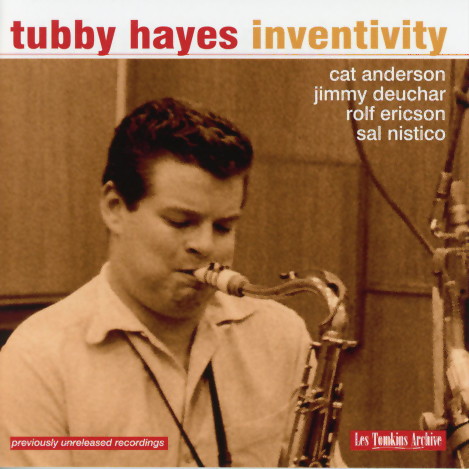
Tubby Hayes and Friends - "Inventivity" Insert Notes by Simon Spillett

 © Copyright ® Steven Cerra, copyright protected; all rights reserved.


For those who knew his work, the magnitude of the admiration for Tubby’s achievements was such that Simon Spillett, posits the question of “What would the British Jazz scene [... have been] like without him?”[The Long Shadow of the Little Giant: The Life Work and Legacy of Tubby Hayes [Equinox, 2nd Ed., 2017].


Thankfully, especially most recently, there is much more of Tubby’s work to “know” as newly discovered treasures, complete series of recordings and CD issues of vinyl albums provide additional dimensions and perspectives on his music.


Most, if not all, of these new Hayesian delights have the added benefit of annotations by Simon Spillett who, as regular visitors to these pages have come to know, has researched the English Jazz scene during the second half of the 20th century quite extensively. 


A tenor saxophonist who is based in the UK, he leads his own quartet and big band and is the great tenor saxophonist Tubby Hayes’s biographer. You can locate more information about Simon by visiting his webpage.


© -  Simon Spillett, copyright protected; all rights reserved, used with the author’s permission.


“The release of this new double CD volume from Candid Records - Inventivity [CCS 79101 2] is a timely reminder of the days when Ronnie Scott’s club - then in its infancy [1964] - was functioning as the crucible in which British modern jazzmen met their American opposite numbers, often for the very first time. 


Fortunately for the generations of listeners who weren’t lucky enough to have been around when Stan Tracey and his resident trio held forth with the likes of Stan Getz, Sonny Rollins, Johnny Griffin, Roland Kirk, Ben Webster and Sonny Stitt, journalist Les Tomkins ensured that at least some of this mythic and exciting music found its way onto magnetic tape.


Tomkins’ Ferrograph recorder caught music by all the above names, and more, and after previous associations with other labels, this historic archive is now being extensively investigated in collaboration with Candid Records. 


Whilst the forthcoming series of “Jazz Club” releases promises to encompass performances by many of the leading American visitors to Scott’s on those halcyon nights in the mid-sixties, it is especially fitting that the opening salvo is dedicated to newly unearthed treasures by some of our finest UK jazzmen. 


Legendary players such as the youthful multi-instrumentalist Victor Feldman, the drum icon Phil Seamen and Ronnie Scott himself are among those to be featured, but it perhaps inevitable that the first issue documents the work of indisputably the greatest British jazz virtuoso of his generation, the late great saxophonist Tubby Hayes, a performer who has latterly achieved almost iconic status among a new generation of jazz listeners.


Hayes reputation as a free-wheeling no-nonsense tenor saxophonist has long been assured, and during the late 1950s and early 1960s, when British jazz often laboured under a crippling inferiority complex, Tubby was widely recognised as one of the few home grown jazzmen who had gifts comparable (and in some cases, superior) to those of his American contemporaries.


The story of Hayes’ US triumphs has been told many times elsewhere, but equal emphasis has yet to be placed on his ability to attract Stateside visitors, eager to blow with the local top gun. There are apocryphal tales about jazzmen like Dizzy Gillespie, Freddie Hubbard and Philly Joe Jones seeking out and sitting in with Hayes, but these two discs present the first audio verite evidence of Tubby with some of his American friends, relaxing after hours in an equal exchange of musical ideas .


The majority of the performances heard here find these guests augmenting Tubby’s regular quintet of the day, a group whose tight-knit Hard Bop know-how was well showcased on the 1962 Fontana albums Late Spot at Scott’s and Down In The Village. Those familiar with these classic sessions will doubtless be fascinated at how Tubby and his sidemen react to the inherent looseness of these quite different off-the-cuff jams. 


An example at one extreme is the approach that the quintet takes to Sonny Rollins Oleo, wherein Duke Ellington trumpeter Cat Anderson eventually prises apart the band’s regular modus operandi to turn things into something much more informal. On the other hand, tenorist Sal Nistico’s appearance on Just Friends transpires to simply be a friendly fire version of the old-fashioned cutting contest.


Disc One begins with two numbers featuring Nistico, recorded in July 1964 at the tail end of a brief but memorable UK tour made by the current powerhouse edition of Woody Herman’s Big Band, in which the saxophonist was then featured.


Sharing an eerie physical similarity, Nistico was a close opposite number to Tubby, similarly renowned for his formidable technical skills and a natural ability at very fast tempo. Nistico’s speedy reputation had been made by his stint with Herman, whom he had joined in 1962, and in some ways he was forever cursed by it, something he explained at length in March 1966, two years after this session, when both he and Hayes participated in an open discussion organised, recorded and then transcribed by Les Tomkins for Crescendo magazine (that same evening the two men jammed with altoist Lee Konitz at Ronnie Scott’s club, an encounter which also found its way onto Tomkins tapes.)


Nistico complained that his image of fast-fingered gunslinger wasn’t entirely of his own choosing; “I appreciate that Woody regards me as capable of carrying off those spots, but there are some times when I go on the job and I might not be in that mood. With me it’s very rare that I can be creative at the fast tempo. After a while my fingers start playing me”. 


Hayes knew only too well the kind of expectancy Nistico suffered under: “We’re both stereotyped. Everyone expects the tear-up tempos all the time”.


Included on this double CD is the closing portion of this interview, hitherto never  published or broadcast, in which, among other things, this clearly convivial partnership express mutual admiration, talk of their suspicion about some of the Avant Garde trends of the day and of their search for a genuinely less routine mode of expression. They also discuss a two-tenor quintet idea that sadly never came to pass, the similarities of their respective characters (some “that the public don’t know about”, says Hayes, with a laugh) and their straight-jacketed image as jazz automatons (“We’re not circus performers”, Nistico states). At one point Hayes modestly deflects Nistico’s praise for his greater ability, an affecting reminder that beneath his robust exterior Tubby had an appealing ego-free view of his immense talent.


Like Hayes, Nistico was a far more well-rounded jazz musician than his critique ever acknowledged. Inspired by Charlie Parker, Gene Ammons and Sonny Rollins, he was unusual in that, as a white tenor saxophonist growing up musically in the 1950s, he showed no real allegiance to the post-Lester Young “Brothers”. His earliest associations were with hard-bop trombonist Slide Hampton, and Chuck and Gap Mangione’s Jazz Brothers, a group very much in the mould of the Jazz Messengers and, as such, he made an ideal musical partner for Tubby.


Friends’ Blues is an appropriate title appended by Tomkins to what undoubtedly was a regular composition in Tubby’s repertoire, possibly the work of Jimmy Deuchar. The trumpeter is the first soloist, sounding eternally hip and slipping in a quote from Charlie Parker’s Parker’s Mood. If anything, Deuchar emerges from this entire set deserving greater respect and admiration. A player who could suffer from frustrating inexactitude and inconsistency of articulation, his work throughout is harmonically erudite, rhythmically assured and genuinely creative, and ranks with that of far better known jazz trumpeters.


Nistico’s solos on both this and Just Friends are perfect examples of the kind of blunt eloquence he was famed for. His dextrous technique, somehow never as pliant as that of Hayes, presents his ideas in a direct no-frills way with a tone that somehow veers between early Sonny Rollins and that of Sonny Stitt. Rollins’ favourite Lester Young quote, from Count Basie’s Every Tub, appears in the midst of proceedings.


In comparison to Nistico, Hayes is truly ebullient, with a darker, richer tone and an altogether far more “conversational” approach. It was critic and fellow tenor saxophonist Dave Gelly who once delivered the perfect description of Tubby’s style as “cockney tenor - garrulous, pugnacious, never at a loss for a word and completely unstoppable” and solos such as these serve as Exhibit A. in this argument.


Deuchar’s solo on Just Friends, as with several others in this set, is played upon the mellophonium, a peculiar hybrid instrument designed by Stan Kenton for his early 1960s orchestra, and based upon the french horn but with valves replacing keys and an enormous flared bell which faced outwards in order that, in the words of Humphrey Lyttelton, “you can’t get your fist stuck in it”.


Ungainly and awkward looking, the mellophonium never really caught on outside the ranks of Kenton’s monstrous brass section but its mellow sound and lower register somehow suited Deuchar’s playing.


Before the three horns share some exchanges towards the close, with Deuchar quoting Candy, there is a welcome chance to hear pianist Terry Shannon, one of the finest modern jazz pianists in the UK and a regular associate of Tubby’s who simply turned his back on music in the late 1960s and left London, and who now lives a reclusive life in rural Lincolnshire.


Shannon is also present on the next track Stella By Starlight, recorded three months later. Hayes had disbanded his quintet with Deuchar, Freddy Logan and Allan Ganley in late August, publicly citing the growing pressures of writing and arranging and travel to continental Europe for engagements as the contributing factors. Privately, he was also expressing dissatisfaction with the general direction of the band and felt that it was no longer suited to the adventurous musical ideas he was now pursuing.


Nevertheless, without a regular working group of his own, it was inevitable that Hayes and his former sidemen would continue to work together on occasion, and such was the night of October 3rd 1964 when Tubby sat in with Jimmy Deuchar’s quartet, who were appearing at Scott’s opposite singer Mark Murphy. 


Les Tomkins’ recorder also fortunately captured another visitor, the bassist Albert Stinson, then working a short cabaret season with drummer Chico Hamilton’s group and Lena Horne at The Talk Of The Town night club.


In an era of some truly startling new bass players Stinson managed to make his mark, and would go on to have associations with such cutting edge musicians as Charles Lloyd, Bobby Hutcherson, John Handy and Larry Coryell before his untimely death at the tragically young age of 25 in 1969.


Indeed, he had just turned 20 at the time of this set but his technique, harmonic understanding and swing are already those of a mature performer. Stinson’s drive in particular has a very positive effect on drummer Benny Goodman, a well-known face among British jazz circles. Goodman was a capable but inconsistent performer, largely due to the hard drug dependency which would eventually lead to his early death some time in the mid-1970s, but here his playing, on brushes and sticks, is marvellously alert, lithe and swinging.


Hayes opts to play his solo without any piano accompaniment, and gives ample evidence as to how he then felt his music was moving forward. There is some hitherto uncharacteristic vocalisation and an adventurous juxtaposition of his own substituted harmonic choices and those of Stinson.


The leader’s trumpet solo here is among his very best work. Ronnie Scott had once written of Deuchar that “when Jimmy’s lip is ‘in’ he is one of the most thrilling soloists in jazz”. This is surely one of those nights, and to hear Deuchar course skilfully through the harmonies of Stella is indeed a thrill.


It was not at all uncommon for visiting American artists touring with regular bands to scour the London jazz clubs for an after-hours blow with the local players. Tubby had jammed together with several of Duke Ellington’s musicians, including the tenorist Paul Gonsalves, at The Flamingo in 1958 and from then on Duke’s men usually sought him out whenever they hit London. 


Disc Two presents such an encounter captured by Tomkins on the evening of February 14th 1964, when trumpeters Cat Anderson and Rolf Ericson ventured down to Gerrard Street ahead of their first date of the Ellington tour.


Anderson was first up with Tubby and the quintet. Cat was probably one of the most undervalued trumpeters in jazz. His stunning high note range meant that for most of his lengthy tenure with Ellington he was used to coloratura effect, or on pieces like El Gato, designed to show off his brassy exuberance. 


His improvisations throughout this set with Tubby reveal a conception not far removed from that of a young Dizzy Gillespie, and a surprising gentleness. There is little recourse to any super-high gallery playing, save for a humorous bat squeak final pip at the end of the quintet’s theme.


In fact, Cat comes across very well in a more modern context (hear his quote from Parker’s Buzzy on Billie’s Bounce) and clearly stimulates Jimmy Deuchar in the best jam session tradition. The exchanges that the three front-line men share towards the close of Sonny Rollins’ Oleo are joyous. Listen out for Tubby’s reference to Charlie Parker’s Merry-Go-Round. The individual solos are also brimming with quotes, with Deuchar inserting a chunk of his own theme Suddenly Last Tuesday.


One of the beautiful highlights of this session is the incredible groove laid down by Freddy Logan and Allan Ganley, the latter probably at his peak during his time with Tubby’s quintet, mixing his innate good taste with a crispness and precision rarely bettered by any other British drummer. 


Mean To Me and Horace Silver’s 1951 theme Split Kick add Rolf Ericson on flugelhorn. A musician with a truly international career in jazz, Ericson was born in Sweden in 1922 but wound up in the US in the late 1940s, subsequently working with artists as varied as Charlie Parker, Harry James, Charles Mingus and Stan Kenton. His swing-to-bop style, with its sing-song tone, was amazingly adaptable but it must be said that on this night he suffers somewhat in comparison to Jimmy Deuchar, who was once again very much on form. Deuchar’s faster than thought quote from Rollins’ Strode Rode on Split Kick is one example, and it may well be Jimmy’s arranger’s brain that came up with the bright idea of having the familiar Perdido backing played behind his final theme statement on Mean To Me.


Tubby himself comes across as totally authoritative and relaxed throughout the evening’s proceedings, with his solos on Split Kick, and especially Oleo (with its allusion to Dizzy Reece’s Bang), leaping down through the years. Playing with two musicians from what was indisputably the finest orchestra in jazz clearly held no fear for him whatsoever.


However, there is a postscript to the Valentine’s Night set; although he couldn’t possibly have known it at the time, Tomkins’ tape recorder caught what was the beginning of a monumental 24 hours for Tubby.


After the gig at Ronnie’s, in the small hours of Saturday morning Tubbs and a selected entourage of fellow musicians, party-goers and friends decamped to Jack Sharpe’s Downbeat Club for an all-night jam session, where once again they were joined by several members of the Ellington band, including Sharpe’s good friend, tenorist Paul Gonsalves. 


(Saxophonist Sharpe was a long-term associate of Tubby’s, having worked with him intermittently since the mid-1950s. He also produced four albums featuring Paul Gonsalves with British musicians, including Tubby, Stan Tracey, Kenny Wheeler and others, between 1963 and 1969. Gonsalves was to die at Sharpe’s London flat in 1974)


Besides sharing highly compatible musical outlooks, Gonsalves and Hayes also both knew how to have a good time off the stand. But whereas drink rarely incapacitated Tubby, it often proved to be Gonsalves’ downfall - literally - and by the morning of February 15th it was clear that after a long night of being plied by well-wishers the American was in no fit state to make the rehearsal for Ellington’s opening concert at The Royal Festival Hall. Hayes was unruffled by Paul’s familiar behaviour, and later simply recalled that, “about eight in the morning I went back to bed”.


What happened next has entered the realms of Brit-jazz folklore. Hayes and Jimmy Deuchar had decided  to hear the opening of Duke’s first house before heading off to their regular gig at Scott’s. However, upon arrival at the Festival Hall, Hayes was confronted by Dougie Tobutt, road manager for the Harold Davison agency who were handling Duke’s tour.


Hayes wrote in Melody Maker in 1969: “Duke wanted to see me. I went into Duke’s room and he told me Paul was unwell. He asked straight out; could I and would I do the show? I can’t explain the feeling but I was overwhelmed, I agreed to have a go”.


Ronnie Scott kindly agreed to let Tubby take the night off and sent his saxophone down to the Festival Hall by taxi. The band had already begun by the time Hayes tenor arrived and so he made, in his own words, “a lonely entry” on-stage before settling down into the ranks of the world’s greatest jazz orchestra in front of a surprised audience. The response for Hayes’ first solo spot on The Opener, both from the crowd and the band, was rapturous and Ellington himself twisted his well-known patter to assure the audience that “Tubby wants you to know that he, too, loves you madly”.


Hayes was noticeably unfazed by the occasion and contemporary newspaper reports understandably glorified the occasion. In a review headlined Tubby Rides High on the Duke’s Bandwagon, Derek Jewell of The Sunday Times called it “a coup d’theatre rarely paralleled”; elsewhere Hayes himself was quoted as saying it was “the most memorable experience of my life”, and Melody Maker’s Bob Houston probably did more than anyone to seal the legend in print. Tubby had been “yanked from a comfortable seat in the audience” and thrust into “one of the unique moments of British jazz history”.  “For a moment”, Houston wrote, “patriotism reigned and Tubby was the hero of the hour”.


The “yanked from a comfortable seat” bit didn’t take long to enter the subconscious of jazz critics. The following year, the editor of Jazz Journal, Sinclair Traill repeated the tale in his sleeve notes to the Hayes-Gonsalves LP Just Friends, recorded ten days after the Festival Hall concert. 


In 1998, Pete King, co-founder of Ronnie Scott’s club, and Tubby’s erstwhile manager, recalled that late on the Saturday afternoon he received a phone call at his home wanting to know “if Ronnie Scott was available to play with Duke that very night as Paul Gonsalves had gone missing. I can’t recall if Ronnie was working or I couldn’t reach him. Whatever, I suggested Tubby.”


“I had a seat in the front on the opening concert,” King recalled, “and watched him sail through the arrangements. I was very proud of him, and many of the audience were ecstatic.”


“But”, he added as a somewhat rueful caveat, “and I can understand this, there were some mumblings about his appearance from some musicians and critics. After all, the punters had paid to see Paul Gonsalves with the Duke, not a local boy, however brilliant he was”.


The whereabouts of the grail-like bootleg recording of Tubby’s appearance with Duke Ellington has yet to be ascertained but here on this valuable new volume from Candid we have a belated chance to hear what the “local boy” was up to night after night on his own patch.” 


Simon Spillett


February 2008


Friday, January 15, 2021

Bill Crow: On Becoming A Bassist By GENE FEEHAN

© -Steven Cerra, copyright protected; all rights reserved.


Bassist Bill Crow is one of the “good guys” in the music and the editorial staff at JazzProfiles always finds room on these pages for more about such exemplary musicians.


Every time I think of Bill it reinforces one thing he taught me and that is - above all else, “Jazz in fun.


Whenever I start to think too much about the music and get overly analytical and theoretical, I remember what I lovingly refer to as THE CROW ADMONITION - relax and enjoy the music - Jazz is fun.


Gene Freehan wrote the following piece in 1963. As of this posting and pending the pandemic, Bill is still performing as a professional musician many decades later.


“RAY BROWN once defined a bassist's greatest assets as "good time, good intonation, and a big sound." While agreeing that this is a solid, workable definition, Bill Crow would add another factor.


"If you have those qualities," he explained, "and don't find out how to relate them to the musicians you're playing with, you'll still not be contributing much to the group. That may seem like a simple-minded statement of something everyone should know, but it's surprising how often poor contact between musicians is the principal difficulty in playing well together.


"Group playing is never a one-plus-one-plus-one relationship. With sensitive players you sound better than you do by yourself — and with the other kind you sound worse."


The 35-year-old bassist, currently with the Gerry Mulligan Quartet, continued, "Bass players and drummers especially must get into each others' hip pockets. They must agree on the basic feeling of the music, and they can only do this by listening carefully to each other and adjusting to each other's feeling. My personal tastes run to drummers who play in a medium-volume range with a hearty swing, leaving enough open space for the rest of the music to be heard clearly."


The slim, quietly intense bassist ranged freely over the three decades of musical experience that have contributed to his present position as one of the most solidly respected contemporary jazz musicians. The years have brought him from childhood studies of piano and trumpet and at least another half-dozen instruments, through school bands, a stint in the Army's musical fold, a brief period with society bands, and subsequent hitches with Teddy Charles, Stan Getz, Claude Thornhill, Terry Gibbs, Marian McPartland, Benny Goodman, and the Mulligan sextet, big band, and three editions of the baritonist's quartet.


Recalling his early studies of bass, Crow said, "Though I learned it through the
horror system—standing on a bandstand with musicians you admire with a bass you don't know how to play, and figuring like mad where the next right note might be — I became a much better player after studying for a couple of years with Fred Zimmerman of the New York Philharmonic. He taught me bowing technique and was able to straighten out a highly original and awkward fingering system I had developed while favoring a weak left hand." (He had damaged several tendons in high school going through a glass door that had been slammed in his face. But thanks to a good surgeon in Seattle, Wash., he said, and many years of fingering basses, the hand is fine now.)


Crow's studies with pianist Lennie Tristano, however, were somewhat less than satisfying.


"That was before I started playing bass," he recalled. "I was a valve trombonist at the time. I wasn't comfortable in the almost mystic atmosphere Lennie permitted some of his students to generate around him. He gave me good material to work with, but we just didn't hit a teacher-pupil relationship that meant anything to me. It's very hard to play a wind instrument around a lot of people who are holding their breath all the time. One of my last lessons with Lennie was conducted from the bathtub. He was getting ready for work, listening to my lesson through a crack in the bathroom door. . . . Maybe I sounded better from in there.


"I'm not studying formally at the moment, since I've learned how to set up problems and work out solutions by myself. And I'm still learning, as everyone does, by listening. Everything a musician hears teaches him something, even if it just makes him aware of what he doesn't care for. That's why I've enjoyed New York so much. I've worked with and heard so many different players and figured out my own point of view a little more clearly with each one. That's also why I like traveling now and then. ... I like to hear what's going on in different places." Having played drums and a number of horns "with varying amounts of success," Crow took up the bass in 1950. "I was conned into it by Buzzy Bridgeford when he was playing drums at the Altamont Hotel in Tupper Lake, N.Y. The boss wouldn't pay for a bass player, but he would hire a trombonist, so Buzz aced me into the job. He rented me a bass and begged me to learn how to play it 'just well enough to have the sound there.' Since he was the guy who also taught me about swing, got me my first jazz job in Seattle, and then got me to come to New York, I did what he said — and ended up liking the instrument better than any of the others I'd played."


After that summer, the trombonist-cum-bassist eked out a living for a while as a job printer in the Bronx, working occasional dates around New York, and traveling for a short time as drummer-vocalist-stooge with the musical clown Mike Riley.

Crow's last appearance as a drummer was on a Moore-McCormack Lines cruise to Argentina in 1951.


"I played with a strange jack-of-all-trades band that included society music, Latin tunes, an Irish tenor, a Jewish accordionist, an Italian saxophonist, a fat comedian, funny hats, and everybody singing, doing comedy, Hawaiian dances, kiddie numbers — the works. The time was so hard to get swinging that I'd wind up every night after the gig with a big knot in my stomach, and I'd go up on the top deck where nobody could hear me and scream a few times for relief. But, oh — the things I learned on that job!"


A strong believer in the principle of adaptation, Crow mused, "I wouldn't have learned what I know about bass playing if I hadn't worked with all kinds of bands. Even dull bands can be instructive if you're not stuck on them forever. You find the guy in the band who has the best musical attitude, and you work with him to get something going. Then, when you get Into a better band, you know a little about how to fix things when they go wrong. You don't learn to be a mechanic on a car that never breaks down."


He has no reluctance about naming his early influences. "Jazz hit me right in the middle of the seventh grade," he explained. "I heard Louis, Duke. Red Nichols, and that record of Profoundly Blue by Edmond Hall with Charlie Christian, Israel Crosby, and Meade Lux Lewis through Al Bennest, my school music teacher in Kirkland, Wash. There was also an appliance store in Kirkland where I found 78s by Don Byas, Pres, Louis Jordan, and Nat Cole. I've always felt that Nat was a bigger influence than people realize today.


"Louis Armstrong is pretty much taken for granted now that he's old and a little tarnished, but listen to his records from the 1920s. He started so much — like certain melodic figures and ways of phrasing them — that have become the abc's of the jazz tradition. He invented enough things in those days—and cleaned up the things other people had invented — to keep everybody busy copying him for years and years, just as Bird did later on."


Crow continued to listen to all kinds of jazz on the radio, while he built up a record collection with wages from after-school jobs.


"That mid-1940s Boyd Raeburn band killed me, and so did Claude Thornhill's," he said. "But then I went into the Army, where I played baritone horn in the concert band and drums in the dance band. I picked up the valve trombone there during my infatuation with Chicago jazz and Brad Gowans."


It was during his Army stint that Crow came into contact with modern jazz musicians and where he first found out, among other things, about Count Basie, Charlie Parker, Dizzy Gillespie, modern chords, goatees, berets, the hip vernacular, and drape suits from Fox Brothers in Chicago. He has since outgrown his fondness for the last four items but retains an affection for the rest, though he has been known to pine occasionally for the sound of the early Basie band "before he went out and hired all that heavy artillery."


CROW HAS SOME cogent comments about his more recent history. "Working in a record studio," he said, "is a special problem, because the musicians are usually separated either by distance or low, padded walls or both, so they won't 'leak' into each other's mikes. It's not easy to get a good feeling going with a guy who's sitting 40 feet away from you.


"That's why I liked recording at the Village Vanguard, where we cut that Mulligan big-band LP. We were all close together on a small stand. We had control of the room sound after playing there for a couple of weeks, and the band sounded marvelous.


"I hit it off right away with Mel Lewis [at the time, drummer with Mulligan band]; he knew the book and got me into the feel of the band very quickly. Clark Terry and I were new on the band at the start of that gig, and the band was recorded just at the point where we were starting to feel at home. The rest of the band had been together long enough to have developed a strong group spirit. The book was very interesting, the soloists were unusual, and Gerry is very good at getting the most out of a band. It was a beautiful situation. ... I was very proud of us all."


Crow's role in the current Mulligan quartet has opened up doors of perception he values highly. Of his associates in the group, he said, "Bob Brookmeyer never ceases to amaze me. He's my favorite combination of seriousness about music and delight in the outrageous. He never fails to excite my imagination. It's always a rare treat to play with him.


"Gerry, besides his ability to play that unwieldy ox of a horn so well, always has been quite clear about what the structure of the quartet should be — what each instrument is expected to contribute. I've learned a lot from him about the function of the bass line in this particular situation, and he's allowed me considerable freedom to hunt around for new approaches to his music.


"At the moment we have a new LP in the can with a tune on it called Four for Three (four guys playing in 3/4) that is one of the most interesting things Gerry's written lately. Gus Johnson was on drums when we made it, although Dave Bailey is back with us now. We've also been messing around with a thing of Gerry's that seems to keep trying to become a bossa nova, although we find ourselves spending most of our efforts avoiding the heavy-handed abuses of that rhythm that assaults us from every jukebox and radio."


Some months ago, Art Davis said that the bass is now at a point where it can be developed in several directions — more so than any other instrument — because there are more fine performers playing bass now than at any other time.


Crow's reaction: "I wouldn't say more than any other instrument. We have one advantage, in that we haven't been as paralyzed by the influence of a couple of great players the way saxophonists were by Pres and Bird. There have been many great bass players, but nobody has become so fashionable that his conception became the only one. Each guy has developed pretty much his own way.


"But I think that the tendency among young bassists to spread out into new ways of playing has come hand in hand with the spreading out of all the players around them. I agree with Art that there are more good bassists now than there have ever been — that's a very healthy situation."                                                                     


Source:
Downbeat Magazine
May 9. 1963