Monday, February 8, 2021

"From A with Love" by Chris Bacas

 © Copyright ® Steven Cerra, copyright protected; all rights reserved.


Chris Bacas is a saxophonist, flutist and writer living in Brooklyn, NY. He is featured on more than 60 recordings, including 3 as leader/co-leader. He's a longtime member of Stefan Bauer's Bauer's Voyage and MJ12. In the 1980's he toured and recorded with Buddy Rich, Artie Shaw and Tommy Dorsey (Buddy Morrow). 


“Road Song" was his maiden voyage piece on the blog and he now follows with more about living on the road as a Jazz musician.


It takes a tremendous amount of hard-work, diligence and discipline to perform at the level of the musicians that Chris describes in this narrative.


It’s a shame that some musicians don’t carry over these qualities into their professional and personal lives.


© -  Chris Bacas, copyright protected; all rights reserved, used with the author’s permission.


“The first time I saw A was summer of 1984, amid a thicket of horn players, his new band, backstage at Ravinia. He had stopped playing 30 years before and recently agreed to lead a group playing his music. His quitting, the crowning success of many failed attempts, was a petulant, though honest act, ending a long struggle with celebrity and the infantilizing music business. One of the true masters of his instrument and a complete musician, A confided to a much younger colleague he'd "been a slave to the instrument" and wanted to do other things. Now, in a festive atmosphere under bright sun, a guitarist and saxophonist played "Sweet Sue" for him, the guitar accompanying intricately. Wearing a blazer and turtleneck, A listened, then barked,  "it's a simple song, don't make it so goddam complicated!" 


The players stopped. A continued his audience with the band. They were used to blunt assessments. For his re-entry, A rehearsed the band and now acted as MC. He'd selected one stellar Soloist to play dozens of his recorded solos, a role akin to touring "Henry IV" as a one-man show, with the Bard as director and stage manager. Later, on stage, A showed flashes of the erudition which separated him from swing era colleagues. My current boss, Z, who worked for the then-ascendant A, listened respectfully, finally offering: 


"He was always a brilliant man...and a fucking pompous ass!"


The band was a crack outfit: Boston cats, a mix of generations and built around the Soloist's  long-running small group. That core group, the strong playing, choice arrangements from A's huge library and the excitement of presenting this music with the man who created it, made an inspiring set. A professorial air hovered, but this wasn't a ghost band. A didn't continue long as Maestro,though. With no patience for nostalgia-heads, slick promoters or fawning radio personalities, he left the road and let Soloist run the store. 


Five years later, came the opportunity to join A's band. Going on the road was a big adjustment. I'd done another 350 one-nighters, stopped partying, and lived in an ashram for 4 months; in roughly that order. A hot plate and plenty of rice and beans fit in my suitcase. Also packed, were worries that with my early rising, daily yoga, and room-cooked meals, I wouldn't fit in. 


I joined the band in the Midwest. The night before, the departing tenor man, in a fit, ran off with his book of a few hundred parts. He holed up in a hotel room demanding his full pay immediately in exchange for the music. No one had ever kidnapped a big band book before. Nor had anyone ever ransomed one. I wasn't going to be too weird for this crew. 


I sat next to Soloist with the rescued library. Born and raised in the same Massachusetts factory town as my parents, his accent channeled any of my uncles. Playing reams of written-out solos, he stayed clockwork consistent. Improvising, cascades of ideas flowed from his notoriously difficult horn. After thousands of GB gigs, he didn't get bugged by second-class accommodations and led with a light hand. From the first night, I felt good on stage. Volume was moderate, something I appreciated. Looking around, I had history with two section mates. The baritone player, a gentle giant, was younger brother of a college buddy. The lead alto man, six years older than me, was a big shot when I arrived at music school. I even took a lesson with him. 


The pianist, drummer and my two section mates came off cruise ships. Under their professional veneer, some barbed wire showed. Lead Alto combined Texas charm with casual self-destruction. The piano man and drummer chafed at the smallest request Soloist made, the legacy of control-freak MDs on their ships. Bari guy was their heart, soul and conscience, even mothering Lead Alto, twelve years his senior. Together, they were a crew. 


The bus had a college dorm feeling. Most guys were studying music or chess or reading something worthwhile. Our driver was boyish, with a slight build. He rarely looked at a map and seemed to know every street in any town we went to; the side benefit of half-a-million miles road time. Senior travel groups were a specialty. Rolling into Kansas City, Driver grabbed the mic and in alto-ish, nasal voice, began tour group schpiel:


"Kansas City has more boulevards than Paris.."


From the back:


"Oh jeeez!"


"..and more fountains than Rome."


" can't we just GET there?"


" This is the Masonic Temple. It..."


"SHUT UP!"


"...has 32 columns and over one-hundred and fourteen thousand..."


"SHUT THE FUCK UP!"


"...square feet of floor space. It was constructed between..."


He was unflappable, as well.


 Driver always wore a uniform: light green button-down shirt, blue slacks and a company windbreaker. Once, I saw him without the windbreaker, arranging his shirt around a padded aluminum back brace. Its oversize tentacles already embossed in his pale skin. He wore the device daily, averaging 4-5 hours behind the wheel. I never heard him complain about pain of any kind; truly an iron man.  


On this band, room ghosting resembled a trapeze act. The manager tried to rein it in, but as he chose higher-priced lodgings, mutiny often hung in the air. The band practicing ethic also produced tension. Folks competed for private spaces and available hours at every hotel and venue. It was common to arrive at the gig and find a guy in a dank boiler room well into his third hour of work. The champion of this was Guitar. Most editions of A's original bands had piano only. Soloist brought Guitar into the fold. With little to do on stage, Guitar practiced incessantly throughout the gig. Directly behind me, with volume all the way down, he churned through Paganini, Weiniawski, and Bach. Often, as we cut off the last chord, I heard incredible sweeping figurations pouring from his unamplified strings. If I turned to look at him, he maintained a tight half-smile, never moving head nor hands.


We practiced together. Reading transcribed horn solos in their instrument keys, he transposed everything to C at sight and turned pages without missing a note. Guitar's father, a masterful saxophonist and seminal arranger, passed a few years earlier. He inherited and played his father's vintage saxophones while developing a passion for trumpet. Before the gig, he'd dig in somewhere and do hours of Caruso and Arban with a practice mute.


Guitar was obsessed with his bowels. Heavy long-term powder use rendered them less than efficient. That condition combined with other neuroses. On a morning leave, Guitar announced his current status. If he hadn't gone,he might agitate for an "ax stop", to the detriment of our travel plan. Standing by the driver, he navigated to an available loo, intensely arguing the merits of each possibility with the Road Manager. The driver kept a professional cool, though his timetable was compromised by the back and forth. Guitar might walk the aisle and poll us on recent toilet history. Guys goaded him endlessly with their bathroom successes. This enraged him. I either demurred or offered a detailed exegesis. Neither approach placated him. When we made a stop, it could be a long one. Guitar had to perform. Pressure wasn't conducive to the act itself, of course. The band could stay on the bus and continue their morning routine or roam the facility, on peristalsis time. Resenting the delay and indignity, Road Manager finally went to the stall door and banged. Guitar asked for more time. Manager started to count. Whether or not the stall door swung open after countdown, for timely departure, Road Manager needed to corral stragglers and get them onboard. The whole process was complicated and stressful, with an overlay of farce. As bad as it seemed, they assured me it used to be much worse. 


No matter the outcome, Guitar rarely retired after an ax stop. With a battery-powered amp and headphones, he'd run through stacks of music; clamping books to a bungee cord stretched across seat-backs. That workout lasted until we arrived at our destination. Alternatively, chess kept a subset of guys occupied, including him. Supernaturally bright and fierce competitor, he was hard on himself, as are most musicians. He'd canvas for opponents and if there weren't any, pouting commenced, often followed by self-flagellation. He once threatened to smash his eponymous instrument. Still, no one agreed to a game. Standing in the aisle, guitar high overhead, looking front and back, he gauged our response, which ran amused to horrified. A few yells of encouragement brought a fractal smile.  After repeated practice swings, he brought it down, dinging the box on a seat shoulder. Drama over, we returned to our routines, ashamed for watching him damage a beautiful instrument. He inspected the damage, agonizing over the tiny dent. Soloist asked him:


"Whajya do 'at foah?" 


*******************************************************************************


We weren't out too long before a brief break and another personnel change. After a pre-dawn departure,  I arrived at a crappy Midwestern airport and staggered toward baggage claim. A man paced back and forth between carousels, long black hair hanging over the collar of a wide-open trench coat. Head down, he puffed aggressively on a cigarette. It was Doc, a saxophone player from college days. I hadn't seen him in 7 years. He was now the other tenor and my roomie. The manager thought, as schoolmates, we'd be a good match. 


Well trained in the requisite skills,  Doc had no problem with his book. As a roommate, he slept long and hard, really hard. I asked if he could smoke outside and he agreed. I tried not to wake him with my 5am yoga and bubbling saucepans.  The hot plate got constant use with the winter squash, kombu (seaweed), carrots and burdock stored in my overhead. Lentils came out particularly tasty. 


In the bathroom, early morning, soaking, waiting for my oatmeal, I heard the phone ring. Fully expecting Doc to pick it up, ten, twenty, then thirty rings passed. Annoyed, I rushed out with a towel on and snatched up the receiver. The preset wake up call was silent. I hung up. Standing over roomie, his face a mask, I got a hot flash of fear. No one sleeps with a ringing phone six inches away. He was dead. I started to prod him, gingerly, at first, awkwardly holding my towel, still dripping water. Soon, I was shoving the rubbery body. His face never moved. Then, a mythical princess, he slowly opened his eyes. I felt tears welling up. 


"Didn't you hear the phone?"


"No"


"That's crazy, man, it rang so many times. I was worried, I thought you were dead"


"I was tired" 


I pushed my anguish down. 


"You take something?"


"What?"


"You got high?"


"Nooooo"


His voice was dreamy.


"That's fuckin' weird, man. Seriously, take care of yourself. I was scared "


"Sorry.... sorry, sorry" 


"Fucked up, man"


"Sorry, sorry, I'm sorry"


He was a junkie, deep in it, too. Three years before, different bus, different band, a colleague OD'ed. Eventually, I pleaded with my roomie to stop, to seek help. Larded with some spiritual hoo-ha, I told Doc I wanted him to live. No tears, though. He reacted with tittering denials and digressions. I was making organic stews while he was snorting heroin to get straight. His scene became obvious. Other cats asked me a lot of questions. I referred them to him. That felt really weird, too. Doc stuck it out in the band and even took a cruise with us, bringing his Mom as plus-one. She died not too long after. He'd take a while to hit bottom and finally choose life. It would take more years for my compulsive behaviors to surface. I wouldn't have any better response than Doc, despite my earlier wise counsel. 


Doc's replacement hailed from the Twin Cities. He personified "Minnesota nice", quiet, courteous and bland. His skin was really pale, too. He'd done a stint in a brokerage, but managing other folks' money didn't pay off. An excellent musician and a doting father with his absent kids, he joined a bunch of hometown pals on the gig. I don't remember much friction with him as roomies. Lead Alto infuriated him, though. Our section leader followed the dictum "never play anything the same way, once". He phrased differently every night: long, short, scooped, head-on, ricky-tic, swung like mad; interpretation while you wait.  He owned up, so I didn't resent it; but following him was like catching fish with bare hands. Soloist offered guidance to the saxophones on a few specific passages; his own preferences and A's. Otherwise, he gave Lead plenty of musical freedom. Whitey grumbled about music, but their conflict was cultural: two diametrically opposed humans.   


Whitey's lean face glowed pink with cobalt eyes. His mouth opened asymmetrically; upper lip forming an elongated fish hook while the jaw chomped out words. Lead had a pudgy face, deeply tanned and often unshaven. On long drives, he got stir-crazy. He'd been on ships and hated confinement. Now, two seats behind Whitey, Lead lit up. Whitey folded his paperback onto the seat and turned around, mouth working.


"What are ya doin? Doncha know smoking marijuana is illegal? I got kids and a family. I don't wanna go ta jail!"


"No fuckin' cop's gonna stop us. Fuck off!"


Lead hunched forward in his seat and inhaled deeply, a hissing sound followed by a lip smack. 

Whitey raced to the front and confronted the manager; asking if he was prepared for the legal ramifications of arrest. The manger suggested Whitey sit up front. Lead and crew guffawed. He stood up, wiggled his hips violently and bent to the window, blowing clouds of smoke at the cars below. 


"Arrest me! Arrest me! Arrest me! Lookit! No one can even see us up here, you fuckin idiot!" 


Whitey steamed back toward Lead; his face a keloid of rage. 


" STOP IT! How do you know? Someone could see it and report us. I could be held culpable!"


Lead hesitated. He had a Master's degree...in music.


"Culpable? What the fuck is that?


Lead looked around the bus for affirmation.


"Culpable? What the fuck does that mean, pussyass motherfucker?" 


"Culpable. Cull-pah-bull. You don't know what that means?" 


Spray flew out of his gobbing mouth onto Lead's shirt.


"You're spitting now?"


Lead pushed out his chest. Whitey shoved it, a 9 year-old's move, delivered spastically, head down and knees scissoring. Bari man moved quickly on his buddy. Simultaneously, Road Manager grabbed Whitey. Lead sat down heavily. Whitey rocked side to side, shading plum, comically trying to free himself. Manager subdued and turned him around, walking him in the front. I looked at Bari man. 


"Someone didn't have enough sleep last night" he said and grinned sweetly, patting Lead's shoulder. 


 After gigs, Lead wore his work clothes to wherever they hung out. The next day, the suit slept on the bus all day. The smoky, smudged jacket around a still-damp shirt. Lead worked the outfit this way, many nights running. No laundry service ever had a go at it. Eventually, even without body heat, it spewed noxious vapors. His boys were horrified. They went out together. What woman would sit with them? The piano player approached me. In my overhead, I carried a pump bottle of orange oil, potent and pure citrus, used as a freshener and diluted for cleaning.  Piano thought it could "freshen" the suit. We got keys from the driver, opened the bus and approached the offending body. Piano man spread the lapels apart and I sprayed the inner and outer armpits of the jacket, then the jacket sleeves, then the back, then the front. Smelling the suit gingerly, piano man asked for more. I sprayed the shirt. We giggled throughout. I'd gotten the undiluted oil on my hands and was shocked that it severely irritated skin. Of course, the label contained a warning. Though it was too late to remove the caustic liquid. That night, he put on the suit. Burning with guilt, I watched carefully for signs of discomfort. Lead did his job just fine. He maintained his usual trippy persona and had a dozen or more cigarettes and a couple scotches, too. The suit consumed its daily allowance of perspiration, tar and ash. I watched Piano man talk to him on the break. Making eye contact, I touched my finger to my nose. He nodded, eyes gleaming. In the end, all we saved Lead was a dry cleaning bill. 


*********************************************************************


Now, wholesale changes in the rhythm section. The drummer couldn't continue his adversarial run with Soloist.  He'd latched on to the "Jazz Odyssey" line from "Spinal Tap". Every solo or cadenza got tagged an "odyssey." Relentless cynicism ate up whatever joys might come from the gig. Getting trashed nightly didn't help either.  


Jack, our new drummer, made waves even before he arrived. The son of a Big Band bass player, bandleader and musical comedian, he'd been on and off band buses for years. Combining his father's Yiddish-Keit with multi-faceted musicianship, he'd be a kick to have around. On board, he took to the pulpit, a hipster preacher, delivering the word in a purring baritone that growled for emphasis: 


"Yeah, baby, you blew your ASS off tonite. DIG, I'm having some charts sent out, (Guitar's dad) wrote them for MY dad's band. You ever hear them? SWINGING, baby, SWING-IN! There's a BIG tenor solo in one of them, MAN. I know you're gonna sound GREAT on that" 


A thick Fed-Ex envelope waited on the next hotel counter. Jack lobbied for a solo feature (deserved) and liberally shared his opinions on our repertoire and tempos. Soloist took all this with humor and generosity. He'd been around extraordinary musicians and their egos for 40 years. A big man, Jack used food to escape. After a heavy night, he did penance on the bus with tall jars of supermarket fruit salad. Holding a dripping peach half, his lonely guy punch line echoed the aisle: "I'm gonna get a body shampoo at the spa!"


The Bass player, Bud, arrived from New York. He didn't smile or introduce himself to anyone. Showing little affect, he stood flat-footed and played. Despite his serious stance, he didn't do much "bass" stuff. The places where quarter-notes were supposed to shine, he consistently broke it up. When asked about this, his grim reply, "I don't do big band bullshit", left us flummoxed. Without preamble, Bud held forth on Detroit bass players (Watkins, Chambers, Carter), be-bop, the sorry state of contemporary jazz and Buddhism. Intrigued, I followed up. Under the influence of some of the greatest living musicians, he'd adopted Nichiren Shoshu practice. On long drives, beads in hand, he repaired to the stinky head and chanted. No one knew what to make of this. I dug the fact that he smoked heavily; both cigarettes and weed. Most spiritually attuned folk I knew kept it clean or at least minimized those vices. 


Road etiquette made Bud and Jack roomies; each in a foxhole, warily eyeing the other. Jack, a secular Jew with deep skepticism of idolatry and dogma, thought chanting bizarre. With Bud mumbling in the bathroom, Jack ordered in, watched old movies and ordered in again. When Jack asked me about chanting, I translated as best I could. He allowed the power of repetition for focus and calm. The constant smoking irritated his lungs and seemed like hypocrisy. Commandeering the toilet offended his sense of equality and privacy. Bud saw his roomie as failed: fat, spiritually dead and, most egregiously, heir to a legacy of bandstand high-jinks that desecrated the first noble truth of be-bop. Theirs was not a match made in heaven. 


The tour continued west; eating up miles with hit-and-runs and 12 hour day drives. A trombonist on anti-depressants, our reigning champion, slept the entirety of a sun-up to sundown ramble in a medicated coma. With Whitey, my roomie, we rolled into San Jose for a month at the Fairmont hotel. The accommodations were plush and a long stay meant side trips to San Francisco and other Northern California destinations. My hotplate was in heavy rotation, I hoped to save money in case my girlfriend made a trip west. We'd need to stay in a motel, as there weren't enough comp rooms. Our hotel venue, a dark mahogany lounge with tiny shaded lamps on each table, stayed mostly empty from opening night onward, despite a favorable review from the hometown Mercury News. Contracted for two sets, we got used to playing one. Then, on an ordinary night, just before going on, we learned A was there. 


The next seventy-five minutes were a blur. Soloist had 5 years under A's eyes and ears, as did other warriors. They knew what to expect, I did not. The set was ok and A swiftly arrived backstage. He wore a blazer, open collar shirt and corduroys. In the vertical clutter of stacked chairs and banquet tables, we froze. A didn't hesitate. 


"Bass player, what the HELL are you doing up there? You're fired! Go home"


"The tempo on__________is too fast. Listen to the record for chrissakes. You play it every 

goddam night. No excuse for that"


He wheeled on the leader.


"Concerto! Those aren't MY notes. What the fuck are you playing? You have it memorized? Look at the goddam part!"


Soloist tried to answer. A cut him off.


"I'll talk to you later" 


A started to walk around. He punched me lightly on the arm.


"Sound good, kid"


The benediction. 


Not so intimate talks with Soloist and Manager followed. It was very awkward. I admired our leader. Why did A need to humiliate him in front of us? Bud shrugged off the firing. 


"Old fuckin' asshole. He never had any REAL cats in his band, anyway. Fuck him. Like he's doing ME a favor!" 


Attired like a dentist, A's visit was a tooth extraction: painful, done in one sitting and assuredly rare. Long-term, it wouldn't matter. Short-term, we had a new bass player the next night. T came from Boston; a short guy with a real edge. He was conscientious and serious. He'd hear you out, maybe smile, but when his eyes went dead, your time was up. Being Irish may have had something to do with it. From the first, T and Jack didn't agree on things, particularly tempos. One set or two a night didn't cause either much pain, but that would change. 


 The Fairmont promised van service to and from the gig. I'd checked into a motel half a mile away. A South Indian family ran the place, their rooms directly below ours. The smell of masalas and cooking permeated every molecule of air. Virtuosic string music, keening vocalese and explosive sound-effects, the soundtrack of Bollywood spectaculars, blasted through the floor day and night. Their front door open, I saw why. They parked elderly Bapu, certainly half-deaf, bolt upright on the couch, facing a huge projection TV. Mom did the cleaning, pre-teen daughter in tow. With a piercing voice, she shouted from a hundred yards away at the tiny child. 


"Briiiing the bucket!"


Her intonation falling down and elongated on the first word, then quickly upward on the last. 


I stayed up late, then, despite the cinematic battlefield, slept past noon. It would have been perfect to get the room made up, but mom was going off duty.  


"Oh, no no no no no" she trilled, handing me a pile of towels.


The floor mat outside the shower stall was a sheet of paper with local advertisers printed on its border. Add water and it dissolved into gummy crud that spackled your feet. We learned to quickly swipe extra towels for the floor from her cart, while she berated her daughter in a guest room. 


The van came via Fairmont's Concierge, a bright and vivacious woman who was sweet on Road Manager. Our driver had a regal air and a disarming smile. A short East-African in a brocaded uniform, he used accelerator and brake pedals like blender settings. The boxy van turned wide and poorly. Navigating into our lot from his high seat, he once buckled the door of a parked car. Seeing it unattended, he slammed into reverse and began to maneuver away. We tried to intervene, but he grimaced and punched the gas. At the hotel, I reported him to the concierge. She laughed and told me our driver came from displaced royalty. He'd never worked for anyone. The idea of direct accountability for his actions was new. A different driver started that night. I never found out what happened to our prince. 


**************************************************************************************


The month ended anticlimactically. We'd done shitty business for the hotel and, due to some nastiness caused by the remnants of our ship crew, hadn't endeared ourselves to staff. Heading inland, the rhythm section came unmoored. Bass and drums baited each other; refusing to listen and digging in hard. Their beat was a floor covered in marbles: balance gone, you ducked low and grabbed anything to stay upright. On a tiny stage in Salt Lake City, the set closed with A's original theme; a bizarre dirge with tribal drums, cantorial clarinet and peppery brass commentary. When we cutoff the last note, the curtain had closed. I heard angry words behind me, then turned to see T down his bass and walk straight into the trap set, fists raised. Jack hastily de-throned himself and threw his arms forward. Cymbals and drums toppled. Manager waded in and got between them. 


T's lip quivered as he paced the stage between rounds. Jack motor-mouthed himself to the dressing room, leaving his gear in a heap. This wasn't going to be resolved anytime soon. A divine intervention followed. T caught a bad cold; pneumonia, really. He couldn't sleep at night and the bus became a torture chamber. He writhed, shivering and hacking, voice a sandpaper squawk, refusing any help. Soloist suggested T check-in to a hospital for a few days. Guitar could play T's instrument. In Boston, Guitar often gigged on bass. He sounded great and it was a simple way to make money. Those gigs destroyed his hands, so Guitar didn't relish playing bass in a big band, but he'd do it to help out. Sitting behind the driver, unshaven, eyes sunken, T hated the idea. 


"FUCK YOU!" 


He croaked from his diesel deathbed. 


"You're not gonna take my gig!"


"I don't WANT your gig. I don't like playing bass. Take a couple days off, man"


Soloist added, 


 "chrissakes, T, let him play!" 


"No fuckin' way. He wants to steal my gig!"


In a reversal, Guitar was frustrated by someone else's paranoia.  


Next stop: Valentine's Day at Ft Leonard-wood, Kansas. A swing-band in the NCO club on the Western World's date night. There was no stage in the cavernous room. I couldn't see past the first rank of tables, but it was packed with a restless, hostile crowd. After twenty minutes, the din completely swallowed our band. Soloist knew we were fucked. He deployed a secret weapon. P, one of our trumpeters, did a sterling Louis Armstrong; singing and playing with mastery and infectious joy. He walked to the mic and started "Hello Dolly". Pops' sound opened every heart.  The threat didn't retreat as much as it recalibrated. They were still angry, but not at us. The end of the night came without incident. Twenty years after his death, the spiritual father of our music protected us. Blessedly, that night, T made a doctor visit, then rested in the hotel. He might have collapsed in the menacing, smoky club.  


As the bus rolled north, then east, I caught some version of T's plague. My usual strategy, to fast when ill, crushed me. Driving across the continental divide, deep in fever, February winds slamming the bus, was a hallucination. After a bizarre concert in Cheyenne, where a cowpoke fan and bruised, scabby companion chatted amiably with us, we made it to Chicago. Starving and weak, I needed high-quality, easily digestible food to break the fast. Too cheap to get a cab, I mapped a route to a nearby health-food store, bundled up and headed out. Woozy from unseasonable temperatures, the sidewalks rose in violent waves against my feet. After buying a few bottles of amazake, a pablum-like fermented rice drink, I squatted on the sidewalk outside the store and took gulps, steadying my pulsing legs against a standpipe. A couple days of food and rest restored me.Youth helped, too.  


T had gone and his replacement, an erudite guy, couldn't have been more different. The rhythm section jelled and work became play again. I needed to move on soon. Meeting the band had a familiar chug. I travelled to the hollowed-out New England city where Soloist lived. On the other side of town, along a street cut through a swamp, sat my grandparents' house; its smell of baking pies, dogs and musty basements, holy in my blood. Gramma made me anything I wanted for breakfast. She'd grill salmon steak, steam kale and have oatmeal bubbling. At the table, Bill, my Grandfather, (mock) complained:


"Gee-sus Kuh-rist, Madelyn. You make him anything he wants. You'd think I was nothin'."


"Oh Billy, he's only here a couple days a year. We never got to see him or his brother much. You know that."


"I LIVE here, you know" 


"Don't listen to him, Christo-fa. He's a bad, mean old man. Don't think anything of it."


Bill rattled his Boston Globe


"Anything he wants....Anything. Gee-sus kuh-rist" 


I'd visit family, sleep over, then drive with my Grandfather to Soloist's place to wait for the bus. Bill liked Country Squire station wagons; his lawnmowers in back, windows always down to vent choking oil/gas fumes. We waited together until the bus pulled up, said our goodbyes and I hefted my stuff on board. Setup guys put band fronts and music in the bays. Soloist brought his luggage out last and we rolled. About ten blocks away, the bus slowed and stopped. Soloist's mistress got out of her car, loaded her stuff in, greeted us and settled in with him for the ride. Variations on this repeated throughout my tenure. Soloist leaning into a pay phone, casually and immaculately dressed, crooning into the receiver:


"I love you, Baby. I miss you so much..." 


I wondered who he was talking to. 


Once, a beautiful woman in his generation cozied up to him after a gig. The next day, someone poked him about the woman. 


"No, guys. Nothing happened they-ah. Really"


"You're kidding?"


"No. Nothing"


"What? Come on!"


"Guys, I wouldn't cheat on my mistress" 


He meant it, too.  


Coda:

Bari man died in his early thirties. His loss devastated a family of accomplished musicians and sobered many more. Lead Alto worked for and received a Ph.D. in music. Guitar's neurotic brilliance shines on. Whitey died young, leaving the family he loved. Bud, Jack and T went back to work. I do gigs occasionally with guys from the first edition of the band; staying busy, their stories remain unwritten. Soloist passed, making way for the next instrumentalist nervy enough to take the gig. 


I wouldn't meet A again, nor witness his withering impatience with mortals. He lived long, prospered, battled his biographers, authorized and otherwise. In the end, he left great work in multiple disciplines. The Divine Mother, Kali, shows up in Hindu temple art as a beautiful young woman with a beguiling smile and necklace of skulls. She marshals all the pitiless, cataclysmic forces of Mother Earth. A's powers, magnificent and malignant, still bless and devour each of us.” 


Saturday, February 6, 2021

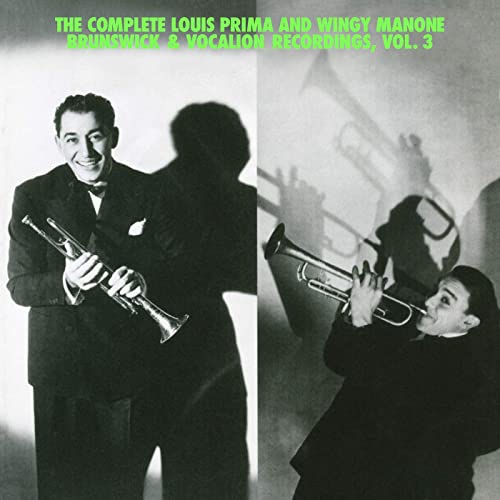
Remembering Louie Prima [1910-1978] and Wingy Manone [1900-1982]

 © Copyright ® Steven Cerra, copyright protected; all rights reserved.


“Though Louis Prima recorded widely and well throughout the '30s, achieving great popularity and visibility, his name is often conspicuous by its absence from standard jazz histories. Dealing with him seriously means confronting one aspect of New Orleans jazz which chroniclers, almost as a point of honor, seem to find distasteful.


That, of course, is the matter of showmanship. The flamboyance of Prima's latter career, in which his identity as a trumpeter became almost totally subordinate to his role as a high-energy showman, seems to offend those who would represent Jazz as an art music of solemnity and unstinting high purpose. The Las Vegas image, the raucous sound of Sam Butera and the Witnesses, the risque badinage with singer Keely Smith—such make it all too easy to mistake this showbiz aspect of Prima for the creative substance, ignoring his past achievements and core musicianship.


Far from being exclusive to such as Prima, the idea of hot music as an arm of highly commercialized show business runs throughout the early years. It's present in the singing, dancing, and impromptu comedy skits of the dance bands, including those that prided themselves on their dedication to jazz. Its absence is a root cause of the failure of the great Jean Goldkette orchestra, an ensemble which either stubbornly resisted advice to "put on a show" or acquiesced in a manner landing somewhere between perfunctory and downright hostile.


For New Orleans musicians, especially, showmanship was—and remains—a fact of life. Was it not Louis Armstrong, above all, who understood the relationship between music and entertainment, and never wavered in his application of it, even in the face of critical hostility? "You'll always get critics of showmanship," he told British critic Max Jones. "Critics in England say I was a clown, but a clown—-that's hard. If you can make people chuckle a little; it's happiness to me to see people happy, and most of the people who criticize don't know one note from another.""


Prima, in common with his two hometown friends Wingy Manone and Sharkey Bonano, accepted—as had Nick LaRocca before them—that they were, above all, entertainers; they might now and then get together for their own enjoyment, and even (as in the case of the 1928 Monk Hazel titles) make music to suit themselves. But where the public was concerned, the paying customers always came first. By his own lights, and by the laws of the box office, Prima was doing what he properly should be doing, and with resounding success. It is only regrettable that the nature of his fame in later years has drawn attention away from his skills as one of the most accomplished, often thrilling, of New Orleans trumpet men. ...


Between September 27, 1934, and July 17, 1937, Louis Prima recorded some fifty-four titles, mostly backed by small jam groups. What strikes the listener now is the overall excellence of the bands (Pee Wee is the clarinetist on some, with Arodin, Weinberg, and Eddie Miller on others), the ease with which Prima handles a wide variety of material—and the incendiary brilliance of his trumpet work. Again and again, he fires off compelling, technically assured solos, fluent throughout the entire range of the horn.


The records (and those of Manone) tend to follow a pattern: more or less straightforward melody chorus, Prima vocal in what one musician called "that hoarse, horny voice of his," solos by a sideman or two, then the leader's trumpet back for the big finale. Within that, there are consistent peaks, including tough and exhilarating Russell solos on "Chasing Shadows," "The Lady in Red," and "Cross Patch."


Prima, for all his gaudy ways, stands up well. There's no denying the pervasive Armstrong flavor, but what's refreshing here is how freely he's able to work within that vocabulary. There are moments, particularly when he descends into his low register, when his figure shapes and sense of drama recall those of Bunny Berigan.


Manone, too, often surprises. His work on dozens of 1930s titles—while displaying nothing comparable to Prima's technical command—is crisp and assured. On "Swing, Brother, Swing" (1935) he easily paces hard-driving solos by Miller (on tenor) and clarinetist Matty Matlock. He opens "Jazz Me Blues," from a September 12, 1934, date with Arodin and Brunies, with a quite Armstrong-like cadenza.


Both men made the jump to radio and movies, and their subsequent careers have been well documented. Their travels, taking them far afield in both a geographical and musical sense, continue the Auswanderung of the earliest jazz days, the arrival-and-departure cycle woven into the fabric of New Orleans life.”

- Richard Sudhalter, Lost Chords: Whiye Musicians and Their Contributions to Jazz, 1915-1945. [1999]


© -  Mosaic Records and Lloyd Rauch, copyright protected; all rights reserved, used with the author’s permission.


“Scuffling,” in the sense of getting by on a low income or struggling financially is not a term used very much these days in Jazz circles, although given the deleterious effects of the current pandemic on musicians’ incomes, it could very well be.


But it certainly was applicable to these lives of many of those attempting to make their way in Jazz during the formative years of the music’s existence in the 1920s and 1930s.


Some struggled for a while before becoming successful while others struggled for a good long while before some measure of economic success came their way. 


Trumpeter Louie Prima falls into the former category while his fellow trumpeter Wingy Manone is relegated to the latter.


Reviewing the trials and tribulations they encountered, sometimes one gets the sense that their passionate love of the music was the only thing that kept them alive during their early years of trying to make it in the music.


Lloyd Rauch is a jazz historian, disc jockey and collector of vintage jazz material. He has written numerous liner notes and articles on jazz and was a personal assistant to Benny Goodman in 1986. He put together a succinct overview of Louie’s and Wingy’s careers for the Mosaic set  MD6-217 THE COMPLETE BRUNSWICK AND VOCALION RECORDINGS OF LOUIS PRIMA AND WINGY MANONE (1924-1937). 


Reading them will definitely give you a realistic understanding of the scuffling that Prima and Manone went through to carve out their careers in Jazz.


LOUIS PRIMA - 1910-1978


New Orleans natives Louis Prima and Wingy Manone both lived the American dream and they used jazz as their vehicle; an opportunity afforded few over the past hundred years. And if one wanted inspiration, growing up in New Orleans was the place to be, especially in the first twenty years of the last century, the period when ragtime turned into jazz.


Louis opened the Famous Door on March 1, 1935. The new club was operated by Jack Colt, who raised money from prominent New York musicians so they could have a place to go after work, enjoy some good spirits and a little jazz. Though Manone was older by six years, their mutual fame and fortune blossomed during the early months of 1935 on the same New York City street - 52nd Street.


Louis Leo Prima was twenty-four years old in 1935 and had performed largely in New Orleans.  He was born on December 7, 1910 and started his early training on violin at age seven, providing him with a solid musical foundation.  His mother Angelina encouraged all her children to play an instrument, resulting in the formation of a little family band.  Angelina was a bit of a flamboyant blues shouter herself, performing in church shows and at family gatherings.  Little Louis hated the violin and longed to blow a trumpet or cornet (the smaller, sweeter version of the trumpet) which Leon, his older brother by three years, was then playing.  


Leon played jazz in New Orleans' French Quarter clubs throughout the early Twenties. By 1924 he had made enough to afford a new $75.00 trumpet and accept a gig in Texas. He had left his old beat-up cornet home and the temptation was just too much for young Louis, now only thirteen years old. His mother was with Leon in Texas, so when no one was at home, Louis would pick up that old horn and teach himself to play over the next few months.  Despite his mother's disapproval, he continued with the cornet, trying to emulate the great horn players in New Orleans that fascinated him.  


Leon Prima: "I switched to trumpet and then went on the road, I left an old trumpet (cornet) at home.  I stayed out about a year or so and when I came home, Louie was blowing the trumpet...real good." (1)


Years later, Louis Prima sighted Buddy Petit, Louis Dumaine, Punch Miller and Louis Armstrong as inspirations, though ultimately it was Armstrong who wielded the most influence on Prima.  Prima also would peek into the Black churches to enjoy and absorb the music of his brothers. At that time, Italians and Blacks frequently interacted on the job and socially. Both black and white bands would play at the New Orleans clubs, many owned by Italians, though local law forbade mixed groups from performing on the same stage at the same time. When a mixed session did take place, it was informal and not advertised.


  By 1928, Louis was good enough to join the musicians union. There were lean times and periods of triumph for the next six years. Prima recorded a few numbers with Dave Rose for Bluebird Records in 1933 but they made little noise and he returned to New Orleans. Upon a visit to New Orleans in 1934, Guy Lombardo, who's band almost never played jazz, heard Prima in a nightclub at two o'clock in the morning. He couldn't believe his ears and ran over to the hotel to wake his brothers Carmen, Victor, and Lebert (all members of the Lombardo orchestra) and ask them if they too felt that this was a great talent. They did and Guy suggested Prima move to New York and try his luck in the city that was the capital of radio, recording and nightclub entertainment.


Guy arranged a recording contract for Prima with Brunswick records and attempted to line up a gig at Leon and Eddie's on 52nd Street. The owners thought Louis was black due to his kinky hair and olive complexion and refused to hire him. This policy did not apply to all clubs on 52nd Street as the Onyx, one of the few that offered jazz, featured the Spirits of Rhythm (a black group) for years. Within a year or two both black and white bands were common on "The Street'' as well as  in Greenwich Village downtown and although mixed bands were rare, black bands would alternate with white at the same clubs. These were the days on 52nd Street where one could listen to such stars as Billie Holiday, Teddy Wilson, Bunny Berigan, Stuff Smith, Ed Farley and Mike Riley.


Another great locale was The Famous Door found at 35 West 52nd Street (right next to Leon and Eddie's), the same spot as the original Onyx, which was now at 72 West 52nd. At first, the opening night "crowd" consisted of proprietor Jack Colt, the waiters and the band on stage.  There was no business despite the fact that a fire at the Onyx, only the previous night, forced that club to shut its doors for a number of months. Colt took a walk around the block contemplating the firing of Prima and the closing of his new club. When he returned, he noticed a real crowd waiting to get in the Famous Door. The late night clientele, for which the club was intended, did finally show up to hear Prima and to see the new club.


Newspapermen such as Ed Sullivan, Robert Sylverster, and Walter Winchell wrote glowingly of Prima's stage persona and fine little band.  Eventually the folks from Park Avenue began frequenting the place and other clubs on 52nd Street started booking small jazz or jam bands into their venues. It should be remembered that at the time, personality was as important as music and Prima was the spark that ignited interest in that fabled block between Fifth and Sixth Avenues, soon to be known as Swing Street.


Prima became such a success that he left New York before the end of 1935 and opened his own Famous Door club in California. His reputation grew via national radio broadcasts and motion pictures. By 1936 he was experimenting with a big band but the reception did not equal the great response to the small group so he returned to the original format for the next three years.


In 1940, he organized another big band, which lasted until about 1950. This was a fruitful venture, which resulted in dozens of hit recordings. Robin Hood, My Dreams Are Getting Better All the Time, and many Italian novelties removed Prima from his jazz roots but made him a rich man. Though he continued to play trumpet until 1975, his peak years were 1934-39.


In 1954, after a few years of scuffling, he and his new vocalist Keely Smith (by this time his wife) joined together with saxophonist Sam Butera to form an act that set Las Vegas on fire. Prima did for Vegas what he had done almost twenty years earlier for 52nd Street; opening the door to a whole new era of entertainment. Every hotel in Vegas began to book big name acts for their casino lounges in the wake of Prima and Smith's success.


Following their divorce in the early Sixties, Prima continued to perform but never achieved the notoriety that he had with Keely. In addition, he could not produce another hit record. The advent of the Beatles and changing musical tastes added to Prima's decline in popularity. However, his participation in the Walt Disney animated film, The Jungle Book, in which Prima provided the voice for "King Louie", leader of the jungle apes, brought him to a new audience for a brief time in the late Sixties.


Though he was still performing in 1975, he elected to have a benign tumor removed from the stem of his brain due to severe headaches.  The operation left him unable to speak or move for the next three years.   He died on August 24, 1978 in his hometown of New Orleans at age sixty-seven. Surely he was one of the most memorable entertainers of his time and his best jazz work is included here in this set.


WINGY MANONE - 1900-1982


Wingy Manone was one of the real characters of jazz, always full of jive talk and the spirit of life. He was born Joseph Manone on February 13, 1904 just outside of the French Quarter in New Orleans (not far from where Prima was born and raised). At the age of eight or nine he began trumpet lessons and studied seriously for almost a year.  Eventually, he tired of the regimented music he was expected to play, so one day he invited his teacher to come over to the other side of the levee and hear the music of the black bands. After listening for a while, his teacher declared that they were faking and there was no way she could teach him that kind of music, so he quit taking formal lessons.


Not long after, at age ten, his right arm was crushed in a streetcar accident and the doctors were forced to amputate. Not only had he lost his arm, he lost the dominant extremity that he depended upon for fingering the trumpet. For almost a year he shied away from his friends and quietly taught himself to play with his left hand. He refused to perform in public until he was ready and when he finally did, he used a gloved hand attached to a prosthetic arm to hold the trumpet in place while he fingered the valves with his left hand. Eventually, he quit school and organized a band with his young friends, joining in the second line in a New Orleans parade or simply playing on the street corner. He was no longer Joe Manone, but Wingy.


His early influences were King Oliver and Buddy Petit, the same Petit that had inspired Prima. He was well known in New Orleans and briefly toured California with Jelly Roll Morton. Though he never recorded, Petit is fondly remembered by many of the musicians who lived in New Orleans during the early days of jazz. Later on, Louis Armstrong, who Wingy knew as a boy, would be a significant inspiration.


Wingy and his band struggled for a few years and finally landed a job at the Ringside Café, which lasted for six months. Ultimately they quit to take a gig at the Eldorado Club, but the place folded after two weeks. Wingy suggested that the band, at that time playing under the name Steamboat Six, try their luck in Chicago, where so many New Orleans musicians had found work. Without sufficient train fare, the boys would have to travel with the hobos.


Wingy: "We climbed up in a boxcar and the train pulled out - a jazz band heading up north to show how real jam music should be played.  Wow! We kept in the eating department by playing on the streets and passing the hat in all the towns where we had train waits. We had to keep changing trains, riding in lumber cars, gondolas, flat cars and on the rods." 


When the band reached Kankakee, Illinois they got off the train and encountered a gentleman who demanded that they leave his property. Believing that he was the landowner, they pleaded with him for some food, explaining that they were musicians looking for work in Chicago. The man invited them up to the big house on the hill so they may have a bite to eat.


Wingy: "No sooner did we get up to the house then out came some guards and we found out that the place was an insane asylum and the fellow (who they mistook for the landowner) was one of those harmless "bugs" (patients) that they let walk around like a trusty every afternoon. When we found out where we were, we started to run, but the guards grabbed us and took us inside to the head doctors. They listened to our story and ordered food for us. We were so hungry, we ate like pigs and afterward we played for some of the inmates who were about to be released. As we were leaving, the doctors gave us two bucks for cigarettes, then we heard the slow freight. The crew saw us running like hell toward the train but they thought we were breakin' out of the bughouse. I shouted to them that we were the boys that was riding on the train before. I had to open up my trumpet case to convince them. They were relieved and said: 'Okay, bums, find your spots and keep out of sight till we get out of town.'  We never forgot that bughouse though. Those inmates thought that we was nuts, playin' those musical instruments." 


The next stop was Chicago. By 1921, the sweeter dance bands were becoming more popular and the public's fascination with New Orleans jazz was waning. Manone could barely read music so many jobs were closed to him. In order to eat, he would play Italian and Jewish weddings in Chicago on the weekends and fill in the other days with whatever he could find. The members of his band were on their own. Eventually, he found steady work in St. Louis, where he recorded his first session.


For the next ten years, he traveled from Chicago to New York or wherever there were gigs. He managed to get a few record dates with the likes of Benny Goodman and Red Nichols, but these were rare. In Chicago, he performed regularly with Bud Freeman, Frank Teschemacher and Art Hodes and for a short period of time he even worked with Bix Beiderbecke whose influence can be heard on Wingy's 1927 recordings.


He jobbed in vaudeville with Blossom Seely and Benny Fields (major stars in their day) and even worked for a while in a Native American Indian jazz band led by trombonist Chief Blue Cloud. The Chief and his wife Ida Blue Cloud were the only real Indians in the band so the other members would have to dress in costume. Wingy was required to don full-feathered headgear, wear moccasins and not speak any English. They played in all the big vaudeville houses and Wingy had a great time until his friends in New York found out that he was "passing" as Indian. Big Charlie Green, trombonist with Fletcher Henderson, saw one of the shows and told everyone about Wingy's gig. The boys at Plunkett's bar gave him such a ribbing that he had to quit the Chief and look for something else.


  By May of 1934, Wingy had more than ten years of scuffling behind him and was determined to make it in New York. After about six months he landed a job at the Grill Room of the Knickerbocker Hotel with his own group. The gig was a smashing success with capacity crowds every night, but the club closed after only five days. It seems that the jam sessions lasted until eight the next morning and liquor would continue to be sold, a crime after hours in New York City, so the club was shut down. One of the next stops was the De Luxe Club on 52nd Street, where he helped to establish free wheeling jazz on "The Street". On February 20, 1935 he was booked into The Piccadilly Hotel on West 45th Street just off Broadway, where music started at 9:30 and continued, as Wingy says, "to four in the early brightness". The sign outside the club declared that the music was, "the hottest this side of Harlem". After a few months, Adrian Rollini, master of the bass sax and an early pioneer of the vibes, offered Wingy the opportunity to join his band at the Hotel President where he ran his own club called Adrian's Tap Room. The club was jumping every night with Wingy, Rollini, Carmen Mastren on guitar and Putney Dandridge at the piano. Everyone from Fats Waller to Martha Raye used to sit in with the band and then enjoy a lamb chop or two. The band even cut six sides for Victor records on June 20, 1936.  


By this time Manone was recording and his records were selling briskly. But it wasn't until Wingy's huge hit recording of Isle of Capri that he found more work on 52nd Street at clubs such as the Hickory House and the Famous Door. He continued to play jobs in New York, Florida and the northeast region until the early forties when Bing Crosby invited him out to California for a guest spot on his radio show. Wingy was hired for only two weeks but lasted for five years. Manone would do comedy dialog with Bing and play jazz with a small group from John Scott Trotter's studio orchestra. Bing also included Wingy in his Hollywood picture, Rhythm on the River (1940) which paved the way for many more movie roles as both musician and actor.           


Wingy Manone continued to record for Bluebird, Decca, Capitol and many other labels until the 1970's. He worked in California and later in Las Vegas until shortly before his death on July 9, 1982.    


For his whole life, Wingy Manone played what he called, "the righteous music"; free wheeling dixieland and swing with a solid New Orleans beat. He didn't care whether he performed in a small club with an unknown group of local musicians or on the stage at Carnegie Hall, as long as he could play in the uninhibited manner that defined who he was. 


Wingy ended his 1948 autobiography Trumpet on the Wing with these reflective words: "I ain't never been sorry that I went up over the levee and listened to the only kind of music that's really solid and caught it, and kept on playin' it all my life. I intend to keep on playin' it until they really put wings on that trumpet...." 

- Lloyd Rauch 


Friday, February 5, 2021

Doug MacDonald Duo - Toluca Lake Jazz

 © Copyright ® Steven Cerra, copyright protected; all rights reserved.


“Guitarist Doug MacDonald and bassist Harvey Newmark perform a set of swinging jazz duets on Toluca Lake Jazz. Interpreting seven standards and six MacDonald originals, the duo creates an exquisite set of light-toned but hard-swinging music.”


Releasing today on CD, guitarist Doug MacDonald’s Toluca Lake Jazz [DM 18] is a source of nostalgia for me.


The “Toluca Lake” in its title is drawn from an area in the San Fernando Valley northeast of Los Angeles and I went to high school in a community close by and my friendship with Harvey Newmark, the bassist on the recording, dates back to 1959. My goodness, talk about sentimentality, that was a long time ago!


Doug and Harvey form an easy listening duet that interprets seven standards and six MacDonald originals in a “light-toned but hard-swinging” style.


The standards give you the chance to set your ears on familiar melodies while the originals take your ears in new directions.


The standards include Flamingo, Baubles, Bangles and Beads, These Foolish Things, If I Had You, Easy Living, with Harvey taking solo honors on Easy Living. Doug’s chose one of his originals - Is This It? - as a platform for his solo guitar spotlight, but there’s so much space in the way they play together that there’s plenty of room to distinctly hear what each instrumentalist has to say.


There’s a certain grace and simplicity to the music on this CD that is especially apropos during the trying times associated with the pandemic.


The pace of living has slowed considerably while we grasp how best to deal with the challenges of the disease, and the beautiful music on Toluca Lake Jazz provides for a pleasant respite from the demands of safety, distancing and isolation. 


Doug has sequenced the tracks in such a way so as to create enough contrast in the sound of the music to guard against a sameness in sonority by two string instruments.


The music creates moods that are reflective, joyous and wistful. Each melody is carefully crafted and the solos by each player are always inventive. This is an album by two Pros at work. 


Doug has a great facility which allows him to get around the guitar almost effortlessly, although he doesn’t overplay the instrument. Harvey has always had a big, rich booming sound on bass and it would seem that some things never change as the full range of his technique is on display here.


Jim Eigo of www.jazzpromoservice.com sent along to following media which further offers further details about the musicians and the music on Toluca Lake Jazz.


Doug MacDonald and Harvey Newmark, two greatly in-demand players from Southern California, have worked together many times through the years, often in MacDonald's groups which range from trios to his 13-piece ensemble The Jazz Coalition.


The guitarist and the bassist are so complementary to each other's playing that they often seem to think as one, as if it were one musician playing a single instrument with four hands.


Toluca Lake Jazz features swinging versions of such beloved standards as "Flamingo" (a baliad that is taken here at a medium-tempo pace), the classic bossa-nova "My Little Boat," a jazz waltz rendition of "Baubles, Bangles and Beads," "These Foolish Things" (featuring beautiful ballad playing from the guitarist), John Coltrane's "Village Biues," "Easy Living" (which has some particularly close interplay by the musicians) and a cooking "If i Had You."


MacDonald's originals include an uptempo "Toluca Lake Jazz" {originally composed for his big band), his unaccompanied "Is This It," "Desert Jazz" (featuring both of the musicians sharing the melody), the augmented blues "De-Ha," "Pieasante Pleasant" (named after drummer Tim Pleasant), and "New World' which is loosely based on "It's A Blue World" and has close interplay by the two players.


Long a major force in Southern California as a guitarist, bandleader and composer, Doug MacDonald is originally from Philadelphia and spent periods living and playing in Hawaii (where he worked with Trummy Young, Gabe Baltazar and Del Courtney) and in Las Vegas, performing at the latter with Joe Williams, Carl Fontana, and Jack Montrose. Since settling in Los Angeles, he has been a sideman with such notables as Bill Holman, Ray Anthony, Rosemary Clooney, Jack Sheldon, Bob Cooper, Buddy Rich, and Ray Charles. However. MacDonald has made his greatest impact as the leader of his own groups and with his long series of inventive and rewarding recordings-


Harvey Newmark was born in Hollywood, took up the bass as a teenager, and has since worked with the who's who of jazz including Buddy Rich, Bill Holman, Lew Tabackin, Toshiko Akiyoshi, Super Sax. Terence Blanchard, Carmen McRae, Joe Henderson. Anita O'Day and Cal Tjader plus the LA Philharmonic and several symphony orchestras. He has also performed with Doug MacDonald in a variety of groups during the past 15 years.


Throughout Toluca Lake Jazz. Doug MacDonald and Harvey Newmark create easily enjoyable music that is melodic (always keeping the melody in mind), filled with subtle surprises, and often magical.


Artists: DOUG MACDONALD, HARVEY NEWMARK

Title: TOLUCA LAKE JAZZ

Artist Website: https://www.dougmacdonald.net

Release Date: February 5, 2021

Label: Doug MacDonald Music

Catalog Number: DM18

UPC Code: 195999207346

1.  Flamingo (Anderson/Grouya, 1941 tempo music)   4:06

2.  My Little Boat (Boscoli, Universal MCA Music, Ltd.)    3:48

3.  Baubles, Bangles, and Beads (Wright/Forrest, Frank Music Corp,}   3:02

4.  These Foolish Things (Strachey/Marvel, Boosey and Co., Ltd.)    4:52

5.  Toluca Lake Jazz (MacDonald, dmacmusic)   5:28

6.  Is This it? (MacDonald, dmacmusic)   2:17

7.  Desert Jazz (MacDonald, dmacmusic)    3:34

8.  Village Blues (Coltrane, Warner Music Group)   4:25

9.  De-Ha {MacDonald. dmacmusic)    4:02

10.  Easy Living (Robin/Rainger, Famous Music Corp.)    5:05

11.  Pleasante Pleasant (MacDonald, dmacmusic)   3:16

12.  If I Had You (Shapiro/Connelly/Campbell, Sony ATV Music Publishing LLC)   4:59

13.  New World (MacDonald, dmacmusic)   4:49 Total CD time:   51:42


You can locate order information about the recording as well as other CDs on Doug’s own label by going here.


Thursday, February 4, 2021

Oliver Nelson's Big Band - Live from Los Angeles

 © Copyright ® Steven Cerra, copyright protected; all rights reserved.


In early June 1967, the buzz was going around the Musicians Union Local 47 on Vine Street in Hollywood, CA that something special was going on at a nightclub called Marty’s-on-the-Hill in the Baldwin Hills area of the city on Slauson near South La Brea Avenue.


I knew the club very well as I had once worked there with Hammond B-3 organist Henry Cain’s trio.


What everyone was talking [buzzing] about was Oliver Nelson’s big band which was made up of top tier Los Angeles studio players.


Oliver had made the move to The Left Coast from New York a year or so earlier to write for television and movie programs, but he also wanted to be able to continue writing for a big band, so he put together a band that rehearsed his arrangements at one of the practice rooms at the union.


Everybody in town wanted to be in Oliver’s big band and it wasn’t long before the word got around that something special was happening. The band landed an off-night gig at Marty’s.


Oliver, who was under contract to Impulse! Records convinced his producer Bob Thiele to make a live recording of the band under the supervision of recording engineer Wally Heider who was renowned for his work in on-site settings.


At the time, the front-line in drummer Shelly Manne’s quintet in 1967 was trumpet player Conte Candoli and alto saxophonist Frank Strozier - both were in the band. Stalwart Bill Perkins and young phenom Tom Scott made up the tenor sax section with Gabe Baltazar on lead alto and Jack Nimitz anchoring it on baritone sax.


Buddy Childers was on lead trumpet but the real surprise was that he was joined by not one but three of the most fiery trumpet soloists in the city in Bobby Bryant, Freddy Hill and Conte [Buddy can also assume the Jazz chair].


Billy Byers, Pete Myers, Lou Blackburn and Ernie Tack were the trombone unit and the rhythm section was made up of Frank Strazzeri on piano, Monty Budwig on bass and Ed Thigpen on drums.


Wait a minute - what! Ed Thigpen who played in Oscar Peterson’s trio for six years in the drum chair - this I gotta hear.


That was it - I had to be there and I was for what turned out to be a jubilant occasion for all concerned.


To share some of the excitement I’ve scattered a few YouTubes around the posted feature and included Nat Hentoff’s liner notes below.


“You go into a studio with a big band," Oliver Nelson was saying, "and you try to get a live feeling—that electricity, that rapport between audience and musicians and you sometimes feel outside. But while you can come close to perfection in a studio in terms of sound, that quality of live enthusiasm is often elusive. That's why I wanted to do a really live album, in a club."


The location was Marty's on the Hill in Los Angeles, which Nelson describes as "the only place in town where something's always hap-

pening." The band rehearsed briefly before the engagement, and then spent six days at Marty's. These tracks were selected from the nights of June 2, 3, and 4, 1967.


Bob Thiele, who produced this album, notes: "I like 'live' recordings, not only because they're spontaneous but also because the musicians aren't under pressure. If one performance doesn't work out, you have so many others to choose from. What made this an unusually exciting occasion was that the band was composed of top players who fused with such spirit that they kept sending substitutes to their regular jobs so that they could be at Marty's every night for the sheer pleasure of playing." 


"That's it," Nelson added. "For these guys, with their jobs in the studios and at record dates, this engagement was a waste of time financially. But they enjoyed what was happening so much that they were willing to take that economic loss."


It is this sense of exuberant satisfaction which characterizes the whole album and makes it one of the more "alive" recordings in. some time. The opener. Miss Fine, is named after Oliver Nelson's sister. Or rather, it's the nickname of Leontyne Lacoste. The crisp trumpet solo is by Freddy Hill.


Milestones is regarded by Oliver Nelson as "one of the more important jazz tunes in the past ten years." It was written by Miles Davis, and as Nelson says, "Miles has a unique sense of everything, including form and harmony. When it was first released, it not only stood out from much of what was being done at the time but it also looked ahead."

The first surging horn is Frank Strozier’s alto, and then he is joined in a fascinatingly challenging duet by young Tom Scott on tenor. “There’s a lot of this simultaneous improvising  going on now," Nelson observes, "but you don't often get musicians involved in that who listen to each other as carefully as Frank and Tom do in this performance."


I told Nelson how impressive Strozier sounded to me both on this track and the subsequent I Remember Bird. "Frank finally is beginning to get some of the attention due him," said Nelson. "And he's also working in the studios now, but as you can hear, he's kept his jazz thing intact. His wife says he's a

tyrant about music because all he does is practice ail the time, and all he thinks about is music. At Marty's we heard him for six nights, and every night the whole band had to stop and listen to what he was doing. Tom Scott, though he's younger, has that kind of impact too. He's already ahead of his years in that he has such an individual sound and style. He's not yet twenty, but he's had such a thorough musical background that it's now paying off in terms of what he wants to do.”


The featured performer on Night Train and Oliver Nelson's Guitar Blues is guitarist Mel Brown. He's a discovery of Bob Thiele. "I heard him in a joint," Thiele recalls, "and he knocked me out. I used him on a T-Bone Walker date, and that led to his first album under his own name for Impulse, Chicken Fat. Then I told Oliver about Brown, and he said to send him over." "He broke it up at Marty's," Nelson adds. "It's partly visual because he's a great, big cat; and once he gets going, he and the guitar are moving all over the place. But musically what he has is this huge warmth, directness, and earthiness. I wrote Guitar Blues for him."


Down by the Riverside is a driving four-way exchange between trumpeters Bobby Bryant, Freddy Hill, Conte Candoli, and Buddy Childers. "It's such an absorbing performance," says Nelson, "because each of them is quite different from the other. And throughout the engagement, they made up a great section. You usually have a trumpet section with just one man —most often the guy in the third chair—who takes jazz solos. But I never had a section before in which each player could do everything — from playing lead to improvising jazz. For that matter, we had that kind of flexibility all through the band."


Ja-Da was the band's theme during its stay at Marty’s and includes intriguing voicings by Nelson. I commented on the wit of trombonist Lou Blackburn on this track, and Oliver said, "It reflects the whole experience during those six nights. We were having fun, man!" Fortunately the essence of those six nights won't be lost, as a result of this recording. Also, because of Bob Thiele's enthusiastic reaction to Tom Scott during the engagement, Scott was signed to an Impulse contract and has made his first album for the label.


As Thiele said. “That was a very productive trip to Los Angeles for me. It led to a lot of good music”


And it also reinforced, in this album, the belief of those, like myself, who prefer on-location recordings of Jazz. Of course, the mere fact that you do record “live” doesn’t automatically insure the full-bodied spontaneity of an optimum night in a club. 


But when the musicians are of high quality, the arrangements loose enough to give them room in which to stretch, and that ineffable collective fire starts building, then a “live” recording becomes a singularly satisfying event.”

- Nat Hentoff.


Impulse! A-9153 vinyl 1967

Impulse! A-9153 CD 2005


Oliver Nelson - arranger, conductor, soprano saxophone

Bobby Bryant, Conte Candoli, Buddy Childers, Freddy Hill - trumpets

Lou Blackburn, Billy Byers, Pete Myers, Ernie Tack - trombones

Gabe Baltazar, Frank Strozier, alto sax

Bill Perkins, Tom Scott - tenor sax

Jack Nimitz - baritone sax

Frank Strazzeri - piano

Monte Budwig - bass

Ed Thigpen - drums


Recorded June 2-4, 1967

Marty's on the Hill, Los Angeles, CA


There is a musician in the band on this album who is not credited. It’s the late Howard Johnson who plays tuba on it. He told me this himself in an email of June 27, 2010 (“I'm also playing tuba on all those Oliver Nelson live tracks from 1967. I'm not credited, but there is clearly tuba on every track"). It was confirmed by saxophonist Kenny Berger: "Check out the brass figures on the bridge of Milestones and the shout chorus on I Remember Bird and you'll hear it. Hint-don't listen for it to be reinforcing bass functions. A lot of the time the tuba doubles the lead trumpet two octaves down which puts the tuba in its upper register in which it projects very strongly.” (email July 6, 2010).


Noal Cohen

Wednesday, February 3, 2021

Oliver Nelson - Milestones (1967)


Alto sax solo by Frank Strozier and tenor sax solo by Tom Scott.