Friday, February 12, 2021

Phil Woods - Part 8 - The Smithsonian Interview

 © Copyright ® Steven Cerra, copyright protected; all rights reserved
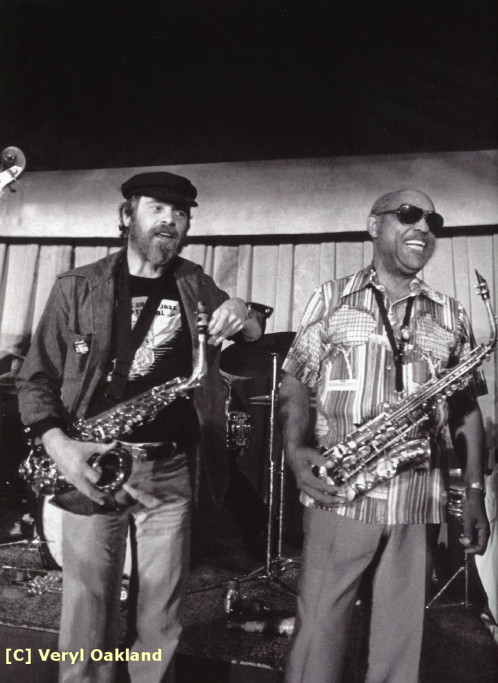

In 2007, Phil Woods was awarded the coveted Jazz Master designation by the National Endowment for the Arts, the highest honor that our nation bestows on its jazz musicians. To date, the Smithsonian Jazz Oral History Program has interviewed 212 jazz subjects, including most of the NEA Jazz Masters. Ken Kimery is Director of the Jazz Oral History Program at the Smithsonian Institution (www.smithsonian jazz.org), and provided the technical engineering for Phil's recorded interview, which was conducted on June 22-23, 2010 by saxophonist Marty Nau.


“Perhaps the professor emeritus of bebop saxophone, as it has endured from one century to the next.”

- Richard Cook’s Jazz Encyclopedia


[MN]: Phil, one thing that impresses me about you is that you don't seem to be scared of this new technology that's out there. I've seen you embrace it. 


[PW]: Oh yeah, oh yeah.


[MN]: You did a CD-ROM years ago ... you write and arrange on it. 


[PW]: Yep.


[MN]: Can you talk about how much you like it?


[PW]: I had the very first Music Printer Plus, which was the first music program; it was an old DOS-based program. I got tired of having my sketches on the back of matchbook covers, and a piece of paper here and there. Now, I have all of my music in the computer, everything I've ever written, including my final exam from Juilliard. I've transferred all of my stuff into a computer, on a network with my wife - she takes care of all the publishing so we have it all, and we have backup, of course. Yeah! The Music Printer Plus that I was using, the DOS-based program, was built on a small [operating system], and as they kept updating it, it became top-heavy, it was too cumbersome. Then they changed and went to strictly

a Mac platform, they abandoned the PC, and they changed the name of the program and whatever.... I never got into using Finale because I explored the idea of Finale when it first came out and I remember going to Emile Charlap's office, which was the main copy service, and still is, in New York City, and I looked into the copy room where the guys were copying music. They had a music stand here with the score on it and a music stand here with five volumes of How To Work Finale [both chuckle].


So that's when I got into Music Printer Plus. And then, when that crashed I said, oh man, I'm gonna have to have to go to Finale. And they said, well, check out Sibelius. In Sibelius, you can download the program but it didn't save so it was useless. But you could learn the program. You couldn't really use it but you could learn the technical part of how to—. And I fell in love with it. So I've been a Sibelius user. I'm up to Sibelius 6 and the new Sib 6 is incredible from where they were in Sib 1. And they work closely with Yamaha. At one point, they ran a thing that if you bought a Yamaha alto you got a free Sibelius. So I'm kind of hooked up with both of those companies.


So yeah, I'm a firm believer in high tech. My son is really good at computers. He works for some big chemical company and does their in-house networking. He keeps me up to date on what's hot, what's not, what's good. He's into Mac but, as I said, I'm a PC guy. But I love it. As I said talking yesterday, I do my writing, my composing, at the piano as far as thematic material and what I want to do. 


Actually, when I compose a song, I might get an idea and it'll gestate. I mean ... I have a thing with my wife that I do. If she says, like, "Did you remember to mail that thing off?" I'll say, "Oh man, I was working on the rondo." "Did you remember to take the garbage out?" "Oh, I was working on my rondo." It's always the rondo, the never-completed rondo. "I know, honey, I look like I'm not doing anything sitting here but I'm working on my rondo.'' You know what I mean? So, one time we're driving, with my wife Jill, and Steve Gilmore is behind the wheel, and we're going somewhere and she asks me, "Did you remember to ..." I said, "Aw man, I forgot. I was working on the rondo." She said, "You know, you've been working on that goddamn rondo for 30 years" And Steve Gilmore says, "Oh, but Jill, you can't rush a rondo.'' [both laugh] You can't rush it. So, I was tempted, working on my book, to add a subtitle: My Life in E Flat or You Can't Rush a Rondo, [chuckles]...


Nevertheless, when I look like I'm not doing anything, I'm thinking about songs. I wake up in the middle of the night, just like in the movies. I carry a little booklet with me, with staffs, and I jot down ideas and stuff. But I get to a certain place in a composition and I can't seem to get over the fence. That melody just keeps going and then it stops and I can't get it, you know? The gestation period can go on and then all of a sudden "Ahhhhh, okay," then I go back to the keyboard and finish. Then, when I get from point A to point C or D or whatever it is, I go to the computer and orchestrate or further develop it. 


But a lot of it is just "Hmmm, what am I going to do here?" I love the process, but sometimes it's painful.


Something like "Goodbye Mr. Evans" took a long time to write. It's only [Phil hums] "da da da de da" and that's the whole song, it's just permutations of that motif. But it took a long time to get it of interest. And most of my songs have an odd number of bars. "All Bird's Children" is 43 bars or something, "Goodbye Mr. Evans" is 27. It's not eight-eight-eight-eight, the basic 32-bar form. It's not by design, it just happens that way. I kind of like the odd, to have it sound normal but it's really odd, you know? And now I'm quite aware that I do that instinctively, so I try to make sure that that's one of my signature things, that it's not a simple edifice. It's like architecture. Don't just square it, put a block here, block there, block there. Change it up. The element of surprise in any creation, I think, is really vital.


[MN]: So the technology ... 


[PW]: Doesn't scare me at all.


[MN]: ... doesn't scare you at all. 


[PW]: No.


[MN]: And it's kind of nice if you're in Europe or Asia and you don't have a part or something ...


[PW]: Exactly. Well, when I used to write it by hand, I remember sending arrangements to Spain and they got lost in the mail. And I was writing the music on the computer. But my son said, "Hey, Pop, you know you can send it by pdf." I said, "PD What?" And he said, come here, you know, and he turned me on to it. Now, in most of the music programs, you can write the score and the parts and then turn them into pdf files and just email them.


If somebody loses the fourth trumpet part, it's in the computer. Or, if the singer doesn't like that key, boom, I push one button and change the key and send it off and I never have to get out of the chair, [chuckles] I don't have to go to the post office; I don't have to deal with packages. It's a wonderful tool for a musician.


[MN]: You said something in your answer that made me think of this next question. When can we expect a book?


[PW]: Well, Ted Panken, who writes for Down Beat and is a very good writer, is working on it as we speak. I took it as far as I could and I have realized that I don't know anything about the book business. I mean, the record business is hard enough, but the book business is really--, getting it published and all that. And then I realized that I'm an amateur writer. I can tell a story, but--. So he's been working on it; he's not changing my words, he's just making it more readable. People who really understand literature, when they read my book, they can see the seams. It's not quite there, so I've got a professional guy who knows about that sort of thing, does the research, and knows how to make the timelines and not to have repeated words. Just small details that I'm aware of but I don't have the technique, the chops, to do myself. I took it as far as I could, so it's about finished. He's working on it and I hope to have it-- But selling it is hard, these days, and I don't know where we're going to go. I don't really care if I sell it because I'm not asking for any money for it. I just want to have it out there ... so it's finished for archival purposes, even if only my family reads it. It's my life and stories.


I was perched historically at a very important time: after the Second World War during the cultural explosion; getting to know Bird and Dizzy; I played with everybody. It's not that I'm so important, but it's important because of all the people I got to know and learned from. So, I wanted to share that and make sure it was documented. I figure after, when I'm gone, I know it'll be published. And my records will probably sell more, that's a reality. I mean, I hate when they say, "He passed away." No, he died. [MN chuckles] We're afraid of death, especially in America. But death is part of life and I'm not afraid of it or technical things. I'm more in the reality of existence, you know? I'm going to die some day so I'm making sure that my affairs are together. But I'm saving it for last. [chuckles] It's the last thing I'm going to do. [MN laughs]


But death is something we all have to face, and with our eyes wide-open and straight ahead. Yeah, you can die, man, so get your sh— together, man. From that point of view, I don't have any fear of it. But, I mean, every day I get up in the morning, I brush my tooth, [MN laughs] I look in the mirror, I give myself a round of applause, say thank you to whoever, I'm not a religious man but whatever, thank you, and get on with it and treasure each day. I know what I'm going to eat, what I'm going to have, I drink the best coffee in the morning from my espresso machine, I drink good coffee, I eat well. You know, I've got some little neck clams and tonight I'm having linguine and clams, that's what I'm going to make. That's my supper tonight, I've got that all figured out. I've got some prosciutto to start with, with a little melon. I mean, I don't drink much wine anymore, but I might have a glass of wine. I don't plan each day but I'm still aware of the sensual pleasures. I like to eat well; like, that sauerkraut we had yesterday, in that pork roast, that was good. I mean, it was simple diner food but it was five-star. But it was a good diner, not a junky one. So, I like that kind of quality.


I'm looking forward to the North Sea Jazz Festival. They had a cancellation so I'm going over to do the one-nighter. Then I'm supposed to open up in Paris but it's not until a week later. So they said, "Do you want to stay in Rotterdam? I said, "No, man, I want to go to Paris as soon as I can." And I'll just hang in Paris, man, because my French is good and I won't need anybody. I'll be by myself, and I'll have a nice suite. I will eat well, and I know where the restaurants are. I know what wine I want to have; I know what I want to see. I'll do the Bateau Mouche, which I always do; I'll go to Sacre-Coeur; I might even go up in the Eiffel Tower again; just visit old friends and just enjoy Paris. It's a great, great city.


That's one of the perks of being a musician when you've been around the block. I mean, I was in Paris in '59; I lived there five years. It's like my second city. Rome is a little too intimidating; I don't know Rome as well. But I know London, I know Paris, I know Frankfurt, I know Munich. I love Munich. Barcelona has become one of my favorite cities; Madrid not so much. But I have the cities that I know, and I really enjoy spending time and living their way, living the European way, I love that. And Japan, I love Japan. You get to know the cultures and feel comfortable with them. If you're afraid of traveling, you don't learn about other cultures. You might as well not become a musician. I mean, I understand. I've had players that are not really good at traveling, not good on the road, and that's cool. But I'm great at it. I've got chops, man, I've got chops.


[MN]: Why are you so good? Are you patient?


[PW]: I'm excited by the adventure of life, you know? I love coming home, my home is very comfortable. I mean, I just enjoy living, man. It's a marvelous gift and my health is--. I mean, I've dealt with prostate cancer, I have emphysema, I'm having bleeding ulcers, I've got cataracts, I have false teeth, but I'm still smiling and I'm still reading and I'm still eating and none of this is going to slow me down, man, you know?


I'm still playing. One of my favorite lines is, "Emphysema is nature's way of saying you've been playing too many goddamn notes." [chuckles] So now when I play I'm not as fleet a finger as I was when I was 24 but who is? I mean, as I approach 80, I can still play, man, because I have rearranged my breathing process, so I have to leave more space. But my music has become clearer to me because I have to pace it differently. You make adjustments; each decade, I think, is a process of evolution. As you grow, either to maturity or age or being slightly infirm, you deal with whatever you're dealt and try to make art out of it.


I really like these later years. Musically, I'm really playing better than I've ever played before, because I think it's more thoughtful, it's not so glib. I'm trying to be more direct, trying to get right to the core of what a note means. I'm not so busy and filling the air with what the French call "remplissage," which is like "the frosting." I want to get to the cake part, to what the frosting sits on. So, every day is a challenge. But I still love to play. I mean, I love to travel but I sure love to get to the gig; get off that goddamn airplane [chuckles] and just get to the gig and say, "Ahhhh, I'm safe now, on the bandstand - they can't hurt me here." The bandstand, that's a sacred place to me and I love being there. I love getting off the bandstand and getting back on the plane and coming home, too. I love the circle of life.


But you've got to keep moving, and my life is very rich in the fact that I'm still moving. I mean, I've been almost everywhere. I don't want to go to China; I've never been there but I'm not interested in China because the air quality would be very rough, I think, on my lungs. I have to be careful about that. I'm not interested in Africa or places that I'm not sure I can rent an oxygen machine. So, I have to deal with the Western civilization: I want the best room, I want nice clean water, I want an oxygen machine; you know, the comforts that I require. But within those parameters, I'm pretty good to go. Ninety per cent of the world is still my oyster.


[MN]: But, as you say, you're getting older. It's not for sissies, is it?


[PW]: No, but life is not for sissies. It's an adventure, it's the voyage, it's the journey. I mean, retirement does not interest me. That would assume that you've arrived. You never arrive. You do it until you can't do it anymore and then you die. Ciao. [laughs] But I'll be back! [both laugh]


[MN]: Well, I think a lot of people are going to be glad to hear you say that, that you've still got that passion at that age.


[PW]: Oh yeah, the passion. I think doing something you love to do keeps

you young. I mean, there are so many embittered sons of bitches that do a job they hate, you know? [Mimics a voice] "Can't wait to retire and then go crazy." I mean, my job gets better and better.


[MN]: So, while you're alive, you've been honored. The NEA [National Endowment for the Arts] has honored you.


[PW]: NEA, that's a great thing, the hippest club in the world, [chuckles] all my heroes. Yeah, and they helped me. I just completed my Children's Suite - NEA gives you a nice fat check and I used my check to buy my plasma TV and I used it to produce The Children's Suite which is a piece of music based on A. A. Milne's poems. I took the money that I got from the National Endowment for the Arts and put it into the art of my music. I didn't want to buy a new car. I mean, I wanted to buy a nice entertainment unit, state of the art, and I wanted this piece I wrote 40 years ago finally realized. A. A. Milne and Walt Disney, I had a lot of trouble dealing with Mickey Mouse and all that. But, finally, I got permission to do the piece.


The NEA, like I said ... it's the government saying that jazz is okay, and I think it's great. Finally, you know? We're not the cultural barbarians that people paint us out to be, and the NEA is a great example of that, that they honor jazz artists. Yeah. God bless them.


[MN]: Well, I saw a performance of your Children's Suite a couple years ago at the Sherman Theatre here in town and it was wonderful - big band arrangements, acting, singing.


[PW]: We just did it in New Orleans, it was very successful. The NEA helped me take it on the road, so I'm hoping to do more of that with the help of my government. That's neat.


[MN]: Excellent. Welt, Phil Woods, in closing ... there's a jazz book I was reading through, maybe back in the eighties or the seventies, that had a little bio on everyone in the jazz world. And when it came to Phil Woods, at that particular time, it described you as a force to be reckoned with. I say that, now almost 79, you are still a force to be reckoned with.


[PW]: Well, God bless you.


[MN]: So, it was an honor to interview you.


[PW]: Thank you, man.


[MN]: If there is anything you'd like to say in closing ...


[PW]: Well, you did a good job, and I'm honored that the Smithsonian is doing oral histories of the jazz masters. I think that's a great thing. Archivally, I'm a part of American history, that scholars and young people and old people--, and if you're interested I'm sure it's going to be online, the information about who you are and what you did. So, it's not so much about how many records you sold or how popular you were but as an artist you have a place in American history and for that I am forever grateful.


[MN]: And we are too as well. Thank you, Phil Woods. 


[PW]: Thank you.


Thursday, February 11, 2021

Phil Woods - Part 7 - The Smithsonian Interview

 © Copyright ® Steven Cerra, copyright protected; all rights reserved


In 2007, Phil Woods was awarded the coveted Jazz Master designation by the National Endowment for the Arts, the highest honor that our nation bestows on its jazz musicians. To date, the Smithsonian Jazz Oral History Program has interviewed 212 jazz subjects, including most of the NEA Jazz Masters. Ken Kimery is Director of the Jazz Oral History Program at the Smithsonian Institution (www.smithsonian jazz.org), and provided the technical engineering for Phil's recorded interview, which was conducted on June 22-23, 2010 by saxophonist Marty Nau.


“To me, Phil Woods is very much like any fine actor who must periodically return to the stage in order to re-establish his craft.”

- Norman Schwartz, Phil’s friend and producer


[MN]: Is there anything that you're listening to right now that perhaps fans could say, "Hey, I want to go check that out because Phil Woods is checking it out."


[PW]: Well, I love what the Spanish are doing, the Nuevo Flamenco. But,

anything special? No. I'm just listening to everything, everything I can. I mean, I've done all the research I could possibly do. My life is no longer a chemistry set. I'm not looking to experiment. I'm doing more writing, composing. I like staying home and writing and listening to music. Anything? No, nothing comes to mind.


[MN]: So sometimes there's a time to just be? We can search so much and find ...


[PW]: Well, I think you've got to find out who you are eventually, and find out what your strong suit is and stick with it. My strong suit is still playing songs. I still love songs. There is a set of two records out now of my songs and my lyrics, songs that I've composed over the past 50 years. That appeals to me. I'm doing more composing and doing lyrics, as Benny Carter did. Benny Carter wrote songs and did his own lyrics. I'm reminded of when Cole Porter and Irving Berlin had dinner together. They both said, "Imagine, it takes two people to write a song." [both laugh] I mean Irving and Mr. Porter both did both the music and lyrics, you know. I'm trying to do that, sometimes successfully, sometimes not. Dave Frishberg does it real well; Bob Dorough does it real well. There are a few.


[MN]: What do you like to do when it's time to do something other than music?


[PW]: At the moment I like to watch the World Cup. I'm a big soccer fan from living in Europe for five years. I like American football but, of course, it wasn't happening in Europe. I kind of fell in love with the game of soccer. I started to go to games and I really enjoyed that. I think it's a great game. It's about the only sport I follow. I like to cook a little bit; I'm a pretty decent cook. My French is not too bad, my Italian is okay, my Spanish is a little bit .... I can order food and drink in most European languages. My German is weak but I can tell them my room is cold and ask if you've got a big wiener schnitzel, you know?


I think you have to be able to travel. I love traveling, and that's not easy to say in the present day. It's getting more and more difficult. It used to be fun. I remember when people used to get dressed up to travel. Now, it looks like they're going fishing.


[MN]: Getting on a plane used to be an experience.


[PW]: Yes, it used to mean something. It was an adventure. And now it's just like cattle. It's like you're getting on a glorified bus. But I still love it. I love getting there because it gets harder. I like the newer planes because the recycled air is not quite so bad. Some of the older planes, I have trouble breathing and it really tires me out. I have to leave a couple of days early to get ready to play. I can't just fly and then get on the bandstand like I used to. But very few old people can. I'm going to be 79, that's a long time to be out there.


[MN]: Well, now more than ever, your saying, "You pay me to get there," really comes into ...


[PW]: Yeah, yeah, yeah. I'll play for free but you've got to get me on the plane, you've got to give me a lot of bread. Yes, that's the gig, getting there. The gig is easy. I mean, you've got to fly for two days to play an hour. God, what a strange way to make a living. But, as I say, you don't pay me to play, you pay me to get there and play. But I'm not complaining. I'm glad to be considered able to play that good that you're willing to fly me in and pay me to play for an hour. I'm not against the principle of playing for my supper but I hate giving the airlines more money than I make, you know? [laughs] That's when it starts to hurt. The ticket costs so much and you're only making, you know, it's a little unbalanced. But it's the way it is and I accept it.


I consider myself very fortunate that I can continue. I mean, I've got a few gigs coming up. I go to the North Sea, then I go to Paris, then I go to Geneva, then I have a few days off, then I go to Barcelona, and I go to Belgium, and then I go to Rome. I'm booked up until after Labor Day when I'll take a vacation. And we'll have our festival here in the Poconos which

will be our 33rd year and that occupies a great deal of time, so ...


[MN]: That's a great festival, by the way.


[PW] Yes, it is. It's the only festival in the world that was begun by jazz musicians and continues. But we're having a little trouble. Grants have been cut back. We used to get money from the state but that no longer applies, but we'll make it.


[MN]: This is a little "inside baseball," but when I was asking you what else you like to do, you said you like to cook. Aren't you also a carpenter of sorts?


[PW]: No.


[MN]: I thought I heard that, because you had something ...


[PW]: Well, I used to be a hack. I'm not a very good carpenter, I'm a butcher, but... My brother was a good carpenter, my dad was a good carpenter. I'm not so good. I used to build stuff, but, I mean, only when I'm broke. I could put up a shelf and, you know, make basic, simple cabinets and stuff like that. But not anymore - I'm afraid of power tools. I used to use power tools but not anymore. I don't trust myself around power tools, so, not so much anymore, no.


[MN]: The reason I ask is because you had a hell of a thing happen to you that most people don't have happen to them - your house burned down.


[PW]: Yes it did. But I didn't rebuild it. [laughs] But we had good insurance. We had just changed our insurance from regular insurance to replacement insurance so we were able to replace all our stuff, including our washing machine and stereo equipment and television. Instead of getting less money from the insurance company because your television set is old, you get how much money it costs to replace it. It makes a big difference. The insurance costs a little more but it's well worth it.


[MA]: You were here when that happened.


[PW]: Yes, I was.


[MA]: You had to get out.


[PW]: Yes, but there were so many fortuitous events. We had just changed our insurance to replacement insurance. We'd just gotten Blue Cross/Blue Shield. My wife's hospital bill was almost $20,000. Thank god, we got Blue Cross which  we never had before. I'd just put up smoke alarms within a year before the fire. We'd done all this, so at least we were prepared. And I was home, thank goodness. Because Jill would never have heard the smoke alarms. We'll never sleep on the second floor again; we stay on the ground floor. We have exits all over the place, and the house is bullet-proof and fire-proof [laughs] ... Just in case, [both laugh]


[MN]: Now, after your quartet in the seventies, you decided to add another player, and what a player he is, and was.


[PW]: Well, no, the band had a guitarist, right from the get-go.


[MN]: Oh, that's correct. 


[PW]: It's always been a quintet, basically.


[MN]: That's right. So, Harry [Leahey] did leave after a while.


[PW]: Yes, and then we were a quartet for a while. Tom Harrell used to do the gigs when we were in New York and then eventually we added him for the road. No, a quartet is not really a band. Two horns give you an ensemble sound; then you can have a band do something to add to the texture of the rhythm and the counterpoint. Otherwise, a quartet is too much like a front guy with a backup group. But it's always been a band in the sense that we've had two front-line players and a rhythm section.


[MN]: Do you feel like you've recorded enough? Do you like to record? Do you like to get product out there?


[PW]:I love the studio; it's one of my favorite work places. I love being in the studio, and I work fast. With a quartet or quintet or any ensemble I'm dealing with, we don't record until we know the music and it's ready to go. Then we treat the recording process like a gig. If it takes more than two takes there's something wrong, I think. I think you lose something. If you want to make it like a perfect head, I'd be more interested in a perfect solo, and if you keep doing the same take over and over and over again, the solos suffer, I think. If someone makes a slight error on the head I don't think it really matters if you've got a great feeling for the whole ensemble and the solos are fresh. And with a band like we have, we know what we're doing. The tunes have been refined on the job so it's, you know, "Put the tape on and if we're not if we're not back in an hour, shell the village."


[MN]: I took some lessons off you back in the eighties. You're a great teacher.


[PW]: Thank you.


[MN]: You have some opinions, I'm sure you do, about jazz education ...


[PW]: Yes.


[MN]: ... the way it's done, the way it should be done?


[PW]: I'm all for it. I mean, anything that puts an instrument in a kid's hands means he's less likely to buy an Uzi and shoot me. (both chuckle] No, I mean that I think learning an instrument makes you a better citizen, no matter what you decide to do in life. Have some music lessons; read some poetry and understand literature a little bit; speak a language. Be a cultured human being. If you want to be a musician or an artist, you should be aware of ballet and classical music and literature and Cinema Vertie. Learn about what's going on in the world of culture. If you just want to be a working stiff, and that's okay, if you want to play with a circus band or be in the pit all your life, there's nothing wrong with that. But I'm talking about if you're interested in the artistry of music then you have to learn about art in general. That's an all-consuming study.


To be concluded in Part 8.


Wednesday, February 10, 2021

Phil Woods - Part 6 - The Smithsonian Interview

 © Copyright ® Steven Cerra, copyright protected; all rights reserved


In 2007, Phil Woods was awarded the coveted Jazz Master designation by the National Endowment for the Arts, the highest honor that our nation bestows on its jazz musicians. To date, the Smithsonian Jazz Oral History Program has interviewed 212 jazz subjects, including most of the NEA Jazz Masters. Ken Kimery is Director of the Jazz Oral History Program at the Smithsonian Institution (www.smithsonian jazz.org), and provided the technical engineering for Phil's recorded interview, which was conducted on June 22-23, 2010 by saxophonist Marty Nau.


“Woods found his first models in the marvelously expressive sound of Johnny Hodges and in the subtler timbre and commanding logic of Benny Carter. Soon, like everyone else in New York and in jazz, Woods fell under the siren song of Charlie Parker. But like only a handful of other alto saxists, Woods learned to sing that song in his own voice. In fact, along with his contemporaries Cannonball Adderley and Jackie McLean, Woods's playing came to define the alto saxophone in jazz after Charlie Parker's death in 1955. His full-throated sound captured the brightness of Parker's tone; his improvisations displayed an ear perhaps as quick as Parker's; and given his technical wizardry, no tempo was safe from his assaults.”

- Neil Tesser, Jazz author & critic


[MN]: Well, fast forward to the seventies. We talked yesterday about all the stuff that you did, pop stuff and other things. But you started your own group in the early seventies ...


[PW]: Yes.


[MN]: ... in which two members are still on today. Did you ever think it would last that long?


[PW]: No, no, I never... no. We've been together for 35 years. Bill Goodwin, Steve Gilmore and I. In fact, Jim McNeely, who was my pianist at one point, said that if Phil Woods ever wanted to have a reunion of all the people that have worked for him he could do it in a single hotel room [laughs] I've only ever had three piano players. I had Harry Leahey, first, on guitar, then I added Tom Harrell on trumpet, and then Hal Crook on trombone, then Brian Lynch. That's been the front line. Bill and Steve have been with me through everything. And as far as piano players, first it was Mike Melillo, then Hal Galper, then Jim McNeely, and then Bill Charlap. So, only four pianists and three or four front line  - it's only 10 people in 35 years, that's pretty remarkable, I think. [Bill Mays replaced Charlap in the piano chair in 2010].


I think we just passed the Modern Jazz Quartet as far as longevity is concerned. But we've had a change of personnel. They didn't have hardly any but that's when it was only a quartet. But yeah, I'm very proud of that - we're like an institution, you know? People say, "How do you keep a band together for 35 years?" The main thing is, well. Bill Goodwin has some bootleg film of me from a hotel room in Seattle, [both laugh] So, I can't fire anybody.


[MN]: No.


IPW]: No. I think the main ingredient of keeping a band together is to be fair. Many leaders pay the band a certain amount of money but then when they get a real plum that pays a lot of bread, they keep all the bread and pay the band the same amount of money they were getting when you didn't have money, you know what I mean? We've always shared the pie, as long as I got the leader's fee. We've always split it into sixths; I get two-sixths, and since my wife Jill takes care of the books, I couldn't steal if I wanted to. She's Bill's sister and a little nepotism keeps the books honest.


Also, we change the book. Many bands continue to play the same songs year after year and the leader will always play the same feature. It's like the leader is up front and the rhythm section is a backup band. I don't think you can operate that way in jazz. It's got to be a democratic thing; everybody has input to play together. It's a dialogue. You be fair, and change the book. I mean, when the rhythm section starts to sing the chorus along with you, it's time to get a new bag. 


We're always adding new music. And we can sight-read a tune better than most bands sound when they've been rehearsing it. One of things I look for when I hire a player is a guy that can sight-read really well. And I always pass out concert parts that you have to be able to transpose. It calls for some severe musicianship to play with the Phil Woods group.


[MN]: Also, I think one of the successes of your group has been the arrangements. You played the material but you sounded like a band,


[PW]: Yeah, it's a band; it's not a jam session. There's always a role for each instrument and a certain thing we're looking for. I was looking for contrast in the sets; don't play two identical tempos, try to go into an exotic, a little eight-to-the-bar at certain points, and a swing and a jazz waltz. Play some obscure songs and keep it interesting. So that if you follow the band, and then you've been following me for 35 years, you know you're not going to hear something I played in the seventies in 2010. We have a whole new set.


We just did a week at Dizzy's. We've been off for a while; we haven't been working too much. I mean, after 35 years we've been around the block so we've got to make some serious bread before we take the horns out of the cases. But we did a sound check and we rehearsed four new tunes and we played them on the first set. Not many bands are going to do that. Brian Lynch has been writing. I always get the music from the band, you know, input from the players themselves. Jim McNeely always contributed something, Mike Melillo contributed a lot of tunes, Hal Crook contributed a lot of music when he was in the band. I always get it from the guys that are part of the family. It keeps it fresh.


[MN]: I think about Sonny Stitt who spent most of his life traveling the world playing with rhythm sections just playing standards. You didn't want to do that, did you?


[PW]: No, no, I didn't want to do that. No, I wanted a band.


[MN]: I mean "Stella By Starlight" and "Perdido" every night. I heard you say one time that that doesn't appeal to you.


[PW]: No, no it does not. Or "Scrapple," you know. I mean, once in a while it's really neat to play "Stella" but not if it becomes like a workhorse, because you're lazy. You know, lazy, you've been running these changes for... you know, at least take it up a half a step, [chuckles] Keep it interesting.


[MN]: So, in the seventies, you won a Grammy for Images, and you won a Grammy for Live At The Showboat ...


[PW]: Yep.


[MN]: ... You had a group that was steadily working. Were you doing what you wanted to do?


[PW]: Yes.


[MN]: Could you call the shots a lot more than you ever had in your career?


[PW]: Oh, yeah, that was a great period, especially the band with Tom Harrell and Hal Galper. Well, I think they've all been good bands but I really liked that period. We were all in our prime, I think. I hadn't been hit with my pulmonary problems, the lungs were still good, I still had my original teeth, so I felt really good about playing. It gets a little harder as you get older. But I think that's really some good stuff when I listen to it. I like most of the stuff we played. I think it retains a certain level of expertise. I'm not ashamed of any of the music we've recorded.


[MN]: So, you've got this band, and in other words, you can kind of pick and choose. Your popularity is going up pretty good.


[PW]: We were busy, very busy. We could call our own shots, yes.


[MN]: Now, some other nice things are starting to happen. Because I've always been a fan of yours, I've followed your career. Down Beat awards start to kind of pile up. They're nice to get, aren't they?


[PW]: Yes, sure.


[MN]: I mean, it means the people are listening. The people are voting for you.


[PW]: Yes, especially in the popular poll, and the critics poll, too. It's all part and parcel -I mean, if it keeps the band together I'm all for it. But I also subscribe to what Charles Ives said. He said, "Prizes are for children." I mean, pay me and I'll play, and go buy the records. I don't believe in being subsidized. I believe that if you can't bring enough people into the club who pay their admission ... I'm against the guest policies. I mean, I will leave a pass for really old-time guests who haven't got any bread but usually I don't. If you really love me, reach into your pocket, pay for a ticket, and come see me. If you're a good friend, you don't ask me, because you're asking because you might be my friend. If you're my friend, as I say, pay! You're asking the boss to give up a couple of tables in his club. I mean, I'm asking a certain figure that the band's gotta make to pay the nut, and we'd like not to have you give away seats. That's money out of the boss's pocket. 


It makes it harder for him to pay the band, and that makes it harder for us to make it as part of our yearly circuit. People don't realize that when they do it. I mean, if you're really on your ass and you've got no bread and I know you, I'll say, "Yeah, okay, come on." But in general, I'm against guest policy, especially people that I don't see all year, you know, and then they go to New York and I get a call: "Hi, Phil?" [MN chuckles] "Yeah?" "Can you get me on the comp list?" I don't dig that, I'm not for it. If my band wants to do it, that's different. But as the leader, I'm agin it. At Dizzy's club, which is the most civilized club, every band member (and there's no problem with it) is entitled to two guests per night, which is pretty good. They feed the band and all that. But I still have been pretty selective about who I'll put on the guest list. Usually the band has their own guests and I make my friends pay. [both chuckle].


[MN]: You keep honest friends that way.


[PW]: Well, yeah, you know, it's just a policy.


[MN]: You mentioned Charles Ives. It makes me think ... jazz musicians should listen to other jazz musicians but what else should a jazz musician do if they really want to ...


[PW]: Oh, read a book, [laughs] Go to a museum. Learn a language. Visit other cultures - understand how other societies work. Don't be so myopic about your musical tastes. Listen to music that you don't even like. If you don't like something, listen to it and find out why you don't like it. You might end up liking it, you know? Stretch your ears, don't get in that comfort zone.

A lot of jazz musicians are lazy, you know? They get into a bag and some


musicians say, "Oh, I don't want to read, it'll spoil my art form.” It will also cut you off from the rest of all the music that has been written. You'll never be able to learn it, because you can't just all of a sudden play Beethoven's Ninth by ear. It's nice to look at the score and be able to listen to it. Be a musician. Benny Carter taught me that, and Dizzy. I mean, there's this false belief about the "noble savage," you know, that they don't know anything, they just do it by ear. That's the pure jazz. Well, Benny Carter went to Wilberforce Academy; Dizzy Gillespie studied music all his life. I mean, "noble savage" -I don't think so. A musician is a musician, but Europe kind of does that thing, you know, that white people can't play, and that if jazz musicians are reading music it's not pure and all that. Music is music. I mean, whether you're green or purple, the rules of music apply to everybody.


You have to be able to read a little bit. Learn some keyboard; learn some keyboard harmony. Be able to write a little tune, understand fugal techniques, understand the Bach, Beethoven, Brahms. I mean, if you're going to play bebop. I think Bach is to fugal technique what Bird is to articulated bebop. That's the epitome. So you've got to, and you can equate the two. Bach and Bird have a lot in common, I think, rhythmically and the contrast and the way the stuff swings. Bach swings like crazy. And Beethoven, there's nothing more monumental or majestic or inspiring to me than Beethoven's music. Talk about a man rising above - he was a curmudgeon and he was deaf but boy the guy could write beautiful music. Brahms is one of my favorites, I love Brahms. Brahms touches me deeply. But I also loved Robert Schumann. Mendelssohn kills me, kills me, and his songs - his lieder is exquisite.


Listen to pygmy music. Pygmy music is very close to jazz. Nuevo flamenco, what the young Spanish musicians are doing, is of great interest  -  the children of Astor Piazzolla, who was the Charlie Parker of the tango. Some of the new music coming out of Buenos Aires is truly astounding. And, of course, Brazil, which is one of the most musical countries in the world, as is Venezuela. And the Cubans, the whole Latin thing that Dizzy turned us on to, you know, the idea of the fusion of the afro rhythms, the Brazilian thing and jazz. It all works, the harmonic stuff that he was doing. Bill Evans's harmonic sense - Jobim was extremely touched by what Bill Evans was doing, and Bill Evans was extremely touched by what Debussy and Ravel were doing. It's all part and parcel of the world's music, which really makes us all the same. I mean, it kind of unifies us with what we're hearing and what we're feeling. We all have the same emotions, you know? We're human beings and it's nice to see what other human beings listen to. And now, with the communications, everybody knows, right? You go to the internet and you can listen to everything. It kind of helps unify us and makes us a better planet, I'd like to think.


[MN]: It is revealing to know what people listen to. 


[PW]: Yes.


[MN]: You have a story I've read, about Charlie Parker, where you discovered that he listened to Charles Ives.


[PW]: No, he listened to Schoenberg, "Pierrot Lunaire" Yeah, when I was a kid. Bird listened to Bartok; he liked Bartok and Schoenberg. So, I remember going to the library and getting some records. Stravinsky was not quite so deep and Bartok was sort of in the pocket. But I think back to when my parents heard me listening to "Pierrot Lunaire," the early 12-tone stuff, which is really "out" [makes weird noises to demonstrate], you know, [laughs] wild intervals. I think my parents were quite ready to accept my hanging out with Stravinsky and Bartok. They said, "That's okay, [laughs] the kid's okay, but what is he listening to now?" [laughs] They must have had their doubts: "That's not jazz, is it?"


To be continued in Part 7.


Tuesday, February 9, 2021

Phil Woods - Part 5 - The Smithsonian Interview

 © Copyright ® Steven Cerra, copyright protected; all rights reserved.


In 2007, Phil Woods was awarded the coveted Jazz Master designation by the National Endowment for the Arts, the highest honor that our nation bestows on its jazz musicians. To date, the Smithsonian Jazz Oral History Program has interviewed 212 jazz subjects, including most of the NEA Jazz Masters. Ken Kimery is Director of the Jazz Oral History Program at the Smithsonian Institution (www.smithsonian jazz.org), and provided the technical engineering for Phil's recorded interview, which was conducted on June 22-23, 2010 by saxophonist Marty Nau.


Marty Nau [MNJ: Well, here we are again with Phil Woods, June 23rd, 2010.

Phil Woods [PW]: Third day of summer.


[NM]: Yes, third day of summer ... 


[PW]: 2010.


[NM]: 2010. Can you believe it? 


[PW]: Time flies.


[NM]: Well, Phil, I wanted to go back to the sixties for maybe just one good story.


[PW]: Sure.


[NM]: In 1962, you went to Russia with Benny Goodman.


[PW]: Sixty-two, yeah. That was quite a tour. I was supposed to go when the World's Fair was in Brussels, which was in the late fifties, and I almost got on the Benny Goodman band at that point, but it didn't work out. But anyway, I was part of that Russia tour. I remember at one of the rehearsals the government people came, the people from the State Department, and they gave us a lecture about, you know, you're going to Russia, your rooms probably will be bugged, fraternization will be at a minimum, be on your toes. We all said, "What is this?" "Bug our rooms!" They wouldn't understand what Zoot and I are talking about anyway (Zoot was my roommate).


We began in Moscow, two weeks in Moscow, and we got there by way of Seattle. I mean, instead of flying from New York to Moscow, we took a bus. I guess Benny was testing us [both chuckle] to see how we were on a bus. I think we went to Chicago for a one-nighter and then we flew to Seattle. We did the Seattle World's Fair, with that big restaurant on top of the tower, and Zoot said, "This fair ain't fair" [both laugh] And then another one-nighter back to Kansas City and then we flew back to Idlewild Airport and got our plane to Moscow.


As I said, we did two weeks in Moscow, very dour. The food was awful. You'd order a salad and they'd throw you a cucumber; it was no lettuce, no greens. The food was absolutely disgusting. Then we went to Sochi on the Black Sea, which is known as a worker's vacation spot, very beautiful. After two weeks in Moscow, which was very dour and dark, Sochi was weird because we'd play the concert and as soon as we finished a cordon of police would come across the stage so that nobody could come up there. I mean, there was no fraternization whatsoever. In fact, we used to go on walks in Gorky Park and we used to call them the "talking bushes." The fans would be in the park but they weren't allowed to talk with us. So they'd yell out "Thelonious Monk" and you'd yell back "Dizzy Gillespie" That was our communication, you know, because we didn't speak Russian and they didn't speak English. But they knew about jazz.


We had brought some pretty good arrangements, by Tadd Dameron, by John Carisi, by Bob Prince. John Bunch wrote a bunch of stuff. But Benny was still playing the stuff from the thirties: "Muhlenberg Joys" and all the old Jimmy Lunceford charts. We weren't doing any of the modern stuff; "Mission to Moscow" was as modern as we got, which was Mel Powell.


For the first part of the tour, the first couple of weeks, it was rough. We wore bright red jackets. I remember opening night in Moscow; that was weird because Benny came out all caked up. I mean, he was obviously... I think he liked phenol-barbs or something but he was not well. I think he had trouble sleeping and I think he was still suffering from the effects of the sleeping pills. I mean, here we are with our bright red coats, which I thought were a real nice touch - to play Russia with bright red coats, you know what I mean? [both chuckle] He said, [whistles] "Heads up, boys," He had the clarinet under his arm, and then the longest stage wait in history, I mean, this is Russia, man, this is the first American jazz band in Russia. Come on, man. And, not a word: "Heads up." [whistles] He couldn't remember the tempo to the theme his orchestra had been playing since before Vaseline.


Finally, we started and played [sings daaa daaa da ] "Let's Dance," right? And [imitates clarinet notes, fast] bap, he stops, and then we're supposed to play. But it was silent, and then everybody looked up and Nikita Khrushchev, the Soviet Premier, went [clap ... clap] and the place exploded. They were all waiting for the chairman, you know, the boss, to nod his approval. Then we were home free, and they loved it. But at many of the concerts, we did a lot for two weeks, they were all sold out. It used to drive Benny crazy because the audience would yell, "Zoot, Pheel,... ZootPheel!" They wanted to hear some bebop; they wanted to hear some of the modern music. But that reinforced Benny's thinking. "Oh, we're not going to play any of that stuff." [both laugh]


So, we finally get to Sochi, and, as I said, it's a resort. We all had rooms with balconies overlooking the Black Sea. Jimmy Knepper and Jerry Dodgion had a room together and they threw a party. We had a few nights off and we broke out the Vienna sausage and tuna fish and canned goods, canned ham, you know. We had all brought stuff to eat because we knew the food was not great and we needed a little touch of home. So we brought pickles and all kinds of weird stuff, ana a lot of vodka was drunk.


I remember I took a break and went out on the balcony and looked at the Black Sea. It was beautiful. The moon was out... man, it was a great night. And I was just - you know, I didn't like the leader. I didn't like what was going on. So I just yelled out at the top of my lungs, "Eff you. King." I'm just yelling at the sky, just venting a little youthful vigor, you know? And, at that very moment, on the balcony below me was Benny. He happened to be out getting a breath of air, and he recognized my voice.


So, the next morning, nine o'clock, "Rehearsal!" Oh my god, you know? I couldn't even, I mean, I was very hung over. I drank really too much vodka. The rehearsal was not in a rehearsal hall, it was at the gig which was outdoors and it was, like, 110 degrees in the shade. It looked like something out of Beau Geste, you know, some foreign legion movie. Even at nine-thirty in the morning, it was hot as hell. Benny said, "Alright, just 'Blue Skies,' just the saxes" and then he said, "Alright, you play your part alone," and he stuck the clarinet in my ear. He said, "Play your part alone," and I said "Okay" I'm having trouble getting the mouthpiece in my mouth, and he said, "No, no. Play with me." Then Benny started to play along with me, playing the melody. Then he said, "You know, I'm sick and tired of you thinking you're the only one who can swing in this band" And I said, "I don't remember saying that," and as I looked around, there's Zoot, there's Willie Dennis, there's Joe Wilder, there's Joe Newman, you know, Teddy Wilson. I mean, he was on me and he just kept digging and digging and digging and digging. Finally, Zoot spoke up. He said, "Hey, lighten up, Benny. Lighten up. Pops." Benny said, "What's it to you?" And Zoot said, in his remarkable flare for languages, "He's my roomski," [both laugh] and Benny chilled out.


But, man, I was walking around like this for a week, you know? I mean, what do you do in Russia? You don't quit, you'll end up in a gulag somewhere in Siberia, you know? Just recently I got a hold of the State Department report on the tour, and Benny did want to send me home, but he couldn't get a sub rapidly. I was going to get fired right after the first two weeks because of that, instead of him just calling me out, talking to me the next day and saying, "I heard you last night." I would have apologized and said I didn't mean anything by it. I was ripped and it was just youthful ignorance. "I'm sorry," you know, and forget it. But he put the whole band through that nonsense. It was really uncalled for. It was a typical Goodman move.


They once asked Zoot what it was like to tour Russia with Benny Goodman, and Zoot's reply was, "Any tour with Benny is like being in Russia."


[MM]: That is a funny line.


[PW]: We then went on to Tbilisi and Kiev and Leningrad. Leningrad was the best. We had a jam session at the Leningrad University. Gennady Goldstein was the young alto player and we started to hang out a bit. He came to my hotel and I wanted to give him something nice. I had a brand new bathrobe that I never wore, and he said, "I'd love it but if I leave the hotel with a gift from you, the police will take it away," because everybody was watched, you know? Our rooms were always bugged, and the concierge was on every floor. It was pretty uptight, but it was very interesting. I mean, the music outed. We finally got to the hipper stuff in the band and then some funny stuff happened.


We went back to Moscow for the last gig of the tour. We hadn't gotten paid in a while, and so-. The band didn't exactly go on strike, but we wanted to get paid. They made us wait until we were getting on stage - as we went through the curtain we were handed a check. Now, we had Life magazine and the Associated Press, all the press services, European press, it was very embarrassing. It made kind of a scandal in the States, about the Benny Goodman band being on strike. We weren't really on strike; we just wanted to get paid, and Benny made us wait until the very last concert.


But the Russians got even with him, because Benny was supposed to play, I don't know, the Brahms or some other classical piece, I don't remember what it was. The Moscow Symphony had been rehearsing it for months; they wanted to make sure it was right. But when he got to Moscow, Benny changed his mind. He wanted to play something else. He would do things like that - just impossible.


We were invited to go to the Hermitage, one of the great museums of French modern painting - the Degas, and Van Gogh, and Modigliani - but he never told the band. Benny went to the museum but he did not invite us along. I mean, you know, "The savages will not be appreciated." He was a very difficult man to work for, so it was great to get home.


As soon as we got off the plane, [Colpix record producer] Jack Lewis met us and we did an album called Mission to Moscow, with all the charts by Al Cohn. It sounded like we were all let out of a cage at that point, or let out of jail, I should say. But, yeah, it was a rough tour. Johnny Frosk called Jerry Dodgion a couple of years later and said, "I've got some good news and some bad news." Jerry said, "Well, what's the good news?" Johnny said, "Well, the good news is that Benny Goodman died last night." And Jerry said, "Well, what's the bad news?" Johnny said, "Well, the bad news is he died in his sleep." [MN laughs] So, we really loved him.


He was a great player, don't get me wrong, a great contributor to the American music. But especially towards the end as he got older, he just was very mean to musicians, mean to everybody. I saw him slap a cigarette out of Teddy Wilson's hand, and he was always giving Mel Lewis a hard time. He never messed with Zoot. But he told Joe Wilder, "Bring a camera, I want you to document the tour." So Joe brought a lot of film and a bunch of cameras and had to ship it all underneath the plane. When we got our final paycheck as we went through the curtain, Joe Wilder looked at his check: Benny had charged him for all the overweight. That's the only time I heard Joe Wilder swear, [laughs] I mean, he cussed Benny Goodman out. When you can make Joe Wilder swear, you know the leader has not been kind.


At the moment there's a German film crew that is working on a documentary of that '62 tour. I think it's going to be out in Europe. It's going to be shown on German TV and hopefully it will get worldwide release eventually. They've gotten a hold of a lot of Russian films that nobody has ever seen ...


[MN]: Oh, nice.


[PW]:... and they interviewed a few survivors. Joe Wilder, John Bunch, Jerry Dodgion, Johnny Frosk and I were interviewed for the final film. I can't wait to see it.


To be continued in Part 6.