Monday, June 28, 2021

DAVE SCHILDKRAUT by Gordon Jack [From the Archives]

© -Steven Cerra, copyright protected; all rights reserved.

                                                         
As many of you know, Gordon Jack is a frequent contributor to the Jazz Journal and a very generous friend in allowing JazzProfiles to reprint his excellent writings on these pages. He is the author of Fifties Jazz Talk An Oral Retrospective and he developed the Gerry Mulligan discography in Raymond Horricks’ book Gerry Mulligan’s Ark.

The following article was first published in Jazz Journal July 2016.
For more information and subscriptions please visit www.jazzjournal.co.uk
                                         
© -  Gordon Jack/JazzJournal; copyright protected, all rights reserved., used with permission.

If Dave Schildkraut is still remembered today it is probably because of a recording session with Miles Davis, Horace Silver, Percy Heath and Kenny Clarke that took place on Saturday, April 3rd. 1954. One of the titles was Solar which Miles never recorded again but the tune became so popular that Tom Lord’s discography lists 350 recordings by people like Phil Woods, Bill Evans, Chris Potter and Lee Morgan.  A minor blues with subtle differences, Ted Gioia’s authoritative book on Jazz Standards highlights, “The ambiguity in tonality” of Solar which of course adds to the charm of the piece.

Dave Schildkraut was born on January 7, 1925 and he made his professional debut with Louis Prima in 1941. He played with Anita O’Day and Tommy Dorsey and when musical work became scarce in the forties he worked as a floor manager at Woolworths and later as a clerk at Decca. Around 1952 he was in Buddy Rich’s big band with Harry Edison, Eddie Bert and Zoot Sims at New York’s Paramount Theatre backing Frank Sinatra. Mrs. Sinatra - Ava Gardner – was usually to be found in the audience.

In 1953 Stan Kenton invited him to join the band which was about to undertake a highly successful European tour. He remained with Kenton for another tour titled a Festival of Modern American Jazz that lasted for a month in January 1954 with guests Charlie Parker, Dizzy Gillespie, Lee Konitz, Erroll Garner, Candido and June Christy. They visited twenty- two cities opening at Wichita  Falls, Texas, concluding at the Shrine Auditorium in Los Angeles. Bill Perkins who was in the band told me in a Jazz Journal interview, “The player Bird liked the best was Davey who was a complete original”.  Schildkraut returned the compliment. In Robert Reisner’s book (Bird - The Legend of Charlie Parker) describing him as a “Musical Knight Of The Road”. Dave was apparently a poor poker player regularly losing all his money to Charlie Mariano during interminable games on the band-bus. Sitting next to Lee Konitz in the section meant few solo opportunities but Schildkraut made his mark on Kingfish, Fearless Finlay, Blues Before And After, Sweets and especially Egdon Heath.   

Just prior to the Solar recording Miles Davis had been absent from the New York scene for about ten months due to personal problems. He spent time at his home in East St.Louis before moving out to California for engagements at the Lighthouse in Los Angeles and the Down Beat club in San Francisco. On his return in February 1954 he contacted Bob Weinstock of Prestige to tell him that he was ready to record again and Horace Silver, Percy Heath and Kenny Clarke became his rhythm section of choice for recordings and bookings at Birdland and the Open Door. Schildkraut’s inclusion on the Solar date is a mystery because as far as I know he and Miles Davis had never worked together.

Saxophonist/author Allen Lowe who was a friend of Dave’s told me that Weinstock drove Schildkraut to Rudy Van Gelder’s studio in Hackensack, New Jersey for the recording.  On the way he made a sarcastic comment concerning Schildkraut’s work with Kenton, implying that Stan’s band was not considered to be hip. This of course annoyed Dave who wanted to prove himself at the session which he certainly did. He told the leader that rehearsals were unnecessary so they went ahead with the recording and Love Me Or Leave Me, I’ll Remember April and especially Solar are some of the finest examples of his work. On the latter, Miles establishes an intimate mood in a cup mute and when Dave eventually moves centre-stage, his four choruses add a fragile, almost haunting beauty to the performance.  Kenny Clarke performs immaculately throughout, uninhibited by a missing hi-hat which he had mistakenly left at home.

Solar which was his own favourite recording is so well regarded that it has become the subject of a jazz-myth concerning a Charles Mingus Blindfold Test in Downbeat. Legend has it that Mingus was apparently convinced he was listening to Charlie Parker when Leonard Feather played Solar for him. It was actually Dave’s solo on Crazy Lady from a George Handy session that was played prompting these comments from Mingus, “That could trick me. It might not be Bird on alto but I think it’s Bird. If it’s not, it’s a cat who sure loved him”.

Initially credited to Miles Davis, Solar’s provenance has been in dispute for years. At least two other originals that were credited to the trumpeter (Four and Tune Up) were found to be written by somebody else (Eddie ‘Cleanhead’ Vinson) and there has always been doubts about Solar. These doubts were resolved in 2011 when the Music Division of the Library of Congress acquired Chuck Wayne’s Collection of correspondence and manuscripts.  Wayne was a consummate bebop guitarist who had worked with Woody Herman, Gil Evans, George Shearing, Lester Young, Frank Sinatra – the list just goes on and on. Within the collection was an unpublished 10” acetate disc of a recording Chuck made with Sonny Berman in Oklahoma City in 1946 titled Sonny. When Larry Appelbaum the senior Music Librarian played the disc he immediately recognised Solar.

This might be apocryphal of course but Miles apparently once said to Chuck Wayne, “Are you the cat that showed me (Solar)? Well…sue me”.  Davis copyrighted Solar on the 8th. August 1963 and the first two bars of the tune appear on his tombstone in Woodland Cemetery in the Bronx. Many jazz musicians like Duke Ellington, Coleman Hawkins, Milt Jackson, Lionel Hampton and Clark Terry have their final resting place at Woodland.

After the Solar session Miles went on to re-establish his career but Dave never acquired the reputation he deserved.  A true original musically he could also be somewhat eccentric. Bob Sunenblick told me that on an engagement with Elliot Lawrence, Dave took a really fine solo during the early part of the evening. After intermission Lawrence called for the same composition. Schildkraut stood up but didn’t play a note -“I played everything the first time” was his excuse. Behaviour like that would not have endeared him to bandleaders, club owners or record producers.

The fifties was a particularly busy period in New York recording studios for musicians of Schildkraut’s calibre. Hal McKusick for instance who acknowledged Dave’s influence on alto performed on 27 sessions in 1955 alone. Between 1954 and 1959 Schildkraut recorded on a mere 15 occasions but never as a leader. His career could almost be summed up as a series of deliberately ignored possibilities. Dizzy Gillespie wanted to record with him but was turned down more than once. Norman Granz offered him a date with strings with the same result. Bob Weinstock too was keen to have him on the Prestige roster but it did not happen

Schildkraut’s friend Bill Triglia was once performing at Birdland with Lester Young. During intermission he took the great man to hear Dave who was working at a strip club on 52nd. Street. Thoroughly impressed Young asked Schildkraut to come and sit-in with him at Birdland but Dave refused. Incidentally it should not come as a surprise that a jazz musician would play in a strip club since many did when work was scarce in the fifties. Brew Moore, Herb Geller, Joe Maini and Philly Joe Jones were all familiar with the burlesque scene. Brew once said “I was 21 years old before I saw a naked woman from the front.”

Each of his infrequent recordings can be recommended particularly a 1954 session with George Handy where he is featured in an octet including Kai Winding and Allen Eager who was soon to disappear from the U.S. jazz scene. The date is also notable for Lean To which has one of the few baritone solos by the most recorded baritone man in history – the legendary Danny Bank. Another session well worth tracking down is the Tony Aless date a year later titled Long Island Suite which also featured Seldon Powell and Nick Travis.


In 1959 he re-joined Kenton for a month as a sub for Charlie Mariano. Two years later he was recorded at the El Mambo in Clinton, Long Island with that most lyrical of trumpeters, Don Joseph.  No longer available, this album is long overdue for reissue. Don was another who disappeared from the scene far too early preferring to teach in the public school system on Staten Island. This was thought to be Dave’s swan-song too because nothing was heard from him for a considerable time. Herb Geller once described him to me as, “A nice Jewish boy from Brooklyn with no alcohol or drug problems who just seemed to stop performing. He was one of the best saxophone players I knew. He played great alto and fantastic clarinet – just sensational”.

With his three children, Schildkraut was very much a family man unwilling to undertake the travelling expected of a professional musician. He took a clerical position with the City of New York confining his musical activities to playing clarinet at Bar Mitzvahs in Bensonhurst, Brooklyn and occasional bookings at local clubs like the Café Bohemia. John Coltrane knew him and on one occasion at New York’s Jazz Gallery in the sixties he dedicated a song to him which apparently surprised Dave.

In 1979 Allen Lowe recorded him on alto and tenor leading a quartet with Bill Triglia at a music school in New Haven, Connecticut. Allen also arranged for Curly Russell who had played with Dave at the El Mambo in 1961 and was an old friend of Schildkraut’s to be in the audience. They perform bebop staples and song-book classics together with an up-tempo romp on Stars And Stripes Forever. On Now’s The Time Dave quotes briefly from Charlie Parker’s solo from the classic 1945 recording with Miles Davis.  Parker along with Benny Carter, Lester Young and Bud Powell were three of his premier influences. The sound quality is a little uneven but it is an essential purchase for the many who would like to be re-acquainted with Dave Schildkraut.

His behaviour could be a little unconventional.  Bill Crow once told me, “Around 1990, Eddie Bert who is famous for digging people out of the wood-work arranged for Davey to come out and play with us. He sounded wonderful but he is very spooky about seeing flying saucers all the time. Maybe he does but he seems to see them more than anyone I have ever met.”

Despite such a brief performing career Dave Schildkraut was highly regarded by his peers:  “He was the only saxophonist to capture the rhythmic essence of Bird” (Dizzy Gillespie);  “He was one of my favourite people on and off the bandstand” (Jackie McLean);“The two most original saxophonists after Charlie Parker were Lee Konitz and Dave Schildkraut” (Bill Evans); “He was one of the greatest saxophonists I ever heard” (Stan Getz); “Dave Schildkraut was a personal favourite” (Bill Perkins); “He was one of the premier Bird-influenced altoists” (Mose Allison). Ralph Burns, Bob Dorough, Al Cohn and Red Mitchell were all similarly impressed by Schildkraut. His reputation with the jazz media of course was a little different. Downbeat magazine managed a mere 117 word obituary for him when he died on January 1st.1998.

I would like to thank the Creative Framing & Blue Water Gallery of Colorado for providing the Chuck Lilly photograph that introduces this article.”


SELECTED DISCOGRAPHY
As Leader
Last Date (Endgame CD005)
As Sideman
Stan Kenton: The Holman And Russo Charts (Mosaic MD4-136)
Miles Davis Quintet (Essential Jazz Classics EJC 55638)
George Handy, Handyland U.S.A. (RCA 74321611122)
Tony Aless, And His Long Island Suite (Fresh Sound Records FSR 1664)



Saturday, June 26, 2021

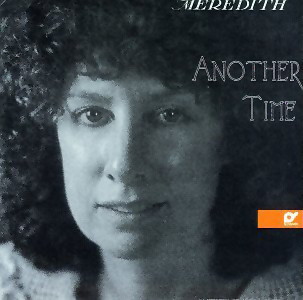
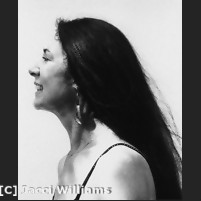
Meredith d'Ambrosio by Gordon Jack

 © Copyright ® Steven Cerra, copyright protected; all rights reserved.


“Boston born Meredith d'Ambrosio, a renaissance woman of international critical acclaim, has successfully combined careers in the musical and visual arts. Her musical sojourn began in 1958 in Boston singing with small bands with Roger Kellaway on piano. Although she worked primarily as a jazz singer-pianist she is also known as a respected calligrapher, watercolorist, creator of eggshell mosaics, composer, lyricist, recording artist and teacher. She branched out into NYC in 1981, and since that time has been touring extensively throughout North America and Europe performing with such musicians as Harold Danko, Bob Dorough, Dave Frishberg, Fred Hersch, Eddie Higgins, Dick Hyman, Hank Jones, Lee Musiker, Mike Renzi, Richard Wyands, Milt Hinton, Major Holley, Jay Leonhart, Michael Moore, George Mraz, Rufus Reid, Leroy Vinnegar, Buddy DeFranco, Harry Allen, Lee Konitz, Ken Peplowski, Phil Woods, Jack Sheldon, Don Sickler, Al Grey, Johnny Frigo, Gene Bertoncini, Kevin Eubanks, Joe Ascione, Terry Clarke, Keither Copeland, Jake Hanna, Butch Miles and Ben Riley to name a few.


Meredith d'Ambrosio continues to delight those who have come to expect a high degree of proficiency in her artistic offerings and has shown herself to be, if not an iconoclast, one who is comfortable enough with her own sense of self to challenge the mainstream concept of popularity without sacrificing considerable talents and originality.

- Sunnyside Records catalogue annotation


"To listen to d'Ambrosio is to abandon oneself to her charm. She leaves you spellbound with her impeccable diction, great sense of phrasing, intonation, and gentle swing, showing an unaffected simplicity and inner lyricism that expresses more than all the high-soaring excesses of scat singers." (Serge Baudot, Jazz Hot, France) "Her secret, one shared by very few singers, is her ability to deliver the meaning of a lyric in her understated and hip-as-can-be way."

- (George Fendel, Portland Jazzscene)”


Gordon Jack is a frequent contributor to the Jazz Journal and a very generous friend in allowing JazzProfiles to re-publish his perceptive and well-researched writings on various topics about Jazz and its makers.


Gordon is the author of Fifties Jazz Talk An Oral Retrospective and he also developed the Gerry Mulligan discography in Raymond Horricks’ book Gerry Mulligan’s Ark.


The following article was published in the June 15, 2021 edition of Jazz Journal. 


For more information and subscriptions please visit www.jazzjournal.co.uk


© -Gordon Jack/JazzJournal, copyright protected; all rights reserved; used with the author’s permission.


“Meredith d’Ambrosio should be far better known. Pianist, singer, composer, lyricist, teacher, calligrapher and artist she is a true renaissance woman who was frequently voted Talent Deserving Wider Recognition in Down Beat between 1982 and 1991. Despite her huge talent she has continued to fly under the radar even though her albums - 17 so far – have all been critically acclaimed. I first heard her about 20 years ago when her recording of How Is Your Wife was played almost daily on London’s Jazz FM. Written by Deborah Henson-Conant, it tells the bitter-sweet tale in just under four minutes of an affair with a married man, “Thursday night you swear you’re mine – break the bread and pour the wine. You think you’re here, I know you’re there”. She performs it with just the right amount of world-weary cynicism, her own subtle piano accompaniment fitting the introspective mood of sad disillusionment.  


She was born on 20 March 1941 in Boston into a musical family. Her father was a semi-classical singer and her mother worked as a pianist-singer in cocktail lounges for over 40 years. Her professional name was Sherry Linden and Meredith said she was “The last of the red-hot Mommas” with a voice that was a cross between Mabel Mercer and Lee Wiley. She obviously took her piano playing very seriously because she had lessons with the celebrated Madame Chaloff (Serge’s mother). Meredith though did not study with Ms. Chaloff who apparently could be “A pretty tough customer and a bit of a tyrant”. 


She studied classical piano and art until the age of 11 before enrolling at what later became the Berklee College of Music. These were years when she was listening to Art Tatum, Nat King Cole, Red Garland and Horace Silver. The latter’s 1952 trio recordings which produced Quicksilver (based on Lover Come Back) and Ecaroh (Horace spelt backwards) among others were particularly influential. Singers like Ella Fitzgerald, Dick Haymes, Ethel Waters, Jeri Southern, Maxine Sullivan, Mildred Bailey and Anita O’Day were also personal favourites.  When she was 17 she was awarded a scholarship at Boston’s Museum School and while there performed in local clubs. Around this time she met Roger Kellaway who was playing with Gunther Schuller’s group at the New England Conservatory of Music. She asked him to play Joy Spring while she scat-sang an accompanying line which led to a brief professional relationship where they performed Jackie Cain and Roy Kral-style routines. Their arrangement of Why Do I Love You called for nine key changes which obviously kept everyone on their toes. Meredith told me, “Roger was an incredible jazz singer. The quality of his tone was similar to Chet Baker but for some reason he stopped singing”.  On one occasion encouraged by Kellaway she sat-in with Maynard Ferguson’s big band at the Crystal club in Milford for a well-received I Got It Bad and I Cover The Waterfront.


With family responsibilities she remained close to home for the next twenty years or so combining club dates at the Camelot Lounge, Charter House, the Plaza Bar and the Keyboard Lounge with regular artistic commissions. Her painting and calligraphy skills were “Ways of making money to support my music”.  Her artwork is an attractive combination of realism and impressionism and evocative examples are to be found on her CD booklets. In 1965 she heard John Coltrane with his quartet at Boston’s Jazz Workshop and sitting with him after the engagement he asked her to sing something for him. Thoroughly impressed he invited her to join him on his forthcoming tour of Japan but having just divorced her husband and with a young daughter to care for she had to turn him down.  On another evening at the Workshop she met Bill Evans and told Marc Myers she was “In awe of his genius...I knew instantly that I was in the presence of someone from another planet”. In 1967 another of her influences Horace Silver came to hear her at Boston’s Inner Circle and requested Some Other Spring as it was his favourite song. They remained close through the years.


In 1978 she released Lost In His Arms and the wistful charm of the title song together with others of a similar vintage like Spring Is Here, Alone Together and I Get Along Without You Very Well are perfect vehicles for her. She also added a lyric to Freddie Hubbard’s Up Jumped Spring which the composer had first recorded with the Jazz Messengers in 1962. With her perfect intonation, superb breath control and crystal-clear diction it was clear that a new star had arrived with a fresh approach charming in its innocence. In an interview with Marc Myers she acknowledged Johnny Hartman’s help in getting the album released commercially.


It was Meredith’s idea to invite Phil Woods and Hank Jones to appear on her next album “Little Jazz Bird” in 1982 and Woods’ passionate alto and delicate clarinet really add to the success of the album.  Manny Albam, who had first seen her in a tribute to Alec Wilder in New York the year before, provided the arrangements for the date which included a string quartet. Once again her choice of material could not be bettered – The Wine Of May, There’s A Lull In My Life, I’ll Only Miss Him When I Think Of Him, How Is Your Wife and Our Love Rolls On etc. The latter is by the witty Dave Frishberg and in a recent correspondence she told me that she often performed some of his other  unique originals on live dates, “I played and sang Van Lingle Mungo for many years...how I enjoyed performing that crazy song! Dodger Blue knocked me out and I get a kick out of My Attorney Bernie”. Willis Conover, who became a big fan, interviewed her twice for Voice Of America. He was also intrigued by Meredith’s picture of a red-wing blackbird that graced the cover and asked if he could have the original water-colour. The artist was pleased to indulge him.


Because Little Jazz Bird was so fresh and new it became very popular especially in France where she was “Treated like a queen” when touring there. She was invited to appear at the 1986 Paris Jazz Fair on the same bill as Miles Davis, a combination which must have intrigued many in the audience.  In 1987 and again in 1991 she worked at Les Alligators jazz club in Montparnasse with Eddie Higgins and Patrice Caratini and tapes of these performances have been exchanged among collectors for years.


Three years after Little Jazz Bird she recorded It’s Your Dance thriving in the intimate setting provided by Harold Danko and Kevin Eubanks. It’s Your Dance is an Israel contrafact with a new lyric provided by Ray Passman and composer John Carisi was in the studio at the time of the recording. In a 2004 interview for Jazz Improv magazine Meredith said that she had memorised the whole Birth Of The Cool album over the years – note-for-note. She wrote the lyric for Coltrane’s magnum opus Giant Steps and Al Cohn’s Ah, Moore became The Underdog here after Frishberg turned it into a gambler’s lament. Devil May Care is one of Bob Dorough’s finest. The cynical Miss Harper Goes Bizarre has Meredith’s music with Passman’s lyric who had Brooke Shields in mind at the time of writing.


Her 1987 album The Cove features Lee Konitz, Fred Hersch, Michael Formanek and Keith Copeland. It is worth quoting what Hersch once said about her, “Most singers aren’t musicians (but) Meredith is a musician who just happens to sing”. The contrast between Lee’s austere alto and Meredith’s delicate impressionism is a stimulating one and the repertoire features a number of deeply felt, emotional ballads like It Might As Well Be Spring, Lotus Blossom (with a new lyric by Roger Schore), Time To Say Goodbye and Turn Out The Stars. The album concludes with Steve Allen’s Everybody Knows which cleverly name-checks no less than ten standards at a little under three minutes.


In 1989 a few months after she married pianist Eddie Higgins they made their first album together – South To A Warmer Place.  Meredith added lyrics to Al Cohn’s ‘T Aint’ No Use and Bob Haggart’s You’re My Inspiration and as usual she performs standards you don’t hear every day like I Can Dream Can’t I and He Was Too Good To Me. Her version of Cole Porter’s lovely but sadly neglected Dream Dancing is a stand-out as is her latin-tinged Morning by Clare Fischer.


Space precludes a discussion of all her albums but there are four more that should be highlighted. On her 1990 recording Love Is Not A Game she introduces a totally new art-form similar to vocalese with one important difference. Masters of the craft like Eddie Jefferson and Jon Hendricks added lyrics to famous solos but on this and subsequent albums she not only wrote her own ultra-hip lyrics but provided bebop-like contrafacts. I know of no other artist who has attempted this. What you hear on You I Love and But Now Look At Me are her own lyrics and melodies based on I Love You and Oh Look At Me Now creating a vocalese-like effect although Meredith has written everything. Bob Dorough refers to this concept as a Paraphrase. 


Her 1992 CD Shadowland has more of this musical transformation. I Should Care, You’ve Changed, You Leave Me Breathless and Fools Rush In become in her hands The Sheepcounter’s Lament, You’ve Altered Your Attitude, A Breath Of Spring and This Rushin’ Fool. Beware Of Spring! has I Fall In Love Too Easily, Get Out Of Town, Dearly Beloved and I Had The Craziest Dream dressed up as Cauliflower Soul, Get Lost, Clearly Beloved and I Can’t Wait To Tell You. Finally her 1997 Echo Of A Kiss has similar routines on Beautiful Love and I Don’t Stand A Ghost Of A Chance With You which become Gorgeous Creature and Chance With A Ghost. In “Meredith d’Ambrosio’s Paraphrase Songs For The Jazz Singer” she has recently published fourteen of these pieces which would make an ideal study for an aspiring solo performer. 


As a postscript to this appreciation I recently asked her to name a few more of her favourites and she mentioned Jimmy Rowles, Harold Land, Hank Mobley, Roy Haynes, Dave Frishberg and Clifford Brown. The trumpeter was so important to Meredith and Eddie Higgins that they named their pet Labrador “Clifford Brown” in his honour.


Meredith d’Ambrosio’s smoky tenor has an introspective almost conspiratorial quality, inviting the attentive listener to share a secret that only she seems to know. She told me that reviewers have tried to guess her vocal range because through the years her voice has become quite deep. She tends to avoid well known classics from the Songbook repertoire like All The Things You Are and My Funny Valentine because she feels they have been overdone. In her early days in Boston she had to perform Funny Valentine twice a night, five nights a week which is why she has never recorded it. She prefers to concentrate on her own sophisticated material together with originals by Dave Frishberg, Bob Dorough and Fran Landesman. She really is a treat that should not be missed and luckily most of her CDs are readily available.”


Selected Discography

Little Jazz Bird. New Jersey, 1982. (Sunnyside SSC 1040 CD).

It’s Your Dance. New York, 1985. (Sunnyside SSC 1011 CD).

The Cove. New York, 1987. (Sunnyside SSC 1028 CD).

South To A Warmer Place. Florida, 1989. (Sunnyside SSC 1039 CD). 

Love Is Not A Game. New York, 1990. (Sunnyside SSC 1051 CD).

Shadowland.  New York, 1992. (Sunnyside SSC 1060 CD).

Beware Of Spring!. New York, 1994. (Sunnyside SSC 1069 CD).

Echo Of A Kiss. New York, 1997. (Sunnyside SSC 1078 CD). 


Thursday, June 24, 2021

"Magna-Tism:" Pete Christlieb and Warne Marsh in "Conversation" [From the Archives]

© -Steven Cerra, copyright protected; all rights reserved.


“By far the most loyal and literal of the Tristano disciples, Warne Marsh sedulously avoided the 'jazz life', cleaving to an improvisatory philosophy that was almost chilling in its purity. Anthony Braxton called him the 'greatest vertical improviser' in the music, and a typical Marsh solo was discursive and rhythmically subtle, full of coded tonalities and oblique resolutions. He cultivated a glacial tone (somewhat derived from Lester Young) that splintered awkwardly in the higher register and which can be off-putting for listeners conditioned by Bird and Coltrane. Marsh's slightly dry, almost papery tone is instantly recognizable.”
- Richard Cook and Brian Morton, The Penguin Guide to Jazz on CD, 6th Ed.


“Influenced by Sonny Rollins and Zoot Sims, Christlieb plays with power even at the fastest tempos, yet his delivery of ballads invariably shows fine feeling; he is also a convincing interpreter of the blues. His proficiency on a number of reed and woodwind instruments and his strength as a tenor saxophone soloist explains his popularity with the leaders of studio bands.”
- Mark Gardner, Barry Kernfeld, ed., The New Grove Dictionary of Jazz


I’ve always been a great fan of two tenor saxophone front lines backed by a piano/guitar, bass and drums rhythm section.


This fondness dates back to the great “chases” between Dexter Gordon and Wardell Gray, to the duels between Gene Ammons/Sonny Stitt Eddie "Lockjaw" David/Johnny Griffin and to the less fractious more melodic versions headed up by Zoot Sims and Al Cohn and by Tubby Hayes and Ronnie Scott.


If you were going out looking for two saxophonists who would play well together it’s a safe bet that you wouldn’t come up with the pairing of Warne Marsh and Pete Christlieb.  Marsh is one of the genuine mavericks of the tenor saxophone. He perfected his art under the influence of Lennie Tristano’s cool, rigorous discipline, but very early on he managed to develop a style of his own that was [and remains to this day] wholly unpredictable.


He will play double time, half-time and apparently out of time in the course of a single phrase; just when he seems to be lagging lethargically behind the beat, you blink your eyes and find him right on top of it.


Pete Christlieb, whose father is a concert classical bassoonist, now at work recording the complete works of Hindemith, is a big toned, technically awesome, straight-ahead swinger. He was a member of The Tonight Show Band for several years, and while those who have been lucky enough to hear him play small group Jazz have come away mightily impressed, it is unlikely that any of them came away thinking about pairing him with Warne Marsh.


Pete and Warne actually came up with the idea of playing together.


They made a recording of tenor duets, backed by bass and drums, that eventually found its way to Walter Becker and Donald Fagen, who are better known as the multi-platinum winning rock group Steely Dan. Again the combination is not the kind of thing that spontaneously comes easily to mind.


Fagen and Becker are adroit masters of traditional Jazz harmonies, and more than that, they are interested in and perhaps obsessed by the iconology of Jazz, They’ve written a song about Charlie Parker [“Parker’s Band”], rearranged Duke Ellington’s “East St. Louis Toodle - Oo” for a rock band and pedal steel guitar and conducted a particularly knowing examination of what can only be termed the impulse of Jazz in their song “Deacon Blues.” That song features a tenor sax solo by Pete Christlieb.


And so, circuitously, but inevitably, we come to Apogee [Warner Brothers BSK 3236; CD version 8122-73723-2], the first Jazz album produced by Fagen and Becker, Christlieb’s first record on a major label, and Marsh’s first record on a major label in years, And, it should be added before we go any further, a spectacular record by anybody’s standards. For it turns out that the two principals make a spectacular team. Their very different styles offer a refreshing contrast, and they play together with impressive savvy, projecting a deceptive but extremely invigorating impression of total abandon. This is winging, exceptionally inventive Jazz of a kind that isn’t even found on obscure collector record labels very much anymore. Despite Fagen’s remark that the album is “basically for tenor freaks,” it’s got enough spirit to appeal to just about anybody.


It’s evident that a lot of care went into the making of Apogee. To begin with, the right rhythm section had to be found. Lou Levy, the pianist turned in an astonishing performance of Warne Marsh’s album All Music [Nessa Records]. His rich, deftly placed, chording frames the tenor solos brilliantly and his own improvisations are fresh and consistently inventive. Bassist Jim Hughart and drummer Nick Ceroli kick things along without getting in the way of the soloists. They are a living embodiment of that “good and forward propelling directionality” as Gunther Schuller once called swing, but not once are they overbearing about it.


The Warner Brothers LP version of Apogee was released in 1978 but tapes with more music from the September 15, 1978 sessions on which bassist Jim Hughart also served as recording engineer eventually found their way to Gerry Teekens who in 1991, released them as two CD’s on his Criss Cross Jazz label: Conversations with Warne: Pete Christlieb Quartet Vol. 1 [Criss 1043] and Conversations with Warne: Pete Christlieb Quartet Vol. 2 [Criss 1103].


The three discs contain 25 tracks of some of the most astonishing two tenor saxophone ever produced in the context of modern Jazz, especially for its harmonic content and approach which is what distinguishes Warne and Pete from previous tenor saxophone duos.


Yet, for all their harmonic density, a lightness of touch and agility shines through each of these performances which serves to demonstrate some rather capricious intelligence at work here.


Very few musicians have the talent and ability to create Jazz on this level: “Magna-tism,” indeed.


Pete Christlieb explains how it all came about in the following insert notes to
Conversations with Warne:


“During the 1970's in Los Angeles, I met Warne Marsh at a rehearsal with Clare Fischer's Big Band. The tenors sat together so we shook hands while Clare counted off Lenny's Pennies. Playing Tristano's line for the first time was like trying to change the fan belt on a car while it's running. We traded choruses and eights, which provided our formal introduction as I remember. Aware of Warne's reputation I was thrilled when he mentioned that one of his students had brought in my first album. I thought he was going to be critical about it, and rightfully so but to my surprise, he said that by analyzing the solos, he was able to teach with it.


After the rehearsal, we talked for awhile and he told me things about my playing I didn't know I was doing.


[Alto sax/flutist] Gary Foster was there when our meeting took place ten years ago, and just the other day he reminded me that I mistakenly addressed Warne as ‘Warno' during that conversation. We all knew a saxophone player by the name of Arno Marsh. Consequently, his great sense of humor kept me from looking even dumber. He asked for some extra copies of my album; and I told him this would be no problem because most of them were still in my garage.


Months later I received an invitation from my friend Jim Hughart to come by and listen to a trio recording session he was producing for Warne. Hearing this group with Jim on bass and Nick Ceroli on drums, I noticed that the absence of piano made Warne sound more abstract and complex white creating a melodically defined harmonic atmosphere.


Warne and Jim were creating enough of the harmonic image to make me realize that they actually didn't need piano. I asked Warne if he had any plans to add piano later and his reply swiftly nailed the question to the wall. 'I like to work this way because it gives me more freedom and avoids any harmonic conflict with an unfamiliar player. Do you realize that every time he puts his hands on the keyboard he's telling you what to do? Lenny was my piano player, and if I can't get him, I would just as soon work alone.' Then jokingly he added, 'Besides we're splitting his bread.'


Limping back to the booth, I began to ponder my first lesson about asking questions and during the next take, my ears told me everything I wanted to know anyway.


Playing together, this trio sounded as if they were controlled by one mind. Utilizing complete control of a seemingly endless source of melodic, harmonic, and rhythmic options, Warne Marsh created, without sounding mechanical, and his music was an inspiration.


After the session, we listened to the tape several times, allowing Warne the opportunity to making a decision. He was very critical of himself and that decision was made after several hours of 'Well, I don't know, play the first one again.'


When they decided to end this incredibly artistic evening, I couldn't hide my feelings toward being left out. I asked Warne if he would consider making an
album with me. His reply to my question was 'Yes!’ We decided to use the same rhythm section and start a month later.


It is important to mention that all of the material for the trio album was improvised over the chord changes from standard tunes and our quartet album was planned the same way. I learned here that having this artistic freedom placed enormous responsibility upon all of us during take-offs and landings. Needless to say, we crashed a few before attaining that synchronization.


With high expectations, we began our first album by recording several tunes in a row without repeating. This helped to avoid boredom and the inevitable case of 'the claw.’


The intensity within our combined efforts drove us to the point of mental and physical exhaustion. As a result, none of us felt that Jazz history had been made that night, however we all agreed to the fact that something good was going to happen. Considering this first session as an opportunity for group familiarization and direction, we decided to quit for the night.


A few days later with fresh ears, Jim and I got together and listened to the tape. We then realized that our efforts had in fact measured up to those high expectations. Warne and I traded thoughts during improvisation throughout the entire session, making me believe that this was no fluke. I can attribute this uncanny rapport to the fact that we had mutual intentions for the creation of music, rather than ‘note-atomic war'.


Considering all of the great players Warne had worked with, it would be presumptuous of me to say that this was a first for him. To me, however, this meant that many of those records in my collection featuring two well known tenor players, now represented the sword fight in a pirate picture. These records did provide many hours of inspiration, and besides, it was a chance to get two great players for the price of one. Having this melodic form of conversation as another creative option, we made it a point to have Jim and Nick lay out periodically during our second session. At one point we began to improvise together in harmony and after hearing this back, we all got goose bumps.


Over the next few months, we were able to develop a telepathic relationship and our communication remained constant even during 180 MPH tempos.


While our working relationship grew stronger over these months so did my curiosity of his unique approach to improvising. One day he played something very melodic and dissonant at the same time while offsetting or displacing the phrase in double time feel. 'How did you do that?' I asked him. He said, 'You don't want to get involved, it will only confuse you.' He did however agree to write out a lesson plan for me to look at later.


The plan called for a phrase to be composed four bars long and memorized. You start the metronome at a reasonable tempo and begin playing your phrase an eighth of a beat later. Now start your phrase on the quarter and so on. Be sure to take plenty of change along with you to call home [when you get lost].


Designed to develop your mental dexterity, this exercise was set aside because it was, in fact, confusing to me at the time, I needed to be fluent and uninhibited.


Another option I learned from him, was to build on a phrase by imitating or inverting the previous one. Connecting them will improve your melodic flow and even more important, make you think.


There were many other things Warne did that became an influence on my playing as a result of our association, I am reminded of that fact every time I get the opportunity to play.


My influence on his playing, I feel, after listening to the tape was a combination of two things. His tone became brighter and my time feel persuaded him to play with more intensity. This subtle influence comes as an enormous compliment and those who knew him can tell you that Warne Marsh was a dedicated innovator.


Warne's early influences were probably the same great players we all listened to for inspiration, but he never let them dictate his thoughts. My tribute to this kind and dedicated man lies in the fact that Warne Marsh was to the Jazz tenor saxophone, truly an original.”


Forever his student,
Pete Christlieb

Warne Marsh, Pete Christlieb - Apogee 1978 - Full Album