Monday, September 6, 2021

Diana Krall: The Price of Making It [From the Archives]

 © -Steven Cerra, copyright protected; all rights reserved.


“Diana Krall's biggest problem in the jazz world is success.


Singing is closer to the actor's art than the musician's. The real trick of the ballad is not to make the song happen but to let it happen — to get out of its way.


Someone once wrote in the New Yorker that when Mel Torme sang A Nightingale Sang in Berkeley Square, you heard the singer. When Frank Sinatra sang it you heard the song. When Nat Cole sang it, you heard the nightingale.”
- Gene Lees

My Krall Quest was inspired by a friend hipping me to guitarist Anthony Wilson’s solo that begins at 1:47 into the All Or Nothing At All video taken from the 2001 “Live in Paris” Concert which you’ll find at the conclusion of this piece and which is NOT ON the subsequently released CD. [Mercifully, it is included on the DVD.]


Anthony’s brilliant solo just knocked me out, which led me to a viewing of the entire concert and then to do a bit more research on Diana’s early years in Jazz by way of the Alyn Shipton essay and the below piece by Gene Lees.


Of course, since the Shipton and Lees interviews were conducted in 1999, Diana has gone on to become a huge star and I couldn’t be happier for her because as revealed in these earlier conversations she seems like quite a nice person in addition to being an exceptional musician and vocalist.


The Price of Making It
Jazzletter May, 1999
Gene Lees

Diana Krall's biggest problem in the jazz world is success. The first press run on her new album with charts by Johnny Mandel was, reportedly, a million copies. She can fill concert halls around the world, and no one in jazz or even quality popular music, to coin an awkward term, has had anything like the promotional and publicity buildup that she has. It is usually reserved for rock stars.


Her blonde image has been on the cover of seemingly every publication except The Watchtower. Her career has been advanced by such mentors as Ray Brown and John Clayton, and she has studied with outstanding teachers, including Mike Renzi, Alan Broadbent, and, most extensively, the late Jimmy Rowles.


You'd think most jazz fans and critics would be delighted. But she has been the subject of a fair amount of attack. That was to be expected, since many admirers of jazz really do not want it to be popular. It would deny them their claim to special taste. Someone fresh comes along, is acclaimed by press and the fan corps, becomes immensely popular, then suddenly is on the anathema list as having "sold out". It happened to Dave Brubeck, Cannonball Adderley (accused or producing "homogenized funk"), George Shearing. It happened, to a degree, to Dizzy Gillespie. To some extent it even happened to Miles Davis.


It's happening now to Diana Krall. And this raises certain significant issues.


Mel Torme said once that "the trouble with this business is that it's all bottom and top. There's no middle." And whatever middle there ever was has been eroding, along with the middle class of America, as showbiz looks for the blockbuster movie hit, the overnight payoff, seventy-million-dollars the opening weekend.


I once said to Gerry Mulligan, "The trouble with people like you and me, Mulligan, is that we want world fame and total anonymity at the same time."


The truth behind that quip is that without a Name, the corporations are not interested in your work, no matter how meritorious. You are not "bankable," as they say in Hollywood. And nowadays, few are the executives who will invest the time and effort and grooming in a talent that new careers really require. RCA producer Joe Rene told me at least thirty years ago that whereas he had once been allowed five years to build the career of a new singer, now the accountants and lawyers invading and controlling the record industry wanted to see the payoff in one year. Singers like Terri Thornton and Ethel Ennis and Marge Dodson and Marilyn Maye, magnificent talents, got dropped. The business was no longer about music, it was about selling pieces of plastic.


The point of my comment to Mulligan is that you accept the necessity of publicity and the building of a Name, but the very process makes you want to run and hide from it.


Until a few months ago, I had never heard Diana Krall. Terry Teachout had been importuning me about her for two years, and friends among the musicians of Toronto had talked about her.


Then one day Johnny Mandel and I went to pay a visit to Red Norvo in a small hospital in Santa Monica. We both sensed, as we left his room after about an hour, that we would never see him again, and we never did.


When we reached the street, Johnny told me he intended to do an album with Diana Krall. He was astounded that I'd never heard her, and had me drive from one Santa Monica record shop to another until he found the album he wanted to be my introduction to her, All for You, subtitled "a dedication to the Nat King Cole Trio." I was charmed by it. I liked her piano work, and I liked her singing. We listened to it all the way back to his home in Malibu.


By coincidence, Jazz Times magazine asked me to write a profile on her. I was about to spend some time in New York, and thought I might interview her there. But she was doing a gig in Philadelphia at that time. I agreed to see her there.


Before I went, however, I read the thick sheaf of articles about her supplied to me by Rogers and Cowan, the public relations agency that is handling Krall. The redundancy of questions in the interviews was notable. Everyone subject to the pressures of a publicity campaign has been through it. Eventually the process becomes numbing. You begin to recite your answers to the predictable questions.


Mandel said that part of his enthusiasm lay in his delight in encountering a singer under fifty who knew the classic song repertoire. But realistically, she's not all that young. She's thirty-three, Ella Fitzgerald first recorded at seventeen, Frank Sinatra recorded All or Nothing at All with Harry James when he was twenty-four and by twenty-seven was the biggest singer the business had ever seen, Nat Cole was twenty-six when he recorded Straighten up and Fly Right, Gerry Mulligan wrote Disc Jockey Jump for Gene Krupa when he was twenty, Victor Feldman was an established professional at twelve, Woody Herman was twenty-two when he became leader of the Band that Plays the Blues, Dizzy Gillespie and Charlie Parker revolutionized jazz before they were thirty, Mendelssohn was seventeen when he launched the Bach revival and died at thirty-eight, while Bizet and Mozart died when they were only a couple of years older than Krall is now. Krall is, in fact, something of a late bloomer, and her work is still evolving.


The question frequently thrown at her — why isn't she writing songs? — is odd. Our best writers have not been singers, Johnny Mercer being the spectacular exception. Al Jolson would seem to be another exception, but in fact his name is on all sorts of songs to which contributed nothing whatsoever: it got there by coercion exerted on the songwriters in a process known in those days as the cut-in. Ella Fitzgerald never wrote a song in her life. Nor did Tony Bennett, Sarah Vaughan, Carmen McRae, Julius LaRosa, or Matt Monro. Frank Sinatra contributed a line or so to a couple of songs, but built his career on the classic repertoire. Frankie Laine wrote the superb lyric to Carl Fischer's We'll Be Together Again. Peggy Lee wrote a few quite excellent songs but nonetheless built her career on the work of others. A few of the good songwriters sing or sang well though not for a living, Alan Bergman, Alan J. Lerner, and Harold Arlen among them, but most sang badly if at all, and to hear some of them demonstrate their wares could be excruciating. Verdi, Puccini, Leoncavallo, Rossini, and Bizet didn't sing; or if they did, they didn't do it publicly. Years ago the two professions were considered mutually exclusive. Rock-and-roll changed that perception, and we have now had forty years of double-threat people who can't sing and can't write.


As for Krall's comment about operatic voice, it misses the point. Back when I was singing a lot in Canada, particularly on television, I did a CBC special that starred myself and the great contralto Maureen Forrester. I was reluctant to do it at all, figuring that with her pipes she'd blow me away. In fact she was enormously supportive, because she understood blending. I learned a lot of tricks from her in the downtime between camera shots, and she made a remark I do not forget: "I can sing opera and bounce a note off the back of a concert hall without a microphone, but I cannot sing Cole Porter without one." Maureen began as a band singer, and knew as few opera singers do the difference between the two kinds of voice production.


The late Jeri Southern once told me that each of us has two voices. I disputed this. Then she pointed out to me that Sarah Vaughan had a high, thin, intimidated speaking voice, almost that of a little girl, but a singing instrument of incredible power, darkness, and range. As for herself, Jeri said, she had been classically trained and she belted out a few phrases in an operatic voice sufficient to shatter goblets. She had become a success, she said, when she abandoned that voice and began singing in her speaking voice. It was a revelation to me, and I remembered that my early vocal influences had been Kenny Baker, Nelson Eddy, and John Charles Thomas; then I heard Sinatra. I once could produce a powerful operatic baritone; now I am not in touch with those muscles, and in any event, I don't like the sound. It is not appropriate to songs.


The most important thing operatic singing does have in common with "pop" singing is the breathing, the support.


It's unfortunate that Diana didn't, during her Los Angeles years, take some lessons from Jeri Southern, who taught a lot of people, including some established professionals.


Having read all the material, I went to Philadelphia. Beth Katz, the cordial and effective agent from Rogers and Cowan, had made a dinner reservation for Diana and me. I was there a little early. Diana came in, said hello, a little out of breath from hurrying, sat down, and began the conversation as if we knew each other, which in a sense, through mutual friends, we did. I took an immediate liking to her.


She was born in Nanaimo, British Columbia. Vancouver Island lies off the coast of British Columbia. Nanaimo (it's a Coast Indian name, pronounced Na-NY-mo) is a small city on the east coast of the island, facing toward the mainland. I went to high school for a year in Victoria, the capital of the province, a few miles south of it; Paul Horn lives in Victoria now. The island is one of the world's great beauty spots, mountainous and covered with Douglas firs, though how long they will last in the face of clear-cutting, the land's ongoing rape by the lumber companies, in both Canada and the United States, is questionable.


She mentioned Wigan, in Lancashire, England. I said immediately, "George Formby."

"How did you know?" she said.


"I not only grew up loving his movies and his records," I said, "but when I was a young reporter, I actually interviewed him." Formby was a Lancashire music-hall man and movie star, who played what he called a banjolele and sang comic songs. Peter Sellers was the ultimate Formby freak. But how did she, at her age, know Formby? Through her father, she said. Her father and mother loved that era of show business, and had recordings of the great radio shows, such as those of Jack Benny. It is not the influence of Jimmy Rowles that made her "look over her shoulder" at the older material. It was her family.


Her father is a chartered public accountant, her mother a teacher with a master's degree in educational administration. Her sister is bylaws officer of Nanaimo. When the two girls were young, they loved swimming and skiing. Diana had a dream of being an astronaut.


"I couldn't have had more supportive parents," Diana said. "The most important thing for me is my family. I'm close to my family. The hardest thing is living far away. I go home once a month."


"That often?" It's a few thousand miles from New York City, where she now lives, to Nanaimo.


"Yeah. I try to."


"And the singing?"


"I sang with my grandmother. I sound like her, a lot like her. My father's mother. She was a real character She was the last person to go to bed Christmas Eve. She'd still be up singing Hard-Hearted Hannah. Knew every tune. I went over to her house every day after school. We'd play the piano and sing. I just sang there, never at home. I didn't think I had a good enough voice. Then I started getting piano-bar gigs. I sang as little as I possibly could. Typical story. You get more gigs if you sing."


A considerable number of women singers began as pianists: Sarah Vaughan, Carmen McRae, Meredith d'Ambrosio, Audrey Morris, Jeri Southern, Shirley Horn among them.


She said, "I met Jeff Hamilton when I was nineteen, at the Bud Shank Port Townsend Music Camp. I listened to Rosemary Clooney when I was a kid, and he was on most of her records. And John Clayton, and Monty Alexander. Jeff encouraged me to come to Los Angeles and study, and said they'd make sure I was okay and got a good teacher.


"The next month, I think it was, the L.A. Four came up to Nanaimo. It was Jeff, and [guitarist] Ron Eschete, and Bud, and John. My mom and dad had them over for dinner. There was a jazz club in Nanaimo called Tio's. I heard Dave McKenna there, and Monty Alexander I met Ray Brown in Nanaimo, and since then they've all been very important to me.


"I got a Canada Arts Council grant and went to L. A. to study. I stayed four years. I studied with Alan Broadbent first. I'd like to study with him some more. And then I studied with Jimmy Rowles. Ray said, 'I don't think he teaches.' I talked to John Clayton, who said, 'Here's his phone number.' I called him up and went over to his house and I ended up spending most of my time at his house.'


"What were the lessons like?" I asked. "I can't imagine Jimmy giving formal lessons, saying ‘Do this, do that.'"


"I wish he were still here. I'd like to go over and ask more questions. He'd say, 'Sit down on the couch and talk and ask questions.' We'd talk. He'd tell stories about Billie Holiday and Sarah Vaughan. I just did a tour with Ray. I'd sing about three tunes a night and play piano. It was just as important to me to hang out and listen to stories as it was to practice and play. With Jimmy and with Ray Brown. And still is. A lot of the time with Jimmy was spent just talking. Jimmy wrote out Poor Butterfly for me. It's one of my favorite recordings he's done. I'd come over and we'd talk and there was a piece of music there on the piano, and I knew it was waiting. And he'd say, 'Go take a look at that.' And it always had my name in the corner, Diana. And he'd have things written out for me."


"What was it like? Voicings and such?"


"Yeah. He'd play for me, and then I'd play for him. But most of the time was spent with me listening to him play. And we'd listen to records. We'd listen to Ben Webster, to Duke Ellington. He'd say, 'This was recorded 19-whatever' I admire those guys who know the history, Kenny Washington. The jazzmaniac! He is amazing. We're going to do some dates with him. One thing I couldn't do was play or record Jimmy's tunes. Two weeks before he died, I called him and told him, 'I can't play your tunes. They're so personal to your style that I would have to imitate you to play them.' I thought that way at the time. I don't feel that way now. I'd like to do a lot of his music. I thought, 'Why bother?' He recorded The Peacocks, Bill Evans recorded The Peacocks beautifully. I thought, 'What am I gonna do with that?' He'd swear and growl and say, 'Forget that! Play them!'


"There's a time to emulate, and then you have to do your own thing. There's so much to Jimmy Rowles. It's about attitude. I think the most important thing he ever taught me was about beauty. And I think I was too young even to grasp that. You want to play fast. That's all I wanted to do. He put on Daphnis and Chloe and we'd sit and listen to that. Ansermet's version. That was the recording I had to listen to. And he'd give me the scores. I learned a lot of stuff."


"I hear Rowles in your playing," I said. "But without the quirkiness. Jimmy would do eccentric things just for the fun of it."


"Oh, I do that too, sometimes," she said.


"What else did you listen to?"


"Art Tatum, which I found overwhelming at that age." She gasped aloud.


"I started singing in L.A. I did a lot of piano bar stuff, 'cause that's how I could survive. I moved back to Toronto after L.A. That was '87 to '90."


I said, "I noticed how many Canadians hit the Grammies this year."


"Canadian women," she said. "Celine Dion, Alanis Morissette, Shania Twain, Sarah McLachlan."


"I'm sorry Shirley Eikhard's album got so little attention. It's a hell of an album. Blue Note just seemed to toss it out the window and did nothing with it."


"Well I'm really lucky," she said, "to have a record company that's been supportive. A record company that has not tossed me aside, but has allowed me to grow and change as an artist publicly, and given me support. I've had tremendous support from Tommy LiPuma and Al Schmidt." They are her producer and recording engineer respectively. "I've worked so hard to be a musician and play what I really want to play."


"Let's get back to this criticism that you don't write your own stuff. When I was growing up and listening to Frank Sinatra, he was doing stuff that was already old, like Night and Day"


"Oh yeahl" she said, with real surprise.


"Sure! Night and Day is from 1934. So was Try a Little Tenderness. A lot of it came out originally before I was born. All that stuff Sinatra did in the 1940s was at least ten years old and a lot of it twenty years old. Sinatra's whole career was largely built on older tunes. So is Tony Bennett's. Peggy Lee and Nat Cole too. All built on classic repertoire."


She said, "I've been misquoted on this point, including this criticism that I don't write my own material. There's this pressure in interviews: 'Do you consider yourself a jazz musician? Are you a jazz singer?' Because I'm not improvising and scat singing, does that make me a pop singer? But I play piano and I improvise in my trio and quartet. So it confuses people. I don't think about whether Shirley Horn is a jazz singer or not."


"No. And Sarah, with whom I worked, and who was my friend, hated the term 'jazz singer' and didn't want to be called one."


"Well, I don't want to be labelled. 'You don't fit, you're not a jazz singer like such and such.' Or 'You don't write your own tunes.' There's a lot to do. I'm writing my own arrangements, I'm playing piano, I'm leading my own band. I'm inspired by Ahmad Jamal and the way he took standards and did them his own way. I find that creatively fulfilling. Songwriters are songwriters. I think of Ahmad Jamal as a great jazz pianist, not as a songwriter."


I pointed out to her that most accomplished songwriters, and many jazz musicians, do not like scooby-dooing "jazz singers. "No one was ever as well equipped to do it as Nat Cole, and he didn't do it. On the contrary, in his singing, he was scrupulously faithful to the melody. The best scat singers have been instrumentalists — Clark Terry, Richard Boone, Dizzy Gillespie, Frank Rosolino — and they would always do it in the abstract, not destroy songs by tortured melismatic meanderings.


Diana said, "Can you imagine someone saying to Nat Cole, 'Why don't you write your own songs?'"


"Well," I said, "he wrote a couple of light novelty songs, such as Straighten Up and Fly Right. No ballads that I know of. Donald Byrd once told me he'd concluded that the hardest thing to do was play straight melody and get some feeling into it. I've seen Nat Cole referred to as a cocktail pianist. Bill Evans too."


"There's that fine line. People will say, 'All you're doing is cocktail piano.' I don't listen to that. I don't obsess about it. Things that sound simple . . . it's not the easiest thing. Charlie Parker, Miles, Ahmad Jamal, they were playing standards."


"Bill Evans, Oscar Peterson, all the great ones. And John Lewis argues that jazz was built in a kind of symbiotic relationship with popular music during its classic period."

"It's not something I feel I have to defend," she said. "I get that question, like, almost every interview. It's always, 'Why don't you write your own material?'"


Bill Evans once told me that his very unfavorite question in interviews was, "How did you start playing the piano?" Some years later, I was interviewing him for a radio program. I reminded him of what he'd said. "It is my unfavorite question," he affirmed.


"All right," I said. "Then how did you start playing the piano?"


He chuckled and did about twenty illuminating minutes on musical pedagogy.


I had learned from the interviews that Diana was tired of questions about the onset of fame. A boy in a master class asked her what it was like to be famous. She said she hated the question.


I told her I thought the question was legitimate. I have long been fascinated by the phenomenon of power. Why didn't somebody just knock Hitler off? What keeps a killer in power, a Stalin or Pol Pot or Milosevich? Intimidation? What allowed John Foster Dulles to send thousands of Guatemalans to their deaths just to protect his family's interests in the United Fruit Company?


And fame is power. How can one expect a Frank Sinatra to be "normal"? Once at a recording session I heard him make a mild joke and all the executives and minions of Reprise records in the control booth fell about in roaring laughter as if it were a brilliant witticism. And in that I glimpsed his dilemma and the nature of power. Did anyone ever say to him, "Frank, you're full of crap"? I doubt it. Someone who knew him well said to me recently, "Frank was an asshole." But how could he be anything else? Sir Robert Walpole said, "Gratitude, in my experience, is usually the lively expectation of future favors." And those who sucked up to Frank expected future favors.


Lord Acton wrote, "Power tends to corrupt, and absolute power corrupts absolutely." And fame is, usually, money, and money is power, and all the sycophancy that accompany it. The endless, servile flattery distorts reality. And beyond that, there is the erosion of privacy that fame brings, which can be frightening. Or merely annoying. Once, at a crowded but supposedly private party at Woody Herman's house, I watched Rosemary Clooney having a pleasant chat with friends. And then someone asked for her autograph. She left.


I told Diana "I've seen fame destroy people. Some survive it."


"Is it worse for men or for women?" she asked.

I thought for a long moment, particularly of a singer I have known for many years, a wonderfully funny and down-to-earth person when she was little known and an affectedly phony diva after fame hit her. "Women," I said. "For one thing it puts them in the position of commanding men, and men resent it. You've got to be feeling it. What's it doing to you?"


"Well, I'm embarrassed. I feel like that when I walk out on stage and everybody claps. When we finish a show, as we did night before last in Pittsburgh, and people give me a standing ovation, I feel like saying, 'No, it's okay, sit down, don't bother.' I'm not comfortable with it. I love to make people happy but I'm not comfortable with that. Sometimes because of that embarrassment, it comes out in, I've been told, people saying that I'm aloof."


"Do you think it's a Canadian characteristic?" I said. "Kenny Wheeler's that way. Kenny and I went to high school together."


"Maybe," she said. "I think I put a lot of pressure on myself where it isn't necessary I'm trying to handle it. I'm happy for my success, and I'm trying to enjoy it. Not to be so worried about things. The pressure is learning, learning how to answer questions that may not be directly pertinent. I've got to get used to it."


We got into Canadian stories. I told her a joke: Why did the Canadian cross the road? To get to the middle.


There is so much about her that is Canadian. The main element of any singer's style is enunciation, particularly the shape of the vowels. I had a bilingual French Canadian journalist friend who used to say that the Canadian accent, in both French and English, with the tight, closed vowels, develops "because our jaws are frozen half the year." One of the elements of Frank Sinatra's "style" is his New York-area Italian dentalized t's and d's and half-swallowed r's, coupled with almost Oxonian vowels. Krall's "style" is a Canadian accent with excellent time and a voice that is inherently lovely. It has a slight croak in it. So did Sinatra's, though his probably came from smoking.


In several of the interviews I'd read, she'd made the comment that she was shy, which I believe is true. But many performers and public figures are shy, no one more so than the late Woody Herman. "Even me," Steve Allen said, when we were discussing this phenomenon one day.


Miles Davis and Dizzy Gillespie both told me they were nervous before going onstage. "And it gets worse as I get older," Miles added. Peggy Lee, in her performing days, used to get sick before going on. One of the shyest persons I ever knew was Ella Fitzgerald, and believe it or not, off-stage Sarah Vaughan was quite shy. And Jeri Southern was so shy that she quit singing entirely, devoting her later years to teaching. She refused offers of big money to do just one performance in Las Vegas. I suspect that people become performers not in spite of but because of shyness: it is better to embrace the problem, rather than sitting frightened in a corner, and do something that will garner by indirection the attention one is too timid to seek directly. But it crippled Jeri.


Looking at it another way: an ability to perform is not necessarily accompanied by a taste for it.


The next evening I went to Diana's concert in the Zellerbach Theater at the University of Pennsylvania. She is particularly impressive in person.


I am underwhelmed by the coy salacity of Popsicle Toes. It recalls those yuck-yuck — get it? — elbow-in-the-ribs songs of Belle Earth, and of such 1940s sniggering sophomoric silliness as She Had to Go and Lose It at the Astor and Gertrude Niesen singing I Wanna Get Married ("I wanna sleep in pajama tops," oh wow!). Actually, Popsicle Toes would work better if Diana sang it naively, as if she didn't get it; or better yet, dead-pan, as Virginia O'Brien used to sing in movies.


As for When I Look in Your Eyes, the title song of her album with Mandel, I am not enchanted by it. To begin with, the title is grammatically wrong. It should be "when I look into your eyes." But directionality in pronouns is fading fast, as in "I'm really into that." A yearning for structural niceties is a lost cause in the age of lyric-writing theories such as those that disturb Steve Allen (and, I might add, Alan Bergman) and the ubiquity of hopefully, thankfully, upscale, bottom line, the loss of the distinction between fewer and less, and the spread, like the 'flu, of that hideously misused venue. The English language itself is under assault.


Andrew Fletcher wrote in the seventeenth century that he knew "a very wise man" who "believed if a man were permitted to make all the ballads, he need not care who should make the laws of a nation."


Or who should make its grammar.


Her concert impressed me considerably, even more so than the records. Afterwards we went back to the same restaurant and talked until late. Now it was conversation, not interview.


"After we had dinner last night, I was thinking about it," I said. "It's your legacy now. I knew Arthur Schwartz, I knew Harry Warren, I met Yip Harburg and Harold Arlen, and Johnny Mercer was my friend. Just as you sought out your heroes, so did I. Mercer and I would talk about songwriting by the hour."


She said, "I guess I'm very focussed on what I want to hear, what I want to do, and what I like. I made some mistakes along the way. Still makin' 'em. I would have chosen something different now.


"Original music is obviously important. It's like," she said, laughing, "I'm neither for nor against apathy. I'm not against writing my own tunes — if I felt I had something to say. When I do, I will. Now what I'm focusing on is the art of interpretation. It's funny how a lyric can be changed by a tempo, the meaning of the song. I'm studying this art. I've Got You Under My Skin at this tempo — " she snapped her fingers at a Basie-like medium tempo — "tells one story, and if you slow it up to a ballad tempo, it becomes bittersweet. The same words. Tempo is my biggest thing right now. It's splitting hairs, it's lint-picking. I'm learning how to count off the right tempo, knowing where it is in my head. Benny Goodman used to snap his fingers for no matter how long until he got the right tempo. Ray Brown and I talked about Basie, how they would play it until it settled in, and they got it where they wanted it. Tempo changes everything."


"Sure," I said. "It changes your phrasing, for one thing. At a fast tempo, you can breath more words in a phrase. If you do it very slowly, it breaks the line at completely different points, and that changes the meaning."


She said, "Yes! I'm still trying to get the tempo right on Under My Skin. If you get nerves on stage, you'll sing it faster. And things will sound a little nervous. I try to relax so that I'm not rushing, rushing, rushing."


"I'm sure you've noticed that when musicians do a song over the years, the tempo will creep up. I suppose as they get a tune more under control. I don't know whether it's done consciously or not."


"Sure. We do it too."


"I imagine you're careful about keys. Singers have to be."


"Sure. Although sometimes I'll get lazy and instead of doing something in A I'll do it in B-flat or A-flat. Instead of doing Over the Rainbow in B, I'll do it in B-flat. Jimmy Rowles told me that Ben Webster used to do Over the Rainbow in E. It changes the feel of a tune."


"And Fletcher Henderson," I said, "wrote a lot of charts for his band in sharp keys and drove the saxophone players crazy."


"Guitar players and bass players love sharp keys. "There's nothing like a blues in G. That's my favorite key to put a blues in."


"Bill Evans used to run through a new tune in all the keys until he found the one he liked."


"The master. I'm embarrassed to say that I should do that. Geoff Keezer does that. His mind!"


"Warren Bernhardt practiced My Bells through every key, as an exercise in voicings. Don Thompson claims that because of the character of the sonorities, that tune works only in Bill's original key."


Singing is closer to the actor's art than the musician's. The real trick of the ballad is not to make the song happen but to let it happen — to get out of its way. Someone once wrote in the New Yorker that when Mel Torme sang A Nightingale Sang in Berkeley Square, you heard the singer. When Frank Sinatra sang it you heard the song. When Nat Cole sang it, you heard the nightingale.


The packaging of Diana Krall doesn't bother me. Without it, she wouldn't get all this chance to grow. She would be sentenced to a life in piano bars, perhaps in Nanaimo.


Fancy gowns didn't hurt Peggy Lee. As for publicity, I'd far rather see the money spent on Diana than some junked-out rock-and-roller. Indeed, among the encouraging signs in music in recent years are the successes of Shirley Horn, Natalie Cole, and Diana Krall.

To tell Diana Krall that she should be writing songs is a legacy of rock-and-roll. It's a little like telling the late Glenn Gould that he should be composing rather than bringing us brilliant interpretations of Bach and Scriabin. We need excellent interpreters of classic song, and Diana is evolving into exactly that.


I wrote my piece about her for JazzTimes. They put her picture on the cover.
She still hasn't made The Watchtower.”


Saturday, September 4, 2021

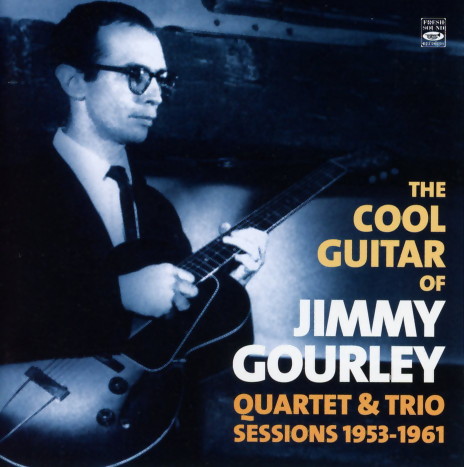
The Cool Guitar of Jimmy Gourley

 © Copyright ® Steven Cerra, copyright protected; all rights reserved.


As this article attests, there was a time following World War II when it was possible to chart the activities of local Jazzmen through the bimonthly issues of Downbeat and other Jazz magazines published on monthly basis.


It was still a period before televisions settled into family living rooms when people went out to bars, clubs and dance halls for regular entertainment.


Most of these gigs didn’t pay much but it was a time for local musicians to learn their trade by interacting with one another and performing what they were learning as they were learning it in front of an appreciative audience. As Jimmy Gourley would later observe - “Working steady is the greatest.”


Obviously, the majority of them were young, still finding their way in the world and staying dedicated to the music while, hopefully, avoiding the always-lurking pitfalls of the Jazz Life.


In the case of guitarist Jimmy Gourley, his stateside apprenticeship came to a sudden halt in 1951 when he abruptly left for Europe. Why?


At the end of the year Jimmy Gourley decided to leave Chicago with the idea of trying Europe. According to Gourley, his main motivation for leaving Chicago was that drugs were everywhere in the jazz community. "It was happening all around me. Guys dying, guys getting busted, and I did not want to live in that environment."


Here’s the background leading up to that departure and what happened when and after Jimmy got to Paris. This piece also provides a wonderful retrospective on the developments associated with the nascent Jazz scene in Paris in the 1950s.


“Many American musicians visited France after La Liberation, some famous, some not so famous. But, curiously, the guitar as an instrument was always poorly represented, with John Collins' brief stay in May 1948 as the only noteworthy example. Jimmy Gourley became the first prominent guitarist to visit the country in the early 1950s, a time when Django Reinhardt was still the benchmark for jazz guitar in Europe.


Born June 9, 1926, in St. Louis, Missouri, James Pasco Gourley moved to Chicago at the age of 8. His father was the founder of the Monarch Conservatory of Music in Hammond, Indiana (where, sadly, they taught everything but jazz). Jimmy learned to play the guitar at 12, and 3 years later, in 1941, he joined his High School dance band with his friend Lee Konitz, who was then playing tenor saxophone. Their young orchestra performed at the synagogue dances, getting $1 per musician. At that point, Jimmy was content to accompany "with the amp wide open," as he said. He did his first chorus at 17 in some funny circumstances: one day his conductor asked him to play a solo and Jimmy tried to refuse, but he was forced to under threat of not being paid.


He dropped out of high school about six months before graduating. By then he was starting to play steadily, and music "interested me more and more. I was reading, actually taking my first solos, just jumping around," he said. He still had almost eight months left before he was to be drafted and in the meantime he was offered to join a band. "We went to Oklahoma City. It's where I first went and it was fantastic."


After a 6-month tour with the band, Gourley decided to enlist in the United States Navy in 1944 before his number was up. He spent the next two years on a Pacific island, without seeing a Japanese, nor shooting a single shot, just killing time, playing golf and listening to V-Discs. Two years without making any music as well: his father sent him a guitar, but he never received the parcel.


In June 1946, after being discharged, he returned to Chicago, with the firm intention of playing guitar again and rejoining the jazz scene in the Windy City, which was at a low ebb. This didn't deter the local cats though, who were passionate about Jimmy Dale's band, which included several of the best young musicians in town—among them Lee Konitz (as), Lou "Count" Levy (p), Gail Brockman (tp), Kenny Mann (ts). The band had been working together, playing some bebop dates mainly on the South Side of Chicago, but they went on to appear on three successive off-night sessions at the Band Box club.


After that, Dale's band started meeting at the Argyle lounge, where they managed to organize some exciting Monday night sessions. Work was scarce, and most of these musicians played in different modern jazz outfits, especially in the 17-piece band of a Chicago lad by the name of Jay Burkhart, who played a little piano and scored amazingly well. After departing the service in 1946, Burkhart wrote some scores for Gene Krupa before he decided to build his own band, around a nucleus of Marine dance band arrangements (which were written around Vido Musso incidentally). The idea jelled. Comprised of Chicago sidemen, Jay's crew first played the Tune Town in St. Louis, Missouri, and in October 1946 they began a series of weekends at the Rip Tide, in Calumet City, even though the band was still mainly unknown in Chicago.


Burkhart made some changes to the personnel, and worked on building a new book. But beyond the occasional few nights of local work, the group didn't go far financially speaking. Then the owners of the Embassy club at 119th and Michigan took a chance and gave Burkhart Monday nights. Result: the joint was jammed every week, and gained an enthusiastic and loyal following, with a band including such names as Lou Levy, Gail Brockman, Kenny Mann, Sandy Mosse (ts), Bob Anderson (as), Cy Touff (v-tb), and visiting guitarist Jimmy Raney.


Since Jimmy Raney had no specific job offers in New York, he moved from his hometown Louisville to Chicago in June 1945, to work with pianist and vibes player Max Miller. There he also met Lee Konitz and Lennie Tristano. Soon he was mingling with Lou Levy, Cy Touff and Sandy Mosse as well, before finally joining Burkhart's band in the fall of 1946. Jimmy Gourley got to play with all of them in jam sessions, a real chance to learn from Raney. And while Raney was not yet the consummate musician he would soon become, he was already playing personal, flowing lines, which would have a definite impact on Gourley's style.


After the success of the Argyle and the Embassy jam sessions, the music scene was getting hipper, and Monday night sessions were catching on. Thus starting September 1947, at the Silhouette club on Howard Street, the so-called "Celebrity Night" brought together a line-up with some of the best local talent. Gene Ammons, Gail Brockman, Lou Levy, Jimmy Raney, or Bob Anderson were among the musicians who would help in the revival of jazz in Chicago, at least in the bebop wing.


Jimmy Gourley joined as many jam sessions as he could for the chance to perform with his friends, invaluable experiences that informed his jazz inclinations. Opportunity called soon, when in January 1948 he became the guitarist of Burkhart's band as a replacement for Jimmy Raney, who left for New York to join the new Woody Herman orchestra at the recommendation of drummer and composer Tiny Kahn. Raney had met Kahn back in June the previous year, while the drummer had been in Chicago with Georgie Auld's Quintet. In his downtime, Kahn was fond of joining local jam sessions, and Raney had managed to make an impression. Another important Burkhart man who had left the orchestra shortly before Raney, was pianist Lou Levy, who went to Sweden with the Chubby Jackson sextet. The vacancy was covered by Gene Friedman.


On Monday, April 19,1948 Burkhart's band began what was a series of coast-to-coast remotes from the Martinique, fed by WON to Mutual. According to Down Beat reporter Ted Hallock: "Burkhart's air shot was a complete gas—great!" A week later they played his second and final remote and job at the club. WGN's director said Burkhart's was "not a dance band; not the type that WGN wants to broadcast." Martinique owner Tony Desantes (also operator of the already defunct Embassy), fired Jay because the band "was just not mickey [corny] enough." But Hallock pointed out that this was due to lack of support and publicity, concluding: "Chicago is showing the first band to show promise of any kind in ten years the back of its [...] hand."


Despite his frustrating experience at the Martinique, Burkhart's boys kept jumping madly, with his accomplished staff of arrangers willing to try anything to spark the fire in that fluid group of young men. "Bop glasses and all, they're tremendous," wrote Hallock.


Jimmy Gourley was already one of the band's outstanding soloists. They appeared at the Rip Tide, and on Saturdays during the summer at the Via Lago ballroom. In addition, Gourley continued to play jam sessions at the Argyle, in a quartet with his pals from Burkhart's rhythm section: pianist Gene Friedman, bassist Don Lundhal, and drummer Red Lionberg. In October, all four friends accompanied tenor saxophonist Vido Musso to Milwaukee to open the Show Boat for a two-week engagement. Gourley would return later that year to take the stage with the Gene Ammons sextet at the Blue Note and with Sonny Stitt at the Yes-Yes club, 452 S. State Street.


Early in 1949, we find Gourley with Don Lundahl's bopping sextet, a.k.a the Jaybirds, a group made up of the six lead soloists in Jay Burkhart's hand. Joining frontman Lundahl and Gourley were Cy Touff, Joe Daly, Gene Friedman, and Red Lionberg. The sextet played Sundays at the far-southside Casbar, then moved on to Sunday afternoons at Nob Hill Club, 5228 Lake Park. In March, they opened at the Hi-Note, 450 N. Clark Street, in what would become their first stable job, to the delight of modern jazz fans. It was their chance to establish bop sounds in a land populated with countless "novelty" trios.


Their appearance at the Hi-Note was a resounding success, as can be red Pat Harris' review for Down Beat: "Daly's smooth tenor and Touff’s [Kai] Winding-like trombone have long sparked Burkhart's band, but ratting with them as soloist has been 23-year old Jim Gourley.


"Guitarist Gourley, who believes the most important thing for a musician to do is 'swing,' certainly fulfills his own requirements. His single-string work has a bounce and drive that never fails. Somewhat reminiscent of Christian, it is nevertheless non-imitative, and always a stimulant to the band. '"Working steady is the greatest,' Gourley observed in reviewing the scattered jobs he and his friends have had around town. Perhaps they'll get a chance at the 'greatest' from now on."


On May 5,1949, the Chicago National Music Week culminated with a performance in the Kimball Room advertised as "Back to Bop." Gourley was among the participating musicians, along with Gail Brockman (tp) and Kenny Mann (ts), two Burkhart men who also were members of the new Bill Russo Orchestra; Cy Touff, Gene Friedman, and Red Lionberg.


Meanwhile, Jay Burkhart's band continued to be almost the sole local bop group (from trio up) working regularly in Chicago. Burkhart and men had been playing with phenomenal success Monday nights at the Nob Hill, in front of their many loyal fans. The band was sponsored by disc jockey Dave Garroway, who was responsible for getting it into the Blue Note, 56 W. Madison Street, for four consecutive Tuesday nights that same spring. Their success earned them a renewal for six more. "It was a good time for me," Gourley said. "I made a lot of progress during my time at Burkhart's." Rumors were the crew would go into NYC's Royal Roost, but the deal fell through. But not all of the bebop at Nob Hill was reduced to the brilliant performances of Burkhart's band. Three guys from his rhythm section, Gourley, Gene Friedman, piano and Ted Poskonka, bass, continued to propose modern jazz for six nights a week over the spring.


During that time most bop bands and musicians in Chicago rehearsed at artist Gertrude Abercrombie's house sometime or other, and jam sessions held in the parlor included musicians all the way from Bud Freeman to Dizzy Gillespie. But no music ever seemed quite so suited to the décor as that of the singer Jackie Cain (who also sang with Burkhart's band) and pianist Roy Krai's unit, which with Jimmy Gourley, spent many evenings there.


After a number of rehearsals, the Cain-Kral team opened July 26 at the Candlelight club on the outskirts of Joliet, southwest of Chicago, and Gourley came out triumphant after playing with them for two months, the time it took Johnny Romano—the guitarist who was originally scheduled to play in the group—to return from playing with Bill Turner's band.


It was the end of 1949, and Gourley was taking a band on the road each Monday night to bring bop to the Pla-Bowl, 156th and Burnham Avenue, in Calumet City. With Gourley were Cy Touff, Gene Friedman, plus two recent additions to Burkhart's band. Bob Paterson (b), and Hal Russell (d, and vibes).


During 1950 he alternated performances with his own group and the Monday night sessions with Burkhart's band at the Nob Hill, several of which found Tiny Kahn on drums, and Max Bennett on bass, both members of the Georgie Auld Sextet that was playing at Chicago's Jump Town.


At the end of the year Jimmy Gourley decided to leave Chicago with the idea of trying Europe. According to Gourley, his main motivation for leaving Chicago was that drugs were everywhere in the jazz community. And as a non-user, he was especially affected by the dramatic situation that some of his best friends were going through, like guitarist Ronnie Singer, a young musician from Chicago with incredible talent and an original style, possibly just as good as Jimmy Raney. "It was happening all around me. Guys dying, guys getting busted, and I did not want to live in that environment."


He had been told that France had a good jazz scene, and he thought that it could be a good country to start a new stage in his life. So he applied for a scholarship for former American combatants under the G.I. Bill. The bill was passed after WWII and it provided a range of benefits to all veterans who had been on active duty for at least 90 days and had not been dishonorably discharged.


Jimmy Gourley arrived in Paris sometime in April 1951 to learn piano and French. But his true calling was jazz, and so it didn't take him long to meet Henri Renaud, a young pianist, a staunch follower of Al Haig, and an enthusiast of cool jazz, the new style that drew inspiration from the flowing lines and smooth sound of Lester Young's tenor sax. Lester was better known then than at any other time. Not because of what he was giving jazz at the time, but because a whole school of tenors had assimilated what he was doing in the 1930s and then played extensions of that style.


Gourley liked Lester Young particularly well. "He really is the 'President'," he told Pierre Cressant in Jazz Hot. He appreciated Charlie Parker and Miles Davis almost as much. Among the pianists, Jimmy cited Bud Powell, Lou Levy and Al Haig. As for the tenors, Al Cohn, Herbie Stewart, Zoot Sims and Sandy Mosse. "They are really 'stylists'," he explained. Asked about Stan Getz, he said: "I also admire Stan a lot, of course, but I prefer Al Cohn, Zoot or Herbie. One day, after a jam with Al Cohn and H. Stewart, Getz said to me: 'They are really the ones to listen to'. Many American musicians think the same thing: Cohn, Stewart or Zoot are original in each chorus, Getz Plays more clichés. He is the best known of the Four Brothers, but he is not the best." He was also very fond of Tiny Kahn and Gerry Mulligan, but he never listened to Tristano, Shearing or Kenton. Jimmy preferred "to hear a good old Basie, with Lester, a 'Taxi War Dance' or a 'Shoe Shine Swing'!"


Renaud, who so far had always performed alone in bars, quickly recognized Jimmy Gourley's knowledge of modern jazz and the two young men became inseparable colleagues. "Jimmy had brought some 78 rpm records that had not yet been released in France, like Herbie Steward's two Roost albums with Jimmy Raney. I also remember four Triumph sides: Al Cohn's quartet with George Wellington on piano and Tiny Kahn on drums," recalled Renaud in 2001, explaining that: "I hired him to play as a duo at the 'Boite a Sardines', a club located at 4 rue Balzac, near Etoile, where many American civilians who worked for the United States government used to hang out. Gourley was a huge fan of Jimmy Raney, a total stranger in Paris at the time." Through Henri Renaud, Gourley quickly became part of the small modern Parisian jazz scene.


After the groundwork laid by Kenny Clarke and Hubert Fol in the late 1940s in an effort to popularize bebop, Henri Renaud became a key figure in the evolution of the modern jazz movement in France in the early 1950s. In the spring of 1951, Renaud had taken the first steps in creating a group of young modernists, which he co-led with Belgian tenor saxophonist Bobby Jaspar. Their goal? To get both musicians and the public used to the new sound of cool jazz. The ensemble included two tenors, Jaspar and Roland Carsault, guitarist Bob Aubert, Jacques Tisne on drums and tenorist Serge "Bib" Monville on bass. They played the 5 to 7 sessions at the Kentucky club, 2 rue Valette, and were the first group to play cool jazz in France.


Renaud did not hesitate to invite Gourley to play with his new group, which by now also included tenorman Sandy Mosse, another recent arrival from the United States who came in to replace Carsault. "After Lester Young, his favorite tenor sax was Al Cohn, the guiding star for so many young American jazz musicians," the pianist remembered.


A few weeks later, Henri Renaud was commissioned by the organizers of the III Festival de Musique de Clamart to set up Sandy Mosse and Jimmy Gourley in an international modern jazz group that was to be featured in a night dedicated to jazz, scheduled to take place on June 14th. "My sextet included tenor saxophonist Bobby Jaspar from Belgium, two Americans from Chicago, tenorist Sandy Mosse, and Jimmy Gourley, and three French musicians, the incomparable bassist Pierre Michelot, Pierre Lemarchand on drums, and me on piano."


Despite having had little time to rehearse, they achieved a truly unified ensemble, and their performance was met with unanimous applause from the audience. Their success was as great as it was unexpected. Andre Francis, host of the event, had invited the director of the Saturne label to see the concert, and there he hired Renaud's sextet for a series of ten recordings to be released in five 78 rpm disks. The recorded performances included standards and jazz tunes such as "Godchild" by George Wallington, "Lady Be Bad," and "So What Could Be New" by Tiny Kahn, as well as "A New Date" by Gourley, and "Milestone #2," a tune that Miles Davis had given to Gourley and which had never been recorded.


These were the first albums in this new style to be recorded in France, and they were released at the end of 1951. By then, Jimmy Gourley and Henri Renaud were appearing most Saturday afternoons at the popular cafe-restaurant Sully at the Porte d'Auteuil metro station. There, they played in a young modern jazz quintet conducted by amateur tenor saxophonist Hubert Damish, who later became an acclaimed art historian. The other members of the group were guitarist Sacha Distel, Jean-Marie Ingrand  and  drummer Jean-Louis Viale, who was just starting. At the advice of Renaud, Viale started to highlight the off-beat on the hi-hat, a technique few drummers in France had adopted, but which would become highly popular in the following years.


Summer gave way to fall, and now with Michelot on bass, the group started playing at the Hot House until its closure in early 1952. They were occasionally joined by visiting musicians such as American trumpeter Nelson Williams, who had been living in Paris since September 1951.


In March 1952, Henri Renaud found himself in a small cellar at 33 rue Dauphine called Tabou, a little club that would make history. It was a quaint place, with no jazz background, but after this day, Tabou would be forever associated with the modern jazz that the Renaud wanted to play and spread in Paris. Every night, Renaud performed there with a quartet consisting of Andre Ross—a tenorist inspired by the playing of Stan Getz— bassist Jean-Marie Ingrand and American drummer Richie Frost. Sometimes Gourley joined them for fun, in part because he was not an official member, in part because the house would only hire four musicians. The beginnings of Tabou, however, were not too exciting. Gourley once mentioned he was under the assumption that France favored jazz above all other genres, but that so far he was unimpressed. Despite his initial judgement, it wouldn't take long for things to start moving.


In April, Tabou had its first memorable moment. The great Lester Young, famously nicknamed Prez by musicians and fans alike, was in Paris as a member of Norman Granz's JATP at the closing concert of the II Salon du Jazz, which took place Sunday, April 6th at Salle Pleyel. It was Prez's first trip to Europe, but his performance fell short of the hype it had generated, and audiences were somewhat disappointed. However, Prez being in the city was an occasion that Renaud did not want to waste, so he invited his admired saxophonist, his idol, to play three evenings the following week on the stage of Tabou. There, a motivated Prez fresh out of JATP was in a position to offer the best of himself. Backed by Renaud's quartet, and a brilliant Jimmy Gourley, this time he left his fans fully satisfied, in what were the first of the historic jams held at Tabou. Two other members of JATP joined the jams, Barney Kessel and Charlie Shavers.


Shortly afterwards, Renaud called Gourley to replace Ingrand's bass. This change had a direct effect on the group, which could now play arrangements for tenor and guitar, and had a much freer flow of ideas. From then on, the quartet started gaining popularity with Parisian fans and musicians, who came night after night to listen and discover this "new sound" that was giving so much to talk about. Admittedly, not many knew what it was about yet. Tabou had become the bastion of the cool school, and the only club in Paris where you could listen to jazz music in the most modern style. Through Gourley, Renaud acquired a deeper understanding of modern jazz. "We recently had in France three valuable American musicians who could teach French soloists something. They are Sandy Mosse, Richie Frost and J. Gourley. The latter remained in France as an American state scholarship holder," declared Henri Renaud.


The way Pierre Cressant described Jimmy Gourley a year after his arrival in Paris is illuminating. "Jimmy is kind of the opposite of what you might think when you see him for the first time. He looks cold and haughty, but he is actually warm and cheerful. He is also a bit of a comedian: just ask for his impression of Sylvester Pussycat. Jimmy is also fond of classical music: his favorite composers are Bach and Bela Bartok."


For the second year in a row, the organizers of the IV Festival de Musique de Clamart, had included in their programming for June 18, 1952, an evening dedicated to jazz. Representing modern jazz, an All-Star group was brought forward, including Gourley as well as Hubert Fol (as), Renaud, Ingrand and Richie Frost. "Listeners enjoyed Jimmy Gourley's beautiful sound, which was supported remarkably by an excellent rhythm section," highlighted Jazz Hot.


In the fall, Pierre Lemarchand replaced Richie Frost, who had decided to return to his home in Los Angeles after having spent two very long spells in Paris (1948-1950 and 1951-1952). Back in LA he would trade jazz for a successful career as a studio musician, but his time in Paris playing jazz was never forgotten, and his modern style had a decisive impact on many French drummers such as Jean-Louis Viale, Bernard Planchenault and Roger Paraboschi.


Renaud, Gourley, Andre Ross and Lemarchand, soon to be replaced by Jean-Louis Viale, continued to do good business at Tabou. Then, Renaud came up with the idea to organize a sextet including a bassist, Guy Pedersen, and two guitarists. One of them was Gourley and the other the young Sacha Distel, who was back from a year in the USA. It is worth mentioning that even though Gourley and Sacha were regular members of the sextet, they were not hired by the house.


Despite Sacha's quick breakthrough, he still wasn't at the level of Jimmy Raney or Gourley. As a matter of fact, he was very much Gourley's pupil and the disciple at this point, and he owed him almost everything. He also admitted that he had gained a lot from his stay in New York, where he had known and played with Jimmy Raney and Stan Getz. Sacha arrived in France armed with tunes and arrangements from the Stan Getz quintet, the modern jazz group that had established milestones for an emerging "chamber jazz." 


This new style of music added elements of harmony to pure swing, and to musical imagination, it provided a foundation on which to build, with emphasis on the mid and soft tone registers, and a delicate balance between improvisation and composition.


In fact, it was at Tabou, and thanks to the group of Henri Renaud, that the public came in contact with Gigi Gryce's "Shobuzz," "Melody Express," "Wildwood," and "Simplicity," with Johnny Mandel's "Hershey Bar" and "Not Really the Blues," or with Horace Silver's "Potter's Luck," played by the Getz quintet, and which gave the orchestra an attractive color and a new jazz approach. These swinging, innovative melodies could only be heard at Tabou. The success Renaud was having with his group motivated him to arrange a few standards such as "Jeepers Creepers," "You Took Advantage of Me," and even popular French tunes such as "Paris je t'aime" and "Venez donc chez moi." The sextet was swinging and fresh at home, playing the leader's on-point arrangements, and supported by the solid rhythm section provided by Renaud, Guy Pedersen and distinguished by the excellent timekeeping of Jean-Louis Viale, who was at the time the only French drummer to use the 2/4-time modern American drummers favored.  Pedersen and Viale were replaced a few weeks later by Marcel Dutrieux and Pierre Lemarchand. "But the most brilliant soloist of the lot is Jimmy Gourley," wrote Pierre Cressant in Jazz Hot. "The finest quality of his playing is the honesty of his attack, his sound and precise articulation, as much as his intense swing. He has remarkable drive and carries the group effortlessly. His greatest musical influence is Lester Young — with the kind of reverence he has for the man, he might as well be a God."


Henri Renaud did not hesitate to praise Gourley's talent either, and highlighted his important contribution to the local jazz scene: "Jimmy had a great influence on many French guitarists and modern musicians in general, both in terms of rhythm and harmony. He cleaned up the conceptions of modern jazz in Paris and according to Renaud, rid some musicians of their 'gypsy' or 'French' complexes which had always distanced them from the true language of American jazz, "unlike our Belgian, English or Swedish neighbors..."


"I am happy to see that Jimmy's musical value is finally being recognized. Let's not forget he has been in France for two years, but most French musicians are just now beginning to appreciate his value. I hope concert organizers and recording directors follow suit, because so far they seem interested only in second-rate musicians for any recordings made in Paris. Organizers who used to fight for jazz (just jazz, not modern or old), now want to impose the exact same music they promoted fifteen years ago," Renaud pointed out.


From early January until the summer of 1953, Renaud, with Gourley, Andre Ross and Lemarchand (replaced by Mac Kac in May), were the house musicians at Tabou. Their performances drew the attention of the jazz community, and made Henri Renaud the beacon of a new conception of jazz. 


As a consequence, in February 1953, Eddie Barclay asked Renaud to form an orchestra and record it at Barclay's club, Boeuf sur le Toit. For this project, Renaud augmented his quartet with a selected group of modern jazzmen: Jean Liesse, trumpet; Nat Peck, trombone; Phil Benson, alto sax; Sandy Mosse, second tenor sax; Jean Louis Chautemps, baritone sax; Benoit Quersin, double bass; Fats Sadi, vibraphone; and arranger Francy Boland, who contributed with four scores. The result was a live recording, New Sound at the Boeuf sur le Toit, issued by Andre Francis on the Blue Star label. A month later, Renaud recorded an album for Vogue with a similar 11-piece band.


Meanwhile, at Club Saint-Germain, 13 rue St. Benoit, modern jazz at the hands of such names as Rene Urtreger, Bernard Peiffer, Bobby Jaspar, Sacha Distel, Bib Monville, Roger Guerin, Jean-Marie Ingrand, and Jean-Louis Viale began to garner its own audience. The same thing was happening at Bosphore, the former Ringside, 18 rue Therese, with Art Simmons, Fats Sadi, Pierre Michelot, and Lemarchand; and at the Riverside, 13 rue du Petit-Pont, with the Jean-Claude Fohrenbach and Maurice Vander quartet, all places that were echoing this new sound in jazz.


Renaud's trio with the inclusion of Jean-Marie Ingrand on bass, performed successfully at the V Festival de Clamart in June 1953, After summer gave way to fall, and with the departure of Andre Ross, Renaud returned to Tabou, with Gourley and Viale, a trio that managed to become one of the most interesting units that had been heard in Paris. Their performances drew every musician and every fan of modern jazz in the city. After one of these performances, Charles Delaunay enthusiastically offered to record for his Vogue label. Thus in October 1953 the trio, augmented by Pierre Michelot (who Gourley considered the best French instrumentalist) recorded eight arrangements specially prepared for this session at studio Jouvenet. Charles Delaunay himself wrote in the liner notes: "Henry and Jimmy have chosen a few tunes that have not been played recently and yet are excellent, such as: "Who Cares," "It's-De-Lovely," and "My Heart Belongs to Daddy." The arrangements, Renaud mentioned, were penned by Gourley, and in Delaunay's own words, "they were quite original, embellished by much needed inserts and codas which result in a truly unique voice."


For this album, Henri Renaud gave Jimmy Gourley lots of freedom. As he explained in the liner notes: "I wanted to give Jimmy the opportunity to show what he is capable of, which is to say, in my opinion, to take his rightful place right after Jimmy Raney or Tal Farlow. I met Jimmy as soon as he arrived in Paris in 1951, and we have played together since then. I hope this record will do justice to his great talent, because I believe that there are very few guitarists in America who have such a beautiful sound, such swing, and especially such masterly improvisational skills. What I mean is, Jimmy knows how to create a nice melodic line making use of the most complex harmonies, all while keeping his cool and articulating every single note."


Their extensive collaboration was not only limited to their appearances at Tabou, though. In 1953, Henri Renaud became the new musical director of Vogue, and he called Gourley for many recording sessions under the leadership of Bobby Jaspar, Lee Konitz, Gigi Gryce, Clifford Brown, and Zoot Sims. By the time fall came around, they had stopped playing at Tabou altogether, and in February 1954, Renaud traveled to New York where he would stay for a month to record a series of sessions with Al Cohn, Milt Jackson, Gigi Gryce, J. J. Johnson, Curley Russell, Al Haig, Max Roach, and Oscar Pettiford among other big names on the New York scene.


Moving on from his days at Tabou, Gourley went to work as a freelance in various groups until he joined pianist Martial Solal in May at the new Ringside, 23 rue d'Artois, in a trio with bassist Benoit Quersin. He also appeared in other sessions for Vogue, which the indefatigable Henri Renaud tried to organize whenever American musicians visited Paris. Thus when Woody Herman visited in May 1954, Renaud organized a group with four members of Herman's orchestra: Cy Touff (b-tp), Jerry Coker (ts), Ralph Burns (p) and Chuck Flores (d), as well as Gourley on guitar and bassist Jean-Marie Ingrand, who recorded an album released under the title The Herdsmen. A month later, Renaud took advantage of the fact that the new Gerry Mulligan Quartet was in Paris to perform at the Salle Pleyel during the III Salon du Jazz. Renaud organized a recording date with Mulligan's quartet without its leader. It was led by trombonist Bob Brookmeyer, and the rhythm section included Red Mitchell (b) and Frank Isola (d), as well as Renaud (p) and Gourley.


Also during the Salon du Jazz, Jimmy Gourley joined the leading guitarists of the moment—Jean Bonal, Jean-Pierre Sasson, Sacha Distel, Raymond Beau, Roger Chaput, and Rene Thomas—in a concert dedicated to the memory of Django Reinhardt. Each of them, in their own style, brought Django's

compositions to life. Gourley shone bright with his rendition of "Swing 42."


In October 1954, former American tenor saxophonist-turned-bassist Alvin "Buddy" Banks, who had been living in Paris since 1953, was engaged by Frank Tenot, head of the jazz department of the Club Francais du Bisque, for a recording session with three other compatriots: Jimmy Gourley and pianist Bob Borough, playing on all eight tracks of the album, and drummer Roy Haynes—of Stan Getz fame—added on four of them. Haynes was just back from a European tour as a member of the Sarah Vaughan trio together with pianist-arranger Jimmy Jones and bassist Joe Benjamin. As for Borough, he was living in Paris after having left his post as Sugar Ray Robinson's music director and pianist, when Robinson left boxing temporarily to start a song and dance show with which he toured in Europe in 1954.


Each track on the album finds a good balance between rhythm and swing, performed by such a modern group of chamber musicians. Even though they had not played together before the session, the result was a finished sound that was polished and complementary to each instrument. The album was released under the title of "Jazz de Chambre," Gourley was the main soloist with excellent tone, phrasing and taste. In addition to these qualities, Jimmy delivered each of his notes with crystal clarity, swing, imagination, musicality and an innate sense of the right tempo for each tune as well as the chops to play it "in" that tempo. He said that harmonically, the piano and the bass are enough and that rhythmically, the drums are the only real necessity. And that for modern music, the guitar is only a solo instrument.


As the musical director of the Swing / Vogue label, Henri Renaud took advantage of the fact that Jimmy Jones, Roy Haynes and Joe Benjamin were still in Paris, to organize a series of recordings, one of them with Haynes as a leader. Renaud formed a group around the drummer and Joe Benjamin which, in addition to him on piano and Jimmy Gourley, also included Barney Wilen during his first recording session; and baritone Jay Cameron, who had already been in France for several years.


In November of 1954, Renaud and Gourley teamed up again to organize a quintet, this time with Barney Wilen—the new talent of the French tenor sax—Jean-Marie Ingrand on bass, and Renaud's favorite drummer, Jean-Louis Viale. They performed Saturdays and Sundays from 5:00 p.m. to 7:30 p.m. at the Ringside, with a repertoire consisting of new compositions by Horace Silver, Duke Jordan, George Wellington, Gigi Gryce, and Renaud himself. They were brilliant performances and, together with the sessions of the Club Saint-Germain, where you could hear, among others, Bobby Jaspar, Bib Monville, Jay Cameron, and Maurice Vander, they garnered the attention of modern jazz fans in Paris.


When Gourley suddenly disappeared from the Parisian scene near Christmas, it came as a shock. After almost four years in Paris, he decided to return to Chicago, probably because his scholarship had run out a year before. Upon his arrival, he reunited with his friend Sandy Mosse, and with him, organized a quintet with pianist Eddie Baker, bassist Leroy Jackson and drummer Dorrell Anderson, to play in clubs around Chicago. In the spring of 1957, Gourley was engaged to play in the orchestra of bassist Chubby Jackson. With Jackson he recorded the album Chubby's Back on the Argo label.


Towards the end of 1957, Gourley returned to Paris, and this time he intended to stay for good. "I didn't know it was for good, but it happened that way." Shortly after his arrival, he joined "La Nuit du Jazz," an event held December 21 at Salle Wagram which garnered a large audience. It didn't take long for Henri Renaud to call Jimmy and Jean-Louis Viale, his old Tabou partners once again. Renaud had spent over a year accompanying American singer June Richmond, but his new-old trio took precedence. They were featured on the television show "Disco Parade," and went on to record the music for several short films.


In the spring of 1958, Jimmy Gourley joined American pianist Art Simmons and bassist Michel Gaudry in a trio that played every night at the Le Mars Club, 6 rue Etienne, until July. After the summer, Renaud, Gourley and Viale met again and, with the addition of Jean-Marie Ingrand on bass, they began to play nightly at the Blue Note, a new club at 27 rue d'Artois. Billed as the Jimmy Gourley Quartet, they stayed together until the end of the year. In January, Henri Renaud left, and the remaining members became the trio that accompanied Stan Getz in his first concerts at the club. However, by the time Getz was playing at the Olympia on January 3, 1959, only Gourley remained in the quartet that accompanied the tenorist, alongside Martial Solal, Pierre Michelot, and Kenny Clarke.


After Getz left, it was Lester Young's turn to return to Paris to play at the Blue Note. His health was poor. He looked frail, but continued to play with the acrid sweetness that had always characterized his style. During his stay at the club, Lester felt at home, in front of an audience devoted to him, watching their idol slowly fade away. Prez had been ill for a long time and his condition had deteriorated in recent weeks. During the rest periods, he would walk slowly to the bar, have a drink, hardly speaking at all. His health got worse, but on March 2nd Prez managed to record one last album that was released posthumously for Verve, Lester Young in Paris, with Rene Urtreger, Jimmy Gourley, Jamil Nasser, and Kenny Clarke.


At the end of his engagement with the Blue Note, Lester had to delay his return to the United States for a few days because he did not feel like he would be able to make such a long trip. He finally made up his mind to fly, only to pass away the day after his arrival in New York, on March 15,1959 at around 4 p.m. in his room at the Alvin Hotel.


Meanwhile at the Blue Note, the same group but with Michelot on bass accompanied Sonny Stitt for two weeks starting May 18th. As for Gourley's trio with Urtreger and Jean-Marie Ingrand it continued as the house band, and they went on to accompany Bud Powell in December with the addition of Jean-Louis Viale. Then in January 1960, pianist Alice McLeod (who would later marry John Coltrane) arrived with her trio. Accompanied by Jimmy Gourley, they entertained patrons at the Blue Note for two long months, alternating nights with the Bud Powell trio with Michelot and Clarke.


In May 1960, Gourley joined the Kenny Clarke Quintet with trombonist Billy Byers, Renaud, and Michelot. Later he played with Lucky Thompson and

in constant shift, but Gourley was always present when it came to accompanying any illustrious guests. Notably, starting on June 20 Gourley and Clarke became the regular companions of organist Lou Bennett, who had arrived in France for the first time. His performances were a success, and they echoed across Europe, all the way to Italy where they appeared on RAI Television.


In October, Gourley, Maurice Vander (p), Michelot and Clarke, were the rhythm section to accompany Stan Getz on his return to the Blue Note, and later Zoot Sims, from November to January 1961. The group also participated in "La Nuit du Jazz" which took place on December 17th.


Also in January 1961, the Jimmy Gourley Quartet—with Henri Renaud, Jean-Marie Ingrand and Daniel Humair on drums—was one of the main groups featured on the Sim Copans TV show Modern Jazz at the Blue Note. In their two performances, Gourley showed that just as himself, his style was unchanged. He offered viewers some clean, flowing lines in a beautiful rendition of Gershwin's "How Long Has This Been Going On?" and showed he was still able to deliver strength, swing, and excitement when needed in his original "Clarisse Blues."


In February, Gourley and Clarke rejoined Lou Bennett to appear daily at the Blue Note until the summer, where they alternated with the Bud Powell Trio, and in spring accompanied such visitors as J.J. Johnson, Brew Moore, and Allen Eager. On September 16th at the Palais des Expositions at Porte de Versailles on the occasion of the 1961 Radio and Television Show, Gourley joined Henri Renaud in a quartet with Michel Gaudry and Jean-Louis Viale


On October 30th, Jimmy Gourley was invited to play at the Philharmonic Concert Hall of Warsaw, with the trio of pianist Krysztof Komeda—Adam Skorupka, bass; and Adam Jedrzejowski, drums. Two of their performances were included on a compilation album released by the Muza label, titled "Jazz Jamboree Vol.1." On the ballad "For Heaven's Sake," we can hear the emotional and deep warmth of Gourley's guitar, soloing in a natural, relaxed feeling, and impeccable taste. On the up-tempo version of "Three Little Words," Gourley's solos build beautifully to climax after climax with startling directness, bringing to life whatever he touched. By that time, the guitarist had developed to a point where he could be considered a worthy successor to Jimmy Raney.


The recordings included in this CD clearly demonstrate the talent of Jimmy Gourley. They belong to a time when he flew under the radar but still left his mark, and his contributions to the modern French jazz scene between 1953 and 1961 are undeniable. Even though Gourley was in great demand as a sideman throughout his career, he would have to wait until 1972 to record his first album as leader—Jimmy Gourley and the Paris Heavyweights


There are no clear reasons for this surprising oversight, but nevertheless, Jimmy Gourley was—and continues to be after his death in 2008 at the age of 82—a highly respected member of the jazz community remembered for his level of musicality and congenial personality. There is no doubt that if Jimmy had stayed in the United States, he would have become one of America's finest jazz guitarists.”

—Jordi Pujol


Original Vogue and Club Français du Disque sessions, supervised

and produced by Charles Delaunay and Frank Tenot.

Produced for CD release by Jordi Pujol

This compilation © & © 2021 by Fresh Sound Records


The Cool Guitar of Jimmy Gourley: Quartet and Trio Sessions, 1953-1961 [Fresh Sound CD-1101] is available as a double CD and you can locate order information by going here.