Monday, September 27, 2021

Jazz Centenaries in The Decade of the 2020's - Duke at The Cotton Club

 © Copyright ® Steven Cerra, copyright protected; all rights reserved.


This decade - the 2020’s - marks the 100th anniversary of many significant dates and events in the development of what Gunther Schuller’s excellent book on the subject categorizes as Early Jazz.


100 years ago, Jazz came up from New Orleans to Chicago and then went east to New York, a migration that took place throughout the 1920s [with a stop-over in Kansas City and a quick left turn to Los Angeles and San Francisco along the way].


Among many other highlights, the decade also saw the arrival on the Jazz scene of vocalist Mamie Smith and the Jazz Hounds, along with the advent of the Harlem stride school of piano playing led by practitioners James P. Johnson and “Willie “The Lion” Smith.


In the 1920s, Joe King Oliver and Kid Ory took their Creole Jazz trumpet and trombone stylings into Chicago’s Lincoln Gardens where trumpet legend Louis “Pops” Armstrong would soon join them.


The quality and quantity of Jazz recordings by vocalist Bessie Smith, Oliver, soprano saxophonist Sidney Bechet, Armstrong and many others helped transport their music into living room gramophones.


Pianist-composer- bandleader Jelly Roll Morton gave more structure to the instrumental aspects of the music as did the classic Hot Fives and Hot Sevens recordings by Pops on which he introduced a new level of virtuosity into the music.


Jazz was somewhat formalized when it hit the concert hall in the form of composer George Gershwin and orchestra leader Paul Whiteman’s collaboration on Rhapsody in Blue, a pioneering excursion into the realm of symphonic Jazz.


Singer Bessie Smith, whom some referred to as the Empress of the Blues, at the pinnacle of her career in the 1920s appeared in a Hollywood movie about W.C. Handy the composer of The St. Louis Blues.


Inspired by their Black idols [and informal mentors] White musicians also began to make their own contributions to Jazz during the decade in the form of recordings by the Original Dixieland Jazz Band and New Orleans Rhythm Kings, the advent of the Chicagoans also sometimes referred to as the Austin High School Gang, and the rise of individual soloist such as clarinetist Benny Goodman, cornetist Bix Beiderbecke and trombonist Jack Teagarden.


Perhaps a fitting culmination to the nascent development of Early Jazz in the 1920s was Duke Ellington’s four year residency at the Cotton Club in Harlem which began in 1927, the details of which are recounted in the following excerpts from John Edward Hasse, Beyond Category: The Life and Genius of Duke Ellington [1993].


The Cotton Club

The Aristocrat of Harlem


The owners were gangsters. The help and entertainment were black. The customers were white.


Located on the second floor, over the Douglas Theater, at the northeast corner of 142nd Street near Lenox Avenue, the Cotton Club opened in the fall of 1923, The English-born gangster Owney Madden, who was paroled in 1923, soon took it over. He made his bootleg liquor— "Madden 's No, 1" -at a plant on West 26th Street. He hired Harry Block as overseer and Herman Stark as general manager.


The club was forced to close in 1925 due to its violation of Prohibition laws, But it soon reopened — another of the estimated 32,000 to 100,000 - drinking establishments in New York City. The Cotton Club had a log-cabin exterior and interior and featured jungle décor, a proscenium stage, and a dance floor. Beginning in 1926, the irrepressible Dan Healy— singer, dancer, and comic — staged and produced the shows. Jimmy McHugh wrote the songs, usually with Dorothy Fields, through 1929. Lady Mountbatten dubbed the club “The Aristocrat of Harlem."


There were brutes at the door," observed Carl Van Vechten, "to enforce the Cotton Club's policy which was opposed to [racially] mixed parties." 

Occasionally, however, a star performer such as Bill "Bojangles" Robinson or Ethel Waters could get a table for friends.


During Ellington's tenure, the club typically opened at 10 P.M. and closed

at 3 AM. There were two different shows nightly, one at 12:00 (or 12:15) A,M. and another at 2:00 AM. Showtimes were designed specifically to attract a high-spending after-theater crowd, "Join the crowds after theater," read one advertisement from 1929. "All Broadway comes to Harlem."


This was no ordinary nightclub, Printed programs announced the musical songs and sketches and identified the vocal and dance soloists. In time, the programs grew more high toned in their language, One from 1931 noted, "Entr'acte: Dance to the strains of the incomparable Duke Ellington and His Recording Artists."


The club could accommodate between 500 and 700 customers, seated at tables on two tiers by the dance floor and booths at the perimeter. Cab Calloway, who first performed there in 1930, vividly recalls the club;


“It was a huge room. The bandstand was a replica of a southern mansion, with large white columns and a backdrop painted with weeping willows and slave quarters. The band played on the veranda of the mansion, and in front of the veranda, down a few steps, was the dance floor, which was also used for the shows. The waiters were dressed in red tuxedos, like butlers in a southern mansion, and,,, there were huge cut-crystal chandeliers.”


"The floor shows at the Cotton Club," recalled Marshall Stearns, "were an incredible mishmash of talent and nonsense which might well fascinate both sociologists and psychiatrists." The shows combined hot music, snappy dancing, vaudeville, and even burlesque. The job of chorus girl was highly coveted. A chorus girl had to be no older than twenty-one, at least five feet eleven, light-skinned ("high yaller"), dance and carry a tune, and be glamorous. "Them girls stopped the show", recalled drummer Sonny Greer.


Oh, just the girls, the chorus. Stopped them cold...Sixteen of them, they were handpicked, like you pick a beauty contest.... The prettiest colored girls in the world,...You better believe they could dance! Because they made plenty of money, couldn't nobody hit on them, because they had their pocketbooks full of money.... My wife was one of the Cotton Club girls. [At first] she couldn't see me with a telescope.


The costumes were sensational, as Calloway testifies;


“The sets and costumes were stunning and elaborate, like operatic settings almost, The chorus girls changed costumes for every number, and the soloists, dancers, and singers were always dressed to the hilt—the women in long flowing gowns, if that was appropriate, or in the briefest of brief dance costumes. Talk about the String — these chicks wore less than that. Low cut and very, very risque.”


The cast could be large; the spring 1929 review had thirty in the company, plus Ellington's orchestra. The fall 1930 show had an even larger cast, and the club advertised “50 -  most beautiful Creole - 50."


On one level, the Cotton Club provided a hell of a good show. A well-produced, fast-paced string of acts, unusual music, original songs, sexy dancers, a racy song or two, a professional announcer, in a place to be seen in, with exotic decor, that served illegal (and expensive) booze in Prohibition America. But on a deeper level, the Cotton Club served as a safe haven, however highly stylized and restricted, for whites to encounter aspects of black culture. In a decade when the Ku Klux Klan was nationally resurgent, and opportunities for whites to encounter blacks were circumscribed in many ways, the Cotton Club provided a view of black Americans as handsome, accomplished, gifted, and yes, elegant. That view was highly stylized and limited; the African-Americans at the Cotton Club-Ellington included — all wore invisible theatrical masks.”
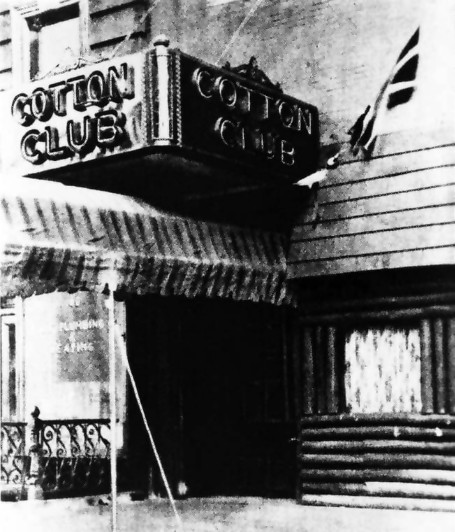


Composing at the Cotton Club 1927-1931


“Night Life is cut out of a very luxurious, royal-blue bolt of velvet," Ellington once said. As the 1920s progressed, Harlem was becoming more of a magnet, pulling in many whites to explore its rich and seemingly exotic nightlife. In the fall of 1927, Harlem's prominent nightspot the Cotton Club had a vacancy. Andy Freer, the leader of the house band, the Missourians, had died in May. Bandleader King Oliver reportedly turned down the job because the money was too low, and Sam Wooding refused it because he wanted to perform in the Broadway area. The club was overdue to start its autumn show, and, with no new house band in late November, its management grew worried.


There are conflicting versions of what happened next. By banjoist Fred Guy's account, while performing in Dance Mania, Ellington was approached by the management of the Cotton Club. Songwriter Jimmy McHugh, who was writing a new revue for the club, liked Ellington's music and convinced the general manager, Herman Stark, and Dan Healy, the show producer, to hear Ellington. They liked what they heard and went to a tavern adjoining the Lafayette Theater. There, they persuaded Ellington to sign a contract to perform with his orchestra in the forthcoming Cotton Club revue.


By Ellington's account, the club held auditions. He and his orchestra arrived late, after six other groups had shown their stuff. By chance, the club's overseer, Harry Block, was late, too. Not having heard the other groups, he hired Ellington's. "That's a classic example," Ellington remarked, "of being at the right place at the right time with the right thing before the right people." If this is what indeed happened, then it may represent the luckiest thing that ever befell Ellington. (His other great break of the 1920s— meeting Irving Mills—seems in retrospect to have been more a matter of fate than luck: the two men, both very ambitious and both seeing possibilities in African-American jazz, with places of employment a mere two and a half blocks apart, were perhaps fated to connect.)


Yet, in the meantime, the band had a commitment to play in a road version of Dance Mania on the Keith-Albee theater circuit. Their first stop was in Philadelphia at the Gibson Standard Theater. Before they could finish their two-week run, the Cotton Club called them back to New York. What about their obligation in Philadelphia? The Cotton Club's gangster owners sent an associate named Yankee Schwarz to see the theater manager in Philadelphia. "Be big [generous] or you'll be dead," he advised. The manager decided to be big.


While the Cotton Club employed blacks as entertainers and waiters, it admitted only whites as customers, a policy that was not unusual at the time. However Ellington felt about it, he must have decided that the advantages of working there outweighed the disadvantages. He was always a practical man who maintained his personal dignity and realized when to play the sly fox. After all, the Cotton Club promised a prestigious venue with steady work, good money, new kinds of experiences from which to learn, lots of opportunities for exposure to the press and other influential people, not to mention pretty young women who danced and sang in the show. How could he not accept this offer? His problem was to make sure he and his band took full advantage of the opportunity in the spotlight.


Ellington and his men, who had been rehearsing for the new show while playing in Philadelphia, hurried back to New York on December 3. On Sunday, December 4, they opened at the Cotton Club. Because his engagement there would prove pivotal to his continued artistic and commercial growth, Ellington's opening is now regarded as one of the most celebrated premieres in American music. Yet at the time, opinion was divided. Ned Williams, later Ellington's publicist, heard the orchestra that first month. "I can't say I was too impressed with the Ellington crew on that visit," he said.


There are several reasons that Ellington's orchestra may have gotten off to a slow, if not bumpy, start. First, there were several temporary musicians in the band, including a violinist. At the Cotton Club, many of the pieces they played were chosen by the singers and other acts they accompanied. Yet, the band was used to playing Ellington's music, which various members sometimes had a hand in creating. At this Cotton Club revue, however, they had to play other people's music. In addition, the band could not sight-read music very well. And it had precious little time to rehearse the new Cotton Club show.


Ellington's orchestra was ten strong, comprising trumpeters Bubber Miley and Louis Metcalf; trombonist Tricky Sam Nanton; reedmen Otto Hardwick, Rudy Jackson, and Harry Carney; guitarist/banjoist Fred Guy; drummer Sonny Greer; bassist Wellman Braud; and the maestro himself at the piano. At that time, the orchestra neither had nor needed a regular vocalist, since the Cotton Club revue featured its own singers.


Ellington's first Cotton Club revue was a long, demanding show —fifteen numbers for singing or dancing, plus encores. Jimmy McHugh wrote the music, and the young Dorothy Fields supplied the lyrics. Ellington's orchestra accompanied the singing by Aida Ward and Edith Wilson, sinuous dancing by Earl "Snake Hips" Tucker, and other acts. They played for both the midnight and 2:00 A.M. shows, and in between provided dance music for the patrons.


Working as part of a slickly produced show, night after night, Ellington and his men soon learned how to pace their programs. Although it did not perform on stage, the orchestra served as an important part of the entertainment. The engagement undoubtedly served to stimulate the theatrical flair Ellington had shown as a boy.


There was a more profound connection between Ellington's music and the theater. "I am a man of the theater," Ellington declared years later. As Charles Fox has observed, "His music has a theatrical dimension, soloists being deployed rather like characters in a play, their comings and goings planned and orchestrated." Playing on the phrase "dramatis personae" in his memoirs, Ellington discussed his musicians under the heading "Dramatis Felidae" (the "cats" in the play). During the Cotton Club period, Miley and Nanton provided bursts of dramatic solos that Ellington wrote his compositions to highlight.


The specific talents of not only Miley and Nanton but of all the members of his orchestra, then and later, helped determine what Ellington would compose. Like the playwright fortunate enough to have a repertory company of actors for which to write, Ellington was able to compose specifically for the various instrumental voices in his band. He would work hard to keep his principal players together for years (and decades), assuring himself of leading and writing for a group with great continuity, which Ellington managed to sustain for fifty years.


The mobsters who ran the Cotton Club reportedly did not like Ellington's music at first. "Too weird," they are said to have responded. But soon they relaxed: business evidently picked up as Ellington won over not only the old Cotton Club customers but musicians and critics. They were impressed with his orchestra's unique sound, especially its so-called jungle music, which had antecedents in American popular music. For several decades it had shown a fascination with far-off or exotic peoples: there were vogues for oriental fox-trots, Hawaiian songs, and songs about American Indians and Africans, among others. Under the veil of exotica, a songwriter or performer could do all sorts of raucous, bold, unconventional things. The Cotton Club was decorated with southern and African motifs, and the whole experience was intended to give its patrons a respite, however brief, from the cares of the present time. The audience would be transported to some far-off, exotic place for an hour of fast entertainment, energetic dancing, skimpy costumes, and unusual music.


The chief exponents of the jungle-music style were Miley and Nanton. As a composer-orchestrator, Ellington succeeded in transforming their growls from novelties into real art — a sign of his growing originality and skill. The jungle could also be suggested by Barney Bigard's sometimes mysterious-sounding clarinet, and by certain somewhat exotic chord progressions Ellington wrote, such as, for example, the opening of The Mooche. Ellington also suggested a jungle connection with the titles of some of his pieces— Hottentot, Harlem River Quiver, Jungle Blues, Jungle Jamboree, and Jungle Nights in Harlem. After leaving the Cotton Club, as Mark Tucker has observed, Ellington "moved away from the stylized primitivism" of these pieces, and found ways to work "its surface manner deeper into the substance of his music."


At this early stage, it was Bubber Miley and Tricky Sam Nanton who exerted the greatest influence on Ellington. Miley, in particular, helped compose some of the orchestra's most characteristic and illustrious recordings of this period.


The Cotton Club engagement was affording Ellington an opportunity to experiment and find his own way as a composer and arranger, stimulating him to pursue two formal problems inherent in jazz arranging. Ellington was taking up what Andre Hodeir and Gunther Schuller have called "the formal problem of jazz arrangement— how best to integrate solo improvisation." This was really two problems.


First, how do you integrate the soloist with the group without overwhelming either one? In other words, how do you achieve a balance? In many of his early recordings, before Ellington learned to achieve a balance, Bubber Miley seemed to dominate. To prevent a soloist from dominating the proceedings, Ellington learned to assign several soloists to take their turns, at the right moments; this was common practice among jazz arrangers. Beyond that, however, to achieve a balance, Ellington, in the words of Hodeir and Schuller, "learned to exploit expertly the contrast produced by the soloist's entry, so as to project him into the music's movement and entrust him with its development. This partly explains why even Ellington's finest soloists seemed lusterless after leaving his orchestra." He also learned to compose striking musical accompaniments for his soloists, so that the audience would find musical interest in both solo and orchestral background, thus enriching the listening experience.


The second problem was, How do you allow for spontaneity within a controlled structure without giving way to musical chaos? Put another way, how do you maintain musical order while offering the excitement and spontaneity of an inspired creation of the moment? To achieve a balance between composition and improvisation, Ellington sought to create works that had carefully laid-out spaces for a soloist to improvise. The space could be as brief as two or four measures, though six and eight bars were more common. Ellington planned these spaces in such a way that they provided a high degree of contrast, maintained musical interest and forward momentum of the pieces, and made for a musically satisfying whole. There would be a few pieces in the Ellington repertoire that seemed to be loose jams — the C-Jam Blues of 1942, for example. But even this piece would be deceptive — Ellington had a master plan, a hidden script and structure, behind all the blowing. Another of the ways Ellington achieved a balance between the preordained (the composition) and the spontaneous (improvisation) was by employing, beginning in the 1930s, what could be considered a musical sleight of hand: writing solos that, when played by his musicians, sounded improvised. Old Man Blues of 1930 is a good early example of Ellington's gift for balancing soloist and group, as well as balancing improvisation with composition.


Most orchestral composers — whether classical or jazz — wrote for sections of players — trumpets, trombones, etc.; Ellington often composed for individual players. Thus, increasingly he was limited only by the number of permutations that his musicians could produce.


The importance of the Cotton Club engagement to Ellington's development as a composer cannot be overemphasized. It represented, as Gunther Schuller has written, a kind of "prolonged workshop period." Ellington had to compose, not just arrange, works; he tried his hand at different kinds of music to accompany diverse acts; every six months there was a new show to write for: because he played six or seven nights a week, he could learn intimately the abilities of his players and could fine-tune his creations. The other leading black band of the day, Fletcher Henderson's, played mostly dances, and so Henderson did not have the opportunity to write the varied music that Ellington had.


"You know what?" Ellington once asked big-band expert George T. Simon. "My biggest ambition was to sound like Fletcher. He had such a wonderful band. But his was basically an ensemble group, and in our band the solos — you know all the various stars we have had — always dominated everything." Ellington was being modest: what would increasingly set his music apart from the others were his growing gifts as a composer and orchestrator.”



Sunday, September 26, 2021

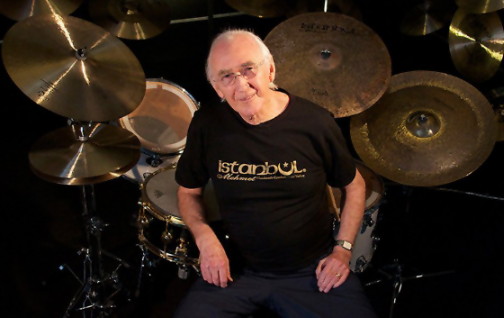
Colin Bailey: The Epitome of A Jazz Drummer

 © Copyright ® Steven Cerra, copyright protected; all rights reserved.


Colin Bailey: The Epitome of A Jazz Drummer


I started to edit this because it sounds dated in places before I realized: Of course it’s “dated” - you wrote it 12 years ago!


That doesn’t make it any less sincere and any less relevant, especially as a first-person narrative about Colin who passed away on September 21, 2021.


We did these talks mostly by phone as Colin was still living in northern California at the time and I was based in Orange County. 


Fortunately, as the original piece was coming together, Colin came down to Newport Beach for a gig and we were able to put the finishing touches on this with a meeting at a hotel in Irvine, CA.


It’s a fun read and I didn’t keep in all the back-in-the day reminiscing we did including a fleeting encounter in the early 1960s at Kenny Williams’ “Drumland” on Ellis Street in San Francisco when I was next door in a practice room while Colin was working with Joe Morello on bass drum control in an adjoining room!


So here’s to the memory of one of the best-of-the-best modern Jazz drummers - Colin Bailey [1934-2021] - who lived the Jazz Life as a dedicated professional and served as an inspiration to many of us as he did so.


© - Steven A. Cerra: copyright protected all rights reserved.


The late composer-arranger Victor Feldman who, in addition to his skillfulness as a vibist and a pianist was also a remarkable drummer, once told me that he delighted in having Colin Bailey as the drummer in his trio.


“He always gives the music a lift. He hears everything – and I mean everything – and always adds another dimension to whatever we are playing. His solos are just exceptional. I look forward to going to work, if you can call it that, when you’re playing with Colin.”


Mention Colin Bailey’s name to any Jazz drummer and there’s an instant recognition and an unspoken appreciation of his talent on the instrument.


Yet, unlike the fanfare associated with some drummers, Colin has been quietly going about his business for years as a first-rate drummer who can adapt to any musical situation. 


Colin can do it all from dazzling drumming displays that leave you shaking your head in disbelief at his technical dexterity to unobtrusive and unpretentious backing of vocalists.


It is a privilege to feature this superb drummer on JazzProfiles beginning with an overview of the highlights of his career, with some of these described by Colin, himself and to then follow these with an interview with Colin that the editorial staff of JazzProfiles conducted during July and August, 2009.


Colin Bailey was born in Swindon, England on July 9th 1934, and began playing drums at age four. He also studied piano and theory at an early age, and worked with English name bands from age eighteen. 


Colin lived in Australia in the late fifties and was staff drummer at T.V. Channel 9 in Sydney. There he accompanied distinguished visiting jazz artists such as Dizzy Gillespie and Sarah Vaughan. 


In 1960, Colin met the biggest influence in his life as a drummer. Joe Morello came to Australia on a tour with the Dave Brubeck Quartet. Colin was in the group that was opening for Brubeck. He says “I had heard Joe play on a record. I knew he had tremendous chops, but when I saw and heard him play in person, I just had to have that technique. 


For two weeks, as soon as Joe woke up every day, there I was with the practice pad. He was so gracious, showing me the George Lawrence Stone finger control technique. It changed my life. I put in many hours every day trying to get it down, (I am still practicing mastering it!) and it made a big difference in my playing. I had a lot more control with volume, and could play quietly with intensity, something that is tough for a lot of drummers. Joe and I have been the best of friends ever since.”

In 1961, Colin emigrated to the U.S.A. as a member of the Australian Jazz Quartet. Six weeks later he joined the Vince Guaraldi Trio, and played clubs in San Francisco, including several months at the Trident in Sausalito, and other well known clubs such as The Blackhawk and Jazz Workshop. During this period, the trio played with jazz greats including Ben Webster, Jimmy Witherspoon, and Gene Ammons. In February of 1962, the record Jazz Impressions of Black Orpheus was made, featuring the tune “Cast Your Fate to the Wind” which was Vince’s composition. It became a huge No.1 best seller. This record played a big part in Colin's life. 


In January of 1963, he got a call from Victor Feldman who asked if he would be interested in going to Los Angeles to play a steady gig with his trio. Victor had heard the record and wanted Colin to be a member of his group. He moved to L.A. The exposure of playing with Victor was tremendous. Local and visiting musicians would come into the club on Sunset Boulevard called The Scene to hear the trio play. 


It wasn’t long before Colin got a call from Dick Bock, the owner of World Pacific Jazz record label, to play on a single track with Clare Fischer, with Albert Stinson on bass. Dick said the reason he hired Colin was because he heard “Cast Your Fate.” That session became a whole record because Dick liked the way the trio played together. It was titled Surging Ahead and got 5 stars in Down Beat. 


That session led to another important connection in Colin’s career. Joe Pass had recently signed with World Pacific Jazz records. Using the same personnel (Clare, Albert and Colin) the album Catch Me was recorded. This was the start of a lifelong friendship between Colin and Joe. Over the next 32 years they worked on many recordings, T.V. shows, and jazz gigs together. That same kind of friendship happened with The Victor Feldman Trio's Victor and Monty Budwig (the great bass player) and Colin.

From 1963-1979, Colin Bailey’s jazz career in L.A. and on the road was extensive, playing and recording with, among others: Joe Pass, Victor Feldman,  Joe Williams, Benny Goodman, George Shearing, Chet Baker, Hampton Hawes, Jim Hall, Red Mitchell, Roger Kellaway, Phil Woods, Pete Jolly, Ray Brown, Tommy Flanagan, Terry Gibbs, Buddy De Franco, Jimmy Rowles, Barney Kessel, Herb Ellis, Joao Gilberto, Peggy Lee, Tony Bennett, Coleman Hawkins, Gerry Mulligan, Michel Legrand, Dave Grusin, Harry ‘Sweets’ Edison, Clare Fischer, and Blossom Dearie.


In September of 1963, Colin was called to sub for Tony Williams in the new Miles Davis Quintet. Miles’ group had been booked at another jazz club in L.A. called the It Club. Miles had spent several nights at The Scene (the club that Colin was playing at with Victor Feldman) because he wanted Victor to be the piano player in his new band. Victor surprisingly declined, and Miles hired Herbie Hancock. When Miles and the Band got to the club for a sound check there were some people there from a state regulatory board that said Tony, who was only 16 at the time, was “too young to play in such a place.”  Miles needed a drummer, and having heard Colin with Victor, he called him to fill in for a couple of nights until they could sneak Tony in. “That,” says Colin, “was one of the thrills of my life.”

In 1964-65 Colin was a member of Terry Gibbs’s six piece band on The Regis Philbin T.V. Show. It was a great show for jazz. As a member of the rhythm section, Colin got to play for guest artists Duke Ellington, Count Basie, Dizzy Gillespie, Sarah Vaughan, Mel Torme, and June Christy, among others. Life was good!!


In 1967, Colin started a twelve year studio career in L.A. and did numerous T.V. shows, jingles, recording sessions, movies and T.V. soundtracks that include: Emmy Awards, Fred Astaire Easter Show, Julie Andrews Show, Merv Griffin, and The Charlie Brown Christmas and A Boy Named Charlie Brown (Linus and Lucy specials with Vince Guaraldi.) He subbed for Ed Shaughnessy on the Tonight Show with Johnny Carson for six years, and the Carol Burnett Show. There were more jazz greats to play for on various shows: Cannonball Adderly, Errol Garner, Lionel Hampton, Carmen McRae, and Mel Torme. On T.V. shows he played for every kind of music, from Beverly Sills (opera) to James Brown.

In 1979 Colin moved to Dallas to work in the jingle scene that was thriving there at that time. He became a drum teacher at North Texas State University from 1982-84. He played most week-ends with Red Garland at a club in Dallas. In 1983 Colin joined the Richie Cole group Alto Madness, traveled to Japan and Europe, and toured the U.S. It was tough because he was still doing the teaching job as well. He also played with Carl Fontana, Eddie ‘Lockjaw’ Davis, James Moody, Pepper Adams, and others during that period.


In 1985 Colin moved back to California and presently lives in the San Francisco area. Since that move, he has played with Stan Getz, Kenny Burrell, Herb Ellis, Charlie Byrd and singers Carol Sloane, Ernestine Anderson, Susannah McCorkle, Rosemary Clooney, and Joe Williams. During this period, he worked and recorded with the Concord Records artists Howard Alden, Frank Vignola, Jimmy Bruno, and Stef Scaggiari. 


In 1989 Joe Pass started up the Quartet that recorded For Django again. They did seven recordings, and played the Blue Note clubs in Japan as well as venues in the U.S. until Joe died in May of 1994. As Colin says “It was a bonus in life to have had that time playing with Joe and the group again.”

Colin has toured extensively in the U.S.A., Japan, Europe, South America and Canada, with Benny Goodman, George Shearing, Richie Cole, Vic Damone, Ernestine Anderson, Al Hirt, Doc Severinsen, Carol Sloane, Susannah McCorkle and Joe Pass.


Turning now to our interview with Colin, we thought we’d begin at the beginning with a series of questions where and how it all started.


When did you first start studying drums and how did this come about?


“My Grandfather made me a pair of drum sticks from an old walking cane when I was about 4 years old. He had been a drummer in the army. I had a toy set when I was 4 or 5 and my first real set, with a 28” Bass Drum, when I was 7. 


My first teacher was Denis Lavers, who was the pit drummer in the Playhouse theatre in my hometown.  He taught me the rudiments and how to roll.  Peter Coleman, my second teacher, also came from Swindon.  He played with the Vic Lewis Orchestra, and gave me lessons from age ten to fourteen. He taught me how to read.  


My next teachers, starting at fifteen, were instructors at Ivor Mairants’ “The Central School of Dance Music” in London. They were Jock Cummings and Tony Kinsey. I attended that school for 3 years. Jock was instrumental in my developing a correct hands technique, and what exercises for me to practice. I had a very bad left hand grip, which my previous teachers had failed to correct. On my first lesson, he asked me to play for him, which I always ask a new student to do, and he told me that I would have to totally change my left hand grip if I ever wanted to have a good technique. I was devastated that I would have to start all over again, but I persevered, and got the problem straightened out. Tony influenced me on jazz playing. Those were my only teachers in England. 


Then I met Joe Morello, and it forever changed my playing. I learned the “Finger Control” technique from him. We met when I was living in Australia in 1960.  I was with the “Australian Jazz Quartet”. We opened for Dave Brubeck, and after hearing Joe play, I just had to learn that technique. Joe was gracious in spending time with me every day of the two week tour, getting me going with the technique. It takes an unbelievable amount of practice, and I still put in time with it to keep what I have achieved.


Perhaps you could elaborate a bit more on what’s involved with the Finger Control technique and why it made such a difference in your drumming?


Finger control is great because it gives you speed and, most importantly, better control of volume. Most Drummers play too loud because they don't have the ability to keep the volume down, especially in a trio. Using the fingers instead of wrist strokes enables you to play quietly with intensity. I can still play louder if required. Finger control really helps when playing on the ride cymbal. If you are playing in a trio for example, it requires a lot less volume than playing in a larger ensemble, obviously, especially something fast. Being able to keep the volume down is a great asset. I only use the wrist stroke when accenting during a solo. It also gave me more speed, which is nice to have. The idea of finger control is to utilize the rebound. I like to play things like three beats in a row just with left hand then the right hand, with one wrist stroke. The same with four beats. It's a really neat way to play three or four beats.


I hope I have explained the subject without rambling on too much. I could say so much about the technique, and what it offers. I love it when I get a student who wants to learn it. I always feel like saying, I'll see you in ten years when you've got it down!!


When did you first become interested in Jazz and how did this come about?


I used to listen to Jazz on the radio and records probably starting around five or six years old. There was a band in England, “Joe Daniels and the Hot Shots” that I liked to listen to. Joe was the Drummer. Then Benny Goodman, Artie Shaw, The Dorsey Brothers. Basie etc. I played along with the records. I was able to get quite a few V-Discs from the GI's who were in a camp near my home, so I heard a lot of Jazz I wouldn’t have got to hear as a lot of that stuff wasn’t released in England.


Who were the earliest Jazz drummers who were your heroes and/or influences?


The first was Joe Daniels, then Gene Krupa, Buddy Rich, Dave Tough. In the late 40s, early  50's, it was Shelly Manne, and  Max Roach.  My later influences were Joe Morello, Jimmy Cobb, and Philly Joe Jones.


People who don’t play Jazz, but like to listen to it, are always interested in what it feels like to do so.  The question is often asked: “What does it feel like to play with so-and-so?”


With this in mind, please take some time to describe what it was like to make music with:


-         Vince Guaraldi


-         Victor Feldman


-         Joe Pass


Vince Guaraldi


Vince was so important in my career. He heard me play with the AJQ at a concert in SF when we were opening for the Kingston Trio in April 1961. I met him and Monty Budwig after the concert and he said he liked my playing, and would I like to sit in with him at the Jazz Workshop on the following Monday night. So, I went up there and played a set. He said to me “You sure have a lot of talent” I remember those words. 


The next week, I was hanging out at Kenny Williams’ drum store in San Francisco and Kenny said to me that Vince was on the phone and wanted to speak to me. He said he would like me to join his trio. I was so excited at the chance to play with him and Monty. I had only been in the US for seven weeks, and I had a job like this. We rehearsed a couple of times, and we had a six nights a week gig at the Trident in Sausalito for several months. We rehearsed once a week the whole time I was with him.


Vince was great to play with. He was a really swinging player, who had a knack of composing very “catchy” tunes. I was on the “Charlie Brown” stuff with him. We also did an album Jazz Impressions of Black Orpheus which had on it his big hit “Cast Your Fate to the Wind”. We recorded that from Midnight ‘til four a.m. 


Vince had small hands, but he always amazed me the way he could get around the keyboard. The main thing was his time, and with Monty, it was always swinging hard. That’s the thing about playing, when it’s really happening, there is no greater feeling. I liked Vince’s improvising ideas too. When Monty left to go back to LA to work with Shelly Manne in summer of ‘62, we really missed him. Vince was also one of the funniest people I have ever known; great sense of humor.


Victor Feldman


Victor called me in Jan 1963 to see if I would be interested in moving to LA to work with his trio. He had heard me on Vince’s Black Orpheus album and liked my playing. I went down there for a week, and we really hooked up playing wise and personally. Victor was a really great player, and he had arrangements for everything too. He liked to be organized. He would never say” Let’s play such and such a tune”; we had arrangements for every piece. He was such a hot player and always had such a great feel. The Bass player when I first worked with Victor, was Bob Whitlock, a very good player. When Bob left, Monty joined us. 


The trio was always happening, and had very interesting arrangements. I was always very involved in the charts, I didn’t just play time, except during solos of course. Victor involved me in the musical structure of many of his arrangements. It’s very enjoyable for a drummer to be able to catch a lot of the “hits”. Victor was a very serious musician, always learning, and he had a great knowledge of harmony. He always had hip changes, and with him being a drummer too, he wrote some very tricky parts for me. He did the same for the bass too. He knew just how far he could go technically, it was always right though. Check out the bass part on The Most Beautiful Girl in the World on the It’s a Wonderful World album. Everything about playing with Victor was wonderful, I feel very fortunate to have played with him and Monty all those years.  


Joe Pass


I first played with Joe on his Catch Me album in 1963. What an incredible guitar player. He and Wes in my opinion are the two best ever. I was on pretty much all of Joe’s gigs and recordings until he joined the Norman Granz Co. in 1970. Joe was the exact opposite of Victor, in that he never wanted to rehearse, even on recordings. One track in particular with a not quite perfect ending was on the album “Live at Yoshi’s” early 1992.We played “Doxy”, a 16 bar tune. At the end there is a tag, and it was always played out in time. Joe decided he would slow down the last two bars; I went on in time for a couple of beats until I caught on. It sounds like I made a mistake!!  Joe played so beautifully on the changes, and he had great time, and was hot, like Victor. We used to play some really fast tunes, and he was so comfortable playing at those tempos, it was nothing to him. 


I think the best record he did was “For Django” That was the start of the Quartet that was together for a long time, with John Pisano, Jim Hughart, and myself. Joe plays some stunning stuff on that album. That was July 1964. We just went into the studio, ran the tunes down, and telepathy made the endings ok. There were three, four hour sessions. 


I made a lot of albums with Joe through the years. We also did albums with other artists. We even worked on some TV show bands together, although Joe didn’t really want to do it. I remember one show, the Woody Woodbury Show. It was a five night a week show, and had a six piece band. During the rehearsal for one of the shows, we were playing for some country singer, and Joe wasn’t playing what the leader wanted. He told Joe, “No, Joe, Chingy Chongy”, [a dead beat on the Chongy].  I thought at that time, it’s all over, when Joe Pass has to play that dumb stuff!


Joe was amazing. One time, we finished a week-long gig in San Diego, and we weren’t playing again for a month, which was on a Japan tour. He went on vacation, didn’t get the guitar out of the case for the whole time, and on the sound check in Tokyo he just played like he always did. No getting warmed up, it just showed what a natural player he was.


Joe really liked playing with the quartet, because he could play any tune that came into his mind, and John and Jim were on it, they had such great ears. We never knew what he was going to play. He would just start, and we would join in. He liked it that loose.   


What is it like being a drummer in a studio musician setting as compared to being a Jazz drummer on a gig?


It’s a world of difference. There is always a little pressure in studio work, whereas playing Jazz on a gig is looser. I did a lot of TV shows, and there are no mistakes allowed because of the time factor. If you were to mess up on the taping you would be in deep s---. Everything is sight reading, but when you are a good reader it’s just second nature.  Recording is a little easier, because there, you can start over if anything goes amiss. I started recording in London in 1952 when I was eighteen, and I still don’t like it. I like to play a Jazz gig, club or concert, because it’s more fun.  


This may be a question of special interest to the drummers reading this feature, but what type or brand of drum kit do you play? Why did you choose these drums? What cymbals and sticks do you play and why?


I use DW Drums, Drum Workshop. I’ve been with them since their inception in 1979. 


Nick Ceroli and myself had the first two sets the company made. They make excellent drums, and are probably the most prestigious Drum company in the world. I was just given a new set, with gold hardware. The owner, Don Lombardi is a good friend, and was a student of mine in 1964.


I use Sabian cymbals. I’ve been with them for twenty years, and I really like their wide range of cymbals, the most important and personal thing for a drummer. 


I use Vic Firth sticks and brushes. They are a great company, and I’ve known Vic since 1966. They have great brushes, and the type I use are not the most popular kind that they put out, but they are comfortable for me. 


I use all Remo heads, the absolute best on the planet.


Many drummers feel that it is the definitive book/manual on the subject so perhaps you could explain how Bass Drum Control came about?


In 1963 I discovered a bass drum technique during practice, and I put in many months of hard work developing it into what I wanted to be able to play on the bass drum. Bob Yeager, who was the owner of the “Pro Drum Shop” in Hollywood, said that a lot of drummers were coming into the store talking about my bass drum technique, why didn’t I write a book for hands and right foot, so that drummers could develop their right foot and use the bass drum like I use it. It didn’t take me too long to write the book as I already had a lot of exercises on the subject written down. When I practice I often come up with new ideas.  “Bass Drum Control” was first published in May of 1964, and has been very successful. I have made revisions twice, the latest being in 1998. I originally wrote it for a single bass drum, but for years now, it has also been used by drummers who use two bass drums or a double pedal. It’s the kind of book that will be out there for ever, like “Stick Control” by George Lawrence Stone, written in 1938. It’s just exercises, no particular style. I practice out of it every day. 


 Over the years, what Jazz recordings are among your favorites and why?


This is a tough question, there are so many I like. 


Boss Tenor by Gene Ammons, I like this because I played the tunes with “Jug” and I love his big sound and swingin’ playing.  

Boss Guitar by  Wes Montgomery. I love Wes, and Jimmy Cobb is the drummer, my main man! This is a lesson in time. 


Bill Evans - At the Village Vanguard. This was a different approach to playing time for the drums and bass. I still love this, it never gets old.  

Live at the Lighthouse Cannonball Adderley.  Victor is on this, and he swings so hard, great group.  

Anything of Miles, until Bitch’s Brew.  I don’t like that fusion stuff. I love Relaxin Miles Ahead,  Milestone,s  Someday My Prince Will Come are some of my very favorite Miles albums. I like the older stuff. 

Anything of Stan Getz, Voyage from 1984 is one I really like. I’m a fan of Kenny Barron who is on this one.  

Pete Jolly Yeah a really lovely album. I played with Pete a fair bit, and love his playing.  

Oscar Peterson trio Live at the Stratford Shakespearian Festival, 1958, with Herb Ellis and Ray Brown, the greatest Jazz Bass player ever in my opinion. I played with Ray quite a lot in the ‘60s, and of all the great bass players I have had the honor of playing with, Ray is the champ. This is unrelenting hard swing, and with no Drummer yet.  

I really like the Phineas Newborn Jr. album, A World of Piano There were two different Rhythm sections. Paul Chambers and Philly Joe on one side, and Sam Jones and Louis Hayes on the other, great playing by Phineas, and both Rhythm sections.   

Sonny Rollins The Bridge 1962. Sonny had taken one of his sabbaticals and came back with a new approach which I really liked. Jim Hall was in the group and Larry Gales and Ben Riley were in the rhythm section.


There are so many, I can’t think of any more, but that’s a whole lot anyway, right? 


Other than drummers, who are your favorite Jazz musicians? Why?


Oscar Peterson, Joe Pass, Stan Getz, “Lockjaw” Davis, Red Garland, Wynton Kelly, Paul Desmond, Cannonball Adderley, Milt Jackson, Bill Evans, Gene Ammons, Ben Webster, Chet Baker, Clifford Brown, Zoot Sims, Red Mitchell, Ray Brown, Victor Feldman, (should have been at the top of the list) Wes Montgomery, Art Tatum, Charlie Parker, Tommy Flanagan, and on and on.  I like them because they are all great players and have their own styles, and greatly influenced my playing and musicality. A special mention for Louis Armstrong, who is Jazz, and inspired everybody. 


When you are playing in a big band such as The Tonight Show Band, what do you listen for and how does this change your playing from working in a small group?


The main difference is that more power is needed to be able to play stronger and louder. When the whole band is playing out, the Drummer has to match that volume. Playing in a quintet, sextet, or larger, it’s close to big band volume, but not quite. There is actually a lot more listening in a trio than a big band, because the Drummer is more involved in empathy with the other members of the group. A big band was always much harder work for me than a small group. The band is usually 15 or 16 pieces, so obviously you have to put a lot more physical effort into it. Playing in a big band, especially a great one, is fun for the drummer, because catching the figures, phrases, and filling in the gaps between, at that volume, 8 or10 brass, is a kick. 


Speaking of big bands, who are your favorite big band drummers and why?


My favorite big band Drummers are:


Mel Lewis, Buddy Rich, Irv Cottler, Nick Ceroli.


Mel Lewis


Mel is the main influence in my big band playing, and to a degree, small group playing. I love the way he catches the figures. That, and his fills are a part of my repertoire, even in a small group. He uses flams a lot, which I love to do too. I have a different sound to Mel, which is good, because I would hate people to think I was copying him!!


Buddy Rich


Buddy is the most awesome drummer to ever play on the planet. He kicks the band on so hard, and catches every figure that needs catching. 


Irv Cottler 


Irv is the time keeper. Solid, big sound. When he hits the Bass Drum, it’s like thunder. He was with Sinatra for years, from the 1950s until he passed, sometime in the late ‘80s. 


Nick Ceroli


Nick took Mel Lewis’ big band playing to the next step. He was a more hard driving player than Mel, but you could hear the influence. His playing on the Bob Florence big band was fantastic.


Who are the young players on today’s Jazz scene that you enjoy listening to and why?


Young players of today are a short list, because I don’t get to hear that many. The one that’s really impressed me is a piano player named Eldar. I have a CD of him when he was fourteen, and he knocked    me out. Great technique, but his musicality and knowledge of harmony was amazing. I also have a CD of him when he was around eighteen, and he’s really developed into a wonderful player. He’s a real be-bop type of player, and it’s a pity that he’s started playing the “outside” stuff. I guess his advisors told him to do that for work sake. Apart from him, the only younger guys I like are Roy Hargrove, and although he’s probably in his mid thirties, drummer Lewis Nash. 


One other thing I would like to mention is to acknowledge some of the great Bass players I have been fortunate to have played with. The Bass player is the most important thing in the group as far as a Drummer is concerned, and playing with these guys was a privilege.


Monty Budwig, Jim Hughart, Ray Brown, Chuck Domanico, Chuck Berghofer, Andy Simpkins, Bob Maize, Bob Whitlock, Paul Warburton, Leroy Vinnegar, Ralph Pena, Luther Hughes, Bob Magnusson. I’m sure I have left someone out, but that’s a good list.


As you look back on your long career in Jazz, what are a few of your special memories?


My biggest thrills I had playing were: Playing with Miles Davis for two nights as a sub for Tony Williams. It was the new band with Tony, Herbie Hancock, Ron Carter, and George Coleman. It’s a long story about how that happened. It was a blast to do the Sinatra/Jobim session. I think that was one of Frank’s best albums. While I was playing, I looked across from me, and there was Frank Sinatra singing, and I was playing for him. Here is a kid from Swindon, England, playing for Frank. Beyond my wildest dreams I would never have thought that would happen to me. I was listening to him sing back in the 1940s. 


There was a Monday night in 1965 at the “Playboy” club in LA, the one on Sunset. Victor, Ray Brown, and myself. It was really happening. None of us wanted the night to end. Every time I played with Victor it was a thrill. 


I had some great times playing with Joe Pass too. We used to play the “Blue Note” clubs in Japan, and there was one week in Osaka in 1990, that we were particularly good. It was always good with Pisano, and Jim Hughart, but that week was really special. 


I remember a Jazz festival in Telluride Co. I played with [Eddie] “Lockjaw” [Davis] and [Harry] “Sweets” Edison. That was a great two nights.


I was thrilled to play with Benny Goodman. The first gig was in Japan. 1964. I grew up listening to Benny when I was a kid in England, so to play with him was a kick.


Don’t let’s forget my starring role in “Fernwood Tonite” !!!


I could go on, but I think that’s enough!”


With next year, 2010, marking the 50th anniversary of his fateful meeting with Joe Morello in Australia, fortunately for all of us who enjoy Jazz, Colin continues to go on playing and teaching, primarily in California. 


Out thanks to Colin for the many years of wonderful Jazz drumming that have served to enrich the listening experience of Jazz fans everywhere.