Wednesday, October 27, 2021

Part 3- Herb Snitzer's Glorious Days and Nights - A Jazz Memoir

 © Copyright ® Steven Cerra, copyright protected; all rights reserved.

"Herb Snitzer's life as an artist is about belonging, about acknowledging the right to belong. Spending time in the company of his images transports us to the enveloping, ennobling world of creativity that is jazz. Reading his prose reminds us that even in a democratic society, equality is elusive. Genius can be fragile and grace hard-won. But Snitzer's remarkable photographs reveal that the road to freedom is also full of daring and beauty, marked by elegant signposts pointing toward a better world."

—Benjamin Cawthra author of Blue Notes in Black and White: Photography, Race, and the Image of jazz; and curator of Herb Snitzer: Photographs from the Last Years of Metronome, 1958-1962 and Miles: A Miles Davis Retrospective


3    My World of Jazz


“That night with Lester Young was transformative in more ways than one. His playing had spoken to my heart and made me want to know more about his music called jazz. I was new to it, and my reaction was totally unexpected. I had gone as a photographer. I didn't even know who Lester Young was or what his background had been.


When I walked into the offices of Metronome magazine looking for work, I had no idea of its history, either. The magazine had started around the turn of the century, featuring marching band music and musicians such as John Philips Sousa. Then came the jazz age, and it covered that, and its circulation was at its zenith during the big-band era, when it wrote about Benny Goodman and Artie Shaw and the Dorsey brothers. It had gone out of business in the early 1950s, until businessman Bob Asen bought it and brought it back to life. Asen himself had been a musician, a saxophone and clarinet player, part of the Dink Rendleman and his Alabamians Orchestra in the 1920s. It was not a very famous band.


Bill Coss was Metronome's editor and Bob Perlongo, who wrote the piece on Lester Young, was associate editor. That's it. Those two were the entire staff, and after they published my photographs of Lester Young, I continued my freelance career.


In the early winter of 1960 I received a phone call from Bob Asen, who asked me if I would like to come on board as photography editor and circulation director. The job paid one hundred and twenty-five dollars a week. You could make a living on that kind of money back then. I accepted.


Because I had two jobs, I ended up working about seventy hours a week. During the day I worked at raising the circulation and bringing in advertisers. At night I roamed the city going to the clubs and photographing jazz musicians. My day began at nine in the morning, and sometimes it didn't end until six the next morning.


Not that I complained. This was the Golden Age of Jazz, and I was given the opportunity to hang out with the old masters like Duke Ellington and Count Basie, and I was also there to see the young Turks coming in like Miles Davis and Ornette Coleman. One night you could listen to Nina Simone at Town Hall, and the next night you could see John Coltrane. I also got to play ping-pong with Thelonious Monk at the home of Baroness "Nica" de Koenigswarter, an heiress to the Rothschild fortune.


Metronome resumed publication in June of 1960 after a long hiatus. On the cover of the first issue was a photo I made of Coleman Hawkins. He was easily recognized by jazz aficionados, so we thought we'd put him on the cover.


Hawkins had originally played with and was a star of the Fletcher Henderson Orchestra from 1924 to 1934. He was in good company in 1932. Others in the orchestra were trombonist Dicky Wells; trumpeter Henry "Red" Allen; saxophonists Hilton Jefferson, Ben Webster, and Don Redman (arranger as well); and clarinetist Buster Bailey. He went to Europe until 1939, playing with the Jack Hylton Orchestra in England, and in 1937 appeared on a recording with saxophonist Benny Carter, guitarist Django Reinhardt, and violinist Stephane Grappelli. The war in Europe started September 1, 1939. He wisely returned home. He then went off on his own and freelanced for a long time. Hawkins had a great relationship with Roy Eldridge, the great trumpet player whom Dizzy Gillespie saw as a mentor. I was told that when Coleman Hawkins was away from the jazz world that he basically listened to classical music, especially the symphonies of Beethoven. And why not?


The photo that appeared in Metronome was made from a sharp angle, because Coleman was on stage playing, and I was down below shooting up at him.


The painters of the fifties, including Jackson Pollock and Stuart Davis, were drawn to the clubs of Greenwich Village where bebop, the new jazz, was being played, where blacks and whites came together in racial harmony or at least in racial tolerance to each other. It's not hard to see why they were drawn to bebop with its dazzling speed and seemingly random, always electrically charged sounds. The musicians were doing in their way what the painters were doing on canvas. Each tried new techniques coming out of a time when America was transforming, when technology was slowly replacing tools, where computers were being introduced, where the norms of society no longer held the culture together.


The painters listened to and absorbed what they were hearing. Stuart Davis's work related to the industrial power of America and the continuous growth and change that came after World War II into the 1950s, twenty years of unparalleled power, and if ever a music reflected this growth and power, it was jazz. The great jazz venues — the Five Spot, the Half Note, the Jazz Gallery, the Village Vanguard — all were downtown New York, the same neighborhoods where the artists hung out. How could they miss each other? The fact is, they didn't.


Thelonious Monk was a big part of that early bebop scene. He was distinct and unique and a very creative jazz pianist and composer. He had the reputation for being very strange, into his own world. He would stay in bed all day, or he wouldn't talk to anybody. In those days he was what we called "a character." But Thelonious was a highly talented character who could really play.


The first night I photographed Monk, he was playing in the Randall's Island Jazz Festival on a bill with Duke Ellington. That night he wore a Chinese coolie hat. Why? Who knows, but I have these wonderful pictures of him performing with his hat. The next time I photographed him was at the United Nations. Bill Dixon, who worked at the U.N., also was a jazz trumpet player, and he arranged to hold a series of concerts there. They were held in a long hallway where they set up chairs. We sat on the same level as the performers. They brought in a piano and they hired Thelonious Monk to come and perform. On this day in deference to the United Nations, he didn't wear one of his hats inside the building but instead dressed formally and wore sunglasses.


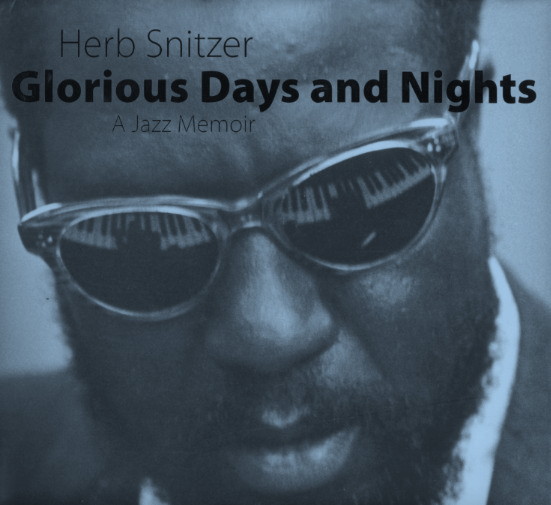
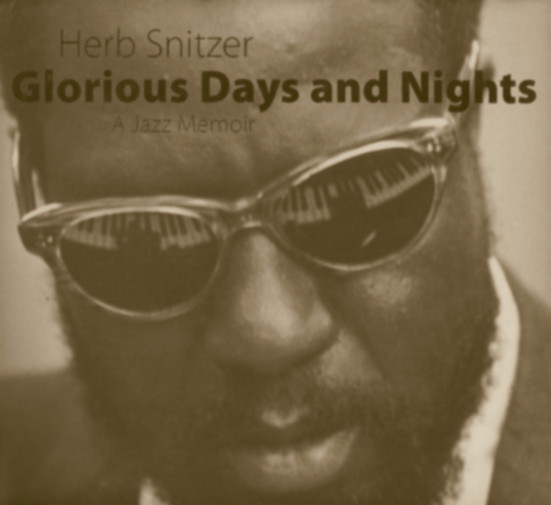
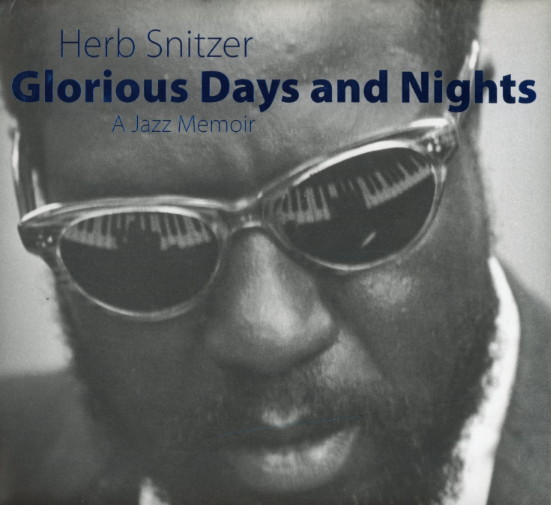
I was one of two photographers there. Unlike today, when it is difficult to get real close to the performers, I was able to set up right on the other side of the piano. Monk was playing and I noticed the piano keys reflecting in his sunglasses, so I started shooting, trying to get the keys positioned just right, and that's how that photo came about. After all these years it's still a wonderful picture. When you say Monk, you picture the glasses. Buell Neidlinger was on bass, Charlie Rouse on tenor saxophone, Monk on piano, and Art Taylor on drums. Ornette Coleman sat in the front row intently listening. It was a terrific afternoon.


During the day my job was to raise circulation and money for the magazine, a job I came to with no prior experience. It was all on-the-job training. The magazine had a mailing list from its previous life, and I wrote letters to former subscribers, apologizing for going out of business, letting them know we were back in business, and asking them to subscribe again. To sign up advertisers, I met with executives from hi-fi companies, saxophone manufacturers, and drum makers like Zildjian.


After a few months I could feel we were making progress. Metronome was a good jazz magazine, and subscriptions began to rise, albeit slowly.


Meanwhile, I had access to all of the jazz clubs all of the time. My life didn't have enough hours. That first year Bob Asen, the magazine owner, said to me, "I want you in the office at nine o'clock in the morning." I said, "I'm out photographing until three in the morning. I need my rest." He said, "You're part of the magazine, and I want you at your desk at nine." As a result, I burned the candle at both ends for a while, but even at age twenty-six there was a limit to my energy. I started going to bed earlier.


I went to the Five Spot to photograph Charles Mingus, who was a musical genius and a great composer. In the eyes of many he was the next best composer to Duke Ellington. Mingus was very demanding, and he could be difficult. I never engaged him. I kept my mouth shut, and I took my photographs. I can recall I was at a rehearsal when another musician, a white musician, looked at the musical score they were playing and said, "We have to get the kinks out of this piece." In Mingus's mind, the other musician was making a reference to kinky hair, and he felt it was a racist comment. He picked up his bass and walked out. I rather doubt the other musician's reference had anything to do with kinky hair, but that's how sensitive Mingus was. His legacy is secure. His widow, Sue, is still out there with a big band playing his music.


It was thrilling meeting the jazz greats for the first time. I can remember the first time I photographed Count Basie at Birdland. The Basie band played there a lot. You went down a bunch of steps into a very dark area, meeting Pee Wee Marquette on the way, he was almost as famous as the club. The bar was on the left and the seats were on the right. There was an entrance fee, but they let underage kids in who would sit at the bar and drink cokes. After Basie arrived, I walked up to him and shook his hand and told him I was there representing Metronome magazine. He was very accessible, and the guys in the band were terrific. They didn't have the ego and the histrionics of the rock ‘n roll musicians of today. I can remember one very special night when the Basie orchestra was playing, and Sarah Vaughan was in the audience just listening. She was wearing a plain dress with a shawl over her shoulders. O.C. Smith, the singer for the Basie band and now a minister in California, kept egging Sarah to come up and sing with him. She kept saying no. She didn't have a gown on, and she was very conscious of what she was wearing. 0. C. kept it up, and so she finally got up on stage and they began to sing, but in thirty-two bars, she wiped him out to the point where the band was having trouble keeping the song going because the musicians were laughing so hard. Musically she just whipped his ass. She went off on runs with her sensational voice that made him seem like a teenager. Very quickly he got her off the stage. "Thanks, Sarah, it was great having you up here." Meanwhile, O. C. had egg on his face because she had simply wiped him out. And at that point everyone was cracking up. O. C. learned a lesson. Don't mess with Sassy.


Many of my photographs of Basie were taken at Birdland, but I also was with him at recording sessions for Roulette Records. I attended some band rehearsals, where I made one of my favorite photographs of the hands of Eddie Jones around the neck of his bass. And then there was the session where I met Sammy Davis Jr., when he was recording with the Basie band, and I was able to make one of the definitive Sammy Davis photographs.


Sammy Davis was courteous, very professional, and if he hit a wrong note during the recording, he'd stop and start all over again. He was very demanding of himself. I had a great afternoon. When I went to see these performers it was almost magical. I'd float into their lives, stay for two or three hours, and I might not ever see them again.


The September 1960 issue of Metronome featured a half-page photograph of mine of a really far-out pianist by the name of Cecil Taylor. Cecil hit notes that just didn't sound right. Over the years, of course, it turned out Cecil was right and everyone else wrong. But his early music confused people because he hit notes no one ever touched before. He would do it with his elbow, and everyone would say," He's just hamming it up." But though they were the right keys, they would sound dissident and strange. It was like what happened with the classical musicians who were breaking away from the baroque era and were getting more and more into the music of Beethoven and the contemporary players of the day. The music sounded strange, like when John Coltrane first came onto the scene. Now his music is part and parcel of jazz history. The same thing happened to Cecil Taylor. He was really out there. I have to say I really didn't understand his music. I only met Cecil for an afternoon, and the picture that appeared in the magazine was shot through a window. He was sitting in a diner, and I photographed him through the window. So what you see is the reflection of buildings in the Broadway area, and street life partially hiding his face. It's a very abstract photograph. Since I felt separated from his music, I tried to get the same feeling in my portrait by shooting through that window as if to say, "The window is a barrier between me and Cecil in understanding his music." I wanted to have a barrier between the two of us.


With all due respect to Taylor, I quote from Ted White's article: 'The place of pianist/composer Cecil Taylor in today's jazz is a curious one. His records are few .. .and he has been bitterly denounced by some critics. His music is 'far out,' in that it often meets unaccustomed ears, but can be, in its own way, as exciting and fresh as Ornette Coleman's."


One of the greatest nights of jazz I can recall came in August 1961 at the Village Gate, which was owned by an impresario by the name of Art D'Lugoff. Art was in his early thirties. He had graduated from NYU, worked as a waiter in the Catskills, and drove a taxi. He went on to temporarily manage Nina Simone and Tom Lehrer. He backed a Calypso group called the Tarriers, who had a huge hit with the Banana Boat Song, "Day-oh." Art invested the money he made in the Village Gate. That night in August 1961 was the first of two successive weekends of music by the John Coltrane Quartet, the Horace Silver Quintet, and Art Blakey and the Jazz Messengers with Wayne Shorter on tenor saxophone, Freddy Hubbard on trumpet, Cedar Walton on piano, Curtis Fuller on trombone, and Jymie Merrit on bass. It was an all-star happening. Coltrane added Eric Dolphy to his two-bass quartet. One rendition of "My Favorite Things" was clocked at 35:15 minutes — the length of an average LP. Horace broke it up with his composition of

"Filthy McNasty."The place was half full when I was present. It cost a buck to get in, a beer was fifty cents, and hard liquor a buck and a half — so how much was John Coltrane making? He was lucky if he even got paid. Historians talk about the Golden Age of Jazz. I think back to the Village Gate, half full with three of the greatest artists in the history of the music performing to empty seats. The people present were electrified by what they heard and saw.


My photographs appeared in a two-page spread in the November issue of Metronome.


Of all of the performers, John Coltrane made the greatest impression. He started out playing the tenor saxophone; when he switched to the soprano saxophone he made some of the most significant jazz recordings ever made. Max Roach used to say when he was listening to young players wanting to make an impression, "Man, that cat is playing a lot of notes, but he isn't making any music." John Coltrane was making music. Ira Gitler, a wonderful jazz writer of the day, called Coltrane's efforts "sheets of music [sounds?]." As already mentioned, Coltrane and his group would play for over thirty minutes on one composition. Just having the energy to do so is breathtaking. In addition to having Eric Dolphy on bass clarinet that evening, Dr. Arthur Davis and Reggie Workman were on basses, a young McCoy Tyner on piano, and Elvin Jones on drums.


At one time Coltrane had been a drug addict. For a while he was a mystic. After he got off the junk, he became a compelling musical force. And yet, when I met him, I was impressed by what a gentle person he was. When he finally beat his addiction, he wouldn't even drink in the clubs. He would have hot tea between sets. He lived in a world within himself. He was calm, but when he put that saxophone to his mouth, the music was inspiring. It moved me in a strange and compelling way. I took it all in. I didn't even question it. It was just what it was. And when I listen to those original recordings, which you can get today on CD, you have to say to yourself, "My God, this guy was a giant of an artist." Coltrane died young.


Bill Coss, Metronome's editor, was the one who came up with the idea of having a ping-pong tournament for jazz musicians. Metronome would sponsor the tournament, and I would photograph the games. We set up tables at the Jazz Gallery, a club on St. Mark's Place just around the corner from the Five Spot, and we were able to get Max Roach, Abbey Lincoln, Milt Jackson, and Thelonious Monk to enter the tournament. As I photographed them playing, I took notice that Thelonious Monk, who stood six feet two and weighed about 240 pounds, was head and shoulders better than the others. They weren't athletes, and after I finished taking my photographs, I picked up a paddle and played a little doubles, teaming with Max Roach and then with Abbey Lincoln. I thought to myself, "I'd really like to play Monk. I think I could beat him." I put the challenge to Thelonious one night after he finished playing at the Jazz Gallery. We arranged a match. Baroness Pannonica de Koenigswarter, who loved jazz, was a benefactor of Monk. 


Before that, she had been a benefactor of saxophone legend Charlie Parker, who died in her New York City apartment. I don't know whether she still had the apartment, but on this night she had brought Monk to the club in her Rolls Royce and was waiting to take him back to her house in Weehawken, New Jersey, overlooking the New York skyline. At 2:30 in the morning I followed in my Volkswagen bug as we sped through the Holland Tunnel to her home. When we arrived at her home, I walked in and noticed


she had set up a ping-pong table in one of the many rooms. Thelonious and I grabbed paddles, and we began volleying. I thought, "I'm going to be able to take this guy." We played the first game, and Monk won 21-8. He cleaned me out. I figured, "Damn, I'm not going to let this happen again. I know what to do." I figured I'd slice more and make him move around. I figured I could out-position him. We played a second game, and this time he won 21-11. He was so fast and quick, I didn't have a chance. I said to him, "Play another one, Monk?" This time he beat me 21-6. By this time it was six in the morning. We put our paddles down, and the baroness brought us coffee and cookies. We chit-chatted for a while, and then I got back in my car and headed back to Manhattan. It was a great evening, so much fun. But it seemed unreal that such a big guy could beat me at ping-pong. It was humbling.”


To order the book directly from the University of Mississippi Press please use this link.


Tuesday, October 26, 2021

Part 2 - Herb Snitzer's Glorious Days and Nights - A Jazz Memoir

 © Copyright ® Steven Cerra, copyright protected; all rights reserved.


"Herb Snitzer's photographs are not just pictures. They are stories, each and every one of them. Herb is one of the great storytellers and every page of Glorious Days and Nights proves it. He tells powerful, honest, human stories about this music, the artists who made it, the injustice they endured, and the beauty they created. He speaks with authenticity and special insight because the jazz world embraced him ... and it was mutual. The result is an exciting visual and literary journey through a period when the word ‘freedom’ really meant something." 

—Robin D. G. Kelley, author of Thelonious Monk: The Life and Times of an American Original

2    MOP, MOP... Bebop


“I was new to the city, and I needed a job. I decided the best way to get one was to call up a famous photographer on the phone and ask him if he needed an assistant I opened the phone book and looked for the list of photographers. This was the era of the national magazines, Life, Look, Time, Colliers, and the Saturday Evening Post, and if you had talent, you could make a good living. I looked down the list, and I saw the name "Arnold Newman." He was a portrait photographer of some renown, and he had come from Philadelphia. I called him and said I was looking for a job. He asked if I had gone to school, and I told him the Philadelphia College of Art. He asked if had a portfolio to show him, and I said I did. He asked me to bring it over so he could look at it. He liked the photos I had done of the Philadelphia Orchestra, and he offered me a job as his second assistant. He said, "You can help me lug lights and keep the studio clean, and I will pay you forty dollars a week."


I jumped at it, and during the three months we worked together, I met a lot of very famous people in New York, especially those who lived on West 6yth Street, which is where the Des Artistes restaurant is. Newman worked for Life magazine, and he photographed Stuart Davis, who had a studio there; Kim Novak, who lived there; and the prominent writer/playwright Samson Raphaelson, all residents of West 67th Street.


I didn't mind carrying his lights and setting them up. I enjoyed going back after a shoot and working in the darkroom. But Arnold was difficult and demanding, and after three months we parted.


I had noticed a wonderful photograph of Marcel Marceau, the mime, on the cover of a camera magazine, and I took note that the man who took the shot was Robert Ritta. I looked him up in the phone book, and when I saw he lived in New York, I called him cold.


"I'm looking for a part-time assistant, "he said. "Come on down."


I went down to his studio on West 56th Street between 5th and 6th Avenues, and I showed him my work. We hit it off, and he offered me a job working three days a week for twenty-five dollars a day. I was making twice as much money and working two days less!


Bob was great to work for, just a wonderful man, and he had a lady friend named Kay who was also his agent. The two of them treated me very, very well. I busted my butt for him.


At the same time I began taking a series of photographs of Central Park. I was living in two photographic worlds, in the world of making a living, the commercial world, but also living in the world of art. At the time I still considered myself an artist, not a photojournalist. I saw photography as an art form, and not a lot of people did. There were no photography galleries at the time. But I felt I was an artist, and so what I was photographing I considered art.


During my two off days I took my work to advertising agencies and art directors of magazines to see if they would be interested in hiring me or buying some of my work.


The first photograph I ever sold was a shot of the celli section of the Philadelphia Orchestra, where I was shooting down from the balcony. Madison Avenue magazine bought it, and they used it to illustrate a story they were working on, and they paid me seventy-five dollars, as much as a week's salary. I thought, Wow! This is pretty good!


One of the people I went to see was Edward Steichen, the famous photographer who was the curator of photography at the Museum of Modern Art. Steichen had a reputation for helping out young photographers. If he liked your work, I was told, he would buy a photograph or two and put it in the museum's collection. I figured I had nothing to lose, and I went to see him, at the advice of Grace M. Mayer, his associate.


I showed him my Philadelphia Orchestra photographs and also some of the photographs I had taken of Central Park. He looked through my portfolio, selected two photographs of kids from the Central Park series, and paid me twenty-five dollars each for them.


Not long after that, Kay picked out a photograph I had taken of an older man and a young boy sitting on the beach facing the water. (I don't have the photograph.) She sold it to an advertising agency, which used it to illustrate the benefits of an insurance company.


She handed me six 100 - dollar bills! She didn't even take a commission. I couldn't believe it. I figured if people were buying my work, I must have something going for me. I thought to myself, I gotta do this full time.


I told Bob Ritta, "I'm going to go into the world and go for it." Bob gave me his blessing. As I said, he and Kay were wonderful people.


I went out on my own, and I didn't sell another photograph for almost four months.


A friend recently asked me if I was a Beat in those days. I was too young and too naïve to even know what that meant, but I did know I loved jazz and wanted to meet and memorialize the men and women who made this wonderful music.


Here's what I knew about jazz: the twenties, thirties, and forties comprised the swing era, the big-band era, and swing was America's popular music. Swing defined American music both in the white and black worlds. You had Benny Goodman and Tommy Dorsey and Duke Ellington, Count Basie, Cab Calloway, and Fletcher Henderson. America was captured and captivated by swing. Many compositions lasted no more than three minutes following the pattern of the 78s of that time, ideal for dancing. Long-playing records came later and with them came longer compositions. Of course, dance competitions were the rage of the swing era as well, and couples would dance and dance for hours, many hours, until some dropped to the floor in exhaustion. But winning came with cash prizes — at a time when people were dealing with the Great Depression. In certain circles money was hard to come by.


After World War II, there was the emergence of what we now know as bebop. Charlie Parker, Dizzy Gillespie, and Max Roach were among the early stars of bebop. Bebop took the world of jazz in a different direction, and while rock'n'roll, blues, and rhythm and blues became more popular, jazz became a smaller and smaller part of the total music scene in America. 


Today jazz is practically invisible. But at the time I was starting out, the jazz phenomenon had not declined. Or at least no one had noticed this was happening. Jazz in 1958 was a happening scene.


In my wanderings from magazine to magazine seeking work, I visited the offices of Metronome, a jazz magazine. The magazine hadn't published for a while, but its editor, Bill Coss, hired me on a freelance basis to go the Five Spot Café to photograph Lester Young for its annual yearbook.


The Five Spot Café was in a nondescript railroad flat down in the Bowery. It was the home of avant garde jazz, featuring such musicians as Thelonious Monk, Charles Mingus, John Coltrane, Jimmy Giuffre, Ornette Coleman, and Cecil Taylor. When you walked in, the bar was on the right, and the stage was on the left. There were chairs and tables in the middle and smoke all around. It was dark and steamy, a typical jazz club of the era.


Lester Young had been the central and driving force of the Count Basie saxophone section for many years. He was a sad person, a man who had been continuously hurt emotionally. He was fragile. He went into the army but didn't stay long. Like many other blacks, he was a victim of racism. Life was tough for him.


Lester Young made himself readily available to me. I began to photograph him while he was back in his "dressing room," if you can call it that. It was the room where they kept all the Coca-Cola bottles and the food. I have a photograph of Lester with the big freezer doors behind him, which metaphorically turned out to be a statement about him: Lester Young locked in emotionally. Lester was very kind to me. He didn't ask me not to stand so close or not to photograph. I just know he let me do whatever I wanted to do at all hours of the morning.


Lester may or may not have had a love affair with the great blues singer Billie Holiday but for certain they were soul mates. There is a record of Billie singing and Lester playing ("A Musical Romance,"—Columbia Legacy), and the music is so beautiful it brings tears to my eyes.


Billie died in early 1958. Lester was never the same again. He couldn't live with her, and he couldn't live without her.


Tragically, that photography session was the one and only time I ever saw him. He died six months later on March 15,1959, at the age of forty-nine. People said he died of a broken heart, that he gave up on life. And he was so talented.


That night Lester was playing for a small but dedicated audience of about thirty or forty people. This was my first jazz assignment, and I went with Bob Perlongo, a staff writer for Metronome. Lester was special then and continues to be so today. To me he was more than special; to me he was one of the greatest tenor saxophonists ever. He was my initial experience in a lifelong love affair with jazz. He came out of the darkness, dressed in a long black coat, a buffer against the chilling October air, his pork-pie hat settled squarely upon his head, his saxophone resting easily in its black leather case nestled under his arm. By the window light of the café I made the first of many photographs that evening.


The back room quickly filled with other musicians, friends, hangers-on, all wanting to talk and share the moments with Lester Young.


That evening, inside the Five Spot, both backstage and on the bandstand, Lester was smooth, relaxed, and accessible. He joked with the awestruck young members of his band, but they and we all knew he was not well, his health slipping, no one quite sure how long he would live. Prez played beautifully, sometimes haltingly, never sloppy. He was in the present, teasing his fellow musicians, leaping over their musical lines, pushing them sometimes beyond their musical limits; the always respectfully attentive audience witnessed his musical thoughts and journeys and shared a deep appreciation of the man and his music.


That night's event ended around three in the morning. The experience changed my life. Artists have life-changing moments. For me, this was it. I had never heard a jazz musician up close like that. I just felt I was not in that room, but somewhere else. I could feel it in my chest — my own awe-inspiring, life-changing moment.


I talked to Lester a little, although I was in such awe I really didn't have much to say, but I made pictures that have lasted over fifty years. I took perhaps a hundred and twenty photos, and Metronome published a whole spread in their 1959 yearbook. That first negative I ever made of a jazz musician has turned out to be what writer Nat Hentoff called "the quintessential Lester Young photograph." Coming from a man who has seen thousands of "Prez" pictures, the comment is graciously received.


That experience was the beginning of a forty-year odyssey, taking me to other cities and countries, into homes, apartments, concert halls, dark clubs — clubs long closed, worlds of men and women of all colors, nationalities; some of the folks loving, compassionate people, others as nasty as you can imagine, with terrible chips on aggressive shoulders ready to tear down rather than build up, ready to believe that all white folk are bad, ready to do battle where none exists.”


To order the book directly from the University of Mississippi Press please use this link.


Monday, October 25, 2021

Part 1 - Herb Snitzer's Glorious Days and Nights - A Jazz Memoir

 © Copyright ® Steven Cerra, copyright protected; all rights reserved.


“I came to jazz through art — painting and photography, the American Abstract Expressionists, beat poets, Greenwich Village wanderings — as a young and very impressionable artist living in New York City. I was drawn to the music, as I was to my art, initially, by the spirit and joy that I felt every time I heard jazz; this multifaceted and highly original music lifted my soul and spoke to my heart, much as Mozart did, and the initial feelings have not left me.”

- Herb Snitzer


Although the Jazz universe is primarily a musical one, many other arts orbit within its sun.


Poetry, literature, criticism, movies and documentaries, painting and photography all occupy a planetary space within its cosmos.


Clubs, concert halls, sea cruises, cinemas and festivals all provide a nexus for the arts to engage and intertwine and visual displays, radio broadcasts and television programs further enrich the interconnectedness of the arts with Jazz.


I’ve always been fascinated by the process of how someone from another art form finds his or her way into the Jazz path and personal memoirs are an excellent source for revealing these voyages of discovery.


In this regard the photographer Herb Snitzer's Glorious Days and Nights - A Jazz Memoir [2011] explains how he became involved with Jazz following the Second World War in his Preface, Introduction and Chapter highlights and I thought it might be fun to share these with you in a multipart feature on the blog as one example of how other arts fuse with Jazz and enhance the way in which we experience the music.


Preface


“The early Eisenhower years were filled with contradictions; apathy and bus boycotts, conservatism and radicalism. The middle-class white world was recovering from Joe McCarthy; blacklisted writers were using phony names to get work in Hollywood and London; Jack Kerouac and Robert Frank roamed America; and Roy Cohn remained evil. By 1957, the year I moved to New York, the Montgomery, Alabama, buses had been integrated (December 21, 1956).There were growing signs that black America was no longer going to be continuously embarrassed, no longer going to be content in living second-class lives. This "unrest" as the New York Times so quaintly called it, burst upon white America in 1955, when Ms. Rosa Parks was arrested for not giving up her bus seat, setting off a chain of events, reverberating still.


Amazingly, Judge Franklin Johnson, a Republican-appointed federal judge, ruled that his state's busing laws were unconstitutional. A truly brave act on his part. By December 5, twenty-five-year-old Dr. Martin Luther King Jr. was elected president of the Montgomery Improvement Association. The boycott began.


The United States has come a long way in internally destroying attitudes that suggest that an entire race by being of a different color should be enslaved with little or no rights, no protections. Attitudes die hard. Between 1882 and 1955 five thousand lynchings were recorded. There were, on average, sixty-seven blacks lynched each year during the first twenty years of the twentieth century. This fact was not lost on the collective black consciousness, and it found musical expression in the haunting ballad "Strange Fruit," sung by the great jazz vocalist Billie Holiday. "Southern Tree bear strange fruit / Blood on the leaves and blood on the root, / Black body swinging in the southern breeze / Strange fruit hanging from the poplar trees."


There is another rendition of this song sung by the great Nina Simone that will chill the spine. Each version is a testament to the greatness of the song and the singer. In fairness, not all southerners were or are evil; too many, however, in positions of influence, did little to stop the lynchings. Too many doctors, lawyers, and judges of the twenties, thirties, and forties were intimidated by members of the KKK who were also in positions of power and influence. It was a sad time in America.


Much has been written about the unanticipated changes that came about after the Second World War relating to increased racial awareness, the internationalization of black music, sensitivity toward minorities, and so forth. But the dark side continued for many years. In the July 1939 issue of the Journal of Negro Education—while Louis Armstrong, Duke Ellington, Cab Calloway, Fletcher Henderson, and other noted black artists were wowing audiences (segregated in the South)—Dr. Ralph Bunche of the United Nations prophetically and chillingly wrote, "Unless the Negro can develop and quickly, organization and leadership, endowed with broad social perspective and foresighted analytical intelligence, the Black citizen of America may soon face the dismal prospect of reflecting upon the tactical errors of the past from the gutters of the black ghettoes and concentration camps of the future." His use of the phrase "concentration camps" stunned me. The concentration camps of the Nazis were still relatively unknown to the world for another four years. Or were they?


The great jazz trumpet player Miles Davis once remarked that if white America knew what many blacks were thinking it would scare them half to death. Miles was always one for overstatement, but I cannot discount Miles Davis's personal views of white America. If I were black, living within a hopeless or what I perceived to be a hopeless situation, told by the larger society that I was worthless, second best, unnecessary, eventually I would relate to the larger society in ways which were less calm and other than law abiding. Anger and frustration found their way into the music of the 1950s, 1960s, and i1970s: In the words of Langston Hughes, "Old cop just keeps on 'MOP! MOP ... BE-BOP ... MOPl That's where BE-BOP comes from, beaten right out of some Negroes' heads into them horns and saxophones and piano keys that plays it..."


A special nod goes to two people not directly connected to the jazz world but whose lives were exemplary and whose dreams continue to connect people of goodwill: Marian Anderson and Paul Robeson. Early on they both spoke and sang out for freedom and dignity, equality and self-respect. They are kindred spirits to Louis Armstrong, Duke Ellington, John Coltrane, Miles Davis, and Sarah Vaughan. They have left a legacy that deserves our continuous attention. We owe them an enormous thank you.


I also want to thank my wife, the painter Carol Dameron; thanks to Ed and Gail Snitzer for their unwavering support; longtime jazz friends, Dan Morgenstern and Jerry Smokler; the cultural historian Dr. Benjamin Cawthra, Cynthia Sesso, Gretchen and Barry Singer, Ellen and Burton Hersh, Babs Reingold, and Jim Wightman. A special thanks goes to New York Times best-selling author Peter Golenbock, a dear friend and ultimate professional. Many, many thanks.


Introduction


The question hangs out there like gently swaying laundry. "Why am I, a middle-class humanist white guy so engrossed in the world(s) of African Americans and their drive for freedom and civil rights?" My response is always the same: inequality for one is inequality for all. Racial hatred toward one is racial (ethnic) hatred toward all others.


My parents were pogrommed out of the Ukraine by the dreaded Cossacks so many years ago — they are both dead — yet their stories remain as vivid today as when I first heard them. How dreadfully frightened, alone, and small a black child must have felt in those same years at the beginning of the twentieth century, especially growing up in the South where I now live and work. But does this really explain why my commitment to civil rights and liberties and my sustaining love of jazz remain full-blown, as strong now as forty years ago? My overall feelings about justice, equality, freedom, and the deeply held belief in all people being equal were formed in the late forties, early fifties—my teenage years, those days of Emmitt Till, Brown v. Board of Education, Joe McCarthy, Martin Luther King Jr., civil rights demonstrations, and marches for freedom, dignity, and equality.


My own personal struggles were less dramatic. Good people were there to help my parents in time of need. Good people were there when I started my professional career in New York City in 1957. I feel I owe the same embracing to others, and since I love art, jazz, photography, freedom — especially freedom — there was and is an obvious connection to the people who make this music come alive and push it forward.


I came to jazz through art — painting and photography, the American Abstract Expressionists, beat poets, Greenwich Village wanderings — as a young and very impressionable artist living in New York City. I was drawn to the music, as I was to my art, initially, by the spirit and joy that I felt every time I heard jazz; this multifaceted and highly original music lifted my soul and spoke to my heart, much as Mozart did, and the initial feelings have not left me. The early to mid-fifties were spent growing, maturing, serving my country in the United States Army (now that was a trip), splitting for New York City the day after I graduated from an art college in Philadelphia.


I was in the Big Apple, the Waldorf Astoria, 52nd Street, the Bowery, the Five Spot, the Half Note, the Village Vanguard, further uptown, Basin Street East, Count Basie's, Small's Paradise, and of course, the Apollo, where every jazz junkie came for a fix in those days. But we don't use language like that anymore. Now jazz musicians bring their Evian water on the bandstand — bubbles without the bubbly.


Living in New York City between 1957 and 1964 provided me with many breaths of fresh air: Pops, Duke, Sassy, Trane, Eric Dolphy, all alive and swingin', along with Nina Simone, Ornette Coleman, Charles Mingus, Stan Getz, Carmen McRae, Coleman Hawkins, Roy Eldridge, John Birks Gillespie, Red Allen. Oh my, the list was almost endless, and they were all great musicians and some of them wonderful composers. I feel badly leaving out so many other names from this list of jazz artists.


And so along with dropping in on the abstract expressionists, enjoying their slashing and dashing, their parties almost as wonderful as their paintings, it wasn't difficult being drawn to jazz; it was all around, you just needed to reach out, it was here, there, everywhere, anywhere, inside, outside, all around.


The forty years from 1955 to 1995 proved to be tumultuous in the life of the United States and in the singular and collective lives of African Americans. Blacks' struggles for freedom and equality make us a better nation; yet knowing full well how fragile and demanding freedom is, one must be vigilant and knock away the forces of totalitarianism and the ugliness of intolerance and prejudice, whenever and wherever these forces appear. They are in evidence today!


This book is about men and women committed to the making and playing of music we call jazz, addressing its development in relationship to the ever-growing freedoms being experienced and gained by people "of color." The vast majority of jazz musicians are black, and they live in a country that was and is, for the most part, indifferent to and unsympathetic to their concerns, aspirations, and dreams, not as musical artists, but as human beings.


In October 1958 I went to meet and photograph Lester Young. From that day (night) on, jazz musicians have been a part of my life. Their music is entertaining and intellectually stimulating, and their lifestyles swingin'. No Chet Baker, no Spike Lee films, thank you. The Clint Eastwood produced "Straight. No Chaser" is where it's at. Simple and honest, no frills, just the action and the jazz artist. So the music is in my heart. One day I might just hear Sassy (Sarah Vaughan) sing again when I close my eyes and listen hard, with Duke's orchestra, and then she, Ella Fitzgerald, and Carmen McRae will sing a song that lasts forever. That would be something.


Certainly this book is an autobiography, but it also reflects the times, and also I have a lot of strong opinions about things I wish to share. The people in this book were very important cultural icons, and it is my fervent wish that my words and photographs bring them into focus in every way possible.


1 Beginnings


One day after graduating from college in June of 1957. I arrived in New York City to stay. You could park on the streets back then. I had driven my brother Ed's '51 Mercury from Philadelphia up New Jersey through the Lincoln Tunnel to Manhattan's west side, where I rented a two-and-a-half bedroom, fifth-floor walk-up on 70th Street right off Central Park West for $70 a month. I was ready to capture the world.


Getting there had not been easy or fun. I was a child of the thirties, a son of refugee parents who really had no idea how to raise children. They got off the boat and settled in Philadelphia, the cradle of liberty and the home of the Quakers, but I doubt they knew much about that. My brother and I had to suffer through a lower-middle-class insulated Jewish life, where art and music were considered frivolous activities, and where fear and poverty were never far away. I can still close my eyes and picture my father at age four under a wagon in his small village in the Ukraine, as the Cossacks, brutal men mounted on horses, came rampaging into town, shaking not only the ground but the very soul of my father. How dreadfully small he must have felt.


I caught a break when I passed all the tests and was admitted into Central High School, a very prestigious public institution where only the best students from across the City of Brotherly Love were admitted.


Like a lot of kids, I didn't take my high school education very seriously. I was a football player for my first three years — a halfback — and that was how I saw myself. My most vivid memory in high school is of being on the field when our quarterback was injured. The coach sent in his replacement, an Afro-American kid, who trotted onto the field. As he got to the huddle, the coach hollered out to me, "Snitzer, you call the signals." I remember seeing the kid's face. He was upset and embarrassed, though he didn't say a word. Here we were, going to the best high school in Philadelphia, and this kid was just as smart if not smarter than I was. But it was obvious to everyone the coach didn't want him calling the signals because he was black. Looking back, I have to say I was thrilled for the opportunity, but at the same time embarrassed. I slowly became acutely aware of the racism that existed in the world. Eyes open, I began to notice it more and more. Though most whites treated Afro-Americans as if they didn't exist, I found myself drawn to the handful of black kids at our school. I liked their dignity. I felt they had a reserve about them, a kind of maturity the white kids didn't seem to have, and I also respected the black athletes because to get their chance, they had to be better. Jackie Robinson had joined the Brooklyn Dodgers in 1947, but most of the country still didn't get it: there were sensitive, talented people behind those black faces. I'm a little embarrassed to say we never socially mixed—just wasn't done, the times were so terribly different, everyone so immersed in their ethnicities. But that incident left its mark, which made me, in time, pursue history, events that shaped this country, its people, and what I discovered saddened, angered, challenged, and changed me forever.


I used to enjoy going to see the Philadelphia Stars, the local Negro League team. Though most of the people in the crowd were African American, with a sprinkling of whites, I had no hesitation about going. I went because it was baseball and because the men on the field were talented players.

At the end of my junior year, I hurt myself playing football, and I didn't play my senior year. I concentrated on my studies instead, and lo and behold, my teachers found out I was pretty smart.


From high school I wasn't sure what I wanted to do. Even though I didn't take it seriously, I knew I liked to draw, and so I went to the Philadelphia Museum School of Art. The school wasn't accredited, and my parents never supported me, but I was headstrong, and I pursued the arts anyway. While there, I noticed evocative photographs displayed on the walls, and I bought a cheap camera, and I began to learn how to take pictures and how the darkroom worked. I also began taking weekend trips to see Broadway plays and to visit the great art museums of New York. It didn't cost much, a bus ride and a night at the YMCA. Back then you could sit in the balcony and watch a great, serious Broadway show for ninety-five cents.


When I was drafted into the army early in my junior year in February 1953, I took my camera with me, making lots of photographs of paratrooper jumps and of people in the military. Unfortunately, I don't have any of those negatives.


My military life was nothing to write home about. My most vivid memory was going home to Philadelphia in my military uniform and attending a Quaker meeting. I listened to Senator Wayne Morse talk about his opposition to the Korean War, and there I was sitting provocatively in the audience in my military uniform. Only later did I realize how patient and tolerant the Quakers were of me.


My other army memory came in May 1954.The Supreme Court decided Brown v. Board of Education in favor of those who sought integration. I celebrated with a few black soldier friends, who wouldn't take me to a black bar, and I certainly couldn't take them to a white one — being stationed in the South at the time — and so we drove around, sipping drinks, wondering what the hell was going to happen now.


I never got to see the shores of Korea. I was against the war, against violence, but back then there was no draft counseling as there was during the Vietnam War. Going to Canada was out of the question. I was drafted right out of college at age twenty, and every day I hated being a soldier so much I almost drank myself to death. After I began my military career at Camp Pickett near Richmond, Virginia, I moved on to Fort Knox, and then I spent the last five months of my active service in a military hospital in Valley Forge suffering from alcoholism, hepatitis, and cirrhosis of the liver.


After twenty-seven months in the service I received an honorable discharge. I returned to the Philadelphia College of Art and got my degree. I had decided to make photography my life. Every senior had to turn in a thesis, and mine was to photograph the Philadelphia Orchestra. I had always loved music. The orchestra played just two blocks from the college. I went to the administrators of the orchestra and got permission to photograph Eugene Ormandy and his orchestra. I have early photographs of Leontyne Price singing Handel's "Messiah." I took over a hundred photographs, and a few years ago printed a series from those negatives.


I received an A plus on my thesis. I was twenty-three years old. I knew where I wanted to go, back to the museums and the Broadway shows. And so, the day after graduation I revved up the Mercury and headed for the big city.”


To order the book directly from the University of Mississippi Press please use this link.


Saturday, October 23, 2021

Joe Maini by Gordon Jack

 © Copyright ® Steven Cerra, copyright protected; all rights reserved.


Gordon Jack is a frequent contributor to the Jazz Journal and a very generous friend in allowing JazzProfiles to re-publish his perceptive and well-researched writings on various topics about Jazz and its makers.


Gordon is the author of Fifties Jazz Talk An Oral Retrospective and he also developed the Gerry Mulligan discography in Raymond Horricks’ book Gerry Mulligan’s Ark.


The following article was published in the October 6 & 15, 2021 editions of Jazz Journal. 


For more information and subscriptions please visit www.jazzjournal.co.uk


© -Gordon Jack/JazzJournal, copyright protected; all rights reserved; used with the author’s permission.


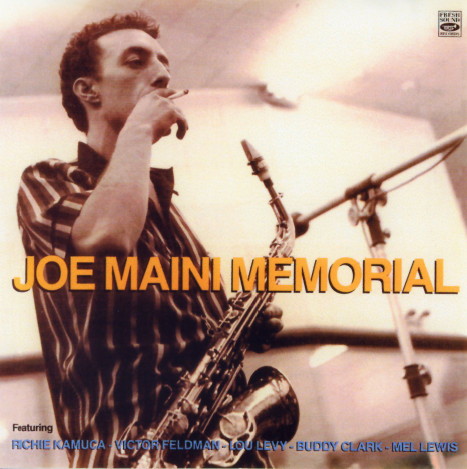
“During a relatively short career Joe Maini became one of the finest alto soloists and lead players of his generation. Hugely admired by fellow performers he was born on 8 February 1930 in Providence, Rhode Island and by 1948 he was on the road with Johnny Bothwell. Bookings became scarce so together with fellow band-mates John Williams and Frank Isola, Maini jumped-ship in Ohio. He took off for Los Angeles where he worked with Roy Porter’s orchestra sitting in the section with Bob Gordon and Eric Dolphy who played lead. His friend Jimmy Knepper was also in the band and by early 1950 they decided to leave the west coast to try their luck in New York.


Once in the big city they rented an apartment located on the corner of 136th. Street and Broadway which soon became a location for all-night jam-sessions. Herb Geller who was a regular attendee told me, “You could visit at any time and there was always music being played together with all kinds of nefarious activities going on. Everybody used to go there –Dizzy, Joe Albany, Max Roach, Miles, Mulligan, Zoot, Warne Marsh and Lee Konitz. If you went to Joe’s you would meet the entire who’s-who of jazz”. Lenny Bruce often visited to socialise with the musicians. Don Lanphere recorded Charlie Parker there in May 1950 with John Williams, Buddy Jones and Frank Isola and the results were eventually released as The Apartment Sessions (Philology W842-2 CD). A more famous example of Lanpheres’s taping (aided by Maini) occurred a few months earlier when Parker’s quintet with Red Rodney appeared at a dance gig at St.Nicholas Arena. The album was released as Bird At St. Nicks (OJC CD041-2).


Around this time Maini was involved with a Gene Roland project that rehearsed at Nola’s Studio.  It was a twenty-five piece band designed as a feature for Parker known as The Band That Never Was because it did not work, it just rehearsed. Eddie Bert was there and he took a series of photos that have been reproduced in Ken Vail’s Bird’s Diary. Maini already had a drug problem which led to his incarceration at The Public Health Facility in Lexington, Kentucky. Vail’s book quotes a letter Joe sent to Charlie Parker from Los Angeles dated 23 January, 1953 – “It felt good to get your warm letter while I was in the “hospital”. Jimmy Knepper and I got out on 17 November and I have become a solid citizen and good musician. No more raucous living for me. That sixteen months changed me. Jerry (sic) Mulligan is making a lot of money out here. He’s got a small group with no piano and I played with him the other night on his gig and it was a lot of fun.”  Parker and Maini became very close and for a while they lived in the same apartment. Parker gave Joe a tenor which he continued to use during the fifties.


Having been off the scene for a while Joe like a lot of musicians took whatever work he could find which often included  performing in strip clubs. Brew Moore, no stranger to burlesque, once said he was 21 before he saw a naked woman from the front. Geller told me about the Los Angeles bohemian under-world of the time - “I sometimes worked in striptease clubs because I knew Night Train and Harlem Nocturne which I suppose qualified me. Lenny Bruce was the comic at several clubs and we got to know each other real well. Sometimes Joe Maini and I would split a job. If I had a jazz gig he would cover for me at the strip club and vice versa.” One of the most notorious clubs was Duffy’s Gaiety near Santa Monica Boulevard where Bruce was the M.C. and his wife Hot Honey Harlow did the stripping. Ronald Collins and David Skover in their Trials Of Lenny Bruce make it clear what the punters would find at Duffy’s - “Unemployed jazzmen gigged there, hookers cruised there, strippers grinded there, junkies scored there and Lenny thrived there”. Stars like Bob Hope, Hedy Lamarr and Ernie Kovacs were regular visitors and Gary Crosby (Bing’s son) used to date the girls. As Herb said, “Lenny was really infamous then, not quite a star yet but “in” to the real hip people”.  When Maini, Geller and Jack Sheldon were not actually playing they apparently had a free seat every night.


In 1954 Maini made notable contributions to a high-profile Best Coast Jazz date for Mercury where he more than held his own in the heady company of Clifford Brown, Walter Benton, Herb Geller, Kenny Drew, Curtis Counce and Max Roach. He is heard on Coronado, You Go To My Head, Caravan and an inspired Autumn In New York where his soulful approach contrasts effectively with the suave elegance of the other alto-man on the session - Herb Geller. The following year he was seen on screen with Connie Haines and the Dan Terry Orchestra in a short film titled Birth Of A Band. That year he also appeared on a relaxed Shelly Manne date with Bob Enevoldsen, Bill Holman and Jimmy Giuffre where they performed Summer Night, Spring Is Here and You’re Getting To Be A Habit With Me.


When Bob Gordon died in 1955 his wife Sue wanted a band to play at his funeral. Jack Sheldon, Bob Enevoldsen, Joe Maini and Jack Montrose performed Jack’s arrangement of Good-Bye and Enevoldsen told me that it was almost impossible to perform given the circumstances. Maini was working with Kenny Drew at the time and he is featured on both alto and tenor on the pianist’s Talkin’ And Walkin’ which has a number of the pianist’s intriguing compositions together with a memorable I’m Old Fashioned. The following year he and Red Norvo recorded Concertino Da Camera with composer Jack Montrose. It has an unusual three-part baroque canon form with a series of key and tempo changes developing into an examination of the blues featuring Maini at his best.


Joe Maini, a consummate sight-reader, was part of the large studio orchestra on Johnny Mandel’s 1958 I Want To Live film sound-track. Years later Mandel told Marc Myers, “Joe was beyond great. He could play anything I wrote with incredible soul and energy”. Everyone who knew Maini had similar views about his musicality. This is what Bill Perkins who played with him in Terry Gibbs’s band told me, “He was one of my all-time favourite musicians...those who played with him will never forget him. Along with Lanny Morgan he was the greatest, most dynamic jazz-oriented lead alto I ever played with.” When Pete Christlieb was about sixteen he played in a Saturday morning rehearsal band. He told me that “Occasionally somebody good would sit-in to show us how the charts should really sound. The great Joe Maini once visited and played the lead alto chair and he was so good it was frightening. He more or less said, “You follow me kid and try to stick close to my ass because we’re going down the road and we’re going fast!” Man what authority. It was fantastic to play in the section with him”.


Herb Geller once told me an amusing story concerning Maini and Art Pepper. This anecdote which occurred in the late fifties also appears in Pepper’s Straight Life but with a slightly different ending. “There was never any love lost between Art and Joe, or Art and anyone else for that matter because nobody liked him personally. They had both been in jail and there were rumours that Art had named names. The word for that is a fink and that is what people were calling Art. Anyway there was an after-hours club on Hollywood Boulevard where Bill Holman had the group with my wife Lorraine on piano and musicians would go there after their gigs to jam. Joe and I would usually go together and one night we met Art in the parking-lot getting ready to go in. We greeted each other and Art’s wife Diane said, “How can you be so friendly when you know that you all hate each other?” Art said to Joe, “Yeah, you’ve been going around telling everyone I’m a fink and that’s not true”. Joe said, “Listen, I was in the joint too and I would never call anyone a fink unless I really knew for sure. I didn’t call you a fink, all I said was that you couldn’t blow shit man! I’ve been telling everyone that”. They were going to start fighting but Herb and Diane held them both back. Pepper’s friend bass player Hersh Hamel provides a different ending in Art’s autobiography –“They got into a fist-fight and were rolling around on the concrete hitting each other”. 


In 1959 he became a founder-member of Terry Gibbs’s dynamic and well-named Dream Band recording eight albums with them until Gibbs disbanded in 1962. Apart from the leader the band was packed with top-draw soloists like Conte Candoli, Frank Rosolino, Bill Perkins and Richie Kamuca. Maini had features on No Heat, Evil Eyes, Flying Home, The Big Cat, Opus One and many others. In a recent telephone conversation this is what Gibbs had to say about his lead alto – “Joe could memorise a chart after playing it just twice – he wouldn’t have to look at it again. The only other musician I knew who could do that was Stan Getz. He was a great sight-reader able to play anything that was put in front of him. He had a drug problem but he was always reliable, showing up on time and taking care of business. Buddy Clark once brought in an arrangement of Parker’s Just Friends. The saxes (Med Flory, Maini, Kamuca, Perkins and Bill Hood) used to play it at the end of the night and that was really the beginning of Supersax. I announced them as “Joe Maini and the Maniacs!”  More fine examples of his big band work can be heard on Louis Bellson’s 1962 Live From The Summit album and on Cool from West Side Story Bellson said “Joe reached a peak of down-home swing”. One of his last bookings was with the band at Shelly’s Manne-Hole in March 1964. 


 Joe Maini died on 8 May 1964 and Down Beat’s obituary gave the cause of death as “A bizarre accidental shooting”. Reference books over the years like The New Grove Dictionary of Jazz and The Feather/Gitler Jazz Encyclopaedia have claimed he was playing Russian Roulette and this has become an accepted part of jazz folk-lore. In June 2010 Marc Myers’s excellent JazzWax site provided a platform for Maini’s daughter Tina to put the record straight with information she received from Joe’s friend Ray Graziano.  “Late at night after a gig my father went back to Ray’s house to get high. He picked up the pistol and started telling a joke. He waved the gun around and it went off accidentally.” After the funeral there was a Memorial concert at Shelly’s Manne-Hole and the money raised was put into a trust-fund for Maini’s two children.


Selected Discography

As Leader

Joe Maini - The Small Group Recordings (LonehillJazz LHJ 10322).


As Sideman

Clifford Brown All Stars – Best Coast Jazz (Emarcy 838306-2CD).

Terry Gibbs Dream Band – The Sundown Sessions (Contemporary CCD 7652-2).

Terry Gibbs Dream Band – The Big Cat (Contemporary CCD 7657-2).

Terry Gibbs Dream Band - Main Stem (Contemporary CCD 7656-2).

Louis Bellson – Big Band Jazz At The Summit (Fresh Sound Records FSRCD 783).

I would like to acknowledge the help received from both Bob Weir and the Jazz Institute in Darmstadt, Germany while researching this article.