Friday, October 29, 2021

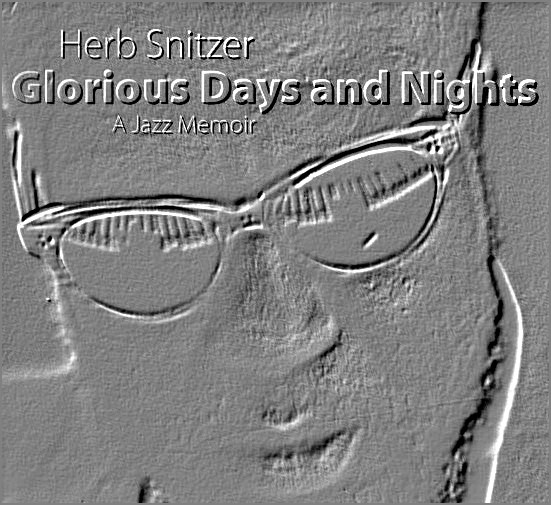
Part 5- Herb Snitzer's Glorious Days and Nights - A Jazz Memoir

 © Copyright ® Steven Cerra, copyright protected; all rights reserved.

"The great jazz photographer Herb Snitzer has produced here a masterful work. Glorious Days and Nights: A Jazz Memoir combines some of Snitzer's most famous pictures — including ones of Louis Armstrong, Lester Young, Nina Simone, and many others — with a moving personal account of the sympathetic journey of a young white photographer welcomed into a largely black world of jazz. The reciprocal empathy of Snitzer and his subjects testifies to the common humanity that unites us all. A moving book, perfect for our times."

—George Bornstein professor emeritus of English at the University of Michigan and author of The Colors of Zion: Blacks, Jews, and Irish from 1845 to 1945.


5    The Demise of Metronome


“The one glitch in the running of Metronome was that our editor, Bill Coss, was unreliable and drove Bob Asen, the publisher, to distraction until Asen finally let him go. In December 1960 Asen hired as managing editor David Solomon, who was in the promotion department at Esquire magazine. Asen was hoping that Solomon would bring a hip Esquire-like sensibility to the magazine — more politics, culture, up-to-date issues.


Solomon was hip all right. Solomon and Asen got into it almost immediately. Nevertheless, I had to give Dave credit: ideas spilled out of him. One time he told me to call President-elect John Kennedy, who was then at his family home in Florida — prior to his being inaugurated as the thirty-fifth president of the United States. I thought he was out of his mind, and I told him so. He said, "There are no black performers and no jazz performers at Kennedy's inaugural, and we should call Kennedy and tell him to do something about that."


I still thought he was asking for the moon. I said, "Just pick up the phone and call the president-elect of the United States, and when he answers, I'll just introduce myself and ask him to include Dizzy Gillespie at the inaugural ball. Just like that?"


Dave said, "Yep, just like that, Herb. Do it."


I went to my desk and called the information operator in Palm Beach. I asked for the telephone number for President-elect John Kennedy. She gave it to me.


I dialed, the phone rang, and a man answered. I said, "This is Herb Snitzer from Metronome magazine. I'd like to talk with President-elect Kennedy."


"He isn't available right now," was the reply. "I'm Pierre Salinger, his press secretary. May I help you?" Trying to stay composed, I told Salinger that Kennedy ought to invite Dizzy Gillespie to the inaugural ball. He said that Frank Sinatra was handling those details, and I should talk to him about it. He gave me his number in California, thanked me for calling, and hung up.

I dialed Sinatra's number, and his manager answered. I told him the same thing I told Salinger, that Dizzy Gillespie should appear at the inaugural. He said he'd deliver rny message to Frank, and we hung up.


To start the new year right, Metronome came out swinging even before the bells started ringing. On December 27,1960, we dispatched a telegram to President-elect John F. Kennedy, which read:


PRESIDENT ELECT JOHN F. KENNEDY, PALM BEACH FLORIDA DEAR MR. KENNEDY.

THE STAFF OF METRONOME MAGAZINE, AMERICA'S LEADING JAZZ PUBLICATION HAS ENTHUSIASTICALLY READ IN THE NEW YORK TIMES ... OF THE MUSICAL PROGRAM YOU HAVE PLANNED FOR YOUR INAUGURATION.

METRONOME GREETS WITH APPROVAL OF A YOUNG AMERICAN CLASSICAL COMPOSERS TO PERFORM AT YOUR INAUGURATION. WE FEEL HOWEVER YOU HAVE OVERLOOKED THE ONLY ORIGINAL ART FORM DEVELOPED BY AMERICAN CULTURE___


The telegram goes on for quite a number of columns, ending with the following:


METRONOME MAGAZINE IS PROUD TO OFFER AS GUEST PERFORMER, AT YOUR INAUGURATION, THE WORLD'S GREATEST JAZZ ARTIST, JOHN (DIZZY) GILLESPIE, AND HIS FIVE PIECE GROUP. PLEASE ADVISE AT ONCE IF THIS MEETS WITH YOUR APPROVAL.

CORDIALLY, ROBERT ASEN, PUBLISHER DAVID SOLOMON, EDITOR


The Metronome article announced:


Mr. Kennedy, through the offices of his swinging impresario, Frank Sinatra, declined the offer... 'there wasn't enough time to squeeze’ John Birks in. We sympathize, because we know that it has never been easy to squeeze Diz in.

We heard back that Sinatra was very angry with us for sending the telegram to the president-elect, but no more so than we were angry at Sinatra for forgetting his roots. Fortunately, we were three thousand miles away from Sinatra and safe from his verbal and sometimes physical responses.


Meanwhile, under Solomon's leadership, we were publishing a magazine every month that featured something truly revolutionary: our focus was on the young black jazz performers who were transforming music in America — the new young Turks of the era, the whole bebop generation — basically black artists.


Up to then, the magazine mainly wrote about the big-band performers, Count Basie, Duke Ellington, seldom focusing on the new personalities, and all of a sudden we were focusing on young artists like trumpeters Lee Morgan and Booker Little, and this young black kid from Texas known as Ornette Coleman with his plastic white saxophone. We proselytized, telling our readers how creative these individual black performers were.


In addition we also published the work of American photographers, because we as a staff took the view that we were publishing a cultural magazine, not a music magazine per se, and photography was an American art form. With my interest and love of photography and photographers and my interest in history, we brought into the magazine stories about these and other photographers: Mathew Brady, Alfred Stieglitz, Roy De Carava, Berenice Abbott, Aaron Siskind.


Dave also wanted to bring top American writers into the mix, and for the March 1961 issue we ran articles by Le-Roi Jones, Henry Miller, and Lenny Bruce, and in the April issue, a group poem — "Pull My Daisy" — by Allen Ginsberg, Jack Kerouac, and Neal Cassady.


In that same issue we covered a historic evening that featured a duet with Dizzy Gillespie and Ornette Coleman at the Jazz Gallery downtown on St. Marks Place. Any time Ornette played was a big deal in the jazz world. People didn't quite catch on to his music any more than they did Cecil Taylor. It was all part of jazz to come, free jazz. When Dizzy and Ornette were scheduled to jam, everyone, including Dizzy, wondered what would happen.

The duet came about because of the editors of Metronome. When Dave Solomon went to interview Dizzy for an article, he brought with him an Ornette Coleman album entitled Change of the Century. Dizzy listened to the album, said little, but when Dave asked him if he would be interested in playing with Ornette, Dizzy said he would.


Ornette idolized Dizzy. It had been Ornette's dream to play with him. When Ornette and Dizzy both showed up, they embraced. Associate editor Dan Morgenstern later wrote:


“And so, there they were. For the younger man, who had come to New York with an LP on the market and considerable publicity, and from then on had made it on his own, it was a portentous moment. Ornette had played alongside his peers on many occasions, at Newport, for example. But this was a gesture of acceptance and warmth, the likes of which had so far been withheld. For Dizzy this was an act in the spirit of the jazz tradition which had given birth to himself. And for both men it was a challenge to do their best. But solemnity is not a Gillespian trait. "We are now," Dizzy announced, "going to play five different tunes, all at the same time."... The five different tunes turned out to be one, Bernie's by name. It began in unison, the group finding its way into firm time by the end of the statement. Ornette soloed first and it soon became apparent that he was not about to modify his approach for the occasion. What came out was Ornette Coleman; the harsh, sometimes fierce sound that is so definitely a jazz sound, the long explosive runs which never sound mechanical and seem to stem from the throat than the fingers; all of it imbued with that urgency which is basic to Ornette Coleman's playing.


Dizzy watched Ornette (who, eyes closed, neck bulging like a trumpeter's, horn held firmly aloft, is well worth watching)... When Ornette had spoken his piece, Dizzy came in, restating the theme in subtle paraphrase for momentary reorientation. And Dizzy explored, probed, and finally soared, swinging ferociously all the while. ... Dizzy was seasoned, beautifully structured and full of controlled power. They went out together.


Both maintained the integrity of their individual styles. Both cast their spells.

For our next issue, April 1961,I went to photograph Jazz Day at Macy's. Jazz musicians needed as many gigs as they could get, and when the PR guy from Macy's decided it would be a great kick to bring in a whole bunch of jazz musicians, when Macy's offered a decent payday as a sales come-on for the store, a number of top musicians jumped at the chance.


By 1961 rock 'n' roll was putting jazz musicians out of business. The Beatles would finish many of them off a couple years later. Except for the big-band stars like Benny Goodman, Cab Calloway, or Duke Ellington, musicians, especially the sidemen, the everyday guys, were having a hard time making a living. Back then they didn't have the Jazz Foundation, which today is trying to help out the older musicians who don't have anything (helping with health care and hospital bills). All they wanted to do was play their music. Why shouldn't they have had the right to do that? Why shouldn't the country have said, We value your art, and we'll take care of you? But it doesn't work that way in this country.


That afternoon at Macy's one of the featured performers was Jimmy Rushing, the singer of the Count Basie Orchestra before Joe Williams. Jimmy was "Mister Five by Five." He was short and fat, and boy, could he sing.


One time I was at a jazz festival in Virginia Beach. I was in the dressing room, sitting in the back when Rushing came in. He was up in age and he wasn't feeling well. And there were some other white people in the room.

I said to him, "Jimmy, sit down. Take a load off your feet. You don't look too well."


He said, "Herb, I don't sit when white people are present."


I thought he was putting me on. He wasn't. After all, when the group of Lambert, Hendricks, and Ross played in the South, they had to stay in separate hotels because Hendricks was black. So Jimmy would not sit down.


Jimmy sang at Macy's. J. J. Johnson, Dizzy Gillespie, Buddy Rich, Stan Getz, Lionel Hampton, and Gerry Mulligan played. An all-star crew. Jackie Gleason, the star of The Honeymooners television show, played the"i2th Street Rag" on the banjo. Later in the afternoon Benny Goodman finally showed up late, and when he finally arrived and gave the downbeat to "Avalon" with Teddy Wilson on piano, Gene Krupa on drums, and Lionel Hampton on vibes, the place went wild, with the Macy executives a bit nervous but the music won them over as well and the set was alive. Benny and company played it as if it were 1937.


Dan Morgenstern wrote, "After refreshments for the musicians and assorted free-loaders things got underway with Hamp, Gene, bassist Milt Hinton, pianist Horace Silver and Stan Getz." Stan was emotionally mercurial, at times charmingly open, other times very mean spirited. Zoot Sims once remarked that Stan was a "nice bunch of guys." His personality was determined by what his body was either needing or fighting off.


I saw Stan at Lewisohn Stadium, the crowd in a festive mood. He was on the same bill as Louis Armstrong, who went on first. It was classic Pops. Stan played beautifully in the spirit of Lester Young, and backstage, lending their

support were Armstrong's manager, Joe Glaser, saxophonist Gerry Mulligan, trumpeter Dizzy Gillespie, and many others.


It was an afternoon of fun at Macy's, and we had a two-page spread in the April 1961 edition of Metronome.


By this time I knew quite a few of these musicians. I had known Dizzy Gillespie for thirty years. Dizzy Gillespie was anything but. He was a lot of fun, but he wasn't dizzy. I always called him J. B., which stood for John Birks Gillespie, his full name, because I couldn't call a grown man "Dizzy," especially when he wasn't — except when he was performing.


Let me tell you a story I heard about Dizzy. Dizzy was with the Cab Calloway band. They had finished a gig, and they were driving through the night, and they came upon a hotel. Dizzy went inside, and he was wearing a Moroccan fez, that red hat. The guy behind the desk says, "Can I help you?" Dizzy says, "My friends and I need rooms." The guy says, "We don't rent to niggers." Dizzy got all upset, and he said, "What are you talking about? I'm from Morocco. I'm African." The guy had to be stupid or drunk, and he said, "Oh, okay, that's different." He gave them all rooms for the night.


Dizzy went back out to the bus, and he said, "Okay, I have us all rooms. Don't say anything. Just come in and go to your rooms."


Dizzy told the guy, "I'm not an African American. I'm African, from Morocco." And that was okay. To me that was the height of imbecility.”


Lionel Hampton was another musician I saw a lot of. He gained his fame playing vibes, but he had started out as a drummer, a very good drummer. Lionel seemed like one of the most far-out musicians, as if he was not of this

world but from somewhere else. You could have a conversation with him, but even while he was talking, you'd think his head was somewhere else. He's on a different plateau, which was interesting because he was a rock-ribbed Republican. This guy was so into being a Republican, he made no bones about it.


I also got to know Benny Goodman. He used one of my photos of him on an album cover. When I met him, it was at his spacious penthouse apartment on the East Side of New York. He was making two thousand dollars a week when the average salary was forty dollars a week.


Benny was a businessman, and in the photo I made of him, he was in a suit with a white shirt and a tie, puffing on a pipe — very staid.


From what I understand from other musicians, Benny could be very nasty, just not a nice guy, and I figure that must have come from being so successful at such a young age. After all, early celebrity did in Stan Getz for a long time. Stan was eighteen years old, playing in the Woody Herman Orchestra, and he spent the next twenty years as a heroin addict, stealing, and landing in jail. If you "hit" very young, sometimes it's difficult to see yourself in perspective. You're really not as important as you think you are, Benny. You know? You didn't save the world. But in his own mind he did. He was famous, and he owned a radio program during the forties. When you think of swing you think of Benny Goodman and Fletcher Henderson. As a matter of fact, when the Fletcher Henderson Orchestra folded, Benny hired Henderson to do the arrangements for his orchestra, and when that happened, the Benny Goodman Orchestra soared. Fletcher was black, but at that time the country could only take just so many black orchestras.


Beginning with the July 1960 issue, Metronome featured a series of concerts that took place in the outdoor garden at the Museum of Modern Art (MOMA). Editor Bill Coss and I came up with the idea. We wondered, How can we get jazz into the museum? We saw the relationship between modern jazz and modern painting. MOMA's director lived next door to Bob Asen, our publisher. Bob made the introduction, and Bill and I met with the director and told him what we wanted to do. He thought it was a great idea.


The first group to play was George Wein and his All Stars. George was the founder/producer of the Newport Jazz Festival. George is also a pianist. He had an interracial marriage fifty years ago. He presently lives in New York. The Playboy Jazz Festival and so many others are the product of George Wein's vision.


I can remember him starting off the concert, he nodded toward a sculpture of a full-bodied woman by Gaston LaChaise, and he said, "We're going to start the concert with a tune that reflects the sculpture. It's called That's a Plenty.'  And they started to play. It was great. That entire summer, every week, a different group played at the Museum of Modern Art, including Coleman Hawkins, Roy Eldridge, Art Farmer and his group, Jimmy Giuffre and his group. It went on for ten weeks like that.


Every week the garden was filled with people, and we set up a table in order to sell subscriptions to the magazine. We gave away free copies. The series brought us a lot of publicity, but it didn't do much for our sales. Every week Whitney Balliat in the New Yorker wrote about our concerts. We couldn't have gotten any better press. The New Yorker really legitimized what we were doing. But even at thirty-five cents a copy, we were hurting for subscriptions.


The MOMA concerts continued for two summers; 1961 saw the likes of Bud Freeman's All-Stars, Slide Hampton, trombonists Al Grey and Billy Mitchel, trumpeters Buck Clayton and Ted Curson, pianist Randy Weston, the Stars of Faith Gospel Choir—a virtual all-star group of jazz artists performed through the 1961 summer.


Desperation makes you do desperate things. In another attempt to bring the magazine to the attention of the public, in the July 1961 issue Dave Solomon wrote an article about a stripper. A freelance photographer by the name of Mario Jorrin had taken very provocative photographs of her, and Dave bought them and put one on the cover. Other shots of her were published inside the magazine. Dave really thought that publishing these photos would be terrific. None of us agreed with him, but he was the boss and he ran them. What this stripper had to do with jazz none of us could figure out. A few of us were offended, but if Solomon's aim was for her to draw attention to us, he certainly succeeded. This was 1961, the end of the conservative Eisenhower years, and the result was that several countries and many libraries banned the issue, calling it pornographic. People wrote in saying, "What are you doing? It's stupid. Who's idea was this?" And it was my understanding that Spain and Mexico and a couple of other Catholic countries refused to distribute the magazine. In today's world, it's nothing, but back then, fifty years ago, people got upset when they saw a little flesh. Again, it heightened our profile, but this didn't result in subscription sales. In 1961 we were up against rock'n'roll and the folk scene, and Downbeat magazine, which didn't have to worry about subscriptions because its owner wanted to lose money. He was making so much money in his other ventures that he used Downbeat as a loss leader, as a write-off. As for Metronome, we were up against it.


Bob Asen was furious. Dave Solomon was hardheaded, and he wanted what he wanted, until Asen couldn't take it any longer. Asen, tired of Solomon's dictatorial ways, put his foot down and cut him loose. He named Dan Morgenstern to replace him. Rather than bring in someone else, Bob asked me to take on the added job of associate editor. Dan and I became the last two editors of Metronome magazine, commencing with the October 1967 issue.


For the August 1961 issue, I went to the Virginia Beach Jazz Festival, where I took a photo of Buddy Tate, a great saxophone player and a very nice man. You would never know Buddy was a jazz musician. He could have been an accountant — until he put that saxophone to his mouth. He drove down to the Virginia Beach Jazz Festival from New York with trumpet player Buck Clayton. He described the trip to me. He said, "It's twelve hours from New York to Virginia Beach. We stopped, went to the bathroom, got something to eat, gassed up our car, all in one place, and we came here. We're going to spend thirty minutes performing, another thirty minutes joking with friends, and then we're going to get back in our car and head back to the old Mason-Dixon line. I don't want to spend any more time in the South than I have to."


That happened a lot. When Charlie Parker first went down South, he had in his band a trumpet player by the name of Red Rodney. Red was a red-haired young Jewish guy from Brooklyn, but he looked like a highyella, what white bigots called any light-skinned black. So Charlie and Red were able to travel and stay together because the whites thought Red was black. Isn't that stupid?


In August 1961 Dan said to me, "Why don't we take a picture of as many jazz trumpet players as possible." It was to be the kickoff for a series, with a shot of all the saxophone players to follow, and a shot of all the drummers next, and so on. We chose to do the trumpet players first because we figured if we could get Louis Armstrong, Roy Eldridge, Buck Clayton, Miles Davis, and all the others all in one picture, it would be sensational.


We invited thirty musicians. Dan and I called them up one at a time. If we didn't have their phone number in the Local 802 union book, we found them in the phone book. I started calling. I knew most of them, and I invited them to show up at the Harlem boathouse in Central Park. I said, "If you want to bring your trumpet, fine." Most of them didn't.


Some, including Louis Armstrong, who dearly wanted to be in the photograph, were out of town that day and couldn't make it. Art Farmer, a great trumpet player, wasn't available. We tried moving the date to accommodate Pops and Art and several others, but when we did that half the other guys couldn't come.


When I called Miles Davis and asked him to come, true to form Miles said he wasn't coming. Okay, Miles. But he was the exception. When the word got out as to what we were doing, it created a buzz, and on a hot August 1961 afternoon twenty-two jazz trumpet players arrived at the Harlem boathouse for the picture. The shoot and story appeared in the November 1961 issue entitled "The Trumpet in Jazz." It should have been "Pops Couldn't, and Miles Wouldn't."


I said to Dan, "How are we going to arrange them?" Dan was very cool about it. He said, "Let them seat themselves."


We decided to shoot the picture in an area where there were picnic tables.

I said, "Okay guys, we're ready. Why don't you take a seat here?"

I was shooting with a 35mm camera with no strobe light. I shot twenty-two mostly blacks guys against the bright sky.


If you look at the picture, you'll see that the front line included Charlie Shavers, Dizzy Gillespie, Roy Eldridge, and Buck Clayton, four of the great trumpet players of their day.


The other musicians positioned themselves, and I found it interesting that the white players drifted to the back, while the black players moved to the front. Among the trumpet players in the picture were Red Allen, Booker Little, Freddie Hubbard, Yank Lawson,Ted Curson, and so many others. Way in the very back of the picture is this white musician, a very young Doc Severinsen, who for years was the leader of Johnny Carson's Tonight Show band.


That was a wonderful day. It was incredible to get all these guys together and to see them react to one another, joking and carrying on. They were such a grand group. I just love jazz musicians. But that was the end of the road for Metronome magazine. A month later, in September 1961, Bob Asen told the staff that he was pulling the plug on the magazine.The last issue was December 1961, featuring on the cover saxophonists Coleman Hawkins and John Coltrane; Hawkins featured on our June 1960 cover and once again on our last issue. Bittersweet.”


To order the book directly from the University of Mississippi Press please use this link.


Thursday, October 28, 2021

Part 4- Herb Snitzer's Glorious Days and Nights - A Jazz Memoir

 © Copyright ® Steven Cerra, copyright protected; all rights reserved.


“In 1959, the Ornette Coleman quintet was booked for two weeks at the Five Spot Cafe, and they stayed four months. The word went out, and the place was jammed every night. The group came on every night, and the music coming out of these young men was unbelievable. It was like a breath of fresh air. I spent a lot of time with them, going to see them sometimes five nights a week, making sure I caught part of their session. The tragedy for me is that I don't have any of those negatives. I have no idea what happened to them. My whole Ornette Coleman file is gone.”

- Herb Snitzer


4    On the Bus with Pops and Duke


“The truth of the matter was that basically none of us running the magazine [Metronome] had the slightest idea what we were doing. Would writing stories about young black musicians help our circulation? We had no idea. We didn't take surveys. We had no business plan. We were a bunch of kids in our mid-twenties flying by the seats of our pants. And it seemed to be working. We were so naive we went balls open without regard to how we might be received.


Some of our subscribers, those who were used to seeing white faces in the magazine, wanted to know why there weren't more stories on the reigning white stars like Benny Goodman, Woody Herman, or Maynard Ferguson. They had very little knowledge of Max Roach or John Coltrane. Dizzy Gillespie was, however, a well-known jazz player and performer. Despite the complaints, we were intent on staying with what we were doing because we felt that this was the cutting edge of American culture.


The Montgomery bus boycott took place in 1955, and the Supreme Court adjudicated it in 1956, ruling that blacks deserved equal treatment in public transportation between states, and then came the march on Montgomery, and we were all young enough and impressionable enough and liberal enough to be influenced by the bravery of the men and women who stood up to the white bigots. We saw a direct connection between these emerging black artists and the emerging new culture that one day would lead to the end of Jim Crow. On some level, we said to ourselves, This is our mandate. This is how we can contribute to the movement, and this is what we're going to do.


The new editor Dave Solomon was as adamant about this as anyone. He just didn't pick up on the clues from Bob Asen, who said, "Hey, let's do something else as well." Bob wasn't objecting to our focus on the young black musicians, because he was a musician himself, and he could understand this transformation that was taking place in the jazz world. He just wanted the magazine to be more like Downbeat, our competition.

I didn't say anything, but I sided with Dave. Covering the jazz scene in New York in the late 1950s was electric.


One of the great evenings was opening night of the Or-nette Coleman quintet at the Five Spot. The place was absolutely jammed. You couldn't move. In the audience that first night were Thelonious Monk, Leonard Bernstein, and a whole raft of jazz musicians who came out to hear this young soprano saxophonist from Texas with a reputation for making music in a way that had never been done before, free-form jazz music. It was so democratic in the way they went about it, it seemed as if there was no structure to what they were doing. Adding to the mystique was that Ornette played his music on a plastic white saxophone that looked like a toy. With him were Don Cherry, whose little trumpet also looked like a toy, Billy Higgins on drums, and Charlie Haden, a bass player who eventually became as famous as anyone in the jazz world.


The Ornette Coleman quintet was booked for two weeks, and they stayed four months. The word went out, and the place was jammed every night. The group came on every night, and the music coming out of these young men was unbelievable. It was like a breath of fresh air. I spent a lot of time with them, going to see them sometimes five nights a week, making sure I caught part of their session. The tragedy for me is that I don't have any of those negatives. I have no idea what happened to them. My whole Ornette Coleman file is gone.


I became friends with Ornette. We were the same age. We took to each other as two creative guys, he with his jazz, me with my photography. He invited me to the group rehearsals, and I took one photo of him and his group in casual clothes that appeared in the December 1961 — and last — issue of Metronome. Usually when they performed, they got all dressed up in suits and ties and white shirts. I stayed friends with Ornette for a long time, and then life took its turns, and we went our separate ways.


I spent a great deal of my time in the Village covering the jazz people who were in town performing. I'd go from Ornette playing at the Five Spot to Basin Street East, a much more upscale club where I saw Ella Fitzgerald, Peggy Lee, Quincy Jones, Lenny Bruce, and Billy Eckstine.


I also got to cover the Newport Jazz Festival, where one year I slept on the beach alongside Pony Poindexter, a soprano saxophonist," as my guest." We didn't have a place to stay, and everything was booked, so we took sleeping bags and slept under the stars next to my camera equipment.


New York City was teaming, not just with music, but with politics and social change. When I lived in New York there were no photographic galleries. If we wanted to show our work, we had to show them in coffee houses. My first exhibition was at the Ninth Street Coffee House in the mid-forties, where I would go to hear the Beat poets when they were in town. I saw Gregory Corso and Neal Cassady, and I'd also go to the Seven Arts Coffee House, where I met Robert Penn Warren and Mort Sahl.


One of the other great jazz venues was the Apollo Theater in Harlem. I had no fear about getting on the subway and going up to 125th Street with my equipment on my shoulder. That's where I first photographed Miles Davis, backstage, in 1960.They knew me by then, and I could come and go as I pleased. Miles was up and coming, and he had a great group that included Paul Chambers on bass, Jimmy Cobb on drums, John Coltrane on saxophone, Cannonball Adderley on alto saxophone, and Wynton Kelly on piano (who tragically died at forty years of age).


Miles Davis was an innovator. He wasn't such a nice guy. Even when he was starting out, he was difficult, but when he and his group started playing, I started shooting. Miles seemed reasonable with me early on. And once again, when he started playing, the music really resonated with me. It was music like I had never heard before. It really got through whatever defenses I had. I couldn't wait to hear Miles. His music just did something to me, like the first time I heard the Beethoven violin concerto as a kid. It just knocked me out.


What I recall about that first performance was that Miles played it very straight. He looked very conservative, with short hair and wearing a conservative suit with a white shirt and tie. He wasn't interested in theatrics. He just played his music. I don't recall having any interchange with him. I stayed at arm's length.


I also got to spend a bit of time with LeRoi Jones, who later changed his name to Amiri Baraka. We were about the same age, and I met him at one of the clubs. He was married to Nettie, a white Jewish woman. LeRoi was trying to make his mark. I was trying to make mine. It was like what Cynthia Ozick says, "You become part of the nerve of your generation." That's what we all were doing — unbeknownst to us. We weren't so philosophical about it. One of his plays had been published, and I hung out with him in their apartment. It wasn't special. It was in the course of living. I tell people, when you're in New York, you can walk down the street and see all kinds of famous people.


One of the highlights of my time at Metronome was my road trip with Louis Armstrong, whom everyone in the business called "Pops." The public called him "Satchmo," but none of his friends ever called him that.


We knew that Pops was going up to Tanglewood to perform, so we called his manager, Joe Glaser, to see if we could come along for an article in the magazine.


Joe Glaser and Joe Kennedy were part of the Mafia. The Kennedy connection to the Mafia is well documented in a recently published book on Bobby Kennedy and FBI director J. Edgar Hoover, by Burton Hersh. These guys used to run booze down from Canada during Prohibition, and when that ended, Joe Glaser had contacts with every nightclub and gin joint in America. He became the head of ABC Booking, the biggest booking agency in New York. Joe managed Louis Armstrong.


As you can imagine, no one screwed with Louis or tried to cheat him out of money, because they'd have to answer to Joe Glaser. I have a wonderful picture of Joe Glaser talking to Trummy Young, Louis's trombone player.


Two days before the trip, I went to see Trummy Young. I wanted to get to know him, so I would have a contact when I showed up for the trip. I also wanted Trummy to introduce me to Louis.


Trummy and I had a nice chat, and I said, "I'll be up to Queens in a couple of days," and we shook hands. When I arrived at Louis's house I didn't feel alone.


I saw Trummy standing outside the bus, and we shook hands and talked. Louis came out of his house, down the steps, and he walked over to Trummy.


In that deep, gravelly voice, he said good morning to Trummy, and they talked jive, "Cool, cool," and I just stood there in awe. Louis turned to me and said, "Good morning," and I fumfetted and hemmed and hawed, until I could finally get it out: "Good morning, Mr. Armstrong." Trummy, meanwhile, was cracking up. Pops smiled and turned and got on the bus, and I thought to myself, Jesus, what a schmuck you are.


We got on the bus and headed north toward Connecticut. This was no Greyhound. It was a yellow school bus with no air conditioning, no bathroom facilities, and rigid seats that made it impossible to sleep during our trip back in the middle of the night.


After we reached Connecticut, Pops had to go to the bathroom. We stopped, and he went into a restaurant. When he asked where the bathroom was, he was told the bathroom was off-limits to blacks. I guess they didn't recognize him. But as Pops walked back to the bus, a car screeched to a halt and a couple of college kids ran over to him to get his autograph. Racism was nothing if not inconsistent.


When he returned to the bus, he was furious. I had not yet seen a look like that on his face. To make Pops furious was doing something, because usually he was so mellow.


I will never forget the look on his face. The most famous entertainer in America, and he couldn't use the bathroom because he was black. This only reinforced the political and social ideas I was forming.


We stopped at another place, and he went to the bathroom. He got back on the bus, and the bus started up, and it was at this point that I made my most famous Louis Armstrong photograph of him holding a cigarette, his white shirt open, and you can see a Star of David hanging around his neck.


Louis stared straight ahead, not saying anything as I took pictures. I then went back and sat with Trummy, and I took some pictures of Trummy and Barney Bigard, the great clarinet player in the group. Later on, his singer, Velma Middleton, a large woman, stood up on the bus and fell. She was in pain, and we were afraid she had broken a rib. Everyone talked a long time about how to find a doctor, but no one did anything. When the bus arrived at the site of the concert, the show went on as scheduled. Velma never did see a doctor.


When we got Tanglewood, Louis changed into his tuxedo and patent-leather shoes, and it was a whole other world. Pops was treated as royalty, and when he came out and played in the old, small Tanglewood bandbox, he was in his glory. I made a series of six pictures of Velma dancing, and from that one evening I made a series of photographs that are going to live forever.


The picture of Louis Armstrong wearing his Star of David has become iconic. Photography in general, and my work in particular, creates a story. When the viewers see the photo, they want to know under what conditions the photograph was made and who was there. In this case they want to know, Why is he wearing a Star of David? He wasn't Jewish, was he?


No, Armstrong wasn't Jewish. But when he was a child, he was befriended by a New Orleans Jewish family, the Karnofskys. He didn't know his father. His mother was a prostitute. He was on the streets when the Karnofskys took him in, fed him, clothed him, and gave him a place to stay because they saw this young talent. One birthday they gave him the Star of David, and he wore it his whole life. He was buried with it.


When I knew and photographed Louis Armstrong, he always had an integrated band, and it's my contention that Louis found a way to pay the Karnofskys back by always having a Jewish bass player. He had Jack Lesberg, and then he hired Mort Herbert, who was on the bus with us that day. Was that accidental? Was "Pops" feeling the civil rights movement of the time? Was he in sync with it? Yes, I am going out on a limb, but Glaser? Herbert, Lesberg? Accidental? Maybe so, but then again, maybe not.


Louis Armstrong, like Miles Davis, didn't care what color you were. All he wanted to know was. Can you play? When Miles hired Bill Evans to play the piano, he got static from some of the members of his band. Miles said, "You find me a black piano player who can play as well as Bill Evans, and I will hire him." And that was the end of it. Miles didn't give a damn about color, and Pops was the same way.


Later I had a photo session with Trummy Young, who invited me to come see him in his apartment in a hotel on Times Square. I walked down the hallway leading to his room, and I could hear him playing scales. Now, Tommy Young is regarded as one of the best trombone players of all time. I knocked on the door and went in, and I said, "How long have you been practicing?"

He said, "About two and a half hours."


I said, "You've been running scales for two hours?"


He said, "Herb, Pops pays me very well. If he heard me being sloppy, that would be the end of it." So even with all the shucking and jiving Pops was doing, you had to play. Pops was a serious musician, and he didn't want you fucking up. So there was Trummy, one of the greats, playing scales, making sure his chops were right up to where Pops wanted them to be.


That's the musician side of Louis Armstrong. Pops really enjoyed performing. He really enjoyed making music. He was such a joyful man in his own right, but he was also a demanding leader. He paid his people very well, and in return he expected them to be serious about their music.


The last time I saw Louis Armstrong was in a restaurant around the corner from the Metronome offices called the Copper Rail. It was a hangout for black jazz musicians on Broadway.


I was sitting at the counter eating a soul food dinner. After the meal I planned to head to some clubs. I was chowing down when Pops walked in and sat down right next to me. It was very unusual for him to be just hanging out in the city.

He recognized me from our bus trip, and we shook hands. "How are you doing, Pops? Nice to see you." Once he sat down, I decided I wasn't going to move, even if he sat there all night. It was a good thing I didn't have to go to the bathroom.


Once Pops sat down, the word got out. Other musicians started to drift in, and the place filled up with people having fun and joking and laughing. When jazz musicians get together, it's like a carnival.


It was a hot night. The little fan over the door didn't do much. I can't say Pops and I had dinner together, but it was so joyful. You could feel the love coming from everybody, from the men and women who were there. I didn't have my cameras that night!


Louis Armstrong was an extraordinary artist, and he single-handedly changed American music. He made the solo important, and central, and we have not come off that dime since. This one man transformed American music all by himself. He grew up during a time of segregation and racism, and who knows what he could have done had he been in an era where this no longer was important.


It was a real honor to know him.


Another time I rode the bus with the Duke Ellington orchestra. They were playing at the Westbury Music Fair out on Long Island, so it wasn't a very long trip, but it was memorable nevertheless.


I first met Duke at Randall's Island in 1959. He was born in 1899, so he was sixty years old, and at that age he was still a very handsome man. I've seen pictures of him when he was in his twenties. He must have been very popular with the ladies because he was not only attractive, but he was also very creative, the perfect combination for attracting women. I remember that Duke wore a jacket made of upholstery material. It was fall, and he wanted to be warm.


That night when I photographed him, very few photographers came and you were allowed to get very close, so I was able to walk to the edge of the stage and shoot up at him while he was performing. I doubt that he was more than three feet away from me. I made a whole series of photos of him, and then I didn't see him again until I took that bus ride to Westbury.

To my mind, Duke Ellington is the single greatest American composer, outshining George Gershwin or Irving Berlin or Leonard Bernstein. Bernstein was in awe of Duke Ellington.


Duke never won a Pulitzer Prize for music. The story goes that when he was passed over by the Pulitzer committee, Duke said: ‘Fate has been very kind to me. Fate did not want me to be famous too young.' The jazz critics were in an uproar, with both Ira Gitler and Nat Hentoff writing scathing pieces supporting Duke.


Duke wrote over twenty-five hundred compositions. I once had a conversation with a music critic. I said, "Look, the reason Ellington isn't rated with Gershwin and Berlin is because his music isn't Eurocentric."


"What does that mean?" he asked.


I said, "He doesn't use cellos and violins. If he would have used cellos and violins instead of trombones and saxophones, Duke would have been played on every classical music station in America. But if you transcribe his music, which people have done, into European instrumentation, you would see the greatness of his compositions."


Duke would compose on Tuesday night, and on Wednesday morning the orchestra would be rehearsing the compositions he had written the night before.


Duke's orchestra — I never called it a band — was one of the finest groups to come together and play. He had Johnny Hodges on alto saxophone. Ellington composed a piece called "Jeep's Blues" for Hodges, whose nickname was Jeep. He had Paul Gonsalves on tenor saxophone, Jimmy Hamilton on tenor saxophone and clarinet, Clark Terry on trumpet, and Juan Tizol on trombone, among others. Sam Woodward was on drums.


Duke was a pianist and a very good one. Duke would play the piano and lead the orchestra from behind the piano. Duke had led his orchestra from the time he was eighteen years old. He came from Washington, D.C., part of the black middle class of the city. His parents wanted him to be a doctor or a lawyer, but all he wanted was to play his music. By the time I first met him, a lot of the other orchestras were going out of business. Rock'n'roll was coming in, and it was getting harder and harder to pay the salaries of so many men. But Duke was able to keep his orchestra together because of the royalties he made from writing his compositions.


The other event that sustained his orchestra was a concert it performed at the Newport Jazz Festival in 1956. I wasn't there, but everyone who had an interest in jazz heard about it, and fortunately the concert was recorded. The orchestra was playing, and Duke called out, "The Diminuendo in Blue and Crescendo in Blue." In between was an interlude by Paul Gonsalves on the saxophone. When they hit the break, Gonsalves played fifty-six choruses. He went on for almost thirty minutes, and while he played the sedate white audience got up and started dancing in the aisles while many other spectators rushed toward the stage.


At the end everyone was going crazy, and when Paul finally stopped, Cat Anderson, the lead trumpet player, began playing these high E notes, at which point the place went wild. Everyone was shouting and screaming, and

Duke was saying, "We got lots more. We got lots more." But Duke didn't have lots more, because the man who ran the festival, George Wein, was so afraid there'd be a riot that he asked Duke to calm things down. It must have been thrilling to be there.


So when I got on the bus for the ride to Westbury, I was in total awe of him. I sat with Johnny Hodges, a most droll guy who played the sweetest music. Jeep was very quiet, wasn't overly effusive, but he could be quietly sarcastic. I enjoyed his company. Paul Gonsalves, who was even quieter, had a problem with being on time. Sometimes — including this trip — Paul didn't even make the bus. His seat was empty.


We arrived at the Westbury Music Hall, and everyone set up. The crowd began filing in, and still no Paul. As the Ellington orchestra began its first number, I could see Paul walking down the aisle from the back of the theater carrying his saxophone case.


As soon as the song hit a break, Paul was supposed to play a solo. I could see him up on the stage, frantically putting together his saxophone. Only seconds before it was his turn to play. The band stopped, and Paul was sensational.


After the concert I said to Hodges, "Man, I guess that's going to teach Paul a lesson." Jeep said, "Oh no, that's not going to teach him anything. Paul does that all the time." I thought to myself, How nerve wracking!


Duke Ellington was a gentle person who had a very hard time firing people. At one point Charles Mingus was playing bass in the band, and Charles was so disruptive that Duke no longer could abide his behavior. Duke said to Mingus, "Charles, I believe it's time for you to find other employment."


Duke was always very gentlemanly. You could see and feel this when he was on the stage. He was a very serious musician. He never really got his due as a pianist, but I loved his playing. I thought it was very delicate and sensitive.

Of course, the end of the Ellington story came when he died in 1974. I was living in upstate New York, and I opened the New York Times one morning, and I saw there was going to be a funeral for Ellington at the Cathedral of St. John the Divine on May 27. I told my wife, "I'm going to New York City."


I grabbed an overnight train from Westport, New York, and I arrived in New York City at eight in the morning. The funeral was scheduled for the late afternoon, but I wanted to make sure I had a seat close to the front. I went right to the church, and I was one of the first people there. By the time of the funeral, there were three thousand people inside the church and seven thousand more outside.


Every significant jazz musician who was in town that day was there. Count Basie came walking down the aisle crying like a baby. Duke and Count, who were contemporaries, had a wonderful relationship. Ella Fitzgerald came (and sang), as did Sammy Cahn, the composer, and Stanley Dance, Duke's biographer. I remember seeing Hodges and the rest of the orchestra.

We were all teary. It was an afternoon of tears. Father O'Connor gave the eulogy. Throughout the ceremony, everyone cried.


Even after Duke's death, his orchestra was able to go on, led by Mercer Ellington, Duke's son. Today it's all different musicians, whites as well as blacks. Back then it was all black except when Louis Belson was the drummer, 1943-52. Louis was married to Pearl Bailey for thirty-eight years.


Nineteen sixty was a changing year in the world of jazz; it was a year where perennial favorites no longer held sway in many of the musical categories. This change was also evident in the larger political and social world of black Americans as more and more moved into elected positions of authority. We at Metronome did not really equate the two, rather we were only interested in the fact that Cannonball Adderley and John Coltrane replaced Paul Desmond (alto sax) and Stan Getz (tenor sax) as winners in the Metronome reader's poll. This was also followed by the diminished position of the Stan Kenton and Woody Herman bands. Taking over first and second places were Count Basie and Duke Ellington, respectively, followed by the Maynard Ferguson band, with the now renowned Quincy Jones orchestra coming in sixth.


I can still recall with great joy the night I photographed Quincy's orchestra at Basin Street East, with Billy Eckstine singing his heart out while the band blew behind him. The music is still available on a CD with my photographs on the cover.


The influence of African American musicians in mainstream jazz was becoming more and more apparent as evident within other categories of the 1960 jazz poll. Thelonious Monk replaced Bill Evans in the piano category; J. J. Johnson took over first place in the trombone section.


One category that remained almost all white (first seven places) was clarinet: Jimmy Giuffre, Tony Scott, Buddy DeFranco, Benny Goodman, Pete Fountain, Pee Wee Russell, and Art Pepper, before African American player Jimmy Hamilton (Duke Ellington Orchestra player) breaks into the top ten at eighth place.


But it was evident that "the times, they were a changin'." The 1960 jazz poll broke it down this way: Drums: Max Roach; Guitar: Wes Montgomery; Vibists: Milt Jackson; Small Groups: The Modern Jazz Quartet; Female Vocalists: Ella Fitzgerald, followed by Anita O'Day, Nina Simone, and Sarah Vaughan. Frank Sinatra still held the number-one male vocalist position, with Lambert, Hendricks, and Ross taking over first place in Vocal Groups.


What is truly amazing is how many of the musicians mentioned in the 1960 reader's poll remained on top for years and years to come. Yes, Julian (Cannonball) Adderley took first place, but he was followed by Ornette Coleman (third place), Sonny Stitt (fourth), Johnny Hodges (fifth). Phil Woods placed tenth. Phil, a great jazz ambassador, is still making music, still blowin'. In the trumpet section right behind Miles Davis was Dizzy Gillespie, Art Farmer, Lee Morgan, and Maynard Ferguson breaking into the top five. 


The changeover was coming. We did not actually dwell on color as much as comment on the type of music being listened to by the jazz audience, and there was no doubt that the listening audience was getting younger and younger, more in tune with what was happening at the time rather than on what had been going on before. This change took place gradually, and continues today within the American culture and psyche; witness the fact that someone who calls himself an African American became the first to reach the highest office in America. Yes, there were others — Jesse Jackson, Shirley Chisholm — who were never really taken too seriously.


But President Barack Obama is the real deal.”


To order the book directly from the University of Mississippi Press please use this link.