Tuesday, November 2, 2021

Part 8 - Herb Snitzer's Glorious Days and Nights - A Jazz Memoir

 © Copyright ® Steven Cerra, copyright protected; all rights reserved.
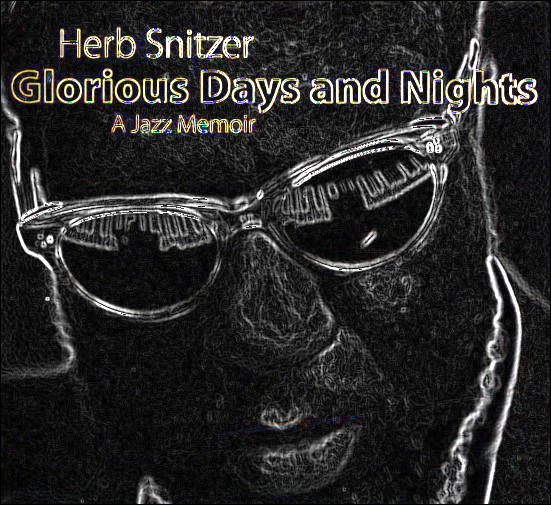

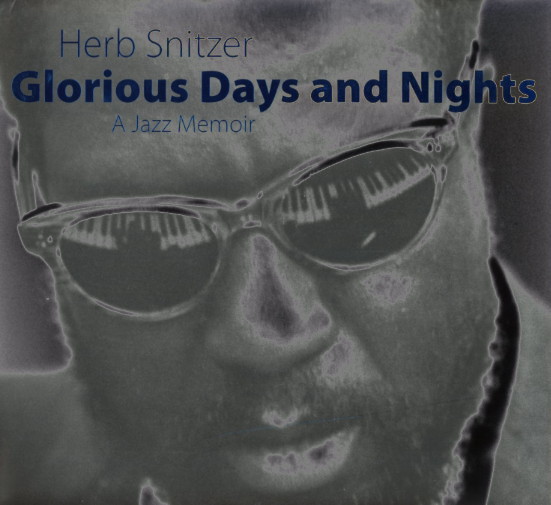
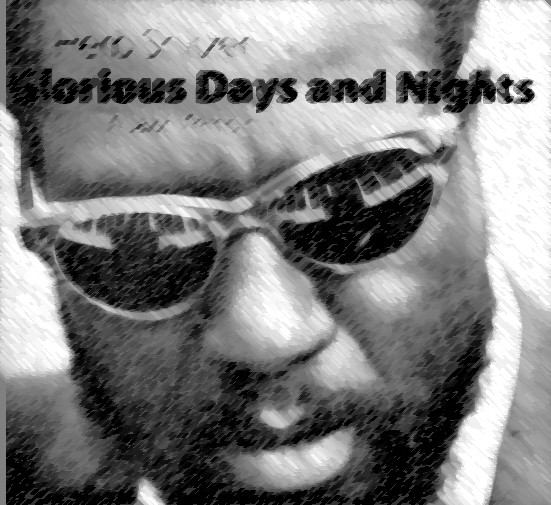
“This book includes Snitzer's very best jazz photographs. He reveals the essences of the artists, their struggles, joys, and pains. A number of Snitzer's jazz images have become iconic, including Louis Armstrong with the Star of David, Lester Young at the Five Spot Cafe in New York City, John Coltrane reflected in a mirror,Thelonious Monk with piano keys reflected in his sunglasses, and Miles Davis at Newport. With eighty-five black-and-white images of jazz giants, Glorious Days and Nights provides a long-awaited testimony to the friendships and artistry that Snitzer developed over his remarkable career.”


To order the book directly from the University of Mississippi Press please use this link.


8    Switzerland


“Through the efforts of drummer Oliver Jackson, for three straight years I was invited to attend and photograph the Bern International Jazz Festival. The concerts were produced by Hans Zurbrugg, an amateur trumpet player (and banker) who told me he would invite Dizzy Gillespie back to Switzerland any chance he could get given how very special Dizzy was as a player and human being. The public persona — always happy-go-lucky, smiling, joking — is sometimes different from the private side and John Birks (Dizzy) is a good example of this. For all his funny antics, Dizzy was a very serious fellow, committed to his music and his religion (he was a Bahai) and to bringing great music before his adoring public.


Dizzy was the closest of friends to Charlie Parker, the mercurial alto-saxophonist of the forties and fifties who died at the age of thirty-five, yet looked as if he were sixty. Dizzy, who never engaged in drugs, tried his best to get Parker off drugs — to no avail.


I'm jumping ahead of myself here. 


As I explained earlier, Oliver Jackson was someone I knew back in the late fifties, early sixties as a wonderful drummer and human being. We hung out together then. It took twenty-five years for us to catch up to each other, which we did when I went to Switzerland with Nina Simone. Oliver convinced Hans Zurbrugg that I was the best jazz photographer in America (not true) and that I should document his festival in 1987. I was hired to cover the 1987 jazz festival and returned the next two years as well.


The festival takes place every spring, the weather warming, the grass turning green with the faraway mountains still covered with snow. The Swiss had an honest, no-nonsense attitude, cleanliness, punctuality, and a total absence of humor. A Swiss comic would be a contradiction in terms, but they sure love their bebop and blues, as the festival is sold out for five straight evening concerts that last well past midnight. It was more or less a "straight ahead" festival, with many of the performers the very backbone of the jazz world. There were others whom I did not know but they soon became some of my favorites. Being there in Bern also brought me into contact with many men and women whom I knew from the old Metronome days: blues singer Joe Williams, trombonist Slide Hampton, Newport Jazz Festival producer George Wein, Sarah Vaughan, trumpeter Clark Terry, pianist Horace Silver.


One early evening before the concert, I went out for a spaghetti dinner with Joe Williams and a number of other folks, and we had a wonderful time. Joe was holding court, putting people on, the usual jazz dinner, with everyone relaxed and in good spirits.


I had briefly met Joe Williams when I was working for Metronome. He had replaced Jimmy Rushing as the singer in the Count Basie Orchestra in the mid-fifties. He then left Basie and formed his own trio. Joe sang the blues like no one else. I have to admit he was my favorite male jazz singer.


That night in Bern, Joe was on a bill with another great singer, Carmen McRae. Always independent, Carmen had also come on the scene in the fifties. I made photographs of her in Switzerland and later at the Newport Jazz Festival. She told me one of my photos was the best she ever saw of herself.


At the end of that evening's concert, Joe and Carmen were walking down a long hall backstage, ready to split for their respective hotels. Carmen I had known from afar, and Joe was someone closer, and when they were together Joe greeted me as a friend, and I was able to make use of his ease and openness. The photo I made of the two of them was memorable.


Later I would see Joe at festivals, where we would chat, talking about life and loves, and we'd move on. For a jazz musician the road is their home most of the time. It's like what trumpeter Ted Curson said about one of his tours: "Man, you play the gig, get on the bus, move to the next town, wake up with a different ceiling in your face, wash, eat, dress, play the gig, and move on again. After six weeks of this, you get a little tired." A little tired? I'd be exhausted after two days. For a jazz musician, stamina was almost as important as talent.


One characteristic of jazz performers is their physical durability. The music can become very quick, the notes rolling off the tongues, and it takes a certain level of endurance to not only play but to stay in tune. To see this happen with young musicians is expected; to see it happen with middle age and older musicians is truly remarkable. So many of the men and women I met while covering the Bern Jazz Festival are still out there, still making music: singer Dee Dee Bridgewater, trumpeter Jon Faddis, bluesman Buddy Guy (a story in its own right). 


Upon my return to America in 1989, I put together a wonderful exhibition that opened at the Verve Gallery in Los Angeles in 1990. Buddy's image was in the show, and by chance one of the producers of "Damn Right I Got The Blues," the new Buddy Guy record, worked it out with the gallery owner, Bill Goldberg, for me to fly to Chicago and make the image that eventually appeared on the record cover. Never was I so cold in my entire life, going to Chicago in December 1990.  I spent a weekend at Buddy's blues club listening to wonderful music.


I was set to leave Chicago the next day but I also wanted to see the Picasso sculpture in front of the stock exchange, so I left the hotel early and began to walk to where the sculpture was located. It turned out to be a terrible mistake as I had no hat and my jacket wasn't that warm and the weather was nasty. Halfway to the Picasso piece I turned around and hurried back to the hotel as quickly as I could, getting colder and colder by the minute. Not one to ever take a drink in the middle of a morning, I hurried to the bar. Thankfully, it was actually open, ready for business. I asked for something that would warm me up as quickly as possible. Mission accomplished, I then headed out to the airport, never so glad to leave Chicago. Sadly, I have never returned to Chicago, but, from the many friends who not only vacationed there but also lived there, I know that Chicago is a "happenin' town." Someday.


Anyway, returning to the Bern Jazz Festival of 1987, it was a who's who of great talent and funny stories: The Blind Boys of Alabama, saxophonist Al Cohn (a real gentleman and one of the funniest persons I have ever known), saxophonist Scott Hamilton, and trumpeter Nat Adderley, the younger brother of Cannonball Adderley. Nat and I eventually became "neighbors" when I moved to Florida in 1992, as he lived in Lakeland, Florida, not far from my home in St. Petersburg.


The star of the 1987 Bern Jazz Festival was Sarah Vaughan. Knowing she was to be there, I brought along a small print of a photograph I made many years before of a young Sarah Vaughan singing with O. C. Smith of the Count Basie Band, an image I made at the old Birdland. Sarah did not recognize O. C. when she saw the photograph, and I was not about to tell her the story of how she "killed" O. C. in thirty-two bars, a story I have told elsewhere.


Being in Switzerland for the second time was a trip all by itself. The Swiss are certainly fastidious, neat, clean, punctual, and extremely honest. I thought I could leave my camera bag next to a lamppost, walk around the block, and return to find rny bag still there. I recall an incident in New York City when in fact I did leave my suitcase, by accident, next to a lamppost and, discovering the absence, immediately returned to the corner, to find my suitcase gone — all within the space of no more than two minutes.


The Swiss people that I met - all involved with the jazz world — were open, engaging, and very knowledgeable and they treated me with great respect as an artist. I had very few occasions in New York where I was treated as an artist because of what I did for a living. I felt very special.


Also, being in Switzerland enabled me to reconnect with Allan Porter, the former editor of the magazine Camera, a well-respected magazine publishing some of the world's finest photographers. Allan and I went to the same

Philadelphia high school and art college. He spent a few years in New York and had been for the past forty years a resident of Switzerland. It was a wonderful meeting and I continued to see him when I returned to Bern in 1988 and 1989. We have remained in contact through emails and telephone conversations. He continues to photograph and write about photography.

I returned home after a week's worth of great music, anticipating my returning in 1988, wondering which musical artists Hans would seek out for 1988.


I did return in 1988 (and 1989) and I brought along a tape recorder, enabling me to record some of the music played by the Count Basie Band under the direction of Frank Foster, a great tenor saxophonist, heading the band since Basie’s death. Clark Terry introduced me to B. B. King, with these words, "Herb, you will never meet a man who is more of a gentleman than B. B." He was so right. What a generous and thoughtful man he is, still out there, still making audiences cheer. He is so very special to the blues and jazz communities. And of course his performance was "totally out of sight." He brought the stoic Swiss to their collective feet, continuing to cheer until he appeared on stage to take another bow.


One of the other wonderful occasions was meeting and photographing the renowned stage and film actor Burgess Meredith, a jazz fan who stayed the entire week digging the music and socializing with musicians every night, backstage. He was so unassuming and allowed me to make a few images along the way. One of the performers, totally without fanfare, also brought the house down: Maxine Weldon's time on stage was exciting to watch. She was just terrific. Maxine was an unknown (to me) singer


from Los Angeles who continued to reinforce my feelings that there are so many talented people in this world who go through life making music, making art, who simply never receive the attention they deserve. Maxine is one of them. I loved speaking with her; she was not only a quality person but also a really talented singer.


I have always wondered what happened to her over all these years, twenty-one years to be exact. The 1988 Bern Jazz Festival ended with performances by Lionel Hampton, Joe Williams/Carmen McRae, and the great pianist Oscar Peterson. Once again I returned home with a bundle of money, some valuable tapes, and a desire to sleep for a week to make up for the too many nights of parties. Jazz musicians certainly know how to have fun!


Before leaving for home Hans and I had a conversation about my having an exhibition of work made at the 1987 and 1988 festivals; a one-person show situated at two venues, one of them being located at the upscale hotel at which the more well known musicians were staying. The other was at the performing arts center; both exhibits got high visibility out of which came a number of sales — very gratifying to say the least!


But 1989 was the last year I was able to return to Switzerland as the festival's main underwriter (a Swiss bank) pulled out and there went my opportunity to be part of any more Bern Jazz Festivals. It was a grand three-year ride, 1989 was the best of the three years, filled with great music from pianists Michel Camillo and Hank Jones; the great drummer Art Blakey and his Jazz Messengers; the steady jazz bassist Milt Hinton (a wonderful photographer, too); bluesman Albert King; trumpet players Freddie Hubbard and Tom Harrell; the always energetic singer Dee Dee Bridgewater; clarinetist Buddy DeFranco (still alive and cookin'); the composer and saxophonist Benny Golson. Freddie and Benny years ago were part of the early sixties band of Art Blakey and the Jazz Messengers — so the festival was a small sort of reunion for them both.


Freddie is no longer alive, while Benny is still blowing, still composing, for which we can all be thankful. The Detroit-based Moss Family Singers brought the festival to a close, and with it rny time in Switzerland. But thousands of negatives and prints are within my archives and many of the images will last long into the future, testifying to a time of great music, three weeks in three years, among creative people wishing to do no harm but rather to bring into the world all that is positive and life affirming. I was proud to be a part of those times.


After the last concert of the 1989 festival, trumpeter Clark Terry and I were sitting backstage. We were tired, drained from a week's worth of concerts, long hours, hard work, and too many parties. Clark looked at me, and I said, "Hey, Clark, what's up?"


He said, "You know, Herb, I've been thinking, you've been at this as long as we have." I thought, Oh no, Clark. You're much older than I am.

I was touched. His music and my images relate to a particular time and place, where blacks and whites — finally —  came together, however haltingly.


The next morning many of the musicians and I took a bus to the Zurich airport. They were off to other places, other gigs, festivals, or small clubs throughout Europe. The ride was filled with laughter, warmth, comradeship, good vibes. Albert King and his band were aboard, as were Milt and Mona Hinton, Dave Berger and his wife, Holly Maxson. Ruby Braff, the great grumpy cornet player, was also on board, as were the Moss Family Singers.


The sun was warm, and it wasn't long before most of the musicians were sound asleep. I always admired how musicians can fall asleep wherever they are, sitting or leaning.

We arrived at the airport, hugged, said good-bye, and since I was the only one flying to Boston, I found myself alone, thinking about my life, my friends, and the wonderful music I had just heard — a nice way to make a living.”


To order the book directly from the University of Mississippi Press please use this link.


Monday, November 1, 2021

Part 7 - Herb Snitzer's Glorious Days and Nights - A Jazz Memoir

 © Copyright ® Steven Cerra, copyright protected; all rights reserved.


Glorious Days and Nights is a personal account of the fifty-year career of jazz photographer Herb Snitzer, with a special focus on his years in New York City from 1957 to 1964. A photojournalist for Life, Look, and Fortune, Snitzer was the photo editor and later associate editor of the influential jazz magazine Metronome. During the 1960s, politics, race, and social strife swirled in Snitzer's life as a working artist. But throughout the bus boycotts, demonstrations, and civil and racial unrest, what remained constant for him was jazz.


Snitzer recalls what it was like to go on the road with these musicians. His reflections run the gamut from serious meditations on his development as a young photographer working with musicians already of great stature to more conversational recollections of casual moments spent having fun with the jazz artists, many of whom became close friends.


7    Conversations


“Living in Cambridge gave me the opportunity to meet some of the younger jazz players for the first time. For instance, in June 1991, I arranged to interview trombonist Clifton Anderson, who was part of Sonny Rollins's band. We met in New York City in the courtyard of Lincoln Center. Looming behind us was a massive Henry Moore sculpture. By 1991 jazz had become so marginalized that CD sales of jazz records made up only 1 percent of all music sales. This was the milieu in which jazz musicians had to survive, and it wasn't easy. I began by asking Clifton Anderson why he became a jazz performer.


"I guess you know I'm Sonny Rollins's nephew. He gave me my first trombone when I was seven years old. It was after I went to see the movie The Musk Man with Dick Van Dyke. There was a scene in the movie where seventy-six trombones led the big parade, and I fell in love with the trombone, so my mother told Sonny, and Sonny bought me a trombone. It wasn't until junior high school that I began to take the trombone seriously. I didn't recognize what a giant Sonny is until I went to music and art school, and that's when I started playing jazz.


"When I was fourteen I went backstage at one of Sonny's concerts, and I was able to see how enamored people were of Sonny, and I could see the glitzy lifestyle, and it was then I decided this was something I wanted for myself. I also saw how the music made people feel. I recognized that everyone was so happy around Sonny.


"I was personally moved by the civil rights movement — touched, moved, influenced by that period — and I know that is a part of me and the experience is all a part of my music. Malcolm X and Martin Luther King and many other black leaders are a part of what influences me when I think about my music and the emotions or feelings I have about society in a greater spiritual sense.


"Some people think the vitality of jazz is going to be lost, but that is a misconception. Jazz is, for the most part, chamber music. You can enjoy it at a concert level. All great music has a connection to one's spirituality. Music is universal; jazz is accepted all over the world, less so in the United States, so maybe there is another factor blocking that acceptance and recognition and support of the arts that doesn't exist in other countries. I think jazz and lots of other things suffer because most people don't see it as classical American music. They see it as something black Americans play.


"I think a lot of us have suffered from a lack of self-esteem. And so when we perform, we do so because we love what we are doing but at the same time we don't project ourselves, we don't see the actual level of respect that we should be given and should be appreciated for what we do.


"The jazz scene is a lot harder for musicians today than it was for artists like Sonny and Monk and Bud Powell and J. J. Johnson. Back then you had much more access to jam sessions. A young musician has to go to a club to hear someone play, possibly paying up to twenty-five dollars to get into the club. There are no jam sessions or the degree of open playing there once was even when I was coming up, and I came up at the tail end of the time jam sessions were going on. Right now I think there is so much commercialism involved in record companies accepting you. I know great, great artists who make records on obscure European record labels, and many people don't know these records have even been released. And if you sign with the larger record companies, they have stipulations on who they want you to use, the kind of music they want you to play, and when you may perform. I don't want to go to a record company and be restricted to what they want me to perform. I'm the artist. So a lot of the great music is being performed on small labels, and the general public doesn't get to hear this, and a lot of the artists are almost unknown. [YouTube, The Internet, and Google have changed all this.]


"Right now the accessibility of the music and the artists to the public is very poor, particularly in the United States. You have to really go looking for it, and unless you have an idea of what you're looking for, you can get caught up in the misleading approach to jazz marketing. I think one of the best ways to be introduced to this music is to see and hear a master like Sonny. I've heard people come backstage after one of our performances and say ‘I've never been to a jazz concert before, and I never thought I'd like it, but now I'm hooked.' So I think the music is more powerful than any set of obstacles. Jazz will have its day. I'm convinced of it."


That same year I met with jazz singer Sheila Jordan while she was appearing at the University of Massachusetts in Amherst, Massachusetts. Poor as dirt, Sheila discovered that being poor and white wasn't much different from being poor and black. As a young girl Sheila moved from the desolation of coal country in western Pennsylvania to Detroit, where she found a home in the black community. But because she was white, white police officers constantly harassed her for engaging with blacks. To get away from the hassle, she moved to New York City, where she married the great bebop pianist Duke Jordan and became a staple of that city's jazz scene.


"Coming out of the poverty-stricken background I came from, I wasn't content to sing 'country,'" said Jordan. "I just said, This isn't the music I want to sing. I was really looking for a special kind of music, to take from it spiritually so I could find what I felt. I came out of an area near Johnstown, Pennsylvania, coal-mining country. I was raised by my grandmother. We were so poor we didn't have electricity, so we didn't have lights, didn't have record players. I lived a mile from Charles Bronson. His family were miners too. I find that in any race of people, when you are poor, really impoverished, music heals, whether you are black or white. At least it did for me.


"I knew I was a singer. I found my music in Detroit when I went to visit my mother. When I was a teenager, I finally moved to Detroit to be with my mother, and that was where I heard Charlie Parker for the first time. Music was the most important thing to me because it kept me alive.


"As a little kid I was really a mess. There were times when I said, God, if you have to live like this for the rest of your life, who wants to live? I knew I wanted to sing, but I didn't know how I wanted to sing until I heard Bird. I felt the freedom and the creativity, and I knew I wanted to feel those things myself. Here was the freedom to take a song and do whatever I wanted with it because I felt it. When I heard jazz, that made me realize I had something to live for. It all tied in. After I moved to Detroit, I started hanging out with black kids. I identified with black kids; maybe it was because of the poverty and feeling rejected. I came from a very alcoholic family, but that's another story. But I really felt close to black kids. And I wanted to be black.


"I felt comfortable with black people, comfortable with the music. I got a lot of warmth and love and understanding from black people. And the people I grew up with are the great players of today: Tommy Flanagan, Barry Harris, Kenny Burrell. Top guys. I remember being called down to the office of my principal, and she said to me, 'You are such a nice gal. Why do you hang around with colored girls?' I lied. I said, 'I'm part colored.' I told this to all the white people who gave me a hard time.


"So I found my family among the black community of Detroit. I just totally identified with black people. There is still a part of me that is very sorry I wasn't black. But that is also why I never tried to copy any of the great black singers, like Billie or Sarah or Ella. As a white singer I didn't want to steal anything from a black singer because I felt they were robbed enough.


"As a young girl I wanted to go where the music was happening in Detroit. There wasn't a big white jazz following in Detroit. Most of the people were black. I tried getting into a jazz club called the Club Sudan. Of course I wanted to sing, but I was scared to death. The cops were constantly stopping me because I was young and white and I had black friends. I took a lot of chances. I tried everything to get in, including putting on dark pancake makeup to look older and black. It was so bizarre. I never drank in the clubs, so I never got busted. But it was a constant battle, degrading, sometimes being taken down to the police station and searched. We were told, 'You don't hang out with them, understand?' It was then I knew I had to get out of Detroit and move to New York. I wanted to be near Charlie Parker's music.


"I went to New York to study under [pianist] Lenny Tristano. A lot of musicians would come to his loft. This was the mid-fifties. Even in New York if I went out with a black woman, we would get the stares and the hard looks from people. It was a drag, almost all the time, except within the jazz world.


"But feeling the pain and the rejection of the black people by the whites made me more honest. Hell, I didn't want to sing white music. If anything I was going to be more dedicated to jazz because of the race thing. I'm never uneasy about singing this music because I've got my own sound. One of the joys I really get is from a black musician or black singer who really digs what I do. It's like being adopted. Somebody adopts you, and maybe they aren't your real parents, but they love you, dearly, and that's how I feel. I've been adopted into this music, and I've earned my place in it. I try very hard not to let comments about it not being my culture, or I have no right to do it, bother me."


Abbey Lincoln was another jazz singer I was crazy about. An introspective artist; a chanteuse who seems to sing with a tinge of sadness, she had been married to legendary drummer Max Roach, and she had sung on his recording of the Freedom Now Suite. Now in her eighties, she continues to make records.


I had met Abbey at the ping-pong tournament Metronome held for jazz musicians in 1960, and after I moved to Cambridge, I saw she was playing in a little nightclub there, and I looked her up. We then met at her home in Sugar Hill in Harlem. Duke Ellington had lived across the street, and Coleman Hawkins lived a block away. Abbey turned out to be a spiritual, almost a mystical, person.


She said, "I wrote a song that goes,' I live in a world that never was my own. A world of haunted memories of other worlds unknown. I'll tell them of my trouble here when they call me home. And I think everyone feels what I feel. You look up in the sky and wonder, 'Where did I come from? I wonder why I'm going through this. 'We all live in a world of scattered thought and illogical thought with stories that are not based on anything real, that have nothing to do with the world we experience. It is difficult for people to find happiness here because we are told so many lies as children — fairy tales, stories. It creates adulterated grown-ups. In that way we all suffer the same fate: none of us gets away. It's a common life.


"I am evolving and becoming more conscious of myself, of my being. It is a development that comes from the work. Practicing the arts helps develop the senses, the abilities to comprehend. I find life to be a scientific adventure. Nothing is made through happenstance except confusion. There is a real, sincere, excellent mind-boggling planet of existence.


"It's like when I was a little girl in school. I discovered I could get to the second grade by learning everything I was supposed to in the first grade. I think life is like that. We learn what it is to live on this planet. Most times we become disillusioned, unhappy or bitter, and old and tired and feeble and weak, and die with almost nothing we were given. Everything is gone before we leave.


"I am disillusioned and better, not bitter. I'm glad that all they told me was a lie and not the truth.


"I sing. I write. I act out things sometimes. I practice the arts, and I'd be doing this whether anyone is watching or not. The arts come first, and the industry comes second in the real world. I know the strength of my position. I make what I want to make. If the people say you are great, you are. So it is the best work I know, and I am thankful I was introduced to it and had the chance to be involved in it.


"I've lived a number of years, and I don't feel all at sea. I sing about the life I know. A great lyric poet and songwriter by the name of Bob Russell taught me when I was young how to judge a song for its merit. He wrote a lot of great songs, including 'Crazy He Calls Me' and 'Don't Get Around Much Anymore.' He told me a great song has originality of thought and has to be succinctly said. I look for these kinds of songs that say what I want to say. All songs have a philosophy. I've never heard a song in my life that didn't have a message.


"My culture has a lot to do with the songs I sing and how I sing them. The African culture produced brilliant artists, singers, dancers, musicians, and storytellers. The holdovers of this lifestyle are the abilities African Americans express and are privileged to possess, even now. It is as natural as the texture of our hair. It is in the genes. It is a result of experiencing life in America. It is a spirit, an approach to life. It is a residual of that time when we were very young and instructed and brilliant, and it is still with us. Everybody in the world admires it. It should make us rich and self-sustaining, but it doesn't.


"We live in a different world now. The arts have been industrialized. They have lost their therapeutic value, and theater is now practiced for the sake of capital. There is also a deficit side to the artist personality. It is, for the most part, a one track mind.


"Still, we have a chance to enhance the world in which we live. The African people have a lot to be thankful [for], for our ancestors left a legacy, something all of us can do: express ourselves. It is not something for only a few chosen people. We can all do it, if we want to do it.


"If you have a gift, it is up to you to hold it, embrace it, caress it, protect it, and pump it up. It's not someone else's responsibility. It is something you must do for yourself. But you know, there is so much animosity and anger and hatred that came from the practice of slavery and we're still caught up in it. There are some of us who blame all the tragedy in our lives on other people — always other people — while they themselves are never responsible for anything wrong. Maybe one day we will learn as a people to wear the black hat as well as the white hat.


"For the most part, my career as a singer is forwarded by Jews, Japanese, and European peoples. I appreciate the attention and investment that has come my way from managers and producers who are part of the entertainment industry. I'm thankful for an industry that affords me a way to live and support myself in a world that is for the most part unsupportive of the artist. There is nothing greater to be, if one is black and a female, than a singer. Everywhere in the world we are invited and embraced and expected to be really good. The people keep me alive.


They come to listen and encourage me to be myself and they bring money and give it to the producers who give some of it to me to support myself and live in style and buy spiffy things when I feel like it.


"I like people who come to see me who know me, who've heard about me. I'm not anxious for a wider audience. It's a lot more work, and a lot more involved. I like a select audience. That's the way my music is. Jazz is not meant for the masses. It's for the discerning, those who have taste and can understand this approach to music. That's all I want. I don't want a spectacle. Serious music brings a serious crowd, and that's what I want.


"So many jazz folks died young. The lifestyle of the music is dangerous for the musicians and singers because the performers do not embrace the life of a monk or the minister but instead embrace the life of street people, the pimps and whores who have no skills. They find the lifestyle attractive, and it is dangerous, and they overindulge and use things they shouldn't, and they should be brighter than they are.


"People say that's a result of being born black, but that's a lie. Being born black gives you an advantage. There is no deficit in being born black, having African parentage and heritage, because you inherit all these wonderful attributes that is our culture. Some people learn to be jealous and feel that other people have a better life than they have, but I know better than that. This is a common life we all live. We are living on the planet earth and we all know the same things.


"We all have our needs and wishes, and there are very few people who have the inner strength not to fall: to succumb to money, fame, power."


"If you are a victim, you have to look to yourself because people who are victims all the time need to look inside to try and find out why they are this way most of the time. I was brought up with Bible stories, and that has saved me from a lot of grief by adhering to these kinds of thoughts. We were given instruction and examples to live by and told not to do things, and one of the things we're taught to do is not covet our neighbor. And we are supposed to be kind and not abusive. If there is a God, then I am one who reflects it, like everyone else."


While I was visiting my daughter in Berkeley, California in 1991,I went to see the great jazz bass player Milt Hinton at Kimball's East in nearby Emeryville. I had first met Milt while I was working at Metronome, and we had become friends. For eighteen years Milt was the bass player in Cab Calloway's band. After that he was a studio musician in high demand, playing on perhaps five hundred albums by dozens of performers. Jackie Gleason, who made a series of very successful albums, was the first to hire him.


Hinton refused to say that racism brought the jazz age to an end, but he was very concerned that too many of the next generation of black youth were frittering away their opportunities. Milt, who passed away in 2000, was as always charming, attentive, and gracious.


"My grandmother, who raised me, was born a slave in Vicksburg, Mississippi. She was a slave of Joe Davis, Jefferson Davis's father. This lady was a lover of peace, and she had nothing. I never had a pair of skates or a bicycle, but there was always love and concern, and I never missed a meal. As times got better, we moved from Mississippi to Chicago. I remember all those wonderful times. It was just beautiful. All life is beautiful.


"I started taking violin lessons when I was thirteen. I found out that music was the one thing no one except the man upstairs could take from me. No matter how bad things were, I always had music.


"The love and concern which was so important to my life we've now lost. I've seen so much that we've lost our concerns for each other. When I was a kid and anyone in my neighborhood got sick, my grandmother would tell me to take a bowl of soup over there. We seem to have forgotten how this sustains us.


"Cab Calloway was my musical father — not that he is that much older than me, but he stood for so many things. I am proud to have been around him. He stood for decency, respect, and discipline. He carried himself that way, and he insisted that anyone around him be like that.


"We lived in a world of music, and music is an auditory art. We lived by sound, and I don't care where you're from or who your daddy was, we only cared how you sounded. Even in the South in the days of segregation, people came to hear us because we sounded good. The rules of the country said we couldn't sit together, but they could listen together, so that's what we did.


"We played the Cotton Club every night, and we had Dizzy Gillespie, Chu Berry, Doc Cheatham, everybody, and we were heard on the radio, and we were in great demand, even in the South, except that we had to obey the rules wherever we went, and that's what we did.


"I obeyed the rules. I didn't enjoy them, but they came to hear us, and we played for them. We came from New York to the South, and we had these pretty girls in the show with us. Cab was sharp in his zoot suit, and we had these copper colored gals, and it was just beautiful. We came down with this wonderful show giving these people a model to say, 'Hey, this is where we want to be.' We got a lot of flack for that in those days. The powers that be wanted us to play blues and ragtime that said, “‘’m going to cut your throat if you drink my wine,' but we refused to do that. I can't tell you how close we came to being lynched sometimes. Really close, because the people never saw a show like ours.


"But the powers that be kept us out of a lot of places, and that was one of the reasons Cab's band finally had to break up.


"We weren't angry at the way we were treated as much as disappointed. I don't know any other country but this one. I was born here, so I felt badly I wasn't treated the way everyone else was treated. You know, you can't play music angry. We used to laugh at people asking us to do certain things. I would take pictures of my wife, Doc Cheatham and other guys in front of a hotel sign that said, 'For Colored Only.' We had come from New York where things were great for us, and we came down South and everything was just silly. I was taking these pictures of the silliness, hoping in later years the young people would see what a stupid thing it was, and that's what happened. I'm glad I took them, and I'm glad young people have a chance to see them. To show the dues we had to pay in order to play our music.


"When the big bands broke up, there was no more big-band work, but I got lucky. Thanks to Jackie Gleason, I got into recordings and I began to make good money. Jeff [Hilton Jefferson] was working down in Wall Street. Cozy Cole was trying to form a little band. We would meet every Monday at Beefsteak Charlie's at five when Jeff got off. Quincy Jones, Oscar Pettiford, Jeff, and all of us would be standing at that bar. We would put our change up on the bar. We'd just drink and laugh and talk until it was time to go home. I wanted to take Jeff and Cozy down to Mexico for a week's vacation, because I had the money, but they had too much dignity, and we never did it. It is one of the greatest regrets of my life that we never made that trip.


"Jazz is not embraced by the general population because it's ours. We have a tendency to lose respect for what is ours. Why do we buy so many Japanese cars? Man, my house is loaded with everything made in Japan. Very few things are made in America anymore. It's sad. The young jazz musicians today make more money abroad than they do at home.


"You can't make everything into a race thing. We have become complacent about being efficient. We could make better cars.


"My mother had a short fuse. You know, you either do it, or forget it. Man, I never had a pair of skates or a bicycle, but you can't miss what you never had. But you want your children to have what you never had. But you must learn to earn. It's a difficult thing for young people today to realize this. They think everything is easy. There is no question that Japanese things are better than our things.


"I teach at Baruch College. It's a business school with a small music department. The school is seventy-five percent oriental. Where are all the American kids in business? And that music class I have is a small class: eighty-five percent Asian. I find it very difficult to entice some of the black students to make some progress, because they don't see where they are going in the future. They don't have any role models.


"I play to white audiences all the time. Black kids don't come to see me. They don't know whether I'm successful or not. When Cab Calloway was around, they could see it. When Duke Ellington was around, they could see it. They could say, 'Hey, I want to be like that.' We play these places where the price of admission is high, and they don't come to see us.


"The young black kids are into rap, saying things we don't want to hear. I won't condemn them for saying it. That's poetry, man, and it's great. They're saying it the way they see it in a language they know.


"These black kids don't have the bread to come to a place like Kimball's East. More whites can afford tickets. That's the real reason the audience is mostly white."”


To order the book directly from the University of Mississippi Press please use this link.

Saturday, October 30, 2021

Part 6 - Herb Snitzer's Glorious Days and Nights - A Jazz Memoir

 © Copyright ® Steven Cerra, copyright protected; all rights reserved.


"With eyes wide open and the wisdom of the years, Herb Snitzer offers a refreshing take on an era that is too often trivialized in a smoky, romantic haze. His stories brilliantly balance humor and compassion, his photographs capture the power of the music. Together they present a clear, honest picture of the golden era of modern jazz, when indignities were rampant, compensation could be minimal, yet the music — and the lessons it shared — proved timeless and yes, glorious."

—Ashley Kahn, author of Kind of Blue: The Making of The Miles Davis Masterpiece and The House That Trane Built: The Story of Impulse Records


6    Europe and Cambridge


“With Metronome going out of business — for the last time — I decided to go to Europe for three weeks, hoping to find some calm and new experiences both in and out of the jazz world. I knew up front that I was going to visit the Summerhill School in Leiston, Suffolk, England as I had read a book by its headmaster, A. S. Neill, and was taken by his way of educating children. I also was going to see Zoot Sims, the great Woody Herman tenor saxophonist as he was playing at Ronnie Scott's club. I planned to meet up in Paris with French photographer Lucien Clerque, whom I had recently befriended in New York at the request of Grace M. Mayer, the assistant to Edward Steichen at the Museum of Modern Art. (Grace, while director of photography at the Museum of The City of New York, enabled me to have my first museum exhibition. She remained a dear friend all through her life.) Well, here I was in London, and soon I was almost killed by an automobile because I looked left instead of right. I had forgotten that automobiles drove on the left rather than right side of the road. I was pulled back by people waiting to cross the street, thankfully. Not a good way to start the trip. As the days passed I photographed the street life in both London and a few surrounding areas; amazingly many of those early London images (and Paris images as well) have held up, strong and powerful in their own right.


Meeting Zoot at Scott's place was easy enough and we made arrangements to meet again in Paris at the famous Blue Note Café.


Going to Summerhill became a life-changing event as I returned there in 1962 to do a book on the school for the Macmillan Company, which eventually led to my leaving the world of photography and co-founding an alternative school based on the principles of participatory democracy and voluntary classes.


My stay in London was especially wonderful. I spent that time living at the home of Peter and Ann Piper. Peter was the director of the London Portrait Gallery, a very important museum of the art of portraiture. He and his

family were most gracious and I recall with great fondness how open and giving they were to me. I am sure they did not agree with A. S. Neill's education principles but that did not get in the way of dinner conversations covering so many issues of importance to the English, especially the way the United States threw its weight around the world (some things never change). I was growing, changing, becoming more and more in tune with life, yet at the same time having a terribly difficult time personally. A marriage was ending and my energies were focused on my art, writing, and inquiring about people, events, and happenings throughout the world.


I then went on to Paris, to meet with Lucien and his wife. I stayed at the Hotel de Seine, along the Rue de Seine, each night costing me one American dollar, including breakfast. It was cheap then, being an American in Europe. If it cost me a dollar a night, what must it have cost for Richard Wright, Ernest Hemingway, and all the other American writers and painters, sculptors, photographers to live in Paris during the 1920s and 1930s? I imagined one could live in Europe for a year on less than five hundred U.S. dollars. And so many did. Race played a hand in why many black artists left the United States, finding it much easier, emotionally, to live among people who didn't seem to see "color" as much as good manners and talent.


I met Lucien a number of times in my week in Paris. We spent a great deal of time just walking around, making photographs, trying to stay warm as the weather got colder (November in Paris is still a delight, as my wife and I experienced when we returned there in 2005, celebrating our wedding anniversary as well as my birthday.) Lucien was very gracious.


My meeting with Zoot at the Blue Note was surreal. He was already on stage when I arrived and I immediately saw that he was drunk. Coming off stage we greeted each other and talked through his intermission. He then went on to play another set, continuing to do this through the evening, getting more and more inebriated as the night went on. I bid Zoot goodnight, telling him that I would be back the next evening before returning to America.


I arrived early. Zoot was already there, and we greeted each other with a hug, at which point Zoot said to me, "Herb, where were you last night? I thought you were going to show up." I looked at Zoot and realized that he wasn't putting me on, that in fact he was quite sober and his questions quite sincere. I simply and quietly told him that in fact I was there and we did talk through the evening.


He ordered a drink, scotch on the rocks. It was another great evening of music. I didn't see Zoot again for over twenty-three years, but was honored when his widow, Louise, called and asked if she could use one of my later (1983) photographs on the memorial flyer. Of course, without question. He was such a terrific guy and a wonderful musician.


I returned home, almost broke, certainly unemployed, but I enjoyed the freedom. I was determined to return to England and the Summerhill School, which did happen as one contact led to another and lo and behold, the Macmillan Company gave me a twenty-five-hundred-dollar advance on sales. I returned to England for a stay of three months, working on and finally publishing "Summerhill, A Loving World" in 1964.


With the demise of Metronome magazine, the golden age of jazz came to an end for me. Between the folk singers and the Beatles, the hunger for jazz became less and less in America. I returned to the life of a freelance photographer, and for the next two years I worked for the Saturday Evening Post, Time, Fortune, Holiday, and Show, where I wrote and made photographs of popular figures, including Casey Stengel, Robert Oppenheimer, Hedda Hopper, Tennessee Williams, Bette Davis, and Sonny Rollins.


In the spring of 1964, I left New York City for the Adirondacks.

For thirteen years the Lewis Wadhams School prospered. As headmaster I watched hundreds of youngsters thrive and learn and go on to college. But the school's financial woes brought my full time career in education to an end, and in July of 1976 my family and I moved to Portland, Maine, where I established a jazz concert series. It was short lived.


In 1978, my family moved to Cambridge, Massachusetts, where I rekindled my love of jazz and reunited with some of the musicians who had befriended me back in New York. I also started working for Polaroid Corporation, a job I held for the next four years.


Dizzy Gillespie was playing at the Boston Globe Jazz Festival, and Fred Taylor, one of the producers, and I, went out to Logan Airport in a chauffeur-driven limousine to pick him up. We were taking Dizzy around to various radio stations, because he was appearing with what was then called the Dizzy Gillespie United Nations Orchestra. I'm photographing Dizzy in the limo, and at the end of the day we end up at WGBH, the flagship of all the PBS affiliates. I said, "Oh man, I made a big mistake." Dizzy said, "What's going on?" I said, "My car is on the other side of town, and you're going to be here quite a while."


Dizzy said, "Take my limo." I said, "I can't take your limo. How are you going to get to your hotel after you're done here at WGBH?"


Dizzy put his hand on his chest as if he were hurt, and he said, "Herb, I'm Dizzy Gillespie. I'll get to my hotel."


I said, "Solid," and I gave him a big hug good-bye, and I jumped into his limo. Off we went. The driver said to me, "Wow, that was some important person."

I said, "That was some very nice person."


Nina Simone was another outstanding artist whom I met early on. I met her because Colpix Records wanted me to photograph her for an album cover. She was living in Philadelphia, so I set up a photo shoot at the Philadelphia College of Art, where I had gone to school. I took her into a studio with a black background and out of that session came a number of fine images. One was used on her first Colpix album titled "The Amazing Nina Simone." But there were other photos from that shoot that I personally prefer.


Nina and I were the same age, and we hit it off. We liked each other, and we started seeing each other socially. I would go to her apartment in Philadelphia, and she would sing, and I would sit back and listen, enthralled. When Nina moved to New York, I saw her all the time. She became a part of my family, until her career took off and she became famous and my career took me in a different direction and out of the city.


In April 1986 Nina Simone came to Boston to perform. She was a part of the Boston Globe Jazz Festival. I knew she'd be staying at the Park Plaza Hotel, and I just wanted to see her again. We had been really close friends, and I was hoping we could get back to that.


I went up to her floor, knocked on her door, and she opened it. She was wearing a bathing suit over which she wore a fur coat. I thought, Wow, maybe I'm making a mistake, when she said, "Herb, what are you doing here?"


I said, "I live in Cambridge now. I heard you were going to be at the festival tonight, and I wanted to come and say hello and see how you're doing."

She said, "Can you come back tonight and help me get ready to go to Symphony Hall?"


I was honored to do so. I asked her what time she wanted me to arrive, and she told me, and when I went home, I told Alice, the woman I was seeing at the time, about going to be with Nina, and she said, "She's my favorite jazz singer. Can I go with you?"


I didn't see why not, and we got to the hotel to be with Nina. Meanwhile, at Symphony Hall, Freddie Hubbard was playing, and Nina, who was the star act and who was supposed to go on after him, hadn't arrived. George Wein, the producer, called Nina on the phone in a panic. He said, "We'll give Freddie one more tune. You gotta get over here." I could hear her cursing him on the phone.


“Fuck you, I'll get there when I want to get there," she said. I was embarrassed. Alice was horrified.

Finally, I helped Nina get downstairs, and we climbed into the limousine to take us to Symphony Hall. The whole time she was bad-mouthing everybody.


"You fucking people don't know what you're doing. I don't need this." It was almost as if she was crazy. Life had made her so bitter and angry. She had had guys who had screwed her over, and she had managers who stole her money. It was just terrible to see that this happened to her.


When we arrived Freddie Hubbard's group had come off the stage, and with some prompting from George Wein, Nina finally left her dressing room and headed onto the stage.


Symphony Hall holds about forty-five hundred people. Sitting on the stage was her longtime guitar player Al Shackman, and when she walked out and the spotlight hit her, the entire audience got up and cheered and cheered. She bowed low to acknowledge the applause, and I said to Alice, "This is what she's all about." But it was all downhill from there. During her performance she even cursed the audience. When she came off stage she was muttering under her breath, "I'm never going back on that fucking stage. People don't appreciate what I do." George Wein said to me, which he has since denied, “I’ll never book her again."


The night ended, and we went back to the hotel. I made a good photograph of a more relaxed Nina and Freddie Hubbard together. Alice and I said our good-byes, and while we were driving back to Cambridge, Alice said to me, "If the jazz world is like what I experienced tonight, count me out.” That's how traumatized she was.


Eight months later, in early December 1986, I was in my studio when the phone rang. It was Nina. She asked, "Would you go to Switzerland with me and photograph a week of concerts I'm going to do? I can't pay you, but I can cover all your expenses." Right before Christmas a freelance photographer isn't doing very much, so I said okay.


I flew from Boston to New York and met her at the Pan Am terminal. We got on a plane to go to Bern, Switzerland, the capitol where she was performing. We stayed at a five star hotel where my bathroom was bigger than my Cambridge living room.


I had never been to Switzerland, but after two days with Nina I wanted to go home. Being with Nina was terrible. She would walk into a restaurant and see a table with a "reserved" sign on it, and she'd sit down even though it wasn't reserved for her. And she wouldn't budge. She'd then holler at the maître d'.


During the second evening I was so embarrassed by her behavior that I excused myself and went into the club in the hotel to see who was performing. Blues singer Margie Evans was on stage, and I was sure I knew her drummer behind her. I sat down to listen to Margie sing, and after the song she introduced the members of her band. She said, "On the drums, my good friend Oliver Jackson." He had been a good friend of mine during my Metronome days.


After the concert was over, Oliver walked back to where I was sitting, and I stood up right in front of him to stop him from getting by. He looked at me quizzically, and I said, "I'm Herb Snitzer," and he said, "Oh, my God," and he picked me up off the ground and gave me a bear hug.


We spent the next twenty minutes catching up. He couldn't believe I was there in Switzerland with him. He said, "You're not with the Nina Simone group, are you?" I said, "Yeah, she brought me over." He said, "Oh, I'm so sorry. She's got to be terrible."


I said, "It's no fun, O. J." l had another three days to photograph her, and I did the job, but otherwise I stayed as far away from her as I could. I just couldn't wait to get back home. A long time ago she had been a friend, but she had turned just awful.


When I came home from Switzerland I was determined never to contact her again, but when I had my one-man exhibition in Boston in 1990, my mural of Nina Simone was the biggest image of the show. Nina is central to the development and evolution of American music, and I was determined to tell her through my actions that friendship runs deep and loyalty is important.


When the same exhibit of my jazz photographs appeared in a gallery in Los Angeles, I left out my image of Nina and purposely didn't invite her, knowing she was living in Los Angeles at the time. I was just not prepared to deal with her antics that might disrupt the evening festivities.


The night before I was on a jazz radio station in L.A., and I was talking about the people in the show whom I knew, and the host asked me, "Do you have any Nina Simone stories?"


I said," I'm not getting into that. Nina Simone is a great artist, a great singer whose personal life has been filled with terrible events. She's the female James Baldwin as far as I'm concerned. I love that lady, and I'm not saying anything bad about her."


Then he asked, "What do you want people to take away after they've seen your work?"


I said, "A sense that African Americans have centrally contributed to the cultural and spiritual life of the United States." I waited for his response. He said nothing. I continued, "Jazz is more than wonderful music. It's a statement about a people's desire and thirst for freedom, and with freedom the sweetness of individuality and sense of self-worth." Again the interviewer kept quiet. I plunged on." It is my thesis that jazz musicians, and especially black jazz musicians have made an important, very important contribution to the United States. Once we look at jazz this way, we must salute Pops, Duke, Sarah, Miles, and others as major American artists, not jazz artists — which they are —  but American artists. Look, Duke Ellington is the greatest American composer of the twentieth century, but you would never know it from the white press.


"Well, Duke was the best, just as Martin Luther King was the best. Just as W. E. B. Du Bois was the best, just as Sarah Vaughan's voice was the best." I was expressing the injustice of it all.


Nina, who was living in an apartment in Los Angeles at the time, was listening to the radio show.


A couple days later she came to my exhibition. The gallery owner knew who she was immediately. She didn't say anything. She came in and quietly went through the show. When the gallery owner introduced himself, she told him, "I heard about this exhibition on the radio."


I never saw Nina again. It was so sad. She was such a major and distinct talent. You couldn't mistake her voice for anyone else's. The songs she sang were all Nina Simone. I miss her still. She died April 21,2003.


The march of time had had an opposite effect on Stan Getz, who had indulged too much in drugs and booze during his early years of traveling. He had been the most lyrical of tenor saxophone players following in the tradition of Lester Young. A star at age nineteen, he quickly became dependent on booze and drugs, and he would fight this battle for the rest of his life. Ironically, it was his cigarette habit that finally killed him.


Stan was mercurial, at times charming and open, and other times very mean spirited, although he was never as bad as Chet Baker. Stan's personality was always determined by what his body was either needing or fighting off.


I had photographed him during the concert at Macy's Department Store in 1961, and then not long after that I saw him play at Lewisohn Stadium. I didn't see Stan again for almost thirty years, when he came to play at the New England Conservatory of Music in February 1989.


In anticipation of this meeting I wrote to Stan, reintroduced myself, and told him I would be following him around all day on assignment from the jazz department of the Conservatory. I told him I would be respectful of his time and space.


Still youthful at age sixty, Stan was suffering from lung cancer, but there was none of the darkness that had hung over him. We chatted for a long time, and he introduced me to his fiancée. I then went about my business of making pictures while he learned the score of the extended piece of music he was playing that evening. He was all business. He never lashed out at anyone, and he was patient with the student orchestra. To my eyes he was a changed man.

I sent Stan a photograph of him and his fiancée, their heads together. It was a common pose, but I thought he'd enjoy having it. A few weeks later my phone rang, and it was Stan telling me how wonderful the picture was and how thoughtful of me to send it. I couldn't believe my ears, because most jazz musicians took such gestures for granted. For Stan to call was almost unnerving. When I read in his Philadelphia Inquirer obituary that Stan was quoted as saying," I finally became what I should have been all along: a gentleman," I had to nod my head. That was precisely what he had become.


He returned to Cambridge about six months later and performed in a hotel ballroom to an overflow audience. He didn't look well at all, but he was, backstage, gracious, calm, with a light in his eyes not often seen. He was sick, everyone knew he was fighting cancer, and who knew how long he would live? The concert was typical (if Stan was ever typical) Getz, soaring lines, melodies beautifully played. The other musicians — Kenny Barron on piano, Rufus Reid on bass, and Louis Hayes on drums — were a single heart beating with Stan. I stayed through the evening, making some more images of Stan both backstage and on stage. I bid Stan goodnight and good-bye, wondering whether we would ever meet again. We never did.”


To order the book directly from the University of Mississippi Press please use this link.