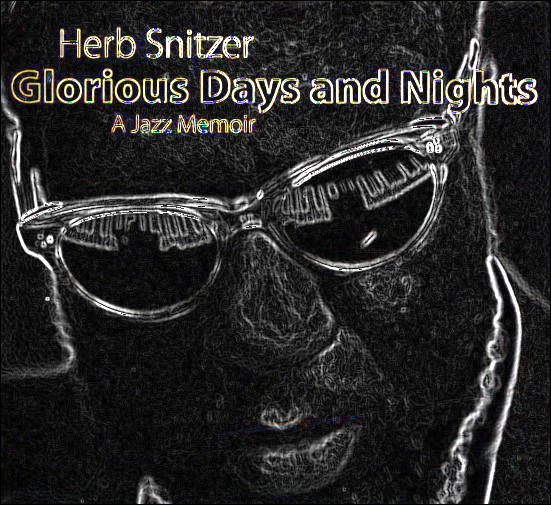
Glorious Days and Nights is a personal account of the fifty-year career of jazz photographer Herb Snitzer, with a special focus on his years in New York City from 1957 to 1964. A photojournalist for Life, Look, and Fortune, Snitzer was the photo editor and later associate editor of the influential jazz magazine Metronome. During the 1960s, politics, race, and social strife swirled in Snitzer's life as a working artist. But throughout the bus boycotts, demonstrations, and civil and racial unrest, what remained constant for him was jazz.
Snitzer recalls what it was like to go on the road with these musicians. His reflections run the gamut from serious meditations on his development as a young photographer working with musicians already of great stature to more conversational recollections of casual moments spent having fun with the jazz artists, many of whom became close friends.
7 Conversations
“Living in Cambridge gave me the opportunity to meet some of the younger jazz players for the first time. For instance, in June 1991, I arranged to interview trombonist Clifton Anderson, who was part of Sonny Rollins's band. We met in New York City in the courtyard of Lincoln Center. Looming behind us was a massive Henry Moore sculpture. By 1991 jazz had become so marginalized that CD sales of jazz records made up only 1 percent of all music sales. This was the milieu in which jazz musicians had to survive, and it wasn't easy. I began by asking Clifton Anderson why he became a jazz performer.
"I guess you know I'm Sonny Rollins's nephew. He gave me my first trombone when I was seven years old. It was after I went to see the movie The Musk Man with Dick Van Dyke. There was a scene in the movie where seventy-six trombones led the big parade, and I fell in love with the trombone, so my mother told Sonny, and Sonny bought me a trombone. It wasn't until junior high school that I began to take the trombone seriously. I didn't recognize what a giant Sonny is until I went to music and art school, and that's when I started playing jazz.
"When I was fourteen I went backstage at one of Sonny's concerts, and I was able to see how enamored people were of Sonny, and I could see the glitzy lifestyle, and it was then I decided this was something I wanted for myself. I also saw how the music made people feel. I recognized that everyone was so happy around Sonny.
"I was personally moved by the civil rights movement — touched, moved, influenced by that period — and I know that is a part of me and the experience is all a part of my music. Malcolm X and Martin Luther King and many other black leaders are a part of what influences me when I think about my music and the emotions or feelings I have about society in a greater spiritual sense.
"Some people think the vitality of jazz is going to be lost, but that is a misconception. Jazz is, for the most part, chamber music. You can enjoy it at a concert level. All great music has a connection to one's spirituality. Music is universal; jazz is accepted all over the world, less so in the United States, so maybe there is another factor blocking that acceptance and recognition and support of the arts that doesn't exist in other countries. I think jazz and lots of other things suffer because most people don't see it as classical American music. They see it as something black Americans play.
"I think a lot of us have suffered from a lack of self-esteem. And so when we perform, we do so because we love what we are doing but at the same time we don't project ourselves, we don't see the actual level of respect that we should be given and should be appreciated for what we do.
"The jazz scene is a lot harder for musicians today than it was for artists like Sonny and Monk and Bud Powell and J. J. Johnson. Back then you had much more access to jam sessions. A young musician has to go to a club to hear someone play, possibly paying up to twenty-five dollars to get into the club. There are no jam sessions or the degree of open playing there once was even when I was coming up, and I came up at the tail end of the time jam sessions were going on. Right now I think there is so much commercialism involved in record companies accepting you. I know great, great artists who make records on obscure European record labels, and many people don't know these records have even been released. And if you sign with the larger record companies, they have stipulations on who they want you to use, the kind of music they want you to play, and when you may perform. I don't want to go to a record company and be restricted to what they want me to perform. I'm the artist. So a lot of the great music is being performed on small labels, and the general public doesn't get to hear this, and a lot of the artists are almost unknown. [YouTube, The Internet, and Google have changed all this.]
"Right now the accessibility of the music and the artists to the public is very poor, particularly in the United States. You have to really go looking for it, and unless you have an idea of what you're looking for, you can get caught up in the misleading approach to jazz marketing. I think one of the best ways to be introduced to this music is to see and hear a master like Sonny. I've heard people come backstage after one of our performances and say ‘I've never been to a jazz concert before, and I never thought I'd like it, but now I'm hooked.' So I think the music is more powerful than any set of obstacles. Jazz will have its day. I'm convinced of it."
That same year I met with jazz singer Sheila Jordan while she was appearing at the University of Massachusetts in Amherst, Massachusetts. Poor as dirt, Sheila discovered that being poor and white wasn't much different from being poor and black. As a young girl Sheila moved from the desolation of coal country in western Pennsylvania to Detroit, where she found a home in the black community. But because she was white, white police officers constantly harassed her for engaging with blacks. To get away from the hassle, she moved to New York City, where she married the great bebop pianist Duke Jordan and became a staple of that city's jazz scene.
"Coming out of the poverty-stricken background I came from, I wasn't content to sing 'country,'" said Jordan. "I just said, This isn't the music I want to sing. I was really looking for a special kind of music, to take from it spiritually so I could find what I felt. I came out of an area near Johnstown, Pennsylvania, coal-mining country. I was raised by my grandmother. We were so poor we didn't have electricity, so we didn't have lights, didn't have record players. I lived a mile from Charles Bronson. His family were miners too. I find that in any race of people, when you are poor, really impoverished, music heals, whether you are black or white. At least it did for me.
"I knew I was a singer. I found my music in Detroit when I went to visit my mother. When I was a teenager, I finally moved to Detroit to be with my mother, and that was where I heard Charlie Parker for the first time. Music was the most important thing to me because it kept me alive.
"As a little kid I was really a mess. There were times when I said, God, if you have to live like this for the rest of your life, who wants to live? I knew I wanted to sing, but I didn't know how I wanted to sing until I heard Bird. I felt the freedom and the creativity, and I knew I wanted to feel those things myself. Here was the freedom to take a song and do whatever I wanted with it because I felt it. When I heard jazz, that made me realize I had something to live for. It all tied in. After I moved to Detroit, I started hanging out with black kids. I identified with black kids; maybe it was because of the poverty and feeling rejected. I came from a very alcoholic family, but that's another story. But I really felt close to black kids. And I wanted to be black.
"I felt comfortable with black people, comfortable with the music. I got a lot of warmth and love and understanding from black people. And the people I grew up with are the great players of today: Tommy Flanagan, Barry Harris, Kenny Burrell. Top guys. I remember being called down to the office of my principal, and she said to me, 'You are such a nice gal. Why do you hang around with colored girls?' I lied. I said, 'I'm part colored.' I told this to all the white people who gave me a hard time.
"So I found my family among the black community of Detroit. I just totally identified with black people. There is still a part of me that is very sorry I wasn't black. But that is also why I never tried to copy any of the great black singers, like Billie or Sarah or Ella. As a white singer I didn't want to steal anything from a black singer because I felt they were robbed enough.
"As a young girl I wanted to go where the music was happening in Detroit. There wasn't a big white jazz following in Detroit. Most of the people were black. I tried getting into a jazz club called the Club Sudan. Of course I wanted to sing, but I was scared to death. The cops were constantly stopping me because I was young and white and I had black friends. I took a lot of chances. I tried everything to get in, including putting on dark pancake makeup to look older and black. It was so bizarre. I never drank in the clubs, so I never got busted. But it was a constant battle, degrading, sometimes being taken down to the police station and searched. We were told, 'You don't hang out with them, understand?' It was then I knew I had to get out of Detroit and move to New York. I wanted to be near Charlie Parker's music.
"I went to New York to study under [pianist] Lenny Tristano. A lot of musicians would come to his loft. This was the mid-fifties. Even in New York if I went out with a black woman, we would get the stares and the hard looks from people. It was a drag, almost all the time, except within the jazz world.
"But feeling the pain and the rejection of the black people by the whites made me more honest. Hell, I didn't want to sing white music. If anything I was going to be more dedicated to jazz because of the race thing. I'm never uneasy about singing this music because I've got my own sound. One of the joys I really get is from a black musician or black singer who really digs what I do. It's like being adopted. Somebody adopts you, and maybe they aren't your real parents, but they love you, dearly, and that's how I feel. I've been adopted into this music, and I've earned my place in it. I try very hard not to let comments about it not being my culture, or I have no right to do it, bother me."
Abbey Lincoln was another jazz singer I was crazy about. An introspective artist; a chanteuse who seems to sing with a tinge of sadness, she had been married to legendary drummer Max Roach, and she had sung on his recording of the Freedom Now Suite. Now in her eighties, she continues to make records.
I had met Abbey at the ping-pong tournament Metronome held for jazz musicians in 1960, and after I moved to Cambridge, I saw she was playing in a little nightclub there, and I looked her up. We then met at her home in Sugar Hill in Harlem. Duke Ellington had lived across the street, and Coleman Hawkins lived a block away. Abbey turned out to be a spiritual, almost a mystical, person.
She said, "I wrote a song that goes,' I live in a world that never was my own. A world of haunted memories of other worlds unknown. I'll tell them of my trouble here when they call me home. And I think everyone feels what I feel. You look up in the sky and wonder, 'Where did I come from? I wonder why I'm going through this. 'We all live in a world of scattered thought and illogical thought with stories that are not based on anything real, that have nothing to do with the world we experience. It is difficult for people to find happiness here because we are told so many lies as children — fairy tales, stories. It creates adulterated grown-ups. In that way we all suffer the same fate: none of us gets away. It's a common life.
"I am evolving and becoming more conscious of myself, of my being. It is a development that comes from the work. Practicing the arts helps develop the senses, the abilities to comprehend. I find life to be a scientific adventure. Nothing is made through happenstance except confusion. There is a real, sincere, excellent mind-boggling planet of existence.
"It's like when I was a little girl in school. I discovered I could get to the second grade by learning everything I was supposed to in the first grade. I think life is like that. We learn what it is to live on this planet. Most times we become disillusioned, unhappy or bitter, and old and tired and feeble and weak, and die with almost nothing we were given. Everything is gone before we leave.
"I am disillusioned and better, not bitter. I'm glad that all they told me was a lie and not the truth.
"I sing. I write. I act out things sometimes. I practice the arts, and I'd be doing this whether anyone is watching or not. The arts come first, and the industry comes second in the real world. I know the strength of my position. I make what I want to make. If the people say you are great, you are. So it is the best work I know, and I am thankful I was introduced to it and had the chance to be involved in it.
"I've lived a number of years, and I don't feel all at sea. I sing about the life I know. A great lyric poet and songwriter by the name of Bob Russell taught me when I was young how to judge a song for its merit. He wrote a lot of great songs, including 'Crazy He Calls Me' and 'Don't Get Around Much Anymore.' He told me a great song has originality of thought and has to be succinctly said. I look for these kinds of songs that say what I want to say. All songs have a philosophy. I've never heard a song in my life that didn't have a message.
"My culture has a lot to do with the songs I sing and how I sing them. The African culture produced brilliant artists, singers, dancers, musicians, and storytellers. The holdovers of this lifestyle are the abilities African Americans express and are privileged to possess, even now. It is as natural as the texture of our hair. It is in the genes. It is a result of experiencing life in America. It is a spirit, an approach to life. It is a residual of that time when we were very young and instructed and brilliant, and it is still with us. Everybody in the world admires it. It should make us rich and self-sustaining, but it doesn't.
"We live in a different world now. The arts have been industrialized. They have lost their therapeutic value, and theater is now practiced for the sake of capital. There is also a deficit side to the artist personality. It is, for the most part, a one track mind.
"Still, we have a chance to enhance the world in which we live. The African people have a lot to be thankful [for], for our ancestors left a legacy, something all of us can do: express ourselves. It is not something for only a few chosen people. We can all do it, if we want to do it.
"If you have a gift, it is up to you to hold it, embrace it, caress it, protect it, and pump it up. It's not someone else's responsibility. It is something you must do for yourself. But you know, there is so much animosity and anger and hatred that came from the practice of slavery and we're still caught up in it. There are some of us who blame all the tragedy in our lives on other people — always other people — while they themselves are never responsible for anything wrong. Maybe one day we will learn as a people to wear the black hat as well as the white hat.
"For the most part, my career as a singer is forwarded by Jews, Japanese, and European peoples. I appreciate the attention and investment that has come my way from managers and producers who are part of the entertainment industry. I'm thankful for an industry that affords me a way to live and support myself in a world that is for the most part unsupportive of the artist. There is nothing greater to be, if one is black and a female, than a singer. Everywhere in the world we are invited and embraced and expected to be really good. The people keep me alive.
They come to listen and encourage me to be myself and they bring money and give it to the producers who give some of it to me to support myself and live in style and buy spiffy things when I feel like it.
"I like people who come to see me who know me, who've heard about me. I'm not anxious for a wider audience. It's a lot more work, and a lot more involved. I like a select audience. That's the way my music is. Jazz is not meant for the masses. It's for the discerning, those who have taste and can understand this approach to music. That's all I want. I don't want a spectacle. Serious music brings a serious crowd, and that's what I want.
"So many jazz folks died young. The lifestyle of the music is dangerous for the musicians and singers because the performers do not embrace the life of a monk or the minister but instead embrace the life of street people, the pimps and whores who have no skills. They find the lifestyle attractive, and it is dangerous, and they overindulge and use things they shouldn't, and they should be brighter than they are.
"People say that's a result of being born black, but that's a lie. Being born black gives you an advantage. There is no deficit in being born black, having African parentage and heritage, because you inherit all these wonderful attributes that is our culture. Some people learn to be jealous and feel that other people have a better life than they have, but I know better than that. This is a common life we all live. We are living on the planet earth and we all know the same things.
"We all have our needs and wishes, and there are very few people who have the inner strength not to fall: to succumb to money, fame, power."
"If you are a victim, you have to look to yourself because people who are victims all the time need to look inside to try and find out why they are this way most of the time. I was brought up with Bible stories, and that has saved me from a lot of grief by adhering to these kinds of thoughts. We were given instruction and examples to live by and told not to do things, and one of the things we're taught to do is not covet our neighbor. And we are supposed to be kind and not abusive. If there is a God, then I am one who reflects it, like everyone else."
While I was visiting my daughter in Berkeley, California in 1991,I went to see the great jazz bass player Milt Hinton at Kimball's East in nearby Emeryville. I had first met Milt while I was working at Metronome, and we had become friends. For eighteen years Milt was the bass player in Cab Calloway's band. After that he was a studio musician in high demand, playing on perhaps five hundred albums by dozens of performers. Jackie Gleason, who made a series of very successful albums, was the first to hire him.
Hinton refused to say that racism brought the jazz age to an end, but he was very concerned that too many of the next generation of black youth were frittering away their opportunities. Milt, who passed away in 2000, was as always charming, attentive, and gracious.
"My grandmother, who raised me, was born a slave in Vicksburg, Mississippi. She was a slave of Joe Davis, Jefferson Davis's father. This lady was a lover of peace, and she had nothing. I never had a pair of skates or a bicycle, but there was always love and concern, and I never missed a meal. As times got better, we moved from Mississippi to Chicago. I remember all those wonderful times. It was just beautiful. All life is beautiful.
"I started taking violin lessons when I was thirteen. I found out that music was the one thing no one except the man upstairs could take from me. No matter how bad things were, I always had music.
"The love and concern which was so important to my life we've now lost. I've seen so much that we've lost our concerns for each other. When I was a kid and anyone in my neighborhood got sick, my grandmother would tell me to take a bowl of soup over there. We seem to have forgotten how this sustains us.
"Cab Calloway was my musical father — not that he is that much older than me, but he stood for so many things. I am proud to have been around him. He stood for decency, respect, and discipline. He carried himself that way, and he insisted that anyone around him be like that.
"We lived in a world of music, and music is an auditory art. We lived by sound, and I don't care where you're from or who your daddy was, we only cared how you sounded. Even in the South in the days of segregation, people came to hear us because we sounded good. The rules of the country said we couldn't sit together, but they could listen together, so that's what we did.
"We played the Cotton Club every night, and we had Dizzy Gillespie, Chu Berry, Doc Cheatham, everybody, and we were heard on the radio, and we were in great demand, even in the South, except that we had to obey the rules wherever we went, and that's what we did.
"I obeyed the rules. I didn't enjoy them, but they came to hear us, and we played for them. We came from New York to the South, and we had these pretty girls in the show with us. Cab was sharp in his zoot suit, and we had these copper colored gals, and it was just beautiful. We came down with this wonderful show giving these people a model to say, 'Hey, this is where we want to be.' We got a lot of flack for that in those days. The powers that be wanted us to play blues and ragtime that said, “‘’m going to cut your throat if you drink my wine,' but we refused to do that. I can't tell you how close we came to being lynched sometimes. Really close, because the people never saw a show like ours.
"But the powers that be kept us out of a lot of places, and that was one of the reasons Cab's band finally had to break up.
"We weren't angry at the way we were treated as much as disappointed. I don't know any other country but this one. I was born here, so I felt badly I wasn't treated the way everyone else was treated. You know, you can't play music angry. We used to laugh at people asking us to do certain things. I would take pictures of my wife, Doc Cheatham and other guys in front of a hotel sign that said, 'For Colored Only.' We had come from New York where things were great for us, and we came down South and everything was just silly. I was taking these pictures of the silliness, hoping in later years the young people would see what a stupid thing it was, and that's what happened. I'm glad I took them, and I'm glad young people have a chance to see them. To show the dues we had to pay in order to play our music.
"When the big bands broke up, there was no more big-band work, but I got lucky. Thanks to Jackie Gleason, I got into recordings and I began to make good money. Jeff [Hilton Jefferson] was working down in Wall Street. Cozy Cole was trying to form a little band. We would meet every Monday at Beefsteak Charlie's at five when Jeff got off. Quincy Jones, Oscar Pettiford, Jeff, and all of us would be standing at that bar. We would put our change up on the bar. We'd just drink and laugh and talk until it was time to go home. I wanted to take Jeff and Cozy down to Mexico for a week's vacation, because I had the money, but they had too much dignity, and we never did it. It is one of the greatest regrets of my life that we never made that trip.
"Jazz is not embraced by the general population because it's ours. We have a tendency to lose respect for what is ours. Why do we buy so many Japanese cars? Man, my house is loaded with everything made in Japan. Very few things are made in America anymore. It's sad. The young jazz musicians today make more money abroad than they do at home.
"You can't make everything into a race thing. We have become complacent about being efficient. We could make better cars.
"My mother had a short fuse. You know, you either do it, or forget it. Man, I never had a pair of skates or a bicycle, but you can't miss what you never had. But you want your children to have what you never had. But you must learn to earn. It's a difficult thing for young people today to realize this. They think everything is easy. There is no question that Japanese things are better than our things.
"I teach at Baruch College. It's a business school with a small music department. The school is seventy-five percent oriental. Where are all the American kids in business? And that music class I have is a small class: eighty-five percent Asian. I find it very difficult to entice some of the black students to make some progress, because they don't see where they are going in the future. They don't have any role models.
"I play to white audiences all the time. Black kids don't come to see me. They don't know whether I'm successful or not. When Cab Calloway was around, they could see it. When Duke Ellington was around, they could see it. They could say, 'Hey, I want to be like that.' We play these places where the price of admission is high, and they don't come to see us.
"The young black kids are into rap, saying things we don't want to hear. I won't condemn them for saying it. That's poetry, man, and it's great. They're saying it the way they see it in a language they know.
"These black kids don't have the bread to come to a place like Kimball's East. More whites can afford tickets. That's the real reason the audience is mostly white."”
To order the book directly from the University of Mississippi Press please use this link.