Sunday, April 24, 2022

Helen Merrill – A Restless Musical Soul By: Steve Siegel

 © Copyright ® Steven Cerra, copyright protected; all rights reserved.


With previous features on pianist Wade Legge, the Great Day in Harlem Photograph “Mystery Man” - William J. Crump, drummer Frankie Dunlop, vocalist Jimmy Rushing, critic and author Nat Hentoff, and Jazz Party: A Great Night In Manhattan featuring the Miles Davis Sextet, the Duke Ellington Orchestra, the September 9, 1958 fest that Columbia Records put on at the Plaza Hotel for its executives and guests, and Dupree Bolton, Steve Siegel has assumed the role of “unofficial” staff writer for JazzProfiles.

© -Steve Siegel copyright protected; all rights reserved; used with the author’s permission.

I had a dream that the jazz gods, for reasons unknown, looked upon me with disfavor (perhaps they read and disliked my jazz articles). A trial was held and I was found guilty. In sentencing me, the “judge” (Milt Hinton), issued an edict that henceforth I be banned from listening to all jazz recordings or live performances. The only exception was that on Thursdays, if I should so choose, I could listen to Kenny G.

More importantly, I was to choose one and only one female jazz vocalist who I must listen to all day and every day in perpetuity. 

JH: Have you reached a decision?

Me: Might a box set of “Female Jazz Singers of the 20th Century qualify?

JH: ONLY ONE SINGER! Do not try my patience!!

Me: Judge Hinton, after much consideration I have chosen Helen Merrill.

JH: What about Billie Holiday?

Me: Too sad.

JH: Ella Fitzgerald?

Me: Not a big fan of scat singing. After two or three centuries it would get to me.

JH: OK, so be it. I remand you to the kitchen of the Village Vanguard, where you will wear earplugs for all eternity.

So why did I choose Helen Merrill?

To be honest, I cheated when I picked Ms. Merrill as the only female jazz singer I could listen to because, in actuality, Ms. Merrill was many different singers. It all depended on the time and space continuum.  Precisely, what time in her long career you happened to hear her sing as well as on what continent she was currently residing and performing.

Ms. Merrill spent her career ever so gracefully “floating” from one style of plying her craft to another and doing it in a rather seamless manner. Once she arrived at her new musical destination her innate musical abilities combined with her unerring taste most always allowed her to leave her mark on the material.

However, there is a downside for being so eclectic in pursuing one's career.

The process of how some jazz singers, as their careers advance, are saddled by the critics with the dreaded “underrated" label can be traced to many factors. Sometimes it comes about as a result of the intersection of commercial pressures imposed on the artist by the many “handlers" in their universe such as agents, record companies and other parties who serve to profit from the career of the “meal-ticket” who they have a financial stake in. These partners generally favor the artist establishing a clearly defined stylistic approach with broad appeal to as large a market segment as possible and feeding that segment with a continual diet of familiar and immediately recognizable fare. Once established, this market segment of “fans" will follow the artist and in theory generate a consistent and adequate cash flow; expenses will most always be covered and all concerned will be provided a fair return on their respective investments. Failing that, the singer might then be encouraged to adopt an even more commercial strategy.

This approach plays out much more often in the world of popular music than it does in the world of jazz. True jazz singers might dip their collective toes in “pop" but will rarely totally submerge beyond the ankles. 

 In the world of jazz there have always been many iconoclasts who, beyond engaging in the restless pursuit of musical improvisation, also pursue career improvisation, characterized by the continual need to challenge themselves to explore new musical territory. These artists are not necessarily driven by the exigencies of trying to build even greater penetration and successes within a core market. They may rarely produce their art with an eye towards any specific market segment. They produce it and perhaps hope that there exists a market that is large enough to be served in a differentiated fashion and still attain some modest profits for all concerned. By the time the critics and the public react favorably to their work, they might very well have moved on to another challenge; failing to build upon their recent success and leaving their newly won-over public in the lurch – just when those fans are clamoring for more of the same. Obviously, the artist’s financial backers may likewise be left in the lurch resulting in managers, agents and record labels sometimes moving on from them and into safer havens for their time and money (maybe creating 16-year-old pop stars). The critics may likewise move on to the next big thing lamenting how so-and-so, after such a promising start to a career, had “lost their way.” 

Musical moving targets are rarely appreciated by investors in the niche jazz market where margins are generally slim, with few exceptions.

Some jazz artists, in addition to being the moving musical targets, can further destabilize their reputations through geographic relocation.  The artist may perceive through their record sales that a more appreciative audience exists somewhere else other than in their home country. They then pack up their cares and woes and move on to jazz hot bed countries in Europe or in Japan or in some other area of the world. 

Much of the above discussion truly applies to the career of Helen Merrill. The only caveat here is that she has never really been wildly successful nor underrated - certainly not by fellow musicians. Though at times in her career she may have been “under-appreciated” by segments of the jazz public.

Very early in her career she clearly established herself as a rising star. In December 1954 she arrived at the Fine Recording Studios in New York City to record her first major project for Emarcy (the jazz subsidiary of Mercury), the now classic album Helen Merrill. Working with her on this album, among others, were Clifford Brown on trumpet, Oscar Pettiford on bass and Quincy Jones arranging. Her third album for Emarcy, recorded 18 months later in June of 1956, was arranged by a pre-Miles Davis, Gil Evans. 

Rather impressive company for a young singer who was 25 years old in 1954.*

Beyond the production of the two outstanding albums with Clifford Brown and Gil Evans, this period also established her as an artist with a restless musical nature. A trait that would prove to be somewhat of a double-edged sword in her career.

Will Friedwald, in his biography of Nat King Cole, opines that Cole's restless musical nature and the diversity of his musical output helped to spawn Cole’s musical growth and resultant long-term popularity. 

Merrill, throughout her career, also had musical growth through diversity of output but Cole's work never became so diverse that he failed to produce hit records. Hit records are the signposts along the way that allow those artistic detours to happen. With no hit records for an audience to latch onto, diversity of material will likely serve to confuse the public. Unlike Cole, Merrill never consistently produced those musical signposts – neither hit records or even consistently similar music. 

In her first three Emarcy albums, Merrill immediately set this pattern of stylistic diversification. The Helen Merrill album with Brown was a straight-ahead small group with vocalist album. Her next album, drawing on the nascent “artist with strings” trend, featured a small jazz group backed by a full string orchestra. Next, her Dream of You album, was a big band with singer outing, which, due to Gil Evans' writing and arranging talents, was unique and compelling within that format.

As Emarcy searched for new vehicles for Merrill which might click with a broader market and generate more financial returns, she finished off the decade of the 1950s with an album for Atlantic Records of songs associated with country and western singers entitled American Country Songs. She then moved over to Metro Jazz, a short-lived subsidiary of MGM Records, for the Leonard Feather produced You've Got a Date with the Blues, an album with the “blues” more as a theme than as an actual song structure – mostly titles containing the word blues or sung with a blues feel to them. The issue here was not one of quality – both were professional efforts – with the “blues” album being quite good. The issue was the extent to which Merrill was sending up conflicting smoke signals about her identity as an artist.

Though almost all her efforts from 1954 to 1960 produced serviceable to exceptional albums, any follower of Merrill's work who might have been hoping for some musical similarity between successive albums could be excused for labeling her output as musically schizophrenic. This reflected both Emarcy's desire for more sales as well as Merrill's restless nature. This pattern continued for much of the next 50+ years of her career and though serving Merrill's desire to avoid any career straitjackets, was rather confusing to the record buying public.

On the positive side, another constant in her career was the preternatural ability she seemed to possess to surround herself with some of the finest jazz musicians and arrangers of each era of her career. Charlie Parker, Earl Hines, Clifford Brown, Oscar Pettiford, Quincy Jones, Gil Evans, Jim Hall, Ron Carter, Thad Jones, Elvin Jones, Kenny Dorham…, to name a few.

Some might look at this pattern as simply random luck – being at the right place at the right time. This argument might have a bit of traction early in her career. For instance, on the Helen Merrill album Brown and Merrill were both signed to the Emarcy label and Brown was only 24 years old and was essentially at a similar place in his career as Merrill and happy to reunite with his old friend Quincy Jones (who was then 21 years old). Merrill already knew Jones from their time together with Earl Hines in 1952.

Brown's obbligatos and instrumental lead performance on the Helen Merrill album paid dividends for him. Six months later and a few months before Merrill recorded her own album with strings, Brown appeared in the Fine Recording Studios for Emarcy, this time as the leader on his own album, Clifford Brown with Strings. Guitarist Galbraith from the Merrill session was present as was the Haggart/Burke song,What's New.” This proved to be the best selling album Brown released during his short life.

 On the Gil Evans Dream of You session Merrill had enough cachet with Emarcy to suggest her own arranger and when she asked for Evans, she did not receive much enthusiasm from the company executives. Evans had a reputation of being a perfectionist who would take as much time as needed in the studio to reach his exacting standards. In an era where jazz records might only sell 5,000 to 10,000 units, paying overtime to an entire big band could be financial suicide for a relatively small label l Emarcy who the parent, Mercury, expected to show at least a small profit. 

By the mid-1950s Merrill already had a reputation in the jazz world as a musician’s musician. Her performance on these early albums only served to enhance that reputation as well as the reputation of some others with whom she worked. In the case of Gil Evans, it is clear that his work on Dream of You was very helpful to him in securing the job at Columbia working with Miles Davis on their three classic albums- Miles Ahead, Porgy and Bess and Sketches of Spain. Columbia producer George Avakian had recommended Evans to Emarcy for the Merrill gig and even though Evans did go over budget and the record did lose money, the artistic quality of the finished product was enough for Avakian to recommend Evans be hired at Columbia to work with Davis.

Another factor that also influenced why quality musicians would sign-on to work with her was that Merrill was always much liked as well as respected by them for her musicianship. She was the anti-diva, only caring about carrying her load and integrating into the musical mix – essentially, just one of the boys. 

 Addressing her musicianship, it’s interesting how some of our greatest jazz singers were described as “horn-like” in their phrasing and thought of themselves as just another instrument in the band and conversely, some of our greatest instrumentalists such as Lester Young and Ben Webster were very conscious of the words to a song and thought much like a vocalist might.

An example of this is found on the Helen Merrill album. Near the end of the Gershwin song “‘S Wonderful,” Brown takes a solo. Following this, on the song's concluding chorus, Merrill puts forth with a horn-like effort where it appears that she is mimicking Brown. It’s one thing for a vocalist to be said to phrase like a horn player and quite another for them to actually think like one.   

One term that often pops-up in reviews and articles of Merrill and her albums describes her singing style as “cool" – the term was generally descriptive, though occasionally used in a pejorative manner. I assume that this meant that she is somehow emotionally detached from the story that she is telling. If this is the case, then nothing could be further from the truth. Dick Katz writes in his liner notes to the 1965 album A Shade of Difference:  ...Helen Merrill…whose personal warmth and sensitivity comes through in her singing- a sentiment often expressed by those who worked with her. 

Merrill does occasionally drop down to a “cool" whisper, favoring slower tempos and uses the technique of lagging behind the beat. By employing this approach Merrill seemed to control the tempo which effectively enhanced the story line by providing more gravitas to the lyrics. 

Emotionally her vocal attack oftentimes reminds me of a vamp in the old 1930’s movies - Marlene Dietrich for one - who could turn the act of smoking a cigarette into a sexual experience – slow deliberate drag, followed by a pause and with the head tilted slightly upwards, a slow prolonger exhale. Almost orgasmic - “Don't rush me, I'm savoring the moment". In the movie age of the production code, this was a clever way to symbolically imply a build up to orgasm and perhaps elude censorship. Very sexy and cool. This is the “cool" I occasionally hear in Merrill's voice.

On both the Helen Merrill and The Feeling is Mutual albums, she covers the Billie Holiday/Arthur Herzog song “Don't Explain.” A song about an unfaithful partner and a woman’s need to retain her relationship with him regardless of his behavior. In the song, as sung by Holiday, one might visualize the jilted woman sitting on the edge of the bed with her unfaithful partner, whispering into his ear the song's lyrics of annoyance but forgiveness for his indiscretions with another woman, accepting him back. In the Merrill version, as she sings it, I am convinced that she is ultimately telling him don’t explain…just get your stuff and get the hell out because, pal, you’re history… Very cool. The rather abrupt way that she clips off the final two words of the song on The Feeling is Mutual version leads me to consider that.

Following her 1950s run of generally critically acclaimed albums which elevated her to the upper echelon of female jazz vocalists – at least in the minds of most critics and certainly fellow musicians, she abruptly broke her contract with Atlantic and headed off to Europe. Unlike many of her fellow jazz musicians who left the United States over racism, financial issues, or seeking artistic freedom, Merrill was putting some distance between her and a failed romantic relationship. Her first stop was England followed by a trip to Belgium and, through an invite from the pianist Romano Mussolini, to Italy.

In Italy for three years, Merrill became quite appreciated by the cream of Italian jazz musicians as well as by the rabid Italian jazz fans. In addition to Mussolini, she also worked with the great creator of movie scores, Ennio Morricone.

In 1964, after a trip to Japan where she toured and cut an album, she was offered further work in Japan, but turned it down and she returned to the United States. In 1966 after marrying a United Press International executive whose territory included Japan, she returned to the Land of the Rising Sun. She had already become very popular there, so she had an established market for her recordings (she has sold over 800,000 units of Helen Merrill in Japan) and personal appearances.

Shortly after returning to New York City in 1964 and recording the album The Artistry of Helen Merrill on the Mainstream label, she was contacted by old friend, pianist Dick Katz, who along with former Riverside Records co-founder and producer Orrin Keepnews, had started a new jazz label, Milestone Records.

With Milestone Records and Dick Katz, Merrill had truly found her métier. A situation that would play to all her musical strengths and would allow her to proceed on the course that she had initially been on in the 1950’s with the Helen Merrill and Dream of Me albums.

Her two best albums of the 1960’s came out of this collaboration; the 1965, The Feeling is Mutual with Thad Jones, Jim Hall, Ron Carter, Pete La Roca and Dick Katz and the 1968’s A Shade of Difference, again with Jones, Katz, Hall and Carter and adding Elvin Jones, Hubert Laws, Richard Davis and Gary Bartz.

These albums, given their uniqueness, might as well have been entitled: Helen Merrill and Dick Katz: When Iconoclasts Meet Vol.1 and Vol. 2.

What made these sessions so special started with the concept that Katz and Merrill were looking for in the musical relationship between Helen and the musicians.

As Katz states it in the liner notes for The Feeling is Mutual:

Helen and I set out to make an album…to have the singer be just one of several soloists…the other musicians as artistic equals rather than accompanists.

 Merrill has reiterated the importance of that approach to her in an interview with Marc Myers (Jazz Wax):

People with talent are not interested in showing off behind another person. They’re more interested in the music... That’s the difference between the kind of musician I like to work with and singing with a musician who thinks he has to accompany me. That is so annoying I cannot tell you.

Perhaps because the same core musicians were present on both albums and, as history has shown us, they all were very sensitive musicians, the musical goals were largely accomplished. Combining this with an inspired treatment of mostly familiar material, the result was two of the best vocal jazz albums of the mid and late 1960’s.

In jazz, the concept of collaborative improvisation within a musical unit was, by the mid 1960’s well established. In free jazz we had Coltrane's Ascension and Coleman's Free Jazz, to name the obvious. In the more consonant world, we have the Bill Evans/Scott LaFaro short-lived group. But to integrate a vocalist within such a musical structure for two entire albums was rather new and daring. Luckily Katz, Merrill and Keepnews had the reputations necessary to assemble the right musicians to pull it off.

In both albums, all the musicians - individually and collectively - seem to have a total buy-in to the Katz and Merrill concept. The fact that the core group from the first effort all returned for the second album – three years later – is telling and seems to support that.

The main drivers of much of the music on these albums seem to be the duo of Hall and Carter. In retrospect, this is far from surprising in that in the following three decades they appeared together on many albums and did a series of duo albums such as Alone Together, Telephone, Telepathy and Live at the Village West.

Carter can be heard dipping and diving all over the bass, laying down the rhythmic and harmonic guideposts that helped to free up the others. Hear Carter on his duet with Merrill on My Funny Valentine and Hall and Merrill weaving their way through Deep in a Dream. 

On What is this Thing Called Love Merrill sings the first chorus as written, but on the second vocal chorus she is joined by Carter and becomes an accompanying cello, responding to Carter by singing her lines in a rather staccato voicing.

The choice of “Daydream" on The Feeling is Mutual  was almost inevitable for an album intended to offer the musicians so much harmonic freedom to create – and they take advantage of it creating a beautiful musical abstraction.

Merrill remained in Japan until, in 1974, her husband was relocated back to the United States. Now she was essentially facing her third iteration of the music scene in America. The first period, when she recorded with Clifford Brown and Gil Evans, was just before the advent of rock and roll when hard bop was still going strong and female jazz singers had decent market share. Her second iteration was the mid 60's – right in the midst of the British Invasion and the metamorphosis of rhythm and blues into soul music, flooding the market with both male and female soul singers. When she arrived back in the states in 1974, jazz, as she knew it, was struggling. Jazz artists and their record labels were incorporating electronic instruments, heavy back-beats and string backgrounds into the music in an effort to appeal to a younger mostly white audience. It was a tough time for female jazz singers – especially one who had spent most of the past ten years off the scene as Merrill had.

Luckily, her Japanese connections allowed her the opportunity to produce some jazz albums on Japanese labels for Sir Roland Hanna, Al Haig and the well received Tommy Flanagan Plays Harold Arlen.

Merrill also recorded an album with John Lewis and produced an album entitled Casa Forte which she co-arranged with pianist/arranger Torri Zito. Along with being musically simpatico, they also ended up married.

In 1987, one year before his passing, she reunited with Gil Evans for an updated version of Dream of You entitled Collaboration. In 1994 she completed a tribute album that she had been contemplating ever since the death of her friend Clifford Brown entitled Brownie: Homage to Clifford Brown which, 38 years after his tragic passing, provided some closure for Helen. 

She continued to record through the 1990’s and early 2000’s. In 2004, 50 years after the classic Helen Merrill album, she recorded the well received Lilac Wine, her forty-fourth album. 

On July 21, 2022, Ms. Merrill will turn 93. This year also represents her 75th year as a professional jazz musician.


  • Many sources list Merrill's year-of-birth as 1930. The correct year is 1929 as confirmed through 1930 census data and Merrill's own website.

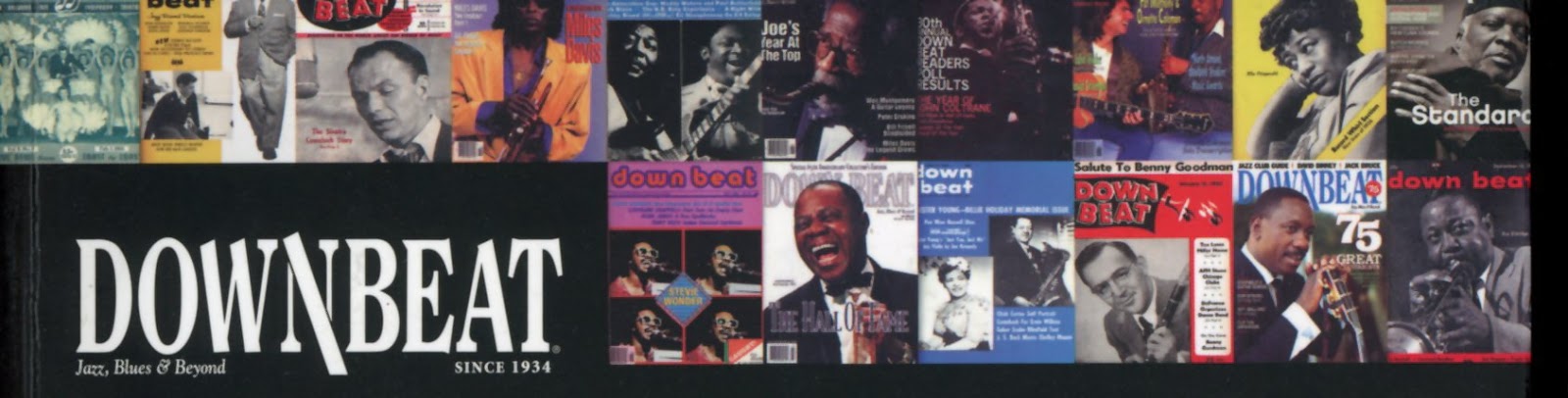

Friday, April 22, 2022

Down Beat Days and Don DeMicheal by Gene Lees

 © Copyright ® Steven Cerra, copyright protected; all rights reserved.


The following appeared in the February 1982 Gene Lees subscription based, self-published Jazzletter as Down Beat Days.


It talks about a time when Jazz had a national press and Down Beat magazine was a cornerstone of that communications platform.


Down Beat, now Downbeat is still with us, but the national press for it has long gone as is the scale and scope of the Jazz scene that Gene describes in this piece.


It's also a wonderful read about friendship.


“Sibelius, reputedly, was the author of the observation that “no one ever erected a monument to a critic.” Whoever said it first, musicians have repeated it with relish ever since. Society has not of course been conspicuously generous with monuments to musicians, either. One can understand an artist's resentment of the critic. His career, his very livelihood, can hang on the opinion of someone who may not know what he is talking about and, even assuming that he does, whose aesthetic philosophy may or may not accord with his own. And some critics, I grant, are blithering idiots. 


But criticism, for all its faults, is, as Virgil Thomson put it, “the only antidote we have to paid publicity." And musicians and other artists incline to slight the serious work done on their behalf by men they rarely bother to thank. The writings over the years of Leonard Feather, John S. Wilson, and Whitney Balliett—to say nothing of the scholars and commentators in Europe—have given jazz the chronicle the musicians themselves never bothered to write. It is valuable beyond estimate, and Leonard's Encyclopedia of Jazz, the later editions of which have been written in collaboration with Ira Gitler, is in itself a monumental work to which future generations will owe an enormous gratitude. Incidentally, Leonard is feeling discouraged about his encyclopedias and the difficulty of gaining adequate distribution for them, and thinking that he may not produce an Encyclopedia of Jazz in the Eighties. We will all be the less if he doesn't. Last month in Chicago, a critic died. He was my friend. As it happens, I‘m the one who turned him into a critic. With all deference to Mr. Sibelius, I would like to say a few words about Don DeMicheal.


I met Don in Louisville, Kentucky, shortly after I joined the staff of the Louisville Times as its classical music critic. I got the job only because one of the reporters, assigned to review a concert by the Louisville Orchestra, fell asleep and then panned the performance of something by Beethoven when in fact there had been a last minute program change and the orchestra had played Tchaikovsky. On the reasoning that the paper needed someone who knew a little more about music than that, or at least cared a little more about it, Norman Isaacs, the managing editor, imported me from the Montreal Star. (The reporter whose moment of somnolence changed the course of my life is now one of the finest correspondents of the New York Times.) I settled into my job and eventually became drama and movie critic, and entertainment editor as well. My principal assignment was covering the Louisville's Orchestra's program of commissioning and recording new music by contemporary classical composers. For three years I assiduously attended not only the concerts but the rehearsals too. I would hang out with the musicians from the orchestra and discuss the new pieces in detail. Most of them did not like most of the music very much, but a gig is a gig and they played it and played it well. It was during this time that a suspicion dawned on me that the European classical-music tradition was, if not ended, at least seriously off the rails. 


The moment I hit town, of course, I began searching out the local jazzers. I became friends with an excellent pianist named Don Murray, with whom I studied harmony and composition. Don played in a trio with a bassist-lawyer named Gene Klingman in a downtown bar called Riney's. At some point I mentioned that I had done a little singing, and they asked me to sit in. The people apparently approved, because they would ask me to do it night after night. So reticent was I that I would sit on the piano bench beside Don, scrunched down so no one could see me. I really didn't know what I was doing in those days and, I suspect, I had terrible time. In my insecurity I would wait for the chord and then make the phrase. I can‘t bear that kind of behind-the-beat singing, which is why I have no taste for a certain style of jazz singer. Don and Gene had a friend, a vibes player and drummer named Don De Micheal. De Micheal had a group that played for dancers in some little roadhouse out on the edge of town. The group sounded not unlike the Modern Jazz Quartet, which was perhaps inevitable in view of its instrumentation and De Micheal's admiration for Milt Jackson. I liked Don‘s playing. I liked his drumming, too: it had a loose, comfortable, Cliff Leeman kind of feeling. Don had a peculiar habit. He always played drums in his stocking feet. I have never seen another drummer do that. He said it enabled him to feel the pedals better. He used to drive his car that way too. 


There was something interesting about him, something hidden, and I got to know him better. It required a little pulling. Perhaps this had to do with the fact that he was Italian, by ancestry, in an area in which there did not seem to be many Italians. And he was by birth that very rare bird, an Italian Protestant. So I suppose he was an almost perfect example of the outsider, at least in that part of the country. But there was something more, although I didn't know it then: Don had an intelligence that he had not yet-found the courage to explore. Don‘s love of jazz was as deep as that of anyone I have ever known. He had a wonderful collection of old 78 records, some of them extremely rare. Finally I asked how he had acquired it. He told me that when he was a little boy, he would go into the colored neighborhoods of Louisville to knock on doors and ask people if they had any old phonograph records they didn‘t want. And in attics and basements he uncovered forgotten treasures and bought them for five or ten cents each. I wonder what some of those people thought of the little black-haired white boy who was interested in such old music. 


Those were bebop days, and like so many others among us, I had limited interest in the older jazz. Don loved it all, and played it all. One day I was denigrating Dixieland, laying out the reasons I found it uninteresting, and Don said mildly, “That's all true, I suppose. But it sure is fun to play.” That brought me up short, and every musician to whom I have quoted that remark has agreed with him. (A few years after that, at the Monterey Jazz Festival, I heard Zoot Sims say that he rather liked the Dukes of Dixieland. Two or three other musicians jumped on him, demanding to know how he could possibly like their music. “Well, you know me,” Zoot said. “I haven't got very good taste.” Zing.)


My job at the paper was in some ways uncomfortable. Norman Isaacs, in addition to being managing editor, was president of the Louisville Orchestra. The Rockefeller Foundation had committed substantial monies to pay for its commissions and its recordings. And the more I studied that music, the more it seemed like an intelligently structured emptiness. Years later in Hollywood, Hugo Friedhofer dismissed Elliott Carter with one brief, harsh phrase: “Rich boy's music." It was a description that fit much of what the Louisville Orchestra was playing: certainly little of it was music that aspired to communicate to people. To tell what I thought to be the truth about it, however, I had to word my reviews very carefully since I was under the command of a man who was president of that orchestra. Rolf Liebermann came to town for the premiere of an opera of his based on Moliere's School for Wives.I had already become aware of the diplomatic skills of many of the contemporary “serious” composers and Mr. Liebermann was a master politician who, in a few days, had successfully charmed the entire musical establishment of Louisville, including Mr. Isaacs. I attended rehearsals and then the performance, and I thought that that opera was one of the most boring pieces of crap I had ever heard. But I knew that I would not be allowed to say so. And so I resorted to the tactic of damning by faint praise. And Mr. Isaacs, thinking that I could not possibly be right in my lack of enthusiasm for so eminent and respected a composer, re—edited my copy, removing all my reservations, all my “rathers'' and “somewhats" and “howevers", so that the review was deftly transmuted into a glowing one. The opera later went on to New York, where the critics, to my considerable satisfaction, tore it to pieces. Mr. Isaacs later also went on to New York where he is now chairman of the National News Council, which examines complaints of malpractice in American journalism. The situation was anomalous. The paper—meaning Mr. Isaacs—had no interest in jazz. I was not allowed to write articles about Don DeMicheal or Don Murray, because they worked in bars, for money. The Louisville Orchestra, however, was a nonprofit organization, and therefore I could write about that and indeed was required to. I did manage to establish a weekly record column, in which I got away with reviewing a certain amount of jazz along with the classical music. 


But it seemed to me strange that in the United States, a nation in which profit is almost a religion, the non-profit could get all the free coverage it wanted. Indeed this is true today, and if you can have yourself declared a non-profit organization, you can even get free “public service” announcements on radio and television. But there was more to the situation than that. After all, the paper had its business section, covering the activities and decisions of Reynolds Aluminum and other companies whose purpose was profit, and a sports section, covering professional sports, whose purpose most assuredly was profits. And I was required to cover the movies and even print those AP stories from Hollywood by Bob Thomas blandly chronicling the activities of movie stars. What was the difference between these enterprises and Riney's bar or the little roadhouse where Don, standing over his Deagan vibes, set for slow vibrato, was putting out some music that I found more interesting than most of what was coming out of the Louisville Orchestra? The difference was—and is—this: those enterprises buy advertising. And so the separation of advertising and editorial departments that most newspapers claim as the very cornerstone of their ethics is more apparent than real. And if you've wondered why rock and the most mindless kind of popular music get extensive newspaper coverage when jazz gets so little, simply take note of how much advertising the pop-rock industry buys. 


It's a shuck, it's a rig, and if you want newspaper coverage, you can get it in one of two ways: become a non-profit organization; or buy ads. There are some exceptions, but this pattern is all too common in the entertainment and arts sections of American newspapers. De Micheal used to say that I had a Machiavellian mind, partly, I suppose, because I had urged him to read The Prince — not in order to practice its tactics but in order to detect them when someone is trying to practice them against you. It was becoming apparent to me that Don was plagued by some kind of inner doubt. I think he was going through an awakening, a suspicion that he might have more substance than he had ever had the ego to believe, and that life might hold more for him than he had thus far dared to aspire to. For what Don really did for a living was bake buns. He played his gigs in the evenings and afterwards went to work in a bakery—a little business which, if memory serves me, was owned by his family—and all night long he baked hamburger buns that were delivered next morning on contract to the White Castle hamburger chain of Louisville. Remember those delicious old White Castle hamburgers, filled with wet fried onions, that you bought by the sack for a dollar a dozen? Well Don used to bake those buns in Louisville and since I loved those hamburgers, God only knows how many of Don's buns I ate during the three years I lived there. 


In 1958, I was awarded a Reid Fellowship, $5,000, which in those days was a fair sum of money, and it provided me with a luxury I had never known: a year in which to simply study music and drama and all the things I loved, and I took my wife and newborn son and went to Europe to do it. When I got back to Louisville the following spring, DeMicheal was still playing his gigs. Something in him, however, had changed. He told me that he had been taking an extension course in sociology at a division of the University of Indiana in Jeffersonville, which lies just across the Ohio River from Louisville. Thereupon began a joking argument between us that never ended. “Sociology,” I used to kid him, “is the elaborate compilation of statistics to demonstrate the perfectly obvious.” 


Don had written a term paper that he asked me, with a certain diffidence, to read. At that time I had been writing for a living for ten years and Don had never written anything at all. I read the paper with great interest. It was an examination of a jazz group from a viewpoint of sociology, and in it he hypothesized a phenomenon he called “rotary leadership”. In the course of an evening, he wrote, the leadership of a group keeps passing from one player to another—and the leader at any given moment is not necessarily the soloist. A few weeks later, Norman Isaacs reprimanded me severely and unfairly for something that was not my fault. The anger this inspired caused me to stay awake for seventy—two straight hours, writing job applications to every newspaper I could think of. 


And then a friend of mine, a press agent for the Walt Disney studios, told me that Don Gold had just resigned as editor of Down Beat. Dom Cerulli had simultaneously resigned as New York editor. I thought I could handle the New York job, and that was the city where I most wanted to be anyway. So my friend placed a call to Charles Suber, the publisher of Down Beat, and shoved the phone at me. A week later I found myself not in New York but in Chicago, editor of a magazine I had read dutifully as an adolescent jazz fan. I encountered a demoralized magazine. George Hoeffer had been hired for the New York office, and although he was a faithful collector of information, George was not and never would be a journalist. I soon learned that I had only two men to turn to— Jack Tynan, the Irish-born west coast editor who worked out of an office in Selma Avenue in Los Angeles that is well-remembered by the jazz musicians of California, and Ted Williams, a photographer who had at one time been on the staff of Ebony


Both men became my close friends, and still are. Jack was a pillar of strength. An experienced and extremely skilled journalist and a fast and excellent writer, he could turn out copy in incredible quantities to help me fill a magazine whose purpose was unclear and whose direction had been lost. And Ted Williams was my guide to the jazz world of Chicago. He was, and is, a great photographer, but his greatest gift to me was his sense of humor: he could always make me laugh at the idiocies I was perpetually encountering. 


Billie Holiday died the day I arrived. Somehow I had to get coverage of her death and scrape together an issue out of whatever material was in the inventory. George Hoeffer, good jazz-loving George, was no help. The piece he sent me about Billie's death, probably when he was drunk, was a furious excoriation of the injustices and anguish of her life, so filled with profanity that I couldn‘t use it. I made phone calls and wrote a new piece. I worked eighteen hours a day during those first weeks and somehow got the issues out. I had no assistant and no art director—the owner of Down Beat, John Maher, being a man with a just reputation for parsimony. He didn't even want to pay for photographs. He expected me to get them all from the record companies for nothing. I made the judgment that if I were ever to have the budget the magazine needed, I would have to improve its quality alone, so that I would be one up on him. 


He was an Irish Catholic and a Republican, and when John F. Kennedy, Democrat, for whom Maher had a great hatred, became the first Irish Catholic president of the United States, I was amused by his torn loyalties. He was a very handsome man, avuncular and charming, and always beautifully dressed. He knew nothing about music. He was a printer who had acquired the magazine by default when its previous owners were unable to pay their bill. That, by the way, is one of the little-known tragedies of jazz. Down Beat's special annual volume was about to be put together, and I had to look for material for it. I remembered DeMicheal's essay on “rotary leadership" and I called to ask if he would be interested in rewriting it into an article. He was, of course, happy to do so. I edited the new essay and printed it. It was Don's first published work. I then asked Don to be Louisville correspondent for the magazine, and he began to send me tidbits of information about jazz activities there. One time he included an item about the legendary blues singer Blind Orange Adams. When the next issue came out, DeMicheal phoned me in panic. “That was a joke!” he said. “It's just a pun on Blind Lemon Jefferson - Lemon-Orange, Adams-Jefferson, get it? I thought you'd get a laugh and then take it out of my copy!” “Too late now," I said, and started to laugh. When I talked to Jack Tynan on the phone, he too laughed— and shortly sent in an item about Blind Orange Adams making an appearance in Los Angeles, which I printed. I then dropped a few items about Blind Orange into the Chicago copy and soon, between DeMicheal, Tynan, and me we had the non-existent Mr. Adams appearing at rent parties and other functions all over America.  


The magazine was improving steadily, and finally, with Chuck Suber‘s help, I managed to convince John Maher that we needed more staff. I was authorized to hire an assistant editor and-—later on—an art director as well. I gave the matter considerable thought. Don's knowledge of traditional jazz was a strength where I had a weakness. I called him in Louisville and asked if he would be interested in tossing up his job in the bun factory, packing up his drums and vibes and his wife and son, and moving to Chicago to be my assistant editor. I think he was stunned. But he said, “Yes.” Don was an excellent assistant, He was a worker and he was a learner, and he took a great load off my shoulders. He quickly learned the mechanics of putting a magazine together and freed me to concentrate on the broader aspects of editing it. 


Everyone who had worked at Down Beat had left with a seething hatred of the magazine. I had to try to quell it, or at least neutralize it. I asked John S. Wilson, one of the critics I respected most, if he would write for the magazine again. John was only too aware of John Maher‘s penurious ways, but he agreed to do so. I also asked Ralph J. Gleason to write for the magazine again— one of my mistakes, incidentally, since Ralph had an inordinate ego and an unshakable conviction that no one in the world but he knew anything about jazz. One day I took on, as a contributing writer, a young woman named Barbara Gardner. She was the first woman jazz critic on a national jazz magazine, and to the best of her knowledge or mine, the first black. In New York I found a gifted young man named Eddie Sherman and put him to work writing a humor column called Out of My Head under the byline George Crater. It immediately became the best-read feature of the magazine, rivaled only by Leonard Feather's Blindfold Test. The career of Blind Orange Adams blossomed during those years. Soon there was mail about him, and De Micheal went so far as to rent a postal box and set up the Blind Orange Adams Appreciation Society. Eventually, this would lead to a problem. Don blossomed, too. He was tall, with a slight stoop. He had a long face, sharp features, straight dark hair, and a deep-toned Mediterranean skin. And he had a sense of humor beyond anything he had ever revealed in Louisville. We used to hang out with all the Chicago musicians — Johnny Pate, Eddie Harris, Art Hodes (who became a particularly close friend of Don's), George Brunies, Dick Marx, John Frigo, Ahmad Jamal, Ira Sullivan, Cy Touff, Joe Farrell, Johnny Griffin, and so many more. 


Don tended to hang with the older school of musicians, I hung with the beboppers, but the division was not strict. Don deepened my understanding of the older styles of jazz. But he was also close friends with John Coltrane. One night he was hanging out with John at the Sutherland Lounge. John played a quirky melodic figure that puzzled DeMicheal. After the set, he sang it to John and asked him the reason for it. “Oh that," John said, “I was just trying to get the rhythm section to tighten up." Don had lunch with Paul Desmond, Dave Brubeck, and Dizzy Gillespie. Both Dizzy's quintet and the Brubeck Quartet were about to go to Europe. Dizzy suggested that they do a concert together in Berlin, then tour France, Scandinavia, the Far East. . . “Ah yes," Desmond said. “Today Germany, tomorrow the world.” DeMicheal chuckled over that for days. At that time, Down Beat’s office was on the fourth or fifth floor of an old building at 203 West Monroe Street, just west of the Loop. A wrecking crew set to work tearing down a similarly venerable building across the street from us. Some of those old buildings were exceptionally well made, and day after day the big crane would swing its great steel wrecking ball and smash in some more of the wall and pulverize more of the reinforced concrete. And every day at noon, on our way to lunch, Don and I would stop for ten minutes or so among all the other sidewalk superintendents to contemplate the slow progress of this destruction. One day we came out to observe that the process was almost completed. The ruins were now only about one story high, and falling fast. The ground around was a plane of broken brick and other rubble. And suddenly Don pulled a folded paper from the inside pocket of his suit coat, began shoving the other gawkers aside as if on urgent business, and ran toward the ruins yelling at the top of his voice, “Wait a minute! We've got the wrong building!" 


Once I wrote something in Down Beat that Charles Mingus didn't like. Mingus was of course prone to threaten with dire physical consequences anyone who aroused his ire. He once pulled this on Oscar Pettiford, who knocked him flat on the spot. On another occasion, he sent a threat to Oscar Peterson, who replied, “You can tell Mingus that if he so much as raises a finger to me — death! Nothing less. Death!" One young saxophonist in his group was so afraid of Mingus that he carried a holstered .32 automatic on the bandstand. In truth, I liked Mingus, and some of his most aberrant actions struck me as the funniest possible responses to a world that is flagrantly insane. And I never actually knew him to hurt anyone. But he threatened to, and he was big. And so I got a call from Mingus in New York, objecting to what I had written. He was calm at first, but his rage gradually rose, and finally he screamed, “You're a dirty white motherfucker!" And he hung up. Ten or fifteen minutes later, he called back. “Gene? This's Mingus. I shouldn't have spoken to you that way. We should be able to discuss this like gentlemen." And then his anger took over again, and he began to crescendo, and finally, with another scream of “You're a dirty white motherfucker!” he hung up again. This happened several more times in the course of the morning, and always he ended with the same epithet and hung up. Finally, he introduced a variant. “I feel like getting on a plane,” he said, “and flying out to Chicago, and coming up to your office, and I'll pick you up and throw you over all the desks and then run down and catch you, so I don't break your puny back." Believe me, that's verbatim: so colorful a speech is not readily forgotten. Then, after calling me a dirty white motherfucker yet again, he hung up, and I heard no more from him. 


I told De Micheal what had happened and, when Ted Williams came by to deliver some photos, told him about it as well. Ted suggested we go out that night to hear Oscar Peterson and forget it. But late that afternoon, our switchboard operator said, “Gene, there was a call from the airport from a man called Mingus. He says he's on his way in to see you." (Only later that evening did I find out that DeMicheal had put her up to it.) Five o'clock arrived, and still no Mingus. That evening Ted and Don and I went to hear Oscar at London House. After about the second set, Oscar and Ted and I were sitting in a booth, discussing l’affaire Mingus. And Ted said “I don't know what you're so upset about, Gene. I don't think anybody takes this seriously, except you and Mingus.” Oscar choked with laughter. And Ted said, “Anyway, to make you feel better, I brought you something." And he pulled out a sap, a police blackjack probably obtained from some cop. “Carry this for a while," Ted said. I did, too. But Mingus cooled off and when I saw him next, we were on cordial terms again. 


Don was playing gigs around Chicago, on both vibes and drums. And Blind Orange Adams was becoming the legend we always had claimed he was. At that time, I used to hang out a lot with Eddie Harris. And Eddie, who had grown up in the church, would sing funny satires on the blues as we rode around from one club to another, visiting friends. One day I got a letter from a New York label, specializing in authentic folk music, saying that they were anxious to locate Blind Orange Adams, because they wanted to record him! I tried a desperate ploy. I wrote to the company, saying that Blind Orange didn't trust white people. And the only ones he would deal with were De Micheal and me. He would agree to do the album only if DeMicheal and I produced it. And I planned, of course, to record — Eddie Harris. The company smelled a rat. They became insistent about meeting Blind Orange. I can no longer remember what we did to resolve the problem, but I seem to recall that Don wrote a story about his death in a car crash. 


Don taught me things, and I taught him things. We were a good team, and we put out a good magazine, with the help of Jack Tynan and many more. Don told somebody once that I was the toughest son-of-a-bitch he had ever worked for — and that he had learned everything he knew about writing from me. I have received few compliments I prize as much. And he was a good critic, because he had learned to write well, and he was a musician. You can hear him on drums in some recordings with Art Hodes. He had his opinions — we all do - but he was fair, and he knew his subject. The situation for me was becoming increasingly untenable. John Maher — the Old Man, as everyone called him — was perpetually pressuring me not to put black musicians on the cover. Once, in a fit of exasperation, I pointed that out of the magazine's own popularity poll winners, 34 of 37 were black. Maher insisted that black faces on the cover hurt magazine sales in the south. And I said, somewhat hyperbolically, “Southerners don't listen to jazz anyway, they listen to hillbilly music." As Don put it: “We don‘t have but two readers in Atlanta.“ One day Lou Didier, president of the magazine — a position somewhere between Chuck Suber, the publisher, and the Old Man — came into my office and said, “Mr. Maher says to tell you: absolutely no more Negroes on the cover." “Then you go back to Mr. Maher," I said, “and tell him something for me: I quit.“ Didier went into Chuck Suber‘s office and told him he‘d have to reason with me because I was going to resign. “Why?” Chuck asked. And Lou told him. “Then you can tell Mr. Maher something for me too," Chuck said. “I quit too." Chuck Suber, whom I already considered a friend, gained my undying respect that day. And so the racial issue lay dormant, at least for a time. 


But the issue that finally tore it for me involved our art director, Bob Billings. I had hired Bob, an extremely imaginative young man, away from Playboy, and if Down Beat was a handsome magazine during the years De Micheal and l were there, the credit goes to Bob Billings. Bob gave it a fresh look, and I'm constantly looking at magazines, even today, and seeing design tricks, little things with graphics, that Bob invented at Down Beat. Maher was always talking about “broadening the base“ of the magazine—which meant covering bad music and putting people like the Kingston Trio, who had nothing to do with jazz, on the cover. And he was always complaining about the budget. He was also always taking members of the staff to expensive lunches and dinners. He enjoyed spending money at such times, the grand seigneur dispensing his largesse to his underlings. But he was tight beyond belief about salaries and the magazine. He didn‘t need money, but jazz desperately needed a good magazine. He would call staff meetings in his office and pontificate on the three subjects about which he knew so little: publishing (which is not the same as printing);journalism; and jazz. 


We'd come out of these meetings, DeMicheal and I, shaking our heads. “My God," Don said once, “it feels as if we just spent an hour in Alice in Wonderland." The Old Man went on one of his periodic cut-the-budget rages. He told me we would have to fire Bob Billings’ section. He told me that I would have to fire Bob Billings. I defended Bob as an invaluable contributor to the magazine; the Old Man said he contributed nothing. (Nothing? I had laid that magazine out myself before Bob arrived, and the layout was a full-time job.) He told me l had two weeks to give Bob his notice. The NAMM convention was held in Chicago — the National Association of Music Manufacturers. Down Beat used to put out—and still does—a daily publication during the days of that convention, made up largely of the publicity handouts the manufacturers gave us. We always assembled the entire staff, including the advertising people, from the east and west coasts to do it. One of the advertising men was trying to screw Chuck Suber out of his job, and since rumor had spread that I was about to resign—I had mentioned to a few people that I'd quit before I‘d fire Billings—all sorts of sly maneuvers were under way in the hotel suite rented by the magazine. In fact I had already written my resignation. It was in my pocket. 


I went with Jack Tynan to lunch at London House and asked him if he wanted my job. He was, in my opinion, the man best qualified for it. Jack said, “Are you crazy? I wouldn’t have your job on a platter.” And so we headed back to the hotel. I thought about all the dirty little tactics going on. Jack said something to me and I said, “Shut up! I'm writing a song.“ “You're writing a what?‘' Tynan said. “A song," I said. “Cool it. Let me think.“ When we reached the hotel suite, Tynan entered first. I left the door open behind me, stood at military attention, saluted, and sang a march I had composed in my head between London House and the hotel. 


I have never yet had the nerve to sing it in a nightclub, although Roger Kellaway recently wrote me a chart on it, but that day, in full Nelson Eddy voice, mindful of all the skullduggeries around me, I sang it: It's National Fuck-Your-Buddy Week. Don't hesitate to use the shaft. And during this National Fuck—Your-Buddy Week, just shove it all the way up to the haft. During this National Fuck- Your-Buddy Week, be resolute and ruthless and you'll win. It's easy once you learn it: just shove it in and turn it. It’s National Fuck-Your-Buddy Week. 


And so I left Down Beat. I went for a while to South America, and six months after that rhyming resignation I wrote Quiet Nights of Quiet Stars, a fairly direct translation of Antonio Carlos Jobim‘s Corcovado. After that I wrote a lot of songs in New York, with Jobim and others, some of whom I had known before and some of whom I met in Jim and Andy's. Don was my successor, and he was a good editor. He ran the magazine differently than I would have, but as Art Farmer said when he formed his own group after leaving Gerry Mulligan's, “When I‘m with Gerry, it's my job to play for Gerry's group. In my group it‘s my job to play for my group." Sometimes I wrote articles for Don, and then I worked for him. Whenever Don came to New York, we'd have dinner together and laugh. Years after I left the magazine, he told me he still got an occasional letter to the Blind Orange Adams Appreciation Society. 


One evening in Jim and Andy‘s, I said something about when l had fired Ralph Gleason. “What' d'you mean, you fired Gleason?" Don said. “I fired Gleason. Don't you remember? Your last day there, I asked you if you had any parting words of advice, and you said, ‘Yeah—fire Gleason.‘ And l did." Frank Kofsky, in a book about jazz and black nationalism, said that Gleason was fired from Down Beat for being pro-Castro. Since Don is not here to correct the record, I want to do it for him. Don fired Ralph Gleason — and had I stayed at the magazine a few more weeks I‘d have done it myself — for being a prima donna about any editing done to his prose, which was usually slapdash, sometimes incoherent and sometimes even ungrammatical; for writing over length; and above all for missing deadlines. Castro had nothing to do with it, although I am sure Ralph circulated that story to explain away his dismissal. 


One evening Don called me from Chicago. “The Old Man’s dead,” he said. “So?” I said. “Is that all the reaction you have?” “Yeah,” I said. “Everybody dies.” Don had nurtured a strange fantasy that one day John Maher would turn control of the magazine over to him. I told him at the time that he was out of his mind and should re-read Machiavelli. Eventually Don too left Down Beat. He worked for some years for an engineering magazine. 


I had circulated a memo to those who wrote regularly for Down Beat saying, as best I remember, “The first purpose of a magazine is to be a good magazine, whether it is about music, sports, or collecting butterflies. If it is not a good magazine, readable, reliable, and entertaining, it cannot serve the needs of its subject." Don learned that, and learned it well, and so he was an extremely good editor of an engineering magazine. In later years, while maintaining a separate career as a musician, he worked on a magazine concerned with the collection of objets d'art. That is not as far-fetched as it might seem — not for a little boy who went through Louisville asking for dusty old records that nobody much valued but he. 


Up to the end, he played with such musicians as Kenny Davern and Dick Wellstood and Art Hodes and in I981 appeared at the North Carolina jazz festival. He earned their respect as a musician, as he had earned mine as a writer and as an editor. I never knew his wife very well and hardly knew his son at all. The world Don and I shared was one of professional camaraderies. It was a musical world, a journalistic world, and sometimes a humorous world. 


Don died February 4, 1982, of liver cancer. He was 53. Mark Twain said once that every man is a genius if you can only place him. I have done some things in my life of which l am proud, others of which I am not. Don DeMicheal's career is one of the things l am proud of. I have an intense love of talent and once, out of the corner of my eye, I thought I saw some, and l gave a man a chance. And at least Don DeMicheal didn't die baking a bun in Louisville.”


Wednesday, April 20, 2022

Steve Davis: Moment to Moment [From the Archives with Revisions]

 © -Steven Cerra, copyright protected; all rights reserved.


“Davis is an adept, declarative player, always indebted to his work with Jackie McLean and Art Blakey, a hard-bop grounding which gives his playing unarguable strength and articulacy. He doesn't overplay, but he's generous with his lines and he gets a sound which often has a shouting intensity while keeping well clear of obvious expressionism. That makes his albums conventional but full and satisfying.”
- Richard Cook and Brian Morton, The Penguin Guide to Jazz on CD, 6th Ed.

“I predict that Steve Davis will be one of the true masters of the slide trombone.”
- Curtis Fuller, Jazz trombonist

“Steve Davis is one of the most talented young students that I have ever had. His love for the tradition of this music is very deep. … I like his sound, I like the way he writes. His music is very special.”
- Jackie McLean, Jazz alto saxophonist

One moment he’s talking about his frequent collaborators such as trumpeter Jim Rotondi, or tenor saxophonist Eric Alexander or guitarist Peter Bernstein or pianist David Hazeltine or drummer Joe Farnsworth.

The next moment he’s relating what he saying about them to himself, his trombone playing and his compositions.

One moment he talks with reverence about Jazz masters such as Jackie McLean, Art Blakey and J.J. Johnson.

The next moment he’s describing what he’s learned from each of them.

One moment he ‘s talking knowledgeably and appreciatively about the Great American songbook and the Jazz Standards repertoire.

The next moment he’s writing his own compositions and has become one of the most prolific composers of original music on today’s Jazz scene.

Make no mistake, however, Steve Davis’ involvement with Jazz has been anything but momentary.

Steve has a whole bunch of recordings out under his own name on Gerry Teekens’ Criss Cross label, where he also appears as a member of the Art Blakey sextet-inspired group One for All, and as a guest artist on some of the label’s CDs headed-up by the “frequent collaborators” listed in the opening paragraph.

Here’s some information by Gerry Teekens about the early years of Steve’s career.

Back in the late 60's, the alto saxophonist Jackie McLean left New York and began teaching at the University of Hartford's Hartt School of Music, instituting a Jazz program and with his wife Dollie, founding a community arts center called the Artists Collective that has been a positive force in the lives of many. McLean and his Bebop brothers in other programs around the world planted the seeds of a musical revolution and thanks to their efforts, a number of remarkably talented young creators have emerged onto the Jazz scene lately, including prized pupil Steve Davis.

Steve Davis was born in WorcesterMassachusetts on April 14, 1967, but spent his formative years in BinghamtonNew York, where his family still resides. Steve's father, a journalist who writes a column for the local newspaper, was a serious blues and Jazz fan. The family collection included a number of Art Blakey and the Jazz Messengers recordings that featured Curtis Fuller on trombone but it wasn't until Steve was fourteen "that I really started to pay attention to the music, especially Curtis. That's when I decided I wanted to play Jazz." He started on trumpet, an instrument played by his father's father, whom Steve calls his "grandsir," but later switched to trombone.


Aware of Jackie McLean from his dad's collection, Steve auditioned for McLean at the Hartt School of Music at the University of Hartford. "Just meeting Jackie, he was Professor McLean to me back then," Davis laughs, "was such a great experience. That was back in '85 and coming to Hartt and just being around Jackie completely changed my whole perception of the music. Jackie brought in a lot of people and I got a chance to meet some great musicians." At the 880 Club, a weekly all-star night gave Steve the chance to sit in with trumpeter Eddie Henderson and late baritone saxist Pepper Adams. "Hartford was a great place to cut your teeth," Steve believes. At the same time, Steve started working gigs with the pianist and bassist from McLean's group, Hotep Idris Galeta and Nat Reeves, which also proved to be a pivotal experience.

After he graduated in '89, "Jackie recommended me to Art Blakey because I was heading to New York. I got to go down and sit in with the band and then Art called me a few months later in December. I was the last guy to ever join the Messengers." Davis spent the better part of a year with the Messengers before Blakey's passing. "I remember being very blown away at the prospect of being there. I did focus on the music and I realized that Art Blakey was a human being like anyone else, but it took me some time. He had such an awesome stature and of course you couldn't help but idolize him."

As Damon Smith points out in his insert notes to Steve’s second Criss Cross CD – Dig Deep [1136]:

“Steve Davis has the rare distinction of having worked with two of the most influential bands in modern jazz history, Art Blakey's Jazz Messengers and the Jackie McLean Sextet. The impact of these experiences on his life and music has been significant. Of the many lessons that these leaders imparted on their talented trombone player, one of the most important was their emphasis on group chemistry. Both Blakey and McLean put a premium on interaction and communication. Not merely recording session anomalies, their bands actually worked together and developed as units. This was an approach for which Steve had a natural affinity and he has continually sought a similar level of rapport in his own groups. It is in this spirit and with these goals in mind that Steve approached the recording session for Dig Deep.” [underlining is mine]

Not surprisingly, the guys that Steve Davis chose to join him on this sessions are those he had been working with in the musical cooperative – One for All – which is till a working band today and also has a number of recordings outstanding available on the Criss Cross label.

Group chemistry – when it happens [not always a guarantee] – is not necessarily the product of longevity, although it helps.

Leaving one’s ego on at the front door, listening to what others in the group are playing and having character traits such as a willingness to cooperate and to be unselfish are very important for the formation of a Jazz band’s “group chemistry.”

But another principal factor that enables group chemistry is the nature of how the composing and arranging are put together and here Steve Davis has the touch of the old masters such as Tadd Dameron, Benny Golson, and Gigi Gryce.

They, along with Horace Silver, Hank Mobley and Sonny Clark, arranged Jazz originals and standards from the Great American Songbook in such a way as to blend the instrumental voicings while leaving plenty of room for the soloists to “stretch out.”


They intersperse riffs and counter melodies that nudge the music and the soloists along and create a group impression, a kind of a musical collective personality, if you will.

Group chemistry is something that seems to happen around Steve Davis’ music, no doubt, in large part due to his skills and talents in bringing it about.

Part of it, too, is because of his orientation. He’s not interested in just playing the trombone as a trombone, but wants to play like other instruments on it.

As Ted Panken relates in the insert notes to Steve’s third Criss Cross CD – Crossfire [#1152]:

Davis began to blend the harmonic acuity and rhythmic punch of J J. Johnson and Curtis Fuller with the big sound approach of the pre-J.J. big band trombonists. "I was captivated by Miles and Wallace Roney at the time," Davis comments, "and wanted to be that on the trombone. Not obvious, but more subtle, mysterious, abstract, less vibrato. I started to listen to how Curtis Fuller brought a warmth to that approach. To me Curtis phrases like a saxophone, taking it another step beyond J.J., translating Coltrane to the brass. His velocity and authority when he played next to Freddie Hubbard and Wayne Shorter in the Messengers was astounding, and he transcended whatever limitations the horn might present. …

After a while you get the confidence and intuition to create, to play off what everyone else is playing, instigate a purer, group musical approach as opposed to running some stuff you’ve been working on.”

Steve Davis listens – to everybody – and because he does, he is able to bring things together.

As he related to Ted Panken in 2004 in the insert notes to Meant To Be [Criss Cross #1248]:

"I love chord progressions and harmonic movement," Davis continues. "The melodies come from the changes …. What kind of language are you playing through these chords? It seems to be less of a priority to a lot of improvisers now to really sing a song in your solo. It doesn't mean being corny, laying on some buttery melodies. I'm talking about turning a phrase, playing something poetic. At the same time, that's not my whole concept. I love rhythm, some back-and-forth with the drums or the piano. …”

"As you hear more, you understand more, and it's got to come out of your instrument," he concludes. "I happen to be holding a trombone every day of my life—and the days I don't, shame on me. But, you can't forget that you are the musician you are without the horn in your hands. You've got to get that music out, and there comes a point when you're playing beyond your instrument in order to fully achieve that expression.

I mean no disrespect to the legacy of the trombone, but I don't necessarily think as a trombonist. I don't think first and foremost of what J.J. or Slide or Curtis Fuller would play. These are heroes of mine. Curtis and Slide are good friends. But you have to play you.

Over the years, I've been fortunate to be next to Jackie McLean and Chick [Corea, pianist] and Freddie [Hubbard, trumpeter], and peers like saxophonists Eric Alexander and Jimmy Greene—so many great musicians. You want to connect with the guys you're playing with, connect with the rhythm section, speak their language. …”

Because of his sensitive awareness to the fact that making good Jazz is a collaborative effort, Steve Davis has been a unifying force ever since his appearance on the Jazz scene.

He just has a centripetal orientation – he pulls things together. When it came time to record his 2005 Update Criss Cross CD [#1282], the musicians that he works with most regularly were on the road.

So he brought together musicians whom he had long admired – Roy Hargrove on trumpet, Peter Bernstein on guitar and Anthony Wonsey on piano – combined them when bassist Nat Reeves and Joe Farnsworth, both of whom he regularly works with, a produced a marvelously blended and balanced recording.

Coming full circle with our beginning statements about him, one of the tunes Steve recorded on this disc is the following quartet version of Henry Mancini and Johnny Mercer’s Moment to Moment which you can sample in the following video tribute to Steve. 

Below this video you'll find another one featuring Steve along with alto saxophonist Mike DiRubbo, pianist David Hazeltine, bassist Peter Washington and drummer Joe Farnsworth performing his original composition - Systems Blue. The test of every Jazz musician since time immemorial has been the ability to play the blues. I think, Steve, Mike, David, Peter and Joe all score high marks in this category for their work on this track.