Wednesday, December 28, 2022

Barney Kessel: An Interview With Gene Lees

 © -  Steven A. Cerra - copyright protected; all rights reserved.


"The important things for a musician to be concerned with are (1) whether you are able to play what you sincerely think, and (2) to have what you think be worth the playing."   
- Barney Kessel, Jazz guitarist

Guitarist Barney Kessel, bassist Ray Brown and drummer Shelly Manne helped me to come of age in Jazz.

Initially through the series of “Poll Winner” recordings they made under the auspices of Les Koenig at Contemporary Records and later through professional associations and personal friendships, Barney, Ray and Shelly made endearing and enduring impressions on me and on my life.

The editorial staff at JazzProfiles thought it might be fun to look back at Barney Kessel during a critical juncture in his career as described in the following interview he gave to Jazz author, editor and publisher, Gene Lees in 1961.

"If, at some future time, somebody writes a study of the forces that have formed the playing of Barney Kessel, it will be interesting to note whether any mention is made of (a) boxcars and (b) contemporary business management concepts.

For these are in fact two of the major influences in Kessel's playing, boxcars being the earliest and such books as James T. McKay's The Management of Time being the latest.

Kessel, in fact, talks more like a management consultant specialist (or efficiency expert, to resurrect the now-unfashionable synonym) than a musician. He is intensely concerned with the ordering of his music, his life, and, to whatever extent it is possible, his environment.

In case that suggests to you that he is just another of the breed of businessmen jazzmen, check with anyone who heard his quartet during its engagements in New York, Chicago, and elsewhere a few weeks ago. Making his first tour in years, Kessel startled eastern-based musicians and the public alike with his earthy, powerful, and astonishingly skillful playing. It was a far cry from what the majority expected from a "west coast" musician, and above all, one who has shown a distressing lack of disdain for the money to be made from Hollywood studio dates.

Yet once you scratch below the surface, you find there is no contradiction here. There is a consistency of style in everything a man does, schizoid temperaments and rank imitators excepted, and Kessel is nothing if not consistent. His efficiency fixation is reflected in his personal habits (he neither smokes nor drinks and keeps himself in shape by diligent thrice-daily exercising), in his attitude to his future (he has decided to keep up some of his Hollywood studio work for the sake of his bank account while leaving every six months to make eight-week national tours for the sake of his self), and his approach to his instrument (he'd like to learn classical guitar but feels that the time is better spent developing his jazz playing, since that is his chief purpose in life).

One of the views expressed in The Management of Time actually had a great deal to do with Kessel's return to the road as a jazz musician. McKay said the world is changing so fast that many ideas are obsolete before they are off the drawing board. The individual who merely tries to do a good job, but nothing more, is doomed to be left behind. Part of each day, McKay insisted, must be spent in self-development.

Kessel agreed. He decided he was not developing in the Hollywood studios. But instead of moaning about the pity of it all while enjoying the pleasures of his mink-lined trap, he took the kind of direct action that seems typical of him: he formed a quartet, packed up, and went back on the road.

"Working in Los Angeles has every advantage except musical growth," he said. "Once you've arrived at the point where, while you are not wealthy, there is at least no urgency about what you're going to eat and where you're going to sleep, there's time to look around and ask, 'Is what I'm doing what I really want to do?'

"Supposedly you've arrived, when you do this kind of work in Los Angeles. But the question is have you arrived so far as you yourself are concerned? Acclaim means nothing to me unless I feel I'm earning it myself. I have won the Down Beat poll all this time without having played in public in seven years.

"In jazz, the great stress is on individuality. In commercial work, the stress is on subduing it, so that the performance has no individualism.

"I began as a youngster wanting only to play jazz. Later, my goals changed to going to Hollywood and developing the skills necessary to being a competent studio musician, which is, for the reason I mentioned, exactly the opposite of playing jazz.

"I went into commercial work a long time ago. I left it in 1953 to go on the road with the Oscar Peterson Trio. For 10 months, I was completely in jazz. Then, for seven years, I was back in Hollywood and the commercial field. At last I came to the time where I found there was no chance to develop myself in jazz. And so I felt I had to get back into it.

"Now I'm realizing more about what my personal needs are. I want to enjoy as high a standard of living as possible and have permanent roots in a community, but I also want to be in an environment where I can continue to participate in jazz and develop. That's why I want to make two tours a year.

"It was bad to become completely enmeshed in studio work. On the other hand, it isn't in my best interests to stay on the road all the time. The plan now is to keep a group constantly intact and work with it in the Los Angeles area most of the year, plus doing as much studio work as presents itself, plus making the tours. This would keep the group in front of the public and at the same time serve as a stimulant for me so that I could return to the community with the feeling that I'd been able to express myself on the road.

"It's ironic. I started out wanting only to play jazz, then changed my goals, and now I want to play jazz again."

Kessel thinks he may have come full circle in another way, as well.

"I remember when Lennie Tristano and the cool school were the rage, I used to get write-ups saying that my playing was too earthy." His not-handsome face suddenly burst into one of the brightest smiles to be found anywhere in jazz. "Now earthiness seems to be fashionable. It is accepted again."

Kessel's playing can, in fact, be almost startlingly earthy. In the midst of a long and sophisticated flow of intelligently-chosen notes, you'll suddenly hear a nasal twang that comes right out of the blues and is a first cousin to hillbilly playing. This sound is one that has been attributed to the corruptive influence of the rock-and-roll dates Kessel has played in Hollywood. Actually, it predates his Hollywood experience by a good many years.


"I came from a little town of 30,000 in Oklahoma, called Muskogee," Kessel said. "The railway tracks ran right by my house. The first guitar players I ever heard were tramps and hoboes who used to sit in the boxcars playing.

"So this bending of strings, this twang, is something I grew up with. I think that when something is genuinely part of one's previous experience, then that is valid for that person. But sometimes these things can be affected, and the question I would ask about a lot of younger musicians trying to play with a blues flavor is, am I being me? Who are they being?'

"You know, there's another thing I've heard about my playing. It's been said that I copy Charlie Christian.

"There's no doubt that I was a fan of his. I idolized his playing, and when I was in high school, I waited for his records to come out. And I think I sounded like him in the early years of my playing.

"But we both came from Oklahoma. I grew up only about 150 miles from where he lived. He was only about five or six years older than I, and I played with many musicians he had been playing with before he went with Benny Goodman. They taught me how to play. So I was exposed to the same influences Charlie Christian was.

"But I don't think that my playing today sounds as much like Charlie Christian as Charlie Christian sounded like Al Casey and Eddie Durham. I invite anybody to listen to Eddie Durham on Jimmy Lunceford records and particularly Al Casey on Buck Jumpin'. On Buck Jumpin' you'll hear snatches of material Charlie Christian played with the Benny Goodman Sextet.

"But Charlie Christian completely deserves the position he now holds. It's easier to fly the ship across the Atlantic after Lindbergh did it."

If Kessel resists the imputations of excessive Charlie Christian influence, he confesses fully and gladly to the influence of Dizzy Gillespie and Charlie Parker. In doing, he provides a most succinct statement of their significance.

"Charlie Parker's chief contribution was liberation from the old melodic, rhythmic, and harmonic concepts," Kessel said. "Up until that time, many die-hards felt that the rhythm section's function was to keep the horns from rushing or dragging with a steady thump-thump 4/4. The rhythm section players were so busy being timekeepers that they couldn't lend the beauty and dimension that percussion lends in classical music.

"Charlie Parker's and Dizzy's influence on the rhythm section was indirect. They didn't tell the section how to play, but their songs were so different that the rhythm section had to adapt itself for it to make sense.

"I felt an enormous sense of release because of Dizzy and Charlie Parker and that little band that they had. Until that time, it seemed to me that the highest point of development in jazz was to be found in the Benny Goodman Sextet and in the Basie band with Lester Young and Harry Edison. And I felt that I was saying all I could say in the context that existed, namely in an environment erected by the big bands of the early 1940s.

"Many musicians had begun to feel confined. There was a movement on the west coast, which I was part of, before we ever heard Parker. We were making up our own songs with more interesting chord changes and melodic lines than most of the songs being played by the big bands. But it was nothing like what Charlie Parker and Dizzy did. It wasn't up to that. But the desire was there.

"They liberated jazz. And now, because of them, I can see that the possibilities in jazz music are infinite. I feel that the future trends will consist in taking one of these elements — rhythm, harmony, melody — and focusing more attention on it than the others.

"It seems to me that, in the broad sense of it, the shifting into what we call fads is simply a turning with intensity to one of these elements.

"The current Miles Davis seems to stress simplicity and harmony, and less frequent chord changes, with more emphasis on melodic invention. In other words, the action comes from the melody, and not from the harmony.

"In Art Blakey, on the other hand, the stress is on the rhythm. John Coltrane has been emphasizing the harmonic aspects of it.

"Art Tatum was harmonic, to me. I don't think I could sing one note of melody from Tatum. And I think that what made Charlie Parker a giant was that he developed all three facets of his music to the marked degree that he did."

If Kessel sees the possibilities in the future of jazz as being "infinite," this doesn't mean he is happy with current trends. In fact, he says that during his recent tour he heard only two things that impressed him to any great extent: Nina Simone and Gil Evans' writing for his new band. He also liked Art Blakey and Horace Silver — the leaders, their arrangements, and the ensemble playing. "The soloists weren't too inspiring," he said.

"The jazz world has lost its Messiah, and they're running around looking for a leader. Have you ever stopped to think why there's a Sonny Rollins, a John Coltrane, an Ornette Coleman?

"Why are so many musicians insisting on going against the grain, when it's so much easier and more logical to go with it?

"I think it's a matter of wanting to belong, wanting to be accepted, and realizing there's only a certain amount of acceptance in being a second-hand Charlie Parker or a second-hand Lester Young — even though the way they played was natural and with the grain.

"It's healthy that some are seeking to be something other than second-hand versions of somebody else, but not too much of the music coming out of it is valid.

"Frankly, I find some of the musicians I've encountered on the road rather ridiculous. They're like children, the way they dress, the way they talk. It seems everything is Something else' these days. Or is it 'out of sight'?

"It seems to me that the standard of musicianship is higher than it used to be — the number of people who are playing well and how well they are playing. But so far as inventiveness is concerned — no. They're all playing follow the leader.

"The thing that disturbs me is that musicians in general are so hungry for acceptance by musicians on their own level that they will allow their own musical individualism to remain dormant, just for a slap on the back from somebody who says, That's great, man, you sound just like Bird, or Miles, or whoever it is.

"Yet as far as the new voices coming out are concerned, only time will tell how valuable they really are. Maybe 300 years from now, the Encyclopedia Brittanica will say: 'Jazz music — a limited musical form in which the work of Art Tatum will serve to illustrate what was possible within the form.'

"It may be that none of us is saying anything that will be valid in the future."

Kessel, in point of fact, feels that even though the possibilities of jazz are "infinite" there is still a very real danger that jazz will kill itself off, "because the people in it do not have the discipline over themselves as people to go on and develop themselves as musicians, or to develop the music to any great extent."

This concern has been voiced by a variety of mature jazz musicians recently. Dizzy Gillespie summed it up a few months ago by saying that young musicians seemed interested only in what the masters did, not in probing into the why. Paul Desmond made a parallel observation, commenting wryly, "Diversitysville—let a hundred flowers bloom." So consistent has this criticism of younger musicians been that Kessel's view on it must be taken seriously.

"To be a success in anything," he said, "there are certain requirements. And I don't think musicians nowadays — this is generally speaking — sit down and analyze the requirements for being successful, both in the musical and business sense.

"You're going to be a musician? You've got to be friendly towards the public, well-groomed and have clean clothes freshly pressed, and you have to remember that as long as anyone is buying a ticket to hear you, you must communicate to them.

"Too many musicians are doing research when a performance is expected. People are coming to hear the result of your experiments, your findings, and it should be palatable. But musicians are often still experimenting on the public's time and money.

"The lack of discipline manifests itself in many other ways, too. They are not punctual. If they were getting an unemployment check and the window closed at 3 o'clock, they'd be there at 3. But if the rehearsal starts at 3, they're there at 3:40.

"Lack of discipline is also seen in the desperate desire to bypass fundamentals in music, not to go through that experience. By fundamentals, I mean such things as practicing scales. In the case of horn players, warming up with long tones, trying to improve their tone and intonation. Many of them have bad intonation and don't even know it.

"They should also be spending time in learning to interpret different idioms of music, all the nuances. And dynamics? All of these bands play at one level — double forte — all night long."

Kessel's doesn't.  It is a group not only with a wide range of dynamics but with an infectious vitality and a general lack of pretension that is altogether refreshing.   This group's purpose seems to be to swing — and to produce melodies. On the whole, it does both.

Kessel has surrounded himself with young musicians (though, at 37, he can hardly be considered old). The drummer is Stan Popper, a loud but tasteful player ("I like a drummer who participates," says Kessel) from Oakland, Calif., who used to work with Pony Poindexter in San Francisco. The pianist is Marvin Jenkins, a Los Angeles musician who doubles flute on those tunes in which the group chooses to explore the delicacy in its potential. The bassist is Jerry Good, a San Franciscan with a big sound who has earned the respect of bassists encountered on the tour.

Evaluation of art is always a personal matter. Beyond certain obvious factors of technique, there are no clear-cut lines, despite the attempts of some to establish an absolute esthetic. So I will, I hope, be forgiven for lapsing into the first person to convey an impression of the group.

Put simply, it knocked me out. Kessel is an astonishing guitarist. Frankly, I had forgotten that jazz guitar of this kind existed, though Wes Montgomery had reminded me of it of late. If Montgomery's octave passages have left musicians and others impressed, what must the impression be when Kessel plays widely separated counter lines — descending figures on the low strings against climbing melodies on top? His chording is sudden, startling, and extremely fast. His tone — like Montgomery's — is distinctly string-y, and far from the "horn" sound that used to be common on amplified guitar. Further, he has begun to adapt one facet of classical playing to his work—the use of the balls of the fingers and thumb to produce a softer sound than the pick or fingernails can give. This is quite effective on ballads. (Kessel does not wish to explore classical guitar, though he plays Bach with a pick in his hotel room; he feels the classical approach would take the bite out of his jazz playing, that the two techniques are, to an extent, mutually antagonistic.)

Above and beyond technique, Kessel is a vital and inventive musician. Finally, he is a swinger — a powerful, hard-driving swinger when he wants to be, though also one of the most lyrical of ballad players when that is his wish. And if funk you want, funk he can and will give you.

His group is presentable — and punctual. Kessel sees to it. Yet its members, such as Popper, seem to have only respect for him. Drummer Popper seems as proud as a kid just graduated from high school to be working with him.

That is Barney Kessel. Do boxcars and business management concepts seem so far apart now?

I think that jazz generally," he summed up, "is subject to the way people will be thinking about it. If the people who are playing it become more disciplined as human beings and stress originality, while learning and analyzing the musicians of former periods and other styles of music, then I think jazz will progress.

"I wish every young musician would read Abraham Lincoln's Gettysburg address and remember the circumstances of it. Douglas made a long, wordy speech; Lincoln followed him and made a very short speech and said, 'The world will little note nor long remember what we say here.' But his is the speech that is remembered, because he was saying something.

"The essence of it is what you're saying. The instrument is merely a tool, a link, a way of getting out to the public what you are feeling. To me, guitar is only a tool. I'm not partial to hearing guitar players over trumpeters or trombonists or saxophonists.

"The important things for a musician to be concerned with are (1) whether you are able to play what you sincerely think, and (2) to have what you think be worth the playing."                                                                               

Source: January 5, 1961
“Barney Kessel: Why He’s Back on the Road”
Down Beat


Monday, December 26, 2022

Frank Sinatra’s Drummer Tells the Story of His Final Concert

 © Copyright ® Steven Cerra, copyright protected; all rights reserved.


Gregg Field worked with the legendary singer for the last few years of Sinatra's professional career. In honor of Ol’ Blue Eyes’s 100th birthday, Field reflects back on both the good and the bad.


The following appeared in the December 11, 2015 edition of Vanity Fair magazine. 


It’s very difficult for musical artists, especially those who’ve reached the artistic stature of a “Frank Sinatra” to know when to stop performing in public. Sometimes nature makes the decision for them.


I witnessed such a situation with Tony Bennett at the Hollywood Bowl in the summer of 2018 during a two hour performance that included many examples of the mind of a brilliant performer going awry. 


The forgotten lyrics, the oft-repeated introductions of band members, and the ever-increasing errors in performing the music eventually led to canceled performances later that year and none thereafter.


What was amazing was how well, under the circumstances, Tony’s courage, will and professionalism brought the whole two hour performance off considering that he was 92 at the time!


“There was no grand announcement, no farewell tour. He had tried that 20 years earlier, and it didn’t stick. But on February 25, 1995, after singing for more than 60 years for kings, queens, pirates, and presidents, Frank Sinatra stepped out on a stage in front of adoring fans for what would unknowingly be the last time.

As his drummer, I knew the day would come. With every year and every passing performance, Frank’s prophetic “My Way” lyric, “And now the end is near, and so I face the final curtain,” became more difficult to ignore. Sinatra graced thousands of stages, grand and gritty, over the course of 70 years. I first became part of Frank’s world in 1981 as a member of Count Basie’s band, then permanently a few years later after Irv Cottler, Sinatra’s close friend and drummer of over 30 years, died. It was a rough time for Frank on a personal but also musical level—he burned through four drummers and two bass players in six months. When conductor Frank Jr. called to offer me the gig with his father, I never for a moment considered turning it down.

“Let me think about it,” I joked. “Yes!”

Working for Sinatra was a coveted and cushy gig: first-class travel to glamorous corners of the world like Barcelona, Japan, Paris, or Hong Kong, extended stays at Ritz-Carltons and Peninsulas, and never having to wait (I mean never) for a table at an Italian restaurant. But it was never about the perks. It was all about the music.

The musical relationship between Frank and his musicians, especially his drummer, was intense and personal. Frank loved the powerful rhythmic propulsion at his back, often driven by a cracking “back beat” on the snare that he wanted targeted dead in the middle of his unparalleled rhythmic sense. It was 80 percent reaction and 20 percent action. If I let up, even for an instant, he would turn my way looking for more heat. I never took my eyes off of him.

Yet despite our intense stage relationship, a year into my role I had never so much as lifted a glass with him, much less held a conversation. I thought it odd—I was a fan too, after all. But it was Bill Miller, Frank’s longtime pianist, who told me early on that “Frank needs a drummer, not another friend.” I got it.That all changed one late night in 1992, at the Monaco Red Cross Gala, in Monte Carlo.

We had finished the concert and it was about two A.M. when I was walking through the lobby of the Hotel de Paris. As I passed the bar on the left, I saw that Frank was holding court with the usual suspects— Gregory and Veronique Peck, Roger Moore, Frank’s wife, Barbara, and her son, Bobby Marx. Bobby caught my eye and motioned for me to join the table. I instantly remembered the words of Bill Miller and waved him off. But Bobby motioned again, and the idea of joining that group was irresistible.

Bobby got Frank’s attention.

“Your drummer wants a drink!”

“My drummer doesn’t drink,” Frank said.

“Oh, he drinks Jack Daniels!”

The next thing I know a waiter comes to the table and presents a silver platter with a bucket of ice, an empty glass, and a fifth of Jack. Frank got up from the end of the table, walked over, pulled a chair up next to me and said, “It’s time I get to know my drummer.”

For the next couple of hours we talked about music, music, and more music. Frank’s bass player Chuck Berghofer, who had joined us, asked Frank how he always had such impossibly great rhythm and timing. “I just get a cuckoo rhythm section and get out of the way,” Frank said.

At some point the talk turned from music to personal to . . . Jack Kennedy. Frank began to tell us the story of how Joe Kennedy had called him during his son’s election, asking for help using his connections in swaying the Illinois and West Virginia vote. Frank obliged. Once his close friend was in the White House, however, he couldn’t get a return call, and this night, all the years “Holy shit,” I thought. “This isn’t something I’ve heard on TV. This is the real thing!"

It was only a year and a half or so before the final concert that we got wind 

of a new Sinatra-album project in the works, Duets, where Frank would be paired with seemingly every major music star of the day. The concept was not without its risks. Frank hadn’t been in a studio since L.A. Is My Lady 10 years before, and some thought that he would never step foot in one again—most noticeably, the former head of Reprise and Warner Bros. Records Mo Ostin, who is rumored to have turned down the album for that very reason. It went to Capitol Records instead.

Any doubts about Sinatra’s ability to deliver vanished as soon as it hit the market. The album exploded worldwide and became the best-selling album of his career, going triple platinum.

But even with historic success, I often heard critics say that Frank’s voice on Duets wasn’t what it was. It was the album producer Phil Ramone who said, while listening to the new recording of “One for My Baby,” that those looking for the Sinatra of years past were missing the point. “You don’t get it, that’s 60 years of pain, whiskey, and Ava all in that vocal.”

The signs of Frank’s difficulty carrying a concert however began before Duets and were slow but relentless as time progressed. There was the concert in front of the great cathedral in Cologne, Germany, where Frank shouted to the crowd: “Two of my favorite cities, New York and London!” It was a night during the December 1993 run at the MGM Grand, in Las Vegas, however, that seemed to spell the beginning of the end. Frank’s memory and ability to read the teleprompter that evening were so impaired that he would stop mid-song, looking confused and unable to remember the lyrics. Frank knew as well as anyone he hadn’t delivered and immediately after the concert summoned his manager, ordering him to give the patrons their money back.

Backstage before the concert the next night, I asked Hank Cattaneo, Sinatra’s longtime trusted friend and production manager, how the “Old Man” (our term of endearment for Frank) was.

“Fine, why?” he said.

“What about last night?”

“Yesterday’s news.”

And Hank was right. While not perfect, this night bore no resemblance to the previous night’s disaster and left us scratching our heads.

For a while, it seemed things had settled back to what we had accepted as normal with Sinatra’s occasional forgetting of lyrics or a second telling of the same anecdote. Just months before the end, things even looked like they were changing for the better. There was a concert at Tanglewood, in the Berkshires, where Frank never once relied on any of the four giant teleprompters downstage. Or Harbor Lights in Boston, which was nothing short of flawless—probably due to the fact that Frank’s temporary road doctor had refused to give him the potentially fog-inducing meds we were told he had been taking just before going onstage. And there was Chicago, where Frank opened at the new United Center with a kinetic performance of “My Kind of Town.” It was vintage Sinatra, and the audience and musicians knew this was a special night.

But then came Japan.

The trip was cursed from the start. Frank had borrowed Kirk Kerkorian’s plane for the trip, and what should have been a 12-hour, nonstop commercial flight turned into a 16-hour marathon after the private jet had to refuel twice on the way. Frank arrived at the hotel looking beat up, with less than 24 hours to go before the concert.

Sinatra was—and still is—huge in Japan. Despite the concert being in the 30,000-seat Fukuoka Dome baseball stadium, many fans came dressed in black-tie and gowns to celebrate Sinatra’s grand return—some arriving hours before the concert started.

From the moment “Ladies and gentlemen, Frank Sinatra!” echoed across the stadium, I knew something was wrong. Frank was moving slowly, his eyes were glassy, and he looked confused. As the concert went on he kept forgetting lyrics and introduced his conductor and son, Frank Jr., multiple times. Frank Jr., as discreetly as possible, would leave his conductor’s position to try to help his father, to no avail.

When the concert finished we headed straight back to the Nikko hotel bar for an over-serving of $25 Japanese Jack. No one was quite sure what to say. The handlers were joking, “Oh, that’s probably just the Old Man drinking all the way to Japan,” but we were silently asking the same questions. Was it the flight? Was it meds? Was it just time to finally call it quits?

The next night’s performance was even worse, with Frank almost completely losing his ability to even remember which song he was singing.

We were nearing the end of the concert, when the familiar saloon intro to “One for My Baby” began. Frank walked to the piano, lit a cigarette, motioned a toast, and took a sip of whiskey. It was mostly a prop. Within seconds he had lost his way, stumbling through the lyric. He managed to get out the words: “We’re drinkin’, my friend, to the end . . .”

I knew he was right.

That night was the last public performance of Frank Sinatra’s career. None of us—not his pals, his musicians, his family, or 30,000 Japanese fans—had any idea we were all witnessing history. Not even Frank.”

The year 1995 only had one date on its calendar: the invitation-only Frank Sinatra Celebrity Invitational gala in Palm Desert. It was tradition for Frank to sing one or two songs before sending everyone off to the bar. It was to be an easy performance, but a performance nonetheless.

When I saw Frank that afternoon at rehearsal he looked like a different man. He was tan, rested, and in a great mood, even joking as he started to sing that he “thought he swallowed a shot glass.”

That night he opened with “I’ve Got the World on a String,” and it was the Frank of old. Didn’t miss a word or note. Then, he called another song. And then another song, and then another. By the time he left the stage we had done a mini-Sinatra concert with Frank performing six classics. And with mic and the audience in hand, he sang his final message: “The best is yet to come, come the day you’re mine . . . And I’m gonna make you mine!” It was perfect. Frank swinging on top, owning it, and then disappearing into the chilly desert night.

The last time I saw Frank was in June of that year. His longtime assistant Dorothy Uhlemann called to invite me to join Frank for a Father’s Day dinner at Arnie Morton’s in Beverly Hills, a favorite Sinatra haunt.

As usual, we all congregated at the bar. Frank asked what I was having. The answer was, of course, Jack—but when his back was turned, I whispered to the bartender to add a little ginger ale.

Turns out he wasn’t as far away as I thought.

“Would you like a little apple pie with your whiskey?” he asked.

That was the last time I ever ruined perfectly good hootch.

It was nearly two A.M. when the celebrations were over. As we headed out the door and into the night, Frank said to no one in particular, “I sure miss Smokey.”

I’ll never know what caused him to think about Sammy Davis Jr. at that moment but he was in a sentimental mood by the end of the evening. As he climbed into his car, Frank reached out and shook my hand.

“See ya, pally,” he said.

At that moment all my Sinatra times turned into memories.

Driving home I had “Come Fly with Me” blasting in the car. It reminded me of a favorite toast of Frank’s: “May you live to be a hundred and may the last voice you hear be mine!”

If I can’t have the former, the latter will do.

*Gregg Field is a seven-time Grammy-winning producer and musician. *


Saturday, December 24, 2022

Allison Neale by Gordon Jack

 © Copyright ® Steven Cerra, copyright protected; all rights reserved.


Gordon Jack is a frequent contributor to the Jazz Journal and a very generous friend in allowing JazzProfiles to re-publish his perceptive and well-researched writings on various topics about Jazz and its makers.


Gordon is the author of Fifties Jazz Talk An Oral Retrospective and he also developed the Gerry Mulligan discography in Raymond Horricks’ book Gerry Mulligan’s Ark.


The following article was published in the October 10, 2022 edition of Jazz Journal. 


For more information and subscriptions please visit www.jazzjournal.co.uk                 


© -Gordon Jack/JazzJournal, copyright protected; all rights reserved; used with the author’s permission.


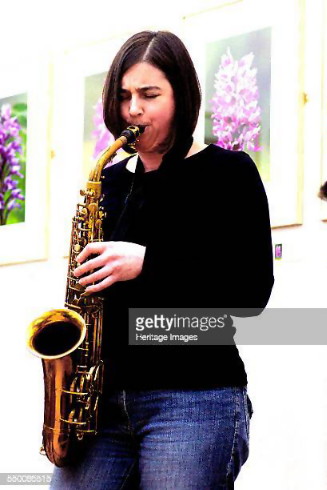
“In a Jazz Journal interview with Bruce Lindsay (April 2013) Allison Neale said that she managed to operate under the radar without courting publicity. That said her understated, west-coast cool approach has been impressing local aficionados now for a number of years. I first heard her when Trudy Kerr sent me a copy of her 2018 Take Five CD which is a tribute to Paul Desmond (jazzizit jitcd1880). Allison’s lyrical, well crafted lines owe something to the Desmond playbook which is hardly surprising as she readily acknowledges the profound influence of Brubeck’s long time associate. Art Pepper too is very important to her and there are also hints of Bud Shank, Ronnie Lang and Gary Foster apparent in her work. Talking about Allison’s performances on the CD Trudy Kerr told me, “She has her own unique style and adapted beautifully to the arrangements. I hope to get more opportunities to work with her in the future.” Due to problems with Paul Desmond's estate the CD is not available commercially. It can be ordered from trudyannkerr@me.com.


Seattle is known as the Emerald City of the Pacific Northwest and that is where Allison Neale was born in July 1969, just as Neil Armstrong and Buzz Aldrin were making history with the very first moon landing. Her father, who was an aeronautics engineer, had been recruited from England by Boeing to work on their 747. From an early age she was exposed to his large jazz collection which included albums by Stan Getz, Wes Montgomery, Zoot Sims, Art Pepper and many others. “I grew up listening to the music, absorbing it and eventually wanting to play it. I was obsessed with Getz and I still listen to his early Roost recordings with Horace Silver, the Interpretations album with Bob Brookmeyer and The Steamer. I love Montgomery’s playing too which I find completely euphoric. His Movin’ Along is one of my favourites of all time”. Other recordings regularly on her play-list were Art Pepper Meets The Rhythm Section, Dave Brubeck’s Jazz At Oberlin and Eric Dolphy’s Last Date. “Pepper never stopped searching and that’s the bench-mark really.  Paul Desmond’s creativity and musicality is at its peak on Oberlin and I was fascinated by Dolphy’s playing. I also have his biography. I listened to everybody really, especially Sonny Rollins who is a unique, free genius”.   


After her family returned to the UK she began classical training on the flute but from a jazz perspective she is really self-taught –“I began by playing along to my dad’s records using my ear to find what worked best.” Chet Baker, another of Allison’s favourites, was an ‘ear’ player too prompting Gerry Mulligan to observe that Chet knew everything about chords except their names. A very partial list of ‘ear’ players would also include Zoot Sims and Art Pepper. “I love Bobby Jaspar, Frank Wess and James Moody who I saw at Ronnie’s but the flute is more of a doubling instrument. I was about fifteen when I decided to take up the alto because I felt an affinity with it. It’s easier to get an individual sound on the saxophone compared to the flute, possibly because you put the mouthpiece in your mouth making it more of an extension of your voice.


“I did a little playing with my brother Richard who later toured for a while on guitar with Sting and then I auditioned for the Midland Youth Jazz Orchestra when I was about sixteen or so”. They did concerts with Lanny Morgan in 1993 and Bobby Shew in 1997 both of which have been recorded. “Lanny had been with Bob Florence so we did a lot of Bob’s amazing charts as well as some of Rob McConnell’s music. He was very good to me. He was encouraging and quite inspiring because he could hear what I was trying to do when we played together. Bobby Shew was great too.” At the same time she was recommended to Bill Ashton for the National Youth Jazz Orchestra, often appearing with the band at Ronnie Scott’s. Allison studied at De Montfort University achieving a degree in the Performing Arts and later at the Guildhall School of Music where she attained a post graduate diploma in Jazz and Studio Music. 


These big-band experiences were useful but Allison really wanted to concentrate on performing with a small group - ideally in a quartet with a guitar in the rhythm section which she feels gives her more freedom than a piano would. Rather like Paul Desmond who often performed with Jim Hall and then Ed Bickert, Allison has successfully collaborated with Peter Bernstein and especially Dave Cliff over the years. Cliff was often the go-to-guitarist for Lee Konitz and Warne Marsh during their tours in the UK and elsewhere in Europe. He had studied with Peter Ind who describes him in his Jazz Visions -  Lennie Tristano And His Legacy as someone “who has quietly developed a reputation as a sensitive improviser and accompanist”. Allison recently told me, “Playing and recording with Dave was a very special experience. The feeling of playing alongside him was like putting on a matching pair of gloves – the perfect fit. I and many others regard Dave as our greatest UK guitarist. He is a unique voice in the music so to have spent so many years playing with him was very seminal for me”.


Allison often worked at Ronnie Scott’s, the 606 Club and the Pizza Express where she frequently sat-in with Scott Hamilton over the years. They also worked together at the Concorde Club –“I’m a huge admirer of Scott”. Her first recording as a leader Melody Express took place in 2002 (33jazz103). Accompanied by Dave Cliff, Simon Thorpe (bass) and Matt Skelton (drums) it is a melodic homage to the songbook repertoire featuring Nancy, I Wish I Knew, Stardust, Imagination, How About You and I’ll Never Smile Again. They are all perfect vehicles for her highly stylized lyrical conception. Mark Crooks once told me that repertoire like this “offered a hundred lifetimes of material to explore” and Allison’s subtle performances show why musicians constantly return to these classic harmonies for inspiration. She also includes Gigi Gryce’s Melody Express and Yvette which had been introduced by Stan Getz in 1951. Dave Gelly included this album in his Top Ten Records of the Year in the Guardian.


Her 2013 I Wished On The Moon CD is another example of perfect song selection (Trio Records TR593). In her sleeve-note Allison says her collaboration with her friend vibraharpist Nathaniel Steele here “is one of complete accord”. This is clearly apparent on Art Pepper’s Chili Pepper, a Tea For Two, contrafact and 317 East 32nd. Street, a Manhattan loft address where Lennie Tristano did most of his teaching. It is based on Out Of Nowhere. It’s good to hear numbers like So In Love, How Little We Know and especially Bobby Troup’s lovely You’re Looking At Me which Nat ‘King’ Cole introduced way back in 1949. He revisited it again on his famous After Midnight Sessions in 1956 with Harry Edison and Willie Smith among others. It’s something of a neglected gem and the group achieve a relaxed groove here benefitting from some locked-hands pianism from Leon Greening. Allison and Nathaniel worked together for a while and the billing at jazz clubs was Neale Meets Steele.


In 2014 she began working with multi-instrumentalist Chris Biscoe in a piano-less quartet exploring the repertoire introduced by Gerry Mulligan and Paul Desmond on their Blues In Time (1957) and Two of a Mind (1963) albums. Chris is heard exclusively on baritone displaying a warm Jeruvian sound on their 2015 CD Then And Now (Trio Records TR 597). His originals Then And Now and Rest Easy based on What’s New and Star Eyes show him to be a composer of note. The inspired interplay throughout between alto and baritone reveals an impressive grasp of counterpoint, a musical form that is largely overlooked these days.


From 2016 along with Nathaniel Steele she organised BopFest at the London Jazz Festival “to showcase and celebrate the talents of our mutual friends and colleagues from our own particular corner of the scene. People like Leon Greening, Steve and Matt Fishwick, Colin Oxley, Mark Crooks and many others. One year the baritone player Richard Shepherd helped me revisit the Birth of the Cool arrangements with Steve Fishwick on trumpet. We used the same instrumentation that Miles Davis did including the french horn and tuba. Another year we recreated the Art Pepper + Eleven charts with Robert Fowler on tenor and clarinet. We also invited Grant Stewart from New York to play with us and just before the pandemic we had Johnny Griffin’s pianist Michael Weiss which was great”.


Her Quietly There CD was released in 2020 on the Ubuntu label (UBU0062) with Peter Bernstein (guitar), Dave Green (bass) and Steve Brown (drums). Once again she concentrates on quality standards together with two jazz originals which had been introduced by Stan Getz. Split Kick based on There Will Never Be Another You came from a 1951 date he did with the composer Horace Silver. He recorded the tricky Tristano-like Motion by Jimmy Raney in 1953. Alto and guitar create an attractive Lee Konitz-Billy Bauer vibe on the theme, leading to a solo sequence which almost reluctantly reveals itself to be a contrafact of You Stepped Out Of A Dream. 


Going forward Allison Neale will continue to work with Chris Biscoe in their piano-less group which they call Two Of A Mind. Her main focus though will be her new piano-based quartet featuring Alex Bryson (piano), Jeremy Brown (bass) and Matt Fishwick (drums) which she hopes to record on the HardBop label in the near future.


Thursday, December 22, 2022

An Interview with Alan Broadbent by Gordon Jack [From the Archives]

 © -Steven Cerra, copyright protected; all rights reserved.


As many of you know, Gordon Jack is a frequent contributor to the Jazz Journal and a very generous friend to these pages in his allowance of JazzProfiles postings of his excellent writings. He is the author of Fifties Jazz Talk An Oral Retrospective and he developed the Gerry Mulligan discography in Raymond Horricks’ book Gerry Mulligan’s Ark.

The following article was first published in Jazz Journal November 2013.

For more information and subscriptions please visit www.jazzjournal.co.uk
                                         
© -  Gordon Jack/JazzJournal; copyright protected, all rights reserved., used with permission.

“Two time Grammy Award winner Alan Broadbent is a sophisticated interpreter of the Great American Songbook. The Los Angeles Times has called him, ‘One of the greatest living jazz pianists’ and if his Live At Giannelli Square (Volume 1) had been reviewed in Jazz Journal I would have voted for it as one of the CDs of the year. His imaginative approach to Solar from the album received a Grammy nomination for Best Improvised Solo and among other gems there is a dramatic re-examination of Embraceable You which he calls You and You Alone.

We met in April 2012 after his performance at that fine venue the Watermill Jazz Club in Dorking, Surrey which included an informative question and answer session with a large and appreciative audience.

“I studied classical piano at the Royal Trinity College of Music in Auckland, New Zealand and the first jazz concert I attended was in 1961 when I was fourteen. Dave Brubeck’s quartet was in town and I remember being really impressed with Paul Desmond on Tangerine. Of course I bought Time Out and I also went to see the film All Night Long because Dave was in it. He played It’s A Raggy Waltz and in one of the scenes he wore a trench-coat, so I went out and bought one too and wore it to all my gigs. I started to explore some serious stuff- not that Dave isn’t serious – but I discovered Bud Powell, Wynton Kelly, Red Garland, Bird and all the horn players. Then I heard Lennie’s solo album (The New Tristano) which just blew me away – I loved that music and really studied it which is why I wanted to have lessons with him a few years later.

“I sent an acetate of my recording of Speak Low to Downbeat magazine which is how I won a scholarship to Berklee School of Music for one semester in 1966. I was there until 1969 paying my way after that first semester by working six nights a week in a local club. Charlie Mariano was at the school and he was one of my favourite teachers - he was a great guy. At the time he was into that raga thing and he would sit on the carpet playing his soprano in a small group we had together. Other faculty members were Herb Pomeroy and Ray Santisi.” (A good example of Pomeroy and Santisi’s work as performers can be found on Serge Chaloff’s Boston Blow-Up which also features Boots Mussulli – GJ.)

“The local club in Boston was the Jazz Workshop and being students we could get in for a couple of dollars. I heard all kinds of people there like Bill Evans and Miles and one night Lenny Popkin, a young tenor player sat in with Lee Konitz. I approached Lenny and asked him if I could study with him because Lee had introduced him as a Tristano student. We hit it off and started playing together and it came to a point where he said I should call Tristano. He didn’t seem particularly interested because I was not available for lessons on the days that were convenient to him. Lenny Popkin then contacted Tristano on my behalf and arranged for me to have an audition on a Monday at his home in Flushing, Long Island. He had a little grand piano in his kitchen and he walked around while I played. He was a lovely man and he became a father-figure to me but I was never one of the Tristano-ites – I was more interested in finding my own way.
 
“I was 19 when I started with him, fresh off the boat and I used to talk to him about the difficulties I was having and he was very sympathetic to me. Some of his students would come up to Boston to see me at my hotel gig which was around the corner from the Jazz Workshop. I was going to Berklee during the day and I worked there every night with George Mraz and Jeff Brillinger. The Tristano-ites wanted to sit in but I was expected to do the ‘hotel’ thing of playing bossa novas and stuff like that so they were pretty disdainful of the material. I remember telling Lennie about how inadequate I felt about their reaction and he said, ‘What the fuck do you care about what they think.’

“Lennie liked his students to practice all the scales with different fingers on the keyboard because when you are improvising, you don’t always know what finger is needed at what time. He also wanted his students to learn famous recorded solos like Lady be Good by Lester Young with Basie in 1936. Initially you had to sing it, paying attention to the vibrato and articulation he used and the way Lester bent a phrase. Then you had to reproduce it on the piano. Somehow it became internalised because that type of concentration opened up your ears and your heart in a linear fashion, whereas pianists tend to think mostly in chords. That was something Nat Cole achieved and Bud too, on his good days.

“One of the best times I had with him was just before I went with Woody Herman although Lennie wasn’t happy about that at all. He took me up to his attic where he had a recording studio with a beautiful Steinway and laying on his couch he said, ‘Play for me’. That was my last lesson playing for an hour while he chuckled and applauded – he was right with me all the time.

“Woody Herman must have been looking for a pianist because Jake Hanna and Nat Pierce had been to Berklee asking around and Herb Pomeroy told them to go and listen to me. School was finishing and I needed a gig so I joined the band. Lennie tried to talk me out of it but I didn’t really have a choice because I would have been thrown out of the country. Woody and his manager Hermie Dressel who had taken over from Abe Turchen sponsored me in getting a Green Card.

“I immediately went out and bought the latest Herman album (Light My Fire) which was very appealing to me but we didn’t play that sort of material on gigs.” (The band played officer’s clubs, country clubs and Elks clubs and as Alan told Gene Lees, ‘My first gig was at an army base in Greensboro, North Carolina… and I was appalled. The drummer was turning the time around and some of the soloists were very weak. Steve Lederer who played second tenor with Woody said, ‘You’ve heard of the Thundering Herd? Well this is the worst you ever heard’ – GJ).

“Sal Nistico wasn’t in the band initially but he came in and out from time to time - he was a great guy and we got along really well. Woody always pigeon-holed him into the extreme up tempo things but every once and a while he would throw him a ballad which Sal loved to play.

“After about six months Tony Klatka, Bill Stapleton and I decided to arrange some Blood Sweat & Tears material which was easily adaptable for the band. One BST chart I did was Smiling Phases and the kids went crazy when we played it because it was the popular music of the time.” (Klatka also did a chart on Proud Mary which had been a big hit for Creedence Clearwater Revival - GJ).

“In 1971 the band recorded an album almost totally devoted to my charts (Brand New Woody) and soon after that I was voted The Talent Deserving of Wider Recognition in Downbeat magazine, which of course didn’t make any difference to my career at all.” (Summing up his time with Herman, Alan told writer Scott Yanow, ‘I loved being part of his band although everything I had learned at Berklee went down the drain because it just didn’t work with Woody’ – GJ).

“I left the band in 1972. I just got off the bus in L.A. because it seemed to be an easy thing to do. I had friends there and I had some fantasy about getting into the film industry. I met Don Ferrara around that time who was teaching at Gary Foster’s studio and also Putter Smith who was introduced to me by Nick Ceroli. I’ve been going out to Putter’s place every week-end for about 30 years to play. He now divides his time between New York and Los Angeles and I will be seeing him in a couple of weeks.

“One of the people who was very kind to me when I first arrived in L.A. was JJ Johnson and I perform his Lament on my ‘Round Midnight CD as a tribute to his memory.

Around 1974 I got together with Irene Kral and we worked together until she died in 1978.

“In 1976 I recorded with Don Menza and Frank Rosolino who was a wonderful guy and we really hit it off. He was one of the greatest trombone players who ever lived but he was playing third trombone in the pit in Las Vegas. Supersax sometimes used him but Conte Candoli got most of their work and anyway you’re talking about $35.00 at Donte’s playing your heart out all night. It’s been that way and always will - even in New York City there’s no money. Somehow we all have to figure out how to make sense of the jazz life.

“I worked quite a bit with Jack Sheldon who was hilarious. He could tell the same joke every night and I would just fall apart.” (One of his regular opening lines on a club booking was, ‘It’s so long since I had sex, I can’t remember who gets tied up!’ He also just happened to be one of the all-time greats as a trumpet and vocal soloist - GJ.)

“I worked a lot with Charlie Haden’s Quartet West over the years and one of our CDs has my string arrangement of Tristano’s Requiem which turned out very well. We were on the soundtrack for Clint Eastwood’s movie Midnight in the Garden of Good and Evil accompanying Alison Krauss who is a real darling.” (She is also a superlative singer and fiddle player in the Bluegrass and Country field with Union Station – GJ). “Clint of course was a friend of Jack Sheldon’s and I remember he once flew Jack and I in his private plane from a golf tournament because Jack had a gig in L.A.

“Charlie, Billy Higgins and I did a one-nighter with Chet Baker at a club called Hop Singh’s in the late ‘80s and it was very special. There were only four people in the audience and one of them was my wife. He was the real thing - playing and singing beautifully. I remember that I was feeling good and each phrase I played I could hear Chet sitting behind listening intently saying, ‘Yeah, man’ and being very encouraging. I was in heaven but he disappeared into the bathroom after the first set and never came out again.

“In 1992 I recorded with Scott Hamilton and strings which is a favourite album of mine. He doesn’t read but we just had to play the arrangement through once for him and he got it - he can go directly to his heart because the notes aren’t in the way.” (In 1998 Alan was part of the small group along with Pete Christlieb and Larry Bunker accompanying Diana Krall on her fifth album – When I Look Into Your Eyes which Billboard nominated as one of the top ten jazz albums of that decade – GJ). “I saw Pete recently and he is thinking of packing everything up and moving to Portland. All the studio work he used to do doesn’t exist anymore and there are just no gigs.

“I’ve already mentioned some influences but I must include Nat Cole who was the bridge between the ornamental approach of Teddy Wilson and Art Tatum to the horn-like, single line bebop style that Bud Powell introduced. The rhythm is in the line itself and not in the left hand. Arrangers who are important to me would include Johnny Mandel, Gil Evans, Bob Brookmeyer and Bill Holman.

“As far as free jazz is concerned it can be fine if it is handled by musicians who are aware of form and musical development.  I don’t like meandering music but when Tristano did it with Warne and Lee it was something pretty special. I’m not familiar with much of Ornette Coleman’s music but he is a real composer. His tunes are not just off the cuff dilettante stuff – they’re really musical so I have to respect that.” (At the Watermill Alan performed a well received version of Coleman’s Lonely Woman – GJ). “I listen to a lot of contemporary orchestral composers like John Adams and Elliott Carter - I would rather listen to them because I know there’s an intelligent structure.

“My wife and I had been living in Santa Monica for the past 30 years but we decided to move to New York last year. We have a twelve year old son and he is at that point where he is either going to become a boy-surfer or we can give him some New York culture. When I get back to the States I have one gig booked out in Pennsylvania with Putter Smith but I do have some writing work on hold. I get a joy out of the sound of an orchestra as long as I am given reasonable leeway for how I want to do it”.

Jazz Times has called Alan Broadbent, ‘One of the major keyboard figures today’ but despite being nominated for seven Grammy Awards since 1975 he once told writer Graham Reid, “This is the only profession I know where you can be internationally famous and broke!”

SELECTED DISCOGRAPHY

As Leader

Another Time (Trend TRCD-546)

Away From You (Trend TRCD-558)

Live At Maybeck Recital Hall Vol.14 (Concord Jazz  CCD4488)

‘Round Midnight (Artistry Art 7005)

Every Time I Think Of You (Artistry Art 7011)

Live At Giannelli Square Vol. 1 (Chilly Bin Records 35231 82422)

As Sideman

Woody Herman: Brand New (OJCCD 1044-2)

Irene Kral: Where Is Love (Choice CHCD 71012)

Bob Brookmeyer: Olso (Concord Jazz CCD 4312)

Charlie Haden: Quartet West (Verve 831673-2)

Scott Hamilton: With Strings (Concord Jazz CCD-4538-2)

Diana Krall: When I Look Into Your Eyes (GRP 304)