© -Steven Cerra, copyright protected; all rights reserved.
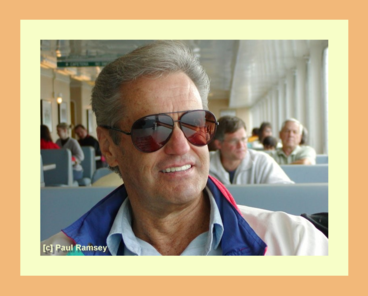
Doug Ramsey was the very first who volunteered to take the time to answer my questions so that I might prepare them as a formal interview for my readers. Once my blog was up-and-running, he would give me a plug on his own blog - Rifftides - if I was running something on my page that interested him.
When I called to thank him, he couldn't say enough nice things about my efforts. Needless to say, given the source, such encouragement meant the world to me.
Doug died in his sleep on May 19th at the age of 91.
I am reposting this interview in memoriam.
Douglas Arthur Ramsey 1934-2026 - Semper Fi, Marine.
I’ll try to keep this introduction brief so that my mumblings don’t detract too much from what follows.
Peter Keepnews succinctly stated: “Those of us who have tried writing about Jazz know what a daunting challenge it can be to do it well. Expressing an opinion about a given musician or recording is easy; explaining what exactly it is that makes that musician or recording worth caring about is not.”
Doug Ramsey has been brilliantly “explaining” the merits of the work of Jazz musicians and the qualities of Jazz recordings for over fifty years.
Doug’s writings about Jazz are so artfully done that opening an LP or a CD and finding that the descriptive notes have been written by him is the metaphoric equivalent of finding a real diamond at the bottom of a box of Crackerjacks.
Ray Avery once said of his colleague, William Claxton, that “some of us take photographs of Jazz musicians, but Bill is an artist.”
Those of us who write about Jazz feel the same way about Doug.
How and when did music first come into your life?
I don’t remember it’s not being in my life. The first that I recall making music was as part of a chorus in, I think, the second grade. I took piano lessons, without notable success, from age 10 to 12 or so
Did you play an instrument?
My next instrument, starting at 13, was the trumpet. To be more precise, it was a 12-dollar cornet that belonged to the junior high school band. Eventually, I saved enough from a paper route to buy a used Olds Special, an excellent horn that I still have but rarely play. Much later, Clark Terry got me a factory deal on a CT model Olds flugelhorn. For several years I’ve had the Bobby Shew Yamaha trumpet and the Shew model Yamaha flugelhorn. Lessons with Bobby during my L.A. years were invaluable. I’ve never stopped playing, despite many requests. The black and white picture shows me sitting in illegally at a club called the Crown Bar in the late 1950s when I was in the Marine Corps, stationed in Iwakuni, Japan.

The tenor player in the striped shirt is Sergeant Paul Elizondo, who went on to lead a big band famous in San Antonio, Texas, and become a popular Bexar County commissioner. The drummer was a corporal named, I think, Sears. The pianist and bassist had the gig at the club. Although the base at Iwakuni was headquarters of the First Marine Air Wing, my commanding officer was an Air Force colonel 450 miles north at Far East Network headquarters in Tokyo, an ideal arrangement. My job was to run the Iwakuni radio station of FEN, staffed by Marine, Army and Air Force enlisted men and a handful of Japanese civilian employees.
The commander of the air wing was Lt. General Carson Abel Roberts.
One night when I was sitting in legally at the officers club on base, General Roberts introduced himself as a fellow player who as a youngster had known Bix Beiderbecke. On that thread, an unlikely friendship developed between the war hero three-star general and the greenish first lieutenant. If I had been under his command, that would have been unlikely. We were on a first-name basis; he called me Doug and I called him General. Sitting-in in town couldn’t have been too serious a violation of regulations; one night, General Roberts showed up at the Crown with his cornet and asked if he could play “Green Eyes,” which he did—a bit shakily but with the right changes.

It is my good fortune that there are outstanding musicians in my current hometown, Yakima, Washington, who allow me to play with them. We actually had a paying gig not long ago. Fifty bucks apiece. The way things are going, I know a few guys in L.A. and New York who would jump at that. World-class players come here frequently to play at The Seasons Performance Hall. A couple of Seasons Fall Festivals ago, Marvin Stamm invited me to play a duet with him. Actually, he informed me that I would play a duet with him. Bill Mays wrote a splendid arrangement of Freddie Hubbard’s “Up Jumped Spring” for trumpet, flugelhorn, violin, two cellos and rhythm section (Mays, Martin Wind and Matt Jorgensen). It was fun. No one in the audience threw anything.
What are your earliest recollections of jazz?
My parents’ small collection of 78s was a mish-mash that included, among other things, records by Frankie Carle, the Andrews Sisters, Rafael Mendez, Eddy Arnold and Louis Armstrong. They had a record changer hooked up to the big Philco console radio in the living room. I played Mendez’s “La Virgen de la Macarena” a lot and wore Armstrong’s “Mahogany Hall Stomp” practically white. I’m not sure that I knew what Armstrong did was called jazz. I was perhaps 10 years old.
Many conversations about jazz invariably turn to “impressions” and “favorites.” Why do you think this is the case?
As for favorites, most non-musicians and casual listeners develop them early on and maintain them as their standard for the rest of their lives. Here’s how Woody Herman put it when we talked following a dance job in San Antonio in 1974:
“Most of them stop listening as soon as they leave high school. That’s their last really firm connection with music. In that period of their lives, it’s all-important, and from the time of their first responsibility on, it becomes background to everything else, which is very natural and correct, I guess. But then they still want to tell me how the band isn’t making it now and it was so great then. And that really aggravates me. It’s about the only thing that does.”
One customer had asked that night for “Johnson Rag.” Another said to Woody, “Don’t you have any Russ Morgan pieces?”
“And they get some very terse replies,” Woody said, “like ‘No’ or ‘He quit the business’ or ‘I’ll play that when I get to the big band in the sky.’ It becomes a kind of standup routine. Certainly anyone has a right to ask for anything, but I can’t for the life of me think why I have to do those tunes.”
The quotes are from the Herman chapter in my book Jazz Matters: Reflections on the Music and Some of its Makers.
Okay, so let’s turn to “impressions; who were the jazz musicians who first impressed you and why?”

Armstrong, of course. The next jazz player I’m conscious of admiring was Muggsy Spanier. He led in a curious way to Charlie Parker. When I was 15 or so, I was in a booth at Belmont Radio & Music in my hometown, Wenatchee, Washington, the Apple Capitol of the World and the Buckle of the Power Belt of the Northwest, listening to Spanier’s Commodore recording of “Sugar.” The son of the store’s owner was the tenor saxophonist Don Lanphere, who not long before had recorded “Stop,” “Go” and those other Prestige 78s with Fats Navarro, Al Haig, Tommy Potter and Max Roach. Don was home for a while, getting well and helping his dad. He opened the door, handed me a record with a yellow label and said, “Here, listen to this.” It was Parker on Dial; “Yardbird Suite” on one side, “Moose the Mooche” on the other. That introduction by Don affected my listening habits, expanded my horizons. At about the same time, I worked up the courage to introduce myself to the pianist Jack Brownlow, Wenatchee’s other great jazz musician, who helped Lanphere develop. I had heard him at high school dances and could sense, even in that context, that he was something special. He asked if I was a musician and invited me to his house to play. It was a disaster. I knew nothing about improvising and proved it. Still, he took me on, gave me ear training, played me recordings of all the right people and explained what they were doing. Among other revelations, he made me aware that Nat Cole was a great pianist—and why. Those listening lessons went beyond jazz. At Jack’s house I first heard Stravinsky, Villa Lobos and Shostakovich. One indelible evening at Lanphere’s, Don introduced me to the Boston Symphony/Charles Munch recording of Ravel’s “Daphnis and Chloe.” I could go on and on about what I owe Jack and Don. They developed the musical portion of my brain.

Staying with your impressions for a while, what comes to mind when I mention the following jazz musicians?
Louis Armstrong.
I’ve been listening to him for more than six decades. I’m hearing new things and rediscovering things that astound me. I recently put up on Rifftides his “Summertime” from the Porgy and Bess album with Ella Fitzgerald. His expression of the melody of that song is an apotheosis of pure music. His introduction to “West End Blues,” which I have heard 4,372 times, still devastates me. When Dizzy said, “No him, no me,” he wasn’t kidding. I’ll take it further; no Armstrong, no jazz as we know it.
Du Duke Ellington
A A magician. An alchemist. There’s a story that some of the most gifted Hollywood film composers were asked to listen to several complex pieces of music and analyze the chords. They nailed them, down to the last e-minor half-diminished 13th with a 9th on top (I made that up). There was an exception, the Ellington example. These composers with ears like sonar could not agree on what the harmonies were made of. Duke kept his band together through low-key leadership and management that are studied in business schools, and—no small matter—through the proceeds of his song royalties. With the indispensable help of Billy Strayhorn, he made his orchestra and its members extensions of himself. They, in turn, helped to shape him. It is not possible to imagine outside the crucible of Ellington’s band, for example, the Johnny Hodges everyone knows, or Ellington without the inspiration and challenge of writing for his great individualists, Hodges, Cootie Williams, Ben Webster, Harry Carney, Rex Stewart, Paul Gonsalves and all the others.
Dizzy Gillespie
Bird called him “the other half of my heartbeat,” but to a large extent Dizzy was also the brain of the bebop movement. For him, teaching was a calling. James Moody, Jimmy Heath, Ray Brown, Mike Longo and countless others have recounted Dizzy’s patiently giving them insights into harmonies and structures central to the music. On the heart side of the equation, he was the embodiment of rhythm in all of its power, simplicity and complexity. He recognized the catalytic importance of Chano Pozo, and Afro-Cuban jazz became a part of the jazz mainstream. Let’s see, there must be something else. Oh, yes, he was the most gifted and influential trumpet soloist of his generation and a few generations since. No him, no Fats Navarro, Kenny Dorham, Conte Candoli, Miles Davis, Art Farmer, Idrees Sulieman, Lee Morgan, Freddie Hubbard, Brian Lynch, Ryan Kisor. Feel free to complete the list. It may take a while. When you have time, listen to his solo on “Night in Tunisia” (RCA Victor, 1946). All of those guys did.
In 1962, I was working at KYW-TV in Cleveland, before those call letters moved to Philadelphia. Dizzy was the guest host for a week on The Mike Douglas Show, which was produced at KYW. He had the quintet with Moody, the 19-year-old Kenny Barron, Chris White and Rudy Collins. On the show, they played “Chega de Saudade,” the first time I had heard a bossa nova played with that intensity. They were playing that week at the Theatrical Restaurant downtown on Short Mary (I love that street name; had to work it in.) One night after the gig, Dizzy and I got to talking and he invited me to his hotel room to continue the conversation. We shared a bottle of red wine, had a serious discussion about music, acted silly and developed a warm acquaintance that lasted until he died.
Stan Kenton
He had a great ear for emergent talent among players and arrangers and a dedication to massive sound. The two qualities often conflicted but, as in the Contemporary Concepts period, at their best his bands produced stimulating music of great importance. Kenton was a better pianist than he is generally given credit for, and some of his arrangements from the 1940s and 50s are superb.
Shorty Rogers
He was a brilliant arranger and composer who synthesized the spirit of the big band era and the innovations of the Birth of the Cool band into a highly personal style. Those early 1950s Giants recordings with Art Pepper, Hampton Hawes, Shelly Manne and all hold up as well as anything from the period, regardless of coastal origin. His work on the East Coast-West Coast Scene album he shared with Al Cohn, particularly “Elaine’s Lullaby,” is masterly. Rogers’ trumpet and flugelhorn playing was idiosyncratic, beguiling. His Atlantic and Pacific Jazz quintet albums are classics. “Martians Go Home” should have won a special award for economy and humor in the use of “Rhythm” changes.
Gerry Mulligan
His writing made the Kenton band swing regardless of its leader’s inclination. His charts for his own big band were brilliant, but he stretched himself so thin that he didn’t do enough writing for it. His pianoless quartet had a brief existence but is inspiring musicians more than half a century later. Mulligan was the baritone saxophonist who could sit in—and fit in—with anyone. His sextet with Bob Brookmeyer, Art Farmer, Jim Hall and Bill Crow was a great band, and Night Lights is a masterpiece. He was restless in his curiosity and search for knowledge. He was a stimulating dinner companion. I miss him a great deal.
Horace Silver
I’ll refer to what I wrote not long ago on Rifftides about putting on the Horace Silver and the Jazz Messengers album as background music to begin the day.
I chose it because I wanted something that had solos I could sing, hum and whistle along with as I fixed breakfast. Every note of Horace Silver’s second Blue Note album, the first by the Jazz Messengers, has been embedded in my brain since shortly after it was released in 1955. My record collection then consisted of 10 or 12 LPs. This was one of them. I played it so often that Silver’s, Kenny Dorham’s and Hank Mobley’s solos and Art Blakey’s drum choruses became part of my mind’s musical furniture. Silver, Blakey and bassist Doug Watkins comprised a rhythm section that was the standard for what came to be called, for better or for worse, hard bop. Dorham and Mobley, with their deep knowledge of chord-based improvisation, constructed some of their most memorable solos. Silver’s compositions—and one by Mobley—are classics.
Horace’s own bands that followed—with Art Farmer, Clifford Jordan, Blue Mitchell, Junior Cook, Joe Henderson, the Brecker Brothers and Ryan Kisor, among others—comprise an important chapter in the history of the music. I am sorry to hear that he has been ailing.
Miles Davis-Gil Evans collaborations
Recently I contributed an historical essay to Bob Belden’s pending Miles Español project (http://vimeo.com/14698280). Working on it brought home again that the pervasive influence of the Davis-Evans Sketches of Spain has reached virtually all precincts of music, as Belden’s video and CD show. From his arrangements for the Birth of the Cool band through Miles Ahead, Porgy and Bess, Sketches of Spain and Quiet Nights, Gil’s understanding of Miles’ temperament, inclinations and leanings made it a perfect partnership. I wish that it had lasted longer, but what they gave us will endure.
Mel Tormé
A great singer. He sometimes went overboard in the melisma department, but his intonation, swing, diction and lyric interpretation were flawless. His collaborations with the Marty Paich Dek-tette, particularly Mel Torme Swings Shubert Alley, and his duets with George Shearing belong in the vocal hall of fame. Is there a vocal hall of fame?
Maria Schneider
She learned—absorbed—from Gil Evans and Bob Brookmeyer and developed a recognizable style. Now, she herself is an influence. Like most category-based criticism, assessments that she has gone beyond or outside jazz are meaningless. Forget labels; she writes wonderful music. If you’ve ever watched her work in front of her big band, you know that she is an inspiring leader. Sky Blue was terrific. I look forward to her next album.
What made you decide to become a jazz writer?
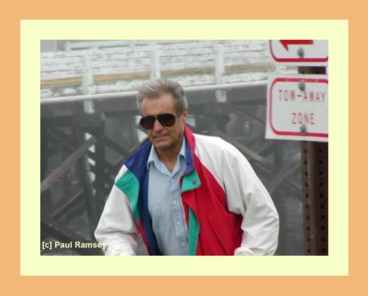
I’m not sure that I decided. It happened. In the eighth grade, a teacher told me that I should be a reporter. I considered law and architecture, but ultimately majored in journalism. The junior year at the University of Washington School of Journalism was total immersion in the newspaper process. We put out a daily paper. Music was one of the beats the editors handed me. I wrote frequently about jazz. I’ve never stopped, although three years in the Marine Corps slowed my output. My career has been in newspapers, broadcast news as an anchor, correspondent and news director; then as an educator of professional journalists. I have had a parallel career or sub-career as a writer about jazz and free press issues and as a novelist; one novel so far.
Is there a form of writing about jazz that you prefer: insert notes, articles, books …?
No.
If you could write a next book about jazz on any subject, what or who would be the focus of such a book?
I’m working on a book that will be, essentially, a collection of liner notes, which, done right, is a form of journalism. I’ve written a few hundred sets of notes. Some of them hold up.
You’ve accomplished many wonderful things in your life both personally and professionally. Why is it that jazz has continued to play a role in your life?
Because it goes to the core of what I value: individuality, freedom of expression, human interaction, beauty.
Switching to the subject of “favorites:”
Why must we have favorites? Why not evaluate every book, film, composition, solo, or painting on its merits, without ranking it? For that matter, why must we have favorite musicians, actors or newscasters? (Gene Lees ‘ unisex term for them was “anchorthings.” Boy, do I miss him). That thought leads to popularity contests or, as the magazines call them, readers polls and critics polls. If publicity about winning poll results in more work, record sales and income for deserving musicians, perhaps polls are worth something, but I don’t trust them much; I get too many e-mail messages from musicians and their publicists pleading for votes. I have voted in many critics polls, but I’ve become increasingly skeptical of them.
I’ve come to dislike the very word “favorite,” but I can’t come up with a suitable synonym.
What are some of your favorites books about jazz?
There you go again. All of Whitney Balliett’s books, all of Martin Williams’, Gene Lees’ and Nat Hentoff’s. Gunther Schuller’s Early Jazz and The Swing Era. I’ve been waiting for years—make that decades—to Schuller’s book on bebop. Both of Louis Armstrong’s autobiographies. Dan Morgenstern, Ira Gitler, Gary Giddins, Andre Hodeir, Ted Gioia, Stanley Dance, Joachim Berendt, Francis Davis, Albert Murray, Larry Kart, Royal Stokes, Stafford Chamberlain, Jeroen de Valk, Ashley Kahn, Bill Crow’s books of anecdotes, Mike Zwerin. Wait a minute, this is a trap, you know. Sure as the devil, I’m leaving out 10 or 15 valuable writers about jazz.
What are some of your favorite jazz recordings?
Talk about traps! I’ll name 10, with the understanding that I could name 50 or 100. If you asked me tomorrow, it could be 10 others. Not in rank order:
Bill Evans: Portrait in Jazz
Duke Ellington: And His Mother Called Him Bill
Louis Armstrong: The Hot Fives and Hot Sevens
John Coltrane: Blue Trane
Dave Brubeck Quartet: Jazz at College of the Pacific, Vol. 2
The Sarah Vaughan 1950 Columbia’s with George Treadwell and his All Stars: Miles Davis, Benny Green, Budd Johnson, Tony Scott, Jimmy Jones, Freddie Green (or Mundell Lowe) and Billy Taylor.
The Curtis Counce Quintet albums on Contemporary, with Harold Land, Jack Sheldon, Carl Perkins and Frank Butler
“Flamingo” from Charles Mingus’s Tijuana Moods, with its perfect Clarence Shaw trumpet solo
Chick Corea, Now He Speaks, Now He Sobs
Ravel, Daphnis and Chloe (Munch, Boston Symphony)
You’ll notice that there is nothing recent on that list. Maybe it takes favorites a few years to develop.
Who are your favorite big band arrangers?
(Not in order) Eddie Sauter, Fletcher Henderson, Bill Holman, Duke Ellington, Billy Strayhorn, Gil Evans, Mike Abene, Jim Knapp, Frank Foster, Bob Brookmeyer, Darcy James Argue, Don Redman, Duke Pearson, Gerry Mulligan, Maria Schneider, Benny Carter, Ralph Burns, Slide Hampton, Bill Kirchner, Quincy Jones, Johnny Mandel, Sy Oliver, Gerald Wilson, Melba Liston, Neil Hefti, Oliver Nelson. This could go on a while. May I stop now?
Who are your favorite Jazz vocalists?
Louis Armstrong, Sarah Vaughan, Billie Holiday, Anita O’Day, Carmen McRae, Jimmy Rushing, Helen Merrill, Nat Cole, Carol Sloane, Bill Henderson, Peggy Lee, Joe Williams, Ray Charles, Jack Teagarden, Teddi King, the young Ethel Waters, Mark Murphy, Meredith d’Ambrosio, Karrin Allyson, Fats Waller, Nancy Marano, Jeri Southern, Jimmy Rowles, Mildred Bailey, Chet Baker, Rebecca Kilgore, Johnny Hartman, Carol Fredette, John Pizzarelli, Nancy King, Daryl Sherman, Mel Tormé, Maxine Sullivan, Ray Nance, Blossom Dearie; Lambert, Hendricks and Ross. That’s the short list.
Who among current jazz musicians do you enjoy listening to?
An incomplete list: Ambrose Akinmusire, Bill Charlap, Steve Wilson, Kirk Knuffke, Bill Mays, Sonny Rollins, Diana Krall, Kenny Barron, Miguel Zenón, Jessica Williams, Wadada Leo Smith, Ed Partyka, Branford Marsalis-Joey Calderazzo duo, Gretchen Parlato, Matthew Shipp, Matt Wilson, J.D. Allen, Alexander String Quartet, Dubravka Tomsic and everybody on Bob Belden’s Miles Español project.
Of all your writings about jazz over the years, which ones are you most proud of?
Recently, the notes for the MJQ Mosaic box and that Miles Español piece, but overall, probably the Desmond biography and the non-jazz novel Poodie James, because so much of my blood, sweat and being went into them.

What are you thoughts about blogs and websites devoted to jazz?
It is clear that there are no rules for blogging. My conviction is that the standards of accuracy, fairness, thoroughness and reliability that go into any responsible writing must apply to blogging. Opinion should be plainly identified as opinion, if only by context and usage. The medium offers wide possibilities for sound, photographs, video, even a certain degree of interactivity. Many jazz blogs just sit there looking like pages out of an academic journal or a thesis.
If you could host a fictional “jazz dinner,” who would you invite, and why?
Good conversationalists. Most jazz musicians are good conversationalists.
If you could put on an imaginary three-day jazz festival in Yakima, WA, how would you structure it and who would you invite to perform?
Fortunately for Yakima, it has The Seasons Performance Hall, which in addition to its regular schedule has a week-long festival in the fall. The festival has included James Moody, Jessica Williams, Bill Charlap, the Brubeck Brothers Quartet, Tom Harrell, Ernestine Anderson, Tierney Sutton, Marvin Stamm, Karrin Allyson, Jerry Gonzalez and the Fort Apache Band, Eric Alexander, David Fathead Newman and the Bill Mays Trio with Martin Wind and Matt Wilson. The Seasons Fall Festival also incorporates classical elements. Maintaining quality hasn’t been easy because of the economic morass we’re in, and in recent regular bookings The Seasons has resorted to lesser music in an attempt to pay the bills, a familiar story in the arts these days. As a pro bono adviser to this nonprofit hall, I advise them to hang in there and aim for the standard of quality implied in that list of names. As for structure, The Seasons Fall Festival has always been linear. It does not put artists in competition with one another, a la Montreal, New Orleans and other festivals that have morphed into huge parties. You wonder how much they have to do with music.
If you were asked to host a television show entitled – The Subject is Jazz – who would you like to interview on the first few episodes?
Sorry, Steve, Gilbert Seldes and WNBC-TV took that title half a century ago. We’ll have to choose another. How about The Steve Cerra Show? I would ask Sonny Rollins, George Wein, Branford Marsalis, Bill Mays, Dave Brubeck, Dee Dee Bridgewater, Miguel Zenón, Benny Golson, Marian McPartland, Cedar Walton, Gerald Clayton, Darcy James Argue and Matthew Shipp. That’s the first 13 weeks. Do you think we’ll be renewed?
What writing projects about jazz have you recently finished? Are there any that you are currently working on?
I put up a new Rifftides post this morning. I recently wrote the Mosaic MJQ notes just mentioned, and a lengthy historical analysis of the musical connections among Spain, Africa, the Caribbean and New Orleans for the Miles Español project. There is another jazz book in the works, but it has a long way to go. A second novel that I started some time ago keeps calling to me from the depths of the computer, where it has been imprisoned.
You have done a lot of writing over the years on the subject of jazz. Have you given any thought to “collecting” these and leaving them with a college or university library for future reference?
Jazz Matters: Reflections on the Music and Some of its Makers is a collection. So, more or less, is the next book. That’s one way of making the work available beyond the moment. No university has been pounding on my door but all reasonable offers will be considered.