Friday, January 27, 2017

Fried Bananas - Dexter Gordon with Rein de Graaff, Henk Haverhoek and Eric Ineke

© -Steven Cerra, copyright protected; all rights reserved.


“DEXTER GORDON

My first tour with Dexter was in September 1972 with the Rein de Graaff Trio lasting about 6 weeks. It was organized by Wim Wigt and it took us through Holland, Germany, Belgium, Luxemburg and France. I remember that after the concert in Luxembourg, we went back to the hotel in the middle of the night and the hotel was closed. We were ringing the bell and started yelling. Finally somebody opened a window and Dexter started screaming at the guy 'Open up you mo*****f***ers, I am Dexter Gordon and I am THE tenor player'. So after a while we got in and I think we woke up a lot of customers!

A double LP was released from a live concert in The Hague. Sometimes we were using different piano players due to Rein's job in the Philips wholesale business.

I really had to get used to Dexter s laid back phrasing. You had to stay on top of the beat, a great learning experience. His solos had a lot of quotes and he was really stretching out, they were really long. Sometimes it felt like a simplified Trane. He always played Body and Soul in that same medium slow tempo. He always knew the lyrics of the ballads and always recited them in his announcements.”
- Eric Ineke, Eric Ineke: The Ultimate Sideman in Conversation with Dave Liebman

Imagine, if you will, being a young Jazz musician living in Holland, where your primary exposure to the post World War II Jazz scene in America is via recordings or the occasional concert or local club appearance by one of the Jazz musicians you’ve long admired..

Your skills as a player have evolved over a decade or more since you first fell in love with the music as a teenager to the point where you can more than hold your own with other Jazz musicians with whom you perform in The Netherlands.

There’s enough work in the Jazz clubs in Den Haag or in Amsterdam or in Rotterdam, so you get to play Jazz on a regular basis, although more than likely, as is the case with many Jazz musicians who haven’t achieve international acclaim, you probably hold down a day gig to pay the rent and take care of your family.

Maybe if you are a pianist or a bassist or a drummer, you come together often enough to form a tight knit rhythm section and to work fairly regularly as a piano-bass-drums trio.

As you come into your own as a rhythm unit, you begin to notice that you are getting regular calls by promoters or nightclub owners to work with American Jazz musicians who are touring Europe.

With the passage of time, you also notice another trend as a result of a dynamic that the Jazz musician and writer Mike Zwerin described as a time when “Jazz went to Europe to live.”

Pushed out by the burgeoning Rock ‘n Roll and Folk Music phenomenons that swept the youth in the USA of the 1960s,  American Jazz musicians were becoming expatriates and settling in Europe where the music still had a fan base.

So now instead of the occasional gig with the likes of tenor saxophonist Don Byas who settled in France or trumpeter Benny Bailey who settled in Sweden or alto saxophonist Herb Geller who settled in Germany, you become part of their touring band whenever they make it to Holland.

One day you're listening to them on records and the next you’re making a gig with them at Nick’s Cafe in Laren, The Netherlands!

Here’s another variation of this scenario as told by Maxine Gordon, the widow of the iconic tenor saxophonist, Dexter Gordon, as it applies to Dutch Jazz pianist Rein de Graaff, bassist Henk Haverhoek and drummer Eric Ineke.

The story is told as liner notes - no, not insert notes, liner notes on the back of a 12” LP that Gearbox Records issued in 2016 as Dexter Gordon: Fried Bananas - Live 1972 Heemskerk Societiet Progress, Holland [GB 1535] and if you are a fan of Dexter’s music you can find order information at www.gearboxrecords.com.


“Dexter Gordon had been living in Europe since 1962 and had settled in Copenhagen by 1972 when he went on tour with the Dutch rhythm section of Rein de Graaff, piano; Henk Haverhoek, bass and Eric Ineke, drums. When Dexter arrived in London in 1962 to play at Ronnie Scott's Club, he had no plans to remain in Europe as long as he did. As he liked to say, "I came for one gig in London and when I looked up it was 14 years later.”

Dexter eventually settled in Copenhagen. He rode a bicycle, bought a house, got married, had a son Benjie named in honor of Ben Webster and performed for months at a time at Jazzhus Montmartre. But he didn't stay exclusively in Denmark.

He traveled to France, to Germany, to Italy, to Spain, to Portugal, to Luxembourg, to Belgium, to Austria, to Switzerland, to Sweden, to Norway, to Finland and very often to Holland. There was a booking agent in Wageningen, Holland named Wim Wigt who could find a gig for Dexter and his Dutch band in the smallest venues and towns and villages in the country and neighboring countries as well.

Normally when Dexter toured in Europe it was as a solo musician picking up local rhythm sections in each city along the way. But in Holland, he had a "working band". On October 12,1972, Dexter wrote to friends in Copenhagen from Liege, Belgium. He writes: "Dear Folks, this is 'den gamle rejsemusiker' [the old traveling musician] letting the folks back home know that I'm ok and am defending the colors! This tour is quite fantastic; we are traveling through Holland, Germany, Luxembourg, Beige and France! It's six weeks no, seven weeks and I'm getting rich! Anyway, it's very well organized and seems to be a success. For the most part I'm working with the same group... Hope everything is in order. Love, Absalon (Gordonsen)".

In the Netherlands, Wim Wigt managed to find gigs in Hilversum, Leiden, Veendam, Venlo, Zwolle, Den Haag, Heemskerk, Amsterdam, De Woude, Rotterdam, and Eschede. When Dexter would tell people about all the towns he had played in during his time in Holland, they were incredulous. He would tell them that there were jazz lovers in all these places in a country the size of the state of Maryland.

When a band travels together and has meals together and works this often, they get to know each other in a very special way. They know their habits and moods and they learn to play together when they have this rare opportunity to be in such close proximity for these weeks. The music improves every night and with Dexter, we can be sure that he found a way to communicate what he expected from the rhythm section. Dexter had a particular idea of what he wanted to hear and if he wasn't comfortable with the band, he would definitely let them know. Dexter had very kinds words about his "Dutch band", how serious they were about the music and how much they cared about the musicians from the States who came to Europe to play.


Eric Ineke spoke about Dexter in an interview in 2014 in Amsterdam. "With Dexter, I had communication right away. Dexter had a way of telling you things in a very nice way. In the car, when we were driving, he'd say, 'Eric, can you...' He thought that if he told me some things to do in the music, it would get even better.

I remember all of one thing that happened right on stage. It was in Germany and we were playing a ballad. I got out the brushes, but I used to have my brushes a little smaller for fast playing, it was easier than the other way. So I played a ballad. And Dexter was doing this thing with his ear like he couldn't hear me! And he was looking at my brushes, and he said, on stage, 'Eric! Open up those mo****f***ers! (laughter) When Eric Ineke talks about the time with Dexter, he remembers many things Dexter said to him and he smiles at the memories of those days.

In an interview with pianist Rein de Graaff in 2014, he recalled the tour with Dexter fondly and remembered the first time he heard Dexter and the impact it had on him. "I was in the Army and I found out, late at night, at midnight, that Dexter Gordon was on the radio, a live broadcast from Utrecht from a jazz club with a Dutch rhythm section. Everybody was asleep in the barracks so I went in this place where the showers were. I had a little portable radio and I heard him and it was the most unbelievable stuff that I had ever heard. I was always telling people about this radio show. That was 1963 and I said 'I want to play with this man.' About ten years later, I got to go on tour with him. I will never forget that.”


"One day in 1972, Wim Wigt called me and said, 'Do you want to go on tour with Dexter Gordon? It's going to last about three months, not every day, mostly Holland and Belgium and a little bit of Germany near the border, but actually every weekend, maybe one gig in a week, two gigs in the week', but it lasted for two months, and we were playing, playing, playing, playing... We learned a lot from him because he knew all the tools, he knew all the dramatic things about balance, he taught me that it's a balance of sweet and bittersweet, he taught me the lyrics to 'You've Changed'. Most of the time when we played with him, Dexter stayed at my house. My wife and I had been married for maybe two years then. We lived in Veendam. Everybody in the town knew Dexter and he knew them. The kids would say, 'Hi, Dex' when he walked in town.”

The recording of Dexter Gordon with this trio was made on November 3,1972 at Heemskerk Societeit Progress, The Netherlands. The band played two of Dexter's signature compositions, "The Panther" and "Fried Bananas" plus the iconic "Body and Soul". Dexter often said that every tenor player must know "Body and Soul" and he loved to perform it with his own interpretation which was quite a bit different from the Coleman Hawkins classic.

I am sure Dexter would be very pleased to have this recording released for the world to hear his "Dutch band" and know that his time in Europe was enjoyable musically and personally. The fact that he stayed at the home of the pianist and travelled with these marvellous musicians gives us insight into his way of living and being. Dexter loved going to new places and was a world traveler at heart. With his group, he surely was able to see most of The Netherlands and the audiences were so enthusiastic and loved the music. When he returned to the States in 1976, he often talked about all the little towns he had played in and how people treated him with respect and kindness.

We are grateful to Rein, Eric, and Henk for supporting Dexter and remembering him in such a meaningful manner. We are also grateful to Darrel Sheinman for finding this recording and releasing it on his marvellous Gearbox label.

Please visit us at www.dextergordon.org and www.dextergordon.com and support our work for The Dexter Gordon Society to continue the legacy of Dexter.

Thank you - Maxine Gordon”


Mastered by Barrel Sheinman and Caspar Sutton-Jones at Gearbox Records from the original master tapes courtesy of VPRO.

Cut on Haeco Scully lathe with Westrex RA1700 series amps, Westrex 3DIIA cutting head and Telefunken U73B tube limiter; Maselec master control and Decca valve equalisation, monitored on Audio Note equipment.

Photographs courtesy of Erik Ineke

Thanks to Flora Vailenduuk at VPRO

Sleeve design: Alan Foulkes

Copyright 2016 Gearbox Records


Thursday, January 26, 2017

Harry "Sweets" Edison - The Barbara Gardner Interview

© -Steven Cerra, copyright protected; all rights reserved.


“Bravo, Barbara!
I want to congratulate Barbara Gardner for the splendid work she's done on articles interviewing jazz vocalists. So far I've read articles about Sarah Vaughan, Carmen McRae, Nancy Wilson, and Joe Williams, and all of them were great.

Miss Gardner is a sensitive, engrossing writer, with a beautiful fund of wittiness and charm and humor. I hope in the future, she will continue to write inspiring, warm-hearted articles on vocalists as she has so beautifully done in the past.
Roy E. Lott
St. Louis, Mo.”
- Chords and Discords, January 28, 1965, Down Beat

The following interview appeared in the January 28, 1965 edition of Down Beat and while it does not involve a vocalist, it does involve Barbara’s assured and eloquent way of putting the person she is interviewing at ease which allows for a flowing almost conversational style of interviewing.

It’s always a pleasure to feature Barbara’s work on JazzProfiles most particularly in this case because the editorial staff has wanted to do a piece on Sweets Edison for some time, but couldn’t seem to find a vehicle that would do him justice.

Following Barbara’s interview, you’ll find YouTube videos that features Harry Edison’s quartet with Arnold Ross on piano, Joe Comfort on bass and Alvin Stoller on drums. The group was formed to work the Tuesday night sessions at The Haig, which for a time, was the busiest Jazz club in Hollywood. The music on the video is from a Pacific Jazz LP entitled ‘Sweets’ at The Haig: The Harry Edison Quartet [PJLP - 4] which was recorded in 1953 on portable Ampex equipment [which accounts for the poor audio quality; you may have to crank up you speakers].

“THE "IN" MAN of the time was the President of the tenor saxophone, Lester  Young.   He  watched and listened to the 21-year-old musician.

"We're going to call you Sweetie-Pie," said the president jokingly to the talented, but young, trumpet player.

In a few months the nickname had been shortened to Sweets, and from that time until now, the given name, Harold Edison, seldom has been heard.

The name Sweets has stuck, as has the purity and clarity of his trumpet tone, unimpaired since the day he joined Young and other leading jazzmen in the Count Basie Band in 1937. The more than 20 years intervening have been marked by a surprisingly even level of acceptance and security. He remained almost without interruption with Basie until the 1950 collapse of the big band. For the-next few years, he toured the country, either as a single or as a star attraction with such performers as bandleader-drummer Buddy Rich and entertainer Josephine Baker.

In 1953 he decided to make a stand on the West Coast. This was a courageous decision, for the West Coast then was riding the crest of the "cool" movement. Modernists and experimentalists were setting the tone, and it was a tribute to Edison's ability as a musician that he, a swing-era trumpeter, was able to survive in this environment.

In fact, he actually prospered and came to enjoy an economically sound footing not easily found in jazz. For the next five years he was the master "soul bearer" of the West Coast. Frank Sinatra never recorded without him. Nelson Riddle's trumpet section swelled with his stinging, swinging horn. The movies Man with the Golden Arm, Pal Joey, Joker Is Wild, House Boat, The Girl Most Likely all boast the steady, lyric trumpet of Sweets Edison on the soundtrack. He was on first call at two of Hollywood's major film studios.

In September, 1958, Edison put the West Coast cushion of financial security and musical acceptance behind him and moved east to resume the unstable, roving life he had led for 15 years — that of a traveling musician.

"I think anybody used to traveling — they get that urge, you know?" he said. "Just want to get on the road — see some of your old friends."

When he formed his own quintet, he found that traveling the nightclub scene was not without change. The first twang of unfamiliarity he heard was in the ever-changing, driving Basie band sound.

"Different band . . .," Edison murmured. "Different band altogether. The band Basie has today is more rehearsed. They don't have the soloists like he had in the old band: Lester Young — the president of the modern style — Hershel Evans, Jo Jones, Buck Clayton — all these guys were the epitome of their profession. There were none greater in those days."

It is interesting that while he makes this statement as unequivocally today as he did in 1958, the personnel of the Basie band has undergone numerous changes in the last six years and more than 75 percent of current Basie-ites have joined the band in the last three years. In singling out individual members, Edison pays special attention to one trumpet player who left the band a few years ago and who has been hailed repeatedly as an Edison disciple.

"I liked Joe Newman with that band," Edison said. "I like him very much. Now, about any influence I might have had on the younger guys. ... I guess Joe Newman plays more like myself than anybody. Of course, we played together for quite some time in Basie's band. He's a good trumpet player. He might use a few things I use, but he's got his own style."

Newman, told of this remark, smiled and shrugged expressively.

"Sweets was a great influence on me musically," Newman admitted. "I listened to him while I was growing up—musically. But now, I just play like myself, I think."

THE TENDENCY to disclaim emulation in music goes perhaps as far back as the tendency to accuse itself. Edison is included. Every leading critic or writer who has attempted to analyze his work has come up with the assertion that in the early days of his career Edison was a Roy Eldridge emulator. Edison has his own thoughts on this:

"I never tried to emulate him. He adapted himself to playing in the high register of his horn — this I never do. I usually play in the bottom register of my horn, which may be poor, but I try."

Eldridge is not listed among his current favorite trumpet players.

"Miles is a good trumpet player," Edison said. "I like him very much. He has a good style — a very relaxed style. I like Dizzy Gillespie, who I think is just — well, he's just marvelous on his horn. And, naturally, Louis Armstrong to me is the daddy of all the trumpet players because if it hadn't been for him, I don't think we'd have known what the trumpet would have been all about."

Edison looks paternally on the younger generation of musicians.

"The younger musicians are not like the older generation, naturally," he said. "Discipline is one thing most of them don't have nowadays. Like anything else—in other areas besides music — the young people don't have that discipline. Even in school, they're not like we used to be. But some people — the worse they act, the more publicity they get. And some others, the better they act, they never get any. So who knows? Who's to say who's right and who's wrong? You never know."

As a successful transitional trumpeter, Edison is sensitive to the various attempts to categorize jazz.

"They keep saying 'mainstream jazz' and 'progressive jazz,' but I think music is music," he declared. "All these names are just new names for music. If it sounds good, and if it is good, then it's just music."

He is not bothered by the various tags and names, and the trend to change the name of the music from jazz to "modern music" or "progressive sounds" has no validity for him.

"I can't find another name for jazz — no more than just good music," he said.

As for his own style, Edison states it simply:

"I like to play on the beat. I like to swing. Anything I play, I like to play at a tempo that's not going to drag people — it's not going to drag myself. I think it should be danceable, and to play something danceable, you have to stomp it off at a dance tempo."

A bit of the subtle Edison wit was discernible in his comment on a critic's remark that he plays occasional cascades of notes.

"Umm . . . 'cascade,' " he mused. "I've never run across that word musically. . . .
But evidently, the writer must have had something in mind. They're always bringing up new words for music, maybe that's a new one. As long as it was favorable, I hope he — whoever wrote it — I hope he enjoyed it."

THE GOOD OL' DAYS bear resplendent memories for Edison, and he still clings tenaciously to thoughts of the period when he was surrounded by undisputed giants of his profession.

"We had more fun then than they do nowadays," he reflected. "Well, it has to do with the taxes. You have to make so much money now to exist. In those days you could make a little money and live like a king. If you made $2 a night, that would last you two or three days. Now, $2 won't even buy you cigarettes for a day."

Did Edison ever actually work for $2 a night? He threw back his head, clapped his hands, and exclaimed:

"Are you kidding? Two dollars a day was big money— that was room rent and food for a week."

While most musicians have preferences in types of music or places to play, Edison regards these preferences only as other whims of the pampered generation.

"If they were playing from 9 to 4," he said, "they would say, 'Certainly would like to get some concerts— get something easy for a change.' Then when they play concerts, they say they are not getting a chance to play. So I just say if you play any place, you're blessed — with so many musicians out of work."

His personal experience with unemployment has been mostly quite brief. He joined forces with singer Joe Williams for a while but then left to drift around New York and points east as a single or a recording artist. Finally, he returned to the West Coast to settle into the same groove he was in before he went east in 1958. He works the studio jobs, some club dates, flits across the country on special assignments for the major labels or studios.

Having spent so much time as a favored musician in an environment conducive to democratic living, Edison has developed a balanced, middle-class attitude toward Jim Crow and its opposite, Crow Jim.

"Well, I really don't like to talk about the race question," he said, his soft, rather gravelly voice dropping. "Because I really don't have any qualms about it at all. I think a person is a person."

Discarding the Crow Jim premise that only Negroes can truly play jazz, he continued:

"God made us all the same — so if one man's got a soul, then why shouldn't another person have one?"

He thought the matter over a second and concluded, "We've [Negroes] had more misery than anybody else, so naturally we play the blues better than anybody.
That's typical race music. That comes from being sad. You have money today — tomorrow you might get put out. That's all in your music."”


Wednesday, January 25, 2017

Harold Land - The Hard Bop Legacy [1928-2001] [From the Archives]

© -  Steven A. Cerra, copyright protected; all rights reserved.


At a round-table discussion on West Coast jazz held in 1988, Buddy Collette offered a few words about fellow saxophonist Harold Land:


Harold"s been one of the finest tenor players I've heard and I have hardly heard a write-up about what this man has been doing through the years. . . . I've known him for 30 years, 35 years, and he's been playing jazz morning, noon and night. ... In New York he would have gotten more.


It is all too telling that Harold Land is best remembered in the jazz world for the brief time he was performing on the East Coast with the Clifford Brown/Max Roach Quintet. Land's thirty-five years of exceptional work since that time are often treated as an elaborate footnote to this early apprenticeship. The recordings, however, tell no lies. They document Land's major contributions to jazz both during and after his work with Brown and Roach. They reveal that he was one of the most potent voices on the West Coast scene throughout the period.


Those aware of Land's origins in Houston, Texas, where he was born on February 18, 1928, often hear a lingering Texas tenor sound in his playing. In fact, Land and his family spent only a few months in the Lone Star State. Soon his family moved to Arizona, and just a few years later they settled in San Diego. At an early age Land began taking piano lessons, at the instigation of his mother, but switched to tenor after hearing Coleman Hawkins's influential 1939 recording of "Body and Soul."
- Ted Gioia, West Coast Jazz, Modern Jazz in California, 1945-1960


"IN VIEW OF THE CURRENT VOGUE among musicians of such terms as "earthy" and "roots" when appraising the authenticity of a jazzman, I cannot resist noting the aptness of Harold Land's name in this alfresco context. His playing is as deeply rooted in jazz tradition as anyone's now in jazz. His capacity for communicating the blues, his wholeness of pulsation and his insistence on "keeping the emotion free" when he plays — all these elements make him a modernist whose language would not be alien to Sidney Bechet or Tommy Ladnier or Speckled Red."
- Nat Hentoff, Jazz author, critic and educator


"Harold Land is one of the most satisfying, soulful, exciting, inventive and highly personal tenors in jazz today."
- Tony Hall, British Jazz critic

“Looking back, it seems the quality and fervor of the music created a decade ago in Los Angeles was more significant than many of us then realized. Despite opportunities to hear some of these vigorous happenings via records, important musicians of the time were ignored partly because of a geographical handicap, and partly because lack of popular acceptance had driven much of their music underground. That the excitement of the period is not merely an hallucination induced by retrospect or nostalgia is proved beyond doubt with this reissue of The Fox [Contemporary S-7619;OJCCD-343-2]


In 1959, when it was recorded, Harold Land was one of the underrated, underground musicians gigging around Los Angeles. A soft-spoken man whose personality rarely suggests the incandescence of his instrumental sound….
His early influences were the big, warm tones of Coleman Hawkins and Lucky Thompson; later Charlie Parker's new concepts helped determine his direction....
Harold decided in 1954 to try his luck in Los Angeles. For several months there
were various odd jobs, none very rewarding.


The turning point came one night when Clifford Brown took his combo-leading partner, Max Roach, to hear Harold play in a session at Eric Dolphy's house. "Eric had known me since the San Diego days, and after I moved to L.A. we became good friends" Harold says. "He was beautiful. Eric loved to play anywhere, any hour, of the day or night. So did I. In fact, I still do!'


The unofficial audition led to Harold's being hired by Brown and Roach. As jazz night club audiences around the country were exposed to the freshness and vitality of Land's playing, he seemed to be well on his way; but in 1956 he had to leave the quintet and return to Los Angeles because of illness in the family.
If, during the balance of the 1950s, he had continued to tour with name groups, there is little doubt that his reputation would have been established sooner and much more firmly on an international level. Land is philosophical about it. "We were making progress in Los Angeles, even if nobody was aware of it. There wasn't much money, but we were having a lot of beautiful musical moments!'”-
- Leonard Feather, Jazz author, critic, record producer, insert notes to The Fox [Contemporary S-7619;OJCCD-343-2]


It seems that the only two people who did not lament tenor saxophonist Harold Land’s continuance with the initial version of the legendary quintet led by drummer Max Roach and trumpeter Clifford Brown were Harold and me.


When I asked Harold about his decision to quit the group and return to Los Angeles for family reasons, he said: “Do you know how often I get asked that question? I have no regrets. For the last 45 years I’ve been in the California sunshine near my family and friends. Going on the road is a drag, nothin’ but hard times. The work here has been all right over the years and I’m happy sleepin’ in my own bed at night.”


I really enjoyed having Harold’s unique tenor sax sound, a sound that was so different than many of the Lester Young inspired tones on the West Coast Jazz scene, within driving distance and it was always a gas to hear him play in Jazz clubs or concert venues as a member of Gerald Wilson or Oliver Nelson’s big bands or as the co-leader in groups he fronted with trumpeter Red Mitchell, vibist Bobby Hutcherson and trumpeter Blue Mitchell.


Harold Land was born in Houston, TX in 1928 but grew up in San Diego, and became interested in music while in high school; he began playing saxophone when he was about 16 years old. After gaining experience with local bands in San Diego he moved to Los Angeles, where he joined the quintet led by Clifford Brown and Max Roach as a replacement for Teddy Edwards. He was with this band for 18 months, but left to play with Curtis Counce (1956-8). Land then led his own groups, or shared leadership with Red Mitchell (1961-2) and Bobby Hutcherson (1967-71); in the 1950s and 1960s he also worked with Gerald Wilson. From 1975 to 1978 he led a quintet with Blue Mitchell, and thereafter has worked as a freelance, mainly in California but also touring overseas.


According to Mark Gardner in The New Grove Dictionary of Jazz:  “Land is a fluent modern stylist whose dry tone and individual manner of improvising at first owed little to the work of other musicians. In the late 1960s, however, his playing changed dramatically when he came under the influence of John Coltrane. His tone hardened and his phrasing became more brusque and jagged. His ability and daring are best displayed on his recordings as the leader of small groups including Carl Perkins (1958) and Elmo Hope (1959), and as a sideman with Thelonious Monk.”


We wanted to remember Harold on these pages with the following article by John Tynan who for many years was the West Coast regional editor for Downbeat magazine, because it is one of the earliest features written about Harold for a major Jazz magazine.


Sadly feature articles about Harold in Jazz publications were a rarity.


down beat
June 6, 1960
A VOICE IN THE WESTERN LAND
John Tynan


“Harold  Land, one of the  towering figures on contemporary-jazz tenor saxophone and standard-bearer of the new jazz on the west coast, isn't out to prove a thing to anybody but himself.


Living in Los Angeles since he left the Max Roach-Clifford Brown Quintet some four years ago, the quiet, serious Land has been content to take his chances with the rest of the jazz branch of Local 47, AFM, and take his gigs where he finds them. Currently leading a quintet at Los Angeles' Masque club, he is decidedly optimistic about the present state of modern jazz in the southern slice of the Golden State.


Since his Roach-Brown days, Land said, the music and the musicians in the L.A. area have taken an upward turn. "It has improved," he commented, "especially in recent months. The few new jazz clubs that have opened have helped a lot; also the jazz concerts we've had recently have done much to re-stimulate interest."


During the last couple of years Los Angeles has become notorious among musicians as a jazz graveyard where night-club work is concerned. Land, however, somehow has managed to work with reasonable consistency in this drought.


"Having a place to play makes a world of difference to the musician — because just playing at home just doesn't make it at all," he commented dryly. "The musicians of Los Angeles have had so few places to play jazz; that's been one the biggest holdbacks. It meant that the few sessions that were going on would be dominated by just the few cats who showed up early and this made the sessions less enjoyable for the rest.


"Also, this situation made it very hard to keep a group together."


Land is frank in admitting his inclination to take things for granted in the development of jazz in Los Angeles. "There have been important changes in the playing of local musicians," he said, "but being so closely involved with my own playing, possibly I've been inclined to take these changes in stride."


In Land's view, Los Angeles musicians generally "seem  more conscientious than they were five years ago." Why? "It's rather hard to say, but for one
thing, there are countless musicians being influenced by what they hear from the east coast."


And is this increasing influence restricted only to the Negro jazzmen?
"No, I can hear this influence in the playing of both white and colored musicians."


In Land's view, Miles Davis and his more recent associates have been the most important influences on jazz musicians generally in recent years, "Miles, 'Trane, Cannonball and the 'Rhythm Section' (Philly Joe Jones, Paul Chambers, and Red Garland) have been the main influence," he said.


Why?


"For one thing, it's in the way they work as a unit. This is outstanding. Then, too, each individual's playing is important. As a matter of fact, the individuals' influence has been the most important factor, in my opinion.


"You could possibly say that these are the most influential men in jazz today, as I see it."


While not exclusively signed with any record company, Land can count albums under his own name on Contemporary Records (Harold in the Land of
Jazz) and High Fidelity Records (The Fox). Moreover, he has played as side-man on more jazz LPs than he can count.


Today he sums up his aim succinctly: "I want to get said as much as I possibly can on the instrument in my own group or in any group where I could be happy. Or to be playing in a group where all the musicians would be completely in accord; to me this is the ultimate in playing."


"Yet," Land added with more than a suggestion of wistfulness, "that's only happened once—with the Max Roach-Clifford Brown Quintet. That was the happiest musical family I've ever been in. With Max, Clifford, Richie Powell, and George Morrow, every night was more exciting than the one before.


"It can happen again. But it hasn't happened completely as yet with the musicians I've been working with."


Land's search for the perfect empathy may well be as elusive as he contends, but observers have noted a remarkable musical rapport between the tenorist and the drummer with whom he apparently prefers to work, Frank Butler. Still, Land refuses to commit himself on this point for fear of offending other musicians.


Since his days with Roach and Brown, Land now feels that he has matured. "I have more to offer," he said. "I've learned a bit more since then."


For all his love of big-band sounds, he is happiest, he said, playing with small groups because of the blowing freedom this affords. But "a serious big band is beautiful," he remarked, "and I guess Gil Evans, Ernie Wilkins, and Quincy Jones are among my favorite arrangers. And don't leave out Gil Fuller and John Lewis and their charts for Dizzy Gillespie's big band years ago. This has been a long time ago, but age doesn't make any difference. They were good then, and they're still good."

Land is a typically west coast jazz son. Born in Houston, Texas, 31 years ago, he was reared and schooled in San Diego, Calif., which he left for Los Angeles eight years ago to seek his fortune. While pecuniary fortune may have eluded him thus far, he ranks today among the highest artistic earners in the top tenor bracket.”


On the following video, Harold is joined by Rolf Ericsson, trumpet, Carl Perkins, piano, Leroy Vinnegar, bass and Frank Butler, drums performing his original composition Smack Up.

Monday, January 23, 2017

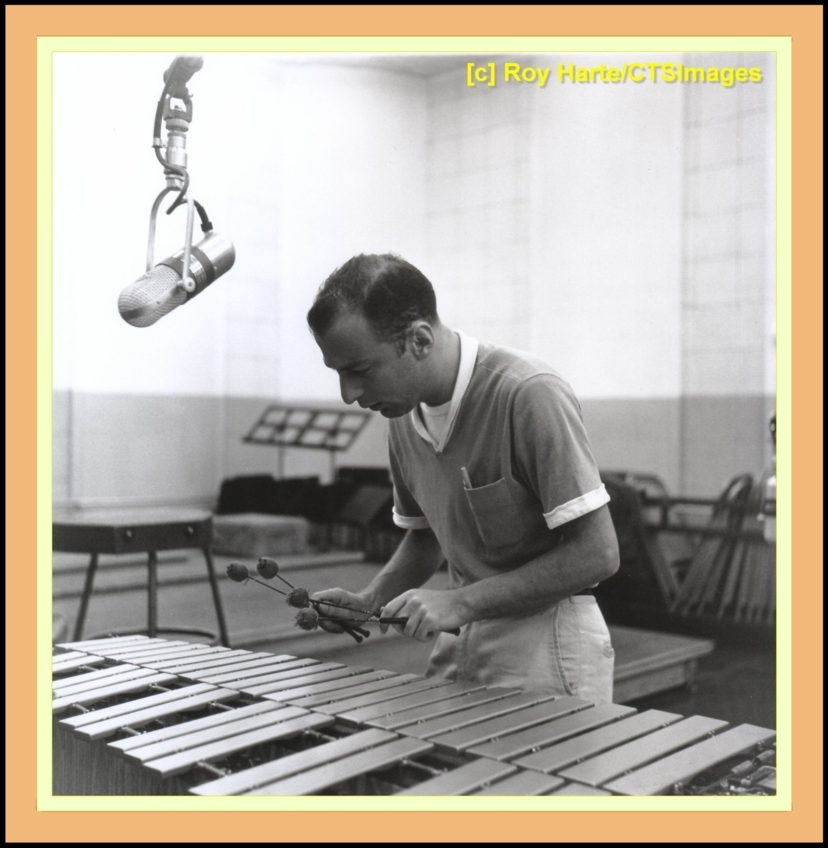
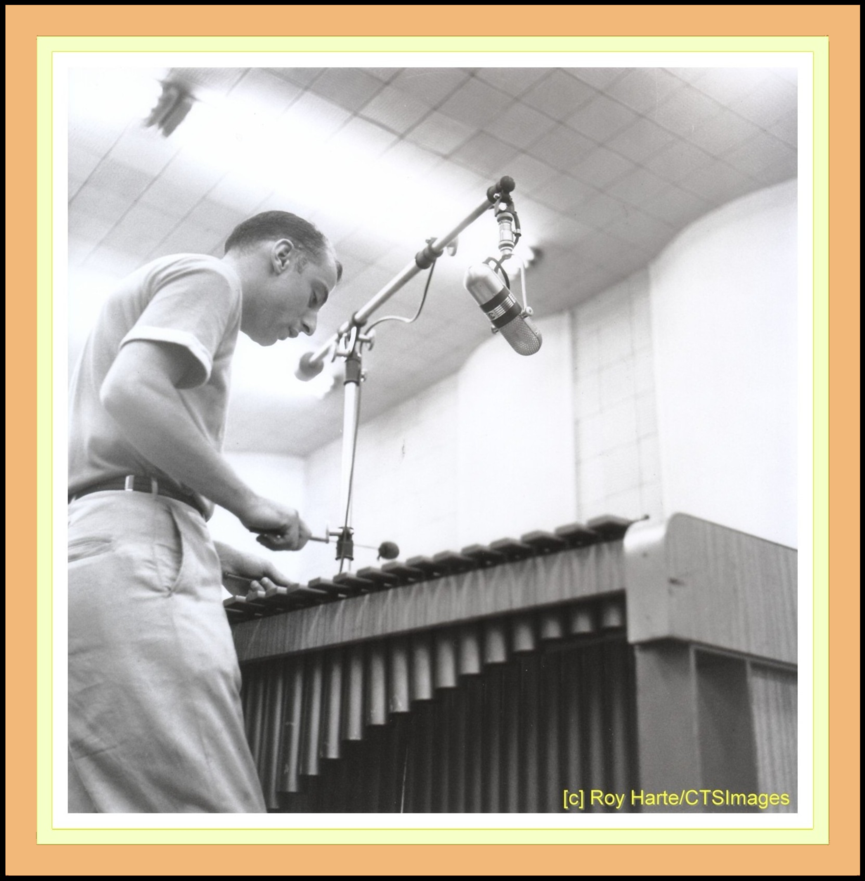
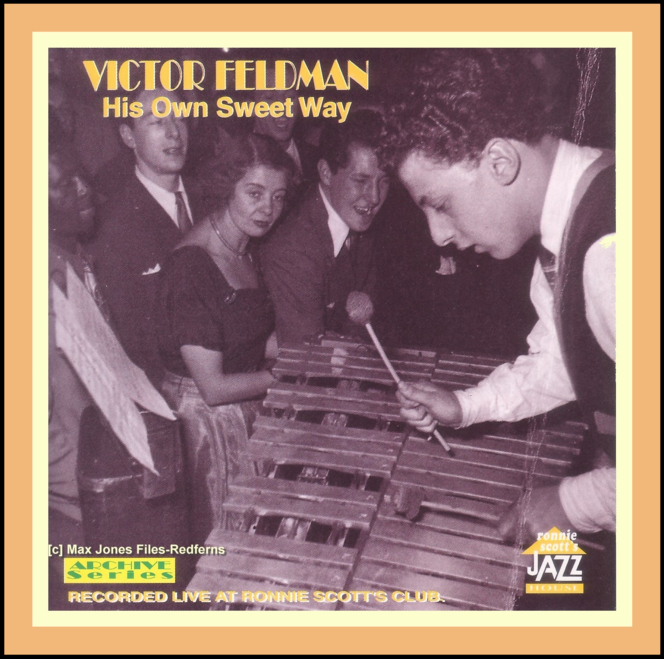
Victor's Vibes [From the Archives]

© -  Steven A. Cerra, copyright protected; all rights reserved.


For many years, the late Milt Jackson, affectionately known as “Bags,” was heralded as the undisputed king of the vibraphone and most vibists accorded him their highest esteem and pointed to him as a major influence.


I, too, love his playing, especially in the context of the Modern Jazz Quartet.


But I’ve always had trouble with the notion of ranking Jazz musicians, voting for them in polls and comparing them as artists. I think it’s an absolute waste of time; a meaningless exercise.


Jazz artists work very hard to establish their own approach to the music and I would imagine that, as is the case with actors, writers and painters, they have a tendency to gravitate toward those artists whose work “speaks” to them.


What, then, are the standards that one has to meet to be rated as “better” than another artist?


As Aristotle once said: “Each of us is different with regard to those things we have in common.”


And so it is with Jazz musicians in general and, for the purpose of this feature, Jazz vibraphonists in particular. Everyone imitates and emulates while trying to establish their own voice on an instrument.


Vibes are particularly challenging to play uniquely because of the limitations inherent in how the sound is produced on them.


Bags’ influence was pervasive when it came to Jazz vibes. I’ve played the instrument a bit and I recognize the truth in this assertion because I, too, found myself playing Milt’s “licks” and “phrases.” They lay so easily on the axe. You drop you hands [mallets] on the bars and out they come.


Another reason why so many vibist sound like Bags may be because he played a lot of the same “licks” [musical expressions] or phrases over and over again.


A lot of Jazz musicians do this [some call them “resting points”], but one has to be careful with repetitive phrases because employing the same licks too often can become an excuse for not thinking [in other words, not being inventive].


The expression that is sometimes used when this happens is that the musician “mailed in” the solo.


Bags was one of the “Founding Fathers” of Bebop, he toured all over the United States and Europe with the MJQ and he made a slew of recordings with the group, with other artists as well as under his own name.


As a result, his style of vibes had a lot of exposure.


This exposure helped make Milt Jackson instantly recognizable as a major exponent of the bebop, blues-inflected style of playing Jazz vibes.


But for my money, no one has ever played the instrument more musically than Victor Feldman.


Bags’ influence is there in Victor’s style, but Victor is his own man and takes the instrument in a completely different direction than Milt.


There isn’t the repetitiveness nor for that matter the constant bebop and blues phrases, but rather, a more pianistic and imaginative approach, one that emphasizes longer inventions and a constant flow of new melodies superimposed over the chord changes.


Victor also emphasizes rhythm differently than the dotted eighth note spacing favored by Bags. As a result, Victor, begins and ends his phrases in a more angular fashion which creates more surprises in where he is going in his solos.


The starting points and pick-ups for Victors solos vary greatly because he is not just looking for places in the music to put tried-and-tested licks, he’s actually attempting to create musical ideas that he hasn’t expressed before.


Is what Victor is doing “better” than Bags? Of course not.  Is it different? Is it ever.


Fresh and adventurous. And exhilarating, too.
Jazz improvisation is the ultimate creative experience.


One doesn’t need any awards. You just can’t wait for the next time you solo so you can try soaring again.


To help give you the “flavor” of Victor Feldman’s marvelous creative powers as a Jazz vibist, we’ve put together a video montage of classic concept cars with a track that I think features him at his imaginative best.


This track has him performing his original composition Too Blue with Rick Laird on bass and Ronnie Stephenson on drums from his triumphant 1965 return to Ronnie Scott’s Club in his hometown of London [Jazz Archives JACD-053].


It runs a little over 8 minutes. You can hear the statement of the 12-bar blues theme from 0.00-0.22 minutes and again from 0.23-0.45 minutes. Each 12-bar theme closes with a bass “tag.”


Victor and Rick hook-up for a call-and-response interlude between 0:46-1:10 minutes before Victor launches into his first improvised chorus at 1:11 minutes.


He improvises seven choruses from 1:11-4:14 minutes before bassist Rick Laird takes four choruses from 4:14-5:46 minutes.


None of Victor’s choruses contains a repeated phrase or a recognizable Milt Jackson lick [phrase].


When Victor comes-back-in [resumes playing] at 5:46 minutes following Rick’s bass solo, if you listen carefully you can hear him using two mallets in his left hand to play 4-beats-to-the-bar intervals while soloing against this with the two mallets held in his right-hand.


He even throws in the equivalent of a big band-like “shout” chorus while trading fills with drummer Ronnie Stephenson beginning at 6:56 minutes.


The closing statement of the theme can be heard at 7:19 minutes ending with an “Amen” at 8:06 minutes.


When listening to Victor Feldman play Jazz on the vibraphone, one is hearing a true innovator at work. For him, making the next improvised chorus as original and as musically satisfying as possible was always the ultimate goal.  


It’s a shame that Jazz fans are not more familiar with his work on vibes. Having heard it on a regular basis for over twenty-five years, I can attest to the fact that it was something special. The only thing that Victor Feldman ever mailed in was a letter.


4