© Copyright ® Steven Cerra, copyright protected; all rights reserved.
In our continuing look at Lennie Tristano’s life and music, let’s turn once again to Barry Ulanov’s liner notes to three of Lennie’s albums all of which have been issued individually to CD and are also contained in the comprehensive The Complete Atlantic Recordings of Lennie Tristano, Lee Konitz & Warne Marsh [Mosaic Records MD6-174].
Barry [1918-2000] was the son of violinist Nathan Ulanov who served as concertmaster for Arturo Toscanini’s NBC Symphony Orchestra. He graduated from Columbia University in 1935 and while there he wrote about Jazz and Jazz concerts including some early coverage of Billie Holiday’s Café Society performances.
He served as the editor of Metronome magazine from 1943-1955 and wrote articles for Downbeat from 1955-1958. He was an early fan of bebop and championed Charlie Parker and Dizzy Gillespie. He was also an early and lifelong supporter of Lennie Tristano who wrote the composition Coolin’ Off with Ulanov “ … as a personal testament to the affinity that many Jazz musicians had with Ulanov.”
An erudite man, Barry taught at Juilliard, Princeton and Barnard College [1951-1988]. During his later years, he concentrated on explorations of religion and psychology, topics from which form the basis for many of the books he wrote and co-authored.
The more esoteric and intellectual forms of Jazz also had a particular appeal to Ulanov - he was one of the first to write about the Alec Wilder Octet - and the complexity of Lennie’s music fit in nicely with this orientation.
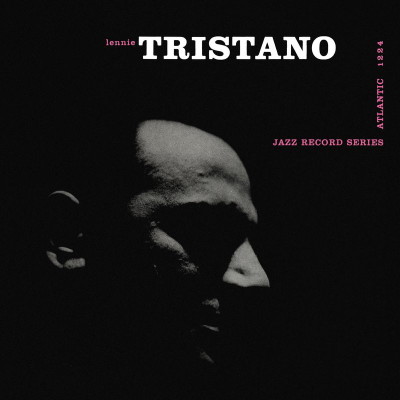
Barry wrote liner notes to three of Lennie’s albums, the first of which was Tristano [Atlantic LP 1224].
ORIGINAL LINER NOTES TO
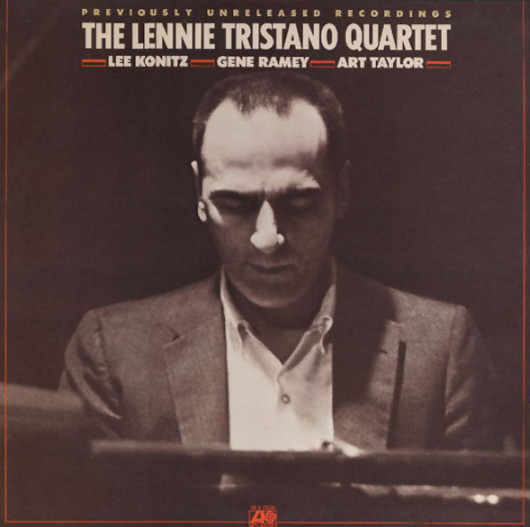
THE LENNIE TRISTANO QUARTET (ATLANTIC SD-2-7006)
“Tracing the history of jazz is an unusually satisfying occupation. For no matter how one pursues the subject, with great intensity or with wandering attention, the documents one examines, such as this collection of the Lennie Tristano Quartet, are live performances and never merely notes on paper. This is an art that is always present, always alive before us, whether the performance in question dates from yesterday or last year or fifty years ago. That is the extraordinary fact about this improvised music which the present collection demonstrates wonderfully well.
These Tristano performances date from that marvelous moment in the mid-1950s when bop had been absorbed by every lively jazz consciousness. The cliches of the swing years were in abeyance. Simply to get a beat was no longer enough. The endless parade of two- and four-bar phrases, hooked to chunky syncopations, had been temporarily halted. Musicians were free to go where their minds — or glands or hearts or muscles or nerves — led them. Tutored by Charlie Parker and Dizzy Gillespie and the other brave souls of bop, the new jazz musicians erupted in flashy cadenzas, 100 notes to the bar, and zealous imitations, where they could manage them, of Bird's melodic flights.
Lennie Tristano, himself a constant innovator in jazz, was fascinated by the bop procedures and especially by what somebody like Charlie Parker or Fats Navarro could do with them. Bop entered his music. His music entered bop — when he had a chance to play with musicians in the bop movement, as he did when he and his sometime student and longtime collaborator Lee Konitz joined with Gene Ramey and Art Taylor to make up the Lennie Tristano Quartet.
Gene Ramey had worked with Bird in the Jay McShann band. Like Parker, he was a musician formed in Kansas City, where Count Basie's original bass player, Walter Page, taught him his instrument. In New York, he had recorded with Thelonious Monk, Horace Silver and Fats Navarro, among others, and worked with Bird and Art Blakey and innumerable small bop bands. He was echt bop. Art Taylor, a younger musician, had developed as a drummer in his native New York, most importantly in association with his near-contemporary and fellow New Yorker, Bud Powell. From Bud, most gifted of bop pianists, he had picked up that feeling for eccentric changes of time and accent, without losing the long rhythmic line, which made him a natural drummer for Lennie Tristano.
Lee Konitz was as ardent a Parker follower as any of the hoppers or Lennie, with the additional impetus that came with being so accomplished on Bird's own instrument, the alto saxophone. By the mid-1950s he had put in his time with the big band — Claude Thornhill and Stan Kenton, to be exact — had fronted his own small combinations, and had found, with particular help and understanding from Lennie Tristano, what was unmistakably his own voice. Like Bird, he had an easily recognizable sound, reedy, distinctly enunciated, carefully put in place, but never so carefully that the beat was lost. His loyalty to Lennie, which brought him back again and again to play with him, sprang not only from close friendship, but from an understanding of the Tristano jazz feeling and thinking which matched Lennie's sympathy and respect for him.
What one hears in these performances again and again is mutuality of feeling and closeness of thought. Some of it comes in lines prepared beforehand, taking familiar tunes, jazz standards, the blues, the bop anthems, and converting them into fresh statements for alto or piano or both. Some of it comes in spontaneous exchanges between the horn and the keyboard, between the bass and the two solo instruments, or between the drums and the alto and the piano in those split choruses which go back to the very beginnings of jazz for their ritual structure. Everywhere, the mutuality is evident. The playing hangs together because the musicians are at ease with each other in, of all unlikely-sounding places for such a get-together, the Sing Song Room of the Confucius Restaurant in New York City, an environment to which at least a nominal respect is paid in the third track of the first side, the very un-Oriental-sounding CONFUCIUS BLUES.
The titles of Tristano performances are not insignificant. They may be obscure or lost in some personal experience that Lennie or his musicians had forgotten by the third or eighth performance of a particular tune or line. But they say something. APRIL, for example, is typical musicians' shorthand for a standard tune, in this case I'LL REMEMBER APRIL. PENNIES IN MINOR describes precisely what Lennie has done to the venerable PENNIES FROM HEAVEN, transposing it to a minor key and giving it a whole new identity. In LENNIE-BIRD, the bringing together of Tristano and Parker habits of jazz formulation around the most often-repeated chord sequence of the bop years, that of HOW HIGH THE MOON, is properly celebrated. In BACKGROUND MUSIC, Warne Marsh's conversion of ALL OF ME, the title becomes ironic, whatever Warne's intention or the circumstances that gave rise to the title: it is very much Lee and Lennie to the foreground, each at his best in solos of particular clarity and fullness of development. But then irony is very much a matter of intention and the ironic mode is one that Lennie very much cultivated.
There are ironies off and on in these performances. It is almost impossible to find any good jazz altogether without them, and so there are anti-sentimental asides, a snicker or two at the expense of romantic phrases in THERE WILL NEVER BE ANOTHER YOU or MY MELANCHOLY BABY or SWEET AND LOVELY, an extra-melodramatic rumble in the BLUES. But the prevailing tone here is not mocking, not satirical. The ironies are essentially those that go with the jazz territory. There is much more serenity here than irony. Wit is in the service of good humor. Lennie's fancy here has turned to love of his music and his musicians and the result is that a good time is had by all, not least the listener.
Lennie is at his sunniest and most compelling in these performances. From the very beginning — APRIL — he steps out in straight clear clean lines, setting up Lee's solo with block chords, thinking his own solo line through in handsome melodic weavings that prepare the way splendidly for Art Taylor's drum splits and a tidy concluding statement with Lee. In MEAN TO ME, his fiddling's with time and tempo are set forth with an intaglio precision, cutting in and out of a better-than-average tune with a splendid deliberateness. In the BLUES, he moves handsomely back and forth, between block chords and single-note lines, taking short phrases, lengthening them, doubling back on them, varying, adding, shifting register along with chord and texture along with tempo, and never, no matter how brief the phrase, losing sight or sense of the long line.
The long line is all. It is superbly demonstrated in the minor but not melancholy version of PENNIES. This is Lennie at his most unstoppable, with that great transforming baroque intensity that makes the theme no one part of the line but the whole line itself, from the first note of Lennie's solo to the last, and maybe even more, from the very first note of the whole performance to the last, including every drum beat, every bass plucking, everything that everyone contributes, Lee, Lennie, Gene, Art. This is, I think, a masterpiece, and one of Lennie's most enduring statements, very much in all the jazz traditions, with all the necessary spontaneity, lifting, swinging rhythm, and alongside all that and against it a fullness of preparation before the fact, a fine fresh line, a positively philosophical approach to a jazz shootout.
There is more of the same kind of Tristano piano in the elegant ornamentation of 's WONDERFUL, in the scalar extensions of BACKGROUND MUSIC in which Lennie maneuvers a jazz way between the baroque procedures of Bach and the modern-medievalist procedures of Hindemith, and in the meticulous inspections of OUT OF NOWHERE'S every phrase in the set of variations on the original that Lennie called 317 E. 32ND. In fact, the authority and drive and charm that Lennie could exert at the piano are evident even in his pointings for Gene Ramey's bass in MEAN TO
ME, THERE WILL NEVER BE ANOTHER YOU and MELANCHOLY BABY, and in his multiple exchanges with Art Taylor's drumming, which becomes melodic and linear as Lennie's Piano becomes percussive and all the more linear.
I take nothing away from Lee when I say that it is Lennie's quality of mind that dominates these performances. Lee does lovely things with straight melodic statements, with bop phrases and Lennie's lines and his own. He makes his own authority handsomely clear in such a carefully crafted solo as he draws out of SWEET AND LOVELY and once again in the very different Birdlike bursts with which he greets Charlie Parker's line on INDIANA, DONNA LEE. He is everywhere he is needed, doing what most needs to be done, by himself, with the others, always the best of jazz friends and collaborators. But everywhere, it seems to me, we listen for, look forward to, wait for, settle back happily to hear again, the center of all these events, Lennie.
It is finally in jazz as in everything else the quality of mind that holds us and when it is of the stature of Lennie's mind, everything else that comes with it must, one way or another, serve it. We listen to hear how he will extend and develop and make new, the familiar tunes and chord progressions, the ancient ways of jazz and the new ones. We are held by that brilliant stubborn insistence on adding, adding, adding, until a statement is complete, or at least as complete as the short chorus forms of jazz will permit. We are fascinated by the way feeling comes at us from every measure of Lennie's music, disciplined by chosen limitations of melody and harmony, freed by a rhythmic imagination that, like Charlie Parker's, can observe the rules that bring musicians back together to keep performances in place and yet can escape into absolutely open territory where the only restriction is the fact of time itself. We are delighted that from time to time, as in these performances, Lennie was able to find musicians with whom he was so much at ease he could accept the discipline and feel the freedom which together make his music so moving.”
— Barry Ulanov 1981