Showing posts with label lennie tristano. Show all posts

Thursday, April 22, 2021

Lennie Tristano - His Life and Music - Part 3

 © Copyright ® Steven Cerra, copyright protected; all rights reserved.

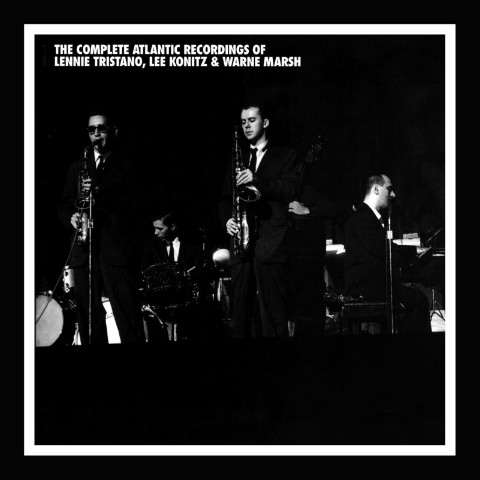
In our continuing look at Lennie Tristano’s life and music, let’s turn once again to Barry Ulanov’s liner notes to three of Lennie’s albums all of which have been issued individually to CD and are also contained in the comprehensive The Complete Atlantic Recordings of Lennie Tristano, Lee Konitz & Warne Marsh [Mosaic Records MD6-174].


Barry [1918-2000] was the son of violinist Nathan Ulanov who served as concertmaster for Arturo Toscanini’s NBC Symphony Orchestra. He graduated from Columbia University in 1935 and while there he wrote about Jazz and Jazz concerts including some early coverage of Billie Holiday’s Café Society performances.


He served as the editor of Metronome magazine from 1943-1955 and wrote articles for Downbeat from 1955-1958. He was an early fan of bebop and championed Charlie Parker and Dizzy Gillespie. He was also an early and lifelong supporter of Lennie Tristano who wrote the composition Coolin’ Off with Ulanov “ … as a personal testament to the affinity that many Jazz musicians had with Ulanov.”


An erudite man, Barry taught at Juilliard, Princeton and Barnard College [1951-1988]. During his later years, he concentrated on explorations of religion and psychology, topics from which form the basis for many of the books he wrote and co-authored.


The more esoteric and intellectual forms of Jazz also had a particular appeal to Ulanov - he was one of the first to write about the Alec Wilder Octet - and the complexity of Lennie’s music fit in nicely with this orientation. 


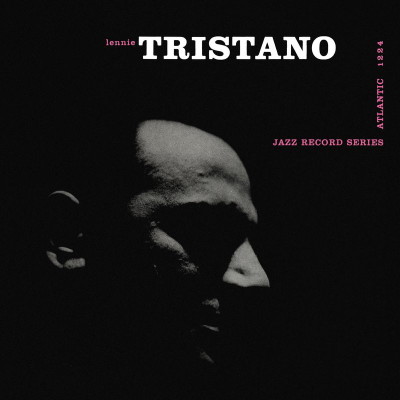
Barry wrote liner notes to three of Lennie’s albums, the first of which was Tristano [Atlantic LP 1224].


ORIGINAL LINER NOTES TO

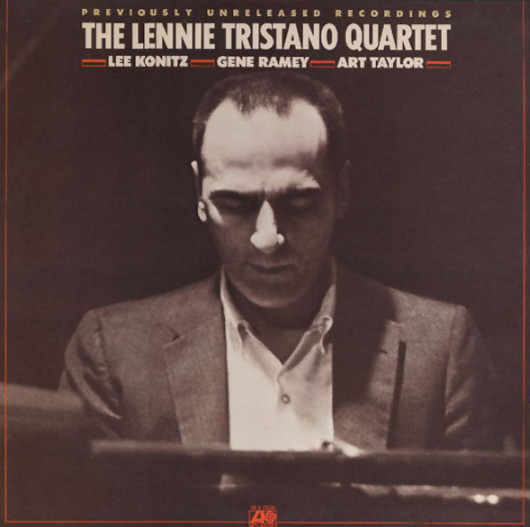
THE LENNIE TRISTANO QUARTET (ATLANTIC SD-2-7006)


“Tracing the history of jazz is an unusually satisfying occupation. For no matter how one pursues the subject, with great intensity or with wandering attention, the documents one examines, such as this collection of the Lennie Tristano Quartet, are live performances and never merely notes on paper. This is an art that is always present, always alive before us, whether the performance in question dates from yesterday or last year or fifty years ago. That is the extraordinary fact about this improvised music which the present collection demonstrates wonderfully well.


These Tristano performances date from that marvelous moment in the mid-1950s when bop had been absorbed by every lively jazz consciousness. The cliches of the swing years were in abeyance. Simply to get a beat was no longer enough. The endless parade of two- and four-bar phrases, hooked to chunky syncopations, had been temporarily halted. Musicians were free to go where their minds — or glands or hearts or muscles or nerves — led them. Tutored by Charlie Parker and Dizzy Gillespie and the other brave souls of bop, the new jazz musicians erupted in flashy cadenzas, 100 notes to the bar, and zealous imitations, where they could manage them, of Bird's melodic flights.


Lennie Tristano, himself a constant innovator in jazz, was fascinated by the bop procedures and especially by what somebody like Charlie Parker or Fats Navarro could do with them. Bop entered his music. His music entered bop — when he had a chance to play with musicians in the bop movement, as he did when he and his sometime student and longtime collaborator Lee Konitz joined with Gene Ramey and Art Taylor to make up the Lennie Tristano Quartet.


Gene Ramey had worked with Bird in the Jay McShann band. Like Parker, he was a musician formed in Kansas City, where Count Basie's original bass player, Walter Page, taught him his instrument. In New York, he had recorded with Thelonious Monk, Horace Silver and Fats Navarro, among others, and worked with Bird and Art Blakey and innumerable small bop bands. He was echt bop. Art Taylor, a younger musician, had developed as a drummer in his native New York, most importantly in association with his near-contemporary and fellow New Yorker, Bud Powell. From Bud, most gifted of bop pianists, he had picked up that feeling for eccentric changes of time and accent, without losing the long rhythmic line, which made him a natural drummer for Lennie Tristano.


Lee Konitz was as ardent a Parker follower as any of the hoppers or Lennie, with the additional impetus that came with being so accomplished on Bird's own instrument, the alto saxophone. By the mid-1950s he had put in his time with the big band — Claude Thornhill and Stan Kenton, to be exact — had fronted his own small combinations, and had found, with particular help and understanding from Lennie Tristano, what was unmistakably his own voice. Like Bird, he had an easily recognizable sound, reedy, distinctly enunciated, carefully put in place, but never so carefully that the beat was lost. His loyalty to Lennie, which brought him back again and again to play with him, sprang not only from close friendship, but from an understanding of the Tristano jazz feeling and thinking which matched Lennie's sympathy and respect for him.


What one hears in these performances again and again is mutuality of feeling and closeness of thought. Some of it comes in lines prepared beforehand, taking familiar tunes, jazz standards, the blues, the bop anthems, and converting them into fresh statements for alto or piano or both. Some of it comes in spontaneous exchanges between the horn and the keyboard, between the bass and the two solo instruments, or between the drums and the alto and the piano in those split choruses which go back to the very beginnings of jazz for their ritual structure. Everywhere, the mutuality is evident. The playing hangs together because the musicians are at ease with each other in, of all unlikely-sounding places for such a get-together, the Sing Song Room of the Confucius Restaurant in New York City, an environment to which at least a nominal respect is paid in the third track of the first side, the very un-Oriental-sounding CONFUCIUS BLUES.


The titles of Tristano performances are not insignificant. They may be obscure or lost in some personal experience that Lennie or his musicians had forgotten by the third or eighth performance of a particular tune or line. But they say something. APRIL, for example, is typical musicians' shorthand for a standard tune, in this case I'LL REMEMBER APRIL. PENNIES IN MINOR describes precisely what Lennie has done to the venerable PENNIES FROM HEAVEN, transposing it to a minor key and giving it a whole new identity. In LENNIE-BIRD, the bringing together of Tristano and Parker habits of jazz formulation around the most often-repeated chord sequence of the bop years, that of HOW HIGH THE MOON, is properly celebrated. In BACKGROUND MUSIC, Warne Marsh's conversion of ALL OF ME, the title becomes ironic, whatever Warne's intention or the circumstances that gave rise to the title: it is very much Lee and Lennie to the foreground, each at his best in solos of particular clarity and fullness of development. But then irony is very much a matter of intention and the ironic mode is one that Lennie very much cultivated.


There are ironies off and on in these performances. It is almost impossible to find any good jazz altogether without them, and so there are anti-sentimental asides, a snicker or two at the expense of romantic phrases in THERE WILL NEVER BE ANOTHER YOU or MY MELANCHOLY BABY or SWEET AND LOVELY, an extra-melodramatic rumble in the BLUES. But the prevailing tone here is not mocking, not satirical. The ironies are essentially those that go with the jazz territory. There is much more serenity here than irony. Wit is in the service of good humor. Lennie's fancy here has turned to love of his music and his musicians and the result is that a good time is had by all, not least the listener.


Lennie is at his sunniest and most compelling in these performances. From the very beginning — APRIL — he steps out in straight clear clean lines, setting up Lee's solo with block chords, thinking his own solo line through in handsome melodic weavings that prepare the way splendidly for Art Taylor's drum splits and a tidy concluding statement with Lee. In MEAN TO ME, his fiddling's with time and tempo are set forth with an intaglio precision, cutting in and out of a better-than-average tune with a splendid deliberateness. In the BLUES, he moves handsomely back and forth, between block chords and single-note lines, taking short phrases, lengthening them, doubling back on them, varying, adding, shifting register along with chord and texture along with tempo, and never, no matter how brief the phrase, losing sight or sense of the long line.


The long line is all. It is superbly demonstrated in the minor but not melancholy version of PENNIES. This is Lennie at his most unstoppable, with that great transforming baroque intensity that makes the theme no one part of the line but the whole line itself, from the first note of Lennie's solo to the last, and maybe even more, from the very first note of the whole performance to the last, including every drum beat, every bass plucking, everything that everyone contributes, Lee, Lennie, Gene, Art. This is, I think, a masterpiece, and one of Lennie's most enduring statements, very much in all the jazz traditions, with all the necessary spontaneity, lifting, swinging rhythm, and alongside all that and against it a fullness of preparation before the fact, a fine fresh line, a positively philosophical approach to a jazz shootout.


There is more of the same kind of Tristano piano in the elegant ornamentation of 's WONDERFUL, in the scalar extensions of BACKGROUND MUSIC in which Lennie maneuvers a jazz way between the baroque procedures of Bach and the modern-medievalist procedures of Hindemith, and in the meticulous inspections of OUT OF NOWHERE'S every phrase in the set of variations on the original that Lennie called 317 E. 32ND. In fact, the authority and drive and charm that Lennie could exert at the piano are evident even in his pointings for Gene Ramey's bass in MEAN TO

ME, THERE WILL NEVER BE ANOTHER YOU and MELANCHOLY BABY, and in his multiple exchanges with Art Taylor's drumming, which becomes melodic and linear as Lennie's Piano becomes percussive and all the more linear.


I take nothing away from Lee when I say that it is Lennie's quality of mind that dominates these performances. Lee does lovely things with straight melodic statements, with bop phrases and Lennie's lines and his own. He makes his own authority handsomely clear in such a carefully crafted solo as he draws out of SWEET AND LOVELY and once again in the very different Birdlike bursts with which he greets Charlie Parker's line on INDIANA, DONNA LEE. He is everywhere he is needed, doing what most needs to be done, by himself, with the others, always the best of jazz friends and collaborators. But everywhere, it seems to me, we listen for, look forward to, wait for, settle back happily to hear again, the center of all these events, Lennie.


It is finally in jazz as in everything else the quality of mind that holds us and when it is of the stature of Lennie's mind, everything else that comes with it must, one way or another, serve it. We listen to hear how he will extend and develop and make new, the familiar tunes and chord progressions, the ancient ways of jazz and the new ones. We are held by that brilliant stubborn insistence on adding, adding, adding, until a statement is complete, or at least as complete as the short chorus forms of jazz will permit. We are fascinated by the way feeling comes at us from every measure of Lennie's music, disciplined by chosen limitations of melody and harmony, freed by a rhythmic imagination that, like Charlie Parker's, can observe the rules that bring musicians back together to keep performances in place and yet can escape into absolutely open territory where the only restriction is the fact of time itself. We are delighted that from time to time, as in these performances, Lennie was able to find musicians with whom he was so much at ease he could accept the discipline and feel the freedom which together make his music so moving.”


— Barry Ulanov 1981


Wednesday, April 21, 2021

Lennie Tristano - His Life and Music - Part 2

 © Copyright ® Steven Cerra, copyright protected; all rights reserved.


In our continuing look at Lennie Tristano’s life and music, let’s now turn to Barry Ulanov’s liner notes to three of Lennie’s albums all of which have been issued individually to CD and are also contained in the comprehensive The Complete Atlantic Recordings of Lennie Tristano, Lee Konitz & Warne Marsh [Mosaic Records MD6-174].


Barry [1918-2000] was the son of violinist Nathan Ulanov who served as concertmaster for Arturo Toscanini’s NBC Symphony Orchestra. He graduated from Columbia University in 1935 and while there he wrote about Jazz and Jazz concerts including some early coverage of Billie Holiday’s Café Society performances.


He served as the editor of Metronome magazine from 1943-1955 and wrote articles for Downbeat from 1955-1958. He was an early fan of bebop and championed Charlie Parker and Dizzy Gillespie. He was also an early and lifelong supporter of Lennie Tristano who wrote the composition Coolin’ Off with Ulanov “ … as a personal testament to the affinity that many Jazz musicians had with Ulanov.”


An erudite man, Barry taught at Juilliard, Princeton and Barnard College [1951-1988]. During his later years, he concentrated on explorations of religion and psychology, topics from which form the basis for many of the books he wrote and co-authored.


The more esoteric and intellectual forms of Jazz also had a particular appeal to Ulanov - he was one of the first to write about the Alec Wilder Octet - and the complexity of Lennie’s music fit in nicely with this orientation. 


Barry wrote liner notes to three of Lennie’s albums, the first of which was Tristano [Atlantic LP 1224].


“A great many people art; going to be surprised by this set. It presents a Lennie Tristano far removed from the figure of their — and the critics' — imagination. Uncompromising he may he, as has been noted many a time, in the public-prints and in private discussions. But remote, inaccessible, recondite he is not, except in the sense that any first-rate artist has ideas to offer which are necessarily his own and nobody else's and hence so fresh, so crisp, so inspired as to seem — or sound — altogether new and quite thoroughly removed from any familiar thinking — or playing-pattern. No, there is nothing really obscure about Lennie's playing here, nothing really beyond the grasp of anybody with any feeling for, or fairly considerable listening experience in, jazz.


This is jazz, no mistaking it for anything else. It meets all the requirements; it is improvised, brilliantly adding ideas to ideas all the way through; it swings, rapturously, whether up or middling-up or slow in tempo; it offers, both in Lennie's playing with bass and drums and with Lee Konitz and rhythm, that delicate internal tension, that collective creativity which is the special identifying mark of the real thing in this music.


And so it is to the jazz in this record that I suggest you listen, forgetting, if you can, any preconceived notions about what Lennie Tristano represents in modern music, anything you may have read about his personality, his ideas, his group, his students or teaching method or anything much besides, no matter how directly relevant it may seem to you. Isn't it, after all, in a man's painting, if he is a painter, in his poetry, if he is a poet, or in his music, if he is a composer, that one should look for his personality, his ideas, or anything else of any sizable significance? And isn't this particularly true of jazz, where a performer composes as he blows, if he is a genuine jazz musician, and therefore exposes himself more honestly than in most arts? And if it isn't true, then why bother — why bother painting or writing or composing or blowing in the first place? — and why bother looking or reading or listening in the second?


After listening to these tracks, I think you'll agree with me that what you have heard is impression enough of the Tristano thinking processes and that, unquestionably, Lennie's ideas must seek musical outlet, must find jazz outlet, and we must pay attention, hard, earnest attention, and do so with every sort of listening ease.


Lennie has fooled with the tapes of EAST THIRTY-SECOND and LINE UP, adjusting the bass lines Peter Ind (on bass) and Jeff Morton (on drums) prepared for him to the piano lines he has superimposed upon them. But the mechanical adjustment of tapes is not what you hear. What comes through first of all and last of all is the jazz, uninterrupted and pulsating and overpowering jazz, with that kind of frontal motion which was Bach's in, say, the CHROMATIC FANTASY IN D MINOR, pushing through from beginning to end without any wasted accents or unnecessary halts or repetition. The great day for jazz will be that one when rhythm sections — one or two or three musicians large — will be able to think and play and beat that steadily, with such regularity and rapidity and imagination that it will be possible to record alongside them instead of over them.


Another kind of feat, not really of any mechanical or electronic interest except in the paired piano lines that merge and separate from time to time, is in the REQUIEM Lennie plays here, a heartfelt R.I.P. for the late Charlie Parker. The achievement is in the form, a kind of "prelude and blues'' structure, in which first of all Lennie sets a mood with unexpected Schumannesque figures and then, even as Charlie did, plays a rest into the blues. There is a tender deliberateness about this performance: it is a man thinking grief, feeling deprived, thinking and feeling in the logical medium for grief and deprivation in jazz: the blues.


More of the deliberate, or perhaps it would be more appropriate to say the much-deliberated, makes its way into the three lines, played — and recorded — one on top of the other in the TURKISH MAMBO, which is not a mambo and certainly reveals not one iota or fez of Near Eastern influence but gains its title from Lennie's long, low bow in the direction of the brothers Ertegun, Ahmet and Nesuhi, for whom this album was put together. The times will probably be as hard for the listener to follow as they were at various times for drummers: one track proceeds from 7/8 to 7/4, another from 5/8 to 5/4, the last from 3/8 to 4/4. But one need not attempt to sort out the arithmetical delicacies with which Lennie titillates his mind and fingers and our head and feet to feel the exhilaration produced by the rhythmic point and counterpoint.


Similarly, one can get deeply involved in the intricacies of lines solo or lines duo in the remaining bands, those recorded with Lee Konitz in the Sing Song Room of the Confucius Restaurant, where they and several rhythm sections spent the summer of 1955 together (here it's Gene Ramey on bass and Art Taylor on drums). But better than such involvement, at least at first, I would think, is to let yourself go snapping your thumb and index finger, pecking head, or simply tapping foot — choose your own weapon — allowing the beat to make itself felt, just as Lennie and Lee do. Then look for the little details, listen for the richnesses of ornament, the fine parallel or disjunctive thinking, the developments together or apart which make up the masterful balance here of musicians who know and understand each other and are only too glad to show it in their playing together.


In THESE FOOLISH THINGS, it is the splendidly long line that Lee plays, Lennie's reflective musing, now single-line, now in block chords, and a finish together that puts a glistening coda on both their backs. In YOU GO TO MY HEAD, a longtime favorite of these musicians, it is Lee, thoughtful to a carefully organized conclusion, and Lennie in almost exactly the same groove, more directly following after his student than any place else on record. In A GHOST OF A CHANCE, the elegant touches — and elegant they truly are — are Lennie's, following the chord structure of the Victor Young tune with comparative orthodoxy, laying down counter-melodies, showing himself at his simplest to be the same sort of thoughtful and feelingful jazzman that he is in more complex creations. Last of all, in the romps at middle-tempos that only thoroughly experienced and rhythmically gifted jazz musicians can ever manage accurately and groovily, in IF I HAD YOU and ALL THE THINGS YOU ARE, it's a meshing of both solo gears, with Lennie's entrances in both the clues to the balanced mood (or mood of balance ) of both.


Balance all around is to be found in this collection: a trial balance of tempo and time and personality differences which accounts for the jockeying of tapes and changing of speeds and multiplication of piano lines in Lennie's solo tracks; a tested balance of soloists and tunes and tempos and personalities which accounts for the orderly procedure and unmitigated pleasure of the alto and piano solos and duos in the tracks Lennie and Lee play together. And all of it — and this I cannot insist upon too strongly — comes out jazz, real jazz, great jazz.”


— Barry Ulanov 1956


Tuesday, April 20, 2021

Lennie Tristano and His Legacy by Peter Ind

© -  Steven A. Cerra, copyright protected; all rights reserved.


“Jazz Visions is a remarkable book which presents a fascinating double portrait of the subject and the author."
- John Chilton, professional Jazz trumpeter and writer on jazz

“This book is just what is needed to inform musicians, students, teachers, and historians around the world with an 'up close and personal' view of the genius of jazz pianist / composer / teacher, Lennie Tristano. Bassist Peter Ind describes vividly how exciting it was to be living in New York City as a creative musician. Peter's writing skills throughout will also enlighten and entertain the novice and non-musician as well. The best part for me is that it was written by a great player who was there right in the thick of it all. What can be a better source for the real truth? Bravo, Peter!"
- Rufus Reid, Jazz bassist

“The Lennie Tristano story has needed telling for a long time. Who better than Peter Ind, who knew Lennie and his music probably better than anyone?"
- Ira Gitler - doyen of New York jazz critics

With Jazz Visions: Lennie Tristano and His Legacy [London: Equinox, 2005], Peter Ind joins fellow bassists Chuck Israels, and his writings on his time working with pianist Bill Evans’ Trio, and Bill Crow’s reflections on working in the Gerry Mulligan Quartet, Sextet and Concert Jazz Band in providing insights into the music of a major Jazz stylist from the 1945-1965 Modern Jazz era.

And, as is the case with the works of Chuck and Bill, Peter’s narrative is a primary source; an autobiographical documentation of the time and/or person that is being observed. Concerning the halcyon days of post WWII modern Jazz, such primary sources are becoming rarer with each passing year.

The bass provides an interesting vantage point for style analysis as no other instrument in a Jazz group interacts with the music from the vantage point of all the elements that comprise it: melody, harmony, rhythm and sonority [texture or the overall sound of the music].

Of course, it’s one thing to musically interact in this manner and quite another to be able to explain it cogently and coherently. All three of these bassist-authors draw high marks for their ability to put music into words.

While more subjective in its emphasis, along with Nat Hentoff’s comprehensive insert booklet notes to The Complete Atlantic Recordings of Lennie Tristano, Lee Konitz & Warne Marsh [Mosaic Records MD6-174] and Eunmi Shim’s Lennie Tristano: His Life and Music [ Ann Arbor: University of Michigan Press, 2007], Peter’s book is an invaluable guide to understanding Lennie and his music.

Peter explains how and why he approached his book on Lennie - whom he describes as “... one of the seminal influences in Jazz” - in the following excerpts from the Preface to his book:

“I would like to make it clear from the beginning that this book is not intended as an objective account of a man's life but, rather, an attempt to portray Lennie Tristano as I knew him and as I heard his music. Now, half a century later, the world is a very different place. It must be extremely difficult for today's student of jazz music to identify the various stages of his musical creativity, so I have tried to illuminate notjust his music in isolation, but in the context of life as it was in the fifties and sixties, paying particular attention to crucial political events that were taking place in the fifties, some of which have been ignored or apparently forgotten.

I find it ironic that in our present culture, recognition is seldom accorded for genuine effort and achievement; those most recognized are not always the most creative. I knew Lennie Tristano as a supreme example of a great creative musician, who never received the recognition he deserved. How can it be that, in such a sophisticated society as ours, with its ubiquitous media and instantaneous communications, such a person and his achievements remain known only to a few? Gradually I began to come to the conclusion that such sidelining of people of great merit is not restricted to the creative arts, but also obtains in other areas of achievement, especially in the realm of the sciences.

I hope that many people will enjoy this book, not only people who remember the New York jazz scene as it was in those days, but also those who are curious about Lennie Tristano and his place in the evolution of jazz since the late forties. Because different people may be interested in particular aspects, I have organized the book so that readers can dip into specific chapters for what they might seek. Those more interested in what was happening and what New York was like in the late forties through to the fifties will be more interested in Part I, Chapters 1-7. I have included in this section, in Chapter 6, a short summary of some of the lives of musicians associated with Lennie at the time. I have grouped together the more technical aspects of improvisation, in which musicians will be interested, in Part II. Chapters 8-10 focus on a discussion of jazz improvisation and Lennie's contribution in terms of playing, teaching and his understanding of the music. Part III focuses on a reconsideration first of all of Lennie's legacy (Chapters 11 and 12), the jazz scene as I see it (Chapter 13) and a final chapter (Chapter 14), which summarizes all the discussion. So, if you want a quick guide to the book, it is there.

This final chapter deals with the legacy of Lennie and lays to rest some of the misunderstandings that have arisen, particularly regarding Lennie's influence and work. It has been great to pull together all of these memories, to go back and talk to various people and look through old articles etc. …”

Although I am basically familiar with the highlights of Lennie’s career, chapters 1-7 in Peter’s treatment filled in many blanks and provided additional details about Lennie’s journey through the Jazz world, especially in terms of the nature of his influence on other musicians he worked with and who studied with him.

In this regard, Peter offers his own testimonial in Chapter 7 which is entitled - “A Reflection on Lennie as I Knew Him - The Man and The Musician.”

I was particularly taken with the second half of the book which Peter divides into seven chapters under the headings of Part II - Lennie: A More Technical Consideration of Jazz Improvisation and His Legacy and Part III - A Reconsideration of Lennie’s Legacy as they contain observations and insights which are unique to Peter’s perspective.

The chapter headings in Part II are [8] What Do We Mean By Jazz?, [9] Appreciating Jazz Improvisation and [10] The Technical Base of Jazz and Lennie’s Approach.

Part III contains chapters dealing with Mythmaking About Lennie, Lennie Tristano and The Enigma of Non-Recognition, Mythmaking and Prejudices in Jazz, and Reappraisal.

The great thing about many of the questions that Peter poses in these chapters is that they are universal and, as such, can be applied to a broad spectrum on inquiry about Jazz and its makers.

But equally important are the answers that he provides as they go a long way toward resolving many of the open-ended questions in the Jazz literature about Lennie and his music.

For example, when Richard Cook and Brian Morton make the following assertion in their Penguin Guide to Jazz on CD, 6th Ed. - “Tristano created a doctrinal school of thought which placed rigorous thought and construction ahead of mere emoting in jazz; once controversial, now a part of the language.” - Peter’s Lennie bio explains how this came to be.

Or when, J. Bradford Robinson states in The New Grove Dictionary of Jazz, Barry Kernfeld, ed. - “Tristano's music stands apart from the main tradition of modern jazz, representing an alternative to bop which poses severe demands of ensemble precision, intellectual rigor, and instrumental virtuosity. Rather than the irregular cross-accents of bop, Tristano preferred an even rhythmic background against which to concentrate on line and focus his complex changes of time signature. Typically, his solos consisted of extraordinarily long, angular strings of almost even eighth-notes provided with subtle rhythmic deviations and abrasive polytonal effects. He was particularly adept in his use of different levels of double time and was a master of the block-chord style of George Shearing, Dave Brubeck, and others, carefully gauging the accumulation of dissonance.” - Peter’s work offers an analysis of how these components took root in Lennie’s style of playing.

Tristano’s experiments in multi track recording and overdubbing, free collective improvisation, most notably in Intuition and Digression (1949) which pointed the way to similar experiments by Charles Mingus and Ornette Coleman in the late 1950s and Tristano’s excellence as a teacher, demanding and receiving firm loyalty from his pupils, are also further illuminated by Peter in his masterful Jazz Visions: Lennie Tristano and His Legacy.

Peter’s book on Lennie may have been a long time in coming, but it was well worth waiting for and the Jazz World owes a significant debt of gratitude to him for writing it and to Equinox for underwriting its publication."

Monday, April 19, 2021

Lennie Tristano - His Life and Music - Part 1

 © Copyright ® Steven Cerra, copyright protected; all rights reserved.


“A pioneering individualist, he transgressed the boundaries of jazz as well as conventional style categories of jazz history through a succession of innovations. However, his historical significance has been largely overlooked, as he is misleadingly labeled as a "cool" jazz musician.


Tristano's music exemplifies a rare achievement of individuality, characterized by his advanced harmonic language, rhythmic complexity, and linear construction of the melody.”

- Eunmi Shim, Professor of Harmony, Berklee College of Music


Lennie Tristano occupies a rare position not only in jazz history but in the history of twentieth-century music. Emerging from an era when modernism was the guiding principle in art, Tristano explored musical avenues that were avant-garde even by modernism's experimental standards. In so doing, he tested and transcended the boundaries of jazz. 


In 1949, years before musicians such as Ornette Coleman and Cecil Taylor took credit for the movement, Tristano made the first recordings of "free jazz," a new kind of group improvisation based on spontaneous interaction among band members without any regard for predetermined form, harmony, or rhythm. 


Then, in the 1950s, Tristano broke new ground by his use of multitracking or overdubbing. Tristano was also a pioneer in the teaching of jazz, devoting the latter part of his career almost exclusively to music instruction. He founded a jazz school—the first of its kind — among whose students were saxophonists Warne Marsh and Lee Konitz and pianist Sal Mosca. 


Eunmi Shim points out in the Epilogue in Lennie Tristano: His Life and Music [2007]:


“An unfortunate problem with many writings on Tristano is that they perpetuate misconceptions and prejudices, exhibiting a limited knowledge of his music and ignoring the cultural and historical context of his life and work. In particular, he has greatly suffered from the tendency toward categorization and canonization in jazz writing, and has been left out of the "jazz classics." Even when acknowledging his innovations, writers often do so in a backhanded or cursory manner. "Historians of modern jazz have been curiously and almost unanimously parsimonious in their appraisals of Lennie Tristano," wrote Robert Palmer, trying to explain his exclusion from "so many jazz critics' pantheons": "Most critical accounts of the development of modern jazz in the 1940s and 1950s treated him as an interesting but minor footnote, more impressive as the mentor of first-rate improvisers like Lee Konitz and Warne Marsh than as a musician in his own right." 


Palmer also accounted for the historical evaluation of Tristano's free improvisations: "Most histories note in passing that on May 16, 1949, Mr. Tristano and his group recorded the first free-form improvisations. . . . But according to the most prevalent line of reasoning, these were isolated experiments, historical oddities that had no impact on or organic connection to the sort of free improvisation that Ornette Coleman and Cecil Taylor introduced 10 years later." 


A case in point is the British critic Max Harrison who considered Tristano “a

marginal figure because, on the stylistic level, his work has exerted little influence on later jazz."- Harrison's assessment of Tristano's music is indeed negative: "Tristano's position in jazz and his contribution to it were inconclusive. The technical skill and wide musical horizons evinced by his work were clear enough, but the emotional impact was slight and he had scant influence beyond his immediate circle."


Or Tristano is understood to have been awkwardly caught between two eras, as Bill Coss stated in 1961: "(During the 1940s) the name Lennie Tristano was enough to send almost every jazz critic into a dither of denunciation. . . . The controversy was equal to the furor nowadays caused by Ornette Coleman and John Coltrane in combination. . . . Tristano is a strong individualist who was out of place in the strangeness between two eras."


There are a relatively small number of writers who acknowledge Tristano's significant role in the development of jazz. Palmer was one: "Mr. Tristano was hardly an isolated or marginal figure. ... He was an important thinker and doer who provided a crucial link between the modern jazz of the i94o's and freer forms of the late 1950s and after."


Thomas Albright also argued for Tristano's historical importance in his influence on Cecil Taylor, Paul Bley, Andrew Hill, and Mai Waldron, among others: "Today, Tristano is something of a legend in his own time. In retrospect, it is apparent that the territory which his innovations helped to open—along with the ground that was broken by Thelonious Monk—has nurtured some of the most significant developments in contemporary jazz. ... In fact, Tristano's influence has been pervasive."


In order to objectively assess Tristano's contribution, the editorial staff at JazzProfiles thought it might be interesting to bring up a series of posts about Lennie that offer various perspectives on his life, music and its significance to Jazz.


Yet as Larry Kart admonishes in his booklet notes to The Complete Atlantic Recordings of Lennie Tristano, Lee Konitz and Warne Marsh [Mosaic MD6-174]:


“... But before we look back, I would ask the reader to stop right here and listen to two of this set's acknowledged Tristano masterpieces, Line Up from 1955 and C Minor Complex from 1960-61 — the assumption being that afterwards one will know something crucial about this music that no amount of testimony or critical hectoring can replace, namely that Lennie Tristano was an improvising artist of great forcefulness, that the power of his music arises from (and to some extent is about) underlying principles striving to realize themselves, and that the various elements of this musical "complex” (the felt and expressed forcefulness; the sense that underlying principles are striving, or are being driven, to realize themselves) made it virtually inevitable that a school of some sort would coalesce around Tristano. 


This is not to deny that the pedagogic impulse lay deep within the man and the musician nor to claim that his tutelage, in every case and at all times, furthered the artistic growth of those within his orbit. The point, instead, is that Tristano's music was compelling in itself, and that the reasons that two of jazz's major artists (Konitz and Marsh) and many other gifted players were drawn to, and drew so much from Tristano, are not necessarily more mysterious than the reasons such non-pedagogically inclined jazz masters as Louis Armstrong, Lester Young, and Charlie Parker spawned so many vital disciples. To paraphrase novelist Gilbert Sorrentino, people like lo think that artists have complicated personal motives for doing what they do, when in fact they have complicated artistic motives.”


You’ll find videos of both C Minor Complex and Line Up in the sidebar of the blog. Should you later access this feature from the archives, both examples are available on YouTube.


Tuesday, October 2, 2018

Lennie Tristano On Multi-Taping, Competition, Recording Echo, Rhythm Sections and Playing Together

© -  Steven A. Cerra, copyright protected; all rights reserved.


Nat Hentoff is right about one thing, when you talk with Lennie Tristano as he did in the following interview which appeared in the May 16, 1956 edition of Downbeat, Lennie certainly stimulates the way you think about and listen to Jazz.


Five areas are of particular concern to Lennie as he talks to Nat about the Jazz scene in mid-20th century New York City: the legitimacy of multi-taping, the onerous presence of competition amongst musicians, the overuse of echo in recordings, rhythm sections that impede the flow of the music and growing inability of musicians to play together.


Given our recent feature on overdubbing and superimposition involving the pianist Bill Evans and the photographer Erwin Blumenfeld, the editorial staff at JazzProfiles thought it might be interesting to pursue some aspects of that thread from the vantage point of Lennie Tristano’s talk with Nat Hentoff.


An implied assumption in Lennie’s chat with Nat is how central Jazz was in the popular culture of the time as Rock ‘n Roll had not as yet become a factor and Country and Western and Folk Music were still regionalized phenomena at best.


At the time of this interview in 1956, Jazz still mattered.


© -  Nat Hentoff/Downbeat, copyright protected; all rights reserved.


“After he made coffee, Lennie Tristano sat and talked in his studio late one afternoon. Except for a small lamp that gave a bare minimum of light by which to scrawl notes, the studio was dark. The room was also curiously peaceful as if it were used to long periods of silence as well as music, and relatively unused to loud, hurried anxiety.


Usually after an interview, I piece together a mosaic of quotes into a monologue that has more continuity than any real conversation short of a visiting clergyman's can really have. This time I decided not to splice the talk as much as usual, and to record instead what an actual conversation with Tristano is like.


I've talked with many people in line of assignments and after hours, and I am rarely as stimulated as by a talk with Tristano. Like the writings of Andre Hodeir, the ideas of Tristano awaken the kind of attention that moves a mind to think for itself. Whether one agrees with all of Lennie's points or not, one is always aware that unusually probing points are being made.


Lennie's Atlantic LP [#1224 entitled Tristano] had recently been released, his first recording in some four years. It had immediately detonated controversy, a phenomenon hardly new to Tristano activities. While there was nearly unanimous agreement that the music was absorbing, there were strong objections in some quarters to Lennie's use of multiple taping on several of the tracks, and some suspected that in two of the numbers, the piano tape had also been speeded up. A similar multi-track controversy had been ignited by a Tristano single record a few years before.


"I remember," Lennie said, "that around 1952, when that last record came out—"Juju" and "Pass-Time"—there wasn't one review out of the five or so that the record received that mentioned that those two sides could possibly have been a result of multiple track recording. It was only six months or a year later that somebody got the idea it might be, and then the talk started. I never really told anybody whether it was or not.


"One of the people who got so hung up on the subject," Lennie continued with amused calm, "was Leonard Bernstein. He and Willie Kapell were over here one night, and Bernstein finally decided it was a multiple track recording. He couldn't stand to believe it wasn't. And then Kapell sat down at the piano and started playing Mozart 16 times faster than normal. Lee Konitz tried to save the situation earlier by telling them it was multi-track. But he didn't know for sure, either.


"The reason I mention this background for the present controversy"— Lennie became more animated—"is to illustrate one of the most surprising things prevalent in music today—the element of competition. It's true of the musicians and non-musicians. They can't just listen to the music. They have to compete with it. If it's not in terms of speed—whether they can play as fast as the record—then it's in terms of finding out what the tune is. It's ridiculous. You can't hear music if you're not able to sit back and listen a few times, just listen. Then, if you can do that, maybe the fourth or the 10th time, you can figure out what the tune is if you want to. It doesn't really matter, anyway. The music does.


"Getting back to an example of competition by speed," Lennie said, "there was a night I was playing at Birdland, and I was playing something pretty frantic. A boy was standing at the bar—he was a pianist—and as he watched me, his hand got paralyzed. He dropped the glass he was holding, and his hand was still paralyzed a half hour later. That's kinesthetic competition, and it's a pitiful commentary on this urge to compete. Some people are affected physically another way. I've seen them get sick and have to leave the room. It gets them in the stomach. They get scared and have to cut out. They can't just enjoy the music; they listen to see if they can do it.


"It's not just me that some people react to that way," Tristano emphasized. "Many piano players, when Bud was playing great, couldn't stand to listen. They gave up, some of them, and became like slaves, like worshippers. That's why the worshipper has to elevate the artist he worships to such a height. If they remove this particular artist from any type of human contact, they feel they no longer have to compete with him. You don't have to compare yourself with God. It's not as if they had kept him on earth, which is where he belongs.


"Another aspect of this whole thing," Lennie reflected, "is the reaction of a lot of people who have played with me. They can't stand to have me pause in my line. The longer I pause, the tenser they get. Once at a concert in Toronto, I'd stopped for 16 bars. The time was going on and I could feel the drummer get tenser and tenser. Finally I hit one chord, and it was as if I'd set off an explosion. He hit everything on that drum set he could, all at once. The drums were all over the stage. It's like he was waiting for me to pounce on him.


"My audience sometimes reacts the same way when I pause. They get tense. What's Lennie going to do now? What's Lennie going to hit us with next? Instead of listening, they're worrying."


The conversation returned to the new LP. According to Barry Ulanov's notes on the set, "Lennie has fooled with the tapes of 'East Thirty-Second' and 'Line Up,' adjusting the bass lines Peter Ind (on bass) and Jeff Morton (on drums) prepared for him to the piano lines he has superimposed on them." Barry went on to mention the paired piano lines in "Requiem" and "the three lines played—and recorded—one on top of the other in the 'Turkish Mambo'... one track proceeds from 7/8 to 7/4, another from 5/8 to 5/4, the last from 3/8 to 4/4."


"If I do a multiple-tape," Lennie said slowly with determination, "I don't feel I'm a phony thereby. Take the 'Turkish Mambo.' There is no way I could do it so that I could get the rhythms to go together the way I feel them. And as for playing on top of a tape of a rhythm section, that is only second-best admittedly. I'd rather do it 'live,' but this was the best substitute for what I wanted.


"If people want to think I speeded up the piano on 'East Thirty-Second' and 'Line Up,' I don't care. What I care about is that the result sounded good to me. I can't otherwise get that kind of balance on my piano because the section of the piano I was playing on is too similar to the bass sound. That's especially so on the piano I use because it's a big piano and the bass sound is very heavy. But, again, my point is that it's the music that matters."


One of the objections voiced to these particular tracks was that whatever Lennie did to the tape made his playing very fast. "It's really not that fast, though," Lennie said. "There are lots of recordings out there that are much faster. I understand some people say that making a record like the one I made isn't fair because I couldn't play the numbers that fast in a club. Well, I'll learn the record so I can play it at that tempo 'live.' But even as is, it's not that fast. Some people are being misled by the nature of what it feels and sounds like rather than by the tempo itself. The tempo, in most jazz joints, in fact, is faster than on the record. And the record was a little above A-flat. That may account for a little of the speed, too.


"Actually," Lennie said, "we manipulated other things electronically. Am I to be put down for adding a tape echo on the blues and adding a tremolo on the last chorus of that number? In essence, I feel exactly this. When I sit down to do something, I can hear and feel what I want. Instead of trying to have three or four people on hand so I don't have the 'stigma' of multi-track recording, there are some things I'd rather do myself because there are some things I want to do that others are not capable of doing with me.


"If someone objects," Lennie pointed out, "to, let's say, the sound on 'Line Up,' that's a matter of taste. But why not hear what's happening in the line to see if that's of any value, and why not hear what kind of feeling the performance has? I have absolutely no qualms about multi-tracking. This kind of thing happens all the time in the recording of classical music, for one example. Are we supposed to give up the typewriter because we've had the pencil so long? Or am I not to use the Telefunken mike and rely instead on a dirt old crystal mike? I'm sure other people have done a lot more multi-tracking than I have. There's nothing at all wrong, for another example, in a pianist recording both parts of a two-piano classical work. Why is it wrong when I do it?"


I mentioned at this point that a recorded case in point is the Heifetz recording on both parts of the Bach Concerto in D Minor for Two Violins (Victor LM 1051).


"Anyway," Lennie said, "I will continue to do anything that will produce on a record what I hear and feel."


The conversation then veered to the problem of recording itself. "Right now in jazz," Tristano came on strongly, "everything is being recorded with a lot of echo, with the illusion of a big room. Even if the recording is done close, the full impact doesn't come through. It may be that people don't want that direct an impact, maybe they prefer to have everything softened by the added echo and want to hear their music in a sweet, mushy context like Muzak. I'm not against reverberation as such, but this excess use of echo points to the fact that a lot of people can't really take jazz in its straight, natural form.


"A little echo is all right, but now it's no longer being used as an effect," Lennie went on. "Now it's the whole thing.


"As for the Atlantic LP, except for the tracks made at the Confucius, where you really couldn't get a good balance—the engineers did a good job considering everything—the rest of the LP I made here at the studio without an engineer. And those tracks came out pretty good.


"I used a Telefunken, a great mike, maybe a foot or a foot and a half over the strings. On the blues I added a little tape echo. There was no echo, I think, on the
others here. I was trying to get a kind of cathedral sound, and I think I made it. There's quite a difference, incidentally, between a tape echo and echo chambers or reverberation generators. Tape echo, I feel, is a little more pronounced and more natural. With tape echo you can actually hear the echo coming through the second time instead of a big hollow, open sound as with an echo chamber."


Since various aspects of recording had dominated the talk up to this point, I asked Lennie why he had waiting so long to record again, even though he had received offers from almost every label in the field. "For one thing," Lennie explained, "I wasn't able to find a rhythm section. I don't mean, let me make clear, that there aren't any good rhythm section men. I just couldn't find one for myself, and I still can't."


Asked what he wanted in a rhythm section, Lennie detailed his requirements: "I want time that flows. I want people who don't break the rhythm section with figures that are really out of context. What figures are used should be in the context of what's happening, so as not to break continuity. A lot of drummers interpolate figures that break the line. All of a sudden, the line stops, and he plays a cute figure on a snare drum or a tom-tom. Some bass players do that, too. They break time to play a figure that doesn't fit with what's already happened and is happening. With rhythm sections I've played with, I don't have the feeling of a constantly flowing pulse no matter what happens. As soon as I feel the pulse being interrupted, my flow is interrupted whether I'm playing or resting, because it's all the same thing.


"I also need in a rhythm section people with feeling for simultaneous combinations of time—people who are able to perceive 5/4 and 4/4 at the same time. I'll probably be doing more and more of that. Working with 7/4 and 6/4 and the double times of those—5/8, 6/8, 7/8, and maybe sometimes 9/8. Occasionally, I've played something and tried to figure it out afterward, and have maybe done some 13/8."


Lennie continued his description of the rhythm section he's seeking: "I'd like to have a rhythm section with a feeling for dynamics. One of the faults of most jazz today is that it proceeds at one dynamic level.


"What I'm after is not an up and down kind of thing but something pretty subtle. Parenthetically, I think that drummers today are doing too much. They play the bass drums, sock cymbal, snare drum, top cymbal—four basic instruments right there. Add to that tom-toms, other accessories, and funny noises like tapping on top of the snare, and it's all much more than one man should be doing.


"Then there's the matter of tempo," Lennie said. "Rhythm sections today like to play a real fast tempo—'cooking' as some people call it. A real fast 2/4. As a result, everything is pat and things go by so fast with generally a good feeling that they don't miss the subtleties, subtleties that ought to be there. Another thing is the ridiculous ballad tempo that's prevalent. They try to get it just right so they can play double time on that, too, so they really wind up in the same place. And the in-between tempos are generally very crude.


"I want to play a lot of different tempos and more of the in-between. For example, many of the early Bird records and the early Pres sides with Basic were played at these in-between tempos. A couple of the Pres records—like 'Clap Hands, Here Comes Charlie'—were fast, but he made it. Now 'Ko-Ko' was one of Bird's fastest records, and it wasn't as good as the more in-between 'Warming Up a Riff,' also based on 'Cherokee,' which had more creative Bird.


"Another thing I've missed," Lennie said, "is that people don't seem to have a feeling of playing together. That's a general comment, of course. Some people play together better than others. But a lot of people give the impression of everybody manning his particular gun and shooting wherever he wants to. Remember the old Billie records with Teddy Wilson, Roy and sometimes Pres? The rhythm section on those is sort of old-fashioned now, but they really played together. This is probably true of jazz in general right now. You don't hear the kind of togetherness in the groups that are playing. There's either a neat, commercial jazz sound, or they're trying to improvise and it's a little ragged."


Lennie came back to his specific problems with rhythm sections. "I have trouble with bass players and chord progressions. I've pointed out to them that instead of trying to find out where I'm going, they'd do a lot better and get a better sound by playing the foundation chord instead of trying to get to where I am at the moment. If they're on the fundamental chord, they'll get to relate to what I'm doing and eventually get to where I am sometimes.


"To make another general statement," Lennie said, "everybody's a soloist now.
There are no more sidemen in the world. Everybody is a star. I can't imagine anything more monotonous, for example, than a bass playing two or three choruses on a ballad unless it's a good bass player like Oscar Pettiford who can solo."


"What about the charge," I interjected, "concerning the long time you didn't record, the charge that you didn't want to set down your ideas so people could have them that accessible for copying?"


"I don't think anyone would want to copy me to start with," Lennie answered. "And what I do isn't pat or that perfect anyway. Now the way Bird played his ideas, they were perfect the way they were. Changing some of the notes would have spoiled them. What you can do is mix them up or play them in different sequences but the essential idea was perfect. Another thing you can do with Bird's ideas is play them on a different part of the bar. Instead of one, start the idea on two. Or you can stretch a 4/4 idea into 5/4 or 7/4, lengthen the phrase. I feel that if Bird's situation had been conducive to this sort of thing, he would have done that kind of thing himself. I remember doing a concert with him and we were warming up without a rhythm section. I was playing some chords and he was really stretching out.


"Another factor in my not having recorded in so long a time is that I'm not ambitious. If I don't think I have something to record that means something to me, I don't feel the necessity to release it. At least half the records of mine that are out are rejects from my point of view. A couple of the Capitol sides, for instance, and most of the Prestige, a couple on Disc, and the four on Royale. It's really pretty silly because it means part of my audience likes me because of my bad records. That's why I've felt that as soon as I learned how to play I'd lose a big part of my audience, an audience that's not too big to start with.


"I don't think, by the way," Lennie said, "that I'm the next jazz messiah. The way some people have spoken or written of me pro and con may have created the impression I thought that, but that isn't the way I think, and I've never said it Maybe that impression is also due to the antagonism against me in some quarters. If enough people put somebody down, he assumes a large proportion in some eyes.


"What I am doing is trying within the limits of my ability to develop my capacity to improvise so that I'm really improvising as much of the time as I can. I think I've


done a few things that haven't been done, at least to the extent that I'm doing them, but I don't feel there's anything 'great' about them. It took me a long time, for example, to feel 5/4 and 10/4 on top of 4/4. It's something that can't be done intellectually. It's something you have to get the feel. I am not running some kind of weird laboratory and manipulating scientific gadgets. It's been hard learning how to play what I feel on the piano because the piano is a difficult instrument. There are fingering problems we all have. Other instrumentalists, for example, generally can make the same note with the same finger. With the piano, there are spatial problems..."


There was a visitor downstairs, and this next turn in the conversation had to be postponed. As I was leaving, Lennie said, "There is one other thing I'm looking for, and perhaps the magazine's readers can help. We'll have to be leaving this building soon since they're tearing it down. I haven't found a new location yet. Anybody with an idea can write me at the studio, 317 E. 32nd St.


"I also am thinking of starting a club again. As for working in other clubs, I have offers, but I'm not sure yet what I'll be doing in that regard. Jazz musicians are expected to be entertainers. I'm not. Although I feel I can be very entertaining sometimes among friends."

The following video features Lennie's overdubbed version of Turkish Mambo.