A history of jazz’s relationship with organized crime
T.J. English shows how gangsters nurtured the careers of musical greats
Dangerous Rhythms. By T.J. English. William Morrow, 448 pages; $29.99 and £25.
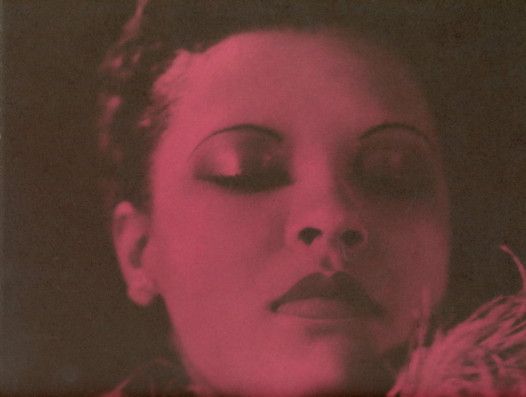
“Strange fruit,” writes T.J. English, is “the seminal jazz song.” This haunting ballad, written by a Jewish high schoolteacher, Abel Meeropol, in 1937 and burned into the collective cultural memory by Billie Holiday (pictured below) two years later, portrays the crime of lynching as central to the brutal history of the United States. “It is generally agreed that jazz as a new musical art form began to take shape in the early years of the 20th century. It is not generally commented upon that jazz, in its origins, was a response to the horror and reality of lynching in America.”
Mr English makes the persuasive argument that the birth of jazz, rooted in the African-American experience, was “nothing less than an attempt to achieve salvation through the tonal reordering of time and space.” But jazz could not scrub off the stain of violence. “Dangerous Rhythms” is not a book about music as an art form; it is instead a nuanced account of how, in the 60 or so years between the introduction of Prohibition and the enforcement of the rico Act—which brought the mafia to its knees in the 1980s—the development of jazz was facilitated by some of the most notorious criminals of the 20th century.
Music brought business to the mobsters’ speakeasies. The most renowned names in jazz history, including Count Basie and Duke Ellington, are linked with the names of the gangsters who fostered their careers. Louis Armstrong got his start in the seedy clubs of Louisiana: “One thing I always admired about those bad men when I was a youngster in New Orleans is that they all liked good music,” he said.
The criminal underworld was a male-dominated place, yet some female performers learned to navigate it. Mary Lou Williams, a pianist and composer, was managed by Joe Glaser (who also represented Holiday and Armstrong); Glaser had helped run Al Capone’s prostitution scheme in Chicago. Williams was under no illusions when it came to the jazz scene in the 1930s: “Everyone was like a hoodlum.”
Mr English — a journalist and author who has written several books on gangs in America and Cuba — chronicles the privileges of white supremacy. Black artists found protection where they could in a society built on injustice. The second half of the book turns to the career of Frank Sinatra. His ties with organized crime are hardly a secret, but Mr English lays out those brazen connections with clarity.
Sinatra became a padrone of the music business, a singular achievement among his peers. Mr English notes that Ol’ Blue Eyes’ fame far eclipsed that of the black musicians who had been pathfinders for his art; Sinatra’s ambition — and his whiteness — set him apart. Though the singer was on “the right side of the civil-rights movement, both in words and deed”, was his great financial success “fair market compensation” for his talent? If financial reward were based solely on ability, Mr English says, “Billie Holiday would have lived atop a mountain comprised of diamonds and rubies.”
The author writes that “the dirty little secret of the American dream was that violence was an integral part of social advancement.” His book suggests that was true, but it also reveals the way in which violence helped to nurture one of the greatest of all art forms, too.”
This article appeared in the Culture section of the August 12th 2022 print edition of The Economist Magazine under the headline "Fast and loose."
As you will note if you quickly peruse the subject headings of past blog features under LABELS in the right-hand column or sidebar of the blog, the editorial staff at JazzProfiles has been remiss about posting features about the iconic Jazz vocalist Billie Holiday.
In order to rectify this omission, we wrote to Gary Giddins and asked his permission to post his seminal essay Ladies Day from Lady Day: The Complete Billie Holiday on Columbia 1933-1944, Columbia/Legacy, 85470-2, July 2001]. He graciously granted permission and the article appears below in its entirety.
The piece is also found in Gary’s Weather Bird: Jazz at the Dawn of the Second Century [Oxford, 2004]. Order information can be located by going here.
After you read the following, I think you will agree with David Rubien of The San Francisco Chronicle when he states that “Giddins’ insights are so compelling and his writing so crisp that matters like past, present and future become moot.”
“How many Billie Holidays are there and which do you prefer? Elated or dour, funny or truculent, sweet or sour, our Lady of Sorrows or 52nd Street's Queen, early Billie or late, Billie of hope or heartache, Billie with Pres or with strings. Lady Day or Lady Nightmare or Lady in Ermine, Lady Be Good, Lady in Red, Lady Luck, Lady Blue, Lady Divine, the Lady who Swings the Band, Lady Mine—crank up the record machine, listen closely, and take your choice. For Billie Holiday is one of those exceptional artists whose work is a perfect tuning fork for our own inclinations. She echoes our emotions, rehabilitates our innocence, cauterizes our nerves.
How she managed so capacious a vision with her slim vocal range and infinite capacity for nurturing demons is a miracle to which generations of interpreters have been and will continue to be drawn. The greatest art never loses its mystery. The better we know hers, the more dreamlike and sensational it seems.
I am inclined to connect her with the equally inscrutable Edgar A. Poe, perhaps because I became mesmerized by both at the same age. What can she and the 19th-century writer have in common, beyond sharing an association with the South; spending critical years in Baltimore and New York; taking to drink and drugs; and dying, derelict, in their forties? For one thing, their power to haunt the soul. Consider that flawless short fiction, "The Fall of the House of Usher,” a story peculiarly remade by the imagination of each reader who, obliged to identify with a deliberately vague narrator, must examine feelings and maladies the narrator discounts as beyond analysis. Holiday, whether singing a stalwart lyric like "I'll Get By" or an insipid one like "What a Little Moonlight Can Do," requires no less rapport. The songs cannot account for the passion she engenders; it's a matter of alchemy. We transform such artists into romantic figures and bring our baggage to them, expecting them to lighten it. And they do!
Asked to choose one visual image to suggest the character of Holiday's sublime Columbia recordings, made between 1933 and 1942 (and in most cases originally issued by Brunswick, Vocalion, and OKeh), I would turn to the casual photography of Denmark's Timme Rosenkrantz. A jazz diehard and scion to a family that left him a title — baron — but little funds, Rosenkrantz crossed the Atlantic whenever possible, exploring Harlem from the ground up, or down, drinking his way through bars visited by few whites. He was 24 in the late summer of 1935, armed with a camera in the Apollo's back alley, shooting a singer that few people had ever heard of. Only a month earlier, Billie had recorded her first important session, as vocalist with Teddy Wilson, and one selection, "What a Little Moonlight Can Do," was about to break as a jukebox hit. The Dane was clearly enchanted by her: The most famous of the pictures he took captures a radiantly lovely young woman, 20 years old, flashing a direct and perfectly symmetrical smile, arms entwined with those of two musicians, while another kneels before her and a fourth stands behind.
This picture has been reproduced many times, though never as dramatically as in the booklet to Columbia's 1962 three-LP box, Billie Holiday: The Golden Years, where it bleeds over a full two pages, including a wall of lovelorn graffiti. (A Rosenkrantz shot of Billie alone was used on the cover.) It offers us a very different Holiday than the star — gowned in scarlet with a white orchid in her hair — she would quickly become.
In 1935, with her hair brushed back and skin glowing, she is a country girl in a short-sleeve, open-neck, gingham dress with pockets on the skirt. Her figure is, to use a favorite press adjective, buxom. Pigmeat Markham, a comedian who shared an Apollo bill with her the same year, remembered her as "a simple lookin' girl" who didn't know how to do "the things that girls do to pretty up." Yet she appears sexy and sure, happy to be one with the musicians: saxophonists Ben Webster (who played on the Wilson date), to her right, looking off, distracted, and Johnny Russell, to her left; pianist Ram Ramirez, an erstwhile prodigy who would later co-write her signature hit, "Lover Man," in front; and, behind, a man with a guitar who turns out not to be a musician at all, but a stagehand known as Shoebrush.
The camaraderie Rosenkrantz caught characterizes the best of Holiday's early records, made when she was just another musician, waiting her turn and often singing no more than a chorus. Yet her contributions never indicate an obligatory vocal refrain of the sort bandleaders included to sell a lyric. Holiday's choruses are genuine solos. Working in fast company with the greatest players in New York, which is to say the world (Wilson, Webster, Benny Goodman, Roy Eldridge, Bunny Berigan, Artie Shaw, Lester Young, Buck Clayton, Chu Berry, Johnny Hodges, and on), she always holds her own, singing confidently behind the beat with an improvisational bravura that frequently bests them all. By that time, she had endured a childhood of fear and privation far worse than anything Dickens contrived for Little Nell. But unlike Nell, Billie lived to tell her own tale.
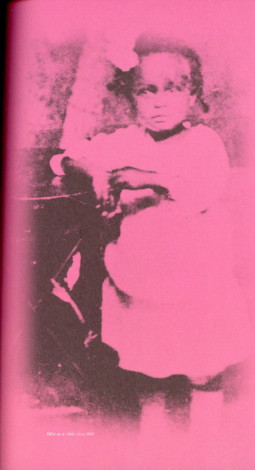
Her 1956 memoir, Lady Sings the Blues, opens with one of the most widely quoted passages of its time: "Mom and pop were just a couple of kids when they got married. He was eighteen, she was sixteen, and I was three." In truth, Billie was no writer; the ironic style is the work of "ghost" William Dufty, a journalist and one of her most loyal friends. (Two years later, he wrote the autobiography of Edward G. Robinson, Jr., whose only accomplishments were drunk driving and an attempted suicide, but whose tale starts off with a similar wallop.) In any case, like much of the book — which is well worth reading — it was only slightly true. Mom and Pop were kids when Billie was born, on April 7, 1915, but did not marry. Sadie, at 18, had two years on Clarence Holiday, who abandoned her and the child. As biographer Donald Clarke has shown, Billie was born Eleanora Harris (Sadie's family name), but her mother, whose own parents did not marry, assumed her father's name, Pagan, and Billie grew up in Baltimore as Eleanora Pagan.
Clarence, who went on to play banjo and guitar in prominent bands, played no role in Eleanora's upbringing, except perhaps to draw her, by example, to jazz and to capricious and abusive men. Sadie, with whom she developed a close relationship, was rumored to have run a whorehouse, and often sent her to board with relatives. Eleanora spent her tenth year in charge to the nuns at the House of the Good Shepherd for Colored Girls, where she may have been molested. A year later, she was raped by a neighbor and sent back to the nuns. At 12, she worked in a waterfront brothel, picking up extra change by singing to records. She later claimed her favorites were Bessie Smith and Louis Armstrong. If she never picked up Bessie's devotion to 12-bar blues, she did learn to infuse everything she sang with a blues feeling and tonality. From Louis, she learned style, swing, improvisation. Above all, she recalled, "I wanted Louis Armstrong's feeling."
After moving with her mother to New York, she worked in a whorehouse, did time on Blackwell's Island, and began singing for tips at small Harlem clubs like the Nest, Pod's and Jerry's, the Yeah Man, and Monette's. This was before microphones were common in high-class nightclubs (Bing Crosby had begun popularizing them in 1930, at Hollywood's Coconut Grove), let alone after-hours joints where the performers sashayed from one table to the next, often collecting tips with body parts other than their fingers. Eleanora, who scorned such indignities, learned to project at the same time she learned how to communicate intimately. She changed her name — borrowing Holiday from her father and Billie from actress Billie Dove and, possibly, Clarke suggests, a friend and fellow singer named Billie Haywood.
In 1933, entertainer Monette Moore opened Monette's Supper Club. With her hands full as hostess, she hired Billie to do the singing. In that late-night environment, Billie met a great many musicians and personalities, not least the talent scout, critic, and jazz lover, John Hammond, who had come to see Moore and left raving about Holiday. He, at 22, was a wealthy prude with powerful connections; she, at 18, was a hellion, eking out a living the best she could. Hammond introduced her to Benny Goodman, who briefly dated her, and arranged for her to sing one number at a record session on November 17, 1933. The featured performer that day was the great and imperious Ethel Waters, backed by a Goodman ensemble. The irony was Poe-etic.
Waters had been a Columbia recording star for eight years. This session would end her affiliation with the company and, except for a dozen Decca sides and a superb but little-noted comeback for Bluebird in the late-'30s, wrap up the recording career of one of the most influential singers in American music. After she completed her numbers, the highly competitive Waters listened to Billie make her debut, romping through "Your Mother's Son-in-Law" in an uncharacteristically high key. She was not impressed, and later commented that Holiday sang as though her shoes were too tight. Billie had been unnerved by her until pianist Joe Sullivan advised her to just close her eyes and sing. For years, I wondered about a seemingly incomprehensible line in the lyric—"You don't have to sing like fatso"—until the producer Michael Brooks pointed out that she is actually singing "Bledsoe," as in Jules Bledsoe, who played Joe in the original production of Showboat. Fatso or Bledsoe, her record went nowhere.
Still, on the same day that Ethel — whose great triumphs on the stage and in film were still ahead of her — departed Columbia, Billie's career was inauspiciously launched, at $35. And if the rivalry between those two women led the younger to omit the older from all discussions of her musical influences, we are obliged to stand outside the ropes and credit Waters's unmistakable impact. The 1923 "Ethel Sings 'Em" includes a stanza ("love is like a faucet...") that Billie would make famous in "Fine and Mellow," and the 1928 "My Baby Sure Knows How to Love" bodes Billie's way of inflecting vowels with a waver. Waters's style also anticipates the elocutionary precision with which Billie attacks consonants — for example, the dentalized t's in songs like "Getting Some Fun Out of Life," "Back in Your Own Backyard," and "Swing, Brother, Swing!" ("stop this dit-tle dat-tle") — an articulation that Dinah Washington, in turn, picked up from Billie. One could argue that Waters's influence on Holiday exceeded Bessie Smith's. Her most decisive model, however, remained Louis Armstrong.
Hammond, who contrived to get Billie on another Goodman side in 1933 ("Riffin' the Scotch," with a Johnny Mercer lyric that has nothing to do with the title), did not find the right formula for her until the summer of 1935, when she recorded with a seven-piece pick-up band fronted by Teddy Wilson. Several months earlier, she had sung, without credit, "Saddest Tale," in the Duke Ellington film short, "Symphony in Black," in a scene in which she is knocked down by a lover. Ellington did not, however, hire her for his band. When Wilson first heard her, he was no more impressed than Ellington. Near the end of his life, Wilson conceded that he initially thought of Billie as a gimmick: a girl who sang like Louis — a cute idea, but so what? He soon changed his mind.
The Wilson sessions are among the preeminent glories of recorded jazz, brisk and pointed and incredibly swinging. They were made largely for the jukebox trade, which in the ghastly years of the Depression emerged as the largest single market for records. Yet as brief and spontaneous as they are, these exemplary tracks overflow with detail and invention, rarely wasting a second, with each player obliged to make a personal, identifiable statement in just a few measures. Benny Carter once noted, "It's a pleasure to hear a guy like Ben Webster. He blows a note and you know he's there — and who he is." The great players could do that; they developed individual styles that told you right off who they were and what they were like. Fans did not need an announcer to inform them that a soloist was Webster or Young or Coleman Hawkins. Wilson's sides offered a de facto guide to the era's giants, because Hammond raided the big bands that happened to be playing New York when a session was scheduled, recruiting key players from Basie, Ellington, Goodman, Calloway, and the rest. These sessions remain an unbeatable primer on the leading soloists and rhythm players of the swing era.
They also offer an unusually rounded thesaurus of American song-writing in the golden age, juxtaposing the gold and the tin. Except for “I Wished on the Moon," the songs at the first session were decidedly second-rate, and they did not get much better over the ensuing year. Yet Holiday, Wilson, and friends readily turned Tin Pan Alley dross into bullion. Of the first 15 songs, three—"I Wished on the Moon," "What a Little Moonlight Can Do," and to a lesser extent, "Miss Brown to You"— became a permanent part of Billie's repertoire. Others endured as classic records. The quality of her material took a dramatic turn for the better in the summer of 1936. At the June 30 date, Billie helped to establish "These Foolish Things" as a standard and revived the 1920s hit, "I Cried for You." She also performed magic with the utterly forgotten "It's Like Reaching for the Moon," confirming the jazz axiom: 'Tain't what you do, it's the way that you do it.
The songs got even better in late-summer, after John Scott Trotter — a former arranger for Hal Kemp who would become famous as Bing Crosby's music director on Kraft Music Hall — was hired as chief of recording for the American Record Corporation, the holding company that controlled Brunswick, Vocalion, Columbia, and other labels through most of the 1930s. Hammond considered Trotter merely a busybody executive. But the fact that Billie immediately recorded the three main songs from Pennies from Heaven, a film Trotter had just finished orchestrating, and was backed at the first session by Bunny Berigan, Trotter's buddy in the Kemp days, suggests that Hammond understated his contribution, perhaps because he resented Trotter's authority. Trotter was undoubtedly a square. Yet during his tenure, Holiday recorded new songs by Porter, Kern, and Berlin, as well as older tunes, like "I Must Have That Man," which, with Berlin's "This Year's Kisses," inaugurated the uncanny bond between Billie and Lester Young, whose tenor saxophone — borrowed from Hammond's favorite orchestra, the Basie band — invariably complements, echoes, spurs, and inspires her in one of the most gratifying, unusual, and far too brief musical collaborations of the past century.
My favorite of the records they made together was generated not by a classic of the songwriter's art, but by one of the dimmest numbers Holiday ever sang, "A Sailboat in the Moonlight," written by Carmen Lombardo and John Jacob Loeb ("Boo-Hoo!" was another of their creations) for the former's brother, Guy. When I first got to know the record, playing it endlessly, I thought it a fine melody, with pretty chord changes, and words that might be corny but didn't seem so bad when Lady Day delivered them. Then I chanced to find the sheet music at a midwestern bazaar; at home, I picked out the melody with one finger and was astonished at how different it was from what Holiday sang. Until that moment, I had not fully gauged how freely imaginative her embellishments could be. By ironing out a phrase here, retarding another there, raising this note, slurring that, she transformed a hopelessly banal and predictable melody into something personal, real, meaningful. When she and Lester "sail away/to Sweetheart Bay," riding the waves side by side, you've got to clamber on board.
Another profound example of her transformative powers comes from her last wartime Columbia session, on February 10, 1942, and an impossible song called, "It's a Sin to Tell a Lie," the subject six years earlier of one of Fats Waller's most extravagant burlesques. "I love you, I love you, 1 love you," he intoned contemptuously. And here comes Billie, declaiming, "I love you, yes I do, I love you," rhythmically pinning every syllable to its post and employing a Lestorian slur on the last "love." Do you believe her? How can you not?
By then, she had become a very different performer, a jazz star of high rank, proudly bearing the nickname, Lady Day, conferred upon her by Young (he called her mother Duchess). She in turn dubbed him Pres: Lester, she said, was to the saxophone what President Roosevelt was to the nation. Their musical association, however, was largely in the past. The very nature of her records had changed. Between 1937 and 1939, she recorded as often under her own name as under Wilson's; after the January 30, 1939, Wilson session, she recorded almost exclusively under her own name. The level of musicianship remained high and her own singing grew increasingly nuanced, but she was no longer one of the guys, waiting her turn. She was every inch a star.
When Lester had appeared on the "I Must Have That Man" session, he was 27, six years older than Billie, yet it was only his third time in a recording studio. His accompaniment was tenderly amorous, sometimes exuberantly so ("Me, Myself and I," "When You're Smiling"), but usually gentle and more delicate than the ardent honking and high-flying fancies he offered followers of Count Basie. The platonic tenderness that sheltered Lester and Billie could not, however, be sustained for long. In all, he appeared on five sessions with her in 1937, not including a couple of Basic broadcasts, five more in 1938, and only one per year between 1939 and 1941. Over time, his alcoholism and her addiction to heroin tore them apart, and though they occasionally shared the stage at Jazz at the Philharmonic concerts, producer Milt Gabler never used him on her Decca sides and producer Norman Granz, who had Lester under contract, never used him on her Clef and Verve records. They were reunited on one serene number in an unforgettable television broadcast, in 1957, and died two years later — Lester on March 15 (his widow prohibited her from singing at the funeral), and Billie on July 17, after nearly two months in a hospital, much of that time with a police guard at her door. She was, as Faulkner famously wrote of one of his own characters, "Doomed and knew it; accepted the doom without either seeking or fleeing it."
Tough as nails yet prone to abuse, Lady had long since become America's Little Sparrow (she and Edith Piaf were born in the same year), perhaps even better known for her woes than her music. And yet she had come a long way on her own terms. In the beginning, she played the Famous Door on 52nd Street for four days, having walked out when the owner told her not to socialize with white customers. At that time she had to contend with stage managers who complained that she sang too slow and with song publishers who griped that she took too many liberties. Her standing took a turn in 1939, working at Barney Josephson's Cafe Society and closing her sets with Abel Meeropol's vivid threnody about a lynching, "Strange Fruit." She returned to the Famous Door as a major draw — treated accordingly — and, ironically, something of an earth mother to white servicemen who spent shore leave listening to her. After recording "Strange Fruit" for Milt Gabler's Commodore, because Hammond wouldn't touch it, Holiday was taken up by some with political agendas. But she had her own reasons for sticking with that song for 20 years, making it her personal anthem, thrusting it in the teeth of people who thought they had come to be amused.
She had toured briefly with Basie and Artie Shaw, leaving the former, she claimed, because Hammond wanted her to sing more blues like Bessie Smith (maybe, maybe not, though Hammond told me a few weeks before his death that he much preferred Bessie), and the latter because of racism. Forget the South: New York's Hotel Lincoln insisted she use the freight elevator and the Old Gold cigarette company would not allow her to broadcast with Shaw's band. She retained her independence and spirit, living the life she chose, singing the music she loved in a style she invented. She did not suffer slights quietly: In 1946, she was signed to appear in her only feature film, with her idol Louis Armstrong, but, cast as a maid, she stormed off the set of New Orleans before it was completed. Melancholy themes had begun to loom over her repertoire, and they increased over time. No longer sailing in the moonlight in a sunbonnet blue and laughing at life, she sang of despair, longing, betrayal: "Gloomy Sunday," "Lover Man," "Travelin' Light," "Good Morning, Heartache," "Detour Ahead," "Don't Explain," "God Bless the Child."
She suffered for love, evidently indulging a masochism that sometimes got out of hand. It also bound her to drugs. In 1941, Holiday married a handsome hustler named Jimmy Monroe and began smoking opium. Then she moved in with trumpet player Joe Guy, who used heroin. She capitulated to an addiction that could not be tempered by a voluntary six-week hospital cure or a judge's 1947 decision to incarcerate her for a year and a day at the Federal Reformatory for Women in Alderson, West Virginia — the result of Billie's decision to plead guilty and not to testify against Guy, with whom she was busted. Guy, a musician of limited abilities, walked. Billie served her time and lost her cabaret card. That meant she could not work anyplace in New York where alcohol was sold, undermining her career and guaranteeing her return to narcotics. There were subsequent arrests and countless tabloid articles that almost always referred to her as "blues singer Billie Holiday."
She took up with a vicious pimp named John Levy (not to be confused with the bassist of that name who often performed with her), and then fulfilled the prophetic lyric of "Riffin' the Scotch": "Swapped the old one for a new one / Now the new one's breaking my heart / I jumped out of the fryin' pan / And right into the fire." Louis McKay was a low-level hoodlum whose one saving grace was that he lacked Levy's unreasoning violence. But he was a relentless exploiter, who squandered her money and used drugs to keep her under control. In 1956, Billie and McKay were busted in Philadelphia, and he convinced her to marry him to prevent her from testifying. That she could see through him, but loved him, is apparent from her desperately scribbled letters, almost always written on hotel stationery and occasionally quoting song lyrics (I have not attempted to replicate Holiday's quirky use of capitals, and have ventured a few guesses about punctuation):
Mr. McKay,
Let's face it you're not my husband. Not even my boyfriend. You have no time for me. Everything is your kids, Mildred or just anything comes before me so I am not important to you in any way. You have even made cracks about [some?] dirty bitches that meant more to you than me. So why don't we come to some kind of understanding. Well you know. Just be my manager until after the Phila story. No I have no one else and don't want anyone. But Louie how much can I take. You're in New York two days and I, your wife, see you five minutes. So just lets be friends and forget it.
Lady
Louis when you left this morning I know you had no more feeling for me so lets get together, lets call this whole thing off. Your not happy with me and I am very unhappy. Thank you for everything you have done for me. Lady Day
This is It
I've had it goodbye
Waited hoped and prayed but nothing goes my way. This is it, so
long. Tried not to see but I am not blind to all the tricks you played
on me. This is it. Oh well you say that I am dumb but how dumb
can you get. This is it This is it This is it This is it. You can't be
mine and someone else's too. What are you trying to do. This is it.
Good bye.
On one occasion Billie had McKay tailed, and what she saw made her "feel sort of cheap and dirty." Had she lived, she undoubtedly would have sent him packing. Instead, he assumed control of her estate, making sure he was portrayed — by Billy Dee Williams, no less — as the romantic and devoted sole love of her life in the appalling movie Lady Sings the Blues, which didn't even use her voice, never mind her story. But then her voice is her story, the only one that counts, the one that can't be distorted by lovers or haters, exploiters or philanthropists, critics or fans. Her enchanted records tell the truth and nothing but the truth — indeed, more truth than most of us knew, if you pay attention to the alternate takes and ponder the risks she took, gliding too high for her range or, touchingly, casting for the right note on which to end. Lady Day at the summit of her art is as glorious now as 60 years ago, an imperishable fixture in the cultural life of America and the world.”
[Lady Day: The Complete Billie Holiday on Columbia 1933-1944,
The following review appeared in the December 20, 2018 edition -Vol. 40 No. 24] of the London Review of Books.
‘She was always shooting towards tragedy. ‘It was just a question of how and when.’
- Artie Shaw
‘Her voice is her story.’
- Gary Giddins
‘It was an altogether different style. I’d never heard anything like it.’
- Count Basie
Her Haunted Heart By John Lahr
Lady Sings the Blues by Billie Holiday Penguin, 179 pp, £9.99, November 2018, ISBN 978 0 241 35129 1
“‘I’ve been told that nobody sings the word “hunger” like I do. Or the word “love”,’ Billie Holiday says in her memoir Lady Sings the Blues (written in 1956 with William Dufty and now reissued). Like Kafka’s hunger artist, Holiday let song make a spectacle of her deprivation. ‘I don’t need a friend/My heart is broken, it won’t ever mend/I ain’t much carin’/Just where I will end,’ she sang in ‘I Must Have That Man’, a song minted out of her calamitous life. ‘She was always shooting towards tragedy,’ said the virtuoso clarinettist Artie Shaw, whose band she briefly sang for. ‘It was just a question of how and when.’
Singing stops stuttering. In Holiday’s case, it stopped loneliness by making art out of the indigestible griefs that finally claimed her. (She died in 1959, at the age of 44, from the consequences of drug addiction.) She’d emerged in the mid-1930s, starting out when she was 18, and quickly became America’s first fully fledged jazz singer, blazing her way to fame with a trail of songs, some of which she co-wrote: ‘Don’t Explain’, ‘Strange Fruit’, ‘Fine and Mellow’, ‘God Bless the Child Who’s Got His Own’. Blighted in almost every other way, she had the luck of talent. ‘I never heard her hit a bad note that was off by even a 16th of a tone,’ Artie Shaw said on another occasion. ‘She had a remarkable ear … and a remarkable sense of time.’ She was an uncanny rhythm machine. She imposed her moody metabolism on language in such a way that even the most banal Tin Pan Alley ditty was reimagined and refreshed. ‘Ooo – ooo – ooo,’ she crooned, putting teasing vigorish on the vowels. ‘What a lil’ moonlight can doo – ooo-ooo.’
‘Her voice is her story,’ the jazz critic Gary Giddins said of Holiday’s melancholy majesty. Wary and solitary in life (‘I don’t make friends easily’), on stage she was unabashed about opening her haunted heart. ‘Good morning heartache/Here we go again,’ she sang, in her come-hither legato phrasing, caressing the words as she swung them: Holiday’s singing was an exercise in intimacy. ‘If you find a tune and it’s got something to do with you, you don’t have to evolve anything,’ she said. ‘You just feel it, and when you sing it other people can feel something too.’ Her candour bore witness to the pain she found in pleasure, and the pleasure she found in pain.
‘White Americans know very little about pleasure because they are so afraid of pain,’ James Baldwin wrote, ‘but people dulled by pain can sing and dance till morning, and find no pleasure in it.’ Holiday’s bitter-sweetness – a cocktail of the rambunctious and the rueful – spoke to both sides of this conundrum. Although she was variously billed in the white music press as a ‘sepia songstress’, a ‘coloured canary’ and a ‘bronze bombshell’, her records were not released as ‘race records’: they went straight into the American mainstream. To the professionals as well as to the devoted paying customers, her sound was a revelation. ‘It was an altogether different style. I’d never heard anything like it,’ Count Basie said. In time he employed her. John Hammond, the pioneering record producer who ‘discovered’ Holiday, said: she ‘changed my musical tastes and my music life’; she ‘sang like an improvising jazz genius’.
‘I don’t think I’m singing. I feel like I’m playing a horn. I try to improvise like Les Young, like Louis Armstrong, or someone else I admire,’ Holiday writes. ‘What comes out is what I feel. I hate straight singing. I have to change a tune to my own way of doing it. That’s all I know.’ If you shut your eyes and conjure Holiday, the first thing that comes to mind is her raffish eloquence, at once bantering and brooding; then her totemic image gradually emerges in the mind’s eye: a tall, elegant, light-skinned woman with long black hair tied into a chignon, a gardenia pinned to the side of her head – a gardenia first worn to cover an actual head wound. Her free-wheeling and forlorn sound turned the mess of her life into a public show of equanimity and poise.
In Lady Sings the Blues – ‘her own hocus pocus’, according to the New Yorker’s Whitney Balliett – Holiday magics up the castle in her cloudy sky. ‘A big place of my own out in the country someplace where I could take care of stray dogs and orphan kids, kids that didn’t ask to be born; kids that didn’t ask to be black, blue or green or something in between. I’d only want to be sure of one thing – that nobody in the world wanted these kids … They’d have to be illegit, no mama, no papa.’
A feeling of having been orphaned was how Holiday experienced her family. ‘Mom and Pop were just a couple of kids when they got married. He was 18, she was 16, and I was three.’ Her memoir begins with this much quoted sentence. Holiday’s parentage was in doubt. Her need to make a coherent story of her origins is more significant than the makeshift Baltimore household she emerged from. In fact, Holiday was not born in Baltimore, as her memoir insists, but Philadelphia. According to the birth certificate, her father was also not the sometime guitarist Clarence Holiday, whose surname she later bore, but a waiter called Frank DeViese. Born Elinore Harris,
Holiday was unmoored from the very beginning. As a child, she was more or less abandoned by Clarence, who was on the road with various bands, and by her beloved mother, Sadie, who went north to New York to earn money, leaving her in Baltimore with her fault-finding, cruel cousin Ida, who handed out beatings like nuts at Christmas. (‘She was one of the worst black bitches God ever put on earth,’ Holiday writes.) The existential panic of her later years – ‘I was on my own. Nobody could help me’ – recapitulated the terror of disintegration that marked her awful abandoned youth. Holiday, who left school after the fifth grade, never really had a childhood: mostly, she had trouble. ‘If you expect nothing but trouble, maybe a few happy days will turn up. If you expect happy days, look out,’ she said, a lesson she learned in the family crucible.
Every barbarity was lavished on Holiday: racism, penury, rape (at ten), Catholic reform school; prostitution by the age of 12. At 13 – ‘I was a hip kitty’ – she decamped to New York to join her mother, who was working in a whorehouse. Holiday became a call girl: ‘the madam took five out of every twenty dollars for rent. This still left me more than I could make in a damn month as a maid. And I had someone doing my laundry.’ That was her first taste of regular pay; when the cathouse was busted and she gave her age as 21, she also got her first taste of prison – one hundred days. Her sassy, unrepentant waywardness was the residue of her streetwise disenchantment: ‘You’ve got to have something to eat and a little love in your life before you can hold still for any damn body’s sermon on how to behave.’
Holiday first aspired to be a dancer, not a singer. She flunked her first singing audition because she didn’t know what key she sang in. But she was soon working the clubs, singing for tips that the singers had to take off the tables, a negotiation she found demeaning. When one ‘millionaire’ customer handed her a $20 bill, ‘I figured if a millionaire could give me money that way, everybody could. So from then on I wouldn’t take money off tables.’ Thus, the moniker ‘Lady’ was coined, a bit of razzing from the other girl singers before it became a token of reverence in the music world.
If Holiday’s singing had ‘an aural affinity for the saxophone’ that ‘offered her stimulating and symbiotic introductions and accompaniment’, as Patricia Willard puts it in The Oxford Companion to Jazz, she also had symbiotic connection to her men, many of them junkies, who often exploited and manhandled her. (She married badly three times.) When her first philandering husband came home with lipstick on his collar and tried to cover his tracks, Holiday cut him off in mid-lie with words she later turned into song:
Hush now, don’t explain
Just say you’ll remain
I’m glad you’re back, don’t explain
Holiday’s fear of being abandoned, her longing to be contained and protected by a person she could trust, was her plaint in song as well as life. ‘Any old time you want me/I am yours for the asking,’ she sang. Her violent need often had violent repercussions. ‘I’d rather my man would hit me/Than follow him to jump up and quit me,’ she sang in ‘Ain’t Nobody’s Business If I Do’, adding: ‘I swear, I won’t call no copper/If I’m beat up by my Papa.’
Underneath its masochistic passivity, Holiday’s longing for surrender also held a sadistic potential. In ‘Fine and Mellow’, for instance, she threatens her ‘oh so mean’ man – ‘Love is just like the faucet/It turns off and on …/Sometimes when you think it’s on baby/It has turned off and gone.’ In life, especially when high, Holiday was capable of taking fierce, foul-mouthed offence. As her memoir relates, when a dressmaker overcharged her, she shoved the woman’s head in the toilet and flushed it. And, in 1939, at the Café Society, displeased with her reception and wearing no underwear under her gown, she turned her back to the paying customers and mooned them.
‘Love will make you drink and gamble’, she sang: ‘Make you stay out all night long/Love will make you do things/That you know is wrong.’ One of those wrong things was drugs. Holiday was hooked early in her career; she tried but couldn’t kick her habit. In 1947 – ‘no one in the world was interested in looking after me at this point’ – she was arrested for possession and imprisoned for a year at the Federal Women’s Reformatory in Alderson, West Virginia. ‘I didn’t sing a note the whole time I was in Alderson,’ she writes. ‘The whole basis of my singing is feeling … In the whole time I was there I didn’t feel a thing.’ Because of her drug conviction, Holiday lost her New York City cabaret card; from then on, she was only allowed to perform in theatres or concert spaces. Ten days after getting out of jail, she gave a thrilling midnight comeback concert at Carnegie Hall. (‘The biggest thing that ever happened to me.’) Later, as she became increasingly erratic – the music press called her ‘Lady Yesterday’ – she would stage a series of comebacks. ‘I’m always making a comeback, but nobody ever tells me where I’ve been,’ she quipped.
Holiday was briefly cured of her addiction; when it returned, so did the hell of busts, bondsmen, bail and beatings. ‘With all the doctors, nurses and equipment,’ she says of her prison rehab, ‘they never get near your insides at what’s really eating you.’ Her game face announced that she wasn’t giving anything up except bubble gum and hard times. In private, however, she’d lost faith in her own goodness. ‘Dearest the shadows I live with are numberless,’ she sang in ‘Gloomy Sunday’, a fantasised suicide note which continued ‘My heart and I/Have decided to end it all.’ In her memoir she writes: ‘All dope can do is kill you – kill you the long slow way.’ Holiday may have lost her way; but she never lost her audience. ‘I’ve always been fortunate as far as the public is concerned. I could kill myself if it wasn’t for them.’
Lady Sings the Blues was written three years before Holiday died. Apart from the pitch and roll of her street talk, it has nothing to offer as a piece of writing; its value is in its witness to the grinding humiliation of the racism that tainted every moment of her louche life. ‘You can be up to your boobies in white satin, with gardenias in your hair and no sugar cane for miles,’ she writes, ‘but you can still be working on a plantation.’ At the Metropolitan Hospital, into which she managed to smuggle drugs even when she was on her deathbed, a police guard was removed from her room by court order only a few hours before she died. She was found with 15 fifty dollar bills strapped to her leg and seventy cents in her bank account.”