“Seldom in receipt of the kind of plaudits some other arrangers seem swamped in, Holman has quietly put together an awesome body of work, and recent records find him in peerless form. …. A View From The Side [1997] is replete with frighteningly elaborate scores dispatched with the utmost elegance: to cite a mere two examples, sample the almost fantastical interplay of the sections on 'I Didn't Ask" or the rich, sobering treatment of 'The Peacocks', a concerto for Bob Efford's bass clarinet. Brilliant Corners [1998] is no less of an achievement and, considering the difficulty of arranging Monk tunes for big band, these ten charts seem like the work of a magician: has anyone dared score the title-piece in such a way? Here is one of the genuine masters doing his greatest work.”
Richard Cook and Brian Morton, The Penguin Guide to Jazz on CD, 6th Ed.
“Holman internalized Monk long ago. He has had Monk pieces in his band's book since the 1970s and included "I Mean You" in his 1988 JVC album Bill Holman Band. In preparing for this compact disc, he sought out Monk's recordings to identify the pieces he wanted to arrange, but once those decisions were made, he cut off contact with Monk."
"I wanted to do it my way," Holman says, "so I decided to leave the area."
Holman says that his writing for the Monk pieces is more like the work he has been doing the past few years for orchestras in Germany, Holland and the Scandinavian countries.
"I'd always had that American big band thing in the back of my head when I was writing for my band," he says. "I didn't feel that the traffic in this country would bear too much 'out' stuff, that Americans like big bands to sound like big bands. This has abrupt changes in texture and mood, operating outside of the typical dance band vocabulary."....
"It's great to do things like that because jazz bands were locked into that four-part harmony for so many decades that to get away from it completely is freedom. Some of the guys in the band are still trying to figure out how these things fit into the harmonic scheme. Well, a lot of times, there isn't any harmonic scheme."
My conclusion is that Willis Leonard Holman is a wonder. Monk should have stuck around for this one.”
Doug Ramsey, booklet notes to Brilliant Corners The Bill Holman Band Plays The Music of Thelonious Monk [JVC 2066-2]
The following piece featured in Gary’s Weather Bird: Jazz at the Dawn of Its Second Century [2004] and was originally published in Village Voice 17 February 1998. It is used with the author’s permission.
“A Holman arrangement is distinguished by several hallmarks, chief among them his ability to keep several balls in the air at the same time. Something is always happening….. A typical Holman moment is an epiphany of sorts, as if contemplation of the melody at hand spurred an unexpected juxtaposition, idea, or joke.”
“Bill Holman, who may be the premiere living jazz orchestrator and is surely a contender, is back, at 70, in rare form. One of the best records of 1997 was A View from the Side, and whatever 1998 brings, few albums can top Brilliant Corners: The Music of Thelonious Monk. Holman always keeps busy in Los Angeles and Europe, but records released under his name are so infrequent that they support a long-standing cult without confirming his reputation as a major figure in the development of big band music. Brilliant Corners may not change that, but it provides standards for an idiom that too often waffles in amateurish unoriginality and is sure to keep you searching for more of the same.
The work of all great arrangers raises the question of where the line is drawn between composition and orchestration. Several of the best, from Gil Evans to Nelson Riddle, were insignificant melodists who brought organizational genius to the melodies of others. Holman has composed several effective pieces—"Invention for Guitar and Trumpet," "The Big Street," "Far Down Below," "Concerto for Herd"—but he is never as inspired as when recasting a familiar tune. He is at bottom a variations man and a good theme frees his imagination, which exults in diverse effects, tempos, humor, melodic juxtapositions, and vigorous rhythms. The wonder of his Contemporary Concepts, written for Stan Kenton in 1955, is that he simultaneously reconfigured the big band for a world bereft of ballrooms while stressing the Count Basie dictum to pat your foot, in addition to transfiguring melodies like "Stompin' at the Savoy" and "What's New" and turning the intransigent "Stella by Starlight" into a concerto for Charlie Mariano that would have earned the alto saxophonist a footnote in jazz history all by itself.
Yet the concerto style is not Holman's forte, except in the Bartok sense of a concerto for orchestra. A Holman arrangement is distinguished by several hallmarks, chief among them his ability to keep several balls in the air at the same time. Something is always happening. It is a cliche to say that a bandleader makes a small group sound like a big band or a big band sound like a combo. Holman makes a big band sound enormous—given the luxury of 16 musicians, he seems to imply, "use them, all of them, all the time." Another hallmark is his distinctive use of counterpoint, which he never launches in a Bach-like fantasy, one melody bouncing off another, but in a kind of unison responsiveness, as though the melody under discussion suggested one or two related melodies that fit when played together. Why settle for a single tune when you have enough musicians to play several? Another hallmark is that the result is never cluttered and the secondary melodies often have a linear integrity to match the originals.
A typical Holman moment is an epiphany of sorts, as if contemplation of the melody at hand spurred an unexpected juxtaposition, idea, or joke. Brilliant Corners bubbles over with them. Indeed, Monk's title isn't a bad description of Holman's method. He keeps the big, colorful balls floating in front of your eyes, but you don't want to miss the action at the edges. A few Holman moments: Toward the close of "Thelonious," he harmonizes Monk's insistent one-note theme (actually, three notes, not that you'd notice) for unison flute and piano and you realize that the tune is Morse code—in any case, Monk code; in the middle of "'Round Midnight," he inserts a four-note riff from an introduction popularized by Miles Davis, but gives the first three staccato notes to the trumpets and the fourth to a wry trombone, conveying conversational whimsy even in this fleeting transition; "Rhythm-a-ning," a chart from 20 years ago and inspired by Basie's "Little Pony," begins with Monk's theme-how conventional!—but at the second eight bars is joined by a parallel figure and, after the chorus, the tempo crashes and the reeds invoke five seconds of Tadd Dameron's "Hot House." Holman is a fiend for Rorschach-test allusions. Elaborate variations on "Ruby, My Dear" include a bar of "Groovin' High," "Brilliant Corners" is spelled by a Charles Ives interlude, and a fleering reference to "Nardis" wafts by during one of the transitions in '"Round Midnight."
The endings of all 10 selections are pure Holman and utterly savory, none more so than the gearing up of drums to launch three thunderous blasts of brass in "Straight, No Chaser." On a few occasions he uses bent or sliding notes. The ultimate slurp is a tailgate trombone lick some six minutes into "Friday the 13th." Before you can wonder what it's doing there, the band is off on a full-throttle shout chorus, but the performance closes with solo soprano saxophone, which just happens to finish with a left-field slur. "Misterioso" is nothing but Holman moments. A bright two-note riff is immediately countered by a deep-blues bass figure to remind you what kind of piece this is. Then the melody hits and you have all three in the air—the riff, the bass line, the tune. Profligate with invention, Holman writes a completely different variation after each solo, though they all counter ominous blues voicings with unexpectedly cheerful riffs, including one that has the reed section competing with itself and another that amounts to a four-bar swing era interlude, right before a deep-blues bass solo. The other great blues, "Straight, No Chaser," is deconstructed from the top down, so that in the first few minutes the band plays not Monk's theme but a Holman variation based on the same rhythm; when a canonical transition two-thirds through finally triggers Monk's tune you feel you have earned its comfort, but before long Holman—whose chords are now waxing in heft and dissonance—can't resist pointing out that it reminds him of Til Eulenspiegel.
I haven't mentioned the soloists, and there are good ones —especially the saxophonists Lanny Morgan, Bill Perkins, and Pete Christlieb (whose "Rhythm-a-ning" cadenza pays homage to Wardell Gray). Solos in work like this invariably seem somewhat generic. Like a film or theater director, a bandleader exercises control over the performances when he chooses his cast. When big band soloists were innovators, they were as important as arrangements and sometimes more so. But as Basie pointed out when he regrouped in the early '50s, the writing lingers on after the soloists have gone. Holman has a crew of solid professionals up to every task he assigns, but the play is the thing and during the best of solos it is the orchestral backing, rhythmic change-ups, and Monk allusions (often fanciful or abstract) that excite your attention. Although " 'Round Midnight" was originally recorded by Cootie Williams's big band and Hall Overton successfully adapted Monk's own harmonies for an ensemble with seven winds, Monk is not often heard in orchestral arrangements (a notable exception is Ellington's 1962 "Monk's Dream"). The trick is to love Monk's music without attempting to replicate his style, which is matchless. Only Holman's "Bemsha Swing" disappoints, because his dated boogaloo beat pales next to Monk's geometric rhythms, and even here the secondary themes punch up the action to the point of near-euphoria. Elsewhere, the euphoria is fully realized—enhanced by JVC's audiophile mastering.” ….
Often associated with the Detroit school of pianists which included Tommy Flanagan [1930-2001], Barry Harris [1929-2021] and Roland Hanna [1932-2002], Hank Jones [1918-2010] was a central piano figure on the world scene for well-over half a century.
As Leonard Feather comments in his notes to Hank Jones: Live at Maybeck Recital Hall, Volume Sixteen [Concord CD-4502]: ”Hank, like most other pianists of the day, was strongly impressed by Bud Powell, but like Tommy Flanagan and others from the Detroit area, he transcended the bop idiom to become an eclectic interpreter of everything from time-proof ballads to swing and bop standards.”
The following appeared in the June 4, 2007 edition of The New Yorker. It will also be included in my forthcoming Jazz Piano A Reader Volume 2.
“Jones’s casual authority has an effect not unlike Fred Astaire’s dancing; he makes it look easy, not simple, and you want it to go on all night.”
“In mid-May, Hank Jones, slim and dapper, accepted a hand-up to the stage at Dizzy’s Club Coca-Cola and approached the piano with regal but nimble bearing. His first chords, close and luminous, were reassuring, and, in the circumstances, this was welcome. Jones had initially been scheduled to play three nights of duets with the saxophonist Joe Lovano, but shortly before the event they announced that Jones would limit himself to half a set, with Lovano’s nonet rounding out the hour. Eleven weeks earlier, Jones had undergone a quadruple bypass after a massive heart attack. No big deal, according to Jones, who remarked, before going on, that performing helps him maintain muscular control in his hands and arms. In July, he will celebrate his eighty-ninth birthday.
Jones is perhaps the most venerated of contemporary jazz pianists, and not just because he has outlived so much of the competition. Jazz taste oscillates between decorum and expression, usually favoring the latter. In the years when jazz piano was dominated by obdurate, percussive modernists like Thelonious Monk and Cecil Taylor, Jones was often perceived as a genteel professional, and admired more for the reliability of his technique than for his wit. In today’s more ecumenical musical climate, in which pianists like Bill Charlap and Jason Moran tend to mediate percussive dynamics with lyricism, Jones’s approach seems almost prophetic.
In truth, Jones’s playing isn’t all that genteel: mannerly, yes, but at the core resolute and spare. As his most intricate phrases skitter over the keyboard, he barely seems to depress the keys, yet each note is cleanly articulated. His touch has always been unmistakable, but it has never felt quite as personal as in recent years, and his sound has taken on a soft, steady glow, like a candle with a small wick. His variations burn with infallible confidence and precision, and he can afford to hold much of his technique in reserve. Although many sides that Jones cut with Charlie Parker, Cannonball Adderley, and Ella Fitzgerald during the forties and fifties are rightly regarded as landmarks, his most bewitching performances have emerged during the past decade and a half.
Jones’s extraordinarily supple time — the rhythmic sensibility that generates swing and equilibrium — reflects his apprenticeship. He began performing near his home, in Pontiac, Michigan, at the age of thirteen, in 1931, a time when jazz piano was by no means a settled practice. In the twenties, ragtime habits had given way to the free-spirited, resilient rhythms of the Harlem stride masters, chiefly James P. Johnson and Fats Waller, and their style was given further impetus by the improvisational bravura of Earl Hines. Jones chose Hines and Waller as models, and soon added the most adventurous pianists of the early thirties: Teddy Wilson and Art Tatum. Tatum, whose virtuosity galvanized a generation of musicians in and out of jazz, told Jones that everyone makes mistakes, but that quick resolutions cover them up. Jones didn’t believe that Tatum really made mistakes, and he doesn’t make many, either; the economy of his style, for all the polish and cunning, is too transparent to allow them.
In 1944, Jones came to New York. Within months, he was working with the jazz élite. He was also soaking up innovations of the new jazz, called bebop, pioneered by Charlie Parker and Dizzy Gillespie. Few established swing stars could make the leap into its harmonic complexity and rhythmic volatility, but Jones grasped it immediately. He didn’t trade in his old style but, rather, modified what he already knew. By the mid-fifties, he had developed an ingenuity that appealed to musicians but escaped the notice of many fans and critics. Its defining characteristic is an aversion to cliché. He is fond of transforming material usually neglected by jazz improvisers, from “We Shall Overcome” to one of his longtime signature pieces, a melancholy meditation on “Oh, What a Beautiful Mornin’.” When playing well-worn standards, like “My Funny Valentine,” he recharges them with substitute chords and melodic inversions. His improvisations start on familiar ground, flirt with the listener’s expectations, and then lead somewhere entirely unanticipated. In a recent recording of “The Shadow of Your Smile,” he undermines the expected Latin rhythm, ends the theme with a sudden discord, and, in the course of his improvisation, nods at other tunes —“Pretty Baby,” “Volga Boatmen,” “Hot House”— without quite acknowledging them. These are not the standard jazz quotations, jimmied into a solo, but ideas weighed, rejected, and alchemized.
From the late fifties into the seventies, Jones was on the staff of CBS, appearing on “The Ed Sullivan Show” and many other programs. He made good money and was in the vanguard of integration at the networks, but, musically, he slipped from view. Then, in 1976, he started making up for lost time. Within two years, there were eight new albums, and the tide has yet to ebb. In 1978, he appeared on Broadway as the onstage pianist in the Fats Waller revue “Ain’t Misbehavin’,” and he later recorded an album, “Handful of Keys,” that subjects Waller’s antic themes to ruminative treatments. Jones’s versatility has given rise to a fascinating spread of collaborations with other artists. He seems equally comfortable recording a hushed, prayerful album of hymns and spirituals with the bassist Charlie Haden (“Steal Away”) and playing alongside the West African musician Cheick-Tidiane Seck (“Sarala”), whose sound-world, rife with overblown flute and exotic percussion, spurs Jones to invent rhythmic aphorisms and so uncover another facet of his art. He has also recorded with his youngest brother, Elvin, who radicalized jazz percussion as a member of the John Coltrane Quartet and might therefore seem to be the opposite of his brother. But Jones negotiates Elvin’s pounding polyrhythms with equanimity, especially on the album “Upon Reflection: The Music of Thad Jones.” Thad, the middle brother, was a trumpet player, composer, and bandleader who revived big-band music in the nineteen-sixties. (Hank, the eldest, is the only survivor.) All in all, Hank Jones can be said to have had the most impressive second act in jazz history.
At Dizzy’s, Jones and Lovano opened with “Lady Luck,” written by Thad Jones and Frank Wess when they were members of Count Basie’s band. Based on the harmonies of “Taking a Chance on Love,” but with an initial melodic phrase that recalls “You Took Advantage of Me,” the piece goes its own way, as did this performance, motored by Jones’s plush stride and Lovano’s fuzzy,
Ben Webster-in-spired timbre. Jones’s casual authority has an effect not unlike Fred Astaire’s dancing; he makes it look easy, not simple, and you want it to go on all night. Lovano is an ideal match for him. At fifty-four, he has synthesized the music of his generation in an almost Jonesian way, combining big-band apprenticeship with avant-garde curiosity. Since he and Jones began playing together, in 2003, they’ve made three CDs. The first two are quartet albums: “I’m All for You,” in 2004, was widely acclaimed, but the follow-up, “Joyous Encounter,” in 2005, demonstrates a deeper symbiosis; its version of “Autumn in New York” has the spacious commitment of a weathered classic.
With the new duet album, “Kids,” the Jones-Lovano partnership ascends to a new level, and the record will surely make many of the year’s best-of lists. Shorn of the rhythmic support of bass and percussion — Jones is, in effect, the rhythm section — the piano and tenor take on a conversational immediacy. In Thelonious Monk’s “Four in One,” the speed and precision of the playing all but meld piano and saxophone into a single instrument, recalling some of Monk’s own collaborations. Other highlights include Lovano’s portrait of Charlie Parker (“Charlie Chan,” a pseudonym that Parker once used); Jones’s harmonically challenging “Lullaby”; a wistful “Lazy Afternoon”; and a sensational reprise of Jones’s solo-piano arrangement of “Oh, What a Beautiful Mornin’.” At Dizzy’s, they also played Monk’s “Monk’s Mood”: Lovano pulled away from the final chorus of his solo after an intense and convoluted flurry of eighth notes. Jones, with impeccable protocol, looked up before starting his own solo to make certain Lovano was done. Lovano nodded, and Jones’s right hand instantly shot into an eloquent distillation of the chords, reshaping the melody. Lovano looked at him for a moment, and then admiringly shook his head.”
As you will note if you quickly peruse the subject headings of past blog features under LABELS in the right-hand column or sidebar of the blog, the editorial staff at JazzProfiles has been remiss about posting features about the iconic Jazz vocalist Billie Holiday.
In order to rectify this omission, we wrote to Gary Giddins and asked his permission to post his seminal essay Ladies Day from Lady Day: The Complete Billie Holiday on Columbia 1933-1944, Columbia/Legacy, 85470-2, July 2001]. He graciously granted permission and the article appears below in its entirety.
The piece is also found in Gary’s Weather Bird: Jazz at the Dawn of the Second Century [Oxford, 2004]. Order information can be located by going here.
After you read the following, I think you will agree with David Rubien of The San Francisco Chronicle when he states that “Giddins’ insights are so compelling and his writing so crisp that matters like past, present and future become moot.”
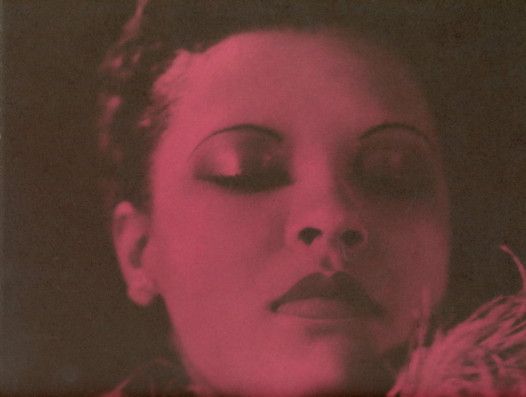
“How many Billie Holidays are there and which do you prefer? Elated or dour, funny or truculent, sweet or sour, our Lady of Sorrows or 52nd Street's Queen, early Billie or late, Billie of hope or heartache, Billie with Pres or with strings. Lady Day or Lady Nightmare or Lady in Ermine, Lady Be Good, Lady in Red, Lady Luck, Lady Blue, Lady Divine, the Lady who Swings the Band, Lady Mine—crank up the record machine, listen closely, and take your choice. For Billie Holiday is one of those exceptional artists whose work is a perfect tuning fork for our own inclinations. She echoes our emotions, rehabilitates our innocence, cauterizes our nerves.
How she managed so capacious a vision with her slim vocal range and infinite capacity for nurturing demons is a miracle to which generations of interpreters have been and will continue to be drawn. The greatest art never loses its mystery. The better we know hers, the more dreamlike and sensational it seems.
I am inclined to connect her with the equally inscrutable Edgar A. Poe, perhaps because I became mesmerized by both at the same age. What can she and the 19th-century writer have in common, beyond sharing an association with the South; spending critical years in Baltimore and New York; taking to drink and drugs; and dying, derelict, in their forties? For one thing, their power to haunt the soul. Consider that flawless short fiction, "The Fall of the House of Usher,” a story peculiarly remade by the imagination of each reader who, obliged to identify with a deliberately vague narrator, must examine feelings and maladies the narrator discounts as beyond analysis. Holiday, whether singing a stalwart lyric like "I'll Get By" or an insipid one like "What a Little Moonlight Can Do," requires no less rapport. The songs cannot account for the passion she engenders; it's a matter of alchemy. We transform such artists into romantic figures and bring our baggage to them, expecting them to lighten it. And they do!
Asked to choose one visual image to suggest the character of Holiday's sublime Columbia recordings, made between 1933 and 1942 (and in most cases originally issued by Brunswick, Vocalion, and OKeh), I would turn to the casual photography of Denmark's Timme Rosenkrantz. A jazz diehard and scion to a family that left him a title — baron — but little funds, Rosenkrantz crossed the Atlantic whenever possible, exploring Harlem from the ground up, or down, drinking his way through bars visited by few whites. He was 24 in the late summer of 1935, armed with a camera in the Apollo's back alley, shooting a singer that few people had ever heard of. Only a month earlier, Billie had recorded her first important session, as vocalist with Teddy Wilson, and one selection, "What a Little Moonlight Can Do," was about to break as a jukebox hit. The Dane was clearly enchanted by her: The most famous of the pictures he took captures a radiantly lovely young woman, 20 years old, flashing a direct and perfectly symmetrical smile, arms entwined with those of two musicians, while another kneels before her and a fourth stands behind.
This picture has been reproduced many times, though never as dramatically as in the booklet to Columbia's 1962 three-LP box, Billie Holiday: The Golden Years, where it bleeds over a full two pages, including a wall of lovelorn graffiti. (A Rosenkrantz shot of Billie alone was used on the cover.) It offers us a very different Holiday than the star — gowned in scarlet with a white orchid in her hair — she would quickly become.
In 1935, with her hair brushed back and skin glowing, she is a country girl in a short-sleeve, open-neck, gingham dress with pockets on the skirt. Her figure is, to use a favorite press adjective, buxom. Pigmeat Markham, a comedian who shared an Apollo bill with her the same year, remembered her as "a simple lookin' girl" who didn't know how to do "the things that girls do to pretty up." Yet she appears sexy and sure, happy to be one with the musicians: saxophonists Ben Webster (who played on the Wilson date), to her right, looking off, distracted, and Johnny Russell, to her left; pianist Ram Ramirez, an erstwhile prodigy who would later co-write her signature hit, "Lover Man," in front; and, behind, a man with a guitar who turns out not to be a musician at all, but a stagehand known as Shoebrush.
The camaraderie Rosenkrantz caught characterizes the best of Holiday's early records, made when she was just another musician, waiting her turn and often singing no more than a chorus. Yet her contributions never indicate an obligatory vocal refrain of the sort bandleaders included to sell a lyric. Holiday's choruses are genuine solos. Working in fast company with the greatest players in New York, which is to say the world (Wilson, Webster, Benny Goodman, Roy Eldridge, Bunny Berigan, Artie Shaw, Lester Young, Buck Clayton, Chu Berry, Johnny Hodges, and on), she always holds her own, singing confidently behind the beat with an improvisational bravura that frequently bests them all. By that time, she had endured a childhood of fear and privation far worse than anything Dickens contrived for Little Nell. But unlike Nell, Billie lived to tell her own tale.
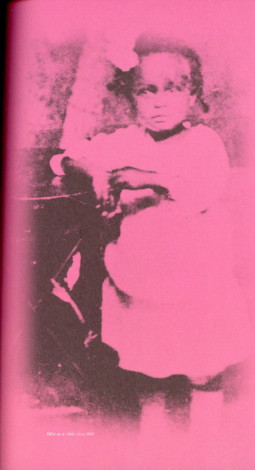
Her 1956 memoir, Lady Sings the Blues, opens with one of the most widely quoted passages of its time: "Mom and pop were just a couple of kids when they got married. He was eighteen, she was sixteen, and I was three." In truth, Billie was no writer; the ironic style is the work of "ghost" William Dufty, a journalist and one of her most loyal friends. (Two years later, he wrote the autobiography of Edward G. Robinson, Jr., whose only accomplishments were drunk driving and an attempted suicide, but whose tale starts off with a similar wallop.) In any case, like much of the book — which is well worth reading — it was only slightly true. Mom and Pop were kids when Billie was born, on April 7, 1915, but did not marry. Sadie, at 18, had two years on Clarence Holiday, who abandoned her and the child. As biographer Donald Clarke has shown, Billie was born Eleanora Harris (Sadie's family name), but her mother, whose own parents did not marry, assumed her father's name, Pagan, and Billie grew up in Baltimore as Eleanora Pagan.
Clarence, who went on to play banjo and guitar in prominent bands, played no role in Eleanora's upbringing, except perhaps to draw her, by example, to jazz and to capricious and abusive men. Sadie, with whom she developed a close relationship, was rumored to have run a whorehouse, and often sent her to board with relatives. Eleanora spent her tenth year in charge to the nuns at the House of the Good Shepherd for Colored Girls, where she may have been molested. A year later, she was raped by a neighbor and sent back to the nuns. At 12, she worked in a waterfront brothel, picking up extra change by singing to records. She later claimed her favorites were Bessie Smith and Louis Armstrong. If she never picked up Bessie's devotion to 12-bar blues, she did learn to infuse everything she sang with a blues feeling and tonality. From Louis, she learned style, swing, improvisation. Above all, she recalled, "I wanted Louis Armstrong's feeling."
After moving with her mother to New York, she worked in a whorehouse, did time on Blackwell's Island, and began singing for tips at small Harlem clubs like the Nest, Pod's and Jerry's, the Yeah Man, and Monette's. This was before microphones were common in high-class nightclubs (Bing Crosby had begun popularizing them in 1930, at Hollywood's Coconut Grove), let alone after-hours joints where the performers sashayed from one table to the next, often collecting tips with body parts other than their fingers. Eleanora, who scorned such indignities, learned to project at the same time she learned how to communicate intimately. She changed her name — borrowing Holiday from her father and Billie from actress Billie Dove and, possibly, Clarke suggests, a friend and fellow singer named Billie Haywood.
In 1933, entertainer Monette Moore opened Monette's Supper Club. With her hands full as hostess, she hired Billie to do the singing. In that late-night environment, Billie met a great many musicians and personalities, not least the talent scout, critic, and jazz lover, John Hammond, who had come to see Moore and left raving about Holiday. He, at 22, was a wealthy prude with powerful connections; she, at 18, was a hellion, eking out a living the best she could. Hammond introduced her to Benny Goodman, who briefly dated her, and arranged for her to sing one number at a record session on November 17, 1933. The featured performer that day was the great and imperious Ethel Waters, backed by a Goodman ensemble. The irony was Poe-etic.
Waters had been a Columbia recording star for eight years. This session would end her affiliation with the company and, except for a dozen Decca sides and a superb but little-noted comeback for Bluebird in the late-'30s, wrap up the recording career of one of the most influential singers in American music. After she completed her numbers, the highly competitive Waters listened to Billie make her debut, romping through "Your Mother's Son-in-Law" in an uncharacteristically high key. She was not impressed, and later commented that Holiday sang as though her shoes were too tight. Billie had been unnerved by her until pianist Joe Sullivan advised her to just close her eyes and sing. For years, I wondered about a seemingly incomprehensible line in the lyric—"You don't have to sing like fatso"—until the producer Michael Brooks pointed out that she is actually singing "Bledsoe," as in Jules Bledsoe, who played Joe in the original production of Showboat. Fatso or Bledsoe, her record went nowhere.
Still, on the same day that Ethel — whose great triumphs on the stage and in film were still ahead of her — departed Columbia, Billie's career was inauspiciously launched, at $35. And if the rivalry between those two women led the younger to omit the older from all discussions of her musical influences, we are obliged to stand outside the ropes and credit Waters's unmistakable impact. The 1923 "Ethel Sings 'Em" includes a stanza ("love is like a faucet...") that Billie would make famous in "Fine and Mellow," and the 1928 "My Baby Sure Knows How to Love" bodes Billie's way of inflecting vowels with a waver. Waters's style also anticipates the elocutionary precision with which Billie attacks consonants — for example, the dentalized t's in songs like "Getting Some Fun Out of Life," "Back in Your Own Backyard," and "Swing, Brother, Swing!" ("stop this dit-tle dat-tle") — an articulation that Dinah Washington, in turn, picked up from Billie. One could argue that Waters's influence on Holiday exceeded Bessie Smith's. Her most decisive model, however, remained Louis Armstrong.
Hammond, who contrived to get Billie on another Goodman side in 1933 ("Riffin' the Scotch," with a Johnny Mercer lyric that has nothing to do with the title), did not find the right formula for her until the summer of 1935, when she recorded with a seven-piece pick-up band fronted by Teddy Wilson. Several months earlier, she had sung, without credit, "Saddest Tale," in the Duke Ellington film short, "Symphony in Black," in a scene in which she is knocked down by a lover. Ellington did not, however, hire her for his band. When Wilson first heard her, he was no more impressed than Ellington. Near the end of his life, Wilson conceded that he initially thought of Billie as a gimmick: a girl who sang like Louis — a cute idea, but so what? He soon changed his mind.
The Wilson sessions are among the preeminent glories of recorded jazz, brisk and pointed and incredibly swinging. They were made largely for the jukebox trade, which in the ghastly years of the Depression emerged as the largest single market for records. Yet as brief and spontaneous as they are, these exemplary tracks overflow with detail and invention, rarely wasting a second, with each player obliged to make a personal, identifiable statement in just a few measures. Benny Carter once noted, "It's a pleasure to hear a guy like Ben Webster. He blows a note and you know he's there — and who he is." The great players could do that; they developed individual styles that told you right off who they were and what they were like. Fans did not need an announcer to inform them that a soloist was Webster or Young or Coleman Hawkins. Wilson's sides offered a de facto guide to the era's giants, because Hammond raided the big bands that happened to be playing New York when a session was scheduled, recruiting key players from Basie, Ellington, Goodman, Calloway, and the rest. These sessions remain an unbeatable primer on the leading soloists and rhythm players of the swing era.
They also offer an unusually rounded thesaurus of American song-writing in the golden age, juxtaposing the gold and the tin. Except for “I Wished on the Moon," the songs at the first session were decidedly second-rate, and they did not get much better over the ensuing year. Yet Holiday, Wilson, and friends readily turned Tin Pan Alley dross into bullion. Of the first 15 songs, three—"I Wished on the Moon," "What a Little Moonlight Can Do," and to a lesser extent, "Miss Brown to You"— became a permanent part of Billie's repertoire. Others endured as classic records. The quality of her material took a dramatic turn for the better in the summer of 1936. At the June 30 date, Billie helped to establish "These Foolish Things" as a standard and revived the 1920s hit, "I Cried for You." She also performed magic with the utterly forgotten "It's Like Reaching for the Moon," confirming the jazz axiom: 'Tain't what you do, it's the way that you do it.
The songs got even better in late-summer, after John Scott Trotter — a former arranger for Hal Kemp who would become famous as Bing Crosby's music director on Kraft Music Hall — was hired as chief of recording for the American Record Corporation, the holding company that controlled Brunswick, Vocalion, Columbia, and other labels through most of the 1930s. Hammond considered Trotter merely a busybody executive. But the fact that Billie immediately recorded the three main songs from Pennies from Heaven, a film Trotter had just finished orchestrating, and was backed at the first session by Bunny Berigan, Trotter's buddy in the Kemp days, suggests that Hammond understated his contribution, perhaps because he resented Trotter's authority. Trotter was undoubtedly a square. Yet during his tenure, Holiday recorded new songs by Porter, Kern, and Berlin, as well as older tunes, like "I Must Have That Man," which, with Berlin's "This Year's Kisses," inaugurated the uncanny bond between Billie and Lester Young, whose tenor saxophone — borrowed from Hammond's favorite orchestra, the Basie band — invariably complements, echoes, spurs, and inspires her in one of the most gratifying, unusual, and far too brief musical collaborations of the past century.
My favorite of the records they made together was generated not by a classic of the songwriter's art, but by one of the dimmest numbers Holiday ever sang, "A Sailboat in the Moonlight," written by Carmen Lombardo and John Jacob Loeb ("Boo-Hoo!" was another of their creations) for the former's brother, Guy. When I first got to know the record, playing it endlessly, I thought it a fine melody, with pretty chord changes, and words that might be corny but didn't seem so bad when Lady Day delivered them. Then I chanced to find the sheet music at a midwestern bazaar; at home, I picked out the melody with one finger and was astonished at how different it was from what Holiday sang. Until that moment, I had not fully gauged how freely imaginative her embellishments could be. By ironing out a phrase here, retarding another there, raising this note, slurring that, she transformed a hopelessly banal and predictable melody into something personal, real, meaningful. When she and Lester "sail away/to Sweetheart Bay," riding the waves side by side, you've got to clamber on board.
Another profound example of her transformative powers comes from her last wartime Columbia session, on February 10, 1942, and an impossible song called, "It's a Sin to Tell a Lie," the subject six years earlier of one of Fats Waller's most extravagant burlesques. "I love you, I love you, 1 love you," he intoned contemptuously. And here comes Billie, declaiming, "I love you, yes I do, I love you," rhythmically pinning every syllable to its post and employing a Lestorian slur on the last "love." Do you believe her? How can you not?
By then, she had become a very different performer, a jazz star of high rank, proudly bearing the nickname, Lady Day, conferred upon her by Young (he called her mother Duchess). She in turn dubbed him Pres: Lester, she said, was to the saxophone what President Roosevelt was to the nation. Their musical association, however, was largely in the past. The very nature of her records had changed. Between 1937 and 1939, she recorded as often under her own name as under Wilson's; after the January 30, 1939, Wilson session, she recorded almost exclusively under her own name. The level of musicianship remained high and her own singing grew increasingly nuanced, but she was no longer one of the guys, waiting her turn. She was every inch a star.
When Lester had appeared on the "I Must Have That Man" session, he was 27, six years older than Billie, yet it was only his third time in a recording studio. His accompaniment was tenderly amorous, sometimes exuberantly so ("Me, Myself and I," "When You're Smiling"), but usually gentle and more delicate than the ardent honking and high-flying fancies he offered followers of Count Basie. The platonic tenderness that sheltered Lester and Billie could not, however, be sustained for long. In all, he appeared on five sessions with her in 1937, not including a couple of Basic broadcasts, five more in 1938, and only one per year between 1939 and 1941. Over time, his alcoholism and her addiction to heroin tore them apart, and though they occasionally shared the stage at Jazz at the Philharmonic concerts, producer Milt Gabler never used him on her Decca sides and producer Norman Granz, who had Lester under contract, never used him on her Clef and Verve records. They were reunited on one serene number in an unforgettable television broadcast, in 1957, and died two years later — Lester on March 15 (his widow prohibited her from singing at the funeral), and Billie on July 17, after nearly two months in a hospital, much of that time with a police guard at her door. She was, as Faulkner famously wrote of one of his own characters, "Doomed and knew it; accepted the doom without either seeking or fleeing it."
Tough as nails yet prone to abuse, Lady had long since become America's Little Sparrow (she and Edith Piaf were born in the same year), perhaps even better known for her woes than her music. And yet she had come a long way on her own terms. In the beginning, she played the Famous Door on 52nd Street for four days, having walked out when the owner told her not to socialize with white customers. At that time she had to contend with stage managers who complained that she sang too slow and with song publishers who griped that she took too many liberties. Her standing took a turn in 1939, working at Barney Josephson's Cafe Society and closing her sets with Abel Meeropol's vivid threnody about a lynching, "Strange Fruit." She returned to the Famous Door as a major draw — treated accordingly — and, ironically, something of an earth mother to white servicemen who spent shore leave listening to her. After recording "Strange Fruit" for Milt Gabler's Commodore, because Hammond wouldn't touch it, Holiday was taken up by some with political agendas. But she had her own reasons for sticking with that song for 20 years, making it her personal anthem, thrusting it in the teeth of people who thought they had come to be amused.
She had toured briefly with Basie and Artie Shaw, leaving the former, she claimed, because Hammond wanted her to sing more blues like Bessie Smith (maybe, maybe not, though Hammond told me a few weeks before his death that he much preferred Bessie), and the latter because of racism. Forget the South: New York's Hotel Lincoln insisted she use the freight elevator and the Old Gold cigarette company would not allow her to broadcast with Shaw's band. She retained her independence and spirit, living the life she chose, singing the music she loved in a style she invented. She did not suffer slights quietly: In 1946, she was signed to appear in her only feature film, with her idol Louis Armstrong, but, cast as a maid, she stormed off the set of New Orleans before it was completed. Melancholy themes had begun to loom over her repertoire, and they increased over time. No longer sailing in the moonlight in a sunbonnet blue and laughing at life, she sang of despair, longing, betrayal: "Gloomy Sunday," "Lover Man," "Travelin' Light," "Good Morning, Heartache," "Detour Ahead," "Don't Explain," "God Bless the Child."
She suffered for love, evidently indulging a masochism that sometimes got out of hand. It also bound her to drugs. In 1941, Holiday married a handsome hustler named Jimmy Monroe and began smoking opium. Then she moved in with trumpet player Joe Guy, who used heroin. She capitulated to an addiction that could not be tempered by a voluntary six-week hospital cure or a judge's 1947 decision to incarcerate her for a year and a day at the Federal Reformatory for Women in Alderson, West Virginia — the result of Billie's decision to plead guilty and not to testify against Guy, with whom she was busted. Guy, a musician of limited abilities, walked. Billie served her time and lost her cabaret card. That meant she could not work anyplace in New York where alcohol was sold, undermining her career and guaranteeing her return to narcotics. There were subsequent arrests and countless tabloid articles that almost always referred to her as "blues singer Billie Holiday."
She took up with a vicious pimp named John Levy (not to be confused with the bassist of that name who often performed with her), and then fulfilled the prophetic lyric of "Riffin' the Scotch": "Swapped the old one for a new one / Now the new one's breaking my heart / I jumped out of the fryin' pan / And right into the fire." Louis McKay was a low-level hoodlum whose one saving grace was that he lacked Levy's unreasoning violence. But he was a relentless exploiter, who squandered her money and used drugs to keep her under control. In 1956, Billie and McKay were busted in Philadelphia, and he convinced her to marry him to prevent her from testifying. That she could see through him, but loved him, is apparent from her desperately scribbled letters, almost always written on hotel stationery and occasionally quoting song lyrics (I have not attempted to replicate Holiday's quirky use of capitals, and have ventured a few guesses about punctuation):
Mr. McKay,
Let's face it you're not my husband. Not even my boyfriend. You have no time for me. Everything is your kids, Mildred or just anything comes before me so I am not important to you in any way. You have even made cracks about [some?] dirty bitches that meant more to you than me. So why don't we come to some kind of understanding. Well you know. Just be my manager until after the Phila story. No I have no one else and don't want anyone. But Louie how much can I take. You're in New York two days and I, your wife, see you five minutes. So just lets be friends and forget it.
Lady
Louis when you left this morning I know you had no more feeling for me so lets get together, lets call this whole thing off. Your not happy with me and I am very unhappy. Thank you for everything you have done for me. Lady Day
This is It
I've had it goodbye
Waited hoped and prayed but nothing goes my way. This is it, so
long. Tried not to see but I am not blind to all the tricks you played
on me. This is it. Oh well you say that I am dumb but how dumb
can you get. This is it This is it This is it This is it. You can't be
mine and someone else's too. What are you trying to do. This is it.
Good bye.
On one occasion Billie had McKay tailed, and what she saw made her "feel sort of cheap and dirty." Had she lived, she undoubtedly would have sent him packing. Instead, he assumed control of her estate, making sure he was portrayed — by Billy Dee Williams, no less — as the romantic and devoted sole love of her life in the appalling movie Lady Sings the Blues, which didn't even use her voice, never mind her story. But then her voice is her story, the only one that counts, the one that can't be distorted by lovers or haters, exploiters or philanthropists, critics or fans. Her enchanted records tell the truth and nothing but the truth — indeed, more truth than most of us knew, if you pay attention to the alternate takes and ponder the risks she took, gliding too high for her range or, touchingly, casting for the right note on which to end. Lady Day at the summit of her art is as glorious now as 60 years ago, an imperishable fixture in the cultural life of America and the world.”
[Lady Day: The Complete Billie Holiday on Columbia 1933-1944,
“This [1965-68] has always been an enigmatic period in Miles's career, a band and a set of relationships which didn't so much develop as go through a looping sequence of self-discoveries and estrangements. The leader himself often sounds almost disengaged from the music, perhaps even alienated from it, though one always senses him there, listening. Miles Smiles opens up areas that were to be his main performing territory for the next few years, arguably for the rest of his career. The synthesis of complete abstraction with more or less straightforward blues-playing (Shorter's 'Footprints' is the obvious example of that) was to sustain him right through the darkness of the 1970s bands to the later period when 'New Blues' became a staple of his programmes.
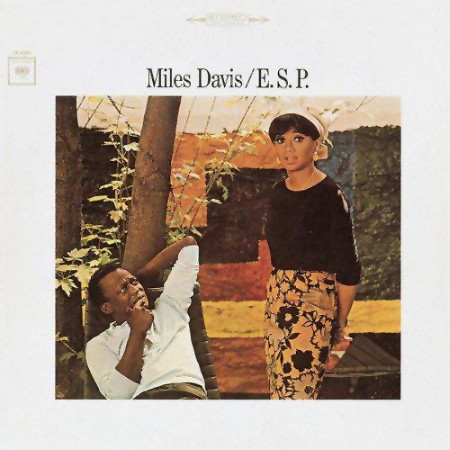
After Miles Smiles,E.S.P. is probably the best album, with seven excellent original themes and the players building a huge creative tension between Shorter's oblique, churning solos and the leader's private musings, and within a rhythm section that is bursting to fly free while still playing time. Miles returns to his old tactic with Coltrane of paring away steadily, often sitting out for long periods or not soloing at all. It is simply that with Shorter he has a saxophonist who is capable of matching that enigmatic stance, rather than rushing off on his own.”
- Richard Cook and Brian Morton, The Penguin Guide to Jazz on CD, 6th Ed.
“(The first incarnation of this Miles Davis Quintet (with George Coleman, Herbie [Hancock, Ron Carter and Tony Williams) entered the studio for the first time May 14,1963 before it was a working band. Studio albums were used to introduce new material into the Miles Davis songbook. Kind Of Blue gave us "So What" and "All Blues" and Someday My Prince Will Come gave us the title track and "No Blues." The live albums would be conceived as vehicles to capture the sound of his current quintet performing both the classic and recent material. This session gave birth to a new band and contributed two pieces, "Seven Steps To Heaven" and "Joshua,"
to Miles' live repertoire.
For the next 19 months, live recordings charted this band's extraordinary progress: In Europe (Antibes —July '63), My Funny Valentine and Four & More (both from Lincoln Center— February '64), In Tokyo (July '64 with Sam Rivers replacing Coleman) and In Berlin (September '64 with Wayne Shorter finally in place).
By January of 1965, the Quintet (now only 5 months old} had toured Europe and was just beginning to travel in the U.S. During the first part of the new year. Miles and the group enjoyed a two-week stay at San Francisco's Basin Street West. After finishing up the weekend, they found themselves in Hollywood at the Columbia Studios, where Irving Townsend was set to produce a new Miles Davis studio recording.
The idea of going into the studio with new material for the first time in 19 months must have stimulated the group. The first track recorded was Wayne Shorter's "E.S.P."
The album My Funny Valentine was released in May of 1965 to great acclaim. E.S.P was issued in November of 1965, when Miles began touring. again after a six-month recuperation from his first of many hip operations. The album did not get the hurrahs expected of a new Miles Davis Quintet studio recording. The momentum that the group had built up from 1964 had to start over.
The group was taped at the Plugged Nickel in December of 1965, but the
tapes remained unissued for 11 years. Of the new material, only "Agitation" had made it into his book, but he was still playing "Stella By Starlight" and "My Funny Valentine" as well as other standards and blues associated with his earlier bands.
Still, E.S.P. summed up the form and rhythm experiments that the Quintet was developing from live performances into a compositional structure. Stop-and-go ("R.J.," "Agitation"), pedal points ("Little One," "Mood"), creating a "harmonic" direction from "suggestions" and implications ("E.S.P."), rhythmic suspension ("R.J.," "Eighty-One") and form modulation ("Iris"). The melodies themselves became more independent of the harmony, and thus strengthened the idea of improvising phrases (as Ornette Coleman) and not clichés.
Behind the success of My Funny Valentine, Columbia released the rest of the February 14,1964 Lincoln Center concert as Four & More in March of 1966 (barely 4 months after E.S.P.!). Prestige repackaged old sessions (For Lovers and Classics) and then went further by releasing a greatest hits compilation in December of 1966, making a total of six Miles Davis releases in 17 months.
No wonder E.S.P. confused the public. The music is light years ahead of anything previously released. The public was bombarded with Miles' accessible side, the romantic lover. The success of My Funny Valentine further imbedded that stereotype into the minds of the jazz public. Eventually. Miles would completely separate the studio recording process from the live performance process, but it took two incredible sessions to launch him on his way.”
— BOB BELDEN, insert note excerpts from E.S.P.
For fans of the classic Miles Davis Quintet [with John Coltrane on tenor sax, Red Garland on piano, Paul Chambers on bass and Philly Joe Jones on drums] and the classic sextet [subtract Garland and Jones and add Julian “Cannonball” Adderley on alto sax, Bill Evans on piano and Jimmy Cobb on drums], the six LPs that Miles made for Columbia from 1965 to 1968 are as perplexing as they are paradoxical.
They are less straightforward and more puzzling, if not downright mystifying, to the snap your fingers and pat your foot Jazz fans who were accustomed to more easily relating to Miles’ post Bebop groups that played a style of Jazz based on a mixture of songs from the Great American Songbook and tunes from The Jazz Standards. And then there were all of the “romantic Miles” LPs that Bob Belden references in one of the quotations that open this piece.
In fact, to these modern Jazz fans, the music on the albums from the mid-sixties did indeed appear to require a form of extra sensory perception - that is a telepathic sixth sense - to experience what was going on in the music.
And yet, just as Miles had made the transition from the flying notes and quickly progressing chord changes of Bebop to the more expansive and lyrical Jazz of the classic quintet and sextet of the second half of the decade of the 1950s, E.S.P, Miles Smiles, Sorcerer, Nefertiti, Miles in the Sky and Files De Kilimanjaro marked Miles’ transition to an association with a band made up of younger musicians that was working its way out of one phase and into another in which time and harmony, melody and dynamics were being radically rethought. Or as Richard Cook explains it:
“The improvisations here would have been inconceivable a mere couple of years earlier; they don't so much float on the chords as react against them like phosphorus. Three years later, they fed directly into Miles's electric revolution and the beginning of what was to be (he long dramatic coda.”
Beyond the more technical treatment of the music on the recording contained in Bob Belden excellent notes, in combing through the Jazz literature to identify a more accessible explanation of Miles’ work on E.S.P., I was pleased to find the following treatment of both the band and the music on the recording by Gary Giddins and Scott DeVeaux in their work Jazz [2009] which is available in both a trade [commercial] and education [suggested listening guides] editions. Their narrative provides a comprehensive context for appreciating the significance of the album.
“After the back-to-back triumphs of Kind of Blue and Sketches of Spain, Miles Davis endured a slump of uncertainty. Coltrane, Adderley, and Evans had left to pursue their own careers, and Davis expressed contempt for the avant-garde. He continued to release effective records, including a reunion with Coltrane that produced a minor hit in "Some Day My Prince Will Come." But his music was caught in a bind, much of it devoted to faster and harder versions of his usual repertory, including "Walkin'" and "So What."
Then in 1963, once again, he produced magic. He turned to younger musicians who would surely have had important careers on their own but who, under Davis's tutelage, merged into a historic ensemble, greater than its very considerable parts. The rhythm section consisted of three prodigiously skillful musicians who valued diversity over an allegiance to one style of music: pianist Herbie Hancock, bassist Ron Carter, and seventeen-year-old drummer Tony Williams. Davis auditioned many saxophonists before temporarily settling on George Coleman, who played with facility and intelligence but lacked the drive and curiosity of the younger guys. In late 1964, Wayne Shorter, who had made his name as a saxophonist and composer with Art Blakey's Jazz Messengers, joined the band, a decision that changed his life and Davis's, and made this second
great quintet, a worthy follow-up to the 1955 group with Coltrane. This time, however, Davis took as much from his sidemen as he gave, drawing on their compositions (especially Shorter's) and sensibilities. These musicians were keenly interested in the avant-garde, and Davis adjusted his music to assimilate their tastes, as he struggled to make a separate peace in a confusing era.
Jazz was beset on one side by avant-garde experimentalism that estranged much of the audience, and on the other by rock, which had matured from a teenage marketing ploy to the dominant pop music. Davis would eventually inch his way to a fusion of jazz and rock, but first he adapted modal jazz to include elements of the avant-garde in a postbop style far more extreme than anything he had previously done. This approach, which also attracted other accomplished musicians caught between the conventions of modern jazz and the excitement born of the avant-garde, involved harmonic ambiguity, original compositions with new harmonic frameworks (rather than those built on standard songs), and a radical loosening of the rhythm section. Some of the tunes written by Davis's sidemen actually encouraged free improvisation (Ron Carter's "Eighty One" is a blues but also a minefield of open terrain). In the most advanced of these pieces, chord progressions were omitted while time and meter might evaporate and coalesce several times in the course of a performance.
Most first-rate rhythm sections work like the fingers in a fist. Coltrane's quartet, for example, achieved a fiercely unified front, devoted to supporting the leader. Davis's group was no less unified, but its parts interacted with more freedom, often rivaling the soloists. So much was going on between Hancock's unruffled block chords, Carter's slippery bass lines, and Williams's rhythmic brush fires that they all appeared to be soloing all the time. Davis gave them leave, enjoying the excitement they created, but he imposed a discipline that left space for the lyrical drama of his trumpet. Interestingly, on those few occasions when Davis failed to show up for a set in a jazz club, the other four musicians played in a more traditional, straight-ahead style. Free of chord changes, unapologetic about fluffs, and stimulated by his band's ceaseless energy, Davis became a more expansive trumpet player. He began to forage in the upper register at precipitous tempos, ideas spilling from his horn with spiraling confidence despite infrequent technical failings. He cut back on his signature ballads and began to jettison standard tunes and his classics. Between 1965 and 1968, he found his own way to be avant-garde.
"E.S.P."
The 1965 album E.S.P. was a critical event, but not a popular success. It represented the first studio recording by the new quintet, and the seven new compositions, all by members of the group, challenged listeners who expected to hear the tender, meditative Davis who incarnated jazz romanticism. This music is audacious, fast, and free. The title of the album (and first selection) emphasized the idea that extra-sensory perception is required to play this music. Shorter composed "E.S.P." as a thirty-two-bar tune, but its harmonic structure is far more complicated than that of "So What."
The melody is based on intervals of fourths (recalling the indefinite quartal harmonies of "So What" and "Acknowledgement"), and is married to a mixture of scales and chords in a way that offers direction to the improvisers without making many demands. The main part of the piece (A) hovers around an F major scale, while the B sections close with specific harmonic cadences that are handled easily and quickly—especially at this expeditious tempo. The soloists (Shorter for two choruses, Davis for six, Hancock for two) take wing over the rhythm, bending notes in and out of pitch, soaring beyond the usual rhythmic demarcations that denote swing. No less free is the multifaceted work of the rhythm section: the bass playing is startlingly autonomous, and the drummer's use of cymbals has its own narrative logic.
The public reception accorded E.S.P and succeeding albums by Davis's quintet (Miles Smiles, Sorcerer, Nefertiti) suggested the tremendous changes that had taken place in the cultural landscape in the few years since Kind of Blue and Sketches of Spain. They were received favorably and sometimes enthusiastically by musicians, critics, and young fans, but achieved nothing of the broader cachet enjoyed by his earlier work: there was nothing easy or soothing about these records. By 1965, rock and roll could no longer be dismissed by jazz artists as music for kids, and Davis was feeling the heat, not least from his disgruntled record company.”