© Copyright ® Steven Cerra, copyright protected; all rights reserved.

“For most people the name of Philly Joe Jones immediately conjures up the classic Miles Davis Quintet/ Sextet of the mid-fifties, that oddly assorted collection of great individuals in which a driving, potentially overpowering rhythm-section was perfectly balanced against the musings of Miles and the still-searching Coltrane. To some people, it may bring to mind Miles's comment: "I wouldn't care if he (Philly Joe) came on the bandstand in his B.V.Ds, and with one arm, just so long as he was there." And I believe it was the late Wynton Kelly who said that, after Joe left the Davis group, his replacement Jimmy Cobb had to suffer Miles telling him repeatedly, in his typically tactful manner, "My favourite drummer is Philly Joe Jones."”
- Brian Priestley, insert notes to Philly Joe Jones: Mo’Joe [Black Lion BLCD760154]
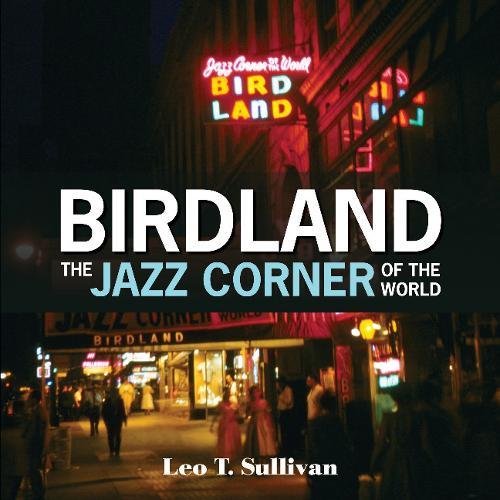
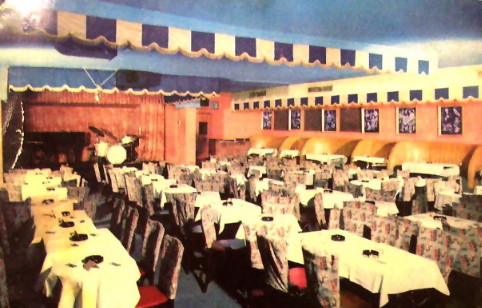
Radio broadcasts can be problematic and the ones from January 5, 1962 [there is some evidence to support the date of 1.5.1963], February 24, 1962, and March 3, 1962 that form the content for the newly-released Philly Joe Jones Sextet and Quintet Live at Birdland [Fresh Sound FSR-CD 1139] could serve as case studies for the pros and cons of using them as source materials for new, commercial recordings. [For order information go here.]
In this case, the plus side is the ability to hear the iconic drummer Philly Joe Jones at the height of his powers leading exciting small groups with his old running mate Elmo Hope on piano in a rhythm section was bassist Larry Ridley and a host of energetic newcomers to the Jazz scene including trumpeter Dizzy Reece, alto saxophonist Sonny Red, tenor saxophonists John Gilmore and Roland Alexander. The somewhat more experienced Bill Hardman assumes the trumpet chair on the February and March dates.
The downside is the less-than-desirable audio quality which requires some contending with but is worth the effort given the stimulating music produced at these in performance sessions.
In those days, it was unusual but not uncommon for drummers to head up small combos, witness Art Blakey’s Jazz Messengers and the various quartets and quintets led by drummer Max Roach. But these groups were permanent with fixed personnel and club and concert touring schedules whereas Philly Joe was so busy recording with everyone on the New York Jazz scene from c. 1955-1965 that he didn’t have time to head-up a regular group and market it to various venues in NYC and elsewhere in the country.
Unfortunately, too, due to the expense and the relative newness of the technology associated with them, on site recordings, although growing in number, were still relatively uncommon, especially for a pick-up band; one put together expressly for an engagement such as the bands that Philly JJ headed up at Birdland and which feature on this Fresh Sound recording.
Given the somewhat small discography with Philly JJ as leader, these Birdland-based radio broadcasts make a welcome addition to that catalog.
As a note in passing, although it’s listed as I Remember Clifford, Track Two is actually I Can’t Get Started.

“PHILLY JOE JONES (1923-1985) carried his birthplace as part of his name throughout most of his jazz career in order to avoid confusion with the former Basie star drummer, Jo Jones, who was his first influence.
After performing alongside many of the top names in modern jazz, Joe started gaining widespread recognition for his contributions to Miles Davis's quintet and sextet during 1955-1958.
However, due to his forward-thinking concepts, Philly Joe may well be considered the most controversial drummer in jazz history. At first, Joe's fast-paced and busy intricacies seemed to defeat the ears of critics, but over time they began to recognize and value his approach. The amendment was given a boost, obviously, by Miles Davis's unstinting support.
Typical is Whitney Balliett's praise in an April 1959, New Yorker article, calling Philly "revolutionary," and "a master of silence, dynamics and surprise," and describing his solos as "careful, remarkably graduated structures, full of surprises, varied timbres and good old-fashioned emotion."
By 1962, having solidified his reputation, Philly Joe's foremost aspiration was to lead his own group in live shows whenever the opportunity presented itself.
This compilation unveils previously unreleased recordings from 1962, each capturing the essence of two live radio broadcasts held at New York's Birdland, hosted by the celebrated jazz disc jockey "Symphony Sid" Torin. Throughout these performances, Philly Joe seamlessly melded with a group of musicians who wholeheartedly entrusted their musical journey to his leadership. This synergy resulted in two solid gatherings, elevated by the strong solo contributions of the horn players, highlighted by several compelling solos by Elmo Hope, a piano player who left too few samples of his hard-bop chops, and enriched by Philly Joe's fiercely distinctive style as both a solo drummer and an exceptionally invigorating section player.
Philly Joe's intricate style reverberates through a whole generation of jazz drummers, leaving an indelible mark on their work.
PHILLY JOE JONES was born on July 15, 1923, in Philadelphia, Pennsylvania, and was the youngest of nine children born to Lewis and Amelia Jones. Sadly, Joe's father passed away when he was just about a year old. His mother had to take on work as a domestic to support the family, and amidst these circumstances, Joe's upbringing took shape.
Raised in a racially segregated black neighborhood, Joe's childhood was marked by the supportive care of his sister and brothers. Determined to overcome adversity, Joe found himself contributing to the family's income at a remarkably young age— working as a shoeshine boy, early testimony to his work ethic and resilience.
As he grew up, with the guidance of his mother, he embarked on piano lessons — a modest yet pivotal stride that formed the bedrock of his musical talent. The shift to drums marked a fundamental turning point, driven mainly by his own determination and initiative. His initial artistic leanings even took him to tap dancing before the drums emerged as his passion. "I started playing the drums when I was about nine years old," he reminisces, encapsulating the inception of a musical odyssey that would span his entire lifetime. Even though he underwent formal training for a period, he was primarily self-taught. His unique style came from absorbing the rhythms of other drummers during gatherings in his childhood.
His first drumming influence was his namesake. "Jo Jones was merely a heck of an influence on me when I was a kid. But my mind used to go past Jo Jones because at the same time, the Savoy was hollering, and Chick Webb was playing. Chick was the drummer I used to listen to. I'd be listening to these broadcasts, and my mother used to really holler at me because I kept the radio on all night! I memorized the tune, it's in my mind right now, I could hum the tune the way he played it. I used to listen to the drum solos that he played in between."
At the age of 17, Joe left Central High School, and voluntarily enlisted in the Army on February 24, 1941. Throughout the wartime period, he served as a military policeman until his discharge three years later. By the summer of 1944, back in Philadelphia, he became part of the Public Transportation Company, notably becoming the first black trolley driver in Philadelphia.
"When I completed my service," Joe explained, "I became a streetcar driver. During that time. I managed to save up and purchase my very first drum set. I took them down to the cellar where I lived and practiced relentlessly until I believed I was prepared to make my debut on the scene."
"I was still working on the streetcar during the day and playing drums at night," Joe reminisced. "Eventually, the club owner I worked for decided to offer us a gig for an entire year. After around six months there, I left my streetcar job behind. I decided to take the leap into a professional music career and stay in the music industry. I was earning a decent income at that point. I continued down that path until I grew weary of Philadelphia. I sensed I was ready for New York, so I packed my bags and made the move."
"I left Philadelphia in 1947 and came to New York to live because during and before those years. Max (Roach] and Art [Blakey] used to come to Philly, and I'd be working in the clubs when they came to town, and I idolized them. They used to say, 'Why don't you come to New York?'... I loved Max and Art, and I wanted to be with them, and I couldn't because I was in Philly, so I used to buy a train ticket. I used to commute from Philly to New York and go to Max's house on Monroe St. in Brooklyn."
"When I got to New York, I became a part of the Joe Morris rhythm and blues band alongside Johnny Griffin, Elmo Hope, and Percy Heath. It was an eight-piece ensemble. We toured extensively across the country, covering destinations from Key West to Maine, all the way to California. I remained with the band for around three or four years. During that period, Joe Morris enjoyed numerous chart-topping hits. Back then, having a number-one hit on the charts wasn't as common as it is today; however, Joe Morris had three or four hits simultaneously. He was making good money because he worked all the time," recounted Joe. Morris's hits, now largely forgotten, included rhythmic tunes called "Chop Chop" and "Punch & Judy."
After long stints on the road, Joe was part of the star-studded but short-lived Tadd Dameron orchestra of the early 1950s but was having difficulty reading the charts. "My reading ability was fairly good at that time, but it wasn't up to par like it should have been. I knew I was going to get a lot of heavy dates with some complex music involved, so I went to Cozy Cole and started studying. He really opened my eyes to my faults and showed me how to develop strength in my hands. He was very demanding . Primarily, he helped me improve my reading, and I've never had any problems with it since."
While Joe was taking lessons, he heard some of the biggest stars in the drumming world, like Dave Tough and his idol Sid Catlett. "I learned most of my brush work from him. Sid Catlett used to sit down and teach me the things I wanted to know. He was one of the most exquisite drummers of all time. I wanted to shape myself in that way and be capable of performing in trios, bands, and small groups."
Around this time, Joe's drug addiction began to consume his life. Tenor saxophonist Jimmy Heath, his roommate and closest friend in New York, remembered Joe's apartment as a place where addicted musicians gathered. "Miles (Davis], [Sonny] Rollins, and everyone else who had been playing was coming to Philly Joe's. We were all in a tight-knit group." During these early 'junkie years,' Joe became the drummer for New York's Café Society. In this capacity, he performed with bebop greats like Charlie Parker and Dizzy Gillespie. He also played a few gigs at the Down Beat Club in 1952, providing him with the chance to perform alongside Miles Davis, Lee Konitz, and Zoot Sims for the first time.
Joe also spent a significant portion of 1953 working as a member of Tadd Dameron's groups. Despite Joe's often disruptive reputation as a drug addict, his positive reputation as a drummer was also growing rapidly. The year 1953 would prove to be pivotal, as he finally ascended to the highest echelons of the jazz community. On January 30, 1953, at WOR Studios in NYC, he took part in his first recording for Prestige. This recording date featured luminaries such as Charlie Parker on saxophone. Miles Davis on trumpet, Walter Bishop Jr. on piano, and Jimmy's brother Percy Heath on bass.
The group would record three compositions that day, and those recordings would become legendary: "Compulsion," "Serpent's Tooth," and "Round Midnight."
Regarding the recording titled "Serpent's Tooth," author Jack Chambers states, ".. .the bop melody played over a medium tempo offers lots of opportunity for assertive drumming. Jones punctuates the phrases of the melody and the solos with resounding accents and yet somehow manages to remain integral and unobtrusive as well. He shows a rare combination of aggression and sensitivity." The recordings from this session would later be released under Miles Davis's name on an album called Collector's Items.
Joe now found himself working consistently with the likes of Tony Scott Quartet at Minton's and the Kai Winding Septet at Birdland, He began using "Philly" as part of his name, an emblem of his growing stature. Clarinetist Tony Scott advocated personally to Duke Ellington that Philly Joe Jones would be an outstanding choice to succeed Louie Bellson, who left the band in February 1953. Scott remembered an audition for the drummer took place at the Bandbox club in New York: "Joe came in on a Tuesday and auditioned. All the older cats in the band, like Harry Carney, Russell Procope, and Hilton Jefferson, turned around and looked at him. Joe played the hell out of the Ellington things and was really swinging. He was hired to come in on Thursday, but he didn't show. He'd gone home to Philadelphia and was arrested. The police were wrong. It was a false arrest, a mistaken identity thing. But Joe was in jail for a couple of days and couldn't make the gig. When he came back to New York, it was too late."
About that same period, Joe recounted, "I participated in an album alongside Lou Donaldson. Clifford Brown, Percy Heath, and Elmo Hope. That project truly kick-started my career in the recording industry. Following that, I began receiving numerous offers for recording sessions." This marked a significant milestone for Joe as it was his debut recording for Blue Note Records. Just nine days later, Joe contributed to Elmo Hope's trio recording for the label, with bassist Percy Heath.
In 1954, Joe embarked on a tour with Tadd Dameron's band during the early part of the year. Upon returning to New York, he reconnected with his friend Miles Davis, who was also dealing with addiction. Following this reunion, Miles started involving Joe in all of his performances. Joe remarked. "Miles Davis was the only band I ever left New York to go on the road with." Throughout that year, Joe refrained from recording due to his struggles with drug problems.
In 1955, Joe's musical journey took him on various paths. He played and recorded with the Ray Bryant Trio, the Art Farmer Quintet, and the Howard McGhee Quintet. Soon after, he became a pivotal part of the first Miles Davis Quintet, alongside John Coltrane, Red Garland, and Paul Chambers. Their collaborative journey began with their debut recording on October 27,1955.
In 1956, alongside his tours with Miles, Joe found himself immersed in recording sessions. He collaborated with the Paul Chambers Quartet, which included John Coltrane, Additionally, he contributed to recordings with Serge Chaloff, Bennie Green, Elmo Hope, Red Garland, Sonny Rollins, Phil Woods, Jackie McLean, Kenny Drew, Phineas Newborn, Lee Morgan, and Tadd Dameron, as well as with Miles's quintet. From then on, he maintained a continuous and intense relationship with recording studios, becoming increasingly sought after for his distinctive drumming style.
In January 1957, the Miles quintet set off for California, kicking off a series of performances from January 4 to 17 at the Jazz City club in Hollywood.
Following these Jazz City concerts, Philly Joe immediately participated in three recording sessions in Los Angeles during January 1957. The first session was with alto saxophonist Art Pepper, with his regular rhythm partners Red Garland on piano and Paul Chambers on bass. This collaboration resulted in the album Art Pepper Meets the Rhythm Section, a title that underscored the formidable reputation Miles's rhythm section had earned among musicians.
The second session involved French horn player John Graas, and the third was led by Paul Chambers. These sessions also featured renowned West Coast musicians including Bill Perkins, Jack Montrose, and Paul Moer. For the third session, Joe covered for drummer Mel Lewis, who was unable to participate on the second recording day. Following these recordings, the quintet headed to San Francisco, where they opened at the Black Hawk on the 22nd for a week.
Having collaborated with a myriad of iconic figures in modern jazz between 1957 and 1960 — including Clark Terry, Herbie Mann, Hank Mobley, John Coltrane, Sonny Rollins, Lee Morgan, Ernie Henry, Sonny Clark, Kenny Drew, Red Rodney, Warne Marsh, Wynton Kelly, Johnny Griffin, Thelonious Monk, Jimmy Smith, Red Garland, Bud Powell, Cannonball Adderley, Blue Mitchell, Chet Baker, Art Blakey, Benny Golson, Bill Evans, Kenny Dorham, Paul Chambers, Art Farmer, Freddie Hubbard, as well as the Miles Davis Quintet and Sextet, and his own groups — Philly Joe enjoyed widespread recognition. His contributions graced nearly a hundred albums between 1955 and 1960. making him arguably the most recorded American drummer across genres during that era. This rich musical tapestry ultimately led to his well-deserved worldwide acclaim.
Initially, Joe's fast-paced and intricate style intrigued his fellow musicians but still seemed to perplex the critics' ears. Nevertheless, as time passed, even the critics began to recognize and value his approach. The change can be seen in the acclaim from Whitney Balliett in an April 1959 article in The New Yorker, where he hails Philly as "revolutionary "and "a master of silence, dynamics, and surprise." Balliett goes on to characterize Joe's solos as "meticulously crafted compositions, filled with unexpected turns, varied tones, and sincere, heartfelt emotion.
Amid this evolving perception, Philly Joe reflects, "The most incredible experience of my life was with Miles, no doubt about it... I can never deny that - the most incredible experience of my life aside from the few times I collaborated with Charlie, meaning Charlie Parker. Working with Miles energized me because I knew that he gained all his insights from Charlie."
In 1960, as the dynamics of his musical journey continued to unfold, Philly Joe pointed out, "In Miles' group, he wouldn't allow me to play almost anything I felt like playing. He used to keep a tight rein on me. When I was with Miles, I was a sideman, and there were limitations to what I could do. He would guide me to play certain things and restrict me. preventing me from progressing. I believe that a drummer should be able to experiment on stage without disrupting the rhythm or bothering others; it's beneficial and helps you grow. However, Miles wouldn't let me experiment too freely because he thought it would interfere with the flow. In my own band, I have the freedom to experiment as I see fit, because it's my group! With my own band, I feel more liberated. If I sense something, I can delve into it. There were times with Miles when I had ideas that could have been quite spectacular, but I held back because I was afraid he would reprimand me."
Leonard Feather remarked about Philly Joe in March 1962 in Down Beat: "He might very well be the most controversial drummer in the history of jazz. During his tenure with Miles Davis last October at the Renaissance in Hollywood, I heard him praised more highly (for his extraordinary rhythmic complexity and unique solo and section work) and denounced more vehemently (for allegedly overpowering the rhythm section and the rest of the sextet!) than any other percussionist currently playing."
Despite occasional remarks concerning his volume or taste, not a single listener ever cast doubt upon his skill and technique. Philly Joe wasn't solely a brilliant drummer, but also a fairly proficient pianist (owing to early childhood lessons from his mother), a skilled composer, and an ardent student of the lineage of jazz percussion.
Philly emerged as a leading figure among the drummers who championed a role extending beyond mere timekeeping. The influence of his intricate style resonated across the endeavors of an entire generation of budding drummers, leaving an enduring imprint on their work.
While he indeed proved to be an imposing force when the tempo surged, Joe also demonstrated a considerably broader range of dynamics and nuances than those attributing him the label of a 'machine gunner' might imply. He stood as the foremost driving force behind a horn soloist ever to be heard. His style carries a truly distinctive power, and in his role as a drum soloist, he showcased a striking degree of originality. A genuine master of polyrhythms. he effortlessly hinted at and melded with the fundamental underlying rhythmic foundation. This ability to combine power and musicality was something Joe himself acknowledged: "Drums can be loud AND musical. I notice the public will accept them that way," he said. "But if a drummer is loud and NOT musical, he won't be accepted."
Expounding on his views, Joe believed, "Tricks are all right in their place. It looks very good with those sticks being twirled in your hands, but you should keep on the drums. You're supposed to be playing the drums and drums can be played with the bass drum, snare drum and ONE cymbal. I don't like to resort to tricks," he adds. "I try to do some things with the cymbal, but I want to do them in rhythm. It's a trick, but you hear it. I think you can do anything that has showmanship toil as long as you let the people hear it and don't play pantomime drums! Twirl the sticks and that's a trick you don't hear it!"
By 1962, Joe had firmly established himself as a leading figure in the world of jazz, attaining the coveted "star" status conferred by Miles Davis. Joe now enjoyed the liberating ability to select his performances and personnel on recordings, devoid of financial pressures. At the forefront of his aspirations was the ambition to lead his own group in live shows whenever the opportunity presented itself.
This compilation unveils previously unreleased recordings from 1962, each capturing the essence of two live radio broadcasts held at the renowned Birdland Club. These broadcasts were graciously presented by the celebrated jazz disc jockey "Symphony Sid." Throughout these performances, Philly Joe seamlessly melded with a group of musicians who wholeheartedly entrusted their musical journey to his leadership. This synergy resulted in two solid gatherings, elevated by Joe's fiercely distinctive style as both a solo drummer and an exceptionally invigorating section player.
Significantly, these performances highlight the presence of Joe's longtime friend, Elmo Hope, on the piano, with his dynamic mastery resonating through every note. On the tenor sax, John Gilmore's contribution within the first ensemble stands out; he masterfully balanced robust feeling with gentle subtlety, occasionally igniting moments of intense, almost blistering fervor. Trumpeters Dizzy Reece and Bill Hardman infused the performances with passion and fire, delivering notable solo work that ranges from good to excellent. Altoist Sonny Red's playing resonates with captivating emotion, consistently intriguing the listener. The full-toned tenor player Roland Alexander effortlessly swings and maintains continuity across medium and fast tempos. In company with Philly Joe, bassist Larry Ridley's ingenious work significantly enriches the overall potency of these performances.
While the sound quality of these historic recordings may not reach optimal standards, the depth of the music and the energy with which it was performed showcase the unwavering unity that Philly Joe sought to cultivate within his ensembles.
Philly Joe was among the American jazz musicians who explored opportunities in Europe. From late 1967 to 1972, he resided in London and Paris, engaging in performances and recordings alongside musicians like Archie Shepp, Mai Waldron, and Hank Mobley. Between 1967 and 1969, he also taught at a specialized school in Hampstead, London, although the Musicians' Union prevented him from further work in the UK. His 1968 album. Mo'Joe, also known as Trailways Express, was recorded in London with local musicians including Peter King, Harold McNair, Mike Pyne, Kenny Wheeler, and others.
Subsequently, Jones embarked on tours with Bill Evans in 1976 and 1978, leaving a resonating imprint in their musical collaborations. His presence also graced Galaxy recordings between 1977 and 1979, and he engaged in fruitful collaborations with Red Garland, showcasing his versatility.
In a pivotal turn in 1981, he became a driving force behind the inception of the Dameronia group, a musical collective passionately devoted to the compositions of Tadd Dameron. Jones nurtured and led the ensemble, infusing it with his distinctive rhythm and musical vision. Tragically, Jones' life was cut short on August 30, 1985, when he succumbed to a heart attack at 62, leaving a void in the world of jazz that continues to be felt.”
Notes compiled by Jordi Pujol.
Recordings captured from two different radio broadcasts live at Birdland.
hosted by jazz disc jockey 'Symphony Sid' Torin. Produced for CD release by Jordi Pujol This compilation © & <E> 2023 by Fresh Sound Records.
The song on this video is actually I Can't Started.