Showing posts with label Dan Morgenstern. Show all posts

Wednesday, September 1, 2021

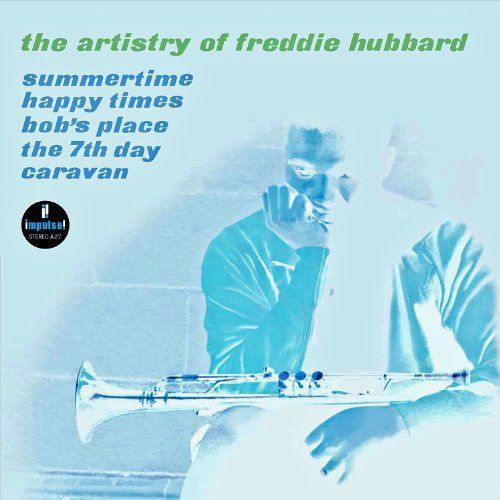
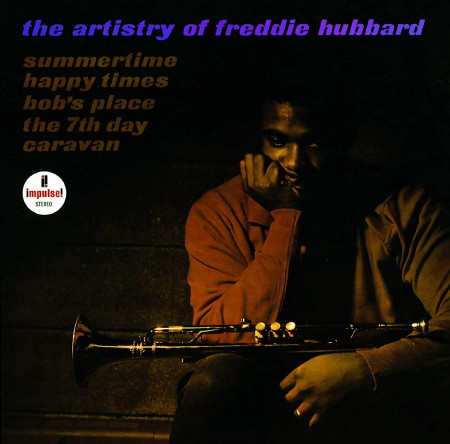
More Impulse! - The Artistry of Freddie Hubbard

 © Copyright ® Steven Cerra, copyright protected; all rights reserved.


“If someone were to ask you how rising young jazzmen in New York were playing on a good get-together in 1962, this album would provide a succinct answer.”

- Dan Morgenstern


The editorial staff at JazzProfiles has been working its way through the early issues by Impulse Records, a label that was in existence from 1961 - 1969 and owes a great deal of its success to producers Creed Taylor and Bob Thiele along with a marvelous production, marketing and administrative staff.


Of course, as Ashley Kahn states in the title of his book on the label - The House That Trane Built -  Impulse came to prominence largely due to the recordings of iconic tenor saxophonist John Coltrane.


But other artists were also responsible for Impulse’s commercial success, among them trumpeter Freddie Hubbard. 


Given his initial and ultimately long term association with Alfred Lion and Francis Wolff’s at Blue Note, the 1963 release of The Artistry of Freddie Hubbard came as a bit of surprise.


But it was always wonderful to have more of Freddie’s music whatever the label for as Richard Cook and Brian Morton assets in their Penguin Guide to Jazz on CD, 6th Ed.:


“Freddie Hubbard was one of the liveliest of the young hard-bop lions of the late 1950s and early '60s. As a Jazz Messenger, and with his own early albums for Blue Note, he set down so many great solos that trumpeters have made studies of him to this day, the burnished tone, bravura phrasing and rhythmical subtleties still enduringly modern. He never quite had the quickfire genius of Lee Morgan, but he had a greater all-round strength, and he is an essential player in the theatre of hard bop.”


And here’s Ashley Kahn’s annotations about The Artistry of Freddie Hubbard from his book about Impulse Records.


Freddie Hubbard / The Artistry of Freddie Hubbard

Impulse A(S) 27

DATE RECORDED: July 2, 1962 

DATE RELEASED: March 1963

PRODUCER: Bob Thiele


PERSONNEL:

Freddie Hubbard, trumpet

Curtis Fuller, trombone

John Gilmore, tenor sax

Tommy Flanagan, piano

Art Davis, bass

Louis Hayes, drums.


For trumpeter Freddie Hubbard, his Impulse debut still marks a personal breakthrough: his first fully composed and arranged album, an accomplishment that earned it its title.


[Bob Thiele] called it The Artistry because of the writing, I would say that that was a pivotal time in my career because I was writing and a lot of times you write music but it sounds like someone else's work. I had done some arrangements on my Blue Note [albums]— Ready for Freddie, Hub-Tones. I had help from [tenor saxophonist] Tina Brooks on the Blue Note stuff, but on The Artistry I felt as though these arrangements really sounded like me."


Of his originals, Hubbard recalls that one track might seem to have referred to the album's producer but didn't—"Bob [of 'Bob's Place'] was a boy I knew in Brooklyn" — while another carried a personal resonance." 'The 7th Day' is very meaningful — a holy day for me. I did a lot of research on that: I keep it holy. It's a rhythmic thing with the congas, and I wrote some pretty heavy arrangements for that small-group style."


The other memorable aspect of the album for Hubbard was his complete choice of sidemen, combining the familiar and the unexpected. "I felt as though I had the guys that I finally wanted. I had [drummer] Louis Hayes, who's my man; I had [pianist] Tommy Flanagan, and I had [tenor saxophonist] John Gilmore.


"Louis and I were living together in Brooklyn for about eleven years. He did some of his best playing on [The Artistry]. Tommy Flanagan? Whew. Man, he's got the touch at piano. I was happy. [Bassist] Art Davis surprised me too, man. He's got a good sound on records and made some good records with Max [Roach]."


If one choice is a sore thumb standout, it would be Gilmore, who is featured throughout the album. Better known as an avant-gardist than a hard-bopper like the others on the session, he had come to prominence playing with the bandleader and avant-garde pioneer Sun Ra. Hubbard explains that his inclination to use Gilmore was confirmed by another saxophonist's taste.


"Coltrane loved him. I used to go from Indianapolis to Chicago every Sunday, [where] I heard John Gilmore and Sun Ra. Have you ever met Sun Ra? I used to go over to his house. He had a harem of guys — like a commune, more or less. He took care of them. I don't know if he made any money, but he taught them a lot of music. A lot of people wanted John Gilmore, you know, but he would not leave. His sound and his notes made him fit the part with [Sun Ra].


"On this session? Well he didn't play like Wayne Shorter or Joe Henderson, but he played the type of sound that I heard for the album. When he played that solo on 'Caravan,' I said, 'Man, what is this?' [Chuckles.]... It was kind of a Coltrane sound, and I liked that because he didn't play like anybody else. When I wrote those arrangements, I didn't really know what they were going to sound like. But I had an idea that by getting Art and Louis and Tommy and John that they would, some kind of way, gel. See, if you get certain combinations of guys, they can get a sound."


Though The Artistry of Freddie Hubbard will always be associated with a painful memory for the trumpeter ("I was going through some changes then, man. I was getting ready to break up with my wife. I had a son that I had to leave"), he admits to a measure of satisfaction with it. "I've listened to that one a lot over the years," he says, "I did some of my best playing on that."


Last, but not least, are these original liner notes from The Artistry of Freddie Hubbard [Impulse! A (S) 27] by Dan Morgenstern:


“In a recent interview in Playboy, Miles Davis was asked about trumpet players. Among the dozen names Miles mentioned (having- set up his criteria as "does the man project, and does he have ideas") were such as Dizzy Gillespie, Roy Eldridge, Clark Terry, Bobby Hackett, Kenny Dorham and 24-year-old Freddie Hubbard. Miles made a point of slating that, unlike jazz critics and pollsters, he wasn't rating or comparing artists but talking about men with individual ideas and styles. Freddie Hubbard, though his musical ancestors clearly include Miles himself and the late Clifford Brown, is a young player with a mind, and a style of his own.


Indianapolis-born, Hubbard had behind him work with the groups of Slide Hampton, Max Roach and J .J. Johnson prior to embarking upon his association with Art Blakey's Jazz Messengers. His bright, bold and unashamedly brassy trumpet sound has done much to make the current edition of that durable ensemble one of the best. Hubbard can get around on his horn, but he has not sacrificed range for speed or sound for ingenuity. His ability to produce a good tone in all registers is one of the things that make him stand out from the flock, as is his way with long notes. In an era of jazz dominated by saxophonists, Hubbard's command of his horn is almost a throwback to the trumpet reigned '3Os.


But only in terms of instrumental approach could this be said about Freddie Hubbard. His musical ideas are definitively of today. He is admittedly drawn to the "Coltrane conception" (hear him on The Seventh Day), he has a gift for conceiving harmonically challenging original lines, and he is fond of the "freedom from 4/4" which the "new thing" seems to strive for. His sound, execution and control enhances these pursuits — no matter how "advanced" a style of playing may become, it never moves to the stage where instrumental proficiency becomes a disadvantage.


On this, his first album for Impulse under his own name, Freddie Hubbard has surrounded himself with first-rate young talent. The only man present who is not already well-established on the recording scene is tenorist John Gilmore, who here emerges as a solid supporter of the post-be bop approach to time and space. With a full, dark tone which suits his ideas, he will surely be heard from again.”


Thursday, January 10, 2019

"Bill Evans - The Art of Playing" - Dan Morgenstern

© -Steven Cerra, copyright protected; all rights reserved.


The Argument


- Modern music is not modern and is rarely music.


-  It represents an attempt to perpetuate a European musical tradition whose technical resources are exhausted, and which no longer has any cultural validity.


- That it continues to be composed, performed, and discussed represents self-deception by an element of society which refuses to believe that this is true.  
-
The hopelessness of the situation is technically demonstrable, and contemporary composers are aware of it.


- What makes their own situation hopeless is that they cannot break with the tradition without renouncing the special status they enjoy as serious composers.


- That they have this status is the result of a popular superstition that serious music is by definition superior to popular music.


-  There is good music, indifferent music and bad music, and they all exist in all types of composition.


-  There is more real creative musical talent in the music of Armstrong and Ellington, in the songs of Gershwin, Rodgers, Kern and Berlin, than in all the serious music composed since 1920.


-  New music which cannot excite the enthusiastic participation of the lay listener has no claim to his sympathy and indulgence. Contrary to popular belief, all the music which survives in the standard repertoire has met this condition in its own time. [Emphasis mine]


- The evolution of Western music continues in American popular music, which has found the way back to the basic musical elements of melody and rhythm, exploited.
- Henry Pleasants - The Agony of Modern Music


Unfortunately for Mr. Pleasants, modern Jazz was not to be the salvation he had hoped for as at the time of this Bill Evans interview in 1964, the first blushes of Free Jazz [i.e., atonality, arhythmic, etc.] were very much in vogue [think Ornette Coleman, Cecil Taylor, Eric Dolphy, et al] and The Beatles were on the horizon.
Although “The Argument” as stated above pertained primarily to Classical Music’s “agony,” one could make the case - as Bill Evans does so eloquently and diplomatically in the following interview with the esteemed Jazz author and scholar, Dan Morgenstern - that “The Argument” applied equally as well to the direction that Jazz was taking in the mid-1960’s.


“THERE CAN BE LITTLE DOUBT that Bill Evans is one of the most influential pianists — if not to say one of the most influential musicians — in jazz today. His strikingly personal conception has not only touched younger players whose styles were formed after Evans became widely known through his tenure with the Miles Davis Sextet in 1958, but it also has affected many pianists with longer roots.


At another stage in the development of jazz, there might be nothing very surprising about this, for Evans' music — lucid, lyrical, melodic, and infused with a sense of, and search for, beauty and balance — is firmly grounded in an astonishing command and organization of the musical materials in the mainstream of the jazz tradition. And his approach to his instrument reflects a firm commitment to the heritage of Western keyboard music that began with Bach and perhaps reached its final splendor in Debussy.


Such an orientation is not exactly typical of the trend in contemporary jazz, sometimes called the "new thing," sometimes "avant garde," and which seems more concerned with discarding tradition than with building on its foundations. The watchword of this school is "freedom"— a word open to many definitions.


Evans, too, is concerned with freedom in music. But he said recently, "The only way I can work is to have some kind of restraint involved — the challenge of a certain craft or form — and then to find the freedom in that, which is one hell of a job. I think a lot of guys either want to circumvent that kind of labor, or else they don't realize the rewards that exist in one single area if you use enough restraint and do enough searching.


"I have allowed myself the other kind of freedom occasionally. Paul Bley and I did a two-piano improvisation on a George Russell record [Music for the Space Age] which was completely unpremeditated. It was fun to do, but there was no direction involved. To do something that hadn't been rehearsed successfully, just like that, almost shows the lack of challenge involved in that type of freedom."


Just turned 35, spiritually and physically refreshed after a troubled interlude in his life, Evans spoke softly but firmly, the even flow of his words reflecting not glibness but long and careful thought about his art and craft. The pianist recently returned from a rewarding European tour at the helm of a revitalized trio and seems poised on a new peak in his career.


"I'm extremely happy with the group," he said. "Larry Bunker is a marvelous musician. [Drummer Bunker recently gave up a lucrative studio practice in Los Angeles to go with Evans.] He plays excellent vibes as well as being an all-round percussionist, and being so musical he just does the right thing because he's listening. He really knows music, feels music — and he is a superlative drummer. ... I hope you can get to hear him at his better moments, which depend, I guess, a lot on me, because if I'm in the least falling apart, they're always so sympathetic to what I'm doing that it's hard for them to come out if I'm not. [Bassist Chuck Israels is the third member of the group.]


"We probably make a stronger emotional projection than at almost any time in the past. Maybe one criticism of the group that could have been valid is that we didn't reach out to the people who weren't interested enough to come in, and I would like to get out to people and grab them a little. That's something that has to happen or not happen, but I think it's happening more and more."


EVANS' DESIRE to reach out to his audience may come as a surprise to those who have overemphasized the introspective qualities of his work. His music also has been characterized as intellectual, and critic Whitney Balliett once wrote that "no musician relies less on intuition than Bill Evans." The pianist said he was aware of Balliett's statement.


"I was very surprised at that," Evans said. "I don't consider that I rely any less or more on something like intuition than any other jazz player, because the plain process of playing jazz is as universal among the people who play jazz correctly — that is, those who approach the art with certain restrictions and certain freedoms — as, for instance, the thought processes involved in ordinary, everyday conversation.


"Everybody has to learn certain things, but when you play, the intellectual process no longer has anything to do with it. It shouldn't, anyhow. You have your craft behind you then, and you try to think within the area that you have mastered to a certain extent. In that way, I am relying entirely on intuition then. I have no idea of what's coming next, and if I did, I would be a nervous wreck. Who could keep up with it?


"Naturally, there are certain things that we play, like opening choruses, that become expected. But even there, changes occur all the time, and after that, when you're just playing, everything is up for grabs. We never know what's coming next. Nobody could think that fast... not even a computer. What Balliett hears, I think, is the result of a lot of work, which means that it is pretty clear. I know this: everything that I play I know about, in a theoretical way, according to my own organization of certain musical facts. And it's a very elementary, basic-type thing. I don't profess to be advanced in theory, but within this area, I do try to work very clearly, because that is the only way I can work.


"When I started out, I worked very simply, but I always knew what I was doing, as related to my own theory. Therefore, what Balliett hears is probably the long-term result of the intellectual process of developing my own vocabulary — or the vocabulary that I use — and he may relate that to being intellectual, or not relying on intuition. But that's not true."


Another critic, Andre Hodeir, has stated that the musical materials used by most jazz players, such as the popular song and the blues, have been exhausted and that the greatest need for jazz is to develop new materials for improvisation.
Evans said he is well acquainted with these views but does not share them.
"The need is not so much for a new form or new material but rather that we allow the song form as such to expand itself," he explained. "And this can happen. I have experienced many times, in playing alone, that perhaps a phrase will extend itself for a couple of moments so that all of a sudden, after a bridge or something, there will be a little interlude.  But it has to be a natural thing. I never attempt to do this in an intellectual way.


"In this way, I think the forms can change and can still basically come from the song form and be a true form — and offer everything that the song form offers. Possibly, this will not satisfy the intellectual needs of somebody like Hodeir, but as far as the materials involved in a song are concerned, I don't think they are restricting at all, if you really get into them. Just learning how to manipulate a line, the science of building a line, if you can call it a science, is enough to occupy somebody for 12 lifetimes. I don't find any lack of challenge there."


Along with this regard for the song form goes a commitment to tonality, Evans pointed out. It is not an abstract idea, he said, or one to which he is unyieldingly bound, but it is the result of playing experience and a concern for coherence.

"If you are a composer or are trying to improvise, and you make a form that is atonal, or some plan which has atonality as a base, you present a lot of problems of coherence," he said. "Most people who listen to music listen tonally, and the things that give certain elements meaning are their relationships to a tonality—either of the phrase, or of the phrase to the larger period, or of that to the whole chorus or form, or perhaps even of that to the entire statement. So if you don't have that kind of reference for a listener, you have to have some other kind of plan or syntax for coherent musical thinking.


"It's a problem, and one that I have in a way solved for myself theoretically by studying melody and the construction of melody through all musics. I found that there is a limited amount of things that can happen to an idea, but in developing it, there are many, many ways that you can handle it. And if you master these, then you can begin to think just emotionally and let something grow. A musical idea could grow outside the realm of tonality. Now, if I could master that, then maybe I could make something coherent happen in an atonal area.


"But the problem of group performance is another thing. When I'm playing with a group, I can't do a lot of things that I can do when playing by myself because I can't expect the other person to know just when I'm going to all of a sudden maybe change the key or the tempo or do this or that. So there has to be some kind of common reference so that we can make a coherent thing." Evans became emphatic.


"This doesn't lessen the freedom," he continued. "It increases it. That's the thing that everybody seems to miss. By giving ourselves a solid base on which to work, and by saying that this is accepted but our craft is such that we can manipulate this framework — which is only like, say, the steel girders in a building — then we can make any shapes we want, any lines we want. We can make any rhythms we want, that we can feel against this natural thing. And if we have the skill, we can just about do anything. Then we are really free.


"But if we were not to have any framework at all, we would be much more limited because we would be accommodating ourselves so much to the nothingness of each other's reference that we would not have room to breathe and to make music and to feel. So that's the problem.


Maybe, as a solo pianist, I could make atonal things or whatever. But group improvisation is another type of challenge, and until there is a development of a craft which covers that area, so that a group can say: 'Okay, now we improvise, now we are going to take this mode for so long, and then we take that mode with a different feeling for so long, and then we go over here'. . . and if I were to construct this plan so that it had no real tonal reference, only then could it be said that we were improvising atonally.


"What many people mean when they say 'atonal,' I think, is more a weird kind of dissonance or strange intervals and things like that. I don't know ... I don't feel it. That isn't me. I can listen to master musicians like Bartok and Berg when they do things that people would consider atonal — although often they're not — and love and enjoy it, but here's someone just making an approximation of this music. It really shows just how little they appreciate the craft involved, because there's just so much to it. You can't just go and play by what I call 'the inch system.' You know, I could go up eight inches on the keyboard and then play a sound down six inches, and then go up a foot-and-a-half and play a cluster and go down nine-and-a-half and play something else. And that's atonality, the way some guys think of it. I don't know why people need it. If I could find something that satisfied me more there, I'd certainly be there, and I guess that's why there are people there. They must find something in it."


It was suggested to Evans that this was a charitable view, that, in fact, much of this kind of music reflects only frustration, and that the occasional moment of value was no adequate reward for the concentration and patience required to wade through all the noodling.


"Yes, it's more of an aid to a composer than a total musical product," he answered. "If you could take one of these gems and say, 'Ah, now I can sit down and make a piece. . . .' But it's the emotional content that is all one way. Naturally, frustration has a place in music at times, especially in dramatic music, but I think that other feelings are more important and that there is an obligation—or at least a responsibility—to present mostly the feelings which are my best feelings, which are not everyday feelings. Just to say that something is true because it is everyday and that, therefore, it is valid seems, to me, a poor basis for an artist to work on. I have no desire to listen to the bathroom noises of the artist. I want to hear something better, something that he has dedicated his life to preserve and to present to me. And if I hear somebody who can really move me, so that I can say 'ah, there's a real song'—I don't care if it's an atonal song or a dissonant song or whatever kind of song—that's still the basis of music to me.. . ."


What did Evans mean by song? Was it melody? "Essentially, what you might consider melody or a lyric feeling," he replied. "But more, an utterance in music of the human spirit, which has to do with the finer feelings of the person and which is a necessary utterance and something that must find its voice because there is a need for it and because it is worthwhile. It doesn't matter about the idiom or the style or anything else; as long as the feeling is behind it, it's going to move people."


But style can get in the way of hearing, it was pointed out.


"I remember discussing Brahms with Miles Davis once," the pianist commented. "He said that he couldn't enjoy it. And I said, 'If you can just get past the stylistic thing that puts you off, you'd find such a great treasure there.' I don't know if it had any effect or not; we never talked about it again. But I think it's the same problem in jazz; if you can get past the style, the rhythm, the thing that puts you off — then it's all pretty much the same. Things don't change that much.


"That's why I feel that I don't really have to be avant garde or anything like that. It has no appeal for me, other than the fact that I always want to do something that is better than what I've been doing. If it leads in that direction, fine. And if it doesn't, it won't make a bit of difference to me, because quality has much more to do with it, as far as I'm concerned. If it stays right where it is at, and that's the best I can find, that's where it's going to have to be."


Evans paused and then added wistfully: "I hope it doesn't, though... I'd like it to change. I never forced it in the least, and so far I do think there have been some changes. Still, essentially, the thing is the same. It has followed a definite thread from the beginning: learning how to feel a form, a harmonic flow, and learning how to handle it and making certain refinements on the form and mastering more and more the ability to get inside the material and to handle it with more and more freedom. That's the way it has been going with me, and there's no end to that... no end to it.


"Whatever I move to, I want to be more firmly based in and better in than what I leave. What I want to do most is to be fresh and to find new things, and I'd like to discard everything that I use, if I could find something to replace it. But until I do, I can't. I'm really planning now how to set up my life so that I can have about half of it in privacy and seclusion and find new areas that are really valid. After the Au Go Go [the Greenwich Village club where Evans is currently playing] and maybe a week somewhere else, I hope to take off about a month. It will be the first time in two or three years that I will have devoted time to that."


IN THIS QUEST, Evans will be aided by what he describes as "one of the most thrilling things that have happened in my  career"—a very  special gift.  At the  Golden Circle in Stockholm, Evans performed on a piano built on new structural principles: a 10-foot concert grand designed and built by George Bolin, master cabinetmaker to the Royal Swedish Court.


"It was the first public performance on the new piano," Evans said. "One night, Mr. Bolin came in to hear me and expressed respect for my work, and before I knew it, my wife had negotiated with his representatives for me to be able to use the only such piano in the United was on exhibit at the Swedish Embassy — for my engagement at the Au Go Go. It is one of only three, I think, in existence in the world right now. And after the engagement, the piano will be mine as a gift. Mr. Bolin dedicated it to me.


"It came at a perfect time, because I didn't have a piano of my own just then. It is a marvelous instrument — probably the first basic advance in piano building in some 150 years. The metal frame and strings are suspended and attached to the wooden frame by inverted screws, and the sound gets a kind of airy, free feeling that I haven't found in any other piano. Before this, Bolin was famous as a guitar maker—he made instruments for Segovia and people like that. To build an instrument like this, a man has to be as much of a genius as a great musician."

Such gifts are not given lightly and are an indication of the stature of the recipient as well as of the giver. Whatever music Bill Evans will make on his new piano, one can be certain that it will do honor to the highest standards of the art and craft of music.”


Source:
October 22, 1964
Downbeat Magazine                                  
Thursday, September 13, 2018

Coleman Hawkins by Dan Morgenstern


© -Steven Cerra, copyright protected; all rights reserved.


“Coleman Hawkins was a legend in his own time: revered by younger musicians, who were amazed and delighted at his ability to remain receptive to their discoveries; loved by his contemporaries, who were equally astonished by his capacity for constant self-renewal. He was one of those who wrote the book of jazz.


The art of Coleman Hawkins transcends the boundaries of style and time. Fortunately, it is well documented. The great sound and mind that is one of the landmarks of jazz lives on, as in these grooves, awaiting your command to issue forth once more.


Even among the chosen few of jazz, Coleman Hawkins stands out. Hear him well.”
- Dan Morgenstern

It takes a special observer to identify what was special about tenor saxophone legend Coleman Hawkins, because the legendary aspects of Hawkins’ career often overshadowed the actual aspects of the style that made him so distinctive and the contributions as a bandleader that did so much to help other Jazz musicians.


So what we wind up with is largely adoration and hagiography instead of critical insight and discerning explanation.

Enter Dan Morgenstern, a long-time observer and astute commentator on Jazz and its makers.


Dan is also one of the few Jazz critics who could write about the not-so-great closing years of the great man’s career with a gentleness and compassion that is a reflection of his love for Coleman.


Morgenstern, winner of an almost embarrassing number of Grammy Awards for his liner notes, did justice to the great saxophonist in 1973 and won yet another Grammy when he wrote these notes for the album The Hawk Flies [Riverside RLP-233, Original Jazz Classic CD OJC-027].


“Even among the chosen few, the extraordinary men and women who make up the peerage of jazz, Coleman Hawkins stands out.


To begin, there is his sound, a thing of beauty in and of itself. Hawkins filled the horn brimful with his great breath. Sound was his palette, and his brush was the instrument that, for jazz purposes, he invented—the tenor saxophone.


In this post-Coltrane age, the tenor sax is so prominent a feature of the landscape that it's hard to imagine it wasn't always there. Lester Young once said, accurately, "I think Coleman Hawkins was the President first, right?," here meaning "president" in the sense of founding father. Which wasn't the sense in which Billie Holiday had laid "Pres" on Lester—at a point in time when the president of the United States was a great man, Number One in all the land.


Tenor time in jazz begins in 1924, when Coleman Hawkins joined  Fletcher Henderson's band. In a decade there, he first mastered, then established the instrument. While trumpet still was king, it was due to Hawk that tenor became president. Thus jazz became a republic in the Swing Era. King Louis was peerless by definition, but his powerful message unlocked the magic in other noble souls. If we hear young Coleman Hawkins both before and after Armstrong joined Henderson, the point is clearly made.


The saxophone family of instruments had been invented by Adolphe Sax to mirror the range and variety of the strings; he wanted his instruments to sing, to have the warmth of wood and the power of brass, and thus created a hybrid of wind mouthpiece and brass body, unlocked by a new system of keys. He did this in the 1840s, but with the exception of Bizet, Debussy, and later Ravel, no major "serious" composer knew what to do with the new arsenal of sound. Until it was discovered and mastered by jazzmen in the early 1920s, the saxophone remained a brass band and vaudeville instrument — a novelty.


Coleman Hawkins's first instruments in St. Joseph, Missouri, were piano and cello. (Of all the saxophones, the tenor most resembles the cello in range and color.) As a boy, he heard and saw The Six Brown Brothers in vaudeville. They used the whole range of saxes, from sopranino to contrabass, and with all their clowning really knew how to play. Young Coleman began to explore the saxophone.


Exactly when this occurred is not entirely clear. Hawkins, like so many other performers, prevaricated about his age. It was widely accepted that he was born on November 21, 1904; a date he unsuccessfully tried to adjust to 1907. Still, underneath incessant joking and good-natured teasing about age with his friends (Ben Webster: "I was in knee pants when my mother first took me to hear you." Hawkins: "That wasn't me; that was my father. I wasn't born then!") there ran a current of doubt, and when Charles Graham, doing biographical research, obtained a copy of Hawkins's birth certificate, it read 1901!


By the time the Father of Tenor Saxophone left for Europe in March 1934, he had already created the two prototypical tenor styles in jazz: the fast, driving, explosive riff style and the slow, flowing, rhapsodic ballad form. He made the mold, he was the model: already, Ben Webster, Herschel Evans, Chu Berry, Budd Johnson, and many more had sprung, fully armed, from his high forehead.
To Europe, where the greatness of jazz had been felt mainly through records, Hawkins brought it in the flesh. Sidney Bechet had spent time there back in the twenties, and Louis Armstrong himself had flashed like a comet through England, Scandinavia, the Low Countries, France, Italy, and Switzerland earlier in the thirties. But Hawk came and remained; the first fixed star of magnitude.


When His Erstwhile Henderson colleague, Benny Carter, that master of the alto sax, clarinet, trumpet, and arranger's pen, crossed the Atlantic a bit later and also decided to stay, the two often hooked up. Together and individually they put their stamp on European jazz for decades.


The process was reciprocal. Hawkins's love for certain of the better things in life — good food, good drink, good clothes, pretty women, fast cars — was apparent before he left his homeland, but Europe sharpened and deepened his tastes. His sense of his own dignity and worth also expanded the warmth of European appreciation and adoration. From here on in Hawk was a cosmopolitan.


Meanwhile, there were not just contenders to his crown back home, but a whole new tenor style, introduced by Lester Young. Only a few of Hawk's great European recordings had made their way into the hands of American musicians during his absence. The climate seemed right for battle and the tenor brigade was ready for Bean (as musicians then called him, "bean" being a synonym for head, i.e., brainpower) when he came home in late July of 1939, just before the outbreak of World War II. Chu Berry, Ben Webster, Don Byas, and Lester himself were gathered to greet Hawk at a Harlem after-hours spot called Puss Johnson's (there were many such music spots; the reputation of Minton's is all out of proportion). The master arrived without horn (but with a striking lady), listened, and refused to be drawn into battle. A few days later he returned with horn and reestablished his sovereignty.


Hawk's victory became official with the release, late in 1939, of the biggest record of his career: "Body and Soul." Consisting of just two choruses—framed by a brief piano introduction and short tenor cadenza—it stands as one of the most perfectly balanced jazz records ever made. After more than three decades it remains a model of flawlessly constructed and superbly executed jazz improvisation, and is still the test piece for aspiring tenorists.


Although young tenor men in increasing numbers were taken with Lester's cooler sound and unorthodox phrasing, the Hawkins approach remained firmly entrenched (as the newfound popularity of Ben Webster with Duke Ellington and Don Byas with Count Basie proved in the early forties). There also arose a school of tenors equally influenced by both: Illinois Jacquet, Buddy Tate, Gene Ammons, and Dexter Gordon are examples.


Furthermore, that leader of the new style soon to be labeled bebop, Charlie Parker, symbolized the possibility of a Hawkins—Young fusion. Though fashionable jazz criticism has emphasized only Young's influence on Parker, there can be no doubt that Hawkins, especially in terms of harmony, approach to ballads, and use of double time, also profoundly touched Bird's conception.


The influence was a two-way street. Hawkins was the first established jazz figure of major stature to not only accept but embrace the new music, which he rightly saw as a logical development. Consider this: Hawk was the only name leader to hire Thelonious Monk, the strange piano player from Minton's house band, for a downtown gig (on 52nd Street) and to use him on a record date (the earliest music heard on this remarkable collection, and Monk's studio debut). And this: for a February 1944 date with a larger band, Hawkins hired Dizzy Gillespie, Max Roach, Leo Parker, and other young modernists to back him. And this: at the end of 1944, Hawk took to California a pioneer bop group that included Howard McGhee and Denzil Best. As early as 1947, Hawk used Miles Davis on a record date; a few years later he had him in his band. The 1947 date on this album clearly reflects Hawk’s commitment to the new sounds, and his ability to fit himself into it. (Note also the inclusion of a Monk tune, perfectly interpreted.)


Hawk didn't just adapt to bop; profoundly touched by Parker, he entered a whole new phase of musical development at an age when most players have settled permanently within a given framework.


The new Hawk was most clearly visible in the blues. Prior to the mid forties, Hawkins rarely played blues, and never with much of what we now call "funk." But Bird brought a new blue stream into jazz, and Hawk was nourished by it (hear him here on "Sih-sah" and "Juicy Fruit"). And Bird’s song in Hawk's ear didn't end with the blues. You can feel it throughout tin 1957 session, and in the magnificent "Ruby, My Dear" which stems from a Monk — Hawkins reunion album that co-starred John Coltrane. (The rest of that date, by the way, can be heard on Monk/Trane.)


For many years they had affectionately called him "The Old Man." But he still looked, felt, and played young and it was the Old Man's pride that he could keep up. No resting on laurels for him; virtually everything new was a challenge. But for a while, when Lester's way of playing tenor dominated the scene, and bop had little time to look back, Hawkins fell somewhat out of favor. When producer Orrin Keepnews gave him carte blanche to pick his own men for the 1957 date reintroduced herewith, the result was the first loose, modern jazz date for Hawk in some time. It compares most interestingly with the session of ten years before, and not only for the work of Hawk himself and repeaters J. J. Johnson and Hank Jones. (It is also interesting that Hawk did not choose a bop rhythm section for himself.)

Throughout the fifties, with Norman Granz's Jazz at the Philharmonic and also on his own, he frequently teamed with old friend Roy Eldridge, ten years younger but a fraternal spirit. From 1957 on, the Metropole in New York's Times Square area became their home base. Most jazz writers except visitors from Europe) shunned the place, but musicians did drop in to hear Roy and Hawk: among them, Miles Davis, Sonny Rollins, and John Coltrane.


At the soulful establishment across the street, The Copper Rail, the players and their friends congregated to eat and drink. Even when they were three-deep at the bar, you could hear Hawk's laughter, or his voice emphasizing a point, from anywhere in the house. Though he was not a large man, his voice had a presence remarkably similar to his saxophone sound. Hawk was strong in those days. The new tenor voices, significantly that of Sonny Rollins, seemed closer in conception and sound to him than to Lester, and his star was once again in ascendance. He and Roy made periodic tours abroad. Recordings were again fairly frequent. His personal life was happy. His health seemed robust.


"You have to eat when you drink," he used to say, and he was still following his own rule. A girl I knew thought nothing of cooking him eight eggs for breakfast, and he could go to work on a Chinese dinner for two or a double order of spareribs in the wee hours of the morning with the gusto of a hungry lumberjack. In the course of a working day, he'd consume a quantity of Scotch even Eddie Condon would have deemed respectable, but he could also leave the booze alone when it got to him. When Lester Young died in 1959, not quite fifty, the Old Man told me how he used to try to make Pres eat when they were traveling together for Jazz at the Philharmonic. "When I got something for myself, I'd get for him, too. But I'd always find most of it left under his bus or plane seat when we got off."


Hawk liked Lester very much, but the only tenor player I ever heard him call "genius" was Chu Berry. Other musicians he bestowed this title on were Louis, Bird, Art Tatum, Dizzy Gillespie, and Monk—the latter a personal favorite.


At home, Hawk rarely listened to jazz. His sizable collection was dominated by complete opera sets (Verdi, Wagner, and Puccini) and also included a lot of Brahms and Debussy. Bach and Beethoven were there as well, and some moderns, but Hawk liked music with a big sound and romantic sweep best of all. With his luxurious hi-fi setup, he could fill his comfortable Central Park West apartment with sound, and the commanding view of the park went well with the music. Sometimes he'd play the piano, which he did surprisingly well—always music of his own.


In the final years, which his friends would rather forget but can't, Tommy Flanagan would sometimes drop by and make Hawk play the piano and try to copy down some of the tunes. Hawk was always a gifted composer — even with Henderson — but never had the patience to write the stuff down. By then, the expensive hi-fi equipment had fallen into disuse, the blinds were often drawn to shut out the view, and the sound most frequently heard was that of the TV — on around the clock to keep the insomniac company. As often as not, there'd be food defrosting in the kitchen—chicken, chops, ribs, or steak—but "by the time it's ready for me to fix," he once told me, "I've lost my appetite from this whiskey." He knew exactly what he was doing to himself, but some demon had hold of him.


It had nothing to do with the socio-psychological cliches of art and race so often applied to "explain" jazz artists, but it did have much to do with the fact that he was living alone now, and that his aloneness was of his own making. His last great love gone because in his jealousy he could not accept that a woman could love a man much older than herself, he now chose to accelerate the aging process he had previously hated and successfully fought off. He let his grizzled beard and hair flow freely, and let his once immaculately fitting suits hang from his shrunken frame.


Only work could shake him out of his depression, but now it seldom came. He'd never been one for managers and agents; if people wanted his services, they could call him. But only a few employers — mainly the loyal Norman Granz, sometimes George Wein, a club owner here or there —  would still come through. My friends and I got him some gigs. It was a vicious circle: because he didn't work much, he was rusty when he did play (he had always disdained practicing, and lifelong habits don't change), and because he was rusty (and shaky), he wasn't asked back. Even quite near the end, a few nights of work, leading to resumed eating, could straighten him out, and he'd find his form. But there was no steady work to make him stay on course.


Perhaps it would have been too late; he hated doctors and hospitals and refused all suggestions of medical attention. And since his voice, incongruously, remained as strong as ever and his ego just as fierce, it was difficult to counteract him. He welcomed company but never invited anyone. His daughters would come by to visit and straighten up the house when they were in town. Frequent visitors included Monk and the Baroness Nica de Konigswarter, but the closest people near the end were Barry Harris and drummer Eddie Locke.


Monk was at Hawk's bedside when it had finally become necessary to take him to a hospital. Monk even made the Old Man laugh — but it was for the last time.
Coleman Hawkins was a legend in his own time: revered by younger musicians, who were amazed and delighted at his ability to remain receptive to their discoveries; loved by his contemporaries, who were equally astonished by his capacity for constant self-renewal. He was one of those who wrote the book of jazz.


The art of Coleman Hawkins transcends the boundaries of style and time. Fortunately, it is well documented. The great sound and mind that is one of the landmarks of jazz lives on, as in these grooves, awaiting your command to issue forth once more.


Even among the chosen few of jazz, Coleman Hawkins stands out. Hear him well.”