Showing posts with label James P. Johnson. Show all posts

Tuesday, May 18, 2021

James P. Johnson - Carolina Shout by John Edward Hasse

 The following appeared in the May 15, 2021 edition of the Wall Street Journal. If you click on the highlighted “Carolina Shout” title in the body of this piece, it will link you back to a performance of the tune played on a piano roll on YouTube.

Copyright ©2020 Dow Jones & Company, Inc. All Rights Reserved. 

Setting a New Jazz Standard

“Released 100 years ago this month, James P. Johnson’s ‘Carolina Shout’ raised the bar of musicianship for pianists like Duke Ellington
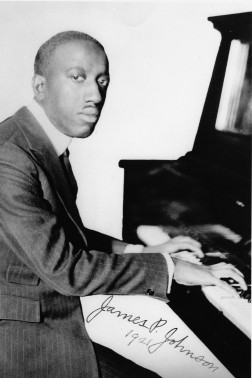


“In May 1921, James P. Johnson, a 27-year-old piano wizard now largely forgotten, released a composition that shook up pianists across the nation. His “Carolina Shout” became a test piece among professional pianists and set new standards of virtuosity and musicianship.

Johnson (1894-1955) spent his early years in New Jersey and moved to Manhattan when he was 14. He listened intently to church hymns and to ring shouts, dance music whose call-and-response patterns traced back to West Africa. Born with perfect pitch, he played and sang for school assemblies and minstrel shows, studied classical piano, attended New York Symphony concerts and idolized cabaret and sporting-house pianists. By age 18, he himself was playing at casinos, brothels and cabarets and was winning piano-playing contests.

Even as a youngster, he looked up to those he called the ragtime “ticklers.” “They had lots of girlfriends, led a sporting life and were invited everywhere there was a piano,” Johnson said in a 1953 interview. “I thought it was a fine way to live.”

When he was coming of age, the soundscape in homes and public places was radically different from today’s. At home, you couldn’t turn to radios, TVs, computers or mobile phones. Your phonograph records could hold only three to five minutes per side and sounded feeble on hand-cranked machines. In restaurants and bars, you had no jukeboxes or background music on P.A. systems. The king of music-making machines was the piano. It was an essential element in middle-class homes, even if nobody played it well.

Led by Johnson, New York pianists developed a style that took advantage of the instrument’s large melodic range and capability to sound multiple notes at once. He called it “orchestral piano—full, round, big, widespread chords and . . . a heavy bass moving against the right hand.” Johnson’s one-man-orchestra sound is still unmatched.

By 1917, the year when ragtime’s foremost composer, Scott Joplin, died, when ragtime music was fading out and jazz recordings were coming in, Johnson had started composing. In 1921, he cut a player piano roll of his creation “Carolina Shout” that mesmerized untold numbers of pianists and confirmed his arrival as a musician of the first rank. Johnson was later dubbed “the father of stride piano,” the flashy style named for its large left-hand leaps between the low and middle sections of the keyboard.

Joplin had preferred a measured approach, urging “Never play ragtime fast.” Under Johnson’s massive hands and serpentine fingers, stride was like Joplin ragtime on steroids.

Like piano ragtime, “Carolina Shout” used multi sectional form and syncopated right-hand rhythms against a steady left hand. But it left ragtime behind by featuring call-and-response patterns, blue notes, a brisker tempo, more themes, more intricate rhythms and a more propulsive feel. Playing the trickster, Johnson threw the listener off by reversing the expected left-hand oom-pah, oom-pah in favor of pah-oom, pah-oom. Or even oom-oom-pah—known as a “broken bass” line. When Johnson plays such lines, it not only beguiles my brain but pleasurably provokes my patting foot.

Johnson rooted “Carolina Shout” deeply in such African-American folk and dance traditions as the old ring shout and, he said, “Southern set or square dances. . . . I find I have a strong feeling for these dances that goes away back.”

Such aspiring pianists as Duke Ellington, Joe Turner and Johnson protégé Thomas “Fats” Waller learned to play “Carolina Shout” by slowing the piano roll way down. For two decades, “Shout” stood as a must-play at parlor socials, rent parties and piano “cutting contests.” Johnson and his song influenced a long string of pianists, including George Gershwin, Count Basie, Art Tatum, Erroll Garner and Thelonious Monk.

The secret to Johnson’s keyboard skill? Ingenuity, discipline and lifelong dedication. “In practicing technique,” he said in that 1953 interview, “I would play in the dark to get completely familiar with the keyboard. To develop clear touch and the feel of the piano, I’d put a bed sheet over the keyboard and play difficult pieces through it.”

In the late 1920s, he set a new standard for sensitively backing singers, notably Ethel Waters and Bessie Smith. His best-known piece was “The Charleston,” the 1923 dance song that became an emblem of the Roaring ’20s. He also wrote nearly 300 other works, including Broadway musicals, a rhapsody, a one-act “blues opera,” a concerto, symphonies and ballets—but had limited success with his classical works.

During 15 years of piano lessons, none of my teachers ever mentioned “Carolina Shout.” I wish they had. It’s such an American classic that colleges and conservatories ought to require that all piano majors learn it. Now that would be a righteous, rhythmic addition to the canon.”

—Mr. Hasse is curator emeritus of American music at the Smithsonian’s National Museum of American History. His books include “Beyond Category: The Life and Genius of Duke Ellington” (Da Capo) and “Discover Jazz” (Pearson).

Sunday, April 28, 2019

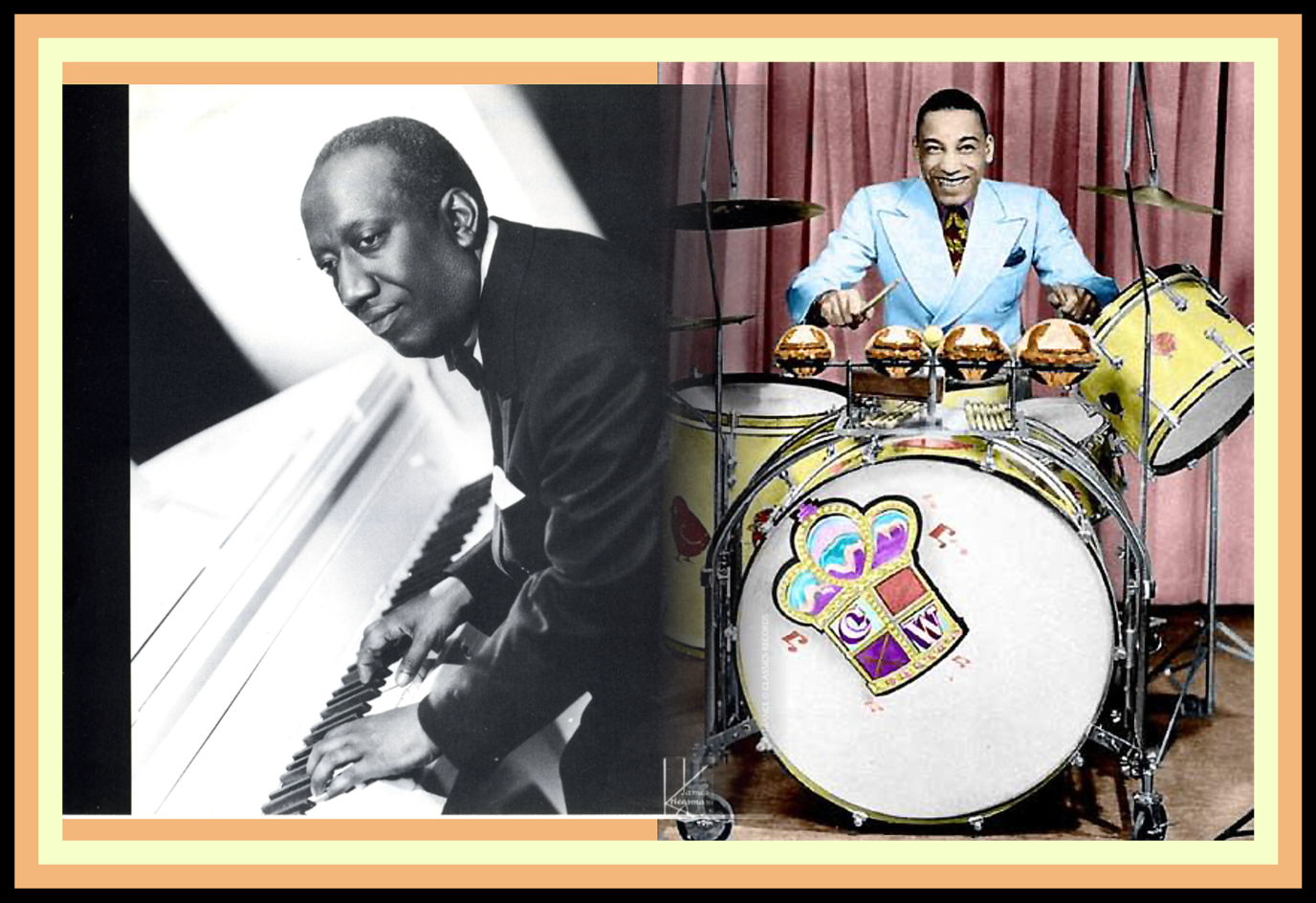
James Price Johnson and William "Chick" Webb

© -Steven A. Cerra, copyright protected; all rights reserved.


From time-to-time, the editorial staff at JazzProfiles likes to give a quick nod to some of those who made the music during its formative stages.


It’s our small way of remembering their contributions and it is a always great fun to compare what was happening in Jazz, then and now.


At times, even with the “distant” sound that characterized the audio of many of the earlier recordings, it can be quite startling to hear the improvised ideas and technical mastery of these early Jazz musicians.


Two such musicians that have always impressed us in this manner are pianist James P. Johnson, who died in 1955, and drummer Chick Webb, who died in 1939.


© -Len Lyons and Don Perlo, copyright protected; all rights reserved.


“In the hands of James Price Johnson [1894-1955], ragtime piano developed into "stride," a more boldly imaginative style characterized by a left hand that constantly strides from the lower to the middle register of the keyboard. Johnson played in a looser, more blues-based style than the classically oriented rag-timers. Though he was always drawn to composing orchestral works, he will be remembered most for his solo-piano playing and for his timeless composition "The Charleston" (1923). He was a profound force in the development of jazz piano, tutoring Fats Waller and influencing the piano styles of Duke Ellington, Art Tatum, Thelonious Monk, and countless stride players.


Johnson began learning classical piano from his mother. When the family moved to New York in 1908, he was exposed to ragtime and blues at rent parties and in Long Island resorts during the summer. He studied classical piano as well as harmony and counterpoint with Bruno Giannini and he developed a superb, almost athletic technique, which set a standard that other stride pianists were expected to emulate. He would often introduce paraphrased passages from the classics into his own blues, shouts, and rags. Johnson also learned the repertoires of the eastern ragtime players like Abba Labba (Richard MacLean) and Eubie Blake. Johnson was known for his playing at a club called The Jungle, where poor laborers from the South danced to his solo-piano shouts. One can easily imagine from listening to his recordings decades later the relentless rocking rhythms he must have generated in that environment.


In 1917, Johnson began recording rolls for the Q.R.S. company. His original “Carolina Shout” [1921 and the audio track to the above video] became a standard for the era for East Coast pianists: [Duke] Ellington and [Thomas “Fats”] Waller, for example, learned it by ear.” Jazz Portraits: The Lives and Music of the Jazz Masters [New York: William Morrow/Quill, 1989, pp.307-308].


© -Burt Korall, copyright protected; all rights reserved.


“Buddy Rich. ‘Until the mid-1930s, I had never been any place where jazz was played. I was in another world, a world called show business that really had nothing to do with music. I lived in Brooklyn with my family when I was becoming involved with jazz. One Wednesday night in '35, a bunch of my friends took me to the Apollo Theater on 125th Street in Harlem for the amateur night thing. That was the first time I dug Chick Webb.


He was the total experience on drums. He played everything well. A little later, about the time I joined Joe Marsala at the Hickory House in 1937,1 went up to the Savoy to check him out again. What I remember most distinctly was that he was different and individual—not like Cozy Cole or Jimmy Crawford or any of the other cats. Even his set was different. He had cymbals on those gooseneck holders, the trap table, a special seat and pedals made specifically for him because he was so small.


Chick was hell on the up-tempos. He kept the time firm and exciting, tapping out an even 4/4 on the bass drum. That was something in the 1930s. Most of the guys downtown could hardly make two beats to the bar; they were into the Chicago style— Dixieland.


Chick set an example. He was hip, sharp, swinging. You know, only about a half-dozen of the top drummers since then, including today's so-called "great" drummers, have anything resembling what he had. If he were alive now, I think most drummers would be running around trying to figure out why they decided to play drums. That's how good he was!


As a soloist, Chick had no equal at that time. He would play four- and eight-bar breaks that made great sense. And he could stretch out, too, and say things that remained with you. It's difficult to describe his style and exactly what he did. One thing is certain, though; he was a marvelous, big-band, swing drummer. Gene [Krupa] got to the heart of the matter when he said, after the Goodman-Webb band battle at the Savoy in '37, "I've never been cut by a better man."’ …


Webb in action made quite a picture. When swinging hard, he brought the entire drum set into play as he proceeded, moving his sticks or brushes across, around, up, and down the hills and valleys of the set. He choked cymbals, teased sound out of them, or hit them full; he played time and variations on the pulse on his snare, high-hat, cymbals, tom-toms, cowbell, temple blocks (often behind piano solos), and, of course, on the bass drum. He had facility to burn; fast strokes, with diversified accents, most often were played to forward the cause of the beat.” Drummin’ Men: The Heartbeat of Jazz – The Swinging Years [New York: Schirmer, 1990. pp. 19-21].


Glasses lifted to the early guys: no them – no Jazz.